
Showing 71 items matching "hum"
-
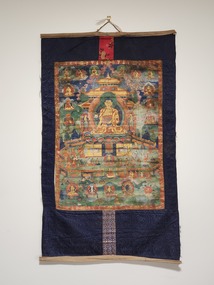 Great Stupa of Universal Compassion
Artwork, other - Medicine Buddha thangka
... The 'Om Ah Hum' mantra is printed in Tibetan in red ink on the verso of the thangka....Buddhist art Tibetan Buddhism Holy objects The 'Om Ah Hum' mantra is printed in Tibetan in red ink on the verso of the thangka. ...Thangkas are cloth scrolls unique to Tibetan Buddhism, depicting deities, venerated spiritual figures, or common religious symbols. Intended for personal meditation or instruction of monastic students, they are invested with the spirit of a deity to whom they are consecrated. A thangka is a composite art form consisting of a picture panel which is painted or embroidered; a brocade mounting; and one or more of the following: a silk cover, leather corners, wooden dowels at the top and bottom and metal or wooden decorative knobs on the bottom dowel. This allows a thangka to be rolled up for portability, reflecting its origins in the nomadic lifestyle of Tibetan monks.The Medicine Buddha (also known as Bhaisajyaguru or Sangyé Menla) is revered as the embodiment of healing and associated with practices helping with mental and physical ailments, as well as purifying negative karma. His iconic imagery, including the medicine bowl and healing plant, represents the union of wisdom and compassion as forces of healing. His teachings, rooted in the "Four Medicine Tantras," emphasize that the root of all diseases lies in negative emotions of greed, hatred, and ignorance.The central figure in this old thangka is Medicine Buddha, seated on a lotus throne and surrounded by other deities and figures. He has a bowl in his left hand, and a flower in his right hand. An interesting feature is that his body is not painted blue, as is customary for the image Medicine Buddha. The paint colours were derived from natural ingredients – grinded coral, turquoise and other gemstones. The 'Om Ah Hum' mantra is printed in Tibetan in red ink on the verso of the thangka.buddhist art, tibetan buddhism, holy objects -
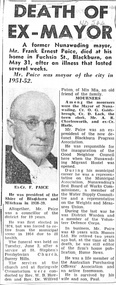 Whitehorse Historical Society Inc.
Article, Death of Ex-Mayor, n.d
... Worked for 43 years with Humes Ltd....Worked for 43 years with Humes Ltd. Death of Ex-Mayor Article Article ...Extract from scrapbook of Mrs Jessie Williams. Death of Frank Paice, Mayor of Nunawading 1951-52, President Shire of Blackburn and Mitcham, 1938-39.Extract from scrapbook of Mrs Jessie Williams. Death of Frank Paice, Mayor of Nunawading 1951-52, President Shire of Blackburn and Mitcham, 1938-39. Worked for 43 years with Humes Ltd.Extract from scrapbook of Mrs Jessie Williams. Death of Frank Paice, Mayor of Nunawading 1951-52, President Shire of Blackburn and Mitcham, 1938-39. williams, jessie, price, frank ernest, shire of blackburn and mitcham, city of nunawading, good neighbour council -
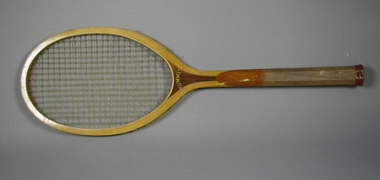 Tennis Australia
Racquet, Circa 1922
... A Lowe & Campbell 'Hummer' tennis racquet, with concave throat, and fine-grooved octagonal handle. ...Tennis A Lowe & Campbell 'Hummer' tennis racquet, with concave throat, and fine-grooved octagonal handle. ...A Lowe & Campbell 'Hummer' tennis racquet, with concave throat, and fine-grooved octagonal handle. Model name across throat on obverse; manufacturer's trademark on throat on reverse. Materials: Wood, Lacquer, Glue, Metal, Gut, Ink, String, Leather, Clothtennis -
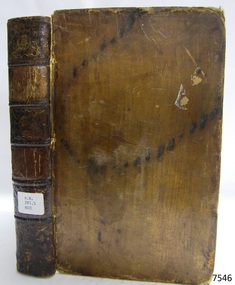 Flagstaff Hill Maritime Museum and Village
Book, Essays and Treatises on Several Subjects Vol 2
... Label on spine cover with typed text RH 291.5 HUM Pastedown front endpaper has sticker from Corangamite Regional Library Service...The Warrnambool Mechanics' Institute’s publication collection is of both local and state significance. warrnambool shipwrecked-coast flagstaff-hill flagstaff-hill-maritime-museum maritime-museum shipwreck-coast flagstaff-hill-maritime-village shipwrecked-artefact book warrnambool mechanics’ institute pattison collection warrnambool library ralph eric pattison warrnambool city librarian mechanics’ institute library victorian library board warrnambool books and records warrnambool children’s library essays and treatises on several subjects vol 2 david hume Label on spine cover with typed text RH 291.5 HUM Pastedown front endpaper has sticker from Corangamite Regional Library Service Essays and Treatises on Several Subjects Vol 2 An enquiry concering Human Understanding Author: David Hume Date: 1779 Essays and Treatises on Several Subjects Vol 2 Book ...This item is from the ‘Pattison Collection’, a collection of books and records that was originally owned by the Warrnambool Mechanics’ Institute, which was founded in Warrnambool in 1853. By 1886 the Warrnambool Mechanics’ Institute (WMI) had grown to have a Library, Museum and Fine Arts Gallery, with a collection of “… choice productions of art, and valuable specimens in almost every branch and many wonderful national curiosities are now to be seen there, including historic relics of the town and district.” It later included a School of Design. Although it was very well patronised, the lack of financial support led the WMI in 1911 to ask the City Council to take it over. In 1935 Ralph Pattison was appointed as City Librarian to establish and organise the Warrnambool Library as it was then called. When the WMI building was pulled down in 1963 a new civic building was erected on the site and the new Warrnambool Library, on behalf of the City Council, took over all the holdings of the WMI. At this time some of the items were separated and identified as the ‘Pattison Collection’, named after Ralph Pattison. Eventually the components of the WMI were distributed from the Warrnambool Library to various places, including the Art Gallery, Historical Society and Flagstaff Hill. Later some were even distributed to other regional branches of Corangamite Regional Library and passed to and fro. It is difficult now to trace just where all of the items have ended up. The books at Flagstaff Hill Maritime Village generally display stamps and markings from Pattison as well as a variety of other institutions including the Mechanics’ Institute itself. RALPH ERIC PATTISON Ralph Eric Pattison was born in Rockhampton, Queensland, in 1891. He married Maude Swan from Warrnambool in 1920 and they set up home in Warrnambool. In 1935 Pattison accepted a position as City Librarian for the Warrnambool City Council. His huge challenge was to make a functional library within two rooms of the Mechanics’ Institute. He tirelessly cleaned, cleared and sorted a disarrayed collection of old books, jars of preserved specimens and other items reserved for exhibition in the city’s museum. He developed and updated the library with a wide variety of books for all tastes, including reference books for students; a difficult task to fulfil during the years following the Depression. He converted all of the lower area of the building into a library, reference room and reading room for members and the public. The books were sorted and stored using a cataloguing and card index system that he had developed himself. He also prepared the upper floor of the building and established the Art Gallery and later the Museum, a place to exhibit the many old relics that had been stored for years for this purpose. One of the treasures he found was a beautiful ancient clock, which he repaired, restored and enjoyed using in his office during the years of his service there. Ralph Pattison was described as “a meticulous gentleman whose punctuality, floorless courtesy and distinctive neat dress were hallmarks of his character, and ‘his’ clock controlled his daily routine, and his opening and closing of the library’s large heavy doors to the minute.” Pattison took leave during 1942 to 1942 to serve in the Royal Australian Navy, Volunteer Reserve as Lieutenant. A few years later he converted one of the Museum’s rooms into a Children’s Library, stocking it with suitable books for the younger generation. This was an instant success. In the 1950’s he had the honour of being appointed to the Victorian Library Board and received more inspiration from the monthly conferences in Melbourne. He was sadly retired in 1959 after over 23 years of service, due to the fact that he had gone over the working age of council officers. However he continued to take a very keen interest in the continual development of the Library until his death in 1969. The Pattison Collection, along with other items at Flagstaff Hill Maritime Village, was originally part of the Warrnambool Mechanics' Institute’s collection. The Warrnambool Mechanics’ Institute Collection is primarily significant in its totality, rather than for the individual objects it contains. Its contents are highly representative of the development of Mechanics' Institute libraries across Australia, particularly Victoria. A diversity of publications and themes has been amassed, and these provide clues to our understanding of the nature of and changes in the reading habits of Victorians from the 1850s to the middle of the 20th century. The collection also highlights the Warrnambool community’s commitment to the Mechanics’ Institute, reading, literacy and learning in the regions, and proves that access to knowledge was not impeded by distance. These items help to provide a more complete picture of our community’s ideals and aspirations. The Warrnambool Mechanics Institute book collection has historical and social significance for its strong association with the Mechanics Institute movement and the important role it played in the intellectual, cultural and social development of people throughout the latter part of the nineteenth century and the early twentieth century. The collection of books is a rare example of an early lending library and its significance is enhanced by the survival of an original collection of many volumes. The Warrnambool Mechanics' Institute’s publication collection is of both local and state significance. Essays and Treatises on Several Subjects Vol 2 An enquiry concering Human Understanding Author: David Hume Date: 1779 Label on spine cover with typed text RH 291.5 HUM Pastedown front endpaper has sticker from Corangamite Regional Library Servicewarrnambool, shipwrecked-coast, flagstaff-hill, flagstaff-hill-maritime-museum, maritime-museum, shipwreck-coast, flagstaff-hill-maritime-village, shipwrecked-artefact, book, warrnambool mechanics’ institute, pattison collection, warrnambool library, ralph eric pattison, warrnambool city librarian, mechanics’ institute library, victorian library board, warrnambool books and records, warrnambool children’s library, essays and treatises on several subjects vol 2, david hume -
 Clunes Museum
Photograph
... THREE PHOTOGRAPHS OF A PARADE 1972: .1 HORSE AND CART WITH "ERNIE THE FASTEST IN THE WEST" WRITTEN ON THE SIDE .2 CLUNES HOSPITAL FLOAT - MEDICAL STAFF OPERATING ON THE FLOAT .3 TWO PEOPLE WITH A FULL WHEEL BARROW "A HUM DINGER" .4 BACK TO SCHOOL, MAN AND WOMEN IN SCHOOL UNIFORM .5 PHOTOGRAPH OF CLUNES CARAVAN PARK 1/04/1972...caravan park back to school clunes parade 1972 THREE PHOTOGRAPHS OF A PARADE 1972: .1 HORSE AND CART WITH "ERNIE THE FASTEST IN THE WEST" WRITTEN ON THE SIDE .2 CLUNES HOSPITAL FLOAT - MEDICAL STAFF OPERATING ON THE FLOAT .3 TWO PEOPLE WITH A FULL WHEEL BARROW "A HUM DINGER" .4 BACK TO SCHOOL, MAN AND WOMEN IN SCHOOL UNIFORM .5 PHOTOGRAPH OF CLUNES CARAVAN PARK 1/04/1972 Photograph PHOTOGRAPH ...THREE PHOTOGRAPHS OF A PARADE 1972: .1 HORSE AND CART WITH "ERNIE THE FASTEST IN THE WEST" WRITTEN ON THE SIDE .2 CLUNES HOSPITAL FLOAT - MEDICAL STAFF OPERATING ON THE FLOAT .3 TWO PEOPLE WITH A FULL WHEEL BARROW "A HUM DINGER" .4 BACK TO SCHOOL, MAN AND WOMEN IN SCHOOL UNIFORM .5 PHOTOGRAPH OF CLUNES CARAVAN PARK 1/04/1972caravan park, back to school, clunes parade 1972 -
 Flagstaff Hill Maritime Museum and Village
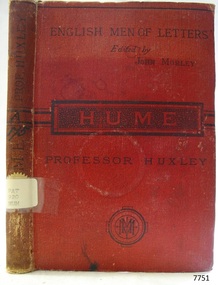
Book, Hume
... Label on spine cover with typed text PAT 920 HUM Pastedown front endpaper has sticker from Warrnambool Mechanics Institute and Free Library covered by a sticker from Corangamite Regional Library Service ...Warrnambool Shipwrecked-coast Flagstaff-Hill Flagstaff-Hill-Maritime-Museum Maritime-Museum Shipwreck-coast Flagstaff-Hill-Maritime-Village Shipwrecked-artefact Book Pattison Collection Warrnambool Library Warrnambool Mechanics’ Institute Ralph Eric Pattison Corangamite Regional Library Service Warrnambool City Librarian Mechanics’ Institute Library Victorian Library Board Warrnambool books and records Warrnambool Children’s Library Great Ocean Road Hume John Morley Professor Huxley Label on spine cover with typed text PAT 920 HUM Pastedown front endpaper has sticker from Warrnambool Mechanics Institute and Free Library covered by a sticker from Corangamite Regional Library Service Hume English Men of Letters Edited by John Morley Author: Professor Huxley Publisher: MacMillan & Co Date: 1879 Hume Book ...This item is from the ‘Pattison Collection’, a collection of books and records that was originally owned by the Warrnambool Mechanics’ Institute, which was founded in Warrnambool in 1853. By 1886 the Warrnambool Mechanics’ Institute (WMI) had grown to have a Library, Museum and Fine Arts Gallery, with a collection of “… choice productions of art, and valuable specimens in almost every branch and many wonderful national curiosities are now to be seen there, including historic relics of the town and district.” It later included a School of Design. Although it was very well patronised, the lack of financial support led the WMI in 1911 to ask the City Council to take it over. In 1935 Ralph Pattison was appointed as City Librarian to establish and organise the Warrnambool Library as it was then called. When the WMI building was pulled down in 1963 a new civic building was erected on the site and the new Warrnambool Library, on behalf of the City Council, took over all the holdings of the WMI. At this time some of the items were separated and identified as the ‘Pattison Collection’, named after Ralph Pattison. Eventually the components of the WMI were distributed from the Warrnambool Library to various places, including the Art Gallery, Historical Society and Flagstaff Hill. Later some were even distributed to other regional branches of Corangamite Regional Library and passed to and fro. It is difficult now to trace just where all of the items have ended up. The books at Flagstaff Hill Maritime Village generally display stamps and markings from Pattison as well as a variety of other institutions including the Mechanics’ Institute itself. RALPH ERIC PATTISON Ralph Eric Pattison was born in Rockhampton, Queensland, in 1891. He married Maude Swan from Warrnambool in 1920 and they set up home in Warrnambool. In 1935 Pattison accepted a position as City Librarian for the Warrnambool City Council. His huge challenge was to make a functional library within two rooms of the Mechanics’ Institute. He tirelessly cleaned, cleared and sorted a disarrayed collection of old books, jars of preserved specimens and other items reserved for exhibition in the city’s museum. He developed and updated the library with a wide variety of books for all tastes, including reference books for students; a difficult task to fulfil during the years following the Depression. He converted all of the lower area of the building into a library, reference room and reading room for members and the public. The books were sorted and stored using a cataloguing and card index system that he had developed himself. He also prepared the upper floor of the building and established the Art Gallery and later the Museum, a place to exhibit the many old relics that had been stored for years for this purpose. One of the treasures he found was a beautiful ancient clock, which he repaired, restored and enjoyed using in his office during the years of his service there. Ralph Pattison was described as “a meticulous gentleman whose punctuality, floorless courtesy and distinctive neat dress were hallmarks of his character, and ‘his’ clock controlled his daily routine, and his opening and closing of the library’s large heavy doors to the minute.” Pattison took leave during 1942 to 1945 to serve in the Royal Australian Navy, Volunteer Reserve as Lieutenant. A few years later he converted one of the Museum’s rooms into a Children’s Library, stocking it with suitable books for the younger generation. This was an instant success. In the 1950’s he had the honour of being appointed to the Victorian Library Board and received more inspiration from the monthly conferences in Melbourne. He was sadly retired in 1959 after over 23 years of service, due to the fact that he had gone over the working age of council officers. However he continued to take a very keen interest in the continual development of the Library until his death in 1969. The Pattison Collection, along with other items at Flagstaff Hill Maritime Village, was originally part of the Warrnambool Mechanics' Institute’s collection. The Warrnambool Mechanics’ Institute Collection is primarily significant in its totality, rather than for the individual objects it contains. Its contents are highly representative of the development of Mechanics' Institute libraries across Australia, particularly Victoria. A diversity of publications and themes has been amassed, and these provide clues to our understanding of the nature of and changes in the reading habits of Victorians from the 1850s to the middle of the 20th century. The collection also highlights the Warrnambool community’s commitment to the Mechanics’ Institute, reading, literacy and learning in the regions, and proves that access to knowledge was not impeded by distance. These items help to provide a more complete picture of our community’s ideals and aspirations. The Warrnambool Mechanics Institute book collection has historical and social significance for its strong association with the Mechanics Institute movement and the important role it played in the intellectual, cultural and social development of people throughout the latter part of the nineteenth century and the early twentieth century. The collection of books is a rare example of an early lending library and its significance is enhanced by the survival of an original collection of many volumes. The Warrnambool Mechanics' Institute’s publication collection is of both local and state significance. Hume English Men of Letters Edited by John Morley Author: Professor Huxley Publisher: MacMillan & Co Date: 1879Label on spine cover with typed text PAT 920 HUM Pastedown front endpaper has sticker from Warrnambool Mechanics Institute and Free Library covered by a sticker from Corangamite Regional Library Service warrnambool, shipwrecked-coast, flagstaff-hill, flagstaff-hill-maritime-museum, maritime-museum, shipwreck-coast, flagstaff-hill-maritime-village, shipwrecked-artefact, book, pattison collection, warrnambool library, warrnambool mechanics’ institute, ralph eric pattison, corangamite regional library service, warrnambool city librarian, mechanics’ institute library, victorian library board, warrnambool books and records, warrnambool children’s library, great ocean road, hume, john morley, professor huxley -
 Sunshine and District Historical Society Incorporated
Archive - Maribyrnong River, Meat Works & the Living Museum of the West
... Sketch Humes Site Maribyrnong The Processes of Meat Preserving The Tin Shop|Sketch Humes Site Maribyrnong The Processes of Meat Preserving The Works|Sketch Humes Site Maribyrnong The Processes of Meat Preserving The Store Room|Sketch Humes Site Maribyrnong The Processes of Meat Preserving The Kitchen|Sketch Humes Site Maribyrnong The Processes of Meat Preserving The Preserving Room|Sketch Humes Site Maribyrnong The Processes of Meat Preserving The Boning Room|Sketch Humes Site Maribyrnong The Processes of Meat Preserving|Photograph Humes Site Maribyrnong|Newspaper article The Advocate 14 June 1995 Cannery building highlight at park|Newspaper article Times 12 February 2002 Chemical free restoration|Extract ADI Footscray Site Redevelopment Site History Historical Overview|Brochure Discover the Maribyrnong|Newspaper article Essendon Gazette 3 March 2021 Long Distance Swim|Newspaper article Star 4 May 2004 Plan to save Cinderella river|Typed Report Memories of early Maribyrnong|Newspaper article The Herald 11 December 1981 The battle over the bluestone|Plans Kevin McManus Architect Possible Development Humes Site Maribyrnong|Photocopy painting of Humes Site Maribyrnong|Newspaper article The Sun 1 June 1979 A face lift for our Cinderella River|Newspaper article The Age 9 November 1982 Messsing about on the forgotten river|Extract Our Unique Victorian Timber Bridge Heritage article|Invitation to a Meeting Our River Heritage and its future|Typed Report February 1992 Maribyrnong River Valley Braybrook A time of Achievement of community Aspirations|Letter 14 February 1983 from Melbourne and Metropolitan Board of Works|Typed Notes Meeting to discuss the erection of a cairn at Solomons Ford|Letter 30 July 1980 from Melbourne and Metropolitan Board of Works Former Melbourne Meat Preserving Company Maribyrnong|Letter 1 December 1981 to Melbourne and Metropolitan Board of Works from Melbourne Metropolitan Planning Scheme Amendment No 157|Extract Maribyrnong Action in Tranquility by Olwen Ford and Pamela Lewis|Handwritten notes about Maribyrnong|Typed report 11 September 1976 Maribyrnong History|Newspaper article The Mail 10 February 1993 Maribyrnong turns back the clock|Newspaper article Advocate 29 September 1993 Misery of flood victims to continue Govt rejects river report|Newspaper article Sunshine Advocate 28M Arundel Dam plan scrapped|Flyer The Maribyrnong River Ideas for the River Valley|Newspaper article The Western Times 12 September 1984 Govt breathes new life into a forgotten river|Newspaper article The Western Times 8 February 1984 So where is the real Solomons Ford|Letter 28 April 1960 Maribyrnong|Newspaper article Melbourne must not forget its other river Olwen Ford|Flyer Ecomuseum Broadsheets 4 Maribyrnong River A River of Histoy|Flyer Pipemakers Park Maribyrnong|Typed report The Saltwater River Powder Magazine Jacks Magazine J W Moore|The Heritage Plan Maribyrnong City Council February 2002|Flyer Bicycling in Maribyrnong|Flyer Pipe Trail|Flyer Meat Trail|Flyer Origins of Industry|Flyer Pipemakers Park|Typed Report Racing Colours Rose and Black|Photographs Maribyrnong Valley December 1974|Newspaper article Herald Sun 12/2/1991 - How the live west is won Pipemakers Park...Maribyrnong River Meat Works The Living Museum of the West Sketch Humes Site Maribyrnong The Processes of Meat Preserving The Tin Shop|Sketch Humes Site Maribyrnong The Processes of Meat Preserving The Works|Sketch Humes Site Maribyrnong The Processes of Meat Preserving The Store Room|Sketch Humes Site Maribyrnong The Processes of Meat Preserving The Kitchen|Sketch Humes Site Maribyrnong The Processes of Meat Preserving The Preserving Room|Sketch Humes Site Maribyrnong The Processes of Meat Preserving The Boning Room|Sketch Humes Site Maribyrnong The Processes of Meat Preserving|Photograph Humes Site Maribyrnong|Newspaper article The Advocate 14 June 1995 Cannery building highlight at park|Newspaper article Times 12 February 2002 Chemical free restoration|Extract ADI Footscray Site Redevelopment Site History Historical Overview|Brochure Discover the Maribyrnong|Newspaper article Essendon Gazette 3 March 2021 Long Distance Swim|Newspaper article Star 4 May 2004 Plan to save Cinderella river|Typed Report Memories of early Maribyrnong|Newspaper article The Herald 11 December 1981 The battle over the bluestone|Plans Kevin McManus Architect Possible Development Humes Site Maribyrnong|Photocopy painting of Humes Site Maribyrnong|Newspaper article The Sun 1 June 1979 A face lift for our Cinderella River|Newspaper article The Age 9 November 1982 Messsing about on the forgotten river|Extract Our Unique Victorian Timber Bridge Heritage article|Invitation to a Meeting Our River Heritage and its future|Typed Report February 1992 Maribyrnong River Valley Braybrook A time of Achievement of community Aspirations|Letter 14 February 1983 from Melbourne and Metropolitan Board of Works|Typed Notes Meeting to discuss the erection of a cairn at Solomons Ford|Letter 30 July 1980 from Melbourne and Metropolitan Board of Works Former Melbourne Meat Preserving Company Maribyrnong|Letter 1 December 1981 to Melbourne and Metropolitan Board of Works from Melbourne Metropolitan Planning Scheme Amendment No 157|Extract Maribyrnong Action in Tranquility by Olwen Ford and Pamela Lewis|Handwritten notes about Maribyrnong|Typed report 11 September 1976 Maribyrnong History|Newspaper article The Mail 10 February 1993 Maribyrnong turns back the clock|Newspaper article Advocate 29 September 1993 Misery of flood victims to continue Govt rejects river report|Newspaper article Sunshine Advocate 28M Arundel Dam plan scrapped|Flyer The Maribyrnong River Ideas for the River Valley|Newspaper article The Western Times 12 September 1984 Govt breathes new life into a forgotten river|Newspaper article The Western Times 8 February 1984 So where is the real Solomons Ford|Letter 28 April 1960 Maribyrnong|Newspaper article Melbourne must not forget its other river Olwen Ford|Flyer Ecomuseum Broadsheets 4 Maribyrnong River A River of Histoy|Flyer Pipemakers Park Maribyrnong|Typed report The Saltwater River Powder Magazine Jacks Magazine J W Moore|The Heritage Plan Maribyrnong City Council February 2002|Flyer Bicycling in Maribyrnong|Flyer Pipe Trail|Flyer Meat Trail|Flyer Origins of Industry|Flyer Pipemakers Park|Typed Report Racing Colours Rose and Black|Photographs Maribyrnong Valley December 1974|Newspaper article Herald Sun 12/2/1991 - How the live west is won Pipemakers Park Collection of articles relating to the Maribyrnong River Meat Works Living Museum of the West and other articles relating to the Maribyrnong River Archive Maribyrnong River, Meat Works & the Living Museum of the West ...Sketch Humes Site Maribyrnong The Processes of Meat Preserving The Tin Shop|Sketch Humes Site Maribyrnong The Processes of Meat Preserving The Works|Sketch Humes Site Maribyrnong The Processes of Meat Preserving The Store Room|Sketch Humes Site Maribyrnong The Processes of Meat Preserving The Kitchen|Sketch Humes Site Maribyrnong The Processes of Meat Preserving The Preserving Room|Sketch Humes Site Maribyrnong The Processes of Meat Preserving The Boning Room|Sketch Humes Site Maribyrnong The Processes of Meat Preserving|Photograph Humes Site Maribyrnong|Newspaper article The Advocate 14 June 1995 Cannery building highlight at park|Newspaper article Times 12 February 2002 Chemical free restoration|Extract ADI Footscray Site Redevelopment Site History Historical Overview|Brochure Discover the Maribyrnong|Newspaper article Essendon Gazette 3 March 2021 Long Distance Swim|Newspaper article Star 4 May 2004 Plan to save Cinderella river|Typed Report Memories of early Maribyrnong|Newspaper article The Herald 11 December 1981 The battle over the bluestone|Plans Kevin McManus Architect Possible Development Humes Site Maribyrnong|Photocopy painting of Humes Site Maribyrnong|Newspaper article The Sun 1 June 1979 A face lift for our Cinderella River|Newspaper article The Age 9 November 1982 Messsing about on the forgotten river|Extract Our Unique Victorian Timber Bridge Heritage article|Invitation to a Meeting Our River Heritage and its future|Typed Report February 1992 Maribyrnong River Valley Braybrook A time of Achievement of community Aspirations|Letter 14 February 1983 from Melbourne and Metropolitan Board of Works|Typed Notes Meeting to discuss the erection of a cairn at Solomons Ford|Letter 30 July 1980 from Melbourne and Metropolitan Board of Works Former Melbourne Meat Preserving Company Maribyrnong|Letter 1 December 1981 to Melbourne and Metropolitan Board of Works from Melbourne Metropolitan Planning Scheme Amendment No 157|Extract Maribyrnong Action in Tranquility by Olwen Ford and Pamela Lewis|Handwritten notes about Maribyrnong|Typed report 11 September 1976 Maribyrnong History|Newspaper article The Mail 10 February 1993 Maribyrnong turns back the clock|Newspaper article Advocate 29 September 1993 Misery of flood victims to continue Govt rejects river report|Newspaper article Sunshine Advocate 28M Arundel Dam plan scrapped|Flyer The Maribyrnong River Ideas for the River Valley|Newspaper article The Western Times 12 September 1984 Govt breathes new life into a forgotten river|Newspaper article The Western Times 8 February 1984 So where is the real Solomons Ford|Letter 28 April 1960 Maribyrnong|Newspaper article Melbourne must not forget its other river Olwen Ford|Flyer Ecomuseum Broadsheets 4 Maribyrnong River A River of Histoy|Flyer Pipemakers Park Maribyrnong|Typed report The Saltwater River Powder Magazine Jacks Magazine J W Moore|The Heritage Plan Maribyrnong City Council February 2002|Flyer Bicycling in Maribyrnong|Flyer Pipe Trail|Flyer Meat Trail|Flyer Origins of Industry|Flyer Pipemakers Park|Typed Report Racing Colours Rose and Black|Photographs Maribyrnong Valley December 1974|Newspaper article Herald Sun 12/2/1991 - How the live west is won Pipemakers Parkmaribyrnong river, meat works, the living museum of the west -
 Bendigo Historical Society Inc.
Book - THE HISTORY OF ENGLAND
... On the inside cover are the words, ''Smollett had been a whip, but he was a Tory when he wrote his 'History of England,'' of which this volume is a part. Humes was more able but not ? Pleasing work.'' ...On the inside cover are the words, ''Smollett had been a whip, but he was a Tory when he wrote his 'History of England,'' of which this volume is a part. Humes was more able but not ? Pleasing work.'' ...A damaged hard covered book titled, ''The History of England, from The Revolution in 1688, to The Death of George the Second. Designed as a continuation of Hume. By T. Smollett, M.D. Stereotype Edition. In one volume. Edinburgh: Published by Thomas Nelson. MDCCCXXXVII.'' On the inside cover are the words, ''Smollett had been a whip, but he was a Tory when he wrote his 'History of England,'' of which this volume is a part. Humes was more able but not ? Pleasing work.'' 'Smolletts Life.' On the front page of the book is the name of the owner, 'B.Fleming 1838.' 948pgs. (ill.)B. Flemingbook, books, england, history -
 Bendigo Historical Society Inc.
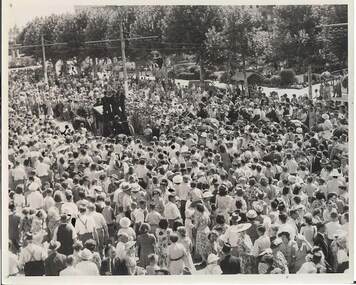
Photograph - BENDIGO CENTENARY COLLECTION: PARADE, 1951
... Ian Wild - August 2--- 'Captain Starlight - Chap Hummer from California Gully played this part. ...Ian Wild - August 2--- 'Captain Starlight - Chap Hummer from California Gully played this part. ...Black and white photograph, large crowd of people in Pall Mall. Alexandra Fountain at far L. Queen Victoria Gardens at background. In C of crowd - horse drawn carriage, mounted soldier & policeman. Inscriptions: On back circular stamp 'Royal Historical Society of Victoris, Bendigo Branch', '1960', '97', '12'. History of object - previous Acc. No. 'MP 182'. Ian Wild - August 2--- 'Captain Starlight - Chap Hummer from California Gully played this part. In robbery of gold bullion re-enactment'.Bendigo Advertiserperson, group, centenary, see also 2000.511.01, 2000.512.01, 2000.514.01, 2000.515.01, 2000.516.01, 2000.517.01, 2000.518.01, 2000.519.01, 2000.520.01, 2000.521.01, 2000.522.01, 2000.523.01, 2000.524.01 -
 Sunshine and District Historical Society Incorporated
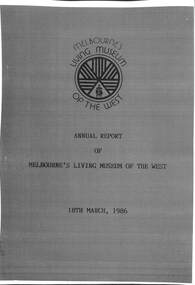
Administrative record - Melbourne's Living Museum of the West Incorporated Annual Report, Living Museum of the West
... The Melbourne’s Living Museum of the West is located in the former Raleigh Boiling Down Works, Melbourne Meat Preserving Company and Humes Pipe Works....The Melbourne’s Living Museum of the West is located in the former Raleigh Boiling Down Works, Melbourne Meat Preserving Company and Humes Pipe Works. Melbourne’s Living Museum of the West documents migration, work, industry, women’s history, integrates environmental and landscape history into heritage interpretation and treat the region itself as the museum, rather than a single building. ...Melbourne’s Living Museum of the West (LMW) is Australia’s first ecomuseum, founded in 1984 to document, preserve, and interpret the social, industrial, environmental, and migrant histories of Melbourne’s western suburbs. Its creation marked a turning point in recognising the West as a culturally rich region whose stories had long been overlooked. The Melbourne’s Living Museum of the West is located in the former Raleigh Boiling Down Works, Melbourne Meat Preserving Company and Humes Pipe Works.Melbourne’s Living Museum of the West documents migration, work, industry, women’s history, integrates environmental and landscape history into heritage interpretation and treat the region itself as the museum, rather than a single building.5208.01 - Melbourne's Living Museum of the West Incorporated Annual Report 1986.jpg 5208.01 - Melbourne's Living Museum of the West Incorporated Annual Report 1986.pdf 5208.02 - Melbourne's Living Museum of the West Incorporated Annual Report 1987.jpg 5208.02 - Melbourne's Living Museum of the West Incorporated Annual Report 1987.pdf 5208.03 - Melbourne's Living Museum of the West Incorporated Annual Report 1988.jpg 5208.03 - Melbourne's Living Museum of the West Incorporated Annual Report 1988.pdf 5208.04 - Melbourne's Living Museum of the West Incorporated Annual Report 1989.jpg 5208.04 - Melbourne's Living Museum of the West Incorporated Annual Report 1989.pdf 5208.05 - Melbourne's Living Museum of the West Incorporated Annual Report 1990.jpg 5208.05 - Melbourne's Living Museum of the West Incorporated Annual Report 1990.pdf 5208.06 - Melbourne's Living Museum of the West Incorporated Annual Report 1991.jpg 5208.06 - Melbourne's Living Museum of the West Incorporated Annual Report 1991.pdf 5208.07 - Melbourne's Living Museum of the West Incorporated Annual Report 1992.jpg 5208.07 - Melbourne's Living Museum of the West Incorporated Annual Report 1992.pdf 5208.08 - Melbourne's Living Museum of the West Incorporated Annual Report 1993.jpg 5208.08 - Melbourne's Living Museum of the West Incorporated Annual Report 1993.pdf 5208.09 - Melbourne's Living Museum of the West Incorporated Annual Report 1994.jpg 5208.09 - Melbourne's Living Museum of the West Incorporated Annual Report 1994.pdf 5208.10 - Melbourne's Living Museum of the West Incorporated Annual Report 1995.jpg 5208.10 - Melbourne's Living Museum of the West Incorporated Annual Report 1995.pdf 5208.11 - Melbourne's Living Museum of the West Incorporated Annual Report 1999 - 2000.jpg 5208.11 - Melbourne's Living Museum of the West Incorporated Annual Report 1999 - 2000.pdf 5208.12 - Melbourne's Living Museum of the West Incorporated Annual Report 2003 - 2004.jpg 5208.12 - Melbourne's Living Museum of the West Incorporated Annual Report 2003 - 2004.pdf 5208.13 - Melbourne's Living Museum of the West Incorporated Annual Report 2004 - 2005.jpg 5208.13 - Melbourne's Living Museum of the West Incorporated Annual Report 2004 - 2005.pdf 5208.14 - Melbourne's Living Museum of the West Incorporated Annual Report 2005 - 2006.jpg 5208.14 - Melbourne's Living Museum of the West Incorporated Annual Report 2005 - 2006.pdf 5208.15 - Melbourne's Living Museum of the West Incorporated Annual Report 2014 - 2015.jpg 5208.15 - Melbourne's Living Museum of the West Incorporated Annual Report 2014 - 2015.pdf 5208.16 - Melbourne's Living Museum of the West Incorporated Annual Report 2020 - 2021.jpg 5208.16 - Melbourne's Living Museum of the West Incorporated Annual Report 2020 - 2021.pdf 5208.17 - Melbourne's Living Museum of the West Incorporated Annual Report 2022 - 2023.jpg 5208.17 - Melbourne's Living Museum of the West Incorporated Annual Report 2022 - 2023.pdf 5208.18 - Melbourne's Living Museum of the West Incorporated Annual Report 2023 - 2024.jpg 5208.18 - Melbourne's Living Museum of the West Incorporated Annual Report 2023 - 2024.pdf 5208.19 - Melbourne's Living Museum of the West Incorporated Annual Report 2024 - 2025.jpg 5208.19 - Melbourne's Living Museum of the West Incorporated Annual Report 2024 - 2025.pdfmelbourne's living museum of the west, raleigh boiling down works, melbourne meat preserving compan, humes pipe works -
 Flagstaff Hill Maritime Museum and Village
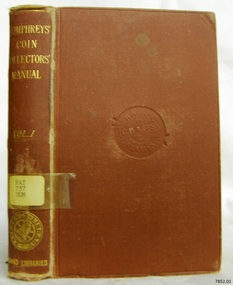
Book, The Coin Collectors Manual Vol 1
... Label on spine cover with typed text PAT 737 HUM Pastedown front endpaper has sticker from Warrnambool Mechanics Institute and Free Library Front loose endpaper has a sticker from Corangamite Regional Library Service Front loose endpaper has a stamp from Corangamite Regional Library Service ...The Warrnambool Mechanics' Institute’s publication collection is of both local and state significance. warrnambool shipwrecked-coast flagstaff-hill flagstaff-hill-maritime-museum maritime-museum shipwreck-coast flagstaff-hill-maritime-village shipwrecked-artefact book pattison collection warrnambool library warrnambool mechanics’ institute ralph eric pattison corangamite regional library service warrnambool city librarian mechanics’ institute library victorian library board warrnambool books and records warrnambool children’s library great ocean road The Coin Collectors Manual Vol 1 H Noel Humphreys Label on spine cover with typed text PAT 737 HUM Pastedown front endpaper has sticker from Warrnambool Mechanics Institute and Free Library Front loose endpaper has a sticker from Corangamite Regional Library Service Front loose endpaper has a stamp from Corangamite Regional Library Service The Coin Collectors Manual Vol 1 Or guide to the Numismatic student in the formation of A Cabinet of Coins Author: H Noel Humphreys Publisher: George Bell & Sons Date: 1887 The Coin Collectors Manual Vol 1 Book ...This item is from the ‘Pattison Collection’, a collection of books and records that was originally owned by the Warrnambool Mechanics’ Institute, which was founded in Warrnambool in 1853. By 1886 the Warrnambool Mechanics’ Institute (WMI) had grown to have a Library, Museum and Fine Arts Gallery, with a collection of “… choice productions of art, and valuable specimens in almost every branch and many wonderful national curiosities are now to be seen there, including historic relics of the town and district.” It later included a School of Design. Although it was very well patronised, the lack of financial support led the WMI in 1911 to ask the City Council to take it over. In 1935 Ralph Pattison was appointed as City Librarian to establish and organise the Warrnambool Library as it was then called. When the WMI building was pulled down in 1963 a new civic building was erected on the site and the new Warrnambool Library, on behalf of the City Council, took over all the holdings of the WMI. At this time some of the items were separated and identified as the ‘Pattison Collection’, named after Ralph Pattison. Eventually the components of the WMI were distributed from the Warrnambool Library to various places, including the Art Gallery, Historical Society and Flagstaff Hill. Later some were even distributed to other regional branches of Corangamite Regional Library and passed to and fro. It is difficult now to trace just where all of the items have ended up. The books at Flagstaff Hill Maritime Village generally display stamps and markings from Pattison as well as a variety of other institutions including the Mechanics’ Institute itself. RALPH ERIC PATTISON Ralph Eric Pattison was born in Rockhampton, Queensland, in 1891. He married Maude Swan from Warrnambool in 1920 and they set up home in Warrnambool. In 1935 Pattison accepted a position as City Librarian for the Warrnambool City Council. His huge challenge was to make a functional library within two rooms of the Mechanics’ Institute. He tirelessly cleaned, cleared and sorted a disarrayed collection of old books, jars of preserved specimens and other items reserved for exhibition in the city’s museum. He developed and updated the library with a wide variety of books for all tastes, including reference books for students; a difficult task to fulfil during the years following the Depression. He converted all of the lower area of the building into a library, reference room and reading room for members and the public. The books were sorted and stored using a cataloguing and card index system that he had developed himself. He also prepared the upper floor of the building and established the Art Gallery and later the Museum, a place to exhibit the many old relics that had been stored for years for this purpose. One of the treasures he found was a beautiful ancient clock, which he repaired, restored and enjoyed using in his office during the years of his service there. Ralph Pattison was described as “a meticulous gentleman whose punctuality, floorless courtesy and distinctive neat dress were hallmarks of his character, and ‘his’ clock controlled his daily routine, and his opening and closing of the library’s large heavy doors to the minute.” Pattison took leave during 1942 to 1945 to serve in the Royal Australian Navy, Volunteer Reserve as Lieutenant. A few years later he converted one of the Museum’s rooms into a Children’s Library, stocking it with suitable books for the younger generation. This was an instant success. In the 1950’s he had the honour of being appointed to the Victorian Library Board and received more inspiration from the monthly conferences in Melbourne. He was sadly retired in 1959 after over 23 years of service, due to the fact that he had gone over the working age of council officers. However he continued to take a very keen interest in the continual development of the Library until his death in 1969. The Pattison Collection, along with other items at Flagstaff Hill Maritime Village, was originally part of the Warrnambool Mechanics' Institute’s collection. The Warrnambool Mechanics’ Institute Collection is primarily significant in its totality, rather than for the individual objects it contains. Its contents are highly representative of the development of Mechanics' Institute libraries across Australia, particularly Victoria. A diversity of publications and themes has been amassed, and these provide clues to our understanding of the nature of and changes in the reading habits of Victorians from the 1850s to the middle of the 20th century. The collection also highlights the Warrnambool community’s commitment to the Mechanics’ Institute, reading, literacy and learning in the regions, and proves that access to knowledge was not impeded by distance. These items help to provide a more complete picture of our community’s ideals and aspirations. The Warrnambool Mechanics Institute book collection has historical and social significance for its strong association with the Mechanics Institute movement and the important role it played in the intellectual, cultural and social development of people throughout the latter part of the nineteenth century and the early twentieth century. The collection of books is a rare example of an early lending library and its significance is enhanced by the survival of an original collection of many volumes. The Warrnambool Mechanics' Institute’s publication collection is of both local and state significance. The Coin Collectors Manual Vol 1 Or guide to the Numismatic student in the formation of A Cabinet of Coins Author: H Noel Humphreys Publisher: George Bell & Sons Date: 1887Label on spine cover with typed text PAT 737 HUM Pastedown front endpaper has sticker from Warrnambool Mechanics Institute and Free Library Front loose endpaper has a sticker from Corangamite Regional Library Service Front loose endpaper has a stamp from Corangamite Regional Library Service warrnambool, shipwrecked-coast, flagstaff-hill, flagstaff-hill-maritime-museum, maritime-museum, shipwreck-coast, flagstaff-hill-maritime-village, shipwrecked-artefact, book, pattison collection, warrnambool library, warrnambool mechanics’ institute, ralph eric pattison, corangamite regional library service, warrnambool city librarian, mechanics’ institute library, victorian library board, warrnambool books and records, warrnambool children’s library, great ocean road, the coin collectors manual vol 1, h noel humphreys -
 Flagstaff Hill Maritime Museum and Village
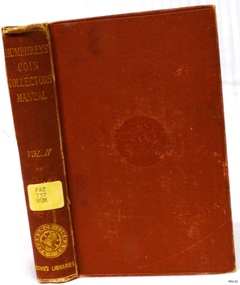
Book, The Coin Collectors Manual Vol 2
... Label on spine cover with typed text PAT 737 HUM Pastedown front endpaper has sticker from Warrnambool Mechanics Institute and Free Library Front loose endpaper has a sticker from Corangamite Regional Library Service Front loose endpaper has a stamp from Corangamite Regional Library Service ...The Warrnambool Mechanics' Institute’s publication collection is of both local and state significance. warrnambool shipwrecked-coast flagstaff-hill flagstaff-hill-maritime-museum maritime-museum shipwreck-coast flagstaff-hill-maritime-village shipwrecked-artefact book pattison collection warrnambool library warrnambool mechanics’ institute ralph eric pattison corangamite regional library service warrnambool city librarian mechanics’ institute library victorian library board warrnambool books and records warrnambool children’s library great ocean road The Coin Collectors Manual Vol 2 H Noel Humphreys Label on spine cover with typed text PAT 737 HUM Pastedown front endpaper has sticker from Warrnambool Mechanics Institute and Free Library Front loose endpaper has a sticker from Corangamite Regional Library Service Front loose endpaper has a stamp from Corangamite Regional Library Service The Coin Collectors Manual Vol 2 Or guide to the Numismatic student in the formation of A Cabinet of Coins Author: H Noel Humphreys Publisher: George Bell & Sons Date: 1887 The Coin Collectors Manual Vol 2 Book ...This item is from the ‘Pattison Collection’, a collection of books and records that was originally owned by the Warrnambool Mechanics’ Institute, which was founded in Warrnambool in 1853. By 1886 the Warrnambool Mechanics’ Institute (WMI) had grown to have a Library, Museum and Fine Arts Gallery, with a collection of “… choice productions of art, and valuable specimens in almost every branch and many wonderful national curiosities are now to be seen there, including historic relics of the town and district.” It later included a School of Design. Although it was very well patronised, the lack of financial support led the WMI in 1911 to ask the City Council to take it over. In 1935 Ralph Pattison was appointed as City Librarian to establish and organise the Warrnambool Library as it was then called. When the WMI building was pulled down in 1963 a new civic building was erected on the site and the new Warrnambool Library, on behalf of the City Council, took over all the holdings of the WMI. At this time some of the items were separated and identified as the ‘Pattison Collection’, named after Ralph Pattison. Eventually the components of the WMI were distributed from the Warrnambool Library to various places, including the Art Gallery, Historical Society and Flagstaff Hill. Later some were even distributed to other regional branches of Corangamite Regional Library and passed to and fro. It is difficult now to trace just where all of the items have ended up. The books at Flagstaff Hill Maritime Village generally display stamps and markings from Pattison as well as a variety of other institutions including the Mechanics’ Institute itself. RALPH ERIC PATTISON Ralph Eric Pattison was born in Rockhampton, Queensland, in 1891. He married Maude Swan from Warrnambool in 1920 and they set up home in Warrnambool. In 1935 Pattison accepted a position as City Librarian for the Warrnambool City Council. His huge challenge was to make a functional library within two rooms of the Mechanics’ Institute. He tirelessly cleaned, cleared and sorted a disarrayed collection of old books, jars of preserved specimens and other items reserved for exhibition in the city’s museum. He developed and updated the library with a wide variety of books for all tastes, including reference books for students; a difficult task to fulfil during the years following the Depression. He converted all of the lower area of the building into a library, reference room and reading room for members and the public. The books were sorted and stored using a cataloguing and card index system that he had developed himself. He also prepared the upper floor of the building and established the Art Gallery and later the Museum, a place to exhibit the many old relics that had been stored for years for this purpose. One of the treasures he found was a beautiful ancient clock, which he repaired, restored and enjoyed using in his office during the years of his service there. Ralph Pattison was described as “a meticulous gentleman whose punctuality, floorless courtesy and distinctive neat dress were hallmarks of his character, and ‘his’ clock controlled his daily routine, and his opening and closing of the library’s large heavy doors to the minute.” Pattison took leave during 1942 to 1945 to serve in the Royal Australian Navy, Volunteer Reserve as Lieutenant. A few years later he converted one of the Museum’s rooms into a Children’s Library, stocking it with suitable books for the younger generation. This was an instant success. In the 1950’s he had the honour of being appointed to the Victorian Library Board and received more inspiration from the monthly conferences in Melbourne. He was sadly retired in 1959 after over 23 years of service, due to the fact that he had gone over the working age of council officers. However he continued to take a very keen interest in the continual development of the Library until his death in 1969. The Pattison Collection, along with other items at Flagstaff Hill Maritime Village, was originally part of the Warrnambool Mechanics' Institute’s collection. The Warrnambool Mechanics’ Institute Collection is primarily significant in its totality, rather than for the individual objects it contains. Its contents are highly representative of the development of Mechanics' Institute libraries across Australia, particularly Victoria. A diversity of publications and themes has been amassed, and these provide clues to our understanding of the nature of and changes in the reading habits of Victorians from the 1850s to the middle of the 20th century. The collection also highlights the Warrnambool community’s commitment to the Mechanics’ Institute, reading, literacy and learning in the regions, and proves that access to knowledge was not impeded by distance. These items help to provide a more complete picture of our community’s ideals and aspirations. The Warrnambool Mechanics Institute book collection has historical and social significance for its strong association with the Mechanics Institute movement and the important role it played in the intellectual, cultural and social development of people throughout the latter part of the nineteenth century and the early twentieth century. The collection of books is a rare example of an early lending library and its significance is enhanced by the survival of an original collection of many volumes. The Warrnambool Mechanics' Institute’s publication collection is of both local and state significance. The Coin Collectors Manual Vol 2 Or guide to the Numismatic student in the formation of A Cabinet of Coins Author: H Noel Humphreys Publisher: George Bell & Sons Date: 1887Label on spine cover with typed text PAT 737 HUM Pastedown front endpaper has sticker from Warrnambool Mechanics Institute and Free Library Front loose endpaper has a sticker from Corangamite Regional Library Service Front loose endpaper has a stamp from Corangamite Regional Library Service warrnambool, shipwrecked-coast, flagstaff-hill, flagstaff-hill-maritime-museum, maritime-museum, shipwreck-coast, flagstaff-hill-maritime-village, shipwrecked-artefact, book, pattison collection, warrnambool library, warrnambool mechanics’ institute, ralph eric pattison, corangamite regional library service, warrnambool city librarian, mechanics’ institute library, victorian library board, warrnambool books and records, warrnambool children’s library, great ocean road, the coin collectors manual vol 2, h noel humphreys -
 Bendigo Historical Society Inc.
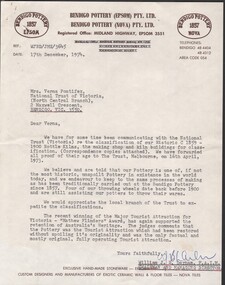
Document - National Trust Collection: Bendigo Pottery (Epsom) Pty Ltd - Two letters from the Bendigo Pottery owners seeking classification of the Kilns and history of the works, 14/10/2025
... National Trust - Two letters (17 December 1974 and undated proforma letter) on letterhead from the owners of the Bendigo Pottery seeking information: 3098.2A from the managing director of the Bendigo Pottery (Epsom) Pty Ltd and Bendigo Pottery (Nova) Pty Ltd sent to The National Trust (Central Victoria Branch) re the classification of the Bottle Kilns at the Bendigo Pottery Bottle Kilns (circa 1859 - 1900), 3098.2B Standard proforma letter to be forwarded to an unspecified range of companies/people from Humes Limited seeking information regarding its history, and a search for most historic ceramic articles produced by the pottery ...historic significant of Bendigo Pottery physical assets (Kilns and potter's wheels) assets Bendigo Pottery Bottle Kilns National Trust - Two letters (17 December 1974 and undated proforma letter) on letterhead from the owners of the Bendigo Pottery seeking information: 3098.2A from the managing director of the Bendigo Pottery (Epsom) Pty Ltd and Bendigo Pottery (Nova) Pty Ltd sent to The National Trust (Central Victoria Branch) re the classification of the Bottle Kilns at the Bendigo Pottery Bottle Kilns (circa 1859 - 1900), 3098.2B Standard proforma letter to be forwarded to an unspecified range of companies/people from Humes Limited seeking information regarding its history, and a search for most historic ceramic articles produced by the pottery Document National Trust Collection: Bendigo Pottery (Epsom) Pty Ltd - Two letters from the Bendigo Pottery owners seeking classification of the Kilns and history of the works ...historic significant of Bendigo Pottery physical assets (Kilns and potter's wheels) assetsNational Trust - Two letters (17 December 1974 and undated proforma letter) on letterhead from the owners of the Bendigo Pottery seeking information: 3098.2A from the managing director of the Bendigo Pottery (Epsom) Pty Ltd and Bendigo Pottery (Nova) Pty Ltd sent to The National Trust (Central Victoria Branch) re the classification of the Bottle Kilns at the Bendigo Pottery Bottle Kilns (circa 1859 - 1900), 3098.2B Standard proforma letter to be forwarded to an unspecified range of companies/people from Humes Limited seeking information regarding its history, and a search for most historic ceramic articles produced by the pottery bendigo pottery bottle kilns -
 Bendigo Historical Society Inc.
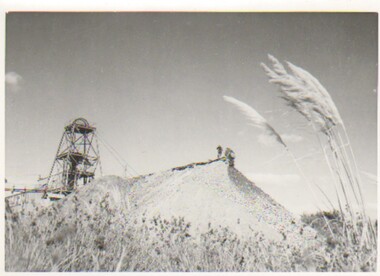
Photograph - CARWARDINE COLLECTION: CENTRAL DEBORAH MINE BENDIGO, 9th April, 1953
... It's 102 years since gold was first discovered at Golden Square, but today only two Deborah mines are working where once 3000 mines hummed. The Bendigo field had yielded 22,000,000 ounces valued at 110,000.000 pounds and three times more on today's value but last years output was only 10,000 ounces and the year before 13000 ounces. ...It's 102 years since gold was first discovered at Golden Square, but today only two Deborah mines are working where once 3000 mines hummed. The Bendigo field had yielded 22,000,000 ounces valued at 110,000.000 pounds and three times more on today's value but last years output was only 10,000 ounces and the year before 13000 ounces. ...Photograph. Carwardine collection, photograph of poppet head and mullock heap. On back reads 10.2.1956, in Sun news, Thursday 9.4.1953, page 12. Central Deborah mine, one of Bendigo's two remaining active mines. It's 102 years since gold was first discovered at Golden Square, but today only two Deborah mines are working where once 3000 mines hummed. The Bendigo field had yielded 22,000,000 ounces valued at 110,000.000 pounds and three times more on today's value but last years output was only 10,000 ounces and the year before 13000 ounces. Two photos.Herald - Sunbendigo, business, carwardine soap and candle -
 Sunshine and District Historical Society Incorporated
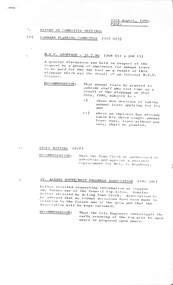
Administrative record - City of Sunshine - Commissioner Mr Alexander Alex George Gillon Collection 1976 - 1982 - Report of forward planning committee meeting 19th August 1980, City of Sunshine, 19th August 1980
... Albans South / West Progress Association letter requesting information as regards the future use of the Sunshine Tip Planning Application Protean Dempster Park adverse possession Car Park Watt Street Sunshine Humes Land Historical Buildings Photographs...Albans South / West Progress Association Sunshine Tip Protean Dempster Park Phoenix Street Sunshine North Watt Street Sunshine Humes Pipe Works Van Ness Avenue Report of Forward Planning Committee Meeting 19th August 1980 M.E.U. ...Report of Forward Planning Committee Meeting 19th August 1980 M.E.U. Stoppage 31st July 1980 St. Albans South / West Progress Association letter requesting information as regards the future use of the Sunshine Tip Planning Application Protean Dempster Park adverse possession Car Park Watt Street Sunshine Humes Land Historical Buildings Photographsst. albans south / west progress association, sunshine tip, protean, dempster park, phoenix street, sunshine north, watt street, sunshine, humes pipe works, van ness avenue -
 Nillumbik Shire Council
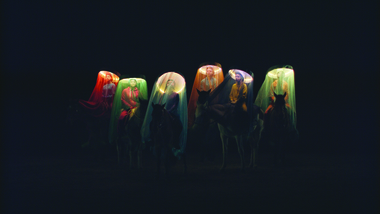
Tina Stefanou, Hym(e)nals, 2022
... ...hum...female horse riders horses sound performance hum interspecies body environment myths coming-of-age neurodiversity ecology religion video installation, sound Hym(e)nals Tina Stefanou ...Hym(e)nals features six teenage female horse riders and their elderly equine companions from Cottles Bridge. The work mimics and challenges themes in religious paintings, speaking to local ecologies and communities as well as current global events of female solidarity and equality, and interspecies communication. Drawing on myths around coming-of-age, the girls hum, scream and whisper into unknown climactic futures and changes in both body and environment. Nillumbik Prize for Contemporary Art 2023 Local Winner video installation, soundfemale, horse riders, horses, sound, performance, hum, interspecies, body, environment, myths, coming-of-age, neurodiversity, ecology, religion -
 Robin Boyd Foundation
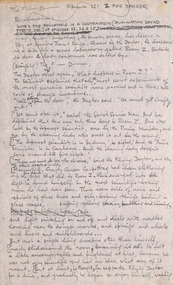
Document - Script, Robin Boyd, The Flying Dogtor. Episode 23 Z for Danger, 1963
... The Flying Dogtor could hear Crafty making whistling, humming noises and the Secret Service Man said he was messing with Mixture 8X, the most secretive invention of them all, Special Reducing Mixture for use when travelling in small satellites....The Flying Dogtor could hear Crafty making whistling, humming noises and the Secret Service Man said he was messing with Mixture 8X, the most secretive invention of them all, Special Reducing Mixture for use when travelling in small satellites. ...The most secretive experiments of the most secretive scientists were carried out in Room Z at the Woomera Range Space Rocket Division. The only people with a key were the topmost scientist, the Prime Minister and the cleaning lady. They had to wait until 5pm for the cleaning lady to arrive so they could get Crafty Carson Carpetbag out, who was hiding from The Flying Dogtor. The Flying Dogtor could hear Crafty making whistling, humming noises and the Secret Service Man said he was messing with Mixture 8X, the most secretive invention of them all, Special Reducing Mixture for use when travelling in small satellites.The Flying Dogtor" series was broadcast on Australian Television Network (later becoming the Seven Network) between February and April 1964 (see item D254 for schedule).Handwritten in pencil, foolscap, 2 pagesThe title is crossed out and it is noted that this is a contraction (eliminating sound effects) of Episodes 23, 24, and 25. Many edits.the flying dogtor, robin boyd, crawford productions, manuscript -
 Sunshine and District Historical Society Incorporated
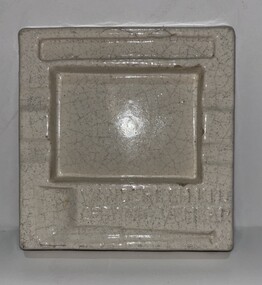
Memorabilia - Wunderlich Ceramic Ashtray, W. Zielinski, 22/07/1966 12:00:00 AM
... Wunderlich Ltd had several factories in Sunshine (asbestos sheets, ceramic veneers, aluminium windows) and a pipe factory in conjunction with Humes. It was a major employer in the Sunshine area. ...Wunderlich Ltd had several factories in Sunshine (asbestos sheets, ceramic veneers, aluminium windows) and a pipe factory in conjunction with Humes. It was a major employer in the Sunshine area. ...It appears that this type of item was intended to be used or was used as a promotional item for the Wunderlich Ltd Terra Cotta factory in McIntyre Rd, North Sunshine. This factory made large ceramic veneer tiles for use on buildings such as the now demolished two Commonwealth Buildings on Spring St, Melbourne (green coloured tiles on buildings). This ashtray was made in 1966 by an employee who found the plaster mould among other moulds in the Terra Cotta factory. It is unknown when the mould was previously used to make ashtrays. Wunderlich Ltd had several factories in Sunshine (asbestos sheets, ceramic veneers, aluminium windows) and a pipe factory in conjunction with Humes. It was a major employer in the Sunshine area. There are very few items in the S&DHS files regarding Wunderlich Ltd.Square shaped ceramic earthenware ashtray that is glazed with an off white coloured vitreous coating. The glaze is crazed and has some small chips in it."WUNDERLICH LTD CERAMIC VENEER" in relief writing on the top surface. "Whisky 22-7-66" is incised into the bottom surface.wunderlich, mcintyre road, sunshine north -
Hume City Civic Collection
Book, Saltwater River History Trails
... Clarke, Ben Eadie, Rupertswood, Goonawarra Vineyard, Organ Pipes, Glenara, Walter Clark, Keilor, Overnewton, Avondale Heights, Solomons ford, Riverview Tea Gardens, Anglers Hotel, Aberfeldie Park, Humes Pipe Works, Powder Magazine, Maribyrnong, Munitions factories, Footscray Park, Flemington, Footscray, Yarraville, Newport, Williamstown, Commonwealth reserve, the blue stone lighthouse. ...Saltwater River Maribyrnong River Jacksons Creek Anderson Hugh Sunbury Keilor Organ Pipes National Park Solomons Ford Riverview Tea Gardens Humes Pipe Works Powder Magazine Footscray Yarraville Newport Williamstown SALTWATER RIVER/HISTORY TRAILS/HUGH ANDERSON/Sunbury to the Sea A small cream/olive green colour covered printed book of 74 pages. ...This book which was printed in 1984 gives not only the geology of the area but also the history of the various areas that Jacksons Creek and the Saltwater River now known as the Maribyrnong River pass through. There are many drawings and photos accompanying the information relating to the various areas and buildings researched in this book. From Sunbury to Williamstown some of the names and places mentioned include John Aitken, George Evans, William J.T. Clarke, Ben Eadie, Rupertswood, Goonawarra Vineyard, Organ Pipes, Glenara, Walter Clark, Keilor, Overnewton, Avondale Heights, Solomons ford, Riverview Tea Gardens, Anglers Hotel, Aberfeldie Park, Humes Pipe Works, Powder Magazine, Maribyrnong, Munitions factories, Footscray Park, Flemington, Footscray, Yarraville, Newport, Williamstown, Commonwealth reserve, the blue stone lighthouse. One copy of this book has the author's signature on the inside first page. A small cream/olive green colour covered printed book of 74 pages. The front cover shows part of a pen and wash drawing of a homestead. It has the name of the book and the author Hugh Anderson printed at the top of the cover and Sunbury to the Sea printed at the bottom. There are many drawings and photos included in the book. The author Hugh Anderson has signed a copy on the inside first page.SALTWATER RIVER/HISTORY TRAILS/HUGH ANDERSON/Sunbury to the Seasaltwater river, maribyrnong river, jacksons creek, anderson hugh, sunbury, keilor, organ pipes national park, solomons ford, riverview tea gardens, humes pipe works, powder magazine, footscray, yarraville, newport, williamstown -
Bendigo Historical Society Inc.
Document - LONG GULLY HISTORY GROUP COLLECTION: LONG GULLY FOOTBALL CLUB 1906-1911
... Bottom right a list of the 1913 Long Gully players (playing in Bendigo City premier team): Ben Thompson, Jack Dunstan, Elisaa Dunstan, Fred Jenkins, Tommy Allen, Paddy Rohan, W. White, Hum Scott, Buller Webster, Billy Cook, Sapper Newcombe, Spreeader Ennor, Syd Jenkins, Buller Canavan, Tommy Baxter, Len Bowe, Joe Scadden, Brit Pattison, Bruiser Williams, Cap Muir, D. ...Bottom right a list of the 1913 Long Gully players (playing in Bendigo City premier team): Ben Thompson, Jack Dunstan, Elisaa Dunstan, Fred Jenkins, Tommy Allen, Paddy Rohan, W. White, Hum Scott, Buller Webster, Billy Cook, Sapper Newcombe, Spreeader Ennor, Syd Jenkins, Buller Canavan, Tommy Baxter, Len Bowe, Joe Scadden, Brit Pattison, Bruiser Williams, Cap Muir, D. ...Laminated poster with four panels. Top left: a history of the Long Gully Football Club 1906-1911 (from Len Bennet, Golden Square). Top right a black and white photo of 1906 junior Long Gully team. Bottom right a list of the 1913 Long Gully players (playing in Bendigo City premier team): Ben Thompson, Jack Dunstan, Elisaa Dunstan, Fred Jenkins, Tommy Allen, Paddy Rohan, W. White, Hum Scott, Buller Webster, Billy Cook, Sapper Newcombe, Spreeader Ennor, Syd Jenkins, Buller Canavan, Tommy Baxter, Len Bowe, Joe Scadden, Brit Pattison, Bruiser Williams, Cap Muir, D. Mahoney, Tassy Trahair, P. Hughes. G. Ogilvie, Tom Smith, Nels Keating, A. Blackmore, J. Benstead, Bony Dayfkin, Mottle Daykin, Tamus Daykin. Bottom right: An article from the Bendigo Advertiser 14/06/1950 titled Long Gully Football.clubs, football, long gully football club -
 Sunshine and District Historical Society Incorporated
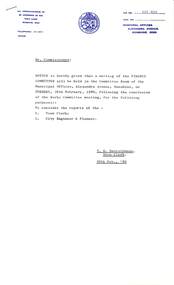
Administrative record - City of Sunshine - Commissioner Mr Alexander Alex George Gillon Collection 1976 - 1982 - Notice of committee meetings 26th February 1980, City of Sunshine, 20th February 1980
... Notice of Finance Committee Meeting 26th February 1980 Report of the Town Clerk National Wage Decision Variation to Awards Payment of Increase Capital Works Programme 1978-79 and Schedule for 1980-81Bon Thomas Reserve and Humes Land City of Sunshine Proposed Loan Programme 1979/80 Capital Works Programme 1978-79 and 1980-81Projects Which were Previously Provied on Capital Works Schedules and Previously Considered by Council, for which Neither Loan Money Or Overdraft Monies Have Been Procured Prior to 19th Febraury 1980 Financial Reports for the Period Ended 11th February 1980...Bon Thomas Reserve Quinn Street Deer Park Humes Pipes Land Van Ness Avenue Maribyrnong Notice of Finance Committee Meeting 26th February 1980 Report of the Town Clerk National Wage Decision Variation to Awards Payment of Increase Capital Works Programme 1978-79 and Schedule for 1980-81Bon Thomas Reserve and Humes Land City of Sunshine Proposed Loan Programme 1979/80 Capital Works Programme 1978-79 and 1980-81Projects Which were Previously Provied on Capital Works Schedules and Previously Considered by Council, for which Neither Loan Money Or Overdraft Monies Have Been Procured Prior to 19th Febraury 1980 Financial Reports for the Period Ended 11th February 1980 Foolscap sized document. ...Notice of Finance Committee Meeting 26th February 1980 Report of the Town Clerk National Wage Decision Variation to Awards Payment of Increase Capital Works Programme 1978-79 and Schedule for 1980-81Bon Thomas Reserve and Humes Land City of Sunshine Proposed Loan Programme 1979/80 Capital Works Programme 1978-79 and 1980-81Projects Which were Previously Provied on Capital Works Schedules and Previously Considered by Council, for which Neither Loan Money Or Overdraft Monies Have Been Procured Prior to 19th Febraury 1980 Financial Reports for the Period Ended 11th February 1980bon thomas reserve, quinn street, deer park, humes pipes land, van ness avenue, maribyrnong -
 Victorian Harness Racing Heritage Collection at Lord's Raceway Bendigo
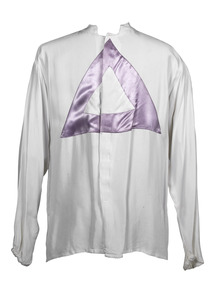
Clothing - Race colours, I.R. (Dick) Lee
... The horse, Hermes, would sire 1976 Melbourne Cup winner Van Der Hum. Dick served 12 years as president of the Victorian Square Trotters Association to advocate for the gait. ...The horse, Hermes, would sire 1976 Melbourne Cup winner Van Der Hum. Dick served 12 years as president of the Victorian Square Trotters Association to advocate for the gait. ...Dick Lee is a prolific Group 1 winning trainer and driver, successful breeder and owner, International and trotting pioneer, outstanding administrator and tireless volunteer. Dick Lee, son of a soldier-settler was a track ranger at the Melbourne Showgrounds before accepting a position as a private trainer in the emerging trotting industry in Wales, taking a team of horses to the UK where he had 105 drives for 29 wins. The adventure would also see him compete in Holland, Germany, Sweden, Belgium, Russia and the US, always with trotters. He returned to Australia in 1970 with “a wife, a trainer-driver premiership, half-a-dozen miniature Irish donkeys and a horse in tow”. The horse, Hermes, would sire 1976 Melbourne Cup winner Van Der Hum. Dick served 12 years as president of the Victorian Square Trotters Association to advocate for the gait. Emerging from this time are: 1985 The Redwood Classic for 2yo trotters 1996 the first all-trotting card, the Redwood Day at Maryborough. Dick Lee’s training and driving produced among others: Bendigo and Melbourne Pacing Cups winner Rhodonite Australian Trotters of the Year Hampdens Pride and Game Ebony V L Dullard Cup winners Glenfield Girl and Game Ebony Rufus Youngblood, whose racing career included 32 wins, 23 seconds and 18 thirds from 139 starts, the first Australian-bred horse to win four Derbies and Australian Horse of the Year in 1987. Dick Lee was inducted into the Victorian Harness Racing Hall of Fame in 2019White race colours with purple triangle pointing upbendigo, bendigo cup, lord's raceway, dick lee, rhodonite, bendigo harness racing club, bhrc, race colour, hall of fame, ir (dick) lee, ir lee -
 Sunshine and District Historical Society Incorporated
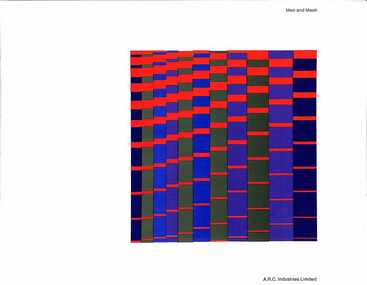
Booklet - Australian Reinforcing Company (ARC) Booklets, 1920 - 2010
... 2025.01 - ARC - Men And Mesh 2025.02 - ARC - BRC Fabric April 1977 2025.02 - ARC - BRC Fabric Dec 1976 2025.03 - ARC - 30th Annual Report And Notice Of Annual General Meeting 1980 2025.03 - ARC - 30th Annual Report And Notice Of Annual General Meeting 1981 2025.04 - ARC - OVAWELD Welded Reinforcing Fabric 2025.05 - ARC - Australian Military Forces ARC Mesh Technical Instructions 2025.06 - ARC - Smorgan ARC A Guide To Using Fabric Reinforcement 2025.07 - ARC - Smorgan ARC The Reinforcement Handbook 2025.08 - ARC - HUMES ARC Design Tables For One-way Suspended Slabs 2025.09 - ARC - CW 60 Reinforcing Bar 2025.10 - ARC - Manufacturers' Bulletin Special Edition Metric Conversion Tables 2025.11 - ARC - We Always Go To Extraordinary Lengths ARC 90th Anniversary...Australian Reinforcing Company ARC Ballarat Road Albion 2025.01 - ARC - Men And Mesh 2025.02 - ARC - BRC Fabric April 1977 2025.02 - ARC - BRC Fabric Dec 1976 2025.03 - ARC - 30th Annual Report And Notice Of Annual General Meeting 1980 2025.03 - ARC - 30th Annual Report And Notice Of Annual General Meeting 1981 2025.04 - ARC - OVAWELD Welded Reinforcing Fabric 2025.05 - ARC - Australian Military Forces ARC Mesh Technical Instructions 2025.06 - ARC - Smorgan ARC A Guide To Using Fabric Reinforcement 2025.07 - ARC - Smorgan ARC The Reinforcement Handbook 2025.08 - ARC - HUMES ARC Design Tables For One-way Suspended Slabs 2025.09 - ARC - CW 60 Reinforcing Bar 2025.10 - ARC - Manufacturers' Bulletin Special Edition Metric Conversion Tables 2025.11 - ARC - We Always Go To Extraordinary Lengths ARC 90th Anniversary Books and booklets pertaining to the ARC factory and its business; reinforcing. ...2025.01 - ARC - Men And Mesh 2025.02 - ARC - BRC Fabric April 1977 2025.02 - ARC - BRC Fabric Dec 1976 2025.03 - ARC - 30th Annual Report And Notice Of Annual General Meeting 1980 2025.03 - ARC - 30th Annual Report And Notice Of Annual General Meeting 1981 2025.04 - ARC - OVAWELD Welded Reinforcing Fabric 2025.05 - ARC - Australian Military Forces ARC Mesh Technical Instructions 2025.06 - ARC - Smorgan ARC A Guide To Using Fabric Reinforcement 2025.07 - ARC - Smorgan ARC The Reinforcement Handbook 2025.08 - ARC - HUMES ARC Design Tables For One-way Suspended Slabs 2025.09 - ARC - CW 60 Reinforcing Bar 2025.10 - ARC - Manufacturers' Bulletin Special Edition Metric Conversion Tables 2025.11 - ARC - We Always Go To Extraordinary Lengths ARC 90th Anniversaryaustralian reinforcing company, arc, ballarat road, albion -
 Sunshine and District Historical Society Incorporated
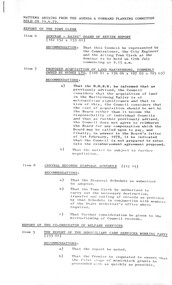
Administrative record - City of Sunshine - Commissioner Mr Alexander Alex George Gillon Collection 1976 - 1982 - Matter arising from the Agenda and Forward Planning Committee Meeting 19th June 1979, City of Sunshine, 16th June 1979
... Matter arising from the Agenda and Forward Planning Committee Meeting 19th June 1979 Report of the Town Clerk Seminar Bains' Board of Review Proposed Acquisition of Land Maribyrnong Formerly Owned by Humes Ltd Central Records Disposal Schedule Report of the Co-Ordinator of Welfare Services The Report of the Domiciliary Care Services Working Party Report of the Municipal Recreation Officer Our Lady's Youth Centre use of the Facility by the Community Report of the City Engineer & Planner Planning Permit Application First Aid and Drovers' Amenities Building Somerville Road Plan of Subdivision Mitchell Street, Richards Street and Emu Road The Olympic Tyre & Rubber Co. ...Hume Pipe Company Maribyrnong Mitchell Street Richards Street Emu Street Maidstone Van Ness Avenue Our Lady's Youth Centre Somerville Road Brooklyn Olympic Tyre & Rubber Co Sunshine Tip Cooper Street Gertrude Street Sunshine Esmond Street Bridge Esmond Street Lawrence Street Bridge Lawrence Street Ardeer Matter arising from the Agenda and Forward Planning Committee Meeting 19th June 1979 Report of the Town Clerk Seminar Bains' Board of Review Proposed Acquisition of Land Maribyrnong Formerly Owned by Humes Ltd Central Records Disposal Schedule Report of the Co-Ordinator of Welfare Services The Report of the Domiciliary Care Services Working Party Report of the Municipal Recreation Officer Our Lady's Youth Centre use of the Facility by the Community Report of the City Engineer & Planner Planning Permit Application First Aid and Drovers' Amenities Building Somerville Road Plan of Subdivision Mitchell Street, Richards Street and Emu Road The Olympic Tyre & Rubber Co. ...Matter arising from the Agenda and Forward Planning Committee Meeting 19th June 1979 Report of the Town Clerk Seminar Bains' Board of Review Proposed Acquisition of Land Maribyrnong Formerly Owned by Humes Ltd Central Records Disposal Schedule Report of the Co-Ordinator of Welfare Services The Report of the Domiciliary Care Services Working Party Report of the Municipal Recreation Officer Our Lady's Youth Centre use of the Facility by the Community Report of the City Engineer & Planner Planning Permit Application First Aid and Drovers' Amenities Building Somerville Road Plan of Subdivision Mitchell Street, Richards Street and Emu Road The Olympic Tyre & Rubber Co. Pty Ltd Contract Fencing Sunshine Tip Site Finalisation of Health Act Drain Rear of Cooper Street and Gertrude Street Footbridge Programme Esmond Street Bridge and Lawrence Street Bridge Ardeerhume pipe company, maribyrnong, mitchell street, richards street, emu street, maidstone, van ness avenue, our lady's youth centre, somerville road, brooklyn, olympic tyre & rubber co, sunshine tip, cooper street, gertrude street, sunshine, esmond street bridge, esmond street, lawrence street bridge, lawrence street, ardeer -
 Sunshine and District Historical Society Incorporated
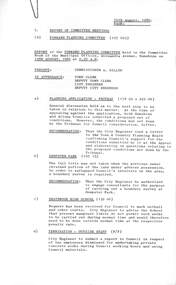
Administrative record - City of Sunshine - Commissioner Mr Alexander Alex George Gillon Collection 1976 - 1982 - Report of forward planning committee meeting 12th August 1980, City of Sunshine, 19th August 1980
... Report of Forward Planning Committee Meeting 12th August 1980 Planning Application Protean Boundary Road corner Fitzgerald Road Dempster Park Full Title Braybrook High School Netball Court Marking Planning Amendment Bains' Report Council Elections Sunshine Heights Football Club Broken Windows Account Payment Sunshine Swimming & Life Saving Club Maribyrnong River Objection to Proposed Lighting Transport Sunshine West Improvement Request Humes Pipes Land Car Parking Watt Street Estimates 1980/81 Vic Rail Housing Estate Fun Run Sunshine Amateur Athletics Club Motorcycle Track Request Conditions of Roads Reinstatement of Nature Strip 14 Ernest Street Sunshine Sunshine Choral Society Footpath Damage 2 Syleham Street St. ...Protean Bounrdary Road Fitzgerald Road Berrimut Dempster Park Phoenix Street Sunshine North Braybrook High School Ballarat Road Braybrook Sunshine Heights Football Club Vernon Crescent Sunshine West Sunshine Swimming and Life Saving Club Maribyrnong River Humes Pipes Land Van Ness Avenue Maribyrnong Watt Street Sunshine Sunshine Amateur Athletics Club Ernest Street Sunshine Choral Society Syleham Street St. ...Report of Forward Planning Committee Meeting 12th August 1980 Planning Application Protean Boundary Road corner Fitzgerald Road Dempster Park Full Title Braybrook High School Netball Court Marking Planning Amendment Bains' Report Council Elections Sunshine Heights Football Club Broken Windows Account Payment Sunshine Swimming & Life Saving Club Maribyrnong River Objection to Proposed Lighting Transport Sunshine West Improvement Request Humes Pipes Land Car Parking Watt Street Estimates 1980/81 Vic Rail Housing Estate Fun Run Sunshine Amateur Athletics Club Motorcycle Track Request Conditions of Roads Reinstatement of Nature Strip 14 Ernest Street Sunshine Sunshine Choral Society Footpath Damage 2 Syleham Street St. Albansprotean, bounrdary road, fitzgerald road, berrimut, dempster park, phoenix street, sunshine north, braybrook high school, ballarat road, braybrook, sunshine heights football club, vernon crescent, sunshine west, sunshine swimming and life saving club, maribyrnong river, humes pipes land, van ness avenue, maribyrnong, watt street, sunshine, sunshine amateur athletics club, ernest street, sunshine choral society, syleham street, st. albans -
 Sunshine and District Historical Society Incorporated
Photograph - Maribyrnong River and Valley
... Photocopy of Photograph Maribyrnong Munitions Factory 1938|Newspaper article Brimbank Messenger 29 October 2002 Our bond with the Maltese|Newspaper article The Herald Friday 24 February 1989 Yes Melbourne does have another river|Typed report History of Maribyrnong Steering Committee Reports|Typed notes of Steering Committee History of Maribyrnong Meeting held 7 June 1989|Typed notes 27 April 1989 History of Maribyrnong Steering Committtee Meeting|Typed notes of Steering Committee 5 April 1989|Typed notes of Steering Committee 1 March 1989|Typed notes of Steering Committee 11 January 1989|Typed notes 23 August 1988 Local History|Typed notes of Steering Committee 28 Febuary 1989|Typed report 17 November 1988 A History of Maribyrnong|Extract First Contacts I Primi Contenti|Extract Chapter 2 Maribyrnong on the map|Typed Report Migrant impact The early settlement of Maribyrnong|Photocopy of photographs Your family's photos are Maribyrnong's heritage|Typed report Maribyrnong A pictorial history|Typed report Maribyrnong History Outline|Typed report A History of Maribyrnong General Brief for the Author|Handwritten notes Research for Sunshine Council Project|Letter 18 August 1988 The History Institute|Typed report Copyright|Newspaper article Star 7 December 2004 Council moves to avert disaster|Newspaper article Brimbank Messenger 4 July 2000 Platypus potential|Newspaper article |Advocate 7 July 1993 New river bridge|Letter to Waterways and Parks division Metropolitan Parks 11 April 1985 Potential uses of Bluestone buildings|Typed Memorandum 21 January 1985 History of the Site of the Marie Hill Centre|Typed report The Ford Maribyrnong River|Typed letter from Legislative Council 6 January 1982 regarded rezoning|Extract of Poem The Haunted Castle at Maribyrnong by Martha Coxhead|Handwritten note Evan Crick Hotel dates|Brochure Historic Parkland Van Ness Avenue Sunshine|Typed notes Maribyrnong River Valley Braybrook February 1992|Typed letter 1 June 1983 Humes Site from Melbourne and Metropolitan Board of Works|Typed l etter 31 May 1982 from Historic Buildings Preservation Council re the fomer Melbourne Meat Preserving Company buildings and former Humes Pipes Site Van Ness Avenue Maribyrnong|Flyer 3 February 1803 Charles Grimes 175th Anniversary 5 February 1978|Newspaper articles Melbourne must not forget its other river|Newspaper article Sunshine Advocatge 24 February 1982 Hearing on Humes rezoning|Newspaper article Public Meeting on Future Development Plans for the former Humes site|Huge Banner Development Plan for Maribyrnong River|Newspaper article Advocate 22 February 2000 Greedy developers|Newspaper article Advocate 17 April 1996 River estate plan set for amendment|Newspaper article Advocate 8 February 2000 Bridging concern|Newspaper article Western Times 1 March 2000 Developers plan riles river residents|Newspaper article Advocate 20 February 1974 Maribyrnong a paradise|Newspaper article Messenger 15 February 2000 Plan rushed residents|Newspaper article Advocate 1 June 1983 Get tough policy on Valley|Newspaper article The Herald 11 December 1981 A community is up in arms over a threat to Victoria's heritage The battle over the bluestone. ...Maribyrnong River Maribyrnong Valley Photocopy of Photograph Maribyrnong Munitions Factory 1938|Newspaper article Brimbank Messenger 29 October 2002 Our bond with the Maltese|Newspaper article The Herald Friday 24 February 1989 Yes Melbourne does have another river|Typed report History of Maribyrnong Steering Committee Reports|Typed notes of Steering Committee History of Maribyrnong Meeting held 7 June 1989|Typed notes 27 April 1989 History of Maribyrnong Steering Committtee Meeting|Typed notes of Steering Committee 5 April 1989|Typed notes of Steering Committee 1 March 1989|Typed notes of Steering Committee 11 January 1989|Typed notes 23 August 1988 Local History|Typed notes of Steering Committee 28 Febuary 1989|Typed report 17 November 1988 A History of Maribyrnong|Extract First Contacts I Primi Contenti|Extract Chapter 2 Maribyrnong on the map|Typed Report Migrant impact The early settlement of Maribyrnong|Photocopy of photographs Your family's photos are Maribyrnong's heritage|Typed report Maribyrnong A pictorial history|Typed report Maribyrnong History Outline|Typed report A History of Maribyrnong General Brief for the Author|Handwritten notes Research for Sunshine Council Project|Letter 18 August 1988 The History Institute|Typed report Copyright|Newspaper article Star 7 December 2004 Council moves to avert disaster|Newspaper article Brimbank Messenger 4 July 2000 Platypus potential|Newspaper article |Advocate 7 July 1993 New river bridge|Letter to Waterways and Parks division Metropolitan Parks 11 April 1985 Potential uses of Bluestone buildings|Typed Memorandum 21 January 1985 History of the Site of the Marie Hill Centre|Typed report The Ford Maribyrnong River|Typed letter from Legislative Council 6 January 1982 regarded rezoning|Extract of Poem The Haunted Castle at Maribyrnong by Martha Coxhead|Handwritten note Evan Crick Hotel dates|Brochure Historic Parkland Van Ness Avenue Sunshine|Typed notes Maribyrnong River Valley Braybrook February 1992|Typed letter 1 June 1983 Humes Site from Melbourne and Metropolitan Board of Works|Typed l etter 31 May 1982 from Historic Buildings Preservation Council re the fomer Melbourne Meat Preserving Company buildings and former Humes Pipes Site Van Ness Avenue Maribyrnong|Flyer 3 February 1803 Charles Grimes 175th Anniversary 5 February 1978|Newspaper articles Melbourne must not forget its other river|Newspaper article Sunshine Advocatge 24 February 1982 Hearing on Humes rezoning|Newspaper article Public Meeting on Future Development Plans for the former Humes site|Huge Banner Development Plan for Maribyrnong River|Newspaper article Advocate 22 February 2000 Greedy developers|Newspaper article Advocate 17 April 1996 River estate plan set for amendment|Newspaper article Advocate 8 February 2000 Bridging concern|Newspaper article Western Times 1 March 2000 Developers plan riles river residents|Newspaper article Advocate 20 February 1974 Maribyrnong a paradise|Newspaper article Messenger 15 February 2000 Plan rushed residents|Newspaper article Advocate 1 June 1983 Get tough policy on Valley|Newspaper article The Herald 11 December 1981 A community is up in arms over a threat to Victoria's heritage The battle over the bluestone. ...Photocopy of Photograph Maribyrnong Munitions Factory 1938|Newspaper article Brimbank Messenger 29 October 2002 Our bond with the Maltese|Newspaper article The Herald Friday 24 February 1989 Yes Melbourne does have another river|Typed report History of Maribyrnong Steering Committee Reports|Typed notes of Steering Committee History of Maribyrnong Meeting held 7 June 1989|Typed notes 27 April 1989 History of Maribyrnong Steering Committtee Meeting|Typed notes of Steering Committee 5 April 1989|Typed notes of Steering Committee 1 March 1989|Typed notes of Steering Committee 11 January 1989|Typed notes 23 August 1988 Local History|Typed notes of Steering Committee 28 Febuary 1989|Typed report 17 November 1988 A History of Maribyrnong|Extract First Contacts I Primi Contenti|Extract Chapter 2 Maribyrnong on the map|Typed Report Migrant impact The early settlement of Maribyrnong|Photocopy of photographs Your family's photos are Maribyrnong's heritage|Typed report Maribyrnong A pictorial history|Typed report Maribyrnong History Outline|Typed report A History of Maribyrnong General Brief for the Author|Handwritten notes Research for Sunshine Council Project|Letter 18 August 1988 The History Institute|Typed report Copyright|Newspaper article Star 7 December 2004 Council moves to avert disaster|Newspaper article Brimbank Messenger 4 July 2000 Platypus potential|Newspaper article |Advocate 7 July 1993 New river bridge|Letter to Waterways and Parks division Metropolitan Parks 11 April 1985 Potential uses of Bluestone buildings|Typed Memorandum 21 January 1985 History of the Site of the Marie Hill Centre|Typed report The Ford Maribyrnong River|Typed letter from Legislative Council 6 January 1982 regarded rezoning|Extract of Poem The Haunted Castle at Maribyrnong by Martha Coxhead|Handwritten note Evan Crick Hotel dates|Brochure Historic Parkland Van Ness Avenue Sunshine|Typed notes Maribyrnong River Valley Braybrook February 1992|Typed letter 1 June 1983 Humes Site from Melbourne and Metropolitan Board of Works|Typed l etter 31 May 1982 from Historic Buildings Preservation Council re the fomer Melbourne Meat Preserving Company buildings and former Humes Pipes Site Van Ness Avenue Maribyrnong|Flyer 3 February 1803 Charles Grimes 175th Anniversary 5 February 1978|Newspaper articles Melbourne must not forget its other river|Newspaper article Sunshine Advocatge 24 February 1982 Hearing on Humes rezoning|Newspaper article Public Meeting on Future Development Plans for the former Humes site|Huge Banner Development Plan for Maribyrnong River|Newspaper article Advocate 22 February 2000 Greedy developers|Newspaper article Advocate 17 April 1996 River estate plan set for amendment|Newspaper article Advocate 8 February 2000 Bridging concern|Newspaper article Western Times 1 March 2000 Developers plan riles river residents|Newspaper article Advocate 20 February 1974 Maribyrnong a paradise|Newspaper article Messenger 15 February 2000 Plan rushed residents|Newspaper article Advocate 1 June 1983 Get tough policy on Valley|Newspaper article The Herald 11 December 1981 A community is up in arms over a threat to Victoria's heritage The battle over the bluestone. The Melbourne Meat Preserving Works|Typed report Historic Workplace Humes Site Van Ness Avenue Maribyrnong|Typed letter 1 December 1967 Explosives Factory Maribyrnong|Typed report Racing colours Rose and Black|Newspaper article The Age 28 April 1982 The western maze|Typed Minutes 4 July 1983 Meeting of the Lower Maribyrnong Conservation Group|Typed Constitution of the Lower Maribyrnong Valley Conservation Group|Typed Submission 29 April 1982 To City of Sunshine for Historic buildings preservation council classifications sub committee|Typed Minutes of Lower Maribyrnong Valley Conservation Group 26 August 1982|Typed Application for Membership form Lower Maribyrnong Valley Conservation Group|Typed Submission for a Financial Grant to the Charles Grimes 175th Anniversary Re enactment Committee|Typed Annual General Meeting 5 July 1984 Lower Maribyrnong Valley Conservation Group|Typed letter 30 July 1980 Humes Site|Typed Proposal Bluestone building|Typed Letter from University of Melbourne 11 December 1980 Meat Preserving companys works|Brochure Pipemakers Park|Typed notes Elizabeth McKinnon Mosaic mural artist|Newspaper article Sunshine Advocate 10 November 1993 Heritage site rediscovered|Newspaper article The Age 7 September 1996 Dreamtime in an industrial garden|Newspaper article The Western Times 6 December 1989 The peoples historiian|Typed report The Saltwater River Powder Magazine Jacks Magazine|Typed letter from Henry Laskowski Sunshine City Council Engineer / Planner to Gwen Goedecke Re: Melbourne Metropolitan Planning Scheme Amendment No 157 Maribyrnong Valley 26th November 1981|Newspaper article The Advocate 13th September Council to buy vital river land|Newspaper article The Age 4th September 1978 Tight controls urged over Maribyrnong|Newspaper article The Age 27th April 1988 Metropolitan Region Planning Scheme Amendment RL11|Melbourne Metropolitan Board of Works M.M.B.W. Concept plan for Maribyrnong River Development Media Release 25th January 1984|City of Sunshine The Maribyrnong River Ideas for the River Valley|Newspaper Article The Advocate 14 March 1979 River Valley Land Purchasemaribyrnong river, maribyrnong valley -
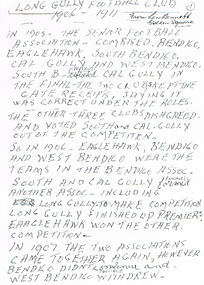 Bendigo Historical Society Inc.
Document - LONG GULLY HISTORY GROUP COLLECTION: SHORT HISTORY OF THE LONG GULLY FOOTBALL CLUB 1906 - 1911
... Names are: Jan Jewel, Ben Thompson, Jack Dunstan, Elisaa Donstan, Fred Jenkins, Tommy Allen, Paddy Rohan, W White, Hum Scott, Buller Webster, Billy Cook, Sapper Newcombe, Spreader Ennor, Syd Jenkins, Buller Canavan, Tommy Baxter, Len Bowe, Joe Scadden, Brit Pattinson, Bruiser Williams, Cap Muir, D Mahoney, Tassy Trahair, P Hughes, Taffy Vercoe, G Ogilvie, Tom Smith, Nels Keating, A Blackmore, J Benstead, Bony Daykin, Mottle, Tamus, Hilby Jenkins, Les Sinclair, Dave Mahoney, Perl Mahoney, Errol Hargreaves, Ant Theodore, Les Theodore, W Donaldson, Henry Boldt, Peter Hughes, J White, P Walker, Jack Roberts, Jim Turner, Cap Muir, Brit Pattinson, W Byrne, Trahair, Bendigo District Football Association, Lol, Cook, Sunny, Jim Spencer, Teddy Mills, W Cravino, Snowy Bolger, Henner Wright, R Moran, Miles O'Neill, W Hill, M Craven, T Webb, A pattinson, F Pattinson, A Upstett, W Hewitt, J Foster, Big Seawood, Tas Andrew, Malachi Trewartha, Pompey Scaddon, Mottle Daykin, Barney Fagan, Tax Edwards, J Bornford, P Bauer, Olly Heath, G Graham, Geordie Ogilvie sen, Bill Ewing, Barkley Bailes, Harry Glen, Punter Sells, Les Oliver, A Muerer, V Proffit, A Hands, A Cambridge, A Trajair, Frank Mueller, H Hunter, W Luke, H Barlow, Bertie Pierce, F Fielding, Bendigo City, Harry Morgan,...BENDIGO History long gully history group Jan Jewel Bendigo Advertiser Ben thompson Jack Dunstan Elisaa Donstan Fred jenkins Tommy Allen Paddy Rohan W White Hum Scott Buller Webster Billy Cook Sapper Newcombe Spreader Ennor Syd Jenkins Buller Canavan Tommy Baxter Len Bowe Joe Scadden Brit Pattinson Bruiser Williams Cap Muir D Mahoney Tassy Trahair P Hughes Taffy Vercoe G Ogilvie Tom Smith Nels Keating A Blackmore J Benstead Bony Daykin Mottle Tamus Hilby Jenkins Les Sinclair Dave Mahoney Perl Mahoney Errol Hargreaves Ant Theodore Les Theodore W Donaldson Henry Boldt Peter Hughes J White P Walker Jack Roberts Jim Turner Cap Muir Brit Pattinson W Byrne Trahair William Bidwell J E Fauckner J Smith Bendigo District Football Association Lol Cook Sunny Jim Spencer Teddy Mills W Cravino Snowy Bolger Henner Wright R Moran Miles O'Neill W Hill M Craven T Webb A pattinson F Pattinson A Upstett W Hewitt J Foster Big Seawood Tas Andrew Malachi Trewartha Pompey Scaddon Mottle Daykin Barney Fagan Tax Edwards J Bornford P Bauer Olly Heath G Graham Geordie Ogilvie sen Bill Ewing Barkley Bailes Harry Glen Punter Sells Les Oliver A Muerer V Proffit A Hands A Cambridge A Trajair Frank Mueller H Hunter W Luke H Barlow Bertie Pierce F Fielding Bendigo City Harry Morgan Short History of the Long Gully Football Club 1906 - 1911 Len Bennett Long Gully Bridge Long Gully Alberts Team Jan Jewel Bendigo Advertiser Ben thompson Jack Dunstan Elisaa Donstan Fred jenkins Tommy Allen Paddy Rohan W White Hum Scott Buller Webster Billy Cook Sapper Newcombe Spreader Ennor Syd Jenkins Buller Canavan Tommy Baxter Len Bowe Joe Scadden Brit Pattinson Bruiser Williams Cap Muir D Mahoney Tassy Trahair P Hughes Taffy Vercoe G Ogilvie Tom Smith Nels Keating A Blackmore J Benstead Bony Daykin Mottle Tamus Hilby Jenkins Les Sinclair Dave Mahoney Perl Mahoney Errol Hargreaves Ant Theodore Les Theodore W Donaldson Henry Boldt Peter Hughes J White P Walker Jack Roberts Jim Turner Cap Muir Brit Pattinson W Byrne Trahair William Bidwell J E Fauckner J Smith Bendigo District Football Association Lol Cook Sunny Jim Spencer Teddy Mills W Cravino Snowy Bolger Henner Wright R Moran Miles O'Neill W Hill M Craven T Webb A pattinson F Pattinson A Upstett W Hewitt J Foster Big Seawood Tas Andrew Malachi Trewartha Pompey Scaddon Mottle Daykin Barney Fagan Tax Edwards J Bornford P Bauer Olly Heath G Graham Geordie Ogilvie sen Bill Ewing Barkley Bailes Harry Glen Punter Sells Les Oliver A Muerer V Proffit A Hands A Cambridge A Trajair Frank Mueller H Hunter W Luke H Barlow Bertie Pierce F Fielding Bendigo City Harry Morgan Copy of a handwritten Short History, (6 pages) of the Long Gully Football Club 1906 - 1911. ...Copy of a handwritten Short History, (6 pages) of the Long Gully Football Club 1906 - 1911. Includes some history, grounds, advertisements and names of players. Names are: Jan Jewel, Ben Thompson, Jack Dunstan, Elisaa Donstan, Fred Jenkins, Tommy Allen, Paddy Rohan, W White, Hum Scott, Buller Webster, Billy Cook, Sapper Newcombe, Spreader Ennor, Syd Jenkins, Buller Canavan, Tommy Baxter, Len Bowe, Joe Scadden, Brit Pattinson, Bruiser Williams, Cap Muir, D Mahoney, Tassy Trahair, P Hughes, Taffy Vercoe, G Ogilvie, Tom Smith, Nels Keating, A Blackmore, J Benstead, Bony Daykin, Mottle, Tamus, Hilby Jenkins, Les Sinclair, Dave Mahoney, Perl Mahoney, Errol Hargreaves, Ant Theodore, Les Theodore, W Donaldson, Henry Boldt, Peter Hughes, J White, P Walker, Jack Roberts, Jim Turner, Cap Muir, Brit Pattinson, W Byrne, Trahair, Bendigo District Football Association, Lol, Cook, Sunny, Jim Spencer, Teddy Mills, W Cravino, Snowy Bolger, Henner Wright, R Moran, Miles O'Neill, W Hill, M Craven, T Webb, A pattinson, F Pattinson, A Upstett, W Hewitt, J Foster, Big Seawood, Tas Andrew, Malachi Trewartha, Pompey Scaddon, Mottle Daykin, Barney Fagan, Tax Edwards, J Bornford, P Bauer, Olly Heath, G Graham, Geordie Ogilvie sen, Bill Ewing, Barkley Bailes, Harry Glen, Punter Sells, Les Oliver, A Muerer, V Proffit, A Hands, A Cambridge, A Trajair, Frank Mueller, H Hunter, W Luke, H Barlow, Bertie Pierce, F Fielding, Bendigo City, Harry Morgan,bendigo, history, long gully history group, jan jewel, bendigo advertiser, ben thompson, jack dunstan, elisaa donstan, fred jenkins, tommy allen, paddy rohan, w white, hum scott, buller webster, billy cook, sapper newcombe, spreader ennor, syd jenkins, buller canavan, tommy baxter, len bowe, joe scadden, brit pattinson, bruiser williams, cap muir, d mahoney, tassy trahair, p hughes, taffy vercoe, g ogilvie, tom smith, nels keating, a blackmore, j benstead, bony daykin, mottle, tamus, hilby jenkins, les sinclair, dave mahoney, perl mahoney, errol hargreaves, ant theodore, les theodore, w donaldson, henry boldt, peter hughes, j white, p walker, jack roberts, jim turner, cap muir, brit pattinson, w byrne, trahair, william bidwell, j e fauckner, j smith, bendigo district football association, lol, cook, sunny, jim spencer, teddy mills, w cravino, snowy bolger, henner wright, r moran, miles o'neill, w hill, m craven, t webb, a pattinson, f pattinson, a upstett, w hewitt, j foster, big seawood, tas andrew, malachi trewartha, pompey scaddon, mottle daykin, barney fagan, tax edwards, j bornford, p bauer, olly heath, g graham, geordie ogilvie sen, bill ewing, barkley bailes, harry glen, punter sells, les oliver, a muerer, v proffit, a hands, a cambridge, a trajair, frank mueller, h hunter, w luke, h barlow, bertie pierce, f fielding, bendigo city, harry morgan, short history of the long gully football club 1906 - 1911, len bennett, long gully bridge, long gully alberts team, jan jewel, bendigo advertiser, ben thompson, jack dunstan, elisaa donstan, fred jenkins, tommy allen, paddy rohan, w white, hum scott, buller webster, billy cook, sapper newcombe, spreader ennor, syd jenkins, buller canavan, tommy baxter, len bowe, joe scadden, brit pattinson, bruiser williams, cap muir, d mahoney, tassy trahair, p hughes, taffy vercoe, g ogilvie, tom smith, nels keating, a blackmore, j benstead, bony daykin, mottle, tamus, hilby jenkins, les sinclair, dave mahoney, perl mahoney, errol hargreaves, ant theodore, les theodore, w donaldson, henry boldt, peter hughes, j white, p walker, jack roberts, jim turner, cap muir, brit pattinson, w byrne, trahair, william bidwell, j e fauckner, j smith, bendigo district football association, lol, cook, sunny, jim spencer, teddy mills, w cravino, snowy bolger, henner wright, r moran, miles o'neill, w hill, m craven, t webb, a pattinson, f pattinson, a upstett, w hewitt, j foster, big seawood, tas andrew, malachi trewartha, pompey scaddon, mottle daykin, barney fagan, tax edwards, j bornford, p bauer, olly heath, g graham, geordie ogilvie sen, bill ewing, barkley bailes, harry glen, punter sells, les oliver, a muerer, v proffit, a hands, a cambridge, a trajair, frank mueller, h hunter, w luke, h barlow, bertie pierce, f fielding, bendigo city, harry morgan -
Unions Ballarat
Eureka : The songs that made Australia, 31 cm
... Contents: • According to the Act • The Albury ram • Another fall of rain • Australia's on the Wallaby • The bald-headed end of the broom • The ballad of Ben Hall • The ballad of the Kelly Gang • The banks of the Condamine • The big-gun shearer • The black velvet band • The blackboys Waltzing Matilda • Bluey Brink • Bold Jack Donohue • Bound for Botany Bay • Brisbane ladies • Cain killed Abel • The cane-cutter's lament • The carrier's song • The Catalpa • Charlie Mopps • Click go the shears • The cockies of Bungaree • Colonial experience • Coming down the flat • The convict maid • The currency lasses • The death of Alec Robertson • The death of Ben Hall • The death of Willie Stone • Denis O'Reilly • The drover's dream • The dying aviator • The dying stockman • Eight little cylinders • The Eldorado mining disaster • The exile of Erin • Farewell to Greta • Flash Jack from Gundagai • The flash stockman • Frank Gardiner • The freehold on the plain • The gaol song • The girls of the Shamrock Shores • The golden gullies of the Palmer • The gumtree canoe • The Hamfat man • Heenan and Sayers • Henry's downfall • Here's adieu to all judges and juries • I've been to Australia, Oh • Jim Jones at Botany Bay • Jog along til shearing • John Kanaka • The Lachlan Tigers • Leave her, jollies, leave her • Les Darcy • The limejuice tub • Look out below • Maggie May • Maids of Australia • Man of the Earth • The Maryborough miner • Moreton Bay • The morning of the fray • Morrisey and the Russian sailor • Musselman • The mustering song • My name is Edward Kelly • Nails • The new chum Chinaman • Nine miles from Gundagai • The nose on my old man • Oh, give me a hut • The old bark hut • The old bullock dray • One of the has-beens • The overlanders • Pint Pot and Billy • Pity poor labourers • Radcliffe Highway • The rigs of the time • Rolling home • The Ryebuck shearer • Sam Holt • Sign-on day • Sixteen thousand miles from home • South Australia • The springtime it brings on the shearing • The stockman's last bed • The Sunshine Railway disaster • Tambaroora Ted • The tattooed lady • Ten thousand miles away • The tent poles are rotten • Travelling down the Castlereagh • Tumba-bloody-Rumba • The two professional hums • Van Diemen's Land • The wallaby brigade • When we get our tuppence back • The wild colonial boy • Woolloomooloo ...Contents: • According to the Act • The Albury ram • Another fall of rain • Australia's on the Wallaby • The bald-headed end of the broom • The ballad of Ben Hall • The ballad of the Kelly Gang • The banks of the Condamine • The big-gun shearer • The black velvet band • The blackboys Waltzing Matilda • Bluey Brink • Bold Jack Donohue • Bound for Botany Bay • Brisbane ladies • Cain killed Abel • The cane-cutter's lament • The carrier's song • The Catalpa • Charlie Mopps • Click go the shears • The cockies of Bungaree • Colonial experience • Coming down the flat • The convict maid • The currency lasses • The death of Alec Robertson • The death of Ben Hall • The death of Willie Stone • Denis O'Reilly • The drover's dream • The dying aviator • The dying stockman • Eight little cylinders • The Eldorado mining disaster • The exile of Erin • Farewell to Greta • Flash Jack from Gundagai • The flash stockman • Frank Gardiner • The freehold on the plain • The gaol song • The girls of the Shamrock Shores • The golden gullies of the Palmer • The gumtree canoe • The Hamfat man • Heenan and Sayers • Henry's downfall • Here's adieu to all judges and juries • I've been to Australia, Oh • Jim Jones at Botany Bay • Jog along til shearing • John Kanaka • The Lachlan Tigers • Leave her, jollies, leave her • Les Darcy • The limejuice tub • Look out below • Maggie May • Maids of Australia • Man of the Earth • The Maryborough miner • Moreton Bay • The morning of the fray • Morrisey and the Russian sailor • Musselman • The mustering song • My name is Edward Kelly • Nails • The new chum Chinaman • Nine miles from Gundagai • The nose on my old man • Oh, give me a hut • The old bark hut • The old bullock dray • One of the has-beens • The overlanders • Pint Pot and Billy • Pity poor labourers • Radcliffe Highway • The rigs of the time • Rolling home • The Ryebuck shearer • Sam Holt • Sign-on day • Sixteen thousand miles from home • South Australia • The springtime it brings on the shearing • The stockman's last bed • The Sunshine Railway disaster • Tambaroora Ted • The tattooed lady • Ten thousand miles away • The tent poles are rotten • Travelling down the Castlereagh • Tumba-bloody-Rumba • The two professional hums • Van Diemen's Land • The wallaby brigade • When we get our tuppence back • The wild colonial boy • Woolloomooloo Australian culture, folklore and history in songs. songs btlc ballarat trades and labour council ballarat trades hall convicts transportation sea shanties pioneering gold goldrush bushrangers shearers drovers bush life sporting life disasters music Front cover: author's name and title. ...Songs of Australian heritage for voice. Melody line only with chord symbols. Includes guitar tablature for chords. Convicts, transportation and sea shanties. Pioneering, goldrush days and bushrangers. Shearers, drovers and bush life. Swagmen, Victorian expansion, sporting life and disasters. Contents: • According to the Act • The Albury ram • Another fall of rain • Australia's on the Wallaby • The bald-headed end of the broom • The ballad of Ben Hall • The ballad of the Kelly Gang • The banks of the Condamine • The big-gun shearer • The black velvet band • The blackboys Waltzing Matilda • Bluey Brink • Bold Jack Donohue • Bound for Botany Bay • Brisbane ladies • Cain killed Abel • The cane-cutter's lament • The carrier's song • The Catalpa • Charlie Mopps • Click go the shears • The cockies of Bungaree • Colonial experience • Coming down the flat • The convict maid • The currency lasses • The death of Alec Robertson • The death of Ben Hall • The death of Willie Stone • Denis O'Reilly • The drover's dream • The dying aviator • The dying stockman • Eight little cylinders • The Eldorado mining disaster • The exile of Erin • Farewell to Greta • Flash Jack from Gundagai • The flash stockman • Frank Gardiner • The freehold on the plain • The gaol song • The girls of the Shamrock Shores • The golden gullies of the Palmer • The gumtree canoe • The Hamfat man • Heenan and Sayers • Henry's downfall • Here's adieu to all judges and juries • I've been to Australia, Oh • Jim Jones at Botany Bay • Jog along til shearing • John Kanaka • The Lachlan Tigers • Leave her, jollies, leave her • Les Darcy • The limejuice tub • Look out below • Maggie May • Maids of Australia • Man of the Earth • The Maryborough miner • Moreton Bay • The morning of the fray • Morrisey and the Russian sailor • Musselman • The mustering song • My name is Edward Kelly • Nails • The new chum Chinaman • Nine miles from Gundagai • The nose on my old man • Oh, give me a hut • The old bark hut • The old bullock dray • One of the has-beens • The overlanders • Pint Pot and Billy • Pity poor labourers • Radcliffe Highway • The rigs of the time • Rolling home • The Ryebuck shearer • Sam Holt • Sign-on day • Sixteen thousand miles from home • South Australia • The springtime it brings on the shearing • The stockman's last bed • The Sunshine Railway disaster • Tambaroora Ted • The tattooed lady • Ten thousand miles away • The tent poles are rotten • Travelling down the Castlereagh • Tumba-bloody-Rumba • The two professional hums • Van Diemen's Land • The wallaby brigade • When we get our tuppence back • The wild colonial boy • Woolloomooloo Australian culture, folklore and history in songs.Paper; paperback book. Front cover: multicoloured background; picture of swaggy with guitar; picture of Eureka flag; black and green lettering. Back cover: red, orange and white background; Eureka flag; picture of a shearer with sheep; picture of a person in Ned Kelly armour playing a guitar on a horse; picture of woman facing the Ned Kelly figure; brand with the message "unsurpassed Australian made".Front cover: author's name and title. Back cover: author bio; praise from Jack Pobar, swagman.songs, btlc, ballarat trades and labour council, ballarat trades hall, convicts, transportation, sea shanties, pioneering, gold, goldrush, bushrangers, shearers, drovers, bush life, sporting life, disasters, music -
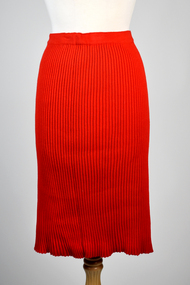 National Wool Museum
Textile - Skirt, Tina Knitwear, 1980-2000
... Our childhood is full of beautiful memories of mum and dad always being present, clients coming and going, mum humming her favourite songs as she worked often late into the night and sometimes, we even fell asleep to the hum of the machinery. ...Our childhood is full of beautiful memories of mum and dad always being present, clients coming and going, mum humming her favourite songs as she worked often late into the night and sometimes, we even fell asleep to the hum of the machinery. ...Part of a selection of garments knitted by ‘Tina Knitwear’. Tina Knitwear was a successful made to order knitwear business in Brighton from the mid-1960s to around 2010, run by Assunta and Franco Liburti. Daughter Melissa Persi writes: Our parents Assunta (Mum) and Franco (Dad) Liburti ran a successful made to order knitwear business in Brighton from the mid-1960s to around 2010. Assunta was affectionately known to her family as Assuntina, therefore the business was named "Tina Knitwear" after her. Assunta and Franco were born in the beautiful seaside town of Terracina in Italy in 1933 and 1930 respectively. As was so common in Italy in the 1950s, Assunta who was in her late teens and early twenties learnt the intricate skills of machine knitting, dressmaking and pattern making. Franco on the other hand, learnt the building trade with his 2 brothers and specialised in bricklaying and tiling. As was so common after the war, Assunta and Franco yearned for a better life so they decided that they would get engaged and then migrate to Australia to be married and raise their family in Australia, a land of much opportunity which they no longer felt their beloved Italy held for them. Assunta migrated to Australia first in 1957 and later Franco joined her in 1958 where they were married. For the first few years, Franco (also known as Frank) worked as bricklayer /tiler on buildings such as the Robert Menzies building at Monash University in Clayton and various buildings in the Melbourne CBD. Assunta on the other hand put her machine knitting skills to use working in factories doing piece machine knitting for various knitwear companies. The hours were long, the conditions were difficult, and travel was onerous without a car. After their 2 older children were born, it was decided that dad would leave the building trade and they would start their own made to order knitwear business. That way they could work from home and raise their family together. Mum taught dad everything he needed to know so he could operate the knitwear machinery. They purchased COPPO knitting machines from Italy and a Linking machine from Germany. Initially they had a knitwear shopfront in Bay Street Brighton where a store assistant would take the orders and client’s measurements and Assunta would then make the garments from a small workshop in their home. Unfortunately, the assistants were not skilled dressmakers and often measurements and orders were incorrectly taken. Assunta being the perfectionist and highly skilled machinist that she was, decided that she needed to oversee the entire process from meeting the client, to taking their order, right thru to the fittings and completion of the garment. It therefore made sense that they should close the shop front and run their business from their own home in Brighton and hence “Tina Knitwear” was born. Together, for more than 40 years they ran their very respected and successful business and were well known in the Bayside area. They specialised in made to order knitwear for both men and women using mainly pure wool (from Patons, Wangaratta Mills, Japan and Italy) but also lurex and estacel. Over those years, many of their clients became their close friends. It wasn't unusual for clients to come to order garments and then end up in the kitchen chatting over a cup of Italian espresso coffee and homemade biscuits. Some of their clients were especially memorable and became lifelong friends. Mrs Connell was a dear friend of mum’s, each year she would buy tickets for the “Gown of the Year” fashion show. She would insist on taking Assunta and her 2 daughters so that we could see the latest fashions. Then there was their dear friend Ms Griffiths. She had been a Matron nurse at the Queen Victoria Hospital when she met my parents in the 1970s. She returned to live in New Zealand in the 1980s but came back to Melbourne every year to stay for 2 weeks with the sole purpose of visiting my parents (she adored them) and order garments. For those 2 solid weeks, mum and dad would only knit for Ms Griffiths and she would go back to New Zealand with at least 5 or 6 new outfits. I actually think she enjoyed mum’s homemade pasta almost as much as her new clothes! Over the years, my parents learnt to speak English very well given that majority of their clients were not Italian speaking. Their oldest child John born in 1960 learnt to speak English with the help of those clients who were such a big part of our childhood. Mum and dad always went above and beyond to ensure their clients were satisfied. Mum was an absolute perfectionist and it showed in her attention to detail and the quality of their beautiful work. You only need to look at the garments that have stood the test of time or speak to their clients to know that this is true. Their clients would always comment on how well their clothes would last and much of their clients came via word of mouth and recommendations. Occasionally there would be disagreements because mum had found an error in dad's knitting (either a wrong stitch or a sizing mistake mainly) and would ask him to redo a piece, he would argue back saying that it was fine, but we always knew who would win the argument and that the piece would get remade! Similarly, we recall discussions where mum would ask dad to find a particular colour of wool in the garage where the stock was kept. He would try to convince her that they were out of stock of that colour and that the client should choose a different colour. She would insist they had it and then after hours of searching, he would return into the house sheepishly holding the wool! Our childhood is full of beautiful memories of mum and dad always being present, clients coming and going, mum humming her favourite songs as she worked often late into the night and sometimes, we even fell asleep to the hum of the machinery. They put their heart and soul into "Tina Knitwear" and took pride in providing only the best quality garments for their clients. In Italian there is a saying “lei ha le mani d’oro” which literally translated means “she has hands of gold”. Franco enjoyed his work but for Assunta, it was more than just work and there is no better way to describe her skills, passion and dedication to her machine knitting… she truly did have “hands of gold”. We will forever be grateful that our parents’ life journey gave us the opportunity to live in a home filled with creativity, dedication and passion, amazing work ethic and mutual respect, lifelong friendships and a lifetime of love. Red ribbed skirt with elastic waistband.knitwear, clothing, italy, migrants, brighton, knitting machine, linking machine, garments, business, family, community -
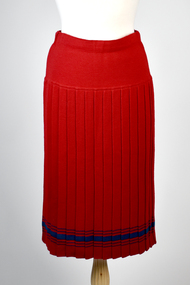 National Wool Museum
Textile - Skirt, Tina Knitwear, 1980-2000
... Our childhood is full of beautiful memories of mum and dad always being present, clients coming and going, mum humming her favourite songs as she worked often late into the night and sometimes, we even fell asleep to the hum of the machinery. ...Our childhood is full of beautiful memories of mum and dad always being present, clients coming and going, mum humming her favourite songs as she worked often late into the night and sometimes, we even fell asleep to the hum of the machinery. ...Part of a selection of garments knitted by ‘Tina Knitwear’. Tina Knitwear was a successful made to order knitwear business in Brighton from the mid-1960s to around 2010, run by Assunta and Franco Liburti. Daughter Melissa Persi writes: Our parents Assunta (Mum) and Franco (Dad) Liburti ran a successful made to order knitwear business in Brighton from the mid-1960s to around 2010. Assunta was affectionately known to her family as Assuntina, therefore the business was named "Tina Knitwear" after her. Assunta and Franco were born in the beautiful seaside town of Terracina in Italy in 1933 and 1930 respectively. As was so common in Italy in the 1950s, Assunta who was in her late teens and early twenties learnt the intricate skills of machine knitting, dressmaking and pattern making. Franco on the other hand, learnt the building trade with his 2 brothers and specialised in bricklaying and tiling. As was so common after the war, Assunta and Franco yearned for a better life so they decided that they would get engaged and then migrate to Australia to be married and raise their family in Australia, a land of much opportunity which they no longer felt their beloved Italy held for them. Assunta migrated to Australia first in 1957 and later Franco joined her in 1958 where they were married. For the first few years, Franco (also known as Frank) worked as bricklayer /tiler on buildings such as the Robert Menzies building at Monash University in Clayton and various buildings in the Melbourne CBD. Assunta on the other hand put her machine knitting skills to use working in factories doing piece machine knitting for various knitwear companies. The hours were long, the conditions were difficult, and travel was onerous without a car. After their 2 older children were born, it was decided that dad would leave the building trade and they would start their own made to order knitwear business. That way they could work from home and raise their family together. Mum taught dad everything he needed to know so he could operate the knitwear machinery. They purchased COPPO knitting machines from Italy and a Linking machine from Germany. Initially they had a knitwear shopfront in Bay Street Brighton where a store assistant would take the orders and client’s measurements and Assunta would then make the garments from a small workshop in their home. Unfortunately, the assistants were not skilled dressmakers and often measurements and orders were incorrectly taken. Assunta being the perfectionist and highly skilled machinist that she was, decided that she needed to oversee the entire process from meeting the client, to taking their order, right thru to the fittings and completion of the garment. It therefore made sense that they should close the shop front and run their business from their own home in Brighton and hence “Tina Knitwear” was born. Together, for more than 40 years they ran their very respected and successful business and were well known in the Bayside area. They specialised in made to order knitwear for both men and women using mainly pure wool (from Patons, Wangaratta Mills, Japan and Italy) but also lurex and estacel. Over those years, many of their clients became their close friends. It wasn't unusual for clients to come to order garments and then end up in the kitchen chatting over a cup of Italian espresso coffee and homemade biscuits. Some of their clients were especially memorable and became lifelong friends. Mrs Connell was a dear friend of mum’s, each year she would buy tickets for the “Gown of the Year” fashion show. She would insist on taking Assunta and her 2 daughters so that we could see the latest fashions. Then there was their dear friend Ms Griffiths. She had been a Matron nurse at the Queen Victoria Hospital when she met my parents in the 1970s. She returned to live in New Zealand in the 1980s but came back to Melbourne every year to stay for 2 weeks with the sole purpose of visiting my parents (she adored them) and order garments. For those 2 solid weeks, mum and dad would only knit for Ms Griffiths and she would go back to New Zealand with at least 5 or 6 new outfits. I actually think she enjoyed mum’s homemade pasta almost as much as her new clothes! Over the years, my parents learnt to speak English very well given that majority of their clients were not Italian speaking. Their oldest child John born in 1960 learnt to speak English with the help of those clients who were such a big part of our childhood. Mum and dad always went above and beyond to ensure their clients were satisfied. Mum was an absolute perfectionist and it showed in her attention to detail and the quality of their beautiful work. You only need to look at the garments that have stood the test of time or speak to their clients to know that this is true. Their clients would always comment on how well their clothes would last and much of their clients came via word of mouth and recommendations. Occasionally there would be disagreements because mum had found an error in dad's knitting (either a wrong stitch or a sizing mistake mainly) and would ask him to redo a piece, he would argue back saying that it was fine, but we always knew who would win the argument and that the piece would get remade! Similarly, we recall discussions where mum would ask dad to find a particular colour of wool in the garage where the stock was kept. He would try to convince her that they were out of stock of that colour and that the client should choose a different colour. She would insist they had it and then after hours of searching, he would return into the house sheepishly holding the wool! Our childhood is full of beautiful memories of mum and dad always being present, clients coming and going, mum humming her favourite songs as she worked often late into the night and sometimes, we even fell asleep to the hum of the machinery. They put their heart and soul into "Tina Knitwear" and took pride in providing only the best quality garments for their clients. In Italian there is a saying “lei ha le mani d’oro” which literally translated means “she has hands of gold”. Franco enjoyed his work but for Assunta, it was more than just work and there is no better way to describe her skills, passion and dedication to her machine knitting… she truly did have “hands of gold”. We will forever be grateful that our parents’ life journey gave us the opportunity to live in a home filled with creativity, dedication and passion, amazing work ethic and mutual respect, lifelong friendships and a lifetime of love. Red wide ribbed pleated skirt with a plain yoke, navy blue band at bottom edge and elasticated waistband. A purple x is located inside to mark centre back of skirt.knitwear, clothing, italy, migrants, brighton, knitting machine, linking machine, garments, business, family, community
