
Showing 6 items matching "i need you now"
-
 Federation University Historical Collection
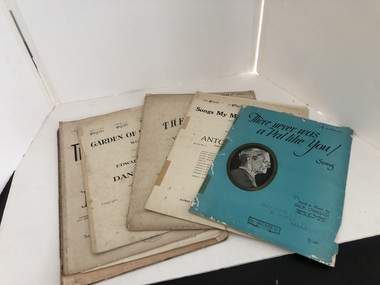
Book, Music Books from Suttons Music
... ...I need you now...Henry Sutton taught Applied Electricity at the Ballarat School of Mines in 1883 to 1886. music books suttons music Calvary henry vaughan paul rodney enoch and sons herzelied gustav lange j.t. trekell hanover edition the desert song one alone kathryn grayson gordon mcrae otto harbach oscar hammerstein frank mandel sigmund romberg the link divine alfred h. hyatt piccolomini one fine day aria madame butterfly opera r.h elkin giacomo puccini garden of happiness edward lockton daniel wood there never was a pal like you jack o'hagan the bridge vocal duet miss m lindsay mrs j worthington bliss songs my mother taught me anton dvorak blue danube suttons brass band journal johann strauss macushla josephine v rowe dermot macmurrough boosey and co allans music candle in the wind elton john bernie taupin treasure chest of stephen foster songs eddie fisher song folio cindy oh cindy oh my pa-pa anytime I need you now then i'll be happy sweet heartaches dungaree doll im in the mood for love what a wonderful world it would be hermann lohr i heard you singing royden barrie eric coates when you come home fred e weatherly w.h squire lay down your arms anne shelton leon land ake gerhard john m williams and shaylor turners vey first piano book i went to your wedding jessie may robinson patti page mercury records he's got the whole world in his hands geoff love sway quien sera pablo beltran ruiz paul lombard norman gimbel just because the violets kennedy russell edwin ashdown ltd friends of my youth mr w burton christy's minstrels george barker ideal music books poet and peasant melody in f spring song love and devotion the storm nachtstuck rondoletto blue danube waltzes over the waves waltzes nearer my god to thee mignon gavotte warum miss clara butt idle words stephen adams menuetin no. 2 the mill liebestraum tarantelle la matinee menuet la paloma the dove gipsy rondo crescendo chanson triste romance tocatta in a thora john mccormack john harrison ivor foster preclude c# minor beautiful star of heaven sirens song marche militaire fifth nocturne sweet bye and bye turkish patrol valse des fleurs melody of love traumerei a fragment just for to-day sybil f partridge blanche ebert seaver australian music examinations board pianoforte-grade III the chappell wonder album of music slave song the lass with the delicate air the bandolero chorus gentlemen i'll sing thee songs of araby jest her way venetian song gray days god's garden folie bergere weymouth chimes un peu d'amour you'll love me yet s. coleridge taylor george sutton happy-go-lucky pete a very happy foxtrot i know the rose fred hall the prisoners child waltz ballad russ johnston pilgrim's cross h.l d'arcy jaxone frederic n. lohr harper kearton marie vagnolini suttons manuscript music book pianoforte studies public examinations in music light cavalry marche hongroise rondo alla turca moonlight sonata witches flight home sweet home narcissus wedding march sehnsucht joyful peasant les adieux love the pedlar caryl battersby edward german where will the dimple be rosemary clooney bob merrill al hoffman buttons and bows jay livingstone ray evans bob hope glen williams british songs cyril scott cherry ripe the minstrel boy blythe and merry she was by yon bonnie banks all through the night coming thro the rye i'll bid my heart be still classical fragments beethoven's adieu w. millward wake up a calendar of song harold simpson montague f. phillips ain't misbehavin' andy razaf thomas waller harry brooks robert a nelson the ideal manuscript book the riff song it one flower grows alone in your garden ebb tide carl sigman robert maxwell i'm in the mood for love jimmy mchugh dorothy fields muskat ramble edward ory night of stars and night of love tales of hoffmann offenbach the great pretender jimmy parkinson jerry duanne barry frank stan freberg the platters bert visser love is a golden ring rich dehr frank miller terry gilkyson ernie sigley d. trickey four musical cameos gavotte lullaby goblins when children play frank hutchens just a closer walk with thee jimie rodgers west of the wall wayne shanklin toni fisher Collection of music books that were available for purchase at Sutton's Music Music Books from Suttons Music Book ...Henry Sutton is a talented world-wide accepted inventor with inventions relating to the telephone, photography, wireless, cars, motorcycles, and bicycles as well as many more inventions. Henry was also one of four brothers that ran the Sutton's Music Store after the death of their Father Richard Sutton. Henry Sutton taught Applied Electricity at the Ballarat School of Mines in 1883 to 1886.Collection of music books that were available for purchase at Sutton's Musicmusic books, suttons music, calvary, henry vaughan, paul rodney, enoch and sons, herzelied, gustav lange, j.t. trekell, hanover edition, the desert song, one alone, kathryn grayson, gordon mcrae, otto harbach, oscar hammerstein, frank mandel, sigmund romberg, the link divine, alfred h. hyatt, piccolomini, one fine day, aria, madame butterfly opera, r.h elkin, giacomo puccini, garden of happiness, edward lockton, daniel wood, there never was a pal like you, jack o'hagan, the bridge, vocal duet, miss m lindsay, mrs j worthington bliss, songs my mother taught me, anton dvorak, blue danube, suttons brass band journal, johann strauss, macushla, josephine v rowe, dermot macmurrough, boosey and co, allans music, candle in the wind, elton john, bernie taupin, treasure chest of stephen foster songs, eddie fisher song folio, cindy oh cindy, oh my pa-pa, anytime, i need you now, then i'll be happy, sweet heartaches, dungaree doll, im in the mood for love, what a wonderful world it would be, hermann lohr, i heard you singing, royden barrie, eric coates, when you come home, fred e weatherly, w.h squire, lay down your arms, anne shelton, leon land, ake gerhard, john m williams and shaylor turners vey first piano book, i went to your wedding, jessie may robinson, patti page, mercury records, he's got the whole world in his hands, geoff love, sway, quien sera, pablo beltran ruiz, paul lombard, norman gimbel, just because the violets, kennedy russell, edwin ashdown ltd, friends of my youth, mr w burton, christy's minstrels, george barker, ideal music books, poet and peasant, melody in f, spring song, love and devotion, the storm, nachtstuck, rondoletto, blue danube waltzes, over the waves waltzes, nearer my god to thee, mignon gavotte, warum, miss clara butt, idle words, stephen adams, menuetin no. 2, the mill, liebestraum, tarantelle, la matinee, menuet, la paloma, the dove, gipsy rondo, crescendo, chanson triste, romance, tocatta in a, thora, john mccormack, john harrison, ivor foster, preclude c# minor, beautiful star of heaven, sirens song, marche militaire, fifth nocturne, sweet bye and bye, turkish patrol, valse des fleurs, melody of love, traumerei, a fragment, just for to-day, sybil f partridge, blanche ebert seaver, australian music examinations board, pianoforte-grade iii, the chappell wonder album of music, slave song, the lass with the delicate air, the bandolero, chorus gentlemen, i'll sing thee songs of araby, jest her way, venetian song, gray days, god's garden, folie bergere, weymouth chimes, un peu d'amour, you'll love me yet, s. coleridge taylor, george sutton, happy-go-lucky pete a very happy foxtrot, i know the rose, fred hall, the prisoners child, waltz ballad, russ johnston, pilgrim's cross, h.l d'arcy jaxone, frederic n. lohr, harper kearton, marie vagnolini, suttons manuscript music book, pianoforte studies, public examinations in music, light cavalry, marche hongroise, rondo alla turca, moonlight sonata, witches flight, home sweet home, narcissus, wedding march, sehnsucht, joyful peasant, les adieux, love the pedlar, caryl battersby, edward german, where will the dimple be, rosemary clooney, bob merrill, al hoffman, buttons and bows, jay livingstone, ray evans, bob hope, glen williams, british songs, cyril scott, cherry ripe, the minstrel boy, blythe and merry she was, by yon bonnie banks, all through the night, coming thro the rye, i'll bid my heart be still, classical fragments, beethoven's adieu, w. millward, wake up, a calendar of song, harold simpson, montague f. phillips, ain't misbehavin', andy razaf, thomas waller, harry brooks, robert a nelson, the ideal manuscript book, the riff song, it, one flower grows alone in your garden, ebb tide, carl sigman, robert maxwell, i'm in the mood for love, jimmy mchugh, dorothy fields, muskat ramble, edward ory, night of stars and night of love, tales of hoffmann, offenbach, the great pretender, jimmy parkinson, jerry duanne, barry frank, stan freberg, the platters, bert visser, love is a golden ring, rich dehr, frank miller, terry gilkyson, ernie sigley, d. trickey, four musical cameos, gavotte, lullaby, goblins, when children play, frank hutchens, just a closer walk with thee, jimie rodgers, west of the wall, wayne shanklin, toni fisher -
 Federation University Historical Collection
Letter Book, Ballarat School of Mines Outward Letter Book, 1874-8, 1874 - 1878
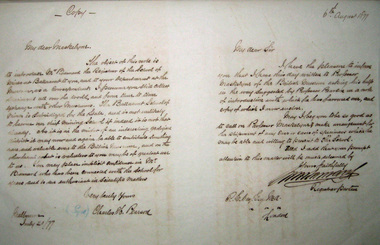
... London My dear Sir I have the pleasure to inform you that I have this day written to Professor Maskelyns of the British Museum asking his help in the way suggested by Professor Pearson in a not of introduction with which he has favoured me, and copy of which is now enclosed. May I beg you to be so good as to call on Professor Machelyne make arrangement for the shipment of any case or cases of specimens which the may be able and willing to present to the School. Need...London My dear Sir I have the pleasure to inform you that I have this day written to Professor Maskelyns of the British Museum asking his help in the way suggested by Professor Pearson in a not of introduction with which he has favoured me, and copy of which is now enclosed. May I beg you to be so good as to call on Professor Machelyne make arrangement for the shipment of any case or cases of specimens which the may be able and willing to present to the School. Need ...The Ballarat School of Mines was Australia's first School of Mines, which was established in 1870.Large letter book with rough calf spine and corners, green fabric cover, green marbled end papers, and leather spine labels. Sample letters are shown below Melbourne July 20/77 My Dear Maskelyne, The object of this note is to introduce Mr Barnard the Registrar of the School of Mines at Ballarat to you, and to your Department at the museum as a Correspondent. I presume you still collect specimens all over the world, and from time to time exchange with other museums. The Ballarat School of Mines is subsidized by the State, and is not unlikely to become our chief mining school if indeed it is not that already. As it is in the midst of an interesting geological district it may now and again be able to contribute something rare and valuable even to the British Museum, and on the other hand what is valueless to you may be of greatest use to us. You may place implicit confidence in Mr Barnard who has been connected with the School for years, and is an enthusiast in Scientific matters. Very Truly Yours Charles H. Pearson. P.E. Day Esq M.A. London My dear Sir I have the pleasure to inform you that I have this day written to Professor Maskelyns of the British Museum asking his help in the way suggested by Professor Pearson in a not of introduction with which he has favoured me, and copy of which is now enclosed. May I beg you to be so good as to call on Professor Machelyne make arrangement for the shipment of any case or cases of specimens which the may be able and willing to present to the School. Need I add that your prompt attention to this matter will be much esteemed by Yours faithfully W.H. Barnard Registrar Pro tem ballarat school of mines, correspondence, w.h. barnard, barnard -
 Bendigo Historical Society Inc.
Financial record - INVOICE COLLECTION: J. H. Curnow & Son
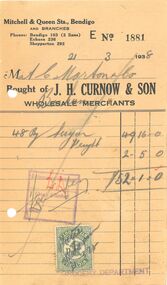
... When the Prince Edward visited Bendigo in 1920, Curnow made a speech, telling his audience: I will now merely ask you to drink his health as the Prince of Wales and also as the Duke of Cornwall. In this district there are a tremendous number of Cornishmen and I need not tell His Royal Highness that it was the Cousin Jacks who made Bendigo, who found the gold and developed the mines. ...When the Prince Edward visited Bendigo in 1920, Curnow made a speech, telling his audience: I will now merely ask you to drink his health as the Prince of Wales and also as the Duke of Cornwall. In this district there are a tremendous number of Cornishmen and I need not tell His Royal Highness that it was the Cousin Jacks who made Bendigo, who found the gold and developed the mines. ...See below for an article by Jim Evans of the Bendigo Historical Society: From the Bendigo Miner Number 9 - 1 March 2007 Cock-eyed Curnow - James Henry Curnow Cornishman and famous Bendigonian By Jim Evans Five-time Mayor of Bendigo, James Henry Curnow of Eumana , was for fifty years associated with almost every progressive movement in the life of the city. He was born in Ludgvan, Cornwall, in 1861, the son of Sampson Curnow, tin-miner and later mine-manager. His parents brought him to Bendigo when he was two years old and settled at Long Gully. He was educated at the state school and St Andrew s College. In 1883, he married Jane Corbel in the Congregational Church. Curnow joined the Post-Master-General s Department in 1881. Taking leave in 1887, he acted as secretary of the Australian Natives Association (ANA) exhibition at Geelong. He became a clerk with Connelly and Tatchell's, Bendigo solicitors, leaving in 1894 to establish an accountancy and real estate business. Considered shrewd and hard-working, Curnow prospered; he later added an auctioneering section and formed the company J.H. Curnow & Son (now Curnow & Dyett). The ANA provided the grounding for Curnow s public life. He joined the Sandhurst branch in 1881 and was secretary in 1883-1891. He helped form new branches in northern Victoria. With (Sir) John Quick, he set up the first Federation League in the colony in 1893. Curnow was secretary of the League in that year and again in 1898-99. He was elected to the Bendigo City Council in 1901 and, apart from 1906-09 remained a very energetic councillor. He was Mayor in 1902-03, 1903-04, 1912-13, 1919-20 and 1927-28. It was during his second term as Mayor in 1904, that he had William Beebe design a home - Eumana in Flora Hill. (Local historian Betty Jackman informs me that Curnow s house at 75 Wills Street where he lived before moving to Flora Hill, was also called Eumana ). He took a leading role in the installation of sewerage and was later Chairman of the city s Sewerage authority when that body was being subjected to a great deal of criticism. He was an executive member of The Municipal Association of Victoria and president in 1919. Curnow was very interested in politics, but his four attempts to enter parliament failed. He was Justice of the Peace for the states of New South Wales and Victoria, deputy coroner for the city of Bendigo, a guardian of minors and registrar of marriages. Curnow was managing director of the Bendigo Pottery, director of the Bendigo Gas Co. and the Bendigo and Eaglehawk Star Building Society and chairman of directors of the Bendigo Boot and Shoe factory. He was a life member of both the Bendigo Base Hospital and the Benevolent Asylum (Anne Caudle Centre). Curnow s family affairs were marred by tragedy. His father was killed in a mining accident in 1881; his first wife and three of their five children died in the measles epidemic of 1893. His second wife Mary Jordan died in 1909 after spilling carbolic acid on her hip, leaving three young children. He married Amy McLean in 1911and they had one daughter. When the Prince Edward visited Bendigo in 1920, Curnow made a speech, telling his audience: I will now merely ask you to drink his health as the Prince of Wales and also as the Duke of Cornwall. In this district there are a tremendous number of Cornishmen and I need not tell His Royal Highness that it was the Cousin Jacks who made Bendigo, who found the gold and developed the mines. They have added more to the riches of the Commonwealth than any other class of people. When he visits the mines today, he will find that ninety per cent of the miners are Cornishmen and descendants of Cornishmen. His remarks were greeted by loud applause. J.H. Curnow was known locally as Cock-eyed because of an eye defect. He died on Anzac Day 1932 at his then home, The Knoll in Wattle Street. He was 71. He was cremated at the new Fawkner Cemetery and his ashes were buried in the Bendigo Cemetery. His grave is close to that of another famous Cornishman and Bendigonian, Sir John Quick, who died in the same year. The Curnow memorial drinking fountain in Rosalind Park was unveiled in 1938 by Mayor Taylor. The distinguished Bendigo born sculptress Ola Cohn designed the memorial and made the bust and other plaques of terracotta. The plaques were damaged in the 1950s and a restoration program was undertaken, with bronze plaques replacing the original terracotta ones.10934.33a: A small, aged sheet of yellow paper with two clean punch holes on the left side and a perforated edge. The paper is thin, but sturdy. Printed in black ink is the business name and details: Bought of J.H. Curnow & Son Wholesale Merchants. The address: Mitchell & Queen Sts. Bendigo and branches. Phones: Bendigo 103. The receipt is handwritten in grey lead pencil. Dated 21 March 1938. Below the header is neat, ruled lines for listing items with prices listed in British Pounds, totaling 52 pounds 1 shillings. Receipt number 1881. There is also a Victorian 3 pence stamp duty stamp printed in green ink. 10934.33b: A small, aged sheet of yellow paper with two clean punch holes on the left side and a perforated edge. The paper is thin, but sturdy. Printed in black ink is the business name and details: Bought of J.H. Curnow & Son Wholesale Merchants. The address: Mitchell & Queen Sts. Bendigo and branches. Phones: Bendigo 103. The receipt is handwritten in grey lead pencil. Dated 25 May 1938. Below the header is neat, ruled lines for listing items. Receipt number 14291. The Receipt is crossed out in blye pencil. The top left corner is folded and slightly torn. 10934.33c: A small, aged sheet of yellow paper with two clean punch holes on the left side and a perforated edge. The paper is thin, but sturdy. Printed in black ink is the business name and details: Bought of J.H. Curnow & Son Wholesale Merchants. The address: Mitchell & Queen Sts. Bendigo and branches. Phones: Bendigo 103. The receipt is handwritten in grey lead pencil. Dated 27 June 1938. Below the header is neat, ruled lines for listing items with prices listed in British Pounds, totaling 2 pounds. Receipt number 1466. The receipt is crossed out in blue pencil and indicates and credit. 10934.33d: A small, aged sheet of yellow paper with two clean punch holes on the left side and a perforated edge. The paper is thin, but sturdy. Printed in black ink is the business name and details: Bought of J.H. Curnow & Son Wholesale Merchants. The address: Mitchell & Queen Sts. Bendigo and branches. Phones: Bendigo 103. The receipt is handwritten in grey lead pencil. Dated 7 March 1938. Below the header is neat, ruled lines for listing items with prices listed in British Pounds, totaling 34 pounds 14 shillings. Receipt number 1627. There is also a Victorian 3 pence stamp duty stamp printed in green ink.ac morton, jh curnow & son -
 Ballarat Heritage Services
Photograph - War Memorial, Lisa Gervasoni, Dunolly War Memorial, 2025, 1921
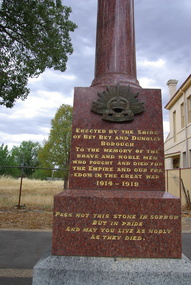
... I will be feeling just the thing again. So you need not worry about me ; a week or two will see me quite right again. We are having very nice warm weather just now-pleasant change after all the bad weather we have had." ...I will be feeling just the thing again. So you need not worry about me ; a week or two will see me quite right again. We are having very nice warm weather just now-pleasant change after all the bad weather we have had." ...The Dunolly World War One Memorial Pillar, located in front of the Town Hall on Broadway Street, and was unveiled on November 18th 1921. The pillar is topped by an urn and rests on a square concrete plinth, which lists the names ninety-four locals who died serving during the First World War. On Friday afternoon the Premier, accompanied by Messrs. Pennington and Groves, M's.L.A., visited Dunolly, and unveiled a soldiers' memorial — a polished granite column on a square base, erected by the residents at a cost of £300. It bears the names of 94 district soldiers who were killed in action. The Premier, who is a native of Dunolly, referred to his early associations with the town and district. Speaking of the valiant service rendered by the Australian soldiers in the great war, he paid a tribute to those who enlisted from the country districts. He was not one of those who would withhold national memorials to the fallen because provision had not been made for all who had returned. It was right and proper to have these memorials as silent reminders of the great sacrifice made by the many as a lasting tribute to their memory. Messrs. Groves and Pennington and local clergymen also spoke. The school children sang O God, Our Help in Ages Past, and a bugler sounded the Last Post after the unveiling. The shire president entertained the visitors and committee at dinner. The Age (Melbourne), 19 November 1921. Colour photograph of the Dunolly War Memorial. Front Inscription "Erected by the Shire of Bet Bet and Dunolly Borough To the memory of the brave and noble men who fought and died for the Empire and our freedom in the Great War 1914 - 1918. Pass not this stone in sorrow but in pride, and may you live as nobly as they died." "Private L. Polinelli has written several letters to his mother at Dunolly, dated from from Tel el Kebir from January 13th till the 22nd. He had written every day or two, and this example, is a very fine one. He explains why there was an interval some weeks during which he sent no letters. This was just before the evacuation of Gallipoli, and no-one was permitted to send letters at such a critical time, as there were fears that carefully arranged plans might leak out in some way. Gallipoli had been evacuated on the 19th December, which happened to be Private Polinelli's 24th birthday, and he has cause, he says, to remember that birthday particularly, when this important movement, in which he participated, was so success-fully carried out. He was in the best of health. They had been on Lemnos Island for two weeks after leaving Galilipoli, and while there they got billeted and numerous gifts from Australia, which gave great delight. He (Private Polinelli) had got a big mail - 35 letters and a number of parcels. Both Norman Watson and himself were feeling well, although they had a pretty rough time at the front, but they were feeling better every day. Further letters speak of the arrival in Egypt and the Australian being encamped at Tel el Kebir, 40 miles from Cairo. He states that W. Lyndon had returned from England and was with them. He (W. Lyndon) looks splendid and had had a splendid time in England and Scotland. He saw Jack Lewis in England, and thinks he was to return to Australia. Reference is made to the Rev. Father Goidanich who was with their brigade, and who had been wounded at the front, but was all right again. Father Goidanich is well-known in this district. The letters were written in good spirits and many references were made to friends in Dunolly and district. A friend in Dunolly has received a letter from Private L. Polinelli, which is dated February 3rd, and written 'from the Arabian Desert.' This covers a vast extent of country, so that there is no use in speculating as to the locality, and portions of the letter which possibly would have given some indication have bean 'censored.' Private Polinelli wrote that Norman Watson and Himself were in the best of health and have stook the life well. They are right out of civilisation at time of writing. He referred to their Dtsojourns at Lemoos Island, where Christmas was spent, and where the billies and puddings assisted much in their enjoyment. But they were glad to leave Lemnos Island. After being in camp at Tel el E-bir for two weeks they were sent to where they were at the time of writing, all being in good xxxx and the open country suiting them well. He speaks with admiration of the desert work done by the camels so very largely used. The censoring was very strict so that he could not give much news. After alluding to the return to splendid health of W. Lyndon from England, he says he saw a lot of others from round Dunolly on returning to Egypt, including Tom Fishlock, R. Johnson, and J. Taylor, and some others from Betley, and all looked well. He had also seen Erie Williamson a few times, and he looked splendid. He concludes with remembrances to friends, and from himself and Norman Watson to the Loyal Prince Alfred Lodge." (Dunolly and Betbetshire Express and County of Gladstone Advertiser, Tue 14 Mar 1916) "SOLDIER'S LETTERS PRIVATE L. POLINELLI A friend in Dunolly has received another interesting letter from Private L Polinelli, son of Mrs J Davis, South Dunolly. It is from "Somewhere in France," and is dated July 23rd. He remarks with regret that a good deal of the soldiers' mail from Australia went down in the Arabia, and then goes on to say:- "Norman is back here with us again now and looking well. He had a splendid time over in England after he was able to get out of bed. It was two years on the 18th of this month (January) since Norman and I enlisted, and we celebrated the occasion by having a bit of an evening out. I am very pleased that he is back; we spend most of our time together. We are at present out of the line having a spell in a village, so we are not having a bad time just now but we will soon be going into the trenches again. I met Wally Bell a few days ago; they were going into the line to relieve our brigade. We did not have time to have a long talk. He looks rather thin, but he was always that way. He is feeling well, and wishes to be remembered to his friends in Dunolly. I also met C. Game the same day; he looked well but, as he was also going into the line, we could not have much of a talk J. Hughes and C. Atherton are also over here now; I often see them. W. Lyndon and T. Miles are well ; I was speaking to them yesterday. We are having very bad weather over here now ; it is either raining or snowing every day. The snow was about a fool deep a few days ago. When the rain comes after it, it makes things muddy, The mud is very bad over here; it takes us all our time to struggle through it in places. We will all be very glad when the winter is over. I was over in England on furlough last month, and had a splendid time. The people over there do all they can to give us a good time. I had several invitations to visit different people, and those that we did visit gave us a splendid time. At the place where I was staying they always had a guide waiting of a morning to show us any place of interest that we wanted to see. There was also always a supply of free tickets to the different theatres if we wanted them ; so you see that they go to some expense to give ns a good time. When they know yon are from France you are sure of a hearty welcome. was up in Scotland, and spent five days in Edinburgh. It is a very pretty place, especially when it is seen from Edinburgh Castle, which is on a high bill overlooking the place. We veil through the Castle; also Holyrood Palace. There are a lot of interesting things to be seen in the two places connected with the history of Scotland. It was snowing very heavily while v« were in Scotland, and we bad some fine snowballing with the Scotch people. I greatly enjoyed the trip to Scotland. It would take a very long time to see all round London. I saw a lot of the old historical places there, which were very interesting. The fogs are very bad in London. I had an experience of a London fog one day; it was the heaviest they experienced for a number of years. We could only see a few yards ahead of us. Nearly everyone carried torches; it looked very funny. . . . There are nearly always as many women drinking in the bars as men; it struck me as being very strange, a bit different to what we are used to in Australia, a trip through some parts of London is a real eye-opener to us. It is interesting to watch the traffic in some of the business parts of London it moves along in one big mass. It is a wonder that a lot more accidents do not happen. I saw Australia House, where the High Commissioner has his office, in the Strand. It is not yet finished. It looks a very fine place, and when completed will be 'some' place. Both Norman and I are well, and send remembrances to friends." (Since this letter was written we have had the sad news of the death from wounds of Privates Atherton and Hughes, and that Sergeant Miles and Corporal Norman Watson have been wounded.) (Dunolly and Betbetshire Express and County of Gladstone Advertiser , Friday 13 April 1917, page 2) "Private L Polinelli, from some of whose previous letters we have published interesting extracts, has written to a friend in Dunolly, the letter being from France, and dated April 28th. Private Polinelli says among other things, "I am pleased to say that, Norman (Watson), Les (Anderson) and myself are in the best of health. We now have been in France some time. It is a terrible place for rain ; It has been raining all the time we have been here. It has also been very cold, snowing at times, but it is starting to "fine up" now, and the last few days have been splendid. I hope it keeps like that for a while, as it makes things very miserable in the trenches when it is so wet. We get a few days spell out of the trenches every now and again; so things are not as bad here as they were at Gallipoli. It is not so lively here so far as it was over there either. I am sorry to say that Jack Sanderson, who had been Will Lyndon's mate since they joined the forces, got killed during a bombardment last night. He was terribly knocked about with a shell. I saw W. Lyndon to-day and he was telling me all about it. He seemed terribly cut up over it, and so am I, as I was with Jack a lot over at Gallipoli after Will got sent away sick. He was always bright and cheerful, always had a smile up whenever I met him. I feel very sad about it. We will do all we can to make the Germans pay for it. You will most likely know him, as be used to live in Dunolly before going to Bendigo. Will Lyndon had a narrow escape also, as he was not very far from where the shell burst. He escaped with a bit of a shock, otherwise he is in the best of health. We have a good time among the French people when we are out of the trenches. They do all they can to make us feel at home. I am getting quite expert at speaking French. They smile at us a treat trying to speak French, but we generally make ourselves understood and have a good time among them. It is very rarely we see a young Frenchman, they being all away fighting. The women do all the work on the farms themselves, and deserve every credit for it. . . . I was sorry to hear about the death of Nurse M'Mahon; she was a grand old nurse. I heard that her daughter Nelly was nurse in a hospital on Lemnos Island, and when we were there I went to two of the hospitals to try to see her, but she did not happen to be at either, and I had no time to visit any of the others, so I did not see her. I was also sorry to hear about Mrs Rokahr, as she has left so many little ones behind. (Reference is made to other happenings in Dunolly.) So far I am pleased to say Norman and I have had the luck not to have had a day's illness; I think we are very fortunate, as such a lot get sent to the hospital ill. We are also lucky to have escaped the bullets and shells so far. I hope that luck sticks to us. I am sorry that, owing to the censorship, I cannot give you any interesting news of our trip over to France and the places we have seen. I will have to keep that till I get back to Dunolly again. . . . I have just heard that the battalion that Teddy Game is in has arrived, so I am going to look him up first chance I get." (The letter concludes with remembrances to members of the Lodge and other friends.) (Dunolly and Betbetshire Express and County of Gladstone Advertiser, Tuesday 13 June 1916, page 3) "PRIVATE L POLINELLI Another very interesting letter has been received by a friend in Dunolly from Private L. Polinelli, from France dated May 4th, 1916- Private Polinelli says-" I was glad that you got the letter I wrote from the Arabian Desert. The Censor must have crossed a good deal of it out. They seem to cross out a lot more than is really necessary. We left out there all of a sudden, and in a very short while found ourselves over here. It does not take them very long to make a move. I was saying in the last letter that I was going to try and find " Teddy " Game. I met him a few days ago and had a good yarn with him; he looks real well. I also met S. Prew, and "Ted" Smyth and his son Ernie. They all looked splendid, and are in the same battalion. "Ted" Smyth sticks to it well, and looks better than he ever looked. They will be under fire for the first time in a few days. S. Prew was hit in the landing at Gallipoli, but be is quite well now. W. Smythe, who is in our brigade is well ; I see him very often. " Les " Peart is not with us now; he has joined a Pioneer battalion, and I have not seen him since he joined it. I gave all the Dunolly boys your best wishes and they all wish to be remembered to you— also the same remembrance from Dave Millar, who used to play football for Dunolly from Moliagul. He is in our battalion, having come over with reinforcements. I see him every day and he wished to be remembered to you. A brother of Mr A. J. Williamson, manager of the Bank of Victoria, Dunolly, is also in this battalion. He is a great friend of mine ; we often have a talk about Dunolly. He was not well a little while ago, having to go into a hospital, but is all right again and is back with me. Eric Williamson, son of Mr A. J. Williamson is over here ; Norman (Watson) saw him a few days ago and said he looked well. Norman has been a corporal for some time. I was also offered stripes lately, but preferred to remain a private. There is a lot of worry and running about when you are an N.C.O., so I think I will remain as I am. ... So football is about done this season. I don't think they should cut it right out. I suppose some of them have to stay at home, so they ought to have some amusement. I would very much like to have a game, but I think I would just about forget how to play now. It is very amusing for us to read some of the soldiers letters in the Australian papers. . . l told you in the last letter about xxx young "Jack "Sanderson ; I was terribly sorry about him." Private Polinelli mentions in a letter to his sister in Dunolly that he happened to be beach at Gallipoli where the late Lord Kitchener was xxxxx addressed the' soldiers and' xxxxxx to them the message from the King. Private Polinelli states that he was very proud to have been one of those addressed by the great man. He and Norman Watson have never been a day out of the lines since arriving first in Egypt. It is intended to grant special leave to all those who have been kept so close to their posts xxx three months, and they are looking forward to this relaxation with keen anticipation, hoping to visit England and Scotland. (Dunolly and Betbetshire Express and County of Gladstone Advertiser, Tue 27 Jun 1916) "SOLDIER'S LETTERS. CORPORAL L. POLINELLI. Two letters have been received by Mrs J. Davis, South Dunolly, from her son, Corporal L. Polinelli, both written subsequent to the time when he was wounded, as reported when word was received at the time. Corporal Polinelli writes from No. 12 General Hospital, Rouen, France, and his first letter is dated 7th May. He stated that he was in hospital, he having been wounded in the arm and shoulder on 3rd May. He continued— " It is not a bad wound, and will not take long to heal up, as it is a clean wound. I was very lucky to get out of the fight alive, as I was buried by a shell explosion about an hour before I was wounded. It was very rough, and the noise of all the shells was terrible. Four men were killed by the same shell that wounded me, so I was fortunate. I am feeling a bit " shook up," and my head is aching from the concussion of the shells, but after a few days' spell in bed here I will be feeling just the thing again. So you need not worry about me ; a week or two will see me quite right again. We are having very nice warm weather just now-pleasant change after all the bad weather we have had." The second letter is dated May 12, Corporal Polinelli saying— "I am getting along splendidly ; the wound is healing up fast, so it will not be very long before I am quite right. The doc-tor, the other day said it would be better not to take the piece of shell out of my shoulder yet, and that it would not interfere with me in any way ; so perhaps l will always carry it about with me. He feared lest taking it out at that time would interfere with an artery. Rouen, where the hospital is, is a very pretty city. They give us leave to visit all the places when we are well enough. It is a nice spell here, away from the firing line. We have nothing to trouble us at all, so I will soon be just the thing again. When I got buried by a shell it shook me up a good deal. I felt it far more than the wound I got after; but it has not done me any harm, as I feel hardly any effects now. My good luck sticks to me in getting out of it so lightly. I hope you are not worrying at all about me, as I am all right. We are having beautiful weather over here— sunny days just like the Australian spring. . . . The sisters in the hospital are very nice, and treat us well. They have a lot of work to do, as a good few men have been wounded lately. I would have liked to have been sent over to England, but they are not sending many over there now. They treat as many as they can in France on account of attacks on hospital ships. I would have been able to have a good time with Norman (Watson) had l got over. He was just about all right when I heard from him last." Corporal Polinelli sends kind remembrances to friends." (Dunolly and Betbetshire Express and County of Gladstone Advertiser, Friday 6 July 1917, page 2) "SOLDIERS' LETTERS. CORPORAL L. POLINELLI. The following letter, dated from London on December 27; has been received by a friend in Dunolly from Corporal L. Polinelli (son of Mrs J. Davis, South Donolly), who, at the time of writing, after long and hard service at the front, was on furlough in England. After an introduction he says:— I am having a very good time. I went over to Ireland for five days, spending the most of the time in Dublin. I like the place very much. War appearances are not so conspicuous in Ireland as in England. The hotels are open all day, and a good meal can be obtained anywhere, which is more than can be got in England. The war seems to be making things very bad in England. It is very hard to get a good meal in London ; everything is so restricted. The only way to get a good meal is to go into two places. The people have to line up outside the shops for hours to get sugar, tea, and butter, and then they sometimes fail to get any. So many of our boats getting sunk is the cause of it. If things continue to go on in this way I am afraid that there is a very hard time in store for the people in England. Several people that I have spoken to say that they are just beginning to feel the pinch now. I was in London while an air raid was on a few days ago; it caused a lot of excitement among the people. Ten were killed and 70 wounded in the raid. I was about half a mile from where the bombs fell, so I was pretty right. I thought I had left the war behind in France, but it seems to be on over here at times also. I spent Christmas day with a family at Grantham, a town between London and Newcastle; they were very nice people. I had a very enjoyable time with them. I went to a dance in the evening and enjoyed it very much. It was a bit strange for a start, as it is the first dance I have been to since Norman and I had the send off at Dunolly in January, 1915. They do the dances a bit different over here to what they are done in Australia, and that made it worse still. I went through Guinness's Brewery while I was in Dublin. It is a wonderful place, and covers 55 acres of ground. I got a great surprise when I was starting on my leave in France. We were taken to the station we had to start from in a motor lorry, and who should the driver of the lorry be but Syd. Richards (son of Mr W. Richards, South Dunolly), who used to work at the Post Office in Dunolly. I rode on the front with him, so we had a good yarn. I did not know that be had joined, so was surprised to see him. He has grown a lot since I saw him last, and is looking well. Norman and Bill Lyndon were both well when I left France. We had been having a good spell near Messines, in Flanders, but they will be in the trenches by now. We have been round about Ypres for this last four months, and had some pretty rough times there. dunolly, dunolly war memorial, l. polinelli, bet bet, world war one, world war two, j. deledio, b. battilana, c. fitzgerald, f.s. kendall, j.h. hogan, p. zampatti, louisa davis, louisa gervasoni, bill lyndon, norman lyndon, sydney lindsay -
 Victorian Harness Racing Heritage Collection at Lord's Raceway Bendigo
Clothing - Race Colours, Kevin Innes
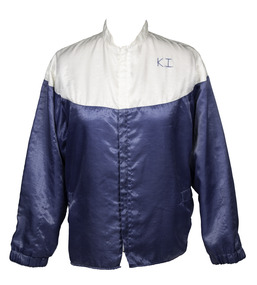
... needed to weigh ten stone (just under 65 kilograms). It’s something he remembers fondly. “I know not everyone will.” Kevin won’t be drawn on the subject of favourite drivers, either. “Look. Driving is different now. No disrespect to current drivers, but you...needed to weigh ten stone (just under 65 kilograms). It’s something he remembers fondly. “I know not everyone will.” Kevin won’t be drawn on the subject of favourite drivers, either. “Look. Driving is different now. No disrespect to current drivers, but you ...KEVIN ‘BOOFA’ INNES By Lucy McCormick Kevin was a member of the celebrated Innes clan from Inglewood, in Central Victoria. “I think the first Innes’ came to Inglewood in 1851. My daughter used to say she can’t marry anyone from Inglewood, because she’s related to them all,” says Kevin. ‘Boofa’ is enjoying some well-earned relaxation on the couch after breaking a kneecap six or seven months ago in a track work incident. Not that it seems to be bothering him too much; he’s got plenty of time to keep up with the trots on television. “I do follow them,” Kevin says. “I don’t miss many, and I do have a bet. I like to sit in the chair and drive a race as much as anyone.” With an illustrious career both as a trainer and in the sulky, it’s a safe bet that Kevin Innes is a more than handy ‘grandstand driver’. His name is associated as a trainer/driver with many handy horses, including Lea Sands, Imatoff and Stormy Morn to name a few. Kevin is typically circumspect about his bigger triumphs, however that doesn’t seem to be what interests him the most. “I’ll tell you something,” he declares, doing just that, “I like winning with the horses that were no good. Some people never get a good horse. Imagine that. Luck is a very, very important thing. You have to have luck to buy a good horse at the sales, to get it going, keep it sound, find a race for it, find and owner and get a draw. And they still make a liar of you.” Funny, interesting or quirky stories seem to be of greater interest to Kevin, such as the time he had a strong chance in a standing start race – the favourite in the race being his only worry. “I told the owner it only had a 20-metre handicap – I couldn’t beat it off that,” he remembers. “So I was leading, waiting for the favourite to run past me. Toward the finish, I heard it coming, and it ran straight past all right – minus the driver. He’d fallen out of the cart and I won the race. Just lucky.” The Innes family have always been heavily involved in one sporting pursuit or another – Kevin himself being a champion bike rider of his time. “My Uncle Roy was a good bike rider, so he dared me to have a go. It turned out I was quite good at it as well.” So good, in fact that for many years Kevin was able to make a living from bike riding, riding the ‘board track’ for many years. “We trained hard. Bike riding was very big back then, we’d train and ride three or four times a week.” Kevin’s riding career spanned four Herald Sun Tours, a Warrnambool to Melbourne and a Sydney to Melbourne race, to name a few. “It definitely gets you in – it was long hours,” he muses. “But like anything, horse racing included, you only get back what you put in. We trained hard. I never drank, and I still don’t. I’ve seen that many athletes, great ones too, brought down by alcohol.” Lucky with injury too, Kevin can only remember a sore ankle – as well as the requisite scrapes and abrasions from tumbles on the wooden boards of the velodromes. He still enjoys watching all the big bike races when he can. “You can watch them race all over the world – France, Sweden, Germany. “To be honest I sit up and watch them with my son and we get just as much of a kick looking at the countryside than anything else. It’s so different to when I was racing.” Betting on the bike racing was big in Kevin’s day as well, and some of the bookies Kevin saw betting on the bike racing, he saw at the Showgrounds betting on the trots on a Friday or Saturday night. “Racing was different back then. There would be twelve thousand people at the showgrounds – they don’t have to come anymore, it’s just as easy to watch it on the TV.” Kevin remembers in those days that drivers had to ‘weigh in’ as well – everyone who drove needed to weigh ten stone (just under 65 kilograms). It’s something he remembers fondly. “I know not everyone will.” Kevin won’t be drawn on the subject of favourite drivers, either. “Look. Driving is different now. No disrespect to current drivers, but you had to think a lot more on a three furlong track than they do now on the bigger tracks. You had to drive with brains. And I really believe that good horses make good drivers. The horses are very good these days. Today’s drivers – your Gavin Langs, Chris Alfords – they’re thinkers, and brains will beat brawn every time. The girls are just as good now too. You only have to look at Kerryn Manning.” A garrulous and popular character, Kevin has trained horses for the likes of legendary Richmond player Jack Dyer, and also spent his fair share of time hosting sportsman’s nights, holding his own with the likes of Ron Barassi. On one such night, they had flown in a light aircraft to their destination. During their show, Kevin noticed their pilot, sitting in the front row, laughing appreciatively. There was one problem. He had a beer in his hand, and was consuming it with some enthusiasm. As the night wore on, the pilot became more and more inebriated, and Kevin became more and more disturbed, knowing that this was the same pilot who was to fly them home when they finished. Unbeknownst to Kevin, however, the flight had been cancelled and the pilot hadn’t told anyone, instead deciding to take full advantage of his client’s hospitality. For now, Kevin is happy living in Inglewood with partner Barbara. Son Grant and daughter Carla aren’t far away (both work at the Bendigo Harness track, and Carla has held both a trainer and driver’s licence). His granddaughter, Barclay Sands, was born on the same day of the demise of their star performer, Lea Sands, and may give the biggest hint yet just how important the world of harness racing is to Kevin ‘Boofa’ Innes. Blue with white yolkKevin Innes embroidered on left side chestkevin innes, k innes, bendigo harness racing club, bhrc, bendigo, horses, race colours, trotting, pacing, harness racing -
 Falls Creek Historical Society
Document - Hand-Written Note - Change Of Name With Regards To Site 4a
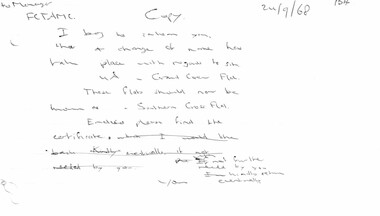
... I beg to inform you that a change of name has taken place with regard to site 4A Grand Coeur Flats. These flats should now be know as Southern Cross Flats Enclosed please find the certificate (which I would like back. Kindly eventually if not needed...I beg to inform you that a change of name has taken place with regard to site 4A Grand Coeur Flats. These flats should now be know as Southern Cross Flats Enclosed please find the certificate (which I would like back. Kindly eventually if not needed ...Bob (Herman) Hymans (a former member of the Royal Netherlands Navy) was born in Bloemendaal, Holland on 30th September 1922. During World War II he fought against the Japanese in the Dutch East Indies (now Indonesia) and was imprisoned in Changi and on the Burma Railway. After gaining qualifications as a Ski Instructor, Bob arrived in Falls Creek in July 1950. Working as an Instructor and Supervisor at Bogong Lodge, Bob decided his future was in accommodation. He was successful in negotiating an indenture for land from the State Electricity Commission (SEC). It took Bob two years to build his Grand Coeur Chalet but, tragically, it was burned down in August 1961. Bob also built the first Chairlift in Australia. This was a single chairlift and the structure was built from wooden electricity poles. He was constantly full of new ideas and proposals for the village. Bob Hymans died on 7th July 2007. This Collection of documents and letters tells the story of Bob's endeavours to develop Falls Creek into the ski village it is today.This letter is significant because it reflects the relationship between Bob Hymans and the Management Committee.A note from Bob Hymans to the management committee reporting the change in name of his flats in Falls Creek.Transcript to Manager FCTAMC Copy 24/9/68 I beg to inform you that a change of name has taken place with regard to site 4A Grand Coeur Flats. These flats should now be know as Southern Cross Flats Enclosed please find the certificate (which I would like back. Kindly eventually if not needed by you). If not needed by you kindly return eventually The section in brackets had been crossed out.falls creek tourist area management committee, falls creek administration, bob hymans
