
Showing 19 items matching "imperial army trainers "
-
 Moorabbin Air Museum
Book - Aircraft cockpits, Japanese Aircraft Interiors 1940-1945
... ...Imperial Army trainers & transports...Aircraft cockpits Imperial Army fighters Imperial Army bombers & reconaissance Imperial Army trainers & transports Imperial Navy fighters Imperial Navy bombers & reconaissance Imperial Navy floatplanes & flying boats Imperial Navy trainers & transports Imperial Army/Navy instruments Overview of cockpit interiors of Japanese WW2 aircraft, circa 2000 Japanese Aircraft Interiors 1940-1945 Book Aircraft cockpits ...Overview of cockpit interiors of Japanese WW2 aircraft, circa 2000non-fictionOverview of cockpit interiors of Japanese WW2 aircraft, circa 2000imperial army fighters, imperial army bombers & reconaissance, imperial army trainers & transports, imperial navy fighters, imperial navy bombers & reconaissance, imperial navy floatplanes & flying boats, imperial navy trainers & transports, imperial army/navy instruments -
 Federation University Historical Collection
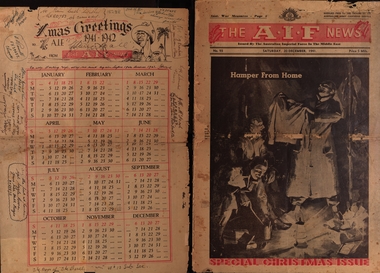
Newspaper - Twenty page issue December 1941 No. 93, Societe Orientale de Publicite, The A.I.F. News Special Christmas Issue 1941, December 1941
... trained by L/Cpl Jack Kneeshaw which he named "Goebbels"; poems and cartoons. Page 19 "Women of War" - photos of women at work filling in for men who have gone to war. Page 20 Xmas Greetings 1942-1942 - a 1942 Calendar signed by 14 members of the AIF, some with messages and including their Army Number. The A.I.F. News Christmas Edition 1941 Australian Imperial ...The A.I.F.= The Australian Imperial Force and this newspaper was supplied free to the troops of the Australian Army Canteens Service. This issue is dated Saturday 22nd December 1941. It includes advertisments for businesses in Cairo and Alexandria; Egypt, Palestine and Syria. Page 2 includes a poem titled "This Holy Night" by Pte C.M. Walker; two sonnets by Rupert Brooke; a poem, "Waiting Dreams" by Pilot Officer J.A. Henderson RAAF and a poem by Lieut. David McNicoll AIF Abroad Air Mail - Palestine. Page 3 includes a message from General Sir Thomas Blamey, an article on the part women would increasingly play as a consequence of the emergency war policy; an advertisment for tobacco specially packed for overseas forces. Page 4 includes an article on Australian coastal cities being ready for raids. Page 5 includes an article about the Commonwealth of the Philippines and their defense which until 1946 lay with America. General D Macarthur was the Commander In Chief in the Philippines. Germany's "secret Weapon" legend. Page 6 includes "Dancing Dan's Christmas"; "Bluey and Curley" comic strip. Page 7 includes article "Rommel's Armoured Might Lies Strewn Over Libyan Sands" Page 8 includes an article: "All In Fun" - a revue - has begun a tour of Australian camps in Palestine and Syria. Page 9 includes articles "War Will Revolutionise Air Services In Australia"; a list - Greek Awards To AIF Officers and a cartoon by George Aria titled 'Jonah '. Pages 10&11 "Christmas 1941" - messages from prominent people: Mr Winston Churchill; The Govenor General (Lord Gorrie); The Prime Minister (Mr Curtin); Mininster for the Army (Mr Forde). Also photos of army operations and traditional family Christmas time. Page 12 &13 Articles regarding sport under the heading 'Australian Sporting Digest'. Page 14 A story - "The Gift of the Magi" - an O Henry Christmas Story. Also a greeting from Myer's of Melbourne and Adelaide to all Myer Men in the AIF Page 15 An article where General Blamey reassures Australia about its capability of defence. Page 16 A description of a battle by Australian sloop "Parramatta" with HMAS "Auckland" against enemy planes whilst they were escorting a merchant ship with a cargo of petrol during the Battle of Tobruk Page 17 & 18 Pages under the title 'ACK-I-FOOFS' (Articles submitted by soldiers: The real Rat of Tobruk - a rat trained by L/Cpl Jack Kneeshaw which he named "Goebbels"; poems and cartoons. Page 19 "Women of War" - photos of women at work filling in for men who have gone to war. Page 20 Xmas Greetings 1942-1942 - a 1942 Calendar signed by 14 members of the AIF, some with messages and including their Army Number. Twenty pages of news supplied free to the troops by the Australian Army Canteens Service.The last page is a calendar for 1942 with personal inscriptions and greetings of servicemen. Some inscriptions have I.D. Numbers ( VX35435 W. Johnston; QX20753 of Carmody ; VX40449 ; VX39637 N. Powell; VX32054 Blue Ernistson?; N?X23234 W.Cummins; VXthe a.i.f. news christmas edition 1941, australian imperial force, world war 2, australian army canteens service, general blamey, world war 2 - pacific war, world war 2 - phillipine islands, general d macarthur, emergency plans ww2 australia, secret weapons ww2, western desert ww2, australian imperial force - western desert ww2, civil aviation post ww2, air services australia, lord gowrie, governor general lord gowrie, prime minister john curtain, minister for the army - mr forde, cartoons 1941, women-in ww2, xmas greetings calendar 1941-1942, cairo 1941, palestine 1941, western desert 1941, advertisements 1941, middle east 1941 -
 City of Moorabbin Historical Society (Operating the Box Cottage Museum)
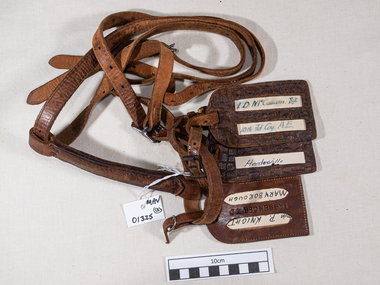
Leather, luggage straps and labels c1916, 20thC
... trains. 10th Field Company, Australian Engineers WW1 1914-18. The 10th Brigade was an infantry brigade of the Australian Army. Originally formed in 1912 as a Militia formation, the brigade was re-raised in 1916 as part of the expansion of the Australian Imperial Force following the end of the Gallipoli campaign. ...trains. 10th Field Company, Australian Engineers WW1 1914-18. The 10th Brigade was an infantry brigade of the Australian Army. Originally formed in 1912 as a Militia formation, the brigade was re-raised in 1916 as part of the expansion of the Australian Imperial Force following the end of the Gallipoli campaign. ...Leather straps were commonly used to secure cases and other forms of luggage when traveling. The labels enabled easy identification when collecting luggage from transport carriages, coaches, buses and trains. 10th Field Company, Australian Engineers WW1 1914-18. The 10th Brigade was an infantry brigade of the Australian Army. Originally formed in 1912 as a Militia formation, the brigade was re-raised in 1916 as part of the expansion of the Australian Imperial Force following the end of the Gallipoli campaign. It subsequently saw service on the Western Front in France and Belgium during the First World War. After the war it was disbanded but was re-raised in 1921 as a part-time formation based in the state of Victoria. During the Second World War the brigade was used in a garrison role in Australia before being disbanded in 1942.These leather straps and labels were attached to the luggage of an Australian soldier during early 20th C who may have been a resident or relative of a resident in City of MoorabbinLeather luggage straps with metal buckles and 3 luggage address labels attached.Label 1 - L.D.McCallum Sgt / 10th Fd Coy AE Label 2 - Healesville Label 3 - Maryborough leather, straps, belts, luggage labels, tools, saddles, wallets, personal effects, horses, drays, world war 1 1914 -18, world war 2 1939-45, army, 1st aif, military, 10th field company australian engineers, western front, france, belgium, -
 Running Rabbits Military Museum operated by the Upwey Belgrave RSL Sub Branch
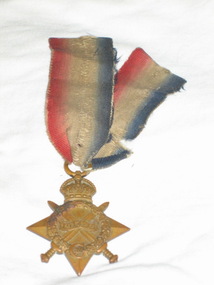
Medals, Medals of L/Cpl George William Steele
... army while new recruits could be trained and equipped. Collectively, they fully deserve a great deal of honour for their part in the first sixteen weeks of the Great War. There were approximately 378,000 1914 Stars issued. The British War Medal, 1914-18 The silver or bronze medal was awarded to officers and men of the British and Imperial...army while new recruits could be trained and equipped. Collectively, they fully deserve a great deal of honour for their part in the first sixteen weeks of the Great War. There were approximately 378,000 1914 Stars issued. The British War Medal, 1914-18 The silver or bronze medal was awarded to officers and men of the British and Imperial ...Wounded7/5/1915 Gallipoli Died of Wounds at sea in transit to hospital The 1914 Star This bronze medal award was authorized by King George V in April 1917 for those who had served in France or Belgium between 5th August 1914 to midnight on 22nd November 1914 inclusive. The reverse is plain with the recipient's service number, rank, name and unit impressed on it. It should be remembered that recipients of this medal were responsible for assisting the French to hold back the German army while new recruits could be trained and equipped. Collectively, they fully deserve a great deal of honour for their part in the first sixteen weeks of the Great War. There were approximately 378,000 1914 Stars issued. The British War Medal, 1914-18 The silver or bronze medal was awarded to officers and men of the British and Imperial Forces who either entered a theatre of war or entered service overseas between 5th August 1914 and 11th November 1918 inclusive Approximately 6.5 million British War Medals were issued. Approximately 6.4 million of these were the silver versions of this medal. The recipient's service number, rank, name and unit was impressed on the rim. SN 1053 14Btn AIF -
 Running Rabbits Military Museum operated by the Upwey Belgrave RSL Sub Branch
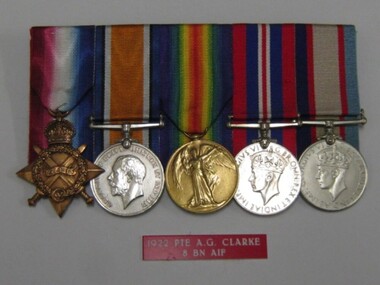
Medals, Medals of PTE Arthur Ernest Clarke
... army while new recruits could be trained and equipped. Collectively, they fully deserve a great deal of honour for their part in the first sixteen weeks of the Great War. There were approximately 378,000 1914 Stars issued. The British War Medal, 1914-18 The silver or bronze medal was awarded to officers and men of the British and Imperial...army while new recruits could be trained and equipped. Collectively, they fully deserve a great deal of honour for their part in the first sixteen weeks of the Great War. There were approximately 378,000 1914 Stars issued. The British War Medal, 1914-18 The silver or bronze medal was awarded to officers and men of the British and Imperial ...WW1 Served in Gallipoli & France WW2 Militia The 1914 Star This bronze medal award was authorized by King George V in April 1917 for those who had served in France or Belgium between 5th August 1914 to midnight on 22nd November 1914 inclusive. The reverse is plain with the recipient's service number, rank, name and unit impressed on it. It should be remembered that recipients of this medal were responsible for assisting the French to hold back the German army while new recruits could be trained and equipped. Collectively, they fully deserve a great deal of honour for their part in the first sixteen weeks of the Great War. There were approximately 378,000 1914 Stars issued. The British War Medal, 1914-18 The silver or bronze medal was awarded to officers and men of the British and Imperial Forces who either entered a theatre of war or entered service overseas between 5th August 1914 and 11th November 1918 inclusive Approximately 6.5 million British War Medals were issued. Approximately 6.4 million of these were the silver versions of this medal. The recipient's service number, rank, name and unit was impressed on the rim. The Allied Victory Medal Approximately 5.7 million victory medals were issued. The recipient's service number, rank, name and unit was impressed on the rim. The 1939-45 Star Awarded for service as follows: • Army - awarded for six months service in an operational command during the period 3 September 1939 to 2 September 1945. The War Medal 1939-45 Awarded to members who served full-time in operational or non-operational service between 3 September 1939 and 2 September 1945. Clarke SN 1703 8 Btn AIF -
 Monbulk RSL Sub Branch
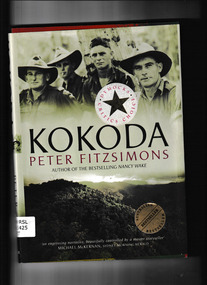
Book, Hachette, Kokoda, 2008
... In the muddy, treacherous mountains of Papua New Guinea, a small force of young Australian soldiers - some of them still teenagers - are up against highly trained, experienced Japanese troops. Many believed that the all-conquering Imperial Japanese Army was unstoppable. ...Kokoda, 1942. In the muddy, treacherous mountains of Papua New Guinea, a small force of young Australian soldiers - some of them still teenagers - are up against highly trained, experienced Japanese troops. Many believed that the all-conquering Imperial Japanese Army was unstoppable. But this is the story of how these brave young Aussies faced up to some of the world's best soldiers on a narrow, precarious jungle track - and defeated them.Index, bibliography, notes, ill, maps, p.479.non-fictionKokoda, 1942. In the muddy, treacherous mountains of Papua New Guinea, a small force of young Australian soldiers - some of them still teenagers - are up against highly trained, experienced Japanese troops. Many believed that the all-conquering Imperial Japanese Army was unstoppable. But this is the story of how these brave young Aussies faced up to some of the world's best soldiers on a narrow, precarious jungle track - and defeated them.world war 1939 – 1945 – campaigns – kokoda, kokoda track 1942 -
 National Vietnam Veterans Museum (NVVM)
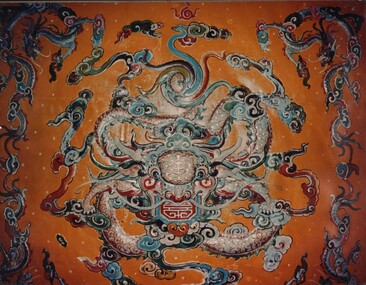
Photograph, Gibbons, Denis, The Imperial Palace Ceiling
... Trained with the Australian Army, before travelling to Vietnam in January 1966, Denis stayed with the 1st Australian Task Force in Nui Dat working as a photographer. For almost five years Gibbons toured with nine Australian infantry battalions, posting compelling war images from within many combat zones before being flown out in late November 1970 after sustaining injuries. The images held within the National Vietnam Veterans Museum make up the Gibbons Collection. Photograph Imperial ...Denis Gibbons (1937 – 2011) Trained with the Australian Army, before travelling to Vietnam in January 1966, Denis stayed with the 1st Australian Task Force in Nui Dat working as a photographer. For almost five years Gibbons toured with nine Australian infantry battalions, posting compelling war images from within many combat zones before being flown out in late November 1970 after sustaining injuries. The images held within the National Vietnam Veterans Museum make up the Gibbons Collection. A coloured photograph of Ceiling decorations in the receiving foyer area of the Imperial Palace at Hue, in the Northern area of South Vietnam. The Palace was heavily damaged during the Tet Offensive of January to March 1968. the richness and beauty of the palace was completely scared.photograph, imperial palace, hue, tet offensive, 1968, gibbons collection catalogue, denis gibbons -
 National Vietnam Veterans Museum (NVVM)
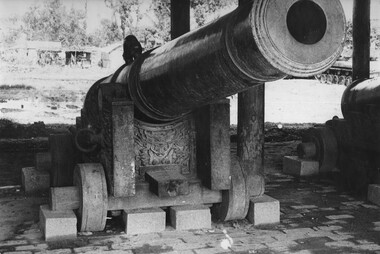
Photograph, Gibbons, Denis, Imperial Palace Cannon
... Trained with the Australian Army, before travelling to Vietnam in January 1966, Denis stayed with the 1st Australian Task Force in Nui Dat working as a photographer. For almost five years Gibbons toured with nine Australian infantry battalions, posting compelling war images from within many combat zones before being flown out in late November 1970 after sustaining injuries. The images held within the National Vietnam Veterans Museum make up the Gibbons Collection. Photograph Imperial ...Denis Gibbons (1937 – 2011) Trained with the Australian Army, before travelling to Vietnam in January 1966, Denis stayed with the 1st Australian Task Force in Nui Dat working as a photographer. For almost five years Gibbons toured with nine Australian infantry battalions, posting compelling war images from within many combat zones before being flown out in late November 1970 after sustaining injuries. The images held within the National Vietnam Veterans Museum make up the Gibbons Collection. A black and white photograph of a large cannon in its bay at the Imperial Palace Hue, South Vietnam. The tanks and regional force outposts surrounding the old gun emplacements appear as a anachronism in the modern conflict being raged in South Vietnam. (circa April 1966)photograph, imperial palace, hue, tet offensive, 1968, gibbons collection catalogue, cannon, denis gibbons -
 Eltham District Historical Society Inc
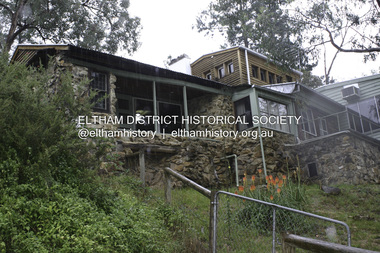
Photograph - Digital Photograph, Alan King, Stonygrad, 34 Hamilton Road, North Warrandyte, 30 January 2008
... Vassilieff trained with the Imperial Military Academy at St Petersburg and fought in World War One as an officer in the White Russian Army against the communists. ...Vassilieff trained with the Imperial Military Academy at St Petersburg and fought in World War One as an officer in the White Russian Army against the communists. ...Vassilieff dynamited rock from his own property to build his house. Stonygrad is reminiscent of a grotto and in parts, of a sculpture. Covered under Heritage Overlay, Nillumbik Planning Scheme. Published: Nillumbik Now and Then / Marguerite Marshall 2008; photographs Alan King with Marguerite Marshall.; p135 Stonygrad, the home built by Expressionist painter and sculptor Danila Vassilieff, is reminiscent of a grotto and in parts, of a sculpture. Vassilieff, who amongst others influenced painter Sydney Nolan and Albert Tucker, was a member of the artists group the Angry Penguins. He was also a highly regarded art teacher at the nearby Koornong Experimental School and taught at Eltham High School. Art critic Robert Hughes described Vassilieff’s painting as ‘lyrical without social commentary’, and said Vassilieff was ‘the most oddly neglected artist in recent Australian History’. Vassilieff, who was born in 1897 in Russia, had an unusually adventurous life before he settled in Warrandyte. The 12th of 18 children, he lived on a farm in the Don Basin. Vassilieff trained with the Imperial Military Academy at St Petersburg and fought in World War One as an officer in the White Russian Army against the communists. In 1920 he was captured, then escaped from prison, stole a horse and rode bareback 150 miles to the Black Sea, helped at first by Tartar freebooters. He then travelled to India, Shanghai and arrived in Queensland as a refugee in 1923 where he began painting. He and his wife Anisia bought a sugar farm near Ingram, and later he constructed railway lines at Mataranka, in the Northern Territory.4 In 1929 Vassilieff went to Brazil for formal art training from former fellow-officer Dmitri Ismailovich, but he soon left to travel up the Amazon River. He then worked as a sidewalk artist in the West Indies and travelled for two years in England, France and Spain. In 1937 he arrived in Melbourne where he lived until his death in 1958. His first major Australian series was the Carlton streetscapes and from 1951 he sculpted in local hard limestone. Vassilieff rejected all dogma and regarded religious subjects as suitable only for decorative arts. In 1944 he helped defeat a communist attempt to take over the Contemporary Art Society. For a short time, from around 1955, Vassilieff taught at various Victorian schools. The Angry Penguins painted mainly between 1937 and 1947, and included Arthur Boyd, Albert Tucker, Sidney Nolan and Joy Hester. The group formed as they felt isolated from European thought and art (including Surrealism) from which their work was derived. They were also angry at what they considered to be the complacency and insularity of their society. They maintained Australians at first were scarcely aware of the threats of the Wall Street Crash and Hitler and were little interested in the Spanish Civil War. The Angry Penguins also objected to the White Australia Policy. Hughes said although most of the Melbourne Expressionists in the 1940s were unskilled and their work crude in style, they helped jolt Australian painting from its pastoral complacency. Their style influenced nearly every painting produced by significant figurative artists in Melbourne in the 1950s such as Charles Blackman. From 1939 Vassilieff built Stonygrad, mainly with local stone. The house stands at the end of a private road surrounded by trees with the quiet occasionally broken by the sounds of bellbirds. To build his house Vassilieff dynamited rock and cut trees from his own property. The original section of the three-level house is of irregular-shaped pieces of solid stone, exposed inside like the exterior. Vassilieff later built sections with timber and brick. Inside is rustic and cave-like, and several rooms are linked by arched openings with no doors. One undulating wall was carved out of rock from which two sculptured heads protrude. Several ceilings are of rough-hewn logs and the built-in table and bookcase are rough, as is a timber ladder leading to a bedroom. Not for the elderly or unsteady! Yet the general impression in the muted light is beautiful, with artistic originality.This collection of almost 130 photos about places and people within the Shire of Nillumbik, an urban and rural municipality in Melbourne's north, contributes to an understanding of the history of the Shire. Published in 2008 immediately prior to the Black Saturday bushfires of February 7, 2009, it documents sites that were impacted, and in some cases destroyed by the fires. It includes photographs taken especially for the publication, creating a unique time capsule representing the Shire in the early 21st century. It remains the most recent comprehenesive publication devoted to the Shire's history connecting local residents to the past. nillumbik now and then (marshall-king) collection, danila vassilieff, hamilton road, north warrandyte, stonygrad -
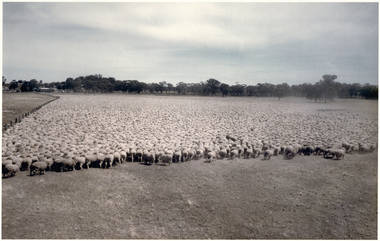 National Wool Museum
Photograph, Puckapunyal - 75,172 Sheep for Shearing, 1988
... During the Second World War the Second Australian Imperial Force trained there as well as the US Army 41st Infantry Division. ...During the Second World War the Second Australian Imperial Force trained there as well as the US Army 41st Infantry Division. ...Banjo Paterson once wrote, ‘The musterers are fetching them a hundred thousand strong’. Well, not quite 100,000 strong, but there are 75,172 mixed age Riverina-bred merino wethers in this mob mustered for shearing on January 22, 1988. The sheep were owned by the Mountjoy family from Geelong Victoria and were running on Puckapunyal Army Base near Seymour in Central Victoria on which the family held the grazing lease. Contractor for the shearing, Jim Walker, Avenel, Victoria, former Australian shearing team captain in 1974-75 and 1978-79, recalls there were up to 21 shearers in his team waiting for the red eyes to arrive despite the mid-summer heat of up to 38°C and the blinding dust on windy days. Jim Walker thinks there may also have been some sheep in the mob from Portland Downs and Isis Downs near Isisford in Central Queensland. The biggest shearing he did at ‘Pucka’ was 87,087 shorn in 1988. The ‘Pucka’ base was established during WW1. During the Second World War the Second Australian Imperial Force trained there as well as the US Army 41st Infantry Division. It was also home to the 1st Armoured Regiment from 1949 until 1995. During the 1950s up to 4000 national servicemen at any given time were training there. In the 1980s the Army undertook a major 60,000-acre land rehabilitation programme as decades of heavy use had led to serious degradation. By 1988 when the photo was taken, further land acquisition had increased the area to just under 100,000 acres, 43,000 of which is still bush country. There are no sheep there now, and the old shed was bulldozed and burnt. There are thousands of kangaroos which of course don’t need to be shorn and would be hard to muster and hold for a similar photo. Colour photograph, 75,172 merino wethers, mustered for shearing at Puckapunyal in 1988.shearing merino sheep, mountjoy, mr dale - worungalla pastoral co., shearing, merino sheep -
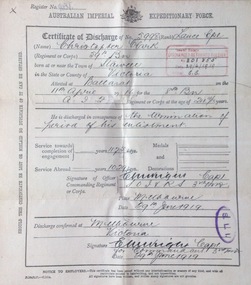 Stawell RSL Sub Branch War Museum
Certificate of Discharge, Australian Military Forces, Document, June 1919
... WW1 Australian Imperial Expeditionary Force Certificate of Discharge of Soldier No 5998 Christopher Clark Australian Imperial Expeditionary Force WW1,59th Battalion Christopher Clark was born in Stawell on 25th December 1892 and was brought up on the family farm in Callawdda and worked in the district and then in Queensland where he obtained an engine drivers licence and drove the sugar trains then worked on the steam boiler engines in the sugar mills. When the First World War started he came back to Stawell and enlisted in the army...army. WW1 Australian Imperial Expeditionary Force Certificate of Discharge No 5998 Christopher Clark 59th Battalion Born in Stawell Christopher was a WW1 Serviceman from Stawell ww1 serviceman soldiers military stawell Form is filled out for soldier Christopher Clark WW1 Australian Imperial Expeditionary Force Certificate of Discharge of Soldier No 5998 Christopher Clark Australian Imperial Expeditionary Force WW1,59th Battalion Christopher Clark was born in Stawell on 25th December 1892 and was brought up on the family farm in Callawdda and worked in the district and then in Queensland where he obtained an engine drivers licence and drove the sugar trains then worked on the steam boiler engines in the sugar mills. ...Each soldier had one of these forms filled out on Discharge from the army. WW1 Australian Imperial Expeditionary Force Certificate of Discharge No 5998 Christopher Clark 59th Battalion Born in StawellChristopher was a WW1 Serviceman from Stawell WW1 Australian Imperial Expeditionary Force Certificate of Discharge of Soldier No 5998 Christopher Clark Australian Imperial Expeditionary Force WW1,59th Battalion Christopher Clark was born in Stawell on 25th December 1892 and was brought up on the family farm in Callawdda and worked in the district and then in Queensland where he obtained an engine drivers licence and drove the sugar trains then worked on the steam boiler engines in the sugar mills. When the First World War started he came back to Stawell and enlisted in the army on 11/4/1916. He was sent to France in the 59th Battalion. He was in the army 1175 days, serving 1029 days abroad. During his service he was promoted to Lance Corporal. Details from his daughter Ruth Clark of Ararat December 2017.Form is filled out for soldier Christopher Clarkww1, serviceman, soldiers, military, stawell -
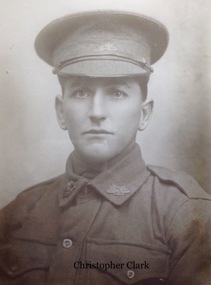 Stawell RSL Sub Branch War Museum
Protograph of WW1 soldier Christopher Clark, Portrait WW2 Soldier Christopher Clark, Approx 1916
... Framed Studio Portrait of Soldier No 5998 Christopher Clark Australian Imperial Expeditionary Force WW1,59th Battalion Christopher Clark was born in Stawell on 25th December 1892 and was brought up on the family farm in Callawdda and worked in the district and then in Queensland where he obtained an engine drivers licence and drove the sugar trains then worked on the steam boiler engines in the sugar mills. When the First World War started he came back to Stawell and enlisted in the army...Soldier in WW1 Australian Imperial Expeditionary Force No 5998 Christopher Clark 59th Battalion Born in Stawell Christopher was a WW1 Serviceman from Stawell who returned to Australia ww1 serviceman soldiers military stawell Framed Studio Portrait of Soldier No 5998 Christopher Clark Australian Imperial Expeditionary Force WW1,59th Battalion Christopher Clark was born in Stawell on 25th December 1892 and was brought up on the family farm in Callawdda and worked in the district and then in Queensland where he obtained an engine drivers licence and drove the sugar trains then worked on the steam boiler engines in the sugar mills. When the First World War started he came back to Stawell and enlisted in the army ...Soldier in WW1 Australian Imperial Expeditionary Force No 5998 Christopher Clark 59th Battalion Born in StawellChristopher was a WW1 Serviceman from Stawell who returned to Australia Framed Studio Portrait of Soldier No 5998 Christopher Clark Australian Imperial Expeditionary Force WW1,59th Battalion Christopher Clark was born in Stawell on 25th December 1892 and was brought up on the family farm in Callawdda and worked in the district and then in Queensland where he obtained an engine drivers licence and drove the sugar trains then worked on the steam boiler engines in the sugar mills. When the First World War started he came back to Stawell and enlisted in the army on 11/4/1916. He was sent to France in the 59th Battalion. He was in the army 1175 days, serving 1029 days abroad. During his service he was promoted to Lance Corporal. Details from his daughter Ruth Clark of Ararat December 2017.ww1, serviceman, soldiers, military, stawell -
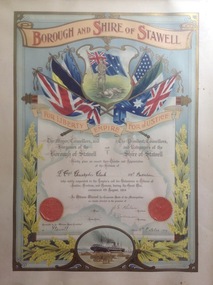 Stawell RSL Sub Branch War Museum
Certificate of Appreciation from Stawell Borough and Shire for WW1 soldier Christopher Clark, Certificate of Appreciation, Approx 1916
... Framed Certificate of Appreciation for Soldier No 5998 Christopher Clark Australian Imperial Expeditionary Force WW1, 59th Battalion Christopher Clark was born in Stawell on 25th December 1892 and was brought up on the family farm in Callawdda and worked in the district and then in Queensland where he obtained an engine drivers licence and drove the sugar trains then worked on the steam boiler engines in the sugar mills. When the First World War started he came back to Stawell and enlisted in the army...Soldier in WW1 Australian Imperial Expeditionary Force No 5998 Christopher Clark 59th Battalion Born in Stawell Christopher was a WW1 Serviceman from Stawell ww1 serviceman soldiers military stawell Soldier No 5998 Christopher Clark Australian Imperial Expeditionary Force WW1 59th Battalion Born in Stawell Framed Certificate of Appreciation for Soldier No 5998 Christopher Clark Australian Imperial Expeditionary Force WW1, 59th Battalion Christopher Clark was born in Stawell on 25th December 1892 and was brought up on the family farm in Callawdda and worked in the district and then in Queensland where he obtained an engine drivers licence and drove the sugar trains then worked on the steam boiler engines in the sugar mills. When the First World War started he came back to Stawell and enlisted in the army ...Soldier in WW1 Australian Imperial Expeditionary Force No 5998 Christopher Clark 59th Battalion Born in StawellChristopher was a WW1 Serviceman from Stawell Framed Certificate of Appreciation for Soldier No 5998 Christopher Clark Australian Imperial Expeditionary Force WW1, 59th Battalion Christopher Clark was born in Stawell on 25th December 1892 and was brought up on the family farm in Callawdda and worked in the district and then in Queensland where he obtained an engine drivers licence and drove the sugar trains then worked on the steam boiler engines in the sugar mills. When the First World War started he came back to Stawell and enlisted in the army on 11/4/1916. He was sent to France in the 59th Battalion. He was in the army 1175 days, serving 1029 days abroad. During his service he was promoted to Lance Corporal. Details from his daughter Ruth Clark of Ararat December 2017. Soldier No 5998 Christopher Clark Australian Imperial Expeditionary Force WW1 59th Battalion Born in Stawellww1, serviceman, soldiers, military, stawell -
 Ballarat Base Hospital Trained Nurses League
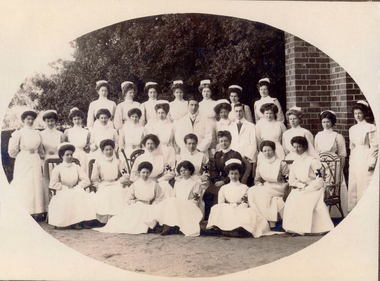
Priscilla Wardle - Trainee Ballarat District Hospital, 27/02/1905 to 01/03/1908 and WW1 Nurse. Also Edith Popplewell & Lily MacKenzie
... trained nurses she returned to Australia and enlisted in the Australian Army Nursing Service (AANS) in October 1915. Lily went on to serve in Egypt, England, France and Italy where she was awarded the Royal Red Cross (RRC) medal for her service. This photograph is while Lily and Poppy were working at Otaki Cottage Hospital in New Zealand. Circa 1914. trainee charge sister ballarat hospital 1905 1908 ww1 mount stuart house sleeman wardle popplewell mackenzie military queen alexandra's imperial ...No 1: Matron Eagleton with Nursing Staff, Ballarat & District Hospital. Priscilla Wardle, far right - trainee nurse 1905-1908. No 2: This could be a group of trainee nurses at Ballarat Hospital. Circa 1906/1907. The nurses with the grey looking sleeves in this black and white photograph may be wearing the lilac uniform of Trainee nurses. The sitting nurse on the far right may already be qualified because she appears to be wearing the white of a trained nurse. Sitting in the middle with the cheeky grin could be Priscilla and the standing nurse on the far left could be Edith Popplewell. No 3: This photograph is labelled 1907 and Priscilla would have just commenced her training. She appears to be “fanning” a female patient presumably to cool her down. This could be upstairs in the Queen Victoria’s Women’s Ward. Priscilla graduated as a nurse in 1908. In this photograph Priscilla was at age 23 years. No 5: Sheila Kelly (left) and Priscilla Wardle. This photograph is labelled 1909 and shows Priscilla in an all white uniform indicating she has qualified as a nurse. Sheila Kelly appears to have darker sleeves/blouse (lilac) and may still be a trainee. No 6: There is a very good chance that this photograph is Edith Popplewell, standing left, Lily MacKenzie , standing on the right and Priscilla seated. Writing in her album is very hard to read but it appears to be “Pop McK & I”. The arm bands with the St John Cross denote they are “charge nurses” maybe in charge of a ward. Taking all this into account the photograph could be circa 1909/1910. No 8 & 9: Priscilla painting what appears to be a gate while wearing her nurse uniform. She has a big grin on her face. Together with Lily MacKenzie they were the principals in the Mount Stuart Private Hospital at 18 Duke Street. Daylesford. This property is now known as Mount Stuart House. Priscilla appears to be on Central Spring Road with the Daylesford Post Office in the background. Photograph 9 is labelled 1914 which would make it near the end of their tenancy between 1911 and 1914. No 10: This photograph raises some questions. Priscilla appears to have darker sleeves /blouse (lilac) which may indicate she is still a trainee however Priscilla is also wearing a “charge nurse” arm band. While my research shows trainee nurses can be a “charge nurse” this is not common practise. The scene appears to be at the door of a house/home. I am not sure if the children’s ward/orphanage at the Ballarat Hospital at this time was in such a building. It could be that it is at the Mount Stuart Hospital but this would mean Priscilla and Lily have duplicated the wearing of the “charge nurse” arm band. The St John’s logo looks different too. Priscilla Isabel “Pearl” Wardle (1884-1967). The armband indicates Priscilla is a Charge Nurse at the Ballarat Hospital. Nothing else known. No 11: Mary & I at Mount Stuart – House Daylesford – This is probably the nursery at the Mount Stuart House Private Hospital being run by Priscilla Isabel “Pearl” Wardle (1884 – 1967) and Selina Lily (Lil) MacKenzie or McKenzie (1882 – 1975) between 1910 and 1914. Mary is certainly Mary Young MacKenzie or McKenzie (1865- 1942) Lily’s stepsister who trained at Ballarat Hospital as “Mary Young “at the same time as Priscilla and Lily. Mount Stuart House still stands at 18 Duke Street Daylesford. Photo date 1912. No 12: Priscilla wearing her distinctive Queen Alexandra’s Imperial Military Nursing Service Reserve cape and badge. Possibly while nursing in London for a month in 1919 after the war. No 12A: Priscilla Wardle - WW1 Diary, OCR enabled. No 13: Priscilla and friends at No. 7 General Hospital, Malassises, Saint Omer, France in July 1915 The old monastery being used as a hospital can be seen in the background. The tents are the nurses quarters. This photograph may have been taken at the same time as the group photograph on page 250 of the diary transcription. Priscilla is thought to be the nurse at the centre in the QAIMNSR uniform. The nurses quarters at the No 7 General Hospital in Saint Omer in France where Priscilla worked for most of the first year of her Diary. Their Monastery (Hospital) at Malassises can be seen in the background. No 15: Priscilla is an Acting Sister working at the 2nd General Hospital for Officers in Havre, France, between March and July 1918. The nurses were enjoying their “tea party”. (see also page 253 of the Diary transcription) No 17: Priscilla at Havre - at 2nd General Hospital (Officers Hospital) in Havre., France Friday 29 March 1918 to Monday 29 July 1918 note the two dark bands on her right sleeve denoting that she is an “Acting Sister”. Priscilla is 34 years of age in this picture and in the three weeks prior to this posting she met Cyril Terence Charles Kirby (1892-1968) her future husband at the 42nd Stationary Hospital in Flixecourt while he was serving with the British Army during the battle and evacuation of Amiens. No 18: Priscilla Wardle at No 8 Stationary Hospital Wimereux, France - from Saturday 24 June 1916 to Tuesday 18 September 1917, Priscilla worked at this hospital for 15 months her longest time in one hospital. during the war. While at Wimereux on Sunday 1 July 1917 she was appointed an Acting Sister. Priscilla once said she disliked nursing in her cape and badges and here she is in her favourite “uniform” for work “the robe” as she called it. She may be leaving the “operating theatre” at Wimereux in this photograph. No 19: Priscilla worked in various operating theatres throughout France. This could be after she became an anaesthetist in 1918 and worked with this team. She is wearing her favourite uniform which is more comfortable. She did not like the collars and capes that were required to be worn. No 20: Priscilla and Sister Michael Meeke? (details not found) are having a quiet drink at the 2nd General Hospital for Officers in Havre, France. Note the dark bands on their sleeves denote their rank as nursing “Sisters”. While it looks like they are smoking look more closely they are in fact holding a “flute” style probably “cocktail” glass. Tea parties and cocktails, Havre could almost have been fun. No 22: 1913 – Ballarat nurse Priscilla Isabell “Pearl” Wardle (1884-1967) in Cannes on the French Riviera during leave from between Friday 20 February 1918 and Friday 6 March 1918.Priscilla is second from the left wearing her distinctive QAIMNSR cape of grey with dark “wine” coloured border. The other nurses are wearing their “travelling” army uniform. They were rudely called “Salvation Army Lassies” by American nurses for the way they were dressed. (see page 232 of Priscilla’s War Diary) The description of 1913 on this photograph is confusing. No 23: Priscilla with her best friend Edith Victoria Donaldson somewhere in the “mysterious far east” on their trip on the Orontes. Priscilla is second from left - this may have been taken at Durban during Priscilla's return to Australia in 1919. No 25: Priscilla Wardle, Ballarat nurse in her Queen Alexandra’s Imperial Military Nursing Service Reserve (QAIMNSR) uniform. Notice the distinctive grey cape with “wine coloured” border Priscilla is also wearing her QAIMNSR qualification badge (medal) on the right side. Because she has no dark (wine coloured) bands on her sleeves so this photograph may be before 1 July 1918. No 26: Priscilla met her husband to be English army Lieutenant Cyril Terrence Charles Kirby during the battle and subsequent evacuation of Amiens in France. As an army nursing “Sister” Priscilla also held the rank of Lieutenant. Priscilla was stationed at the 42nd Stationary Hospital between 7/3/18 and 23/3/18. She had just completed a fortnight break at Cannes on the French Riviera. They were married at Priscilla’s home “Waverley" at 215 Dawson Street Ballarat on Saturday 15 November 1919. Nov 15, 1919 – Mr and Mrs Kirby. The bride Priscilla Isabell “Pearl” Kirby (nee Wardle) (1884-1967) and the groom Cyril Terence Charles Kirby (1892– 1968) on their wedding day. Priscilla was 34 years of age and Cyril 27 years of age however their marriage certificate states that they were both 34 years of age. Their marriage certificate states they were married at Waverley, Dawson St, South, Ballarat in a Presbyterian service conducted by the Rev. John Walker, a Minister of the Presbyterian Church of Australia and the Moderator General of the Church we think for Victoria. Was it in an outdoor setting as the surrounds in this photograph seem to indicate. Their witnesses were Robert and Olive, Priscilla’s brother and sister. Cyril signed as C. Terence. C. Kirby and Priscila signed as Priscilla I. Wardle. The certificate lists Cyril (Terence) as a Bachelor, Born at sea on a British ship and his occupation as Sailor. His father interestingly is listed as Charles John Kirby, of independent means and his mother as Emily Newman. Priscilla is listed as a Spinster, born in Ballarat with occupation as a Nurse. Her father is listed as Henry Thomas Wardle, Timber Merchant and her mother as Isabella Allan. They are both resident at 215 Dawson St. Ballarat which was Waverley the Wardle family home. No 28: Reverse in Poppy’s handwriting: “Lovingly yours Poppy, Dec 1908” Taken the year after Poppy qualified at BBH. No 29: Reverse in Poppy’s handwriting: “With much love to you Cilla, Poppy 1915” This picture was taken in the same year as the Marquette sinking incident. Edith Catheina Popplewell RRC (1884-1972) in her New Zealand Army Nursing Service (NZANS) Uniform. Poppy is at age 29 years in this photograph. Poppy was awarded the Royal Red Cross (RRC) medal for her heroism during the sinking of the Marquette transport ship. She lost her best friend NZ nurse Lorna Ratray. No 30: Taken in Cairo. Poppy is in the centre and wearing her New Zealand army badge and cape. The two nurses on either side are Australian nurses probably wearing their unique silver Australian Army sunrise badge and cape. No 31: Reverse in Poppy’s handwriting: “Ward 7 on Xmas day 1917, with my love, Poppy, A Happy New Year to you – had the sweetest letter from Bobbie”. (Bobbie is Priscilla’s brother Robert). It is thought the nurse in the centre of the three on the left is Poppy. It is 1917 two years after the Marquette sinking. Poppy appears to be a “sister” note the two dark bands on her sleeve. The uniform also matches that of Poppy 2. This photograph is in Post Card form very common during WWI. Edith Popplewell RRC is the “Sister” in the middle of the group of three nurses on the left. She is a sister not a general nurse because of the two bands on her left wrist denoting her rank. She was in fact the Charge Nurse ( in charge) of Ward 7 at this time. Note the Christmas decorations. Poppy is at age 33 years of age in this photograph.Bobbie is Priscilla’s brother Robert Norman “Bobbie” Wardle (1895-1979). No 32: Lilly MacKenzie & Poppy – Otaki - Australian nurse Selina Lily (Lil) MacKenzie sometimes McKenzie (1882– 975) grew up and trained as a nurse in Ballarat Victoria. After completing her training Lily and Priscilla Isabell “Pearl” Wardle (1884 – 1967) conducted the Mount Stuart House Private Hospital in Daylesford Victoria. In late 1913 Lily travelled to Otaki, 32 kms north of Wellington in New Zealand and worked at the Otaki Cottage Hospital with close friend Edith Catheina Popplewell “Poppy” (1884-1976) who also grew up and trained as a nurse at the Ballarat Hospital. In 1914 Lily was matron of a private hospital in Taihape 150kms north of Wellington. Both Lily and Poppy volunteered for New Zealand but as New Zealand were not accepting Australian trained nurses she returned to Australia and enlisted in the Australian Army Nursing Service (AANS) in October 1915. Lily went on to serve in Egypt, England, France and Italy where she was awarded the Royal Red Cross (RRC) medal for her service. This photograph is while Lily and Poppy were working at Otaki Cottage Hospital in New Zealand. Circa 1914. trainee, charge sister, ballarat, hospital, 1905, 1908, ww1, mount stuart house, sleeman, wardle, popplewell, mackenzie, military, queen alexandra's imperial military nursing service reserve, daylesford, nurses, private hospital, edith popplewell, france, cairo, diary, ww1 diary, havre, lily mackenzie, eagleton, matron, otaki, new zealand, donaldson, malassises, kelly, young, kirby, priscilla -
 Sunshine and District Historical Society Incorporated
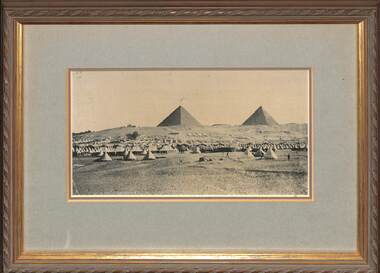
Photograph - Alexander Robert Learmonth 1st Victorian Brigade Artillery Desert Camp Cairo Photograph
... Army during WW1 and was one of the first 1000 volunteer recruits to signed up. Learmonth Crescent, Sunshine West was named after him. The Australian Imperial Force, including the Victorian artillery units, was originally meant to train in England. ...Army during WW1 and was one of the first 1000 volunteer recruits to signed up. Learmonth Crescent, Sunshine West was named after him. The Australian Imperial Force, including the Victorian artillery units, was originally meant to train in England. ...Alexander Robert Learmonth was a former Sunshine Resident, H.V. McKay / Massey Ferguson employee. He served in the Australian Army during WW1 and was one of the first 1000 volunteer recruits to signed up. Learmonth Crescent, Sunshine West was named after him. The Australian Imperial Force, including the Victorian artillery units, was originally meant to train in England. Overcrowding there forced a change of plans, and when the convoy reached the Suez Canal in late 1914, the troops were diverted to Egypt instead. Most of the 1st Division, including its artillery brigades (which contained many Victorian batteries), trained at the Mena Camp 1914 to 1915, about 10 miles from central Cairo, on the Giza Plateau with the Pyramids and Sphinx as the backdrop. This is a rare photograph of a known Sunshine resident, Alexander Robert Learmonth, taken in 1915, at the A.I.F. 1st Division Mena Training Camp, Giza Plateau, Egypt. He is standing to the right of the tent, bottom right-hand side.5710 - Alexander Robert Learmonth 1st Victorian Brigade Artillery Desert Camp Cairo Photograph Front.jpg 5710 - Alexander Robert Learmonth 1st Victorian Brigade Artillery Desert Camp Cairo Photograph Back.jpg Alexander Robert Learmonth VX919 25th Battery 1st Victorian Brigade Artillary 1st Australian Division A.I.F. An ANZAC on Gallipoli desert camp near Cairo 1915 Standing to right of tents alexander robert learmonth, world war 1914 - 1918, cairo, egypt, anzac, gallipoli, mena camp, giza plateau, pyramid, learmonth crescent sunshine -
 Mrs Aeneas Gunn Memorial Library
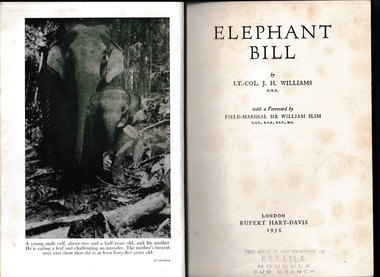
Book, J.H. Williams, Elephant Bill, 1956
... trained them to haul teak logs out of the isolated jungles. Yet this is also a story of great courage because when the Second World War struck, it also came to Burma. The Japanese Imperial Army ...Though he was officially known as Lt. Colonel J.H. Williams, the author was known to the world at large as Elephant Bill. That is because he spent 25 years living with the elephants in the mountains and forests of Burma. There he trained them to haul teak logs out of the isolated jungles. Yet this is also a story of great courage because when the Second World War struck, it also came to Burma. The Japanese Imperial Army planned to confiscate the Burmese elephants, drafting them to make the bridges and railways they needed to invade India. When he learned of these plans to put his beloved animals to a war-like purpose, Elephant Bill knew what had to be done. The mighty kings of the jungle had to be evacuated to safety. Elephant Bill is thus the story not only of the peaceful days in the jungle, starting in 1921, but also the story of the largest elephant rescue in history. It tells the amazing account of how Elephant Bill, along with his friends and family, rode 45 of the great beasts across the mountains of Burma, before reaching safety in faraway India. Collapse summaryIll, p.245.non-fictionThough he was officially known as Lt. Colonel J.H. Williams, the author was known to the world at large as Elephant Bill. That is because he spent 25 years living with the elephants in the mountains and forests of Burma. There he trained them to haul teak logs out of the isolated jungles. Yet this is also a story of great courage because when the Second World War struck, it also came to Burma. The Japanese Imperial Army planned to confiscate the Burmese elephants, drafting them to make the bridges and railways they needed to invade India. When he learned of these plans to put his beloved animals to a war-like purpose, Elephant Bill knew what had to be done. The mighty kings of the jungle had to be evacuated to safety. Elephant Bill is thus the story not only of the peaceful days in the jungle, starting in 1921, but also the story of the largest elephant rescue in history. It tells the amazing account of how Elephant Bill, along with his friends and family, rode 45 of the great beasts across the mountains of Burma, before reaching safety in faraway India. Collapse summary world war 1939-1945 - campaigns - burma, elephants - burma -
 Returned Nurses RSL Sub-branch
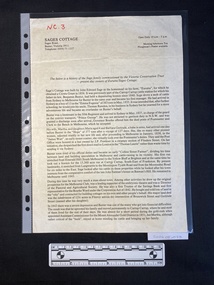
Document - Printed document, Victorian Conservation Trust, Sages Cottage : The below is a history of the Sage fanily commisioned by the Victoria Conservathin Trust - present day owners of Eurutta/Sages Cottage, [2004]
... She trained in nursing, obtaining her nursing certificate in 1926. 1940 saw Annie join the Australian Army Nursing Service (AANS), Australian Imperial Force (AIF). ...She trained in nursing, obtaining her nursing certificate in 1926. 1940 saw Annie join the Australian Army Nursing Service (AANS), Australian Imperial Force (AIF). ...Information page detailing the history of Sages Cottage from building in 1853/56 as a homestead, to being purchased in 1976 by the Victoria Conservation Trust. John Edward Sage built the cottage as the homestead for his farm "Eurutta" in 1856. John lived in the cottage with his wife and children up until his death in 1908 with his wife, Maria Sage (nee Baxter) continuing to live there until her death in 1927. Their youngest son, Thomas Holden Sage, and three daughters, Fanny Martha, Annie Agususta and Ellen Amynta continued to live there until their deaths. Thomas died in 1960 but gifted the remaining block of land with the cottage to his [niece?] Annie Moriah Sage a year before his death. Annie was Matron of the Australian Military Forces (AMF) in WW2. [Annie was born in 1895 as the fifth child to Edward Arthur and Mary Anne Sage. She trained in nursing, obtaining her nursing certificate in 1926. 1940 saw Annie join the Australian Army Nursing Service (AANS), Australian Imperial Force (AIF). During WWII Annie served as matron for the 2nd/2nd Australian General Hospital in the Middle East. She was made matron-in-chief, AIF (Middle East) in 1940, and was appointed a member of the Red Cross in 1942. Returning to Australia in 1942, she was elevated to deputy matron-in-chief, AMF in February 1943, and sub-sequentially promoted to colonel in March. Her duties included organising the AANS for duty in the South-West Pacific Area and oversaw the training scheme for the Australian Army Medical Women's Service (AAMWS). In September 1945 Annie flew to Sumatra to assist with the repatriation of the twenty four Australian nurses imprisoned by the Japanese. For her war service she was awarded the Florence Nightingale medal (1947) by the International Red Cross. In 1951 she was appointed Commander of the Most Excellent Order of the British Empire (CBE).] After Annie's death in 1969 the cottage and land went to a nephew and two nieces, before being purchased in 1976 by the Victoria Conservation Trust as an example of early settlement history.A printed information document in black ink on white paper, with an address in the upper left and opening times and refreshments available in the upper right. Below and over the page is full width text.'NC.3' [red ink top left hand corner of front page] '059 7111 3577 [?] Alastair Herbert / & / [?] Camilla [Hapfor]' [blue ink, top if second page]wwii, world war 2 -
 The Beechworth Burke Museum
Postcard, 1916
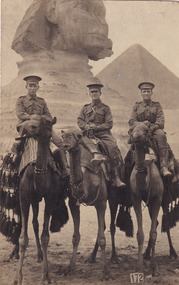
... Army Corps (ANZAC). This group of troops trained in the desert beneath the pyramids until March 1915. The record is historically significant due to its connection to World War I. This conflict is integral to Australian culture as it was the single greatest loss of life and the greatest repatriation of casualties in the country's history. On 25 April 1915, members of the Australian Imperial ...The photograph on the obverse side of the postcard was taken in Egypt on 4 March 1916, during World War I. Depicted are three unidentified Australian soldiers part of the Australian Imperial Force. They are dressed in military uniforms. Each of these men are seated atop a camel's back. All three camels are draped in - what are believed to be - traditional Egyptian textiles, including tassels, carpets and beads. In the background, we can see a triangular pyramid and the Great Sphinx of Giza. The Australian Imperial Force (AIF) were established by the Australian government in August 1914. This announcement marked the beginning of Australia's involvement in World War I. Immediately, men were recruited to serve the British Empire in the Middle East and on the Western Front. The first contingent of the AIF departed Australia by ship in November 1914. England was their destination. Although, their convoy was diverted to Egypt after the Australian High Commissioner in London, Sir George Reid, and the British military authorities unanimously agreed that the overcrowded military camps in England were unsuitable for so many men over winter. The AIF disembarked in Alexandria, Egypt on 3 December 1914, and the men moved to training camps near Cairo. It was in Egypt that the AIF and the New Zealand Expeditionary Force (NZEF) formed one united corps - the Australian and New Zealand Army Corps (ANZAC). This group of troops trained in the desert beneath the pyramids until March 1915.The record is historically significant due to its connection to World War I. This conflict is integral to Australian culture as it was the single greatest loss of life and the greatest repatriation of casualties in the country's history. On 25 April 1915, members of the Australian Imperial Force landed on Gallipoli in Turkey with troops from New Zealand, Britain, and France. This specific event holds very strong significance within Australian history. The record has strong research potential. This is due to the ongoing public and scholarly interest in war, history, and especially the ANZAC legend, which is commemorated annually on 25 April, known as ANZAC Day. The record's unique research potential is strengthened by its relationship to a historically significant site: the Egyptian pyramids. Since the postcard was produced in 1916, the record can be used as primary evidence for historians and conservationists studying these sites, or how these sites have evolved over time. The record may also be a useful resource for those interested in the history of Egyptian textiles. Furthermore, it may also provide insight into international relations between Egypt and Australia in the past and present.Sepia rectangular postcard printed on paper.Obverse: 172 / Reverse: 6536 / CARTE POSTALE / 4/3/16 / Rough riders under / the shadow of the / pyramids /military album, army, war, wwi, world war i, egypt, pyramid, great sphinx of giza, textiles, australian imperial force, aif, uniform -
 The Beechworth Burke Museum
Photograph
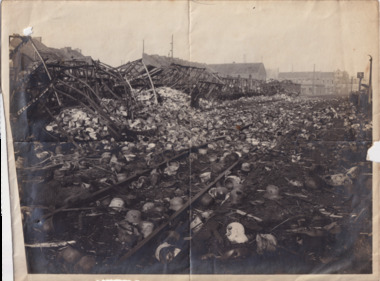
... Imperial Force (AIF) in August 1914. Immediately, men were recruited to serve the British Empire in the Middle East and on the Western Front. The record has strong research potential. This is due to the ongoing public and scholarly interest in war, history, and especially the ANZAC legend, which is commemorated annually on 25 April, known as ANZAC Day. Additionally, there is only limited information available about the Sant-Michel-de-Maurienne derailment. The record may be a useful springboard for further investigation into this accident and its history. military album army war wwi world war i france charleroi train ...Taken some time between 1914-18 in France, the photograph depicts extensive wreckage of a railway train. There are collapsed buildings, debris, and helmets scattered all across the landscape. There is one unidentified soldier standing in the middle of the photograph. With research that is currently available, it can be inferred that the wreckage depicted in this photograph is from the tragic Saint-Michel-de-Maurienne derailment which occurred on December 12, 1917. The railway accident involved a troop train carrying almost 1,000 French soldiers on their way home for leave from the Italian Front in World War I. As the train descended into the Maurienne Valley, a sudden, uncontrollable acceleration caused a catastrophic crash and subsequent fire. 675 people died in the accident.The record is historically significant due to its connection to World War I. This conflict is integral to Australian culture as it was the single greatest loss of life and the greatest repatriation of casualties in the country's history. Australia’s involvement in the First World War began when the Australian government established the Australian Imperial Force (AIF) in August 1914. Immediately, men were recruited to serve the British Empire in the Middle East and on the Western Front. The record has strong research potential. This is due to the ongoing public and scholarly interest in war, history, and especially the ANZAC legend, which is commemorated annually on 25 April, known as ANZAC Day. Additionally, there is only limited information available about the Sant-Michel-de-Maurienne derailment. The record may be a useful springboard for further investigation into this accident and its history.Black and white rectangular photograph printed on matte photographic paper.Reverse: 6530 / Destruction of train carrying / German helmets (?) to (?) prior to / his retreat at Charleroi /military album, army, war, wwi, world war i, france, charleroi, train, military, wreckage, europe, belgium, saint-michel-de-maurienne, maurienne valley
