
Showing 19 items matching "indigenous australians (vic)"
-
 City of Melbourne Libraries
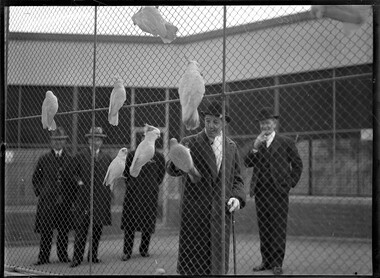
Photograph, Bull, Hugh Jones, 1897-1993, Vice-regal visit to zoo: Governor (Lord Huntingfield) meets the cockatoos
... He said that Australian indigenous animals were practically useless, providing only “a little sport and an occasional meal”. ...He said that Australian indigenous animals were practically useless, providing only “a little sport and an occasional meal”. ...A group of five men dressed in hats and overcoats look at caged cockatoos. Research by project volunteer, Fiona Collyer: On 25 June 1934, new Victorian Governor, His Excellency Lord Huntingfield and his wife Lady Huntingfield made an official visit to the Melbourne Zoological Gardens in order to grant his patronage to the Royal Zoological and Acclimatisation Society. The zoo director, Mr. Andrew Wilkie, introduced them to the cockatoos in the flight aviary. The Argus newspaper reported the visit in the following morning’s issue: "Birds' Greeting To Governor. Visit to Zoological Gardens. "A Very Important Society." "Cheery shouts of "Hullo!" and requests for drinks greeted His Excellency the Governor (Lord Huntingfield) on one of his official visits yesterday morning. Lady Huntingfield, who accompanied him, was asked loudly for a kiss. They were inspecting the huge cockatoo aviary at the Zoological Gardens after Lord Huntingfield had granted his patronage to the Royal Zoological and Acclimatisation Society. Both obviously enjoyed the democratic experience. It was explained to them that most of the cockatoos had been presented by residents of flats, whose neighbours objected to the noise of the birds, while others were protected birds which had been surrendered. Lord Huntingfield recalled that he had taken two Australian cockatoos to England when he left Australia in his youth. One, a galah, had lived in England for many years." In 1929, the Zoo built a commodious new flight aviary at the cost of several thousand pounds and Zoo director, Mr Andrew Wilkie, sent out an appeal published in newspapers Australia-wide for donations of parrots from all states. Many of the parrot species he wanted were protected and a special permit needed for their capture, however Mr Wilkie guaranteed he would obtain authority from the Fisheries and Game Department and that the cost of transit would be borne by the Zoo. The wanted birds were "Parrots - Black-tailed, Rock Pebbler, King, Superb, Grass (all kinds), Swamp or Ground, Mallee or Ringneck" and "Cockatoo[s] - Black, Pink or Major Mitchell, Gang-Gang". The Zoo asked that the birds be sent in boxes large enough to prevent overcrowding, contain food and water and the Zoo notified on the type and number of birds in transit. All boxes were to be addressed to 'The Zoo, Melbourne'. A letter from a reader appeared in the Weekly Times newspaper's popular "Camp-fire Circle" page for "Young Australians", 11 May 1929: "Dear Pal, I am much interested in your page, especially the nature notes. I have a pet parrot, but I don’t like to see it shut up in a cage, so I am giving it to the Melbourne Zoo. It can whistle 'Pretty Joey' and 'What's the Matter with Father' and is just learning to whistle for the dog... Wishing you and the Camp-fire Circle success." - Murray Holmes (Gorae, Vic.) The fate of this talented parrot is unknown, however in 1932, this young naturist, T Murray Holmes, 1912-1947, collected for the first time a type specimen, blue star sun orchid from Gorae (near Portland, Victoria), and it was named in his honour, Thelymitra holmesii. Murray was described by orchid collector W H Nicholls as "a youthful and energetic orchidologist, who added much to our knowledge of the orchids of south-western Victoria." Murray Holmes enlisted in the army in 1941 and fought in the Middle East before being sent to Java. In 1942 he was captured by the Japanese and became a prisoner of war for three years, working on the notorious Thai-Burma railway. Murray's health was undermined though ill treatment and starvation and he returned to Australia after the war, broken and sick. He died aged 35 in 1947. He was intensely interested in the flora and fauna of the Gorae area to the end. Murray's parents received over 200 tributes of respect for their son - too many to answer personally so they put a notice in the Portland Guardian thanking "all kind friends and relatives for letters, cards, floral tributes and personal expressions of sympathy received in their recent sad bereavement - the lamented death of their loved son, Murray." Andrew Arthur Wellesley Wilkie, 1853-1948, was Director of the Melbourne Zoo from 1923 to 1936 and was associated with the zoo for 70 years. He first worked as a horticultural assistant to Government botanist Baron Ferdinand von Mueller at the Botanical Gardens at the age of 13, along with his older brother David. One of Andrew’s jobs was to capture moths for the National Herbarium. In 1857, a group of prominent Melburnians assembled at St. Patrick’s Hall to form the Zoological Society of Victoria, with the aim of introducing animals and plants from overseas. It was conceived, “For the purposes of science and for that of affording the public the advantages of studying the habits of the animal creation in properly arranged zoological gardens.” The Victorian Government granted 32 acres (13 hectares) of land to the Zoological Society at the southern end of Richmond Paddock on the opposite bank to the Botanical Gardens. (This is where AAMI Stadium and Collingwood Football Club now stand.) In 1861, the Zoological Society of Victoria was renamed The Acclimatisation Society of Victoria. Unfortunately the Yarra River frontage was damp, swampy and subject to flooding, so the animals were briefly housed at the Botanical Gardens until in 1862, the City of Melbourne donated 55 acres (22 hectares) of land at Royal Park for the fledgling zoo. Baron von Mueller secured employment at Royal Park for Andrew and David and they helped to lay out the gardens, plant trees and take care of a collection of deer, pheasants, hares and partridges. Initially the zoo was used for the acclimatisation of animals recovering from the long voyage to Australia and for breeding them for sport. In 1872, the zoo bought two lions, a leopard and a cheetah that had been seized from circus showmen Keith and Phillips when they were unable to pay the bill of butcher Mr T K Bennet of Bourke Street. The first zoo director, Mr. Albert Le Souef, negotiated with captains of ships to buy animals at overseas ports they visited and soon a multitude of exotic species arrived, including a ten-year-old Indian elephant in 1878. In 1923, after being head keeper for some years, Andrew was appointed director of the zoo. By 1933, the zoo had 110 different species of animals, 200 species of birds and 72 species of reptiles under Andrew’s care. He had personally planted all but six trees and laid out the garden beds. As director he lobbied authorities for funds to build more humane enclosures for the animals. In June 1928, Table Talk magazine wrote of Andrew Wilkie: “Up at the Zoo there is a humble gentleman who is a lion among the lions, who knows the proper specific to employ when the boa constrictor has chilblains, and who is a friend and confidant of Queenie the elephant. His fount of zoological lore has never been plumbed. It is bottomless, like his good fellowship and geniality. Every day he may be seen somewhere in the grounds of that growing sanctuary for the strange and arresting fauna and creeping things of the world, and I assure you as one who is privy to his passion that that area and its inhabitants are rarely out of his thoughts.” Andrew retired from the zoo in 1936 at the age of 83 and in 1948 died at his home in Brunswick aged 94. He and his wife Josephine had six children. The Victorian Acclimatisation Society was founded in 1861 by Edward Wilson, 1813-1878, then owner and editor of The Argus newspaper. He said that Australian indigenous animals were practically useless, providing only “a little sport and an occasional meal”. The Society believed that Australia’s plants and animals were vastly inferior to those in Europe. They wanted to introduce and acclimatise to Victoria “all innoxious animals, birds, fishes, insects and vegetables, whether useful or ornamental” for sport and for the table, and to spread indigenous animals and plants from the colony around the world. Their motto was “if it lives, we want it”. The Society was primarily responsible for introducing sparrows, starlings, sambar and hog deer, ostriches, brown trout, blackberries, and carp to the Murray River. They released the European songbirds, thrush and blackbird to quell the homesickness of British settlers. The Society also sent Australian animals like platypus, echidnas, kangaroos and koalas to Europe for scientific and novelty purposes. Thomas Austin, a wealthy sheep farmer of Barwon Park, Winchelsea (property now owned by the National Trust) was a member and in 1859 he introduced hares, blackbirds, thrushes and partridges onto his property. He is probably best known for introducing 24 breeding rabbits onto his estate as game for shooting parties. Thomas quipped, “The introduction of a few rabbits could do little harm and might provide a touch of home, in addition to a spot of hunting." In 2022, genomic data confirmed that Australia’s feral rabbit population is entirely descended from these rabbits. Biological control has brought the rabbit population down from an estimated high of 10 billion rabbits in the 1920s to approximately 200 million today, inhabiting 70% of Australian landmass (5.3 million square kilometres). In 1872, the Acclimatisation Society was renamed The Zoological and Acclimatisation Society of Victoria and they focused on importing exotic animals for display purposes to the zoo. In 1937, the Royal Acclimatisation Society of Victoria was recreated as the Zoological Board of Victoria with a focus on research of native animals threatened with extinction. In an editorial for The Argus newspaper, 16 March 1856, Edward Wilson lamented: "...this country has been shamelessly stolen from the blacks. Had they been like the New Zealanders or the North American Indians, we should have bought their land, and supplied them with the means of living when we took it... In less than twenty years we have nearly swept them off the face of the earth. We have shot them down like dogs. In the guise of friendship we have issued corrosion sublimate in their damper, and consigned whole tribes to the agonies of an excruciating death. We have made them drunkards, and infected them with disease which has rotted the bones of their adults, and made such few children as are born amongst them a sorrow and a torture from the very instant of their birth. We have made them outcasts on their own land, and are rapidly consigning them to entire annihilation. There are but a few of them left, comparatively. This is what we would do for that few. We would feed and clothe every one of them.” [Note: this last sentence is italicized in the original newspaper article text]. Lord Huntingfield, (William Charles Arcedeckne Vanneck) 1883-1969, Governor of Victoria 1934-1939, was a British Conservative Party politician and the first ever Australian-born Governor of an Australian state (although he was always considered British). He was patron of the Royal Zoological and Acclimatisation Society of Victoria and was acting Governor-General for six months during the absence of Lord Gowie in 1938. Lady Huntingfield (née Margaret Eleanor Crosby) 1884-1943, his American-born wife showed great interest in social welfare and the advancement of women and children. She was president of the City Newsboys Society and Patroness of the Girls Friendly Society. In 1937, rose breeder Alister Clark named a yellow hybrid tea rose for her. In 1940, the City of Melbourne opened the Lady Huntingfield Free Kindergarten in North Melbourne, now the Lady Huntingfield Early Learning and Family Services Centre. Lady Huntingfield died in London in 1943 after her house was bombed during a German airstrike. The Lady Huntingfield Memorial Scholarship was established after the City of Melbourne raised £1000 in a public appeal conducted in her memory for students undertaking a Social Work degree at the University of Melbourne. It is awarded annually to this day. The Queen Victoria Hospital named a bed in her honour. References: Prominent Personalities ANDREW WILKIE (1928, June 7). Table Talk (Melbourne, Vic. : 1885 - 1939), p. 15. Retrieved August 29, 2024, from http://nla.gov.au/nla.news-article146562949 BIRDS' GREETING TO GOVERNOR (1934, June 26). The Argus (Melbourne, Vic. : 1848 - 1957), p. 6. Retrieved August 19, 2024, from http://nla.gov.au/nla.news-article10950051 Zoo Appealing For Parrots And Cockatoos To Fill Aviary For Children’s Instruction (1929, April 11). The Sun News-Pictorial (Melbourne, Vic. : 1922 - 1954; 1956), p. 31. Retrieved August 23, 2024, from http://nla.gov.au/nla.news-article275757361 LETTERS FROM READERS (1929, May 11). Weekly Times (Melbourne, Vic. : 1869 - 1954), p. 50. Retrieved October 6, 2024, from http://nla.gov.au/nla.news-article223183144 Correspondence. (1929, April 18). Corryong Courier (Vic. : 1894 - 1945), p. 6. Retrieved August 30, 2024, from http://nla.gov.au/nla.news-article269039262 'Edward Wilson (journalist)', Wikipedia, https://en.wikipedia.org/wiki/Edward_Wilson_(journalist) 'Thomas Austin (pastoralist)', Wikipedia, https://en.wikipedia.org/wiki/Thomas_Austin_(pastoralist) 'The Acclimatisation Society was driven by misguided ideals about 'fixing nature' in Australia', ABC News, https://www.abc.net.au/news/2022-11-04/acclimatisation-society-introduced-species-history-listen/101588262? utm_source=abc_news_app&utm_medium=content_shared&utm_campaign=abc_news_app&utm_content=safari Touching Canine Devotion. (1942, September 21). Portland Guardian (Vic. : 1876 - 1953), p. 1 (EVENING). Retrieved October 6, 2024, from http://nla.gov.au/nla.news-article64381989 OBITUARY (1947, August 11). Portland Guardian (Vic. : 1876 - 1953), p. 2 (EVENING). Retrieved August 26, 2024, from http://nla.gov.au/nla.news-article64412155 Family Notices (1947, September 11). Portland Guardian (Vic. : 1876 - 1953), p. 2 (EVENING). Retrieved October 10, 2024, from http://nla.gov.au/nla.news-article64412476 'Thelymitra holmesii', Wikipedia, https://en.wikipedia.org/wiki/Thelymitra_holmesii THE ABORIGINES. (1856, March 16). The Argus (Melbourne, Vic. : 1848 - 1957), p. 4. Retrieved September 28, 2024, from http://nla.gov.au/nla.news-article4833244 Photographer notations on slide: "Vice Regal visit to zoo B42". zoos, governors, 1930-1939, cockatoos -
 City of Melbourne Libraries
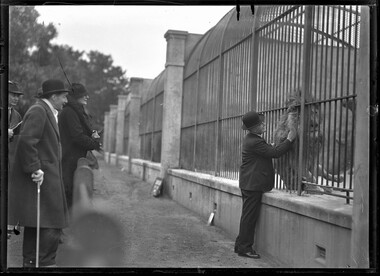
Photograph, Bull, Hugh Jones, 1897-1993, Vice-regal visit to Zoo: Lord Huntingfield greets the King of the Beasts
... He said that Australian indigenous animals were practically useless, providing only “a little sport and an occasional meal”. ...He said that Australian indigenous animals were practically useless, providing only “a little sport and an occasional meal”. ...Photographer notations on slide: "Vice Regal visit to zoo B42" Published: The Age, Tuesday 26 June 1934, page 11. Published title: VICE-ROYALTY GREETS THE KING OF THE BEASTS AT THE ZOO. Published caption: “Lord Huntingfield experienced a pleasant “induction ceremony” as Patron of the Royal Zoological and Acclimatisation Society yesterday, when he made a tour of the Zoological Gardens. The picture shows the Governor, accompanied by Lady Huntingfield, inspecting the King of the Beasts, who is submitting to a little playful treatment from the Director of the Gardens, Mr. Wilkie, while the Director whispers in his ear that a distinguished visitor has come to see him.” Trove article identifier: http://nla.gov.au/nla.news-article204818472 Description: A man wearing a hat and suit strokes a caged lion, observed by a man in a hat, scarf and overcoat who is leaning on a walking stick, and a woman in a hat and coat, holding a handbag. They stand behind a protective rail. Research by project volunteer, Fiona Collyer: Andrew Arthur Wellesley Wilkie, 1853-1948, was Director of the Melbourne Zoo from 1923 to 1936 and was associated with the zoo for 70 years. He first worked as a horticultural assistant to Government botanist Baron Ferdinand von Mueller at the Botanical Gardens at the age of 13, along with his older brother David. One of Andrew’s jobs was to capture moths for the National Herbarium. In 1857, a group of prominent Melburnians assembled at St. Patrick’s Hall to form the Zoological Society of Victoria, with the aim of introducing animals and plants from overseas. It was conceived, “For the purposes of science and for that of affording the public the advantages of studying the habits of the animal creation in properly arranged zoological gardens.” The Victorian Government granted 32 acres (13 hectares) of land to the Zoological Society at the southern end of Richmond Paddock on the opposite bank to the Botanical Gardens. (This is where AAMI Stadium and Collingwood Football Club now stand.) In 1861, the Zoological Society of Victoria was renamed The Acclimatisation Society of Victoria. Unfortunately the Yarra River frontage was damp, swampy and subject to flooding, so the animals were briefly housed at the Botanical Gardens until in 1862, the City of Melbourne donated 55 acres (22 hectares) of land at Royal Park for the fledgling zoo. Baron von Mueller secured employment at Royal Park for Andrew and David and they helped to lay out the gardens, plant trees and take care of a collection of deer, pheasants, hares and partridges. Initially the zoo was used for the acclimatisation of animals recovering from the long voyage to Australia and for breeding them for sport. In 1872, the zoo bought two lions, a leopard and a cheetah that had been seized from circus showmen Keith and Phillips when they were unable to pay the bill of butcher Mr T K Bennet of Bourke Street. The first zoo director, Mr. Albert Le Souef, negotiated with captains of ships to buy animals at overseas ports they visited and soon a multitude of exotic species arrived, including a ten-year-old Indian elephant in 1878. In 1923, after being head keeper for some years, Andrew was appointed director of the zoo. By 1933, the zoo had 110 different species of animals, 200 species of birds and 72 species of reptiles under Andrew’s care. He had personally planted all but six trees and laid out the garden beds. As director he lobbied authorities for funds to build more humane enclosures for the animals. In June 1928, Table Talk magazine wrote of Andrew Wilkie: “Up at the Zoo there is a humble gentleman who is a lion among the lions, who knows the proper specific to employ when the boa constrictor has chilblains, and who is a friend and confidant of Queenie the elephant. His fount of zoological lore has never been plumbed. It is bottomless, like his good fellowship and geniality. Every day he may be seen somewhere in the grounds of that growing sanctuary for the strange and arresting fauna and creeping things of the world, and I assure you as one who is privy to his passion that that area and its inhabitants are rarely out of his thoughts.” Andrew retired from the zoo in 1936 at the age of 83 and in 1948 died at his home in Brunswick aged 94. He and his wife Josephine had six children. Roy, aged 28 in 1934, was a former Wirth’s circus lion who had been left at the zoo at 10 years of age. Andrew visited Roy every day on his rounds and the pair formed a close and affectionate bond. Wireless Weekly magazine in February 1933 reported, “Roy was delighted to see Mr Wilkie, and in a docile manner, approached the bars of his cage and had his head vigorously rubbed by the director, who daily carries out this act of kindness.” As reported in The Herald on 27 October 1936, “Mr Wilkie has also found the old lion docile. He has not shown the animal any particular favouritism, but the lion has shown him a faithfulness that none of the keepers can claim. When Mr Wilkie approaches the bars the lion rolls over and lets the director stroke him and pull his tail. He gets very excited if Mr Wilkie passes without climbing over the protecting rail for a little game.” A 1930 newsreel film shows Andrew stroking Roy’s mane through the bars and the blissed out big cat lying on his back while lifting his chin for a rub. Another newsreel film from the time shows Andrew stroking a lioness and playfully pulling her tail. The Victorian Acclimatisation Society was founded in 1861 by Edward Wilson, 1813-1878, then owner and editor of The Argus newspaper. He said that Australian indigenous animals were practically useless, providing only “a little sport and an occasional meal”. The Society believed that Australia’s plants and animals were vastly inferior to those in Europe. They wanted to introduce and acclimatise to Victoria “all innoxious animals, birds, fishes, insects and vegetables, whether useful or ornamental” for sport and for the table, and to spread indigenous animals and plants from the colony around the world. Their motto was “if it lives, we want it”. The Society was primarily responsible for introducing sparrows, starlings, sambar and hog deer, ostriches, brown trout, blackberries, and carp to the Murray River. They released the European songbirds, thrush and blackbird to quell the homesickness of British settlers. The Society also sent Australian animals like platypus, echidnas, kangaroos and koalas to Europe for scientific and novelty purposes. Thomas Austin, a wealthy sheep farmer of Barwon Park, Winchelsea (property now owned by the National Trust) was a member and in 1859 he introduced hares, blackbirds, thrushes and partridges onto his property. He is probably best known for introducing 24 breeding rabbits onto his estate as game for shooting parties. Thomas quipped, “The introduction of a few rabbits could do little harm and might provide a touch of home, in addition to a spot of hunting." In 2022, genomic data confirmed that Australia’s feral rabbit population is entirely descended from these rabbits. Biological control has brought the rabbit population down from an estimated high of 10 billion rabbits in the 1920s to approximately 200 million today, inhabiting 70% of Australian landmass (5.3 million square kilometres). In 1872, the Acclimatisation Society was renamed The Zoological and Acclimatisation Society of Victoria and they focused on importing exotic animals for display purposes to the zoo. In 1937, the Royal Acclimatisation Society of Victoria was recreated as the Zoological Board of Victoria with a focus on research of native animals threatened with extinction. In an editorial for The Argus newspaper, 16 March 1856, Edward Wilson lamented: "…this country has been shamelessly stolen from the blacks. Had they been like the New Zealanders or the North American Indians, we should have bought their land, and supplied them with the means of living when we took it... In less than twenty years we have nearly swept them off the face of the earth. We have shot them down like dogs. In the guise of friendship we have issued corrosion sublimate in their damper, and consigned whole tribes to the agonies of an excruciating death. We have made them drunkards, and infected them with disease which has rotted the bones of their adults, and made such few children as are born amongst them a sorrow and a torture from the very instant of their birth. We have made them outcasts on their own land, and are rapidly consigning them to entire annihilation. There are but a few of them left, comparatively. This is what we would do for that few. We would feed and clothe every one of them.” [Note: this last sentence is italicized in the original newspaper article text]. Lord Huntingfield, (William Charles Arcedeckne Vanneck) 1883-1969, Governor of Victoria 1934-1939, was a British Conservative Party politician and the first ever Australian-born Governor of an Australian state (although he was always considered British). He was patron of the Royal Zoological and Acclimatisation Society of Victoria and was acting Governor-General for six months during the absence of Lord Gowie in 1938. Lady Huntingfield (née Margaret Eleanor Crosby) 1884-1943, his American-born wife showed great interest in social welfare and the advancement of women and children. She was president of the City Newsboys Society and Patroness of the Girls Friendly Society. In 1937, rose breeder Alister Clark named a yellow hybrid tea rose for her. In 1940, the City of Melbourne opened the Lady Huntingfield Free Kindergarten in North Melbourne, now the Lady Huntingfield Early Learning and Family Services Centre. Lady Huntingfield died in London in 1943 after her house was bombed during a German airstrike. The Lady Huntingfield Memorial Scholarship was established after the City of Melbourne raised £1000 in a public appeal conducted in her memory for students undertaking a Social Work degree at the University of Melbourne. It is awarded annually to this day. The Queen Victoria Hospital named a bed in her honour. References: VICE-ROYALTY GREETS THE KING OF BEASTS AT THE ZOO. (1934, June 26). The Age (Melbourne, Vic. : 1854 - 1954), p. 11. Retrieved August 18, 2024, from http://nla.gov.au/nla.news-article204818472 Prominent Personalities ANDREW WILKIE (1928, June 7). Table Talk (Melbourne, Vic. : 1885 - 1939), p. 15. Retrieved August 29, 2024, from http://nla.gov.au/nla.news-article146562949 'Thomas Austin (pastoralist)', Wikipedia, https://en.wikipedia.org/wiki/Thomas_Austin_(pastoralist) 'Edward Wilson (journalist)', Wikipedia, https://en.wikipedia.org/wiki/Edward_Wilson_(journalist) THE WOMAN'S WORLD (1934, June 26). The Herald (Melbourne, Vic. : 1861 - 1954), p. 14. Retrieved August 19, 2024, from http://nla.gov.au/nla.news-article243164806 MR. WILKIE CAN PULL THE OLD LION'S TAIL (1936, October 27). The Herald (Melbourne, Vic. : 1861 - 1954), p. 4. Retrieved August 18, 2024, from http://nla.gov.au/nla.news-article248551307 Director Of Zoo Will Retire Tomorrow--With White Kitten (1936, December 30). The Herald (Melbourne, Vic. : 1861 - 1954), p. 8. Retrieved August 18, 2024, from http://nla.gov.au/nla.news-article244655203 LIGHT CAR CLUB IN CARICATURE (1931, August 25). The Sun News-Pictorial (Melbourne, Vic. : 1922 - 1954; 1956), p. 24. Retrieved August 19, 2024, from http://nla.gov.au/nla.news-article276250310 'The Acclimatisation Society was driven by misguided ideals about 'fixing nature' in Australia', ABC News, https://www.abc.net.au/news/2022-11-04/acclimatisation-society-introduced-species-history-listen/101588262?utm_source=abc_news_app&utm_medium=content_shared&utm_campaign=abc_news_app&utm_content=safari 'Dr Andrew Wilkie Director Of Melbourne Zoo, With Lion (1930) Video', Pond5 Inc., https://www.pond5.com/stock-footage/item/155691351-dr-andrew-wilkie-director-melbourne-zoo-lion-1930 'Kodak Cinegraph Compilation No 12', ACMI Collection, YouTube.com [Zoo footage at 8.33 minutes, Mr Wilkie at 11.04 minutes], https://www.youtube.com/watch?v=OZZqgSNsP0k THE ABORIGINES. (1856, March 16). The Argus (Melbourne, Vic. : 1848 - 1957), p. 4. Retrieved September 28, 2024, from http://nla.gov.au/nla.news-article4833244 Photographer notations on slide: "Vice Regal visit to zoo B42". 1930-1939, melbourne zoo, animals, hunting, wildlife, royal park, gardens -
 City of Melbourne Libraries
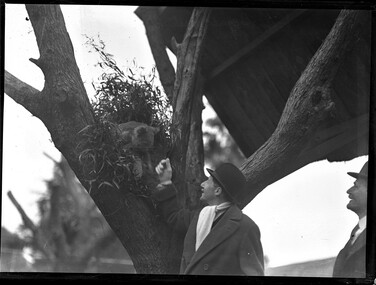
Photograph, Bull, Hugh Jones, 1897-1993, Vice-regal visit to zoo: Governor (Lord Huntingfield) and koala
... The Age (Melbourne, Vic. : 1854 - 1954), p. 11. Published title: VICE-ROYALTY GREETS THE KING OF THE BEASTS AT THE ZOO. ...The Age (Melbourne, Vic. : 1854 - 1954), p. 11. Published title: VICE-ROYALTY GREETS THE KING OF THE BEASTS AT THE ZOO. ...Published: (1934, June 26). The Age (Melbourne, Vic. : 1854 - 1954), p. 11. Published title: VICE-ROYALTY GREETS THE KING OF THE BEASTS AT THE ZOO. Published caption: Lord Huntingfield experienced a pleasant “induction ceremony” as Patron of the Royal Zoological and Acclimatisation Society yesterday, when he made a tour of the Zoological Gardens. The picture shows the Governor, accompanied by Lady Huntingfield, inspecting the King of Beasts, who is submitting to a little playful treatment from the Director of the Gardens, Mr. Wilkie, while the Director whispers in his ear that a distinguished visitor has come to see him. (Inset), is a picture of Lord Huntingfield greeting one of the Koalas. Trove article identifier: http://nla.gov.au/nla.news-article204818472 Description: A man wearing a hat, scarf and overcoat reaches up to pat a koala in a tree watched by a man in a hat and suit. Research by project volunteer, Fiona Collyer: In 1932, the Zoo built an Australian native animal enclosure which visitors could enter and closely view koalas, wallabies, kookaburras and magpies all placed together. The branches of the trees in the enclosure were cut so that visitors could easily see and feed the koalas sitting in them. The cost to feed each koala fresh gum leaves was fifteen shillings per week. By 1924, Queensland was the last stronghold in Australia for the koala. They were functionally extinct in South Australia, only a few hundred in NSW, and an estimated population of 1000 animals remained in Victoria. There had been a six-month open season on koalas in Queensland in 1919 where over a million had been slaughtered, however with its vast, dense forests it was impossible to accurately know their numbers. Koala fur is tough, warm and waterproof and was in high demand from consumers in Canada, Britain and the US to make hats and gloves and for lining greatcoats. In 1927, with Queensland suffering a crippling drought and high unemployment, the cash-strapped McCormack Labor Government declared an “Open Season” on koalas and “opossums” for their skins, for the month of August. (Possums were often called “opossums” at this time but they are actually possums). There were widespread protests from many groups including the Nature Lovers League, Wild Life Preservation Society of Australia, Queensland Museum, C.W.A. Royal Australian Ornithologist Union, Boy Scouts, religious and women’s groups. There were letters to newspapers from ordinary people, editorials and pleas to women to refuse to wear or purchase koala fur. People questioned the masculinity of koala hunters as it was felt that no proper bushman or sportsman would kill such a defenceless creature. The Brisbane Courier newspaper led the campaign, devoting six columns a day to “Spare the Bear”. Author Vance Palmer sent an impassioned letter to the editor of the The Brisbane Courier, 19 July 1927: “Sir- It is be hoped that the disgust which all humane people have felt at the declaration of an open season for native bears in August will not be allowed to fade away until some protest... so overwhelming and effective that the question will never be raised again. For the shooting of our harmless and loveable native bear is nothing less than barbarous. His case is entirely different from that of other furred animals. No one has ever accused him of spoiling the farmers’ wheat, eating the squatters’ grass or even spreading the prickly pear. There is not a social vice that can be put down to his account. In addition, he is comparatively defenceless. He affords no sport to the gunman, and can be trusted to present a sitting target to the creature mean enough to aim at him. For this reason he has been almost blotted out already from some areas, in days when our fauna and flora were held in such little regard that the settlers’ first instinct was to shoot every strange animal and to sink his axe into every unfamiliar tree.” The Anglican Archbishop of Brisbane, Gerald Sharp, had his letter published in The Brisbane Courier on 16 July 1927: “Sir... The extermination of fauna so distinctive of our country, especially of such harmless and pretty creatures as our native bears, seems to me a shameful thing, and this is likely to mean their extermination.” But it was all to no avail. Known as “Black August”, the government was unmoved by the public’s outrage. 10,000 licences were issued to hunters and “the slaughter of the innocents” went ahead. The newspapers were full of stories of dreadful cruelty against the helpless, benign creatures by the heartless hunters who not only used guns and spotlights but wire snares and cyanide baits so that pelts wouldn’t be damaged. Infant koalas were left orphaned and unlikely to survive without their mothers. Top quality pelts were sold at an average price of 56 shillings and 9 pence per dozen, poor quality skins for as little as 2 1/2 pence each. In December 1927, the Minister for Agriculture and Stock, Mr W. Forgan Smith told the Parliament that during the August open season 597,985 koala pelts worth £139,595 had netted the state’s coffers £6000. 952,194 “opossum” pelts were sold and £9000 made for the State. The backlash that followed helped topple the Queensland Labor Government in 1929. The Wild Life Preservation Society of Australia lobbied the Prime Minister Mr Stanley Bruce to refuse to issue exportation permits for koala pelts and from 10 November 1927 the Commonwealth Government suspended the issuing of permits. In 1930, the Society made a direct appeal to USA President Herbert Hoover and he signed an order prohibiting the importation of koala and wombat fur to USA, eliminating a major market. Koala pelts were often deliberately mislabelled “wombat” to get around restrictions. The ban most likely saved the koala from probable extinction. Three years later the Australian Federal Government banned the export of koala products. This movement against koala killing was really the first conservation campaign in Australia. It raised awareness of the vulnerability of a beloved animal and eventually brought about national parks and national laws for their protection. By 1936, community opposition to possum open seasons was beginning. The koala was made a Protected Species in all states in 1937, meaning no one is allowed to harm a koala, however the laws protecting the gum trees they rely on for food and shelter are weak. The Australian Government estimates the wild koala population in Australia is between 225,000 and 500,000 in 2024. The Australian Koala Foundation estimates the national population at less than 60,000 in 2021 with a 30% decline in three years. Habitat loss from land clearing, dog attacks, road deaths, chlamydia, bushfires and drought exacerbated by climate change, continues to cause their decline. Over eight million koalas were killed for their pelts between 1888 and 1927. Any one of the annual harvests killed more koalas than are alive now. At this time, children were also being taught to appreciate Australian native animals. In 1933, “Blinky Bill: The Quaint Little Australian” book for children was published by Angus and Robertson. It was written and illustrated by New Zealand-born author Dorothy Wall and “Dedicated to my son Peter and all other Peters and Johns and Bobs and Toms and Marys and Bettys and Joans and Pats and all kind children.” The book tells the story of Blinky Bill - a mischievous, patched knickerbocker-wearing koala and his mother and father. The story has messages of conservation and instances of human unkindness and cruelty. Mr. and Mrs. Koala and young Blinky lead a mostly idyllic family life amongst a variety of other animals in the forest. However it all changes in chapter two, when Blinky Bill’s father is distressingly shot by a hunter. There is a harrowing description of Mr. Koala’s shooting and eventual death. “The Koala family lived so happily; never thinking of harm, or that anything could happen to disturb their little home, as all they asked for were plenty of fresh gum-leaves and the warm sun. They had no idea such things as guns were in the world or that a human being had a heart so cruel that he would take a pleasure in seeing a poor little body riddled with bullets hanging helplessly from the tree-top... That same being might just as well take his gun and shoot baby kookaburras, so helpless were they all and so trusting.” “Poor Mr. Koala one day was curled up asleep in his favourite corner, when the terrible thing happened. Bang! He opened his eyes in wonder. What was that? Did the limb of the tree snap where that young cub of his was skylarking? ... bang! again. This time he felt a stinging pain in his leg... Peering over the bough of the tree he saw a man on the ground with something long and black in his arms... Another bang and his ear began to hurt. Bang! again and now his little body was stinging all over. He grunted loudly and slowly climbed up the tree, calling Mrs. Koala and Blinky as he went. He managed to reach the topmost branch... Tears were pouring down his poor little face. He brushed them away with his front paws and cried just like a baby. Fortunately Mrs. Koala and Blinky Bill were hiding in the leaves quite motionless, and the shadows of the tree made them appear as part of it. The man with the gun stood and waited a long time, then walked away, whistling as he went - the only sound to be heard in the bush except the cries of the little bear far up in the tree.” Blinky and his mother quietly and fearfully wait for Mr. Koala to wake. In the morning, grunting and crying, they feel his lifeless body with their paws. Eventually Mrs. Koala realises that her husband is dead and that they need to move to a safe place. After travelling deeper into the forest, Mrs. Koala and Blinky meet koalas Mrs. Grunty and her son Snubby and she describes how she was captured as a baby by koala fur trappers to be a pet for a little girl. The trapper forgot to bring gum leaves for the koala so they try to feed her cake, milk and bananas, making her sick. The little girl’s father relays something he read in the paper: “During the year 1920 to 1921, two hundred and five thousand six hundred and seventy-nine koalas were killed and their skins sold to the fur market, under the name of wombat.” They place the koala in a box with a teddy bear for company. The baby koala’s health deteriorates and the alarmed trapper returns her to the bush. Mrs. Grunty tells Mrs. Koala that she and Blinky are the only bears that she has seen for ten years: “I remember well the little girl’s father telling her... that not so many years ago the bush was alive with us bears, from Queensland to the south of Victoria. Now, we are so rare that we have become a curiosity, something to put in zoos, for children to see; and actually in museums. I believe our grandparents sit there in glass cases, stuffed with something inside to make them appear alive, and, oh dear, glass eyes. In New South Wales, I think we could wander for miles from one corner to another and never meet a bear. I don’t know why we were all killed. As you know, we don’t eat the farmers’ crop or ruin their orchards. All we asked for were our own gum-trees.” At the end of the book, Dorothy tells her readers - “The kindest action of all would be to leave the koala baby in his own bushland, among his own playmates, with the sun, the sky, the birds, and the gum-trees, where he will grow to manhood and live for many years - happy as he should be.” In 1934, a “Wild Zoo”, the Sir Colin Mackenzie Sanctuary, opened on 32 hectares of land, formerly part of Coranderrk Aboriginal Reserve in the Yarra Valley, exclusively displaying Australian native animals, birds and reptiles. It was later renamed Healesville Sanctuary and is now managed by Melbourne Zoo and home to over 200 species of Australian native fauna. The Sanctuary is committed to rescuing, breeding, researching and raising awareness of the vulnerability of Australian animals. Andrew Arthur Wellesley Wilkie, 1853-1948, was Director of the Melbourne Zoo from 1923 to 1936 and was associated with the zoo for 70 years. He first worked as a horticultural assistant to Government botanist Baron Ferdinand von Mueller at the Botanical Gardens at the age of 13, along with his older brother David. One of Andrew’s jobs was to capture moths for the National Herbarium. In 1857, a group of prominent Melburnians assembled at St. Patrick’s Hall to form the Zoological Society of Victoria, with the aim of introducing animals and plants from overseas. It was conceived, “For the purposes of science and for that of affording the public the advantages of studying the habits of the animal creation in properly arranged zoological gardens.” The Victorian Government granted 32 acres (13 hectares) of land to the Zoological Society at the southern end of Richmond Paddock on the opposite bank to the Botanical Gardens. (This is where AAMI Stadium and Collingwood Football Club now stand.) In 1861, the Zoological Society of Victoria was renamed The Acclimatisation Society of Victoria. Unfortunately the Yarra River frontage was damp, swampy and subject to flooding, so the animals were briefly housed at the Botanical Gardens until in 1862, the City of Melbourne donated 55 acres (22 hectares) of land at Royal Park for the fledgling zoo. Baron von Mueller secured employment at Royal Park for Andrew and David and they helped to lay out the gardens, plant trees and take care of a collection of deer, pheasants, hares and partridges. Initially the zoo was used for the acclimatisation of animals recovering from the long voyage to Australia and for breeding them for sport. In 1872, the zoo bought two lions, a leopard and a cheetah that had been seized from circus showmen Keith and Phillips when they were unable to pay the bill of butcher Mr T K Bennet of Bourke Street. The first zoo director, Mr. Albert Le Souef, negotiated with captains of ships to buy animals at overseas ports they visited and soon a multitude of exotic species arrived, including a ten-year-old Indian elephant in 1878. In 1923, after being head keeper for some years, Andrew was appointed director of the zoo. By 1933, the zoo had 110 different species of animals, 200 species of birds and 72 species of reptiles under Andrew’s care. He had personally planted all but six trees and laid out the garden beds. As director he lobbied authorities for funds to build more humane enclosures for the animals. In June 1928, Table Talk magazine wrote of Andrew Wilkie: “Up at the Zoo there is a humble gentleman who is a lion among the lions, who knows the proper specific to employ when the boa constrictor has chilblains, and who is a friend and confidant of Queenie the elephant. His fount of zoological lore has never been plumbed. It is bottomless, like his good fellowship and geniality. Every day he may be seen somewhere in the grounds of that growing sanctuary for the strange and arresting fauna and creeping things of the world, and I assure you as one who is privy to his passion that that area and its inhabitants are rarely out of his thoughts.” Andrew retired from the zoo in 1936 at the age of 83 and in 1948 died at his home in Brunswick aged 94. He and his wife Josephine had six children. The Victorian Acclimatisation Society was founded in 1861 by Edward Wilson, 1813-1878, then owner and editor of The Argus newspaper. He said that Australian indigenous animals were practically useless, providing only “a little sport and an occasional meal”. The Society believed that Australia’s plants and animals were vastly inferior to those in Europe. They wanted to introduce and acclimatise to Victoria “all innoxious animals, birds, fishes, insects and vegetables, whether useful or ornamental” for sport and for the table, and to spread indigenous animals and plants from the colony around the world. Their motto was “if it lives, we want it”. The Society was primarily responsible for introducing sparrows, starlings, sambar and hog deer, ostriches, brown trout, blackberries, and carp to the Murray River. They released the European songbirds, thrush and blackbird to quell the homesickness of British settlers. The Society also sent Australian animals like platypus, echidnas, kangaroos and koalas to Europe for scientific and novelty purposes. Thomas Austin, a wealthy sheep farmer of Barwon Park, Winchelsea (property now owned by the National Trust) was a member and in 1859 he introduced hares, blackbirds, thrushes and partridges onto his property. He is probably best known for introducing 24 breeding rabbits onto his estate as game for shooting parties. Thomas quipped, “The introduction of a few rabbits could do little harm and might provide a touch of home, in addition to a spot of hunting." In 2022, genomic data confirmed that Australia’s feral rabbit population is entirely descended from these rabbits. Biological control has brought the rabbit population down from an estimated high of 10 billion rabbits in the 1920s to approximately 200 million today, inhabiting 70% of Australian landmass (5.3 million square kilometres). In 1872, the Acclimatisation Society was renamed The Zoological and Acclimatisation Society of Victoria and they focused on importing exotic animals for display purposes to the zoo. In 1937, the Royal Acclimatisation Society of Victoria was recreated as the Zoological Board of Victoria with a focus on research of native animals threatened with extinction. In an editorial for The Argus newspaper, 16 March 1856, Edward Wilson lamented: "...this country has been shamelessly stolen from the blacks. Had they been like the New Zealanders or the North American Indians, we should have bought their land, and supplied them with the means of living when we took it... In less than twenty years we have nearly swept them off the face of the earth. We have shot them down like dogs. In the guise of friendship we have issued corrosion sublimate in their damper, and consigned whole tribes to the agonies of an excruciating death. We have made them drunkards, and infected them with disease which has rotted the bones of their adults, and made such few children as are born amongst them a sorrow and a torture from the very instant of their birth. We have made them outcasts on their own land, and are rapidly consigning them to entire annihilation. There are but a few of them left, comparatively. This is what we would do for that few. We would feed and clothe every one of them.” [Note: this last sentence is italicized in the original newspaper article text]. Lord Huntingfield, (William Charles Arcedeckne Vanneck) 1883-1969, Governor of Victoria 1934-1939, was a British Conservative Party politician and the first ever Australian-born Governor of an Australian state (although he was always considered British). He was patron of the Royal Zoological and Acclimatisation Society of Victoria and was acting Governor-General for six months during the absence of Lord Gowie in 1938. Lady Huntingfield (née Margaret Eleanor Crosby) 1884-1943, his American-born wife showed great interest in social welfare and the advancement of women and children. She was president of the City Newsboys Society and Patroness of the Girls Friendly Society. In 1937, rose breeder Alister Clark named a yellow hybrid tea rose for her. In 1940, the City of Melbourne opened the Lady Huntingfield Free Kindergarten in North Melbourne, now the Lady Huntingfield Early Learning and Family Services Centre. Lady Huntingfield died in London in 1943 after her house was bombed during a German airstrike. The Lady Huntingfield Memorial Scholarship was established after the City of Melbourne raised £1000 in a public appeal conducted in her memory for students undertaking a Social Work degree at the University of Melbourne. It is awarded annually to this day. The Queen Victoria Hospital named a bed in her honour. References: VICE-ROYALTY GREETS THE KING OF BEASTS AT THE ZOO. (1934, June 26). The Age (Melbourne, Vic. : 1854 - 1954), p. 11. Retrieved August 23, 2024, from http://nla.gov.au/nla.news-article204818472 Prominent Personalities ANDREW WILKIE (1928, June 7). Table Talk (Melbourne, Vic. : 1885 - 1939), p. 15. Retrieved August 29, 2024, from http://nla.gov.au/nla.news-article146562949 'Edward Wilson (journalist)', Wikipedia, https://en.wikipedia.org/wiki/Edward_Wilson_(journalist) 'Thomas Austin (pastoralist)', Wikipedia, https://en.wikipedia.org/wiki/Thomas_Austin_(pastoralist) 'The Acclimatisation Society was driven by misguided ideals about 'fixing nature' in Australia', ABC News, https://www.abc.net.au/news/2022-11-04/acclimatisation-society-introduced-species-history-listen/101588262?utm_campaign=abc_news_web&utm_content=link&utm_medium=content_shared&utm_source=abc_news_web Blinky Bill: the quaint little Australian (eBook); by Dorothy Wall, 1933, 2023, Project Gutenberg Australia, https://gutenberg.net.au/ebooks04/0400571h.html "Black August": Queensland's Open Season on koalas in 1927 (thesis); Glenn Fowler, 1993, Australian National University, https://www.savethekoala.com/wp-content/uploads/2018/11/Black-August.pdf Unfair game: Queensland's Open Season on koalas in 1927; Jacqui Donegan, 2000, University of Queensland, https://mesto-ku.narod.ru/koalas.pdf OPEN SEASON CONDEMNED. (1927, July 19). The Brisbane Courier (Qld. : 1864 - 1933), p. 15. Retrieved September 5, 2024, from http://nla.gov.au/nla.news-article21863465 COUNTRY WOMEN'S ASSOCIATION. (1927, July 30). The Brisbane Courier (Qld. : 1864 - 1933), p. 25. Retrieved September 20, 2024, from http://nla.gov.au/nla.news-article21866965 AUSTRALIA: Barnardo's children at Melbourne Park Zoo (1929), British Pathé, YouTube, https://www.youtube.com/watch?v=_Wcrbo_cHpI 'Kodak Cinegraph Compilation No 8', ACMI Collection, https://www.youtube.com/watch?v=MCrBng5RwFI KOALA SKINS. EXPORT BAN SOUGHT. (1927, August 4). The Brisbane Courier (Qld. : 1864 - 1933), p. 10. Retrieved September 15, 2024, from http://nla.gov.au/nla.news-article21868746 THE ABORIGINES. (1856, March 16). The Argus (Melbourne, Vic. : 1848 - 1957), p. 5. Retrieved September 28, 2024, from http://nla.gov.au/nla.news-article4833244 Koala Bears (1937), British Pathé, YouTube, https://www.youtube.com/watch?v=XbqgMtyuzwE Australian Koala Bear (Earliest Archive Footage: 1929), Pond5, https://www.pond5.com/stock-footage/item/152767491-australian-koala-bear-earliest-archive-footage-1929 Photographer notations on slide: "Vice Regal visit to zoo B42". 1930-1939, zoos, governors, koalas, conservation, possums, botanic gardens -
 City of Melbourne Libraries
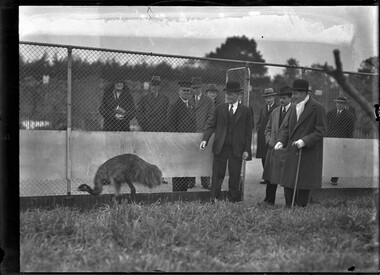
Photograph, Bull, Hugh Jones, 1897-1993, Vice-regal visit to zoo: Lord Huntingfield meets an emu
... He said that Australian indigenous animals were practically useless, providing only “a little sport and an occasional meal”. ...He said that Australian indigenous animals were practically useless, providing only “a little sport and an occasional meal”. ...Photographer notations on slide: "Vice Regal visit to Zoo B42" Not published. Description: A group of men and one woman all dressed in hats and overcoats stand by a wire fence while watching an emu. Research by project volunteer, Fiona Collyer: On 25 June 1934, new Victorian Governor, His Excellency Lord Huntingfield and his wife Lady Huntingfield made an official visit to the Melbourne Zoological Gardens in order to grant his patronage to the Royal Zoological and Acclimatisation Society. During the visit, zoo director Mr. Andrew Wilkie introduced them to some of the zoo’s inhabitants, including an emu. After the First World War, many returned soldiers took up the Government’s offer of land in the Soldier Settlement Scheme. Most of the veterans had little or no farming experience and much of the land offered was of poor quality, with blocks often too small to be viable. Many of the settlers had ongoing physical and mental injuries from the war. The Western Australian government allocated land to 5000 former soldiers but by 1929, one quarter of the men had already abandoned their land, unable to make a living. Not only was the world economy struggling with the Great Depression, but the settlers also had to contend with plummeting wheat and wool prices, crippling drought and rabbit infestation. The Scullin Government (Oct 1929-Jan 1932) had promised subsidies to the Western Australian farmers if they increased their wheat crops but were unable to pass the legislation in the Senate. The new Lyons Government (Jan 1932-April 1939) abandoned the legislation and the subsidies were never paid, bringing calls from Western Australia of secession from Australia. In October 1932, a deputation of soldier settlers from the Campion wheatbelt region in Western Australia, petitioned Commonwealth Minister for Defence, Western Australian Senator Sir George Pearce, for assistance. A mob of 20,000 emus were migrating to the coast after breeding and were gathering along the eastern side of the Number 1 Rabbit Proof Fence, attracted to the ripening crops and the dams the farmers had built. They were heading towards Campion, 303 kilometres east of Perth, eating and trampling the wheat, destroying the fences and letting the rabbits in. Having witnessed firsthand the effectiveness of machine guns in killing people in war, the former soldiers thought the guns would be ideal for killing emus. Sir George, wanting to demonstrate that his government was sympathetic to the settlers and hoping to quell Western Australian succession talk, agreed. However, he stipulated that no expense would be incurred by the Commonwealth Government and only active military personnel could use the machine guns. The farmers had to pay for the ammunition, food and accommodation for the military for the length of the operation. The cost for the ammunition was £50 for 10,000 rounds. Sir George also felt the operation would provide excellent target practice for the soldiers! The operation was headed by Major Gwynydd Purves Wynn-Aubrey Meredith, 1887-1975, of the Seventh Heavy Battery of the Royal Australian Artillery, and assisted by Sergeant S. McMurray and Gunner J. O'Halloran. They were equipped with two American-designed Lewis light machine guns and 10,000 rounds. Each magazine held 47 rounds of ammunition and the gun was capable of firing 500 to 600 rounds per minute with effective firing range of 800 metres. A cinematographer from British Movietone News accompanied the soldiers in order to record what was expected to be not only an easy victory but also useful propaganda for both the military and the Lyons Government. Emu (Dromaius novaehollandiae, meaning New Holland Racer) is a species of long-necked flightless bird endemic to Australia. The Tasmanian and the dwarf King and Kangaroo Island subspecies were hunted to extinction after the European settlement of Australia. It is the second largest bird in the world after the ostrich, standing up to 1.9 metres tall and weighing up to 50 kilograms. The Emu has long, powerful legs with three forward facing toes and is the only bird with calf muscles. It is able to jump 2.1 metres into the air and run 50 kilometres per hour. It communicates by drumming and booming through an inflatable neck sac which can be heard up to two kilometres away. Along with its tough hide and a body more feathers than flesh, the emu can be a tricky target. Emus had been a protected native species until 1922, when the government changed their status to “vermin” in response to the emus breaking down fences and destroying crops. Major Meredith told the press that Colonel Oswald V. Hoad of the 1st Cavalry Division NSW had especially requested he send 100 emu skins to replenish the plumage on his Light Horsemen’s hat tops. On the first day of the Emu War, 2 November 1932, Major Meredith spotted a mob of emus out of range of the guns, so he asked the farmers to use their vehicles to drive the emus towards the fence and the guns. The panicked birds split into small groups, kicking up the dust and scattering every which way. Only six were killed, though some were wounded. After that, the emus became very wary of humans. On 4 November, Major Meredith staged a dawn ambush at a dam. As 1000 emus approached to drink, the soldiers opened fire, killing 12 emus. After reloading, the gun jammed and the emus dispersed in all directions, and were not sighted again that day. The West Australian newspaper reported on 4 November 1932 that, “The emus have proved that they are not so stupid as they are usually considered to be. Each mob has its leader, always an enormous black-plumed bird standing fully six-feet high, who keeps watch while his fellows busy themselves with the wheat. At the first suspicious sign, he gives the signal, and dozens of heads stretch up out of the crop. A few birds will take fright, starting a headlong stampede for the scrub, the leader always remaining until his followers have reached safety.” In a later attempt, they mounted a gun onto the bed of a truck in order to chase and mow down the birds. However the truck couldn’t drive fast enough over the rough terrain and it was too bumpy to fire the gun accurately. The birds easily outran the truck except for one hapless emu who faltered while being chased and fell under the truck, its body wedging in the steering gear, causing the driver to crash the truck, and bringing down half a chain of the rabbit proof fence. RSPCA inspector Mr. Arthur Austin arrived with a rifle and knife in order to finish the work of the Lewis guns and dispatch injured emus. He said that while his society was sympathetic to the stricken settlers, he was anxious that wounded birds should not be left to suffer. Major Meredith told the inspector, “What speed can you run? You have to be better than Peter Pan if you want to catch wounded emus that make for the scrub.” (Racehorse “Peter Pan” had won the 1932 Melbourne Cup a few weeks earlier.) The commentator of the British Movietime newsreel uses a jocular tone to optimistically proclaim, “The scouts [emus] of the advancing army have keen eyesight, and in order to get close to the main body, our lads have to do some real stalking, with the enemy watching events through their periscopes raised up over the heads of corn... Instead of the birds ruining the farmers, tables are turned, there will be no more damage down here for many a day to come once the enemy is eliminated.” Emus proved tougher adversaries than expected, barely breaking stride even when badly injured from machine gun bullets, and the suspicious emus soon learnt to stay out of range of the men and their guns. Meanwhile, in the eastern states concern was being expressed about the cruelty of machine-gunning the native birds. Senator James Guthrie UAP of Victoria suggested that there must be “more humane, if less spectacular methods” of coping with the pests. People wrote letters to the newspapers to express their dismay at the inhumane methods used. R.F. Bellchambers from Humbug Scrub, 25 November 1932, lamented that, “At the present rate of extinctions, it will shortly be necessary to go to the Museum to see the remains of our fauna.” The Murchison Times published a letter on 16 November 1932 from “Clay Pan Joe”: “War on Emus. Slaughter of innocent birds would be more appropriate... The birds may be a nuisance and it may be necessary to destroy them, but why cause so much suffering amongst these innocent birds.” E.S. Playford of Norton’s Summit wrote to The Advertiser, 22 November 1932, that “...habitation on the earth would be impossible without bird life. Therefore, it is unwise to say that any bird is useless. Is sentiment dying? Are we so keen on personal gain that our lovely and unique birds have to be ruthlessly slaughtered in thousands and their bodies left rotting in the sun?” In Sydney, picture palace patrons expressed “considerable concern” after viewing the Movietone News newsreel of emus fleeing from the barrage of machine-guns, and wounded emus in the fields in Campion. The press had a field day, dubbing it the “The Emu War” and joking that the “Chicago method” was being used against the feathered foe. The Daily News newspaper published a cartoon depicting the emus outrunning and outsmarting the soldiers. In Parliament NSW Senator James Dunn called Sir George the “Minister for the Emu War”. Labor member Mr. Rosevear, midst great laughter, asked if the minister would consider declaring an armistice and withdrawing his troops from the Western Front. Prime Minister Joe Lyons was asked if medals would be struck for those taking part in the war. Labor parliamentarian Mr. A.E. Green declared any medals should go to the emus who had “won every round so far”. With the embarrassing press coverage and poor results, Sir George ordered a stop to the project on 9 November, and Major Meredith and the soldiers departed for Perth. The WA Premier Sir James Mitchell and the Campion farmers demanded they return, citing the continued destruction of crops and fences by the emus. Major Meredith and his two gunners were allowed to return on 13 November and seemingly having learnt from their previous experiences, had slightly more success this time killing emus. The operation finally finished on 10 December with Major Meredith reporting “definite kills” of 986 emus for 9860 rounds of ammunition, coincidentally and conveniently exactly 10% of the number of rounds used. A further 2500 birds were said to have died from their injuries and although this is a disputed figure, even if accurate, the ratio of rounds expended to emu casualties was thought too high to justify continuing. The operation barely caused a dint in the marauding mob of 20,000 emus. “There’s only one way to kill an emu”, one of the party bitterly remarked: “Shoot him through the back of the head when his mouth is closed or through the front of his mouth when his mouth is open. That’s how hard it is.” Australian ornithologist Dominic L. Serventy noted that “The machine-gunners’ dreams of point blank fire into serried masses of Emus were soon dissipated. The Emu command had evidently ordered guerrilla tactics, and its unwieldy army soon split up into innumerable small units that made use of the military equipment uneconomic. A crestfallen field force therefore withdrew from the combat area after about a month.” Major Meredith expressed the greatest of respect for the enemy. He said, “If we had a military division with the bullet-carrying capacity of these birds, it would face any army in the world. They could face machine guns with the invulnerability of tanks. They are like Zulus, whom even dum dum bullets would not stop." The Major’s official report stated that there were no human casualties in “The Emu War.” Emus are considered the victors of “The Great Emu War.” Western Australian farmers requested military assistance in 1934, 1943 and 1948, including using bombs, but the government refused. The bounty system instigated in 1923 continued, with farmers using rifles against their fleet-footed foe, with 57,034 bounties for dead emus claimed in six months in 1934 in Western Australia alone. 284,704 emus were killed in Western Australia between 1945 and 1960. The other most effective defence against the emus was the construction of a robust, vermin proof fence spanning over a long distance. Emus were formally protected in 1999 by the Environment Protection and Biodiversity Conservation Act. It’s estimated there are between 625,000 to 725,000 wild emus in Australia in 2024. An emu and a kangaroo feature on Australia’s coat of arms, holding up a shield illustrated with symbols of the six states. The animals symbolise the nation moving forward as neither animal can walk backwards. Campion is now a ghost town. A book about the operation, “Letters from the Emu War” by J.A. Bryden was published in 2023 by Playtime Books. In 2024, an Australian film called “The Emu War” was released, starring Damian Callinan and Luke McGregor. Andrew Arthur Wellesley Wilkie, 1853-1948, was Director of the Melbourne Zoo from 1923 to 1936 and was associated with the zoo for 70 years. He first worked as a horticultural assistant to Government botanist Baron Ferdinand von Mueller at the Botanical Gardens at the age of 13, along with his older brother David. One of Andrew’s jobs was to capture moths for the National Herbarium. In 1857, a group of prominent Melburnians assembled at St. Patrick’s Hall to form the Zoological Society of Victoria, with the aim of introducing animals and plants from overseas. It was conceived, “For the purposes of science and for that of affording the public the advantages of studying the habits of the animal creation in properly arranged zoological gardens.” The Victorian Government granted 32 acres (13 hectares) of land to the Zoological Society at the southern end of Richmond Paddock on the opposite bank to the Botanical Gardens. (This is where AAMI Stadium and Collingwood Football Club now stand.) In 1861, the Zoological Society of Victoria was renamed The Acclimatisation Society of Victoria. Unfortunately the Yarra River frontage was damp, swampy and subject to flooding, so the animals were briefly housed at the Botanical Gardens until in 1862, the City of Melbourne donated 55 acres (22 hectares) of land at Royal Park for the fledgling zoo. Baron von Mueller secured employment at Royal Park for Andrew and David and they helped to lay out the gardens, plant trees and take care of a collection of deer, pheasants, hares and partridges. Initially the zoo was used for the acclimatisation of animals recovering from the long voyage to Australia and for breeding them for sport. In 1872, the zoo bought two lions, a leopard and a cheetah that had been seized from circus showmen Keith and Phillips when they were unable to pay the bill of butcher Mr T K Bennet of Bourke Street. The first zoo director, Mr. Albert Le Souef, negotiated with captains of ships to buy animals at overseas ports they visited and soon a multitude of exotic species arrived, including a ten-year-old Indian elephant in 1878. In 1923, after being head keeper for some years, Andrew was appointed director of the zoo. By 1933, the zoo had 110 different species of animals, 200 species of birds and 72 species of reptiles under Andrew’s care. He had personally planted all but six trees and laid out the garden beds. As director he lobbied authorities for funds to build more humane enclosures for the animals. In June 1928, Table Talk magazine wrote of Andrew Wilkie: “Up at the Zoo there is a humble gentleman who is a lion among the lions, who knows the proper specific to employ when the boa constrictor has chilblains, and who is a friend and confidant of Queenie the elephant. His fount of zoological lore has never been plumbed. It is bottomless, like his good fellowship and geniality. Every day he may be seen somewhere in the grounds of that growing sanctuary for the strange and arresting fauna and creeping things of the world, and I assure you as one who is privy to his passion that that area and its inhabitants are rarely out of his thoughts.” Andrew retired from the zoo in 1936 at the age of 83 and in 1948 died at his home in Brunswick aged 94. He and his wife Josephine had six children. The Victorian Acclimatisation Society was founded in 1861 by Edward Wilson, 1813-1878, then owner and editor of The Argus newspaper. He said that Australian indigenous animals were practically useless, providing only “a little sport and an occasional meal”. The Society believed that Australia’s plants and animals were vastly inferior to those in Europe. They wanted to introduce and acclimatise to Victoria “all innoxious animals, birds, fishes, insects and vegetables, whether useful or ornamental” for sport and for the table, and to spread indigenous animals and plants from the colony around the world. Their motto was “if it lives, we want it”. The Society was primarily responsible for introducing sparrows, starlings, sambar and hog deer, ostriches, brown trout, blackberries, and carp to the Murray River. They released the European songbirds, thrush and blackbird to quell the homesickness of British settlers. The Society also sent Australian animals like platypus, echidnas, kangaroos and koalas to Europe for scientific and novelty purposes. Thomas Austin, a wealthy sheep farmer of Barwon Park, Winchelsea (property now owned by the National Trust) was a member and in 1859 he introduced hares, blackbirds, thrushes and partridges onto his property. He is probably best known for introducing 24 breeding rabbits onto his estate as game for shooting parties. Thomas quipped, “The introduction of a few rabbits could do little harm and might provide a touch of home, in addition to a spot of hunting." In 2022, genomic data confirmed that Australia’s feral rabbit population is entirely descended from these rabbits. Biological control has brought the rabbit population down from an estimated high of 10 billion rabbits in the 1920s to approximately 200 million today, inhabiting 70% of Australian landmass (5.3 million square kilometres). In 1872, the Acclimatisation Society was renamed The Zoological and Acclimatisation Society of Victoria and they focused on importing exotic animals for display purposes to the zoo. In 1937, the Royal Acclimatisation Society of Victoria was recreated as the Zoological Board of Victoria with a focus on research of native animals threatened with extinction. In an editorial for The Argus newspaper, 16 March 1856, Edward Wilson lamented: "...this country has been shamelessly stolen from the blacks. Had they been like the New Zealanders or the North American Indians, we should have bought their land, and supplied them with the means of living when we took it... In less than twenty years we have nearly swept them off the face of the earth. We have shot them down like dogs. In the guise of friendship we have issued corrosion sublimate in their damper, and consigned whole tribes to the agonies of an excruciating death. We have made them drunkards, and infected them with disease which has rotted the bones of their adults, and made such few children as are born amongst them a sorrow and a torture from the very instant of their birth. We have made them outcasts on their own land, and are rapidly consigning them to entire annihilation. There are but a few of them left, comparatively. This is what we would do for that few. We would feed and clothe every one of them.” [Note: this last sentence is italicized in the original newspaper article text]. Lord Huntingfield, (William Charles Arcedeckne Vanneck) 1883-1969, Governor of Victoria 1934-1939, was a British Conservative Party politician and the first ever Australian-born Governor of an Australian state (although he was always considered British). He was patron of the Royal Zoological and Acclimatisation Society of Victoria and was acting Governor-General for six months during the absence of Lord Gowie in 1938. Lady Huntingfield (née Margaret Eleanor Crosby) 1884-1943, his American-born wife showed great interest in social welfare and the advancement of women and children. She was president of the City Newsboys Society and Patroness of the Girls Friendly Society. In 1937, rose breeder Alister Clark named a yellow hybrid tea rose for her. In 1940, the City of Melbourne opened the Lady Huntingfield Free Kindergarten in North Melbourne, now the Lady Huntingfield Early Learning and Family Services Centre. Lady Huntingfield died in London in 1943 after her house was bombed during a German airstrike. The Lady Huntingfield Memorial Scholarship was established after the City of Melbourne raised £1000 in a public appeal conducted in her memory for students undertaking a Social Work degree at the University of Melbourne. It is awarded annually to this day. The Queen Victoria Hospital named a bed in her honour. References: VICE-ROYALTY GREETS THE KING OF BEASTS AT THE ZOO. (1934, June 26). The Age (Melbourne, Vic. : 1854 - 1954), p. 11. Retrieved August 23, 2024, from http://nla.gov.au/nla.news-article204818472 Prominent Personalities ANDREW WILKIE (1928, June 7). Table Talk (Melbourne, Vic. : 1885 - 1939), p. 15. Retrieved August 29, 2024, from http://nla.gov.au/nla.news-article146562949 'Edward Wilson (journalist)', Wikipedia, https://en.wikipedia.org/wiki/Edward_Wilson_(journalist) 'Thomas Austin (pastoralist)', Wikipedia, https://en.wikipedia.org/wiki/Thomas_Austin_(pastoralist) 'The Acclimatisation Society was driven by misguided ideals about 'fixing nature' in Australia', ABC News, https://www.abc.net.au/news/2022-11-04/acclimatisation-society-introduced-species-history-listen/101588262?utm_campaign=abc_news_web&utm_content=link&utm_medium=content_shared&utm_source=abc_news_web THE ABORIGINES. (1856, March 16). The Argus (Melbourne, Vic. : 1848 - 1957), p. 5. Retrieved September 28, 2024, from http://nla.gov.au/nla.news-article4833244 WAR ON EMUS. (1932, November 4). The West Australian (Perth, WA : 1879 - 1954), p. 12. Retrieved September 29, 2024, from http://nla.gov.au/nla.news-article32588972 'The Great Emu War: how it started and who won', ABC Australia, https://www.youtube.com/watch?v=Y1wA0PKeJqc Advertising (1932, November 25). The West Australian (Perth, WA : 1879 - 1954), p. 2. Retrieved October 26, 2024, from http://nla.gov.au/nla.news-article32584578 Emu Chasers Must Outstrip Peter Pan (1932, November 9). The Labor Daily (Sydney, NSW : 1924 - 1938), p. 5. Retrieved October 10, 2024, from http://nla.gov.au/nla.news-article237042749 WAR ON EMUS (1932, November 22). The Advertiser (Adelaide, SA : 1931 - 1954), p. 18. Retrieved October 15, 2024, from http://nla.gov.au/nla.news-article73997254 WAR ON EMUS. (1932, October 28). The Labor Daily (Sydney, NSW : 1924 - 1938), p. 6. Retrieved October 24, 2024, from http://nla.gov.au/nla.news-article237046601 EMU WAR (1932, December 3). Mirror (Perth, WA : 1921 - 1956), p. 7. Retrieved October 24, 2024, from http://nla.gov.au/nla.news-article75626301 Machine Gun Offensive Against Emus. (1932, November 10). Western Mail (Perth, WA : 1885 - 1954), p. 3 (PICTORIAL SECTION). Retrieved October 24, 2024, from http://nla.gov.au/nla.news-article37766670 A THOUSAND BIRDS IN LUCK. (1932, November 10). Western Mail (Perth, WA : 1885 - 1954), p. 28. Retrieved October 11, 2024, from http://nla.gov.au/nla.news-article37766849 New Strategy In A War On The Emu (1953, July 5). The Sunday Herald (Sydney, NSW : 1949 - 1953), p. 13. Retrieved October 11, 2024, from http://nla.gov.au/nla.news-article18516559 This is a nice emu-that was! (1932, November 5). The Daily News (Perth, WA : 1882 - 1955), p. 9 (HOME EDITION). Retrieved September 30, 2024, from http://nla.gov.au/nla.news-article82878309 LOCAL AND GENERAL (1932, November 16). The Murchison Times (Cue, WA : 1924 - 1937), p. 2. Retrieved October 14, 2024, from http://nla.gov.au/nla.news-article257500260 Taking Him for a Ride! (1932, October 13). The Daily News (Perth, WA : 1882 - 1955), p. 6 (HOME EDITION). Retrieved September 30, 2024, from http://nla.gov.au/nla.news-article83717338 'The Emu War', History Nuggets, https://historynuggets.squarespace.com/nuggets/2018/4/21/the-emu-war New Strategy In A War On The Emu (1953, July 5). The Sunday Herald (Sydney, NSW : 1949 - 1953), p. 13. Retrieved October 23, 2024, from http://nla.gov.au/nla.news-article18516559 'This is the story of how Australia went to war with emus and lost', First Dog on the Moon, https://www.theguardian.com/commentisfree/2018/jul/26/this-is-the-story-of-how-australia-went-to-war-with-emus-and-lost Photographer notations on slide: "Vice Regal visit to Zoo B42" emu wars, governors, melbourne zoo, city of melbourne, 1930-1939, hunting, lord huntingfield, lady huntingfield, royal park, animals, wildlife -
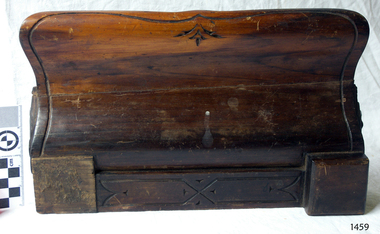 Flagstaff Hill Maritime Museum and Village
Decorative object - Pen Tray, David Hay, circa 1847
... The Enterprise is of significance as a New Zealand-built but Australian-owned coastal trader. The wreck was also significant for its association with the indigenous hero Buckawall, who saved the lives of the five crew on board. ...This pen tray is handmade from some of the timbers from the wreck of the schooner Enterprise. It was originally donated to the former Warrnambool Museum and Art Gallery and transferred to Flagstaff Hill Maritime Museum and Village when it was first established. The paper tag with the pen tray was inscribed "SWINBURNE". It is likely to be a reference to Charles Grant Swinburen, Mr Chas (Charles) Grant Swinburne (1864-1934), married Susan Jane Granter (1867-19 June 1935) in 1891. They were both Warrnambool residents. Swinburne was a prominent member of the Toc H. Progress Association and several other local clubs and societies. He died after a painful illness. Swinburne's wife, Susan, was the daughter of Joseph (1832-1879) and Ann Granter (nee Holley). Her father had arrived in Melbourne on the ship Marco Polo in February 1856. In 1868, he was a shareholder of the Warrnambool Steam Packet Co., His portrait is among those recognised on the historic Warrnambool Pioneers Board. The inscription on the rear of the pen holder was added at a later date. It incorrectly states that the vessel "was the first boat up the river Yarra with Fawkner", confusing this Warrnambool wreck "Enterprise" with Fawkner's vessel "Enterprize" (sometimes written "Enterprise"). THE “ENTERPRISE” 1847-1850 The wooden, two-masted schooner Enterprise was built in New Zealand in 1847 and registered in Melbourne, Australia. The Enterprise carried cargoes of agricultural produce and other commodities for trade between the ports of the Colony. On September 14, 1850, the Enterprise was at anchor in Lady Bay under its Master, James Gardiner Caughtt, loaded with a cargo of wheat and potatoes. A strong south-easterly wind caused the vessel to drag on its only anchor, and the rudder was lost. The gale-force wind blew it sideways, and it became grounded. A local indigenous man, Buckawall, braved the rough sea to take a line from the shore to the Enterprise. All five members of the crew were able to make it safely to land. The Enterprise was wrecked. The Enterprise wreck was in an area called Tramway Jetty in Lady Bay. Since then, the area became the location of the Lady Bay Hotel, and now, in 2019, it is in the grounds of the Deep Blue Apartments. In fact, with the constantly changing coastline through built-up sand, the wreck site is now apparently under the No. 2 Caravan Park on Pertobe Road, perhaps 150 metres from the high tide. Its location was found by Ian McKiggan (leader of the various searches in the 1980s for the legendary Mahogany Ship). DIFFERENTIATING the New Zealand Schooner “Enterprise” from John Fawkner’s “Enterprize“ Dr Murray Johns, Melbourne, says in his article The Mahogany Ship Story “… As I documented in 1985, the Warrnambool wreck was of an entirely different ship, also called Enterprize [with the spelling ‘Enterprise’], but built in New Zealand in 1847. Fawkner’s ship had already been sold to Captain Sullivan in 1845 and was wrecked on the Richmond Pier in northern New South Wales early in 1847. “ The pen tray is significant for its association with the wreck of the Enterprise, which is listed on the Victorian Heritage Database, VHR S238. The Enterprise is of significance as a New Zealand-built but Australian-owned coastal trader. The wreck was also significant for its association with the indigenous hero Buckawall, who saved the lives of the five crew on board. The pen tray is an example of the use of timbers salvaged from shipwrecks along the coast. Decorative pen tray; handmade and carved from timber from the vessel "Enterprise", 1847-1850. The tray is made from several pieces of wood and has a concave surface. The engraving includes a border, motifs, and decorative scrolls on the sides. The inscription on the rear was written in script. A paper tag marked 'Swinburne' was with the board. "Swinburne", "from the vessel Enterprise" Writing on the back of the pen tray: "Made from / wreck of / "Enterprise" first boat / up river Yarra with / Fawkner later wrecked / at Warrnambool Vic" flagstaff hill, warrnambool, shipwrecked-coast, flagstaff-hill, flagstaff-hill-maritime-museum, maritime-museum, shipwreck-coast, flagstaff-hill-maritime-village, wood carving, carving, carving craft, 1850 wreck, john watson, james gardiner caught, tramway jetty, lady bay, rescue line, ian mckiggan, vhr s238, relic, buckawall, schooner, enterprise, coastal trader, new zealand, indigenous rescue, indigenous hero, pen holder, pen tray, wood souvenir, enterprise s ouvenir -
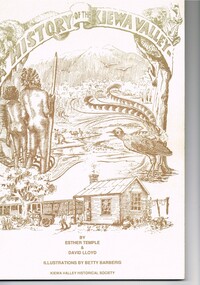 Kiewa Valley Historical Society
Book - A History of the Kiewa Valley, Kiewa Valley Historical Society, A History of the Kiewa Valley by Esther Temple and David Lloyd, Circa 1991
... It briefly covers the period from the indigenous tribes(broken down into family groupings) known as the "first Australians" who lived in the valley well before English settlers arrived. first white settlement (graziers, miners, stockmen) to smaller settlements.The development or transformation from a pristine(hunter/gatherer) valley environment to one that has been gradually changing to a more commercial rural/industrial landscaped valley. ...This book was compiled by Esther Temple and David Lloyd with illustrations by Betty Barberis and additional material provided by Clare Roper, Joan Macdonald, Wilma Davies and Nell Bateman. The book was first penned in 1971. It briefly covers the period from the indigenous tribes(broken down into family groupings) known as the "first Australians" who lived in the valley well before English settlers arrived. first white settlement (graziers, miners, stockmen) to smaller settlements.The development or transformation from a pristine(hunter/gatherer) valley environment to one that has been gradually changing to a more commercial rural/industrial landscaped valley. This transformation was made within a time span of two hundred years. The book details the first pioneers and their descendants, along with the changes to their environments both domestic and commercial. The book highlights dates and events that shaped the "feel" of the valley. The extreme hardships faced by pioneer families during the extremely isolated times away from "civilisation". This publication provides an insight to the struggles and victories against the harsh Australian bushland by people who had not been raised in such a sometimes inhospitable environment. It was this transformation which instilled into the Australian psyche of self sufficiency and the ability to grasp onto ideas or "bush" remedies to overcome enormous difficulties. It is is ability that has produced the many inventions useful in the 20th and 21st centuries. This book has a 250 g/m cream coloured cover with print and drawings of rural aspects of historical significance ( Aboriginal and early white settlers). The book contains 124 pages of black and white photographs(139), black and white sketches(75), two pages of sketches and freehand drawings, two freehand maps one county lease /subdivision plan and black and white printing. See KVHS 0237 (B) for the official invitation to the launch of the book. The front top cover heading(in shaded print and enclosed in a banner form) "A HISTORY OF THE KIEWA VALLEY" The bottom printing "BY ESTHER TEMPLE & DAVID LLOYD ILLUSTRATIONS BY BETTY BARBERIS" and at the very bottom "KIEWA VALLEY HISTORICAL SOCIETY" oN THE BOOK SPINE "A HISTORY OF THE KIEWA VALLEY.....BY ESTHER TEMPLE & DAVID LLOYD" early settlers, dederang, tawonga, mount beauty, sec vic hydro electricity, falls creek early settlers, bonegilla -
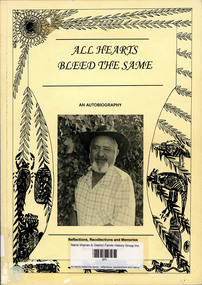 Narre Warren and District Family History Group
Book, Shorty Harrison, All hearts bleed the same : reflections, recollections and memories : an autobiography, 1994
... ...Barham (Vic.)...Indigenous Australians Barham (Vic.) Shorty (Bill) Harrison My Aboriginality is the root of my identity - my being; but my dear father was the technician who shaped and moulded me towards what I have finally become. ...My Aboriginality is the root of my identity - my being; but my dear father was the technician who shaped and moulded me towards what I have finally become. I owe him much more than I can describe.non-fiction My Aboriginality is the root of my identity - my being; but my dear father was the technician who shaped and moulded me towards what I have finally become. I owe him much more than I can describe. indigenous australians, barham (vic.), shorty (bill) harrison -
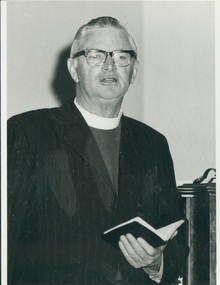 Uniting Church Archives - Synod of Victoria
BW photo, Undated
... STANWAY, ALFRED (b. 9 Sept 1908; d. Melbourne, Vic, 27 June 1989). Anglican bishop, missionary. ...STANWAY, ALFRED (b. 9 Sept 1908; d. Melbourne, Vic, 27 June 1989). Anglican bishop, missionary. ...STANWAY, ALFRED (b. 9 Sept 1908; d. Melbourne, Vic, 27 June 1989). Anglican bishop, missionary. Stanway grew up in the Wimmera district of western Victoria, and left school when 14 years old. He found work in Melbourne, trained as an accountant, and at the age of 20, held a responsible position with a publishing company. This background, allied with an uncommon flair for figures and finance, was to stand him in good stead throughout his life. But he had little knowledge and no experience of the grace of God until 29 July 1928. At the Evening Service in the parish church of Fairfield on 29 July, he heard the Rev C H Nash (q.v.) preach a sermon which led to his conversion. Within two years he made up his mind to become a missionary and began night studies in order to matriculate. He entered Ridley College in March 1932 to prepare for ordination undertaking week-end duties as a catechist at Deer Park and St Albans. He joined the CMS League of Youth, became chairman, and gathered a fine band of young people many of whom were to become missionaries. He was closely involved with the Belgrave Heights Convention (then at Upwey) and established a League of Youth camp on the site. All his energies were thrown into the task of building up its members in personal holiness and vigorous evangelism. Stanway was ordained in St Paul's Cathedral, Melbourne on St Thomas Day 1934 and was placed in charge of the Old Mission Church of St James and St John, Melbourne. The duties were light enough to allow him to enrol in the Melbourne Teachers College and to complete the Diploma in Teaching. On 26 January 1937, he sailed for Africa to become a missionary in the Anglican Diocese of Mombasa, which at that time embraced the whole of Kenya. He was sent to the hot coastal town of Kaloleni as principal of a Secondary Boys School. Before he left Melbourne, he had become engaged to Marjory Harrison: she followed him to Africa and their marriage took place in Mombasa Cathedral in June 1939. He remained at Kaloleni until 1944 when he was transferred to the inland station of Maseno where all his gifts were to be deployed as rural dean of Nyanza. His oversight of some 500 village churches as well as a widespread primary school system was so efficient that in 1948 he was appointed archdeacon of Kenya with his home and office in Nairobi. As secretary of the African Church Council and of the African Education Board, he was responsible for all African work in the diocese. His contacts with government ministers and public servants were of first class significance at the time when the cry of Uhuru and the demand for independence was travelling throughout the colonial world. On 2 Feb 1951, Alfred Stanway was consecrated in Westminster Abbey as the third Anglican Bp of Central Tanganyika. This Diocese was the special sphere of the CMS Australia, and he already knew most of the missionary personnel. He brought with him the understanding and experience of one who had fully shared the lot and problems of a district missionary, but he came to the diocese at a time when it had yet to recover from its losses in personnel and finance as a result of the war. His immediate task was to provide the impetus of fresh leadership and a long-term overall policy. His aim from-the outset was to build up a strong autonomous church with its own indigenous pastorate. With the whole-hearted confidence of the home base, he was able to enlist the service of new missionaries. He saw a great increase in the number of African clergy and he encouraged village evangelists to open new fields of work. Simple structures were built as new churches at the rate of two a week, week in and week out, year by year. He worked hard to meet the need for Christian literature, bookshops, adult literacy and theological training. He opened Bible schools for village evangelists and sent suitable clergy overseas for further studies. He encouraged initiative in others, helped them to find and use their talents, and gave them his unstinted confidence and support. Fresh finance was required for new ventures. This led him to travel widely in Germany and America, where he raised large funds for these projects. Mackay House was built in Dodoma as the central administrative base for the diocese, hospitals such as those at Mvumi and Hombolo were modernised or established, schools were built and upgraded. In keeping with his vision for ultimate leadership by African personnel, he consecrated Yohana Omari in 1955 as his assistant, he was the first national to become a bp in East Africa. Bp Stanway then set on foot the long and complicated process for the division of his sprawling diocese. In 1963, the diocese of Victoria Nyanza came into being; in 1965, that of Morogoro; in 1966, that of Western Tanganyika. Yet in 1971, his own diocese of Central Tanganyika, though greatly reduced in size, had more churches and more clergy than in its undivided state in 195 l. Stanway then played a leading part in the formation of the Province of Tanzania in 1970, with an African abp as metropolitan. A year later, after 35 years in East Africa and 20 years as bishop of Central Tanganyika, he resigned. His leadership and achievements throughout those years had placed him in the front rank as a great missionary statesman. Stanway had returned to Melbourne at the time when his resignation took effect in August 1971. His early love for Ridley College reasserted itself and he went into residence as deputy principal under the Rev Dr Leon Morris. He was put in charge of chapel worship and the pastoral oversight of the students. All his gifts and experience were called into play as he sought to guide and encourage those who were on the threshold of their ministry. The whole bent of his heart was to foster the spiritual life and missionary calling of those whose hearts the Lord had touched. It was during those years that his life-long zeal for the spread of the gospel through Christian literature had its ultimate flowering. It had begun in his Nairobi days with a small church bookstall, this had developed into a major book-shop in the heart of the city. Then in Dodoma he had established the Central Tanganyika Press in order to promote the publication and distribution of Christian literature at all levels. He had marked out Kevin Engel, trained him, and launched him on the international scene. Hence it was natural that in Melbourne he and Kevin Engel should found the Australian Christian Literature Society. But his time at Ridley College was not to last. Unknown to him, the Rev J R W Stott had put his name forward as that of a person who could head a new school of theology in the United States to provide a sound training for evangelical ordinands. Such a task would have been formidable enough for a younger man who had grown up in America. How could an Australian who had spent half his life in Africa hope to succeed in a venture of that kind in America? How could one who had been a missionary, not a theologian, found a new school to train men for ordination? Nevertheless he rose to the challenge. In Sept 1975, he and Mrs Stanway left Melbourne for Sewickly, an outer suburb of Pittsburg, with the promise of three years' service. He had to start from scratch. He found a house to live in, but there was no land for the school, no funds in hand, no staff yet appointed, no students, and no buildings. His drive, his infections enthusiasm, and his flair for practical enterprise carried the day. One by one, obstacles were overcome and support grew in volume and strength. Twelve months after his arrival, in Sept 1976, the Trinity Episcopal School for Ministry was opened with three staff members, seventeen students, and the goodwill of the whole American Episcopal Church to win. During the next two years, the school took shape and was firmly established. Bp Stanway left an indelible stamp on every aspect of its life and work, its spiritual tone and ideals, its financial and administrative principles. He had inspired widespread support among evangelical episcopalians and had imparted a strong sense of divine guidance and purpose. The council would gladly have extended his term in office beyond three years, but at 75 years of age he knew that his health had begun to fail. When he finally relinquished his office in Nov 1978, he could look back on those three years as the crown of his ministry. It is not too much to say that his name was even more highly honoured and revered in the Trinity School of Ministry than in his own dearly loved Africa. His return to Melbourne led to quiet retirement at Mount Waverley where he settled down to a long battle with the ever worsening effects of Parkinson's Disease. The slow loss of physical capacity and the ultimate failure in powers of speech were a great trial, but he never complained. His faith was summed up in his brief reply when he was asked why he had not prayed for healing: 'What God allows, I accept'. That acceptance was without reserve; his testimony was never brighter. His mental powers were undiminished and his spiritual concerns were as wide as ever. He kept in touch with CMS, he went to church, he met with missionaries, he led Bible studies in his home as long as he was able. Africa was always in his heart, news from Sewickly always gave him great pleasure. He had left a mark for God on three great continents and his death left sad but thankful hearts in them all. It was the close of a life in which he had felt that he could never do enough for God who had done so much for him. One of Bp Stanway's sayings was 'when the Holy Spirit takes hold of you, anything can happen'. So it was in his case. He was very human, with his full share of human foibles and frailties. He had a great zest for life and an endless fund of stories drawn from his own experience. He was himself the subject of many stories, some true, others legendary. His vibrant personality always seemed to fill the house where he was, his presence could not be overlooked. His own home was one in which Mrs Stanway had a paramount influence. She was a trained teacher, a skilled artist, a born hostess and a first-class linguist. They had no children of their own, but were devoted Godparents and always deeply interested in the children of missionaries. Home life allowed him to relax in a serene and contented atmosphere and to exercise his gifts for friendship and hospitality. He was always on the watch for souls, a person-to-person evangelist par excellence. He was a man of faith and prayer who dared to believe in the God of the impossible. His love for Africa, his total dedication as a missionary; his gifts as a soulwinner; his genius for finance; his shrewd practical initiatives, and his statesmanlike vision were outstanding characteristics. But great or small, all his gifts were laid out in the service of the gospel, and that service marked him out as one of the most remarkable Australian missionaries of his generation. M L Loane, Men to Remember (Sydney, 1987) Rev. Alfred Stanway is standing with open book in hand, dressed in clerical garb. Bishop Alfred Stanway bishop alfred stanway -
 Koorie Heritage Trust
Book, Bellear, Lisa, Central Business Dreaming, 2008
... Melbourne (Vic). Indigenous Arts Program. | Art Aboriginal Australian -- Victoria -- Melbourne. | Art Aboriginal Australian. | In recognition of Indigenous culture, we (The City of Melbourne) have initiated and supported the only dedicated local government indigenous arts funding program in Victoria. 3-138 P.; ports.; index; facs. ...In recognition of Indigenous culture, we (The City of Melbourne) have initiated and supported the only dedicated local government indigenous arts funding program in Victoria.3-138 P.; ports.; index; facs. In recognition of Indigenous culture, we (The City of Melbourne) have initiated and supported the only dedicated local government indigenous arts funding program in Victoria. melbourne (vic). indigenous arts program. | art, aboriginal australian -- victoria -- melbourne. | art, aboriginal australian. | -
Koorie Heritage Trust
Book, Bishop, Mervyn, 1945, Let's rap!, 1995
... Book Bishop, Mervyn, 1945- Carlton, Vic. : Curriculum Corporation ...This series is a great collection of stories for beginner readers. As the teachers guide says, these books are about things children do in their communities. Colourful photographs show children cooking, dancing and playing. `A Big Day` is a story about a group looking for bush tucker. This would be an unfamiliar experience to many non-Indigenous Australians and a good source of new and interesting vocabulary. The series introduces beginning readers to a variety of text types including recount, narrative and procedural. They would make excellent texts for guided reading sessions to introduce textual features and develop reading strategies. The teacher book introduces literacy theory and links outcomes to a curriculum profile of Australian schools. It details relevant text information for each reading book and gives extensive guidance on teaching and learning strategies. The Teacher Book also includes a variety of activities including worksheets and links with curriculum areas.16 pages ; 48 cm This series is a great collection of stories for beginner readers. As the teachers guide says, these books are about things children do in their communities. Colourful photographs show children cooking, dancing and playing. `A Big Day` is a story about a group looking for bush tucker. This would be an unfamiliar experience to many non-Indigenous Australians and a good source of new and interesting vocabulary. The series introduces beginning readers to a variety of text types including recount, narrative and procedural. They would make excellent texts for guided reading sessions to introduce textual features and develop reading strategies. The teacher book introduces literacy theory and links outcomes to a curriculum profile of Australian schools. It details relevant text information for each reading book and gives extensive guidance on teaching and learning strategies. The Teacher Book also includes a variety of activities including worksheets and links with curriculum areas. readers (primary) | readers (primary) -- aboriginal australians. -
Koorie Heritage Trust
Book, Robertson, Craig, Buckley's Hope : the real life story of Australia's Robinson Crusoe, 1981
... Texts | Convicts -- Australia -- History -- Fiction. | History - Biographies - Non-Indigenous | Settlement and contacts - Penal colonies / Convicts | Settlement and contacts - Colonisation - 1788-1850 | Race relations - Attitudes | Language - Vocabulary - Word lists | Kurnai / Gunai people (S68) (Vic SJ55) | Port Phillip / Western Port area (Vic SJ55)...Texts | Convicts -- Australia -- History -- Fiction. | History - Biographies - Non-Indigenous | Settlement and contacts - Penal colonies / Convicts | Settlement and contacts - Colonisation - 1788-1850 | Race relations - Attitudes | Language - Vocabulary - Word lists | Kurnai / Gunai people (S68) (Vic SJ55) | Port Phillip / Western Port area (Vic SJ55) Blurb: On Boxing Day 1803 a young English convict named William Buckley escaped from Victoria's abortive first settlement, at Sorrento.For the next thirty-two years Buckley survived in the wild, mainly because he was adopted and helped by the local tribes.In 1835 Buckley rejoined the civilization he had cast aside, emerging to meet Melbourne's founders. ...Blurb: On Boxing Day 1803 a young English convict named William Buckley escaped from Victoria's abortive first settlement, at Sorrento. For the next thirty-two years Buckley survived in the wild, mainly because he was adopted and helped by the local tribes. In 1835 Buckley rejoined the civilization he had cast aside, emerging to meet Melbourne's founders. He became an important guide and interpreter in the crucial first years of the European conquest of the Port Phillip region. Then, as the Aborigines were engulfed by the flood of white men, Buckley found himself in no-man's land, mistrusted by his former black friends and by the white society who so misunderstood them. He was reviled, so harshly that his reputation has suffered to this day. This is William Buckley's story. It is a story based on fact, about a real Robinson Crusoe who was unique in Australia's history. And it is also a story of European intruders imposing their savage will on an alien, ancient continent. Rarely has Australian history come more alive than in the pages of this remarkable first novel. Buckley's life with the Aboriginal people of Port Phillip between 1803 and 1835; subsequent life in white community ; includes glossary of Aboriginal words (p. 271-280).288 p. : 3 maps ; 22 cm. Blurb: On Boxing Day 1803 a young English convict named William Buckley escaped from Victoria's abortive first settlement, at Sorrento. For the next thirty-two years Buckley survived in the wild, mainly because he was adopted and helped by the local tribes. In 1835 Buckley rejoined the civilization he had cast aside, emerging to meet Melbourne's founders. He became an important guide and interpreter in the crucial first years of the European conquest of the Port Phillip region. Then, as the Aborigines were engulfed by the flood of white men, Buckley found himself in no-man's land, mistrusted by his former black friends and by the white society who so misunderstood them. He was reviled, so harshly that his reputation has suffered to this day. This is William Buckley's story. It is a story based on fact, about a real Robinson Crusoe who was unique in Australia's history. And it is also a story of European intruders imposing their savage will on an alien, ancient continent. Rarely has Australian history come more alive than in the pages of this remarkable first novel. Buckley's life with the Aboriginal people of Port Phillip between 1803 and 1835; subsequent life in white community ; includes glossary of Aboriginal words (p. 271-280). buckley, william, 1780-1856 -- fiction. | novels in english. australian writers, 1945-. texts | convicts -- australia -- history -- fiction. | history - biographies - non-indigenous | settlement and contacts - penal colonies / convicts | settlement and contacts - colonisation - 1788-1850 | race relations - attitudes | language - vocabulary - word lists | kurnai / gunai people (s68) (vic sj55) | port phillip / western port area (vic sj55) -
Koorie Heritage Trust
Journal - Serials, Aboriginal History Inc, Aboriginal History - Volume 23. 1999, 1999
... Australia -- Periodicals | Language...Aboriginal-Upper Murray Vic. - Pallangamiddang....Unaipon...David-Interview....White...Isabel (Sally) - Anthropologist | Demography - Population mobility | Settlement and contacts - Resettlement and removals | Defence - Missile and weapons testing - Nuclear weapons | Language - Linguistics - Language elicitation | Language - Vocabulary - Word lists | Language - Linguistics - Phonology and phonetics | History - Biographies - Indigenous | Colonisation | Race relations - Racial discrimination - Women | Music - Vocal - Group - Children | Music - Education | Music - Analysis - Vocal...Australia -- Periodicals | Language Aboriginal-Upper Murray Vic. - Pallangamiddang. Unaipon David-Interview. White Isabel (Sally) - Anthropologist | Demography - Population mobility | Settlement and contacts - Resettlement and removals | Defence - Missile and weapons testing - Nuclear weapons | Language - Linguistics - Language elicitation | Language - Vocabulary - Word lists | Language - Linguistics - Phonology and phonetics | History - Biographies - Indigenous | Colonisation | Race relations - Racial discrimination - Women | Music - Vocal - Group - Children | Music - Education | Music - Analysis - Vocal A series of articles by leading writers on Aboriginal History. iiv-xii; 151 P.; refs.; footnotes; plates; 25 cm. ...A series of articles by leading writers on Aboriginal History.iiv-xii; 151 P.; refs.; footnotes; plates; 25 cm. A series of articles by leading writers on Aboriginal History. aboriginal australians -- periodicals. | ethnology -- australia -- periodicals | language, aboriginal-upper murray vic. - pallangamiddang., unaipon, david-interview., white, isabel (sally) - anthropologist | demography - population mobility | settlement and contacts - resettlement and removals | defence - missile and weapons testing - nuclear weapons | language - linguistics - language elicitation | language - vocabulary - word lists | language - linguistics - phonology and phonetics | history - biographies - indigenous | colonisation | race relations - racial discrimination - women | music - vocal - group - children | music - education | music - analysis - vocal -
Koorie Heritage Trust
Book, Buggy, Terry et al, Race relations in colonial Australia : an enquiry approach, 1982
... SI55) | Sydney (NSW SI56-05) | Healesville / Coranderrk (E Vic Yarra Valley SJ55-06) |...Australia -- Race relations. | Settlement and contacts - Colonisation - 1851- | Education - Indigenous studies - Secondary | Race relations - Violent - Massacres murders poisonings etc. - To 1900 | Poonindie (West SA SI53-11) | Southwest New South Wales (SW NSW SI54 SI55) | Sydney (NSW SI56-05) | Healesville / Coranderrk (E Vic Yarra Valley SJ55-06) | A history text for secondary students. ...A history text for secondary students. It explores three main areas of conflict in 19th century, Aboriginal relations with white settlers in Sydney area; Poonindie; Coranderrk; uses period documents.vi, 154 pages : illustrations, facsimiles, maps, portraits ; 26 cm. A history text for secondary students. It explores three main areas of conflict in 19th century, Aboriginal relations with white settlers in Sydney area; Poonindie; Coranderrk; uses period documents. australia -- race relations | race relations. australia, 1800-1900. for schools | australia -- race relations. | settlement and contacts - colonisation - 1851- | education - indigenous studies - secondary | race relations - violent - massacres, murders, poisonings etc. - to 1900 | poonindie (west sa si53-11) | southwest new south wales (sw nsw si54, si55) | sydney (nsw si56-05) | healesville / coranderrk (e vic yarra valley sj55-06) | -
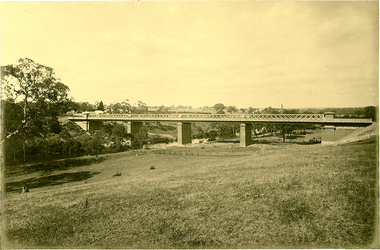 Kew Historical Society Inc
Photograph, J F C Farquhar, Railway Bridge Over the Yarra, 1891
... The landscape surrounding the Asylum was planted with traditional exotic trees such as Oaks, Pines and Cedars, and landmark trees from northern Australia such as the Hoop Pine. Remnant indigenous trees such as the River Red Gum, Yellow Box and Lightwood were scattered around the site, including beside the Yarra River. ...At the beginning of the 1890s, the Kew businessman and Town Councillor, Henry Kellett, commissioned J.F.C. Farquhar to photograph scenes of Kew. These scenes included panoramas as well as pastoral scenes. The resulting set of twelve photographs was assembled in an album, Kew Where We Live, from which customers could select images for purchase.The preamble to the album describes that the photographs used the ‘argentic bromide’ process, now more commonly known as the gelatine silver process. This form of dry plate photography allowed for the negatives to be kept for weeks before processing, hence its value in landscape photography. The resulting images were considered to be finely grained and everlasting. Evidence of the success of Henry Kellett’s venture can be seen today, in that some of the photographs are held in national collections. It is believed that the Kew Historical Society’s copy of the Kellett album is unique and that the photographs in the book were the first copies taken from the original plates. It is the first and most important series of images produced about Kew. The individual images have proved essential in identifying buildings and places of heritage value in the district. Completed in November 1890, the railway viaduct (now the Chandler Highway Bridge) linked Kew and Fairfield. The viaduct is significant as the most substantial extant engineering remnant of the Outer Circle Railway Line. Opened in March 1891, the viaduct crossed the Yarra River in a single span, atop three supporting brick pillars. Following the closure of the railway line in 1927, and the construction of the Chandler Highway in 1930, the bridge was used for vehicular traffic. In 1891 when this panoramic photograph was taken, the grounds of what was then the Kew Lunatic Asylum extended down to the River and eastward beyond the viaduct. The landscape surrounding the Asylum was planted with traditional exotic trees such as Oaks, Pines and Cedars, and landmark trees from northern Australia such as the Hoop Pine. Remnant indigenous trees such as the River Red Gum, Yellow Box and Lightwood were scattered around the site, including beside the Yarra River. Railway Bridge Over the Yarra kew illustrated, kew where we live, photographic books, henry kellett, railway viaduct - - kew (vic) -
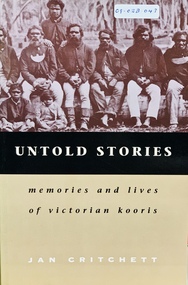 Port Fairy Historical Society Museum and Archives
Book, Melbourne University Press, Untold stories : memories and lives of Victorian Kooris, 1998
... Wilmot's is one of the many untold stories that appear here for the first time. western district (vic.) -- colonization. aboriginal australians -- victoria -- western district -- history. aboriginal australians -- victoria -- western district -- interviews race relations - racial discrimination. child welfare - child / parent separation - stolen generations. history - biographies - indigenous. ...'I'm your half-brother and I'm here to stay. This is my home.' With these words Wilmot Abraham sought refuge with his white relations. 'Did you ever read your history?': Mrs. Mary Clarke remembers p. 1 'An old hand': Jim Cain p. 12 'I'm your half-brother, and I'm here to stay': Wilmot Abraham p. 36 The Three Pompeys The Written Record p. 48 Banjo Clarke's Stories p. 62 'Why did they take them away?': Lizzie and Henry McCrae p. 74 In Defence of Framlingham: Collin Hood p. 79 Double Dispossession: King David p. 107 James Dawson's Informants p. 137 'Why are we kept prisoners here?': Ernest and Maggie Mobourne p. 148 'The old ones, they wouldn't tell us nothing': Mrs. Connie Hart's memories p. 181 'Breaking the cycle is the hard thing to do': Geoff Rose, a stolen child p. 200 Epilogue: James Dawson, Camperdown George and the Obelisk p. 220 The Hood Family p. 238 The Mobourne Letters p. 241 Abbreviations p. 252 Notes p. 252 Bibliography p. 264 Index p. 274xxi, 283 p. : ill., facsims., map, ports. ; 23 cm. Includes index and bibliographical references: p. 264-273. non-fiction 'I'm your half-brother and I'm here to stay. This is my home.' With these words Wilmot Abraham sought refuge with his white relations. 'Did you ever read your history?': Mrs. Mary Clarke remembers p. 1 'An old hand': Jim Cain p. 12 'I'm your half-brother, and I'm here to stay': Wilmot Abraham p. 36 The Three Pompeys The Written Record p. 48 Banjo Clarke's Stories p. 62 'Why did they take them away?': Lizzie and Henry McCrae p. 74 In Defence of Framlingham: Collin Hood p. 79 Double Dispossession: King David p. 107 James Dawson's Informants p. 137 'Why are we kept prisoners here?': Ernest and Maggie Mobourne p. 148 'The old ones, they wouldn't tell us nothing': Mrs. Connie Hart's memories p. 181 'Breaking the cycle is the hard thing to do': Geoff Rose, a stolen child p. 200 Epilogue: James Dawson, Camperdown George and the Obelisk p. 220 The Hood Family p. 238 The Mobourne Letters p. 241 Abbreviations p. 252 Notes p. 252 Bibliography p. 264 Index p. 274 western district (vic.) -- colonization., aboriginal australians -- victoria -- western district -- history., aboriginal australians -- victoria -- western district -- interviews, race relations - racial discrimination., child welfare - child / parent separation - stolen generations., history - biographies - indigenous., book -
 Kew Historical Society Inc
Booklet, Australian Broadcasting Commission, Melbourne before history began : five ABC Radio programmes on the area around Melbourne many years ago, 1967
... indigenous australians (vic)...Together it forms the largest privately-donated collection within the archives of the Kew Historical Society. indigenous australians (vic) australian broadcasting commission first peoples Melbourne before history began. ...This work forms part of the collection assembled by the historian Dorothy Rogers, that was donated to the Kew Historical Society by her son John Rogers in 2015. The manuscripts, photographs, maps, and documents were sourced by her from both family and local collections or produced as references for her print publications. Many were directly used by Rogers in writing ‘Lovely Old Homes of Kew’ (1961) and 'A History of Kew' (1973), or the numerous articles on local history that she produced for suburban newspapers. Most of the photographs in the collection include detailed annotations in her hand. The Rogers Collection provides a comprehensive insight into the working habits of a historian in the 1960s and 1970s. Together it forms the largest privately-donated collection within the archives of the Kew Historical Society. Melbourne before history began. The text of five radio programmes presented by Edmund Gill on the prehistory of the Melbourne region indigenous australians (vic), australian broadcasting commission, first peoples -
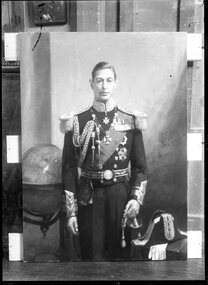 City of Melbourne Libraries
Photograph, Bull, Hugh Jones, 1897-1993, "A Royal Portrait" (Duke of York), 1933
... The Australasian (Melbourne, Vic. : 1864 - 1946), p. 37 (METROPOLITAN EDITION). ...The Australasian (Melbourne, Vic. : 1864 - 1946), p. 37 (METROPOLITAN EDITION). ...Published: The Age, Sat 14 October 1933 Published title: A Royal Portrait Published caption: "Seen at his studio, Alphington, Mr. W. B. Mclnnes's portrait of the Duke of York, which he painted recently on commission from the trustees of the Castlemaine Gallery, at St. John’s Wood, London, impresses as a vital record of one whose natural habitat is a palace, and whose place in life is one of near relationship to the throne of England. The Duke is painted in the uniform of the admiral of the fleet, a highly ornate vesture entailing much elaboration of gold and numerous medals, in dealing with which the artist has not failed to centre his attention on the head, and has succeeded in producing what is undoubtedly a soundly painted portrait and a good likeness. During the five fittings Mr. Mclnnes, apart from the ordinary social amenities, found his Royal sitter little inclined to talk, though he spoke feelingly of his trip to Australia and the pleasure it had given him: but with the Duchess the tendency to be sociable was much more clearly pronounced. She took, and expressed, a keen interest in the social and political matters of the day with a special concern for the supremacy of England and Australia in all questions relating to sport, such as cricket, tennis and golf. She spoke well of her portrait painted by Quinn, and regretted that she would not see the two hung side by side at the Castlemaine Gallery." Description: An unframed painting of a standing, middle-aged man dressed in the uniform of a Royal Navy admiral of the Fleet with medals, sash, ornate belt, cuffs and epaulettes. His left hand rests on the handle of a sword in its scabbard and his bicorn hat and white gloves are on a table beside him. To his right is a globe of the world showing Australia. Research by project volunteer, Fiona Collyer: In 1933, Castlemaine Art Gallery trustees commissioned artist W.B. McInnes (1889-1939) to paint a portrait of Prince Albert, Duke of York as a companion piece to the portrait of his wife, the Duchess of York, that the gallery had commissioned Australian official war artist James Quinn (1869-1951) to paint in 1930. During the First World War, the Duchess’s childhood home, Glamis Castle in Scotland was used as a makeshift military hospital and convalescence home for wounded soldiers. Many servicemen from the Castlemaine area recuperated there and had fond memories of the kindness of the teenage Lady Elizabeth Bowes-Lyon (1900-2002, later Duchess of York) who spent the war years running errands and aiding in the welfare and morale of the patients. In 1927, the Duke and Duchess of York (later King George VI and Queen Elizabeth) came to Australia to formally open the newly built Parliament House in Canberra and to tour the country. While visiting Victoria in April, they embarked on a whistle-stop train journey to Bendigo, stopping at Kyneton for ten minutes and Castlemaine for 15 minutes. At Kyneton, an excited crowd of 10,000 people welcomed the couple with “three cheers and three cheers for Baby Betty” before the Duchess was presented with a bouquet of locally grown roses and the Duke a bound album of photographs of noted beauty spots of the district. Next the Royal Couple stopped at Castlemaine to the cheers of 15,000 people. There the couple were presented with a basket of prime quality Harcourt apples and a pair of cot blankets, manufactured at Castlemaine Woollen Mills, a birthday gift for baby Princess Betty. The Duchess recognised Colonel W.E. James, of the Seventh Battalion, who had convalesced at Glamis Castle in 1917, and they chatted before the train departed, while the Duke shook hands with returned soldiers. Last stop was the town of Bendigo which was colourfully decorated with bunting and flags, arches and flowers. 3000 pigeons were released on their arrival and the liberated birds circled overhead for several minutes as if to welcome the Royal Couple. A crowd of 50,000 cheering people lined the streets in bright sunshine as the couple drove by. From an arch over Hargreaves Street, pretty girls showered the pair with rose petals. The Duke was presented with a gold nugget and an album, handsomely bound in morocco, of a history of the Bendigo mining industry, while the Duchess received a bouquet of prize winning white chrysanthemums. After 75 minutes in Bendigo they journeyed back to Melbourne for a State reception. While the couple were in Melbourne, the Duke often played lawn tennis at the Government House courts with three times Grand Slam champion Norman Brookes, who declared that while he considered the Duke a second class player whose serve lacked sting, he had a fine backhand and with time and practice he could become a first class player. The federal Parliament had previously been situated in Melbourne, but Canberra was chosen as the location for Australia’s capital as a compromise between fierce rival states, Victoria and NSW. It is written in the Constitution that the federal capital would be in “the State of NSW... distant not less than one hundred miles from Sydney.” The word Canberra is thought to derive from the local Ngunnawal word “Kanbarra” meaning “meeting place”. The Provisional Parliament House was a large, white, three storey building facetiously dubbed “The Wedding Cake”, plonked down in a bare, former sheep paddock. It was decorated for the event with Union Jacks and Australian red ensign flags. On 9 May, the day of the opening, the expectant crowd assembled in front of the building. Only two of the spectators were Aboriginal. One was Jimmy Clements (1847-1927, aka Nangar or Yangar, but popularly known as “King Billy”), accompanied by his three dogs. (The title “King” or “Queen” was often given by white settlers to Aborigines who were seen as allies and could maintain good relations between First Nations groups and the colonists. Some were given inscribed brass breastplates or gorgets to wear.) Jimmy was an excellent horse breaker and expert tracker for the police. He was also the nephew of “Queen” Nellie Hamilton (1842-1897) of the Canberra-Queanbeyan region, home of the Ngambri and Ngunnawal people. Nellie was the oldest surviving full-blooded Aboriginal woman in the district. The other was George John Noble (1840s-1928, aka Ooloogan, also “Marvellous” due to his regular use of the word). Both were initiated Wiradjuri walamira elders: “clever men” believed to have the ability to heal physical and spiritual ailments. They were also travelling showmen, skilled at boomerang and spear throwing and often performed at country agricultural shows and football matches. They had walked barefoot for three days from the Brungle Mission, near Gundagai. 11 May 1927, The Argus reported that “King Billy... claims sovereign rights to the Federal Territory” which the National Archives of Australia describes as “possibly the first recorded instance of Aboriginal protest at Parliament House in Canberra.” 10 May 1927, The Argus reported on Jimmy Clements: “During the wait great interest was taken in the appearance near the east stand of an aborigine, a member of the Gundagai tribe, and a well known character in the district. He was very old and grey and ruggedly picturesque. He was determined to go his own way in spite of the arguments of two inspectors and one sergeant of police. Immediately and instinctively the crowd in the stands rallied to his side. There were choruses of advice and encouragement for him to do as he pleased. A well-known clergyman stood up and called out that the aborigine had a better right than any man present to a place on the steps of the House of Parliament and in the Senate during the ceremony. The old man’s persistence and the sympathy of the crowd won him an excellent position and also a shower of small change that must have amounted to 30/ or 40/ [shillings].” At 10.30 am, Australia’s eighth Prime Minister, Mr Stanley Bruce (1923-1929) welcomed the Royal couple onto the crimson carpeted portico. Unfortunately, Dame Nellie Melba’s rendition of “God Save the King” and the greater part of the Duke’s reply was drowned out by the roar of squadrons of aeroplanes circling overhead. A brief religious service followed, conducted by leaders of the Methodist, Presbyterian and Anglican churches. Interestingly, there was no Roman Catholic representation at the ceremony even though around one quarter of Australians were Catholic at the time. The Duke unlocked the front doors with a golden key, then unveiled a statue of his father King George V by sculptor Sir Bertram Mackennal in the King’s Hall. Then the official party, Senators, members of the House of Representatives and invited guests entered the Senate chamber where the Duke read a message from the King, establishing Canberra as the seat of the Federal Government, watched on by Australia’s elite. The conclusion of the ceremony was announced by a gay fanfare of trumpets from the entrance of Parliament House and a 21 gun salute and answered by cheers from the crowd. The dignitaries then feasted on a luncheon of turtle soup, poached schnapper, fillets of beef, roast chicken and ham, straw potatoes, green peas, Canberra Pudding (a pudding made with dripping, dried fruit and jam), fruit, ices, coffee and cheese. They toasted the King with non-alcoholic fruit punch as the Federal Capital Territory (later ACT) was a “dry” area and no speeches were made. The diary entry that day of Ethel Baird, Lady Stonehaven, the wife of the Governor-General, is brief and to the point: “To P.H. & waited for Yorks. Ceremony went off without a hitch. Ghastly Banquet Lunch.” Later that day, the Duke mounted a coal black mare, police horse Number 303 which had been hastily re-named “Black Bess” for the occasion, to receive the final salute from the assembled troops and returned soldiers dressed in mufti. The RAAF squadron were flying overhead in “V” formations when suddenly, one of the planes, piloted by Flying Officer Francis Charles Ewen, left the formation, nose-diving 900 metres from Parliament House and landing behind the Y.W.C.A. refreshment marquee. Francis, aged only 28, tragically died of his wounds later that day. The Federal Capital Commission contracted Sargent’s Pies of Sydney to supply 5000 meals for the event. They supplied pies, sausage rolls, scones and sandwiches with the agreed price of 3 shillings a head. Only 1200 meals were served and the uneaten remainder dumped, with the Commission bearing the cost of the unsold food. An estimated crowd of 20,000 attended the opening, far fewer than the expected 100,000. Many visitors travelled long distances, bringing their own hampers of food and camping in tents as there was very limited accommodation available. Thousands of people around Australia listened to the ceremony broadcast on the wireless, with receiving sets installed in schools, public halls and workplaces and it was also filmed for posterity. The next morning, the Royal couple, along with Prime Minister Bruce and Mrs Bruce held an informal public reception on the steps of Parliament House where early settlers, residents and visitors to Canberra filed past them. The Press widely reported Jimmy Clements’ encounter with the Duke and Duchess. The Sun-Pictorial reported 11 May 1927: "MET THE DUKE. ABORIGINE KING HE APPROVED Sugarbag: Sports Suit. John Clements, otherwise King Billy, a full blooded aborigine king, aged 86, was among the 2000 who filed past the Duke and the Duchess at the public reception at Canberra to day. “How you likem Duke and Duchess Billy?” he was asked afterwards. “I think they are both very nice.” he replied in good English. King Billy was a very bedraggled figure, with tangled locks and a beard which almost hid his wrinkled and black face. He wore an old sports suit and carried a sugarbag. Passing the Duke and Duchess he turned full towards them. The crowd cheered, and the Duke and Duchess smiled. The Duke was particularly amused.” The Canberra Times reported 13 May 1927: "A REAL AUSTRALIAN. A quaint but pathetic figure stood in broad relief in the queue of ranks at the reception. Where his dusky forbears have gathered in native ceremonial for centuries past, a lone representative of a fast vanishing race saluted visiting Royalty. Despite the grotesque garb and untamed mane the aborigine comported himself not without dignity. With his three faithful dogs, he made an immediate target for a battery of cameras.” "The Argus reported 11 May 1927: "...an ancient aborigine who calls himself King Billy and who claims sovereign rights to the federal Territory walked slowly forward alone and saluted the Duke and Duchess. They cheerily acknowledged his greeting. The old aborigine, with his long, matted beard and nondescript clothing, is a popular identity of Canberra, and must be one of the most extraordinary figures who has received a Royal salute.” The Sun (Sydney) reported 10 May 1927: “Suddenly, in the midst of the forest of green and white colored hats of women, appeared a head with a shaggy leonine mane and a patriarchal beard. Jacky, the aboriginal, an identity of the district, who is also known as the King of Canberra, had arrived to testify to his loyalty. He saluted the Duke with an excellent dash, and shambled past with his faithful sheep dog aide-de-camp at his heels. The Duke and Duchess were highly amused at this quaint figure moving along with a sort of bodyguard of shrieking young boys and girls.” The Sydney Morning Herald 11 May 1927 mistook Jimmy for his friend “Marvellous”: “...the appearance of an aged aboriginal widely known in the district as “Marvellous, the uncrowned king of Queanbeyan." His beaming black countenance was almost hidden beneath a shock of hair and beard. Bare-footed and carrying a sugar bag in one hand and a tiny Australian flag in the other, he at first mistook a policeman at the foot of the steps for the Duke. To his great embarrassment and to the vast amusement of the onlookers, the policeman became the object of a hearty salutation. However, "Marvellous" was quickly shepherded back to a position in the procession and as he passed along brought his hand up to an approved military salute for the benefit of their Royal Highnesses. The Duke returned it with a special wave.” The Labor Daily 11 May 1927 irreverently reported on the scene: "People March Past. Some 400 people, old identities of Canberra marched past. They were mostly aged ladies with memories faithfully preserving the traditions of other days and curtsied reverently. The younger generations, who speedily joined the procession, behaved differently however. Surely it was the most motley collection that ever passed before Royalty. Men without collars jostled others well dressed. Fat women, young women, children of all heights and ages were there. The oldest inhabitants, in the persons of the abo, "Marbly", and his companion were present. The poor old fellows evidently were keen to get closer to the Duke than the procession dared go, but they were overawed by the stern glances of military men.” The Canberra Times reported 13 May 1927: "...and towards the end of the procession, a full-blooded aboriginal, bareheaded and barefooted, and carrying an old swag on his back, made a picturesque figure as he several times saluted the Royal couple, his old eyes beaming inexpressible delight.” The Register reported 11 May 1927: "PUBLIC MARCH PAST. Old “Jacky”, an aboriginal identity of the district, who has been following the proceedings of the various ceremonies with apparently great interest, appeared in the march past. He halted in front of the steps and raised his hand to his shaggy grey locks in an attempt at a salute. Smiling, the Duke returned the salute, and the Duchess bestowed a charming smile on the figure of mingled pathos and comedy.” Tweed Daily reported 12 May 1927: “King Billy” WAS THERE. Appropriately enough, the inevitable “King Billy” with his refreshing impression of possum and gum-leaves, was present at the dedication of the Federal capital at Canberra. Bare-footed, in a dingy old suit and battered felt hat, he wandered on to the empty stand after the illustrious assemblage had passed into Parliament House. A desolate figure in all that he stood for, he proved, an amiable representative of the dispossessed race. He cheerfully waved a Union Jack for the camera man, and grinned into the very eye of a movie man’s camera without flinching.” Footage of Jimmy filmed that day features in the film “The Birth Of White Australia” produced in 1928 and shows him enthusiastically waving a small Union Jack flag in front of Parliament House with his three dogs at his feet. The caption reads " "King Billy" calls for cheers for the son of the great white King across the seas. “Mine tinkit that pfellers father budgeree King liket me” supposedly says Jimmy." Jimmy told the Daily Telegraph, 13 May 1927 “I have opened your Parliament House on my own ground, now you can go and look at it." Jimmy died on 28 August 1927, aged 80. The Herald newspaper on 30 August 1927, published an illustration depicting Jimmy’s dog standing on his grave, his customary chimney pot hat leaning on his headstone. The caption reads: “The Dead King — His Only Mourner. Drawn by Will Dyson (King Billy, last of the Canberra aborigines, lived just long enough to see the Duke of York open Australia’s capital on the site where his tribe once roamed. He died in the Queanbeyan Hospital yesterday morning.)” A letter published in the Sydney Morning Herald, 19 September 1927 reported: "Old King Billy... Sir, ...I would like to mention... the passing away of one, if not the last remaining aboriginal chieftains. He may be called “Old King Billy,” and his death occurred here in Queanbeyan a few weeks ago. The removal of this well-known black has left another big gap in all that remains distinctively Australian in character. He was one of the last remaining tribe of the Monaro district, and one of the most predominant personalities throughout the Commonwealth. ...he had lived through 80 years all told. He was on many occasions sought by artists for his splendid physique and personality as a model, and many a journey he has had to make to Sydney on that account. A more striking and pronounced type could not be found. ...A very fine cast in lifelike form is to be seen in the Australian Museum, Sydney ...his last important appearance in public was at the Commonwealth celebrations at Canberra, to which territory he partly belonged. ...we have no aborigine statue chiselled to the memory of their race, a more fitting and lasting memorial could not be undertaken than to have one modelled from this fine figure and erected to the memory of his race at Canberra... It would be a fitting adornment if planted with the Australian gumtrees for any avenue or garden. [King Billy] ...a very intelligent fellow, responding readily to kindness and common sense. Hoping yet to see a befitting testimonial and a lasting memorial to a race that is rapidly and I may say, unfortunately, disappearing, I am etc., SYDNEY R.OAKLEY, Queanbeyan." The “lifelike form” referred to by the correspondent was a sculpture that Jimmy Clements had posed for: “The Wunderlich Aboriginal Group” for The Australian Museum in Sydney. In 1925, Mr Ernest Wunderlich, director of Wunderlich Limited, manufacturer of building materials and President of the Board of Trustees at The Australian Museum, commissioned renowned sculptor George Rayner Hoff (sculptor of the Anzac Memorial in Hyde Park, Sydney, National War Memorial in Adelaide, and “Lion” the original Holden Motor Company car emblem) to sculpt a life sized Aboriginal family group diorama as a gift to the Museum. There was much concern at this time that the Aboriginal population and especially the “full blooded” were fading into oblivion so fast that they may soon become extinct. Three “full blooded” Aborigines were chosen for models. An article in The Australian Museum magazine, July/September 1926 about The Wunderlich Aboriginal Group explained “...it will not be many years before the aborigine, in New South Wales and Victoria at least, will be an entity of the past. Every year sees a shrinkage in their number, and the coastal tribes that once roamed the Sydney district are, unfortunately, no longer with us. ...the man, who is hurling a boomerang, is Yangar, or “Jimmy Clements,” son of Gayan-Bleuet-Galoom, the late “King of Orange,” western New South Wales. “Jimmy” is an old man, but well preserved. He has a very retentive memory and recollects the various tribal customs and initiation ceremonies, but regarding these he is extremely reticent and will not communicate his “honoured secrets.” The female figure is “Nellie Walker,” a daughter of Geri-Bungel, and a native of Bombala, Monaro district, southern New South Wales. The boy is Harold Marsh, aged nine years, who was born at Kinchela, Macleay River, northern New South Wales. He is now living at the Brewarrina settlement... In the selection of aborigines great care had to be taken to ensure that the individuals were pure bloods, and to the Aborigines’ Protection Board and the Police Department of this State thanks are due for the valuable assistance rendered by them.” Ngarigo woman, Nellie Bungil Walker (1867-1932) had five children, two died as babies and her remaining children were taken from her. She worked as a domestic and was living at La Perouse Aboriginal Community, Sydney at the time of her sculpture’s creation. In the years after the sculpture was made, Nellie and Rayner remained friends. Yaegl boy Harold “Harry” Marsh was from the Kinchela Aboriginal Training Home for boys near Kempsey, (1924-1970), an agricultural training institution under the jurisdiction of the Aboriginal Protection Board to house Aboriginal boys forcibly removed from their families “in the interest of the moral or physical welfare” of the boys. The boys at Kinchela were aged 5-15 years old and referred to as numbers, not names and any connection to Aboriginal culture or language was forbidden. Brutal and cruel physical punishment and sexual assaults were rampant. Survivors recall being flogged and chained naked to a huge Morton Bay fig tree overnight or “sent down the line” where every boy was ordered to punch the “wrong doer” as hard as possible for fear that they would be next. The Kinchela children are acknowledged as part of the Stolen Generation. In 1925, Rayner Hoff created a terracotta bust “Harry Marsh” which is in the collection of the Art Gallery of New South Wales. The figures of the trio were modelled in clay before being cast in plaster and hand-coloured by Museum artist Miss Ethel A. King. The finished figures were completed with wigs and fur pelts and with Jimmy hurling a boomerang and Nellie holding a dilly-bag. They were placed in a glass cabinet in the Australian Ethnology Gallery. The subjects were not named. The Sydney Morning Herald 1 July 1926 critiqued the sculptures. "A GROUP OF STATUARY. MUSEUM’S ACQUISITION. Artistically the group is very fine, for the sculptor has caught his subjects in attitudes that reveal all the stalwart athletic lines of their bodies... The man, who is depicted as about 60 years of age, is bearded, immense, and savagely primitive-is throwing a boomerang, and beside him a boy, aged about 11 years is following beneath a shading hand, the flight of birds at which the hunter aims. Behind them, patient, obedient, stand(s) the woman waiting with her dilly bag to gather the spoils.” In 1996, Nellie’s daughter, Victoria Kempsey née Walker, happened to visit The Australian Museum and saw the sculpture of her mother, displayed semi-naked in a glass cabinet, alongside glass cabinets of taxidermied animals. She had last seen her mother 62 years previously when Nellie was dying from tuberculosis. Greatly distressed, Victoria wrote to the Museum requesting that they remove the sculpture, which they did. In 2023, a documentary was produced called “Her Name Is Nanny Nellie” which follows the journey of Nellie Walker’s great-granddaughter Auntie Irene Ridgeway discovering Nellie’s story, honouring her life and restoring her sculpture. Irene told Refinery29 Australia that “It was about reclaiming her life, reclaiming her history and who she really was as a real person. She was not a naked and unnamed lady standing in a museum. It's giving them back their families, they weren't just there to be looked at as flora and fauna or as 'natives'." The documentary was written and directed by Irene’s son Daniel King and premiered at the 2023 Adelaide Film Festival and broadcast on NITV. The restored sculpture of Nellie, dressed in 1920s style clothing was displayed at The Australian Museum, Sydney in The Bayala Nura Gallery in 2023. Irene wanted Nellie to be depicted in the way she actually was when she posed for the sculpture in 1925. The other two sculptures were not displayed due to ongoing conversations with family members and the fragility of the sculptures. It is anticipated that they may be displayed in the future. Melbourne born William Beckwith (Bill) McInnes (1889-1939) studied drawing at National Gallery School in Melbourne from the age of 14 under the tuition of artist Frederick McCubbin before succeeding his former teacher as Master of Drawing at the School from 1916-1934. He was acting Director of the NGV and Head of the National Gallery School from 1934. In 1927, Bill and official war artist H. Septimus Power were commissioned to paint the opening of the new federal Parliament House in Canberra. Septimus painted the general scene of the arrival of the Royal entourage in front of Parliament House, while Bill depicted the ceremony inside the Senate chamber. Bill was widely acclaimed for his landscapes and lauded as the heir to great Australian landscape artist Arthur Streeton. He won the Archibald Prize seven times (including the inaugural, a portrait of architect Desbrowe Annear) which made him a highly sought after portrait painter and he earned kudos for his commission to paint the Duke of York. During the breaks in painting the portrait, the pair chatted and Bill was surprised by the Duke’s wide knowledge of Australian affairs. The Duke was particularly interested to hear how the rabbit crisis was being handled. Bill’s work is held in major Australian galleries including the NGV, which has 12 of his paintings in their collection. Bill was married to fellow artist Violet McInnes and they lived at “The Poplars” in Alphington with their six children. Violet painted still life of flowers and portraits. In 1941, she entered her portrait of fellow artist Sybil Craig into the Archibald Prize and in 1945 Violet was appointed an official war artist. Defending his traditional style Bill said “...we in Australia have not been bitten by Cubism or Futurism or other of the “isms”...and I am glad of it”. References: THE DUCHESS OF YORK. (1931, December 7). The Argus (Melbourne, Vic. : 1848 - 1957), p. 8. Retrieved April 3, 2025, from http://nla.gov.au/nla.news-article4427568 WAR NURSE (1930, March 11). The Sun (Sydney, NSW : 1910 - 1954), p. 1. Retrieved April 3, 2025, from http://nla.gov.au/nla.news-article223714728 The Royal Visit. (1927, April 29). The Age (Melbourne, Vic. : 1854 - 1954), p. 9. Retrieved April 4, 2025, from http://nla.gov.au/nla.news-article205813465 Canberra. (1927, April 30). Advocate (Burnie, Tas. : 1890 - 1954), p. 5. Retrieved January 10, 2025, from http://nla.gov.au/nla.news-article68233606 Australian Dictionary of Biography, Nangar, https://adb.anu.edu.au/biography/nangar-33736 Australian Dictionary of Biography, Jimmy Clements, https://en.wikipedia.org/wiki/Jimmy_Clements Wikipedia, George John Noble, https://en.wikipedia.org/wiki/George_John_Noble PARLIAMENT AT CANBERRA. (1927, May 14). The Australasian (Melbourne, Vic. : 1864 - 1946), p. 37 (METROPOLITAN EDITION). Retrieved December 25, 2024, from http://nla.gov.au/nla.news-article140733921 CANBERRA CEREMONY (1927, May 10). The Argus (Melbourne, Vic. : 1848 - 1957), p. 19. Retrieved November 3, 2024, from http://nla.gov.au/nla.news-article3853643 CANBERRA. (1927, May 11). The Argus (Melbourne, Vic. : 1848 - 1957), p. 20. Retrieved November 24, 2024, from http://nla.gov.au/nla.news-article3853897 THE FINAL SCENES (1927, May 11). The Labor Daily (Sydney, NSW : 1924 - 1938), p. 5. Retrieved January 10, 2025, from http://nla.gov.au/nla.news-article236614453 TWIN SONS (1927, May 10). The Sun (Sydney, NSW : 1910 - 1954), p. 11. Retrieved April 4, 2025, from http://nla.gov.au/nla.news-article223616143 National Archives of Australia, Aboriginal [Jimmy Clements, a Wiradjuri elder] on steps of Parliament House (King Billy), https://recordsearch.naa.gov.au/SearchNRetrieve/Interface/ViewImage.aspx?B=3050026 Sydney Morning Herald, The chant of Jimmy Clements: I’ll do the honours on my ground, thanks, https://www.smh.com.au/national/the-chant-of-jimmy-clements-i-ll-do-the-honours-on-my-ground-thanks-20241023-p5kkt5.html MET THE DUKE (1927, May 11). The Sun News-Pictorial (Melbourne, Vic. : 1922 - 1954; 1956), p. 14. Retrieved November 3, 2024, from http://nla.gov.au/nla.news-article275177101 PUBLIC MARCH PAST. (1927, May 11). The Register (Adelaide, SA : 1901 - 1929), p. 11. Retrieved April 2, 2025, from http://nla.gov.au/nla.news-article54271512 A REAL AUSTRALIAN (1927, May 13). The Canberra Times (ACT : 1926 - 1995), p. 12. Retrieved December 18, 2024, from http://nla.gov.au/nla.news-article1213124 THE PEOPLE'S DAY (1927, May 13). The Canberra Times (ACT : 1926 - 1995), p. 3. Retrieved April 3, 2025, from http://nla.gov.au/nla.news-article1213105 KING BILLY" WAS THERE. (1927, May 12). Tweed Daily (Murwillumbah, NSW : 1914 - 1949), p. 2. Retrieved November 27, 2024, from http://nla.gov.au/nla.news-article190193273 A BUSY DAY. (1927, May 11). The Sydney Morning Herald (NSW : 1842 - 1954), p. 15. Retrieved November 3, 2024, from http://nla.gov.au/nla.news-article16374845 Nothing Wrong With Canberra Opening, Says "King Billy" (1927, May 13). The Daily Telegraph (Sydney, NSW : 1883 - 1930), p. 2. Retrieved November 3, 2024, from http://nla.gov.au/nla.news-article245750627 THIS IS MARVELLOUS! (1927, May 11). The Sun News-Pictorial (Melbourne, Vic. : 1922 - 1954; 1956), p. 16. Retrieved December 9, 2024, from http://nla.gov.au/nla.news-article275177155 Mildenhall's Canberra, Royal Visit, May 1927. Canberra citizens passing the Royal Party on the front steps of Parliament House at the Civic Reception 1927 [photograph], https://mildenhall.moadoph.gov.au/rephoto/62 Australian Dictionary of Biography, 1927 - Jimmy Clements, John Noble, and the Opening of Parliament House, https://adb.anu.edu.au/the-quest-for-indigenous-recognition/jimmy-clements YouTube, The Birth of White Australia (1928), amateurish racism on the big screen [Jimmy Clements at 11.12 minutes in], https://www.youtube.com/watch?v=OByX4iPsTgo YouTube, We Were Just Little Boys, https://m.youtube.com/watch?v=u4Hw9d91k2E WASTE AT CANBERRA. (1927, May 20). The South Eastern Times (Millicent, SA : 1906 - 1954), p. 1. Retrieved April 4, 2025, from http://nla.gov.au/nla.news-article200058308 YouTube, Museum of Australian Democracy at Old Parliament House, Whispers in the Corridors-An Aboriginal Presence, https://www.youtube.com/watch?v=fwifXP61M5Y History Snoop, Air Fatality in Canberra Scars an Historic Day in Australia, https://www.historysnoop.com/air-fatality-in-canberra/ YouTube, NFSA Films, The Opening Of Canberra, Australia's Capital City, https://www.youtube.com/watch?v=pOA8llA0iE0 Pauline Conolly, Pudding & Pies at Parliament House, https://paulineconolly.com/2022/pudding-and-pies-at-parliament-house/ THE MENU (1927, May 5). The Sun (Sydney, NSW : 1910 - 1954), p. 13 (FINAL EXTRA). Retrieved April 2, 2025, from http://nla.gov.au/nla.news-article223623278 PROMISING (1927, May 7). The Sun (Sydney, NSW : 1910 - 1954), p. 2. Retrieved December 15, 2024, from http://nla.gov.au/nla.news-article223616208 The Dead King -- His Only Mourner (1927, August 30). The Herald (Melbourne, Vic. : 1861 - 1954), p. 6. Retrieved November 3, 2024, from http://nla.gov.au/nla.news-article244196114 The VOICE of the CITY (1927, August 31). The Daily Telegraph (Sydney, NSW : 1883 - 1930), p. 4. Retrieved December 26, 2024, from http://nla.gov.au/nla.news-article246406061 THE LAST OF HIS TRIBE. (1927, September 2). Bairnsdale Advertiser and Tambo and Omeo Chronicle (Vic. : 1882 - 1946), p. 6. Retrieved December 24, 2024, from http://nla.gov.au/nla.news-article269318935 GONE WEST. (1927, September 17). The Irwin Index (Mingenew, WA : 1926 - 1956), p. 1. Retrieved December 23, 2024, from http://nla.gov.au/nla.news-article251554113 King Billy Dead. (1927, September 10). The Port Macquarie News and Hastings River Advocate (NSW : 1882 - 1950), p. 5. Retrieved December 1, 2024, from http://nla.gov.au/nla.news-article112534982 DEATH OF KING BILLY OF CANBERRA. (1927, September 16). Huon Times (Franklin, Tas. : 1910 - 1933), p. 5. Retrieved December 23, 2024, from http://nla.gov.au/nla.news-article136428435 OLD KING BILLY. (1927, September 19). The Sydney Morning Herald (NSW : 1842 - 1954), p. 5. Retrieved November 19, 2024, from http://nla.gov.au/nla.news-article16404722 "Marvellous" is Dead. (1928, March 30). The Gundagai Times and Tumut, Adelong and Murrumbidgee District Advertiser (NSW : 1868 - 1931), p. 2. Retrieved December 8, 2024, from http://nla.gov.au/nla.news-article122748136 LAST OF LACHLAN RIVER TRIBE (1926, May 3). Evening News (Sydney, NSW : 1869 - 1931), p. 7. Retrieved December 18, 2024, from http://nla.gov.au/nla.news-article117289515 Coal Strike Effects (1926, June 11). The Daily Telegraph (Sydney, NSW : 1883 - 1930), p. 14. Retrieved November 30, 2024, from http://nla.gov.au/nla.news-article245759732 SBS On Demand, Her name is Nanny Nellie, https://www.sbs.com.au/ondemand/movie/her-name-is-nanny-nellie/2300137539512 The Australian Museum Magazine, Vol. 2, No. 11, July-Sept 1926, The Wunderlich Aboriginal Group, https://shorturl.at/uViTe ABC News, King Billy and Marvellous were not invited to the 1927 opening of Parliament House — but that didn't stop their fight for sovereignty, https://shorturl.at/HGpjC Museum of Australian Democracy at Old Parliament House, The thieving diva: behind the scenes of the opening ceremony at Parliament House, https://www.moadoph.gov.au/explore/stories/heritage/the-thieving-diva-behind-the-scenes-of-the-opening-ceremony-at-parliament Refinery29, Beyond a museum glass case: one First Nations woman's quest to reclaim her ancestors' story, https://www.refinery29.com/en-au/my-name-is-nelly-documentary-irene-ridgeway-interview Sydney Morning Herald, Why it took 100 years to restore the dignity of Nanny Nellie, https://www.smh.com.au/national/why-it-took-100-years-to-restore-the-dignity-of-nanny-nellie-20230719-p5dpjo.html Australian Museum, Meeting Nanny Nellie, https://australian.museum/publications/explore_summer2024/nanny-nellie/ ABORIGINES. (1926, July 1). The Sydney Morning Herald (NSW : 1842 - 1954), p. 14. Retrieved November 29, 2024, from http://nla.gov.au/nla.news-article16302447 Wikipedia, Kinchela Aboriginal Boys Training Home, https://en.wikipedia.org/wiki/Kinchela_Aboriginal_Boys%27_Training_Home Art Gallery NSW, Harry Marsh by Rayner Hoff, https://www.artgallery.nsw.gov.au/collection/works/59.2000/ Art Gallery of South Australia, Lion (produced for the Holden Motor Company) by Rayner Hoff, https://www.agsa.sa.gov.au/collection-publications/collection/works/lion-produced-for-the-holden-motor-company/27253/ Wikipedia, William Beckwith McInnes, https://en.wikipedia.org/wiki/William_Beckwith_McInnes DUKE OF YORK PORTRAIT UNIVEILED IN CASTLEMAINE GALLERY (1933, December 4). The Sun News-Pictorial (Melbourne, Vic. : 1922 - 1954; 1956), p. 18. Retrieved April 4, 2025, from http://nla.gov.au/nla.news-article276125581 Castlemaine Art Museum, Portrait of His Royal Majesty the Duke of York, https://collection.castlemaineartmuseum.org.au/objects/181/portrait-of-his-royal-majesty-the-duke-of-york Photographer notations on slide: "Portrait of Duke of York by W.B. McInnes 1933 B4". 1930-1939, aboriginal culture, royal visits, openings (events), sculpture, land rights, museums, museum displays -
 Returned Nurses RSL Sub-branch
Book - Paperback book, Peter Stanley, 'Health and history': Military medicine: special issue, 2004
... Jan McCarthy, and the members of the Victorian Returned Services Nurses Club, with gratitude and respect' [Handwritten in pen on title page] 'Janet Butler' [hand signed in blue ink on the title page] 'RETURNED & SERVICES NURSES CLUB OF VIC SUB BRANCH R.S.L. [Purple ink stamp on title page] '16 June 2005 / Dear Col. ...Peer reviewed research journal carries papers on all aspects of the history of medicine and health with focus on Australia, New Zealand, and the Pacific region; book reviews; includes Australian Indigenous health and history. [From Trove] This special edition focuses on military medicine.Thin paperback book with red and bone coloured cover. There is a red panel running down the left side of the cover that wraps around the spine, at the bottom of the panel is an hour glass. To the right of the panel the cover is a bone colour with red writing that reads : Volume 6. Number 2. 2004 /Health and History / Military Medicine: / Special issue / Guest editor / Peter Stanley / Journal of the Australian Society of the History of Medicine non-fiction Peer reviewed research journal carries papers on all aspects of the history of medicine and health with focus on Australia, New Zealand, and the Pacific region; book reviews; includes Australian Indigenous health and history. [From Trove] This special edition focuses on military medicine. world war two, wwii, world war 2, ww2, military nursing, australian navy, rehabilitation of disabled soldiers, army health -
 Sunshine and District Historical Society Incorporated
Archive - Aboriginal First Nation and Archaelogy
... Newspaper Article Brimbank Independent 6 May 1997 Aboriginal reconciliation meeting at St Albans Typed Letter 8 June 1982 Victoria Archaeological Survey Typed Letter 10 June 1982 Survey of Archaeological Sites in the Melbourne Metropolitan Area Newspaper Article Herald Sun 18 September 1994 Before the white man Newspaper Article Advocate 30 June 1999 We re rockin on Rock of Ages - Volcanic rock from the banks of the Kororoit Creek Newspaper Article Advocate 20 June 2000 History revealed Aboriginal artefacts on a West Sunshine site Typed Report First Residents of Melbourne's Western Region by Gary Presland Brochure First Residents of Melbourne's Western Region by Gary Presland Flyer The Melbourne and Metropolitan Archaeological Survey Flyer John Bateman and the Aborigines Flyer and Time A Celebration of Victoria's Submerged Archaeological Heritage Flyer Aborigines in the Gellibrand Hill area Program 9 October 1981 Archaeology Handmade Map 1997 Brimbank Dreamtime Festival 22nd March 1997 - Map of Festival Layout at Brimbank Park Newspaper Article Advocate 20 April 2013 Call for leaders to take a stand Typed Letter 2010 Preliminary Report on Aboriginal Artefacts found in Albion and Ardeer by Robert Jackson Brimbank Together Yes Acknowledging our history embracing our future poster - Use by Brimbank Council at The Hunt Club Community Centre Newspaper Article Weekly Times 2 July 2002 A cultural experience for students Maribyrnong Primary School Newspaper Article Living Museum 10 October 2001 Project forges links between cultures The Advocate 20th April - Call for leaders to take a stand Colleen Marion Booklet The Voice to Parliament Booklet The Voice to Parliament Your Questions answered Brochure Yes23 It's time to recognise Aboriginal and Torres Strait Islander Peoples in the Constitution through a voice information sheets Your official referendum booklet Flyer How to vote yes campaign cards Newspaper Article Herald Sun 15 October 2023 Time to Unite after the referendum defeat Newspaper Article Herald Sun 16 October 2023 How Australia Voted Brochure Brimbank council wants a better future for Aboriginal and Torres Strait Islander people Brochure council for Aboriginal Reconciliation Working Together Email La Trobe University Branch 4 March 2001 Typed Letter 13 March 1991 The Aboriginal Programme Exchange Typed Letter 20 April 2000 Union of Australian Women Typed Letter August 2000 Union of Australian Women Newsletter Magazine Dissent Spring 2000 Aborigines reconciliation racial prejudice Brochure Talking Together Women and Reconciliation Brochure A National Action Network Brochure High Court Decision on Native Title Brochure Running Discussion Groups Brochure Dealing with the Media Brochure Contacts and Resources Program The Western Metropolitan Region NAIDOC Program 2007 Newspaper Article The Age 25 May 1991 The Jawoyns troubled dreaming Newsletter AEQUA Equal Employment Opportunity Newsletter 12 August 1981 Aboriginal employment in the APS on the up Photocopy of Photograph Off Opie Road near Brachnell Place Brochure Brimbank News Issue 10 2023 Be Bold Festival 7 October 2023 Typed Notes Uluru Statement from the Heart Newspaper Article The Age 18 January 2001 William Barak Newspaper Article The Star 17th October 2006 Special Day for youth Karen Jackson Newspaper Article Lalor Star March 1980 Aboriginal Treaty Typed Letter Womens International League for Peace and Freedom November 1979 Newspaper Article The Age 17 April 1997 Rednecks using Wik debate to grab new rights Flyer Support Workers Claims for Stolen Wages and Return the Stolen wages for Workers and their families and Support Wage Justice Return the Stolen Wages Handwritten Letter from Leo Prestia 27 January List of Aboriginal Organisatons February 2004 Newspaper Article A Saturday Reflection Postcard Pitchi Richi Sanctuary Alice Springs Postcard Pitchi Richi Sanctuary Alice Spring Invitation The Mayor and Councillors of Moreland City Council Connections Land and people Notes Address Selina Aborignes Booklet Recognition The Way forward An Issues paper from the Australian Catholic Social Justice Council Newspaper Article The Age 21 January 1980 Signs of ancient man found in threatened valley Form Australians for Native title reconciliation Booklet Vic Uni News June 1997 Jindi woraback joining together Newspaper Article The Age 17 April 1997 Black network hears Wik plan Booklet Australian Institute for a Just Sustainable Peaceful Future Native Title Implications for Land management April 1997 Discussion Paper Number 11 Typed Notes Parliament of Australia Department of the Parliamentary Library current Information Digest Education and Welfare 14 January 1973 Aborigines Government Policy Koori music and the Multicultural choir 13 July Typed Notes 4 February 2004 Flyer State of Shock A new film by David Bradbury Newspaper Article 21 October 1997 The Age Metro Arts and Life Heritage voting for a Trust you can trust6 Typed Letter from Parliament of Australia The Senate Hon Margaret Reynolds 15 September 1997 Native title Amendment bill 1997 Typed notes What are the international implications of Australias proposed legislative response to the Wik decision 16 May 1997 Newspaper Article The Age 11 October 1980 CRA and the Aborigines Newspaper Article The Age 27 October 1980 Lost languages of the Aborigine Program Western Metropolitan Region NAIDOC Committee 6 October 2004 Typed Notes How the English Language is used to put Aborigines down Deny us rights or Is Employed as a Political Tool Against Us Flyer Australia's for Reconciliation Study Circle The Footscray Community Arts Centre Newspaper Article Weekly Times 4 December 2001 Smoking marks opening Flyer Save The Racial Discrimination Act The Law for All of Us Flyer Freedom fund for 1988 Dont Celebrate 1988 White Australia Has a Black History Typed Notes 4 May 1997 Area Meeting on Aboriginal Reconciliation 20 May 1997 Why Reconciliation Newspaper Article Sunday Press 17 July 1988 Hes black hes white and hes Browned off Handwritten list Morning Tea with Yolande Klempprier 5 December 1979 Typed Notes Interim Consultative Committee Western Region Community Legal Centre Brochure Aboriginal Myths and Legends from the Goldfields to the South West of Western Australia Brochure Messagestick Conserve or Destroy May 1980 Volume 5 No 1 Brochure Aboriginal Women's Task Force "We need to know what you think" Newspaper Article The Age 27th February 1980 Aboriginal skeleton found by workmen Barries Rd Melton Newspaper Article 18th September 1985 Only maternal instincts have saved Aboriginal race from destruction says Hollows Newspaper Article Star Weekly 26th March 2024 New Indigenous name for Sydenham Park "Yaluk barring Park" Newspaper Article Star Weekly 30th July 2024 - New name for park Newspaper Article 9th January 2024 Abandoning January 26 - Brimbank Council will no longer hold citizenship ceremonies on January 26 Newspaper Article Star Weekly 14th July 2026 Page 14 - Celebrating NAIDOC Week Newspaper Article Star Weekly 14th July 2026 Page 3 - Brimbank Council votes to not join native title proceedings...Aborigine Aboriginal First Nation Newspaper Article Brimbank Independent 6 May 1997 Aboriginal reconciliation meeting at St Albans Typed Letter 8 June 1982 Victoria Archaeological Survey Typed Letter 10 June 1982 Survey of Archaeological Sites in the Melbourne Metropolitan Area Newspaper Article Herald Sun 18 September 1994 Before the white man Newspaper Article Advocate 30 June 1999 We re rockin on Rock of Ages - Volcanic rock from the banks of the Kororoit Creek Newspaper Article Advocate 20 June 2000 History revealed Aboriginal artefacts on a West Sunshine site Typed Report First Residents of Melbourne's Western Region by Gary Presland Brochure First Residents of Melbourne's Western Region by Gary Presland Flyer The Melbourne and Metropolitan Archaeological Survey Flyer John Bateman and the Aborigines Flyer and Time A Celebration of Victoria's Submerged Archaeological Heritage Flyer Aborigines in the Gellibrand Hill area Program 9 October 1981 Archaeology Handmade Map 1997 Brimbank Dreamtime Festival 22nd March 1997 - Map of Festival Layout at Brimbank Park Newspaper Article Advocate 20 April 2013 Call for leaders to take a stand Typed Letter 2010 Preliminary Report on Aboriginal Artefacts found in Albion and Ardeer by Robert Jackson Brimbank Together Yes Acknowledging our history embracing our future poster - Use by Brimbank Council at The Hunt Club Community Centre Newspaper Article Weekly Times 2 July 2002 A cultural experience for students Maribyrnong Primary School Newspaper Article Living Museum 10 October 2001 Project forges links between cultures The Advocate 20th April - Call for leaders to take a stand Colleen Marion Booklet The Voice to Parliament Booklet The Voice to Parliament Your Questions answered Brochure Yes23 It's time to recognise Aboriginal and Torres Strait Islander Peoples in the Constitution through a voice information sheets Your official referendum booklet Flyer How to vote yes campaign cards Newspaper Article Herald Sun 15 October 2023 Time to Unite after the referendum defeat Newspaper Article Herald Sun 16 October 2023 How Australia Voted Brochure Brimbank council wants a better future for Aboriginal and Torres Strait Islander people Brochure council for Aboriginal Reconciliation Working Together Email La Trobe University Branch 4 March 2001 Typed Letter 13 March 1991 The Aboriginal Programme Exchange Typed Letter 20 April 2000 Union of Australian Women Typed Letter August 2000 Union of Australian Women Newsletter Magazine Dissent Spring 2000 Aborigines reconciliation racial prejudice Brochure Talking Together Women and Reconciliation Brochure A National Action Network Brochure High Court Decision on Native Title Brochure Running Discussion Groups Brochure Dealing with the Media Brochure Contacts and Resources Program The Western Metropolitan Region NAIDOC Program 2007 Newspaper Article The Age 25 May 1991 The Jawoyns troubled dreaming Newsletter AEQUA Equal Employment Opportunity Newsletter 12 August 1981 Aboriginal employment in the APS on the up Photocopy of Photograph Off Opie Road near Brachnell Place Brochure Brimbank News Issue 10 2023 Be Bold Festival 7 October 2023 Typed Notes Uluru Statement from the Heart Newspaper Article The Age 18 January 2001 William Barak Newspaper Article The Star 17th October 2006 Special Day for youth Karen Jackson Newspaper Article Lalor Star March 1980 Aboriginal Treaty Typed Letter Womens International League for Peace and Freedom November 1979 Newspaper Article The Age 17 April 1997 Rednecks using Wik debate to grab new rights Flyer Support Workers Claims for Stolen Wages and Return the Stolen wages for Workers and their families and Support Wage Justice Return the Stolen Wages Handwritten Letter from Leo Prestia 27 January List of Aboriginal Organisatons February 2004 Newspaper Article A Saturday Reflection Postcard Pitchi Richi Sanctuary Alice Springs Postcard Pitchi Richi Sanctuary Alice Spring Invitation The Mayor and Councillors of Moreland City Council Connections Land and people Notes Address Selina Aborignes Booklet Recognition The Way forward An Issues paper from the Australian Catholic Social Justice Council Newspaper Article The Age 21 January 1980 Signs of ancient man found in threatened valley Form Australians for Native title reconciliation Booklet Vic Uni News June 1997 Jindi woraback joining together Newspaper Article The Age 17 April 1997 Black network hears Wik plan Booklet Australian Institute for a Just Sustainable Peaceful Future Native Title Implications for Land management April 1997 Discussion Paper Number 11 Typed Notes Parliament of Australia Department of the Parliamentary Library current Information Digest Education and Welfare 14 January 1973 Aborigines Government Policy Koori music and the Multicultural choir 13 July Typed Notes 4 February 2004 Flyer State of Shock A new film by David Bradbury Newspaper Article 21 October 1997 The Age Metro Arts and Life Heritage voting for a Trust you can trust6 Typed Letter from Parliament of Australia The Senate Hon Margaret Reynolds 15 September 1997 Native title Amendment bill 1997 Typed notes What are the international implications of Australias proposed legislative response to the Wik decision 16 May 1997 Newspaper Article The Age 11 October 1980 CRA and the Aborigines Newspaper Article The Age 27 October 1980 Lost languages of the Aborigine Program Western Metropolitan Region NAIDOC Committee 6 October 2004 Typed Notes How the English Language is used to put Aborigines down Deny us rights or Is Employed as a Political Tool Against Us Flyer Australia's for Reconciliation Study Circle The Footscray Community Arts Centre Newspaper Article Weekly Times 4 December 2001 Smoking marks opening Flyer Save The Racial Discrimination Act The Law for All of Us Flyer Freedom fund for 1988 Dont Celebrate 1988 White Australia Has a Black History Typed Notes 4 May 1997 Area Meeting on Aboriginal Reconciliation 20 May 1997 Why Reconciliation Newspaper Article Sunday Press 17 July 1988 Hes black hes white and hes Browned off Handwritten list Morning Tea with Yolande Klempprier 5 December 1979 Typed Notes Interim Consultative Committee Western Region Community Legal Centre Brochure Aboriginal Myths and Legends from the Goldfields to the South West of Western Australia Brochure Messagestick Conserve or Destroy May 1980 Volume 5 No 1 Brochure Aboriginal Women's Task Force "We need to know what you think" Newspaper Article The Age 27th February 1980 Aboriginal skeleton found by workmen Barries Rd Melton Newspaper Article 18th September 1985 Only maternal instincts have saved Aboriginal race from destruction says Hollows Newspaper Article Star Weekly 26th March 2024 New Indigenous name for Sydenham Park "Yaluk barring Park" Newspaper Article Star Weekly 30th July 2024 - New name for park Newspaper Article 9th January 2024 Abandoning January 26 - Brimbank Council will no longer hold citizenship ceremonies on January 26 Newspaper Article Star Weekly 14th July 2026 Page 14 - Celebrating NAIDOC Week Newspaper Article Star Weekly 14th July 2026 Page 3 - Brimbank Council votes to not join native title proceedings Collection documents relating to Aboriginal First Nation and Archaelogy in the district Archive Aboriginal First Nation and Archaelogy ...Newspaper Article Brimbank Independent 6 May 1997 Aboriginal reconciliation meeting at St Albans Typed Letter 8 June 1982 Victoria Archaeological Survey Typed Letter 10 June 1982 Survey of Archaeological Sites in the Melbourne Metropolitan Area Newspaper Article Herald Sun 18 September 1994 Before the white man Newspaper Article Advocate 30 June 1999 We re rockin on Rock of Ages - Volcanic rock from the banks of the Kororoit Creek Newspaper Article Advocate 20 June 2000 History revealed Aboriginal artefacts on a West Sunshine site Typed Report First Residents of Melbourne's Western Region by Gary Presland Brochure First Residents of Melbourne's Western Region by Gary Presland Flyer The Melbourne and Metropolitan Archaeological Survey Flyer John Bateman and the Aborigines Flyer and Time A Celebration of Victoria's Submerged Archaeological Heritage Flyer Aborigines in the Gellibrand Hill area Program 9 October 1981 Archaeology Handmade Map 1997 Brimbank Dreamtime Festival 22nd March 1997 - Map of Festival Layout at Brimbank Park Newspaper Article Advocate 20 April 2013 Call for leaders to take a stand Typed Letter 2010 Preliminary Report on Aboriginal Artefacts found in Albion and Ardeer by Robert Jackson Brimbank Together Yes Acknowledging our history embracing our future poster - Use by Brimbank Council at The Hunt Club Community Centre Newspaper Article Weekly Times 2 July 2002 A cultural experience for students Maribyrnong Primary School Newspaper Article Living Museum 10 October 2001 Project forges links between cultures The Advocate 20th April - Call for leaders to take a stand Colleen Marion Booklet The Voice to Parliament Booklet The Voice to Parliament Your Questions answered Brochure Yes23 It's time to recognise Aboriginal and Torres Strait Islander Peoples in the Constitution through a voice information sheets Your official referendum booklet Flyer How to vote yes campaign cards Newspaper Article Herald Sun 15 October 2023 Time to Unite after the referendum defeat Newspaper Article Herald Sun 16 October 2023 How Australia Voted Brochure Brimbank council wants a better future for Aboriginal and Torres Strait Islander people Brochure council for Aboriginal Reconciliation Working Together Email La Trobe University Branch 4 March 2001 Typed Letter 13 March 1991 The Aboriginal Programme Exchange Typed Letter 20 April 2000 Union of Australian Women Typed Letter August 2000 Union of Australian Women Newsletter Magazine Dissent Spring 2000 Aborigines reconciliation racial prejudice Brochure Talking Together Women and Reconciliation Brochure A National Action Network Brochure High Court Decision on Native Title Brochure Running Discussion Groups Brochure Dealing with the Media Brochure Contacts and Resources Program The Western Metropolitan Region NAIDOC Program 2007 Newspaper Article The Age 25 May 1991 The Jawoyns troubled dreaming Newsletter AEQUA Equal Employment Opportunity Newsletter 12 August 1981 Aboriginal employment in the APS on the up Photocopy of Photograph Off Opie Road near Brachnell Place Brochure Brimbank News Issue 10 2023 Be Bold Festival 7 October 2023 Typed Notes Uluru Statement from the Heart Newspaper Article The Age 18 January 2001 William Barak Newspaper Article The Star 17th October 2006 Special Day for youth Karen Jackson Newspaper Article Lalor Star March 1980 Aboriginal Treaty Typed Letter Womens International League for Peace and Freedom November 1979 Newspaper Article The Age 17 April 1997 Rednecks using Wik debate to grab new rights Flyer Support Workers Claims for Stolen Wages and Return the Stolen wages for Workers and their families and Support Wage Justice Return the Stolen Wages Handwritten Letter from Leo Prestia 27 January List of Aboriginal Organisatons February 2004 Newspaper Article A Saturday Reflection Postcard Pitchi Richi Sanctuary Alice Springs Postcard Pitchi Richi Sanctuary Alice Spring Invitation The Mayor and Councillors of Moreland City Council Connections Land and people Notes Address Selina Aborignes Booklet Recognition The Way forward An Issues paper from the Australian Catholic Social Justice Council Newspaper Article The Age 21 January 1980 Signs of ancient man found in threatened valley Form Australians for Native title reconciliation Booklet Vic Uni News June 1997 Jindi woraback joining together Newspaper Article The Age 17 April 1997 Black network hears Wik plan Booklet Australian Institute for a Just Sustainable Peaceful Future Native Title Implications for Land management April 1997 Discussion Paper Number 11 Typed Notes Parliament of Australia Department of the Parliamentary Library current Information Digest Education and Welfare 14 January 1973 Aborigines Government Policy Koori music and the Multicultural choir 13 July Typed Notes 4 February 2004 Flyer State of Shock A new film by David Bradbury Newspaper Article 21 October 1997 The Age Metro Arts and Life Heritage voting for a Trust you can trust6 Typed Letter from Parliament of Australia The Senate Hon Margaret Reynolds 15 September 1997 Native title Amendment bill 1997 Typed notes What are the international implications of Australias proposed legislative response to the Wik decision 16 May 1997 Newspaper Article The Age 11 October 1980 CRA and the Aborigines Newspaper Article The Age 27 October 1980 Lost languages of the Aborigine Program Western Metropolitan Region NAIDOC Committee 6 October 2004 Typed Notes How the English Language is used to put Aborigines down Deny us rights or Is Employed as a Political Tool Against Us Flyer Australia's for Reconciliation Study Circle The Footscray Community Arts Centre Newspaper Article Weekly Times 4 December 2001 Smoking marks opening Flyer Save The Racial Discrimination Act The Law for All of Us Flyer Freedom fund for 1988 Dont Celebrate 1988 White Australia Has a Black History Typed Notes 4 May 1997 Area Meeting on Aboriginal Reconciliation 20 May 1997 Why Reconciliation Newspaper Article Sunday Press 17 July 1988 Hes black hes white and hes Browned off Handwritten list Morning Tea with Yolande Klempprier 5 December 1979 Typed Notes Interim Consultative Committee Western Region Community Legal Centre Brochure Aboriginal Myths and Legends from the Goldfields to the South West of Western Australia Brochure Messagestick Conserve or Destroy May 1980 Volume 5 No 1 Brochure Aboriginal Women's Task Force "We need to know what you think" Newspaper Article The Age 27th February 1980 Aboriginal skeleton found by workmen Barries Rd Melton Newspaper Article 18th September 1985 Only maternal instincts have saved Aboriginal race from destruction says Hollows Newspaper Article Star Weekly 26th March 2024 New Indigenous name for Sydenham Park "Yaluk barring Park" Newspaper Article Star Weekly 30th July 2024 - New name for park Newspaper Article 9th January 2024 Abandoning January 26 - Brimbank Council will no longer hold citizenship ceremonies on January 26 Newspaper Article Star Weekly 14th July 2026 Page 14 - Celebrating NAIDOC Week Newspaper Article Star Weekly 14th July 2026 Page 3 - Brimbank Council votes to not join native title proceedings aborigine, aboriginal, first nation
