
Showing 4 items matching "industrial railways victoria - steam locomotives preservation"
-
 Victorian Railway History Library
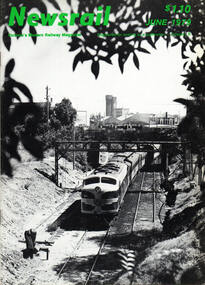
Journal - Newsrail June 1979, Peter Tesdorpf and Gary McDonald, The Metrol System and Vulcan No. 4 Steams to Queenscliff, 1979
... Industrial Railways Victoria - Steam Locomotives Preservation...The Metrol System and Vulcan No. 4 Steams to Queenscliff Government Railways Victoria Train Control Industrial Railways Victoria - Steam Locomotives Preservation Index,Ill, p.28. ...Index,Ill, p.28. non-fiction government railways victoria train control, industrial railways victoria - steam locomotives preservation -
 Puffing Billy Railway
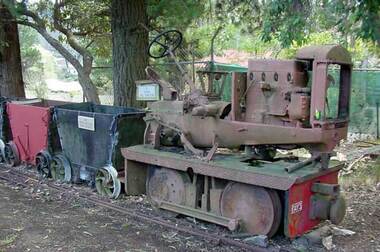
Day's Petrol Rail Tractor, Petrol Rail Tractor Gauge 2'0", circa 1926 - 1940
... locomotives similar to this one. Today, only two survive, a complete example at the Puffing Billy Railway Museum at Menzies Creek, and one at Alexandra Timber Tramway Museum This 2-ft gauge 4wPM locomotive is believed to have been one of two Day's Petrol Rail tractors formerly used by Cheetham Salt, possibly at the Moolap works near Geelong. Service History :owned by Cheetham Salt, Moolap ( dates unknown ) Geelong Steam Preservation Society , Belmont 1973 ? Puffing Billy Steam Museum , Menzies Creek Historic - Industrial Narrow gauge Railway - Rail Tractor used by Cheetham Salt Company works at Laverton, Moolap and Geelong, Victoria ...Rail tractors were popular with Victorian sawmillers. They were generally cheaper than a steam locomotive, required no special qualifications to drive, and used proven power plants for which spares were available locally. The tractor was constructed by Day’s Engineering of South Melbourne which, although better known for its pumping equipment, built more than fifty rail tractors for Victorian sawmillers and other industrial tramway users. W. Day & Sons is believed to have constructed its first light railway locomotive in 1926. From then until the mid 1940s, the firm appears to have built at least fifty locomotives at its premises in South Melbourne, of which roughly half were four-wheel locomotives and roughly half were six-wheel locomotives like the restored Day’s rail tractor formerly operated by Ruoak Timbers. Of the four-wheel locomotives, ten were 2-ft (610mm) gauge locomotives similar to this one. Today, only two survive, a complete example at the Puffing Billy Railway Museum at Menzies Creek, and one at Alexandra Timber Tramway Museum This 2-ft gauge 4wPM locomotive is believed to have been one of two Day's Petrol Rail tractors formerly used by Cheetham Salt, possibly at the Moolap works near Geelong. Service History :owned by Cheetham Salt, Moolap ( dates unknown ) Geelong Steam Preservation Society , Belmont 1973 ? Puffing Billy Steam Museum , Menzies Creek Historic - Industrial Narrow gauge Railway - Rail Tractor used by Cheetham Salt Company works at Laverton, Moolap and Geelong, Victoria , Australia Petrol Rail Tractor made of Iron , wrought iron, steel puffing billy, industrial narrow gauge railway, rail tractor, days engineering, cheetham salt,, petrol rail tractor -
 Puffing Billy Railway
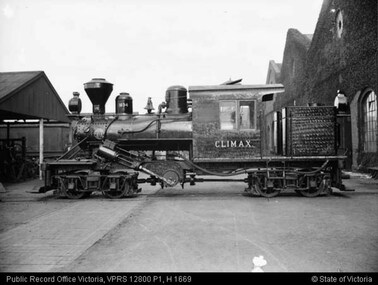
Climax - Geared Steam Locomotive No. 1694, 1928
... Preservation Society for its Steam Museum, it was taken to Menzies Creek in 1965 where it remained until 1982 when the Emerald Tourist Railway Board bought it and transferred it to Belgrave for restoration. It was returned to service for special use on the Belgrave to Gembrook line in 1988 painted in its original all-over black livery, except that the word “Climax” on the sides of the cab was now painted in the style of the Climax Manufacturing Co., a style that this locomotive had never carried. Historical - Industrial railway - Forests Commission of Victoria ...Climax geared locomotive No. 1694 in active service on special occasions - stored at Emerald Station A Miraculous Survivor Climax locomotive No.1694 is a miraculous survivor of a rare breed of steam locomotive. For about 100 years from the mid-1850s sawn timber was carted from Victorian sawmills to the nearest railway station by timber tramway. These tramways were generally very rough, steeply graded, sharply curved, and of narrow gauge. Many had wooden rails, and horses provided haulage. The better ones used steam locomotives. In all about fifty steam locomotives are known to have worked on Victorian timber tramways. These locomotives were usually somewhat peculiar - made to cope with arduous, rough conditions, rather than speed. Climax locomotive No.1694 is the only one of these locomotives to survive intact. It was built in 1928 by the Climax Manufacturing Company, Corry, Pennsylvania, USA, for the Forests Commission of Victoria. The distinctive feature of the Climax locomotive is that the cylinders do not directly connect to the driving wheels. Instead they drive a cross shaft near the centre of the locomotive. From there the drive is transmitted to the small driving wheels through rotating shafts, universal joints, and bevel gears. The driving wheels are mounted in two four-wheel bogies so that they can easily follow sharp curves in the track. None of these features are found in normal steam locomotives. The result is a locomotive that is extremely powerful for its size, and that will cope with sharp curves and steep grades with ease. But this is at the cost of speed, Climax locomotive No.1694 is just about flat-out at 13 km/h (8 mph). Climax Locomotive Built in 1928 for the Forests Commission of Victoria and painted all-over black with the name CLIMAX painted on the sides of the cab in white block letters, this locomotive was issued to the Tyers Valley tramway which branched off the Moe to Walhalla line at Collins Siding. This locomotive was withdrawn from service in 1949 following the closure of the tramway and in 1950 it travelled from Tyers Junction to Collins Siding to Erica where it remained stored until 1965. Loaned to the Puffing Billy Preservation Society for its Steam Museum, it was taken to Menzies Creek in 1965 where it remained until 1982 when the Emerald Tourist Railway Board bought it and transferred it to Belgrave for restoration. It was returned to service for special use on the Belgrave to Gembrook line in 1988 painted in its original all-over black livery, except that the word “Climax” on the sides of the cab was now painted in the style of the Climax Manufacturing Co., a style that this locomotive had never carried. Historical - Industrial railway - Forests Commission of Victoria, Timber Logging Climax Locomotive Climax geared Steam locomotive made of steel and wrought iron Climax 1694 climax locomotive works, climax, geared steam locomotive, puffing billy, climax locomotive no. 1694, steam locomotive -
 Puffing Billy Railway
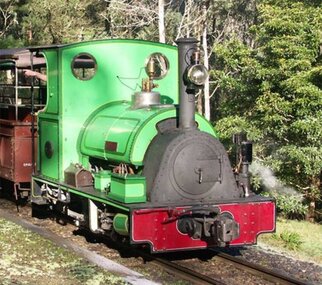
Peckett, 1711 Peckett Steam Locomotive, 1926
... Preservation Society in 1974 and put on static display in the Steam Museum. Restoration started in 1978 and it was returned to service in 1981 painted light green with yellow lining. It is temporarily renamed “Thomas the Tank Engine” with a fibreglass “Thomas” body cover each time it appears in the “Thomas the Tank Engine” shows at Gembrook station. Historic - Industrial Narrow Gauge Railway - Steam Locomotive used at the Metropolitan Gas Coy., West Melbourne, Victoria ...Steam Locomotive - 1711 Peckett “Sir John Grice” Date built - 1926 Locomotive type ; Cranmore Original owner - Metropolitan Gas Coy., West Melbourne Original gauge - 762mm Withdrawn - 1941 Next owner - Whistle Stop Amusement Park, Frankston Built in 1926 for the West Melbourne site of the Metropolitan Gas Company, and issued to traffic the same year this saddle tank locomotive was named “Sir John Grice” in 1928. It was withdrawn from traffic in 1941 and stored until sold privately in 1962. In 1965 it was sold again and went to the Whistle Stop Amusement Park in Frankston and again stored until bought at auction by the Puffing Billy Preservation Society in 1974 and put on static display in the Steam Museum. Restoration started in 1978 and it was returned to service in 1981 painted light green with yellow lining. It is temporarily renamed “Thomas the Tank Engine” with a fibreglass “Thomas” body cover each time it appears in the “Thomas the Tank Engine” shows at Gembrook station. Historic - Industrial Narrow Gauge Railway - Steam Locomotive used at the Metropolitan Gas Coy., West Melbourne, Victoria, Australia Steam Locomotive made of steel, wrought iron Peckett peckett “sir john grice”, 1711 peckett, puffing billy, steam locomotive, industrial narrow gauge railway, metropolitan gas coy., west melbourne
