
Showing 7 items matching "inkpot"
-
 Flagstaff Hill Maritime Museum and Village
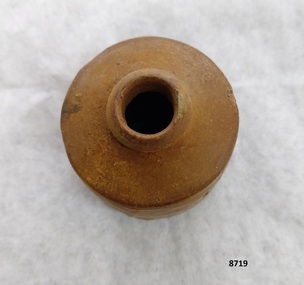
Container - Inkpot, circa 1870's
... Inkpot......inkpot...This small salt glazed inkpot or ink bottle was salvaged from the wreck of the Loch Ard. ...This is a cylindrical shaped, salt-glazed, mid-brown ceramic inkpot or ink bottle. It has a small round mouth, rounded lip that extend past the short neck, wide shoulders, straight sides and a flat bottom. ...This small salt glazed inkpot or ink bottle was salvaged from the wreck of the Loch Ard. ...This small salt glazed inkpot or ink bottle was salvaged from the wreck of the Loch Ard. Inkpots like this one were mass produced and typically date from the late 19th and early 20th centuries. They were commonly known as "Penny Inkwells" because they only cost a penny each and were often thrown away when empty. They contained writing ink and the top was corked and sealed with sealing wax. They were commonly used by school children and clerks. This inkpot was recovered from the wreck of the Loch Ard, on the southwest coast of Victoria and donated by a friend of the diver. The ship Loch Ard was built on the River Clyde in Scotland in 1873 for the prestigious Loch Line of colonial clipper ships, designed for the Australian run. It sailed from England on 1st March 1878 carrying 37 crew, 17 passengers and a load of cargo. The general cargo reflected the affluence of Melbourne at the time. On board were straw hats, umbrellas, perfumes, clay pipes, pianos, clocks, confectionary, linen and candles, as well as a heavier load of railway irons, cement, lead and copper. There were items included that were intended for display in the Melbourne International Exhibition in 1880 - a diverse general cargo ranging from luxury items to bulk railway iron. On 1 June 1878, emerging from fog and hearing too late the sound of breakers against the tall limestone cliffs, the vessel struck the southern foot of Mutton Bird Island and sank in 23 metres of water. Of the fifty-four people on board only two survived, one young male crewman, Tom Pearce, and one young female passenger, Eva Carmichael. Ten days after the Loch Ard tragedy, salvage rights to the wreck were sold at auction for £2,120. Cargo valued at £3,000 was salvaged and placed on the beach, but most washed back into the sea when another storm developed. The wreck of Loch Ard still lies at the base of Mutton Bird Island. Much of the cargo has now been salvaged and some was washed up into what is now known as Loch Ard Gorge. Cargo and artefacts have also been illegally salvaged over many years before protective legislation was introduced. One of the most unlikely pieces of cargo to have survived the shipwreck was a Minton porcelain peacock - one of only seven in the world. The peacock was destined for the Melbourne International Exhibition in 1880. It had been well packed, which gave it adequate protection during the violent storm. Today, the Minton peacock can be seen at the Flagstaff Hill Maritime Museum in Warrnambool. From Australia's most dramatic shipwreck it has now become Australia's most valuable shipwreck artefact and is one of very few 'objects' on the Victorian State Heritage Register.Flagstaff Hill’s collection of artefacts from LOCH ARD is significant for being one of the largest collections of artefacts from this shipwreck in Victoria. It is significant for its association with the shipwreck, which is on the Victorian Heritage Register (VHR S417). The collection is significant because of the relationship between the objects, as together they have a high potential to interpret the story of the LOCH ARD. The LOCH ARD collection is archaeologically significant as the remains of a large international passenger and cargo ship. The LOCH ARD collection is historically significant for representing aspects of Victoria’s shipping history and its potential to interpret sub-theme 1.5 of Victoria’s Framework of Historical Themes (living with natural processes). The collection is also historically significant for its association with the LOCH ARD, which was one of the worst and best known shipwrecks in Victoria’s history.This is a cylindrical shaped, salt-glazed, mid-brown ceramic inkpot or ink bottle. It has a small round mouth, rounded lip that extend past the short neck, wide shoulders, straight sides and a flat bottom. It is handmade. It is also called a Penny Ink Well.flagstaff hill maritime museum and village, warrnambool, great ocean road, shipwreck coast, loch ard, wreck of the loch ard, salvage, loch ard artefact, inkpot, penny inkwell, clay inkpot -
 Ballarat Heritage Services
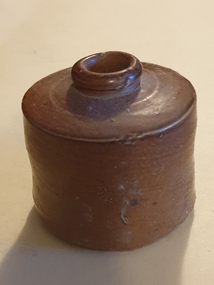
Ceramic - Vessel, Inkpot
... Inkpot...Ceramic ink pou Inkpot Ceramic Vessel ...Ceramic ink pou -
 Federation University Bookplate Collection
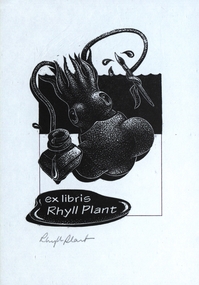
Work on paper - Bookplate, Ex Libris Rhyll Plant
... Squid holding brush and inkpot above cloud bearing the words ex libris Rhyll Plant...Highly Commended in the Australian Relief Bookplate section of the the Australian Bookplate Society's 'Australian Bookplate Design competition for 2021. 2021 Australian Bookplate Design Awards Australian Bookplate Society Edwin Jewell Signed beneath image Rhyll Plant Squid holding brush and inkpot above cloud bearing the words ex libris Rhyll Plant Ex Libris Rhyll Plant Work on paper Bookplate ...After a quiet period, interest in bookplates in Australia began to increase in the early 1970s, Entrepreneurial art and book collectors such as Edwin Jewell and others commissioned multiple Bookplate designs from a range of well known fine artists. At a 1997 meeting in Melbourne of the Ephemera Society of Australia Edwin Jewell and others announced the formation of the Australian Bookplate Society. The society was instrumental in promoting the art of the bookplate through establishment of the Australian Bookplate Design competition. The competition includes a design award for secondary schools students.Squid holding brush and inkpot above cloud bearing the words ex libris Rhyll PlantSigned beneath image Rhyll Plant2021 australian bookplate design awards, australian bookplate society, edwin jewell -
 Bendigo Historical Society Inc.
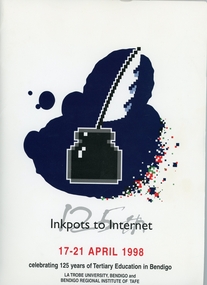
Document - SHEEAN COLLECTION: INKPOTS TO INTERNET (17-21 APRIL 1998) 125 YEARS OF TERTIARY EDUCATION IN BENDIGO, 1998
... SHEEAN FRAN COLLECTION: Inkpots to Internet (17-21 April 1998) Folder with information on program for celebrations of 125 Years of Tertiary Education in Bendigo...BENDIGO History Tertiary Education SHEEAN FRAN COLLECTION: Inkpots to Internet (17-21 April 1998) Folder with information on program for celebrations of 125 Years of Tertiary Education in Bendigo Document SHEEAN COLLECTION: INKPOTS TO INTERNET (17-21 APRIL 1998) 125 YEARS OF TERTIARY EDUCATION IN BENDIGO ...SHEEAN FRAN COLLECTION: Inkpots to Internet (17-21 April 1998) Folder with information on program for celebrations of 125 Years of Tertiary Education in Bendigobendigo, history, tertiary education -
 Bendigo Historical Society Inc.
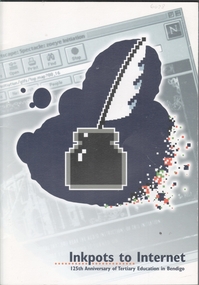
Book - INKPOTS TO INTERNET, c 1998
... 28 page soft cover booklet 'Inkpots to Internet' celebrating the 125th Anniversary of Tertiary Education in Bendigo. ...Illustrated with B&W and colour photos. Book INKPOTS TO INTERNET ...28 page soft cover booklet 'Inkpots to Internet' celebrating the 125th Anniversary of Tertiary Education in Bendigo. Researched and written by Ray Wallace. Published by Latrobe University, Bendigo and Bendigo Regional Institute of TAFE. About 1998. Introduction by Frank Cusack. Illustrated with B&W and colour photos.Ray Wallacetertiary education, bendigo latrobe -
 Flagstaff Hill Maritime Museum and Village
Container - Inkwell, circa 1870
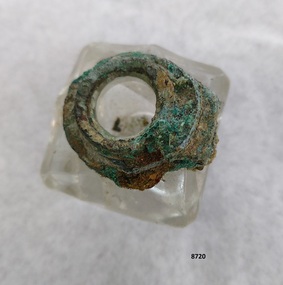
... ...inkpot...Flagstaff Hill Maritime Museum and Village Warrnambool Great Ocean Road Shipwreck Coast Loch Ard Wreck of the Loch Ard Salvage artefacts inkpot inkwell Victorian glass inkwell Square glass ink bottle made of hand blown glass (with air bubbles), square sides and an encrusted brass fitting (and hinge) displaying verdigris oxidation. ...This small glass Victorian inkwell or ink bottle was salvaged from the wreck of the Loch Ard, on the southwest coast of Victoria and donated by a friend of the diver. It was made by blowing glass into a mould. It has evidence of once having a brass collar and hinged lid. It is not known if it belonged to someone on board the Loch Ard or if it was part of the cargo. The ship Loch Ard was built on the River Clyde in Scotland in 1873 for the prestigious Loch Line of colonial clipper ships, designed for the Australian run. It sailed from England on 1st March 1878 carrying 37 crew, 17 passengers and a load of cargo. The general cargo reflected the affluence of Melbourne at the time. On board were straw hats, umbrellas, perfumes, clay pipes, pianos, clocks, confectionary, linen and candles, as well as a heavier load of railway irons, cement, lead and copper. There were items included that were intended for display in the Melbourne International Exhibition in 1880 - a diverse general cargo ranging from luxury items to bulk railway iron. On 1 June 1878, emerging from fog and hearing too late the sound of breakers against the tall limestone cliffs, the vessel struck the southern foot of Mutton Bird Island and sank in 23 metres of water. Of the fifty-four people on board only two survived, one young male crewman, Tom Pearce, and one young female passenger, Eva Carmichael. Ten days after the Loch Ard tragedy, salvage rights to the wreck were sold at auction for £2,120. Cargo valued at £3,000 was salvaged and placed on the beach, but most washed back into the sea when another storm developed. The wreck of Loch Ard still lies at the base of Mutton Bird Island. Much of the cargo has now been salvaged and some was washed up into what is now known as Loch Ard Gorge. Cargo and artefacts have also been illegally salvaged over many years before protective legislation was introduced. One of the most unlikely pieces of cargo to have survived the shipwreck was a Minton porcelain peacock - one of only seven in the world. The peacock was destined for the Melbourne International Exhibition in 1880. It had been well packed, which gave it adequate protection during the violent storm. Today, the Minton peacock can be seen at the Flagstaff Hill Maritime Museum in Warrnambool. From Australia's most dramatic shipwreck it has now become Australia's most valuable shipwreck artefact and is one of very few 'objects' on the Victorian State Heritage Register.Flagstaff Hill’s collection of artefacts from LOCH ARD is significant for being one of the largest collections of artefacts from this shipwreck in Victoria. It is significant for its association with the shipwreck, which is on the Victorian Heritage Register (VHR S417). The collection is significant because of the relationship between the objects, as together they have a high potential to interpret the story of the LOCH ARD. The LOCH ARD collection is archaeologically significant as the remains of a large international passenger and cargo ship. The LOCH ARD collection is historically significant for representing aspects of Victoria’s shipping history and its potential to interpret sub-theme 1.5 of Victoria’s Framework of Historical Themes (living with natural processes). The collection is also historically significant for its association with the LOCH ARD, which was one of the worst and best known shipwrecks in Victoria’s history.Square glass ink bottle made of hand blown glass (with air bubbles), square sides and an encrusted brass fitting (and hinge) displaying verdigris oxidation. The base has a concave shape in the centre.flagstaff hill maritime museum and village, warrnambool, great ocean road, shipwreck coast, loch ard, wreck of the loch ard, salvage, artefacts, inkpot, inkwell, victorian glass inkwell -
 Northern District School of Nursing. Managed by Bendigo Historical Society Inc.
Newspaper - Northern District School of Nursing Graduates Association - Article - "Tertiary education celebrates 125 years", Sat April 18 1998
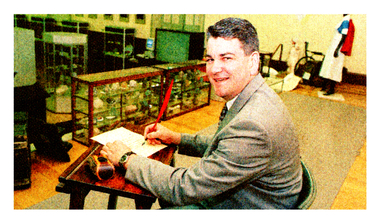
... These institutions have merged or been renamed, with Bendigo Regional Institute of TAFE (BRIT) and La Trobe University Bendigo now the main providers.Anniversary Celebrations Themed "Inkpots to Internet," the celebrations reflect the progress in education from traditional to modern methods. ...These institutions have merged or been renamed, with Bendigo Regional Institute of TAFE (BRIT) and La Trobe University Bendigo now the main providers.Anniversary Celebrations Themed "Inkpots to Internet," the celebrations reflect the progress in education from traditional to modern methods. ...This article commemorates the 125th anniversary of tertiary education in Bendigo, highlighting its origins, evolution, and community impact: Tertiary education in Bendigo began on April 21, 1873, with the opening of the School of Mines Bendigo, established to meet the demand for skilled workers in the mining industry.Institutional Evolution Over 125 years, various institutions have contributed to Bendigo's educational landscape, including the Bendigo School of Mines and Industries, Technical College, Institute of Technology, Teachers' College, State College, School of Nursing, College of Advanced Education, La Trobe University College, and TAFE colleges. These institutions have merged or been renamed, with Bendigo Regional Institute of TAFE (BRIT) and La Trobe University Bendigo now the main providers.Anniversary Celebrations Themed "Inkpots to Internet," the celebrations reflect the progress in education from traditional to modern methods. Events include exhibitions of historic memorabilia, art displays by former students, academic processions, plaque unveilings, reunion gatherings, entertainment, and a fireworks display. Activities are integrated with community events like Heritage Week and the Bendigo Easter Fair. The celebrations emphasize the integral role of tertiary education in Bendigo’s social, economic, and cultural development. Sponsorship and support come from local businesses and organizations, with proceeds from events like raffles supporting a new Scholarship Trust Foundation. Bendigo is recognized nationally and internationally as a significant regional tertiary education center. The anniversary not only honors the past but also highlights the ongoing and future importance of quality tertiary education in Bendigo.Northern District School of Nursing Graduates Association - Article - "Tertiary education celebrates 125 years" Sat April 18, 1998 - Bendigo Advertiser This item contains the following documents: 3792.19a Bendigo Advertiser Article - "Tertiary education celebrates 125 years" Colour photo of Tim Newbegin, who has collected artefacts and memorabilla from Bendigo's educational institutions for a special display. 3792.19b Bendigo Advertiser Article - "Tertiary education celebrates 125 years"nurse training, lister house, tim newbegin
