
Showing 90 items matching "intellectual societies"
-
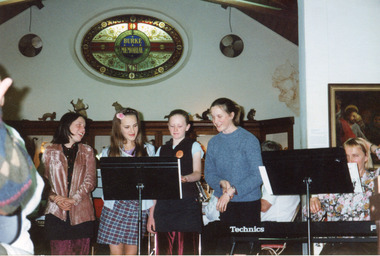 The Beechworth Burke Museum
Photograph, c1999/2000
... ...intellectual societies...Liedertafel choirs were originally male-only, therefore, the presence of female singers at the 1999 exhibition reflects progressive social and community values with regard to gender and inclusion. liedertafel beechworth band burke museum exhibition 1999 from the liedertafel to the skating rink entertainment in beechworth 1852 - early 1900s past exhibitions performances at the burke museum european settlers german community german choral societies brass bands male choir colonial passtimes colonial entertainments cultural traditions gold rush immigration beechworth's german heritage london tavern beechworth camp st beechworth beechworth historic district beechworth's first brick tavern spiller's skating rink vandenberg's beechworth brass band benevolent societies intellectual societies protestantism billson brewery beechworth teetotallism fancy dress carnivals skating carnivals fundraising societies german musicians crimean war beechworth german association freemasonry YMA's beechworth athenaeum beechworth skating rink Reverse: 7030 / Label: Burke Museum / Liedertafel Exh / Emily Messen, Luetta / Schier, Hannah / Routledge, Sarah / McKinley 2000 (?) ...This photograph depicts female singers accompanied by members of the Beechworth Band at a 'Liedertafel' concert in the main hall at the Burke Museum in 1999. The concert related to an exhibition titled, 'From the Liedertafel to the Skating Rink: Entertainment in Beechworth 1852 - early 1900s', which celebrated the rich and diverse entertainments that were part of Beechworth life in the nineteenth and early twentieth centuries. 'Liedertafel' is a German tradition that accompanied European settlers to Australia. It refers to a friendly society of men united by an enthusiasm for singing. The Beechworth Liedertafel was established 14 March 1894 at the London Tavern, Camp Street, Beechworth, by president, Mr. A.A. Billson, and a visiting conductor, Mr. H. Fielder. The Beechworth Brass Band was formed by Mr. H. Vandenberg in 1887. Marching bands, choirs, circus acts, theatrical performances, races, and seasonal activities, such as Mr. Spiller's roller skating rink, which was founded in the late 1860s, were among the entertainments on offer in Beechworth.This photograph of the Beechworth Band playing at the Burke Museum is historically significant for the information it conveys about an exhibition at the Burke Museum between September and November 1999. The use of the contemporary Beechworth Band in a 'Liedertafel' performance provides insight into curatorial approaches at the turn of the twenty-first century and improves our understanding of how exhibitions use objects in the Burke Museum's Collection to tell stories about the past in the present. The image is historically and socially significant for attesting to the enduring appeal of local musical associations, which were a popular means of entertainment that fostered social connections among settlers from diverse ethnic backgrounds. Liedertafel choirs were originally male-only, therefore, the presence of female singers at the 1999 exhibition reflects progressive social and community values with regard to gender and inclusion.Rectangular colour photograph printed on matte photographic paper.Reverse: 7030 / Label: Burke Museum / Liedertafel Exh / Emily Messen, Luetta / Schier, Hannah / Routledge, Sarah / McKinley 2000 (?) / 2000 (?) / liedertafel, beechworth band, burke museum, exhibition 1999, from the liedertafel to the skating rink, entertainment in beechworth 1852 - early 1900s, past exhibitions, performances at the burke museum, european settlers, german community, german choral societies, brass bands, male choir, colonial passtimes, colonial entertainments, cultural traditions, gold rush, immigration, beechworth's german heritage, london tavern beechworth, camp st beechworth, beechworth historic district, beechworth's first brick tavern, spiller's skating rink, vandenberg's beechworth brass band, benevolent societies, intellectual societies, protestantism, billson brewery beechworth, teetotallism, fancy dress carnivals, skating carnivals, fundraising societies, german musicians, crimean war, beechworth german association, freemasonry, yma's, beechworth athenaeum, beechworth skating rink -
 Bendigo Historical Society Inc.
Document - THE BENDIGO WOMEN'S LITERARY SOCIETY, 1922
... Society. I. To Cultivate a taste for Reading. II. To Cultivate Powers of Observation and Thought. III. To Afford Practice in Giving Expression to Thought. IV. To Broaden the Views of Members. V. Intellectual...Society. I. To Cultivate a taste for Reading. II. To Cultivate Powers of Observation and Thought. III. To Afford Practice in Giving Expression to Thought. IV. To Broaden the Views of Members. V. Intellectual...Society. I. To Cultivate a taste for Reading. II. To Cultivate Powers of Observation and Thought. III. To Afford Practice in Giving Expression to Thought. IV. To Broaden the Views of Members. V. Intellectual ...The Bendigo Women's Literary Society, Session 1922. Motto: Our duty is to be useful not according to our desires, but according to our powers. Amiel. President: Miss I Eadie. Vice Presidents: Mesdames Griffin and Slack. Hon. Treasurer: Miss Pethard. Hon. Secretary: Miss E Richardson. Committee: Mesdames Morris, Harper, Jones, Morrison, and Laing, Misses Bankin, Hodge, McIlroy. SYLLABUS - 1922. 1. April 10th- Nomination of Officer. Compilation of syllabus. 2. May 8th- Election of Officers. ''King John'' Resume. Readings. 3. May 22nd- ''King John'' Readings. 4. June 5th- ''King John'' Readings. Papers by Mesdames. Griffin & Jones. 5. June 19th- Travel Talk. Arranged by Miss Bankin. 6. July 3rd- Question Night. 7. July 17th- ''Measure for Measure'' Resume Readings.8. July 31st- ''Measure for Measure'' Readings. Character Sketches. 9 August- Emmerson's Essays. ''Nature'' ''Civilization'' 10. August 28th- ''Evangeline'' (Longfellow). Paper by Mrs Morris. 11. September 11th & 12. September 25th- ''Barnaby Rudge''' (Dickens.) Arranged by Miss I Eadie.13. October 9th- Modern Novel. ''Mr Wu'' (L J Miln.) 14. October 23rd- Magazine Night. 15. November 6th- Australian Literature. Prose. 16. November 11th- Australian Literature. Verse. Bush Ramble. Objects of the Society. I. To Cultivate a taste for Reading. II. To Cultivate Powers of Observation and Thought. III. To Afford Practice in Giving Expression to Thought. IV. To Broaden the Views of Members. V. Intellectual Recreation. This Society meets at ANA Hall, on alternate Mondays, at 8pm`A E BROCKLEY, PRINT, BENDIGOclubs, social, the bendigo women's literarysociety, the bendigo women's literary society, session 1922. motto: our duty is to be useful not according to our desires, but according to our powers. amiel. president: miss i eadie. vice presidents: mesdames griffin and slack. hon. treasurer: miss pethard. hon. secretary: miss e richardson. committee: mesdames morris, harper, jones, morrison, and laing, misses bankin, hodge, mcilroy. syllabus - 1922. 1. april 10th- nomination of officer. compilation of syllabus. 2. may 8th- election of officers. ''king john'' resume. readings. 3. may 22nd- ''king john'' readings. 4. june 5th- . . . . objects of the society. i. to cultivate a taste for reading. ii. to cultivate powers of observation and thought. iii. to afford practice in giving expression to thought. iv. to broaden the views of members. v. intellectual recreation. this society meets at ana hall, on alternate mondays, at 8pm` -
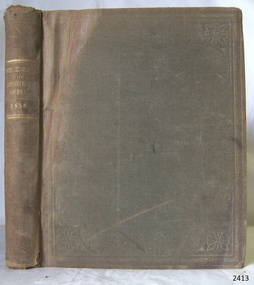 Flagstaff Hill Maritime Museum and Village
Journal - Book, R. Groombridge and Sons, The Civil Engineer and Architects Journal, 1858
... Society. The Warrnambool Mechanics Institute book collection that this item was part of, is now known as the “Patterson Collection” that has historical and social significance for its strong association with the Mechanics Institute movement during the Victorian era and the important role it played in the intellectual, cultural and social development of people throughout the latter part of the nineteenth century and the early twentieth century throughout the Warrnambool area. ...The Civil Engineer and Architect's Journal, particularly during the mid-19th century, was a staple reference for professionals during the height of the Industrial Revolution. By 1858, this journal (published by R. Groombridge and Sons in London) was documenting a fascinating transition in structural design—moving away from traditional masonry and toward the bold use of cast and wrought iron.The Civil Engineer and Architects Journal Publisher: R Groombridge and Sons Date: 1858non-fictionThe Civil Engineer and Architect's Journal, particularly during the mid-19th century, was a staple reference for professionals during the height of the Industrial Revolution. By 1858, this journal (published by R. Groombridge and Sons in London) was documenting a fascinating transition in structural design—moving away from traditional masonry and toward the bold use of cast and wrought iron.flagstaff hill, warrnambool, shipwrecked-coast, flagstaff-hill, flagstaff-hill-maritime-museum, maritime-museum, shipwreck-coast, flagstaff-hill-maritime-village, book, the civil engineer and architects journal -
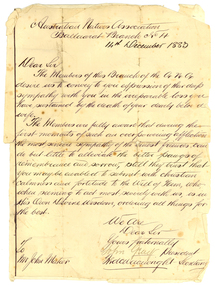 Federation University Historical Collection
Correspondence, John Gray, Letter of Condolence from ANA to John Mateer. 1883, 14/12/1883
... The Association was one of many friendly societies that also aimed to promote the moral, social and intellectual advancement of its members. ...The Association was one of many friendly societies that also aimed to promote the moral, social and intellectual advancement of its members. ...The Australian Natives Association (ANA) Benefit Society was formed in 1871 at a meeting of young men in Grimwood's Hotel, Elizabeth Street, Melbourne. The Association was one of many friendly societies that also aimed to promote the moral, social and intellectual advancement of its members. The young founders restricted membership to native-born Australians, but there were no Koories among them. The Australian Natives Association Ballarat Branch (No4) was founded in 1874. The association’s modest building was based in Camp Street and the branch was one of the most active in the colony, playing a key role in Federation. The Ballarat branch of the ANA was wound up in 1957 and the double storey building has since been used as for office space most recently for employment companies such as Tracey Recruitment. Ballarat's ANA Hall has heritage status under the City of Ballarat’s Camp Street heritage overlay HO186, however it is not listed by either the Victorian Heritage Register or the National Trust.Handwritten letter glued onto a lined page. The letter is from the Australian Natives Association Ballarat Branch No. 4, and is written to John Mateer at the time of his wife's death. The letter is signed by John Gray (President) and Fred Wainwright (secretary). Fred Wainwright was the first secretary of ANA branch No. 4. hew as a clerk at Ballarat Town Hall, and presented an essay on Federation of Australian Colonies in 1879.Australian Natives Association Ballaarat Branch No 4 14th December 1883. Dear Sir The members of this branch of the A.N.A. desire us to convey to you expression of their deep sympanth with you in the irreparable loss you have sustained by the death of your dearly beloved wife. The Members are fully aware that during the first month of such an overpowering infliction the most sincere sympathy of the truest friends can do little by alleviate the bitter pangs of remembrance and sorrow, still they trust that you may be enabled to submit with christian calmness and fortitude to the Will of Him, who, when seeming to act most severely wit us, is in His Own Divine Wisdom, ordering things for the best. We are Dear Sir Yours fraternally John Gray President fred Wainwright Secretary To Mr John Mateer australian natives' association, ana, ballarat branch no. 4. ballaarat branch no. 4, gray, john gray, wainwright, fred wainwright, mateer, john mateer -
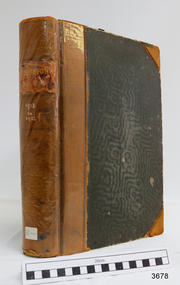 Flagstaff Hill Maritime Museum and Village
Book - Library Record Book, Ralph Eric Pattison, Warrnambool Mechanics’ Institute (WMI) Accessions Book (1913–1922), before 1918
... Society has some items the State Museum has some items. Some items were destroyed, Flagstaff Hill Maritime Village has retained old newspapers, Government Gazettes, most of the Mechanics' Institute Library, ledgers and documents connected to the Mechanics' Institute Library, some framed and unframed art works and some photographs. The Warrnambool Mechanics' Institute Library book collection has historical and social significance for its strong association with the Mechanics Institute movement. The important role these organisations played in the intellectual ...Library record book from the Warrnambool Mechanics Institute known as an "Accessions Book" the book shows the type and number of books as listed in the Mechanics Institute. This specific volume is part of the Pattison Collection, named after Ralph Eric Pattison, the city librarian who began the Herculean task of organising the (WMI) massive, disorganised collection in 1935. The Record books from this period are "meticulous records" that typically include. titles and Authors of all books purchased or donated. Acquisition Dates Providing a timeline of the districts literary and intellectual interests. Costs and Suppliers often showing books ordered from Melbourne or overseas. In addition how the books were classified and how the library was organised before modern Dewey Decimal systems were fully implemented. The Warrnambool Mechanics’ Institute (WMI) Accessions Book (1913–1922) is a primary historical record that documents the acquisition of library materials during a pivotal era for the institution. In UK in early 1800's the word 'mechanic' was applied to a broader range of skills such as working man, tradesman or artisan. Mechanics' Institutes were formed originally for voluntary, self-funded organisations, to improve the education of working men and to instruct them on their various trades. The germ of the idea came from a class formed in 1799 by Professor George Birbeck in Glasgow, Scotland, for journeymen mechanics (apprentice trade workers), with the first Institutes being organised in London and Manchester in the 1820's. By then the original aim had broadened and the Mechanics' Institutes were established as popular agencies of adult education. The Mechanics' Institutes were run by committees that provided facilities for a meeting room, hall suitable for lectures, and a library. Funding was raised locally and often supplemented by grants from government agencies for the purchase of books and other resources. Activities were community based. In Australia, Mechanics' Institutes were set up in New South Wales and in Tasmania in the late 1820's. Mechanics' Institutes began in Victoria, with the first one in Melbourne dating from 1839, providing similar services but in time offered services tailored to their specific area.Hard cover, olive green cover with brown protective cloth on corners. Page edges have colored marble pattern. non-fictionLibrary record book from the Warrnambool Mechanics Institute known as an "Accessions Book" the book shows the type and number of books as listed in the Mechanics Institute. This specific volume is part of the Pattison Collection, named after Ralph Eric Pattison, the city librarian who began the Herculean task of organising the (WMI) massive, disorganised collection in 1935. The Record books from this period are "meticulous records" that typically include. titles and Authors of all books purchased or donated. Acquisition Dates Providing a timeline of the districts literary and intellectual interests. Costs and Suppliers often showing books ordered from Melbourne or overseas. In addition how the books were classified and how the library was organised before modern Dewey Decimal systems were fully implemented. The Warrnambool Mechanics’ Institute (WMI) Accessions Book (1913–1922) is a primary historical record that documents the acquisition of library materials during a pivotal era for the institution. In UK in early 1800's the word 'mechanic' was applied to a broader range of skills such as working man, tradesman or artisan. Mechanics' Institutes were formed originally for voluntary, self-funded organisations, to improve the education of working men and to instruct them on their various trades. The germ of the idea came from a class formed in 1799 by Professor George Birbeck in Glasgow, Scotland, for journeymen mechanics (apprentice trade workers), with the first Institutes being organised in London and Manchester in the 1820's. By then the original aim had broadened and the Mechanics' Institutes were established as popular agencies of adult education. The Mechanics' Institutes were run by committees that provided facilities for a meeting room, hall suitable for lectures, and a library. Funding was raised locally and often supplemented by grants from government agencies for the purchase of books and other resources. Activities were community based. In Australia, Mechanics' Institutes were set up in New South Wales and in Tasmania in the late 1820's. Mechanics' Institutes began in Victoria, with the first one in Melbourne dating from 1839, providing similar services but in time offered services tailored to their specific area.flagstaff hill, warrnambool, shipwrecked coast, flagstaff hill maritime museum, maritime museum, shipwreck coast, flagstaff hill maritime village, great ocean road, warrnambool mechanics' institute, mechanics' institute records warrnambool, record book c1918, patterson collection, library books, ralph patterson, mechanics institute, warrnambool council, book collection -
 Flagstaff Hill Maritime Museum and Village
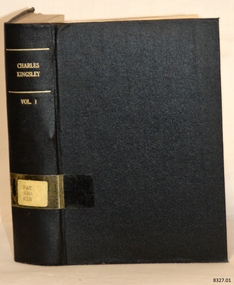
Book - Letters/Journals, Charles Kingsley, Charles Kingsley: His Letters and Memories of His Life Vol 1, 1879
... intellectual partner. Charles Kingsley was a towering figure in 19th-century English society—not just a novelist (The Water-Babies, Westward Ho!)...intellectual partner. Charles Kingsley was a towering figure in 19th-century English society—not just a novelist (The Water-Babies, Westward Ho!) ...The focus of this book is not a standard biography written by an outside observer; it is a life story told through letters and personal journals. The volume is seamlessly woven together with editorial commentary by Kingsley’s widow, Frances "Fanny" Grenfell. Because this is Volume 1, it covers the first half of Charles Kingsley's life. It documents his childhood, his time at Cambridge University, and his intense courtship of Fanny. His early career as an Anglican clergyman in the rural parish of Eversley is covered, alongside his rise to national prominence in the late 1840s and 1850s as a social reformer. The text highlights his role in the Christian Socialist movement and his writing under the pen name "Parson Lot" to advocate for the working class. It also explores the writing and reception of his famous early novels, such as Alton Locke and Yeast, which tackled themes of poverty and systemic inequality.Charles Kingsley: His Letters and Memories of His Life Vol 1 Author: Charles Kingsley Edited by his wife ( Frances "Fanny" Grenfell) Publisher: C Kegan Paul & Co Date: 1879 Further Information: Sixth Abridged Editionnon-fictionThe focus of this book is not a standard biography written by an outside observer; it is a life story told through letters and personal journals. The volume is seamlessly woven together with editorial commentary by Kingsley’s widow, Frances "Fanny" Grenfell. Because this is Volume 1, it covers the first half of Charles Kingsley's life. It documents his childhood, his time at Cambridge University, and his intense courtship of Fanny. His early career as an Anglican clergyman in the rural parish of Eversley is covered, alongside his rise to national prominence in the late 1840s and 1850s as a social reformer. The text highlights his role in the Christian Socialist movement and his writing under the pen name "Parson Lot" to advocate for the working class. It also explores the writing and reception of his famous early novels, such as Alton Locke and Yeast, which tackled themes of poverty and systemic inequality.flagstaff hill, warrnambool, shipwrecked coast, flagstaff hill maritime museum, maritime museum, shipwreck coast, flagstaff hill maritime village, great ocean road, book, pattison collection, warrnambool library, warrnambool mechanics’ institute, ralph eric pattison, corangamite regional library service, warrnambool city librarian, mechanics’ institute library, victorian library board, warrnambool books and records, warrnambool children’s library, charles kingsley: his letters and memories of his life vol 1, frances "fanny" grenfell, mrs kingsley -
 Orbost & District Historical Society
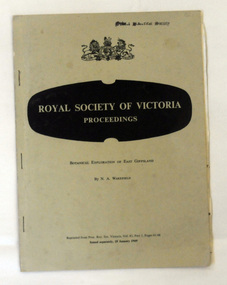
magazine, Botanical Exploration of East Gippsland, early - mid 20th century
... It is the State’s oldest learned society and a part of Australia’s intellectual life since 1854. ...It is the State’s oldest learned society and a part of Australia’s intellectual life since 1854. ...The Royal Society of Victoria convenes Victoria’s science community. It is the State’s oldest learned society and a part of Australia’s intellectual life since 1854. The Proceedings of the Royal Society of Victoria is their refereed journal, published twice annually.(Royal Society of Victoria web-site) Norman Arthur Wakefield (28 November 1918 – 23 September 1972) was an Australian teacher, naturalist, paleontologist and botanist, notable as an expert on ferns. He described many new species of plants.(info. Wikipedia)This is a useful research tool.A thin magazine a light green cover. It has the royal coat - of - arms in black / dark green print at the top above "Royal Society of Victoria Proceedings" on black. Underneath this is "Botanical Exploration of East Gippsland by N.a. Wakefield in black print.on front cover is a stamp of "Orbost Historical Society"botany-east-gippsland wakefield-norman royal-society-victoria -
Phillip Island and District Historical Society Inc.
Book, YOUNG, Francis, Amateur work illustrated
... Book from the Cleeland Bequest - a comprehensive collection of books relating to the History of England, Civil & Military, Religious, Intellectual & Social. Cleeland Bequest Labelled: 'Phillip Island Historical Society. ...Book from the Cleeland Bequest - a comprehensive collection of books relating to the History of England, Civil & Military, Religious, Intellectual & Social. Labelled: 'Phillip Island Historical Society. Cleeland Bequest'. Inscribed 'J.B. Cleeland, "Wollomai", Newhaven, Phillip Island'.cleeland bequest -
Phillip Island and District Historical Society Inc.
Book, America illustrated
... Intellectual & Social. Cleeland Bequest Labelled: 'Cowes Free Public Library', 'Phillip Island Historical Society. ...Book from the Cleeland Bequest - a comprehensive collection of books relating to the History of England, Civil & Military, Religious, Intellectual & Social. Labelled: 'Cowes Free Public Library', 'Phillip Island Historical Society. Cleeland Bequest'.cleeland bequest -
Phillip Island and District Historical Society Inc.
Book, DICKENS, Charles, American notes
... Intellectual & Social. Cleeland Bequest Stamped ' Cowes Free Public Library'. Labelled 'Cowes Free Public Library', 'Phillip Island Historical Society, Cleeland Bequest', A.H. ...Book from the Cleeland Bequest - a comprehensive collection of books relating to the History of England, Civil & Military, Religious, Intellectual & Social. Stamped ' Cowes Free Public Library'. Labelled 'Cowes Free Public Library', 'Phillip Island Historical Society, Cleeland Bequest', A.H. Spencer Pty Ltd., New secondhand, and rare booksellers, 86 Bourke St Melbourne (The 'Hill of Content') Aust. Tel.: Cent. 8856.cleeland bequest -
Phillip Island and District Historical Society Inc.
Book, SCOTT, Sir Walter, Antiquary
... Intellectual & Social. Cleeland Bequest Labelled: Cowes Free Public Library. Phillip Island Historical Society. ...Book from the Cleeland Bequest - a comprehensive collection of books relating to the History of England, Civil & Military, Religious, Intellectual & Social. Labelled: Cowes Free Public Library. Phillip Island Historical Society. Cleeland Bequest.cleeland bequest -
Phillip Island and District Historical Society Inc.
Book, GLADSTONE, George, Argonaut, 1874-1877
... Book from the Cleeland Bequest - a comprehensive collection of books relating to the History of England, Civil & Military, Religious, Intellectual & Social. Cleeland Bequest Labelled: Phillip Island Historical Society. ...Book from the Cleeland Bequest - a comprehensive collection of books relating to the History of England, Civil & Military, Religious, Intellectual & Social. Labelled: Phillip Island Historical Society. Cleeland Bequest. Inscribed : ... 14/6/[18]79.cleeland bequest -
Phillip Island and District Historical Society Inc.
Book, LOCKE, William J, At the gate of Samaria, 1910
... Book from the Cleeland Bequest - a comprehensive collection of books relating to the History of England, Civil & Military, Religious, Intellectual & Social. Cleeland Bequest Labelled: Phillip Island Historical Society. ...Book from the Cleeland Bequest - a comprehensive collection of books relating to the History of England, Civil & Military, Religious, Intellectual & Social. Labelled: Phillip Island Historical Society. Cleeland Bequest. Stamped 'Cowes Pubic Library'.cleeland bequest -
Phillip Island and District Historical Society Inc.
Book, KNOWLES, Robert Edward, Attic Guest : a novel, c1909
... Intellectual & Social. Cleeland Bequest Labelled 'Cowes Free Public Library'. 'Phillip Island Historical Society. ...Book from the Cleeland Bequest - a comprehensive collection of books relating to the History of England, Civil & Military, Religious, Intellectual & Social. Labelled 'Cowes Free Public Library'. 'Phillip Island Historical Society. Cleeland Bequest'.cleeland bequest -
Phillip Island and District Historical Society Inc.
Book, HINGSTON, James, Australian Abroad : branches from the main routes round the world. Series II. Ceylon, India and Egypt, 1880
... Intellectual & Social. Cleeland Bequest Inscribed 'Jno Cleeland, Wollomai', 'Cleeland' on foredge. Labelled 'Cowes Free Public Library'. 'Phillip Island Historical Society ...Book from the Cleeland Bequest - a comprehensive collection of books relating to the History of England, Civil & Military, Religious, Intellectual & Social. Inscribed 'Jno Cleeland, Wollomai', 'Cleeland' on foredge. Labelled 'Cowes Free Public Library'. 'Phillip Island Historical Society. Cleeland Bequest'.cleeland bequest -
Phillip Island and District Historical Society Inc.
Book, KINGLAKE, Edward, Australian At Home : notes and anecdotes of life at the Antipodes including useful hints to those intending to settle in Australia, 1892
... Book from the Cleeland Bequest - a comprehensive collection of books relating to the History of England, Civil & Military, Religious, Intellectual & Social. australia social life and customs Cleeland Bequest Labelled: Cowes Free Public Library. Phillip Island Historical Society. ...Book from the Cleeland Bequest - a comprehensive collection of books relating to the History of England, Civil & Military, Religious, Intellectual & Social. Labelled: Cowes Free Public Library. Phillip Island Historical Society. Cleeland Bequest.australia, social life and customs, cleeland bequest -
Phillip Island and District Historical Society Inc.
Book, MURDOCH, Sir Walter, Australian Citizen : an elementary account of civic rights and duties, 1912?
... Book from the Cleeland Bequest - a comprehensive collection of books relating to the History of England, Civil & Military, Religious, Intellectual & Social. league of nations civics australia juvenile literature law politics government Cleeland Bequest Labelled: Phillip Island Historical Society. ...Book from the Cleeland Bequest - a comprehensive collection of books relating to the History of England, Civil & Military, Religious, Intellectual & Social. Labelled: Phillip Island Historical Society. Cleeland Bequest. Inscribed: L. Danielson Sect C., Frank Danielson, 32 Chetwynd St., West Melbourne, Victoria.league of nations, civics, australia, juvenile literature, law, politics, government, cleeland bequest -
Phillip Island and District Historical Society Inc.
Book, DICKENS, Charles, Barnaby Rudge
... Intellectual & Social. Cleeland Bequest Labelled 'Cowes Free Public Library', 'Phillip Island Historical Society, Cleeland Bequest'. ...Book from the Cleeland Bequest - a comprehensive collection of books relating to the History of England, Civil & Military, Religious, Intellectual & Social. Labelled 'Cowes Free Public Library', 'Phillip Island Historical Society, Cleeland Bequest'. Inscribed 'J. Beckwith', 'Ada Burgess', 'To John From Will S. 14/8/09', 'read, mark, learn, & inwardly digest, J. Beckwith'cleeland bequest -
Phillip Island and District Historical Society Inc.
Book, DICKENS, Charles, Barnaby Rudge : a tale of the riots of 'eighty ; The mystery of Edwin Drood and other stories
... Intellectual & Social. Cleeland Bequest Stamped 'Cowes Free Pubic Library'. Labelled 'Cowes Free Public Library', 'Phillip Island Historical Society, Cleeland Bequest'. ...Book from the Cleeland Bequest - a comprehensive collection of books relating to the History of England, Civil & Military, Religious, Intellectual & Social. Stamped 'Cowes Free Pubic Library'. Labelled 'Cowes Free Public Library', 'Phillip Island Historical Society, Cleeland Bequest'.cleeland bequest -
Phillip Island and District Historical Society Inc.
Book, BARTHOLOMEW, John, Black's general atlas of the world, 1860
... Intellectual & Social. Cleeland Bequest Labelled 'Cowes Free Public Library', 'Phillip Island Historical Society, Cleeland Bequest'. ...Book from the Cleeland Bequest - a comprehensive collection of books relating to the History of England, Civil & Military, Religious, Intellectual & Social. Labelled 'Cowes Free Public Library', 'Phillip Island Historical Society, Cleeland Bequest'. Inscribed 'Jno Cleeland'.cleeland bequest -
Phillip Island and District Historical Society Inc.
Book, DICKENS, Charles, Bleak House
... Intellectual & Social. Cleeland Bequest Stamped 'Cowes Free Public Library'. Labelled 'Cowes Free Public Library', 'Phillip Island Historical Society, Cleeland Bequest'. ...Book from the Cleeland Bequest - a comprehensive collection of books relating to the History of England, Civil & Military, Religious, Intellectual & Social. Stamped 'Cowes Free Public Library'. Labelled 'Cowes Free Public Library', 'Phillip Island Historical Society, Cleeland Bequest'.cleeland bequest -
Phillip Island and District Historical Society Inc.
Book, Cox, Book of table-talk, 1847
... Book from the Cleeland Bequest - a comprehensive collection of books relating to the History of England, Civil & Military, Religious, Intellectual & Social. Cleeland Bequest Labelled 'Phillip Island Historical Society, Cleeland Bequest'. ...Book from the Cleeland Bequest - a comprehensive collection of books relating to the History of England, Civil & Military, Religious, Intellectual & Social. Labelled 'Phillip Island Historical Society, Cleeland Bequest'.cleeland bequest -
Glen Eira Historical Society
Article - Ormond Tennis Club
... Sports Grounds Sports Establishments Ormond Tennis Club Committee Recreations Establishments Sporting Clubs Parks Reserves Social Facilities Local Government Pavilions Organisations Societies Sports Recreations Tennis Leisure Cultural Events Cultural Activities Cultural Structures Cultural Establishments Tennis Courts Go Tennis Access Unlimited Marriott Support Services Disabled People Handicapped People Diviny Kevin Ormond Tennis Club President Voluntary Workers Volunteers Stooke John Schweitz Zvi Victorian Intellectual Disability Tennis Nunes Kelli Gregory Kay Glen Huntly Article Ormond Tennis Club ...This file contains three items. 1/ A 2-page handwritten report by Bob Flavell on the formation and development of the Ormond Tennis Club. 2/ Letter accompanying the report above, sent to Dr. Geulah Solomon by Bob Flavell, regarding his report on the Ormond Tennis Club, dated 06/02/1988. These likely were referred to by Dr Solomon for her book "Caulfield's Heritage". 3/ An article from the GLEN EIRA NEWS on the Ormond Tennis Club’s participation in the Go Tennis program, established to provide people with a disability the opportunity to play tennis, dated 11/2011.ormond tennis club, caulfield council, caulfield, ormond park, clubs, tennis clubs, ormond, glenhuntly, flavell bob, competitions, associations, solomon dr., sports grounds, sports establishments, ormond tennis club committee, recreations establishments, sporting clubs, parks, reserves, social facilities, local government, pavilions, organisations, societies, sports, recreations, tennis, leisure, cultural events, cultural activities, cultural structures, cultural establishments, tennis courts, go tennis, access unlimited, marriott support services, disabled people, handicapped people, diviny kevin, ormond tennis club president, voluntary workers, volunteers, stooke john, schweitz zvi, victorian intellectual disability tennis, nunes kelli, gregory kay, glen huntly -
 Eltham District Historical Society Inc
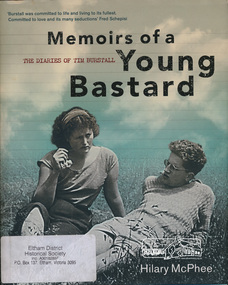
Book, Miegunyah Press, Memoirs of a Young Bastard: the diaries of Tim Burstall compiled by Hilary McPhee, 2012
... intellectuals' he was living among in Eltham, then a rural area outside Melbourne, where cheap land was available for mudbrick houses and studios, and where suburban rigidities could be mercilessly flouted. Burstall was in his mid-twenties, with two young sons and an open marriage with his wife, Betty. Eager to become a writer, to go against the grain, he kept a record almost daily-of the parties and the talk in pubs and studios, about art and politics and sex, of Communist Party branch meetings and film societies...intellectuals' he was living among in Eltham, then a rural area outside Melbourne, where cheap land was available for mudbrick houses and studios, and where suburban rigidities could be mercilessly flouted. Burstall was in his mid-twenties, with two young sons and an open marriage with his wife, Betty. Eager to become a writer, to go against the grain, he kept a record almost daily-of the parties and the talk in pubs and studios, about art and politics and sex, of Communist Party branch meetings and film societies ...Diaries of Tim Burstall November 1953 to December 1954. Tim Burstall lived in Eltham. Tim Burstall, the celebrated director of Stork, Alvin Purple and numerous other definitive 'ocker' comedies, is credited with shaking the moribund Australian film industry out of its torpor. But long before that, in the early 1950s, he began keeping a diary to record the world of the group of 'arties' and 'intellectuals' he was living among in Eltham, then a rural area outside Melbourne, where cheap land was available for mudbrick houses and studios, and where suburban rigidities could be mercilessly flouted. Burstall was in his mid-twenties, with two young sons and an open marriage with his wife, Betty. Eager to become a writer, to go against the grain, he kept a record almost daily-of the parties and the talk in pubs and studios, about art and politics and sex, of Communist Party branch meetings and film societies, of political rallies and the first Herald Outdoor Art Show. Somehow, while holding down a public relations job in the Antarctic Division and juggling his love affairs and obsession with the beautiful, brainy Fay, he wrote 500 words almost every day. Betty, according to the diaries, kept the show on the road, feeding friends after the pub, milking goats and working in her pottery making bowls and mugs, which Tim sometimes decorated at weekends. These Memoirs of a Young Bastard, as Burstall dubbed himself and them, are among the most evocative Australian diaries of modern times. Burstall can write. He has an eye for the telling detail, an unerring ear for cant and pomposity and, most endearingly, an ability to mock himself-always from the perspective of a bloke of his generation. Source: Publisherxxiv, 343 p., [18] p. of plates : ill., maps, ports., facsims. ; 27 cm.ISBN 9780522858143diary, motion picture director, film director, author -
 Bendigo Historical Society Inc.
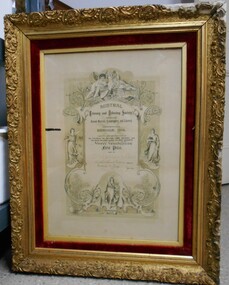
Certificate - Austral Competitions Certificate Awarded to St. Andrew's Choir, 1898
... The Austral Literary and Debating Society relates to historical community organisations in Australia that combined intellectual discussion, public speaking, and cultural appreciation. ...The Austral Literary and Debating Society relates to historical community organisations in Australia that combined intellectual discussion, public speaking, and cultural appreciation. ...The Austral Literary and Debating Society relates to historical community organisations in Australia that combined intellectual discussion, public speaking, and cultural appreciation. A decorated certificate in an elaborate gilded frame. The certificate reads' Austral Literary and Debating Society, Second Annual Musical, Elocutionary and Literary Competition, Bendigo 1898. Under the distinguished patronage of His Excellency The Governor, LORD BRASSEY, and his Honor the Chief Justice, Sir JOHN MADDEN. Choir Competition, First Prize won by St Andrew's Choir'.austral literary and debating society, austral literary and debating society bendigo competition 1898, st andrew's choir bendigo, choir competition bendigo -
 National Vietnam Veterans Museum (NVVM)
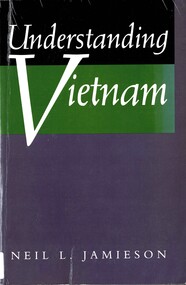
Book, Jamieson, Neil L, Understanding Vietnam, 1993
... Disclosed what the American military and political leadership largely misunderstoon: the nature of Vietnamese society, the confrontation with colonialism and Western values, the resistance of the intellectuals, and the culture of the people. ...Disclosed what the American military and political leadership largely misunderstoon: the nature of Vietnamese society, the confrontation with colonialism and Western values, the resistance of the intellectuals, and the culture of the people.Disclosed what the American military and political leadership largely misunderstoon: the nature of Vietnamese society, the confrontation with colonialism and Western values, the resistance of the intellectuals, and the culture of the people.vietnam - history -1858-1945., vietnam- history - 20th century. -
 Warrnambool and District Historical Society Inc.
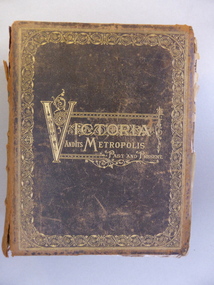
Book, Victoria & Its Metropolis Vol 1 & 2, 1888
... intellectual’. Born in Scotland, Sutherland was a teacher, poet, biographer, novelist, scientist, philosopher and journalist. In 1902 he was the Registrar of Melbourne University and he was the Secretary of the Royal Society of Victoria. ...intellectual’. Born in Scotland, Sutherland was a teacher, poet, biographer, novelist, scientist, philosopher and journalist. In 1902 he was the Registrar of Melbourne University and he was the Secretary of the Royal Society of Victoria. ...These two volumes are seminal historical writings published in 1888. The author of Volume One is Alexander Sutherland (1852-1902), described as ‘a forgotten Australian intellectual’. Born in Scotland, Sutherland was a teacher, poet, biographer, novelist, scientist, philosopher and journalist. In 1902 he was the Registrar of Melbourne University and he was the Secretary of the Royal Society of Victoria. With his brother, George, he wrote a history of Australia and New Zealand which sold 100,000 copies, the first best-selling Australian history. His book, ‘The Origin and Growth of the Moral Instinct’ influenced Russian philosophical thought. This is a most significant book as it contains short biographical notes on a great number of early (19th century) residents of the Warrnambool district. As well as listing information on Warrnambool identities it includes information on residents of Purnim, Wangoom, Dennington, Panmure, Garvoc, Framlingham, Winslow, Yangery, Woodford, Mailors Flat, Grasmere, Bushfield and Allansford. It is a great resource for researchers today. The two volumes also contain illustrations pertaining to the areas around Warrnambool and are of great historical as well as artistic interest. These are two volumes of ‘Victoria and Its Metropolis’. They are leather bound with a black cover, heavily ornamented in gold around the edges of the cover and with the printed material also in gold lettering in an ornamental pattern. The spine of the covers are brown with gold ornamental patterns and printing. Volume One has 594 pages with 258 illustrations , all black and white and this volume contains writings on the early days of the colony up to 1888 and chapters on the arts, churches, education, industries, science etc. in Victoria. Volume Two has 822 pages with many black and white illustrations and chapters on the regions in Victoria and biographical notes on the pioneer settlers of these districts. Both volumes are in a very tattered condition with many loose pages and the leather binding much torn and with some parts missing. Volume One cover: ‘Victoria and its Metropolis, Past and Present’ Volume One spine: ‘Victoria and its Metropolis, Vol. 1’ Volume Two Cover: ‘Victoria and its Metropolis, Past and Present’’ Volume Two Spine: ‘Victoria and its Metropolis, Vol. 2’ 19th century victorian history, victorian pioneer settlers, alexander sutherland -
 Victorian Aboriginal Corporation for Languages
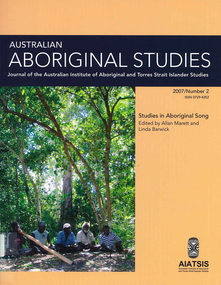
Periodical, Australian Institute of Aboriginal and Torres Strait Islander Studies, Australian Aboriginal studies : journal of the Australian Institute of Aboriginal and Torres Strait Islander Studies, 2007
... society. Drawing on our recordings of the Baripuy manikay series from 2004 and 2005, we explore the aesthetics and functions of formal flexibility in the manikay tradition. We examine the individuation of lyrical realisations among singers, and the role of rhythmic modes in articulating between luku (root) and bu?gul'mirri (ceremonial) components of repertoire. Our findings will contribute significantly to intercultural understandings of manikay theory and aesthetics, and the centrality of manikay to Yol?u intellectual...society. Drawing on our recordings of the Baripuy manikay series from 2004 and 2005, we explore the aesthetics and functions of formal flexibility in the manikay tradition. We examine the individuation of lyrical realisations among singers, and the role of rhythmic modes in articulating between luku (root) and bu?gul'mirri (ceremonial) components of repertoire. Our findings will contribute significantly to intercultural understandings of manikay theory and aesthetics, and the centrality of manikay to Yol?u intellectual ...1. Musical and linguistic perspectives on Aboriginal song Allan Marett and Linda Barwick Song brings language and music together. Great singers are at once musicians and wordsmiths, who toss rhythm, melody and word against one another in complex cross-play. In this paper we outline some initial findings that are emerging from our interdisciplinary study of the musical traditions of the Cobourg region of western Arnhem Land, a coastal area situated in the far north of the Australian continent 350 kilometres northeast of Darwin. We focus on a set of songs called Jurtbirrk, sung in Iwaidja, a highly endangered language, whose core speaker base is now located in the community of Minjilang on Croker Island. We bring to bear analytical methodologies from both musicology and linguistics to illuminate this hitherto undocumented genre of love songs. 2. Iwaidja Jurtbirrk songs: Bringing language and music together Linda Barwick (University of Sydney), Bruce Birch and Nicholas Evans (University of Melbourne) Song brings language and music together. Great singers are at once musicians and wordsmiths, who toss rhythm, melody and word against one another in complex cross-play. In this paper we outline some initial findings that are emerging from our interdisciplinary study of the musical traditions of the Cobourg region of western Arnhem Land, a coastal area situated in the far north of the Australian continent 350 kilometres northeast of Darwin. We focus on a set of songs called Jurtbirrk, sung in Iwaidja, a highly endangered language, whose core speaker base is now located in the community of Minjilang on Croker Island. We bring to bear analytical methodologies from both musicology and linguistics to illuminate this hitherto undocumented genre of love songs. 3. Morrdjdjanjno ngan-marnbom story nakka, ?songs that turn me into a story teller?: The morrdjdjanjno of western Arnhem Land Murray Garde (University of Melbourne) Morrdjdjanjno is the name of a song genre from the Arnhem Land plateau in the Top End of the Northern Territory and this paper is a first description of this previously undocumented song tradition. Morrdjdjanjno are songs owned neither by individuals or clans, but are handed down as ?open domain? songs with some singers having knowledge of certain songs unknown to others. Many morrdjdjanjno were once performed as part of animal increase rituals and each song is associated with a particular animal species, especially macropods. Sung only by men, they can be accompanied by clap sticks alone or both clap sticks and didjeridu. First investigations reveal that the song texts are not in everyday speech but include, among other things, totemic referential terms for animals which are exclusive to morrdjdjanjno. Translations from song language into ordinary register speech can often be ?worked up? when the song texts are discussed in their cultural and performance context. The transmission of these songs is severely endangered at present as there are only two known singers remaining both of whom are elderly. 4. Sung and spoken: An analysis of two different versions of a Kun-barlang love song Isabel O?Keeffe (nee Bickerdike) (University of Melbourne) In examining a sung version and a spoken version of a Kun-barlang love song text recorded by Alice Moyle in 1962, I outline the context and overall structure of the song, then provide a detailed comparative analysis of the two versions. I draw some preliminary conclusions about the nature of Kun-barlang song language, particularly in relation to the rhythmic setting of words in song texts and the use of vocables as structural markers. 5. Simplifying musical practice in order to enhance local identity: Rhythmic modes in the Walakandha wangga (Wadeye, Northern Territory) Allan Marett (University of Sydney) Around 1982, senior performers of the Walakandha wangga, a repertory of song and dance from the northern Australian community of Wadeye (Port Keats), made a conscious decision to simplify their complex musical and dance practice in order to strengthen the articulation of a group identity in ceremonial performance. Recordings from the period 1972?82 attest to a rich diversity of rhythmic modes, each of which was associated with a different style of dance. By the mid-1980s, however, this complexity had been significantly reduced. I trace the origin of the original complexity, explore the reasons why this was subsequently reduced, and trace the resultant changes in musical practice. 6. ?Too long, that wangga?: Analysing wangga texts over time Lysbeth Ford (University of Sydney) For the past forty or so years, Daly region song-men have joined with musicologists and linguists to document their wangga songs. This work has revealed a corpus of more than one hundred wangga songs composed in five language varieties Within this corpus are a few wangga texts recorded with their prose versions. I compare sung and spoken texts in an attempt to show not only what makes wangga texts consistently different from prose texts, but also how the most recent wangga texts differ from those composed some forty years ago. 7. Flesh with country: Juxtaposition and minimal contrast in the construction and melodic treatment of jadmi song texts Sally Treloyn (University of Sydney) For some time researchers of Centralian-style songs have found that compositional and performance practices that guide the construction and musical treatment of song texts have a broader social function. Most recently, Barwick has identified an ?aesthetics of parataxis or juxtaposition? in the design of Warumungu song texts and musical organisation (as well as visual arts and dances), that mirrors social values (such as the skin system) and forms 'inductive space' in which relationships between distinct classes of being, places, and groups of persons are established. Here I set out how juxtaposition and minimal contrast in the construction and melodic treatment of jadmi-type junba texts from the north and north-central Kimberley region similarly create 'inductive space' within which living performers, ancestral beings, and the country to which they are attached, are drawn into dynamic, contiguous relationships. 8. The poetics of central Australian Aboriginal song Myfany Turpin (University of Sydney) An often cited feature of traditional songs from Central Australia (CA songs) is the obfuscation of meaning. This arises partly from the difficulties of translation and partly from the difficulties in identifying words in song. The latter is the subject of this paper, where I argue it is a by-product of adhering to the requirements of a highly structured art form. Drawing upon a set of songs from the Arandic language group, I describe the CA song as having three independent obligatory components (text, rhythm and melody) and specify how text is set to rhythm within a rhythmic and a phonological constraint. I show how syllable counting, for the purposes of text setting, reflects a feature of the Arandic sound system. The resultant rhythmic text is then set to melody while adhering to a pattern of text alliteration. 9. Budutthun ratja wiyinymirri: Formal flexibility in the Yol?u manikay tradition and the challenge of recording a complete repertoire Aaron Corn (University of Sydney) with Neparr? a Gumbula (University of Sydney) Among the Yol?u (people) of north-eastern Arnhem Land, manikay (song) series serve as records of sacred relationships between humans, country and ancestors. Their formal structures constitute the overarching order of all ceremonial actions, and their lyrics comprise sacred esoteric lexicons held nowhere else in the Yol?u languages. A consummate knowledge of manikay and its interpenetrability with ancestors, country, and parallel canons of sacred y�ku (names), bu?gul (dances) and miny'tji (designs) is an essential prerequisite to traditional leadership in Yol?u society. Drawing on our recordings of the Baripuy manikay series from 2004 and 2005, we explore the aesthetics and functions of formal flexibility in the manikay tradition. We examine the individuation of lyrical realisations among singers, and the role of rhythmic modes in articulating between luku (root) and bu?gul'mirri (ceremonial) components of repertoire. Our findings will contribute significantly to intercultural understandings of manikay theory and aesthetics, and the centrality of manikay to Yol?u intellectual traditions. 10. Australian Aboriginal song language: So many questions, so little to work with Michael Walsh Review of the questions related to the analysis of Aboriginal song language; requirements for morpheme glossing, component package, interpretations, prose and song text comparison, separation of Indigenous and ethnographic explanations, candour about collection methods, limitations and interpretative origins.maps, colour photographs, tablesyolgnu, wadeye, music and culture -
 Robin Boyd Foundation
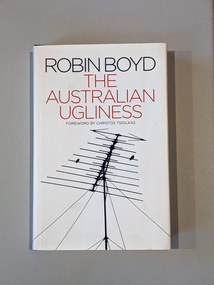
Book, Robin Boyd, The Australian Ugliness, 2010
... Today they are regarded as classics, important documents of Australian cultural criticism by the nation’s foremost public intellectual on all matters relating to the built environment. Australian Architecture Australian society Australian culture Walsh St library RBF Acquisition. 50th Anniversary Edition (no. 138 of 300) Hardcover with Dust Jacket The Australian Ugliness Book Robin Boyd The Text Publishing Company ...“The Australian Ugliness” was first published in 1960. “Australia's Home” (published in 1952) and “The Australian Ugliness” both discuss architecture in terms of the total environment. Today they are regarded as classics, important documents of Australian cultural criticism by the nation’s foremost public intellectual on all matters relating to the built environment.Hardcover with Dust JacketRBF Acquisition. 50th Anniversary Edition (no. 138 of 300)australian architecture, australian society, australian culture, walsh st library -
 Robin Boyd Foundation
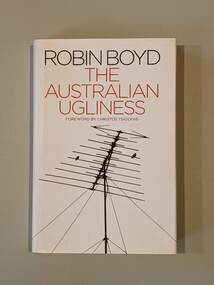
Book, Robin Boyd, The Australian Ugliness, 2010
... Today they are regarded as classics, important documents of Australian cultural criticism by the nation’s foremost public intellectual on all matters relating to the built environment. Australian Architecture Australian society Australian culture Walsh St library RBF Acquisition. 50th Anniversary Edition (no. 300 of 300) Hardcover with Dust Jacket The Australian Ugliness Book Robin Boyd The Text Publishing Company ...“The Australian Ugliness” was first published in 1960. “Australia's Home” (published in 1952) and “The Australian Ugliness” both discuss architecture in terms of the total environment. Today they are regarded as classics, important documents of Australian cultural criticism by the nation’s foremost public intellectual on all matters relating to the built environment.Hardcover with Dust JacketRBF Acquisition. 50th Anniversary Edition (no. 300 of 300)australian architecture, australian society, australian culture, walsh st library
