Flagstaff Hill Maritime Museum and Village
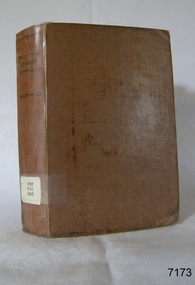
Book - A Fictional Story, William Hatfield, Into the Great Unfenced, 1940
... Into the Great Unfenced......into the great unfenced...After publishing his major 1930s works with Angus & Robertson in Sydney, Hatfield turned to Popular Publications for his 1940 outback novel Into the (Great?) Unfenced, his 1941 wartime economic and political treatise This Land of Ours!...Hard cover book. Into the Great Unfenced
Author: William Hatfield
Publisher: Popular Publications
Date: 1940
Further Information: Brown plain cloth hardcover with lettering to spine in black pen. ...The spine has a Library label with an inscription. Into the Great Unfenced Book A Fictional Story William Hatfield Popular Publications Pty Ltd. ...
Into the Great Unfenced is a 1940 Australian outback novel by William Hatfield (pen name of Ernest Chapman), published by Popular Publications in South Melbourne. The title itself famously includes a question mark, Into the (Great?) Unfenced, reflecting the book’s thematic questioning of the romance and reality of the Australian inland. Because the book has been out of print since its original 1940 wartime run and is rarely held outside major Australian research libraries, a plot breakdown is not publicly archived. However, contemporary literary reviews from its 1940 release provide a clear overview of its plot, characters and themes.
The novel is set in the harsh, vast and largely unfenced pastoral regions of inland Australia, specifically drawing on Hatfield’s own experiences working and wandering around Cooper Creek. Rather than offering a purely romanticised frontier tale, Hatfield blends adventure with stark realism and political commentary about life in the ‘inland’. The narrative centres on Janet McKay and her father, pioneers who are attempting to carve out and maintain a livelihood in the unforgiving outback country.
The McKays’ story is woven through the daily hardships of station life, clashes of strong personalities, and bitter disputes between rival claimants fighting over vital waterholes – the lifeblood of survival in the arid interior. Alongside the gruelling labour, the novel depicts the crude, rough-and-ready amusements that punctuate the pioneers’ rare intervals of rest. The plot is further driven by a mysterious shooting affair. This crime brings mounted police constables into the region, and their arduous task of tracking down the perpetrators across the vast, trackless terrain forms a major narrative thread of its own within the novel.
Hard cover book. Into the Great Unfenced
Author: William Hatfield
Publisher: Popular Publications
Date: 1940
Further Information: Brown plain cloth hardcover with lettering to spine in black pen. The spine has a Library label with an inscription. fiction Into the Great Unfenced is a 1940 Australian outback novel by William Hatfield (pen name of Ernest Chapman), published by Popular Publications in South Melbourne. The title itself famously includes a question mark, Into the (Great?) Unfenced, reflecting the book’s thematic questioning of the romance and reality of the Australian inland. Because the book has been out of print since its original 1940 wartime run and is rarely held outside major Australian research libraries, a plot breakdown is not publicly archived. However, contemporary literary reviews from its 1940 release provide a clear overview of its plot, characters and themes.
The novel is set in the harsh, vast and largely unfenced pastoral regions of inland Australia, specifically drawing on Hatfield’s own experiences working and wandering around Cooper Creek. Rather than offering a purely romanticised frontier tale, Hatfield blends adventure with stark realism and political commentary about life in the ‘inland’. The narrative centres on Janet McKay and her father, pioneers who are attempting to carve out and maintain a livelihood in the unforgiving outback country.
The McKays’ story is woven through the daily hardships of station life, clashes of strong personalities, and bitter disputes between rival claimants fighting over vital waterholes – the lifeblood of survival in the arid interior. Alongside the gruelling labour, the novel depicts the crude, rough-and-ready amusements that punctuate the pioneers’ rare intervals of rest. The plot is further driven by a mysterious shooting affair. This crime brings mounted police constables into the region, and their arduous task of tracking down the perpetrators across the vast, trackless terrain forms a major narrative thread of its own within the novel. shipwrecked-coast, flagstaff-hill, flagstaff-hill-maritime-museum, warrnambool, maritime-museum, shipwreck-coast, flagstaff-hill-maritime-village, shipwrecked-artefact, book, pattison collection, warrnambool library, warrnambool mechanics’ institute, ralph eric pattison, corangamite regional library service, warrnambool city librarian, mechanics’ institute library, victorian library board, warrnambool books and records, warrnambool children’s library, great ocean road, into the great unfenced, william hatfield, ernest chapman