
Showing 17 items matching "ireland - history - 19th century"
-
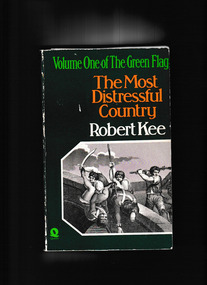 The Celtic Club
Book, Robert Kee, The most distressful country, 1976
... ...Ireland - History - 19th century...Ireland - Politics and government Ireland - History - 19th century Part 1 of a 3-part series, the Green Flag, which traces the rise of Irish Nationalism. ...Part 1 of a 3-part series, the Green Flag, which traces the rise of Irish Nationalism. The focus of this volume, Strongbow - the Great Famine, charts the development of the Irish nationalist impulse.Index, bib, p.298.non-fictionPart 1 of a 3-part series, the Green Flag, which traces the rise of Irish Nationalism. The focus of this volume, Strongbow - the Great Famine, charts the development of the Irish nationalist impulse.ireland - politics and government, ireland - history - 19th century -
 Federation University Historical Collection
Pamphlet, University of Ballarat Australian Studies Centre, University of Ballarat Conference Pamphlet, 12/1999
... 19th Century. * Anne Cunningham - Dom bernard Smith's Australian Mission * Mella Cusack - Relations between the Young Irelanders and the Catholic Clergy in Australia * John Daykin - He that is Not With Me is Against Me: The Role of the Irish in the Defeat of conscription, Ballarat 1916-1917 * Dr Frances Devlin Glass - '[T]ouches of nature that make the world kin: Furphy, Race and Anxiety' * Helen Kinloch - Bernard O'Dowd,, and dreams of a Golden age in Australia' * Associate Professor Rederic Lacey - 'Exploring Pathways Towards reconciliation Through Encountering Our Shared Histories' * Dymphna Lonergan - 'Sounds Irish' * Dr David Lucy - ' Remarks on the Decline of Irish Language' * Patrick McCormack - The Irish Factor in the Campaign for Federation in New South Wales * Siobhan McHugh - 'In Search of Soul: One Irishwoman's Journey in Australia' * Ken Mansell * Dr Val Noone - 'the Irish in collingwood 1860-1900: Family Tree Meets historical Record * Ambassador Richard Anthony O'Brien * Terrence O'neill-FitzSimons - "Francis Thomas Cusack-Russell' * Professor Bob Reece - 'The making of the Eureka Film' * Edward O'Reilly - 'John Boyle-O'Reilly: Journeys and Monuments * Dr Chris Watson - 'Around the Boree Log and the identity of Irish Australians' * Dorothy Wickham - 'Saints or Sinners?...history Irish Australians Irish Black print on light green paper .1) Light green tri-folded A4 pamphlet .2) Program for the 'Through Irish Eyes' Conference, A conference held in memory of Associate Professor Kevin T. Livinsgston by the University of Ballarat Australian Studies Centre, 3-5 December 1999. Speakers were: * Anne Beggs Sunter - 'irish Republican Echoes at Eureka * Jill Blee - 'Portrait of a Ballarat Irishman/woman * Dianne (Leonard) Cahir - 'The Irishness of Dunnstown * Dianne Campbell - Sir Henry Cuthbert * Dermot Clancy - Colonial Clergy - All Hallows College and the Australian Mission in the 19th Century. * Anne Cunningham - Dom bernard Smith's Australian Mission * Mella Cusack - Relations between the Young Irelanders and the Catholic Clergy in Australia * John Daykin - He that is Not With Me is Against Me: The Role of the Irish in the Defeat of conscription, Ballarat 1916-1917 * Dr Frances Devlin Glass - '[T]ouches of nature that make the world kin: Furphy, Race and Anxiety' * Helen Kinloch - Bernard O'Dowd,, and dreams of a Golden age in Australia' * Associate Professor Rederic Lacey - 'Exploring Pathways Towards reconciliation Through Encountering Our Shared Histories' * Dymphna Lonergan - 'Sounds Irish' * Dr David Lucy - ' Remarks on the Decline of Irish Language' * Patrick McCormack - The Irish Factor in the Campaign for Federation in New South Wales * Siobhan McHugh - 'In Search of Soul: One Irishwoman's Journey in Australia' * Ken Mansell * Dr Val Noone - 'the Irish in collingwood 1860-1900: Family Tree Meets historical Record * Ambassador Richard Anthony O'Brien * Terrence O'neill-FitzSimons - "Francis Thomas Cusack-Russell' * Professor Bob Reece - 'The making of the Eureka Film' * Edward O'Reilly - 'John Boyle-O'Reilly: Journeys and Monuments * Dr Chris Watson - 'Around the Boree Log and the identity of Irish Australians' * Dorothy Wickham - 'Saints or Sinners? ...A conference in memory of Kevin Livingston to celebrate the role the Irish in Ballarat played in the formation of the nation..1) Light green tri-folded A4 pamphlet .2) Program for the 'Through Irish Eyes' Conference, A conference held in memory of Associate Professor Kevin T. Livinsgston by the University of Ballarat Australian Studies Centre, 3-5 December 1999. Speakers were: * Anne Beggs Sunter - 'irish Republican Echoes at Eureka * Jill Blee - 'Portrait of a Ballarat Irishman/woman * Dianne (Leonard) Cahir - 'The Irishness of Dunnstown * Dianne Campbell - Sir Henry Cuthbert * Dermot Clancy - Colonial Clergy - All Hallows College and the Australian Mission in the 19th Century. * Anne Cunningham - Dom bernard Smith's Australian Mission * Mella Cusack - Relations between the Young Irelanders and the Catholic Clergy in Australia * John Daykin - He that is Not With Me is Against Me: The Role of the Irish in the Defeat of conscription, Ballarat 1916-1917 * Dr Frances Devlin Glass - '[T]ouches of nature that make the world kin: Furphy, Race and Anxiety' * Helen Kinloch - Bernard O'Dowd,, and dreams of a Golden age in Australia' * Associate Professor Rederic Lacey - 'Exploring Pathways Towards reconciliation Through Encountering Our Shared Histories' * Dymphna Lonergan - 'Sounds Irish' * Dr David Lucy - ' Remarks on the Decline of Irish Language' * Patrick McCormack - The Irish Factor in the Campaign for Federation in New South Wales * Siobhan McHugh - 'In Search of Soul: One Irishwoman's Journey in Australia' * Ken Mansell * Dr Val Noone - 'the Irish in collingwood 1860-1900: Family Tree Meets historical Record * Ambassador Richard Anthony O'Brien * Terrence O'neill-FitzSimons - "Francis Thomas Cusack-Russell' * Professor Bob Reece - 'The making of the Eureka Film' * Edward O'Reilly - 'John Boyle-O'Reilly: Journeys and Monuments * Dr Chris Watson - 'Around the Boree Log and the identity of Irish Australians' * Dorothy Wickham - 'Saints or Sinners?: The Influence on Ballarat's Female refuge by Irish Women' * Christine Wright - 'A Stately Landmark: Adam Loftus Lynn .3) newspaper article on the conference from The Courier, 06/12/1999 - 'Irish Celebrate Their Role in City'Black print on light green paperaustralian studies, university of ballarat, kevin livingston, mt helen campus, "through irish eyes", jill blee, david james, rod lacey, val noone, dianne campbell, christine wright, terence o'neill-fitzsimons, helen kinloch, diane cahir, dorothy wickham, edward reilly, mella cusack, anne beggs-sunter, patrick mccormack, anne cunningham, shane carmody, dermot clancy, francis devlin-glass, chris watson, david lucy, dymphna lonergan, richard o'brien, bob reece, peter kennedy, gough whitlam, australian studies, university of ballarat, kevin livingston, mt helen campus, "through irish eyes", jill blee, david james, rod lacey, val noone, dianne campbell, christine wright, terence o'neill-fitzsimons, helen kinloch, diane cahir, dorothy wickham, edward reilly, mella cusack, anne beggs-sunter, patrick mccormack, anne cunningham, shane carmody, dermot clancy, francis devlin-glass, chris watson, david lucy, dymphna lonergan, richard o'brien, bob reece, peter kennedy, gough whitlam, genealogy, family history, irish australians, irish -
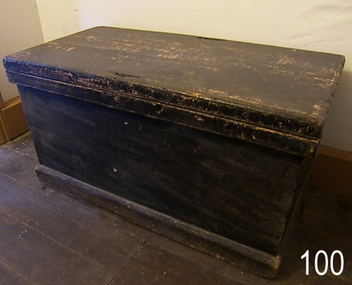 Flagstaff Hill Maritime Museum and Village
Furniture - Linen Chest, First half of the 19th Century
... Ireland, with Jane Fleming, when she migrated to Australia arriving at Port Fairy in approximately 1863. Jane Flemming was about 6 or 7 years old at the time and later was to become the mother of Mary Jane Giles (nee Flemming). This chest is one of many 19th century items of furniture, linen and crockery donated to Flagstaff Hill Maritime Village by, Vera and Aurelin Giles. The items are associated with Warrnambool and the Giles Family history...Ireland, with Jane Fleming, when she migrated to Australia arriving at Port Fairy in approximately 1863. Jane Flemming was about 6 or 7 years old at the time and later was to become the mother of Mary Jane Giles (nee Flemming). This chest is one of many 19th century items of furniture, linen and crockery donated to Flagstaff Hill Maritime Village by, Vera and Aurelin Giles. The items are associated with Warrnambool and the Giles Family history ...This chest came from County Cavan, North Ireland, with Jane Fleming, when she migrated to Australia arriving at Port Fairy in approximately 1863. Jane Flemming was about 6 or 7 years old at the time and later was to become the mother of Mary Jane Giles (nee Flemming). This chest is one of many 19th century items of furniture, linen and crockery donated to Flagstaff Hill Maritime Village by, Vera and Aurelin Giles. The items are associated with Warrnambool and the Giles Family history. Items donated by the family have come to be known as the “Giles Collection”. Many items in the Lighthouse Keeper’s Cottage were donated by Vera and Aurelin Giles and mostly came from the home of Vera’s parents-in-law, Henry Giles and his wife Mary Jane (nee Freckleton) who married in 1880 and whose photos are on display in the parlour. Henry was born at Tower Hill in 1858, and was a labourer on the construction of the Warrnambool Breakwater before leaving in 1895 for around seven years to build bridges in NSW. Mary Jane was born in 1860 at Cooramook and she attended Mailor’s Flat State School and where she eventually was to become a student teacher. After which she became a governess at “Injemiara” where her grandfather, Francis Freckleton, had once owned land. Henry and Mary’s family consisted of six, some of the children were born at Mailor’s Flat and later some children at Wangoom. They lived with their parents at Wangoom and Purnim west, and this is where Henry died in 1933 and Mary Jane in 1940.The chest is of historical significance as an example of an early piece of furniture brought to Australia by Jane Flemming when she migrated to Australia during the mid 19th century. The chest is associated with the Giles family as Jane later was to become the mother Of Mary Jane Giles (nee Flemming). The Giles family collection is of social and historical significance at a local level, because it not only illustrates the level of material support the Warrnambool community gave to Flagstaff Hill during it’s establishment. But the Giles collection also gives us today a snapshot into what domestic life was like in early colonial times prior to Federation. Linen chest wood construction with hinged lid and lock. Hinges are brass. Painted black. ( Giles Collection)Noneflagstaff hill, warrnambool, shipwrecked coast, flagstaff hill maritime museum, shipwreck coast, flagstaff hill maritime village, wooden chest, cabin trunk, giles collection, henry giles, tower hill, cooramook, mailor’s flat, wangoom, 19th century household goods, jane flemming, mary jane giles, linen chest -
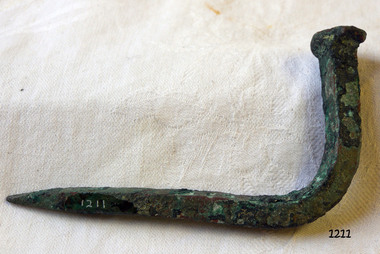 Flagstaff Hill Maritime Museum and Village
Functional object - Nail, circa 1840
... Ireland. Only nine people, one passenger and eight crew, survived the shipwreck. A man who lived on the island, sheltered them and five weeks later the group was rescued by the ship Midge, which took them to Melbourne. It was the largest civilian maritime disaster. The nail is significant as an example of the hardware used in the mid-19th century for ship building. The nail is also significant for its association with the 1840 Canadian built ship, Cataraqui, The Cataraqui is significant in maritime history ...This nail was recovered from the wreck of the Cataraqui in the 1970s. The nail is most likely to have been machine cut and the head hand formed by a blacksmith. THE CATARAQUI The Cataraqui, which was built in 1840 in Quebec, Canada, and wrecked in 1845 off King Island, Australia. The lives of 400 people on the emigrant ship were lost. Many of them were on government assisted passages from Britain and Ireland. Only nine people, one passenger and eight crew, survived the shipwreck. A man who lived on the island, sheltered them and five weeks later the group was rescued by the ship Midge, which took them to Melbourne. It was the largest civilian maritime disaster. The nail is significant as an example of the hardware used in the mid-19th century for ship building. The nail is also significant for its association with the 1840 Canadian built ship, Cataraqui, The Cataraqui is significant in maritime history as the largest civilian maritime disaster.Copper nail, four sided shank, flattened tip with rounded end, pitted and rough, concretion on the shank. The nail is bent. Recovered from the wreck of the 1840-1845 "Cataraqui". flagstaff hill, warrnambool, shipwrecked-coast, flagstaff-hill, flagstaff-hill-maritime-museum, maritime-museum, shipwreck-coast, flagstaff-hill-maritime-village, nail, copper nail, ship nail, cataraqui ship, ship hardware, canadian ship, 1840 ship, migrant ship, emigrant ship, assisted passage, king island, midge -
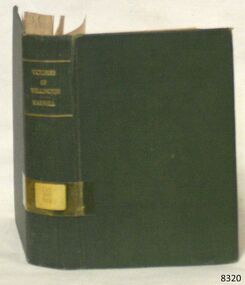 Flagstaff Hill Maritime Museum and Village
Book - Biographical/ Military History, W. H. Maxwell, The Victories of Wellington, 1871
... Irish novelist and a pioneer of a specific genre known as "military fiction" or military history romance. While he claimed to have served in the British Army during the Peninsular campaigns, records indicate he actually took holy orders and served as a prebendary in the Church of Ireland. His real passion, however, was writing. He gained immense popularity with his book Stories of Waterloo (1829). His writing heavily influenced later, more famous authors like Charles Lever. Maxwell’s style is lively, conversational, and highly romanticised. The publisher Bell & Daldy was a highly regarded London publishing firm active during the mid-19th century...Irish novelist and a pioneer of a specific genre known as "military fiction" or military history romance. While he claimed to have served in the British Army during the Peninsular campaigns, records indicate he actually took holy orders and served as a prebendary in the Church of Ireland. His real passion, however, was writing. He gained immense popularity with his book Stories of Waterloo (1829). His writing heavily influenced later, more famous authors like Charles Lever. Maxwell’s style is lively, conversational, and highly romanticised. The publisher Bell & Daldy was a highly regarded London publishing firm active during the mid-19th century ...This book is a detailed military history and biographical tribute celebrating Arthur Wellesley, the Duke of Wellington, and the triumphs of the British military during the early 19th century. It focuses heavily on the Peninsular War fought against Napoleon's forces in Spain and Portugal and concludes with the famous Battle of Waterloo in 1815. Written with a flair for action, it blends tactical overviews of famous battles with dramatic anecdotes of soldierly bravery, making it highly accessible to the general Victorian public, who voraciously consumed patriotic military histories.The Victories of Wellington Author: W. H. Maxwell Publisher: Bell & Daldy Date: 1871 Further Information: non-fictionThis book is a detailed military history and biographical tribute celebrating Arthur Wellesley, the Duke of Wellington, and the triumphs of the British military during the early 19th century. It focuses heavily on the Peninsular War fought against Napoleon's forces in Spain and Portugal and concludes with the famous Battle of Waterloo in 1815. Written with a flair for action, it blends tactical overviews of famous battles with dramatic anecdotes of soldierly bravery, making it highly accessible to the general Victorian public, who voraciously consumed patriotic military histories.flagstaff hill, warrnambool, shipwrecked coast, flagstaff hill maritime museum, maritime museum, shipwreck coast, flagstaff hill maritime village, great ocean road, book, pattison collection, warrnambool library, warrnambool mechanics’ institute, ralph eric pattison, corangamite regional library service, warrnambool city librarian, mechanics’ institute library, victorian library board, warrnambool books and records, warrnambool children’s library, the victories of wellington, w h maxwell, the duke of wellington, waterloo, 1812 -
 Flagstaff Hill Maritime Museum and Village
Clothing - Button, c. 1845
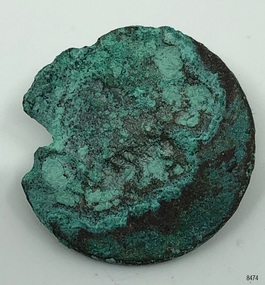
... Ireland. Only nine people, one passenger and eight crew, survived the shipwreck. A man who lived on the island, sheltered them and five weeks later the group was rescued by the ship Midge, which took them to Melbourne. It was the largest civilian maritime disaster. The button is significant as an example of a 19th century clothing accessory. The button is also significant for its association with the 1840 Canadian built ship, Cataraqui. The Cataraqui is significant in maritime history ...THE CATARAQUI The Cataraqui was built in 1840 in Quebec, Canada, and wrecked on 4th August, 1845 off the west coast of King Island, Australia. The lives of 400 people on the emigrant ship were lost. Many of them were on government assisted passages from Britain and Ireland. Only nine people, one passenger and eight crew, survived the shipwreck. A man who lived on the island, sheltered them and five weeks later the group was rescued by the ship Midge, which took them to Melbourne. It was the largest civilian maritime disaster.The button is significant as an example of a 19th century clothing accessory. The button is also significant for its association with the 1840 Canadian built ship, Cataraqui. The Cataraqui is significant in maritime history as Australia's largest civilian maritime disaster. The wreck also has a connection to the establishment of the Cape Otway lighthouse and to Warrnambool’s history as Superintendent Charles LaTrobe came to the Warrnambool district several times in an effort to find the best route to the Cape Otway area. While doing so he became familiar with the Warrnambool area and the need to establish a new settlement as Warrnambool.Metal button, vertical shank on back. Button experiencing corrosion and one edge has been eaten away. Inscription and two circular markings on shank side of button. Salvaged from the wreck of the Cataraqui.Unable to decipher.flagstaff hill maritime museum & village, shipwreck coast, great ocean road, button, king island, shipwreck, maritime disaster, cape otway, cataraqui -
 Glenelg Shire Council Cultural Collection
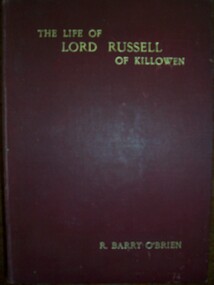
Book, The Life of Lord Russell of Killowen, 1902
... Irish statesman of the 19th century, and Lord Chief Justice of England. He was the first Roman Catholic to serve as Lord Chief Justice since the Reformation. Lord Russell of Killowen political history ...Maroon coloured cloth covered spine and cardboad covers. Text in gold.lord russell of killowen, political history, social history -
Phillip Island and District Historical Society Inc.
Book, BAIRD, Patricia Stavely, An unlettered girl : her life on the goldfields, 2002
... ireland...emigration...immigration...history...biography...19th century...Historical david stavers margaret mcfaden gold miners victoria biography genealogy northern ireland emigration immigration history biography 19th century Signed by the author, October 2002. ...HistoricalSigned by the author, October 2002.david stavers, margaret mcfaden, gold miners, victoria, biography, genealogy, northern ireland, emigration, immigration, history, biography, 19th century -
 Flagstaff Hill Maritime Museum and Village
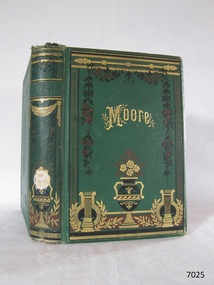
Book - Poetical Writings, Thomas Moore, The Poetical Works of Thomas Moore, 1878–1890s
... Ireland. His prose works, including The Memoirs of Captain Rock (1824) and his landmark biography Letters & Journals of Lord Byron (1830), remain essential primary texts for scholars of 19th-century history and literature. ...This subject volume is a comprehensive collection of the works of Irish poet and songwriter Thomas Moore (1779–1852). The work features his famous Irish Melodies (containing classic songs like "The Last Rose of Summer" and "The Minstrel Boy"), his Oriental romance epic Lalla Rookh, satire, and light verse, along with a biographical summary ("With Life") and steel-engraved illustrations.Hard cover book. The Poetical Works of Thomas Moore Author: Thomas Moore Publisher: Gall & Inglis Date: 1878–1890s Further Information: Highly decorated green Cloth hardcover with lettering and patterning to spine in gilt. The spine has a Library label with an inscription.fictionThis subject volume is a comprehensive collection of the works of Irish poet and songwriter Thomas Moore (1779–1852). The work features his famous Irish Melodies (containing classic songs like "The Last Rose of Summer" and "The Minstrel Boy"), his Oriental romance epic Lalla Rookh, satire, and light verse, along with a biographical summary ("With Life") and steel-engraved illustrations.warrnambool, shipwrecked-coast, flagstaff-hill, flagstaff-hill-maritime-museum, maritime-museum, shipwreck-coast, flagstaff-hill-maritime-village, shipwrecked-artefact, book, the poetical works of thomas moore, thomas moore, warrnambool mechanics’ institute, pattison collection, warrnambool library, ralph eric pattison, corangamite regional library service, warrnambool city librarian, mechanics’ institute library, victorian library board, warrnambool books and records, warrnambool children’s library -
 Narre Warren and District Family History Group
Book, Narre Warren & District Family History Group Inc, Casey Cardinia Collection - Nar Nar Goon Information File, 2005
... history dating back to the mid-19th century. Originally part of the Kulin nation, the area was home to the Boon Wurrung people. The name "Nar Nar Goon" is believed to come from a Boonwurrung word referring to either the koala or the rakali. European settlement began with the establishment of the Mount Ararat pastoral run in 1844, followed by land sales in the 1850s and 1860s. Many settlers came from Ireland...history dating back to the mid-19th century. Originally part of the Kulin nation, the area was home to the Boon Wurrung people. The name "Nar Nar Goon" is believed to come from a Boonwurrung word referring to either the koala or the rakali. European settlement began with the establishment of the Mount Ararat pastoral run in 1844, followed by land sales in the 1850s and 1860s. Many settlers came from Ireland ...Nar Nar Goon, a town in Gippsland, Victoria, has a rich history dating back to the mid-19th century. Originally part of the Kulin nation, the area was home to the Boon Wurrung people. The name "Nar Nar Goon" is believed to come from a Boonwurrung word referring to either the koala or the rakali. European settlement began with the establishment of the Mount Ararat pastoral run in 1844, followed by land sales in the 1850s and 1860s. Many settlers came from Ireland, particularly from the Monteagle estate in Limerick. The arrival of the railway in 1881 was a turning point, facilitating timber and agricultural industries. Several sawmills operated in the area, transporting timber via wooden tramways to the railway station. By the early 20th century, Nar Nar Goon had developed into a thriving township with a general store, hotel, butcher, baker, and garage. The town had strong Catholic roots, with a church opening in 1905. Over time, timber milling declined, and dairy farming became the dominant industry. In 2021, part of Nar Nar Goon was annexed to form the new suburb of Pakenham East. Today, Nar Nar Goon is known for its murals, historical buildings, and community spirit. It remains a small but significant town in Victoria’s history. [AI generated text]Folder containing a table of contents and various newspaper clippings and other information pertaining to the Nar Nar Goon area. The date the articles were published, and title of articles are listed below. 28 Sep 2005 War memorial face – lift shortfall 02 May 2007 Anzac Day 2007 13 Jun 2007 The way it used to be – Bernie Byrne reminisces 08 Jun 2005 Jack Egan 26 Sep 2007 Mark & Sylvia Jones – Nar Nar Goon Hotel Unknown Nell Van Den Berghe – obituary 14 Jun 2006 Dore’s Cottage 29 Nov 2006 Daisy Lia’s 80th birthday 2007 Bill Doherty 06 Feb 2008 Novelty milking comes around again 11 Jul 2007 Seven seas to home 08 Sep 2004 Bernie Byrne – memories are not a thing of the past 08 Sep 2004 Participation is the key for Jack (Payroli) 22 Oct 2008 Luck of the Irish – Michael O’Brien 03 Mar 2004 History found off the beaten track 04 May 2011 Racing to better health 16 Dec 2015 The Last Post - Light Horse & Field Artillery Museum 16 Jun 2021 Queen’s Salute for “Doc” - Bill Doherty 8 Apr 2015 Lindsays Have the Way to Stay United - Joan & Frank Lindsay 18 Feb 2015 Paddy at the Goon Pub - Paddy Henwood 8 Jun 2016 Bob the Inventor Missed - Bob Rose 26 May 2010 Jeff Talks Hawks and Parenting - Jeff Kennett 26 May 2010 Harry’s 90 Reasons to Party - Harry James 22 Jul 2015 The Goon’s Golden Reunion 17 May 2017 Ray Gets the Stan - Ray Coombs 14 Aug 2013 Jack of all Trades and Many Names - Jack Payroli 28 Sep 2016 Deb’s Strength Shone Through - Deb Bramley 12 Mar 2008 Marygoons Show Class - Nar Nar Goon- Maryknoll Cricket Club 12 Mar 2021 Club Mourns One of its Finest - John Byrne 17 Feb 2016 New Hope for Diggers - Military Museum 4 May 2016 Feed for Warhorses - Bernie Dingle 1 Feb 2017 Australia Day Award - Bernie Dingle 7 Nov 2007 Historian Revives Legendary Charge - Bernie Dingle 1 Feb 2017 Royal Stamp for a Museum of Service - Bernie Dingle 27 Apr 2016 First Anzac is Missed - Bernie Dingle 29 JUn 2016 Post Office for Sale 5 Jul 2017 Well Known and Loved - Jan Van Steensel 27 Apr 2016 Doc Remembers War 16 Feb 2011 Cream Couple Rise to the Top - Len & Mary Bramley 20 Jul 2022 William Joseph Doherty - Death & Funeral info 20 Jul 2022 Doc’s Led a Fortunate Life - Bill Doherty 20 Jul 2022 The King of Nar Nar Goon - Bill Doherty 20 July 2022 There was Only One Choice as the Goon’s First Legend 23 Aug 2023 A Firefighter’s Instinct - Kylie Shanks 28 Nov 2018 Ray did it His Way - Ray Coombs 15 Mar 2023 On the Right Side of History - Bernie Dingle 10 Apr 2024 A Pillar of the Community - Bill Bickerton 30 Oct 2024 Home to Racing Royalty 31 Oct 2024 Hyland Farm - for sale 24 July 2024 Dore a Much Loved Coach - James Dore 18 Sep 2024 A Celebrated Flag 14 Aug 2024 Family Roots Run Deep - Red Gem Potatoes 23 Sep 1987 Brydie a Sharer, a Carer and Loved by all - Brydie Cunningham 13 Mar 2024 Working ‘Til the Cows Come Home - Avonlea Holsteins 29 Oct 2025 Locals Tour Swamp’s Fascinating History 28 May 2025 Goon Find Mystery Man 11 Mar 2026 More Than a Century of Jersey Tradition 22 Oct 2025 Taking a Dive Into the Past at Heritage Event 29 Oct 2025 Revisiting Memories of the Swampnon-fictionnar nar goon (vic.), nar nar goon (vic.) -- history, bernie byrne, jack egan, mark & sylvia jones, daisy lia, bill doherty, michael o'brien, joan & frank lindsay, paddy henwood, bob rose, harry james, ray coombs, jack payroll, deb bramley, nar nar goon-maryknoll cricket club, john byrne, bernie dingle, jan van steensel, len & mary bramley, kylie shanks, bill bickerton, james dore, red gem potatoes, brydie cunningham -
 Warrnambool and District Historical Society Inc.
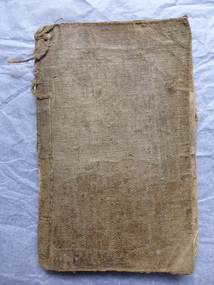
Booklet, The Dublin spelling book, 1844
... Irish spelling book with a strong religious tone, is in a very tattered state but has the name ‘Freckleton’ on it and it may have come with the first Freckleton immigrants to Australia. In the 19th century there were Freckleton families in the Warrnambool district at Port Fairy, Cooramook, Mailors Flat, Woolsthorpe, Woodford and Wangoom. The provenance of this book is unclear but it is kept because of its early printing (1844) and because of its association with the Freckleton families. freckleton families, western district history ...This book, an Irish spelling book with a strong religious tone, is in a very tattered state but has the name ‘Freckleton’ on it and it may have come with the first Freckleton immigrants to Australia. In the 19th century there were Freckleton families in the Warrnambool district at Port Fairy, Cooramook, Mailors Flat, Woolsthorpe, Woodford and Wangoom. The provenance of this book is unclear but it is kept because of its early printing (1844) and because of its association with the Freckleton families. This is a soft cover book of 240 pages. The cloth cover is brown with no visible markings on the front cover or spine. The pages are bound together with string and the material on the spine is almost worn away. Some of the pages are torn and very dirty and all are dog-eared. There is a grey and white illustration on the first page. The inscriptions on the first and second pages, barely legible, are handwritten in pencil and in black ink. ‘W. Freckleton, landed (?) 1857….1875….1888’ ‘…May landeth….’ freckleton families, western district, history of warrnambool -
 Ballarat and District Irish Association
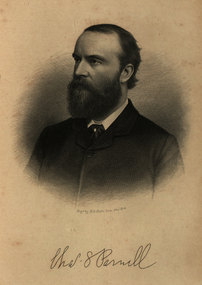
Image, Charles Parnell, c1864, 1864
... Irish Home Rule Bill. Parnell believed it was flawed but said he was prepared to vote for it. The Bill split the Liberal Party and was defeated in the House of Commons. Gladstone's government fell soon afterwards.(http://www.bbc.co.uk/history/historic_figures/parnell_charles.shtml, accessed 21 January 2014) The Irish National Land League (Irish: Conradh na Talún) was an Irish political organisation of the late 19th century which sought to help poor tenant farmers. ...Irish Home Rule Bill. Parnell believed it was flawed but said he was prepared to vote for it. The Bill split the Liberal Party and was defeated in the House of Commons. Gladstone's government fell soon afterwards.(http://www.bbc.co.uk/history/historic_figures/parnell_charles.shtml, accessed 21 January 2014) The Irish National Land League (Irish: Conradh na Talún) was an Irish political organisation of the late 19th century which sought to help poor tenant farmers. ...Parnell was an Irish nationalist and statesman who led the fight for Irish Home Rule in the 1880s. Charles Stewart Parnell was born on 27 June 1846 in County Wicklow into a family of Anglo-Irish Protestant landowners. He studied at Cambridge University and was elected to parliament in 1875 as a member of the Home Rule League (later re-named by Parnell the Irish Parliamentary Party). His abilities soon became evident. In 1878, Parnell became an active opponent of the Irish land laws, believing their reform should be the first step on the road to Home Rule. In 1879, Parnell was elected president of the newly founded National Land League and the following year he visited the United States to gain both funds and support for land reform. In the 1880 election, he supported the Liberal leader William Gladstone, but when Gladstone's Land Act of 1881 fell short of expectations, he joined the opposition. By now he had become the accepted leader of the Irish nationalist movement. Parnell now encouraged boycott as a means of influencing landlords and land agents, and as a result he was sent to jail and the Land League was suppressed. From Kilmainham prison he called on Irish peasants to stop paying rent. In March 1882, he negotiated an agreement with Gladstone - the Kilmainham Treaty - in which he urged his followers to avoid violence. But this peaceful policy was severely challenged by the murder in May 1882 of two senior British officials in Phoenix Park in Dublin by members of an Irish terrorist group. Parnell condemned the murders. In 1886, Parnell joined with the Liberals to defeat Lord Salisbury's Conservative government. Gladstone became prime minister and introduced the first Irish Home Rule Bill. Parnell believed it was flawed but said he was prepared to vote for it. The Bill split the Liberal Party and was defeated in the House of Commons. Gladstone's government fell soon afterwards.(http://www.bbc.co.uk/history/historic_figures/parnell_charles.shtml, accessed 21 January 2014) The Irish National Land League (Irish: Conradh na Talún) was an Irish political organisation of the late 19th century which sought to help poor tenant farmers. Its primary aim was to abolish landlordism in Ireland and enable tenant farmers to own the land they worked on. The period of the Land League's agitation is known as the Land War. Within decades of the league's foundation, through the efforts of William O'Brien and George Wyndham (a descendant of Lord Edward FitzGerald), the 1902 Land Conference produced the Land (Purchase) Act 1903 which allowed Irish tenant farmers buy out their freeholds with UK government loans over 68 years through the Land Commission (an arrangement that has never been possible in Britain itself). For agricultural labourers, D.D. Sheehan and the Irish Land and Labour Association secured their demands from the Liberal government elected in 1905 to pass the Labourers (Ireland) Act 1906, and the Labourers (Ireland) Act 1911, which paid County Councils to build over 40,000 new rural cottages, each on an acre of land. By 1914, 75% of occupiers were buying out their landlords, mostly under the two Acts. In all, under the pre-UK Land Acts over 316,000 tenants purchased their holdings amounting to 15 million acres (61,000 km2) out of a total of 20 million acres (81,000 km2) in the country. Sometimes the holdings were described as "uneconomic", but the overall sense of social justice was undeniable. (http://en.wikipedia.org/wiki/Irish_National_Land_League, accessed 21 January 2014) The Irish National Land League was founded at the Imperial Hotel in Castlebar, the County town of Mayo, on 21 October 1879. At that meeting Charles Stewart Parnell was elected president of the league. Andrew Kettle, Michael Davitt, and Thomas Brennan were appointed as honorary secretaries. This united practically all the different strands of land agitation and tenant rights movements under a single organisation. The two aims of the Land League, as stated in the resolutions adopted in the meeting, were: ...first, to bring out a reduction of rack-rents; second, to facilitate the obtaining of the ownership of the soil by the occupiers. That the object of the League can be best attained by promoting organisation among the tenant-farmers; by defending those who may be threatened with eviction for refusing to pay unjust rents; by facilitating the working of the Bright clauses of the Irish Land Act during the winter; and by obtaining such reforms in the laws relating to land as will enable every tenant to become owner of his holding by paying a fair rent for a limited number of years. Charles Stewart Parnell, John Dillon, Michael Davitt, and others including Cal Lynn then went to America to raise funds for the League with spectacular results. Branches were also set up in Scotland, where the Crofters Party imitated the League and secured a reforming Act in 1886. The government had introduced the first ineffective Land Act in 1870, then the equally inadequate Acts of 1880 and 1881 followed. These established a Land Commission that started to reduce some rents. Parnell together with all of his party lieutenants, including Father Eugene Sheehy known as "the Land League priest", went into a bitter verbal offensive and were imprisoned in October 1881 under the Irish Coercion Act in Kilmainham Jail for "sabotaging the Land Act", from where the No-Rent Manifesto was issued, calling for a national tenant farmer rent strike which was partially followed. Although the League discouraged violence, agrarian crimes increased widely. Typically a rent strike would be followed by evictions by the police, or those tenants paying rent would be subject to a local boycott by League members. Where cases went to court, witnesses would change their stories, resulting in an unworkable legal system. This in turn led on to stronger criminal laws being passed that were described by the League as "Coercion Acts". The bitterness that developed helped Parnell later in his Home Rule campaign. Davitt's views were much more extreme, seeking to nationalise all land, as seen in his famous slogan: "The land of Ireland for the people of Ireland". Parnell aimed to harness the emotive element, but he and his party preferred for tenant farmers to become freeholders on the land they rented, instead of land being vested in "the people".(http://en.wikipedia.org/wiki/Irish_National_Land_League, accessed 21 January 2014)Image of bearded man known as Charles Stewart Parnellballarat irish, parnell, charles parnell, home rule -
 National Wool Museum
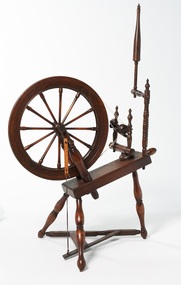
Spinning Wheel
... Irish and dates from the late 19th century. It would have been used for spinning flax as well as wool. It was purchased from H. Ringersma, Melbourne. handicrafts - history ...Part of the Zakrzewski Collection of spinning wheels donated to the National Wool Museum by Mr Wlodzimierz Zakrzewski. For many years, Mr Zakrzewski collected, researched and repaired spinning wheels from all over the world. This wheel is Irish and dates from the late 19th century. It would have been used for spinning flax as well as wool. It was purchased from H. Ringersma, Melbourne.Part of the Zakrzewski Spinning Wheel collection.handicrafts - history flax, spinning wheels, highlights of the national wool museum: the zakrzewski spinning wheel collection - exhibition (28/07/2001 - 02/12/2001), zakrzewski, mr wlodzimierz, handicrafts - history, flax -
 National Wool Museum
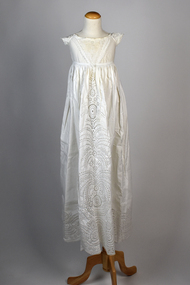
Clothing - Christening Gown, Eliza Lynon, 19th century
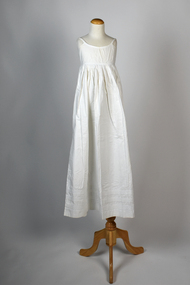
... 19th century Irish linen Christening gown and matching petticoat donated by Ruth Starkey. The Christening gown and petticoat have been in the family for around 170 years, passed to generations. They were sewn by Eliza Lynon in Enniskillen, Northern Ireland. The following history...19th century Irish linen Christening gown and matching petticoat donated by Ruth Starkey. The Christening gown and petticoat have been in the family for around 170 years, passed to generations. They were sewn by Eliza Lynon in Enniskillen, Northern Ireland. The following history ...19th century Irish linen Christening gown and matching petticoat donated by Ruth Starkey. The Christening gown and petticoat have been in the family for around 170 years, passed to generations. They were sewn by Eliza Lynon in Enniskillen, Northern Ireland. The following history has been provided by Ruth Starkey: • Town of origin is Enniskillen, Northern Ireland, sewn by Eliza Lynon. • The gown came to Australia with Eliza Lynon on the Red Jacket in 1855. • Eliza married Joseph Dobbyn (who was a member of the Royal Inniskilling Fusiliers Regiment) at Christ Church Geelong. • They built a home at 150 McKillop St, Geelong. Melrose was the name of the home. • Family name Dobbyn - Joseph Wilson Dobbyn b. 07/04/1844 - d 12/10/1892 and Elizabeth (Eliza b 12/03/1847 d 26/08/1934) and passed to Eliza Jane, Jessie Victoria Mary and Lucy Ellen Dobbyn (sisters). • Lucy Ellen nee Dobbyn, married Herbert Blunt, Boatbuilder Geelong at Christ Church Geelong • All lived at 150 McKillop St Geelong over the years • Passed to Marjorie May Fearn born nee Blunt who was baptized at Christ Church Geelong 29/5/1915 • Passed to Ann Rosemary Starkey nee Fearn • Passed to Ruth Norelle Starkey (me) I was baptized at Christ Church Geelong. • I am the great- great granddaughter of Joseph and Eliza and the great granddaughter of Herbert and Lucy.Irish linen Christening gown with cutwork anglais. Cutwork along hem is scalloped with a central motif going down the centre front of the body. Bodice is embroidered in a v shape at the front and has cutwork embroidered sleeves. Skirt is attached to the bodice with cartridge pleats.irish linen, christening, religion, children's clothing, ceremonial, church, geelong, red jacket ship, enniskillen, christ church geelong, northern ireland -
 National Wool Museum
Clothing - Petticoat, Eliza Lynon, 19th century
... 19th century Irish linen Christening gown and matching petticoat donated by Ruth Starkey. The Christening gown and petticoat have been in the family for around 170 years, passed to generations. They were sewn by Eliza Lynon in Enniskillen, Northern Ireland. The following history...19th century Irish linen Christening gown and matching petticoat donated by Ruth Starkey. The Christening gown and petticoat have been in the family for around 170 years, passed to generations. They were sewn by Eliza Lynon in Enniskillen, Northern Ireland. The following history ...19th century Irish linen Christening gown and matching petticoat donated by Ruth Starkey. The Christening gown and petticoat have been in the family for around 170 years, passed to generations. They were sewn by Eliza Lynon in Enniskillen, Northern Ireland. The following history has been provided by Ruth Starkey: • Town of origin is Enniskillen, Northern Ireland, sewn by Eliza Lynon. • The gown came to Australia with Eliza Lynon on the Red Jacket in 1855. • Eliza married Joseph Dobbyn (who was a member of the Royal Inniskilling Fusiliers Regiment) at Christ Church Geelong. • They built a home at 150 McKillop St, Geelong. Melrose was the name of the home. • Family name Dobbyn - Joseph Wilson Dobbyn b. 07/04/1844 - d 12/10/1892 and Elizabeth (Eliza b 12/03/1847 d 26/08/1934) and passed to Eliza Jane, Jessie Victoria Mary and Lucy Ellen Dobbyn (sisters). • Lucy Ellen nee Dobbyn, married Herbert Blunt, Boatbuilder Geelong at Christ Church Geelong • All lived at 150 McKillop St Geelong over the years • Passed to Marjorie May Fearn born nee Blunt who was baptized at Christ Church Geelong 29/5/1915 • Passed to Ann Rosemary Starkey nee Fearn • Passed to Ruth Norelle Starkey (me) I was baptized at Christ Church Geelong. • I am the great- great granddaughter of Joseph and Eliza and the great granddaughter of Herbert and Lucy.White Irish linen bodiced petticoat with three sets of three pin tucks at hem. Skirt is attached with cartridge pleating and constructed with French seams. The bodice ties at the back with drawstrings at the neck and waist.irish linen, christening, religion, children's clothing, ceremonial, church, geelong, red jacket ship, enniskillen, christ church geelong, northern ireland -
 The Celtic Club
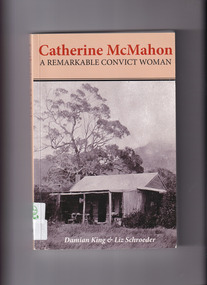
Book, Damien King et al, Catherine McMahon: A remarkable convict woman, 2012
... Irish - Australia -Biography Social history of the 18th and 19th century Ireland, England, Van Diemen's Land, Norfolk Island, Victoria and Western Australia via the life story of a woman convict, later free settler of the above named colonies. ...Social history of the 18th and 19th century Ireland, England, Van Diemen's Land, Norfolk Island, Victoria and Western Australia via the life story of a woman convict, later free settler of the above named colonies.Index, bib, maps, plates, ill., p.320.non-fictionSocial history of the 18th and 19th century Ireland, England, Van Diemen's Land, Norfolk Island, Victoria and Western Australia via the life story of a woman convict, later free settler of the above named colonies.women convicts - australia -biography., irish - australia -biography -
 Victorian Railway History Library
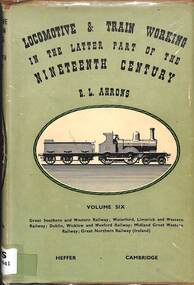
Book, Ahrons, Ernest, Leopold, Locomotive & Train Working in the Latter Part of the Nineteenth Century: Volume Six, 1954
... history A description of the way Locomotives and trains were worked in the latter part of the 19th century in Britain. Volume Six is on the Great Southern and Western Railway; Waterford, Limerick and Western Railway; Dublin, Wicklow and Wexford Railway; Midland Great Western Railway & the Great Northern Railway (Ireland.) ...A description of the way Locomotives and trains were worked in the latter part of the 19th century in Britain. Volume Six is on the Great Southern and Western Railway; Waterford, Limerick and Western Railway; Dublin, Wicklow and Wexford Railway; Midland Great Western Railway & the Great Northern Railway (Ireland.) Reprinted from articles in 'The Railway Magazine' from 1925to 1926.ill, p.77non-fictionA description of the way Locomotives and trains were worked in the latter part of the 19th century in Britain. Volume Six is on the Great Southern and Western Railway; Waterford, Limerick and Western Railway; Dublin, Wicklow and Wexford Railway; Midland Great Western Railway & the Great Northern Railway (Ireland.) Reprinted from articles in 'The Railway Magazine' from 1925to 1926.railroads - great britain - history, railway operations - great britain - history
