
Showing 13 items matching "j. h. maiden"
-
 Flagstaff Hill Maritime Museum and Village
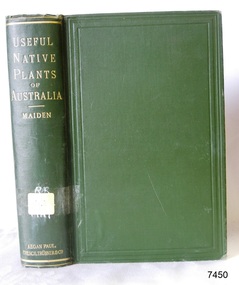
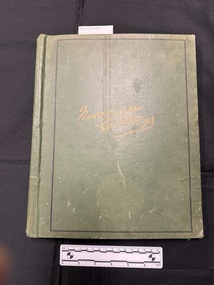
Book, The Useful Native Plants of Australia
... ...J H Maiden...The Useful Native Plants of Australia Author: J H Maiden Publisher: Turner & Henderson Date: 1889...Warrnambool Shipwrecked-coast Flagstaff-Hill Flagstaff-Hill-Maritime-Museum Maritime-Museum Shipwreck-coast Flagstaff-Hill-Maritime-Village Shipwrecked-artefact Book Warrnambool Mechanics’ Institute The Useful Native Plants of Australia J H Maiden Label on spine cover with typed text R.A. 581.6 MAI Pastedown end page has sticker from Warrnambool Mechanics Institute and Free Library The Useful Native Plants of Australia Author: J H Maiden Publisher: Turner & Henderson Date: 1889 The Useful Native Plants of Australia Book ...The Useful Native Plants of Australia Author: J H Maiden Publisher: Turner & Henderson Date: 1889Label on spine cover with typed text R.A. 581.6 MAI Pastedown end page has sticker from Warrnambool Mechanics Institute and Free Librarywarrnambool, shipwrecked-coast, flagstaff-hill, flagstaff-hill-maritime-museum, maritime-museum, shipwreck-coast, flagstaff-hill-maritime-village, shipwrecked-artefact, book, warrnambool mechanics’ institute, the useful native plants of australia, j h maiden -
 Flagstaff Hill Maritime Museum and Village
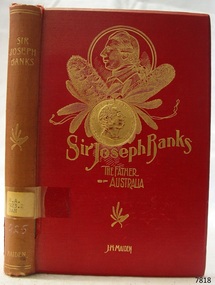
Book, Sir Joseph Banks
... ...j h maiden...Sir Joseph Banks The father of Australia Author: J H Maiden Publisher: Kegan Paul Trench & Co Date: 1909...warrnambool shipwrecked-coast flagstaff-hill flagstaff-hill-maritime-museum maritime-museum shipwreck-coast flagstaff-hill-maritime-village shipwrecked-artefact great ocean road book warrnambool library warrnambool mechanics’ institute mechanics’ institute library victorian library board warrnambool books and records warrnambool children’s library warrnambool public library sir joseph banks j h maiden Label on spine cover with typed text RA 923.2 BAN Pastedown front endpaper has sticker from Warrnambool Mechanics Institute and Free Library Sir Joseph Banks The father of Australia Author: J H Maiden Publisher: Kegan Paul Trench & Co Date: 1909 Sir Joseph Banks Book ...Sir Joseph Banks The father of Australia Author: J H Maiden Publisher: Kegan Paul Trench & Co Date: 1909Label on spine cover with typed text RA 923.2 BAN Pastedown front endpaper has sticker from Warrnambool Mechanics Institute and Free Librarywarrnambool, shipwrecked-coast, flagstaff-hill, flagstaff-hill-maritime-museum, maritime-museum, shipwreck-coast, flagstaff-hill-maritime-village, shipwrecked-artefact, great ocean road, book, warrnambool library, warrnambool mechanics’ institute, mechanics’ institute library, victorian library board, warrnambool books and records, warrnambool children’s library, warrnambool public library, sir joseph banks, j h maiden -
 Flagstaff Hill Maritime Museum and Village
Book, The Forest Flora of New South Wales Vol 1
... ...J. H. Maiden...The Forest Flora of New South Wales Vol 1 Author: J. H. Maiden Government Botanist and Director of the Botanic Gardens, Sydney Publisher: Government Printer Sydney Date: 1904...Bound and Received June 27-‘14" The Forest Flora of New South Wales Vol 1 Author: J. H. Maiden Government Botanist and Director of the Botanic Gardens, Sydney Publisher: Government Printer Sydney Date: 1904 The Forest Flora of New South Wales Vol 1 Book ...This item is from the ‘Pattison Collection’, a collection of books and records that was originally owned by the Warrnambool Mechanics’ Institute, which was founded in Warrnambool in 1853. By 1886 the Warrnambool Mechanics’ Institute (WMI) had grown to have a Library, Museum and Fine Arts Gallery, with a collection of “… choice productions of art, and valuable specimens in almost every branch and many wonderful national curiosities are now to be seen there, including historic relics of the town and district.” It later included a School of Design. Although it was very well patronised, the lack of financial support led the WMI in 1911 to ask the City Council to take it over. In 1935 Ralph Pattison was appointed as City Librarian to establish and organise the Warrnambool Library as it was then called. When the WMI building was pulled down in 1963 a new civic building was erected on the site and the new Warrnambool Library, on behalf of the City Council, took over all the holdings of the WMI. At this time some of the items were separated and identified as the ‘Pattison Collection’, named after Ralph Pattison. Eventually the components of the WMI were distributed from the Warrnambool Library to various places, including the Art Gallery, Historical Society and Flagstaff Hill. Later some were even distributed to other regional branches of Corangamite Regional Library and passed to and fro. It is difficult now to trace just where all of the items have ended up. The books at Flagstaff Hill Maritime Village generally display stamps and markings from Pattison as well as a variety of other institutions including the Mechanics’ Institute itself. RALPH ERIC PATTISON Ralph Eric Pattison was born in Rockhampton, Queensland, in 1891. He married Maude Swan from Warrnambool in 1920 and they set up home in Warrnambool. In 1935 Pattison accepted a position as City Librarian for the Warrnambool City Council. His huge challenge was to make a functional library within two rooms of the Mechanics’ Institute. He tirelessly cleaned, cleared and sorted a disarrayed collection of old books, jars of preserved specimens and other items reserved for exhibition in the city’s museum. He developed and updated the library with a wide variety of books for all tastes, including reference books for students; a difficult task to fulfil during the years following the Depression. He converted all of the lower area of the building into a library, reference room and reading room for members and the public. The books were sorted and stored using a cataloguing and card index system that he had developed himself. He also prepared the upper floor of the building and established the Art Gallery and later the Museum, a place to exhibit the many old relics that had been stored for years for this purpose. One of the treasures he found was a beautiful ancient clock, which he repaired, restored and enjoyed using in his office during the years of his service there. Ralph Pattison was described as “a meticulous gentleman whose punctuality, floorless courtesy and distinctive neat dress were hallmarks of his character, and ‘his’ clock controlled his daily routine, and his opening and closing of the library’s large heavy doors to the minute.” Pattison took leave during 1942 to 1945 to serve in the Royal Australian Navy, Volunteer Reserve as Lieutenant. A few years later he converted one of the Museum’s rooms into a Children’s Library, stocking it with suitable books for the younger generation. This was an instant success. In the 1950’s he had the honour of being appointed to the Victorian Library Board and received more inspiration from the monthly conferences in Melbourne. He was sadly retired in 1959 after over 23 years of service, due to the fact that he had gone over the working age of council officers. However he continued to take a very keen interest in the continual development of the Library until his death in 1969. Warrnambool's Mechanics' Institute (or Institution as it was sometimes called) was one of the earliest in Victoria. On 17th October 1853 a meeting was held where it was resolved to request the Lieutenant Governor of the Colony to grant land for the erection of a Mechanics' Institutes building. A committee was formed at the meeting and Richard Osburne chaired the first meeting of this committee. The land on the North West corner of Banyan and Merri Streets was granted but there were no funds to erect the building. The Formal Rights of the Warrnambool Mechanics' Institute's encompassed its aims and these were officially adopted in1859; "This Institution has for its object the diffusion of literary, scientific, and other useful knowledge amongst its members, excluding all controversial subjects, religious or political. These objects are sought to be obtained by means of a circulating library, a reading room, the establishment of classes, debates, and the occasional delivery of lectures on natural and experimental philosophy, mechanics, astronomy, chemistry, natural history, literature, and the useful and ornamental arts, particularly those which have a more immediate reference to the colony." The Warrnambool Mechanics' Institute opened its first reading room in November1884 in the National School building at the corner of Banyan and Timor Streets. The Institute was funded by member subscription, payable on a quarterly, half yearly or yearly basis. Samuel Hannaford, the Manager of the Warrnambool Bank of Australasia, was the first Honorary Secretary of the Mechanics' Institutes, and an early President and Vice-President. He also gave several of the early lectures in the Reading Room. Another early Secretary, Librarian and lecturer was Marmaduke Fisher, the teacher at the National School. Lecture topics included The Poets and Poetry of Ireland', 'The Birth and Development of the Earth', 'The Vertebrae - with Remarks on the pleasures resulting from the study of Natural History' and 'Architecture'. In 1856 the Reading Room was moved to James Hider's shop in Timor Street, and by 1864 it was located in the bookshop of Davies and Read. In the 1860's the Mechanics' Institute struggled as membership waned but in 1866, after a series of fund raising efforts, the committee was able to purchase land in Liebig Street, on a site then called Market Square, between the weighbridge and the fire station. A Mechanics' Institute building was opened at this site in August 1871. The following year four more rooms were added to the main Reading Room and in 1873 the Artisan School of Design was incorporated into the Institute. The same year Joseph Archibald established a Museum; however it deteriorated when he was transferred to Bendigo in 1877. In 1880, with Archibald's return to Warrnambool, the Museum was re-established, and in 1885 a new building was built at the back of the Institute to accommodate the re-created School of Design, the Art Gallery and the Museum. In 1887 the Museum section was moved to the former court house in Timor Street (for some time the walls of the building formed part of the TAFE cafeteria but all is now demolished)). In 1911 the Museum was transferred back to the original building and the management of the Mechanics' Institute was handed over to the Warrnambool City Council. The Museum and Art Gallery became one and housed many fine works of art, and the Library continued to grow. The building was well patronised, with records showing that at the beginning of the 20th century there were between 500 and 800 visitors. During World War One the monthly figures were in the thousands, with 3,400 people visiting in January 1915. The Museum was a much loved Institution in Warrnambool until the contents of the Museum and Art Gallery were removed to make room for the Warrnambool City Council Engineers' Department. The contents were stored but many of the items were scattered or lost. When the original building was demolished the site became occupied by the Civic Centre, which included the new City Library. (The library was temporarily located in the old Palais building in Koroit Street.) In the process of reorganisation the Collection was distributed amongst the community groups: -The new City Library took some of the historic books and some important documents, historic photographs and newspapers. -The Art Gallery kept the 19th Century art collection and some of the artefacts from the museum. -The Historic Society has some items -The State Museum has some items -Some items were destroyed -Flagstaff Hill Maritime Village has old newspapers, Government Gazettes, most of the Mechanics' Institute Library, ledgers and documents connected to the Mechanics' Institute Library, some framed and unframed art works and some photographs. The Warrnambool Mechanics' Institute Library book collection is deemed to be of great importance because it is one of the few collections in an almost intact state, and many of the books are now very rare and of great value. The Pattison Collection, along with other items at Flagstaff Hill Maritime Village, was originally part of the Warrnambool Mechanics' Institute’s collection. The Warrnambool Mechanics’ Institute Collection is primarily significant in its totality, rather than for the individual objects it contains. Its contents are highly representative of the development of Mechanics' Institute libraries across Australia, particularly Victoria. A diversity of publications and themes has been amassed, and these provide clues to our understanding of the nature of and changes in the reading habits of Victorians from the 1850s to the middle of the 20th century. The collection also highlights the Warrnambool community’s commitment to the Mechanics’ Institute, reading, literacy and learning in the regions, and proves that access to knowledge was not impeded by distance. These items help to provide a more complete picture of our community’s ideals and aspirations. The Warrnambool Mechanics Institute book collection has historical and social significance for its strong association with the Mechanics Institute movement and the important role it played in the intellectual, cultural and social development of people throughout the latter part of the nineteenth century and the early twentieth century. The collection of books is a rare example of an early lending library and its significance is enhanced by the survival of an original collection of many volumes. The Warrnambool Mechanics' Institute’s publication collection is of both local and state significance. The Forest Flora of New South Wales Vol 1 Author: J. H. Maiden Government Botanist and Director of the Botanic Gardens, Sydney Publisher: Government Printer Sydney Date: 1904Label on spine cover with typed text PAT 581.9944 MAI Pastedown front endpaper has sticker from Warrnambool Mechanics Institute and Free Library Front loose endpaper has a sticker from Corangamite Regional Library Service Front loose endpaper has a stamp from Corangamite Regional Library Service Fly page has in handwriting “Purchased by Government Subsidy. Bound and Received June 27-‘14" warrnambool, shipwrecked-coast, flagstaff-hill, flagstaff-hill-maritime-museum, maritime-museum, shipwreck-coast, flagstaff-hill-maritime-village, shipwrecked-artefact, book, pattison collection, warrnambool library, warrnambool mechanics’ institute, ralph eric pattison, corangamite regional library service, warrnambool city librarian, mechanics’ institute library, victorian library board, warrnambool books and records, warrnambool children’s library, great ocean road, the forest flora of new south wales vol 1, j. h. maiden -
 Flagstaff Hill Maritime Museum and Village
Book, The Forest Flora of New South Wales Vol 2
... ...J. H. Maiden...The Forest Flora of New South Wales Vol 2 Author: J. H. Maiden Government Botanist and Director of the Botanic Gardens, Sydney Publisher: Government Printer Sydney Date:1907...Bound and Received June 27- ‘14” The Forest Flora of New South Wales Vol 2 Author: J. H. Maiden Government Botanist and Director of the Botanic Gardens, Sydney Publisher: Government Printer Sydney Date:1907 The Forest Flora of New South Wales Vol 2 Book ...This item is from the ‘Pattison Collection’, a collection of books and records that was originally owned by the Warrnambool Mechanics’ Institute, which was founded in Warrnambool in 1853. By 1886 the Warrnambool Mechanics’ Institute (WMI) had grown to have a Library, Museum and Fine Arts Gallery, with a collection of “… choice productions of art, and valuable specimens in almost every branch and many wonderful national curiosities are now to be seen there, including historic relics of the town and district.” It later included a School of Design. Although it was very well patronised, the lack of financial support led the WMI in 1911 to ask the City Council to take it over. In 1935 Ralph Pattison was appointed as City Librarian to establish and organise the Warrnambool Library as it was then called. When the WMI building was pulled down in 1963 a new civic building was erected on the site and the new Warrnambool Library, on behalf of the City Council, took over all the holdings of the WMI. At this time some of the items were separated and identified as the ‘Pattison Collection’, named after Ralph Pattison. Eventually the components of the WMI were distributed from the Warrnambool Library to various places, including the Art Gallery, Historical Society and Flagstaff Hill. Later some were even distributed to other regional branches of Corangamite Regional Library and passed to and fro. It is difficult now to trace just where all of the items have ended up. The books at Flagstaff Hill Maritime Village generally display stamps and markings from Pattison as well as a variety of other institutions including the Mechanics’ Institute itself. RALPH ERIC PATTISON Ralph Eric Pattison was born in Rockhampton, Queensland, in 1891. He married Maude Swan from Warrnambool in 1920 and they set up home in Warrnambool. In 1935 Pattison accepted a position as City Librarian for the Warrnambool City Council. His huge challenge was to make a functional library within two rooms of the Mechanics’ Institute. He tirelessly cleaned, cleared and sorted a disarrayed collection of old books, jars of preserved specimens and other items reserved for exhibition in the city’s museum. He developed and updated the library with a wide variety of books for all tastes, including reference books for students; a difficult task to fulfil during the years following the Depression. He converted all of the lower area of the building into a library, reference room and reading room for members and the public. The books were sorted and stored using a cataloguing and card index system that he had developed himself. He also prepared the upper floor of the building and established the Art Gallery and later the Museum, a place to exhibit the many old relics that had been stored for years for this purpose. One of the treasures he found was a beautiful ancient clock, which he repaired, restored and enjoyed using in his office during the years of his service there. Ralph Pattison was described as “a meticulous gentleman whose punctuality, floorless courtesy and distinctive neat dress were hallmarks of his character, and ‘his’ clock controlled his daily routine, and his opening and closing of the library’s large heavy doors to the minute.” Pattison took leave during 1942 to 1945 to serve in the Royal Australian Navy, Volunteer Reserve as Lieutenant. A few years later he converted one of the Museum’s rooms into a Children’s Library, stocking it with suitable books for the younger generation. This was an instant success. In the 1950’s he had the honour of being appointed to the Victorian Library Board and received more inspiration from the monthly conferences in Melbourne. He was sadly retired in 1959 after over 23 years of service, due to the fact that he had gone over the working age of council officers. However he continued to take a very keen interest in the continual development of the Library until his death in 1969. Warrnambool's Mechanics' Institute (or Institution as it was sometimes called) was one of the earliest in Victoria. On 17th October 1853 a meeting was held where it was resolved to request the Lieutenant Governor of the Colony to grant land for the erection of a Mechanics' Institutes building. A committee was formed at the meeting and Richard Osburne chaired the first meeting of this committee. The land on the North West corner of Banyan and Merri Streets was granted but there were no funds to erect the building. The Formal Rights of the Warrnambool Mechanics' Institute's encompassed its aims and these were officially adopted in1859; "This Institution has for its object the diffusion of literary, scientific, and other useful knowledge amongst its members, excluding all controversial subjects, religious or political. These objects are sought to be obtained by means of a circulating library, a reading room, the establishment of classes, debates, and the occasional delivery of lectures on natural and experimental philosophy, mechanics, astronomy, chemistry, natural history, literature, and the useful and ornamental arts, particularly those which have a more immediate reference to the colony." The Warrnambool Mechanics' Institute opened its first reading room in November1884 in the National School building at the corner of Banyan and Timor Streets. The Institute was funded by member subscription, payable on a quarterly, half yearly or yearly basis. Samuel Hannaford, the Manager of the Warrnambool Bank of Australasia, was the first Honorary Secretary of the Mechanics' Institutes, and an early President and Vice-President. He also gave several of the early lectures in the Reading Room. Another early Secretary, Librarian and lecturer was Marmaduke Fisher, the teacher at the National School. Lecture topics included The Poets and Poetry of Ireland', 'The Birth and Development of the Earth', 'The Vertebrae - with Remarks on the pleasures resulting from the study of Natural History' and 'Architecture'. In 1856 the Reading Room was moved to James Hider's shop in Timor Street, and by 1864 it was located in the bookshop of Davies and Read. In the 1860's the Mechanics' Institute struggled as membership waned but in 1866, after a series of fund raising efforts, the committee was able to purchase land in Liebig Street, on a site then called Market Square, between the weighbridge and the fire station. A Mechanics' Institute building was opened at this site in August 1871. The following year four more rooms were added to the main Reading Room and in 1873 the Artisan School of Design was incorporated into the Institute. The same year Joseph Archibald established a Museum; however it deteriorated when he was transferred to Bendigo in 1877. In 1880, with Archibald's return to Warrnambool, the Museum was re-established, and in 1885 a new building was built at the back of the Institute to accommodate the re-created School of Design, the Art Gallery and the Museum. In 1887 the Museum section was moved to the former court house in Timor Street (for some time the walls of the building formed part of the TAFE cafeteria but all is now demolished)). In 1911 the Museum was transferred back to the original building and the management of the Mechanics' Institute was handed over to the Warrnambool City Council. The Museum and Art Gallery became one and housed many fine works of art, and the Library continued to grow. The building was well patronised, with records showing that at the beginning of the 20th century there were between 500 and 800 visitors. During World War One the monthly figures were in the thousands, with 3,400 people visiting in January 1915. The Museum was a much loved Institution in Warrnambool until the contents of the Museum and Art Gallery were removed to make room for the Warrnambool City Council Engineers' Department. The contents were stored but many of the items were scattered or lost. When the original building was demolished the site became occupied by the Civic Centre, which included the new City Library. (The library was temporarily located in the old Palais building in Koroit Street.) In the process of reorganisation the Collection was distributed amongst the community groups: -The new City Library took some of the historic books and some important documents, historic photographs and newspapers. -The Art Gallery kept the 19th Century art collection and some of the artefacts from the museum. -The Historic Society has some items -The State Museum has some items -Some items were destroyed -Flagstaff Hill Maritime Village has old newspapers, Government Gazettes, most of the Mechanics' Institute Library, ledgers and documents connected to the Mechanics' Institute Library, some framed and unframed art works and some photographs. The Warrnambool Mechanics' Institute Library book collection is deemed to be of great importance because it is one of the few collections in an almost intact state, and many of the books are now very rare and of great value. The Pattison Collection, along with other items at Flagstaff Hill Maritime Village, was originally part of the Warrnambool Mechanics' Institute’s collection. The Warrnambool Mechanics’ Institute Collection is primarily significant in its totality, rather than for the individual objects it contains. Its contents are highly representative of the development of Mechanics' Institute libraries across Australia, particularly Victoria. A diversity of publications and themes has been amassed, and these provide clues to our understanding of the nature of and changes in the reading habits of Victorians from the 1850s to the middle of the 20th century. The collection also highlights the Warrnambool community’s commitment to the Mechanics’ Institute, reading, literacy and learning in the regions, and proves that access to knowledge was not impeded by distance. These items help to provide a more complete picture of our community’s ideals and aspirations. The Warrnambool Mechanics Institute book collection has historical and social significance for its strong association with the Mechanics Institute movement and the important role it played in the intellectual, cultural and social development of people throughout the latter part of the nineteenth century and the early twentieth century. The collection of books is a rare example of an early lending library and its significance is enhanced by the survival of an original collection of many volumes. The Warrnambool Mechanics' Institute’s publication collection is of both local and state significance. The Forest Flora of New South Wales Vol 2 Author: J. H. Maiden Government Botanist and Director of the Botanic Gardens, Sydney Publisher: Government Printer Sydney Date:1907Label on spine cover with typed text PAT 581.9944 MAI Pastedown front endpaper has sticker from Warrnambool Mechanics Institute and Free Library Front loose endpaper has a sticker from Corangamite Regional Library Service Front loose endpaper has a stamp from Corangamite Regional Library Service Fly page has in handwriting “Purchased by Government Subsidy. Bound and Received June 27- ‘14” warrnambool, shipwrecked-coast, flagstaff-hill, flagstaff-hill-maritime-museum, maritime-museum, shipwreck-coast, flagstaff-hill-maritime-village, shipwrecked-artefact, book, pattison collection, warrnambool library, warrnambool mechanics’ institute, ralph eric pattison, corangamite regional library service, warrnambool city librarian, mechanics’ institute library, victorian library board, warrnambool books and records, warrnambool children’s library, great ocean road, the forest flora of new south wales vol 2, j. h. maiden -
 Flagstaff Hill Maritime Museum and Village
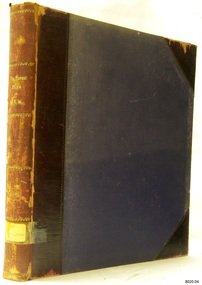
Book, The Forest Flora of New South Wales Vol 4
... ...J. H. Maiden...The Forest Flora of New South Wales Vol 4 Author: J. H. Maiden Government Botanist and Director of the Botanic Gardens, Sydney Publisher: Government Printer Sydney Date: 1913...Bound and Received June 27- ‘14” The Forest Flora of New South Wales Vol 4 Author: J. H. Maiden Government Botanist and Director of the Botanic Gardens, Sydney Publisher: Government Printer Sydney Date: 1913 The Forest Flora of New South Wales Vol 4 Book ...This item is from the ‘Pattison Collection’, a collection of books and records that was originally owned by the Warrnambool Mechanics’ Institute, which was founded in Warrnambool in 1853. By 1886 the Warrnambool Mechanics’ Institute (WMI) had grown to have a Library, Museum and Fine Arts Gallery, with a collection of “… choice productions of art, and valuable specimens in almost every branch and many wonderful national curiosities are now to be seen there, including historic relics of the town and district.” It later included a School of Design. Although it was very well patronised, the lack of financial support led the WMI in 1911 to ask the City Council to take it over. In 1935 Ralph Pattison was appointed as City Librarian to establish and organise the Warrnambool Library as it was then called. When the WMI building was pulled down in 1963 a new civic building was erected on the site and the new Warrnambool Library, on behalf of the City Council, took over all the holdings of the WMI. At this time some of the items were separated and identified as the ‘Pattison Collection’, named after Ralph Pattison. Eventually the components of the WMI were distributed from the Warrnambool Library to various places, including the Art Gallery, Historical Society and Flagstaff Hill. Later some were even distributed to other regional branches of Corangamite Regional Library and passed to and fro. It is difficult now to trace just where all of the items have ended up. The books at Flagstaff Hill Maritime Village generally display stamps and markings from Pattison as well as a variety of other institutions including the Mechanics’ Institute itself. RALPH ERIC PATTISON Ralph Eric Pattison was born in Rockhampton, Queensland, in 1891. He married Maude Swan from Warrnambool in 1920 and they set up home in Warrnambool. In 1935 Pattison accepted a position as City Librarian for the Warrnambool City Council. His huge challenge was to make a functional library within two rooms of the Mechanics’ Institute. He tirelessly cleaned, cleared and sorted a disarrayed collection of old books, jars of preserved specimens and other items reserved for exhibition in the city’s museum. He developed and updated the library with a wide variety of books for all tastes, including reference books for students; a difficult task to fulfil during the years following the Depression. He converted all of the lower area of the building into a library, reference room and reading room for members and the public. The books were sorted and stored using a cataloguing and card index system that he had developed himself. He also prepared the upper floor of the building and established the Art Gallery and later the Museum, a place to exhibit the many old relics that had been stored for years for this purpose. One of the treasures he found was a beautiful ancient clock, which he repaired, restored and enjoyed using in his office during the years of his service there. Ralph Pattison was described as “a meticulous gentleman whose punctuality, floorless courtesy and distinctive neat dress were hallmarks of his character, and ‘his’ clock controlled his daily routine, and his opening and closing of the library’s large heavy doors to the minute.” Pattison took leave during 1942 to 1945 to serve in the Royal Australian Navy, Volunteer Reserve as Lieutenant. A few years later he converted one of the Museum’s rooms into a Children’s Library, stocking it with suitable books for the younger generation. This was an instant success. In the 1950’s he had the honour of being appointed to the Victorian Library Board and received more inspiration from the monthly conferences in Melbourne. He was sadly retired in 1959 after over 23 years of service, due to the fact that he had gone over the working age of council officers. However he continued to take a very keen interest in the continual development of the Library until his death in 1969. WARRNAMBOOL'S MECHANICS' INSTITUTE Warrnambool's Mechanics' Institute (or Institution as it was sometimes called) was one of the earliest in Victoria. On 17th October 1853 a meeting was held where it was resolved to request the Lieutenant Governor of the Colony to grant land for the erection of a Mechanics' Institutes building. A committee was formed at the meeting and Richard Osburne chaired the first meeting of this committee. The land on the North West corner of Banyan and Merri Streets was granted but there were no funds to erect the building. The Formal Rights of the Warrnambool Mechanics' Institute's encompassed its aims and these were officially adopted in1859; "This Institution has for its object the diffusion of literary, scientific, and other useful knowledge amongst its members, excluding all controversial subjects, religious or political. These objects are sought to be obtained by means of a circulating library, a reading room, the establishment of classes, debates, and the occasional delivery of lectures on natural and experimental philosophy, mechanics, astronomy, chemistry, natural history, literature, and the useful and ornamental arts, particularly those which have a more immediate reference to the colony." The Warrnambool Mechanics' Institute opened its first reading room in November1884 in the National School building at the corner of Banyan and Timor Streets. The Institute was funded by member subscription, payable on a quarterly, half yearly or yearly basis. Samuel Hannaford, the Manager of the Warrnambool Bank of Australasia, was the first Honorary Secretary of the Mechanics' Institutes, and an early President and Vice-President. He also gave several of the early lectures in the Reading Room. Another early Secretary, Librarian and lecturer was Marmaduke Fisher, the teacher at the National School. Lecture topics included The Poets and Poetry of Ireland', 'The Birth and Development of the Earth', 'The Vertebrae - with Remarks on the pleasures resulting from the study of Natural History' and 'Architecture'. In 1856 the Reading Room was moved to James Hider's shop in Timor Street, and by 1864 it was located in the bookshop of Davies and Read. In the 1860's the Mechanics' Institute struggled as membership waned but in 1866, after a series of fund raising efforts, the committee was able to purchase land in Liebig Street, on a site then called Market Square, between the weighbridge and the fire station. A Mechanics' Institute building was opened at this site in August 1871. The following year four more rooms were added to the main Reading Room and in 1873 the Artisan School of Design was incorporated into the Institute. The same year Joseph Archibald established a Museum; however it deteriorated when he was transferred to Bendigo in 1877. In 1880, with Archibald's return to Warrnambool, the Museum was re-established, and in 1885 a new building was built at the back of the Institute to accommodate the re-created School of Design, the Art Gallery and the Museum. In 1887 the Museum section was moved to the former court house in Timor Street (for some time the walls of the building formed part of the TAFE cafeteria but all is now demolished)). In 1911 the Museum was transferred back to the original building and the management of the Mechanics' Institute was handed over to the Warrnambool City Council. The Museum and Art Gallery became one and housed many fine works of art, and the Library continued to grow. The building was well patronised, with records showing that at the beginning of the 20th century there were between 500 and 800 visitors. During World War One the monthly figures were in the thousands, with 3,400 people visiting in January 1915. The Museum was a much loved Institution in Warrnambool until the contents of the Museum and Art Gallery were removed to make room for the Warrnambool City Council Engineers' Department. The contents were stored but many of the items were scattered or lost. When the original building was demolished the site became occupied by the Civic Centre, which included the new City Library. (The library was temporarily located in the old Palais building in Koroit Street.) In the process of reorganisation the Collection was distributed amongst the community groups: -The new City Library took some of the historic books and some important documents, historic photographs and newspapers. -The Art Gallery kept the 19th Century art collection and some of the artefacts from the museum. -The Historic Society has some items -The State Museum has some items -Some items were destroyed -Flagstaff Hill Maritime Village has old newspapers, Government Gazettes, most of the Mechanics' Institute Library, ledgers and documents connected to the Mechanics' Institute Library, some framed and unframed art works and some photographs. The Warrnambool Mechanics' Institute Library book collection is deemed to be of great importance because it is one of the few collections in an almost intact state, and many of the books are now very rare and of great value The Pattison Collection, along with other items at Flagstaff Hill Maritime Village, was originally part of the Warrnambool Mechanics' Institute’s collection. The Warrnambool Mechanics’ Institute Collection is primarily significant in its totality, rather than for the individual objects it contains. Its contents are highly representative of the development of Mechanics' Institute libraries across Australia, particularly Victoria. A diversity of publications and themes has been amassed, and these provide clues to our understanding of the nature of and changes in the reading habits of Victorians from the 1850s to the middle of the 20th century. The collection also highlights the Warrnambool community’s commitment to the Mechanics’ Institute, reading, literacy and learning in the regions, and proves that access to knowledge was not impeded by distance. These items help to provide a more complete picture of our community’s ideals and aspirations. The Warrnambool Mechanics Institute book collection has historical and social significance for its strong association with the Mechanics Institute movement and the important role it played in the intellectual, cultural and social development of people throughout the latter part of the nineteenth century and the early twentieth century. The collection of books is a rare example of an early lending library and its significance is enhanced by the survival of an original collection of many volumes. The Warrnambool Mechanics' Institute’s publication collection is of both local and state significance. The Forest Flora of New South Wales Vol 4 Author: J. H. Maiden Government Botanist and Director of the Botanic Gardens, Sydney Publisher: Government Printer Sydney Date: 1913Label on spine cover with typed text PAT 581.9944 MAI Pastedown front endpaper has sticker from Warrnambool Mechanics Institute and Free Library Front loose endpaper has a sticker from Corangamite Regional Library Service Front loose endpaper has a stamp from Corangamite Regional Library Service Fly page has in handwriting “Purchased by Government Subsidy. Bound and Received June 27- ‘14” warrnambool, shipwrecked-coast, flagstaff-hill, flagstaff-hill-maritime-museum, maritime-museum, shipwreck-coast, flagstaff-hill-maritime-village, shipwrecked-artefact, book, pattison collection, warrnambool library, warrnambool mechanics’ institute, ralph eric pattison, corangamite regional library service, warrnambool city librarian, mechanics’ institute library, victorian library board, warrnambool books and records, warrnambool children’s library, great ocean road, the forest flora of new south wales vol 4, j. h. maiden -
 Flagstaff Hill Maritime Museum and Village
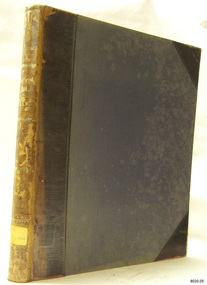
Book, The Forest Flora of New South Wales Vol 5
... ...J. H. Maiden...The Forest Flora of New South Wales Vol 5 Author: J. H. Maiden Government Botanist and Director of the Botanic Gardens, Sydney Publisher: Government Printer Sydney Date: 1913...Bound and Received June 27- ‘14” Fly page has a stamp from Warrnambool Public Museum The Forest Flora of New South Wales Vol 5 Author: J. H. Maiden Government Botanist and Director of the Botanic Gardens, Sydney Publisher: Government Printer Sydney Date: 1913 The Forest Flora of New South Wales Vol 5 Book ...This item is from the ‘Pattison Collection’, a collection of books and records that was originally owned by the Warrnambool Mechanics’ Institute, which was founded in Warrnambool in 1853. By 1886 the Warrnambool Mechanics’ Institute (WMI) had grown to have a Library, Museum and Fine Arts Gallery, with a collection of “… choice productions of art, and valuable specimens in almost every branch and many wonderful national curiosities are now to be seen there, including historic relics of the town and district.” It later included a School of Design. Although it was very well patronised, the lack of financial support led the WMI in 1911 to ask the City Council to take it over. In 1935 Ralph Pattison was appointed as City Librarian to establish and organise the Warrnambool Library as it was then called. When the WMI building was pulled down in 1963 a new civic building was erected on the site and the new Warrnambool Library, on behalf of the City Council, took over all the holdings of the WMI. At this time some of the items were separated and identified as the ‘Pattison Collection’, named after Ralph Pattison. Eventually the components of the WMI were distributed from the Warrnambool Library to various places, including the Art Gallery, Historical Society and Flagstaff Hill. Later some were even distributed to other regional branches of Corangamite Regional Library and passed to and fro. It is difficult now to trace just where all of the items have ended up. The books at Flagstaff Hill Maritime Village generally display stamps and markings from Pattison as well as a variety of other institutions including the Mechanics’ Institute itself. RALPH ERIC PATTISON Ralph Eric Pattison was born in Rockhampton, Queensland, in 1891. He married Maude Swan from Warrnambool in 1920 and they set up home in Warrnambool. In 1935 Pattison accepted a position as City Librarian for the Warrnambool City Council. His huge challenge was to make a functional library within two rooms of the Mechanics’ Institute. He tirelessly cleaned, cleared and sorted a disarrayed collection of old books, jars of preserved specimens and other items reserved for exhibition in the city’s museum. He developed and updated the library with a wide variety of books for all tastes, including reference books for students; a difficult task to fulfil during the years following the Depression. He converted all of the lower area of the building into a library, reference room and reading room for members and the public. The books were sorted and stored using a cataloguing and card index system that he had developed himself. He also prepared the upper floor of the building and established the Art Gallery and later the Museum, a place to exhibit the many old relics that had been stored for years for this purpose. One of the treasures he found was a beautiful ancient clock, which he repaired, restored and enjoyed using in his office during the years of his service there. Ralph Pattison was described as “a meticulous gentleman whose punctuality, floorless courtesy and distinctive neat dress were hallmarks of his character, and ‘his’ clock controlled his daily routine, and his opening and closing of the library’s large heavy doors to the minute.” Pattison took leave during 1942 to 1945 to serve in the Royal Australian Navy, Volunteer Reserve as Lieutenant. A few years later he converted one of the Museum’s rooms into a Children’s Library, stocking it with suitable books for the younger generation. This was an instant success. In the 1950’s he had the honour of being appointed to the Victorian Library Board and received more inspiration from the monthly conferences in Melbourne. He was sadly retired in 1959 after over 23 years of service, due to the fact that he had gone over the working age of council officers. However he continued to take a very keen interest in the continual development of the Library until his death in 1969. WARRNAMBOOL'S MECHANICS' INSTITUTE Warrnambool's Mechanics' Institute (or Institution as it was sometimes called) was one of the earliest in Victoria. On 17th October 1853 a meeting was held where it was resolved to request the Lieutenant Governor of the Colony to grant land for the erection of a Mechanics' Institutes building. A committee was formed at the meeting and Richard Osburne chaired the first meeting of this committee. The land on the North West corner of Banyan and Merri Streets was granted but there were no funds to erect the building. The Formal Rights of the Warrnambool Mechanics' Institute's encompassed its aims and these were officially adopted in1859; "This Institution has for its object the diffusion of literary, scientific, and other useful knowledge amongst its members, excluding all controversial subjects, religious or political. These objects are sought to be obtained by means of a circulating library, a reading room, the establishment of classes, debates, and the occasional delivery of lectures on natural and experimental philosophy, mechanics, astronomy, chemistry, natural history, literature, and the useful and ornamental arts, particularly those which have a more immediate reference to the colony." The Warrnambool Mechanics' Institute opened its first reading room in November1884 in the National School building at the corner of Banyan and Timor Streets. The Institute was funded by member subscription, payable on a quarterly, half yearly or yearly basis. Samuel Hannaford, the Manager of the Warrnambool Bank of Australasia, was the first Honorary Secretary of the Mechanics' Institutes, and an early President and Vice-President. He also gave several of the early lectures in the Reading Room. Another early Secretary, Librarian and lecturer was Marmaduke Fisher, the teacher at the National School. Lecture topics included The Poets and Poetry of Ireland', 'The Birth and Development of the Earth', 'The Vertebrae - with Remarks on the pleasures resulting from the study of Natural History' and 'Architecture'. In 1856 the Reading Room was moved to James Hider's shop in Timor Street, and by 1864 it was located in the bookshop of Davies and Read. In the 1860's the Mechanics' Institute struggled as membership waned but in 1866, after a series of fund raising efforts, the committee was able to purchase land in Liebig Street, on a site then called Market Square, between the weighbridge and the fire station. A Mechanics' Institute building was opened at this site in August 1871. The following year four more rooms were added to the main Reading Room and in 1873 the Artisan School of Design was incorporated into the Institute. The same year Joseph Archibald established a Museum; however it deteriorated when he was transferred to Bendigo in 1877. In 1880, with Archibald's return to Warrnambool, the Museum was re-established, and in 1885 a new building was built at the back of the Institute to accommodate the re-created School of Design, the Art Gallery and the Museum. In 1887 the Museum section was moved to the former court house in Timor Street (for some time the walls of the building formed part of the TAFE cafeteria but all is now demolished)). In 1911 the Museum was transferred back to the original building and the management of the Mechanics' Institute was handed over to the Warrnambool City Council. The Museum and Art Gallery became one and housed many fine works of art, and the Library continued to grow. The building was well patronised, with records showing that at the beginning of the 20th century there were between 500 and 800 visitors. During World War One the monthly figures were in the thousands, with 3,400 people visiting in January 1915. The Museum was a much loved Institution in Warrnambool until the contents of the Museum and Art Gallery were removed to make room for the Warrnambool City Council Engineers' Department. The contents were stored but many of the items were scattered or lost. When the original building was demolished the site became occupied by the Civic Centre, which included the new City Library. (The library was temporarily located in the old Palais building in Koroit Street.) In the process of reorganisation the Collection was distributed amongst the community groups: -The new City Library took some of the historic books and some important documents, historic photographs and newspapers. -The Art Gallery kept the 19th Century art collection and some of the artefacts from the museum. -The Historic Society has some items -The State Museum has some items -Some items were destroyed -Flagstaff Hill Maritime Village has old newspapers, Government Gazettes, most of the Mechanics' Institute Library, ledgers and documents connected to the Mechanics' Institute Library, some framed and unframed art works and some photographs. The Warrnambool Mechanics' Institute Library book collection is deemed to be of great importance because it is one of the few collections in an almost intact state, and many of the books are now very rare and of great value The Pattison Collection, along with other items at Flagstaff Hill Maritime Village, was originally part of the Warrnambool Mechanics' Institute’s collection. The Warrnambool Mechanics’ Institute Collection is primarily significant in its totality, rather than for the individual objects it contains. Its contents are highly representative of the development of Mechanics' Institute libraries across Australia, particularly Victoria. A diversity of publications and themes has been amassed, and these provide clues to our understanding of the nature of and changes in the reading habits of Victorians from the 1850s to the middle of the 20th century. The collection also highlights the Warrnambool community’s commitment to the Mechanics’ Institute, reading, literacy and learning in the regions, and proves that access to knowledge was not impeded by distance. These items help to provide a more complete picture of our community’s ideals and aspirations. The Warrnambool Mechanics Institute book collection has historical and social significance for its strong association with the Mechanics Institute movement and the important role it played in the intellectual, cultural and social development of people throughout the latter part of the nineteenth century and the early twentieth century. The collection of books is a rare example of an early lending library and its significance is enhanced by the survival of an original collection of many volumes. The Warrnambool Mechanics' Institute’s publication collection is of both local and state significance. The Forest Flora of New South Wales Vol 5 Author: J. H. Maiden Government Botanist and Director of the Botanic Gardens, Sydney Publisher: Government Printer Sydney Date: 1913Label on spine cover with typed text PAT 581.9944 MAI Pastedown front endpaper has sticker from Warrnambool Mechanics Institute and Free Library Front loose endpaper has a sticker from Corangamite Regional Library Service Front loose endpaper has a stamp from Corangamite Regional Library Service Fly page has in handwriting “Purchased by Government Subsidy. Bound and Received June 27- ‘14” Fly page has a stamp from Warrnambool Public Museum warrnambool, shipwrecked-coast, flagstaff-hill, flagstaff-hill-maritime-museum, maritime-museum, shipwreck-coast, flagstaff-hill-maritime-village, shipwrecked-artefact, book, pattison collection, warrnambool library, warrnambool mechanics’ institute, ralph eric pattison, corangamite regional library service, warrnambool city librarian, mechanics’ institute library, victorian library board, warrnambool books and records, warrnambool children’s library, great ocean road, the forest flora of new south wales vol 5, j. h. maiden -
 Flagstaff Hill Maritime Museum and Village
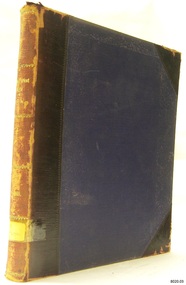
Book, The Forest Flora of New South Wales Vol 3
... The Forest Flora of New South Wales Vol 3 Author: J. H. Maiden Government Botanist and Director of the Botanic Gardens, Sydney Publisher: Government Printer Sydney Date: 1908...Bound and Received June 27- ‘14” The Forest Flora of New South Wales Vol 3 Author: J. H. Maiden Government Botanist and Director of the Botanic Gardens, Sydney Publisher: Government Printer Sydney Date: 1908 The Forest Flora of New South Wales Vol 3 Book ...This item is from the ‘Pattison Collection’, a collection of books and records that was originally owned by the Warrnambool Mechanics’ Institute, which was founded in Warrnambool in 1853. By 1886 the Warrnambool Mechanics’ Institute (WMI) had grown to have a Library, Museum and Fine Arts Gallery, with a collection of “… choice productions of art, and valuable specimens in almost every branch and many wonderful national curiosities are now to be seen there, including historic relics of the town and district.” It later included a School of Design. Although it was very well patronised, the lack of financial support led the WMI in 1911 to ask the City Council to take it over. In 1935 Ralph Pattison was appointed as City Librarian to establish and organise the Warrnambool Library as it was then called. When the WMI building was pulled down in 1963 a new civic building was erected on the site and the new Warrnambool Library, on behalf of the City Council, took over all the holdings of the WMI. At this time some of the items were separated and identified as the ‘Pattison Collection’, named after Ralph Pattison. Eventually the components of the WMI were distributed from the Warrnambool Library to various places, including the Art Gallery, Historical Society and Flagstaff Hill. Later some were even distributed to other regional branches of Corangamite Regional Library and passed to and fro. It is difficult now to trace just where all of the items have ended up. The books at Flagstaff Hill Maritime Village generally display stamps and markings from Pattison as well as a variety of other institutions including the Mechanics’ Institute itself. RALPH ERIC PATTISON Ralph Eric Pattison was born in Rockhampton, Queensland, in 1891. He married Maude Swan from Warrnambool in 1920 and they set up home in Warrnambool. In 1935 Pattison accepted a position as City Librarian for the Warrnambool City Council. His huge challenge was to make a functional library within two rooms of the Mechanics’ Institute. He tirelessly cleaned, cleared and sorted a disarrayed collection of old books, jars of preserved specimens and other items reserved for exhibition in the city’s museum. He developed and updated the library with a wide variety of books for all tastes, including reference books for students; a difficult task to fulfil during the years following the Depression. He converted all of the lower area of the building into a library, reference room and reading room for members and the public. The books were sorted and stored using a cataloguing and card index system that he had developed himself. He also prepared the upper floor of the building and established the Art Gallery and later the Museum, a place to exhibit the many old relics that had been stored for years for this purpose. One of the treasures he found was a beautiful ancient clock, which he repaired, restored and enjoyed using in his office during the years of his service there. Ralph Pattison was described as “a meticulous gentleman whose punctuality, floorless courtesy and distinctive neat dress were hallmarks of his character, and ‘his’ clock controlled his daily routine, and his opening and closing of the library’s large heavy doors to the minute.” Pattison took leave during 1942 to 1945 to serve in the Royal Australian Navy, Volunteer Reserve as Lieutenant. A few years later he converted one of the Museum’s rooms into a Children’s Library, stocking it with suitable books for the younger generation. This was an instant success. In the 1950’s he had the honour of being appointed to the Victorian Library Board and received more inspiration from the monthly conferences in Melbourne. He was sadly retired in 1959 after over 23 years of service, due to the fact that he had gone over the working age of council officers. However he continued to take a very keen interest in the continual development of the Library until his death in 1969. WARRNAMBOOL'S MECHANICS' INSTITUTE Warrnambool's Mechanics' Institute (or Institution as it was sometimes called) was one of the earliest in Victoria. On 17th October 1853 a meeting was held where it was resolved to request the Lieutenant Governor of the Colony to grant land for the erection of a Mechanics' Institutes building. A committee was formed at the meeting and Richard Osburne chaired the first meeting of this committee. The land on the North West corner of Banyan and Merri Streets was granted but there were no funds to erect the building. The Formal Rights of the Warrnambool Mechanics' Institute's encompassed its aims and these were officially adopted in1859; "This Institution has for its object the diffusion of literary, scientific, and other useful knowledge amongst its members, excluding all controversial subjects, religious or political. These objects are sought to be obtained by means of a circulating library, a reading room, the establishment of classes, debates, and the occasional delivery of lectures on natural and experimental philosophy, mechanics, astronomy, chemistry, natural history, literature, and the useful and ornamental arts, particularly those which have a more immediate reference to the colony." The Warrnambool Mechanics' Institute opened its first reading room in November1884 in the National School building at the corner of Banyan and Timor Streets. The Institute was funded by member subscription, payable on a quarterly, half yearly or yearly basis. Samuel Hannaford, the Manager of the Warrnambool Bank of Australasia, was the first Honorary Secretary of the Mechanics' Institutes, and an early President and Vice-President. He also gave several of the early lectures in the Reading Room. Another early Secretary, Librarian and lecturer was Marmaduke Fisher, the teacher at the National School. Lecture topics included The Poets and Poetry of Ireland', 'The Birth and Development of the Earth', 'The Vertebrae - with Remarks on the pleasures resulting from the study of Natural History' and 'Architecture'. In 1856 the Reading Room was moved to James Hider's shop in Timor Street, and by 1864 it was located in the bookshop of Davies and Read. In the 1860's the Mechanics' Institute struggled as membership waned but in 1866, after a series of fund raising efforts, the committee was able to purchase land in Liebig Street, on a site then called Market Square, between the weighbridge and the fire station. A Mechanics' Institute building was opened at this site in August 1871. The following year four more rooms were added to the main Reading Room and in 1873 the Artisan School of Design was incorporated into the Institute. The same year Joseph Archibald established a Museum; however it deteriorated when he was transferred to Bendigo in 1877. In 1880, with Archibald's return to Warrnambool, the Museum was re-established, and in 1885 a new building was built at the back of the Institute to accommodate the re-created School of Design, the Art Gallery and the Museum. In 1887 the Museum section was moved to the former court house in Timor Street (for some time the walls of the building formed part of the TAFE cafeteria but all is now demolished)). In 1911 the Museum was transferred back to the original building and the management of the Mechanics' Institute was handed over to the Warrnambool City Council. The Museum and Art Gallery became one and housed many fine works of art, and the Library continued to grow. The building was well patronised, with records showing that at the beginning of the 20th century there were between 500 and 800 visitors. During World War One the monthly figures were in the thousands, with 3,400 people visiting in January 1915. The Museum was a much loved Institution in Warrnambool until the contents of the Museum and Art Gallery were removed to make room for the Warrnambool City Council Engineers' Department. The contents were stored but many of the items were scattered or lost. When the original building was demolished the site became occupied by the Civic Centre, which included the new City Library. (The library was temporarily located in the old Palais building in Koroit Street.) In the process of reorganisation the Collection was distributed amongst the community groups: -The new City Library took some of the historic books and some important documents, historic photographs and newspapers. -The Art Gallery kept the 19th Century art collection and some of the artefacts from the museum. -The Historic Society has some items -The State Museum has some items -Some items were destroyed -Flagstaff Hill Maritime Village has old newspapers, Government Gazettes, most of the Mechanics' Institute Library, ledgers and documents connected to the Mechanics' Institute Library, some framed and unframed art works and some photographs. The Warrnambool Mechanics' Institute Library book collection is deemed to be of great importance because it is one of the few collections in an almost intact state, and many of the books are now very rare and of great value The Pattison Collection, along with other items at Flagstaff Hill Maritime Village, was originally part of the Warrnambool Mechanics' Institute’s collection. The Warrnambool Mechanics’ Institute Collection is primarily significant in its totality, rather than for the individual objects it contains. Its contents are highly representative of the development of Mechanics' Institute libraries across Australia, particularly Victoria. A diversity of publications and themes has been amassed, and these provide clues to our understanding of the nature of and changes in the reading habits of Victorians from the 1850s to the middle of the 20th century. The collection also highlights the Warrnambool community’s commitment to the Mechanics’ Institute, reading, literacy and learning in the regions, and proves that access to knowledge was not impeded by distance. These items help to provide a more complete picture of our community’s ideals and aspirations. The Warrnambool Mechanics Institute book collection has historical and social significance for its strong association with the Mechanics Institute movement and the important role it played in the intellectual, cultural and social development of people throughout the latter part of the nineteenth century and the early twentieth century. The collection of books is a rare example of an early lending library and its significance is enhanced by the survival of an original collection of many volumes. The Warrnambool Mechanics' Institute’s publication collection is of both local and state significance. The Forest Flora of New South Wales Vol 3 Author: J. H. Maiden Government Botanist and Director of the Botanic Gardens, Sydney Publisher: Government Printer Sydney Date: 1908Label on spine cover with typed text PAT 581.9944 MAI Pastedown front endpaper has sticker from Warrnambool Mechanics Institute and Free Library Front loose endpaper has a sticker from Corangamite Regional Library Service Front loose endpaper has a stamp from Corangamite Regional Library Service Fly page has in handwriting “Purchased by Government Subsidy. Bound and Received June 27- ‘14” warrnambool, shipwrecked-coast, flagstaff-hill, flagstaff-hill-maritime-museum, maritime-museum, shipwreck-coast, flagstaff-hill-maritime-village, shipwrecked-artefact, book, pattison collection, warrnambool library, warrnambool mechanics’ institute, ralph eric pattison, corangamite regional library service, warrnambool city librarian, mechanics’ institute library, victorian library board, warrnambool books and records, warrnambool children’s library, great ocean road -
 Mission to Seafarers Victoria
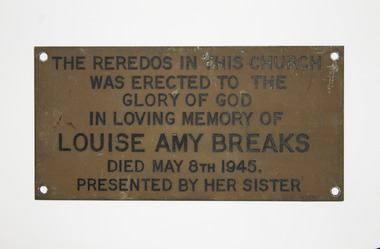
Plaque - Memorial Plaque, Louise Amy Breaks
... J. H. Raverty, assisted by the Revs. S. P. H. Martin and Oliver. The large congregation in the Church, lengthy cortege, and very large number of floral tributes received testified to the esteem in which deceased was held. Ernest W. Jackson. had charge of the funeral arrangements, and the Rev. J. H: Raverty officiated at the cemetery. Louise Breaks and her family were active members of the Mission. Her father James Lennox Breaks, aged 22 years, sailed from England on the Cerberus on her maiden ...Louise Amy Breaks, also known as Lulu, died on the 8 May 1943. An error on the plaque mentions 1945 which was likeky erected later. In her obituary published on the Williamstown Chronicle, Friday 14 May 1943, page 1: A well-known and very highly respected resident of this city, Miss Louise Amy (Lulu) Breaks, of 4 Jackson Court, Ferguson St., died on Saturday morning, after a brief Illness. Deceased was born .ocally and was the eldest daughter of the late Engineer Commander James L. Breaks, R.N., and Alice Breaks. Deceased was a very prominent member and worker of Holy Trinity Church and actively identified with every caritable movement in this City. She leaves a sister, Miss Maude Breaks, to mourn her loss. The funeral took place on Monday afternioon, leaving Holy Trinity Church after a service conducted by the Rev. J. H. Raverty, assisted by the Revs. S. P. H. Martin and Oliver. The large congregation in the Church, lengthy cortege, and very large number of floral tributes received testified to the esteem in which deceased was held. Ernest W. Jackson. had charge of the funeral arrangements, and the Rev. J. H: Raverty officiated at the cemetery.Louise Breaks and her family were active members of the Mission. Her father James Lennox Breaks, aged 22 years, sailed from England on the Cerberus on her maiden voyage, and was associated with the ship for 34 years until he retired. Commemorative Plaque for Louise Amy Breakswilliamstown, seamen's institute, seamen's mission, mission to seamen, nelson place, st nicholas chapel, james l. breaks, engineering commander, alice breaks, maude breaks, alice breaks nee jobson, hms cerberus, lhlg, lightkeepers' auxiliary -
 Federation University Historical Collection
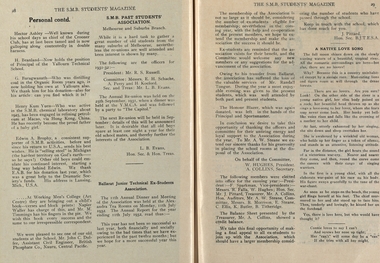
Booklet, Ballarat School of Mines Students' Magazine, 1932, 1932
... h. Koeford l.b. evans W. Hughes a. colling f. sparkman r. falla w. hughes j. pittard a. collins a.w.steane r. morrison e. steane c. ellis k. butler b. titheridge a. collins Signed on front cover by H. Darby Red soft covered magazine of 48 pages. Artwork * The Familiar Spirit - Lino cut - By Colvin Smith * Zipp - By Colvin Smith * Puss - By Colvin Smith * Jean - By Colvin Smith * Pen and Ink Sketch - By Don Refshauge * Alice - By Colvin Smith * Joe - By Colvin Smith * Enormous cheek shown by Walters - By James Allan * Here is a fair maiden all forlawn - By Levi Molineux * Lend us one till Monday - By Levi Molineux * The Ratter - By Levi Molineux * Silence is golden - By Jimmy Wright * Glimpse of assaying room - By Geo Crawley * Boy and Girl with umbrella and puppy - By D.W. * Vic Hunt - By Don Rafshauge Ballarat School of Mines Students' Magazine, 1932 Booklet Booklet ...Editorial, Obituary, Personal, Fumes from the Lab, Arts & Crafts Gossip, Sport, Echoes of the Past, Commercial Notes, Geelong Trip, The Junior TechsRed soft covered magazine of 48 pages. Artwork * The Familiar Spirit - Lino cut - By Colvin Smith * Zipp - By Colvin Smith * Puss - By Colvin Smith * Jean - By Colvin Smith * Pen and Ink Sketch - By Don Refshauge * Alice - By Colvin Smith * Joe - By Colvin Smith * Enormous cheek shown by Walters - By James Allan * Here is a fair maiden all forlawn - By Levi Molineux * Lend us one till Monday - By Levi Molineux * The Ratter - By Levi Molineux * Silence is golden - By Jimmy Wright * Glimpse of assaying room - By Geo Crawley * Boy and Girl with umbrella and puppy - By D.W. * Vic Hunt - By Don RafshaugeSigned on front cover by H. Darbyballarat school of mines, magazine, a. e. williams, m. wilson, a. bosher, r. elsworth, dr. j. r. pound, a. w. williams, c. l. smith, k. windsor, j. curran, j. walters, j. skelton, f. whitworth, r. w. morrison, n. baker, e. h. schache, p. f. chaplin, don refshauge, corinne rockwell swain, h. maddern, a. raworth, k. jones, r. nimon, j. allan, f. longhurst, s. hillman, f. penney, f. faram, c. martin, j. muntz, a. gray, k. keith, p. mcgregor, n. graham, d. ferguson, w. usebach, j. capuano, d. flynn, e. george, o. lyons, m. kelley, e. curnow, m. bettles, j. corbett, i. davidson, c. dulfer, a. watson, j. p. elsworth, l. b. evans, w. hughes, a. collins, j. pittard, geo. crawley, edith curnow, fred longhurst, olga dulfer, nornie gude, jesse hopwood, stan hillman, levi molineux, hester darby, hector ashley, howard beanland, yallourn technical school, henry kum yuen, edwin a. brophy, r.s. russell, e.h. schache, a. perry, h. koeford, l.b. evans, w. hughes, a. colling, f. sparkman, r. falla, w. hughes, j. pittard, a. collins, a.w.steane, r. morrison, e. steane, c. ellis, k. butler, b. titheridge, a. collins -
 Power House Rowing Club
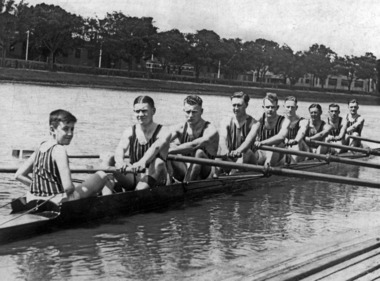
Black and white photograph, PHRC Maiden VIII Henley Regatta, 1933, 1933
... rowing rowers sweep rowing men river riverbank sportsmen sports J Barton Jr (cox) H Rutter (Str) P Hiddlestone (7) R Luff (6) R Manser (5) J Ramsbottom (4) W Wakeham (3) W Tutt (2) V Muller (Bow) J Barton Senr (Coach) Digital scan of black and white photograph. PHRC Maiden ...Digital scan of black and white photograph. J Barton Jr (cox) H Rutter (Str) P Hiddlestone (7) R Luff (6) R Manser (5) J Ramsbottom (4) W Wakeham (3) W Tutt (2) V Muller (Bow) J Barton Senr (Coach)rowing, rowers, sweep rowing, men, river, riverbank, sportsmen, sports -
 Power House Rowing Club
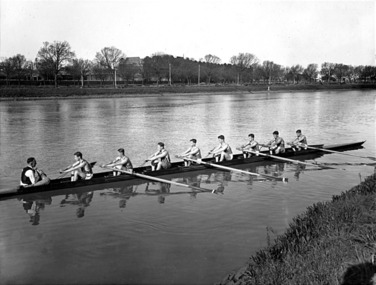
Black and white photograph, Maiden VIII, 1935, 1935
... J Barton (Coach) H Rutter (Str) R Luff (7) L Orr (6) F Hiddlestone (5) J Glover (4) Not recorded (3) J Fuller (2) V Muller (Bow) Digital scan of black and white photograph. Maiden ...Digital scan of black and white photograph.J Barton (Coach) H Rutter (Str) R Luff (7) L Orr (6) F Hiddlestone (5) J Glover (4) Not recorded (3) J Fuller (2) V Muller (Bow) -
 Power House Rowing Club
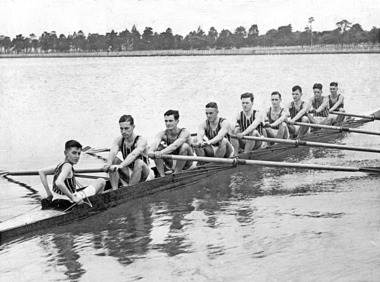
Black and white photograph, PHRC Maiden VIII Henley, 1935, 1935
... rowers rowing sportsmen men river riverbank sports row J Barton Jnr (cox) H Rutter (Str) F Huddlestone (7) R Luff (6) R Manser (5) W Ramsbottom (4) W Wakeham (3) W Tatt (2) V Muller (Bow) J Barton Snr (Coach) Digital scan of black and white photograph. PHRC Maiden ...Digital scan of black and white photograph. J Barton Jnr (cox) H Rutter (Str) F Huddlestone (7) R Luff (6) R Manser (5) W Ramsbottom (4) W Wakeham (3) W Tatt (2) V Muller (Bow) J Barton Snr (Coach)rowers, rowing, sportsmen, men, river, riverbank, sports, row -
 Returned Nurses RSL Sub-branch
Memorabilia - Scrapbook, Beryl Randall Trigellis-Smith (neé Sampson), [various]
... Nurses mentioned by name: Ida O'Dwyer (Royal Red Cross), H[ilda Therese Redderwold] Samsing, E[mma] A[rgyle] Cuthbert, J[essie] McHardy White [neé Williamson], Jane Bell, Mrs P Sutherland [unable to find full and maiden name], Clara [Louisa] Ross, P[riscilla Isabel] Kirby [neé Wardle], Mrs E Lloyd, E[thel] J[essie] Bowe, E[dith] L[ydia] Shaw, J G [Effie Mary] Fussell [neé Garden], E[lizabeth] F[rancis] Johns, J[eanie] Gray Robertson, A[nnie] M[oran] Sage, Grace [Margaret] Wilson, C[harlotte Joan] G[sic] McRae, [Annie] I[na] Laidlaw, M[argaret Irene] Lang and Kathleen [Annie Louise] Best. ...Nurses mentioned by name: Ida O'Dwyer (Royal Red Cross), H[ilda Therese Redderwold] Samsing, E[mma] A[rgyle] Cuthbert, J[essie] McHardy White [neé Williamson], Jane Bell, Mrs P Sutherland [unable to find full and maiden name], Clara [Louisa] Ross, P[riscilla Isabel] Kirby [neé Wardle], Mrs E Lloyd, E[thel] J[essie] Bowe, E[dith] L[ydia] Shaw, J G [Effie Mary] Fussell [neé Garden], E[lizabeth] F[rancis] Johns, J[eanie] Gray Robertson, A[nnie] M[oran] Sage, Grace [Margaret] Wilson, C[harlotte Joan] G[sic] McRae, [Annie] I[na] Laidlaw, M[argaret Irene] Lang and Kathleen [Annie Louise] Best. ...Scrapbook owned by Beryl Randall Trigellis-Smith (neé Sampson) who served as a nurse in WWI and was an active member of many nursing related organisations include the Returned Nurses Club (Victoria). Contains newspaper & magazine clippings, postcards, poetry, quotes/reflections, pamphlets (Order of services), photocopied correspondence, single page Order of Services/Service announcements, speeches & toasts, booklets, personal stories, contact details, photocopied excerpts, menus, invitations, order of ceremonies, certificates. Titles and (formats) in order: 1. 'A Maori's stirring dawn address : What Anzac has come to mean' (newspaper clipping) - article providing the full address given by Lt. Colonel C M Bennett DSO at the Dawn Parade ceremony in Wellington (NZ) 1957 [publication unknown]. 2. Coat hangers (newspaper clipping) - article about items on display [at a market? date unknown, under handwritten 'Troop Train' heading] 3. 'What's in a name? -just ask the matron' (newspaper clipping) - article providing basic information about Margaret Lang and the Society for the Care of Aged or Incapacitated Nurses by John Hamilton [publication unknown, handwritten note 'August 1973'] 4. 'World War I nurse remembers : Continued from page 41' (magazine clipping) - part of the recollections of WWI nurse Sarah Margaret White (neé Furnifull) [1973, Australian Women's Weekly] 5. Sister Rosina Dawson (newspaper clipping) - brief article and photo on Rosina Dawson becoming Victoria's first construction site nurse at site of Collins Place Twin Towers [unknown publication & date] 6. 'A World War 1 nurse remembers...' (magazine clipping) - beginning of clipping #4 [1973, Australian Women's Weekly] 7. The White Tower, Salonika (newspaper clipping) - photo and map of area around Aegean Sea [unknown date and publication] 8. 'A stern hearted chaperone', 'At the top of Mt. Kotos, Salonica, 1918' and 'Life and mirage' (typed poems) - All by Trigellis-Smith circa 1918. 9. 'Boat drill' (typed poem) - By Trigellis-Smith 10. 'Aged 83, she wears her MBE lightly' (newspaper clipping on separate sheet) - Brief biographical article by Barbara Hooks on Beryl Trigellis-Smith receiving her MBE [1976, publication unknown] 11. Leslie Hill (newspaper clipping on back of separate sheet) - Large black & white photograph with caption of Leslie Hill, the gardener who created the flowerbed celebrating the 80th anniversary of the Royal Australian [Army] Nursing Corps and Beryl Trigellis-Smith. [Handwritten notes publication as Herald, December 28 1982] 12. 6/12/17 (newspaper clipping) - Appears to be printed excerpts from a diary of someone [a nurse] serving in WWI [publication and date unknown] 13. 7/3/18 (newspaper clipping) - Appears to be printed excerpts from a diary of someone [a nurse] serving in WWI [publication and date unknown] 14. 'Description of Anzac Day, April 25th, 1916.' & 'A Description of Anzac Day, from Second World War Sister E. F. Jones' (typed excerpts) - first excerpt by E C Dobson, (probably a sister at Mundros), second author in title. 15. [Postcard?] - black and white photograph on glossy card showing an Australian military band posing for photograph on steps in front of multiple storey walls of sandbags [based on Google image search, on the steps in front of Amiens Cathedral circa August 1918]. 16. 'A most inglorious war' (newspaper clipping) - Review of 'The forgotten war' by L M Field including information on how the Boer war began and how Australians got involved by Patsy Adam-Smith [unknown publication, circa 1979]. 17. 'Order of Divine Service to mark The Commemoration of ANZAC' (pamphlet separate to scrapbook) - took place at Cathedral Church of Saint Paul Melbourne, 22 April, 1979. 18. 'Annual wreath laying service Edith Cavell Memorial' (photocopied typed document) - from 22 April 1979, order of proceedings including an address to be given by Beryl Trigellis-Smith. 19. 'Saturday review' (newspaper clipping) - a captioned black and white illustration of Florence Nightingale in the hospital at Scutari. Reproduced from the 'Illustrated London News' of February 24, 1855. [unknown UK publication and date] 20. 'spirit and pride' (newspaper clipping) - these words clipped from a headline [unknown publication and date]. 21. 'Miss Nightingale' (newspaper headline attached to back of newspaper clipping) - by Richard Gordon. Excerpt from book by same 'The private life of Florence Nightingale' [circa 1978, unknown UK publication]. 22. (photocopied letter with handwritten 'Beryl' in gap in salutation) - photocopy poor and unable to read who author/sender is [maybe Ms P Adam-Smith?] dated 14 December 1978. 23. 'Shrine of Remembrance (Melbourne, Victoria)' (postcard with handwritten caption) - 'Shaft of sunlight at 11am Remembrance Day 11th November', published by Rose Stereograph Co. [unknown year]. 24. 'Annual service of dedication for nurses' (booklet) - Order of service booklett for Wednesday 9th May, 1979, 5:45pm at St Patrick's Cathedral. 25. [No title] (newspaper clipping) - article by Patsy Adam-Smith 'who was at the Anzac Day parade for 'The Age''. [circa 1979] 26. 'Ecumenical service of dedication for nurses' (photocopied service announcement) - St Patrick's Cathedral, Wednesday 9 May 1979, anniversary of the birth of Florence Nightingale. 27. 'Parade of a nation'[sic] (newspaper clipping) - Headline, large black and white photograph by John Lamb with caption of Glen Hickman marching wearing medals [unknown publication, unknown year, circa late 70's]. 28. 'Wreath laying ceremony - Edith Cavell Statue / Sunday Aprill 22nd. 1979 / Address by Mrs. Beryl Trigellis-Smith MBE. Ex A.A.N.S.' (typed pages of speech) - Speech includes general important pioneering dates in Australian nursing from 'South African War 1900' to combining of Royal Trained Nurses Association and Royal College of Nursing in 1933 and a call to current nurses to "regard the heritage of the past - dedication, skill, adaption, understanding of authority, some self-sacrifice, with a dedication to the care of life and death." 29. 'No. 72' (colour photograph postcard) - Underneath handwritten heading in blue ink 'Salonica. 1917'. Image on front of postcard shows two young women in the foreground in traditional clothing, water to their left and two other women walking away from them in the background, buildings on the left of the postcard and in the background on the right the White Tower Thessaloniki. [Postcard more likely from 1950's onwards due to it being a colour photograph and the fashion of the women in the background] 30. (colour postcard) - Torn along one edge, depicts a photograph of what appears to be a print artwork (signature at bottom on right of artwork 3eibe?, on left at bottom Gem 64'. 'Part of a diary found in / Returned Nurse Club in / 1979. Name unknown. / She had experience / in Hospital Ships and / in Salonica. / ?eds up & file.' [written in blue ink on reverse]. 31. 'Rancourt - Bouchavesnes' (colour photograph postcard) - Aerial colour photograph of a church and graveyard surrounded by fields and a forest in the background. Information on reverse of postcard indicates image is of the Chapel of French Remembrance for the Somme offensive in 1916 during WWI. Underneath heading '1978. R.S.L. Pilgrimage to. France.' [handwritten in blue ink]. There is information on the reverse handwritten describing part of a tour by same writer as for 32. 32. 'Le Memorial Australien à Villers-Bretonneux' (colour photograph postcard [potential photochrom]) with printed caption on front indicating Le Souvenir Français welcoming Australian pilgrims to Villers-Bretonneux 11 November 1978 with a quote from Marshal Foch made 12 November 1918 - reverse of postcard had handwritten letter addressed to Beryl Randall Trigellis-Smith (neé Sampson), from Howard V[?] talking about events of the tour on 11 & 12 November. Underneath heading '1978. R.S.L. Pilgrimage to. France.' [handwritten in blue ink]. 33. 'ANZAC Memorial Day 25th April 1919' (colour & black and white souvenir booklet) - published by the Victorian branch of the Returned Sailors' and Soldiers' Imperial League of Australia to mark the fourth national observance. Front cover is in colour, condition is poor with lots of folds, tears and parts missing, also has many dirt/insect marks and foxing. Internally there is black and white photographs depicting various WWI and post scenes with captions and other pages have text, opposite inside back cover is medical photos including tent hospitals, nurses and hospital wards. Back cover is glued to scrapbook. 34. Photocopy of toast proposal given at Royal Australian Army Nursing Corps 75th Anniversary of Australian Army Nursing - toast speech gives some brief chronological information on nursing in Australian Army that the author [assumed to be Beryl Randall Trigellis-Smith (neé Sampson)]. 35. 'Poem for our Returned Nurses Club' (handwritten poem with annotations) - 'J M[?] Bilee' & 'CPL R.L. Harrowfield' [Handwritten names? either side of title, author/s of poem assumed], paper has tear marks on reverse where it has been removed from another piece in the past and some writing obscured by area of attachment into current scrapbook. Poem is '(Dedicated to A.I.F Nurses of World War I 1914-18 War) Bendigo / 1976'. 36. 'Living up to an ideal' (black and white newspaper clipping) - by Kayleen Mort out the 'The Sun' Monday, July 10 1972, p.34. Article includes four black and white photographs. Article is about the Royal Australian Army Nursing Corps having provided nurses in wars for 70 years, even though nurses served prior in the Boer War. Article features a photograph of Irene [Mildred] Woodward (neé Clay) then secretary of the Victorian Returned Nurses' Club. 37-39. 'The A.I.F. were healthy, stealthy and chatty' (photocopied typed short story with handwritten annotations) - 'Section one - True experiences / 1976 Repatriation story writing project' headed, first person story [assumed to be written by Beryl Randall Trigellis-Smith (neé Sampson), however point of view appears to be of a soldier, not a nurse] over three pages, glued in separately. Story is autobiographical and mentions 8th Battalion Pastors Hayden and Paddy O'Shea helping morale there and Padre J J Booth helping the unit the protagonist was attached to. Protagonist speaks of shocking sights and the poetry or history that these brought to the surface as well as different aspects of their experience. 40-45. 'St. Vincent - our Atlantic calling port.' & 'They need our help to-day' (typed poems[?]) - Pieces glued, out of order[?], [author assumed to be Beryl Randall Trigellis-Smith (neé Sampson)]. 46. 'Burial at sea.' (typed poem and information) - [author assumed to be Beryl Randall Trigellis-Smith (neé Sampson)] four stanzas of a poem followed by partial information about the authors experience of a burial at sea, the return to Australia experience and what the author did after. Information is incomplete, cut off mid sentence and not continued on next part. 47-50. 'The order of the Iris', 'The 42nd Unit transferred to Hill 60.' & 'The sunset call at sea.' (typed poetry and brief information) - A poem missing a beginning, followed by first title listed, then second title begun and continued on to second part, completed over page on third part and final poem on last part. [Author assumed to be Beryl Randall Trigellis-Smith (neé Sampson)] 51. 'Life in Salonica, 1918.' & 'Transport in Salonica - 1918' (typed poems) - [Author assumed to be Beryl Randall Trigellis-Smith (neé Sampson)] 52. 'Whatever happened to Macka?' (newspaper clipping) - Advertisement for the Returned Services League [unknown publication & date]. 53. 'Few passengers for free rides' (newspaper clipping) - Article by Bob Millington interviewing Colin Keon-Cohen (then president of Victorian branch of RSL) about the dwindling numbers of WWI veterans, loss of all Boer War vetrans, dinners held for veterans and how popularity in RSL clubs was growing. [unknown publication and date] 54. 'Nurses at war : Reflected in the pages of Nursing Mirror 1888-1978' (newspaper clipping) - Article by Barbara Rogers just prior to the 90th birthday of publication 'Nursing Mirror', describing the "adventurous response made by nurses in wartime". Published in Nursing Mirror, 6 April 1978. 55. 'Names & Addresses cond' (photocopied contact details) - Address and former unit details of people [on a tour?] along with Tour Escort, [tour assumed to be the RSL Pilgrimage to France in 1978]. 56. As for 3, except for handwriting on reverse as entire reverse glued to page. 57. 'The crimes of Germany' ([thermal?] photocopy of excerpts [from a newspaper supplement published after 1915]) - Published in London by The Field & Queen (Horace Cox) Ltd., excerpts include the front cover, pages 99-101 headed 'XVI - Poisoned wells.' & 'XVII - The execution of Miss Edith Cavell.' 58. 'War nurses hold jubilee dinner' (newspaper clipping) - Article on dinner held honouring the conferral of Royal to the Royal Australian Army Nursing Corps that included over 560 guests nursing veterans from 1902 (who formed the Australian Army Nursing Service) through to Korean war nursing veterans, the Governor of Victoria (Sir Dallas Brooks), his wife, a Boer war nurse and others. Nurses mentioned by name: Ida O'Dwyer (Royal Red Cross), H[ilda Therese Redderwold] Samsing, E[mma] A[rgyle] Cuthbert, J[essie] McHardy White [neé Williamson], Jane Bell, Mrs P Sutherland [unable to find full and maiden name], Clara [Louisa] Ross, P[riscilla Isabel] Kirby [neé Wardle], Mrs E Lloyd, E[thel] J[essie] Bowe, E[dith] L[ydia] Shaw, J G [Effie Mary] Fussell [neé Garden], E[lizabeth] F[rancis] Johns, J[eanie] Gray Robertson, A[nnie] M[oran] Sage, Grace [Margaret] Wilson, C[harlotte Joan] G[sic] McRae, [Annie] I[na] Laidlaw, M[argaret Irene] Lang and Kathleen [Annie Louise] Best. Also mentioned Sybil Irving (Voluntary Aid Detachment), Major General [Frank] Kingsley Norris (Army Medical Officer). 59. 'Nursing a secret' (newspaper clipping) - Brief article with some biographical details on the wedding reception of Vivian Bullwinkel to Frank Statham and her soon move to Perth to be with Frank. [Publication unknown, circa 1977] 60. 'An Ecumenical Service of dedication for nurses' (pamphlet) - took place at Cathedral Church of Saint Paul Melbourne on Wednesday 10 May, 1978. 61. 'R.S.L. Victorian Branch : 60th Anniversary Remembrance Day Dinner' (menu pamphlet) - took place Friday 10 November 1978. 62. 'Circular : M/31/78' (invitation) - Distributed through RSL Victorian branch. From Premier of Victoria to "all ex-servicemen and women and their families in Victoria to attend the Remembrance Day Ceremony" 11/11/1978. 63. 'Remembrance Day Ceremony' (order of ceremony booklet) - Arranged by 'The Government of Victoria', took place at the Shrine of Remembrance, Melbourne 11/11/1978. 64. (Original certificate) - From the Australian Comforts Fund, Victorian Division to Miss M Ambler [?] "In grateful recognition of valuable services rendered in a voluntary capacity to the Australian Comforts Fund during World War 1939=1945". 65. (Invitation) - To B[eryl Randall] Trigellis-Smith [(neé Sampson)] from Victorian Government "to attend a Luncheon celebrating the Anzac Landing Diamond Jubilee. Location National Gallery of Victoria, 22 April 1975. 66. (Menu) - from event in 65. Includes eight autographs including E M Fussell [?], Margaret Lang, Linda Douglas [?], Chris E Bonwick [?], G J McWilliams [?], Beryl [Randall] Trigellis-Smith [(neé Sampson)], Carl Klu [?], [?]. 67. (Invitation) - From Florence Nightingale Victorian War Nurses' Trust "Chairman, Air Vice-Marshal E.A. Daley, C.B.E., K.St.J. and trustees invite a representative of Edith Cavell Trust Fund to attend the War Nurses' Memorial Service to be held at the Edith Cavell Statue, Birdwood Avenue, on Sunday, 20th of April, 1975".Green album/scrapbook, covers and spine show wear, water marks and fading. Internally pages have been removed and many items have been put in or attached to the pages. The items inside have degraded but are mostly intact. There is no exact chronology to the scrapbook and some items appear to be out of order either with similar items or date wise. Most of the clippings are not annotated with dates or publications. Contains newspaper & magazine clippings, postcards, poetry, quotes/reflections, pamphlets (Order of services), photocopied correspondence, single page Order of Services/Service announcements, speeches & toasts, booklets, personal stories, contact details, photocopied excerpts, menus, invitations, order of ceremonies, certificates. [Multiple throughout scrapbook often indicating newspaper cutting was from and date]beryl randall trigellis-smith (neé sampson), nursing in warfare, royal australian army nursing corps, australian army nursing service, returned services league (rsl), returned nurses club
