
Showing 11 items matching "job davis"
-
 Flagstaff Hill Maritime Museum and Village
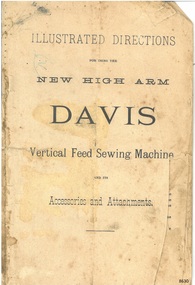
Book - Instruction Manual, Illustrated Directions for using the New High Arm Davis Vertical Feed Sewing Machine, 1883-1885
... ...Job Davis...The first model of the High Arm was produced in 1881, and the ‘New’ model, Model 2 VF, was introduced from 1883 and continued at least until 1885, when the Model 3 VF was manufactured. Job Davis, an inventor, showed his Davis Sewing Machine to two brothers in Watertown. ...The first model of the High Arm was produced in 1881, and the ‘New’ model, Model 2 VF, was introduced from 1883 and continued at least until 1885, when the Model 3 VF was manufactured. Job Davis, an inventor, showed his Davis Sewing Machine to two brothers in Watertown. ...This book of Illustrated Directions was produced for use with the Davis New High Arm Vertical Feed (VF) Sewing Machine. The first model of the High Arm was produced in 1881, and the ‘New’ model, Model 2 VF, was introduced from 1883 and continued at least until 1885, when the Model 3 VF was manufactured. Job Davis, an inventor, showed his Davis Sewing Machine to two brothers in Watertown. The brothers, John and Joseph Shaldon, who founded the Davis Sewing Machine Company in February 1868 in Watertown, New York. The firm moved to Ohio in the 1890. Its early sewing machines were known as the Vertical Feed machines. These machines differed from others, in that there were two presser feet that moved and held the cloth as the needle went in and out of it. This type of action was also called ‘walking foot’ by makers of similar machines. Other machines used a feed dog below the machine’s bed to move the fabric. The Davis Company was awarded a Patents for its improvement to sewing machines. London offices were set up at 54, Queen Victoria Street, London in 1982. It was known as the Vertical Feed Sewing Machine Company. An article published in March 1885 states that the London Manager of the Vertical Feed Sewing Machine Company has 300,000 machines world-wide, including 4,000 in England alone. It claimed that the Auxiliary Forces Uniform and Equipment Company in Limerick, Ireland, was running its machines with steam power and could produce first-class work at the rate of 1,500 stitches per minute. The hand stitched binding of the manual is an example of early book binding processes. The is significant for its relationship to the Davis New High Arm Vertical Feed sewing machine, which was invented in 1866 and became popular in the domestic market. It was also used in industrial conditions as a labour-saving machine, one of the many machines that were part of the Industrial Revolution when steam power replaced manual power in many factories. Paper book with stitched binding. Printed text and illustrations contained within the 42-page booklet. The manual includes drawn diagrams and instructions for use of the Davis New High Arm Vertical Feed Sewing Machine, a foot treadle machine made in the 1880s. Front cover: "ILLUSTRATED DIRECTIIONS for the NEW HIGH ARM DAVIS Vertical Feed Sewing Machine and its Accessories and Attachments"flagstaff hill maritime museum and village, great ocean road, shipwreck coast, sewing machine manual, davis sewing machine, new high arm sewing machine, model 2 vf, vertical feed, sewing machine instructions, sewing machine directions, job davis, john sheldon, joseph sheldon, high arm sewing machine, watertown, new york, vertical feed sewing machine company, treadle, steam sewing machine, auxiliary forces uniform and equipment company, limerick, ireland -
 Ballarat Tramway Museum
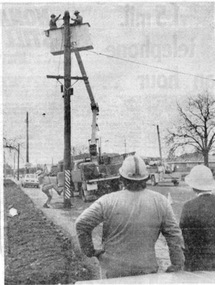
Newspaper, The Courier Ballarat, "Tram change uneventful", 24/08/1971 12:00:00 AM
... job with the former machinery makers, Ronaldson and Tippet. Newspaper clipping pasted onto a single sheet of paper with two Punch holes on the left hand side with one hole through the photograph within the cutting. Clipping from The Courier, Ballarat, 24/8/1971, about the first stage of Ballarat's changeover from trams to buses passes uneventfully yesterday with only minor difficulties being reported. Quotes Transport Regulation Boards Regional Office, Mr. A. Stott, a few parking problems with cars in bus bays, demand for timetables. Also has a quote from the director of Davis ...Newspaper clipping pasted onto a single sheet of paper with two Punch holes on the left hand side with one hole through the photograph within the cutting. Clipping from The Courier, Ballarat, 24/8/1971, about the first stage of Ballarat's changeover from trams to buses passes uneventfully yesterday with only minor difficulties being reported. Quotes Transport Regulation Boards Regional Office, Mr. A. Stott, a few parking problems with cars in bus bays, demand for timetables. Also has a quote from the director of Davis Bus Lines, about minor problems - passengers asking questions. Has a photograph of the SEC linesman dismantling overhead in Victoria St., as a trail. A gang from Melbourne will come to Ballarat early in September to pull down all the lines. Newspaper cutting published on the Tuesday. 2nd copy added 14/11/2002In red ink in upper right hand corner, "24/8/71" On sheet of paper, various pencil markings - with date Dec. 1963. Possibly paper used by Donor at his job with the former machinery makers, Ronaldson and Tippet.trams, tramways, closure, bus changeover, overhead, dismantling -
 Ballarat Tramway Museum
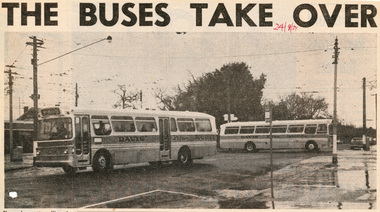
Newspaper, The Courier Ballarat, "Buses Take Over", 24/08/1971 12:00:00 AM
... job with the former machinery makers, Ronaldson and Tippet. Newspaper clipping pasted onto a single sheet of paper with two Punch holes on the left hand side with one hole through the photograph within the cutting. Clipping from The Courier, Ballarat, 24/8/1971, with a photo of two Davis ...Newspaper clipping pasted onto a single sheet of paper with two Punch holes on the left hand side with one hole through the photograph within the cutting. Clipping from The Courier, Ballarat, 24/8/1971, with a photo of two Davis Bus Line buses travelling in Sturt and Drummond St., with a bus stop sign in the foreground and white marks around former tram stop signs on poles. Caption notes the buses replaced trams servicing Victoria St and the Gardens via Drummond St. North and that other services will be replaced over the next four weeks.In red ink in upper central right hand corner, "24/8/71" On sheet of paper, various ink marks and 1963/4 dates. Possibly paper used by Donor at his job with the former machinery makers, Ronaldson and Tippet.trams, tramways, closure, bus changeover, drummond st., sturt st. -
 City of Melbourne Libraries
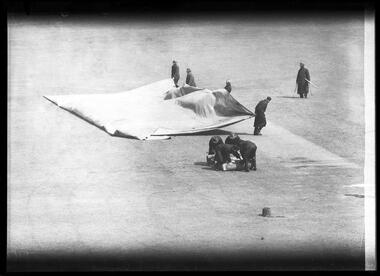
Photograph, Bull, Hugh Jones, 1897-1993, Groundsmen cover wicket during rain at the MCG match, Victoria v South Australia
... job of curator and cricket player for his team “The Nondescripts”, a social team who played at his private oval at Osborne House. After five years at Osborne House, Bert took up a position at Geelong Grammar School and then in 1900 he was appointed curator of Warehousemen’s Ground, Albert Park (later called Albert Ground). There he prepared the tennis courts for the 1908 Davis...job of curator and cricket player for his team “The Nondescripts”, a social team who played at his private oval at Osborne House. After five years at Osborne House, Bert took up a position at Geelong Grammar School and then in 1900 he was appointed curator of Warehousemen’s Ground, Albert Park (later called Albert Ground). There he prepared the tennis courts for the 1908 Davis ...“How’s the wicket, Bert?” During the 4-Day Victoria v South Australia Sheffield Shield match, held 13-17 November 1936 at the Melbourne Cricket Ground, the play was often interrupted by rain squalls, causing the groundsmen to cover their carefully prepared wicket with tarpaulins to protect it. “How’s the wicket, Bert?” is the question on everyone’s lips – Will it be a batsman’s nightmare? A bowler’s dream? Will the spectators see a full day’s play or will rain spoil it? With a twinkle in his eye, Bert “Maker of Pitches” Luttrell, the MCG curator’s response is: “It’s not the wicket when batsmen get out early, it’s good bowling!” FRC Published: The Age 17 November 1936 Featured in "Newsworthy: Melbourne in photographs 1933-1936" exhibition at East Melbourne Library, October to December 2023. Exhibition caption by project volunteer, Fiona Collyer. Photographer notations on slide: "Covering wicket during Vict v Sth Aust Cricket at M.C.G. Nov 1936 B117" Published: Age (Melbourne, Vic. : 1854 - 1954), Tuesday 17 November 1936, page 13 Published title: SHEFFIELD SHIELD CRICKET. Published caption: Placing the tarpaulin over the wicket during one of the showers. This was done four times during the day. Trove article identifier: http://nla.gov.au/nla.news-article205952141 Description: Nine men wearing black macintoshes and hats drag a tarpaulin over a cricket pitch. There is a bucket containing pegs in the foreground. Research by project volunteer, Fiona Collyer: During the four day Victoria v South Australia Sheffield Shield match, held 13-17 November 1936 at the Melbourne Cricket Ground, the play was often interrupted by rain squalls, causing the groundsmen to cover their carefully prepared wicket with tarpaulins to protect it. “How’s the wicket, Bert?” is the question on everybody’s lips - will it be a batsman’s nightmare? A bowler’s dream? Will the spectators see a full day’s play or will rain spoil it? With a twinkle in his eye, Bert “Maker of Pitches” Luttrell, the MCG curator’s response is: “It’s not the wicket when batsmen get out early, it’s good bowling!” Albert (Bert) John Wesley Luttrell 1875-1951, was born in Geelong and worked as a painter and decorator. He played cricket for Clarendon Cricket Club while helping to prepare the wicket at Kardinia Park. In 1890, Mr Phillip Russell, a wealthy merino sheep breeder of Osborne House, North Geelong, offered Bert the job of curator and cricket player for his team “The Nondescripts”, a social team who played at his private oval at Osborne House. After five years at Osborne House, Bert took up a position at Geelong Grammar School and then in 1900 he was appointed curator of Warehousemen’s Ground, Albert Park (later called Albert Ground). There he prepared the tennis courts for the 1908 Davis Cup - Australia v USA featuring the eventual winner of the tournament, Wimbledon champion Sir Norman Brookes. Following the retirement of the MCG curator, Bert was offered the position there for the 1919/20 season. Sport was resuming at the MCG after the suspension caused by the Great War and the Spanish Influenza pandemic. Cricket grounds and matches are always at the mercy of the weather. Sudden heavy downpours can make the ground unfit for play. In 1933, Bert invented and patented an absorbent roller for soaked pitches. Similar to a lawn mower in appearance, it was fitted with a rubber sponge which sucked up the water and then squeezed it into a tank. The sponge was said to mop up a gallon (3.78 litres) of water in 32 seconds and remove 100 to 120 gallons (378 - 454 litres) of water from any wet sports ground in an hour. Bert worked as a curator of the MCG for nearly 30 years, invariably creating his famous “shirt front” wicket. He retired in 1947 due to ill health. He was married to Emma and they had six children- Albert, Harry, Nell, Lily, Frank and Jack. Bert died at home in South Yarra in 1951 at 76 years of age. References: SHEFFIELD SHIELD CRICKET. ENGLISH FLYING BOAT. VICTORIA DOCK. (1936, November 17). The Age (Melbourne, Vic. : 1854 - 1954), p. 13. Retrieved May 19, 2024, from http://nla.gov.au/nla.news-article205952141 To Dry Grounds (1933, May 13). Sporting Globe (Melbourne, Vic. : 1922 - 1954), p. 3 (Edition2). Retrieved May 20, 2024, from http://nla.gov.au/nla.news-article183038194 No title (1937, February 25). The Age (Melbourne, Vic. : 1854 - 1954), p. 10. Retrieved May 19, 2024, from http://nla.gov.au/nla.news-article206185862 GOSSIP of THE GAME (1937, November 12). The Herald (Melbourne, Vic. : 1861 - 1954), p. 21. Retrieved May 20, 2024, from http://nla.gov.au/nla.news-article244541623Photographer notations on slide: "Covering wicket during Vict v Sth Aust Cricket at M.C.G. Nov 1936 B117".cricket, 1930-1939 -
 Flagstaff Hill Maritime Museum and Village
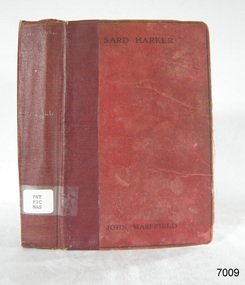
Book - Fictional Story, John Masefield, Sard Harker, 1924
... Davis and The Bird of Dawning, as well as children's classics like The Midnight Folk and The Box of Delights. The works publisher William Henry Heinemann (1863–1920) was an English publisher who founded the Heinemann publishing house in London. Born in Surbiton, Surrey, to a father who had immigrated from Hanover, Germany, Heinemann originally wanted to be a musician before turning to publishing, taking a job with the music publishing firm of Nicolas Trübner. ...Davis and The Bird of Dawning, as well as children's classics like The Midnight Folk and The Box of Delights. The works publisher William Henry Heinemann (1863–1920) was an English publisher who founded the Heinemann publishing house in London. Born in Surbiton, Surrey, to a father who had immigrated from Hanover, Germany, Heinemann originally wanted to be a musician before turning to publishing, taking a job with the music publishing firm of Nicolas Trübner. ...The novel centres on Chanticleer "Sard" Harker, a serious, stoic first mate aboard the trading ship Pathfinder. While anchored off the coast of the fictionalised South American nation of Santa Barbara a recurring setting in Masefield's fiction Harker experiences a vivid, recurring dream predicting that a woman named Doña Margherita Luisa Rosa is in grave danger. Driven by a strict sense of duty and premonition, Harker goes ashore to track down the estate where she is staying to deliver a warning. This decision plunges him into an extraordinary physical ordeal: separated from his ship and framed for murder, Harker must trek through hostile jungles, arid deserts, treacherous swamps, and rugged mountain passes while battling corrupt local officials, bandits, and a sinister occultist/cult leader named Don Hirsch Gomez.Hard cover book. Sard Harker Author: John Masefield Publisher: William Heinemann Ltd Date: 1924 Further Information: Red Cloth hardcover with lettering and patterning to spine in black. The spine has a Library label with an inscription.fictionThe novel centres on Chanticleer "Sard" Harker, a serious, stoic first mate aboard the trading ship Pathfinder. While anchored off the coast of the fictionalised South American nation of Santa Barbara a recurring setting in Masefield's fiction Harker experiences a vivid, recurring dream predicting that a woman named Doña Margherita Luisa Rosa is in grave danger. Driven by a strict sense of duty and premonition, Harker goes ashore to track down the estate where she is staying to deliver a warning. This decision plunges him into an extraordinary physical ordeal: separated from his ship and framed for murder, Harker must trek through hostile jungles, arid deserts, treacherous swamps, and rugged mountain passes while battling corrupt local officials, bandits, and a sinister occultist/cult leader named Don Hirsch Gomez.warrnambool, shipwrecked-coast, flagstaff-hill, flagstaff-hill-maritime-museum, maritime-museum, shipwreck-coast, flagstaff-hill-maritime-village, shipwrecked-artefact, book, sard harker, john masefield, warrnambool mechanics’ institute, pattison collection, warrnambool library, ralph eric pattison, corangamite regional library service, warrnambool city librarian, mechanics’ institute library, victorian library board, warrnambool books and records, warrnambool children’s library -
 Flagstaff Hill Maritime Museum and Village
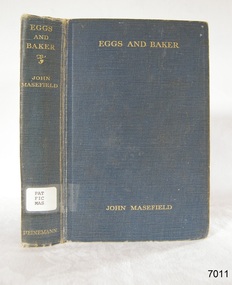
Book - Fictional Story, John Masefield, Eggs and Baker or ( The Days Of Trial), 1936
... Davis and The Bird of Dawning, as well as children's classics like The Midnight Folk and The Box of Delights. The works publisher William Henry Heinemann (1863–1920) was an English publisher who founded the Heinemann publishing house in London. Born in Surbiton, Surrey, to a father who had immigrated from Hanover, Germany, Heinemann originally wanted to be a musician before turning to publishing, taking a job with the music publishing firm of Nicolas Trübner. ...Davis and The Bird of Dawning, as well as children's classics like The Midnight Folk and The Box of Delights. The works publisher William Henry Heinemann (1863–1920) was an English publisher who founded the Heinemann publishing house in London. Born in Surbiton, Surrey, to a father who had immigrated from Hanover, Germany, Heinemann originally wanted to be a musician before turning to publishing, taking a job with the music publishing firm of Nicolas Trübner. ...Eggs and Baker, or The Days of Trial (1936) is a novel by the English poet and Poet Laureate John Masefield, best known for verse ('Sea-Fever', The Everlasting Mercy) and children's classics like The Box of Delights and The Midnight Folk, published the previous year. The story is set inland in Masefield's imagined English county of Tatchester/Condicote his recurring fictional geography, also used in The Box of Delights. The plot centres on a long-running trial of two men one a 'half-wit' accused of shooting and killing a gamekeeper while poaching. The real protagonist, though, is a baker who is losing business and standing in the community because of his socialist sympathies, and who takes up the accused men's cause at real cost to himself. A contemporary Kirkus review called it 'a totally unexpected book from Masefield, and a disappointing one', and wondered whether it was intended as 'a spoof on the law, or a serious commentary on problems of justice'.Hard cover book. Eggs & Baker or The Days of Trial Author: John Masefield Publisher: William Heinemann Ltd Date: 1936 Further Information: Navy blue cloth with pictorial end papers hardcover with lettering and patterning to spine in black. The spine has a Library label with an inscription.fictionEggs and Baker, or The Days of Trial (1936) is a novel by the English poet and Poet Laureate John Masefield, best known for verse ('Sea-Fever', The Everlasting Mercy) and children's classics like The Box of Delights and The Midnight Folk, published the previous year. The story is set inland in Masefield's imagined English county of Tatchester/Condicote his recurring fictional geography, also used in The Box of Delights. The plot centres on a long-running trial of two men one a 'half-wit' accused of shooting and killing a gamekeeper while poaching. The real protagonist, though, is a baker who is losing business and standing in the community because of his socialist sympathies, and who takes up the accused men's cause at real cost to himself. A contemporary Kirkus review called it 'a totally unexpected book from Masefield, and a disappointing one', and wondered whether it was intended as 'a spoof on the law, or a serious commentary on problems of justice'.warrnambool, shipwrecked-coast, flagstaff-hill, flagstaff-hill-maritime-museum, maritime-museum, shipwreck-coast, flagstaff-hill-maritime-village, shipwrecked-artefact, masefield, john, eggs and baker, john masefield, warrnambool mechanics’ institute, pattison collection, warrnambool library, ralph eric pattison, corangamite regional library service, warrnambool city librarian, mechanics’ institute library, victorian library board, warrnambool books and records, warrnambool children’s library -
 Flagstaff Hill Maritime Museum and Village
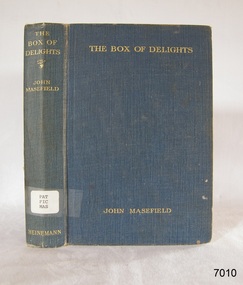
Book - A Fictional Story, John Masefield et al, The Box of Delights, 1935
... Davis and The Bird of Dawning, as well as children's classics like The Midnight Folk and The Box of Delights. The works publisher William Henry Heinemann (1863–1920) was an English publisher who founded the Heinemann publishing house in London. Born in Surbiton, Surrey, to a father who had immigrated from Hanover, Germany, Heinemann originally wanted to be a musician before turning to publishing, taking a job with the music publishing firm of Nicolas Trübner. ...Davis and The Bird of Dawning, as well as children's classics like The Midnight Folk and The Box of Delights. The works publisher William Henry Heinemann (1863–1920) was an English publisher who founded the Heinemann publishing house in London. Born in Surbiton, Surrey, to a father who had immigrated from Hanover, Germany, Heinemann originally wanted to be a musician before turning to publishing, taking a job with the music publishing firm of Nicolas Trübner. ...The Box of Delights is a children's fantasy novel by John Masefield, a sequel to The Midnight Folk, first published in 1935. Kay Harker is returning from boarding school when he finds himself mixed up in a battle to possess a magical box which allows the owner to shrink in size, to fly swiftly, to go into the past and to experience the magical wonders contained within. He's opposed by a wizard named Abner Brown and his gang of disguised bandits and witches masquerading as clergymen, and aided by talking animals, most memorably the cat Nibbins. It's a Christmas story at heart, steeped in English folklore, magic, and the atmosphere of a snowy Midlands winter.Hard cover book. The Box of Delights Author: John Masefield Illustrator: Judith Masefield Publisher: William Heinemann Ltd Date: 1935 Further Information: Navy blue cloth with pictorial end papers hardcover with lettering and patterning to spine in black. The spine has a Library label with an inscription. fictionThe Box of Delights is a children's fantasy novel by John Masefield, a sequel to The Midnight Folk, first published in 1935. Kay Harker is returning from boarding school when he finds himself mixed up in a battle to possess a magical box which allows the owner to shrink in size, to fly swiftly, to go into the past and to experience the magical wonders contained within. He's opposed by a wizard named Abner Brown and his gang of disguised bandits and witches masquerading as clergymen, and aided by talking animals, most memorably the cat Nibbins. It's a Christmas story at heart, steeped in English folklore, magic, and the atmosphere of a snowy Midlands winter.warrnambool, shipwrecked-coast, flagstaff-hill, flagstaff-hill-maritime-museum, maritime-museum, shipwreck-coast, flagstaff-hill-maritime-village, shipwrecked-artefact, book, the box of delights, john masefield, warrnambool mechanics’ institute, pattison collection, warrnambool library, ralph eric pattison, corangamite regional library service, warrnambool city librarian, mechanics’ institute library, victorian library board, warrnambool books and records, warrnambool children’s library -
 Flagstaff Hill Maritime Museum and Village
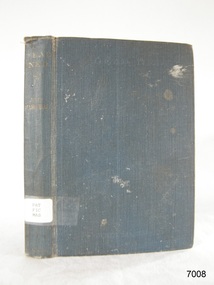
Book - Fictional Story, John Masefield, Dead Ned, 1938
... Davis and The Bird of Dawning, as well as children's classics like The Midnight Folk and The Box of Delights. The works publisher William Henry Heinemann (1863–1920) was an English publisher who founded the Heinemann publishing house in London. Born in Surbiton, Surrey, to a father who had immigrated from Hanover, Germany, Heinemann originally wanted to be a musician before turning to publishing, taking a job with the music publishing firm of Nicolas Trübner. ...Davis and The Bird of Dawning, as well as children's classics like The Midnight Folk and The Box of Delights. The works publisher William Henry Heinemann (1863–1920) was an English publisher who founded the Heinemann publishing house in London. Born in Surbiton, Surrey, to a father who had immigrated from Hanover, Germany, Heinemann originally wanted to be a musician before turning to publishing, taking a job with the music publishing firm of Nicolas Trübner. ...The full title for Dead Ned is The Autobiography of a Corpse Who Recovered Life Within the Coast of Dead Ned and Came to What Fortune You Shall Hear. The novel follows a young doctor who is hanged for a murder he did not commit, is rescued just in time, and rushed out of the country on a slave ship. The novel is an 18th-century-set adventure about a wrongly accused medical student, Ned Mansell. While he's aboard the slave ship, the story follows his journey as he is saved from the gallows at the last minute by friends who send him off to hide as a doctor on the vessel. It has a sequel, Live and Kicking Ned (1939), a seafaring novel about the African slave trade that continues the 1938 story.Hard cover book. Dead Ned Author: John Masefield Publisher: William Heinemann Ltd Date: 1938 Further Information: Green Cloth hardcover with lettering and patterning to spine in black. The spine has a Library label with an inscription.fictionThe full title for Dead Ned is The Autobiography of a Corpse Who Recovered Life Within the Coast of Dead Ned and Came to What Fortune You Shall Hear. The novel follows a young doctor who is hanged for a murder he did not commit, is rescued just in time, and rushed out of the country on a slave ship. The novel is an 18th-century-set adventure about a wrongly accused medical student, Ned Mansell. While he's aboard the slave ship, the story follows his journey as he is saved from the gallows at the last minute by friends who send him off to hide as a doctor on the vessel. It has a sequel, Live and Kicking Ned (1939), a seafaring novel about the African slave trade that continues the 1938 story.warrnambool, shipwrecked-coast, flagstaff-hill, flagstaff-hill-maritime-museum, maritime-museum, shipwreck-coast, flagstaff-hill-maritime-village, shipwrecked-artefact, book, dead ned, john masefield, warrnambool mechanics’ institute, pattison collection, warrnambool library, ralph eric pattison, corangamite regional library service, warrnambool city librarian, mechanics’ institute library, victorian library board, warrnambool books and records, warrnambool children’s library -
 Flagstaff Hill Maritime Museum and Village
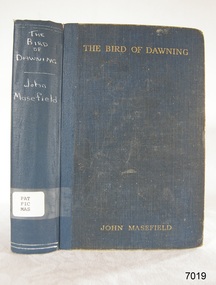
Book - Fictional Story, John Masefield, The Bird of Dawning, 1933 to 1939
... Davis and The Bird of Dawning, as well as children's classics like The Midnight Folk and The Box of Delights. The works publisher William Henry Heinemann (1863–1920) was an English publisher who founded the Heinemann publishing house in London. Born in Surbiton, Surrey, to a father who had immigrated from Hanover, Germany, Heinemann originally wanted to be a musician before turning to publishing, taking a job with the music publishing firm of Nicolas Trübner. ...Davis and The Bird of Dawning, as well as children's classics like The Midnight Folk and The Box of Delights. The works publisher William Henry Heinemann (1863–1920) was an English publisher who founded the Heinemann publishing house in London. Born in Surbiton, Surrey, to a father who had immigrated from Hanover, Germany, Heinemann originally wanted to be a musician before turning to publishing, taking a job with the music publishing firm of Nicolas Trübner. ...The Bird of Dawning (1933) is a sea-adventure novel about the clipper ship Black gauntlet, which is racing home from China to London when she's struck at night by a passing steamer. Only about half the crew sixteen men escape into a lifeboat before she goes down. The 22-year-old second mate, Cruiser Trewsbury, takes command of the survivors and leads them on a roughly 700-mile open-boat voyage to the island of Fayal in the Azores, fighting sharks, dwindling water and food, a leaking boat, and the threat of mutiny along the way. Partway through, the survivors come across an abandoned, dismasted clipper still afloat and Cruiser gets the chance to jury-rig her and sail her home himself, turning survival into a race against time.Hard cover book. The Bird of Dawning Author: John Masefield Publisher: William Heinemann Ltd Date: 1933 to 1939 Further Information: Blue Cloth hardcover with lettering and patterning to spine in gilt. Front cover with title & authors name in gilt. The spine has a Library label with an inscription.fictionThe Bird of Dawning (1933) is a sea-adventure novel about the clipper ship Black gauntlet, which is racing home from China to London when she's struck at night by a passing steamer. Only about half the crew sixteen men escape into a lifeboat before she goes down. The 22-year-old second mate, Cruiser Trewsbury, takes command of the survivors and leads them on a roughly 700-mile open-boat voyage to the island of Fayal in the Azores, fighting sharks, dwindling water and food, a leaking boat, and the threat of mutiny along the way. Partway through, the survivors come across an abandoned, dismasted clipper still afloat and Cruiser gets the chance to jury-rig her and sail her home himself, turning survival into a race against time.warrnambool, shipwrecked-coast, flagstaff-hill, flagstaff-hill-maritime-museum, maritime-museum, shipwreck-coast, flagstaff-hill-maritime-village, shipwrecked-artefact, martin hyde the dukes messenger, john masefield, book, warrnambool mechanics’ institute, pattison collection, warrnambool library, ralph eric pattison, corangamite regional library service, warrnambool city librarian, mechanics’ institute library, victorian library board, warrnambool books and records, warrnambool children’s library -
 Flagstaff Hill Maritime Museum and Village
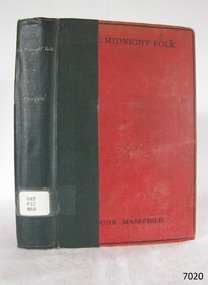
Book - Fictional Story, John Masefield, The Midnight Folk, 1930-1940
... Davis and The Bird of Dawning, as well as children's classics like The Midnight Folk and The Box of Delights. The works publisher William Henry Heinemann (1863–1920) was an English publisher who founded the Heinemann publishing house in London. Born in Surbiton, Surrey, to a father who had immigrated from Hanover, Germany, Heinemann originally wanted to be a musician before turning to publishing, taking a job with the music publishing firm of Nicolas Trübner. ...Davis and The Bird of Dawning, as well as children's classics like The Midnight Folk and The Box of Delights. The works publisher William Henry Heinemann (1863–1920) was an English publisher who founded the Heinemann publishing house in London. Born in Surbiton, Surrey, to a father who had immigrated from Hanover, Germany, Heinemann originally wanted to be a musician before turning to publishing, taking a job with the music publishing firm of Nicolas Trübner. ...The Midnight Folk (first published in 1927) is a celebrated fantasy novel for young readers written by John Masefield. The story centres on a young, lonely orphan named Kay Harker, who lives in a country house guarded by his stern governess. Kay learns that his great-grandfather, Captain Harker, lost a valuable treasure—the plunder of the Santa Barbara—that was entrusted to him. Kay sets out on a quest to locate the lost treasure. Guided by his cat, Nibbins, and an assortment of talking animals, witches, goblins, and nocturnal creatures (the titular 'Midnight Folk'), Kay journeys through magical, dream-like realms. The story seamlessly weaves together British folklore, nautical high adventure, piracy, and childhood wonder.Hard cover book. The Midnight Folk Author: John Masefield Publisher: William Heinemann Ltd Date: 1930-1940 Further Information: Two-tone quarter binding dark green/black spine and quarter shelf-back with red cloth sides, with hand-lettered ink text on the spine "The Midnight Folk / Masefield"). The spine has a Library label with an inscription.fictionThe Midnight Folk (first published in 1927) is a celebrated fantasy novel for young readers written by John Masefield. The story centres on a young, lonely orphan named Kay Harker, who lives in a country house guarded by his stern governess. Kay learns that his great-grandfather, Captain Harker, lost a valuable treasure—the plunder of the Santa Barbara—that was entrusted to him. Kay sets out on a quest to locate the lost treasure. Guided by his cat, Nibbins, and an assortment of talking animals, witches, goblins, and nocturnal creatures (the titular 'Midnight Folk'), Kay journeys through magical, dream-like realms. The story seamlessly weaves together British folklore, nautical high adventure, piracy, and childhood wonder.warrnambool, shipwrecked-coast, flagstaff-hill, flagstaff-hill-maritime-museum, maritime-museum, shipwreck-coast, flagstaff-hill-maritime-village, shipwrecked-artefact, book, the midnight folk, john masefield, warrnambool mechanics’ institute, pattison collection, warrnambool library, ralph eric pattison, corangamite regional library service, warrnambool city librarian, mechanics’ institute library, victorian library board, warrnambool books and records, warrnambool children’s library -
 Flagstaff Hill Maritime Museum and Village
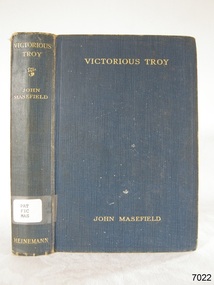
Book - Fictional Story, John Masefield, Victorious Troy or The Hurrying Angel, 1935
... Davis and The Bird of Dawning, as well as children's classics like The Midnight Folk and The Box of Delights. The works publisher William Henry Heinemann (1863–1920) was an English publisher who founded the Heinemann publishing house in London. Born in Surbiton, Surrey, to a father who had immigrated from Hanover, Germany, Heinemann originally wanted to be a musician before turning to publishing, taking a job with the music publishing firm of Nicolas Trübner. ...Davis and The Bird of Dawning, as well as children's classics like The Midnight Folk and The Box of Delights. The works publisher William Henry Heinemann (1863–1920) was an English publisher who founded the Heinemann publishing house in London. Born in Surbiton, Surrey, to a father who had immigrated from Hanover, Germany, Heinemann originally wanted to be a musician before turning to publishing, taking a job with the music publishing firm of Nicolas Trübner. ...Victorious Troy or The Hurrying Angel (first published in 1935) is a dramatic maritime novel by John Masefield. Set in 1922, the story takes place aboard a full-rigged grain ship—the Hurrying Angel—sailing from Melbourne, Australia, back to the UK across the South Pacific. Deep in the ocean, the ship is hit by a catastrophic cyclone. The storm dismasts the vessel, kills or incapacitates the captain and senior officers, and leaves the ship in perilous condition. The hero of this novel is eighteen-year-old senior apprentice Dick Pomfret, who is forced to take command. Through sheer grit, seamanship, and leadership, Dick clears the wreckage, constructs a jury-rig mast, and navigates the battered ship towards safety. Grounded in Masefield's real-life young adult experiences aboard merchant sailing ships, the novel is celebrated for its technical accuracy, vivid descriptions of rough seas, and authentic nautical terminology.Hard cover book. Victorious Troy or The Hurrying Angel Author: John Masefield Publisher: William Heinemann Ltd Date: 1935 Further Information: First edition with original publisher's blue cloth binding with gold foil/gilt lettering on both the front board ("VICTORIOUS TROY / JOHN MASEFIELD") and the spine. The spine has a Library label with an inscription.fictionVictorious Troy or The Hurrying Angel (first published in 1935) is a dramatic maritime novel by John Masefield. Set in 1922, the story takes place aboard a full-rigged grain ship—the Hurrying Angel—sailing from Melbourne, Australia, back to the UK across the South Pacific. Deep in the ocean, the ship is hit by a catastrophic cyclone. The storm dismasts the vessel, kills or incapacitates the captain and senior officers, and leaves the ship in perilous condition. The hero of this novel is eighteen-year-old senior apprentice Dick Pomfret, who is forced to take command. Through sheer grit, seamanship, and leadership, Dick clears the wreckage, constructs a jury-rig mast, and navigates the battered ship towards safety. Grounded in Masefield's real-life young adult experiences aboard merchant sailing ships, the novel is celebrated for its technical accuracy, vivid descriptions of rough seas, and authentic nautical terminology.warrnambool, shipwrecked-coast, flagstaff-hill, flagstaff-hill-maritime-museum, maritime-museum, shipwreck-coast, flagstaff-hill-maritime-village, shipwrecked-artefact, book, victorious troy, the hurrying angel, john masefield, warrnambool mechanics’ institute, pattison collection, warrnambool library, ralph eric pattison, corangamite regional library service, warrnambool city librarian, mechanics’ institute library, victorian library board, warrnambool books and records, warrnambool children’s library
