
Showing 105 items matching "john clay"
-
 City of Moorabbin Historical Society (Operating the Box Cottage Museum)
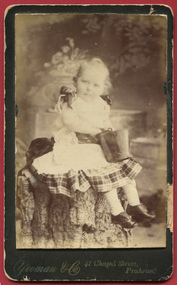
Photograph, B&W Edith ( Eadie) Florence Box 1890 - 1976, c1890
... a) A black and white photograph of Edith ( Eadie) Florence Box a daughter of Francis Box and Eliza Jane Thompson Box b) A black and white wedding photograph of Edith Box and John Clay ...a) YEOMAN & Co 47 Chapel Street / Prahran b) Kodak reprint /handwritten Eadie and John Clay...A B Leigh city of moorabbin, brighton, dendy henry, box william, box elizabeth, rietman august, rietman frieda, box cottage museum ormond, box alonzo, glen eira city council, city of moorabbin historical society, ormond, bentleigh, cheltenham box francis, box eliza jane, box edith florence, clay jack samuel a) YEOMAN & Co 47 Chapel Street / Prahran b) Kodak reprint /handwritten Eadie and John Clay a) A black and white photograph of Edith ( Eadie) Florence Box a daughter of Francis Box and Eliza Jane Thompson Box b) A black and white wedding photograph of Edith Box and John Clay Photograph, B&W Edith ( Eadie) Florence Box 1890 - 1976 Yeoman & Co ...Edith (Eadie) Florence Box 1890- 1976, was born in East Brighton ( Bentleigh) the 9th child of Francis and Eliza Jane Box. In 1912 she married Jack Samuel Clay a market gardener in South Road, Moorabbin and they had 6 children. They retired to live in Balnarring, Victoria and are buried in Cheltenham Cemetery. Francis Box 1836-1912, was born in Withyham, Sussex and came to Australia with his parents George and Mary Box and siblings in 1856. He was assigned to work in Beaufort and had various jobs including ‘gold miner’ at Heathcote where he married Eliza Jane Thompson 1852-1922. Francis decided to return to market gardening after the death of his 1st child Francis George Box in 1875 aged 13months. The child was buried in Brighton Cemetery and Francis then rent/leased the land on the corner of Tucker Road and Elizabeth Street East Brighton ( now Bentleigh) owned by his brother Henry who with another brother John helped Francis clear the land, and establish a market garden. They had 4 children and began to prosper until in 1882 their 2year old child Lena Caroline Box was killed in a fire that destroyed their house. Francis was burned trying to rescue the child. The local community raised money to assist the family. The land boom brought prosperity again and Francis bought more land around Tucker Road which was bequeathed to his children. Francis and Eliza Jane had four more children but one died in infancy and another aged 2 years. Only 5 of their 9 children survived. Francis and Eliza Jane, who died in 1922, are also buried in Brighton Cemetery Box Cottage Museum, a reconstruction of an early settler hut, is named after the Box family who resided there 1865 -1913 . William Box who with his wife Elizabeth Avis Box and 13 children lived and farmed on the block of land in Jasper Road, East Brighton ( now McKinnon / Ormond) that was part of the Henry Dendy Special Survey 1841 . Francis Box, a brother of William Box, was born in Withyham, Sussex and came to Australia with his parents George and Mary Box and siblings in 1856. Francis established market gardens in Tucker Road Bentleigh. Edith 'Eadie' Florence Box was the 9h child of Francis Box. Inscribed in Album “ The early photos in this album were found by Mr (Laurie) Lewis when he was demolishing the Old Box Cottage. He gave them to Mrs Avis Box Eldridge who in turn gave them to me. They were not identified. I believe they rightly belong in the Cottage. I have attempted to identify them and present them in a way they can be preserved as a historical record of the era.” A B Leigh a) A black and white photograph of Edith ( Eadie) Florence Box a daughter of Francis Box and Eliza Jane Thompson Box b) A black and white wedding photograph of Edith Box and John Clay a) YEOMAN & Co 47 Chapel Street / Prahran b) Kodak reprint /handwritten Eadie and John Claycity of moorabbin, brighton, dendy henry, box william, box elizabeth, rietman august, rietman frieda, box cottage museum ormond, box alonzo, glen eira city council, city of moorabbin historical society, ormond, bentleigh, cheltenham, box francis, box eliza jane, box edith florence, clay jack samuel -
 Eltham District Historical Society Inc
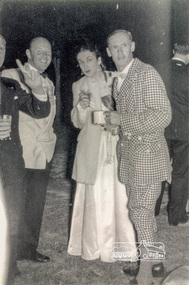
Photograph, New Year at John Harcourt's, Clay Nuneham, Eltham, 1954, 1954
... New Year at John Harcourt's, Clay Nuneham, Eltham, 1954...Clay Nuneham...Cliff Bush...John...Celebrations Clay Nuneham Cliff Bush John Harcourt Morrell yallambie Reproduction of black and white photograph New Year at John Harcourt's, Clay Nuneham, Eltham, 1954 Photograph ...Mr and Mrs Morrell and Mr Cliff Bush of "Yallambie", Lower Plenty.Reproduction of black and white photographcelebrations, clay nuneham, cliff bush, john harcourt, morrell, yallambie -
 Port Melbourne Historical & Preservation Society
Plan - Construction of Liardet Street, Port Melbourne, John Foly?, Draughtsperson, 1860 - 1884
... ...Charles CLAY...John..."Borough of Sandridge":"Chas Clay":"John Foly"...Engineering - Roads Streets Lanes and Footpaths Engineering Department - Borough of Sandridge Charles CLAY John FOLY Liardet Street "Borough of Sandridge":"Chas Clay":"John Foly" Working drawing: longitudinal section, ground plan, transverse section for the construction of Liardet Street between Nott Street and Railway Place. ...Working drawing: longitudinal section, ground plan, transverse section for the construction of Liardet Street between Nott Street and Railway Place. Between 1860 and 1884."Borough of Sandridge":"Chas Clay":"John Foly"engineering - roads streets lanes and footpaths, engineering department - borough of sandridge, charles clay, john foly, liardet street -
 Surrey Hills Historical Society Collection
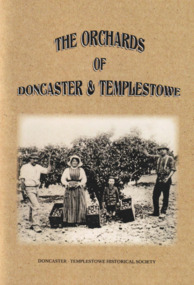
Book, The Orchards of Doncaster & Templestowe
... ...John Clay...Irvine Green Eric Collyer Doncaster-Templestowe Historical Society Gottlieb Thiele Ruffey Creek Bismarck Street Victoria Street Thomas Petty George Hislop John Whitten John Clay August Aumann Carl Hanke Gottfried Uebergang Waldau Max Schramm German Lane George Street John Tully Henry Crouch George Tortice August Zerbe Jane Serpell Sidney Williams Phylloxera Joseph Bosisto Richard Serpell Frederick Thiele W S Williams Edwin Lawford James Read John Finger Richard Clay Ferdinand Finger Leeds Street Wetherby Road John Russell Sarah Uebergang Mary Hislop Rudolph Werner John Petty Archibald McLaren John Hicks Joe Hicks John Smedley William Smedley William Hunter Sylvester Mullens Laurie's forge Curtis Hillman Anne Hillman Dan Harvey Calder's forge Hillman's Blacksmith Works Thomas Serpell Gill Smith Victorian Fruit Growers Association H G Reynolds Alfred Thiele William Webb Fred Zerbe Mary Anne Clay Orchardist's Coolstore R H Werner & Co J H Land Orchardists and Fruit Cool Stores Association A T Petty R Read R Chivers Jack Noonan Arthur Ireland Jack Robinson George Knee Donvale Cool Store Herb Petty Frank Petty Fred Tolly Gordon White Blue Moon Fruit Co-operative Ltd Kathleen Petty Peg Chivers Jack Russell Mathew Adams George McGahy Edwin Bullock James Hodson Edwin Wilson David Corbett Edwin Lowford Thomas Beavis William Hanke Tom Petty Edward Crossman Andrew Zander Carl Aumann Heinrich Fromhold Thomas Chivers William Williams Reinhold Denhert Henry Finger August Furhmann Henry Serpell John Ireland Frank Smedley William Kent William Knee Thomas Buck Henry White Gottlieb Leber Alexander Speers A comprehensive history of fruit growing in the Doncaster-Templestowe area between 1850s and 1950s when orchards began to be subdivided for housing. ...For 100 years Doncaster-Templestowe was a major fruit producing area. The industry had a profound effect on the landscape and vegetation. Although orcharding families came from a variety of backgrounds, German families were an important sub-group.A comprehensive history of fruit growing in the Doncaster-Templestowe area between 1850s and 1950s when orchards began to be subdivided for housing. It includes B&W photos and line drawings and maps. It covers details of the varieties grown, the families involved, pests, machinery involved, markets, blacksmiths and reasons for the demise of the industry in the area.irvine green, eric collyer, doncaster-templestowe historical society, gottlieb thiele, ruffey creek, bismarck street, victoria street, thomas petty, george hislop, john whitten, john clay, august aumann, carl hanke, gottfried uebergang, waldau, max schramm, german lane, george street, john tully, henry crouch, george tortice, august zerbe, jane serpell, sidney williams, phylloxera, joseph bosisto, richard serpell, frederick thiele, w s williams, edwin lawford, james read, john finger, richard clay, ferdinand finger, leeds street, wetherby road, john russell, sarah uebergang, mary hislop, rudolph werner, john petty, archibald mclaren, john hicks, joe hicks, john smedley, william smedley, william hunter, sylvester mullens, laurie's forge, curtis hillman, anne hillman, dan harvey, calder's forge, hillman's blacksmith works, thomas serpell, gill smith, victorian fruit growers association, h g reynolds, alfred thiele, william webb, fred zerbe, mary anne clay, orchardist's coolstore, r h werner & co, j h land, orchardists and fruit cool stores association, a t petty, r read, r chivers, jack noonan, arthur ireland, jack robinson, george knee, donvale cool store, herb petty, frank petty, fred tolly, gordon white, blue moon fruit co-operative ltd, kathleen petty, peg chivers, jack russell, mathew adams, george mcgahy, edwin bullock, james hodson, edwin wilson, david corbett, edwin lowford, thomas beavis, william hanke, tom petty, edward crossman, andrew zander, carl aumann, heinrich fromhold, thomas chivers, william williams, reinhold denhert, henry finger, august furhmann, henry serpell, john ireland, frank smedley, william kent, william knee, thomas buck, henry white, gottlieb leber, alexander speers -
Linton Mechanics Institute and Free Library Collection
Book - Novel, Appleton, G.W, The rook's nest, 1905
... John Long...Richard Clay & Sons.... ; crimson cover with title, author and crest embossed on front The rook's nest Book Novel Appleton, G.W. John Long Richard Clay & Sons ...320p. ; crimson cover with title, author and crest embossed on frontfictionfiction, g.w. appleton -
Glen Eira Historical Society
Document - BOX FAMILY
... John (Jack) Francis... Clay...Haydon Barry Rachel Alexandra Millie John Bussell Harold Leslie Bussell Sue Bussell Leanne Melinda Bussell Benjamin Leslie Bussell Lynette Box George Box Jean (Holms) Box George Box Alisa (Hughes) Hughes Justin Hughes Ebony Hughes Tasman Box Robin Box Veronica (Roman) Box Andrea Roman Box Lisa Roman Box Jodi Roman Box Malcome Box Sue (Kerrison) Box Amanda Box Anthony Clay John (Jack) Francis Clay Lynda Blanche (nee Sibte) Clay Vivien Clay Majory Joy Lipman Vernon (Vern) Ronald Clay Kenneth Graham Clay Laura Jean Document BOX FAMILY ...Extensively detailed family history from 1838 in UK to present day. Provides much local history and social history into early pioneering and market gardening families. Forty one page computer print out with numerous black and white photographs.box w.h. george, box george, box mary nee cripps, box caroline, box william, box henry, box john, box anna, box eliza, box elizabeth nee avis, box francis, box lydia, moeller a., mclean n., robilliard george james, box ester, box fanny (downard), box eleanor, philbrick richard, fairlam richard, hale jasper, dendy henry, renick mark, renick stefanie (nee riemann), brighton cemetery, ormond, east brighton, prahran, centre road, jasper road, manchester road, mckinnon road, north road, brighton, box cottage, moorabbin historical society, thomas street, elsternwick, paterson road, east bentleigh, tucker road, jasper road, harwood thomas, box violet, hordeen lebbens, augustus arthur, wattle, pioneers, ancient order of foresters, council of moorabin, elster creek, primitive methodist church, lewis’ timber yard, grape growing, paling house, wells, water wagon, market gardens, farming, aboriginal people, king billy, chinese, kayon (?), kay you (yu?), cheong ki, boxer rebellion, chinese missionary, brickmakers, midwife, corben’s monumental masons, sculptor, cottage, parlour, verandah, scullery, le man’s swamp, flower nursery, chook houses, ladies college, moorabbin roads board, western market, eastern market, victoria market, st. kilda road, nepean road/highway, mckinnon, ormond, carnegie, oakleigh, murrumbeena, moorabbin, mordialloc, heathcote, bentleigh, brighton east, manchester road, brighton council, city of moorabbin, west joseph, porter harriet, moore henry, moeller a (moller), box mary, lindsay mccurry elizabeth, lindsay elizabeth, lindsay henry, lindsay frederick, schmidt william, robilliard james cpt., beckett ida, beckett nellie, beckett martha, beckett martha maud, robinson eleanor, robinson joyce, dowling thomas, anderson william snowden, mccurry henry mr & mrs, box emily jane (nee mccurry), jorgensen justin, jorgensen dr., jorgenson bertha, ross william murray, st. kilda, merrie creek, pentridge (now coburg), murray road, wyuna dunoos st, grange road, rosstown, tucker rd, elizabeth st, common school no 213 east brighton, bentleigh, steel roads tracks, rabbits, cheltenham, brighton cemetery, cheltenham cemetery, paterson road, east boundary road, baptist church, lay preachers, missionaries- china, oakleigh tyre works, belfast hotel sandhurst (bendigo), mornington, gas street lighting, brighton historical society, moorabbin primary school, bravis road, lewis street, chalmers street, grange road, butcher shops, ormond state school, oakleigh council, wedding dress, methodist children’s home cheltenham, bentleigh baptist church, auctioneer, lindsay mark, balkham jane, balkham stephen, reitman august william, fitzwilliam catherine, quashdorf (?phonetic) mr, box violet, montford paul, reitman stephanie (renick mrs), reitman william, box ada, downard alicia (lill), downard arthur, downard edward, graham elizabeth, downard octavia rose, downard william alfred, downard arthur henry (harvey), downard fanny, thompson eliza jane, box lena caroline, viloudaki rebecca, box anna (pay), pay henry, box eliza (gurr), johnson geoffrey, rushall eleanor (nellie), gurr eliza nee box, gurr jabez henry tasman, marriot william mrs, ross william murray, box gladys (nee battersby), box dulcie (bussell), bussell samuel robert, bussell norma (hoult), bussell darren lyle, bussell craig andrew, bussell sylvia june (barry), barry j. haydon, barry rachael alexandra, barry phillipa anne, barry vanessa kate, bussell joan lorraine (millie), millie john, bussell harold leslie, euston mr, purdue edgar robert, box lydia elizabeth, wilkinson coral doreen, mitchell donald, centre road, court pride of st george aof, dunoon street, vickery street, darey street/ave., oakleigh state school, methodist church, mill street, koornang road, regent street, marriage road, box olivia christina, box ernest charles, box walter william, lawson robert, lawson nancy eunice (curtis), box walter stanley, box eleanor (nellie) rushall, box martha, box john, box nellie gladys, andrews william (bill), box ray, mccurry mrs elizabeth, box william henry george, schreiber family, jorgensen family, downward arthur, downward alicia – lill, downward octavia rose, downward william alfred, downward arthur henry/harvey, cummings ida, cummings william, downward alice (nee cleary), downward ada, downward lucy (mrs bailey), downward alice, downward arthur harvey, bailey lawrence, bailey ian, bailey carol viola (bartlett), bailey colin harvey, bailey julie alison (hardware), bailey val, bailey adina, bailey david, bartlett brian, bartlett bradley grant, bartlett clayton lawrence, hardware michael, hardware dion michael colin, hardware jevon michael bailey, box elanor, box alice amelia (dale), dale george, dale elizabeth, dale lilly, dale john, dale thomas, dale rose, dale ethelbert, dale george, dale elsie, box thomas henry, box annie lavinia (rogers), rogers annie elizabeth, rogers william richard, box arthur walter, nelson dagma marie (box), box walter kingston, box marie, box cecilia eliza (ainger), ainger james, box ida may, cumming william george, cumming wendy (nee mansell), cumming susan, cumming paul, cumming felicity (steel), cumming shane, cumming melissa, cumming angel, box harold, box dorothy may (jackson), jackson frederick, jackson margaret (walker), jackson judith, walker david, walker michelle (neville), neville andrew, walker darren, walker rebecca (coyne), walker joshua, walker bradley, johnson steven, johnson carl, johnson judith (jackson), johnson peter, johnson melissa (hamid), johnson craig, ely johnson/jackson judith, ely steven, linham arthur, box thelma elizabeth (eagle), eagle keith, eagle nancye elizabeth (harpin), harkin john, harkin mary anne (howe), howe barry, howe samuel, harkin michael, harkin christopher, harkin elizabeth, eagle roddan, eagle carolyn (mansell), eagle gerard, eagle kerri – lee, box avis ann (eldridge), eldridge alf, eldridge robert, eldridge sandra, eldridge adam, eldridge nicholas, eldridge patric, eldridge john, eldridge carol (biggs), eldridge robert james, eldridge catherine elizabeth, eldridge meredith, box william john, box maud (nee hanchette), box malcome, box sandra (ede), box stephen, box nicolle, box andrew, box christine (dormer), box corrina, box jennifer (turpin), turpin phillip, box herbert, box olwyn (richard), box elaine henry, henry bruce, henry james, henry robin, henry david, box richard, box nerida (bowen), box duncan, box john, box cerwiden, box ewan, box bryan, box collen (malony), box kieran, box eden, box christopher, box pam (smith), box sue (tirchett), box thomas, box william, box george frederick, box olive (cameron), box eliza jane (thompson), box francis george, box lena caroline, box-hembrow mable alma, box charles francis, clinch mr., box robinson jessie melinda, box clay edith florence, north brighton, waun alex, waun robert, marquis peter, sheppard w., warnbach mr, marriott william mrs, box dorothy (seabrook), box hazel, box jessie, box frank (francis), seabrook len, box henry, seabrook albert, seabrook stanley allan, barry j. haydon, barry rachel alexandra, millie john, bussell harold leslie, bussell sue, bussell leanne melinda, bussell benjamin leslie, bussell lynette, box george, box jean (holms), box george, box alisa (hughes), hughes justin, hughes ebony, hughes tasman, box robin, box veronica (roman), box andrea roman, box lisa roman, box jodi roman, box malcome, box sue (kerrison), box amanda, box anthony, clay john (jack) francis, clay lynda blanche (nee sibte), clay vivien, clay majory joy, lipman vernon (vern) ronald, clay kenneth graham, clay laura jean -
 8th/13th Victorian Mounted Rifles Regimental Collection
Photograph
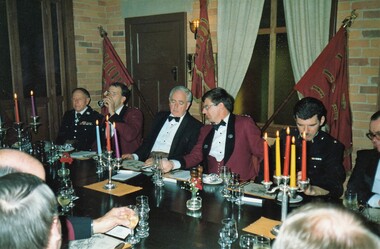
... From left : Major ( Ret'd ) Reg McDermott, unknown, Mr Ewan Cameron MLA, Captain Colin Carrington,Lieutenant Mathews, Lieutenant John Clay....From left : Major ( Ret'd ) Reg McDermott, unknown, Mr Ewan Cameron MLA, Captain Colin Carrington,Lieutenant Mathews, Lieutenant John Clay. Photograph ...The 8th/13th Victorian Mounted Rifles was raised as a regiment of the Royal Australian Armoured Corps on 1 May 1948 with Headquarters in Melbourne and squadrons in Sale, Benalla/Wangaratta and Albury. In 1955 Regimental Headquarters moved to Wangaratta and a second squadron was located at Albury. The Sale squadron transferred to 4th/19th Prince of Wales’s Light Horse. In 1977 8/13 VMR Regiment was reduced to an independent squadron A Squadron 8th/13th Victorian Mounted Rifles and in 1991 was linked with 4th/19th Prince of Wales’s Light Horse forming the VMR Squadron of that regiment.Colour photograph of 8/13 Victorian Mounted Rifles officers and guests at a Dining In night 22 April 1989. From left : Major ( Ret'd ) Reg McDermott, unknown, Mr Ewan Cameron MLA, Captain Colin Carrington,Lieutenant Mathews, Lieutenant John Clay. -
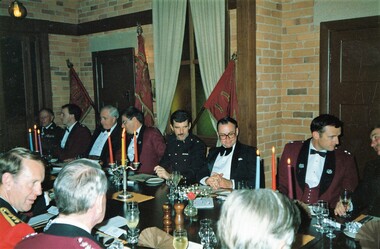 8th/13th Victorian Mounted Rifles Regimental Collection
Photograph
... From left : Major ( Ret,d ) Reg McDermott, lieutenant Arrowsmith, Mr Ewan Cameron MLA, Captain Colin Carrington, Lieutenant Mathews, Lieutenant John Clay, Lieutenant Marshall....From left : Major ( Ret,d ) Reg McDermott, lieutenant Arrowsmith, Mr Ewan Cameron MLA, Captain Colin Carrington, Lieutenant Mathews, Lieutenant John Clay, Lieutenant Marshall. Photograph ...The 8th/13th Victorian Mounted Rifles was raised as a regiment of the Royal Australian Armoured Corps on 1 May 1948 with Headquarters in Melbourne and squadrons in Sale, Benalla/Wangaratta and Albury. In 1955 Regimental Headquarters moved to Wangaratta and a second squadron was located at Albury. The Sale squadron transferred to 4th/19th Prince of Wales’s Light Horse. In 1977 8/13 VMR Regiment was reduced to an independent squadron A Squadron 8th/13th Victorian Mounted Rifles and in 1991 was linked with 4th/19th Prince of Wales’s Light Horse forming the VMR Squadron of that regiment.Colour photograph of 8/13 Victorian Mounted Rifles officers and guests at a Dining In night 22nd April 1989. From left : Major ( Ret,d ) Reg McDermott, lieutenant Arrowsmith, Mr Ewan Cameron MLA, Captain Colin Carrington, Lieutenant Mathews, Lieutenant John Clay, Lieutenant Marshall. -
 Federation University Historical Collection
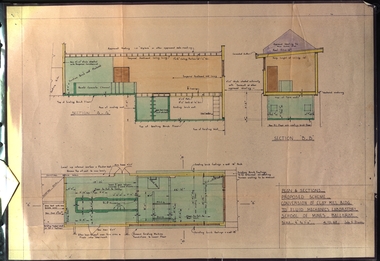
Plan, Ballarat School of Mines Clay Mill Building Alterations, 1962, 04/10/1962
... john e. dixon...clay...john e. dixon clay mill building ceramics ballarat school of mines Battery Building Two plans for alterations to the Ballarat School of Mines Clay Mill Building to the Fluid Mechanics Labratory. .1) Existing Clay Mill Building .2) Plan and sections of proposed changes to the Clay Mill Building. ...Two plans for alterations to the Ballarat School of Mines Clay Mill Building to the Fluid Mechanics Labratory. .1) Existing Clay Mill Building .2) Plan and sections of proposed changes to the Clay Mill Building.john e. dixon, clay mill building, ceramics, ballarat school of mines, battery building -
 Federation University Historical Collection
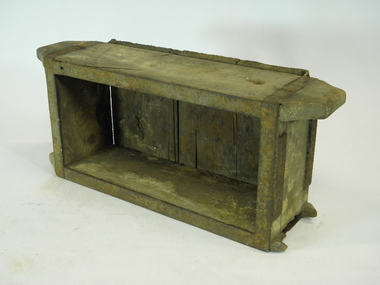
Tool, Brick mould and brick, 1) UNKNOWN .2) c.1888
... john nunn...j nunn...brick...mould...brick mould...industrial mould...brickmaker...ballarat...clay...clay still line the interior. .2) Light brown brick. Please note: Brick mould and brick may be from different sources. Brick mould and brick Tool John ...John Nunn was one of the earliest brickmakers on record in Ballarat and has a road named for him - Nunn Street - where he resided..1) An oblong-shaped timber box open at top. Only butt joints are used. Iron strapping wraps around the vertical pieces of timber and across the top edge of the box. The longest pieces of vertical timber protrude past the end and are shaped like solid handles - one is broken. On each end piece there are small, blank iron plates held with screws. The base piece of timber is made from two different width weatherboard-style timbers. The nails in the base piece appear to be hand-made. Remnants of clay still line the interior. .2) Light brown brick. Please note: Brick mould and brick may be from different sources..1) Handwritten (possibly in ink) on one long side: MR H. G. SMITH ...(illegible) Ballarat .2) Imprinted: J. NUNNjohn nunn, j nunn, brick, mould, brick mould, industrial mould, brickmaker, ballarat, clay, ceramics -
 Federation University Historical Collection
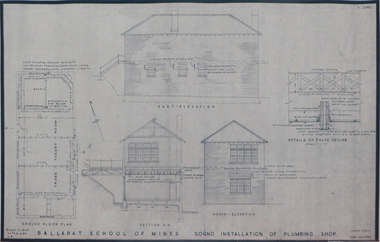
Plan (copy), Ballarat School of Mines Plumbing Building, 1954
... john e. dixon...ballarat school of mines...clay....1) Ballarat School of Mines Sound Installation of Plumbing Shop, by architect John Firth, 1954 .2) Plan and sections of the proposed Scheme - conversion of Ballarat School of Mines Clay Mill Building to Fluid Mechanics Laboratory, by architect John E. ...john firth percy everett john e. dixon ballarat school of mines clay ceramics plumbing buildings architectural plan .1) Ballarat School of Mines Sound Installation of Plumbing Shop, by architect John Firth, 1954 .2) Plan and sections of the proposed Scheme - conversion of Ballarat School of Mines Clay Mill Building to Fluid Mechanics Laboratory, by architect John E. ....1) Ballarat School of Mines Sound Installation of Plumbing Shop, by architect John Firth, 1954 .2) Plan and sections of the proposed Scheme - conversion of Ballarat School of Mines Clay Mill Building to Fluid Mechanics Laboratory, by architect John E. Dixon, 1962 .3) Plan for Ballarat School of Mines New Sanitary Accomodation, 1967 .4) Plan for Ballarat School of Mines Extension to Existing Workshop by architect Percy E. Everett. The plan includes the former Ballarat Supreme Courtjohn firth, percy everett, john e. dixon, ballarat school of mines, clay, ceramics, plumbing, buildings, architectural plan -
 Flagstaff Hill Maritime Museum and Village
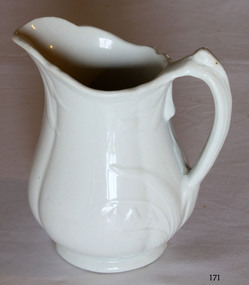
Ceramic - Jug, Baker & Co, 1891 to 1893
... John Baker. By the early 1840s, William Baker was running it alone and was then using 'machinery for the potteries manufacturing operations in addition to the mill that was producing the raw clay. ...John Baker. By the early 1840s, William Baker was running it alone and was then using 'machinery for the potteries manufacturing operations in addition to the mill that was producing the raw clay. ...W Baker and Co-produced many different types of pottery at their Fenton Potteries, Stoke-on-Trent, Staffordshire England. The company was established in 1790 by Ralph Bourne and William Baker the company was working at capacity by the end of the century. By the late 1820's Bourne and Baker, in partnership with John Bourne, had acquired additional works opposite the first in 1833. With the deaths of John Bourne and William Baker, the partnership was dissolved, and then for a short time, the business was carried on by Ralph Bourne and William Baker junior and John Baker. By the early 1840s, William Baker was running it alone and was then using 'machinery for the potteries manufacturing operations in addition to the mill that was producing the raw clay. The business was subsequently carried on by William Baker and Company that were known for the making of printed, sponged, and pearl-white granite ware for export in the early 1880s at the Fenton works between Manor and Fountain Streets. The original works on the south side of City Road were by then an en-caustic tile works, apparently still in the hands of the Baker family. The pottery works flourished under William Baker’s management and by the middle of the nineteenth century with almost 500 employees was the biggest firm in Fenton. An early piece of ironstone Staffordshire pottery now a collector's item showing the types of domestic items that were exported from England to its colonies towards the end of the nineteenth century and into the beginning of the twentieth.Water pitcher ironstone ceramic white with raised embossed Lilly of the valley decoration around handle and lip sections. Marked on bottom, "Royal stone china, Baker and Co, England" with emblem of lion, crown and unicornflagstaff hill, warrnambool, shipwrecked coast, flagstaff hill maritime museum, maritime museum, shipwreck coast, flagstaff hill maritime village, great ocean road, jug, kitchen utensil, kitchen ware, water pitcher -
 Flagstaff Hill Maritime Museum and Village
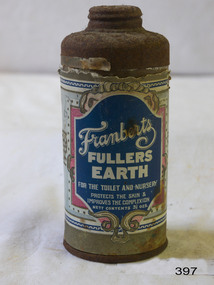
Container - Round Metal Shaker
... John Hanbury had a rolling mill at Pontypool in South Wales. The method they developed involved rolling iron plates using cylinders. This process enabled more uniform blank plates to be produced than was possible by just hammering the tin. https://www.shilohplastics.com.au/history-of-metal-packaging/ Fuller's Earth is any clay...John Hanbury had a rolling mill at Pontypool in South Wales. The method they developed involved rolling iron plates using cylinders. This process enabled more uniform blank plates to be produced than was possible by just hammering the tin. https://www.shilohplastics.com.au/history-of-metal-packaging/ Fuller's Earth is any clay ...The history of metal packaging began in Bohemia in the 1200s. Metal has been produced for a very long time. But the first metal used for packaging was tin. In particular, it was the process of tin plating that was invented in Bohemia. Before this no other metal was economically able to be used for packaging. Later, in 1667 Andrew Yarranton, and English engineer, and Ambrose Crowley brought the method to England. Here it was improved by ironmasters including Philip Foley. Then by 1697, John Hanbury had a rolling mill at Pontypool in South Wales. The method they developed involved rolling iron plates using cylinders. This process enabled more uniform blank plates to be produced than was possible by just hammering the tin. https://www.shilohplastics.com.au/history-of-metal-packaging/ Fuller's Earth is any clay material that has the capability to bleach or dissolve oil or other liquids without the use of harsh chemical treatment. Modern uses of Fuller's Earth include as absorbents for oil, grease, and animal waste (cat litter) and as a carrier for pesticides and fertilisers. Minor uses include filtering, clarifying, and decolorising; active and inactive ingredient in beauty products; and as a filler in paint, plaster, adhesives, and pharmaceuticals. Fulling is an important step in the production of woollen garments, and can be traced back to ancient times. Cuneiform texts from Mesopotamia mention a raw material, which was delivered to fullers for the finishing of cloth. https://en.wikipedia.org/wiki/Fuller%27s_earth The use of tin to protect and store items, revolutionised the world. Fuller's Earth is a widely used product.Container of cylindrical sheet metal with perforated lid, used by Duerdin and Sainsbury Ltd, Sellers of Franbert's Fuller's Earth. Colour printed paper deteriorating. ‘Nett Contents 3½ oz.’ Ingredients still inside.Tin very rusty.'Franbert's Fuller's Earth. For the Toilet and Nursery. Protects the skin & Improves the Complexion. Nett Contents 3½ oz.'flagstaff hill, warrnambool, shipwrecked-coast, flagstaff-hill, flagstaff-hill-maritime-museum, maritime-museum, shipwreck-coast, flagstaff-hill-maritime-village, tin, tin plating, containers -
 Mission to Seafarers Victoria
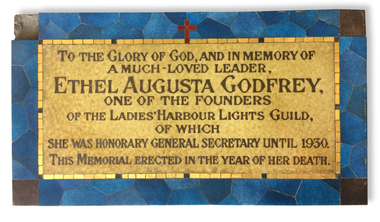
Plaque - Opus sectile tablet, 1936
... On her retirement in 1930 after some 25 years, Miss Godfrey together with Chaplain Gurney Goldsmith was recognised in the journal The Church and the Sailor, as a key influence and promoter of the formation of Harbour Lights groups across the suburbs of Melbourne, Victoria and Australia, the Ladies Harbour Lights Guild, Melbourne being the first such auxiliary group in the world. memorial plaque plaque lhlg port melbourne chapel brooks robinson and co reverend john smerger drought sectile tablet opus sectile mosaic mosaic ethel augusta godfrey 1861-1935 To the Glory of God and in memory ops/ a much loved leaderAthel Augusta Godfrey, / one of the founders/ of the ladies Harbour Lights Guild/ of which she was honorary general secretary / Until 1930./ This memorial erected in the year of her death." Clay ...The memorial tablet was unveiled in the St Nicholas chapel at the Port Melbourne mission (Beach Cnr Nott St) on Wednesday 24 June 1936. The ceremony was performed by her nephew, Reverend John Smerger Drought - her sister's son. Another plaque was erected the same month in the Williamstown Institute. (Annual Report 1936) Along with the windows in the St Peter chapel in the Central Institute, those were the 3 memorials similar to the ones erected in memory of Miss Tracy. Miss Ethel Godfrey was born in 1861 at sea on the vessel called Copenhagen. Daughter of a pioneer, and settler Frederick Race Godfrey MLA and subsequently Lay Dean at St Paul's. Ethel Studied in Melbourne and abroad at Brussels and became a singing teacher and performer. In 1906 she took on the role of Honorary General Secretary to create and lead the volunteer organisation "The Ladies Harbour Lights Guild" and subsequently helped establish similar groups in Newcastle, Brisbane, Sydney, Hobart, Adelaide and also established the mission in Southampton in the UK. The structure of the LHLG was used as a model framework by similar groups supporting Missions around Australia and the Globe. A key achievement was the fundraising campaign for the memorial chapel in St Peters built in 1917 by Walter R.Butler. She died the 7 July 1935, and is buried in the St Kilda Cemetery.On her retirement in 1930 after some 25 years, Miss Godfrey together with Chaplain Gurney Goldsmith was recognised in the journal The Church and the Sailor, as a key influence and promoter of the formation of Harbour Lights groups across the suburbs of Melbourne, Victoria and Australia, the Ladies Harbour Lights Guild, Melbourne being the first such auxiliary group in the world.Clay base rectangular plaque with inlaid blue ceramic regular tesserae surrounding the ceramic centre rectangular ceramic panel with inscription and decorative glazed detail tiles. Support is a metal frame with inset wood pieces .To the Glory of God and in memory ops/ a much loved leaderAthel Augusta Godfrey, / one of the founders/ of the ladies Harbour Lights Guild/ of which she was honorary general secretary / Until 1930./ This memorial erected in the year of her death."memorial plaque, plaque, lhlg, port melbourne, chapel, brooks robinson and co, reverend john smerger drought, sectile tablet, opus sectile mosaic, mosaic, ethel augusta godfrey 1861-1935 -
Federation University Historical Collection
Book - Book - Scrapbook, Ballarat Institute of Advanced Education: Scrapbook of newspaper cutting, Book 6; December 1971 to May 1972
... john crebbin...graeme trevena...gary murphy...group leadership is important...mr kevin murray...pollution threat to biae at mt helen...$300000 for biae student housing...academic registrar for institute...decision on mt helen clay...The cuttings cover the period from 12 December 1971 to 1 May 1972. ballarat institute of advanced education biae employment advertisements application for enrolment outline of courses victorian institute of colleges staff association jack barker sees danger fourth university use up funds technical teachers at annual conference professor at seminar middle courses needed in engineering field 1973 for biae library student poster to sovereign hill john crebbin graeme trevena gary murphy group leadership is important mr kevin murray pollution threat to biae at mt helen $300000 for biae student housing academic registrar for institute decision on mt helen clay pit a l mckenzie president japanese exchange group in ballarat study grant for metallurgist planners agree on fourth uni pmg training at institute melbourne site recommended fourth uni should reach out leaders slate report pressure from country - fourth uni gates to be removed - former gaol 60 year old fleece found john sharrock youth is his thing industry shows lack of interest great blow to decentralisation develop flexibility advise to chemical society australian science education project fourth uni not wanted - councillor biae library taking shape $500 scholarship to anne mills bush their classroom smb cabaret ball greg govan - pottery student prize commemorates early industrialists e j tippett apprenticeship prize daryl eason athletics champion goon's giftthrough ballarat technical teachers at protest meeting stock exchange award to anne mills chamber of manufactures scholarship to david ward arblaster award for smb new course - bachelor of applied science in metallurgy Book with orange cover, front. ...Newspaper cuttings relating to Ballarat Institute of Advanced Education. These are from various newspapers and include The Age, Ballarat Courier, The Australian, The Herald. The cuttings cover the period from 12 December 1971 to 1 May 1972. Book with orange cover, front. Spiral bound.ballarat institute of advanced education, biae, employment advertisements, application for enrolment, outline of courses, victorian institute of colleges staff association, jack barker sees danger, fourth university use up funds, technical teachers at annual conference, professor at seminar, middle courses needed in engineering field, 1973 for biae library, student poster to sovereign hill, john crebbin, graeme trevena, gary murphy, group leadership is important, mr kevin murray, pollution threat to biae at mt helen, $300000 for biae student housing, academic registrar for institute, decision on mt helen clay pit, a l mckenzie president, japanese exchange group in ballarat, study grant for metallurgist, planners agree on fourth uni, pmg training at institute, melbourne site recommended, fourth uni should reach out, leaders slate report, pressure from country - fourth uni, gates to be removed - former gaol, 60 year old fleece found, john sharrock, youth is his thing, industry shows lack of interest, great blow to decentralisation, develop flexibility advise to chemical society, australian science education project, fourth uni not wanted - councillor, biae library taking shape, $500 scholarship to anne mills, bush their classroom, smb cabaret ball, greg govan - pottery student, prize commemorates early industrialists, e j tippett apprenticeship prize, daryl eason athletics champion, goon's giftthrough ballarat, technical teachers at protest meeting, stock exchange award to anne mills, chamber of manufactures scholarship to david ward, arblaster award for smb, new course - bachelor of applied science in metallurgy -
Federation University Historical Collection
Book - Book - Scrapbook, Ballarat College of Advanced Education: Scrapbook of newspaper cutting, Book 10; September 1981 to May 1982
... The cuttings cover the period from 2 September 1981 to 6 May 1982. . employment advertisements application for enrolment outline of courses more students less money bcae staff cuts fewer graduates in engineering half marathon need for more maths and science students energy resources control warning bcae spring festival companies woo bcae engineering graduates engineering students and 'the iron horse' recreation survey p e degree course energy saving project student winemakers tom nestor wins award nigerian students studies ground movement sir arthur nicholson golden taste of success ivan durrant on art students critical time for ballarat's economy first group to complete arts degree francis brown john mcmahon award in metallurgy award in mechanical engineering pottery group's first show rich clays of ballarat colleges to retrench staff retirement of frank ryan growing computer industry new job in northern territory break-in brumbies ballarat's young jobless librarians enter computer age tertiary chief sacked dr jim watson hsc seminar at bcae students eat too much fast food chemistry graduate to work in canberra stephen wilson dianne budge to work in alice springs physical fitness director of ymca revamp for key tertiary commission lake weed problem businessmen wooed move to promote health fitness scholarships for students robert allan artist move to save bendigo course hobby course for gold prospectors john crump ceramics day of firsts at bcae track and field titles win tamara beckier artist abstract art talks on future of regional colleges government funding Book with grey cover, front. ...Newspaper cuttings relating to Ballarat College of Advanced Education. These are from various newspapers and include The Age, Ballarat Courier, The Australian, The Herald. The cuttings cover the period from 2 September 1981 to 6 May 1982. . Book with grey cover, front. Image of image of two trotters. Spiral bound.employment advertisements, application for enrolment, outline of courses, more students less money, bcae staff cuts, fewer graduates in engineering, half marathon, need for more maths and science students, energy resources control warning, bcae spring festival, companies woo bcae engineering graduates, engineering students and 'the iron horse', recreation survey, p e degree course, energy saving project, student winemakers, tom nestor wins award, nigerian students studies ground movement, sir arthur nicholson, golden taste of success, ivan durrant on art students, critical time for ballarat's economy, first group to complete arts degree, francis brown, john mcmahon, award in metallurgy, award in mechanical engineering, pottery group's first show, rich clays of ballarat, colleges to retrench staff, retirement of frank ryan, growing computer industry, new job in northern territory, break-in brumbies, ballarat's young jobless, librarians enter computer age, tertiary chief sacked, dr jim watson, hsc seminar at bcae, students eat too much fast food, chemistry graduate to work in canberra, stephen wilson, dianne budge to work in alice springs, physical fitness director of ymca, revamp for key tertiary commission, lake weed problem, businessmen wooed, move to promote health fitness, scholarships for students, robert allan artist, move to save bendigo course, hobby course for gold prospectors, john crump ceramics, day of firsts at bcae, track and field titles win, tamara beckier artist, abstract art, talks on future of regional colleges, government funding -
 Federation University Historical Collection
Book - Scrapbook, Ballarat School of Mines Scrap Book, 1916-1920, 1916-1920
... john h. smyth...david l. thomas...clay...ballarat school of mines world war one news clippings scrapbook william e. moon john h. smyth david l. thomas clay maurice copland repatriation g. buchanan j.m. bickett harrie wood cliff garrad harold c. cornell f.g. marriott technical education classes for soldiers w.h. middleton e.j. cannon ted cannon ponsonby carew-smythe boer war memorial amalie feild antarctica fred middleton richard vale obituary rand stephen richards richard g. walker world war one chemists frank tate free instruction for soldiers ken moss girls' preparatory eureka stockade pageant commitee fred g. middleton shackelton relief party aurora emil gutheil obituary henry james hall obituary william elphick moon arthur tandy john mcwhae harold bieske james millhinch bickett obituary wild flower show technical schools conference, ballarat allan t. perry ballarat pottery clay citizen soldiers' camp george buchanan obituary clifford garrard james dyer woolcott obituary frank penhalluriack w.s> penhalluriack annie whitla ballarat school of mines jubilee anniversary university classes maurice copland obituary boot repairing museum rennovation bootmaking f.g. marriott obituary vocational training classes j.d. woolcott obituary Ferdinand Krause obituary ferdinand krause Emil Guthiel Cornell Spanish flu Pneumonic flu pandemic Red hardcovered scrapbook with news clippings relating to the Ballarat School of Mines. ...Red hardcovered scrapbook with news clippings relating to the Ballarat School of Mines.ballarat school of mines, world war one, news clippings, scrapbook, william e. moon, john h. smyth, david l. thomas, clay, maurice copland, repatriation, g. buchanan, j.m. bickett, harrie wood, cliff garrad, harold c. cornell, f.g. marriott, technical education, classes for soldiers, w.h. middleton, e.j. cannon, ted cannon, ponsonby carew-smythe, boer war memorial, amalie feild, antarctica, fred middleton, richard vale obituary, rand, stephen richards, richard g. walker, world war one chemists, frank tate, free instruction for soldiers, ken moss, girls' preparatory, eureka stockade pageant commitee, fred g. middleton, shackelton relief party, aurora, emil gutheil obituary, henry james hall obituary, william elphick moon, arthur tandy, john mcwhae, harold bieske, james millhinch bickett obituary, wild flower show, technical schools conference, ballarat, allan t. perry, ballarat pottery clay, citizen soldiers' camp, george buchanan obituary, clifford garrard, james dyer woolcott obituary, frank penhalluriack, w.s> penhalluriack, annie whitla, ballarat school of mines jubilee, anniversary, university classes, maurice copland obituary, boot repairing, museum rennovation, bootmaking, f.g. marriott obituary, vocational training classes, j.d. woolcott obituary, ferdinand krause obituary, ferdinand krause, emil guthiel, cornell, spanish flu, pneumonic flu, pandemic -
 Federation University Historical Collection
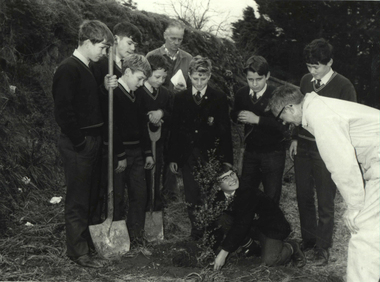
Photograph - Photograph - Black and White, Ballarat Technical School Students Plant Out Old Gaol Terraces, 1969, 14/07/1969
... clay slopes. The Head, A W Steane designed the landscaping of the slopes from the Gaol wall down to the Battery Paddock. The boys did much of the work. Apart from beautifying the grounds, this project occupied their leisure time, particularly as they had nowhere to play. The school acquired the gaol site in April 1969. The work of improving the grounds which was begun by A W Steane and his students is being carried on. ballarat junior technical school grant street garden garden terrace ballarat gaol battery paddock former ballarat gaol walls don ogilvie John Brown Bradley Julius Gary Green Steven Ryan Kim Hall Peter Gross Peter Rasmussen. ...When Ballarat Junior Technical School's new building was opened in 1921, the surrounding area was rubble-strewn with raw clay slopes. The Head, A W Steane designed the landscaping of the slopes from the Gaol wall down to the Battery Paddock. The boys did much of the work. Apart from beautifying the grounds, this project occupied their leisure time, particularly as they had nowhere to play. The school acquired the gaol site in April 1969. The work of improving the grounds which was begun by A W Steane and his students is being carried on.Eight Form 1 boys from Ballarat Technical School planting trees at the old Ballarat Gaol terraces. Don Ogilvie is in the foreground. Peter Murley is planting watched by Frank McKenzie in the background. Boys from left: John Brown, Bradley Julius, Gary Green, Steven Ryan, Kim Hall, Peter Gross, Peter Rasmussen.Details of photograph written in pencil on back "Ballarat Courier Press Photograph - Copyright - " stamped on back.ballarat junior technical school, grant street garden, garden terrace, ballarat gaol, battery paddock, former ballarat gaol walls, don ogilvie, john brown, bradley julius, gary green, steven ryan, kim hall, peter gross, peter rasmussen., peter murley, frank mckenzie, ballarat technical school -
 Federation University Historical Collection
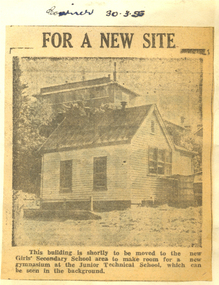
Book - Scrap Book, Ballarat School of Mines Scrap Book, 1954-1957, 1954-1957
... A scrapbook of news clippings relating to the Ballarat School of MInes, including: 1954 - Barry Singleton 1954 - Neville Bunning 1954 - Victor Greenhalgh and his sculpture of King George V 1954 - Road Deviation in Hickman Street near White Flat 1954 - John Skuka naturalisation 1954 - Fire Danger in Vale Park 1954 - retirement of William J. Paterson from the staff of the Ballarat Junior Technical School 1954 - First pottery exhibition, featuring local clays. 1954 - New Technical school start in Ballarat North 1955 - Removal of caretaker's Cottage 1955 - Air Training Corps Cadets 1955 - Fluoridation 1955 - I.G. ...The Ballarat School of Mines was the first school of mines in Australia scrap book ballarat school of mines ballarat gaol nerrina caretaker's cottage geoffrey mainwarring gymnasium noel flood neville bunning art lending library A scrapbook of news clippings relating to the Ballarat School of MInes, including: 1954 - Barry Singleton 1954 - Neville Bunning 1954 - Victor Greenhalgh and his sculpture of King George V 1954 - Road Deviation in Hickman Street near White Flat 1954 - John Skuka naturalisation 1954 - Fire Danger in Vale Park 1954 - retirement of William J. Paterson from the staff of the Ballarat Junior Technical School 1954 - First pottery exhibition, featuring local clays. 1954 - New Technical school start in Ballarat North 1955 - Removal of caretaker's Cottage 1955 - Air Training Corps Cadets 1955 - Fluoridation 1955 - I.G. ...The Ballarat School of Mines was the first school of mines in AustraliaA scrapbook of news clippings relating to the Ballarat School of MInes, including: 1954 - Barry Singleton 1954 - Neville Bunning 1954 - Victor Greenhalgh and his sculpture of King George V 1954 - Road Deviation in Hickman Street near White Flat 1954 - John Skuka naturalisation 1954 - Fire Danger in Vale Park 1954 - retirement of William J. Paterson from the staff of the Ballarat Junior Technical School 1954 - First pottery exhibition, featuring local clays. 1954 - New Technical school start in Ballarat North 1955 - Removal of caretaker's Cottage 1955 - Air Training Corps Cadets 1955 - Fluoridation 1955 - I.G. Witcher 1955 - Graham Willey, football 1955 - Image of L. Wilson, head teacher of the Ballarat North Technical School 1955 - Ballarat Girls' Technical School takes shape at White Flat. 1955 - Ballarat Junior Technical School Pine Plantation at Nerrina 1955 - Lake water test by W.G. Cornell 1955 - John Rowell 1956 - Geoffrey Mainwarring painting Lieutenant F.A. Reiter 1956 - Pittong Mine 1956 - Atom Bombs and rain 1956 - Ballarat Gaol and the Ballarat School of MInes 1956 - William Paterson and A.W. Steane of the Ballarat Junior Technical School 1957 - Ballarat "Junior Tech" Has a Bright History 1957 - Brelaz Scholarship for School of Mines (scrap book, ballarat school of mines, ballarat gaol, nerrina, caretaker's cottage, geoffrey mainwarring, gymnasium, noel flood, neville bunning, art lending library -
 Federation University Historical Collection
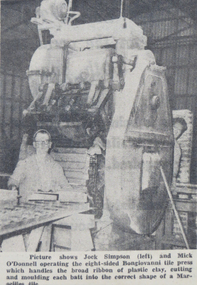
Newspaper, Eureka Terracotta and Tile Company Feature in The Courier, 27 May 1964, 27/05/1964
... john robertson witherspoon...george william clegg...william miller...frank g. herman...jock simpson...bongiovanni tile press...mick o'donnell...jack cockerill...frank dolan...syd. robinson...bert parsons...sonny mark...ken smith...alex mills...clay...1964 was the 50th anniversary of Eureka Terracotta and Tile Company. ballarat courier ballarat terracotta and tile company otto steinkraus lal lal salt glazing ceramics clays kilns frederick sutton frank herman john robertson witherspoon george william clegg william miller frank g. herman jock simpson bongiovanni tile press mick o'donnell jack cockerill frank dolan syd. robinson bert parsons sonny mark ken smith alex mills clay preparation tile press glazing Four pages from the Ballarat Courier featuring the history of the Ballarat Terracotta and Tile Company, including photographs. ...1964 was the 50th anniversary of Eureka Terracotta and Tile Company.Four pages from the Ballarat Courier featuring the history of the Ballarat Terracotta and Tile Company, including photographs.ballarat courier, ballarat terracotta and tile company, otto steinkraus, lal lal, salt glazing, ceramics, clays, kilns, frederick sutton, frank herman, john robertson witherspoon, george william clegg, william miller, frank g. herman, jock simpson, bongiovanni tile press, mick o'donnell, jack cockerill, frank dolan, syd. robinson, bert parsons, sonny mark, ken smith, alex mills, clay preparation, tile press, glazing -
 Federation University Historical Collection
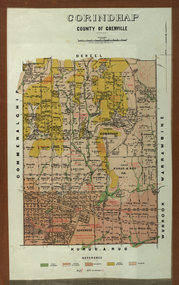
Plan - Parish Plan, Corindhap, County of Grenville, 1898
... John Jacka...Patrick Shanahan...Murdoch McLennon...Kaolinitic clay...Reynolds John Collins Ironstone quarry John Jacka Patrick Shanahan Murdoch McLennon Kaolinitic clay kaolin James Holt Mary A. ...Colour Parish Plan of Corindhap, County of Grenville, and a report on the Parish.corindhap, dereel, warrambine, kuracaruc, commeralghip, rokewood, kuruc-a-ruc, w. elder, william elder, john thornly, robert cullen, davis aitcheson, robert gidney, john elder, w. barnard, anton trende, thomas hill, george hobson, h. reynolds, john collins, ironstone quarry, john jacka, patrick shanahan, murdoch mclennon, kaolinitic clay, kaolin, james holt, mary a. palmer, isaac everett, james mooney, michael cahill, fred benjamin, george hopkins, david houghton, john quarrell, j. camm, james macdonald, john thornley, break of day gully, john wilson, thomas middleton, alexander mcpherson, joseph coldwell, h. brand, pereverance co, puddling mils, mary a. stanbrook, c.w. stanbrook, eliza byrnes, james byrnes, j. maw, wallace douglas, john moffatt -
 Federation University Historical Collection
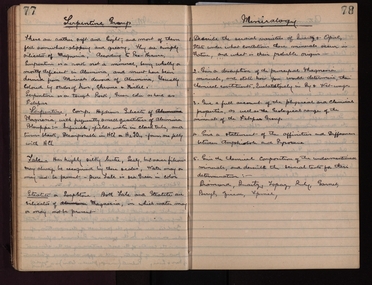
Book - Diary, John Kennedy, John Kennedy's Ballarat School of Mines Lecture Notes, 1889
... John Kennedy...Australasian Institute of Mining Engineers...AUSIMM...American Institute of Mining Metallurgical Engineers...Ballarat School of Mines...lecture notes...lecture notebook...Antinomy...brick clay...John Kennedy Australasian Institute of Mining Engineers AUSIMM American Institute of Mining Metallurgical Engineers Ballarat School of Mines lecture notes lecture notebook Antinomy brick clay carbon coal copper chemistry clay chrome electricity fire clay gas gold gold bullion glass gold test for iron metallurgy light lead metallurgy mica mineralogy pyrites sulphur in pyrites sugar slags wolfram preparation of pure gold scorification gold bullion assay petrography melting poinys of bodies metric system geology mount morgan, queensland rock salt assay of tailings classification of rocks muffle furnace ballarat school of mines wind furnace Assay of antinomy recovery of silver from solutionsheat pyrometer spectroscope organic acids metallurgy of iron assat of copper cornstock lode nevada mount morgan queensland scarification elmwood metallurgy of lead specific gravity copper assay seperation of gold from other metals test for gold wet assay mercury Inside front cover 'John Kennedy Nena Wharf Hobart Tasmania.' ...John Kennedy was born on 04 April 1862, the son of ship carpenter Robert Kennedy and his wife Florinda (Aitken), and the brother of Malcolm and Colin Kennedy. In 1860 the family migrated to Melbourne where Kennedy senior set up as a shipwright. In 1879 Malcolm and John, who trained as a naval architect, joined their father as Robert Kennedy & Sons, shipbuilders and shipsmiths. On 27 December 1883 at North Melbourne, Malcolm married Ann White with Presbyterian forms. Next year Robert Kennedy & Sons removed to Hobart where with John W. Syme and W. J. Duffy, partners until 1889, they took over the Derwent Ironworks & Engineering Co., a foundry formerly owned by the (Alexander) Clark family. The Kennedys also acquired the patent slipyard, formerly Ross's, at Battery Point. After the shipbuilding industry in Hobart began to flag John also turned to mining: he attended the Ballarat School of Mines, and reopened the Hobart smelters which had been an adjunct of the Derwent Ironworks in the 1870s. He made several voyages overseas on smelting business and as mining promoter, and was a member of the London Stock Exchange. In 1913-14 he was manager of Tongkah Compound (1910); Robert Kennedy & Sons was reputed to have contributed to the success of the Hobart-run Tongkah Harbour, Thailand, tin mines by developing a suitable dredge. The brothers also held shares in the Irrawaddy Burma Co. John was a member of the Australasian Institute of Mining Engineers and from 1932 an honorary life member of the American Institute of Mining & Metallurgical Engineers. John died in Hobart on 10 January 1937. (Ann G. Smith, 'Kennedy, John (1862–1937)', Australian Dictionary of Biography, National Centre of Biography, Australian National University, http://adb.anu.edu.au/biography/kennedy-john-7092/text11963, published first in hardcopy 1983, accessed online 24 April 2020.) A book covered in black leather with 'John Kennedy' embossed on the front in gold. The book contains notes from the time he studies at the Ballarat School of Mines. The beginning of the book has an alphabetical section where John Kennedy has created an index.Inside front cover 'John Kennedy Nena Wharf Hobart Tasmania.' john kennedy, australasian institute of mining engineers, ausimm, american institute of mining metallurgical engineers, ballarat school of mines, lecture notes, lecture notebook, antinomy, brick clay, carbon, coal, copper, chemistry, clay, chrome, electricity, fire clay, gas, gold, gold bullion, glass, gold test for, iron metallurgy, light, lead, metallurgy, mica, mineralogy, pyrites, sulphur in pyrites, sugar, slags, wolfram, preparation of pure gold, scorification, gold bullion assay, petrography, melting poinys of bodies, metric system, geology, mount morgan, queensland, rock salt, assay of tailings, classification of rocks, muffle furnace, ballarat school of mines wind furnace, assay of antinomy, recovery of silver from solutionsheat pyrometer, spectroscope, organic acids, metallurgy of iron, assat of copper, cornstock lode nevada, mount morgan queensland, scarification, elmwood, metallurgy of lead, specific gravity, copper assay, seperation of gold from other metals, test for gold, wet assay, mercury -
 Federation University Historical Collection
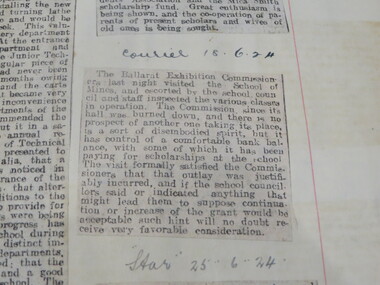
Book - Scrapbook, Ballarat School of Mines Scrapbook 1921-1924, 1921-1924
... clay...maurice copland...h.h. smith...c.h. beanland...technical schools...albert e. dowling...john...The clippings in this book relate to the Ballarat School of Mines. ballarat school of mines scrapbook ballarat technical art school clay ceramics pottery native clay maurice copland h.h. smith c.h. beanland technical schools albert e. dowling john dulfer jenkin swimming shield r.s. dale j.y. mcdonald a.f. heseltine stained glass windows amalie feild richard dale ballarat school of mines museum ballarat junior secondary school war criminal trials j.f. crichton repatriation department w.o.f. close soldiers vocational classes world war one alexander peacock ballarat junior technical school opening effie holmes cornell chemist w.k. moss ken moss obituary j. vickery w.d. hill r.w. richards shackelton antarctic exploration t.h. trengrove samuel mayo vera lindsay bessie robertson victor greenhalgh repatriation classes closure repatriation classes termination university college vocational training arbor day j.b. corbet ballarat school of mines procession ballarat junior technical school honour board harold herbert albert steane a.w. steane francis davis tree planting clyde lukeis trade classes old boys association alfred james higgin blackill color and oxide company electric supply company state school exhibition state education jubilee scholarships clay deposits james coad t.a. williams copland memorial e.j. mcconnon alfred mica smith ponsonby carew smyth d. maxwell lena rutherford dorothy whitehead examination results geoffrey nicholls robert dowling j.b. robinson percy trompf j.c. bush white flat reserve rubbish tip sports ground broken hill excursion old boy's association school of mines procession white flat improvements empire exhibition ballarat school of mines literary society school reunion john rowell d.e. mullins g. renkin t.m. shattock new law courts supreme court building transferred to ballarat school of mines buildings ballarat state offices ballarat school of mines museum closed ballarat school of mines and industries k.b. brown sir r. garran alf hannah macrobertson scholarship simone fraser violet hambley alfred bayley j. heriot c.r. pittock i.r. bradshaw ballarat exhbition e. parkin c.m. harris mica smith bust william henry nicholls daniel walker paul montford w.h. corbould j.w. sutherland Technical Training for girls girls education Amalie Colquhoun ken moss obituary OPening of the Ballarat Junior Technical School J.S. ...The clippings in this book relate to the Ballarat School of Mines. Hard covered scrapbook with newspaper clippings relating to the Ballarat School of Mines.ballarat school of mines, scrapbook, ballarat technical art school, clay, ceramics, pottery, native clay, maurice copland, h.h. smith, c.h. beanland, technical schools, albert e. dowling, john dulfer, jenkin swimming shield, r.s. dale, j.y. mcdonald, a.f. heseltine, stained glass windows, amalie feild, richard dale, ballarat school of mines museum, ballarat junior secondary school, war criminal trials, j.f. crichton, repatriation department, w.o.f. close, soldiers vocational classes, world war one, alexander peacock, ballarat junior technical school opening, effie holmes, cornell chemist, w.k. moss, ken moss, obituary, j. vickery, w.d. hill, r.w. richards, shackelton, antarctic exploration, t.h. trengrove, samuel mayo, vera lindsay, bessie robertson, victor greenhalgh, repatriation classes closure, repatriation classes termination, university college, vocational training, arbor day, j.b. corbet, ballarat school of mines procession, ballarat junior technical school honour board, harold herbert, albert steane, a.w. steane, francis davis, tree planting, clyde lukeis, trade classes, old boys association, alfred james higgin, blackill color and oxide company, electric supply company, state school exhibition, state education jubilee, scholarships, clay deposits, james coad, t.a. williams, copland memorial, e.j. mcconnon, alfred mica smith, ponsonby carew smyth, d. maxwell, lena rutherford, dorothy whitehead, examination results, geoffrey nicholls, robert dowling, j.b. robinson, percy trompf, j.c. bush, white flat reserve, rubbish tip, sports ground, broken hill excursion, old boy's association, school of mines procession, white flat improvements, empire exhibition, ballarat school of mines literary society, school reunion, john rowell, d.e. mullins, g. renkin, t.m. shattock, new law courts, supreme court building transferred to ballarat school of mines, buildings, ballarat state offices, ballarat school of mines museum closed, ballarat school of mines and industries, k.b. brown, sir r. garran, alf hannah, macrobertson scholarship, simone fraser, violet hambley, alfred bayley, j. heriot, c.r. pittock, i.r. bradshaw, ballarat exhbition, e. parkin, c.m. harris, mica smith bust, william henry nicholls, daniel walker, paul montford, w.h. corbould, j.w. sutherland, technical training for girls, girls education, amalie colquhoun, ken moss obituary, opening of the ballarat junior technical school, j.s. vickery, j.s. vickery obituary, ida v. johnson, john rowell exhibition, max meldrum, w.g. coates, g.f. fitches, walter white, sewerage plumbing, villers brettonneux school -
Federation University Historical Collection
Booklet, Ballarat School of Mines Students' Magazine, 1922, 1922
... john dulfer...d.a. runting...s.r. vial...George Cornell...plasticity of clay...Clay (by Reginald Callister). The Factory Chemist (by George W. Cornell), Lal Lal V Morwell ballarat school of mines magazine h. a. palmer g. r. simons p. a. trompf h. e. nicholls c. mcilvena g. tunbridge v. gilchrist e. mckissock g. w. cowdell m. timmings a. w. middleditch r. s. russell h. jolly harold jolly d. r. evans j. b. robinson myrtle turner clyde lukeis w. k. moss ken moss a. nicholson middleton and morris j.r. pound percy trompf cyril callister r. tinworth victor greenhalgh william baragwanath old boys associaiton reunion john dulfer d.a. runting s.r. vial George Cornell plasticity of clay assaying lal lal morwell reginald callister Signed on inside first page by Harold Jolly. ...Editorial, Fumes from the Lab (by J.R. Pound), Trade Topics, Answers to correspondents, Arts & Crafts gossip, Echoes of the past - Past Students', In Memoriam: Clyde Lukeis, W. K. Moss, Hints to students who are leaving school, Sport, Military news, The Junior Techs, List of Past Students', First Steps in Assaying, Some Notes on the Plasticity of Clay (by Reginald Callister). The Factory Chemist (by George W. Cornell), Lal Lal V MorwellTwo brown soft covered magazine with navy blue inscriptions. Images include: Clyde Lukeis, Ken Ross, Ballarat School of Mines Football Team, Ballarat School of Mines Athlectics Team, Prefects and Scholarship WinnersSigned on inside first page by Harold Jolly.ballarat school of mines, magazine, h. a. palmer, g. r. simons, p. a. trompf, h. e. nicholls, c. mcilvena, g. tunbridge, v. gilchrist, e. mckissock, g. w. cowdell, m. timmings, a. w. middleditch, r. s. russell, h. jolly, harold jolly, d. r. evans, j. b. robinson, myrtle turner, clyde lukeis, w. k. moss, ken moss, a. nicholson, middleton and morris, j.r. pound, percy trompf, cyril callister, r. tinworth, victor greenhalgh, william baragwanath, old boys associaiton, reunion, john dulfer, d.a. runting, s.r. vial, george cornell, plasticity of clay, assaying, lal lal, morwell, reginald callister -
 Flagstaff Hill Maritime Museum and Village
Container - Ink Bottle, 1890s to 1902
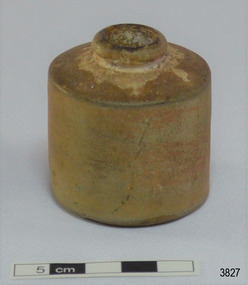
... john chance...inverlochy...scotland...captain e.r. kendrick...melbourne tramway company...tramway cable...ingoldsby reef...point addis...anglesea...thompson’s creek...barwon heads...ink bottle...writing equipment...writing accessory...office equipment...stationery...domestic...stoneware...clay...It is valuable for an insight into Victorian era of shipping and maritime history. flagstaff hill warrnambool flagstaff hill maritime museum maritime museum shipwreck coast flagstaff hill maritime village great ocean road john chance inverlochy scotland captain e.r. kendrick melbourne tramway company tramway cable ingoldsby reef point addis anglesea thompson’s creek barwon heads ink bottle writing equipment writing accessory office equipment stationery domestic stoneware clay ceramic pottery ink well inkwell penny ink well nib pen dip pen ink hand writing record keeping household business vintage blotting paper dwarf ink Ink bottle or ink well; cylindrical shaped, salt-glazed, mid-brown ceramic bottle. ...This design of ink bottle or ink well was commonly referred to as a ‘penny ink well’ because it was very inexpensive to produce. It is also known as a dwarf ink bottle. It was recovered from the wreck of the 1895-1902 ship Inverlochy and is part of the John Chance Collection. Pen and ink has been in use for hand writing from about the seventh century up until the mid-20th century. Up until around the mid-19th century a quill pen made from a bird’s feather was used. In the 1850s the steel point pen was invented and could be manufactured on machines in large quantities. In the 1880s a successful portable fountain pen was designed, giving a smooth flowing ink and ease of use. Ink wells, used with steel nib dip pens, were commonly used up until the mid-20th century. The pens only held a small amount of ink so users had to frequently dip the nib of the pen into an ink well for more ink. Hand writing with pen and ink left wet writing on the paper, so blotting paper was carefully used to absorb the excess ink and prevent smudging. Ink could be purchased, ready to use, or in the powdered form, which needed to be mixed with water. After the invention of fountain pens, which had a reservoir of ink, and then ballpoint pens, which also had ink that flowed freely, the dip pen was slowly replaced. However, artisans continue to use nib pens to create beautiful calligraphy. INVERLOCHY 1895-1902 - The Inverlochy was a steel sailing barque built in Scotland in 1895 for international trade. In 1902 the Inverlochy left Liverpool under the command of Captain E.R. Kendrick. There were 21 officers and crew and the captain’s wife Mrs Kendrick, on board, bound for Australia with cargo that included tools, chemicals, liquor (beer, whisky, stout, rum, and brandy), steel, iron, wire netting, hoop iron, tinplate and pig iron), and steel wire for the Melbourne Tramway Company, tiles, soap, soft goods and earthenware. On December 18 almost at their destination, the Inverlochy ran aground on Ingoldsby Reef at Point Addis, near Anglesea. The crew and passengers left the ship via lifeboat and landed at Thompson’s Creek, then walked about 20 kilometres to Barwon Heads. Salvagers were interested in the 10 miles of cable in the hold. Mrs Kendrick’s ‘high grade’ bicycle was amongst the items salvaged but she lost her jewellery and two pianos. By February 1903 the ship had broken up and objects such as bottles and casks of liquor were washed ashore. Bad weather shook the wreck in June 1903, causing the ship’s spars and figurehead to be washed ashore. This ink bottle is historically significant as it represents methods of hand written communication that were still common up until the mid-20th century, when fountain pens and ballpoint pens took over in popularity and convenience. The Ink bottle also has significant as it was recovered by John Chance, a diver from the wreck of the Inverlochy in the late 1960s to early 1970s. Items that come from several wrecks along Victoria's coast have since been donated to the Flagstaff Hill Maritime Village’s museum collection by his family, illustrating this item’s level of historical value. This Ink bottle is significant because of its historical connection to the barque Inverlochy, which is an example of a commercial international steel sailing barque and is listed on the Victorian Heritage Database VHR S338. The Inverlochy is significant for its cargo, which is a snapshot of the kind of goods imported into Australia at the turn of the 19th century, including cable for the Melbourne Tramway Company. The wreck of the Inverlochy is important as an accessible dive site that shows the remains of a large international trading vessel and its contents. It is valuable for an insight into Victorian era of shipping and maritime history.Ink bottle or ink well; cylindrical shaped, salt-glazed, mid-brown ceramic bottle. It has a small round mouth, rounded lip that extend past the short neck, wide shoulders, straight sides, flat bottom. Handmade. Also called a Penny Ink Well.flagstaff hill, warrnambool, flagstaff hill maritime museum, maritime museum, shipwreck coast, flagstaff hill maritime village, great ocean road, john chance, inverlochy, scotland, captain e.r. kendrick, melbourne tramway company, tramway cable, ingoldsby reef, point addis, anglesea, thompson’s creek, barwon heads, ink bottle, writing equipment, writing accessory, office equipment, stationery, domestic, stoneware, clay, ceramic, pottery, ink well, inkwell, penny ink well, nib pen, dip pen, ink, hand writing, record keeping, household, business, vintage, blotting paper, dwarf ink -
 Flagstaff Hill Maritime Museum and Village
Container - Ink Bottle, 1890s to 1902
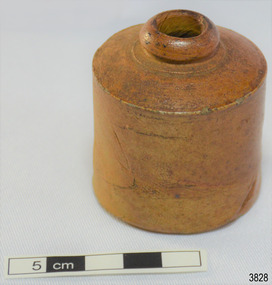
... john chance...inverlochy...scotland...captain e.r. kendrick...melbourne tramway company...tramway cable...ingoldsby reef...point addis...anglesea...thompson’s creek...barwon heads...ink bottle...writing equipment...writing accessory...office equipment...stationery...domestic...stoneware...clay...clay appears to have a fold line on its body. The material has flecks of darker material in it. Sediment around shoulder. Handmade. Also called a Penny Ink Well. Container Ink Bottle Captain E.R. Kendrick John ...This design of ink bottle or ink well was commonly referred to as a ‘penny ink well’ because it was very inexpensive to produce. It is also known as a dwarf bottle. It was recovered from the wreck of the 1895-1902 ship Inverlochy and is part of the John Chance Collection. Pen and ink has been in use for hand writing from about the seventh century up until the mid-20th century. Up until around the mid-19th century a quill pen made from a bird’s feather was used. In the 1850s the steel point pen was invented and could be manufactured on machines in large quantities. In the 1880s a successful portable fountain pen was designed, giving a smooth flowing ink and ease of use. Ink wells, used with steel nib dip pens, were commonly used up until the mid-20th century. The pens only held a small amount of ink so users had to frequently dip the nib of the pen into an ink well for more ink. Hand writing with pen and ink left wet writing on the paper, so blotting paper was carefully used to absorb the excess ink and prevent smudging. Ink could be purchased, ready to use, or in the powdered form, which needed to be mixed with water. After the invention of fountain pens, which had a reservoir of ink, and then ballpoint pens, which also had ink that flowed freely, the dip pen was slowly replaced. However, artisans continue to use nib pens to create beautiful calligraphy. INVERLOCHY 1895-1902 - The Inverlochy was a steel sailing barque built in Scotland in 1895 for international trade. In 1902 the Inverlochy left Liverpool under the command of Captain E.R. Kendrick. There were 21 officers and crew and the captain’s wife Mrs Kendrick, on board, bound for Australia with cargo that included tools, chemicals, liquor (beer, whisky, stout, rum, and brandy), steel, iron, wire netting, hoop iron, tinplate and pig iron), and steel wire for the Melbourne Tramway Company, tiles, soap, soft goods and earthenware. On December 18 almost at their destination, the Inverlochy ran aground on Ingoldsby Reef at Point Addis, near Anglesea. The crew and passengers left the ship via lifeboat and landed at Thompson’s Creek, then walked about 20 kilometres to Barwon Heads. Salvagers were interested in the 10 miles of cable in the hold. Mrs Kendrick’s ‘high grade’ bicycle was amongst the items salvaged but she lost her jewellery and two pianos. By February 1903 the ship had broken up and objects such as bottles and casks of liquor were washed ashore. Bad weather shook the wreck in June 1903, causing the ship’s spars and figurehead to be washed ashore. This ink bottle is historically significant as it represents methods of hand written communication that were still common up until the mid-20th century, when fountain pens and ballpoint pens took over in popularity and convenience. The Ink bottle also has significant as it was recovered by John Chance, a diver from the wreck of the Inverlochy in the late 1960s to early 1970s. Items that come from several wrecks along Victoria's coast have since been donated to the Flagstaff Hill Maritime Village’s museum collection by his family, illustrating this item’s level of historical value. This Ink bottle is significant because of its historical connection to the barque Inverlochy, which is an example of a commercial international steel sailing barque and is listed on the Victorian Heritage Database VHR S338. The Inverlochy is significant for its cargo, which is a snapshot of the kind of goods imported into Australia at the turn of the 19th century, including cable for the Melbourne Tramway Company. The wreck of the Inverlochy is important as an accessible dive site that shows the remains of a large international trading vessel and its contents. It is valuable for an insight into Victorian era of shipping and maritime history. Ink bottle, glazed, prange-brown ceramic cylinder, ring of clay on top for lip, narrow mouth, very short neck on wide shoulder that reaches out to edge of of straight-sided body, flat base. On the shoulder, close to the neck, are concentric lines in the clay. There are dark areas around the lip and mouth opening. The clay appears to have a fold line on its body. The material has flecks of darker material in it. Sediment around shoulder. Handmade. Also called a Penny Ink Well.flagstaff hill, warrnambool, flagstaff hill maritime museum, maritime museum, shipwreck coast, flagstaff hill maritime village, great ocean road, john chance, inverlochy, scotland, captain e.r. kendrick, melbourne tramway company, tramway cable, ingoldsby reef, point addis, anglesea, thompson’s creek, barwon heads, ink bottle, writing equipment, writing accessory, office equipment, stationery, domestic, stoneware, clay, ceramic, pottery, ink well, inkwell, penny ink well, nib pen, dip pen, ink, hand writing, record keeping, household, business, vintage, blotting paper, dwarf ink -
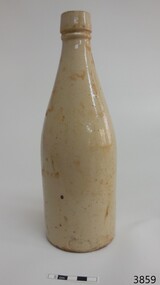 Flagstaff Hill Maritime Museum and Village
Ceramic - Stoneware Bottle, Henry Kennedy Pottery, Late 1800s to early 1900s
... clays. Pottery production reaches a high scale which presented a high risk of fire and Barrowfield was no exception. In April 1884 heat from a kiln set fire to the roof resulting in significant structural damage, the loss of unfinished wares alone amounting to £10,000 a very substantial sum in 1884. The pottery recovered from this reverse but then Henry Kennedy died in July 1890. The terms of his will indicated that he and his sons John...clays. Pottery production reaches a high scale which presented a high risk of fire and Barrowfield was no exception. In April 1884 heat from a kiln set fire to the roof resulting in significant structural damage, the loss of unfinished wares alone amounting to £10,000 a very substantial sum in 1884. The pottery recovered from this reverse but then Henry Kennedy died in July 1890. The terms of his will indicated that he and his sons John ...This bottle was made in Scotland and recovered decades later from a shipwreck along the coast of Victoria. It may have been amongst the ship's cargo, its provisions or amongst a passenger's personal luggage. It is now part of the John Chance collection. Stoneware bottles similar to this one were in common use during the mid-to-late 19th century. They were used to store and transport. The bottles were handmade using either a potter's wheel or in moulds such as a plaster mould, which gave the bottles uniformity in size and shape. The bottle would then be fired and glazed in a hot kiln. Makers often identified their bottles with the impression of a small symbol or adding a colour to the mouth. The manufacturer usually stamped their bottles with their name and logo, and sometimes a message that the bottle remained their property and should be returned to them. The bottles could then be cleaned and refilled. The Barrowfield pottery was founded in 1866 by Henry Kennedy, an Irish native, in the Camlachie district east of Glasgow, close to the Campbellfield and Mount Blue potteries. It is believed that Kennedy started with just one kiln but by 1871 was employing forty men and six boys and such was the success of the enterprise that by 1880, no less than eight kilns were in operation and a year later one hundred and the pottery was employing eighteen people. Stoneware bottle production was a mainstay of the pottery and over “1500 dozen” were being turned out daily along with other wares, including 30-gallon ironstone containers. With so many kilns in operation, six hundred saggars were required every week but, unlike some potteries, these were made on the premises from Garnkirk and Glenboig fire clays. Pottery production reaches a high scale which presented a high risk of fire and Barrowfield was no exception. In April 1884 heat from a kiln set fire to the roof resulting in significant structural damage, the loss of unfinished wares alone amounting to £10,000 a very substantial sum in 1884. The pottery recovered from this reverse but then Henry Kennedy died in July 1890. The terms of his will indicated that he and his sons John and Joseph were partners and this was reflected in a change of title in the 1891-92 Post Office Directory to Henry Kennedy & Sons. Despite the growth of the business there was still space enough, however, to allow china, earthenware and glass retailers Daniel and John McDougall to commence production of their Nautilus wares there in 1894, the success of which allowed them to soon move to permanent quarters at the empty Saracen Pottery, Possil. In around 1900 John Kennedy left to resurrect the liquidated Cleland Pottery and although Barrowfield remained listed as Henry Kennedy & Sons, brother Joseph was in control. In 1911 Henry Kennedy & Sons Ltd was formed, with two of the four directors being the Kennedy brothers. The pottery’s growth to this point was reflected in the eighteen kilns the largest pottery kilns then recorded in Scotland. However, the disruption of the First World War and the combined effects of subsequent economic depression, US prohibition, hygiene regulations and competition from alternative materials posed severe challenges for stoneware potteries in the post-war years as they competed with each other for diminishing markets. Competitors such as Eagle and Caledonian Potteries fell by the wayside and finally, Barrowfield closed in 1929. This stoneware bottle is historically significant for its manufacture and use in the late 19th to the early 20th century. The bottle is also significant as it was recovered by John Chance, a diver, from a wreck on the coast of Victoria in the 1960s-70s. Items that come from several wrecks along Victoria's coast have since been donated to the Flagstaff Hill Maritime Village’s museum collection by his family, illustrating this item’s level of historical value. Stoneware was produced at Barrowfield pottery for the domestic and export markets, with South America being a large market. Barrowfield stoneware can be found throughout the world. Its longevity and abundant production makes the subject item a significant addition to the Flagstaff Hill Maritime Museum collection.Bottle, salt glazed stoneware, beige, some discolouration above base. Chip on base and on neck. Inscriptions stamped near base.Makers lozenge stamped, H Kennedy Barrowfield Pottery GLASGOW at base.flagstaff hill, warrnambool, flagstaff hill maritime museum, maritime museum, shipwreck coast, flagstaff hill maritime village, great ocean road, john chance, h kennedy pottery, stoneware, ironstone, pottery, barrowfield glasgow -
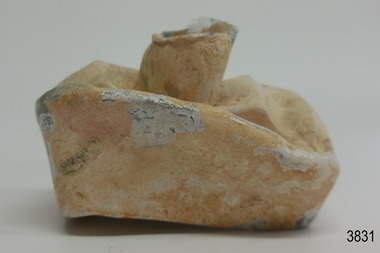 Flagstaff Hill Maritime Museum and Village
Container - Ink Bottle, from mid-19th century to 1902
... It is valuable for an insight into Victorian era of shipping and maritime history. flagstaff hill warrnambool flagstaff hill maritime museum maritime museum shipwreck coast flagstaff hill maritime village great ocean road john chance inverlochy scotland captain e.r. kendrick melbourne tramway company tramway cable ingoldsby reef point addis anglesea thompson’s creek barwon heads boat ink bottle cottage ink penny ink glass ink bottle pen rest writing accessory victorian antique ink well sheer lip distorted body handmade mould blown statoionery Ink bottle, thick clear glass, rectangular base with small round mouth, long sides have have a U shaped groove along the shoulders (used for resting pen handles). The outside surface has a white clay ...This ink bottle is ‘boat’ shaped, which was a common design from the mid-1840s. It was crudely made; maybe it was rejected as a practice bottle or perhaps heat or pressure has distorted it. The bottle was recovered from the wreck of the Inverlochy and is part of the John Chance collection. Ink in the 1700s ink could be purchased in powdered or block form from apothecary shops, to be mixed with water as needed. Then in the mid-1800s chemists began selling ink in liquid form, in small, inexpensive and often attractive bottles. The small glass ink bottles were handmade, blown into a cup shaped mould, and sharply broken off from the blow-pipe at the neck, referred to as the English-made ‘burst-off’ finish. The neck was then filed, filled with liquid ink and sealed with a cork or wax. It was a quick, affordable container and made pen and ink writing available to the public. The name ‘penny ink’ bottles was a common title due to their low cost. INVERLOCHY 1895-1902 - The Inverlochy was a steel sailing barque built in Scotland in 1895 for international trade. In 1902 the Inverlochy left Liverpool under the command of Captain E.R. Kendrick. There were 21 officers and crew and the captain’s wife Mrs Kendrick, on board, bound for Australia with cargo that included tools, chemicals, liquor (beer, whisky, stout, rum, and brandy), steel, iron, wire netting, hoop iron, tinplate and pig iron), and steel wire for the Melbourne Tramway Company, tiles, soap, soft goods and earthenware. On December 18 almost at their destination, the Inverlochy ran aground on Ingoldsby Reef at Point Addis, near Anglesea. The crew and passengers left the ship via lifeboat and landed at Thompson’s Creek, then walked about 20 kilometres to Barwon Heads. Salvagers were interested in the 10 miles of cable in the hold. Mrs Kendrick’s ‘high grade’ bicycle was amongst the items salvaged but she lost her jewellery and two pianos. By February 1903 the ship had broken up and objects such as bottles and casks of liquor were washed ashore. Bad weather shook the wreck in June 1903, causing the ship’s spars and figurehead to be washed ashore. This boat shaped handmade ink bottle is historically significant for its association with communications and record keeping in the mid-to-late 19th century. The bottle is socially significant as an example of making a useful product affordable to every day people. This handmade glass ink bottle is significant for its connection with the John Chance Collection, which is historically significant as an example of artefacts from wrecks that had been lost in the coastal waters of Victoria from thirty to over one hundred years before John Chance and others discovered them. These artefacts are a sample of goods carried as cargo or personal possessions, and of ship hardware of that era. The ink bottle is significant through its connection with the barque, Inverlochy, The Inverlochy is significant for its cargo, which is a snapshot of the array of goods imported into Australia at the turn of the 19th century, including cable for the Melbourne Tramway Company. The Inverlochy is historically significant and is registered on the Victorian Heritage Database, VHR S338. The wreck of the Inverlochy is important as an accessible dive site that shows the remains of a large international trading vessel and its contents. It is valuable for an insight into Victorian era of shipping and maritime history.Ink bottle, thick clear glass, rectangular base with small round mouth, long sides have have a U shaped groove along the shoulders (used for resting pen handles). The outside surface has a white clay-type reside over it. Bottle is very bent and distorted. flagstaff hill, warrnambool, flagstaff hill maritime museum, maritime museum, shipwreck coast, flagstaff hill maritime village, great ocean road, john chance, inverlochy, scotland, captain e.r. kendrick, melbourne tramway company, tramway cable, ingoldsby reef, point addis, anglesea, thompson’s creek, barwon heads, boat ink bottle, cottage ink, penny ink, glass ink bottle, pen rest, writing accessory, victorian, antique, ink well, sheer lip, distorted body, handmade, mould blown, statoionery -
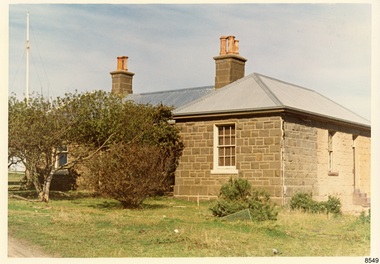 Flagstaff Hill Maritime Museum and Village
Photograph - Historical, Flagstaff Hill, The Lighthouse Keeper’s Cottage showing re-roofing carried out by Council, 1970s
... clay chimney pots on the two chimneys. A set of steps are at the entry on the right hand side. The flagstaff is on the left of the photograph. The photograph's paper has the printer's watermark on the back. The early 1970s picture is presumed to have been photographed by John...John Lindsay cannon emplacement Middle Island Flagstaff Lighthouse Keepers' Quarters Lighthouse Keepers' Residence Alexander Farncombe re-roofing S.E.C. connection Label on the back: "THE BLUESTONE COTTAGE SHOWING RE-ROOFING CARRIED OUT BY COUNCIL. The Historical Society has requested Council to have S.E.C. power re-connected" Coloured photograph, glassy print, one of a set of five. Photograph shows the Lighthouse Keepers' Quarters, focused on the Assistant's Quarters on the right. It shows the a new iron roof that had been installed by the Warrnambool City Council, and the condition of the bluestone,walls. There are clay ...The coloured photograph shows the Lighthouse Keepers' Quarters at Flagstaff Hill, Warrnambool. The building was erected in the 1850s on Middle Island, Lady Bay. It was relocated to its current location in the late 1870s along with the two lighthouses, the chart room and the privy. The Warrnambool City Council replaced the iron roof on the cottage in the 1970s and further work has since been carried out. The picture shows the poor condition of the stonework on the right hand side of the cottage. After the cottage ceased to be used by lighthouse keepers, it was rented out by various organisations and later became disused. The Historical Society requested the re-connection of power. The right hand side of the cottage was repurposed for use by Flagstaff Hill Maritime Museum and Village. in the 2020s it was restored and fitted out as the Alexander Farncombe room, which is used for temporary exhibitions. This photograph, a print, is one of a set of five that show the site of Flagstaff Hill. It is presumed to have been taken by John Lindsay, Founding Director of Flagstaff Hill Maritime Museum and Village. One of the photographs in the set has the pencil inscription "Photo J Lindsay". It was taken in the early 1970s during the initial stages of the development of Flagstaff Hill as a Museum and Maritime Village. The photographs belonged to the donor's grandparents, who lived in the Warrnambool district of Allansford/Naringal. The photograph is a record of the Lighthouse Keepers' Quarters at Flagstaff Hill Maritime Museum and Village before its development and opening in 1975. It shows the condition of the building at the time and some of the recent re-roofing. The photograph is significant for recording the condition of the original heritage listed building at that point in time.Coloured photograph, glassy print, one of a set of five. Photograph shows the Lighthouse Keepers' Quarters, focused on the Assistant's Quarters on the right. It shows the a new iron roof that had been installed by the Warrnambool City Council, and the condition of the bluestone,walls. There are clay chimney pots on the two chimneys. A set of steps are at the entry on the right hand side. The flagstaff is on the left of the photograph. The photograph's paper has the printer's watermark on the back. The early 1970s picture is presumed to have been photographed by John Lindsay, Warrnambool.Label on the back: "THE BLUESTONE COTTAGE SHOWING RE-ROOFING CARRIED OUT BY COUNCIL. The Historical Society has requested Council to have S.E.C. power re-connected"flagstaff hill maritime museum and village, warrnambool, maritime museum, shipwreck coast, 1970s, photograph, lady bay, flagstaff hill site, john lindsay, cannon emplacement, middle island, flagstaff, lighthouse keepers' quarters, lighthouse keepers' residence, alexander farncombe, re-roofing, s.e.c. connection -
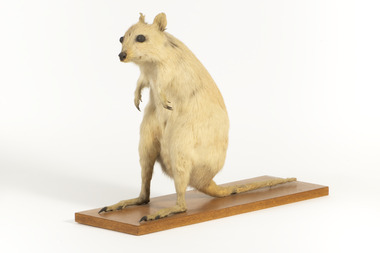 The Beechworth Burke Museum
Animal specimen - Rufous Bettong, Trustees of the Australian Museum, 1860–1880
... johns rufous bettong rufous rat-kangaroo On mounting board: BMM5893/ Average sized rufous bettong with large clawed hind legs, small clawed fore legs, and a long tail that is roughly the length of its body and covered lightly in fur. The pelage of the bettong is fine and soft with the body fur cream and pale ochre in colouring with specks of brown while the underbelly is a solid cream colour. The head is small with a short muzzle and two small rounded ears, and features two round dark brown eyes made from clay ...A rufous bettong is about the size of a rabbit, with body length ranging from 30cm to 38cm among species. All bettongs have long tails, roughly equal to body length. Body weight ranges from 1.2 kg in the smallest species (Northern Bettong) to 2.8kg in the Rufous Bettong, the largest of the group. Males tend to be slightly larger than females. Bettongs have furry coats, ranging in colour from grey to ginger and brown. The bettong is endemic to Australia, and is an important part of Australia's Indigenous biodiversity. There are five living species of bettong; Eastern Bettong, Burrowing Bettong, Brush-tailed Bettong, Northern Bettong, Rufous Bettong. The bettong is a member of the Potoroidae family along with the endangered Potoroos, and the extinct Desert Rat-Kangaroos. This specimen is part of a collection of almost 200 animal specimens that were originally acquired as skins from either the Trustees of the Australian Museum or from the amateur anthropologist Reynell Eveleigh Johns between 1860-1880 and mounted by members of the Burke Museum Committee around the same time. When all Taxidermy mounts were completed, they were quickly put-on display in the formal space of the Museum’s original exhibition hall where they continue to be on display. This display of taxidermy mounts initially served to instruct visitors to the Burke Museum of the natural world around them, today it serves as an insight into the collecting habits of the 19th century.This specimen is part of a significant and rare taxidermy mount collection in the Burke Museum. This collection is scientifically and culturally important for reminding us of how science continues to shape our understanding of the modern world. They demonstrate a capacity to hold evidence of how Australia’s fauna history existed in the past and are potentially important for future environmental research. This collection continues to be on display in the Museum and has become a key part to interpreting the collecting habits of the 19th century.Average sized rufous bettong with large clawed hind legs, small clawed fore legs, and a long tail that is roughly the length of its body and covered lightly in fur. The pelage of the bettong is fine and soft with the body fur cream and pale ochre in colouring with specks of brown while the underbelly is a solid cream colour. The head is small with a short muzzle and two small rounded ears, and features two round dark brown eyes made from clay.On mounting board: BMM5893/burke museum, taxidermy, taxidermy mount, bettong, rat kangaroo, bettongia, fauna, animal, animalia, potoroidae, reynell eveleigh johns, rufous bettong, rufous rat-kangaroo
