
Showing 6 items matching "john quail"
-
 Victorian Railway History Library
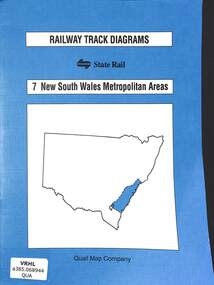
Book, Yonge, John, Railway Track Diagrams 7 - New South Wales Metropolitan Areas, 1998
... John...Quail Map Company...Railway Track Diagrams 7 - New South Wales Metropolitan Areas Book Yonge, John Quail Map Company ...Railway & tramway maps of New South Wales from Canberra to Newcastle including Sydney and the Metropolitan area.maps, p.20.non-fictionRailway & tramway maps of New South Wales from Canberra to Newcastle including Sydney and the Metropolitan area. railway & tramway maps - nsw, railroad operations - new south wales - history -
 Port Melbourne Historical & Preservation Society
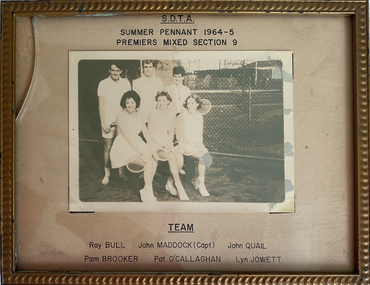
Photograph - PMTC Premiers, SDTA Summer Pennant 1964-65, Mixed Section, 1965
... ...John QUAIL...Men L-R: Ray BULL, John MADDOCK (Captain), John QUAIL Women L-R: Pam BROOKER, Pat O'CALLAGHAN, Lyn JOWETT...Men L-R: Ray BULL, John MADDOCK (Captain), John QUAIL Women L-R: Pam BROOKER, Pat O'CALLAGHAN, Lyn JOWETT Photograph PMTC Premiers, SDTA Summer Pennant 1964-65, Mixed Section ...Digital copy of a framed B&W photograph of Port Melbourne Tennis Club team, Premiers, Southern Districts Tennis Association Summer Pennant 1964-65, Mixed Section. The photograph has three men standing behind three seated women, all in tennis whites and holding racquets. The caption includes names. Men L-R: Ray BULL, John MADDOCK (Captain), John QUAIL Women L-R: Pam BROOKER, Pat O'CALLAGHAN, Lyn JOWETTport melbourne tennis club, sport - tennis, ray bull, john maddock, john quail, pam brooker, pat o'callaghan, lyn jowett -
 The Beechworth Burke Museum
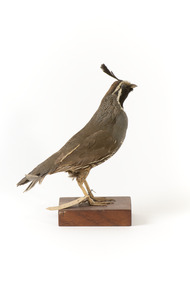
Animal specimen - Californian Quail, Trustees of the Australian Museum, 1860-1880
... This collection continues to be on display in the Museum and has become a key part to interpreting the collecting habits of the 19th century. taxidermy mount taxidermy animalia burke museum beechworth australian museum skin reynell eveleigh johns bird californian quail california american birds quail californain sub wren wren Swing-tag: 46 / (b)? ...About the specimen: The Californian Quail is a highly sociable bird commonly seen in small flocks. They have a distinctive appearance with the black plume on top of their head and white markings on the head and torso. This species reside in open woodland, bushy grassland, roadsides and fringes of urban areas. They are native to western America but have been introduced to areas outside this location including King Island. This species was established as the state bird of California in 1932. Explain how it should look: Copy and paste: This specimen is part of a collection of almost 200 animal specimens that were originally acquired as skins from various institutions across Australia, including the Australian Museum in Sydney and the National Museum of Victoria (known as Museums Victoria since 1983), as well as individuals such as amateur anthropologist Reynell Eveleigh Johns between 1860-1880. These skins were then mounted by members of the Burke Museum Committee and put-on display in the formal space of the Museum’s original exhibition hall where they continue to be on display. This display of taxidermy mounts initially served to instruct visitors to the Burke Museum of the natural world around them, today it serves as an insight into the collecting habits of the 19th century.Copy and paste this section: This specimen is part of a significant and rare taxidermy mount collection in the Burke Museum. This collection is scientifically and culturally important for reminding us of how science continues to shape our understanding of the modern world. They demonstrate a capacity to hold evidence of how Australia’s fauna history existed in the past and are potentially important for future environmental research. This collection continues to be on display in the Museum and has become a key part to interpreting the collecting habits of the 19th century.This male Californian Quail has a black forward drooping plume on the top of its head. It has a dark brown/black coloured cap on its head and a black face with distinct white markings on the sides of its face and neck. The back of the bird is brown.The belly is a lighter brown colour and the chest and back of the neck is a blue-grey. This specimen stands upon a wooden platform and has an identification tag tied around its leg.Swing-tag: 46 / (b)? Californian Scrub Quail / Catalogue Page, 30. / Metal tag: 4341 / taxidermy mount, taxidermy, animalia, burke museum, beechworth, australian museum, skin, reynell eveleigh johns, bird, californian quail, california, american birds, quail, californain sub wren, wren -
 The Beechworth Burke Museum
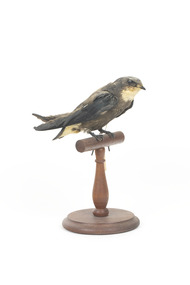
Animal specimen - White-Throated Needletail, Trustees of the Australian Museum, 1860-1880
... This collection continues to be on display in the Museum and has become a key part to interpreting the collecting habits of the 19th century. stormbird taxidermy mount taxidermy animalia burke museum beechworth australian museum skin reynell eveleigh johns bird quail migratory bird white-throated needletail needle-tailed swift spine-tailed swift hirundapus caudacutus Label: 3a/ Spine-tailed Swift / See catalogue page 7. ...The white-throated Needletail is a migratory bird, breeding in Central Asia and southern Siberia, and wintering south in the Indian Subcontinent, Southeast Asia and Australia. This large swift is often mistaken in flight for a small predatory bird, but its long curved wings and white markings help to identify it. Needle-tailed Swifts get their name from the spined end of their tail, which is not forked as it is in the more common Swifts of the genus Apus. They build their nests in rock crevices in cliffs or hollow trees. These birds do not like to sit on the ground, spending spend most of their time in the air. This specimen is part of a collection of almost 200 animal specimens that were originally acquired as skins from various institutions across Australia, including the Australian Museum in Sydney and the National Museum of Victoria (known as Museums Victoria since 1983), as well as individuals such as amateur anthropologist Reynell Eveleigh Johns between 1860-1880. These skins were then mounted by members of the Burke Museum Committee and put-on display in the formal space of the Museum’s original exhibition hall where they continue to be on display. This display of taxidermy mounts initially served to instruct visitors to the Burke Museum of the natural world around them, today it serves as an insight into the collecting habits of the 19th century.This specimen is part of a significant and rare taxidermy mount collection in the Burke Museum. This collection is scientifically and culturally important for reminding us of how science continues to shape our understanding of the modern world. They demonstrate a capacity to hold evidence of how Australia’s fauna history existed in the past and are potentially important for future environmental research. This collection continues to be on display in the Museum and has become a key part to interpreting the collecting habits of the 19th century. This white-throated Needletail is predominantly grey-brown in colour. The throat and under tail of he bird are dusky-white. This specimen has a white spot on the lower rim of each of its wings. The eyes are made from glass and the specimen has been styalised standing on a wooden mount.Label: 3a/ Spine-tailed Swift / See catalogue page 7.stormbird, taxidermy mount, taxidermy, animalia, burke museum, beechworth, australian museum, skin, reynell eveleigh johns, bird, quail, migratory bird, white-throated needletail, needle-tailed swift, spine-tailed swift, hirundapus caudacutus -
 The Beechworth Burke Museum
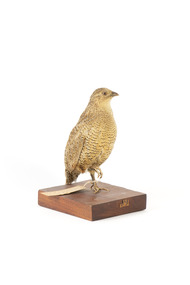
Animal specimen - Brown Quail, Trustees of the Australian Museum, 1860-80
... Johns between 1860-1880. These skins were then mounted by members of the Burke Museum Committee and put-on display in the formal space of the Museum’s original exhibition hall where they continue to be on display. This display of taxidermy mounts initially served to instruct visitors to the Burke Museum of the natural world around them, today it serves as an insight into the collecting habits of the 19th century. Like many species of quail...Johns between 1860-1880. These skins were then mounted by members of the Burke Museum Committee and put-on display in the formal space of the Museum’s original exhibition hall where they continue to be on display. This display of taxidermy mounts initially served to instruct visitors to the Burke Museum of the natural world around them, today it serves as an insight into the collecting habits of the 19th century. Like many species of quail ...This specimen is part of a collection of almost 200 animal specimens that were originally acquired as skins from various institutions across Australia, including the Australian Museum in Sydney and the National Museum of Victoria (known as Museums Victoria since 1983), as well as individuals such as amateur anthropologist Reynell Eveleigh Johns between 1860-1880. These skins were then mounted by members of the Burke Museum Committee and put-on display in the formal space of the Museum’s original exhibition hall where they continue to be on display. This display of taxidermy mounts initially served to instruct visitors to the Burke Museum of the natural world around them, today it serves as an insight into the collecting habits of the 19th century. Like many species of quail, the Brown Quail is often difficult to see, as it inhabits rank, overgrown grassy areas, often in damp, low-lying patches beside wetlands. They are difficult to flush from this cover, preferring to squat among the grass or run quickly off through the vegetation rather than fly off. As is the case with many species that inhabit dense habitats, the Brown Quail may be heard more often than it is seen, with its characteristically mournful two-note call whistle often heard at dawn and dusk. The Brown Quail is found across northern and eastern Australia, from the Kimberley region in Western Australia to Victoria and Tasmania, as well as in south-western Australia. It is also found in Papua New Guinea and Indonesia, and has been introduced to New Zealand. The Brown Quail feeds in the early morning or evening, on the ground, mainly on seeds and green shoots, but also on insects. In some area, quails will readily cross roads and may be seen feeding along roadsides.This specimen is part of a significant and rare taxidermy mount collection in the Burke Museum. This collection is scientifically and culturally important for reminding us of how science continues to shape our understanding of the modern world. They demonstrate a capacity to hold evidence of how Australia’s fauna history existed in the past and are potentially important for future environmental research. This collection continues to be on display in the Museum and has become a key part to interpreting the collecting habits of the 19th century. The Brown Quail is a small, plump ground-dwelling bird. It is variable in colour, ranging from red brown to grey brown with fine white streaks and black barring above, and chestnut brown below. The eye is red to yellow, the bill black and the legs and feet orange-yellow. In Tasmania, this species is called the Swamp Quail and tends to be larger and darker than mainland birds, with a pale yellow eye. Female Brown Quails are larger and may be more heavily marked with black and paler below than males. Young birds are like adult females, with less distinct markings and a dark brown eye.Label: 33. / Swamp Quail / See Catalogue, page 30 / Mount: 09/taxidermy, quail, brown quail, taxidermy bird, burke museum taxidermy -
 Lakes Entrance Historical Society
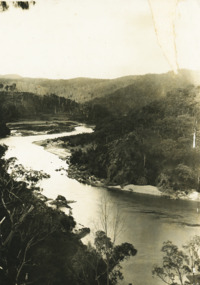
Photograph - Snowy River at Quails Buchan, Rev John Flynn, 1906
... Photographic proof on light cardboard Waterways The Snowy near Buchan Black and white photograph of the Snowy River at Quails Buchan Victoria Photograph Snowy River at Quails Buchan Rev John Flynn ...Photographic proof on light cardboardBlack and white photograph of the Snowy River at Quails Buchan VictoriaThe Snowy near Buchanwaterways
