
Showing 22 items matching "jubilee bridge"
-
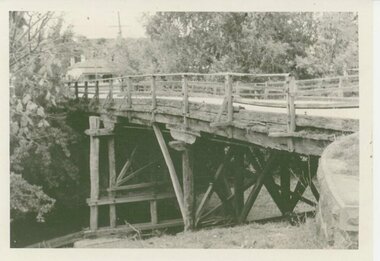 Clunes Museum
Photograph, CIRCA 1960
... ...JUBILEE BRIDGE...BLACK AND WHITE PHOTOGRAPH OF JUBILEE BRIDGE....JUBILEE OR QUEENS BRIDGE PRIOR TO 1960...local history photographs bridges JUBILEE BRIDGE JUBILEE OR QUEENS BRIDGE PRIOR TO 1960 BLACK AND WHITE PHOTOGRAPH OF JUBILEE BRIDGE. ...BLACK AND WHITE PHOTOGRAPH OF JUBILEE BRIDGE.JUBILEE OR QUEENS BRIDGE PRIOR TO 1960local history, photographs, bridges, jubilee bridge -
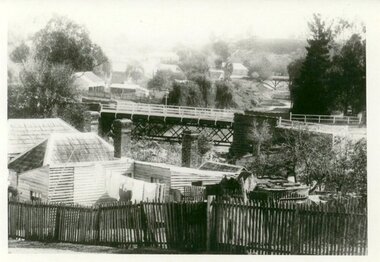 Clunes Museum
Photograph
... ...JUBILEE BRIDGE....1 ORIGINAL PHOTOGRAPH OF GOVERNMENT BRIDGE AND JUBILEE BRIDGE. TAKEN FROM CREEK PARADE. THE GOVERNMENT BRIDGE WAS BUILT CIRCA 1900. .2 ENLARGED PHOTOCOPY ...IN HANDWRITING : LOOKING DOWN-STREAM TULLAROOP CREEKABOUT 1900 GOVERMENT BRIDGE IN FOREGROUND JUBILEE BRIDGE IN THE MIDDLE...GOVERNMENT BRIDGE IN FOREGROUND, JULILEE BRIDGE IN MIDDLE DISTANCE, PORT PHILLIP MINE POPPET HED IN DISTANCE. bridges JUBILEE BRIDGE GOVERMENT BRIDGE IN HANDWRITING : LOOKING DOWN-STREAM TULLAROOP CREEKABOUT 1900 GOVERMENT BRIDGE IN FOREGROUND JUBILEE BRIDGE IN THE MIDDLE .1 ORIGINAL PHOTOGRAPH OF GOVERNMENT BRIDGE AND JUBILEE BRIDGE. ...PHOTOGRAPH TAKEN LOOKING DOWNSTREAM TULLAROOP CREEK, ABOUT 1900. GOVERNMENT BRIDGE IN FOREGROUND, JULILEE BRIDGE IN MIDDLE DISTANCE, PORT PHILLIP MINE POPPET HED IN DISTANCE..1 ORIGINAL PHOTOGRAPH OF GOVERNMENT BRIDGE AND JUBILEE BRIDGE. TAKEN FROM CREEK PARADE. THE GOVERNMENT BRIDGE WAS BUILT CIRCA 1900. .2 ENLARGED PHOTOCOPY IN HANDWRITING : LOOKING DOWN-STREAM TULLAROOP CREEKABOUT 1900 GOVERMENT BRIDGE IN FOREGROUND JUBILEE BRIDGE IN THE MIDDLEbridges, jubilee bridge, goverment bridge -
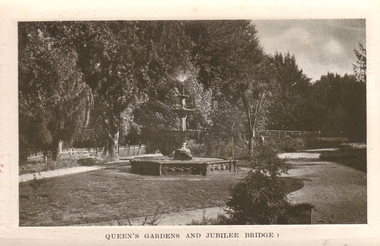 Clunes Museum
Photograph
... FOUNTAIN IN THE FOREGROUND. JUBILEE BRIDGE IN THE BACKGROUND .2 PHOTOCOPY OF POSTCARD .3 ENLARGED PHOTOCOPY OF POSTCARD...QUEEN'S GARDENS AND JUBILEE BRIDGE....CLUNES QUEEN'S PARK GARDEN'S postcard queen's park garden QUEEN'S GARDENS AND JUBILEE BRIDGE. .1 ORIGINAL POSTCARD OF CLUNES QUEEN'S GARDEN. ...CLUNES QUEEN'S PARK GARDEN'S.1 ORIGINAL POSTCARD OF CLUNES QUEEN'S GARDEN. FOUNTAIN IN THE FOREGROUND. JUBILEE BRIDGE IN THE BACKGROUND .2 PHOTOCOPY OF POSTCARD .3 ENLARGED PHOTOCOPY OF POSTCARDQUEEN'S GARDENS AND JUBILEE BRIDGE.postcard, queen's park garden -
 Ballarat Heritage Services
Booklet, Golden Plains Heritage Study Stage 2
... Bridge...Jubilee Company Quartz mine...Golden Plains heritage Bannockburn lethbridge linton meredith rokewood scarsdale shelford croindhap inverleigh Smythesdale steiglitz BErringa cape cear Woodbrook homestead shellford McMillans Bridge Jubilee Company Quartz mine glenfine homestead werneth Laurence Park Homestead Darriwil Park House Naringal private cemetery Batesford happy valley ross creek wallinduc maude murgheboluc Clyde company station Wurrook homestead Lullote homestead geringhap moorabool burunah plains Nintingbool A study into the Heritage of Golden Plains Golden Plains Heritage Study Stage 2 Booklet ...A study into the Heritage of Golden Plainsgolden plains, heritage, bannockburn, lethbridge, linton, meredith, rokewood, scarsdale, shelford, croindhap, inverleigh, smythesdale, steiglitz, berringa, cape cear, woodbrook homestead, shellford, mcmillans bridge, jubilee company quartz mine, glenfine homestead, werneth, laurence park homestead, darriwil park house, naringal private cemetery, batesford, happy valley, ross creek, wallinduc, maude, murgheboluc, clyde company station, wurrook homestead, lullote homestead, geringhap, moorabool, burunah plains, nintingbool -
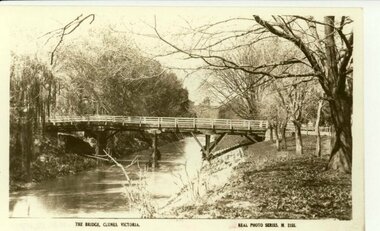 Clunes Museum
Photograph
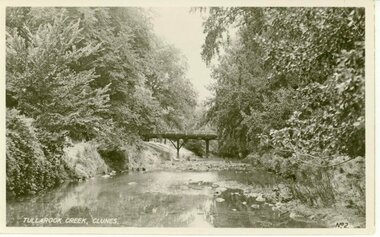
... SEPIA COPY PHOTOGRAPH OF JUBILEE OR QUEEN'S BRIDGE, CLUNES, VICTORIA, AUSTRALIA...local history photographs bridges THE BRIDGE, CLUNES, VICTORIA. REAL PHOTO SERIES M 2155 SEPIA COPY PHOTOGRAPH OF JUBILEE OR QUEEN'S BRIDGE, CLUNES, VICTORIA, AUSTRALIA Photograph PHOTOGRAPH ...SEPIA COPY PHOTOGRAPH OF JUBILEE OR QUEEN'S BRIDGE, CLUNES, VICTORIA, AUSTRALIATHE BRIDGE, CLUNES, VICTORIA. REAL PHOTO SERIES M 2155local history, photographs, bridges -
 Clunes Museum
Photograph
... BLACK AND WHITE PHOTOGRAPH OF JUBILEE OR QUEEN'S BRIDGE OVER TULLAROOK CREEK, CLUNES....THIS BRIDGE WAS DEMOLISHED IN 1962 AND A NEW BRIDGE WAS ERECTED. local history photography photographs bridges TULLAROOK CREEK, CLUNES BLACK AND WHITE PHOTOGRAPH OF JUBILEE OR QUEEN'S BRIDGE OVER TULLAROOK CREEK, CLUNES. ...THIS BRIDGE WAS DEMOLISHED IN 1962 AND A NEW BRIDGE WAS ERECTED.BLACK AND WHITE PHOTOGRAPH OF JUBILEE OR QUEEN'S BRIDGE OVER TULLAROOK CREEK, CLUNES.TULLAROOK CREEK, CLUNESlocal history, photography, photographs, bridges -
 Clunes Museum
Photograph, APPROX. 1900
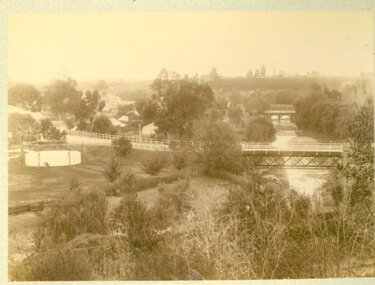
... GOVERNMENT AND JUBILEE BRIDGES ACROSS CRESWICK CREEK. GASWORKS NEARBY. .2 BLACK AND WHITE COPY OF THE ABOVE PHOTOGRAPH PRINTED ON GLOSS PHOTOGRAPHIC PAPER .3 HAND COLOURED POSTCARD PHOTOGRAPH OF THE ABOVE PHOTOGRAPH .4 TWO POSTCARDS WITH SAME PICTURE .5 FOUR SMALL PHOTOGRAPH COPIES WITH SAME PICTURE...GOVERNMENT AND JUBILEE BRIDGES ACROSS CRESWICK CREEK. GASWORKS NEARBY. .2 BLACK AND WHITE COPY OF THE ABOVE PHOTOGRAPH PRINTED ON GLOSS PHOTOGRAPHIC PAPER .3 HAND COLOURED POSTCARD PHOTOGRAPH OF THE ABOVE PHOTOGRAPH .4 TWO POSTCARDS WITH SAME PICTURE .5 FOUR SMALL PHOTOGRAPH COPIES WITH SAME PICTURE Photograph PHOTOGRAPH ...THE PHOTOGRAPH WAS TAKEN FROM CREEK PARADE GOVERNMENT BRIDGE CRESWICK ROAD AND BUTTER FACTORY BRIDGE ACROSS TULLAROOP CREEK. GASWORKS..1 ORIGINAL SEPIA LANDSCAPE OF CLUNES MOUNTED ON CARDBOARD. GOVERNMENT AND JUBILEE BRIDGES ACROSS CRESWICK CREEK. GASWORKS NEARBY. .2 BLACK AND WHITE COPY OF THE ABOVE PHOTOGRAPH PRINTED ON GLOSS PHOTOGRAPHIC PAPER .3 HAND COLOURED POSTCARD PHOTOGRAPH OF THE ABOVE PHOTOGRAPH .4 TWO POSTCARDS WITH SAME PICTURE .5 FOUR SMALL PHOTOGRAPH COPIES WITH SAME PICTURE.1 ON BACK OF PHOTOGRAPH GASWORKS, BRIDGES AND CREEK. 1900 .3 ON FRONT OF POSTCARD GOV. BRIDGE CLUNESlocal history, photography, photographs, bridges and buildings -
Clunes Museum
Photograph
... MOTHER WRITING TO AMY. CLUNES JUBILEE BRIDGE DURING THE SEVERE FLOOD, WHEN AT ITS HIGHEST MARK. ...MOTHER WRITING TO AMY. CLUNES JUBILEE BRIDGE DURING THE SEVERE FLOOD, WHEN AT ITS HIGHEST MARK. ...COPY OF PHOTOGRAPH OF FLOOD ON CRESWICK CREEK AT GOVERNMENT BRIDGE12/9/1909 FROM CLUNES TALBOT RD. MOTHER WRITING TO AMY. CLUNES JUBILEE BRIDGE DURING THE SEVERE FLOOD, WHEN AT ITS HIGHEST MARK. IT REMINDED ME OF SEA WAVES. THE WATER WAS AT OUR FEET AS WE STOOD WATCHING IT IN MRS BARKELL'S COW YARD. MRS BARKELL AND MARY WHITE (THE WRITER) TOOK IT IN TURNS TO COOK DINNER AND WATCH THE FLOODflood 1909, mrs a white, flood creswick creek -
 Bendigo Historical Society Inc.
Postcard - Alice McGregor Postcard Collection, 1900 - 1920
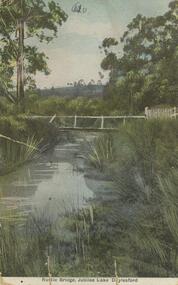
... Colour photo of a rustic bridge at Jubilee Lake, Daylesford, Victoria Stream running through bushland setting. ...Colour photo of a rustic bridge at Jubilee Lake, Daylesford, Victoria Stream running through bushland setting. ...Alice McGREGOR Born: 1908; unknown parents. Possibly adopted by the Salter family? Electoral Roll 1936: Highland Terrace Kangaroo Flat. Alice Mary Salter and William Robert Salter living together; presumed to be sister and brother. William Robert Salter was killed in a MVA in Bendigo in 1937 aged 26. In Victoria in 1938, Alice Mary Salter married James Thomas McGregor (born Victoria 1917, died Victoria 1983, buried Fawkner Cemetery) Lived: 1968; 22 Wade Street Golden Square Alice McGregor Died: 1999 aged 91 at Anne Caudle Centre, Bendigo Buried: Kangaroo Flat Cemetery See additional research. Postcard Album of Alice McGregor contained 86 post cards.Postcard Album of Alice McGregor containing 86 post cards. See 1400. Colour photo of a rustic bridge at Jubilee Lake, Daylesford, Victoria Stream running through bushland setting. PO stamp dated Dec 27, 1905 Addressed to Miss Stapleton, Arcade, Bendigo Sender unknown postcard, collector, alice mcgregor -
 Federation University Historical Collection
Booklet, Ballarat Teachers College, Emerald Jubilee Reunion, 1949 - 2004, 2004
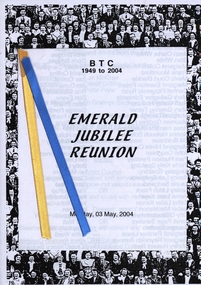
... emerald jubilee reunion Ballarat Teachers' College Programme Lois Bilston Waters Sherryn Waters Baile Ines Bourke Noone Kath Bunworth Drummond Jean Clarke White Stan White Margaret Collins Mountford Frank Mountford Mavis Court Blackie Margaret Eveston Peters Carmel Fitzgerald Ryan Mary Gallagher Edmonds Ruth Gardy Howard Mary Gearing Turner Margaret George Freckleton Maureen Godfrey Fithall Rose Harrison Johnstone Norma Heinrich Boldiston Bill Boldiston Margaret Hives Coughlan John Coughlan Pam Hudson Pentney Valda Kelly Spalding Kingsley Spalding Nancy Lee Sedgewick Lesley Latch Frank Verna Lees Kaye Kathy Lister Kenna Isabel MacMahon Young Kitty O'Shannessy McGurrin Janet Page Sanders George Sanders Margaret Panther Leask Margaret Reynolds Bennett Shirley Russell Rae Pat Ryan Roberts Betty Webb McGuane Ilysa Witney Robertson Wall Baker Beryl Baker Graham Bartle Ruth Bartle Max Bridges Dorothy Bridges Lindsay Campbell David Collins Jan Collins Jim Dunn Ron Edmonds Don Evans Jean Evans George Fordham Janice Fordham Peter Fryar Bev Hill John Holloway Judy Holloway Jim Lannen Florence Lannen Bill Lister Betty Lister Ian McIntyre Carol McIntyre Len McRae Vans McRae Keith Richardson Vera Richardson Ian Ryan Neil Tippett Wal Wall Rosemary Wall Valda Ward Gold and blue ribbon taped to front cover Small 8 page booklet from the Ballarat Teachers' College Reunion 2004 Ballarat Teachers College, Emerald Jubilee Reunion, 1949 - 2004 Booklet ...Small 8 page booklet from the Ballarat Teachers' College Reunion 2004Gold and blue ribbon taped to front coveremerald, jubilee, reunion, ballarat teachers' college, programme, lois bilston waters, sherryn waters baile, ines bourke noone, kath bunworth drummond, jean clarke white, stan white, margaret collins mountford, frank mountford, mavis court blackie, margaret eveston peters, carmel fitzgerald ryan, mary gallagher edmonds, ruth gardy howard, mary gearing turner, margaret george freckleton, maureen godfrey fithall, rose harrison johnstone, norma heinrich boldiston, bill boldiston, margaret hives coughlan, john coughlan, pam hudson pentney, valda kelly spalding, kingsley spalding, nancy lee sedgewick, lesley latch frank, verna lees kaye, kathy lister kenna, isabel macmahon young, kitty o'shannessy mcgurrin, janet page sanders, george sanders, margaret panther leask, margaret reynolds bennett, shirley russell rae, pat ryan roberts, betty webb mcguane, ilysa witney robertson, wall baker, beryl baker, graham bartle, ruth bartle, max bridges, dorothy bridges, lindsay campbell, david collins, jan collins, jim dunn, ron edmonds, don evans, jean evans, george fordham, janice fordham, peter fryar, bev hill, john holloway, judy holloway, jim lannen, florence lannen, bill lister, betty lister, ian mcintyre, carol mcintyre, len mcrae, vans mcrae, keith richardson, vera richardson, ian ryan, neil tippett, wal wall, rosemary wall, valda ward -
 Flagstaff Hill Maritime Museum and Village
Weapon - Historic Rifles, Royal Small Arms Factory, 1877-1900
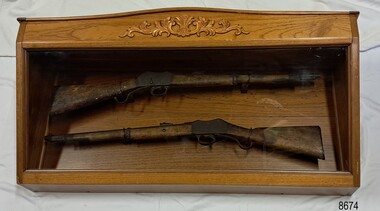
... In December 1854, Woodford Police barracks and stables were built on the hill by the Merri River on Bridge Road east, where Jubilee Park now stands. A local mounted trooper kept law and order in the area. ...In December 1854, Woodford Police barracks and stables were built on the hill by the Merri River on Bridge Road east, where Jubilee Park now stands. A local mounted trooper kept law and order in the area. ...Martini-Henry Artillery Carbin rifles were made by the Royal Small Arms Factory at Enfield, Britain, from 1877 until 1900. Many were distributed to the British Colonies, including this pair, which was allocated to the Woodford Police, Victoria Police District of Warrnambool, Southwest Victoria. The Carbine model rifles were shorter than the standard rifles and more suited to mounted police and troopers. It is likely that in the early 20th century, Victoria Police replaced the two carbines with more modern firearms, and the outdated guns were stored in the stables. The rifles were left there and likely forgotten about due to changes in police staff. In 1915, police authorities announced that they would be replacing patrol horses with bicycles and would also close some smaller police stations. This affected Woodford Police Station, which closed in 1917. The forgotten firearms remained in the stables and were noticed by schoolboy Robert Jellie in 1940 and seen again in 1946. In 1995, the property was sold by the Education Department to a private owner. The Woodford Community donated the pair of Martini-Henry Carbines to the Victoria Police Museum in the late 1990s for mounting and display, which was funded by the Victoria Police Historical Society Inc. The decorative wood and glass display case and frame were designed to preserve the significant history of the guns. On November 1st 1999, the display was presented to Warrnambool Police and the local community due to the historical significance of the Woodford Police Station. In 2025, these items were formally deaccessioned by the Victoria Police Museum, and ownership was transferred to the Warrnambool Police Station. On March 10th, 2025, the display was transferred to Flagstaff Hill Maritime Museum and Village, where the historical story of the Martini-Henry Carbines could continue to be preserved and accessed by local families, the community, visitors to the area, and online visitors. WOODFORD POLICE: - The small settlement at Woodford was established in the 1840s around the Merri River where there was a ford across the water and a bridge from 1848 to 1851. The area was settled very early in Victoria’s history, and the river crossing provided travellers with access to the early route between Port Fairy (named Belfast at that time), Warrnambool and Melbourne. Occasionally, a Warrnambool police trooper would ride through Woodford and the district. In December 1854, Woodford Police barracks and stables were built on the hill by the Merri River on Bridge Road east, where Jubilee Park now stands. A local mounted trooper kept law and order in the area. In 1856, a lock-up was installed, and the first Woodford Police Station was in action in 1857. By 1871, the police station had been moved from the hill to land across the Merri River bridge, on the southern side of Bridge Road west, near Mill Street. In 1890, the police residence there was replaced by a stone Edwardian-style building with the stables and lock-up behind it and the old police station at the rear. The police continued to have a presence in Woodford until it was closed by the Police Commissioner in July 1917 for economic reasons. The residence was used for government housing until 1923, when it was taken over by the Education Department for the school teacher’s home. In 1995, it became privately owned. THE MARTINI-HENRY ARTILLERY CARBINE: - The Martini-Henry rifles were made in Britain from 1871 at the Royal Small Arms factory at Enfield and were stamped with the symbol of the Royal Cipher (Crown over VR) over ENFIELD to identify their origin. They were named after two of several people who helped design this method: Swiss Friederich von Martini and Scotsman Alexander Henry. The design was breech-loaded, and the inner barrel was rifled. A thumb rest was incorporated into the top right of the bullet receiver’s chamber. The small teardrop lever on the right side of the rifle showed whether the rifle was ready to be shot. In 1877, the shorter, lighter-weight Carbine version of the firearm was produced for mounted troops and artillery. Its official name was “Carbine, B.L., Rifled, Martini-Henry.” The bullets were slightly lighter in weight than those used for the longer rifle. The sight position was adjusted for the shorter gun, and wings were added to the sight on the tip, making it easier to slide the rifle back into a saddle bag. Some of the later Carbines also had leather sight covers screwed to the stock to prevent them from catching on the saddle bags. The Carbines had accessories available, such as barrel extensions with bayonets and swivels for adding slings. The Martini-Henry Carbine designs were later modified to fire the British .303 ammunition. Eventually, by 1900, the Martini-Henry Carbines were replaced by the Lee Enfield gun design. The pair of Martini-Henry Carbine firearms represents policing in the early pre-1900 days of colonial settlement; Woodford was one of the first townships settled in Victoria, and it had a police presence from 1854 until 1917. The rifles and display provide a historic connection between the location of Woodford and relatives and associates. The carbine rifles show a stage in the evolution of weapon design, adapted to suit mounted troops, and adding features to streamline use and storage. The ammunition was also improved during this progression. The carbines are important for their connection to policing law and order in a remote area. They are significant for their association with the township of Woodford, which was important to travel in the southwest Victoria district, providing access across a river for a road between Port Fairy and Melbourne, and later Warrnambool, and supplying food, goods and accommodation for the travellers. A pair of mounted rifles is mounted behind glass in a timer case, accompanied by a framed display of two photographs and an account of the rifles’ history. The case and display each have a horizontal board with a gently curved edge and carved decorations added. The identical firearms are British-made Martini Henry Carbine breach-loaded rifled guns, supplied by Britain to its Colonial troops from around 1877. The rifles are lever-action, single-shot .500 calibre weapons. They have a teardrop lever on their right side. They were used by Victoria Police mounted troops at the Woodford Police Station, Victoria. The black and white photographs were taken in 1946. The left photograph has a circled area; the right photograph is an enlarged view of the circled area, showing the Woodford Police Station in detail. The printed text is on textured paper with the Victoria Police watermark. It gives a summary of the rifle’s history. There is an inscription on the left photograph. Left photograph, handwritten in white pen: “WOODFORD” Document’s print: “During the late 1840s the small town of Woodford grew around the crossing of the Merri River on the Melbourne/Port Fairy Rad. Woodford was proclaimed a township in 1854 and a police quarters was established there in 1857. The police station remained until 1917 when it was closed and police service from then on was provided from Warrnambool. The building was then used as a school residence and is now privately owned. In !940 Robert JELLIE, then a schoolboy, observed two rifles mounted on the wall of the disused stable at the rear of the old police building. Following the devastating flood of 1946 (see photograph above) the rifles were again seen in the room next to the stable but were not seen again until the building was sold by the Education Department many years later. It was a recognition of the historical value of the rifles which led to their donation to the Warrnambool Police Complex. The rifles have been authenticated by the Victoria Police Armoury as being Victoria Police issue some time before 1900. The rifles are an identical pair of the famous British-made Martini Henry, a .500 inch calibre military weapon widely used by British Colonial troops. Victoria Police and the wider community of Warrnambool are indebted to the members of the Woodford community for their fine gesture in donating the rifles for mounting so that their historical importance can be preserved and they can be displayed for generations to come. This display was funded by the Victoria Police Historical Society Incorporated, and presented on the first day of November, 1999.”flagstaff hill maritime museum and village, great ocean road, shipwreck coast, martini henry, victoria police, woodford police station, rifle, carbine, display case, british, martini henry carbine, breech-loaded, rifled, colonial, single-shot, .500 calibre, weapon, gun, 1877, troops, mounted troops, merri river, victoria police woodford, victoria police warrnambool, victoria police melbourne, police quarters, robert jellie, school residence, stable, 1946 flood, victoria police armoury, identical pair, british colonial troops, victoria police historical society incorporated, woodford, bicycles, found by a schoolboy, edwardian-style building, victoria police museum, warrnambool police station -
 Bendigo Historical Society Inc.
Souvenir - Views of Bendigo, 1902
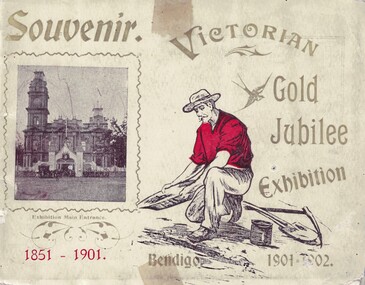
... Jubilee Exhibition - Page 7 of 29 G. Weymouth Proprietary Ltd. The business of G. Weymouth & Co was founded in 1898 by George Andrew Philip Weymouth, who began operating from a small workshop on City Road, South Melbourne (opposite Princes Bridge). ...Jubilee Exhibition - Page 7 of 29 G. Weymouth Proprietary Ltd. The business of G. Weymouth & Co was founded in 1898 by George Andrew Philip Weymouth, who began operating from a small workshop on City Road, South Melbourne (opposite Princes Bridge). ...The Victorian Gold Jubilee Exhibition, held at Bendigo from 13 November 1901 to 14 May 1902. The courts were numbered from one, or had titles like “Machinery”, “Agricultural”, “Naval & Military Court” and “Art”. The female visitors to the Exhibition were able to view exhibits deemed suitable for the fairer sex and located within their own “Women’s Court”. There were exhibits such as “Parasols & Umbrellas”, cotton and haberdashery from Manchester and Staffordshire, “Corsets & Embroideries” from Paris. The most valuable exhibits were mining machinery such as Taylor Horsfield’s £850 “Air Compressor & Rock Borer”. “Bohemian Glassware” brought down from Sydney was valued at £600. The profits from this Exhibition were used to fund the sculpture known as the Gold Monument, which still gazes along Pall Mall (from the McCrae Street end). The Exhibition’s Cash Book shows payments, which totalled £1160, were made to then up and coming sculptor C.D.Richardson. Recently a City of Greater Bendigo staff member used both these volumes to write a detailed report about this monument, for Heritage Victoria.Carol Holsworth Collection: Small book Souvenir, 29 pages plus cover; each page. has a photo of the exhibit. Exhibition was held on the site of the present Bendigo Library between Hargreaves St and Lyttleton Terrace. * 8662.1a Victorian Gold Jubilee Exhibition - Front Cover: Printed 'Souvenir', 'Bendigo 1901-1902'; a photo of the Entrance to the exhibition beside the Town Hall. * 8662.1b Victorian Gold Jubilee Exhibition - Inside Front Cover - Page 1 of 29. Portraits of Exhibition President S.H. Cowen esq.; and G.V. Allen esc., General Secretary. Photos by W.H. Robinson publisher. Printed by T. Cambridge, Market Square Bendigo. * 8662.1c Victorian Gold Jubilee Exhibition - Page 1 of 29 The Governor General at the Exhibition. Photo of the crowd, police, trooper and horse drawn vehicles. * 8662.1d Victorian Gold Jubilee Exhibition - Page 2 of 29 Procession Passing the Fountain, Pall Mall. The crowd and horse drawn vehicles. *8662.1e Victorian Gold Jubilee Exhibition - Page 3 of 29 James Martin and Co's Exhibit. James Martin & Co was an Australian engineering company which progressed from making agricultural equipment to making railway locomotives. * 8662.1f Victorian Gold Jubilee Exhibition - Page 4 of 29 Old Pioneers. Elderly gentlemen on foot and carriage - at the Bendigo Railway Station. * 8662.1g Victorian Gold Jubilee Exhibition - Page 5 of 29 Robert Harper and Company's Exhibit. From Trove - The Brisbane Courier 25 Aug 1891: One of the best known firms in the Southern hemisphere is Messrs. Robert Harper and Co , tea importers, coffee, rice, and spice merchants and manufacturers Then productions circle this continent, and every thrifty housewife is familiar with their Empire tens, their Star' brand of goods, then oatmeal, wheatmeal, and other breakfast table luxuries The headquarters of the firm are placed at Port Melbourne, and the manufactory there occupies over an acre of ground, while the mills at Sydney and Adelaide are as great in proportion It is eight cars since the firm opened business in this colony. The step was taken with much confidence, the principals the firm being quite attracted. * 8662.1h Victorian Gold Jubilee Exhibition - Page 6 of 29 The Electric Tram * 8662.1i Victorian Gold Jubilee Exhibition - Page 7 of 29 G. Weymouth Proprietary Ltd. The business of G. Weymouth & Co was founded in 1898 by George Andrew Philip Weymouth, who began operating from a small workshop on City Road, South Melbourne (opposite Princes Bridge). An early advertisement describes the firm's activities at this time as being 'makers of dynamos, (electric) motors, x-ray apparatus and electrical instruments, &c' together with 'repairs to every class of electrical work'. * 8662.1j Victorian Gold Jubilee Exhibition - Page 8 of 29 The Exhibition Fernery * 8662.1k Victorian Gold Jubilee Exhibition - Page 9 of 29 Cohn Bros'. Exhibit. In 1857 at the height of the gold rush, with people pouring into Central Victoria from all over the world, three brothers from Denmark – Moritz, Julius and Jacob Cohn – founded a small cordial factory in the booming town of Bendigo. They went on to build an empire and, through introducing lager, which is served cold, to the country, changed the drinking preferences of Australians. * 8662.1l Victorian Gold Jubilee Exhibition - Page 10 of 29 Ornamental Lake in the Exhibition Grounds * 8662.1m Victorian Gold Jubilee Exhibition - Page 11 of 29 Australian Explosives and Chemical Co.'s Exhibit. The Australian Explosives and Chemical Company began manufacturing explosives in Melbourne's outskirts (the area now known as Deer Park) in 1875. In 1897 the Company was purchased by Nobel, forming Nobel (Australasia) Ltd. * 8662.1n Victorian Gold Jubilee Exhibition - Page 12 of 29 Tasmanian Court * 8662.1o Victorian Gold Jubilee Exhibition - Page 13 of 29 N. Guthridge's Limited Exhibit. Guthridge sold a variety of mining supplies and equipment; also 'Rackarock' which was used to fill the mining drill holes before blasting. * 8662.1p Victorian Gold Jubilee Exhibition - Page 14 of 29 Navel and Military Court (LARGE File) * 8662.1q Victorian Gold Jubilee Exhibition - Page 15 of 29 Women's Court * 8662.1r Victorian Gold Jubilee Exhibition - Page 16 of 29 T. J. Connelly and Co's Exhibit. T.J. Connelly an American immigrant came to the Bendigo goldfields where he later established Connelly’s Tin Shop on the corner of High and Forest Streets 1853. Connelly was named after Thomas Jefferson the famous statesman who wrote much of the American Declaration of Independence in 1776 and became the third United States President. Connelly, along with other prominent citizens of the time established Bendigo’s first Fire Brigade, Mechanics Institute. * 8662.1s Victorian Gold Jubilee Exhibition - Page 17 of 29 The Potter's Wheel * 8662.1t Victorian Gold Jubilee Exhibition - Page 18 of 29 G. D. Guthrie and Co.'s Exhibit. In 1863 the Bendigo Pottery was set up by Guthrie. * 8662.1u Victorian Gold Jubilee Exhibition - Page 19 of 29 The Ladies' Committee * 8662.1v Victorian Gold Jubilee Exhibition - Page 20 of 29 J. Kitchen and Sons Exhibit. In Port Melbourne since the 1850s they made such products as Velvet Soap and Electrine Candles from the tallow and other animal fats from the nearby slaughter yards. In recent decades the company has become Kitchen & Lever then Unilever and most recently Unichema. * 8662.1w Victorian Gold Jubilee Exhibition - Page 21 1of 29 The Executive Committee * 8662.1x Victorian Gold Jubilee Exhibition - Page 22 of 29 Taylor Horsfield Exhibit. The most valuable exhibits were mining machinery such as Taylor Horsfield’s £850 “Air Compressor & Rock Borer” * 8662.1y Victorian Gold Jubilee Exhibition - Page 23 of 29 A Peep at the Education Department 8662.1z Victorian Gold Jubilee Exhibition - Page 24 of 29 John Danks and Co's Exhibit. John Danks & Son was a major manufacturing company in Melbourne, Victoria and Sydney, New South Wales. * 8662.1aa Victorian Gold Jubilee Exhibition - Page 25 of 29 Glance at the Agricultural Department's Court * 8662.1bb Victorian Gold Jubilee Exhibition - Page 26 of 29 T. York's Exhibit. Thomas York was an instrument repairer and brass instrument maker that resided in Melbourne in the late 19th to the early 20th century. While old newspaper advertisements suggested he repaired all instruments, it appears the focus of his business were military and brass band instruments. (BrassandWoodWind.com) * 8662.1cc Victorian Gold Jubilee Exhibition - Page 27 of 29 T. McPherson and Son's Exhibit. Possibly monumental masons. * 8662.1dd Victorian Gold Jubilee Exhibition - Page 28 of 29 T. Lewis and Whitty's Exhibit - Inside Back Cover. Lewis & Whitty were prominent boot blacking manufacturers as well as a number of other chemical products such as “Odourbane" disinfectant. * 8662.1ee Victorian Gold Jubilee Exhibition - Page 29 of 29 Singer Manufacturing Coy's Exhibithistory, bendigo, victorian gold jubilee exhibition bendigo, carol holsworth collection -
 Bendigo Historical Society Inc.
Slide - BENDIGO & EASTER FAIR, c1966
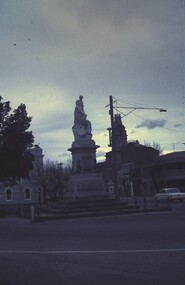
... Golden Jubilee Statue. Intersection of McCrae Street Bridge Street and Howard Place, Bendigo....SLIDE Bendigo golden jubilee statue golden jubilee statue Golden Jubilee Statue. Intersection of McCrae Street Bridge Street and Howard Place, Bendigo. ...Golden Jubilee Statue. Intersection of McCrae Street Bridge Street and Howard Place, Bendigo.slide, bendigo, golden jubilee statue, golden jubilee statue -
 Bendigo Historical Society Inc.
Newspaper - NEWSPAPER ARTICLES: CHINESE QUARTER/CHARLES DOUGLAS RICHARDSON, SCULPTOR, 04/08/1973
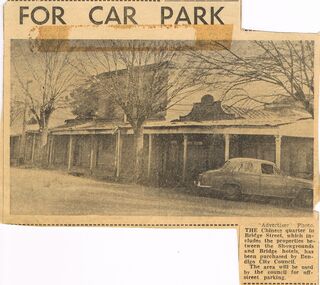
... Bridge hotels'' (Chinese quarter in Bendigo) purchased by the Bendigo City Council. 2. Article from The Age (4/8/1973) re life, painting and sculpture of Charles Douglas Richardson. Sculptor of the Bendigo Gold Jubilee...Bridge hotels'' (Chinese quarter in Bendigo) purchased by the Bendigo City Council. 2. Article from The Age (4/8/1973) re life, painting and sculpture of Charles Douglas Richardson. Sculptor of the Bendigo Gold Jubilee ...Newspaper articles - Chinese quarter/Charles Douglas Richardson, sculptor 1. (Bendigo Advertiser?? No date) photo of area between ''the Showgrounds and Bridge hotels'' (Chinese quarter in Bendigo) purchased by the Bendigo City Council. 2. Article from The Age (4/8/1973) re life, painting and sculpture of Charles Douglas Richardson. Sculptor of the Bendigo Gold Jubilee memorial.document, newspaper, bendigo theme, charles douglas richardson, sculptor, chinese quarter. -
 Uniting Church Archives - Synod of Victoria
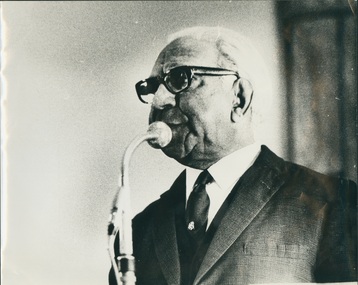
B&W photo of another photo or newspaper photograph of Pastor Sir Douglas Nicholls, Undated
... jubilee celebrations, and criticised the Victorian Aboriginal Protection Board. In 1957 when the board was transformed into the Aborigines’ Welfare Board, he and Harold Blair were appointed as Aboriginal representatives. Maintaining the stance of a political moderate, he did not bear grudges and sought to build bridges...jubilee celebrations, and criticised the Victorian Aboriginal Protection Board. In 1957 when the board was transformed into the Aborigines’ Welfare Board, he and Harold Blair were appointed as Aboriginal representatives. Maintaining the stance of a political moderate, he did not bear grudges and sought to build bridges ...Sir Douglas Ralph Nicholls (1906-1988), footballer, pastor, activist and governor, was born on 9 December 1906 at Cummeragunja Aboriginal mission, New South Wales, fifth child of Herbert Nicholls, seasonal worker, and his wife Florence, née Atkinson. Doug grew up at Cummeragunja, on the Murray River near Barmah, in its golden years of Aboriginal autonomy. Thomas Shadrach James gave him and other Yorta Yorta children a sound primary education, reinforcing the pride and self-assurance gained from their parents. As Doug grew, so too did the powers of the State’s Aboriginal Protection Board. Doug’s elder sister Hilda was removed about 1915. When Doug reached 14, he was moved off under the Aborigines Protection Act (1909) to find work. He took a job with dredging teams constructing levees on the Murray. Like other youths in the region Nicholls played Australian rules football, emulating kinsmen who had won local premierships since the 1890s. Doug and his brother Herbert (‘Dowie’) played with Tongala in the mid-1920s. Melbourne football beckoned, Doug trying out unsuccessfully for Carlton in 1927. He signed with the Northcote Victorian Football Association team, despite his nervousness about his Aboriginality, and was given a job with Northcote City Council. ‘Dowie’ joined him for a season. Doug was short at 5 ft 2 ins (158 cm), but muscular and lightning fast. He competed regularly during a boom in professional running, winning many heat and place prizes. In 1929 he won the Nyah and Warracknabeal gifts, earning a sash and £100 in each, together with a case of cutlery in the latter. Using his speed on the wing for Northcote, he produced great spring and agility from his compact body. The Sporting Globe reported in 1929 that ‘he flashes through packs of big men, whisks around small men . . . and attempts marks at the back of any six-footer’. In front-on clashes he was flattened only to rise again. The sole Aborigine in the VFA, he was known affectionately as the ‘flying Abo’ but called worse by his opponents’ barrackers. He competed for five seasons, being named ‘best and fairest’ twice, appearing in three association grand finals and winning in 1929. Keen to earn more than a seasonal wage, in 1931 Nicholls accepted a three-year contract with Jimmy Sharman’s travelling boxing show. The bouts matched opposites, local against tent boxer, white against black, and sometimes men of different sizes. He faced stiff competition from those who wanted to best the noted Melbourne black footballer, the crowd adding racial abuse. A far better footballer than boxer, he copped some punishment. Fighting in the Melbourne Stadium in December 1931, he was described by Truth as ‘slow and awkward’, but packing a ‘good wallop’. In 1932 Sharman, who treated his boxers fairly, released Nicholls to join the Fitzroy Victorian Football League team, which agreed to employ him as its groundsman. He played fifty-four games for Fitzroy over six seasons until knee trouble forced him out in 1937. Winning cups in 1934 and 1935, he played alongside Haydn Bunton and Wilfred (‘Chicken’) Smallhorn. Grand finals eluded him but he represented Victoria twice. Following his mother’s death, Nicholls revisited the Church of Christ chapel in Northcote, where they had worshipped together. On 17 July 1932 he experienced a conversion. He was soon baptised and witnessed openly, leading his fellow footballers to occasional church parades. Nicholls exhibited leadership qualities. William Cooper, founder of the Australian Aborigines’ League and Nicholls’ Yorta Yorta kinsman and fellow Christian, encouraged the young footballer. In February 1935 Cooper, Nicholls and others lobbied Thomas Paterson, the Commonwealth minister for the interior, over the need for Federal control of Aboriginal affairs. Nicholls attended the Day of Mourning protest for Aborigines held in Sydney on 26 January 1938, declaring: ‘after 150 years our people are still influenced and bossed by white people. I know we can proudly hold our own with others if given the chance’. When Cooper retired in November 1940 Nicholls became secretary of the AAL. On 2 June 1941 Nicholls enlisted in the Citizen Military Forces. He trained at Seymour and Bonegilla before being posted to the 29th Battalion. As Major Frank Corr’s batman, he was popular with other soldiers who tolerated his preaching and Bible reading. His army service was brief, however, and he was discharged in Melbourne on compassionate grounds on 22 January 1942. His biographer claimed that the Fitzroy police requested his return to mediate in the racial tensions developing between servicemen and the mostly respectable Aboriginal families living in crowded and dilapidated Fitzroy housing; Aboriginal people maintain that they requested his release. Nicholls began welfare work and religious services from an Aboriginal home in Gertrude Street, Fitzroy. In April 1942, ‘Dowie’ died of road accident trauma, leaving his wife, Gladys, née Bux, and three children. On 26 December 1942 at Moama Methodist Church, New South Wales, Nicholls married her, a caring gesture which developed into a loving partnership. In January 1943 he initiated ‘Aboriginal Sunday’, featuring a gum leaf orchestra and choir. By 1955 this service had moved to July and later evolved into National Aborigines and Islanders Day Observance Committee (NAIDOC) week. Ordained a Churches of Christ pastor in 1945, Nicholls conducted a vigorous ministry from a chapel in Gore Street, Fitzroy. His work survived on donations, a small honorarium, and his employment as team coach (1947) and curator at the Northcote Football Ground. In the 1950s Gladys established grocery and opportunity shops to earn income and provide services. Their house soon overflowed with people in need or visitors to Melbourne. Nicholls also hosted inspiring African American visitors such as the pianist Winifred Attwell and the singer Harry Belafonte. His ministry extended to Aboriginal country communities. Gladys taught Sunday school, undertook endless fund-raising and welfare work beside her husband, and became his greatest supporter and financial manager. They formed an Aboriginal Girls’ Hostel in 1956, for which they acted as house parents, and bought holiday units for Aborigines at Queenscliff. Persistently advocating Aboriginal rights, Nicholls protested about the impact of the Woomera rocket range on the people of the Warburton Ranges, co-ordinated the production of a concert, Out of the Dark, scripted by Jean Campbell, to rectify the omission of Aborigines from Victoria’s Commonwealth jubilee celebrations, and criticised the Victorian Aboriginal Protection Board. In 1957 when the board was transformed into the Aborigines’ Welfare Board, he and Harold Blair were appointed as Aboriginal representatives. Maintaining the stance of a political moderate, he did not bear grudges and sought to build bridges between black and white. He co-operated with any group that aided the cause, including the Council of Aboriginal Rights, whose executive were members of the Communist Party of Australia. This association attracted the attention of the Australian Security Intelligence Organization, which in 1957 began to keep a file on Nicholls. In May 1957 Nicholls formed the Victorian Aborigines Advancement League with Doris Blackburn and Gordon Bryant, a Federal parliamentarian. As its paid field officer and spokesman, Nicholls contested assimilation policies and used film to raise awareness of issues. When the Welfare Board attempted to close Lake Tyers reserve, Gippsland, he resigned in disgust and led a protest march on parliament in May 1963. The AAL also petitioned the United Nations on land rights in June, perhaps the first indigenous body to do so. He argued for new premises at 58 Cunningham Street, Northcote, opened in 1966 as the ‘Doug Nicholls Centre’. In 1958 Nicholls was a foundation member of the Federal Council for Aboriginal Advancement (Federal Council for the Advancement of Aboriginal and Torres Strait Islanders after 1964), which he served as national field officer (1961) and Victorian secretary (1962-63). While an innovator in tactics, he was alarmed by the influence of confrontational ‘black power’ politics in the AAL and resigned as a director amid turmoil on this issue in 1969, claiming the concept was a ‘bitter word’, not needed in Australia. Similar tensions in FCAATSI led him to join with Kath Walker (Oodgeroo Noonuccal) in establishing the short-lived National Tribal Council as an alternative forum. As the AAL leadership moderated their stance, he returned as president (1969-74) of the new all-Aboriginal organisation. He was also a keen patron of the National Aboriginal Sports Foundation, founded in 1969. Many honours were conferred on Nicholls: he was appointed MBE (1957) and OBE (1968) and knighted (1972). In 1962 he was named Victorian ‘Father of the Year’ and the State’s second Aboriginal justice of the peace. Crowned Melbourne’s 1973 King of Moomba, he was declared Bapu Mamus (a Torres Strait term for ‘headman’) by the NTC. On 1 December 1976 Sir Douglas was appointed Governor of South Australia, but his health deteriorated within weeks, making it difficult for him to perform his official duties. In March 1977 he hosted Queen Elizabeth during her royal tour and was appointed KCVO. He relinquished his governorship on 30 April 1977 following a stroke. Ill health continued to dog him during retirement, but he played his Nelson Eddy records, enjoyed his expanding family, and when able, ministered to the Aboriginal Church at the League’s premises. Sir Douglas Nicholls died on 4 June 1988 at Mooroopna, predeceased (1981) by his wife and survived by his five children. He was given a state funeral and buried in tribal ground at Cummeragunja cemetery. Among the many tributes to him are an oval at Northcote, handed to the AAL in 1982, a Canberra suburb gazetted in 1991, and a fellowship for Indigenous leadership established in 2003, all in his name, and a statue of Sir Doug and Lady Nicholls by Louis Laumen, unveiled in 2007 in Parliament Gardens, Melbourne. Sir Douglas Nicholls is shown speaking at a microphone; head and shoulders; dressed in a suit.Pastor Douglas Nicholls -
 Sunshine and District Historical Society Incorporated
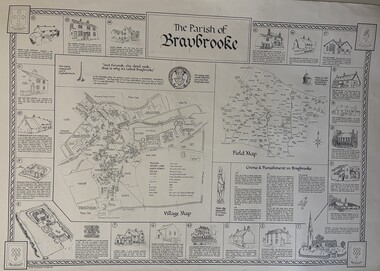
Map - The Parish of Braybrooke Map
... The Parish of Braybrooke|Church|Wantage Farm|The Old Sun Inn|The Bridge & Bridge House|Baptist Chapel & Bowden Bridge|Castle Farm|Braybrooke Castle|Probable Site of Braybrooke Orange|Workhouse Row and Jubilee Tree|The Old Post Office|Green Lane Cottage|Old Parish Houses|Bleak House|Old Village Store and Club House|Jim Robinson's Cottage|The Old School|The Swan Inn|Mrs Underwood's House|The Old Rectory|Village Hall|Braybrooke Primary School...Braybrook Map The Parish of Braybrooke|Church|Wantage Farm|The Old Sun Inn|The Bridge & Bridge House|Baptist Chapel & Bowden Bridge|Castle Farm|Braybrooke Castle|Probable Site of Braybrooke Orange|Workhouse Row and Jubilee Tree|The Old Post Office|Green Lane Cottage|Old Parish Houses|Bleak House|Old Village Store and Club House|Jim Robinson's Cottage|The Old School|The Swan Inn|Mrs Underwood's House|The Old Rectory|Village Hall|Braybrooke Primary School Large white map that lists the locations of multiple buildings within the Parish of Braybrooke Map The Parish of Braybrooke Map ...The Parish of Braybrooke|Church|Wantage Farm|The Old Sun Inn|The Bridge & Bridge House|Baptist Chapel & Bowden Bridge|Castle Farm|Braybrooke Castle|Probable Site of Braybrooke Orange|Workhouse Row and Jubilee Tree|The Old Post Office|Green Lane Cottage|Old Parish Houses|Bleak House|Old Village Store and Club House|Jim Robinson's Cottage|The Old School|The Swan Inn|Mrs Underwood's House|The Old Rectory|Village Hall|Braybrooke Primary Schoolbraybrook, map -
 Sunshine and District Historical Society Incorporated
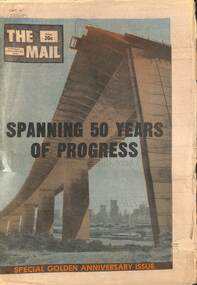
Newspaper - Ray Carlton Significant Papers Collection
... Bridge Collapse, Deer Park & St. Albans Developments Start To Move, Forges, War Hits The West, Braybrook Becomes Sunshine 2881.02 - Ray Carlton Significant Papers Collection - The Mail We're 60 Diamond Jubilee 1984, The Footscray Mail Office, Braybrook Becomes Sunshine 2881.03 - Ray Carlton Significant Papers Collection - The Advocate Golden Anniversary Issue 1974, The Advocate First Fifty Years, Sunshine Shopping Centre City Place, Clarence Gibson Carlton, Sunshine Post Office, Donald "Don" McKay, Anderson Road & Sun Crescent Railway Crossings, Sunshine Technical School, Sunshine Fire Stations, Albion Land Sales, Sunshine Overpass 2881.04 - Ray Carlton Significant Papers Collection - The Advocate Sunshine Declared City Anniversary 1978, Albion Is Greek, Sunshine Sports Centre, The Sage Of Sunshine's Hugh Victor McKay, Railway Work Shops 2881.05 - Ray Carlton Significant Papers Collection - The Star Celebrating Sunshine 150 Years Of Local Government 2011, Kevin Wheelahan Gardens Family Day, Sunshine Historical Cards 2881.06 - Ray Carlton Significant Papers Collection - The Advocate Sunshine & Braybrook Celebrating 150 Years Of Local Government 2010, John Darling & Sons Flour Mill Heritage Listed 2881.07 - Ray Carlton Significant Papers Collection - Sunshine Advocate 1860 - 1960 Sunshine Illustrated Commemorating 100 Years Of Progress 1960, Our First Explorers Followed The River, Grimes & Batman 2881.08 - Ray Carlton Significant Papers Collection - The Sun 60th Anniversary Souvenir 1982 2881.09 - Ray Carlton Significant Papers Collection - The Mail We're 60 Diamond Jubilee 1984, The Footscray Mail Office, Braybrook Becomes Sunshine 2881.10 - Ray Carlton Significant Papers Collection - Sunshine Plaza Openning 1983 2881.11 - Ray Carlton Significant Papers Collection - The Advocate We're 60 The Way We Were And Today 1984, Sunshine Plaza Opening, The Advocate's Stories Of The Passing Years 2881.12 - Ray Carlton Significant Papers Collection - Sunshine Advocate 1st Edition 1st March 1924, Help Us To Help You In The District's Progress 2881.13 - Ray Carlton Significant Papers Collection - The Western Times Souvenir Of Century Footscray Shopping Centre Celebrates 100 Years, Nicholson Street, Footscray Mall, Charles Grimes, Encildoune House 2881.14 - Ray Carlton Significant Papers Collection - The Age Sunshine A Community Report 1974, Grants Aid City To Improve Way Of Life, Sunshine Municipal Offices, Sims Metal, Inventor Gave The City Its Name, Firestone Australia, Olex Cables, ARC 2881.15 - Ray Carlton Significant Papers Collection - The Age Councils Revolt Against The Secret Freeways 1974 2881.16 - Ray Carlton Significant Papers Collection - The Age Spot Light On The Western Suburbs 1987, Werribee Park 2881.17 - Ray Carlton Significant Papers Collection - The Advocate Carlton Brothers 1984 2881.18 - Ray Carlton Significant Papers Collection - Weekender Sunshine, Rainbow House, Dining, Sport, Youth 2881.19 - Ray Carlton Significant Papers Collection - The Age Shopping Centre Site Was Once A Hole 1974, High Point West Opens September 1975 2881.20 - Ray Carlton Significant Papers Collection - Mirror Highpoint West Opening 1975 2881.21 - Ray Carlton Significant Papers Collection - The Advocate Massive Shopping Complex 1981, Footscray Private Hospital 2881.22 - Ray Carlton Significant Papers Collection - Advertiser Clarrie Carlton Dies Age 79 1972 2881.23 - Ray Carlton Significant Papers Collection - Johnny Farnham At Deer Park Hotel, Advocate Founder Fies Clarrie Carlton 1972, Peter Norman 2881.24 - Ray Carlton Significant Papers Collection - The Advocate Australia Day Program Will Appeal To All 1965, Sunshine Advocate Changes Ownership, Works Starts On New Town Hall, Sunshine New Library 2881.25 - Ray Carlton Significant Papers Collection - The Advocate Braybrook Centenary 1971, Education Department Protests, Braybrook & Sunshine Shire Halls, Marian College library, Mathews Hill Reserve, New Private Hospital Sunshine North 2881.26 - Ray Carlton Significant Papers Collection - The Argus Souvenir Of A Century Of Progress 1934 2881.27 - Ray Carlton Significant Papers Collection - Profile Community Newspaper 1983, Sunshine North School Crossing 2881.28 - Ray Carlton Significant Papers Collection - The Sun Sixty Years Of Sun Days 1982, First Federal Parliment At Canberra, Southern Cross Flyers 2881.29 - Ray Carlton Significant Papers Collection - Images For The Sunshine Advocate 1860 - 1960 Sunshine Illustrated Commemorating 100 Years Of Progress 1960 2881.30 - Ray Carlton Significant Papers Collection - The Advocate Axe To Fall On St. ...Bridge Collapse, Deer Park & St. Albans Developments Start To Move, Forges, War Hits The West, Braybrook Becomes Sunshine 2881.02 - Ray Carlton Significant Papers Collection - The Mail We're 60 Diamond Jubilee 1984, The Footscray Mail Office, Braybrook Becomes Sunshine 2881.03 - Ray Carlton Significant Papers Collection - The Advocate Golden Anniversary Issue 1974, The Advocate First Fifty Years, Sunshine Shopping Centre City Place, Clarence Gibson Carlton, Sunshine Post Office, Donald "Don" McKay, Anderson Road & Sun Crescent Railway Crossings, Sunshine Technical School, Sunshine Fire Stations, Albion Land Sales, Sunshine Overpass 2881.04 - Ray Carlton Significant Papers Collection - The Advocate Sunshine Declared City Anniversary 1978, Albion Is Greek, Sunshine Sports Centre, The Sage Of Sunshine's Hugh Victor McKay, Railway Work Shops 2881.05 - Ray Carlton Significant Papers Collection - The Star Celebrating Sunshine 150 Years Of Local Government 2011, Kevin Wheelahan Gardens Family Day, Sunshine Historical Cards 2881.06 - Ray Carlton Significant Papers Collection - The Advocate Sunshine & Braybrook Celebrating 150 Years Of Local Government 2010, John Darling & Sons Flour Mill Heritage Listed 2881.07 - Ray Carlton Significant Papers Collection - Sunshine Advocate 1860 - 1960 Sunshine Illustrated Commemorating 100 Years Of Progress 1960, Our First Explorers Followed The River, Grimes & Batman 2881.08 - Ray Carlton Significant Papers Collection - The Sun 60th Anniversary Souvenir 1982 2881.09 - Ray Carlton Significant Papers Collection - The Mail We're 60 Diamond Jubilee 1984, The Footscray Mail Office, Braybrook Becomes Sunshine 2881.10 - Ray Carlton Significant Papers Collection - Sunshine Plaza Openning 1983 2881.11 - Ray Carlton Significant Papers Collection - The Advocate We're 60 The Way We Were And Today 1984, Sunshine Plaza Opening, The Advocate's Stories Of The Passing Years 2881.12 - Ray Carlton Significant Papers Collection - Sunshine Advocate 1st Edition 1st March 1924, Help Us To Help You In The District's Progress 2881.13 - Ray Carlton Significant Papers Collection - The Western Times Souvenir Of Century Footscray Shopping Centre Celebrates 100 Years, Nicholson Street, Footscray Mall, Charles Grimes, Encildoune House 2881.14 - Ray Carlton Significant Papers Collection - The Age Sunshine A Community Report 1974, Grants Aid City To Improve Way Of Life, Sunshine Municipal Offices, Sims Metal, Inventor Gave The City Its Name, Firestone Australia, Olex Cables, ARC 2881.15 - Ray Carlton Significant Papers Collection - The Age Councils Revolt Against The Secret Freeways 1974 2881.16 - Ray Carlton Significant Papers Collection - The Age Spot Light On The Western Suburbs 1987, Werribee Park 2881.17 - Ray Carlton Significant Papers Collection - The Advocate Carlton Brothers 1984 2881.18 - Ray Carlton Significant Papers Collection - Weekender Sunshine, Rainbow House, Dining, Sport, Youth 2881.19 - Ray Carlton Significant Papers Collection - The Age Shopping Centre Site Was Once A Hole 1974, High Point West Opens September 1975 2881.20 - Ray Carlton Significant Papers Collection - Mirror Highpoint West Opening 1975 2881.21 - Ray Carlton Significant Papers Collection - The Advocate Massive Shopping Complex 1981, Footscray Private Hospital 2881.22 - Ray Carlton Significant Papers Collection - Advertiser Clarrie Carlton Dies Age 79 1972 2881.23 - Ray Carlton Significant Papers Collection - Johnny Farnham At Deer Park Hotel, Advocate Founder Fies Clarrie Carlton 1972, Peter Norman 2881.24 - Ray Carlton Significant Papers Collection - The Advocate Australia Day Program Will Appeal To All 1965, Sunshine Advocate Changes Ownership, Works Starts On New Town Hall, Sunshine New Library 2881.25 - Ray Carlton Significant Papers Collection - The Advocate Braybrook Centenary 1971, Education Department Protests, Braybrook & Sunshine Shire Halls, Marian College library, Mathews Hill Reserve, New Private Hospital Sunshine North 2881.26 - Ray Carlton Significant Papers Collection - The Argus Souvenir Of A Century Of Progress 1934 2881.27 - Ray Carlton Significant Papers Collection - Profile Community Newspaper 1983, Sunshine North School Crossing 2881.28 - Ray Carlton Significant Papers Collection - The Sun Sixty Years Of Sun Days 1982, First Federal Parliment At Canberra, Southern Cross Flyers 2881.29 - Ray Carlton Significant Papers Collection - Images For The Sunshine Advocate 1860 - 1960 Sunshine Illustrated Commemorating 100 Years Of Progress 1960 2881.30 - Ray Carlton Significant Papers Collection - The Advocate Axe To Fall On St. ...Collection of Significant Papers -
 Kew Historical Society Inc
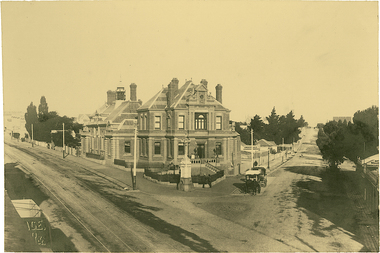
Photograph, J F C Farquhar, The Post Office, 1891
... Jubilee of Queen Victoria in 1887. It was created to a design of the architects Reed, Henderson and Smart. The fountain was later relocated to the Alexandra Gardens to make way for the Kew War Memorial. The tram tracks in High Street were used by the horse tram, which ran from the Victoria Street Bridge...Jubilee of Queen Victoria in 1887. It was created to a design of the architects Reed, Henderson and Smart. The fountain was later relocated to the Alexandra Gardens to make way for the Kew War Memorial. The tram tracks in High Street were used by the horse tram, which ran from the Victoria Street Bridge ...At the beginning of the 1890s, the Kew businessman and Town Councillor, Henry Kellett, commissioned J.F.C. Farquhar to photograph scenes of Kew. These scenes included panoramas as well as pastoral scenes. The resulting set of twelve photographs was assembled in an album, Kew Where We Live, from which customers could select images for purchase.The preamble to the album describes that the photographs used the ‘argentic bromide’ process, now more commonly known as the gelatine silver process. This form of dry plate photography allowed for the negatives to be kept for weeks before processing, hence its value in landscape photography. The resulting images were considered to be finely grained and everlasting. Evidence of the success of Henry Kellett’s venture can be seen today, in that some of the photographs are held in national collections.It is believed that the Kew Historical Society’s copy of the Kellett album is unique and that the photographs in the book were the first copies taken from the original plates. It is the first and most important series of images produced about Kew. The individual images have proved essential in identifying buildings and places of heritage value in the district.A panoramic photograph of the junction of High Street and Cotham Road. The photographer centres the point-of-view on the Kew Post Office and adjacent Court House. These were designed in the Queen Anne style by the Public Works Department's architect J Harvey and completed in 1888. The complex is important because it demonstrates a departure from the contemporaneously favoured High Victorian Classical to the Queen Anne style in the design of civic buildings. The earlier Jubilee Fountain in front of the Post Office was erected by the Kew Borough Council to commemorate the Golden Jubilee of Queen Victoria in 1887. It was created to a design of the architects Reed, Henderson and Smart. The fountain was later relocated to the Alexandra Gardens to make way for the Kew War Memorial. The tram tracks in High Street were used by the horse tram, which ran from the Victoria Street Bridge to the Boroondara General Cemetery. The tram was replaced by an electrified service in 1915.The Post Officekew post office, kew illustrated, kew where we live, photographic books, henry kellett -
Merbein District Historical Society
Slide, Back to Merbein Golden Jubilee Celebrations, 1959
... Fishers Float Fishers Store Marching Girls Ford Family Merbein Footballers (Premiers 1926 & 1927) ADFA Australian Dried Fruits Association Emily Jane Barnes Zrna (truck) Witchetty Grub Tribe Merbein Hardware Milton Donaldson on Ranfurly Country Women's Association Merbein Fire Brigade Abbotsford Bridge near Merbein Back to Merbein Golden Jubilee Celebrations Slide ...fishers float, fishers store, marching girls, ford family, merbein footballers (premiers 1926 & 1927), adfa, australian dried fruits association, emily jane, barnes, zrna (truck), witchetty grub tribe, merbein hardware, milton donaldson on ranfurly, country women's association, merbein fire brigade, abbotsford bridge near merbein -
 Sunshine and District Historical Society Incorporated
Administrative record - City of Sunshine - Commissioner Mr Alexander Alex George Gillon Collection 1976 - 1982 - Notice of ordinary meeting of the council 27th March 1979, City of Sunshine, 21st March 1979
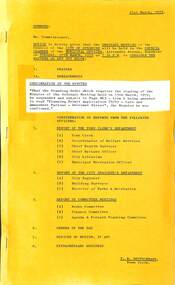
... Albans Balfour Avenue Aloysius Street Sunshine North Braybrook Sunshine Swimming and Life Saving Club Princess Street Francis Street Brooklyn Main Road West Wright Street Sunshine Ballarat Road Hampshire Road Durham Road Fraser Street Madden Street Maidstone Geelong Road Glengala Road Allison Street Sunshine West Aycliffe Drive Deer Park Anderson Road Westgate Bridge Bon Thomas Reserve Pre-School Centre Bon Thomas Reserve Quinn Street Orama Street Child Care Centre Orama Street Notice of Ordinary Meeting of the Council 27th March 1979 Report of the Town Clerk's Department Report of the Town Clerk Loan Borrowings Supplementary Valuations Cost of Insurance Proposed Conference Land Transfer from Council Lot 116 Balfour Avenue and Aloysius Street Proposed Purchase of Land St. Albans Road Corner Furlong Road Report of the Co-Ordinator of Welfare Service Residential Tenancies Bill Silver Jubilee ...Notice of Ordinary Meeting of the Council 27th March 1979 Report of the Town Clerk's Department Report of the Town Clerk Loan Borrowings Supplementary Valuations Cost of Insurance Proposed Conference Land Transfer from Council Lot 116 Balfour Avenue and Aloysius Street Proposed Purchase of Land St. Albans Road Corner Furlong Road Report of the Co-Ordinator of Welfare Service Residential Tenancies Bill Silver Jubilee Camps Camping Programs in the Wester Region CYSS Contracts Report of the Chief Health Surveyor Offensive Trades Infant Welfare Subsidies Provision of Immunization for Council Employees and Staff Report of the Chief By-Laws Officer Prohibited Parking St. Albans Road Proposed Prohibited Parking Burnside Street and Canterbury Street Deer Park Report of the Municipal Recreation Officer Sunshine Swimming and Life Saving Club Lease Vicswim Nude Bathing Report of the City Engineer & Planner Amendment 83 Part 2 to the Melbourne Metropolitan Planning Scheme Planning Permit Application Electrical Goods Sales and Service Shop 3 Lot 3 Princess Street St. Albans Planning Permit Application Factory Lot 12 Francis Street Planning Permit Application Display Homes Lots 24, 26, 29, 30 & 31 Station Road Planning Permit Application Coffee Bar & Billiard Saloon Lot 5 Main Road West Planning Permit Application Amusement Machines Roller Skating Rink Lot 89 Wright Street Sunshine Planning Permit Application Illuminated Fascia Sign Ballarat Road South West Corner Hampshire Road Planning Permit Application Medical Consulting Room Lot 5 Durham Road Sunshine Planning Permit Application Eight Villa Units Lots 1 & 2 Fraser Street Sunshine Planning Permit Application Three Villa Units lots 23 & 25 Madden Street Maidstone Planning Permit Application Car Parking Facilities Within 9 Metres of Geelong Road Corner of Francis Street Brooklyn Plan of Subdivision Glengala Road Corner Allison Street Sunshine West Plan of Subdivision Lots 165 & 166 Aycliffe Drive Deer Park Consolidation of Title Anderson Road Sunshine Plan of Subdivision South West Corner St. Albans Road and Furlong Road Consolidation of Title Hampshire Road Westgate Bridge Advisory Signing R.O.S.T.A. Bulletin 1979/1 Statcon Works Programme 1979/80 Sunshine View Estate Stage 2 Drainage Scheme R.O.S.T.A. Bulletin 1979/2 Statcon Pedestrian Operator Signals Declaration of Sewerage Area No 3722 Council Depot Amenities Building Bon Thomas Reserve Pre-School Centre & Orama Street Child Care Centre Tenders for Sewage Works Chemicals 2, 4, 5-T & 2, 4-D Report of the Building Surveyor Building Over Easement Lot 9 Furlong Road Sunshine Northst. albans road, furlong road, st. albans, balfour avenue, aloysius street, sunshine north, braybrook, sunshine swimming and life saving club, princess street, francis street, brooklyn, main road west, wright street, sunshine, ballarat road, hampshire road, durham road, fraser street, madden street, maidstone, geelong road, glengala road, allison street, sunshine west, aycliffe drive, deer park, anderson road, westgate bridge, bon thomas reserve pre-school centre, bon thomas reserve, quinn street, orama street child care centre, orama street -
 Sunshine and District Historical Society Incorporated
Administrative record - City of Sunshine - Commissioner Mr Alexander Alex George Gillon Collection 1976 - 1982 - Minutes of the ordinary meeting of council held on 27th March 1979, City of Sunshine, 27th March 1979
... Albans Balfour Avenue Aloysius Street Sunshine North Braybrook Burnside Street Canterbury Street Deer Park Sunshine Swimming and Life Saving Club Francis Street Brooklyn Station Road Main Road West Wright Street Sunshine Ballarat Road Hampshire Road Durham Road Fraser Street Madden Street Maidstone Geelong Road Glengala Road Allison Street Sunshine West Aycliffe Drive Anderson Road Westgate Bridge Bon Thomas Reserve Pre-School Centre Bon Thomas Reserve Quinn Street Orama Street Child Care Centre Orama Street Minutes of the Ordinary Meeting of Council held on 27th March 1979 Report of the Town Clerk's Department Report of the Town Clerk Loan Borrowings Supplementary Valuations Cost of Insurance Proposed Conference Land Transfer from Council Lot 116 Balfour Avenue and Aloysius Street Proposed Purchase of Land St. Albans Road Corner Furlong Road Report of the Co-Ordinator of Welfare Service Residential Tenancies Bill Silver Jubilee ...Minutes of the Ordinary Meeting of Council held on 27th March 1979 Report of the Town Clerk's Department Report of the Town Clerk Loan Borrowings Supplementary Valuations Cost of Insurance Proposed Conference Land Transfer from Council Lot 116 Balfour Avenue and Aloysius Street Proposed Purchase of Land St. Albans Road Corner Furlong Road Report of the Co-Ordinator of Welfare Service Residential Tenancies Bill Silver Jubilee Camps Camping Programs in the Wester Region CYSS Contracts Report of the Chief Health Surveyor Offensive Trades Infant Welfare Subsidies Provision of Immunization for Council Employees and Staff Report of the Chief By-Laws Officer Prohibited Parking St. Albans Road Proposed Prohibited Parking Burnside Street and Canterbury Street Deer Park Report of the Municipal Recreation Officer Sunshine Swimming and Life Saving Club Lease Vicswim Nude Bathing Report of the City Engineer & Planner Amendment 83 Part 2 to the Melbourne Metropolitan Planning Scheme Planning Permit Application Electrical Goods Sales and Service Shop 3 Lot 3 Princess Street St. Albans Planning Permit Application Factory Lot 12 Francis Street Planning Permit Application Display Homes Lots 24, 26, 29, 30 & 31 Station Road Planning Permit Application Coffee Bar & Billiard Saloon Lot 5 Main Road West Planning Permit Application Amusement Machines Roller Skating Rink Lot 89 Wright Street Sunshine Planning Permit Application Illuminated Fascia Sign Ballarat Road South West Corner Hampshire Road Planning Permit Application Medical Consulting Room Lot 5 Durham Road Sunshine Planning Permit Application Eight Villa Units Lots 1 & 2 Fraser Street Sunshine Planning Permit Application Three Villa Units lots 23 & 25 Madden Street Maidstone Planning Permit Application Car Parking Facilities Within 9 Metres of Geelong Road Corner of Francis Street Brooklyn Plan of Subdivision Glengala Road Corner Allison Street Sunshine West Plan of Subdivision Lots 165 & 166 Aycliffe Drive Deer Park Consolidation of Title Anderson Road Sunshine Plan of Subdivision South West Corner St. Albans Road and Furlong Road Consolidation of Title Hampshire Road Westgate Bridge Advisory Signing R.O.S.T.A. Bulletin 1979/1 Statcon Works Programme 1979/80 Sunshine View Estate Stage 2 Drainage Scheme R.O.S.T.A. Bulletin 1979/2 Statcon Pedestrian Operator Signals Declaration of Sewerage Area No 3722 Council Depot Amenities Building Bon Thomas Reserve Pre-School Centre & Orama Street Child Care Centre Tenders for Sewage Works Chemicals 2, 4, 5-T & 2, 4-D Report of the Building Surveyor Building Over Easement Lot 9 Furlong Road Sunshine North Orders of the Day Accounts Submitted for Payment as at 15th March 1979st. albans road, furlong road, st. albans, balfour avenue, aloysius street, sunshine north, braybrook, burnside street, canterbury street, deer park, sunshine swimming and life saving club, francis street, brooklyn, station road, main road west, wright street, sunshine, ballarat road, hampshire road, durham road, fraser street, madden street, maidstone, geelong road, glengala road, allison street, sunshine west, aycliffe drive, anderson road, westgate bridge, bon thomas reserve pre-school centre, bon thomas reserve, quinn street, orama street child care centre, orama street -
 Maccabi Victoria
Accessory, 1985-1996
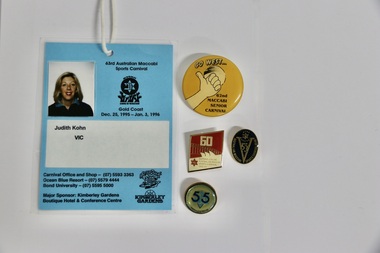
... Senior Carnival Maccabi pins, badges and lD lanyard. 01: Ajax Maccabi 53rd Australian Maccabi Sports Carnival 85-86 - gold V on black oval pin 02: 55th Australian Maccabi Sports Carnival Melbourne 19877-88 sky blue, navy blue, gold 03: 60 Diamond Jubilee Australian Maccabi Sports Carnival 1992-93 - red, cream gold with Hebrew Maccabi logo and bridge and opera house 04: GO WEST… 62nd Maccabi Senior Carnival - yellow plastic badge with fist thumbing towards west x2 05: Lanyard with photo of Judy Kohn VIC and 63rd Australian Maccabi Sports Carnival Gold Coast Dec. 25 1995 - Jan. 3 1996- blue paper. ...other sizes 02: 2.7cm diam. 03: 4.5 x 3.6cm 04: 5cm diam. 05: 14.2 x 11.4cm Maccabi Senior Carnival 53 Maccabi Senior Carnival 55 Maccabi Senior Carnival 60 Maccabi Senior Carnival 62 Maccabi Senior Carnival 63 Senior Carnival Maccabi pins, badges and lD lanyard. 01: Ajax Maccabi 53rd Australian Maccabi Sports Carnival 85-86 - gold V on black oval pin 02: 55th Australian Maccabi Sports Carnival Melbourne 19877-88 sky blue, navy blue, gold 03: 60 Diamond Jubilee Australian Maccabi Sports Carnival 1992-93 - red, cream gold with Hebrew Maccabi logo and bridge and opera house 04: GO WEST… 62nd Maccabi Senior Carnival - yellow plastic badge with fist thumbing towards west x2 05: Lanyard with photo of Judy Kohn VIC and 63rd Australian Maccabi Sports Carnival Gold Coast Dec. 25 1995 - Jan. 3 1996- blue paper. ...other sizes 02: 2.7cm diam. 03: 4.5 x 3.6cm 04: 5cm diam. 05: 14.2 x 11.4cmSenior Carnival Maccabi pins, badges and lD lanyard. 01: Ajax Maccabi 53rd Australian Maccabi Sports Carnival 85-86 - gold V on black oval pin 02: 55th Australian Maccabi Sports Carnival Melbourne 19877-88 sky blue, navy blue, gold 03: 60 Diamond Jubilee Australian Maccabi Sports Carnival 1992-93 - red, cream gold with Hebrew Maccabi logo and bridge and opera house 04: GO WEST… 62nd Maccabi Senior Carnival - yellow plastic badge with fist thumbing towards west x2 05: Lanyard with photo of Judy Kohn VIC and 63rd Australian Maccabi Sports Carnival Gold Coast Dec. 25 1995 - Jan. 3 1996- blue paper. Includes phone numbers of Carnival Office & Shop, Ocean Blue Resort Bond University. Major sponsor: Kimberley Gardens Boutique Hotel & Conference Centre & MaccaDuck logomaccabi senior carnival 53, maccabi senior carnival 55, maccabi senior carnival 60, maccabi senior carnival 62, maccabi senior carnival 63
