
Showing 17 items matching "june factor"
-
 Tatura Irrigation & Wartime Camps Museum
Document - Forgotten Soldiers, Aliens in the Australian Army's Employment Companies, Forgotten Soldiers, Aliens in the australian Army's Employment Companies WW11
... Blue plastic folder, conatining original and a copy of notes written by June Factor...Donor : Author June Factor...Donor : Author June Factor Blue plastic folder, conatining original and a copy of notes written by June Factor Forgotten Soldiers, Aliens in the australian Army's Employment Companies WW11 Document Forgotten Soldiers, Aliens in the Australian Army's Employment Companies ...Blue plastic folder, conatining original and a copy of notes written by June FactorFront cover has white sticker "Forgotten Soldiers : Aliens in the Australian Army's WW11 Employment Companies. Donor : Author June Factor -
 Bendigo Historical Society Inc.
Newspaper - GOLDEN SQUARE P.S. LAUREL ST.1189 COLLECTION: NEWSPAPER CUTTINGS
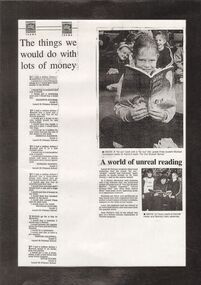
... ...Dr June Factor...Golden Square Primary School 1189 Collection - Newspaper Cuttings Michael Donaldson Dr June Factor 'Far Out Brussel Sprout' 'Alright Vegemite' 'Unreal Banana Peel' 'Real Keen Baked Bean' School Library Association of Victoria Hannah Hoiles Belinda Oaks Bronwyn Bourke Rebecca Rainbow Howard Hawkey Shannon Bayliss Trevor Caldwell Kylie Kalms Two newspaper cuttings, one with two photos. ...Two newspaper cuttings, one with two photos. One photo shows Michael Donaldson reading from Dr Factor's book, 'Far Out Brussel Sprout' and the other photo shows Dr Factor reading to Hannah Hoiles and Belinda Oaks. There is a short article about Dr Factor's visit. The other article is titled The things we would do with lots of money. Grade 2 and 3 pupils, Bronwyn Bourke, Rebecca Rainbow, Howard Hawkey, Shannon Bayliss, Trevor Caldwell and Kylie Kalms, were asked what they would do with a million dollars.education, primary, golden square laurel st p.s., golden square primary school 1189 collection - newspaper cuttings, michael donaldson, dr june factor, 'far out brussel sprout', 'alright vegemite', 'unreal banana peel', 'real keen baked bean', school library association of victoria, hannah hoiles, belinda oaks, bronwyn bourke, rebecca rainbow, howard hawkey, shannon bayliss, trevor caldwell, kylie kalms -
 Kadimah Jewish Cultural Centre and National Library
Journal, Kadimah Jewish Cultural Centre and National Library, Melbourner Bleter / Melbourne Chronicle August 1979, ADD DATE
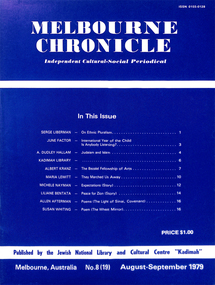
... ...June Factor...Serge I. Liberman June Factor A. Dudley Hallam Albert Kranz Maria Lewitt Michelle Nayman Liliane Bentata Allen Afterman Susan Whiting M. ...Journal published by the Kadimah Jewish Cultural Centre and National Library, Melbourne. Contains essays, reviews, fiction and poetry in both English and Yiddish.44 pages, A4, Softbound, Paper covers. non-fictionJournal published by the Kadimah Jewish Cultural Centre and National Library, Melbourne. Contains essays, reviews, fiction and poetry in both English and Yiddish.serge i. liberman, june factor, a. dudley hallam, albert kranz, maria lewitt, michelle nayman, liliane bentata, allen afterman, susan whiting, m. ajzenbud, i. orbach, mark kh., seth lipski, l. friedman, m. eysenbud, moshe kulbak, i. m. lewin, dovid matis, guter goldberg, i. kersh, mes, sh. bennett -
 Kadimah Jewish Cultural Centre and National Library
Journal, Kadimah Jewish Cultural Centre and National Library, Melbourner Bleter / Melbourne Chronicle August/September 1982, ADD DATE
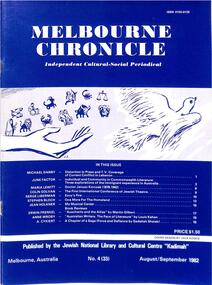
... ...June Factor...Moshe Ajzenbud Serge Liberman Michael Danby June Factor Maria Lewitt Colin Golvan Stephen Block Jean Holkner Erwin Frenkel Anne Wroby A Cykiert Journal published by the Kadimah Jewish Cultural Centre and National Library, Melbourne. ...Journal published by the Kadimah Jewish Cultural Centre and National Library, Melbourne. Contains essays, reviews, fiction and poetry in both English and Yiddish.48 pages, A4, Softbound, Paper covers. non-fictionJournal published by the Kadimah Jewish Cultural Centre and National Library, Melbourne. Contains essays, reviews, fiction and poetry in both English and Yiddish.moshe ajzenbud, serge liberman, michael danby, june factor, maria lewitt, colin golvan, stephen block, jean holkner, erwin frenkel, anne wroby, a cykiert -
 The Beechworth Burke Museum
Geological specimen - Azurite, Unknown
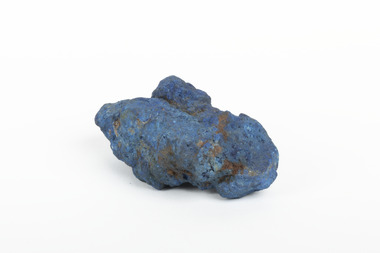
... These were factors in Cobar facing a long stretch of poverty, until a boom in the 1960s led to the reopening of the mine. The mine still operates today, obtained by Metals Acquisition Limited in June 2023. ...These were factors in Cobar facing a long stretch of poverty, until a boom in the 1960s led to the reopening of the mine. The mine still operates today, obtained by Metals Acquisition Limited in June 2023. ...Azurite is a secondary copper mineral made by the weathering of copper sulphide ore deposits. Azurite is formed from copper, carbon, oxygen and hydrogen. There are over 45 forms of azurite that are more well-known, however over 100 forms have been found. Azurite is also commonly found together with Malachite, and Azurite is often psuedomorphed to Malachite. This specimen was found at the Great Cobar Copper Mine in New South Wales, which was founded in 1870. At the time it was one of the largest mining operations in the world. It was the largest copper mine in Australia and housed the southern hemisphere’s tallest chimney stack. The international price of copper collapsed at the end of World War 1 which led to the closure of the Great Cobar Mine on March 16th 1919. A year later on March 10th 1920 an underground fire in the CSA (Cornish, Scottish, Australian) mine started and burned for 16 years. The closure of the mine and the fire left thousands jobless and many people left the area. These were factors in Cobar facing a long stretch of poverty, until a boom in the 1960s led to the reopening of the mine. The mine still operates today, obtained by Metals Acquisition Limited in June 2023. Azurite is considered an uncommon mineral. Named for its deep blue colour, azurite was historically used for pigment making and as a gemstone, despite its softness. This specimen was donated to the Burke Museum between 1868-1880 as part of a larger collection of geological and mineral specimens. Many of the specimens in this collection were obtained as part of the Geological Survey of Victoria, which started in 1852. The Survey aimed to map the scientific makeup of the earth.A solid copper mineral with shades of darker blues almost covering it.burke museum, beechworth, indigo shire, beechworth museum, geological, geological specimen, mineralogy, cobar mines, great cobar copper mine, cobar mining, new south wales, azurite, azurite specimen -
 Kiewa Valley Historical Society
West Kiewa Alpine Way and Day Ski Resort
... In June 1982 This research report on the West Kiewa Alpine Way Proposal was sent to the Mt Beauty Chamber of Commerce. "The economic, tourist market and geographic factors are the kernel of the proposal." ...In June 1982 This research report on the West Kiewa Alpine Way Proposal was sent to the Mt Beauty Chamber of Commerce. "The economic, tourist market and geographic factors are the kernel of the proposal." ...In June 1982 This research report on the West Kiewa Alpine Way Proposal was sent to the Mt Beauty Chamber of Commerce. "The economic, tourist market and geographic factors are the kernel of the proposal." From Industrial Relocations Consultants Pty. Ltd.The proposal was to benefit the tourism industry.Manila foolscap folder with metal fastener. Papers dated June 1982 re - "Proposed West Kiewa Alpine Way and Day Ski Resort" Also enclosed but not related: Letter from Falls Creek Tourist Area Management Committee July 1984B. Goss written on coverwest kiewa alpine way, day ski resort, mt beauty chamber of commerce -
 Monbulk RSL Sub Branch
Book, Cassell, Kohima, 1966
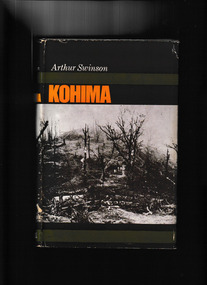
... June the Japanese were in headlong retreat. Kohima ranks for strategic importance with Alamein, Midway and Stalingrad. The increasing dominance of Allied airpower in the region in the aftermath of the battle was a major factor. ...On 7 March 1944 Tokyo announced that the Japanese invasion of British India had begun. By mid-month, the Japanese 31st Division had crossed the Chindwin River in northern Burma, advancing on a wide front towards Imphal and Kohima. In bitter jungle fighting from early April, the British Fourteenth Army under Field Marshal Slim held the Japanese assault on Kohima Ridge. By late June the Japanese were in headlong retreat. Kohima ranks for strategic importance with Alamein, Midway and Stalingrad. The increasing dominance of Allied airpower in the region in the aftermath of the battle was a major factor.Index, bibliography, ill, maps, p.275.non-fictionOn 7 March 1944 Tokyo announced that the Japanese invasion of British India had begun. By mid-month, the Japanese 31st Division had crossed the Chindwin River in northern Burma, advancing on a wide front towards Imphal and Kohima. In bitter jungle fighting from early April, the British Fourteenth Army under Field Marshal Slim held the Japanese assault on Kohima Ridge. By late June the Japanese were in headlong retreat. Kohima ranks for strategic importance with Alamein, Midway and Stalingrad. The increasing dominance of Allied airpower in the region in the aftermath of the battle was a major factor. kohima - siege - 1944, world war 1939-1945 - land operations - india -
 Bendigo Historical Society Inc.
Document - BILL ASHMAN COLLECTION: THE ELECTRICAL FACTOR IN RENAL METABOLISM (SECTION 4 ), 1941
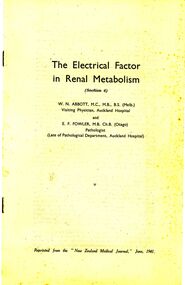
... 123 copies of a small 8 page booklet titled, The Electrical Factor in Renal Metabolism (Section 4) reprinted from the New Zealand Medical Journal June 1941....SCIENCES Instruments - general scalebuoy W N Abbott & E F Fowler 123 copies of a small 8 page booklet titled, The Electrical Factor in Renal Metabolism (Section 4) reprinted from the New Zealand Medical Journal June 1941. ...123 copies of a small 8 page booklet titled, The Electrical Factor in Renal Metabolism (Section 4) reprinted from the New Zealand Medical Journal June 1941.W N Abbott & E F Fowlersciences, instruments - general, scalebuoy -
 Bendigo Historical Society Inc.
Document - BILL ASHMAN COLLECTION: W.N.ABBOTT MEDICAL RESEARCH PAPER
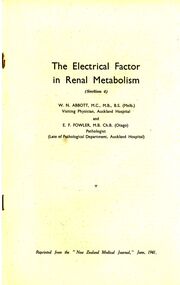
... 11 copies of a research paper, The Electrical Factor in Renal Metabolism (Section 4) by W.N. Abbott and E.F. Fowler, reprinted from the New Zealand Medical Journal June 1941....MEDICAL New Zealand Medical Journal 11 copies of a research paper, The Electrical Factor in Renal Metabolism (Section 4) by W.N. Abbott and E.F. Fowler, reprinted from the New Zealand Medical Journal June 1941. ...11 copies of a research paper, The Electrical Factor in Renal Metabolism (Section 4) by W.N. Abbott and E.F. Fowler, reprinted from the New Zealand Medical Journal June 1941.medical, new zealand medical journal -
 Ballarat Tramway Museum
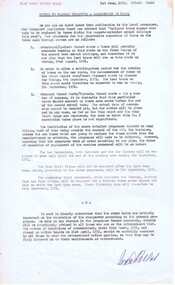
Administrative record - Memorandum, State Electricity Commission of Victoria (SECV), "Notice to Tramway Employees - Abandonment of Trams", 1/06/1971 12:00:00 AM
... June 1971. Outlining proposed dates for the closure of the tramway in stages and the tentative nature of this, depending on bus deliveries, school terms and other factors. ...June 1971. Outlining proposed dates for the closure of the tramway in stages and the tentative nature of this, depending on bus deliveries, school terms and other factors. ...Yields information about the arrangements at 1 June for the phased closure of the tramway and the external influences that were part of it., Yields information about the arrangements at 1 June for the phased closure of the tramway and the external influences that were part of it.Typed memo, both carbon copy and original, on a single sheet, titled "Notice to Tramway Employees - Abandonment of Trams", dated 1st June 1971. Outlining proposed dates for the closure of the tramway in stages and the tentative nature of this, depending on bus deliveries, school terms and other factors. Note that Sebastopol was the first to close in this memo. Signed in ink by Ivan Pellas as Manager. Has "Tram Depot Notice Board" typed in red in top left hand corner.trams, tramways, closure, ballarat, sec, depot, buses -
Ballarat Tramway Museum
Administrative record - SECV Ballarat Power Stations, State Electricity Commission of Victoria (SECV), "Units Book", 1949 to 1956
... June 1956. For each month records power generated, load factors, maximum demands, traction power, public lighting, domestic, industrial, and commercial, and total sales excluding that power used by the SECV themselves in offices, workshops, stores, and for auxiliary equipment at the power stations. ...June 1956. For each month records power generated, load factors, maximum demands, traction power, public lighting, domestic, industrial, and commercial, and total sales excluding that power used by the SECV themselves in offices, workshops, stores, and for auxiliary equipment at the power stations. ...Contains entries for the monthly records of Units generated and consumed in the Ballarat SECV district from Nov. 1949 to June 1956. For each month records power generated, load factors, maximum demands, traction power, public lighting, domestic, industrial, and commercial, and total sales excluding that power used by the SECV themselves in offices, workshops, stores, and for auxiliary equipment at the power stations. First entry for Ballarat B Power Station Sept, 1953. See item 9543 for the July 1956 to Dec. 1962.Demonstrates record keeping of the units generated and sent out (sold) of the two Ballarat Power stations.Printed as a Minute book - 136 ruled pages + heavy card cover, red tape binding on the outside, six sections, bound, with additional red and blue ink columns. tramways, ballarat power supply, ballarat a power station, ballarat b power station, secv, electricity generation -
Ballarat Tramway Museum
Administrative record - SECV Ballarat Power Stations, State Electricity Commission of Victoria (SECV), "Units Book", 1956 to 1962
... For each month to July 1960, records power generated, load factors, maximum demands, traction power, public lighting, domestic, industrial, and commercial, and total sales and for auxiliary equipment at the power stations. From August 1960 to Dec. 1962 duplicated sheets titled "Energy Statistics" that do not give data for sales. See item 9542 for data from Nov. 1949 to June...For each month to July 1960, records power generated, load factors, maximum demands, traction power, public lighting, domestic, industrial, and commercial, and total sales and for auxiliary equipment at the power stations. From August 1960 to Dec. 1962 duplicated sheets titled "Energy Statistics" that do not give data for sales. See item 9542 for data from Nov. 1949 to June ...Contains entries for monthly records of Units generated and consumed in the Ballarat SECV district from July 1956. For each month to July 1960, records power generated, load factors, maximum demands, traction power, public lighting, domestic, industrial, and commercial, and total sales and for auxiliary equipment at the power stations. From August 1960 to Dec. 1962 duplicated sheets titled "Energy Statistics" that do not give data for sales. See item 9542 for data from Nov. 1949 to June 1956. Ballarat A Power Station not recorded generating during Dec. 1956 then not every month during 1957. Some use during the winter of 1958. Last recorded used was during June 1959.Demonstrates record keeping of the units generated and sent out (sold) of the two Ballarat Power stations.Printed as an Account book - approx 136 ruled pages + heavy card cover, blue tape binding on the outside, five sections, bound, with additional red and blue ink columns with many loose duplicated foolscap sheets.tramways, ballarat power supply, ballarat a power station, ballarat b power station, secv, electricity generation -
 Ballarat Tramway Museum
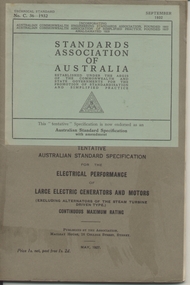
Book, Australian Commonwealth Engineering Standards Association, "Electrical Performance of Large Electric Generators and Motors - Continuous Maximum Rating", "Pressboard for Electrical Purposes", "Hard Drawn copper stranded circular conductors for overhead power transmission purposes", "for Indicating Ammeters, Voltmeters, wattmeters, frequency and power factor meters", "Instrument Transformers", "Liquid Starters for Electric Motors", "Star Delta switch starters for Electric Motors", "Multiple switch starters for Electric Motors", 1926-1933
... .1 - Book - 56 pages + grey covers, side stapled, issued by the Australian Commonwealth Engineering Standards Association, Tentative Australian Standard - "Electrical Performance of Large Electric Generators and Motors - Continuous Maximum Rating" - C36-1927, May 1927 with a green label dated September 1932 advised that the tentative standard has been endorsed as a Standard with amendment. .2 - Book - 48 pages + grey covers, side stapled, issued by the Australian Commonwealth Engineering Standards Association, Tentative Australian Standard - "Electrical Performance of Alternators of the Steam Driven Type" - C38-1927 - December 1927 with a green label dated September 1932 advised that the tentative standard has been endorsed as a Standard with amendment. .3 - Book - 32 pages + grey covers, side stapled, issued by the Australian Commonwealth Engineering Standards Association, Tentative Australian Standard - "Electricity Meters" C39-1927, August 1927. .4 - Book - 28 pages + grey covers, side stapled, issued by the Australian Commonwealth Engineering Standards Association, Tentative Australian Standard - "Pressboard for Electrical Purposes" - C40-1927, January 1927. .5 - Book - 24 pages + grey covers, side stapled, issued by the Australian Commonwealth Engineering Standards Association, Tentative Australian Standard - "Hard Drawn copper stranded circular conductors for overhead power transmission purposes" C41-1930, August 1927, with a green label dated October 1932 advised that the tentative standard has been endorsed as a Standard with amendment. .6 - Book - 48 pages + grey covers, side stapled, issued by the Australian Commonwealth Engineering Standards Association, Tentative Australian Standard "for Indicating Ammeters, Voltmeters, wattmeters, frequency and power factor meters" - C42-1927 - December 1927, with a green label dated October 1932 advised that the tentative standard has been endorsed as a Standard with amendment. .7 - Book - 32 pages + grey covers, side stapled, issued by the Australian Commonwealth Engineering Standards Association, Tentative Australian Standard - "Instrument Transformers" - C45-1928, June 1928. .8 - Book - 28 pages + grey covers, side stapled, issued by the Australian Commonwealth Engineering Standards Association, Australian Standard "Liquid Starters for Electric Motors" C46-1927, December 1927. .9 - Book - 20 pages + grey covers, side stapled, issued by the Australian Commonwealth Engineering Standards Association, Australian Standard "Star Delta switch starters for Electric Motors" C47-1927, December 1927. .10 - Book - 24 pages + grey covers, side stapled, issued by the Australian Commonwealth Engineering Standards Association, Australian Standard "Multiple switch starters for Electric Motors" C48-1927, December 1927. ...Trams tramways Power Station Standards Materials Electrical Systems On top right hand corner has the date stamp of the "The Electric Supply Co. of Victoria Ltd Ballarat" .1 - Book - 56 pages + grey covers, side stapled, issued by the Australian Commonwealth Engineering Standards Association, Tentative Australian Standard - "Electrical Performance of Large Electric Generators and Motors - Continuous Maximum Rating" - C36-1927, May 1927 with a green label dated September 1932 advised that the tentative standard has been endorsed as a Standard with amendment. .2 - Book - 48 pages + grey covers, side stapled, issued by the Australian Commonwealth Engineering Standards Association, Tentative Australian Standard - "Electrical Performance of Alternators of the Steam Driven Type" - C38-1927 - December 1927 with a green label dated September 1932 advised that the tentative standard has been endorsed as a Standard with amendment. .3 - Book - 32 pages + grey covers, side stapled, issued by the Australian Commonwealth Engineering Standards Association, Tentative Australian Standard - "Electricity Meters" C39-1927, August 1927. .4 - Book - 28 pages + grey covers, side stapled, issued by the Australian Commonwealth Engineering Standards Association, Tentative Australian Standard - "Pressboard for Electrical Purposes" - C40-1927, January 1927. .5 - Book - 24 pages + grey covers, side stapled, issued by the Australian Commonwealth Engineering Standards Association, Tentative Australian Standard - "Hard Drawn copper stranded circular conductors for overhead power transmission purposes" C41-1930, August 1927, with a green label dated October 1932 advised that the tentative standard has been endorsed as a Standard with amendment. .6 - Book - 48 pages + grey covers, side stapled, issued by the Australian Commonwealth Engineering Standards Association, Tentative Australian Standard "for Indicating Ammeters, Voltmeters, wattmeters, frequency and power factor meters" - C42-1927 - December 1927, with a green label dated October 1932 advised that the tentative standard has been endorsed as a Standard with amendment. .7 - Book - 32 pages + grey covers, side stapled, issued by the Australian Commonwealth Engineering Standards Association, Tentative Australian Standard - "Instrument Transformers" - C45-1928, June 1928. .8 - Book - 28 pages + grey covers, side stapled, issued by the Australian Commonwealth Engineering Standards Association, Australian Standard "Liquid Starters for Electric Motors" C46-1927, December 1927. .9 - Book - 20 pages + grey covers, side stapled, issued by the Australian Commonwealth Engineering Standards Association, Australian Standard "Star Delta switch starters for Electric Motors" C47-1927, December 1927. .10 - Book - 24 pages + grey covers, side stapled, issued by the Australian Commonwealth Engineering Standards Association, Australian Standard "Multiple switch starters for Electric Motors" C48-1927, December 1927. ....1 - Book - 56 pages + grey covers, side stapled, issued by the Australian Commonwealth Engineering Standards Association, Tentative Australian Standard - "Electrical Performance of Large Electric Generators and Motors - Continuous Maximum Rating" - C36-1927, May 1927 with a green label dated September 1932 advised that the tentative standard has been endorsed as a Standard with amendment. .2 - Book - 48 pages + grey covers, side stapled, issued by the Australian Commonwealth Engineering Standards Association, Tentative Australian Standard - "Electrical Performance of Alternators of the Steam Driven Type" - C38-1927 - December 1927 with a green label dated September 1932 advised that the tentative standard has been endorsed as a Standard with amendment. .3 - Book - 32 pages + grey covers, side stapled, issued by the Australian Commonwealth Engineering Standards Association, Tentative Australian Standard - "Electricity Meters" C39-1927, August 1927. .4 - Book - 28 pages + grey covers, side stapled, issued by the Australian Commonwealth Engineering Standards Association, Tentative Australian Standard - "Pressboard for Electrical Purposes" - C40-1927, January 1927. .5 - Book - 24 pages + grey covers, side stapled, issued by the Australian Commonwealth Engineering Standards Association, Tentative Australian Standard - "Hard Drawn copper stranded circular conductors for overhead power transmission purposes" C41-1930, August 1927, with a green label dated October 1932 advised that the tentative standard has been endorsed as a Standard with amendment. .6 - Book - 48 pages + grey covers, side stapled, issued by the Australian Commonwealth Engineering Standards Association, Tentative Australian Standard "for Indicating Ammeters, Voltmeters, wattmeters, frequency and power factor meters" - C42-1927 - December 1927, with a green label dated October 1932 advised that the tentative standard has been endorsed as a Standard with amendment. .7 - Book - 32 pages + grey covers, side stapled, issued by the Australian Commonwealth Engineering Standards Association, Tentative Australian Standard - "Instrument Transformers" - C45-1928, June 1928. .8 - Book - 28 pages + grey covers, side stapled, issued by the Australian Commonwealth Engineering Standards Association, Australian Standard "Liquid Starters for Electric Motors" C46-1927, December 1927. .9 - Book - 20 pages + grey covers, side stapled, issued by the Australian Commonwealth Engineering Standards Association, Australian Standard "Star Delta switch starters for Electric Motors" C47-1927, December 1927. .10 - Book - 24 pages + grey covers, side stapled, issued by the Australian Commonwealth Engineering Standards Association, Australian Standard "Multiple switch starters for Electric Motors" C48-1927, December 1927. On top right hand corner has the date stamp of the "The Electric Supply Co. of Victoria Ltd Ballarat" trams, tramways, power station, standards, materials, electrical systems -
Whitehorse Historical Society Inc.
Document - School Project, Nunawading High School, 15/06/1988
... Factors which brought about a need for a new school in the Forest Hill area in the 1950s. VCE / HSC Australian History option, June 1988. ...Nunawading High School Secondary schools Forest Hill Factors which brought about a need for a new school in the Forest Hill area in the 1950s. VCE / HSC Australian History option, June 1988. ...Factors which brought about a need for a new school in the Forest Hill area in the 1950s. VCE / HSC Australian History option, June 1988. Submitted for Nunawading City Council History and Heritage Bicentennial Essay competition.nunawading high school, secondary schools, forest hill -
Whitehorse Historical Society Inc.
Document - School Project, Nunawading High School, 15/06/1988
... Factors which brought about a need for a new high school in the Forest Hill area in the 1950s. VCE / HSC Australian History option, June 1988. ...Nunawading High School Secondary schools Forest Hill Da Costa Hilary Factors which brought about a need for a new high school in the Forest Hill area in the 1950s. VCE / HSC Australian History option, June 1988. ...Factors which brought about a need for a new high school in the Forest Hill area in the 1950s. VCE / HSC Australian History option, June 1988. Submitted for Nunawading City Council History and Heritage Bicentennial History Competition.nunawading high school, secondary schools, forest hill, da costa, hilary -
 City of Melbourne Libraries
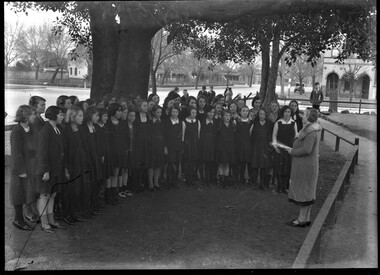
Photograph (item), Bull, Hugh Jones, 1897-1993, Miss Ida Park conducts the North Fitzroy State School Choir
... factors to the excellence of stage presentations, staging, costumes, decor and, of course, the actual choice of artists.” The bedazzling ensemble of 40 high-kicking, feathered and sequinned showgirls were advertised as the “Fabulous Lido girls and the controversial Baretop Lido Goddesses” who were described as “Statuesque Beauty as Nature intended” and “…a host of glamorous gals whose favourite shade is flesh pink.” Some of the acts who performed at the Lido were- -Broken Hill’s own - opera singer June...factors to the excellence of stage presentations, staging, costumes, decor and, of course, the actual choice of artists.” The bedazzling ensemble of 40 high-kicking, feathered and sequinned showgirls were advertised as the “Fabulous Lido girls and the controversial Baretop Lido Goddesses” who were described as “Statuesque Beauty as Nature intended” and “…a host of glamorous gals whose favourite shade is flesh pink.” Some of the acts who performed at the Lido were- -Broken Hill’s own - opera singer June ...The pupils of Falconer Street Central School No.3918 in North Fitzroy rehearse with conductress Miss Ida Park for their performance at the Temperance Hall, Russell Street Melbourne with proceeds going to the Lord Mayor’s Fund. The house on the right of the photograph is Jubilee House, 126 Michael Street North Fitzroy and is extant. Photographer notations on slide: Choir At Fitzroy State School 1933 B5 While this photograph appears not to have been published, a photograph taken from a different angle of the same event was published in The Age 21 July 1933. SCHOOL CHILDREN SING IN THE OPEN AIR. “A choir of children at North Fitzroy practise their songs for a Pantomime, to be given in the Temperance Hall for the Lord Mayor's Fund on Wednesday next. On the extreme left is the conductress of the Choir (Miss Ida Park).” Reference: http://nla.gov.au/nla.news-article204368572 Research by project volunteer, Fiona Collyer: Children of The Falconer Street Central School Choral Society, trained by conductress Miss Ida Park, along with dance and gymnastics pupils of Misses Dorothy Gibb and Inez Ellis, performed in the “Cinderella” pantomime at the Temperance Hall in Russell Street, Melbourne on 26 July, 1933. The proceeds went to the Lord Mayor’s Fund. Conductress Miss Ida Park (1904- 1952) lived in the North Fitzroy and Clifton Hill area all her life. She was immersed in the music world of Melbourne and was a member of the Musical Society of Victoria. Ida graduated from Melbourne University Conservatorium with a Bachelor of Music degree in 1929 before departing for London where she studied piano and organ at the Royal Academy of Music. Ida returned to Melbourne in 1931, and billed as “The Gifted Young Australian Pianist”, held pianoforte recitals of classical music at Assembly Hall, Collins Street. She also played the organ for services at St Paul’s Independent Church in Delbridge Street, North Fitzroy and later St Luke’s, North Fitzroy. Ida conducted the children of the Falconer Street Central School Choral Society as they competed in the State School Choral Championships and the 85 children of the Fitzroy City Centenary Choir who sang at Melbourne’s Centenary celebrations of 1934/35. In 1945, Ida married Charles Hazeldine, a tenor and returned digger who had served in two world wars. The pair performed together in many concerts over the years. Tragically, both Ida and Charles were badly injured when struck by a car while crossing Queens Parade Clifton Hill in June 1952, with Ida dying from head injuries at St Vincent’s Hospital soon after. She was 48 years old. Charles wrote on Ida’s death notice - “Called home.” The choir were pupils of Falconer Street Central School No. 3918 in North Fitzroy which was built in 1915 to provide upper primary education for grades 5 to 8 for the area. In 1957 it became Fitzroy High School. In 1992, the Kennett Government swept to power, embarking on a program of fiscal austerity and privatisation of government services. 390 government schools were closed, with the land proposed to be sold to developers. 7000 teachers were sacked: 10% of Victoria’s public school teachers. Auxiliary school staff also lost their jobs. Amongst the first to close was Fitzroy High School. Fearful that the land would be sold, hundreds of students, parents, teachers and local residents occupied the building around-the-clock in four hour shifts and overnight for 14 months, sleeping on gym mats in the principal’s office and administrators’ wing. The blockade was lifted when a arrangement was reached to allow Kangan Batman TAFE to use the school from 1993 until 1998. With the election of the Bracks Government in 1999, and construction of new buildings, Fitzroy High School was reopened in 2004 after a 12 year battle. Temperance Hall, at 172 Russell Street, where the children performed “Cinderella”, was built in 1872 by the Melbourne Total Abstinence Society as a venue for lectures, meetings and alcohol-free community concerts and events. From 1934, Temperance Hall was fitted out as a cinema and renamed the Imperial Theatre, showing popular Hollywood films, before closing in 1939 for renovations and reopening as the Savoy Theatre, Melbourne’s first “Continental” talkies cinema. At this time, Australian cinema programming was dominated by American and British films. The lessees, Continental Film Art Theatre began negotiating for theatre properties in Melbourne, Sydney, Adelaide, Brisbane, Perth and Auckland to screen foreign language films, hoping to present the finest productions from France, Germany, Holland and Italy. At the cost of £6000, the theatre was fitted with the latest Mirrophonic sound and projection system and enlarged to seat 800 patrons with luxurious, ultra modern fittings and furnishings in a colour palette of rust and beige. Instead of usherettes, General Manager Peter Dawson, hoping to bring a sophisticated European atmosphere to the theatre, employed attractive, multilingual “Continental hostesses” to assist guests (not patrons) and answer queries relating to the films. Collectively the hostesses spoke English, French, Dutch, German, Russian and Italian. The Age 20 May 1939- “Atmosphere is a very important part of the theatre's scheme. Ushers in the ordinary sense will not be employed; hostesses will look upon patrons as guests. They will be dressed in full evening dress, and the only indication that they are not guests is the little medallion pinned to their evening dress, on which their names are inscribed.” The hostesses were dressed in evening gowns of olive-green velvet, the full skirts embroidered with gold loops, wine velvet bolero jackets and long white kid gloves with silvery tiaras in their hair. For guests worried that they may not understand the plot, the management assured patrons that- “By means of superimposed English translations on the bottom of the screen, the dialogue is perfectly understandable and the whole witty story can be followed with ease.” The Gala opening of the Savoy Theatre, on 31 May 1939 was attended by a “who’s who” of Melbourne Society, the women wearing beautiful gowns, headdresses and furs. Amongst the guests were former premier Sir Stanley Argyle and Lady Argyle, former Lord Mayor Sir Harold Gengoult-Smith and his wife Cynthia, Field Marshall Thomas Blamey and Lady Blamey and Miss Jessie Brookes. The Vice Consul for France, Monsieur Frank Puaux and his wife attended, Madame Puaux dressed in a black satin gown and a musquash fur cape. She was presented with a beautiful bouquet of scarlet carnations and lily of the valley tied with the tricolour of France. In his speech Monsieur Puaux stated that “from the cultural, linguistic and artistic points of view it was excellent that the Australian public should have an opportunity to see foreign film in the original language.” “Letty” writing in Table Talk magazine described the atmosphere of “Continental” gaiety that had permeated Melbourne - “The Letters of Letty”, Table Talk 8 June 1939 “The “foreign influence” is definitely obtruding itself into the even tenor of Melbourne life these days…. but in the pleasantest manner possible! Included in the great number of Continental people who have recently made their homes here, we have stars of the Russian ballet settling in our midst…. and now… we have been presented with our own Continental picture theatre in the attractive shape of The Savoy, which opened its doors on Wednesday night for the exclusive release of foreign films. One could hardly recognise the old Temperance Hall in its adaptation to the smart, comfortable and thoroughly-intriguing Savoy Theatre. Where once this rather draughty old building stood in Russell Street there now greets us an unmistakable “Continental” edifice, living up to its exterior by sustaining within its walls its overseas’ atmosphere. Indeed, one feels as though one has crossed the threshold into a European city, stepping out of the unmistakably Australian street that is Russell into The Savoy lounge to be greeted by polite “messieurs” from the attractive, Continental-looking usherettes and to gaze upon a film as delightfully French in story and presentation as “La Kermesse Heroique.” But successful though “La Kermesse Heroique” proved on its initial presentation inside the theatre, the debut was no more triumphal than that made by the winning and pretty little French lass who had charge of the booking office outside in the foyer. With her attractive accent and Continental flair for making one “feel at home” she was undoubtedly one of the hits of the night-especially with the susceptible males, who spent very much longer in the lounge than is customary, racking their brains for excuses for making conversation with the attractive Parisienne! Those French girls certainly have a way with them!” The opening film, the 1935 French comedy “La Kermesse Heroique”, (The Heroic Sex) starring Francoise Rosay and Jean Murat (film now called “Carnival in Flanders”) was the winner of the Grand Prix du Cinema Francais as the finest picture of 1936 and described in the advertisement as “The Gay French Comedy of Laughter and Romance” The film is set during the 17th century Spanish occupation of Flanders in the Flemish town of Boom at the time of their annual festival. Hearing news of a pending visit to Boom by the commander, the Duke of Olivares and his army, and fearing rape and pillage, the boorish burgomaster feigns his own death, hoping the Spaniards will bypass the grieving town out of respect. The army arrives and the cowardly men of the town flee. The womenfolk decide on a different approach. Lead by the burgomaster’s beautiful wife Cornelia, they set out to to preserve the peace with grace and hospitality only to find the Spaniards attractive and virile, unlike their own husbands. The Sun newspaper described the film as “Mellow as a Stilton cheese, and as ripely suited to adult taste.” Preceding “La Kermesse Heroique” was a Gaumont British newsreel of King George VI and Queen Elizabeth departing for a tour of Canada and the Soviet documentary “Nine Months on a Drifting Ice Floe” During the war “Continental” films became difficult to source, so the Savoy screened Hollywood movies and held fund raisers for the war effort. After World War Two, the Savoy continued to screen “Continental” films, catering to post-war immigrants from Europe and bohemian Melburnians. In 1953, the Savoy had a wildly popular season with queues winding around the block to see Swedish summer romance “One Summer of Happiness” (Hon dansade en sommar) with its nude swimming scenes. The Chief Commonwealth Censor declined to cut the film on the grounds that although it displayed nudity, it was genuinely artistic. According to Wikipedia, film director Fred Schepisi was first exposed to European films such as “Bicycle Thieves”, “Rocco and His Brothers” and “The Wages of Fear” at the Savoy as a teenager, leading to his long career in filmmaking. In 1955, in response to the massive rise in car ownership, the Melbourne City Council recommended that parking stations be built on every block. The Savoy Theatre and adjacent buildings, which included the Golden Fleece Hotel were demolished in 1963 and replaced with Total House, a Brutalist commercial building consisting of a seven storey car park crowned by a four storey office block, shops at street level, and a basement theatre which housed the Lido Theatre Restaurant-Cabaret from 1965. The building was designed by architectural firm Bogle & Banfield Associates and named for the original tenant of the offices, French oil company, Total Oil Products P/L. The Lido Theatre Restaurant was managed by former Tivoli dancer and promoter David Hamilton McIlwraith, presenting dinner and a glamorous cabaret floor show of showgirls, (some topless) to accompany variety acts by local and international actors, singers, comedians and magicians. The interior of the Lido was opulently decorated in deep, lush green with old world gold trim and chandeliers. Handily, patrons could enter and leave via an elevator, straight from the building’s own car park! A four course gourmet dinner with show and dancing cost $8.00 in 1968. The Lido advertised in 1966 that “Every visitor to Melbourne soon discovers the brightest entertainment spot in the Southern Hemisphere with its million dollar decor, dining delights and spectacular stage productions.” Australian Jewish News - 21 April 1967 - “Superb decor and atmosphere, cuisine and service have been readily recognised as the contributing factors to the excellence of stage presentations, staging, costumes, decor and, of course, the actual choice of artists.” The bedazzling ensemble of 40 high-kicking, feathered and sequinned showgirls were advertised as the “Fabulous Lido girls and the controversial Baretop Lido Goddesses” who were described as “Statuesque Beauty as Nature intended” and “…a host of glamorous gals whose favourite shade is flesh pink.” Some of the acts who performed at the Lido were- -Broken Hill’s own - opera singer June Bronhill -1967. -Versatile singer Lovelace Watkins known as “Black Sinatra - 1967. -“Queen of the five-fingered boogie", honky-tonk and rollicking rag-time pianist, Winifred Atwell - 1967. -New Zealand pop duo, Bill and Boyd -1968. -American actress and soprano Kathryn Grayson -1968. -Denise Drysdale in “Say It With Music” -1968. -“Catwoman” Eartha Kitt -1969. -Internationally recognised female impersonator, Sydneysider Tracey Lee, (Maxwell Richie) billed as "controversial impressionist and singing personality from the famous Carousel Nightspot in Paris". -Frances Faye, American comedienne and show-tune singer and pianist-1969. -“Cry Guy” histrionic singer Johnnie Ray -1970. -Risqué revue “Oh Calcutta!” with some segments and the “four letter” words removed-1970. In 1970, under new management, the Lido was renovated with claret and gold wallpaper, midnight blue ceiling and a computerised fountain with fairy lights and relaunched by “The Tigress from Tiger Bay”, Shirley Bassey. The relaunch was short lived however, as later that year the venue became El Toro Espana, a Spanish restaurant and nightclub offering a four course meal for $4.50 while you watched the floorshow. The venue then briefly became the Red Garter Music Hall Theatre from 1972, then in 1974 the site became the 600 seat Total Theatre comprising of a cinema with a stage for live acts. There were also three bars to choose from - the Crush Bar, the Bleachers and the Snake Pit. Total Theatre had the unusual concept of a live music act, or plays, musicals and magicians followed by a film. In 1975 soprano Suzanne Steele featured, followed by the film “The Voyage” starring Sophia Loren and Richard Burton. In 1975, the Total held a rock film festival showing a Jimi Hendrix documentary, “Monterey Pop Festival”, “Pink Floyd in Pompeii” and more. In 1976, 17 year old Chrissy Amphlett, later of rock band Divinyls, played the role of Linda Lips for nine months in the Australian stage production of R-rated “sexual musical”, “Let My People Come” at the Total Theatre. The Total Theatre closed in 1979 and from 1980 to 2014 the venue became Billboard Nightclub, hosting local and international acts, including INXS, Tina Turner and John Farnham, and in 2009, 18 year old Taylor Swift. The venue is now called 170 Russell and presents hundreds of live local and international acts every year. In 2014, after being under threat of demolition, Total House was listed on the Victorian Heritage Register as “a landmark of post-World War II modernist design and…one of the earliest and best expressions of Brutalist architecture in Victoria”. References: RICHARD CROOKS ARRIVES SCHOOL AGAIN VENUE OF ROYAL VISIT (1939, May 31). The Age (Melbourne, Vic. : 1854 - 1954), p. 17. Retrieved November 21, 2025, from http://nla.gov.au/nla.news-article205629696 AMUSEMENTS. (1933, July 27). The Age (Melbourne, Vic. : 1854 - 1954), p. 12. Retrieved September 19, 2025, from http://nla.gov.au/nla.news-article204378853 https://larzra.wordpress.com/origins/ CONTINENTAL HOSTESSES, (1939, May 31). The Sun News-Pictorial (Melbourne, Vic. : 1922 - 1954; 1956), p. 27. Retrieved November 21, 2025, from http://nla.gov.au/nla.news-article278189387 The Letters of Letty (1939, June 8). Table Talk (Melbourne, Vic. : 1885 - 1939), p. 12. Retrieved October 29, 2025, from http://nla.gov.au/nla.news-article149320966 SAVOY THEATRE (1939, June 1). The Age (Melbourne, Vic. : 1854 - 1954), p. 7. Retrieved September 19, 2025, from http://nla.gov.au/nla.news-article205639035 NEW THEATRE OPENED (1939, June 1). The Argus (Melbourne, Vic. : 1848 - 1957), p. 8. Retrieved September 21, 2025, from http://nla.gov.au/nla.news-article12134234 https://en.wikipedia.org/wiki/Total_House Page [?] TOUCH OF SPAIN (1970, December 18). The Australian Jewish News (Melbourne, Vic. : 1935 - 1999), p. 35. Retrieved September 23, 2025, from http://nla.gov.au/nla.news-article262493757 No title (1935, June 11). The Herald (Melbourne, Vic. : 1861 - 1954), p. 27. Retrieved September 29, 2025, from http://nla.gov.au/nla.news-article244840169 Dine, wine, and watch a stage show (1966, November 16). The Australian Women's Weekly (1933 - 1982), p. 6. Retrieved November 9, 2025, from http://nla.gov.au/nla.news-article44025050 http://jonathanbollen.net/2011/02/26/tracey-lee/ LIDO ‘ART’ (1967, April 21). The Australian Jewish News (Melbourne, Vic. : 1935 - 1999), p. 8. Retrieved November 9, 2025, from http://nla.gov.au/nla.news-article263003136 THE FABULOUS LIDO (1965, October 22). The Australian Jewish News (Melbourne, Vic. : 1935 - 1999), p. 17. Retrieved November 9, 2025, from http://nla.gov.au/nla.news-article262983995 No title (1939, May 31). The Argus (Melbourne, Vic. : 1848 - 1957), p. 6. Retrieved November 21, 2025, from http://nla.gov.au/nla.news-article12134144 #NEW THEATRE OPENED (1939, June 1). The Argus (Melbourne, Vic. : 1848 - 1957), p. 8. Retrieved September 29, 2025, from http://nla.gov.au/nla.news-article12134234 https://en.wikipedia.org/wiki/Tracey_Lee_(female_impersonator) https://citycollection.melbourne.vic.gov.au/35b-40h-image-of-a-model-for-the-total-house-offices-and-car-park-on-russell-street/ https://www.theage.com.au/national/victoria/from-the-archives-1990-s-hundreds-of-school-closures-hit-victoria-20190801-p52cwj.html http://jonathanbollen.net/2011/05/29/the-lido-melbourne/Photographer notations on slide: primary schools, schools, music, education, choirs, fitzroy, cars, theatre restaurants, venues, films -
 Bendigo Historical Society Inc.
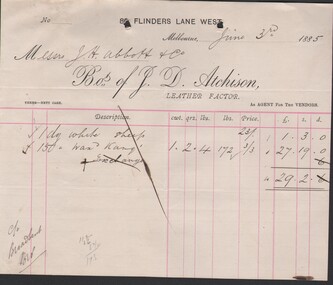
Administrative record - Abbott Collection: 1885 correspondence between J. H. Abbott and suppliers, 1885
... Abbott and suppliers (all handwritten correspondence, but difficult to decipher): 2403.100a 3 June 1885 - J. D. Atkinson, Flinders Lane Melbourne, leather factor - sheep and kangaroo hides 2403.100b 17 & 31 Jan 1885 - The Apollo Company Limited, Collins St Melbourne, Stearine Candles & Soap Manufacturers, Oil & Glycerine Refiners 2403.100c June-July 1885 - Briscoe & Co., Melbourne, Wholesale Ironmongers, Iron & Machinery Merchants; copper rivets & washers 2403.100d April-May 1885, 4 documents (1 invoice and 3 letters) - Birchard & Raspe, London & Hamburg 2403.100e Feb-June 1885, 7 invoices, William Dean & Co., Oil & Color Merchants, White Lead, Paperhangers and General Importers 2403.100g 5 invoices Feb-Oct 1885; Gavin Gibson, Melbourne, importers of Boots & Shoes, Leather & Grindery, Machinery, etc. 2403.100h 3 invoices Mar-Jun 1885; Guthridge Power & Co., East Melbourne, Wholesale Saddlers, Saddlers, Ironmongers & Importers. 2403.100i 2 invoices, Jan & Apr 1885, J. ...Abbott and suppliers (all handwritten correspondence, but difficult to decipher): 2403.100a 3 June 1885 - J. D. Atkinson, Flinders Lane Melbourne, leather factor - sheep and kangaroo hides 2403.100b 17 & 31 Jan 1885 - The Apollo Company Limited, Collins St Melbourne, Stearine Candles & Soap Manufacturers, Oil & Glycerine Refiners 2403.100c June-July 1885 - Briscoe & Co., Melbourne, Wholesale Ironmongers, Iron & Machinery Merchants; copper rivets & washers 2403.100d April-May 1885, 4 documents (1 invoice and 3 letters) - Birchard & Raspe, London & Hamburg 2403.100e Feb-June 1885, 7 invoices, William Dean & Co., Oil & Color Merchants, White Lead, Paperhangers and General Importers 2403.100g 5 invoices Feb-Oct 1885; Gavin Gibson, Melbourne, importers of Boots & Shoes, Leather & Grindery, Machinery, etc. 2403.100h 3 invoices Mar-Jun 1885; Guthridge Power & Co., East Melbourne, Wholesale Saddlers, Saddlers, Ironmongers & Importers. 2403.100i 2 invoices, Jan & Apr 1885, J. ...business records/correspondenceAbbott Collection: 1885 correspondence between J. H. Abbott and suppliers (all handwritten correspondence, but difficult to decipher): 2403.100a 3 June 1885 - J. D. Atkinson, Flinders Lane Melbourne, leather factor - sheep and kangaroo hides 2403.100b 17 & 31 Jan 1885 - The Apollo Company Limited, Collins St Melbourne, Stearine Candles & Soap Manufacturers, Oil & Glycerine Refiners 2403.100c June-July 1885 - Briscoe & Co., Melbourne, Wholesale Ironmongers, Iron & Machinery Merchants; copper rivets & washers 2403.100d April-May 1885, 4 documents (1 invoice and 3 letters) - Birchard & Raspe, London & Hamburg 2403.100e Feb-June 1885, 7 invoices, William Dean & Co., Oil & Color Merchants, White Lead, Paperhangers and General Importers 2403.100g 5 invoices Feb-Oct 1885; Gavin Gibson, Melbourne, importers of Boots & Shoes, Leather & Grindery, Machinery, etc. 2403.100h 3 invoices Mar-Jun 1885; Guthridge Power & Co., East Melbourne, Wholesale Saddlers, Saddlers, Ironmongers & Importers. 2403.100i 2 invoices, Jan & Apr 1885, J. Hodges. Little Bourke Street West, Melbourne; American Hame & Saddle Tree Manufacturers. 2403.100j 1 invoice, Apr 1885, Alfred E. Hobbs, Elizabeth Street Melbourne, Rope Manufacturers 2403.100k 2 invoices, Mar & July 1885, Andrew Jack & Co., Flinders Lane West, Melbourne; Importers and Wholesale Stationers. 2403.100l 3 invoice, Apr-Jun 1885, J. Kitchen & Sons & Apollo Company, Flinders Lane West, Melbourne, Sterine Candle, Soap & Soda Crystal Manufacturers Glyuerine & Oil Refiners. 2403.100m 1 invoice, Feb 1885, Lister Henry, Flinders Lane West, Melbourne. 2403.100n 1 invoice, Jun 1885, Thomas Mitchell, Little Bourke Street West Melbourne, Paint & General Brush Manufacturer. 2403.100o 4 invoices, Feb-Jun 1885, New Zealand Loan & Mercantile Agency Company Limited; Colins Street West, Melbourne; Melbourne Wool & Grain Warehouses. 2403.100p 1 invoice & 2 letters, Jan-Apr 1885, T. J. & T. Powell, Lime Street London. 2403.100q 3 letters, Feb -Mar 1885, W. Shammon. Mosley Street, Birmingham, Whip Manufacturer, Cach & Saddler Ironmonger. 2403.100qq 1invoice, May 1885, James C. Steel, Kensington Tannery, Hotham. 2403.100 r 3 invoices, Jan-Mar 1885, G. V. Sydenham, Lonsdale Street West Melbourne, importers of Saddlers' Ironmongery, Hodskins, Patent Leather, etc. 2403.100s 1 invoice, May 1885, Frederick Tate, Market Street, Melbourne, Tate's Parcel Post Express. 2403.100t 2 invoices, Feb & Apr 1885, Taylor & Currie, Bourke Street West Melbourne. 2403.100u 1 invoice, Mar 1885, Eliza Tinsley, Iron Merchant & Manufacturer of Nail Chains, Patent Wrought Nails, Rivets etc. 2403.100v 1 invoice, Mar 1885, Reid & Marshall, Hawthorn Tannery, Melbourne, Tanners & Curriers, Kangaroo Leather Manufacturers. 2403.100w 17 invoices, 2 reports & 18 letters, Jan-Dec 1885, Ullathorne & Co. Lonsdale Street Melbourne and Lincolns Inn Fields, London; Leather Shoe Mersey, Grindery Merchants, etc. Importers of Tanners and Curriers Tools, oils, Dyes & Twines, Shoe and Saddlers Thread, Silks, etc. 2403.100x 62 invoices, Jan-Dec 1885, compiled by J. H. Abbott & Co., Edinburgh Tannery.sales of australian leather, shipments ofhides to england, shipments from melbourne & england
