
Showing 5 items matching "kerrie still"
-
 Federation University Historical Collection
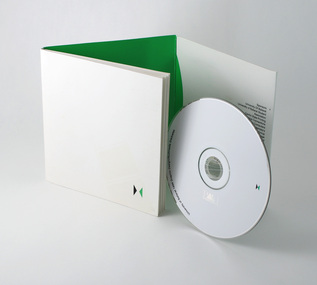
Booklet - Catalogue, X or >< [ie two facing arrows], 1999
... ...Kerrie Still...Students listed: Jodie Grixti, Paul Mah, Taneale Hrymakowski, Wesley Towers, Oliver Wilson, Rebecca Carden, Kelly Tame, Paul Scanlon, Hjoerdis Boulter, Glenn Reynolds, Paul Beseler, Mariya Beale, Heath McCurdy, Meg Williams, Sally-ann McMahon, Leon Dwyer, Kate Sumner, Kerrie Still, Melanie Buckingham, Dean Tonkin. ...Students listed: Jodie Grixti, Paul Mah, Taneale Hrymakowski, Wesley Towers, Oliver Wilson, Rebecca Carden, Kelly Tame, Paul Scanlon, Hjoerdis Boulter, Glenn Reynolds, Paul Beseler, Mariya Beale, Heath McCurdy, Meg Williams, Sally-ann McMahon, Leon Dwyer, Kate Sumner, Kerrie Still, Melanie Buckingham, Dean Tonkin. ...Promotion for graduating University of Ballarat, Bachelor of Visual Arts (Graphic Design / Multimedia) students, 1999. Students listed: Jodie Grixti, Paul Mah, Taneale Hrymakowski, Wesley Towers, Oliver Wilson, Rebecca Carden, Kelly Tame, Paul Scanlon, Hjoerdis Boulter, Glenn Reynolds, Paul Beseler, Mariya Beale, Heath McCurdy, Meg Williams, Sally-ann McMahon, Leon Dwyer, Kate Sumner, Kerrie Still, Melanie Buckingham, Dean Tonkin. Each page features a varnish on white design and student name. Last page includes details and list of sponsors.Promotion for graduating University of Ballarat, Bachelor of Visual Arts (Graphic Design / Multimedia) students, 1999. Cardboard CD case and booklet printed in three special colours (black, green and varnish). Refer also to item 29166.2 for screen captures from accompanying CD Rom.jodie grixti, paul mah, taneale hrymakowski, wesley towers, oliver wilson, rebecca carden, kelly tame, paul scanlon, hjoerdis boulter, glenn reynolds, paul beseler, mariya beale, heath mccurdy, meg williams, sally-ann mcmahon, leon dwyer, kate sumner, kerrie still, melanie buckingham, dean tonkin, university of ballarat, federation university, graphic design, multimedia -
 Federation University Historical Collection
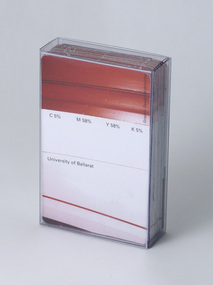
Container - Deck of playing cards, CMYK Playing Cards, 1999
... ...Kerrie Still...Student names listed on cards: Paul Beseler, Paul Scanlon, Melanie Buckingham, Kerrie Still, Dean Tonkin, Hjoerdis Boulter, Wesley Towers, Daniel Ryan, Heath McCurdy, Kelly Tame, Jodie Grixti, Kate Sumner, Taneale Hrymakowski, Rebecca Carden, Megan Williams, Glenn Reynolds, Leon Dwyer, Paul Mah, Sally-ann McMahon, Mariya Beale, Andrew Cordiner, Reverse designed by Kelly Tame, packaging designed by Wes Towers. ...Student names listed on cards: Paul Beseler, Paul Scanlon, Melanie Buckingham, Kerrie Still, Dean Tonkin, Hjoerdis Boulter, Wesley Towers, Daniel Ryan, Heath McCurdy, Kelly Tame, Jodie Grixti, Kate Sumner, Taneale Hrymakowski, Rebecca Carden, Megan Williams, Glenn Reynolds, Leon Dwyer, Paul Mah, Sally-ann McMahon, Mariya Beale, Andrew Cordiner, Reverse designed by Kelly Tame, packaging designed by Wes Towers. ...Designer playing cards, where the four process print colours Cyan, Magenta, Yellow and Black (or Key) – CMYK – replace the standard suits of Clubs, Spades, Hearts and Diamonds. Student names listed on cards: Paul Beseler, Paul Scanlon, Melanie Buckingham, Kerrie Still, Dean Tonkin, Hjoerdis Boulter, Wesley Towers, Daniel Ryan, Heath McCurdy, Kelly Tame, Jodie Grixti, Kate Sumner, Taneale Hrymakowski, Rebecca Carden, Megan Williams, Glenn Reynolds, Leon Dwyer, Paul Mah, Sally-ann McMahon, Mariya Beale, Andrew Cordiner, Reverse designed by Kelly Tame, packaging designed by Wes Towers. The jokers, designed by Dean Tonkin, include credits and sponsor details. Promotional pack created by University of Ballarat, Bachelor of Visual Arts (Graphic Design / Multimedia) third year, graduating students, 1999. Two-piece acetate pack containing standard deck of playing cards, each featuring student work. university of ballarat, federation university, graphic design, multimedia, mt helen campus, paul beseler, paul scanlon, melanie buckingham, kerrie still, dean tonkin, hjoerdis boulter, wesley towers, daniel ryan, heath mccurdy, kelly tame, jodie grixti, kate sumner, taneale hrymakowski, rebecca carden, megan williams, glenn reynolds, leon dwyer, paul mah, sally-ann mcmahon, mariya beale, andrew cordiner -
 Federation University Historical Collection
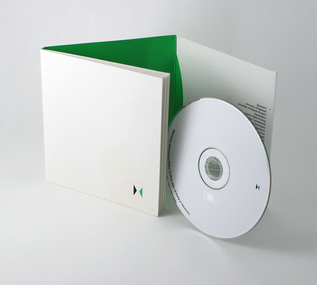
Article - Compact Disc (CD Catalogue), X or >< [ie two facing arrows], 1999
... ...Kerrie Still...Jodie Grixti Paul Mah Taneale Hrymakowski Wesley Towers Oliver Wilson Rebecca Carden Kelly Tame Paul Scanlon Hjoerdis Boulter Glenn Reynolds Paul Beseler Mariya Beale Heath McCurdy Meg Williams Sally-ann McMahon Leon Dwyer Kate Sumner Kerrie Still Melanie Buckingham Dean Tonkin University of Ballarat Federation University Graphic Design Multimedia Promotion for graduating University of Ballarat, Bachelor of Visual Arts (Graphic Design / Multimedia) students, 1999. ...Promotion for graduating University of Ballarat, Bachelor of Visual Arts (Graphic Design / Multimedia) students, 1999. Promotion for graduating University of Ballarat, Bachelor of Visual Arts (Graphic Design / Multimedia) students, 1999. CD Rom catalogue, printed white and black, single sided. The interactive/multimedia CD Rom was developed using Macromedia Director. Successfully tested on vintage Macintosh G4 with Mac OS 9.2.2 jodie grixti, paul mah, taneale hrymakowski, wesley towers, oliver wilson, rebecca carden, kelly tame, paul scanlon, hjoerdis boulter, glenn reynolds, paul beseler, mariya beale, heath mccurdy, meg williams, sally-ann mcmahon, leon dwyer, kate sumner, kerrie still, melanie buckingham, dean tonkin, university of ballarat, federation university, graphic design, multimedia -
 Victorian Aboriginal Corporation for Languages
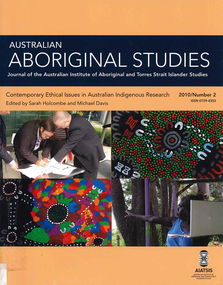
Periodical, Australian Institute of Aboriginal and Torres Strait Islander Studies, Australian Aboriginal studies : journal of the Australian Institute of Aboriginal and Torres Strait Islander Studies, 2010
... Closing the gaps in and through Indigenous health research: Guidelines, processes and practices Pat Dudgeon (UWA), Kerrie Kelly (Australian Indigenous Psychologists Association) and Roz Walker (UWA) Research in Aboriginal contexts remains a vexed issue given the ongoing inequities and injustices in Indigenous health. It is widely accepted that good research providing a sound evidence base is critical to closing the gap in Aboriginal health and wellbeing outcomes. However, key contemporary research issues still...Closing the gaps in and through Indigenous health research: Guidelines, processes and practices Pat Dudgeon (UWA), Kerrie Kelly (Australian Indigenous Psychologists Association) and Roz Walker (UWA) Research in Aboriginal contexts remains a vexed issue given the ongoing inequities and injustices in Indigenous health. It is widely accepted that good research providing a sound evidence base is critical to closing the gap in Aboriginal health and wellbeing outcomes. However, key contemporary research issues still ...'Whose Ethics?':Codifying and enacting ethics in research settings Bringing ethics up to date? A review of the AIATSIS ethical guidelines Michael Davis (Independent Academic) A revision of the AIATSIS Guidelines for Ethical Research in Indigenous Studies was carried out during 2009-10. The purpose of the revision was to bring the Guidelines up to date in light of a range of critical developments that have occurred in Indigenous rights, research and knowledge management since the previous version of the Guidelines was released in 2000. In this paper I present an outline of these developments, and briefly discuss the review process. I argue that the review, and the developments that it responded to, have highlighted that ethical research needs to be thought about more as a type of behaviour and practice between engaged participants, and less as an institutionalised, document-focused and prescriptive approach. The arrogance of ethnography: Managing anthropological research knowledge Sarah Holcombe (ANU) The ethnographic method is a core feature of anthropological practice. This locally intensive research enables insight into local praxis and culturally relative practices that would otherwise not be possible. Indeed, empathetic engagement is only possible in this close and intimate encounter. However, this paper argues that this method can also provide the practitioner with a false sense of his or her own knowing and expertise and, indeed, with arrogance. And the boundaries between the anthropologist as knowledge sink - cultural translator and interpreter - and the knowledge of the local knowledge owners can become opaque. Globalisation and the knowledge ?commons?, exemplified by Google, also highlight the increasing complexities in this area of the governance and ownership of knowledge. Our stronghold of working in remote areas and/or with marginalised groups places us at the forefront of negotiating the multiple new technological knowledge spaces that are opening up in the form of Indigenous websites and knowledge centres in these areas. Anthropology is not immune from the increasing awareness of the limitations and risks of the intellectual property regime for protecting or managing Indigenous knowledge. The relevance of the Declaration on the Rights of Indigenous Peoples in opening up a ?rights-based? discourse, especially in the area of knowledge ownership, brings these issues to the fore. For anthropology to remain relevant, we have to engage locally with these global discourses. This paper begins to traverse some of this ground. Protocols: Devices for translating moralities, controlling knowledge and defining actors in Indigenous research, and critical ethical reflection Margaret Raven (Institute for Sustainability and Technology Policy (ISTP), Murdoch University) Protocols are devices that act to assist with ethical research behaviour in Indigenous research contexts. Protocols also attempt to play a mediating role in the power and control inherent in research. While the development of bureaucratically derived protocols is on the increase, critiques and review of protocols have been undertaken in an ad hoc manner and in the absence of an overarching ethical framework or standard. Additionally, actors implicated in research networks are seldom theorised. This paper sketches out a typology of research characters and the different moral positioning that each of them plays in the research game. It argues that by understanding the ways actors enact research protocols we are better able to understand what protocols are, and how they seek to build ethical research practices. Ethics and research: Dilemmas raised in managing research collections of Aboriginal and Torres Strait Islander materials Grace Koch (AIATSIS) This paper examines some of the ethical dilemmas for the proper management of research collections of Indigenous cultural materials, concentrating upon the use of such material for Native Title purposes. It refers directly to a number of points in the draft of the revised AIATSIS Guidelines for Ethical Research in Indigenous Studies and draws upon both actual and hypothetical examples of issues that may arise when requests are made for Indigenous material. Specific concerns about ethical practices in collecting data and the subsequent control of access to both the data itself and to published works based upon it are raised within the context of several types of collections, including those held by AIATSIS and by Native Title Representative Bodies. Ethics or social justice? Heritage and the politics of recognition Laurajane Smith (ANU) Nancy Fraser?s model of the politics of recognition is used to examine how ethical practices are interconnected with wider struggles for recognition and social justice. This paper focuses on the concept of 'heritage' and the way it is often uncritically linked to 'identity' to illustrate how expert knowledge can become implicated in struggles for recognition. The consequences of this for ethical practice and for rethinking the role of expertise, professional discourses and disciplinary identity are discussed. The ethics of teaching from country Michael Christie (CDU), with the assistance of Yi?iya Guyula, Kathy Gotha and Dh�?gal Gurruwiwi The 'Teaching from Country' program provided the opportunity and the funding for Yol?u (north-east Arnhem Land Aboriginal) knowledge authorities to participate actively in the academic teaching of their languages and cultures from their remote homeland centres using new digital technologies. As two knowledge systems and their practices came to work together, so too did two divergent epistemologies and metaphysics, and challenges to our understandings of our ethical behaviour. This paper uses an examination of the philosophical and pedagogical work of the Yol?u Elders and their students to reflect upon ethical teaching and research in postcolonial knowledge practices. Closing the gaps in and through Indigenous health research: Guidelines, processes and practices Pat Dudgeon (UWA), Kerrie Kelly (Australian Indigenous Psychologists Association) and Roz Walker (UWA) Research in Aboriginal contexts remains a vexed issue given the ongoing inequities and injustices in Indigenous health. It is widely accepted that good research providing a sound evidence base is critical to closing the gap in Aboriginal health and wellbeing outcomes. However, key contemporary research issues still remain regarding how that research is prioritised, carried out, disseminated and translated so that Aboriginal people are the main beneficiaries of the research in every sense. It is widely acknowledged that, historically, research on Indigenous groups by non-Indigenous researchers has benefited the careers and reputations of researchers, often with little benefit and considerably more harm for Indigenous peoples in Australia and internationally. This paper argues that genuine collaborative and equal partnerships in Indigenous health research are critical to enable Aboriginal and Torres Islander people to determine the solutions to close the gap on many contemporary health issues. It suggests that greater recognition of research methodologies, such as community participatory action research, is necessary to ensure that Aboriginal people have control of, or significant input into, determining the Indigenous health research agenda at all levels. This can occur at a national level, such as through the National Health and Medical Research Council (NHMRC) Road Map on Indigenous research priorities (RAWG 2002), and at a local level through the development of structural mechanisms and processes, including research ethics committees? research protocols to hold researchers accountable to the NHMRC ethical guidelines and values which recognise Indigenous culture in all aspects of research. Researching on Ngarrindjeri Ruwe/Ruwar: Methodologies for positive transformation Steve Hemming (Flinders University) , Daryle Rigney (Flinders University) and Shaun Berg (Berg Lawyers) Ngarrindjeri engagement with cultural and natural resource management over the past decade provides a useful case study for examining the relationship between research, colonialism and improved Indigenous wellbeing. The Ngarrindjeri nation is located in south-eastern Australia, a ?white? space framed by Aboriginalist myths of cultural extinction recycled through burgeoning heritage, Native Title, natural resource management ?industries?. Research is a central element of this network of intrusive interests and colonising practices. Government management regimes such as natural resource management draw upon the research and business sectors to form complex alliances to access funds to support their research, monitoring, policy development, management and on-ground works programs. We argue that understanding the political and ethical location of research in this contemporary management landscape is crucial to any assessment of the potential positive contribution of research to 'Bridging the Gap' or improving Indigenous wellbeing. Recognition that research conducted on Ngarrindjeri Ruwe/Ruwar (country/body/spirit) has impacts on Ngarrindjeri and that Ngarrindjeri have a right and responsibility to care for their lands and waters are important platforms for any just or ethical research. Ngarrindjeri have linked these rights and responsibilities to long-term community development focused on Ngarrindjeri capacity building and shifts in Ngarrindjeri power in programs designed to research and manage Ngarrindjeri Ruwe/Ruwar. Research agreements that protect Ngarrindjeri interests, including cultural knowledge and intellectual property, are crucial elements in these shifts in power. A preliminary review of ethics resources, with particular focus on those available online from Indigenous organisations in WA, NT and Qld Sarah Holcombe (ANU) and Natalia Gould (La Trobe University) In light of a growing interest in Indigenous knowledge, this preliminary review maps the forms and contents of some existing resources and processes currently available and under development in the Northern Territory, Queensland and Western Australia, along with those enacted through several cross-jurisdictional initiatives. A significant majority of ethics resources have been developed in response to a growing interest in the application of Indigenous knowledge in land and natural resource management. The aim of these resources is to ?manage? (i.e. protect and maintain) Indigenous knowledge by ensuring ethical engagement with the knowledge holders. Case studies are drawn on from each jurisdiction to illustrate both the diversity and commonality in the approach to managing this intercultural engagement. Such resources include protocols, guidelines, memorandums of understanding, research agreements and strategic plans. In conducting this review we encourage greater awareness of the range of approaches in practice and under development today, while emphasising that systematic, localised processes for establishing these mechanisms is of fundamental importance to ensuring equitable collaboration. Likewise, making available a range of ethics tools and resources also enables the sharing of the local and regional initiatives in this very dynamic area of Indigenous knowledge rights.b&w photographs, colour photographsngarrindjeri, ethics, ethnography, indigenous research, social justice, indigenous health -
 Returned Nurses RSL Sub-branch
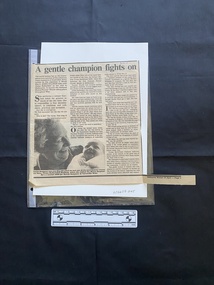
Newspaper - Newspaper clipping (inlc duplicate), Annie Gillison, A gentle champion fights on, 24 April [1988]
... still very involved and concerned about the nursing world. Possibly best known as the courageous lone survivour of the massacre of Australian Army nurses by the Japanese in World War Two, Vivian went on to be matron of the Repatriation Hospital and then Fairfield Hospital. World War 2 WWII WW2 World War II Vivian Bullwinkel Red Cross Mercy Hospital Michael Willessee St Kilda Road Edith Cavell Britich Belgium German Nurses' Memorial Centre Lucas Sampson Kerrie ...Vivian Statham (nee Bullwinkel) visits Melbourne from her home in Perth to launch the National Mutual Nurses' Month, taking place throughout May. The biggest woman's project of the bicentennial, Nurses' Month will involve nurses throughout Australia. Though Vivian is now retired she is still very involved and concerned about the nursing world. Possibly best known as the courageous lone survivour of the massacre of Australian Army nurses by the Japanese in World War Two, Vivian went on to be matron of the Repatriation Hospital and then Fairfield Hospital. A newspaper clipping of a story consisting of three large columns of text and a large black and white photo of an older woman (head and sholders) holding a baby'WWII ' '[blue ink, top right, both copies] 'Progress Press. APRIL 1988'[black ink bottom left, one copy]world war 2, wwii, ww2, world war ii, vivian bullwinkel, red cross, mercy hospital, michael willessee, st kilda road, edith cavell, britich, belgium, german, nurses' memorial centre, lucas sampson, kerrie sampson, yarraville west
