
Showing 14 items matching "king's park western australia"
-
 Federation University Historical Collection
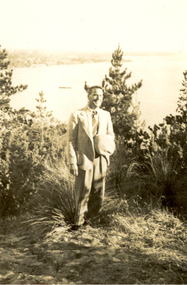
Photograph - Photograph - Black and White, Frank Wright at King's Park, Western Australia, 2/1940
... Frank Wright at King's Park, Western Australia......King's Park Western Australia...The man is Frank Wright Frank Wright at King's Park, Western Australia Photograph Photograph - Black and White ...Frank Wright was a renown resident of Smeaton, where he was born on 2 August 1901. He lived at Laura Villa, and attended Smeaton State School. His father William was a gold miner and his mother's name was Sarah. Their family won many singing and instrumental awards. Frank was tutored by Percy Code and was awarded a gold medal for the highest marks in the ALCM examinations in the British Colonies at the age of seventeen years. He became the Australian Open Cornet Champion by the age of eighteen. A year later, Frank conducted the City of Ballarat Band, and later the Ballarat Soldiers’ Memorial Band. He formed the Frank Wright Frisco Band and Frank Wright and his Coliseum Orchestra. These bands won many South Street awards, and Frank as conductor won many awards in the Australian Band Championship contest. In 1933 Frank Wright sailed to England to conduct the famous St Hilda’s Band and was later appointed Musical Director of the London County Council, where he organized many amazing concerts in parks, in and around the London district. He was made Professor of Brass and Military Band Scoring and conducted at the Guildhall of Music and Drama. Frank was often invited to adjudicate Brass Band Championships around Europe, in Australia, including South Street and in New Zealand. The Frank Wright Medal at the Royal South Street competition is awarded to an individual recognized as making an outstanding contribution to brass music in Australia.A black and white photograph of a gentleman in a suit holding a hat in a park like setting. The man is Frank WrightAt King's Park, Perth W.A. Feb 1940frank wright, brass band, conductor, king's park western australia -
 Sunshine and District Historical Society Incorporated
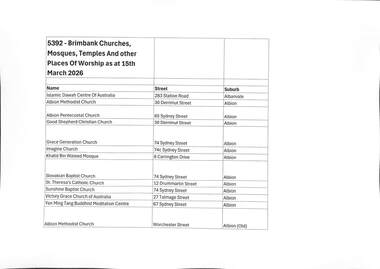
Archive - Brimbank Churches, Mosques, Temples & other Places of Worship, City of Sunshine
... King Gateway to Glory Church God Is with Us Christian Church INC Liên Trì Tự - Lien Tri Temple Peneil Church Australia Quang Minh Buddhist Temple Samoan Assembly of God St. Andrew’s & St. Peter’s Anglican Church Chùa Ấn Quang Avalokitesvara Yuan Tong Monastery Beautiful Life Church Bosnian Islamic Centre Chùa Lộc Uyển Deer Park Methodist Church Deer Park Preca Centre St Peter Chanel Catholic Church St. John Anglican Church The Church of Jesus Christ of Latter-day Saints Western...King Gateway to Glory Church God Is with Us Christian Church INC Liên Trì Tự - Lien Tri Temple Peneil Church Australia Quang Minh Buddhist Temple Samoan Assembly of God St. Andrew’s & St. Peter’s Anglican Church Chùa Ấn Quang Avalokitesvara Yuan Tong Monastery Beautiful Life Church Bosnian Islamic Centre Chùa Lộc Uyển Deer Park Methodist Church Deer Park Preca Centre St Peter Chanel Catholic Church St. John Anglican Church The Church of Jesus Christ of Latter-day Saints Western ...List of former and current churches in the City of Brimbank. This includes churches in the former City of Sunshine and City of Keilor.This report records current and former churches in the City of Brimbank as of 15th March 2026.Name Islamic Dawah Centre Of Australia Albion Methodist Church Albion Pentecostal Church Good Shepherd Christian Church Grace Generation Church Imagine Church Khalid Bin Waleed Mosque Slovakian Baptist Church St. Theresa's Catholic Church Sunshine Baptist Church Victory Grace Church of Australia Yen Ming Tang Buddhist Meditation Centre Albion Methodist Church Braybrook Methodist Church Braybrook Wesleyan Church Ardeer Ukrainian Catholic Church Chùa Bảo Vương Cyprus Turkish Islamic Community Etinchrist Kingdom Ministries Mother of God Catholic Church Queen of Heaven Church Braybook Presbyterian Church Braybrook Church of England Braybrook Methodist Church Braybrook Salvation Army Church Cao Dai Temple of Melbourne Christ the King Gateway to Glory Church God Is with Us Christian Church INC Liên Trì Tự - Lien Tri Temple Peneil Church Australia Quang Minh Buddhist Temple Samoan Assembly of God St. Andrew’s & St. Peter’s Anglican Church Chùa Ấn Quang Avalokitesvara Yuan Tong Monastery Beautiful Life Church Bosnian Islamic Centre Chùa Lộc Uyển Deer Park Methodist Church Deer Park Preca Centre St Peter Chanel Catholic Church St. John Anglican Church The Church of Jesus Christ of Latter-day Saints Western Community Alliance Church Avalokitesvara Yuan Tong Monastery ReSoul Church Sion Baptist Chruch Chua Phap Van Buddhist Temple Living Hope Christian Church St Paul's Catholic Church Keilor Christ Church Keilor Uniting Church in Australia St Stephen Bethlehem - Church of the Living God House of Prayer St Mary of the Assumption Parish The City of Refuge, Melbourne Brimbank Anglican Church Vantage Point Church West Campus Arise Church Seventh Day Adventist Reform Movement St Augustine's Catholic Church Resurrection Catholic Parish Church Al Nur Mosque Assembly of Belivers Church Hillsong Church - West Campus Iglesia Ni Cristo - Locale of Melbourne Maidstone Church of Christ Maidstone Church of England Maidstone Methodist Church Maidstone Mosque Maidstone Presbyterian Church Maidstone Salvation Army Church Maidstone Wesleyan Chapel New Apostolic Church Our Ladys Westside Assembly of God Worldwide Missionary Movement Melbourne Ethiopian Orthdox Church Maribyrnong Methodist Church Maribyrnong Methodist Church St Margaret's Catholic Church Hillsong Church Melbourne Greater West Campus Wesleyan Methodist Church Bridge Church West Campus Chùa Hoàng Pháp Chùa Thiện Đức Chua Tu Quang Temple Friendens Kirche Lutheran Church of St. Albans GROW Church Holy Eucharist Jehovah Witnesses Kings Park Filipino Congregation of Jehovah Witnesses Mata Chintapurni Mandir Hindu Temple St Albans Neuma Church Melbourne West Panjan Centre Peace Lutheran Church Russian Orthodox Church (Abroad) Sacred Heart Catholic Church Saint Paraskevi Greek Orthodox Church And Community St. Albans St Albans Uniting Church St. Alban the Martyr Church of England St. Albans Croatian Seventh-Day Adventist Church St. Albans Preca Centre St. Albans Slavic Church St. Albans Vietnamese Alliance Church St. George Serbian Orthodox Church St. George's Coptic Orthodox Church - Melbourne St. Paraskevi Greek Orthodox Church St. Albans St. Paul Catholic Church Temple Transform Church United Penticostal Church Western New Community Baptist Church Avalokitesvara Yuan Tong Monastery Chua Hue Quang Temple Church of Christ / Elias Church of St the Prophet (Greek-Melkite) Church of England Cloud Christian Church Community Church Holy Apostles Anglican Church Hope Of Life Community Church Jehovah's Witnesses Kingdom Hall of Jehovah's Witnesses Mara Christian Church of Victoria Inc. Our Lady of the Immaculate Catholic Church Pentecostal Church Plymonth Brethren Church Plymonth Brethren Church Roman Catholic Church Seventh Day Aventist Church St. Marks Church Sunshine Sunshine Methodist Church Sunshine North Sunshine Presbyterian Church Sunshine Roman Catholic Church Sunshine Uniting Church Sunshine Vietnamese Baptist Church Sunshine Wesleyan Methodist Church Tamil Christian Fellowship Melbourne The Salvation Army The Salvation Army Westcare Vietnamese Evangelical Church Voice Of Christ Full Gospel Church Inc. Sunshine Zetseat Ethiopian Evangelical Church Australian Christian Churches Victoria Chua Phap Hoa Buddhist Temple Enjoy Church Faith & Power Ministry Revival Church Iglesia Cristiana Melbourne Murugan Hindu Temple North Sunshine Gospel Hall Pentecostal Missionary Church of Christ (4th Watch) St Bernadette's Parish St. Marys Church of England Sunshine North Presbyterian Church Sunshine North Uniting Church Tabor Romanian Pentecostal Church Western Spanish Seventh-day Adventist Church Ardeer Preca Centre Croatian Catholic Centre, Sunshine Elevation Church, Melbourne West Our Lady of Sorrows' Catholic Church St Anthony’s Greek Orthodox Church St Paul's Church Catholic Church The Potters House Christian Church (Footscray) Emmaus Catholic Church Macedonian Orthodox Cathedral Church - Nativity of The Holy Mother of God (St.Mary) St. Mary's (Holy Mother of God) Macedonian Orthodox Church Sydenham - Caroline Springs Uniting Church Sydenham Baptist Church Sydenham Presbyterian Church The Salvation Army Brimbank City Corps Town Well Uniting Church Sydenham Brimbank Presbyterian Church St. Luke's Anglican Church The Potters House Christian Church Avustralya Nur Vakfi church, churches -
 Sunshine and District Historical Society Incorporated
Administrative record - City of Sunshine - Commissioner Mr Alexander Alex George Gillon Collection 1976 - 1982 - Minutes of the ordinary meeting of council held on 24th August 1977, City of Sunshine, 24th August 1977
... Albans Sunshine North Sunshine Tip Furlong Road Child Care Centre Midway Hostel Williamson Road Maribyrnong Fourth Avenue Green Street Judge Street Halstead Street Ashley Street Maidstone King Edward Avenue Anderson Road Sunshine Golf Club Ralph Street Sunshine West Lewin Street Deer Park Ballarat Road Summerhill Road Geelong Road Brooklyn Mitchell Street Bunnett Street Aycliffe Drive Reston Court Italo - Australian Social Club Italo - Australian Co-Operative Social Club Ltd Churchill Avenue Ravenhall Street Bloomfield Avenue Neale Road Station Road Rothray Avenues Arvona Avenue Robinsons Road Main Road West Main Road East St. Albans Road East Esplanade Western ...Minutes of the Ordinary Meeting of Council held on 24th August 1977 Report of the Town Clerk's Department Report of the Town Clerk Superannuation Municipal Officer's Association Central Methodist Mission Home for the Frail / Aged Lease of land Darnley Street Land Adjacent to More Park in Ballarat Road Deer Park Hall Committee of Management Sunshine Swimming and Life Saving Club Infant Welfare Centres Pavilion Albion Tennis Club Tennis Courts Sunshine North Tennis Club Hulett Street Private Street Scheme Use of Council Land Survey Committee of Officers Land Transfer 43 Furlong Road Limits of Overdrafts Proposed Purchase of New Sunshine Tip Site Supplementary Valuations Report of the Co-Ordinator Welfare Services Committee of Management 43 Furlong Road Child Care Centre Emergency Accommodation Midway Hostel Report of the Chief Health Inspector Weights & Measures Report for the Two Months Ending 31st July 1977 Report of the Inspector Weights & Measures Sanitary Contract Licences Discharge to Council Controlled Drains Fees for Analyses Health Act 1958 Amusement Machines in Shops in Close Proximity to Schools Report of the City Librarian Library Statistics Seminar At Monash University The Economic Approach To Public Library Development Report of the City Engineer Land Use Permit Quinn Estate for the Purpose of Erecting Detached Houses Council Policy Land Use Permit Industrial Estate Lots 32 to 36 Fourth Avenue Land Use Permit Application Storing of Motor Vehicles Lot 18 Green Street for Nick's Boby Works Pty Ltd at Judge Street Enforcement of Melbourne Metropolitan Planning Scheme Use of Lot 271 Beela Court as a Transport Depot Land Use Permit Application Sale and Distribution of Floor Coverings, Builders Hardware, Electrical Domestic Appliances and Furniture Land Bounded by Halstead Street and Ashley Street Land Use Permit Application Milk Bar Addition to Existing House 53 King Edward Avenue Land Use Permit Application Advertising Hoarding Lot 26 & 27 Anderson Road Land Use Permit Sunshine Golf Club Pavilion Ralph Street Land Use Permit Application Detached House Lot 121 Lewin Street Land Use Permit Application Advertising Hoarding Lot 1 Ballarat Road South West Corner Summerhill Road Land Use Permit Application Access to Main Road for Lot 15 Geelong Road Land Use Permit Application Four Floodlights 186 - 190 Mitchell Street North East Corner Ashley Street Land Use Permit Application Storage and Wrecking of Old Cars for Scrap and Sale Lots 14. 15 & 16 Bunnett Street Land Use Permit Application Service Premises and Caretaker's Dwelling 461 Ballarat Road Land Use Permit Application 3 Display Homes Aycliffe Drive and Land Use Permit Application Car Parking to Serve Display Home Centre North East Corner Aycliffe Drive and Reston Court Deer Park Land Use Permit Application Italo - Australian Social Club (Italo - Australian Co-Operative Social Club Ltd) Place of Assembly Furlong Road Land Use Permit Application Reprocessing of Scrap Metals Lot 3 Geelong Road Land Use Permit Application Extension to Existing Work Shop For Mentally Retarded Children Day Training Centre Council Reserve Bounded by Churchill Avenue, Darnley Street & Ravenhall Street Land Use Permit Application Service Premises Addition to Existing Bakery 119 McIntyre Road Land Use Permit Application Home Occupation 43 Bloomfield Avenue Plan of Subdivision Stage 3 Furlong Road Estate Strata Subdivision 437 Ballarat Road Westerngate Estate Stage 2 Plan of Subdivision Neale Road and Station Road Plan of Consolidation Rothray Avenues and Arvona Avenue Width of Robinsons Road Westerngate Robinsons Road Parking Area Tallintyre road Housing Commission of Victoria Contract Supply & Maintenance of Vehicles Concrete Reinstatements Quotations Garfield Street Scheme Construction Proposed Traffic Signals Main Road West, Main Road East, St. Albans Road & East Esplanade Speed Reduction Sign Western Highway Deer Park Tender for Surplus Equipment Maribyrnong River Speed Limit M.M.B.W. Easement Drainage Lot 4 Mitchell Street Maidstone Certificate of Completion Hampton Avenue Group Private Street Scheme Proposed Open Space Land in Moria Street, Wright Street & Thyra Street Sunshine Bus Shelter Subsidy from Transport Funds of the Transport Regulation Board Report of the Building Surveyor Building & Development Approval Committee Report Extension of Permit 10 Percy Street St. Albans Extension of House 4 Ensign Street Maribyrnong Undersize Allotment Lot 2 Delacey Street Maidstone Location of Open Garage 81 Northumberland Road Sunshine North Renovation Central Library McCracken Street Alterations The Hub W.C. block Hampshire Road Brooklyn Pre-School Centre Child Care Centre / Pavilion Ainsworth Reserve Sunshine Indoor Swimming Pool Orders of the Day Westerngate Estate Robinsons Road Fencing 83 Hall Street Sunshine West city of sunshine, alexander "alex" george gillon, central methodist mission, darnley street, braybrook, more park, ardeer, deer park hall committee of management, albion tennis club, sunshine north tennis club, hulett street, albion, sunshine swimming and life saving club, furlong road, st. albans, sunshine north, sunshine tip, furlong road child care centre, midway hostel, williamson road, maribyrnong, fourth avenue, green street, judge street, halstead street, ashley street, maidstone, king edward avenue, anderson road, sunshine golf club, ralph street, sunshine west, lewin street, deer park, ballarat road, summerhill road, geelong road, brooklyn, mitchell street, bunnett street, aycliffe drive, reston court, italo - australian social club, italo - australian co-operative social club ltd, churchill avenue, ravenhall street, bloomfield avenue, neale road, station road, rothray avenues, arvona avenue, robinsons road, main road west, main road east, st. albans road, east esplanade, western highway, hampton avenue, moria street, wright street, thyra street, percy street, ensign street, delacey street, northumberland road, sunshine library, mccracken street, the hub, sun crescent, hampshire road, brooklyn pre-school centre, cypress avenue, ainsworth reserve, vernon street, hall street -
 Australian Army Museum of Western Australia
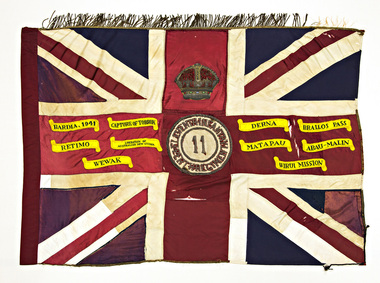
Queen's Colour - 11th Australian Infantry Regiment (Perth Regiment)
... Western Australia Regiment. In September 1960, at a ceremonial parade held at Northam Camp, the Colours carried by all former battalions were handed over for safe keeping by the new regiment. Battle Honours for the Second World War were promulgated under Australian Army Order 135/1961 and the 10 selected honours approved for emblazoning on the Queen's Colour were subsequently added in 1962 These former colours were subsequently laid up in the undercroft at the State War Memorial, King's Park on 29 November 1964. ...Western Australia Regiment. In September 1960, at a ceremonial parade held at Northam Camp, the Colours carried by all former battalions were handed over for safe keeping by the new regiment. Battle Honours for the Second World War were promulgated under Australian Army Order 135/1961 and the 10 selected honours approved for emblazoning on the Queen's Colour were subsequently added in 1962 These former colours were subsequently laid up in the undercroft at the State War Memorial, King's Park on 29 November 1964. ...This former King's Colour was originally authorised by King George V in 1919 in recognition of services of 11th Battalion (AIF) during the Great War. Presented by HE the Governor General Sir Ronald Munro-Ferguson, PC, CGMG at a parade in King's Park on 2 October 1920 and handed over to 2nd Battalion, 11th Infantry Regiment (Perth Regiment) of the Citizen Forces. In 1921 this unit became re-designated 11th Battalion (The Perth Regiment) (The title was changed to "The City of Perth Regiment" in 1933). Subsequently consecrated by the Chaplain General, Archbishop COL Riley, OBE, VD, DD at a parade on the Esplanade, Perth, 15 November 1924. At the time of presentation this colour was a plain union flag with no central devices or other distinctions included on it. Following Military Board approval given in 1925 the centre circle and Crown were later added, in accordance with the approved design for a King's Colour. With the re-activation of the Citizen Military Forces (CMF) following the Second World War, the 11th/44th Infantry Battalion (The City of Perth Regiment) was raised as a linked battalion in 1948 to carry on the identity and traditions of the pre-war 11th and 44th Battalions respectively. The King's and Regimental Colours formerly held by these two battalions were passed on to the new battalion who paraded them in rotation on ceremonial occasions. With the accession of HM Queen Elizabeth II to the throne in 1953, all Colours that had originally been presented as King's Colours, and were still carried by units on the current Order of Battle, were automatically deemed to be Queen's Colours. Under major reorganisation of the CMF in 1960, all individual infantry battalions that existed at the time within each State were amalgamated to form State regiments, taking effect from 1 July 1960. Thus from that date the 11/44th, 16th and 28th Infantry Battalions were amalgamated to form The Royal Western Australia Regiment. In September 1960, at a ceremonial parade held at Northam Camp, the Colours carried by all former battalions were handed over for safe keeping by the new regiment. Battle Honours for the Second World War were promulgated under Australian Army Order 135/1961 and the 10 selected honours approved for emblazoning on the Queen's Colour were subsequently added in 1962 These former colours were subsequently laid up in the undercroft at the State War Memorial, King's Park on 29 November 1964. These were transferred to the Army Museum of WA in 1988 as part of the Bicentenary Colours Project. Union flag with gold fringes. In the centre the Arabic numeral "11" on a red background within a gold circle inscribed "ELEVENTH INFANTRY - PERTH REGIMENT", surmounted by the Crown. Emblazoned on the colour are the following Second World War Battle Honours:- BARDIA 1941, CAPTURE OF TOBRUK, DERNA, BRALLOS PASS, RETIMO, LIBERATION OF AUSTRALIAN NEW GUINEA, MATAPAU, ABAU-MALIN, WEWAK, WIRUI MISSION -
 Australian Army Museum of Western Australia
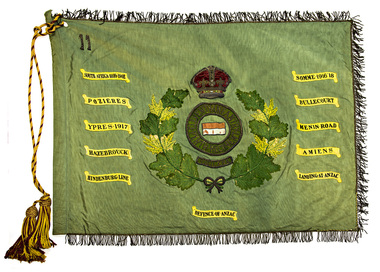
Regimental Colour - 11th Australian Infantry Regiment (Perth Regiment)
... Western Australia Regiment. In September 1960, at a ceremonial parade held at Northam Camp, the Colours carried by all former battalions were handed over for safe keeping by the new regiment These former colours were subsequently laid up in the undercroft at the State War Memorial, King's Park on 29 November 1964. ...Western Australia Regiment. In September 1960, at a ceremonial parade held at Northam Camp, the Colours carried by all former battalions were handed over for safe keeping by the new regiment These former colours were subsequently laid up in the undercroft at the State War Memorial, King's Park on 29 November 1964. ...Presented by the Honourable Lord Mayor JT Franklin, CMG, MLC, JP, at a parade held at Karrakatta Camp on 7 April 1929. Consecrated by the Chaplain General COL Riley, OBE, VD, DD. With the re-activation of the Citizen Military Forces (CMF) following the Second World War, the 11th/44th Infantry Battalion (The City of Perth Regiment) was raised in 1948 as a linked battalion to carry on the identity and traditions of the pre-war 11th and 44th Battalions respectively. The King's and Regimental Colours formerly held by these two battalions were passed on to the new battalion who paraded them in rotation on ceremonial occasions. Under major reorganisation of the CMF in 1960, all individual infantry battalions that existed at the time within each State were amalgamated to form State regiments, taking effect from 1 July 1960. Thus from that date the 11/44th, 16th and 28th Infantry Battalions were amalgamated to form The Royal Western Australia Regiment. In September 1960, at a ceremonial parade held at Northam Camp, the Colours carried by all former battalions were handed over for safe keeping by the new regiment These former colours were subsequently laid up in the undercroft at the State War Memorial, King's Park on 29 November 1964. These were transferred to the Army Museum of WA in 1988 as part of the Bicentenary Colours Project. Dark green with gold fringe. In the centre the battalion colour patch of a brown over blue rectangle within a circle inscribed "ELEVENTH INFANTRY - PERTH REGIMENT". Beneath the circle a scroll inscribed with the regimental motto "VIGILANS". The whole surrounded with a wreath of Australian wattle and surmounted by the Crown. In the upper canton the Arabic numeral "11". Battle Honours emblazoned on the colour:- SOUTH AFRICA 1899-1902, SOMME 1916-18, POZIERES, BULLECOURT, YPRES 1917, MENIN ROAD, HAZEBROUCK, AMIENS, HINDENBURG LINE, LANDING AT ANZAC, DEFENCE OF ANZAC -
 Australian Army Museum of Western Australia
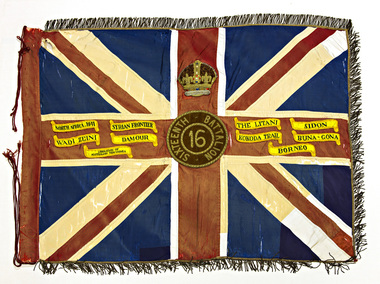
Queen's Colour - 16th Battalion (The Cameron Highlanders of Western Australia)
... Western Australia Regiment. In September 1960, at a ceremonial parade held at Northam Camp, the Colours carried by all former battalions were handed over for safe keeping by the new regiment. Battle Honours for the Second World War were promulgated under Australian Army Order 135/1961 and the 10 selected honours approved for emblazoning on the Queen's Colour were subsequently added in 1962 These former colours were subsequently laid up in the undercroft at the State War Memorial, King's Park on 29 November 1964. ...Western Australia Regiment. In September 1960, at a ceremonial parade held at Northam Camp, the Colours carried by all former battalions were handed over for safe keeping by the new regiment. Battle Honours for the Second World War were promulgated under Australian Army Order 135/1961 and the 10 selected honours approved for emblazoning on the Queen's Colour were subsequently added in 1962 These former colours were subsequently laid up in the undercroft at the State War Memorial, King's Park on 29 November 1964. ...With the re-activation of the Citizen Military Forces (CMF) following the Second World War, the 16th/28th Infantry Battalion (The Cameron Highlanders of Western Australia) was raised in 1948 to carry on the identity and traditions of the pre-war 16th and 28th Battalions respectively. The King's and Regimental Colours formerly held by these two battalions were passed on to the new battalion who paraded them in rotation on ceremonial occasions It was decided in 1950 that a new set of Colours would be presented to 16th Battalion. For reasons that still remain unclear, these were manufactured under local arrangement by "cannibalising" the original 1933 set of colours and transferring the devices and battle honours (in the case of the Regimental Colour) to the new Colours. (Reported by Western Command to the Adjutant General -reference file A 107/1/11 dated 30 April 1952). These new colours were presented by Major-General JS Whitelaw, CB, CBE at a parade of the 16th/28th Infantry Battalion held on the Esplanade, Perth, 26 August 1951. (For details of Colours previously presented to 16th Battalion see separate section below). 16th/28th Infantry Battalion became unlinked in March 1952 with both 16th and 28th becoming independent battalions within their own right. With the accession of HM Queen Elizabeth II to the throne in 1953, all Colours that had originally been presented as King's Colours, and were still carried by units on the current Order of Battle, were automatically deemed to be Queen's Colours. Under major reorganisation of the CMF in 1960, all individual infantry battalions that existed at the time within each State were amalgamated to form State regiments, taking effect from 1 July 1960. Thus from that date the 11/44th, 16th and 28th Infantry Battalions were amalgamated to form The Royal Western Australia Regiment. In September 1960, at a ceremonial parade held at Northam Camp, the Colours carried by all former battalions were handed over for safe keeping by the new regiment. Battle Honours for the Second World War were promulgated under Australian Army Order 135/1961 and the 10 selected honours approved for emblazoning on the Queen's Colour were subsequently added in 1962 These former colours were subsequently laid up in the undercroft at the State War Memorial, King's Park on 29 November 1964. These were transferred to the Army Museum of WA in 1988 as part of the Bicentenary Colours Project Previous Colours presented to 16th Battalion The designation "16th" was allocated to several different infantry battalions that had been raised at different stages during changes to organisational structure of the Citizen Forces during the 1920's and 1930's. The original King's Colour awarded for service of 16th Battalion (AIF) and received in 1920 by the Citizen Force unit 2nd Battalion, 16th Infantry Regiment was later passed on to 16th Battalion (The Goldfields Regiment) which had been raised in the Kalgoorlie area in 1921. This unit became inactive and this Colour was later laid up in the Kalgoorlie Council Chambers. In order to maintain the identity of 16th Battalion as a Citizen Force unit, in 1930 11th Battalion (The Perth Regiment) was reformed as a linked battalion under the designation 11th/16th Battalion. As the 11th Battalion had already received its set of colours in the 1920's, it was decided that a set of King's and Regimental Colours be presented for 16th Battalion. These were presented by HE the Lieutenant-Governor Sir James Mitchell, KCMG at a parade of 11th/16th Battalion held at Perth Oval on 15 October 1933. The colours were consecrated by the Chaplain General, Archbishop COL Riley, OBE, VD, DD. In 1936 16th Battalion was re-established as a separate battalion within its own right, being formed as 16th Battalion (The Cameron Highlanders of Western Australia). The colours presented in 1933 were passed on to this new battalion and were also initially carried by the post-World War Two unit 16th/28th Infantry Battalion (The Cameron Highlanders of Western Australia) as already mentioned. Union flag with gold fringe. In the centre the Arabic numeral "16" on a red background within a circle inscribed "SIXTEENTH BATTALION", surmounted by the Crown. Emblazoned on the colour are the following Second World War Battle Honours:- NORTH AFICA 1941, SYRIAN FRONTIER, THE LITANI, SIDON, WADI ZEINI, DAMOUR, KOKODA TRAIL, BUNA-GONA, LIBERATION OF AUSTRALIAN NEW GUINEA, BORNEO -
 Australian Army Museum of Western Australia
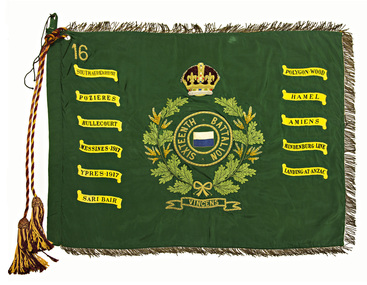
Regimental Colour - 16th Battalion (The Cameron Highlanders of Western Australia)
... Western Australia Regiment. In September 1960, at a ceremonial parade held at Northam Camp, the Colours carried by all former battalions were handed over for safe keeping by the new regiment. These former colours were subsequently laid up in the undercroft at the State War Memorial, King's Park...Western Australia Regiment. In September 1960, at a ceremonial parade held at Northam Camp, the Colours carried by all former battalions were handed over for safe keeping by the new regiment. These former colours were subsequently laid up in the undercroft at the State War Memorial, King's Park ...Presented, together with a new King's Colour, by Major-General JS Whitelaw, CB, CBE at a parade of the 16th/28th Infantry Battalion (The Cameron Highlanders of Western Australia) held on the Esplanade, Perth, 26 August 1951. (Refer to item 7 for specific details relating to these new colours and for details of previous colours presented to 16th Battalion). 16th/28th Infantry Battalion became unlinked in March 1952 with both 16th and 28th becoming independent battalions within their own right Under major reorganisation of the CMF in 1960, all individual infantry battalions that existed at the time within each State were amalgamated to form State regiments, taking effect from 1 July 1960. Thus from that date the 11/44th, 16th and 28th Infantry Battalions were amalgamated to form The Royal Western Australia Regiment. In September 1960, at a ceremonial parade held at Northam Camp, the Colours carried by all former battalions were handed over for safe keeping by the new regiment. These former colours were subsequently laid up in the undercroft at the State War Memorial, King's Park on 29 November 1964. These were transferred to the Army Museum of WA in 1988 as part of the Bicentenary Colours Project. The battle honour for South Africa has incorrect year dates and should be "SOUTH AFRICA 1902". Reasons supporting this are:- • The Battle Honour "SOUTH AFRICA 1902" was originally granted under Military Order 123/1908 to the Goldfields Infantry Regiment of Western Australia. • Under 1921 reorganisation of the Citizen Forces, the existing units in the Goldfields area were formed into 16th Battalion (The Goldfields Regiment) to maintain the identity and traditions of 16th Battalion (AIF). This unit inherited the above battle honour. • All editions of the Australian Army List since 1927 have shown this battle honour for 16th Battalion as "SOUTH AFRICA 1902". Dark green with gold fringes. In the centre the battalion colour patch of a white over blue rectangle within a circle inscribed "SIXTEENTH BATTALION", surrounded with a wreath of Australian wattle and surmounted by the Imperial Crown. Below the wreath a scroll inscribed with the regimental motto "VINCENS". In the upper canton the Arabic numeral "16". Battle Honours emblazoned on the Colour: SOUTH AFRICA 1899-1902 , POZIERES, BULLECOURT, MESSINES 1917, YPRES 1917, POLYGON WOOD, HAMEL, AMIENS, HINDENBURG LINE, LANDING AT ANZAC, SARI BAIR -
 Australian Army Museum of Western Australia
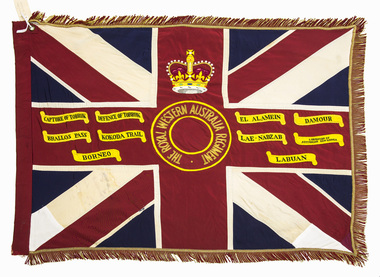
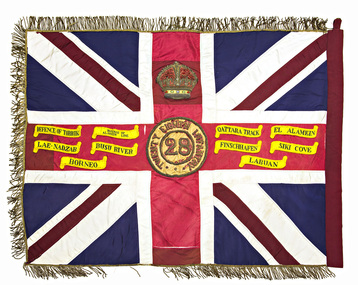
Queen's Colour - 16th Battalion, The Royal Western Australia Regiment
... The Royal Western Australia Regiment was formed on 1 July 1960 from the amalgamation of all existing infantry battalions in the State at the time :- • 11th/44th Infantry Battalion (The City of Perth Regiment) • 16th Infantry Battalion (The Cameron Highlanders of Western Australia) • 28th Infantry Battalion (The Swan Regiment) At the above presentation of colours to the new battalion, the Colours of the former battalions (four sets of Queen's and Regimental colours) were trooped through the ranks of the battalion and marched off the parade for the last time. These former colours were subsequently laid up in the undercroft at the State War Memorial, King's Park...The Royal Western Australia Regiment was formed on 1 July 1960 from the amalgamation of all existing infantry battalions in the State at the time :- • 11th/44th Infantry Battalion (The City of Perth Regiment) • 16th Infantry Battalion (The Cameron Highlanders of Western Australia) • 28th Infantry Battalion (The Swan Regiment) At the above presentation of colours to the new battalion, the Colours of the former battalions (four sets of Queen's and Regimental colours) were trooped through the ranks of the battalion and marched off the parade for the last time. These former colours were subsequently laid up in the undercroft at the State War Memorial, King's Park ...Presented to 1st Battalion, The Royal Western Australia Regiment by Field Marshall HRH The Prince Phillip, Duke of Edinburgh at a parade held at the Western Australian Cricket Association Ground, East Perth on 25 November 1962. The Royal Western Australia Regiment was formed on 1 July 1960 from the amalgamation of all existing infantry battalions in the State at the time :- • 11th/44th Infantry Battalion (The City of Perth Regiment) • 16th Infantry Battalion (The Cameron Highlanders of Western Australia) • 28th Infantry Battalion (The Swan Regiment) At the above presentation of colours to the new battalion, the Colours of the former battalions (four sets of Queen's and Regimental colours) were trooped through the ranks of the battalion and marched off the parade for the last time. These former colours were subsequently laid up in the undercroft at the State War Memorial, King's Park on 29 November 1964. These were transferred to the Army Museum of WA in 1988 as part of the Bicentenary Colours Project. (Refer to Items 4-12 for individual records of these colours) 1st Battalion, The Royal Western Australia Regiment was renumbered 16th Battalion effective from 1st January 1966 as part of a move to reintroduce the old battalion numbers back into the State Regimental system. 16th Battalion, The Royal Western Australia Regiment was presented with a new set of Colours on 27 October 2002. The original 1962 Colours were formally handed over for safe keeping to the Army Museum of Western Australia on 3 November 2002. Battle Honours allocated to the State Infantry Regiments created under the CMF reorganisation in July 1960 were promulgated in Australian Army Order 85/1962. These were a consolidation of the battle honours awarded to the various individual battalions that were amalgamated to form the new regiments. Union flag with gold fringes. In the centre a circle inscribed "THE ROYAL WESTERN AUSTRALIA REGIMENT", surmounted by the Crown. Battle honours emblazoned on the colour : CAPTURE OF TOBRUK, DEFENCE OF TOBRUK, EL ALAMEIN, DAMOUR, BRALLOS PASS, KOKODA TRAIL, LAE-NADZAB, LIBERATION OF AUSTRALIAN NEW GUINEA, BORNEO, LABUAN -
 Australian Army Museum of Western Australia
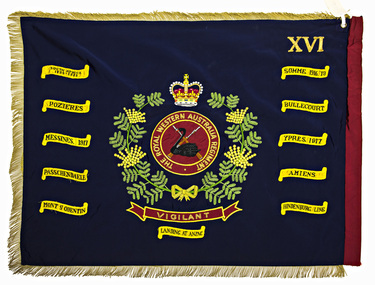
Regimental Colour - 16th Battalion, The Royal Western Australia Regiment
... The Royal Western Australia Regiment was formed on 1 July 1960 from the amalgamation of the following existing infantry battalions in the State at the time :- • 11th/44th Infantry Battalion (The City of Perth Regiment) • 16th Infantry Battalion (The Cameron Highlanders of Western Australia) • 28th Infantry Battalion (The Swan Regiment) At the above presentation of colours to the new battalion, the Colours of the former battalions (four sets of Queen's and Regimental colours) were trooped through the ranks of the battalion and marched off the parade for the last time. These former colours were subsequently laid up in the undercroft at the State War Memorial, King's Park...The Royal Western Australia Regiment was formed on 1 July 1960 from the amalgamation of the following existing infantry battalions in the State at the time :- • 11th/44th Infantry Battalion (The City of Perth Regiment) • 16th Infantry Battalion (The Cameron Highlanders of Western Australia) • 28th Infantry Battalion (The Swan Regiment) At the above presentation of colours to the new battalion, the Colours of the former battalions (four sets of Queen's and Regimental colours) were trooped through the ranks of the battalion and marched off the parade for the last time. These former colours were subsequently laid up in the undercroft at the State War Memorial, King's Park ...Presented to 1st Battalion, The Royal Western Australia Regiment by Field Marshall HRH The Prince Phillip, Duke of Edinburgh at a parade held at the Western Australian Cricket Association Ground, East Perth on 25 November 1962. The Royal Western Australia Regiment was formed on 1 July 1960 from the amalgamation of the following existing infantry battalions in the State at the time :- • 11th/44th Infantry Battalion (The City of Perth Regiment) • 16th Infantry Battalion (The Cameron Highlanders of Western Australia) • 28th Infantry Battalion (The Swan Regiment) At the above presentation of colours to the new battalion, the Colours of the former battalions (four sets of Queen's and Regimental colours) were trooped through the ranks of the battalion and marched off the parade for the last time. These former colours were subsequently laid up in the undercroft at the State War Memorial, King's Park on 29 November 1964. These were transferred to the Army Museum of WA in 1988 as part of the Bicentenary Colours Project. (Refer to Items 4-12 for individual records of these colours) 1st Battalion, The Royal Western Australia Regiment was renumbered 16th Battalion effective from 1st January 1966 as part of a move to reintroduce the old battalion numbers back into the State Regimental system 16th Battalion, The Royal Western Australia Regiment was presented with a new set of Colours on 27 October 2002. The original 1962 Colours were formally handed over for safe keeping to the Army Museum of Western Australia on 3 November 2002. Battle Honours allocated to the State Infantry Regiments created under the CMF reorganisation in July 1960 were promulgated in Australian Army Order 85/1962. These were a consolidation of the battle honours awarded to the various individual battalions that were amalgamated to form the new regiments. Royal blue with gold and red fringes. In the centre the main device from the regimental badge consisting of a black swan upon a pair of crossed rifles on a red background, within a circle inscribed "THE ROYAL WESTERN AUSTRALIA REGIMENT". The whole enclosed within a wreath of Australian wattle and surmounted by the Crown. Across the lower portion of the wreath a scroll inscribed with the regimental motto "VIGILANT". In the upper canton the Roman numeral "XVI" (Originally this was the numeral "I" - changed to "XVI" in 1966 - see Historical Background details below) Battle honours emblazoned on the colour : SOUTH AFRICA 1899-1902, SOMME 1916-18, POZIERES, BULLECOURT, MESSINES 1917, YPRES 1917, PASSCHENDAELE, AMIENS, MONT ST QUENTIN, HINDENBURG LINE, LANDING AT ANZAC -
 Australian Army Museum of Western Australia
Queen's Colour - 28th Battalion (The Swan Regiment)
... Western Australia Regiment. In September 1960, at a ceremonial parade held at Northam Camp, the Colours carried by all former battalions were handed over for safe keeping by the new regiment. Battle Honours for the Second World War were promulgated under Australian Army Order 135/1961 and the 10 selected honours approved for emblazoning on the Queen's Colour were subsequently added in 1962 These former colours were subsequently laid up in the undercroft at the State War Memorial, King's Park on 29 November 1964. ...Western Australia Regiment. In September 1960, at a ceremonial parade held at Northam Camp, the Colours carried by all former battalions were handed over for safe keeping by the new regiment. Battle Honours for the Second World War were promulgated under Australian Army Order 135/1961 and the 10 selected honours approved for emblazoning on the Queen's Colour were subsequently added in 1962 These former colours were subsequently laid up in the undercroft at the State War Memorial, King's Park on 29 November 1964. ...This former King's Colour was originally authorised by King George V in 1919 in recognition of services of 28th Battalion (AIF) during the Great War. Presented by HE the Governor General Sir Ronald Munro-Ferguson, PC, CGMG at a parade in King's Park on 2 October 1920 and handed over to 2nd Battalion, 28th Infantry Regiment of the Citizen Forces. This colour was passed on to 28th Battalion, which was created, from other units in 1921. The colour was subsequently consecrated by the Chaplain General, Archbishop COL Riley, OBE, VD,DD at a parade on the Esplanade, Perth, 15 November 1924. At the time of presentation this colour was a plain union flag with no central devices or other distinctions included on it. Following Military Board approval given in 1925 the centre circle and Crown were later added, in accordance with the approved design for a King's Colour. With the re-activation of the Citizen Military Forces (CMF) following the Second World War, the 16th/28th Infantry Battalion (The Cameron Highlanders of Western Australia) was raised as a linked battalion in 1948 to carry on the identity and traditions of the pre-war 16th and 28th Battalions respectively. The King's and Regimental Colours formerly held by these two battalions were passed on to the new battalion who paraded them in rotation on ceremonial occasions. The above battalion became unlinked in March 1952 and 28th Infantry Battalion (The Swan Regiment) became an independent battalion within its own right. The former colours of 28th Battalion were handed back at a parade at Northam Camp on 24 August 1952. With the accession of HM Queen Elizabeth II to the throne in 1953, all Colours that had originally been presented as King's Colours, and were still carried by units on the current Order of Battle, were automatically deemed to be Queen's Colours. Under major reorganisation of the CMF in 1960, all individual infantry battalions that existed at the time within each State were amalgamated to form State regiments, taking effect from 1 July 1960. Thus from that date the 11/44th, 16th and 28th Infantry Battalions were amalgamated to form The Royal Western Australia Regiment. In September 1960, at a ceremonial parade held at Northam Camp, the Colours carried by all former battalions were handed over for safe keeping by the new regiment. Battle Honours for the Second World War were promulgated under Australian Army Order 135/1961 and the 10 selected honours approved for emblazoning on the Queen's Colour were subsequently added in 1962 These former colours were subsequently laid up in the undercroft at the State War Memorial, King's Park on 29 November 1964. These were transferred to the Army Museum of WA in 1988 as part of the Bicentenary Colours Project. Union flag with gold fringes. In the centre the Arabic numeral "28" on a red background within a circle inscribed "TWENTY EIGHTH INFANTRY ", surmounted by the Crown. Emblazoned on the colour are the following Second World War Battle Honours:- DEFENCE OF TOBRUK, DEFENCE OF ALAMEIN LINE, QATTARA TRACK, EL ALAMEIN, LAE-NADZAB, BUSU RIVER, FINSCHHAFEN, SIKI COVE, BORNEO, LABUAN -
 Australian Army Museum of Western Australia
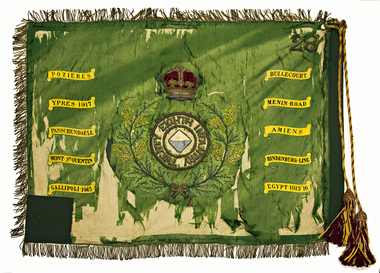
Regimental Colour - 28th Battalion (The Swan Regiment)
... Western Australia Regiment. In September 1960, at a ceremonial parade held at Northam Camp, the Colours carried by all former battalions were handed over for safe keeping by the new regiment. These former colours were subsequently laid up in the undercroft at the State War Memorial, King's Park...Western Australia Regiment. In September 1960, at a ceremonial parade held at Northam Camp, the Colours carried by all former battalions were handed over for safe keeping by the new regiment. These former colours were subsequently laid up in the undercroft at the State War Memorial, King's Park ...Presented by Lieutenant-General Sir JJ Talbot Hobbs, KCB, KCMG, VD, LLD at a parade held on the Esplanade, Perth, 22 October 1927. With the re-activation of the Citizen Military Forces (CMF) following the Second World War, the 16th/28th Infantry Battalion (The Cameron Highlanders of Western Australia) was raised as a linked battalion in 1948 to carry on the identity and traditions of the pre-war 16th and 28th Battalions respectively. The King's and Regimental Colours formerly held by these two battalions were passed on to the new battalion who paraded them in rotation on ceremonial occasions. The above battalion became unlinked in March 1952 and 28th Infantry Battalion (The Swan Regiment) became an independent battalion within its own right. The former colours of 28th Battalion were handed back at a parade at Northam Camp on 24 August 1952. Under major reorganisation of the CMF in 1960, all individual infantry battalions that existed at the time within each State were amalgamated to form State regiments, taking effect from 1 July 1960. Thus from that date the 11/44th, 16th and 28th Infantry Battalions were amalgamated to form The Royal Western Australia Regiment. In September 1960, at a ceremonial parade held at Northam Camp, the Colours carried by all former battalions were handed over for safe keeping by the new regiment. These former colours were subsequently laid up in the undercroft at the State War Memorial, King's Park on 29 November 1964. These were transferred to the Army Museum of WA in 1988 as part of the Bicentenary Colours Project. At the time of presentation this colour was a plain union flag with no central devices or other distinctions included on it. Following Military Board approval given in 1925 the centre circle and Crown were later added, in accordance with the approved design for a King's Colour. With the re-activation of the Citizen Military Forces (CMF) following the Second World War, the 16th/28th Infantry Battalion (The Cameron Highlanders of Western Australia) was raised as a linked battalion in 1948 to carry on the identity and traditions of the pre-war 16th and 28th Battalions respectively. The King's and Regimental Colours formerly held by these two battalions were passed on to the new battalion who paraded them in rotation on ceremonial occasions. The above battalion became unlinked in March 1952 and 28th Infantry Battalion (The Swan Regiment) became an independent battalion within its own right. The former colours of 28th Battalion were handed back at a parade at Northam Camp on 24 August 1952. With the accession of HM Queen Elizabeth II to the throne in 1953, all Colours that had originally been presented as King's Colours, and were still carried by units on the current Order of Battle, were automatically deemed to be Queen's Colours. Under major reorganisation of the CMF in 1960, all individual infantry battalions that existed at the time within each State were amalgamated to form State regiments, taking effect from 1 July 1960. Thus from that date the 11/44th, 16th and 28th Infantry Battalions were amalgamated to form The Royal Western Australia Regiment. In September 1960, at a ceremonial parade held at Northam Camp, the Colours carried by all former battalions were handed over for safe keeping by the new regiment. Battle Honours for the Second World War were promulgated under Australian Army Order 135/1961 and the 10 selected honours approved for emblazoning on the Queen's Colour were subsequently added in 1962 These former colours were subsequently laid up in the undercroft at the State War Memorial, King's Park on 29 November 1964. These were transferred to the Army Museum of WA in 1988 as part of the Bicentenary Colours Project. Dark green with gold fringe. In the centre the battalion colour patch of a white over blue diamond within a circle inscribed "TWENTY EIGHTH INFANTRY", the whole surrounded with a wreath of Australian wattle and surmounted by the Crown. In the upper canton the Arabic numeral "28". Battle Honours emblazoned on the colour:- POZIERES, BULLECOURT, YPRES 1917, MENIN ROAD, PASSCHENDAELE, AMIENS, MONT ST QUENTIN, HINDENBURG LINE, GALLIPOLI 1915, EGYPT 1915-16 -
 Australian Army Museum of Western Australia
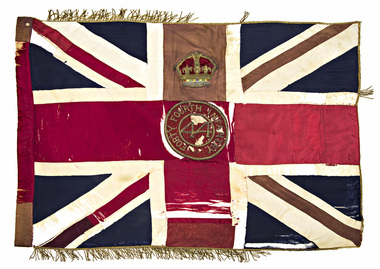
Queen's Colour - 44th Battalion (The West Australian Rifles)
... Western Australia Regiment. In September 1960, at a ceremonial parade held at Northam Camp, the Colours carried by all former battalions were handed over for safe keeping by the new regiment. These former colours were subsequently laid up in the undercroft at the State War Memorial, King's Park...Western Australia Regiment. In September 1960, at a ceremonial parade held at Northam Camp, the Colours carried by all former battalions were handed over for safe keeping by the new regiment. These former colours were subsequently laid up in the undercroft at the State War Memorial, King's Park ...This former King's Colour was originally authorised by King George V in 1919 in recognition of services of 44th Battalion (AIF) during the Great War. Presented by HE the Governor General Sir Ronald Munro-Ferguson, PC, CGMG at a parade in King's Park on 2 October, 1920, however was not passed on to any AMF counterpart unit of the Citizen Forces, as one did not exist at the time. 44th Battalion (AMF) was formed in 1921 from elements of 16th and 51st Infantry Regiments and was presented with this colour by the Governor of Western Australia Sir Robert Furse McMillan at the Anzac Day parade on the Esplanade, Perth on 25 April 1922. The colour was subsequently consecrated by the Chaplain General, Archbishop COL Riley, OBE, VD, DD at a parade on the Esplanade, Perth, 15 November 1924. At the time of presentation this colour was a plain union flag with no central devices or other distinctions included on it. Following Military Board approval given in 1925 the centre circle and Crown were later added, in accordance with the approved design for a King's Colour. With the re-activation of the Citizen Military Forces (CMF) following the Second World War, the 11th/44th Infantry Battalion (The City of Perth Regiment) was raised as a linked battalion in 1948 to carry on the identity and traditions of the pre-war 11th and 44th Battalions respectively. The King's and Regimental Colours formerly held by these two battalions were passed on to the new battalion who paraded them in rotation on ceremonial occasions. With the accession of HM Queen Elizabeth II to the throne in 1953, all Colours that had originally been presented as King's Colours, and were still carried by units on the current Order of Battle, were automatically deemed to be Queen's Colours. Under major reorganisation of the CMF in 1960, all individual infantry battalions that existed at the time within each State were amalgamated to form State regiments, taking effect from 1 July 1960. Thus from that date the 11/44th, 16th and 28th Infantry Battalions were amalgamated to form The Royal Western Australia Regiment. In September 1960, at a ceremonial parade held at Northam Camp, the Colours carried by all former battalions were handed over for safe keeping by the new regiment. These former colours were subsequently laid up in the undercroft at the State War Memorial, King's Park on 29 November 1964. These were transferred to the Army Museum of WA in 1988 as part of the Bicentenary Colours Project. Union flag with gold fringes. In the centre the Arabic numeral "44" on a red background within a circle inscribed "FORTY FOURTH INFANTRY ", surmounted by the Imperial Crown. -
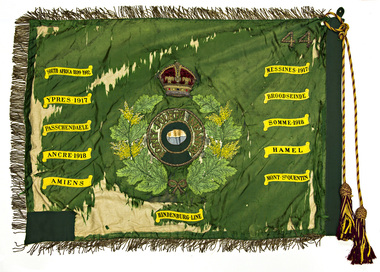 Australian Army Museum of Western Australia
Regimental Colour - 44th Battalion (The West Australian Rifles)
... Western Australia Regiment. In September 1960, at a ceremonial parade held at Northam Camp, the Colours carried by all former battalions were handed over for safe keeping by the new regiment. These former colours were subsequently laid up in the undercroft at the State War Memorial, King's Park...Western Australia Regiment. In September 1960, at a ceremonial parade held at Northam Camp, the Colours carried by all former battalions were handed over for safe keeping by the new regiment. These former colours were subsequently laid up in the undercroft at the State War Memorial, King's Park ...Presented by Lieutenant-General Sir JJ Talbot Hobbs, KCB, KCMG, VD, LLD at a parade held on the Esplanade, Perth, 22 October 1927. With the re-activation of the Citizen Military Forces (CMF) following the Second World War, the 11th/44th Infantry Battalion (The City of Perth Regiment) was raised as a linked battalion in 1948 to carry on the identity and traditions of the pre-war 11th and 44th Battalions respectively. The King's and Regimental Colours formerly held by these two battalions were passed on to the new battalion who paraded them in rotation on ceremonial occasions. Under major reorganisation of the CMF in 1960, all individual infantry battalions that existed at the time within each State were amalgamated to form State regiments, taking effect from 1 July 1960. Thus from that date the 11/44th, 16th and 28th Infantry Battalions were amalgamated to form The Royal Western Australia Regiment. In September 1960, at a ceremonial parade held at Northam Camp, the Colours carried by all former battalions were handed over for safe keeping by the new regiment. These former colours were subsequently laid up in the undercroft at the State War Memorial, King's Park on 29 November 1964. These were transferred to the Army Museum of WA in 1988 as part of the Bicentenary Colours Project. Dark green with gold fringes. In the centre the battalion colour patch of a white over blue oval within a circle inscribed "FORTY FOURTH INFANTRY", the whole within a wreath of Australian wattle and surmounted by the Imperial Crown. In the upper canton the Arabic numeral "44". The following battle honours are emblazoned on the Colour: SOUTH AFRICA 1899-1902, MESSINES 1917, YPRES 1917, BROODSEINDE, PASSCHENDAELE, SOMME 1918, ANCRE 1918, HAMEL, AMIENS, MONT ST QUENTIN, HINDENBURG LINE -
 Sunshine and District Historical Society Incorporated
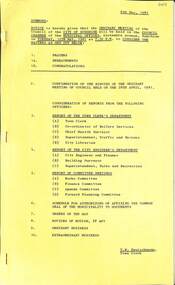
Administrative record - City of Sunshine - Commissioner Mr Alexander Alex George Gillon Collection 1976 - 1982 - Notice of ordinary meeting of the council 6th May 1981, City of Sunshine, 6th May 1981
... Albans Planning Permit Application 22kV Switch Room Monsanto Australia Ltd Somerville Road Footscray West Planning Permit Application Factory Lot 43 Judge Street Sunshine Planning Permit Application Four Flats 34 Ridley Street Albion Abandonment of Easement 39 Birchwood Boulevard Deer Park Consolidation of Title Corner Watt Street and Corio Street Sunshine (House of Sunshine) Plan of Subdivision Rita Street St. Albans Availability of Sewers Albanvale and St. Albans Western Highway (Ballarat Road) Street Lighting Between Duke Street and Hampshire Road Sunshine Albion Explosive Factory Application by Council for Drainage Licence Station Road Drain Bond Agreement 5 King...Albans Planning Permit Application 22kV Switch Room Monsanto Australia Ltd Somerville Road Footscray West Planning Permit Application Factory Lot 43 Judge Street Sunshine Planning Permit Application Four Flats 34 Ridley Street Albion Abandonment of Easement 39 Birchwood Boulevard Deer Park Consolidation of Title Corner Watt Street and Corio Street Sunshine (House of Sunshine) Plan of Subdivision Rita Street St. Albans Availability of Sewers Albanvale and St. Albans Western Highway (Ballarat Road) Street Lighting Between Duke Street and Hampshire Road Sunshine Albion Explosive Factory Application by Council for Drainage Licence Station Road Drain Bond Agreement 5 King ...Notice of Ordinary Meeting of the Council 6th May 1981 Report of the Town Clerk's Department Report of the Town Clerk Use of Committee Room and Facilities Saturday 27th June 1981 by the Sunshine International Women's Year Action Group Land Transfer Former Right of Way off Station Road Deer Park Application for Rate Exemption Brigidine Sisters Convent 54 Blanche Street Ardeer Disadvantaged Schools Supplementary Grants Programme Award Matters Report of the Co-Ordinator of Welfare Services Sunshine Park Estate Kindergarten Capital Subsidy Cherry Crescent Pre-School Centre The Duke of Edinburgh's Award Scheme Family Day Care Scheme Funding Emergency Accommodation Programme Disadvantaged Schools Programme Early Childhood Development Programme Electricity and Gas Debts in Melbourne Community Youth Support Scheme Funding Report of the Chief Health Surveyor Report of the Medical Officer of Health1980 Annual Report Health Act Registrations Application for Transfer of Proprietorship of Premises Under the Health Act Litter Material from the Inter-Departmental Committee on Litter Control Litter Bin Banks Report of the Superintendent Traffic & By-Laws Dog Act Disposal of Derelict Vehicles Report of the City Librarian Report of the Project Officer Rainbow Workshop Community Arts Network Victoria Report of the City Engineer & Planner Town & Country Planning (General Amendment) Act 1979 Rezoning Application Main Road East South East Corner St. Albans Road St. Albans Planning Permit Application Promotion / Panel Sign 57 McIntyre Road Sunshine North Planning Permit Application Finance Office Shop 8 266 Hampshire Road Sunshine Planning Permit Licensed Rosamond Bowling Club Robert Barrett Reserve Rosamond Road Maribyrnong Planning Permit Laundrette 171 Main Road West St. Albans Planning Permit Application Dental Laboratory 171 Main Road West St. Albans Planning Permit Application Carport Display Lot 5 Ballarat Road Corner Wasley Street Albion Planning Permit Application Warehouse & Associated Car Parking Lot 18 McIntyre Road Sunshine North Planning Permit Application Coffee Shop 74 Warwick Road Sunshine North Planning Permit Application Service Premises and Caretaker's Dwelling King Edward Avenue North West Corner Adelaide Street Albion Planning Permit Application New Canopy Showroom and Signs Petrol Filling Station 431 Ballarat Road Sunshine Planning Permit Application Motor Repair Station 30 Berkshire Road Sunshine North Planning Permit Application Dental Surgery Shop 103A Deer Park Shopping Centre Neale Road Deer Park Planning Permit Application Chinese Restaurant Take Away Food Shop 103B Deer Park Shopping Centre Neale Road Deer Park Rezoning Application Lots 9, 11, 13, 15, 17 & 19 Withers Street and Lots 6, 8, 10, 12, 14, 16 & 18 Martin Street and Lots 1, 2, 3, 2, 23, 24 & 25 Withers Street Sunshine Planning Permit Application Hot Bread Kitchen 40 Furlong Road Sunshine North Planning Permit Application Factory Alterations Tasman U.E.B. 520 Geelong Road Brooklyn Planning Permit Application Amusement Parlour Lot 2 Disraeli Street St. Albans Planning Permit Application 22kV Switch Room Monsanto Australia Ltd Somerville Road Footscray West Planning Permit Application Factory Lot 43 Judge Street Sunshine Planning Permit Application Four Flats 34 Ridley Street Albion Abandonment of Easement 39 Birchwood Boulevard Deer Park Consolidation of Title Corner Watt Street and Corio Street Sunshine (House of Sunshine) Plan of Subdivision Rita Street St. Albans Availability of Sewers Albanvale and St. Albans Western Highway (Ballarat Road) Street Lighting Between Duke Street and Hampshire Road Sunshine Albion Explosive Factory Application by Council for Drainage Licence Station Road Drain Bond Agreement 5 King Edward Avenue Albion Sunshine Bowling Club Proposed Club Room Extensions Vacant Land Bounded by Western Highway (Ballarat Road), Westmoreland Road and Phoenix Street Sunshine North Education Department Chifley Drive Street Lighting Opposite to Scheme St. Albans South Progress Association Request for Tree Planting Along Sunshine Tip Site Northern Boundary Norfolk Street Request to Remove Tree Disgraceful Condition of Industrial Property Along McIntyre Road Sunshine North Report of the Building Surveyor Location of Building Lot 6 McIntyre Road Sunshine North Location of Building 9 Orloff Court Sunshine North Height of Fence 8 Glenrobe Street Deer Park Height of Fence 3 Horham Court St. Albans Building Over Easement 3 Ordell Close Deer Park Building Over Easement 3 Robyn Avenue St. Albans Building Over Easement 11 Morval Court Deer Park Rotary Club of Sunshine Has Request the Provision of Rubbish Bins at Rotary Park Schedule for Authorising of Affixing the Common Seal of the Municipality to Documents Orders of the Day Accounts Submitted for Payment as at 30th April 1981station road, deer park, sunshine international women's year action group, brigidine sisters convent, blanche street, ardeer, sunshine park estate kindergarten, cherry crescent pre-school centre, cherry crescent, braybrook, main road east, st. albans road, st. albans, mcintyre road, sunshine north, hampshire road, sunshine, robert barrett reserve, rosamond road, maribyrnong, rosamond bowling club, main road west, ballarat road, wasley street, albion, warwick road, king edward avenue, berkshire road, adelaide street, deer park shopping centre, neale road, withers street, martin street, furlong road, tasman u.e.b., geelong road, brooklyn, disraeli street, monsanto, somerville road, footscray west, judge street, ridley street, birchwood boulevard, watt street, corio street, house of sunshine, rita street, western highway, duke street, albion explosive factory, sunshine bowling club, anderson road, westmoreland road, phoenix street, chifley drive, st. albans south progress association, sunshine tip, norfolk street, orloff court, glenrobe street, horham court, ordell close, robyn avenue, morval court, rotary club of sunshine, rotary park
