
Showing 321 items matching "knitting fashion"
-
 National Wool Museum
Book, Pattern, Fashion and Knitting Patterns no. 7
... Fashion and Knitting Patterns no. 7...Knitting Handicrafts - history Sewing Fashion...FASHION and KNITTING / Patterns / NUMBER 7 / 2'6 / Wonderful / cut-out offers / A fur hat / for 26s. / Presents / to make / Sewing / and / knitting / fashions...Knitting Handicrafts - history Sewing Fashion Knitting Handicrafts - history Sewing Fashion FASHION and KNITTING / Patterns / NUMBER 7 / 2'6 / Wonderful / cut-out offers / A fur hat / for 26s. / Presents / to make / Sewing / and / knitting / fashions Fashion and Knitting Patterns no. 7 Book, Pattern ...This book was owned by the late Dr Elizabeth Kerr and was donated to the Museum by the executor of her estate, Margaret Cameron. It is an English periodical from Nov. 1965 containing knitting and sewing patterns for womens garments.FASHION and KNITTING / Patterns / NUMBER 7 / 2'6 / Wonderful / cut-out offers / A fur hat / for 26s. / Presents / to make / Sewing / and / knitting / fashionsknitting handicrafts - history sewing fashion, knitting, handicrafts - history, sewing, fashion -
 National Wool Museum
Yarn sample book, The Fashion in Knitting
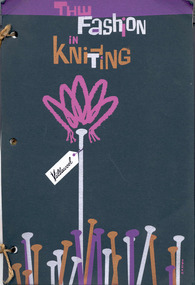
... The Fashion in Knitting...THE / FashioN / iN / kNiTTiNG / Villawool SAXTON...The Fashion in Knitting Yarn sample book ...This book is a sample book of the various types, thicknesses and colours of hand knitting yarn produced by the Villawood Textile Company under the trade name of 'Villawool' in c.1963. The illustration on the front cover was produced by a designer / design firm called 'Saxton'.Front cover of a book of Villawool knitting yarn samples produced by the Villawood Textile Company, c.1963.THE / FashioN / iN / kNiTTiNG / Villawool SAXTONhandicrafts knitting, villawood textile company, handicrafts, knitting -
National Wool Museum
Book, The Art of Knitting
... Handicrafts - history Knitting Fashion...Handicrafts - history Knitting Fashion National Gallery of Victoria Handicrafts - history Knitting Fashion The Art of Knitting Book ..."The Art of Knitting" exhibition catalogue from an exhibition held at the National Gallery of Victoria in 1989. Included historical and contemporary designer knitted pieces.handicrafts - history knitting fashion, national gallery of victoria, handicrafts - history, knitting, fashion -
 National Wool Museum
Book, Knitting, Vogue Knitting Book Fall-Winter 1955
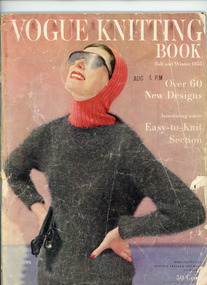
... Knitting Fashion...It was published by American Vogue in 1955 and contains knitting patterns for womens garments. Knitting Fashion Vogue - America Knitting Fashion VOGUE KNITTING / BOOK / Fall and Winter 1955 / Over 60 / New Designs / Introducing a new / Easy-to-Knit / Section / 50 Cents Vogue Knitting Book Fall-Winter 1955 Book, Knitting ...This book was owned by the late Dr Elizabeth Kerr and was donated to the Museum by the executor of her estate, Margaret Cameron. It was published by American Vogue in 1955 and contains knitting patterns for womens garments.VOGUE KNITTING / BOOK / Fall and Winter 1955 / Over 60 / New Designs / Introducing a new / Easy-to-Knit / Section / 50 Centsknitting fashion, vogue - america, knitting, fashion -
 National Wool Museum
Book, Knitting, Vogue Knitting Book Fall-Winter 1961
... Knitting Fashion...VOGUE / KNITTING / FALL-WINTER 1961 / 50c / 50 FASHIONS / FOR YOU / TO KNIT / new shapes / new textures / new colours / THE LITHE LOOK / IN KNITTED DRESSES / BOUTIQUE / OF SWEATERS / FOR MEN...It was produced by American Vogue and contains knitting patterns for womens garments and mens jumpers. Knitting Fashion Vogue - America Knitting Fashion VOGUE / KNITTING / FALL-WINTER 1961 / 50c / 50 FASHIONS / FOR YOU / TO KNIT / new shapes / new textures / new colours / THE LITHE LOOK / IN KNITTED DRESSES / BOUTIQUE / OF SWEATERS / FOR MEN Vogue Knitting Book Fall-Winter 1961 Book, Knitting ...This book was owned by the late Dr Elizabeth Kerr and was donated to the Museum by the executor of her estate, Margaret Cameron. It was produced by American Vogue and contains knitting patterns for womens garments and mens jumpers.VOGUE / KNITTING / FALL-WINTER 1961 / 50c / 50 FASHIONS / FOR YOU / TO KNIT / new shapes / new textures / new colours / THE LITHE LOOK / IN KNITTED DRESSES / BOUTIQUE / OF SWEATERS / FOR MENknitting fashion, vogue - america, knitting, fashion -
 National Wool Museum
Book, Knitting, Vogue Knitting Book no. 52
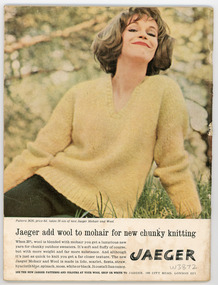
... Knitting Fashion...It contains knitting patterns for mens and womens garments. Knitting Fashion Vogue - English Knitting Fashion VOGUE KNITTING / BOOK / Make this a / KNITTED / summer / Instructions inside / No. 52 PRICE 3'10 Vogue Knitting Book no. 52 Book, Knitting ...This book was owned by the late Dr Elizabeth Kerr and was donated to the Museum by the executor of her estate, Margaret Cameron. It was produced by English Vogue in 1958 and was part of a twice yearly sereies. It contains knitting patterns for mens and womens garments.VOGUE KNITTING / BOOK / Make this a / KNITTED / summer / Instructions inside / No. 52 PRICE 3'10knitting fashion, vogue - english, knitting, fashion -
 National Wool Museum
Book, Knitting, Vogue Knitting Book no. 55
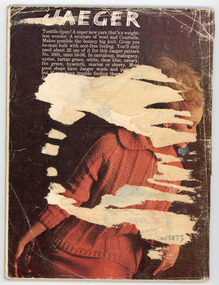
... Knitting Fashion...It was produced by English Vogue in 1959 and contains knitting patterns for mens and womens garments. Knitting Fashion Vogue - English Knitting Fashion Vogue Knitting Book / For all / occasions / .. jackets / .. ski sweaters / .. bedjackets / Sizes 30-44 / Instructions inside / No. 55 Price 2'6 Vogue Knitting Book no. 55 Book, Knitting ...This book was owned by the late Dr Elizabeth Kerr and was donated to the Museum by the executor of her estate, Margaret Cameron. It was produced by English Vogue in 1959 and contains knitting patterns for mens and womens garments.Vogue Knitting Book / For all / occasions / .. jackets / .. ski sweaters / .. bedjackets / Sizes 30-44 / Instructions inside / No. 55 Price 2'6knitting fashion, vogue - english, knitting, fashion -
 National Wool Museum
Book, Knitting, Vogue Knitting Book no. 61
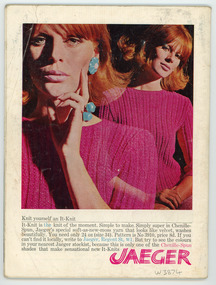
... Knitting Fashion...It was published by English Vogue and contains knitting patterns for men, women and childrens garments. Knitting Fashion Vogue - English Knitting Fashion Vogue / knitting / BOOK No. 61 / For you .. / For men .. / For children .. / All you need / to knit now / Instructions inside / 2'6 Vogue Knitting Book no. 61 Book, Knitting ...This book was owned by the late Dr Elizabeth Kerr and was donated to the Museum by the executor of her estate, Margaret Cameron. It was published by English Vogue and contains knitting patterns for men, women and childrens garments.Vogue / knitting / BOOK No. 61 / For you .. / For men .. / For children .. / All you need / to knit now / Instructions inside / 2'6knitting fashion, vogue - english, knitting, fashion -
 National Wool Museum
Book, Knitting, Vogue Knitting Book no. 65
... Knitting Fashion...It was published by English Vogue and contains knitting patterns for womens garments. Knitting Fashion Vogue - English Knitting Fashion VOGUE / Knitting / Book / no. 65 / Over 28 / new designs / suits / sweaters / dresses Vogue Knitting Book no. 65 Book, Knitting ...This book was owned by the late Dr Elizabeth Kerr and was donated to the Museum by the executor of her estate, Margaret Cameron. It was published by English Vogue and contains knitting patterns for womens garments.VOGUE / Knitting / Book / no. 65 / Over 28 / new designs / suits / sweaters / dressesknitting fashion, vogue - english, knitting, fashion -
 National Wool Museum
Book, Knitting, Vogue Easy Knits no. 2
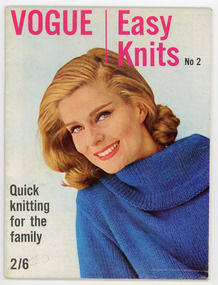
... Knitting Fashion...It was produced by English Vogue and contains knitting patterns for mens, womens and childrens garments. Knitting Fashion Vogue - English Knitting Fashion VOGUE / Easy / Knits / No 2 / Quick / knitting / for the / family / 2'6 Vogue Easy Knits no. 2 Book, Knitting ...This book was owned by the late Dr Elizabeth Kerr and was donated to the Museum by the executor of her estate, Margaret Cameron. It was produced by English Vogue and contains knitting patterns for mens, womens and childrens garments.VOGUE / Easy / Knits / No 2 / Quick / knitting / for the / family / 2'6knitting fashion, vogue - english, knitting, fashion -
 National Wool Museum
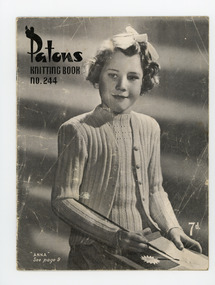
Book - Patons Knitting Book no. 244, Patons and Baldwins, 1945 - 1950
... ...knitting...fashion...This book was produced by Patons and Baldwins and contains knitting patterns for children. handicrafts - history knitting patons and baldwins (australia) ltd handicrafts - history knitting fashion style knitwear wool Patons / KNITTING BOOK / NO. 244 / 7d. / "ANNA" / See page 9 Knitting book, 20pp. ...One of a collection of 56 knitting pattern books donated by Mrs Hilma Carruthers. These books had been used by Mrs Carruthers, her mother and her two daughters. This book was produced by Patons and Baldwins and contains knitting patterns for children.Knitting book, 20pp. Cover depicts a young girl wearing a knitted twin set holding a paint brush. Contains patterns and some photos.Patons / KNITTING BOOK / NO. 244 / 7d. / "ANNA" / See page 9handicrafts - history knitting, patons and baldwins (australia) ltd, handicrafts - history, knitting, fashion, style, knitwear, wool -
 National Wool Museum
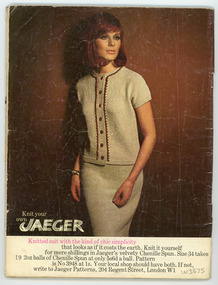
Book, Knitting, Vogue Knitting Book no. 67
... Knitting Crochet Fashion...It was published by English Vogue and contains knitting and crochet patterns for womens garments. Knitting Crochet Fashion Vogue - English Knitting Crochet Fashion VOGUE / KNITTING / No 67 / VOGUE'S / GUIDE TO / WHAT COUNTS / NOW / OVER 25 / GREAT NEW / DESIGNS / TO KNIT / TO CROCHET / 2'6 Vogue Knitting Book no. 67 Book, Knitting ...This book was owned by the late Dr Elizabeth Kerr and was donated to the Museum by the executor of her estate, Margaret Cameron. It was published by English Vogue and contains knitting and crochet patterns for womens garments.VOGUE / KNITTING / No 67 / VOGUE'S / GUIDE TO / WHAT COUNTS / NOW / OVER 25 / GREAT NEW / DESIGNS / TO KNIT / TO CROCHET / 2'6knitting crochet fashion, vogue - english, knitting, crochet, fashion -
 National Wool Museum
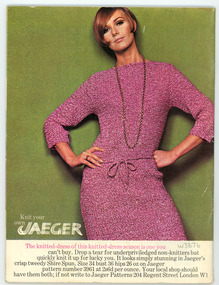
Book, Knitting, Vogue Knitting Book no. 68
... Knitting Crochet Fashion...It was published by English Vogue and contains knitting and crochet patterns for womens garments. Knitting Crochet Fashion Vogue - English Knitting Crochet Fashion VOGUE KNITTING / No. 68 / 27 / GREAT NEW LOOKS / TO KNIT AND CROCHET / FOR SPRING AND SUMMER / 2'6 Vogue Knitting Book no. 68 Book, Knitting ...This book was owned by the late Dr Elizabeth Kerr and was donated to the Museum by the executor of her estate, Margaret Cameron. It was published by English Vogue and contains knitting and crochet patterns for womens garments.VOGUE KNITTING / No. 68 / 27 / GREAT NEW LOOKS / TO KNIT AND CROCHET / FOR SPRING AND SUMMER / 2'6knitting crochet fashion, vogue - english, knitting, crochet, fashion -
 National Wool Museum
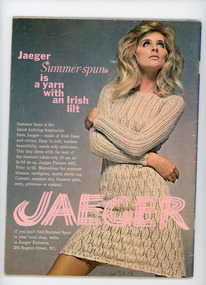
Book, Knitting, Vogue Knitting no. 1
... Knitting Crochet Fashion...It was produced by English Vogue and contains knitting and crochet patterns for womens garments. Knitting Crochet Fashion Vogue - English Knitting Crochet Fashion VOGUE / KNITTING / NEW ISSUE No. 1 / 3/- / 28 / NEW / DESIGNS / INCLUDING / 4 / SUPER / SHETLANDS / 3 / SPRING / DRESSES / 5 / SUMMER / EVENING / LOOKS / 11 / SUITS & / SWEATERS Vogue Knitting no. 1 Book, Knitting ...This book was owned by the late Dr Elizabeth Kerr and was donated to the Museum by the executor of her estate, Margaret Cameron. It was produced by English Vogue and contains knitting and crochet patterns for womens garments.VOGUE / KNITTING / NEW ISSUE No. 1 / 3/- / 28 / NEW / DESIGNS / INCLUDING / 4 / SUPER / SHETLANDS / 3 / SPRING / DRESSES / 5 / SUMMER / EVENING / LOOKS / 11 / SUITS & / SWEATERSknitting crochet fashion, vogue - english, knitting, crochet, fashion -
 National Wool Museum
Book, Knitting, Vogue Knitting no. 3
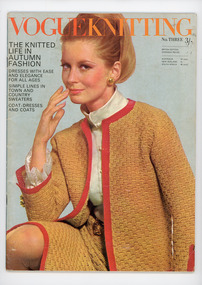
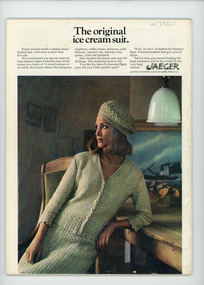
... Knitting Crochet Fashion...VOGUE KNITTING / No. THREE / 3/- / THE KNITTED / LIFE IN / AUTUMN / FASHION / DRESSES WITH EASE / AND ELEGANCE / FOR ALL AGES / SIMPLE LINES IN / TOWN AND / COUNTRY / SWEATERS / COAT-DRESSES / AND COATS...It was produced by English Vogue and contains knitting and crochet patterns for womens garments. Knitting Crochet Fashion Vogue - English Knitting Crochet Fashion VOGUE KNITTING / No. ...This book was owned by the late Dr Elizabeth Kerr and was donated to the Museum by the executor of her estate, Margaret Cameron. It was produced by English Vogue and contains knitting and crochet patterns for womens garments.VOGUE KNITTING / No. THREE / 3/- / THE KNITTED / LIFE IN / AUTUMN / FASHION / DRESSES WITH EASE / AND ELEGANCE / FOR ALL AGES / SIMPLE LINES IN / TOWN AND / COUNTRY / SWEATERS / COAT-DRESSES / AND COATSknitting crochet fashion, vogue - english, knitting, crochet, fashion -
 National Wool Museum
Book, Knitting, Vogue Knitting No. 4
... Knitting Crochet Fashion...It was produced by English Vogue and contains knitting and crochet patterns for womens garments. Knitting Crochet Fashion Vogue - English Knitting Crochet Fashion VOGUE KNITTING / SPRING/SUMMER 1968 No. 4. / 3/- / LOOK / PRETTY / IN SPRING / KNITTING / 4 PATTERNS / EASY FOR / BEGINNERS / NEW / LINES IN / SEPARATES / SPECIAL / SPEED / KNITTING / FEATURE Vogue Knitting No. 4 Book, Knitting ...This book was owned by the late Dr Elizabeth Kerr and was donated to the Museum by the executor of her estate, Margaret Cameron. It was produced by English Vogue and contains knitting and crochet patterns for womens garments.VOGUE KNITTING / SPRING/SUMMER 1968 No. 4. / 3/- / LOOK / PRETTY / IN SPRING / KNITTING / 4 PATTERNS / EASY FOR / BEGINNERS / NEW / LINES IN / SEPARATES / SPECIAL / SPEED / KNITTING / FEATUREknitting crochet fashion, vogue - english, knitting, crochet, fashion -
 National Wool Museum
Textile - Children's Cardigan, Kathryn Knitwear, c.1960
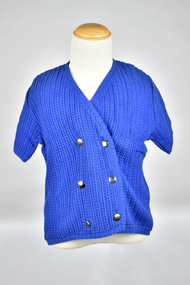
... ...Machine Knitting...Fashion... Textile Production Machine Knitting Fashion Cotton .1) [white label at back neck with blue stitching] KATHRYN REGD. ...Kathryn Knitwear, founded by Robert Blake, manufactured high quality children’s knitwear in Melbourne from the 1940s – 1980s. Robert Blake began manufacturing children’s knitwear in his bedroom in Strathmore using a hand powered machine in the late 1940s. The operation moved to Ascot Vale and Essendon, before eventually establishing a factory in Moonee Ponds in the early 1950s. The business continued to expand, necessitating a move to a new factory in Broadmeadows. By 1962, the Broadmeadows factory was producing an average of 20,000 garments per month, which increased to 24,000 by 1964. Robert Blake’s Son, Brendan recalls that “The Kathryn brand was famous around Australia, anywhere children needed to keep warm and dress smartly. It also won a number of wool fashion awards”, including the 1969 Wool Awards, which was held by the Australian Wool Bureau and published in Women’s Weekly. The Kathryn range was designed for durability, comfort and care, without sacrificing style. They used patterning techniques that increase stretchiness, comfort and fit, as well as integrating decorative elements into the fabric to prevent them from being bulky, uncomfortable or tight. Making longevity of style a priority, Brendan Blake remembers that “there was one particular garment that was in the range for at least thirty years”. He also recalls “In the past, when women have found out that I was associated with Kathryn Knitwear, they would often relate to me the story of a garment they had purchased or received as a gift and, when their child had grown out of it, they would hand it on to another child. Several ladies have told me of purchasing garments for their daughters’ glory box, or saving a particular garment after their daughter had grown out of it. Brendan Blake: “At the peak of their operation they employed approximately two hundred people, mainly women and girls. A family would often seek to send their daughter to work in this company because they knew they would be looked after and safe. One lady wrote to me telling me that working at the Moonee Ponds Factory prior to getting married was the happiest time of her life.” In 1963, workers at the Kathryn factory earned £13 per week, which was 8 shillings and 8 pence higher than the minimum weekly wage for female workers in the textile manufacturing industry (£12 11s 4d). By 1970, the Kathryn Knitwear brand expanded from children’s knitwear into womenswear under the brand name ‘Lady Kathryn’, and for boys and men under ‘Robert Blake’. Continuing to diversify their distribution, they also began exporting ‘Kathryn’ garments to New Zealand, the Pacific Islands, and Japan. ‘Kathryn Knitwear’ was well-known for their early adoption of modern materials and techniques that had broad appeal to their customer base. This is shown in their early use of the acrylic fibre ‘Orlon’ in the 50s and 60s and ‘Superwash’ wool in the 1970s. Many of Kathryn Knitwear’s styles, particularly those that were long running staples of the brand, were available in both wool and Orlon to suit the consumer’s preference. Cotton is a common material for knitwear worn in the warmer months, as it is very breathable and absorbs moisture easily. While we mostly associate knitwear with keeping us warm in the cold, the market for Australian knitwear would be very limited without options to wear all year round. Far from the humble origins of one man in his bedroom with a hand-cranked machine; at its closure in 1980, the Broadmeadows factory of ‘Kathryn’ housed more than 100 machines, including 53 sewing machines and 45 knitting machines. Robert Blake was “a passionate advocate for wool and Australian Made” throughout his whole life. A strong thread that ties through the lifespan of Robert Blake and Kathryn Knitwear is a balance between adopting new innovations without sacrificing the core values of durability, comfort, care and style that had made the brand so well known. Their legacy forms an integral part of both Australian social and manufacturing history.Royal blue double breasted cardigan 'Reefer Jacket' with short sleeves in a textured rib stitch with six chrome metal buttons in two rows down centre front. Style 319/J .2 is sample tag with manufacturing information, including sizes and colours available.1) [white label at back neck with blue stitching] KATHRYN REGD. CREATED BY ALL COTTON / 24 / ROBERT BLAKE .2) [sample label] [OBVERSE] STYLE: 319/J – Reefer Jacket – Combed Cot. SIZE: 22” 24” 26” 28” 30” 32” PRICE: 20/- 21/- 22/6 24/- 26/- 27/6 COLOR: NAVY ONLY. [REVERSE] KATHRYN Garments are • PRE-SHRUNK • STANDARD MEASUREMENTS • FIT EXACTLY • LAUNDER PERFECTLY Designed and Manufactured by ROBERT BLAKE, MELBOURNEknitwear, children's knitwear, clothing, children's clothing, cardigan, manufacturing, fashion textile production, machine knitting, fashion cotton -
 National Wool Museum
Journal, Madame Weigel's Journal of Fashion, April 1, 1937, 1937
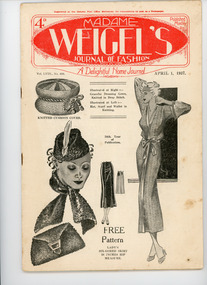
... knitting handicrafts - history fashion crochet...This book is a monthly journal of fashion published by Madame Weigel's Pty Ltd. knitting handicrafts - history fashion crochet madame weigel pty ltd knitting handicrafts - history fashion crochet Registered at the General Post Office Melbourne, for transmission by post as a Newspaper. / 4D / Published / Monthly. / MADAME / WEIGEL'S / JOURNAL OF FASHION / A Delightful Home Journal / Vol. ...This book and a number of others like it were owned by the mother and aunts of the donor, Mrs Dorothy Boyle. They were prolific producers of hand knitted and hand made items of clothing and also knitted and sewed for the armed forces during the Second World War. This book is a monthly journal of fashion published by Madame Weigel's Pty Ltd.Registered at the General Post Office Melbourne, for transmission by post as a Newspaper. / 4D / Published / Monthly. / MADAME / WEIGEL'S / JOURNAL OF FASHION / A Delightful Home Journal / Vol. LVIII., No. 686. / APRIL 1, 1937. / Illustrated at Right:- /knitting handicrafts - history fashion crochet, madame weigel pty ltd, knitting, handicrafts - history, fashion, crochet -
 National Wool Museum
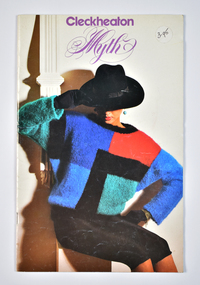
Book - Pattern Book, Cleckheaton Myth, Cleckheaton, 1980s - 1990s
... Knitting...Pattern...Fashion...Knitting Pattern Fashion Knitwear Cleckheaton front: [printed] Cleckheaton / Myth front: [handwritten] 3.95 Knitting pattern book with colour pages and black and white printed text. ...Knitting pattern book with colour pages and black and white printed text. Contains 13 patterns for knitwear.front: [printed] Cleckheaton / Myth front: [handwritten] 3.95knitting, pattern, fashion, knitwear, cleckheaton -
 National Wool Museum
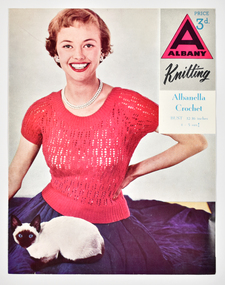
Booklet - Albany Knitting, Albanella Crochet, Albany Woollen Mills
... Knitting...Pattern...Fashion...Knitting Pattern Fashion Knitwear Albany Woollen Mills front: [printed] PRICE / 3d. / ALBANY / Knitting / Albanella Crochet / BUST 32-36 inches / 4-5 ozs Four page paper fold out brochure with colour photograph on the front and printed black text on other pages. ...Four page paper fold out brochure with colour photograph on the front and printed black text on other pages. Image shows a woman wearing a pink short sleeved jumper with a cat on her lap.front: [printed] PRICE / 3d. / ALBANY / Knitting / Albanella Crochet / BUST 32-36 inches / 4-5 ozsknitting, pattern, fashion, knitwear, albany woollen mills -
 National Wool Museum
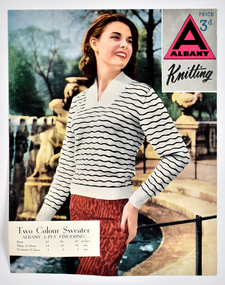
Booklet - Albany Knitting, Two Colour Sweater, Albany Woollen Mills
... Knitting...Pattern...Fashion...Knitting Pattern Fashion Knitwear Albany Woollen Mills front: [printed] PRICE / 3d. / ALBANY / Knitting / Two Colour Sweater / ALBANY 4-PLY FINGERING / Bust 32 36 40 inches / Main Colour 14 16 18 ozs. / Contrast Colour 3 3 3 ozs. ...Four page paper fold out brochure with colour photograph on the front and printed black text on other pages. Image shows a woman wearing a black and white striped jumper with a fountain in the background.front: [printed] PRICE / 3d. / ALBANY / Knitting / Two Colour Sweater / ALBANY 4-PLY FINGERING / Bust 32 36 40 inches / Main Colour 14 16 18 ozs. / Contrast Colour 3 3 3 ozs.knitting, pattern, fashion, knitwear, albany woollen mills -
 National Wool Museum
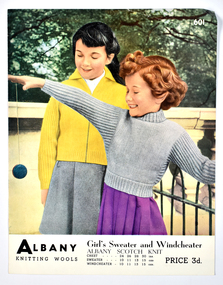
Booklet - Albany Knitting Wools, Girls Sweater and Windcheater, Albany Woollen Mills
... Knitting...Pattern...Fashion...Knitting Pattern Fashion Knitwear Albany Woollen Mills front: [printed] ALBANY / KNITTING WOOLS / Girl's Sweater and Windcheater / ALBANY SCOTCH KNIT / CHEST .... 24 26 28 30 ins. / SWEATER ... 10 11 13 15 ozs. / WINDCHEATER . 10 11 13 15 ozs. / PRICE 3d. ...Four page paper fold out brochure with colour photograph on the front and printed black text on other pages. Image shows two children wearing grey, yellow and purple knitwear, one child is using a yo-yo.front: [printed] ALBANY / KNITTING WOOLS / Girl's Sweater and Windcheater / ALBANY SCOTCH KNIT / CHEST .... 24 26 28 30 ins. / SWEATER ... 10 11 13 15 ozs. / WINDCHEATER . 10 11 13 15 ozs. / PRICE 3d.knitting, pattern, fashion, knitwear, albany woollen mills -
 National Wool Museum
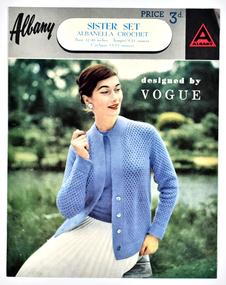
Booklet - Albany Knitting, Sister Set Albanella Crochet, Albany Woollen Mills
... Knitting...Pattern...Fashion...Knitting Pattern Fashion Knitwear Albany Woollen Mills front: [printed] Albany / PRICE 3d. / SISTER SET / ALBANELLA CROCHET / Bust 32-40 inches. ...Four page paper fold out brochure with colour photograph on the front and printed black text on other pages. Image shows a woman seated in a garden setting wearing a blue cardigan.front: [printed] Albany / PRICE 3d. / SISTER SET / ALBANELLA CROCHET / Bust 32-40 inches. Jumper 9-11 ounces / Cardigan 13-15 ounces / ALBANY / designed by / V O G U Eknitting, pattern, fashion, knitwear, albany woollen mills -
 National Wool Museum
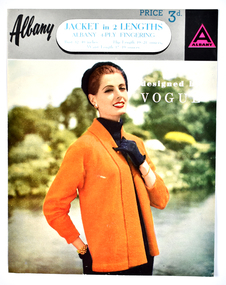
Booklet - Albany Knitting, Jacket in 2 Lengths, Albany Woollen Mills
... Knitting...Pattern...Fashion...Knitting Pattern Fashion Knitwear Albany Woollen Mills front: [printed] Albany / PRICE 3d. / JACKET in 2 LENGTHS / ALBANY 4-PLY FINGERING / Bust 32-40 inches Hip Length 19-21 ounces. / Waist Length 17-19 ounces / ALBANY / designed by / V O G U E Four page paper fold out brochure with colour photograph on the front and printed black text on other pages. ...Four page paper fold out brochure with colour photograph on the front and printed black text on other pages. Image shows a woman wearing an orange cardigan with black gloves and black headwear.front: [printed] Albany / PRICE 3d. / JACKET in 2 LENGTHS / ALBANY 4-PLY FINGERING / Bust 32-40 inches Hip Length 19-21 ounces. / Waist Length 17-19 ounces / ALBANY / designed by / V O G U Eknitting, pattern, fashion, knitwear, albany woollen mills -
 National Wool Museum
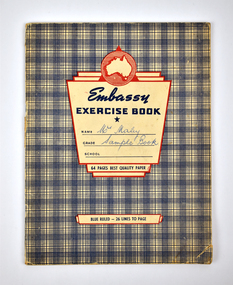
Archive - Notebook, Kathryn Knitwear, 1947-1953
... ...Knitting Machine...Fashion...Business Business history Manufacturing Knitting Machine Fashion Textile Production Business Archives Manufacturing Documents Embassy Brand Coles [Obverse] Embassy EXERCISE BOOK NAME [handwritten] Mrs Maley GRADE [handwritten] Sample Book SCHOOL 64 PAGES BEST QUALITY PAPER BLUE RULED – 26 LINES TO PAGE [sample of internal pages] [left page] Notes: 34” = 3 garments out of 40” Length 32” = 3 “ “ “ 38 “ “ 30” = 28” = Cut together (26” = 4 garments “ “ 33” “ (24 = 4 garments “ “ 33” length Blue 36” Red 36 ½“ Green 36” Royal 35 ½” [right page] Design Esquire (Width 35 ½ - 36) Size 34” Width Yardage Size 32” Width Yardage Sample cotton 90 ribs for 28” Size 28” (sample size) Width cut to 20 ½ (double) Yardage 34 ½“ for 2 garm. ...Kathryn Knitwear, founded by Robert Blake, manufactured high quality children’s knitwear in Melbourne from the 1940s – 1980s. Robert Blake began manufacturing children’s knitwear in his bedroom in Strathmore using a hand powered machine in the late 1940s. The operation moved to Ascot Vale and Essendon, before eventually establishing a factory in Moonee Ponds in the early 1950s. The business continued to expand, necessitating a move to a new factory in Broadmeadows. By 1962, the Broadmeadows factory was producing an average of 20,000 garments per month, which increased to 24,000 by 1964. Robert Blake’s Son, Brendan recalls that “The Kathryn brand was famous around Australia, anywhere children needed to keep warm and dress smartly. It also won a number of wool fashion awards”, including the 1969 Wool Awards, which was held by the Australian Wool Bureau and published in Women’s Weekly. The Kathryn range was designed for durability, comfort and care, without sacrificing style. They used patterning techniques that increase stretchiness, comfort and fit, as well as integrating decorative elements into the fabric to prevent them from being bulky, uncomfortable or tight. Making longevity of style a priority, Brendan Blake remembers that “there was one particular garment that was in the range for at least thirty years”. He also recalls “In the past, when women have found out that I was associated with Kathryn Knitwear, they would often relate to me the story of a garment they had purchased or received as a gift and, when their child had grown out of it, they would hand it on to another child. Several ladies have told me of purchasing garments for their daughters’ glory box, or saving a particular garment after their daughter had grown out of it. Brendan Blake: “At the peak of their operation they employed approximately two hundred people, mainly women and girls. A family would often seek to send their daughter to work in this company because they knew they would be looked after and safe. One lady wrote to me telling me that working at the Moonee Ponds Factory prior to getting married was the happiest time of her life.” In 1963, workers at the Kathryn factory earned £13 per week, which was 8 shillings and 8 pence higher than the minimum weekly wage for female workers in the textile manufacturing industry (£12 11s 4d). By 1970, the Kathryn Knitwear brand expanded from children’s knitwear into womenswear under the brand name ‘Lady Kathryn’, and for boys and men under ‘Robert Blake’. Continuing to diversify their distribution, they also began exporting ‘Kathryn’ garments to New Zealand, the Pacific Islands, and Japan. ‘Kathryn Knitwear’ was well-known for their early adoption of modern materials and techniques that had broad appeal to their customer base. This is shown in their early use of the acrylic fibre ‘Orlon’ in the 50s and 60s and ‘Superwash’ wool in the 1970s. Many of Kathryn Knitwear’s styles, particularly those that were long running staples of the brand, were available in both wool and Orlon to suit the consumer’s preference. Far from the humble origins of one man in his bedroom with a hand-cranked machine; at its closure in 1980, the Broadmeadows factory of ‘Kathryn’ housed more than 100 machines, including 53 sewing machines and 45 knitting machines. Robert Blake was “a passionate advocate for wool and Australian Made” throughout his whole life. A strong thread that ties through the lifespan of Robert Blake and Kathryn Knitwear is a balance between adopting new innovations without sacrificing the core values of durability, comfort, care and style that had made the brand so well known. Their legacy forms an integral part of both Australian social and manufacturing history. The ‘Embassy’ brand was a house brand of Coles stores from 1929-1994, and manufactured a wide variety of household goods. The manufacture of this specific style of notebook can be dated to between 1947 and 1953.Notebook with handwritten instructions, formulas and sketches detailing patterns for samples. ‘Embassy’ exercise book cover is printed with a blue checked pattern on a background that was originally likely white, but appears cream due to discolouration. The centre of the front cover has a trapezoidal label that provides space for handwritten labels, and features a map of Australia inside a red circle, as well as the manufacturers branding. The 64 internal pages are printed with blue lines as a writing guide.[Obverse] Embassy EXERCISE BOOK NAME [handwritten] Mrs Maley GRADE [handwritten] Sample Book SCHOOL 64 PAGES BEST QUALITY PAPER BLUE RULED – 26 LINES TO PAGE [sample of internal pages] [left page] Notes: 34” = 3 garments out of 40” Length 32” = 3 “ “ “ 38 “ “ 30” = 28” = Cut together (26” = 4 garments “ “ 33” “ (24 = 4 garments “ “ 33” length Blue 36” Red 36 ½“ Green 36” Royal 35 ½” [right page] Design Esquire (Width 35 ½ - 36) Size 34” Width Yardage Size 32” Width Yardage Sample cotton 90 ribs for 28” Size 28” (sample size) Width cut to 20 ½ (double) Yardage 34 ½“ for 2 garm. Size 26” Width Yardage Size 24” Width Yardagebusiness, business history, manufacturing, knitting machine, fashion textile production, business archives, manufacturing documents, embassy brand, coles -
 National Wool Museum
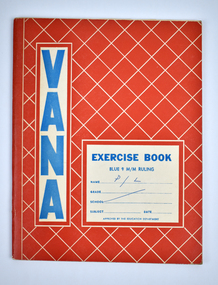
Archive - Notebook, Kathryn Knitwear, c.1962
... ...Knitting Machine...Fashion...Business Business history Manufacturing Knitting Machine Fashion Textile Production Business Archives Manufacturing Documents VANA [Obverse] VANA EXERCISE BOOK BLUE 9M/M RULING NAME [handwritten] P/L GRADE SCHOOL SUBJECT DATE APPROVED BY THE EDUCATION DEPARTMENT Notebook with handwritten tables and figures recording data about production and sales of Kathryn Knitwear from 1962-1963. ...Kathryn Knitwear, founded by Robert Blake, manufactured high quality children’s knitwear in Melbourne from the 1940s – 1980s. Robert Blake began manufacturing children’s knitwear in his bedroom in Strathmore using a hand powered machine in the late 1940s. The operation moved to Ascot Vale and Essendon, before eventually establishing a factory in Moonee Ponds in the early 1950s. The business continued to expand, necessitating a move to a new factory in Broadmeadows. By 1962, the Broadmeadows factory was producing an average of 20,000 garments per month, which increased to 24,000 by 1964. Robert Blake’s Son, Brendan recalls that “The Kathryn brand was famous around Australia, anywhere children needed to keep warm and dress smartly. It also won a number of wool fashion awards”, including the 1969 Wool Awards, which was held by the Australian Wool Bureau and published in Women’s Weekly. The Kathryn range was designed for durability, comfort and care, without sacrificing style. They used patterning techniques that increase stretchiness, comfort and fit, as well as integrating decorative elements into the fabric to prevent them from being bulky, uncomfortable or tight. Making longevity of style a priority, Brendan Blake remembers that “there was one particular garment that was in the range for at least thirty years”. He also recalls “In the past, when women have found out that I was associated with Kathryn Knitwear, they would often relate to me the story of a garment they had purchased or received as a gift and, when their child had grown out of it, they would hand it on to another child. Several ladies have told me of purchasing garments for their daughters’ glory box, or saving a particular garment after their daughter had grown out of it. Brendan Blake: “At the peak of their operation they employed approximately two hundred people, mainly women and girls. A family would often seek to send their daughter to work in this company because they knew they would be looked after and safe. One lady wrote to me telling me that working at the Moonee Ponds Factory prior to getting married was the happiest time of her life.” In 1963, workers at the Kathryn factory earned £13 per week, which was 8 shillings and 8 pence higher than the minimum weekly wage for female workers in the textile manufacturing industry (£12 11s 4d). By 1970, the Kathryn Knitwear brand expanded from children’s knitwear into womenswear under the brand name ‘Lady Kathryn’, and for boys and men under ‘Robert Blake’. Continuing to diversify their distribution, they also began exporting ‘Kathryn’ garments to New Zealand, the Pacific Islands, and Japan. ‘Kathryn Knitwear’ was well-known for their early adoption of modern materials and techniques that had broad appeal to their customer base. This is shown in their early use of the acrylic fibre ‘Orlon’ in the 50s and 60s and ‘Superwash’ wool in the 1970s. Many of Kathryn Knitwear’s styles, particularly those that were long running staples of the brand, were available in both wool and Orlon to suit the consumer’s preference. Far from the humble origins of one man in his bedroom with a hand-cranked machine; at its closure in 1980, the Broadmeadows factory of ‘Kathryn’ housed more than 100 machines, including 53 sewing machines and 45 knitting machines. Robert Blake was “a passionate advocate for wool and Australian Made” throughout his whole life. A strong thread that ties through the lifespan of Robert Blake and Kathryn Knitwear is a balance between adopting new innovations without sacrificing the core values of durability, comfort, care and style that had made the brand so well known. Their legacy forms an integral part of both Australian social and manufacturing history.Notebook with handwritten tables and figures recording data about production and sales of Kathryn Knitwear from 1962-1963. ‘VANA’ exercise book cover is printed with a white square check on the diagonal, on a red background. Large blue block letters spelling VANA appear in a white rectangle down the lefthand side. A White rectangle blue lettering provides space for handwritten labels, handwritten inside it is P/L on the top line.The internal pages are printed with blue lines as a writing guide, and contain handwritten notes and tables in red and blue ink.[Obverse] VANA EXERCISE BOOK BLUE 9M/M RULING NAME [handwritten] P/L GRADE SCHOOL SUBJECT DATE APPROVED BY THE EDUCATION DEPARTMENTbusiness, business history, manufacturing, knitting machine, fashion textile production, business archives, manufacturing documents, vana -
 National Wool Museum
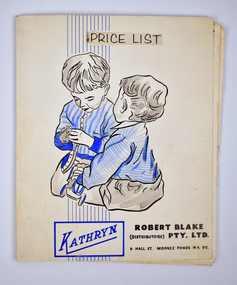
Archive - Price List, Kathryn Knitwear, 1972
... ...Knitting Machine...Fashion...Business Business history Manufacturing Knitting Machine Fashion Textile Production Business Archives Manufacturing Documents Children's Knitwear Children's clothing [Obverse] PRICE LIST KATHRYN ROBERT BLAKE (DISTRIBUTORS) PTY. ...Kathryn Knitwear, founded by Robert Blake, manufactured high quality children’s knitwear in Melbourne from the 1940s – 1980s. Robert Blake began manufacturing children’s knitwear in his bedroom in Strathmore using a hand powered machine in the late 1940s. The operation moved to Ascot Vale and Essendon, before eventually establishing a factory in Moonee Ponds in the early 1950s. The business continued to expand, necessitating a move to a new factory in Broadmeadows. By 1962, the Broadmeadows factory was producing an average of 20,000 garments per month, which increased to 24,000 by 1964. Robert Blake’s Son, Brendan recalls that “The Kathryn brand was famous around Australia, anywhere children needed to keep warm and dress smartly. It also won a number of wool fashion awards”, including the 1969 Wool Awards, which was held by the Australian Wool Bureau and published in Women’s Weekly. The Kathryn range was designed for durability, comfort and care, without sacrificing style. They used patterning techniques that increase stretchiness, comfort and fit, as well as integrating decorative elements into the fabric to prevent them from being bulky, uncomfortable or tight. Making longevity of style a priority, Brendan Blake remembers that “there was one particular garment that was in the range for at least thirty years”. He also recalls “In the past, when women have found out that I was associated with Kathryn Knitwear, they would often relate to me the story of a garment they had purchased or received as a gift and, when their child had grown out of it, they would hand it on to another child. Several ladies have told me of purchasing garments for their daughters’ glory box, or saving a particular garment after their daughter had grown out of it. Brendan Blake: “At the peak of their operation they employed approximately two hundred people, mainly women and girls. A family would often seek to send their daughter to work in this company because they knew they would be looked after and safe. One lady wrote to me telling me that working at the Moonee Ponds Factory prior to getting married was the happiest time of her life.” In 1963, workers at the Kathryn factory earned £13 per week, which was 8 shillings and 8 pence higher than the minimum weekly wage for female workers in the textile manufacturing industry (£12 11s 4d). By 1970, the Kathryn Knitwear brand expanded from children’s knitwear into womenswear under the brand name ‘Lady Kathryn’, and for boys and men under ‘Robert Blake’. Continuing to diversify their distribution, they also began exporting ‘Kathryn’ garments to New Zealand, the Pacific Islands, and Japan. ‘Kathryn Knitwear’ was well-known for their early adoption of modern materials and techniques that had broad appeal to their customer base. This is shown in their early use of the acrylic fibre ‘Orlon’ in the 50s and 60s and ‘Superwash’ wool in the 1970s. Many of Kathryn Knitwear’s styles, particularly those that were long running staples of the brand, were available in both wool and Orlon to suit the consumer’s preference. Far from the humble origins of one man in his bedroom with a hand-cranked machine; at its closure in 1980, the Broadmeadows factory of ‘Kathryn’ housed more than 100 machines, including 53 sewing machines and 45 knitting machines. Robert Blake was “a passionate advocate for wool and Australian Made” throughout his whole life. A strong thread that ties through the lifespan of Robert Blake and Kathryn Knitwear is a balance between adopting new innovations without sacrificing the core values of durability, comfort, care and style that had made the brand so well known. Their legacy forms an integral part of both Australian social and manufacturing history.8 page booklet containing price list for winter 1972. Hand-drawn illustration on front of booklet depicts two young boys in striped jumpers in shades of blue and brown. Internal pages of booklet contain a table in landscape orientation printed in black ink containing Style number, description, pricing for given sizes, and available colours. It has “Mr Robert” handwritten in blue ink in the top right corner and is annotated in red ink.[Obverse] PRICE LIST KATHRYN ROBERT BLAKE (DISTRIBUTORS) PTY. LTD business, business history, manufacturing, knitting machine, fashion textile production, business archives, manufacturing documents, children's knitwear, children's clothing -
 National Wool Museum
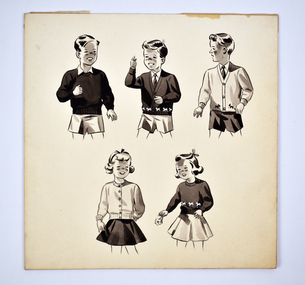
Drawing - Illustration, Kathryn Knitwear, c.1961-1972
... ...Knitting Machine...Fashion...Business Business history Manufacturing Knitting Machine Fashion Textile Production Business Archives Manufacturing Documents Textile Industry - history Wool Marketing Wool Marketing Fashion Textile Industry Original illustration artwork on cream matboard/card inked in shades of grey and black. ...Kathryn Knitwear, founded by Robert Blake, manufactured high quality children’s knitwear in Melbourne from the 1940s – 1980s. Robert Blake began manufacturing children’s knitwear in his bedroom in Strathmore using a hand powered machine in the late 1940s. The operation moved to Ascot Vale and Essendon, before eventually establishing a factory in Moonee Ponds in the early 1950s. The business continued to expand, necessitating a move to a new factory in Broadmeadows. By 1962, the Broadmeadows factory was producing an average of 20,000 garments per month, which increased to 24,000 by 1964. Robert Blake’s Son, Brendan recalls that “The Kathryn brand was famous around Australia, anywhere children needed to keep warm and dress smartly. It also won a number of wool fashion awards”, including the 1969 Wool Awards, which was held by the Australian Wool Bureau and published in Women’s Weekly. The Kathryn range was designed for durability, comfort and care, without sacrificing style. They used patterning techniques that increase stretchiness, comfort and fit, as well as integrating decorative elements into the fabric to prevent them from being bulky, uncomfortable or tight. Making longevity of style a priority, Brendan Blake remembers that “there was one particular garment that was in the range for at least thirty years”. He also recalls “In the past, when women have found out that I was associated with Kathryn Knitwear, they would often relate to me the story of a garment they had purchased or received as a gift and, when their child had grown out of it, they would hand it on to another child. Several ladies have told me of purchasing garments for their daughters’ glory box, or saving a particular garment after their daughter had grown out of it. Brendan Blake: “At the peak of their operation they employed approximately two hundred people, mainly women and girls. A family would often seek to send their daughter to work in this company because they knew they would be looked after and safe. One lady wrote to me telling me that working at the Moonee Ponds Factory prior to getting married was the happiest time of her life.” In 1963, workers at the Kathryn factory earned £13 per week, which was 8 shillings and 8 pence higher than the minimum weekly wage for female workers in the textile manufacturing industry (£12 11s 4d). By 1970, the Kathryn Knitwear brand expanded from children’s knitwear into womenswear under the brand name ‘Lady Kathryn’, and for boys and men under ‘Robert Blake’. Continuing to diversify their distribution, they also began exporting ‘Kathryn’ garments to New Zealand, the Pacific Islands, and Japan. ‘Kathryn Knitwear’ was well-known for their early adoption of modern materials and techniques that had broad appeal to their customer base. This is shown in their early use of the acrylic fibre ‘Orlon’ in the 50s and 60s and ‘Superwash’ wool in the 1970s. Many of Kathryn Knitwear’s styles, particularly those that were long running staples of the brand, were available in both wool and Orlon to suit the consumer’s preference. Far from the humble origins of one man in his bedroom with a hand-cranked machine; at its closure in 1980, the Broadmeadows factory of ‘Kathryn’ housed more than 100 machines, including 53 sewing machines and 45 knitting machines. Robert Blake was “a passionate advocate for wool and Australian Made” throughout his whole life. A strong thread that ties through the lifespan of Robert Blake and Kathryn Knitwear is a balance between adopting new innovations without sacrificing the core values of durability, comfort, care and style that had made the brand so well known. Their legacy forms an integral part of both Australian social and manufacturing history.Original illustration artwork on cream matboard/card inked in shades of grey and black. Used for marketing. Depicts Five figures of children in iconic Kathryn knitwear styles. The boy on the top left wears a dark crew neck jumper over a pale collared short with shorts. The two other boys on the top row (at centre and right) are depicted in very similar outfits, though the shades of their clothing differ. They are both shown in v-neck cardigans with three buttons and a colourwork animal motif at the hem over a pale suit with a dark tie. The figure at the centre has a dark cardigan and pale shorts, while the figure at the right has a light cardigan and dark shorts. The two figures on the bottom row are both girls wearing flared skirts with bows in their hair. They both wear crewnecks, the figure on the left wears a pale cardigan with six buttons down the front, while the right wears a dark jumper with two buttons on the shoulder and an animal motif at the hem. The jumper on the girl on the right is the same style as NWM-08893. There is tape still affixed to the back of the boardbusiness, business history, manufacturing, knitting machine, fashion textile production, business archives, manufacturing documents, textile industry - history wool marketing, wool marketing fashion textile industry -
 National Wool Museum
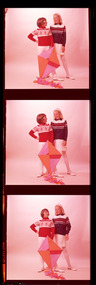
Slide - Marketing Portraits, c.1970-1980
... ...Knitting Machine...Fashion...Business Business history Manufacturing Knitting Machine Fashion Textile Production Business Archives Manufacturing Documents Textile Industry - history Wool Marketing Wool Marketing Fashion Textile Industry Children's Knitwear Children's clothing Knitwear Marketing A strip of three medium format colour transparencies. ...Kathryn Knitwear, founded by Robert Blake, manufactured high quality children’s knitwear in Melbourne from the 1940s – 1980s. Robert Blake began manufacturing children’s knitwear in his bedroom in Strathmore using a hand powered machine in the late 1940s. The operation moved to Ascot Vale and Essendon, before eventually establishing a factory in Moonee Ponds in the early 1950s. The business continued to expand, necessitating a move to a new factory in Broadmeadows. By 1962, the Broadmeadows factory was producing an average of 20,000 garments per month, which increased to 24,000 by 1964. Robert Blake’s Son, Brendan recalls that “The Kathryn brand was famous around Australia, anywhere children needed to keep warm and dress smartly. It also won a number of wool fashion awards”, including the 1969 Wool Awards, which was held by the Australian Wool Bureau and published in Women’s Weekly. The Kathryn range was designed for durability, comfort and care, without sacrificing style. They used patterning techniques that increase stretchiness, comfort and fit, as well as integrating decorative elements into the fabric to prevent them from being bulky, uncomfortable or tight. Making longevity of style a priority, Brendan Blake remembers that “there was one particular garment that was in the range for at least thirty years”. He also recalls “In the past, when women have found out that I was associated with Kathryn Knitwear, they would often relate to me the story of a garment they had purchased or received as a gift and, when their child had grown out of it, they would hand it on to another child. Several ladies have told me of purchasing garments for their daughters’ glory box, or saving a particular garment after their daughter had grown out of it. Brendan Blake: “At the peak of their operation they employed approximately two hundred people, mainly women and girls. A family would often seek to send their daughter to work in this company because they knew they would be looked after and safe. One lady wrote to me telling me that working at the Moonee Ponds Factory prior to getting married was the happiest time of her life.” In 1963, workers at the Kathryn factory earned £13 per week, which was 8 shillings and 8 pence higher than the minimum weekly wage for female workers in the textile manufacturing industry (£12 11s 4d). By 1970, the Kathryn Knitwear brand expanded from children’s knitwear into womenswear under the brand name ‘Lady Kathryn’, and for boys and men under ‘Robert Blake’. Continuing to diversify their distribution, they also began exporting ‘Kathryn’ garments to New Zealand, the Pacific Islands, and Japan. ‘Kathryn Knitwear’ was well-known for their early adoption of modern materials and techniques that had broad appeal to their customer base. This is shown in their early use of the acrylic fibre ‘Orlon’ in the 50s and 60s and ‘Superwash’ wool in the 1970s. Many of Kathryn Knitwear’s styles, particularly those that were long running staples of the brand, were available in both wool and Orlon to suit the consumer’s preference. Far from the humble origins of one man in his bedroom with a hand-cranked machine; at its closure in 1980, the Broadmeadows factory of ‘Kathryn’ housed more than 100 machines, including 53 sewing machines and 45 knitting machines. Robert Blake was “a passionate advocate for wool and Australian Made” throughout his whole life. A strong thread that ties through the lifespan of Robert Blake and Kathryn Knitwear is a balance between adopting new innovations without sacrificing the core values of durability, comfort, care and style that had made the brand so well known. Their legacy forms an integral part of both Australian social and manufacturing history.A strip of three medium format colour transparencies. Images are from of a promotional shoot for Kathryn knitwear and feature two children wearing patterned jumpers with an orange and pink kite. Figure on left wears a red turtleneck jumper with a geometric Nordic pattern of diamonds, primarily in white with a dark accent colour. Figure on right wears a cardigan with a shirt-style collar, which is predominantly navy and has a white yoke and geometric Nordic print in red, navy and white. There is a staple in the bottom left-hand corner, and damage along the bottom edge where a staple was removed.business, business history, manufacturing, knitting machine, fashion textile production, business archives, manufacturing documents, textile industry - history wool marketing, wool marketing fashion textile industry, children's knitwear, children's clothing, knitwear marketing -
 National Wool Museum
Card - Business Card, Kathryn Knitwear, c.1960-1980
... ...Knitting Machine...Fashion...Business Business history Manufacturing Knitting Machine Fashion Textile Production Business Archives Manufacturing Documents Children's Knitwear Children's clothing [obverse] KATHRYN Robert B. ...Kathryn Knitwear, founded by Robert Blake, manufactured high quality children’s knitwear in Melbourne from the 1940s – 1980s. Robert Blake began manufacturing children’s knitwear in his bedroom in Strathmore using a hand powered machine in the late 1940s. The operation moved to Ascot Vale and Essendon, before eventually establishing a factory in Moonee Ponds in the early 1950s. The business continued to expand, necessitating a move to a new factory in Broadmeadows. By 1962, the Broadmeadows factory was producing an average of 20,000 garments per month, which increased to 24,000 by 1964. Robert Blake’s Son, Brendan recalls that “The Kathryn brand was famous around Australia, anywhere children needed to keep warm and dress smartly. It also won a number of wool fashion awards”, including the 1969 Wool Awards, which was held by the Australian Wool Bureau and published in Women’s Weekly. The Kathryn range was designed for durability, comfort and care, without sacrificing style. They used patterning techniques that increase stretchiness, comfort and fit, as well as integrating decorative elements into the fabric to prevent them from being bulky, uncomfortable or tight. Making longevity of style a priority, Brendan Blake remembers that “there was one particular garment that was in the range for at least thirty years”. He also recalls “In the past, when women have found out that I was associated with Kathryn Knitwear, they would often relate to me the story of a garment they had purchased or received as a gift and, when their child had grown out of it, they would hand it on to another child. Several ladies have told me of purchasing garments for their daughters’ glory box, or saving a particular garment after their daughter had grown out of it. Brendan Blake: “At the peak of their operation they employed approximately two hundred people, mainly women and girls. A family would often seek to send their daughter to work in this company because they knew they would be looked after and safe. One lady wrote to me telling me that working at the Moonee Ponds Factory prior to getting married was the happiest time of her life.” In 1963, workers at the Kathryn factory earned £13 per week, which was 8 shillings and 8 pence higher than the minimum weekly wage for female workers in the textile manufacturing industry (£12 11s 4d). By 1970, the Kathryn Knitwear brand expanded from children’s knitwear into womenswear under the brand name ‘Lady Kathryn’, and for boys and men under ‘Robert Blake’. Continuing to diversify their distribution, they also began exporting ‘Kathryn’ garments to New Zealand, the Pacific Islands, and Japan. ‘Kathryn Knitwear’ was well-known for their early adoption of modern materials and techniques that had broad appeal to their customer base. This is shown in their early use of the acrylic fibre ‘Orlon’ in the 50s and 60s and ‘Superwash’ wool in the 1970s. Many of Kathryn Knitwear’s styles, particularly those that were long running staples of the brand, were available in both wool and Orlon to suit the consumer’s preference. Far from the humble origins of one man in his bedroom with a hand-cranked machine; at its closure in 1980, the Broadmeadows factory of ‘Kathryn’ housed more than 100 machines, including 53 sewing machines and 45 knitting machines. Robert Blake was “a passionate advocate for wool and Australian Made” throughout his whole life. A strong thread that ties through the lifespan of Robert Blake and Kathryn Knitwear is a balance between adopting new innovations without sacrificing the core values of durability, comfort, care and style that had made the brand so well known. Their legacy forms an integral part of both Australian social and manufacturing history.Business card for Robert B. Blake on cream cardstock. Name and contact information is printed in blue ink, and the Kathryn knitwear logo is stamped in golden metallic foil[obverse] KATHRYN Robert B. Blake ROBERT BLAKE PTY. LTD. 26-32 KING WILLIAM STREET BROADMEADOWS, VIC., 3047 TELEPHONE: 309 1333business, business history, manufacturing, knitting machine, fashion textile production, business archives, manufacturing documents, children's knitwear, children's clothing
