
Showing 55 items matching "kulin nation"
-
 Marysville & District Historical Society
Article (item) - Book Extract, Aboriginal History, Unknown
... kulin nation...An extract from a book regarding a brief history of the Kulin nation of the North Central district of Victoria....An extract from a book regarding a brief history of the Kulin nation of the North Central district of Victoria....An extract from a book regarding a brief history of the Kulin nation of the North Central district of Victoria. ...An extract from a book regarding a brief history of the Kulin nation of the North Central district of Victoria.An extract from a book regarding a brief history of the Kulin nation of the North Central district of Victoria. This history covered is both prior to European history and post-European history. The extract also covers current (1991) status of Aboriginal affairs and European settlement of the area.kulin nation, woiworung, taungurong, bunurong, watherong, jajowrong, wurrundjeri-willam, waring-ilam-balluk, goulburn valley, acheron valley, upper goulburn district, eildon-thornton, eildon homestead, o'rourke, thornton, assistant protector thomas, yarra valley, kilmore, mount william, jt gellibrand, william buckley, major mitchell, port phillip, murray river, yorta yorta, yowung-illam-balluk, waring-illam-balluk, ngurai-illam-wurrung, kurnai nation, protectorate system, victoria, george robinson, chief protector, willam thomas, james dredge, edward parker, charles sievewright, central board for the protection of aborigines, presbyterian mission, anglican mission, moravian mission, wonga, munnarin, beaning, murrin murrin, parugean, baruppin, koo-gurrin, acheron river, little river, acheron run, peter snodgrass, stephen jones, barak, dividing range, black spur, watts river, badger creek, healesville, coranderrk, victorian christmas bush, aboriginal and torres strait islander heritage protection act 1984, archaelological and aboriginal relics preservation act 1972, camp jungai, rubicon, warrawa college, victorian archaeological survey, hume and hovell, molesworth, broadford, william hamilton, alexandra, mansfield, avenel, tallarook, worrough, john cotton, trawool valley, seymour, pyalong, gold mining, central victoria, strath creek, reedy creek, yea, jamieson, marysville, jordan goldfields, comet mine, wandong, melbourne-albury railway, rabbit plague, narbethong, lord kitchener, puckapunyal military camp, 1944 decentralisation policy, eildon weir, hume freeway bypass, timber industry, australian paper manufacturers mill -
 Eltham District Historical Society Inc
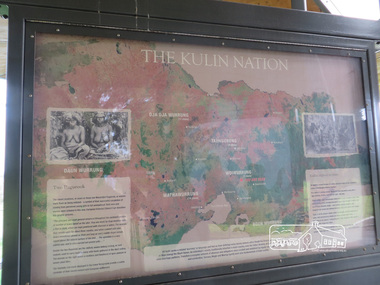
Photograph, Liz Pidgeon, Moor-Rul Viewing Platform Panel: The Kulin Nation, 10 August 2016
... Moor-Rul Viewing Platform Panel: The Kulin Nation...The subjects covered are: ''Womin Je Ka" Welcome The Kulin Nation Singing, Dancing, Ceremony, Celebration This Country, My Home The Highland Taken Auld Lang Syne "Same Land Different Views" Working the Land Food from the Earth or "Earth's Harvest" Lest We Forget, "And with the going down of the Sun .... (3 panels) This Black Earth Those other indigenous inhabitants - Kangaroo Ground's Wildlife Silent Witnesses - Kangaroo Ground's White Manna Gums Belonging A Place of Reverence and A Tower of Strength Souce: EDHS Newsletter No 173 March 2007. ...These included Eltham township, the Shire of Eltham War Memorial at Kangaroo Ground, Christmas Hills war memorial, Hurstbridge memorial recreation park and finshed at Eltham Library to view the Writing the War exhibtion at Eltham Library Community Gallery. shire of nillumbik interpretative signage interpetation panel indigenous history moor-rul viewing platform kangaroo ground Born Digital Moor-Rul Viewing Platform Panel: The Kulin Nation Photograph Photograph Liz Pidgeon ...The Moor-Rul Viewing Platform, part of the Kangaroo Ground War Memorial Park opened in April 2007. Eight double-sided interpretation panels on the Moor-rul viewing platform highlight the area's Aboriginal and European history of the area and also details of local geology, flora and fauna. These panels feature high quality graphic design and professionally written text. The subjects covered are: ''Womin Je Ka" Welcome The Kulin Nation Singing, Dancing, Ceremony, Celebration This Country, My Home The Highland Taken Auld Lang Syne "Same Land Different Views" Working the Land Food from the Earth or "Earth's Harvest" Lest We Forget, "And with the going down of the Sun .... (3 panels) This Black Earth Those other indigenous inhabitants - Kangaroo Ground's Wildlife Silent Witnesses - Kangaroo Ground's White Manna Gums Belonging A Place of Reverence and A Tower of Strength Souce: EDHS Newsletter No 173 March 2007. As part of a program to acknowledge the Anzac Centenary Nillumbik Shire Council partnered with Yarra Plenty Regional Library to provide a bus tour with commentary of local sites of significance: Shire of Nillumbik World War One Memorials tour, 10 August 2016. These included Eltham township, the Shire of Eltham War Memorial at Kangaroo Ground, Christmas Hills war memorial, Hurstbridge memorial recreation park and finshed at Eltham Library to view the Writing the War exhibtion at Eltham Library Community Gallery. Born Digitalshire of nillumbik, interpretative signage, interpetation panel, indigenous history, moor-rul viewing platform, kangaroo ground -
 Victorian Aboriginal Corporation for Languages
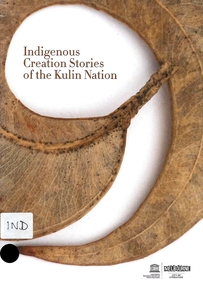
Book, Carolyn Briggs et al, Indigenous creation stories of the Kulin Nation, 2010
... Indigenous creation stories of the Kulin Nation...Boonwurrung Wathaurong Wurundjeri Taungurung Wheeler Centre creation stories Maps, colour photographs, word lists Boonwurrung: The Filling of the Bay - The Time of Chaos; Wathaurong: The Three Sisters; Wurundjeri: The Durrung of the Yan-yan; Taungurung: The First Women Indigenous creation stories of the Kulin Nation Book Carolyn Briggs David Tournier Doreen Garvey-Wandin Lee Healy (Patterson-Edmonds) ...Boonwurrung: The Filling of the Bay - The Time of Chaos; Wathaurong: The Three Sisters; Wurundjeri: The Durrung of the Yan-yan; Taungurung: The First WomenMaps, colour photographs, word listsboonwurrung, wathaurong, wurundjeri, taungurung, wheeler centre, creation stories -
 Nillumbik Shire Council
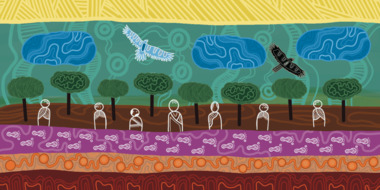
Work on paper - Kinya Lerrk, Kulin Nation Dreaming
... Kulin Nation Dreaming...Kulin Nation Dreaming Work on paper Kinya Lerrk ...Kulin Nation Dreaming by Kinya Lerrk (Wemba Wemba for ‘women coming together’) commemorates Council's Reconciliation Action Plan (RAP). Kinya Lerrk is a collaboration between Kulin Nation artists Emma Bamblett (Wemba Wemba, Gunditjmara, Ngadjonji, Taungurung) and Megan Van Den Berg (Dja Dja Wurrung, Taungurung Yorta Yorta, Boon Wurrung). Bunjil (The wedge tailed eagle) and Waa (the crow) are soaring and guiding throughout the skies. Bunjil is the Ancestral creator and Waa, the Ancestral Crow, is the protector. The layers and designs in the artwork reflect the varying seasons in the Kulin Nation. The yellow reflects the sun coming out after the winter and the healing nature of light in our lives. Elders are celebrated as the knowledge holders giving guidance and passing down cultural knowledge and practices. The footprints acknowledge the journey of Ancestors across the Kulin Nation including Wurundjeri Ancestor Barak and his 67km walk from Corranderk to Melbourne to deliver a petition to improve conditions at Corranderk where Megan’s Great Grandmother would later reside. Megan lives on Wurundjeri country in Nillumbik, the trees represent this landscape and the need for preservation. On 1 September 2026, Nillumbik Shire Council officially acknowledged and celebrated its 'Reflect' Reconciliation Action Plan (RAP). -
 City of Ballarat
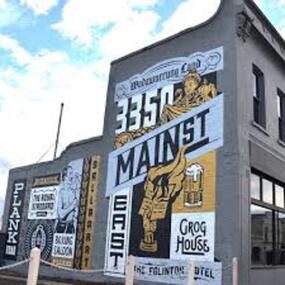
Artwork, other - Public Artwork, Travis Price, Main Road Mural by Travis Price, May 2018
... ...kulin nation...Ballaarat, Gold Fever, The Royal Standard Hotel, Flood, Boxing Saloon, Plank Road, Kulin Nation, 3350, Election, East, Grog House, The Scandinavian Hotel. ...The artwork is is of aesthetic and historic significance to the people of Ballarat main road history ballarat hotels gold fever wadawurrung kulin nation Ballaarat, Gold Fever, The Royal Standard Hotel, Flood, Boxing Saloon, Plank Road, Kulin Nation, 3350, Election, East, Grog House, The Scandinavian Hotel. ...Whilst my main focus for the artwork design was on the Hotels on Main Road, I felt there was an opportunity to tell a broader story of Main Rd and combine/include some interesting pieces of information from many stages of the history of Main Road. Considering that at one point in time there would have been at more than six hotels in this very short section of street….there’s no doubt Main Rd was an epicentre of communication and festivities for the Goldfields of Ballarat. “No matter what luck he had, every miner needed supplies, food and something to entertain him when he was not searching for gold.” Described as being an overcrowded jumble of muddy streets loosely arranged around mining camps...and loud, muddy, colourful and sometimes illicit. I wanted the artwork composition to consist of overlapping images and text to reflect this sense of hustle and bustle. Main Road Mural tells the broader story of the history of Main Road in Ballarat. In 2018, the City of Ballarat commissioned local Ballarat artist Travis Price to create an artwork to align with the Main Road Revitalisation Project and deliver a key component of the storytelling (heritage interpretation) project that spans the length of the shopping precinct. The artwork is featured on a prominent site in the shopping precinct of main road and tells the story of Main Road through depicting key timeline events. Main Road, as its name suggests, was one of the main entries to the mining areas of East Ballarat. It had several names: Main Street before 1858, Plank Road between 1858 and 1868 and Main Road from 1868 onwards. The centre of mining life, it was crowded, prosperous, raucous and dirty. Painted mural on shop wall in Main Road, BallaratBallaarat, Gold Fever, The Royal Standard Hotel, Flood, Boxing Saloon, Plank Road, Kulin Nation, 3350, Election, East, Grog House, The Scandinavian Hotel. Images; Chinese lantern, Pick & Shovel, Miners Licence burning.main road history, ballarat hotels, gold fever, wadawurrung, kulin nation -
 The Beechworth Burke Museum
Photograph - Photograph Reproduction, 1890
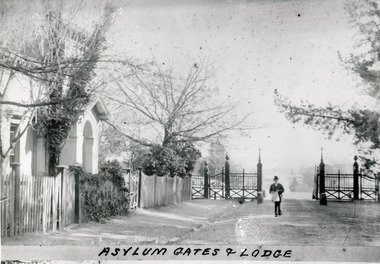
... ...Kulin Nation...The Hospital lies on the traditional land of the Kulin Nation....The Hospital lies on the traditional land of the Kulin Nation. This photograph is historically significant as it provides an insight into the location, surroundings and the exterior of the Mayday Hills Hospital at the end of the 19th century. ...The photo is taken in 1890 and a man is depicted, entering the main gates of the Mental Hospital at Beechworth, with the lodge on his right side. The man is dressed according to the australian fashion of that time, wearing a dark suit and a top hat. The countryside surrounding the Hospital is in the background. The Mayday Hills Hospital was constructed between 1864 and 1867, with buildings created in a number of periods. It formally opened on 24 October 1867 and, along with the Ovens Hospital and the Benevolent Asylum, made Beechworth a prominent social welfare centre in Victoria. The need for an institution of this kind was arisen due to the increased number of people with mental disturbances (induced by the harsh living conditions on the goldfields) and the remoteness of the district from Melbourne. The site was chosen for its panoramic view of the countryside, the hilltop atmosphere and the native fauna, all contributing to the cure of patients. It was designed in Italianate style and around 250 workmen were employed for its construction. The Hospital was originally named the “Ovens Lunatic Asylum” but, during the centenary celebrations in 1967, the name was officially changed to “Mayday Hills Hospital”, showing the gradual shift in the perception and understanding of mental health conditions over the last decades. The Hospital lies on the traditional land of the Kulin Nation.This photograph is historically significant as it provides an insight into the location, surroundings and the exterior of the Mayday Hills Hospital at the end of the 19th century. It also contributes to the understanding of the district`s development and its importance to the course of Victoria`s history. Moreover, it adds information to the scientific research and the way mental health conditions were treated at that time.Black and white rectangular photograph printed on paper unframed.Obverse: Asylum Gates & Lodge/ Reverse: 3451-1/mental hospital, beechworth, australian fashion, dark suit, top hat, countryside, mayday hills hospital, ovens hospital, benevolent asylum, institution, mental disturbances, social welfare, living conditions, goldfields, workmen, italianate style, kulin nation, mental health, ovens lunatic asylum, patients -
 The Beechworth Burke Museum
Photograph, 1934
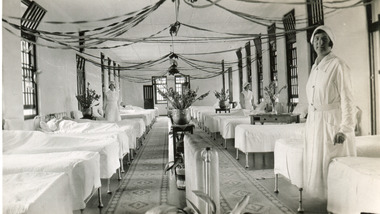
... ...Kulin Nation...The Hospital lies on the traditional land of the Kulin Nation. ...The Hospital lies on the traditional land of the Kulin Nation. This photograph is historically significant as it provides an insight into the living conditions of patients admitted to the Mayday Hills Hospital at the beginning of the 20th century. ...The photo is taken in 1934 and illustrates the internal view of a ward in the Mental Hospital at Beechworth. Some patients in beds and three nurses are in view. Beds were arranged in lines alongside the walls and there were no partitions or screens to create privacy for patients. Furniture was simple and humble; bed frames were made of metal or wood and pillowcases and covers for the attendant`s tables were sometimes made of blue-striped canvas or calico. Large windows in the walls were offering ample light and the room was well-tended, with Christmas decoration, flowers, pots and carpets on the floor. The nurse in the foreground is Miss Neary. The Mayday Hills Hospital was constructed between 1864 and 1867, with buildings created in a number of periods. It formally opened on 24 October 1867 and, along with the Ovens Hospital and the Benevolent Asylum, made Beechworth a prominent social welfare centre in Victoria. The need for an institution of this kind was arisen due to the increased number of people with mental disturbances (induced by the harsh living conditions on the goldfields) and the remoteness of the district from Melbourne. The site was chosen for its panoramic view of the countryside, the hilltop atmosphere and the native fauna, all contributing to the cure of patients. The Hospital was originally named the “Ovens Lunatic Asylum” but, during the centenary celebrations in 1967, the name was officially changed to “Mayday Hills Hospital”, showing the gradual shift in the perception and understanding of mental health conditions over the last decades. The Hospital lies on the traditional land of the Kulin Nation. This photograph is historically significant as it provides an insight into the living conditions of patients admitted to the Mayday Hills Hospital at the beginning of the 20th century. It also contributes to the understanding of the district`s development and its importance to the course of Victoria`s history. Additionally, it provides important information about the way mental health conditions were perceived at that time and how patients were treated. Black and white rectangular photograph printed on paper. Reverse: 1997.2665/ To Miss JA.Peach/ [hallmark: Printed by Harringtons]/ With best wishes/from/H.Jeanes/for 1934.mayday hills hospital, benevolent asylum, ovens hospital, ovens lunatic asylum, kulin nation, beechworth, patients, nurse, social welfare, goldfields, melbourne, mental health, living conditions, blue-striped canvas, calico, bed frames, miss neary, mental disturbances, traditional land, centenary celebrations -
 The Beechworth Burke Museum
Photograph - Photograph Reproduction, 1870
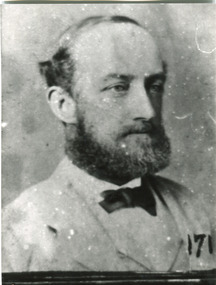
... ...Kulin Nation...The Hospital lies on the traditional land of the Kulin Nation....The Hospital lies on the traditional land of the Kulin Nation. This photograph is historically significant as it provides information about the staff served at the Mayday Hills Hospital when it first opened. ...The photograph is a copy of the original one, with the latter been captured in 1870. The man depicted is Doctor Thomas Thomson Dick, who was the first Medical Superintendent at Mayday Hills Hospital. He was born in Scotland in 1840 and he died in East Malvern in 1919. He obtained his degree of Doctor of Medicine from Melbourne University in 1864 and, later in his career, he became Inspector-General of the mentally ill. Dr Dick promoted the hospital`s self-sufficiency by engaging patients in various forms of work, such as clothing alterations and cultivation of the farm. He also introduced monthly balls, which could be attended by patients, staff and guests, and they were later replaced by concerts. The Mayday Hills Hospital was constructed between 1864 and 1867, with buildings created in a number of periods. It formally opened on 24 October 1867 and, along with the Ovens Hospital and the Benevolent Asylum, made Beechworth a prominent social welfare centre in Victoria. The need for an institution of this kind was arisen due to the increased number of people with mental disturbances (induced by the harsh living conditions on the goldfields) and the remoteness of the district from Melbourne. The site was chosen for its panoramic view of the countryside, the hilltop atmosphere and the native fauna, all contributing to the cure of patients.The Hospital was originally named the “Ovens Lunatic Asylum” but, during the centenary celebrations in 1967, the name was officially changed to “Mayday Hills Hospital”, showing the gradual shift in the perception and understanding of mental health conditions over the last decades. The Hospital lies on the traditional land of the Kulin Nation.This photograph is historically significant as it provides information about the staff served at the Mayday Hills Hospital when it first opened. It also contributes to the understanding of the district`s development and its importance to the course of Victoria`s history and adds valuable information about the changing approaches to the treatment of mental health conditions.Black and white rectangular photograph printed on paper.Obverse: (7)/ Reverse: 1997.2452/ Dr Dick/No(7) Pioneer Board/doctor thomas thomson dick, superintendent, mayday hills hospital, scotland, east malvern, doctor of medicine, melbourne university, inspector-general, clothing alterations, cultivation of the farm, self-sufficiency, balls, concerts, ovens hospital, benevolent asylum, beechworth, goldfields, kulin nation, panoramic view, mental health conditions -
 The Beechworth Burke Museum
Photograph, Bayless C. - Manager, 1875
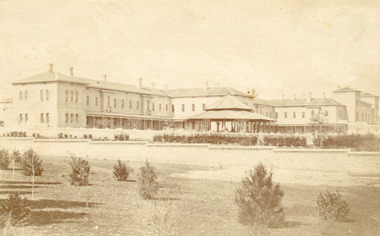
... ...Kulin Nation...The Hospital lies on the traditional land of the Kulin Nation....The Hospital lies on the traditional land of the Kulin Nation. This photograph is historically significant as it provides an insight into the location, surroundings and the exterior of the Mayday Hills Hospital at the end of the 19th century. ...In this photo, taken in around 1875, is depicted the exterior of the Beechworth Mental Asylum buildings, with the administration buildings far right of the photo. A sunken boundary wall in the foreground and some people in view, sitting at the pavillion in the centre of the image. The two-storey buildings, designed in Italianate style, and the three-storey towers at the front, influenced by the asylum at Colney Hatch in England. The architecture of the buildings shares key features with other contemporary institutions, like Aradale at Ararat, and its design is attributed to the Public Works Department architect, J.J. Clark, whose name is connected with the construction of many other important public buildings, such as the Asylums at Kew and Ararat, the front block of the Royal Mint, Melbourne and the Melbourne Customs House. The Mayday Hills Hospital was constructed between 1864 and 1867, with buildings created in a number of periods. It formally opened on 24 October 1867 and, along with the Ovens Hospital and the Benevolent Asylum, made Beechworth a prominent social welfare centre in Victoria. Large masses of granite were excavated for its foundation and around 250 workmen were employed for its construction. The building, divided into six sections, was comprised of dormitories, doctors` rooms and plenty ancillary rooms and facilities, such as laundries, reading rooms, a concert hall and cooking areas. The site was chosen for its panoramic view of the countryside, the hilltop atmosphere and the native fauna, all contributing to the cure of patients. The Hospital was originally named the “Ovens Lunatic Asylum” but during the centenary celebrations in 1967 the name was officially changed to “Mayday Hills Hospital”, showing the gradual shift in the perception and understanding of mental health conditions over the last decades. The Hospital lies on the traditional land of the Kulin Nation.This photograph is historically significant as it provides an insight into the location, surroundings and the exterior of the Mayday Hills Hospital at the end of the 19th century. It also contributes to the understanding of the district`s development and its importance to the course of Victoria`s history and is acknowledged as a unique construction, being one of three identified as the largest of their kind.Black and white rectangular photograph printed on matte photographic paper mounted on board.Reverse: 37/ 3443/ Beechworth Asylum about 1875/ American & Australasian/Photographic Company/Victoria Branch./C.Bayless, Manager./ No./beechworth mental asylum, aradale, public works department, j.j. clark, melbourne customs house, colney hatch, italianate style, mayday hills hospital, royal mint, granite, benevolent asylum, dormitories, ovens lunatic asylum, ancillary rooms, centenary celebrations, three-storey towers, countryside, mental health conditions, kulin nation, concert hall -
 The Beechworth Burke Museum
Photograph - Photograph Reproduction, 1998
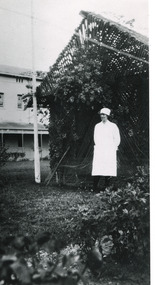
... ...Kulin Nation...The Hospital lies on the traditional land of the Kulin Nation....The Hospital lies on the traditional land of the Kulin Nation. This photograph is historically significant as it provides an insight into the everyday life of staff living within the walls of the Mayday Hills Hospital. ...The photograph, created in 1998, is a copy of the original one, depicting a nurse in uniform at the Mental Hospital in Beechworth, with a fern house behind her. In the background, the two-storey building is in view, along with the covered walkway. The institution had to operate with serious shortage of female nurses for long periods of time. During the 1880s, small houses (cottages) were built to offer accommodation for the nurses living in the hospital and in 1937 began the construction of a nurses` hostel. In 1962 the upper level of the Nurses` Home was converted into a Nurses` Training School. The Mayday Hills Hospital was constructed between 1864 and 1867, with buildings created in a number of periods. It formally opened on 24 October 1867 and, along with the Ovens Hospital and the Benevolent Asylum, made Beechworth a prominent social welfare centre in Victoria. The need for an institution of this kind was arisen due to the increased number of people with mental disturbances (induced by the harsh living conditions on the goldfields) and the remoteness of the district from Melbourne. The two-storey buildings, designed in Italianate style, and the three-storey towers at the front, were influenced by the asylum at Colney Hatch in England. Large masses of granite were excavated for its foundation and around 250 workmen were employed for its construction. The building, divided into six sections, was comprised of dormitories, doctors` rooms and plenty ancillary rooms and facilities, such as laundries, reading rooms, a concert hall and cooking areas. The site was chosen for its panoramic view of the countryside, the hilltop atmosphere and the native fauna, all contributing to the cure of patients. The Hospital was originally named the “Ovens Lunatic Asylum” but, during the centenary celebrations in 1967, the name was officially changed to “Mayday Hills Hospital”, showing the gradual shift in the perception and understanding of mental health conditions over the last decades. The Hospital lies on the traditional land of the Kulin Nation.This photograph is historically significant as it provides an insight into the everyday life of staff living within the walls of the Mayday Hills Hospital. It also offers important information about the location and the exterior of the Hospital and contributes to the understanding of the district`s development and its importance to the course of Victoria`s history.Black and white rectangular photograph printed on paper unframed.Reverse: 3445/mental hospital, beechworth, fern house, female nurses, nurses` home, nurses` training school, nurses` hostel, mayday hills hospital, ovens hospital, colney hatch, two-storey buildings, italianate style, benevolent asylum, ovens lunatic asylum, kulin nation, workmen, covered walkway, granite, hilltop atmosphere, mental health -
Emerald Museum & Nobelius Heritage Park
Book - First Nations history book, Mount Evelyn History Group, Aborigines in the Yarra Valley and Northern Dandenongs, Circa 2011
... Cardboard covered with staple binding. copy of “The Traditional Lands of the Wurundjeri People of the Kulin Nation” on front...aborigines yarra valley northern dandenongs Cardboard covered with staple binding. copy of “The Traditional Lands of the Wurundjeri People of the Kulin Nation” on front Aborigines in the Yarra Valley and Northern Dandenongs Book First Nations history book Mount Evelyn History Group ...Cardboard covered with staple binding. copy of “The Traditional Lands of the Wurundjeri People of the Kulin Nation” on frontaborigines, yarra valley, northern dandenongs -
Marysville & District Historical Society
Article (item) - Newpaper Article, Champion of his people, 28-02-2012
... ...kulin nation...A newspaper article regarding William Barak, an Aboriginal leader who was instrumental in 1863 in the creation of Coranderrk Aboriginal station near Healesville in Victoria. william barak kulin nation john batman victorian indigenous hall of fame beruk woiwurrang language victoria bebejan billibellary wurundjeri ngurungaetas coranderrk healesville board for protection of aborigines robert wandin thomas dunolly simon wonga graham bell anne bon yarra mission school native police corps A newspaper article regarding William Barak, an Aboriginal leader who was instrumental in 1863 in the creation of Coranderrk Aboriginal station near Healesville in Victoria. ...A newspaper article regarding William Barak, an Aboriginal leader who was instrumental in 1863 in the creation of Coranderrk Aboriginal station near Healesville in Victoria.A newspaper article regarding William Barak, an Aboriginal leader who was instrumental in 1863 in the creation of Coranderrk Aboriginal station near Healesville in Victoria.william barak, kulin nation, john batman, victorian indigenous hall of fame, beruk, woiwurrang language, victoria, bebejan, billibellary, wurundjeri ngurungaetas, coranderrk, healesville, board for protection of aborigines, robert wandin, thomas dunolly, simon wonga, graham bell, anne bon, yarra mission school, native police corps -
 Marysville & District Historical Society
Photograph (item) - Black and white photograph, Unknown
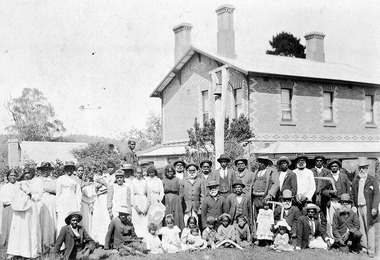
... ...kulin nation...An early black and white photograph of the residents of Coranderrk Aboriginal Station near Healesville in Victoria. coranderrk john green kulin nation healesville An early black and white photograph of the residents of Coranderrk Aboriginal Station near Healesville in Victoria. ...An early black and white photograph of the residents of Coranderrk Aboriginal Station near Healesville in Victoria.An early black and white photograph of the residents of Coranderrk Aboriginal Station near Healesville in Victoria.coranderrk, john green, kulin nation, healesville -
 City of Moorabbin Historical Society (Operating the Box Cottage Museum)
Book, Gamble, Leo, Mentone through the years, 2003
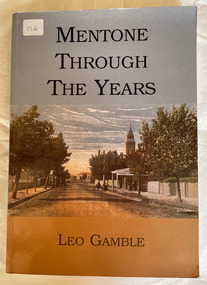
... ...Kulin Nation...Mentone Kulin Nation land boom Mentone through the years - Kulin Nation - 2000.. ...Mentone through the years - Kulin Nation - 2000.. Traces the development of Mentone its buildings, people and important events. Bunurong people, Land Boom of 1880s, WW1, Jazz Age298 pages : ill, maps, index, Mentone through the years - Kulin Nation - 2000.. Traces the development of Mentone its buildings, people and important events. Bunurong people, Land Boom of 1880s, WW1, Jazz Agementone, kulin nation, land boom -
 Greensborough Historical Society
Book - Directory, ABC Books, The ghost and the bounty hunter, 2020
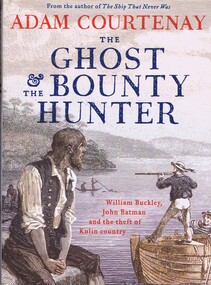
... ...kulin nation...He lived with the Wadawurrung people until 1835 when John Batman arrived in the Port Phillip Bay area. william buckley john batman victoria history kulin nation The story of William Buckley. 306 p., illus. ...The story of William Buckley.306 p., illus.non-fictionThe story of William Buckley.william buckley, john batman, victoria history, kulin nation -
 Yarra City Council
Artwork, other - Mural, Rebecca Atkinson, Queep Queep, 2023
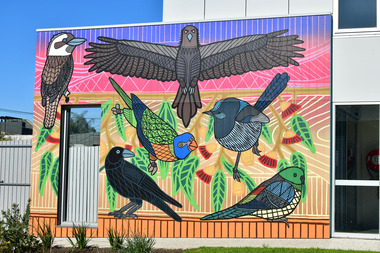
... ...kulin nation...'Queep-Queep' is a site-specific artwork commissioned for the new Richmond Kindergarten, Lord Street, Richmond, 2023. birds Bunjil Country kulin nation environment public art accompanying plaque Two aluminium birds (a wedge-tailed eagle and a raven) at the entrance to the building, and a large, colourful mural of Australian native birds painted in a graphic style on the other side of the wall facing into the playground. ...'Queep-Queep’ means ‘birds’ in Woi-wurrung language—the language of the Wurundjeri people—the Traditional Owners of the land on which the building is standing. Referencing what lived and flourished in this area prior to European invasion, the artwork acknowledges the important Aboriginal history of the area now known as the City of Yarra. The six native birds depicted in the artwork can all be found living within the City of Yarra: the male red-rumped parrot, kookaburra, superb fairy wren, rainbow lorikeet, raven, and wedge-tailed eagle. Many south-eastern Aboriginal people recognise the wedge-tailed eagle as Bunjil—the creator spirit. Bunjil is the head of the Kulin Nation and is very powerful. Bunjil created the land, waterways, animals, plants and even the people. He is watching over the land to ensure that we are caring for Country—reminding us to respect ourselves, respect others and respect the environment.'Queep-Queep' is a site-specific artwork commissioned for the new Richmond Kindergarten, Lord Street, Richmond, 2023.Two aluminium birds (a wedge-tailed eagle and a raven) at the entrance to the building, and a large, colourful mural of Australian native birds painted in a graphic style on the other side of the wall facing into the playground.accompanying plaquebirds, bunjil, country, kulin nation, environment, public art -
Port Melbourne Historical & Preservation Society
Book, Meyer Eidelson, "Yalukit Willam - The River People of Port Phillip", Feb 2015
... ...kulin nation...Written as part of the City's reconciliation program and with the assistance of Carolyn Briggs over a two year program. parks and gardens natural environment meyer eidelson carolyn briggs derrimut yalukit willam clan boon wurrung kulin nation bunjil george robinson ben bow louisa briggs wilbraham frederick evelyn liardet wfe liardet josephine liardet emerald hill william buckley kurburu (the bear) Indigenous Australians Signed IFC by author, and Carolyn Briggs, Boon Wurrung Foundation, "yours with respect" "Yalukit Willam - The River People of Port Phillip" by Meyer Eidelson: illustrated soft cover, 99 pages plus fold out map at back cover is WFE Liardet watercolour of Emerald Hill corroboree and history of Koori activity pre and during European occupation "Yalukit Willam - The River People of Port Phillip" Book Meyer Eidelson Green Scribble City of Port Phillip ...Written as part of the City's reconciliation program and with the assistance of Carolyn Briggs over a two year program."Yalukit Willam - The River People of Port Phillip" by Meyer Eidelson: illustrated soft cover, 99 pages plus fold out map at back cover is WFE Liardet watercolour of Emerald Hill corroboree and history of Koori activity pre and during European occupationSigned IFC by author, and Carolyn Briggs, Boon Wurrung Foundation, "yours with respect"parks and gardens, natural environment, meyer eidelson, carolyn briggs, derrimut, yalukit willam clan, boon wurrung, kulin nation, bunjil, george robinson, ben bow, louisa briggs, wilbraham frederick evelyn liardet, wfe liardet, josephine liardet, emerald hill, william buckley, kurburu (the bear), indigenous australians -
Port Melbourne Historical & Preservation Society
Book, Gary Presland, "First People. The Eastern Kulin of Melbourne, Poprt Phillip and Central Victoria", 2010
... ...Kulin Nation...Indigenous Australians Natural Environment Kulin Nation Gary PRESLAND COPYRIGHT Gary Presland "First People. ...COPYRIGHT Gary Presland "First People. The Eastern Kulin of Melbourne, Port Phillip and Central Victoria" This book is, in effect, a second edition of "Aboriginal Melbourne - the Lost Land of the Kulin People" written by Gary Presland 25 years earlierindigenous australians, natural environment, kulin nation, gary presland -
Port Melbourne Historical & Preservation Society
Audio - PMHPS Meeting, local Kulin National Clan, Meyer Eidelson, Glen Stuart, 26 Jul 2004
... ...Kulin Nation...Indigenous Australians Meyer EIDELSON Kulin Nation Recording of PMHPS Meeting on 26.07.2004. ...Recording of PMHPS Meeting on 26.07.2004. Recording done at Port Town Hall. Speaker was Meyer EIDELSON regarding the local Kulin National Clan Recording duration 45:08.indigenous australians, meyer eidelson, kulin nation -
Port Melbourne Historical & Preservation Society
Document - Exhibition Catalogue, Joan Winter, Dredging, Draining, Dipping & Shipping: A History of the Foreshore & Low-lying Lands of the City of Port Phillip, Apr 1996
... ...Kulin Nation...Sandridge Lagoon Engineering - Canals and Drainage Melbourne Harbor Trust - Port of Melbourne Authority Piers and Wharves Piers and Wharves - Waterside Workers Arts and Entertainment Transport - Shipping Centenary Bridge Beacons Fishermans Bend Transport - Aviation and Aerodrome Sport - Swimming Flood Local Government - City of Port Phillip Kulin Nation Caroline Frederica LIARDET Swallow & Ariell Ltd Mission to Seafarers Emerald Hill St Kilda First major exhibition from the Council of Port Phillip was held in 1995. ...First major exhibition from the Council of Port Phillip was held in 1995. The catalogue material on Port Melbourne was written by PMH&PS members. It toured the city and then a reduced version was sent to sister city, Devonport. Black text and picture of Sandridge from the Esplanade, St Kilda on cover. sandridge lagoon, engineering - canals and drainage, melbourne harbor trust - port of melbourne authority, piers and wharves, piers and wharves - waterside workers, arts and entertainment, transport - shipping, centenary bridge, beacons, fishermans bend, transport - aviation and aerodrome, sport - swimming, flood, local government - city of port phillip, kulin nation, caroline frederica liardet, swallow & ariell ltd, mission to seafarers, emerald hill, st kilda -
 Port Melbourne Historical & Preservation Society
Document, Star Health SHIP Project, PORTogether Magazine 2019, 2019
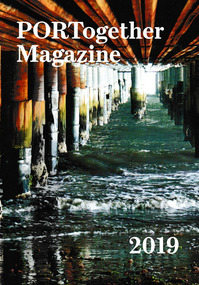
... ...Kulin Nation...Peter MARTIN BOLITHO Danielle McCAFFREY Kamal IBRAHIN Rochelle BELL Sharon WILCOX Star Health SHIP Project Port Phillip Community Group Education - other Health - General health Father Bob McGUIRE Education - Primary Schools Kulin Nation Sport - Australian Rules Football Recreation - cycling Education - Kindergartens A 24 page magazine including stories of Port Melbourne residents and activities. ...The aim of PORTogether magazine was to' "celebrate community engagement and social Inclusion". Articles include interviews with Peter MARTIN, Janet BOLITHO, Danielle McCAFFREY, Kamal IBRAHIN, Rochelle BELL and Sharon WILCOX. A 24 page magazine including stories of Port Melbourne residents and activities. peter martin, bolitho, danielle mccaffrey, kamal ibrahin, rochelle bell, sharon wilcox, star health ship project, port phillip community group, education - other, health - general health, father bob mcguire, education - primary schools, kulin nation, sport - australian rules football, recreation - cycling, education - kindergartens -
 Victorian Aboriginal Corporation for Languages
Book, Felicity Jensz, German Moravian missionaries in the British colony of Victoria, Australia, 1848-1908 : influential strangers, 2010
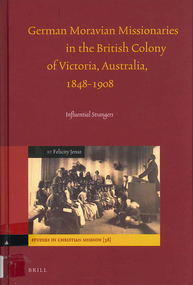
... ...Kulin Nation...Djadja Wurrung Dja dja wurrung Gunai Wati Wati Wemba Wemba Woi wurrung Wurundjeri Wotjobaluk Wergaia Wotjubalak Wotjibolik Wudjubalug Kulin Nation Victorian history Moravian missions colonisation Port Phillip Protectorate Maps, b&w illustrations Contents: God's lot : Moravians and missions "The most wretched and bleakest" : Moravian desire to work amongst the Australian Aborigines "Ein fauler Fleck" : Lake Boga, a putrid stain "I is done no more" : the first converts "Alles geht seinen schleppenden Gang" expansion, movement and sluggish progress "Every triumphant death" closure in a British colony. ...Contents: God's lot : Moravians and missions "The most wretched and bleakest" : Moravian desire to work amongst the Australian Aborigines "Ein fauler Fleck" : Lake Boga, a putrid stain "I is done no more" : the first converts "Alles geht seinen schleppenden Gang" expansion, movement and sluggish progress "Every triumphant death" closure in a British colony.Maps, b&w illustrationsdjadja wurrung, dja dja wurrung, gunai, wati wati, wemba wemba, woi wurrung, wurundjeri, wotjobaluk, wergaia, wotjubalak, wotjibolik, wudjubalug, kulin nation, victorian history, moravian missions, colonisation, port phillip protectorate -
 Victorian Aboriginal Corporation for Languages
Book, Bruce Pascoe et al, Dictionary of Wathawoorroong, 2008
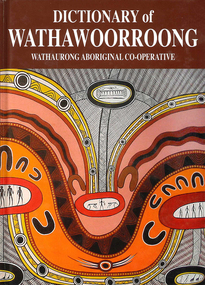
... ...Kulin nation...Wathawoorroong Wathaurong Wathawurrung Wathaurong Aboriginal Co operative Kulin nation Aireys Inlet Colac Ballarat Werribee Geelong dictionaries language map Victorian Aboriginal Corporation for Languages language reclamation endangered languages William Buckley Francis Tuckfield William Thomas George Augustus Robinson Frances Sievwright Barry Blake Stephen Morey maps, b&w photographs, word lists Dictionary with text in English and Wathawoorroong dialect. ...Dictionary with text in English and Wathawoorroong dialect.maps, b&w photographs, word listswathawoorroong, wathaurong, wathawurrung, wathaurong aboriginal co operative, kulin nation, aireys inlet, colac, ballarat, werribee, geelong, dictionaries, language map, victorian aboriginal corporation for languages, language reclamation, endangered languages, william buckley, francis tuckfield, william thomas, george augustus robinson, frances sievwright, barry blake, stephen morey -
Whitehorse Historical Society Inc.
Article, Demise of native tribes : not a good story, 11/02/1997 12:00:00 AM
... ...Kulin Nation...Aborigines McWilliam Gwen Wurundjeri Aboriginal Tribe Kulin Nation Boroondara The impact of European settlement on the Wurundgeri people and surrounding tribes was horrific, including 'White man's' diseases and deliberate poisoning. ...The impact of European settlement on the Wurundgeri people and surrounding tribes was horrific, including 'White man's' diseases and deliberate poisoning.The impact of European settlement on the Wurundgeri people and surrounding tribes was horrific, including 'White man's' diseases and deliberate poisoning.The impact of European settlement on the Wurundgeri people and surrounding tribes was horrific, including 'White man's' diseases and deliberate poisoning.aborigines, mcwilliam, gwen, wurundjeri aboriginal tribe, kulin nation, boroondara -
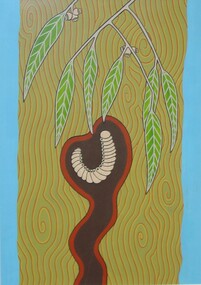 City of Whittlesea Art Collection
Painting - Gouache on paper, Mandy Nicholson, Djerri (Grub)
... Mandy also has connections to the Dja Dja wurrung and Ngurai illam wurrung language groups of the Central/Eastern Kulin Nation on her fathers side and German on her mothers....Mandy also has connections to the Dja Dja wurrung and Ngurai illam wurrung language groups of the Central/Eastern Kulin Nation on her fathers side and German on her mothers. wurundjeri aboriginal kulin Djerri (Grub) Painting Gouache on paper Mandy Nicholson ...Born in Healesville, Many Nicholson is a Wurundjeri-willam (Wurundjeri-baluk patriline) artist and Traditional Custodian of Melbourne and surrounds. Mandy also has connections to the Dja Dja wurrung and Ngurai illam wurrung language groups of the Central/Eastern Kulin Nation on her fathers side and German on her mothers.wurundjeri, aboriginal, kulin -
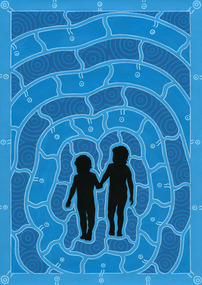 City of Whittlesea Art Collection
Painting - Gouache on paper, Mandy Nicholson, Yan Yean and Mernda
... Mandy also has connections to the Dja Dja wurrung and Ngurai illam wurrung language groups of the Central/Eastern Kulin Nation on her fathers side and German on her mothers....Mandy also has connections to the Dja Dja wurrung and Ngurai illam wurrung language groups of the Central/Eastern Kulin Nation on her fathers side and German on her mothers. wurundjeri aboriginal kulin Yan Yean and Mernda Painting Gouache on paper Mandy Nicholson ...Born in Healesville, Many Nicholson is a Wurundjeri-willam (Wurundjeri-baluk patriline) artist and Traditional Custodian of Melbourne and surrounds. Mandy also has connections to the Dja Dja wurrung and Ngurai illam wurrung language groups of the Central/Eastern Kulin Nation on her fathers side and German on her mothers.wurundjeri, aboriginal, kulin -
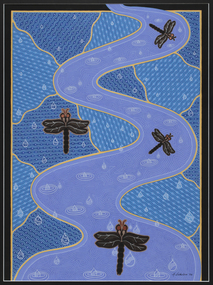 Merri-bek City Council
Acrylic on watercolour paper, Mandy Nicholson, Birrarung dragonflies in the rain, 2006
... Born in 1975, Nicholson was raised in Healesville and belongs to the Wurundjeri-willam (Woiwurrung language) clan of the Kulin Nation. Mandy’s paintings often represent important cultural rituals and are executed in her distinct graphic style. ...Born in 1975, Nicholson was raised in Healesville and belongs to the Wurundjeri-willam (Woiwurrung language) clan of the Kulin Nation. Mandy’s paintings often represent important cultural rituals and are executed in her distinct graphic style. ...Primarily a painter, Mandy Nicholson also produces ceramics, carvings, murals, prints, designs and children’s clothing. Born in 1975, Nicholson was raised in Healesville and belongs to the Wurundjeri-willam (Woiwurrung language) clan of the Kulin Nation. Mandy’s paintings often represent important cultural rituals and are executed in her distinct graphic style. She uses the traditional motifs of her people blended with contemporary interpretation. -
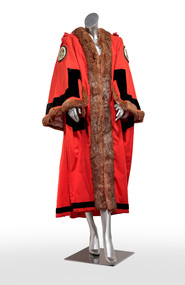 Bayside Gallery - Bayside City Council Art & Heritage Collection
Ceremonial object - Robe, Ede and Ravenscroft et al, City of Brighton Mayoral Robe, c. 1970
... It includes two figures, the market gardener heralding back to Brighton’s early history in farming, and an aboriginal man, symbolising the original inhabitants of the area, the Bunurong people of the Kulin Nation. This robe was worn by the City of Brighton Mayor until Brighton’s amalgamation into City of Bayside in 1993....It includes two figures, the market gardener heralding back to Brighton’s early history in farming, and an aboriginal man, symbolising the original inhabitants of the area, the Bunurong people of the Kulin Nation. This robe was worn by the City of Brighton Mayor until Brighton’s amalgamation into City of Bayside in 1993. ...The City of Brighton Mayoral robe features embroidered Coat of Arms on the sleeves, which were granted in 1970 by the British College of Heraldry. It includes two figures, the market gardener heralding back to Brighton’s early history in farming, and an aboriginal man, symbolising the original inhabitants of the area, the Bunurong people of the Kulin Nation. This robe was worn by the City of Brighton Mayor until Brighton’s amalgamation into City of Bayside in 1993.Full length mayoral robe with centre opening. Red wool with light brown fur edging on centre front opening and cuffs. The cuffs are also trimmed with wide bands of black velvet and each shoulder has an embroidered polychromatic roundel featuring the Brighton Coat of Arms. The bottom edge of the robe also has black velvet trim. city of brighton, mayoral robe, robe, ceremonial wear, coat of arms, r.w. bredin & son, ede and ravenscroft, bayside, mayoral regalia -
 Bacchus Marsh & District Historical Society
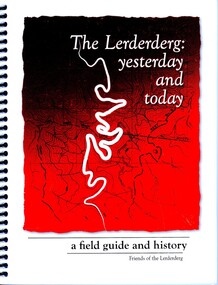
Book, The Lerderderg: Yesterday and Today: A Field Guide and History
... There is also a section describing the history of Aboriginal peoples connection to the area, the Dja Dja Wurrung and the Wurrundjeri of the Kulin nation....There is also a section describing the history of Aboriginal peoples connection to the area, the Dja Dja Wurrung and the Wurrundjeri of the Kulin nation. Lerderderg River Lerderderg State Park Lerderderg River History and Environment Lerderderg River First Nations History Lerderderg State Park Gold Mining History Goldmining Bacchus Marsh Region Printed book. ...A natural and cultural history of the Lerderderg River and surrounding wilderness area near Bacchus Marsh. The chapters cover the flora, fauna, geology and geographic features of the Lerderderg River and nearby area. The chapters also include historical sections on gold mining and seeking, irrigation, and the personal recollections of various people with long and deep connections to the area. There is also a section describing the history of Aboriginal peoples connection to the area, the Dja Dja Wurrung and the Wurrundjeri of the Kulin nation.Printed book. Paperback. Spiral bound. 155 pages. Black and white, and colour photographs and illustrations. Subject and name index. Citation: The Lerderderg: Yesterday and Today: A Field Guide and History, Michael Fox, editor. Published for Friends of the Lerderderg, by Pen Folk Publishing, Blackburn, Vic., 2011. BMDHS Location: AR/SU5 lerderderg river, lerderderg state park, lerderderg river history and environment, lerderderg river first nations history, lerderderg state park gold mining history, goldmining bacchus marsh region -
 Truganina Explosives Reserve Preservation Society Inc (TERPS)
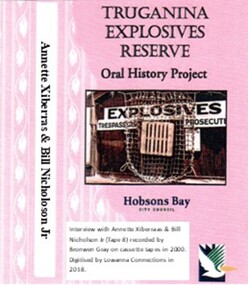
Digitised Oral History – Truganina Explosives Reserve - Tape 8 Annette Xibarras and Bill Nicholson Jnr, 2018
... At the time of the interview Annette was the manager of the Kulin Nations Cultural Heritage Organisation. ...At the time of the interview Annette was the manager of the Kulin Nations Cultural Heritage Organisation. Bill, a Wurundjeri Elder, was a Wurundjeri Cultural Officer. ...The interviews were recorded in 2000 by Bronwen Gray and Alan Young for the production of Unreserved, Stories from Truganina Explosives Reserve, animated stories from past residents, workers and interested people of the Reserve (subject to copyright 2004). Annette Xibarras and Bill Nicholson Jnr discuss the indigenous significance of the Truganina Explosives Reserve. At the time of the interview Annette was the manager of the Kulin Nations Cultural Heritage Organisation. Bill, a Wurundjeri Elder, was a Wurundjeri Cultural Officer. They discussed their childhood, aboriginal customs, connection with the land and the locating of aboriginal remains at the Museum of Victoria and the re-burial at the site where they were found. A primary source of information on memories of the Truganina Explosives Reserve and Altona,VictoriaDigital copy of original cassette recorded in 2000 and digitised in 2018julia jones, princess balam balam, archaeological survey, middens, wurundjeri, kulin nations, coranderrk, braybrook, sacred sites, mt william, bunurong, museum victoria, altona, martha nicholson
