
Showing 307 items matching "lady somers"
-
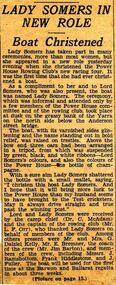 Power House Rowing Club
Newspaper clipping - LADY SOMERS IN NEW ROLE Boat Christened, LADY SOMERS IN NEW ROLE Boat Christened
... Newspaper clipping - LADY SOMERS IN NEW ROLE Boat Christened...LADY SOMERS IN NEW ROLE Boat Christened...LADY SOMERS IN NEW ROLE Boat Christened Newspaper clipping - LADY SOMERS IN NEW ROLE Boat Christened ... -
 Port Melbourne Historical & Preservation Society
Document - Address presented by Cr J P CRICHTON to Lord and Lady SOMERS, 23 Jun 1931
... Address presented by Cr J P CRICHTON to Lord and Lady SOMERS......Lady SOMERS...Address presented on behalf of the City of Port Melbourne to Lord and Lady SOMERS by His Worship The Mayor Cr. J.P. ...Document Address presented by Cr J P CRICHTON to Lord and Lady SOMERS ...Address presented on behalf of the City of Port Melbourne to Lord and Lady SOMERS by His Worship The Mayor Cr. J.P. CRICHTON on their departure from Australia 23rd June 1931.local government - city of port melbourne, lord somers, lady somers, james peter crichton, george samuel walter, william howe, arthur leaverack page, herbert charles edwards, edward william cremer, james ryan, thomas griffin, henry carr southward, sydney sims anderson, town clerks, mayors -
 St Kilda Historical Society
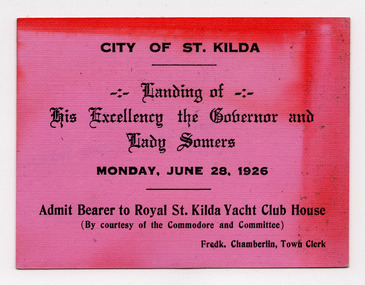
Ephemera - Ticket, Landing of His Excellency the Governor and Lady Somers, 1926
... Landing of His Excellency the Governor and Lady Somers...Landing of His Excellency the Governor and Lady Somers Ephemera Ticket ...Event upon the appointment of Lt. Col. The Right Hon. Arthur Herbert Tennyson, the Lord Somers, KCMG DSO MC as Governor of Victoria. He served in the role from 28 June 1926 to 23 June 1931, and administered the Commonwealth as acting governor-general from 3 October 1930 to 22 January 1931.Two cream cards, discoloured with age, printed on one side in black on a pink background. governor arthur tennyson somers, -
 University of Melbourne, Burnley Campus Archives
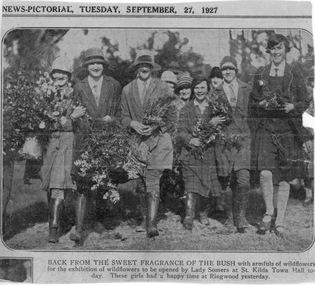
Photograph - Black and white and sepia prints, The Sun-News Pictorial, Back From the Sweet Fragrance of the Bush, 1927
... ...lady somers...Photograph of an illustration from a Newspaper article in the Sun-News Pictorial, Tuesday, September, 27, 1927, "Back from the sweet fragrance of the bush with armfuls of wildflowers for the exhibition of wildflowers to be opened by Lady Somers at St. Kilda Town Hall today. These girls had a happy time at Ringwood yesterday." (2) B/w photograph cut from a journal with the caption, "Students of the Burnley Horticultural College (who started the new term last Tuesday) with Mr. ...All donated by Ella Chalmers (nee Fry) (1928). ella chalmers (née fry) burnley horticultural college george russ a.w. jessep principal mr. harrison science master Student group lady somers st kilda town hall exhibition of wildflowers students wildflowers newspaper cutting (1) Sepia photograph and Newspaper Cutting. ...All donated by Ella Chalmers (nee Fry) (1928).(1) Sepia photograph and Newspaper Cutting. Photograph of an illustration from a Newspaper article in the Sun-News Pictorial, Tuesday, September, 27, 1927, "Back from the sweet fragrance of the bush with armfuls of wildflowers for the exhibition of wildflowers to be opened by Lady Somers at St. Kilda Town Hall today. These girls had a happy time at Ringwood yesterday." (2) B/w photograph cut from a journal with the caption, "Students of the Burnley Horticultural College (who started the new term last Tuesday) with Mr. Russ (Practical Demonstrator), Mr. A. Jessep (Principal) and Mr. Harrison (Science Master)." and, "1927." Group of students standing, seated on benches and seated on the lawn in the Ornamental Garden.ella chalmers (née fry), burnley horticultural college, george russ, a.w. jessep, principal, mr. harrison, science master, student group, lady somers, st kilda town hall, exhibition of wildflowers, students, wildflowers, newspaper cutting -
Bendigo Historical Society Inc.
Document - BOY SCOUTS, GIRL GUIDES OFFICIAL SOUVENIR PROGRAMME, 1 Apr, 1931
... ... Lady Somers...Page 11 photo of Her Excellency, Lady Somers, Chief Guide for Victoria. Advertising in program: State Savings Bank of Victoria, Mercantile Mutual, Insurance Company Limited, Bank of New South Wales, The Union Trustee Company or Australia Limited, Kodak, A.M.P. ...Photo Lady Baden Powell World Chief Guide. photo of Her Excellency Lady Somers Chief Guide for Victoria. Advertising in program: State Savings Bank of Victoria Mercantile Mutual Insurance Company Limited Bank of New South Wales The Union Trustee Company or Australia Limited Kodak A.M.P. ...Boy Scouts, Girl Guides Official Souvenir Programme, Commemorating the Visit to Victoria of the World Chief Scout Lord Baden Powell of Gilwell and World Chief Guide Lady Baden Powell. April, 1931. Price 1/-. The Boy Scout Movement . . . The Scout's Promise . . . The Scout Law . . . Includes photo of His Excellency, Lord Somers, Chief Scout for Victoria, page 3. Official Programme: Wednesday, 1st April through to 12th April, photo on page 8, C A Hoadley, Esq., Chief Commissioner for Victoria. Photo on page 9 Lady Baden Powell, World Chief Guide. Page 11 photo of Her Excellency, Lady Somers, Chief Guide for Victoria. Advertising in program: State Savings Bank of Victoria, Mercantile Mutual, Insurance Company Limited, Bank of New South Wales, The Union Trustee Company or Australia Limited, Kodak, A.M.P. Society, Commonwealth Savings Bank of Australia. There are 3 copies of this guide numbered 4259a,b,c. Held in Melbourne and Metropolitan area. Cover light card mottley blue grey in colour inside cover plain blue grey, pages off white with olive print. 24 pages plus cover.E.P. Printing & Publishing Co. Cnr. Pelham & Barry Sts, Carltonevent, official, boy scouts girl guides, boy scouts, girl guides official souvenir programme, commemorating the visit to victoria of the world chief scout lord baden powell of gilwell world chief guide lady baden powell. april, 1931. price 1/-. the boy scout movement. the scout's promise. the scout law. photo of his excellency, lord somers, chief scout for victoria, page 3. official programme: wednesday, 1st april through to 12th april, photo c a hoadley, esq., chief commissioner for victoria. photo lady baden powell, world chief guide. photo of her excellency, lady somers, chief guide for victoria. advertising in program: state savings bank of victoria, mercantile mutual, insurance company limited, bank of new south wales, the union trustee company or australia limited, kodak, a.m.p. society, commonwealth savings bank of australia. held in melbourne and metropolitan area. -
 Vision Australia
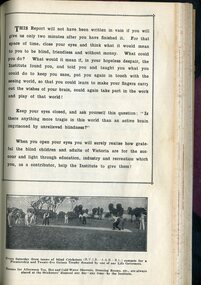
Administrative record - Text, Royal Victorian Institute for the Blind annual report 1927, 1927
... ...Lady Somers...Articles in this annual report include: 60th anniversary, approximately 1000 blind people in Victoria, hope that Government will increase it's support which has not varied for over 30 years and comparison of costs compared to the 50th anniversary, visits by Lady Stonehaven and Lord and Lady Somers, resignation of G. Dent and appointment of J. ...Articles in this annual report include: 60th anniversary, approximately 1000 blind people in Victoria, hope that Government will increase it's support which has not varied for over 30 years and comparison of costs compared to the 50th anniversary, visits by Lady Stonehaven and Lord and Lady Somers, resignation of G. Dent and appointment of J. ...Articles in this annual report include: 60th anniversary, approximately 1000 blind people in Victoria, hope that Government will increase it's support which has not varied for over 30 years and comparison of costs compared to the 50th anniversary, visits by Lady Stonehaven and Lord and Lady Somers, resignation of G. Dent and appointment of J. Tanswell as head teacher, George Findlay is entering the final year of his degree and Donald Forbes is in his second year, thanks to Sir Baldwin Spencer for allowing the children to visit the National Museum and touch various items as he spoke about the various exhibits, George Findlay won the 3LO Exhibition for Pianoforte, the success of the Concert Party and the difficulty in securing halls large enough to hold concerts, placement of safety zones by the City of Melbourne and South Melbourne councils opposite the Institute, official opening of the hostel in Raleigh Street by the Lord Mayor, activities providing support for those not working at the Institute include teaching of home trades who manufactured goods will be purchased by the RVIB for sale in their shop, a wholesale tobacco and grocery store, use of the Pipe Organ, musical instruments, wireless set, study, writing, games, typewriting, showers and baths and dressing rooms for on-site use, a brief outline of the blind cricket playing ground and the boat house, the decision to provide free Wireless Sets to those who cannot afford them, H. Foster (foreman of the Mat department) again played Father Xmas at the children's Christmas party, the Orchestra and Concert Party gave their annual free concert to the Tramways Board and employees in appreciation for the free passes for the blind, formation of a Central Auxiliary with representatives from each municipality to help bring the work of the Institute more predominantly to the general public across Victoria, and the passing of workers Margaret Cates, Tom Ginniff and Peter Stevens.1 volume bound with illustrations.royal victorian institute for the blind, annual report, lord somers, lady somers, g dent, j tanswell, george findlay, donald forbes, baldwin spencer, national museum of victoria, cricket, rowing, h foster, auxiliaries, wirths brothers circus, raleigh street hostel, margaret cates, tom ginniff, peter stevens, buildings -
 Ringwood and District Historical Society
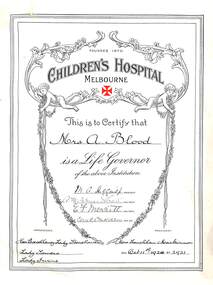
Certificate, Life Governorship of Childrens Hospital Melbourne presented to Mrs A Blood - 1928
... Patronesses: Her Excellency Lady Stonehaven, Lady Somers, Lady Irvine. Date: October 11th 1928....Patronesses: Her Excellency Lady Stonehaven, Lady Somers, Lady Irvine. Date: October 11th 1928. ...Standard Life Governor Certificate from Childrens Hospital Melbourne"Written on Certificate" Presented to Mrs A Blood Signed by: President, Vice President, Hon Treasurer, Hon Secretary. Patronesses: Her Excellency Lady Stonehaven, Lady Somers, Lady Irvine. Date: October 11th 1928. -
 Ringwood and District Historical Society
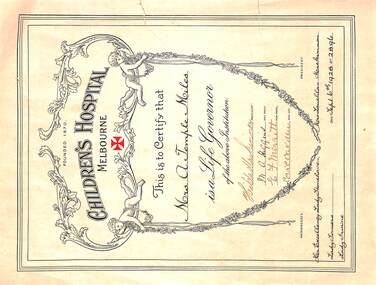
Certificate, Life Governorship of Childrens Hospital Melbourne presented to Mrs A Temple Miles - 1928
... Patronesses : Her Excellency Lady Stonehaven, Lady Somers, Lady Irvine. Date: September 6th 1928....Patronesses : Her Excellency Lady Stonehaven, Lady Somers, Lady Irvine. Date: September 6th 1928. ...Standard Life Governor Certificate from Childrens Hospital Melbourne"Written on Certificate" Presented to Mrs A Temple Miles Signed by President, Vice President, Hon Treasurer, Hon Secretary. Patronesses : Her Excellency Lady Stonehaven, Lady Somers, Lady Irvine. Date: September 6th 1928. -
 Halls Gap & Grampians Historical Society
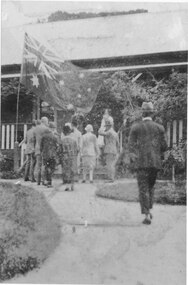
Photograph - B/W, Oct-27
... The party of people approaching the steps include the Victorian Governor and his wife Lord and Lady Somers...The party of people approaching the steps include the Victorian Governor and his wife Lord and Lady Somers ACCOMMODATION Guesthouses Bellfield Quality paper made in Germany 1 copy B/W 1 copy Sepia Guests arriving at Hotel with Flag outside Photograph B/W ...The party of people approaching the steps include the Victorian Governor and his wife Lord and Lady SomersGuests arriving at Hotel with Flag outsideQuality paper made in Germany 1 copy B/W 1 copy Sepiaaccommodation, guesthouses, bellfield -
 Halls Gap & Grampians Historical Society
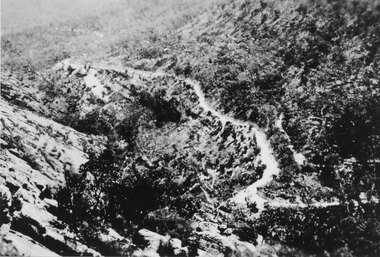
Photograph - Sepia, C 1930s
... The Mt Victory Rd was originally called the Bluff Road After improvements and extension it was renamed at its opening by Lady Somers in Mar 1930...The Mt Victory Rd was originally called the Bluff Road After improvements and extension it was renamed at its opening by Lady Somers in Mar 1930 ACCESS ROUTES Roads Photo shows the newly formed Mt Victory Rd. with the bridle track above it Photo taken from the top of the Elephant's hide Photograph Sepia ...The Mt Victory Rd was originally called the Bluff Road After improvements and extension it was renamed at its opening by Lady Somers in Mar 1930Photo shows the newly formed Mt Victory Rd. with the bridle track above it Photo taken from the top of the Elephant's hideaccess routes, roads -
 Halls Gap & Grampians Historical Society
Photograph - B/W, C 1930s-1940s
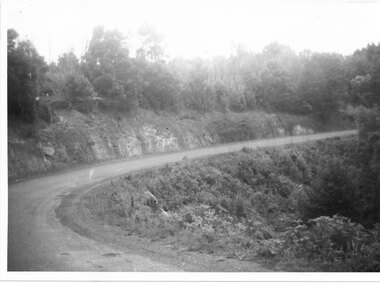
... Mt Victory Rd once known as the Bluff road was opened by Lady Somers Mar 1930. This section of the raod is beyond Stoney Creek Gorge...Mt Victory Rd once known as the Bluff road was opened by Lady Somers Mar 1930. This section of the raod is beyond Stoney Creek Gorge ACCESS ROUTES Mt Victory Rd Roads photo shows sweeping bend on Mt Victory Rd Photograph B/W ...Mt Victory Rd once known as the Bluff road was opened by Lady Somers Mar 1930. This section of the raod is beyond Stoney Creek Gorgephoto shows sweeping bend on Mt Victory Rdaccess routes, mt victory rd, roads -
 Halls Gap & Grampians Historical Society
Photograph - B/W, C 1930
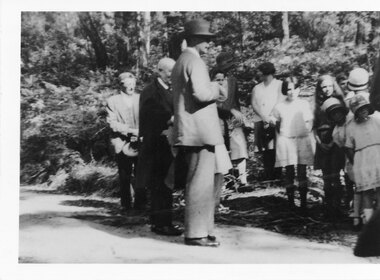
... Official opening of Mt Victory Rd People in photo Lord and Lady Somers, 2 Johsons Millie Bowtell, Bessie McKeon, M Pawsey...Official opening of Mt Victory Rd People in photo Lord and Lady Somers, 2 Johsons Millie Bowtell, Bessie McKeon, M Pawsey ACCESS ROUTES Mt Victory Rd PEOPLE Roads Photo shows group standing on road opening of Mt Victory Rd. ...Official opening of Mt Victory Rd People in photo Lord and Lady Somers, 2 Johsons Millie Bowtell, Bessie McKeon, M PawseyPhoto shows group standing on road opening of Mt Victory Rd. Lord Somers in foregroundaccess routes, mt victory rd, people, roads -
 Bendigo Historical Society Inc.
Document - BUSH COLLECTION: CORRESPONDENCE - RE GIRL GUIDING MATTERS (M BUSH), 1924-1926
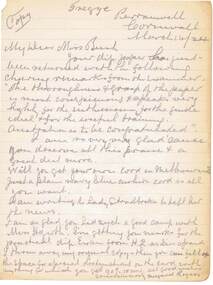
... (Copy-handwritten) to Miss Bush from (Lady) Linda? Somers, Oct. 29th 1926....(Copy-handwritten) to Lady Somers from Muriel Montgomery, General Secretary re award of Red Cord to M Bush. ...Correspondence - re Girl Guiding Matters (M Bush) a. (Copy - handwritten) to Merle (Miss) Bush from Margaret Rogers, Cornwall 16/3/1924 re diploma paper results; b. (Copy-handwritten to Miss Merle Bush from Alice Baird & Alice Judson (examiners), Feb 1924; c. (Copy-handwritten) to Lady Somers from Muriel Montgomery, General Secretary re award of Red Cord to M Bush. Dated 22/9/1926; d. (Copy-handwritten) to Miss Bush from (Lady) Linda? Somers, Oct. 29th 1926.person, individual, bush collection - personal, bush collection, collection, correspondence, clubs and associations, organizations, organisations, education, diploma, girl guides association -
 Stawell Historical Society Inc
Newspaper, Weekly Times – Major Mitchell. Grampians Road. 2 page. 1930
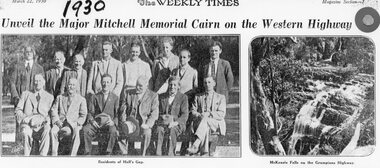
... Halls Gap school children with Lady Somers - 7. new highway -8. residents of Halls Gap -9. ...Halls Gap school children with Lady Somers - 7. new highway -8. residents of Halls Gap -9. ...Weekly Times – Major Mitchell. Grampians Road. 2 page. -1 The Balconies -2. Main St looking west - -3. Lady Somers opening Grampians Hwy -4.Stawell, Borough and Shire Councillors -5. Town Hall looking west -6. Halls Gap school children with Lady Somers - 7. new highway -8. residents of Halls Gap -9. McKenzie Falls -10. Official party Mount Victory -11. Main Street looking east -12. School Children Major Mitchell Memorial Cairn -13. Lord Somers unveiling Major Mitchell Cairn Western Hwy -14. Chataqua Peak from new highwaystawell -
Glenelg Shire Council Cultural Collection
Print - Linocut - Admella Rescue Series No. 14, Bob Stone, on arrival at Lady Bird some 3 or 4 were in the last stage of existence 'Portland Guardian 15th August 1859', 2009
... ... on arrival at Lady Bird some 3 or 4 were in the last stage of existence 'Portland Guardian 15th August 1859'...Front: 'Linocut Bob Stone 2009 ... on arrival at Lady Bird some 3 or 4 were in the last stage of existance. ...Admella Portland Lifeboat shipwreck Front: 'Linocut Bob Stone 2009 ... on arrival at Lady Bird some 3 or 4 were in the last stage of existance. ...Part of suite of 16 Linocuts created for an exhibition at the Portland Arts centre for the Admella 150th Festival.Linocut. Fourteenth in a suite of 16 in Admella Rescue Series. Printed in black on white archival paper Depicts a man with a rope around his chest and under his arm pits, being hauled up the side of the 'Lady Bird'. Two members of the Portland life boat also visible, watching procedure from lifeboat.Front: 'Linocut Bob Stone 2009 ... on arrival at Lady Bird some 3 or 4 were in the last stage of existance. Portland Guardian 15th August 1859' - hand written in black ink.admella, portland lifeboat, shipwreck -
 Warrnambool and District Historical Society Inc.
Clothing - Theatre coat, c. 1900
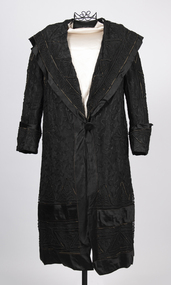
... This garment would have been worn at an evening function by a lady of some considerable means. It dates from the late 19th century....This garment would have been worn at an evening function by a lady of some considerable means. It dates from the late 19th century. ...This garment would have been worn at an evening function by a lady of some considerable means. It dates from the late 19th century.This item has no known provenance and is retained for display purposes.This is a woman's black, knee length, satin theatre coat. It is ornamented with geometric and curved cornelli work. The shawl collar has a pointed back. It is fastened in the front with a large, satin covered black button. It is lined with black satin. It has full length sleeves, turned up at the ends and lined with satin.vintage clothing, woman's evening apparel -
 Bendigo Historical Society Inc.
Slide - BENDIGO EASTER FAIR, May 1963
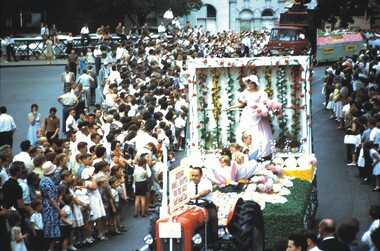
... Bendigo Easter Fair. A lady in pink and some little girls in white on a float....Bendigo Easter Fair. A lady in pink and some little girls in white on a float. ...Slide. Bendigo Easter Fair. A lady in pink and some little girls in white on a float.slide, bendigo, bendigo easter fair., bendigo easter fair. -
 Sunshine and District Historical Society Incorporated
Book - I Remember Footscray, Footscray Historical Society et al, Circa 1980
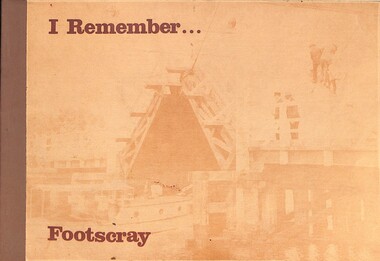
... John Ambulance Divisions on parade before Lord and Lady Somers 1930....John Ambulance Divisions on parade before Lord and Lady Somers 1930. This is a nostalgic look at the history of Footscray. ...This book details residents' memories of living in Footscray in the twenties and thirties and includes pictures of: Canoeing on the Maribyrnong River at Riverview Tea Gardens, The Riverview Tea Gardens, The Footscray Swing Bridge, Hyde St Central School Boys Band 1950, Nicholson St Railway Gates, Australian Six Motor Car, Footscray's first tram leaving the tram sheds in Buckley St 6/9/1921, St. John Ambulance Footscray Division 1930, St. John Ambulance Divisions on parade before Lord and Lady Somers 1930.This is a nostalgic look at the history of Footscray.Front Cover - I Remember Footscray First Page - I Remember Footscray by Pat Brearley, Kitty Cochran, Harold Cochran, Doreen Condon, Jess Gascoigne, Janet Grant, Helen Heath, Margaret Huxtable, Elizabeth Lynch, Edna O'Brian, Ron Pickett & Loris Samson. Tutor Sue Noy. footscray, history, maribyrnong river, entertainment, brass bands of footscray, transport, st john ambulance -
 Bendigo Historical Society Inc.
Newspaper - JENNY FOLEY COLLECTION: HAPPY CAMPERS
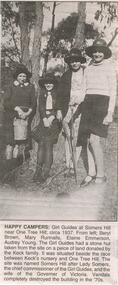
... The site was named Somers Hill after Lady Somers, the chief commissioner of the Girl Guides, and the wife of the Governor of Victoria. ...The site was named Somers Hill after Lady Somers, the chief commissioner of the Girl Guides, and the wife of the Governor of Victoria. ...BHS CollectionBendigo Advertiser '' The way we were''from 2002. Happy campers: Girl Guides at Somers Hill near One Tree Hill, circa 1937. From left: Beryl Brown, Mary Runnalls, Elaine Emmerson, Audrey Young. The Girl Guides had a stone hut taken from the site on a piece of land donated by the Keck family. It was situated beside the race between Keck's nursery and One Tree Hill. The site was named Somers Hill after Lady Somers, the chief commissioner of the Girl Guides, and the wife of the Governor of Victoria. Vandals completely destroyed the building in the 70s. The clip is in a folder.newspaper, bendigo advertiser, the way we were -
 Melbourne Tram Museum
Photograph - Black & White Photograph/s, Bob Prentice, c1910
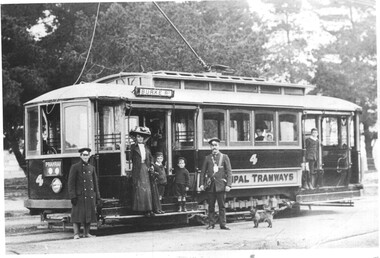
... Has the driver and conductor in the view along a family of a lady and some children. Also a dog in the photograph. ...Has the driver and conductor in the view along a family of a lady and some children. Also a dog in the photograph. ...Black and white photograph of PMTT No. 4 at the Burke Road terminus with Central Park in the background. Has the driver and conductor in the view along a family of a lady and some children. Also a dog in the photograph. Tram has the destination of Burke Road on the roof and Prahran on the rear. Note the coupling arrangement at the front of the tram. Photograph features on page 55 of Ian Brady's book on the PMTT, "Melbourne's Foremost Municipal Tramway". Photograph from the Bob Prentice Collection. Has remnants of a handwritten note on the rear - has been removed from sheet with remains of the sheet on the rear.trams, tramways, pmtt, burke rd, prahran, drivers, conductors, tram 4 -
 Flagstaff Hill Maritime Museum and Village
Photograph - Vessels, Steam and Sail, Vessels in the bay, 1890's
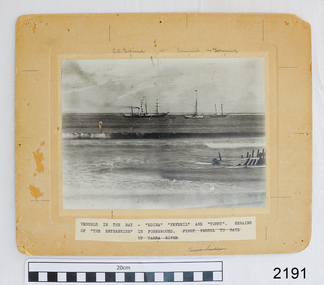
... Black and white photograph of several vessels in Lady Bay, Warrnambool, including some small vessels and "S.S. ...Black and white photograph of several vessels in Lady Bay, Warrnambool, including some small vessels and "S.S. ...The photograph, taken in the 1890s, shows sailing ships and a wreck in Lady Bay, Warrnambool. Lady Bay was once a very busy port of trade in Warrnambool and was also called the Port of Warrnambool or Warrnambool Harbour. ENTERPRISE (1847-1850) NOTE: The “Enterprise” wrecked in 1850 in Warrnambool should not be confused with John Pascoe Faulkner’s ‘Enterprise’, which was wrecked in NSW in 1847. The 58-ton schooner Enterprise was built by David Hay in Waiheke, New Zealand in 1847 and registered by owners John Watson and Edward Byam in Melbourne, Australia. She was a single-deck sailing ship with two masts, used for carrying cargo such as local agricultural produce and general commodities between Melbourne and other colonial ports. On September 14th, 1850 the Enterprise had sailed from Melbourne under the control of the ship’s Master, James Gardiner Caught, and was moored in at the Tramway Jetty in Lady Bay, laden with wheat and potatoes. The vessel rode out a south-easterly gale but eventually dragged anchor and was beached, bow first and then broadside. Buckwall, a local indigenous man, braved the heavy surf and reached the stricken vessel with a rescue line, saving all five crew on board. There were no passengers on board. The Enterprise wreck was in an area called Tramway Jetty in Lady Bay. Since then the area has become the location of Lady Bay Hotel and now, in 2019, it is in the grounds of the Deep Blue Apartments. In fact, with the constantly changing coastline through built-up sand, the wreck site is now apparently under the No 2 Caravan Park on Pertobe Road, perhaps 150 metres from the high tide. Its location was found by Ian McKiggan (leader of the various searches in the 1980s for the legendary Mahogany Ship). The Warrnambool Wreck Enterprise is listed on the Victorian Heritage Database VHR S238. DIFFERENTIATING the New Zealand Schooner “Enterprise” from John Fawkner’s “Enterprize“ Dr Murray Johns, Melbourne, says in his article The Mahogany Ship Story, “…the Enterprise, wrecked in Lady Bay, Warrnambool in 1850 ... was soon covered by sand but was exposed again after several storms in 1887. “Samples of timber were then cut from the wreck, which would then have been buried for 37 years. In November 1887 the Warrnambool Standard reported that “the timber looks sound and hard, a penknife scarcely making any impression.” “For many years there was confusion about the identity of that ship in Lady Bay. Most people believed it was the wreck of John Pascoe Fawkner’s Enterprize, which had sailed from Tasmania to Victoria bringing the pioneer settlers to Melbourne in 1835. “In fact, as I documented in 1985, the Warrnambool wreck was of an entirely different ship, also called Enterprize [Enterprise], but built in New Zealand in 1847. Fawkner’s ship had already been sold to Captain Sullivan in 1845 and was wrecked on the Richmond Pier in northern New South Wales early in 1847. “In 1985 a piece of timber from the local Enterprise, which had been kept at the Warrnambool Museum since 1892, was identified histologically as a New Zealand timber, not Tasmanian timber such as blue gum, from which Fawkner’s Enterprize would have been built in 1830. This confirmed the identity of the Warrnambool Enterprize.”[Dr. M.W. Johns later wrote an article called “The Schooner Enterprise: A Final Word on a Historic Wreck.”] ABOUT THE S S EDINA The three-masted iron screw steamer SS Edina was built in Glasgow, Scotland, in 1854 by Barclay and Curle. She was adorned with the figurehead of the ‘fair maid of Judea’. The many years of service made SS Edina famous worldwide as the longest-serving screw steamer. (The term screw steamer comes from being driven by a single propeller, sometimes called a screw, driven by a steam engine.) SS Edina’s interesting history includes English Chanel runs, serving in the Crimean Ware carrying ammunition, horses and stores to the Black Sea, and further service in the American Civil War and later, serving in the western district of Victoria as well as in Queensland and carried gold, currency and gold prospectors Australia to New Zealand. SS Edina had the privilege of being an escort vessel to H.R.H. the Duke of Edinburgh during his visit to Australia in 1867. In March 1863 SS Edina arrived in Port Phillip Bay, Melbourne and was bought by Stephen Henty, of Portland fame, to work the cargo and passenger run from Melbourne – Warrnambool – Port Fairy - Portland. After a short time of working the run from Australia to New Zealand, with passengers and cargo that included gold and currency, she returned to her Melbourne - Warrnambool – Port Fairy run, with cargo including bales of wool produced in the western district of Victoria. The Warrnambool Steam Packet Company purchased SS Edina in 1867; she was now commanded by Captain John Thompson and Chief Engineer John Davies. She survived several mishaps at sea, had a complete service and overhaul and several changes of commanders. In 1870 SS Edina was in Lady Bay, Warrnambool, when a gale sprung up and caused a collision with the iron screw steamer SS Dandenong. SS Edina’s figurehead was broken into pieces and it was not ever replaced. SS Edina was re-fitted in 1870 and was then used as a coastal trader in Queensland for a period. She was then brought to Melbourne to carry cargo and passengers between Melbourne and Geelong and performed this service from 1880-1938. During this time (1917) she was again refitted with a new mast, funnel, bridge and promenade deck, altering her appearance. In 1938, after more collisions, SS Edina was taken out of service. However, she was later renamed Dinah and used as a ‘lighter’ (a vessel without an engine or superstructure) to be towed and carry wool and general cargo between Melbourne and Geelong. In 1957, after 104 years, the SS Edina was broken up at Footscray, Melbourne. Remains of SS Edina’s hull can be found in the Maribyrnong River, Port Phillip Bay. This photograph is significant for its association with the screw steamer SS Edina, heritage listed on the Victorian Heritage Database VHR S199. She had endeared herself to the people of Port Phillip Bay as a passenger ferry, part of their history and culture. She played a significant role in the Crimean War, the American Civil War and the gold rush in New Zealand. She also served western Victoria for many years in her cargo and passenger runs. The SS Edina is famous for being the longest-serving screw steamer in the world. After spending her first nine years overseas she arrived in Melbourne and her work included running the essential service of transporting cargo and passengers between Melbourne and the western Victoria ports of Warrnambool, Port Fairy and Portland. The SS Edina was purchased in the late 1860s by the local Warrnambool business, the Warrnambool Steam Packet Co. and continued trading from there as part of the local business community. Her original ‘fair maid of Judea’ figurehead was broken to pieces in a collision with another vessel (the SS Dandenong) in a gale off Warrnambool, Victoria, in 1870. The photograph is significant for its association wreck of the Victorian Heritage Listed schooner Enterprise, VHR S238, being a New Zealand-built but Australian-owned coastal trader. The wreck was also significant for its association with the local indigenous hero, Buckawall, who saved the lives of the five crew on board. Photograph "Vessels in the Bay". Black and white photograph of several vessels in Lady Bay, Warrnambool, including some small vessels and "S.S. Edina", the "Peveril" and "Tommy", plus the remains of the wrecked vessel "Enterprise" in the foreground. Photograph is mounted on beige card with label describing the vessels, plus pencilled vessel names. There are several pin holes in each corner of the photograph. Typed label under the photograph “VESSELS IN THE BAY – “EDINA” “PEREVIL” AND “TOMMY”. / REMAINS OF “THE ENTERPRISE” IN FOREGROUND. (Also crossed out on the label “FIRST VESSEL TO SAIL UP YARRA RIVER). In pencil script above the vessels on the photograph “S.S. Edina”, “Peveril” “Tommy”. On the reverse is a printed sticker with “F-Ph 59/2 74”, red felt-tip pen “88”, green pen script repeating the text that is under the photograph on the front.flagstaff hill, warrnambool, shipwrecked-coast, flagstaff-hill, flagstaff-hill-maritime-museum, maritime-museum, shipwreck-coast, flagstaff-hill-maritime-village, enterprize, port of warrnambool, warrnambool harbour, peveril, tommy, ss edina, lighter dinah, warrnambool steam packet company, lady bay, pleasure steamer, edina, trade, travel, screw ship, coastal trader, cargo, victoria, buckawall, indigenous rescue, indigenous hero -
 Vision Australia
Administrative record - Text, Royal Victorian Institute for the Blind annual report 1928, 1928
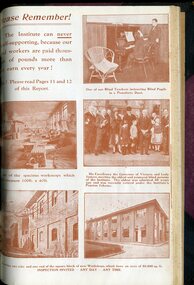
... Articles in this annual report include: dismay at continued amount of Government financial support has been capped for over 30 years despite increased costs, visits by Lady Stonehave, Lord and Lady Somers, the reduction in sale prices due to overwhelming competition with machinery made goods, resignation of M.A. ...Articles in this annual report include: dismay at continued amount of Government financial support has been capped for over 30 years despite increased costs, visits by Lady Stonehave, Lord and Lady Somers, the reduction in sale prices due to overwhelming competition with machinery made goods, resignation of M.A. ...Articles in this annual report include: dismay at continued amount of Government financial support has been capped for over 30 years despite increased costs, visits by Lady Stonehave, Lord and Lady Somers, the reduction in sale prices due to overwhelming competition with machinery made goods, resignation of M.A. Tanswell and appointment of H.E. Finlayson, to perpetuate the loss of Lady Brunton (a vocal supporter of the Institute) her husband Lord Brunton invested 350 pounds for the purpose of establishing the "Lady Brunton Memorial Prize Fund for Educational Purposes", a Girl Guide and Brownie troop were formed during the year, George Findlay received his degree in Music, many pupils completed their Pianoforte examination at the University Conservatorium with Honours, over 14,000 people attended Concert Party performances in Ballarat and Bendigo and nearly 3000 people packed into Melbourne Town Hall, thanks to the Advance Agent (R Reid), Manager (Alf Broadway) and volunteer Stage Manager (W Sewell) who helped our artists put together their momentous events, piano tuners continue to see a demand for their services under the skilled tuition of Alex Johnson, request for amended legislation so that people can train as masseurs, a hostel for males will be completed in a few months time and the womens hostel is proving invaluable to young women and female adult workers, free Wireless Sets distributed have had their licences renewed and batteries replaced with many letters of appreciation coming in from families who have seen a world of change for those who can now listen to the wider world, grant of two acres of land for use as a sporting ground by the St Kilda Council, new rowing shed and club house to be built at Albert Park so that all blind people can avail themselves of this pastime, visiting cricket teams from New South Wales and Adelaide at a social evening, continued work with homecraft workers, concert in Ormond Hall for Tramways Board and employees to thank them for free passes and the passing of pupil Mavis Thompson.1 volume bound with illustrations.royal victorian institute for the blind, annual report, j tanswell, harry finlayson, lady brunton, lord brunton, girl guides, brownies, george findlay, r reid, alf broadway, w sewell, alex johnson, raleigh street hostel, rowing, cricket, mavis thompson -
 Bendigo Historical Society Inc.
Document - MALONE COLLECTION: GREETING CARDS
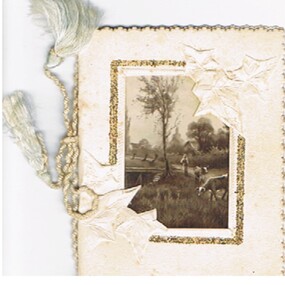
... Through the window is a sepia rural scene with two cows, a lady, a bridge and some trees. Around the window is an embossed border inside a gold glitter border. ...Through the window is a sepia rural scene with two cows, a lady, a bridge and some trees. Around the window is an embossed border inside a gold glitter border. ...Document. Greeting Cards. Small creamy card with cut out window. Through the window is a sepia rural scene with two cows, a lady, a bridge and some trees. Around the window is an embossed border inside a gold glitter border. At the top right and bottom left corners are embossed ivy like leaves which extend into the window. The edges are scallop cut. Card & insert held together with a pa;le blue twisted cord.person, greeting cards, malone collection, malone collection, greeting cards, mr. and mrs. john elliot, commercial bank footscray -
 Bendigo Historical Society Inc.
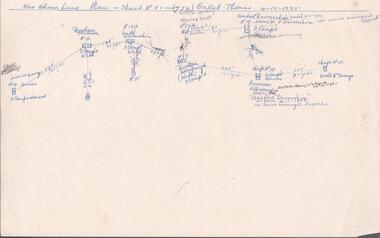
Document - MINING REPORTS - CALEB THOMAS PLANS
... Mines mentioned are: Phoenix Coy, Unicorn Coy Lease, Unicorn Shaft, Sth St Mungo, St Mungo Coy and the Lady Barkly. Also some numbered, unnamed shafts. Plans mentions shaft number, no of compartments and distance in yards and feet between each mine. ...Mines mentioned are: Phoenix Coy, Unicorn Coy Lease, Unicorn Shaft, Sth St Mungo, St Mungo Coy and the Lady Barkly. Also some numbered, unnamed shafts. Plans mentions shaft number, no of compartments and distance in yards and feet between each mine. ...(a) Copy of Caleb Thomas Plan - Sheet No VI (774) on the New Chum Line dated 4/12/1885. Plan shows the new St Mungo, Duchess Tribute, South Devonshire, Alberts Shaft, Duchess of Edinburgh, United Devonshire (later W. V. Devonshire), Princess Alexandra (later The United Devonshire) and the Ext'd St Mungo. (b) Sheet No VA (775) dated 30/5/1885. Eaglehawk District. Mines mentioned are: Phoenix Coy, Unicorn Coy Lease, Unicorn Shaft, Sth St Mungo, St Mungo Coy and the Lady Barkly. Also some numbered, unnamed shafts. Plans mentions shaft number, no of compartments and distance in yards and feet between each mine. Document is part of the Albert Richardson Collection. document, gold, mining reports, mining reports, caleb thomas plans, st mungo, duchess tribute, south devonshire, alberts shaft, duchess of edinburgh, united devonshire (later w. v. devonshire), princess alexandra (later the united devonshire), ext'd st mungo, phoenix coy, unicorn co lease, unicorn shaft, sth st mungo, st mungo coy, lady barkly -
 Halls Gap & Grampians Historical Society
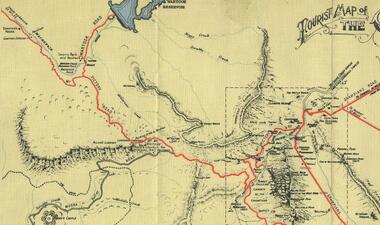
Map - Coloured
... To this end, the Bluff Road was improved and extended on 1929 and at its opening in March, 1930, by Lady Somers it was renamed the Mt. Victory Road....To this end, the Bluff Road was improved and extended on 1929 and at its opening in March, 1930, by Lady Somers it was renamed the Mt. Victory Road. ...Background on Bridle Path up Stony Creek Gorge Pre 1840 C. B. Hall, squatter on Mokepilly Run 1841-1842, first European to discover the Fyans Creek valley, the entrance of which became known as Hall's Gap. He later recorded that he followed a number of tracks which he assumed had been made by the Aboriginies and described one as "leading up a wild romantic glen and over on to the source of the Glenelg River". This could well have been the route taken up Stony Creek gorge by the first timber-cutters in this part of the Grampians to the saddle between the Wonderland and Mt. Difficult ranges known as Valley Gap 1850s/60s Timber cutters and shingle splitters were reported to be moving into the eastern side of the Grampians and by the mid 1860s there were a number of families connected to the supplying of timber to Pleasant Creek living in the "Hall's Gap ranges". John Wakeham, the first store owner in Pleasant Creek in 1854, established a timer-mill in upper Stony Creek Gorge in the late 1850s. Wakeham is credited for the clearing and levelling of the first bridle-path up the gorge. 1870s By the mid 1870s the track had been extended over Valley Gap to the Victoria Forest (the upper region of the Victoria Valley). McKeon's bullock team was known to have hauled red gum from the Valley to Stawell in the late 1870s and the 1880s. 1880s In 1887 an article in the Pleasant Creek news describes the Stony Creek Gorge track as "being a ledge alongside the mountain range, formed in the early days with the aid of earth and timber, along which the bullock teams used to travel to Horsham and plains of the Wimmera beyond." 1890s Gold was discovered in the catchment area of Stony Creek and by the end of the 1890s a new track was built from "near the junction of Fyan's and Stony Creeks, up the gorge to the diggings settlement. The mining Department had paid L300 for its construction and, when completed, the track was "three miles and 30 chains in length, the side cuttings at the narrowest part being 10 feet between" and "the watercourses which cross the track at various points" having been "filled up with rocks rolled down the sides of the hills, and consequently there can be no damage caused by bushfires which destroyed the former wooden bridges erected on the old track to Wakeham's saw-mill, the remains of which are still to be seen at the side of the diggings" The article goes on to further describe the track as one which "can with ease travel with a two horse conveyance either up or down" and that the workmen engaged in the construction of the track would be attending "a ball that night at McKeon's farm near the mouth of the gap to celebrate the successful completion of the undertaking". 1900s At what time the bridle path was extended beyond Valley Gap to the Wartook basin on the Mt. Difficult Range has not yet been determined. However, it is known that, by the turn of the century, people were travelling between Halls Gap and the caretakers' residence at Wartook Reservoir along what was now known as the "Bluff Road. Wartook's embankment had been constructed in 1887 and at that time there was already a track from Rosebrook Station homestead (near the present day Wartook Pottery) to the reservoir. Philip Rose owned both Rosebrook and Wartook Stations from the mid 1840s to the late 1850s and had regularly leased the Wartook basin to Cobb & Co. to rest horses there. 1920s Following the war of 1914-1918, tourism really took off in the Grampians, and Halls Gap rapidly grew. People would travel as far as they could on the many tracks then hike to the many lookouts being discovered by local tour guides. This led to the need for access across the range so that horse riders and the increasing number of vehicles could travel between Horsham and Halls Gap. To this end, the Bluff Road was improved and extended on 1929 and at its opening in March, 1930, by Lady Somers it was renamed the Mt. Victory Road.Map of Mt Victory Road and othersaccess routes, mt victory rd, bridle path, roads -
 Flagstaff Hill Maritime Museum and Village
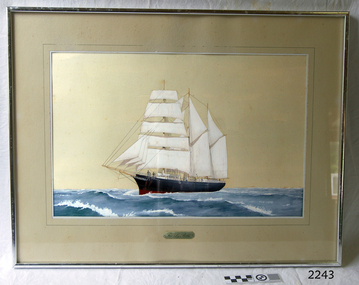
Painting - Maritime painting, The La Bella, 1980s
... some of that time and being involved in exhibitions. He enjoys helping new artists and sharing his skills and experience. About the “La Bella” The wreck of the La Bella lies at the bottom of the Warrnambool Harbour in Lady Bay. ...some of that time and being involved in exhibitions. He enjoys helping new artists and sharing his skills and experience. About the “La Bella” The wreck of the La Bella lies at the bottom of the Warrnambool Harbour in Lady Bay. ...This painting of the “La Bella” is associated with Flagstaff Hill’s collection of artefacts from the wreck of the “La Bella”. It was painted around the 1980s by maritime artist Philip J. Gray. Some 15 – 17 ships are believed to have sunk in Lady Bay, but only two have been discovered on the seafloor; the “La Bella” and the “Edinburgh Castle”. Both wrecks are popular diving sites and are preserved as significant historical marine and marine archaeological sites. The Kosnar Picture Framing and Mirrors Shop identified the "GRAY 3135, Y04/111" as their job number for the framing and said that the label "ANOTHER KOSNAR FEATURE" was last used before about 1990. About artist Philip J. Gray “Philip is one of Australia’s leading maritime artists and his meticulous research and social commentary paintings of ships, such as, the Loch Ard and Schomberg form an important part of Warrnambool’s Flagstaff Hill Maritime Museum.” [Dr Marion Manifold, Artist and Art Historian, 2014] Philip James Gray was born in London but has lived most of his life in Australia. He graduated from a London school of art as an illustrator, specialising in technical and scientific illustration as well as other commercial and applied art. He was also a student for a time of Fyffe Christie - British figurative artist, mural painter and humanitarian – who had a great influence on his career. Philip has always worked as a professional artist and illustrator. Many publications on maritime history have featured his work. His paintings have been released and sold all over the world as limited edition prints. The State Library of Victoria’s ‘Latrobe Collection’ holds two of his paintings. His street painting of ‘The Ashes Contest’ decorates the brick wall of Old Bakery Laneway in Sunbury and a Sunbury café owner commissioned him to paint the ‘Sunbury Pop Festival’ as a remembrance of local history. Philip has been an active member of the Sunbury Art Society in Victoria for several years, serving on the committee for some of that time and being involved in exhibitions. He enjoys helping new artists and sharing his skills and experience. About the “La Bella” The wreck of the La Bella lies at the bottom of the Warrnambool Harbour in Lady Bay. Some 15 ships are believed to have been wrecked there but only two have been discovered on the sea floor; the La Bella and the Edinburgh Castle. Both wrecks are popular diving sites and are preserved as significant historical marine and marine archaeological sites. The story of the final voyage of the La Bella is summarised as follows … The ship from which the sailors were rescued was the three-masted, iron and steel barquentine the La Bella, built in Norway in 1893. She was one of two iron and steel ships by Johan Smith, the company being one of the leading shipping families in Tvedestrand, Norway. She was significant to Norwegian shipping, being one of only 27 iron and steel ships ever built in Norway. La Bella was registered in New Zealand and engaged from 1902 in inter-colonial trading of timber in the pacific, between New Zealand and Australia and was often in Port Phillip Bay, Victoria. On 5th October 1905 the twelve year old La Bella left Lyttleton, New Zealand carrying a cargo of timber bound for Warrnambool, Australia . She was manned by a crew of twelve: the Master, (Captain Mylius, previously 1st Mate of La Bella, appointed Captain to La Bella on 6th February 1903) 2 Mates, Cook, six able seamen, one ordinary seaman and a boy. Bad weather en-route caused her to shelter at Burnie on Tasmania's North West coast. On November 10th, the 37th day of her journey, La Bella approached Warrnambool. Captain Mylius steered her towards Lady Bay Channel in heavy south-west seas and evening mist. He ordered the helmsman to steer for the light. As the ship came round, a tremendous sea struck her on the port quarter, causing her to breach broadside in a north-westerly direction into breakers. The helm was brought round twice more, but each time heavy seas broke over her, the third time throwing the La Bella on to a submerged reef in Lady Bay now known as La Bella Reef (about 100 yards from the Warrnambool breakwater). The sea was so rough that it even wrenched a one-and-a-half ton anchor from its fastenings and into the sea. As Captain Mylius headed to the steel wheelhouse, intending to send up a rocket flare, a huge sea slammed the steel door into him (resulting in massive bruising front and back) Despite his injuries he still managed to set off a blue light, which he held up in his hands. La Bella’s lifeboats were filled with sea water and broke up on their chocks. The blue light was the first indication to people on shore that there was a ship in distress. The Harbour Master, Captain Roe (who lived in the Harbour Master’s House opposite Flagstaff Hill), organised a group of volunteers to crew the lifeboat because the trained crew was unavailable; the crewmen were working on a steamer in Port Fairy at the time. He then poured oil onto the water to try and smooth the sea. At around 11pm three of the crew took shelter in the steel forecastle but the sea crashed into it and broke it up. While the rest of the crew and onlookers watched helplessly in the moonlight the bodies were washed away into the sea, never to be seen again. Some of the crew lashed themselves to the weather rail to keep from being washed away. Watson, the ordinary seaman, became tangled in the rigging lines and was too weak to move, so the 2nd Mate, Robertson, put a line onto him so that he wouldn’t wash off. Around 11pm three of the crew were unconscious from exhaustion. The situation on La Bella was becoming dangerous. The 2nd Mate moved to the ‘house’ and soon afterwards the ship slipped in the heavy sea. The lashings of the 1st Mate and the ‘boy’ Denham had kept them safe until about 2am when they were washed overboard; no one was able to help. One by one, the exhausted crew were being washed overboard, too weak to hold on any longer. During the night the La Bella had broken into two and the deckhouse ran out towards the sea. Two more men drowned when trying to reach the lifeboat. By sunrise the only survivors of the twelve were the Master, 2nd Mate and three seamen. Early in the morning Captain Roe used the rocket apparatus on shore to try and shoot a line to the ship for a safer rescue but each attempt fell short of the target. Several attempts were made by the lifeboat to rescue the stricken sailors, but the rough conditions made this difficult for the boat to get close enough to the ship and the lifeboat had to return to shore. During a final attempt to reach the ship Captain Mylius ordered his men to jump into the sea. Leonard Robertson, 2nd mate, jumped and swam towards the lifeboat, taking hold of the boat hook offered to him. Oscar Rosenholme managed to reach the boat floating on a piece of timber from the ship’s load and a third survivor, Noake, also made the boat. Along with the lifeboat rescue crew, 25 year old William Ferrier rowed his small dingy through the heavy seas and managed to rescue the Captain, whom he landed on the breakwater. Ferrier then returned to the ship to attempt a final rescue, losing his oars and rowlocks into the high sea. Using just a spare paddle he skulled towards the La Bella, reaching her stern in time to cut loose the lone surviving sailor, Payne, from the lashing that held him to the ship; the terrified sailor dropped from the ship and into the dingy. Shortly after the last man was rescued, the La Bella was lifted by a huge wave and crashed back down on the reef; she broke up and sank. The ordeal had lasted ten hours. The survivors were taken to the nearby Bay View Hotel and gratefully received warm food and clothing, medical attention and a place to sleep. In the following days an unidentified body of a young person was washed ashore; it was either Watson or Denham. The body was buried in the Warrnambool cemetery with an appropriate gravestone and inscription. William Ferrier became a national hero as news of the daring rescue spread. In recognition of his bravery in the two daring rescues he was awarded the Silver Medal for Bravery by the Royal Humane Society and was honoured in the letter from the Prime Minister and the Parliament of the Commonwealth, telegrams and a cheque for £20 from the Governor General, over £150 subscribed by the public, including Warrnambool and district and readers of The Argus, and a gold medal from the Glenelg Dinghy Club of South Australia. Ferrier’s rescue efforts are one of the most heroic in Victoria’s shipwreck history. (William Ferrier’s son, Frank, received a similar award almost fifty years later, when he helped rescue four members of the crew on the yacht Merlan, after it ran on to a reef near the Point Lonsdale Lighthouse. ) The wreck of La Bella now lies on her port side in 13 metres of sheltered water inside the reef she struck. The bow section is relatively intact and part of the stern has drifted north-easterly towards the mouth of the Hopkins River. The reef the La Bella struck now bears its name. Those five rescued from the La Bella were Captain George Mylius, Leonard Robertson (2nd Mate, 21 years old), R. Payne, Oscar Rosenholme and Jack Noake. Those seven who lost their lives were Mr Coulson (1st mate), Charles Jackman (cook) Gustave Johnson, Pierre Johann and Robert Gent (all able seamen), Harry Watson (ordinary seaman) and Jack Denham (ship’s boy). Captain Mylius was found guilty of careless navigation; he had sailed into the bay without the services of a pilot. His Master Certificate was suspended for twelve months. Later he was also charged with manslaughter of one of the crew who had died when the La Bella was wrecked, but found not guilty. The event’s adverse publicity and damage to his career took a toll on his health and he died of a heart attack six months after the wreck; he was only thirty-seven. His body was buried in the Melbourne General Cemetery. The La Bella was “the best documented of all sailing ships owned in New Zealand”. Her record books, ship logs, correspondence and supporting papers are still available. At the time of the tragedy she was owned by Messers David C.Turnbull and Co. of Timaru, New Zealand timber merchants and shipping agents, who had purchased her on 13th December 1901. A detailed account of the last journey of La Bella can be read in “Leonard Robertson, the Whangaroa & La Bella” written by Jack Churchouse, published in 1982 by Millwood Press Ltd, Wellington, NZ.This painting of the La Bella by Philip J. Gray is part of the La Bella Collection and is significant at both a local and state level. Its connection to the La Bella shipwreck and the rescue of five survivors highlights the dangers of Victoria’s Shipwreck Coast. The painting connects with other objects and artefacts associated with the wreck of the La Bella. This painting is significant because of its association with the sailing ship “La Bella” . the “La Bella” is of local and state and national significance. It is one of the only two shipwrecks discovered in Lady Bay, Warrnambool, out of the 15-17 shipwrecks in the bay. Large framed painting of the three masted barquentine "La Bella" fully rigged. Painted by Phillip J Gray. A fine printed line squares off the painting. Beneath painting and line is a gold plate with black copper plate designating "La Bella" is encased in glass, surrounded by a silver-metal frame. Yellow and brown paper label is adhered to back of painting. Picture framed by Kosnar in Melbourne."The La Bella" on gold plaque Logo of "K" inside a brown square. "GRAY 3135, Y04/111", "ANOTHER KOSNAR FEATURE" flagstaff hill, warrnambool, shipwrecked-coast, flagstaff-hill, flagstaff-hill-maritime-museum, maritime-museum, shipwreck-coast, flagstaff-hill-maritime-village, painting, la bella, artist phillip j gray, maritime painting, lady bay warrnambool -
 Flagstaff Hill Maritime Museum and Village
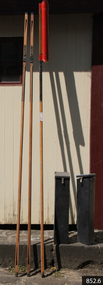
Equipment - Rocket set, John Dennett, ca. 1860s
... Some were recognised as heroes, others went unrecognised. In Lady Bay, Warrnambool, there were around 16 known shipwrecks between 1850 and 1905. ...This rescue line-throwing rocket set was made for the Dennett rocket system, which was used by the Rocket Rescue crews in South West Victoria from around the 1860s to the 1890s. John Dennett - John Dennett was from Carisbrooke, in the Ilse of Wight, UK. In 1826 he invented, patented and demonstrated an improved method of rocket powered, line firing rescue equipment for saving lives. The rockets had a longer range than the mortars being used, they were lighter, needed less preparation time, only needed one line for repeated shots, and fewer people were needed to move the equipment. Very favourable reports of Dennett’s rockets were received by those in charge of His Majesty’s Naval and Military services. In 1832, Dennett’s rocket-thrown line was sent out to the wreck of the ‘Bainbridge’, and was responsible for nineteen survivors coming ashore in two boatloads, along the fired line. Dennett’s rocket received national fame, and a one-year contract to supply rockets to the Coastguards. He became known as ‘Rocket Man’ and his rockets were used in rescues at least until 1890, when his son Horatio was running the business. A rocket weighing 23 lb would have a range of about 250 yards (228 metres), on average. Saving lives in Warrnambool – The coastline of South West Victoria has had over 600 shipwrecks and many lost lives; even in Warrnambool’s Lady Bay there were around 16 known shipwrecks between 1850 and 1905, with eight lives lost. In 1859 the first Government-built lifeboat arrived at Warrnambool Harbour and a shed was soon built to house it, followed in 1864 by a rocket house to safely store the Rocket Rescue equipment. In 1878 the buildings were moved to the Breakwater area, and in 1910 the new Lifeboat Warrnambool arrived with its ‘self-righting’ design. For almost one hundred years the lifeboat and rocket crews, mostly local volunteers, trained regularly to maintain and improve their skills, summoned when needed by alarms, gunshots, ringing bells and foghorns. Some became local heroes but all served an important role. By the end of the 1950s the lifeboat and rescue equipment had become obsolete. Rocket Rescue Method - The first use of a lifesaving rocket rescue system is often credited to Captain Manby and his invention of a life mortar, first used in 1808 to fire a line onto a ship to rescue lives. Henry Trengrouse’s invention of 1820 was the first to use a sky rocket’s power to throw a line, and his invention included a chair for carrying the shipwrecked victims to shore. In 1832 John Dennett invented a rocket specifically for shore to ship rescue. It had an iron case and an 8 foot pole attached and could shoot the line as far as 250 yards (about 230 metres). From the 1860s the rocket rescue apparatus was in use. It comprised a breeches buoy and traveller block that was suspended on a line and manually pulled to and from the distressed vessel carrying passengers and items. Colonel Boxer, who had invented an early line-thrower, designed a rocket in 1865 with a range from 300 to 470 yards. It was the first two-stage rocket, with two rockets placed one in front of the other in a tube that carried the rescue line. The hemp line was faked, or coiled, in a particular way in a faking box to prevent twists and tangles when fired, and the angle of firing the rocket was measured by a quadrant-type instrument on the side of the rocket machine. Schermuly invented the line-throwing pistol around 1920, which used a small cartridge to fire the rocket. Victoria’s Government adopted lifesaving methods based on Her Majesty’s Coast Guard in Great Britain, which used Colonel Boxer’s rocket apparatus rescue method. The British Board of Trade published instructions in 1850 for both the beach rescue crew and ship’s crew. It involved setting up the rocket launcher on shore at a particular angle measured by the quadrant, inserting a rocket that had a light-weight line attached, then firing it across the stranded vessel. A tally board was then sent out with instructions in four languages. The ship’s crew would haul on the line to bring out the continuous whip line and attach the whip block to a mast or sturdy part the ship. The rescue crew on shore then hauled out a heavier hawser line, which the ship’s crew fixed above the whip block. The hawser is then tightened using the block on the shore end of the whip. The breeches buoy and endless whip are then attached to the traveller block on the hawser, allowing the shore crew to haul the buoy to and from the vessel, rescuing the stranded crew one at a time. The rocket system could also be used from one ship to another.The Dennett rocket set is quite rare - there are not many examples in existence and little information is available. This Dennett's rocket set is significant for its connection with local history, maritime history and marine technology. Lifesaving has been an important part of the services performed from Warrnambool's very early days, supported by State and Local Government, and based on the methods and experience of Great Britain. Hundreds of shipwrecks along the coast are evidence of the rough weather and rugged coastline. Ordinary citizens, the Harbour employees, and the volunteer boat and rescue crew, saved lives in adverse circumstances. Some were recognised as heroes, others went unrecognised. In Lady Bay, Warrnambool, there were around 16 known shipwrecks between 1850 and 1905. Many lives were saved but tragically, eight lives were lost.A Dennett rocket set in six parts; the rocket head, three shafts (poles) and two rocket-head toting boxes. The rocket head, mounted on one of the shafts, is a long, red painted, iron tube with rounded ends and a protruding fitting around each end. The wooden rocket shafts are octagonal, with a metal sheath at the ends, carved elongated slots towards each end, and a scribed channel above the black foot. The rocket head toting boxes are thick timber, covered in fabric and painted black. They have a hinged wooden lid that slants downwards from back to front, and a metal closure. Small deliberate holes, in groups of four, on the box’s sides, indicate missing attachments, likely to have been handles. Impressed one a shaft "8"flagstaff hill maritime museum & village, flagstaff hill, maritime museum, maritime village, warrnambool, great ocean road, shipwreck, life-saving, lifesaving, rescue crew, rescue, rocket rescue, maritime accidents, shipwreck victim, rocket crew, beach rescue, line rescue, rescue equipment, rocket firing equipment, rocket rescue equipment, rocket apparatus, beach apparatus, petticoat breeches, breeches buoy, rocket house, rocket shed, lifeboat men, rocket equipment, rocket machine, rocket head, rocket launcher, rocket line, marine technology, william schermuly, line-firing pistol, line throwing gun, schermuly pistol, pistol rocket apparatus, beach rescue set, traveller, block, running block, pulley, hawser, faking, faking box, faked line, rescue boat, lifeboat, lady bay, warrnambool harbour, port of warrnambool, tramway jetty, volunteer lifesavers, volunteer crew, breakwater, lifeboat warrnambool, rocket rescue method, rocket rescue apparatus, captain manby, mortar, henry trengrouse, sky rocket, john dennett, shore to ship, colonel boxer, two-stage rocket, italian hemp, quadrant, schermuly, line-throwing pistol, line throwing cartridge, rocket apparatus rescue, stranded vessel, tally board, light line, whip line, endless whip, petticoat buoy, traveller chair, traveller block, her majesty’s coast guard, harbour board, line thrower, line throwing, beach cart, hand barrow, sand anchor, hawser cutter, life jacket, faking board, irish hand barrow, rocket head toting box, explosives, rocket shaft, rocket pole -
 Flagstaff Hill Maritime Museum and Village
Equipment - Rocket Launcher, John Dennett, 1860s
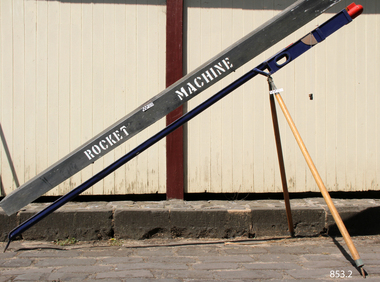
... Some were recognised as heroes, others went unrecognised. In Lady Bay, Warrnambool, there were around 16 known shipwrecks between 1850 and 1905. ...This rocket launching machine is used in conjunction with the Dennett Rocket Set. Both are part of the rocket rescue equipment that launches the line-throwing rescue rockets. A light line is threaded through the carved holes in the 8 foot long shaft and attached to the scribed channel at the base of the shaft. The rocket head is fitted to the shaft and inserted into the machine. The machine is set at an angle determined by the person in charge of the rescue crew, and the legs and base of the machine are adjusted accordingly with the use of the quadrant, or protractor, and plumb-bob on the side of the machine. The rocket is then ignited and fired across the vessel in distress. John Dennett - John Dennett was from Carisbrooke, in the Ilse of Wight, UK. In 1826 he invented, patented and demonstrated an improved method of rocket powered, line firing rescue equipment for saving lives. The rockets had a longer range than the mortars being used, they were lighter, needed less preparation time, only needed one line for repeated shots, and fewer people were needed to move the equipment. Very favourable reports of Dennett’s rockets were received by those in charge of His Majesty’s Naval and Military services. In 1832, Dennett’s rocket-thrown line was sent out to the wreck of the ‘Bainbridge’, and was responsible for nineteen survivors coming ashore in two boatloads, along the fired line. Dennett’s rocket received national fame, and a one-year contract to supply rockets to the Coastguards. He became known as ‘Rocket Man’ and his rockets were used in rescues at least until 1890, when his son Horatio was running the business. A rocket weighing 23 lb would have a range of about 250 yards (228 metres), on average. Saving lives in Warrnambool – The coastline of South West Victoria is the site of over 600 shipwrecks and many lost lives; even in Warrnambool’s Lady Bay there were around 16 known shipwrecks between 1850 and 1905, with eight lives lost. In 1859 the first Government-built lifeboat arrived at Warrnambool Harbour and a shed was soon built to house it. In 1858 the provision of rocket and mortar apparatus was approved for lifeboat stations in Victoria, and in 1864 a rocket house was built to safely store the rocket rescue equipment. In 1878 the buildings were moved to the Breakwater area, and in 1910 the new Lifeboat Warrnambool arrived with its ‘self-righting’ design. For almost a hundred years the lifeboat and rocket crews, mostly local volunteers, trained regularly to maintain their rescue skills. They were summoned when needed by alarms, gunshots, ringing bells and foghorns. Some became local heroes but all served an important role. By the end of the 1950s the lifeboat and rescue equipment had become obsolete. Rocket Rescue Method - The Government of Victoria adopted lifesaving methods based on Her Majesty’s Coast Guard in Great Britain. It authorised the first line-throwing rescue system in 1858. Captain Manby’s mortar powered a projectile connected to rope, invented in 1808. The equipment was updated to John Dennett’s 8-foot shaft and rocket method that had a longer range of about 250 yards. From the 1860s the breeches buoy and traveller block rocket rescue apparatus was in use. It was suspended on a hawser line and manually pulled to and from the distressed vessel carrying passengers and items. In the early 1870s Colonel Boxer’s rocket rescue method became the standard in Victoria. His two-stage rockets, charged by a gunpowder composition, could fire the line up to 500-600 yards, although 1000 yards range was possible. Boxer’s rocket carried the light line, which was faked, or coiled, in a particular way between pegs in a faking box to prevent twists and tangles when fired. The angle of firing the rocket to the vessel in distress was measured by a quadrant-type instrument on the side of the rocket machine. Decades later, in about 1920, Schermuly invented the line-throwing pistol that used a small cartridge to fire the rocket. The British Board of Trade published instructions for both the beach rescue crew and ship’s crew. It involved setting up the rocket launcher on shore at a particular angle measured by the quadrant, inserting a rocket that had a light-weight line threaded through its shaft, and then firing it across the stranded vessel, the line issuing freely from the faking board. A tally board was then sent out to the ship with instructions in four languages. The ship’s crew would haul on the line to bring out the heavier, continuous whip line, then secure the attached whip block to the mast or other sturdy part the ship. The rescue crew on shore then hauled out a stronger hawser line, which the ship’s crew fixed above the whip block. The hawser was then tightened using the block on the shore end of the whip. The breeches buoy and endless whip are then attached to the traveller block on the hawser, allowing the shore crew to haul the breeches buoy to and from the vessel, rescuing the stranded crew one at a time. This rocket launcher machine is significant for its connection with local history, maritime history and marine technology. Lifesaving has been an important part of the services performed from Warrnambool's very early days, supported by State and Local Government, and based on the methods and experience of Great Britain. Hundreds of shipwrecks along the coast are evidence of the rough weather and rugged coastline. Ordinary citizens, the Harbour employees, and the volunteer boat and rescue crew, saved lives in adverse circumstances. Some were recognised as heroes, others went unrecognised. In Lady Bay, Warrnambool, there were around 16 known shipwrecks between 1850 and 1905. Many lives were saved but tragically, eight lives were lost.Rocket launcher, named a Rocket Machine, and storage box. Launcher has a long open metal channel with a spike at the base, and narrow, rectangular device, which is the line-firing rocket machine, at the top, all painted blue. Two hinged wooden legs are attached where the channel and machine meet. The side of the machine has an oval cut-out window and an attached quadrant, or protractor, with a plumb-bob on it. The quadrant has angles marked in degrees. The long protective box has white stencilled letters along the side. Its lid has three hinges and is fastened with two metal latches.On box “ROCKET MACHINE” On quadrant “10” “20” “30” “40”flagstaff hill maritime museum & village, flagstaff hill, maritime museum, maritime village, warrnambool, great ocean road, shipwreck, life-saving, lifesaving, rescue crew, rescue, rocket rescue, maritime accidents, shipwreck victim, rocket crew, beach rescue, line rescue, rescue equipment, rocket firing equipment, rocket rescue equipment, rocket apparatus, beach apparatus, petticoat breeches, breeches buoy, rocket house, rocket shed, lifeboat men, rocket equipment, rocket machine, rocket head, rocket launcher, rocket line, marine technology, william schermuly, line-firing pistol, line throwing gun, schermuly pistol, pistol rocket apparatus, beach rescue set, traveller, block, running block, pulley, hawser, faking, faking box, faked line, rescue boat, lifeboat, lady bay, warrnambool harbour, port of warrnambool, tramway jetty, volunteer lifesavers, volunteer crew, breakwater, lifeboat warrnambool, rocket rescue method, rocket rescue apparatus, captain manby, mortar, henry trengrouse, sky rocket, john dennett, shore to ship, colonel boxer, two-stage rocket, italian hemp, quadrant, protractor, schermuly, line-throwing pistol, line throwing cartridge, rocket apparatus rescue, stranded vessel, tally board, light line, whip line, endless whip, petticoat buoy, traveller chair, traveller block, her majesty’s coast guard, harbour board, line thrower, line throwing, beach cart, hand barrow, sand anchor, hawser cutter, life jacket, faking board, welsh hand barrow, rocket set -
 Flagstaff Hill Maritime Museum and Village
Equipment - Hand Barrow, 1860s
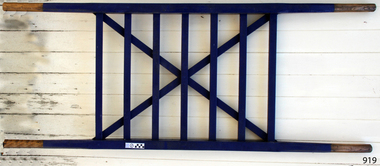
... Some were recognised as heroes, others went unrecognised. In Lady Bay, Warrnambool, there were around 16 known shipwrecks between 1850 and 1905. ...This hand barrow, sometimes called a Welsh hand barrow, was used to transport a load of marine rescue equipment from the beach cart to the rescue site, particularly over hilly, uneven or rough terrain. Hand barrows were in common use in the 19th century. Saving lives in Warrnambool – The coastline of South West Victoria is the site of over 600 shipwrecks and many lost lives; even in Warrnambool’s Lady Bay there were around 16 known shipwrecks between 1850 and 1905, with eight lives lost. Victoria’s Government responded to the need for lifesaving equipment and, in 1858, the provision of rocket and mortar apparatus was approved for the lifeboat stations. In 1859 the first Government-built lifeboat arrived at Warrnambool Harbour and a shed was soon built for it on the Tramway Jetty, followed by a rocket house in 1864 to safely store the rocket rescue equipment. In 1878 the buildings were moved to the Breakwater (constructed from 1874-1890), and in 1910 the new Lifeboat Warrnambool arrived with its ‘self-righting’ design. For almost a hundred years the lifesaving and rescue crews, mostly local volunteers, trained regularly to rehearse and maintain their rescue skills. They were summoned when needed by alarms, gunshots, ringing bells and foghorns. In July 1873 a brass bell was erected at Flagstaff Hill specifically to call the rescue crew upon news of a shipwreck. Some crew members became local heroes but all served an important role. Rocket apparatus was used as recently as the 1950s. Rocket Rescue Method - Rocket rescue became the preferred lifesaving method of the rescue crews, being much safer that using a lifeboat in rough seas and poor conditions. The Government of Victoria adopted lifesaving methods based on Her Majesty’s Coast Guard in Great Britain. It authorised the first line-throwing rescue system in 1858. Captain Manby’s mortar powered a projectile connected to rope, invented in 1808. The equipment was updated to John Dennett’s 8-foot shaft and rocket method that had a longer range of about 250 yards. From the 1860s the breeches buoy and traveller block rocket rescue apparatus was in use. It was suspended on a hawser line and manually pulled to and from the distressed vessel carrying passengers and items. In the early 1870s Colonel Boxer’s rocket rescue method became the standard in Victoria. His two-stage rockets, charged by a gunpowder composition, could fire the line up to 500-600 yards, although 1000 yards range was possible. Boxer’s rocket carried the light line, which was faked, or coiled, in a particular way between pegs in a faking box to prevent twists and tangles when fired. The angle of firing the rocket to the vessel in distress was measured by a quadrant-type instrument on the side of the rocket machine. Decades later, in about 1920, Schermuly invented the line-throwing pistol that used a small cartridge to fire the rocket. . The British Board of Trade regularly published instructions for both the beach rescue crew and ship’s crew. It involved setting up the rocket launcher on shore at a particular angle, determined by the Head of the crew and measured by the quadrant, inserting a rocket that had a light-weight line threaded through its shaft, and then firing it across the stranded vessel, the line issuing freely from the faking board. A continuous whip line was then sent out to the ship’s crew, who hauled it in then followed the instructions – in four languages - on the attached tally board. The survivors would haul on the line to bring out the heavier, continuous whip line with a tail block connected to it. They then secured the block to the mast or other strong part the ship. The rescue crew on shore then hauled out a stronger hawser line, which the survivors fixed above the whip’s tail block. The hawser was then tightened by the crew pulling on it, or by using the hooked block on the shore end of the whip and attaching it to a sand anchor. The breeches buoy was attached to the traveller block on the hawser, and the shore crew then used the whip line to haul the breeches buoy to and from the vessel, rescuing the stranded crew one at a time. The rescue crew wore scarlet, numbered armbands and worked on a numerical rotation system, swapping members out to rest them. This hand barrow is significant for its connection with local history, maritime history and marine technology. Lifesaving has been an important part of the services performed from Warrnambool's very early days, supported by State and Local Government, and based on the methods and experience of Great Britain. Hundreds of shipwrecks along the coast are evidence of the rough weather and rugged coastline. Ordinary citizens, the Harbour employees, and the volunteer boat and rescue crew, saved lives in adverse circumstances. Some were recognised as heroes, others went unrecognised. In Lady Bay, Warrnambool, there were around 16 known shipwrecks between 1850 and 1905. Many lives were saved but tragically, eight lives were lost.Hand barrow; a transporting device carried between two people walking one in front of the other. A wooden ladder-like frame with two handles at each end, blue painted body with unpainted handles. Seven equal-length slats are joined at equal distance between two parallel poles, and two longer slats are attached diagonally between the first and last slats as a brace. flagstaff hill maritime museum and village, flagstaff hill, maritime museum, maritime village, warrnambool, great ocean road, lady bay, warrnambool harbour, port of warrnambool, tramway jetty, breakwater, shipwreck, life-saving, lifesaving, rescue crew, rescue, rocket rescue, rocket crew, lifeboat men, beach rescue, line rescue, rescue equipment, rocket firing equipment, rocket rescue equipment, maritime accidents, shipwreck victim, rocket equipment, marine technology, rescue boat, lifeboat, volunteer lifesavers, volunteer crew, life saving rescue crew, lifesaving rescue crew, rocket apparatus, rocket rescue method, shore to ship, rocket apparatus rescue, stranded vessel, line throwing mortar, mortar, rocket rescue apparatus, line thrower, line throwing, lifeboat warrnambool, hand barrow, manual transport, welsh hand barrow -
 Flagstaff Hill Maritime Museum and Village
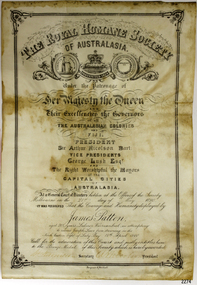
Award - Certificate of Merit, Royal Humane Society of Australia, James Patten, 21-05-1890
... some way. The producers of the certificate were Fergusson & Mitchell, a Melbourne organisation established by 1858 that was an engraver, lithographer and printer. Details of the incident were published in the Argus, Saturday 19 April 1890, page 11 - "FATAL BOATING ACCIDENT, (BY TELEGRAPH FROM OUR CORRESPONDENT.), WARRNAMBOOL, FRIDAY A fatal boating disaster occurred in Lady Bay this morning, the victim being Joseph Lowe, licensee of the Bay View Hotel, South Warrnambool. ...some way. The producers of the certificate were Fergusson & Mitchell, a Melbourne organisation established by 1858 that was an engraver, lithographer and printer. Details of the incident were published in the Argus, Saturday 19 April 1890, page 11 - "FATAL BOATING ACCIDENT, (BY TELEGRAPH FROM OUR CORRESPONDENT.), WARRNAMBOOL, FRIDAY A fatal boating disaster occurred in Lady Bay this morning, the victim being Joseph Lowe, licensee of the Bay View Hotel, South Warrnambool. ...The Bronze Medal and Certificate of Merit of the Royal Humane Society of Australasia were awarded to James Patten for the bravery he displayed on 18th April 1890, and presented to him on 21st May 1890. The Royal Humane Society of Australasia was founded in 1874 with the aim to recognise those who risked their lives to save others and to assist those whose acts of bravery caused them or their surviving dependants to be disadvantaged in some way. The producers of the certificate were Fergusson & Mitchell, a Melbourne organisation established by 1858 that was an engraver, lithographer and printer. Details of the incident were published in the Argus, Saturday 19 April 1890, page 11 - "FATAL BOATING ACCIDENT, (BY TELEGRAPH FROM OUR CORRESPONDENT.), WARRNAMBOOL, FRIDAY A fatal boating disaster occurred in Lady Bay this morning, the victim being Joseph Lowe, licensee of the Bay View Hotel, South Warrnambool. The deceased, in company with two lads named James Ferrier and James Patten, went out in a small dingy to shoot musk ducks. The water was perfectly smooth, and the party were tempted to proceed as far as the mouth of the Hopkins River. In their eagerness they neglected to keep clear of the breakers, and were presently carried in on the crest of a large wave, and the boat cap sized within a cable's length of the shore, precipitating the occupants into the water. Patten and Lowe stuck to the overturned boat, Ferrier striking out for the shore, which he reached in an exhausted state. In the meantime his companions had been washed off the boat, and were struggling in the breakers. Lowe was unable to swim, and Patten kept him afloat, at the same time making gallant attempts to get him ashore, but finally had to leave him to his fate. Ferrier, seeing Lowe's danger, undressed and swam out, but became exhausted. Ferrier and Patten were both found in a fainting condition by persons who saw the catastrophe from the jetty, and ran along the beach to render assistance. Attempts were subsequently made to rescue Lowe's body, which could be seen washing abort in the surf. These proved unsuccessful, and no hope is now entertained of recovering it. Lowe was a smart young man, 28 years of age, and unmarried. He was formerly bar-man at the Commercial Hotel here, having been engaged in Melbourne...." The bronze medal and accompanying certificate of the Royal Humane Society of Australasia recognise the bravery of James Patten, a Warrnambool citizen who risked his life in the attempt to save the life of his friend Joseph Lowe.Certificate, cream paper, rectangular, decorative border and headings, printed and handwritten in pen and ink. Letterhead of The Royal Humane Society of Australasia. Awarded on 21st May 1890 to James Patten of Warrnambool. for his bravery on 18th April 1890.Print and writing includes - "The Royal Humane Society of Australia under the patronage of Her Majesty the Queen and their excellencies, the Governors of all the Australian Colonies and Fiji. At a general court of directors holden at the Offices of the Society Melbourne on the 21st day of May 1890, it was resolves that the courage and humanity displayed by James Patten, aged 20 years, labourer Warrnambool in attempting to rescue Joseph Lowe from drowning in the North Eastern bight of Lady Bay 18th April 1890. Call for the admiration of this court and justly, entitles him to the Bronze Medal of this society which is hereby awarded." Signatures [Secretary] and [President]flagstaff hill, warrnambool, flagstaff-hill, maritime museum, maritime village, shipwreck-coast, flagstaff hill maritime museum & village, bronze medal 1890, royal humane society of australasia, james patten, medal, australian award medal, commemorative medal, numismatics, life saving, lifesaving, rescue, bravery, drowning, joseph lowe, james ferrier, lady bay, hopkins river, boating accident, certificate of merit, lithograph, north eastern bight
