
Showing 5 items matching "lamplighter in melbourne"
-
 Eltham District Historical Society Inc
Document - Folder, Spicer, Whatmough, Chapman, Pill, Moreland families
... ...Lamplighter in Melbourne...Florence Spicer Cottlesbridge Kangaroo Ground Panton Hill St Andrews Victoria Nillumbik Historical Society Eltham District Historical Society Allwood House Hurstbridge John Pill Jessie Pill nee Whatmough Ted Pill Florence Pill Cottlesbridge post office Charles Spicer St Andrews Primary School Ladies Guild Panton Hill Anglican Church Kangaroo Ground Presbyterian Ladies Guild Senior Citizens Hurstbridge Panton Hill Fire Station Robert Whatmough Robert Cook Emmet Whatmough Lamplighter in Melbourne John Batman Batman apple tree Greensborough Diamond Hill Estate Phoebe Chapman Whatmough Park Greensborough Jessie Whatmough Edwin Pill Ada Moreland Martha Burgess Mary McMurray St James Church Melbourne George Wright of Westernport William Spicer Margaret Spicer George Spicer Maryanne Spicer Sarah Spicer Mary Spicer John Spicer Alexander Humphrey Spicer Clara Spicer Samson Spicer Martha Spicer John Henry Spicer Arthurs Creek Cemetery David Clark school master Little Eltham School William McMurray Sarah McMurray Newspaper clippings, A4 photocopies, etc Spicer, Whatmough, Chapman, Pill, Moreland families Document Folder ...Florence Spicer was born in Cottlesbridge and lived in the area all her life. Her ancestors included Robert Whatmough, Phoebe Chapman, John Pill, and Ada Moreland; she married Charles Spicer. Contents Transcribed and MS notes by Florence Spicer, undated: Spicer/Whatmough/Chapman/Pill/Moreland ancestry. MS notes, undated: Humphrey Spicer. MS notes, undated: Humphrey Spicer with list of children. Newspaper article: "Her 70 years in Cottlesbridge", Diamond Valley News, 4 April 1989. Florence Spicer's family history and current life. Newspaper clippings, A4 photocopies, etcflorence spicer, cottlesbridge, kangaroo ground, panton hill, st andrews victoria, nillumbik historical society, eltham district historical society, allwood house hurstbridge, john pill, jessie pill nee whatmough, ted pill, florence pill, cottlesbridge post office, charles spicer, st andrews primary school, ladies guild panton hill anglican church, kangaroo ground presbyterian ladies guild, senior citizens hurstbridge, panton hill fire station, robert whatmough, robert cook, emmet whatmough, lamplighter in melbourne, john batman, batman apple tree greensborough, diamond hill estate, phoebe chapman, whatmough park greensborough, jessie whatmough, edwin pill, ada moreland, martha burgess, mary mcmurray, st james church melbourne, george wright of westernport, william spicer, margaret spicer, george spicer, maryanne spicer, sarah spicer, mary spicer, john spicer, alexander humphrey spicer, clara spicer, samson spicer, martha spicer, john henry spicer, arthurs creek cemetery, david clark school master, little eltham school, william mcmurray, sarah mcmurray -
 Eltham District Historical Society Inc
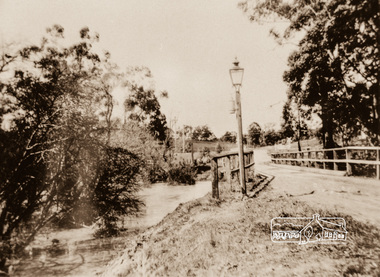
Photograph, Diamond Creek Bridge, Eltham North, c.1920
... Melbourne relied on centralized coal-gas infrastructure. However, small regional Victorian shires lacked the funds or population density to build large gasworks. When the commercial production of calcium carbide became viable around 1900, it offered a quantum leap in brightness over traditional kerosene streetlamps. Acetylene gas burned with an intense, crisp white flame—significantly brighter than oil or candles. Many rural towns used self-contained lampposts. A lamplighter...Melbourne relied on centralized coal-gas infrastructure. However, small regional Victorian shires lacked the funds or population density to build large gasworks. When the commercial production of calcium carbide became viable around 1900, it offered a quantum leap in brightness over traditional kerosene streetlamps. Acetylene gas burned with an intense, crisp white flame—significantly brighter than oil or candles. Many rural towns used self-contained lampposts. A lamplighter ...View looking east across the Glen Park Bridge and the railway crossing towards Main Road circa 1920. The bridge was originally built as a replacement for an older private bridge built by a man named Foley around 1880. In 1911 Heidelberg and Eltham agreed to share the costs to build a new bridge (the Diamond Creek was the border between the two). Construction began in June 1915 and it was officially opened by Cr. Taylor on Cup Day, November 1915. This photo, dated around 1920, is of the Glen Park Bridge crossing over the Diamond Creek about 50 metres north of the present-day Wattletree tree Road Bridge. Glen Park Road intersected Main Rain Road along an alignment following present day Coleman Cresent. In this this picture we see the narrow wooden bridge over a high flowing Diamond Creek at Glen Park, now Eltham North. In the background is a railway crossing sign. There is a self-contained carbide streetlamp situated in front of the bridge. In the early 1900s, carbide (acetylene gas) streetlamps emerged as a lighting technology for regional towns across Victoria, Australia, before municipal electricity grids were widely established. During the late Victorian and early Edwardian eras, major hubs like Melbourne relied on centralized coal-gas infrastructure. However, small regional Victorian shires lacked the funds or population density to build large gasworks. When the commercial production of calcium carbide became viable around 1900, it offered a quantum leap in brightness over traditional kerosene streetlamps. Acetylene gas burned with an intense, crisp white flame—significantly brighter than oil or candles. Many rural towns used self-contained lampposts. A lamplighter had to climb each post daily to manually place calcium carbide pellets in a lower chamber and fill an upper chamber with water. The water dripped onto the carbide, producing acetylene gas to feed the burner. Lamplighters carefully measured the fuel amounts so the chemical reaction would naturally exhaust itself and "turn off" around midnight. While carbide streetlights provided unparalleled visibility for early motorists, cyclists, and pedestrians, they were incredibly labour-intensive and inherently volatile. The gas was highly explosive, prone to leaks, and left behind a pungent, sulphur-like odour. By the end of World War I, local Victorian councils rapidly phased out acetylene infrastructure in favour of safer, independent electric powerhouse generators. In the context of Eltham's local history, the Eltham Shire and surrounding Yarra Valley region actively relied on carbide streetlamps and kerosene lighting during the early 20th century before the expansion of the Melbourne electric grid. Eltham was an outer-rural, heavily timbered farming and orchard district at the turn of the century, it faced unique civic infrastructure challenges. In rural Eltham, early streetlamps were exceptionally sparse. The community relied heavily on "innkeeper laws" which dictated local hotels—such as the historic Eltham Hotel—were legally required to keep external oil, kerosene, or acetylene lamps burning through the night to illuminate the main roads for travellers and coaches. The volatile carbide and kerosene lamps on Eltham's main thoroughfares were progressively phased out during the 1920s. The district steadily transitioned to electricity, which allowed for developments like the installation of modern electrical wiring at the local fire station on Arthur Street by 1928. The Glen Park Bridge was a low structure and subject to flooding readily. In 1959 Eltham Council erected a new crossing over the Diamond Creek and realigned the road to the present-day Wattletree Road Bridge. Construction was not fully complete when on Sunday, 20 September 1959, heavy flooding occurred in the stream and at 3:53 pm the old bridge was washed away forever. - Research by Peter Pidgeon, EDHS, June 2026Photograph copy eltham north, wattletree road, coleman crescent, bridges, diamond creek (creek), bridge, carbide streetlamp, floodwater, glen park bridge, street lamp, glen park road, glen park estate -
 Bendigo Historical Society Inc.
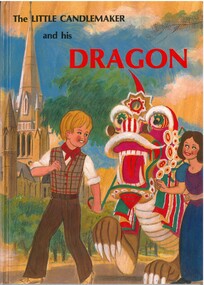
Book - TED BEATTIE COLLECTION: CHILDREN'S BOOK, 1985
... The Little Candlemaker and His Dragon - copyright 1985 Lamplighter Books (J.A.H. and M.A. Kenney Pty Ltd); 13 Earlsfield Rd, Hampton, Melbourne. ...CHINESE Ted Beattie childrens' literature John Kenney and illustrated by Tom Bishop The Little Candlemaker and His Dragon - copyright 1985 Lamplighter Books (J.A.H. and M.A. Kenney Pty Ltd); 13 Earlsfield Rd, Hampton, Melbourne. ...The Little Candlemaker and His Dragon - copyright 1985 Lamplighter Books (J.A.H. and M.A. Kenney Pty Ltd); 13 Earlsfield Rd, Hampton, Melbourne. Colour printed - Illustrations of Bendigo throughout; 26 pages National Library of Australia car and ISBN number 0 9595967 5 5John Kenney and illustrated by Tom Bishopchinese, ted beattie, childrens' literature -
Eltham District Historical Society Inc
Document - Folder, Partington family
... Whatmough was Melbourne's first lamplighter while also working in John Batman's Spencer Street orchard; he moved in 1842 to establish an orchard in Greensborough. ...Whatmough was Melbourne's first lamplighter while also working in John Batman's Spencer Street orchard; he moved in 1842 to establish an orchard in Greensborough. ...Charles Partington married Ellen Whatmough; they and their children, Robert and James, came to Australia in 1857 because Ellen's brother, Robert Whatmough, had come here in 1841. Whatmough was Melbourne's first lamplighter while also working in John Batman's Spencer Street orchard; he moved in 1842 to establish an orchard in Greensborough. Both Partington boys died soon after the family arrived at Greensborough but later two daughters were born, Prudina and Maria, and five sons, including William . On arrival Charles Partington began work for Mr Flintoff at Black Hills and was later toll keeper on what is now Watsonia Road. He was later a successful orchardist. William Partington married Annie-May Medhurst, daughter of David Medhurst and Martha Ruston, daughter of Peter Ruston who had settled in Greensborough in the 1850s after working for Mr Hooper in Darebin Creek, then moved to Panton Hill in 1866 working as a carrier. The Rustons had six children, including Martha and James. Martha married David Medhurst in 1882 who was the son of David Medhurst and Charity Jane Pink. After David's death, Charity Jane married George Wescott. David and Martha Medhurst had eight children, including Annie May. They bought land in Main Street, Greensborough and set up as a greengrocer. William and Annie-May Partington's family home, Willis Vale, purchased from Mr Meagher by William's father, Charles; it was built by Meagher in 1839 but destroyed by vandals in 1966 after being compulsory purchased for parkland now called Partington's Flat. Their children were Eva, Grace, Alan, Jessie, and Jack. They attended Greensborough Primary School. Alan married Wyn. Contents Newspaper article: "Link with the past", Diamond Valley News, 21 February 1984. Alan Partington's research on Robert Whatmough, early settler in Greensborough, and his brother-in-law Charles Partington. Newspaper article: "How early families linked up", Diamond Valley News, 28 February 1984. Alan Partington's research into the Ruston and Medhurst families. Newspaper article: "Old days recalled", Diamond Valley News, 13 March 1984. Alan Partington's research in the Partington family.Newspaper clippings, A4 photocopies, etcalan partington, robert whatmough, watmough park greensborough, robert partington, james partington, elen partington nee whatmough, road tolls watsonia road, prudina partington, maria partington, william partington, willis vale, partington's flat greensborugh, mr meagher of greensborough, apollo parkways estate, charles partington, annie-may partington nee medhurst, david medhurst, martha medhurst (nee ruston), jack medhurst, peter ruston, hooper of darebin creek, greensborough hotel, james ruston, charity jane medhurst (nee pink), main street greensborough, eva partington, grace partington, jessie partington, jack partington, orchards in plenty river area, greensborough primary school, wyn partington, flintoff of black hills -
 Greensborough Historical Society
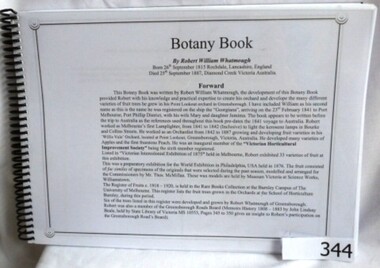
Book, Botany Book by Robert William Whatmough, 1842-1887
... After arriving in Melbourne in 1841, Robert was Melbourne's first lamplighter in Bourke and Collins Streets. ...Copy of original "Botany Book' handwritten by Robert Whatmough in the mid 1800s, accompanied by transcription by Nancy Whatmough. The current edition was put together by Steve Whatmough and published in 2008.An example of early horticultural notes. Robert Whatmough was an early Greensborough district orchardist. After arriving in Melbourne in 1841, Robert was Melbourne's first lamplighter in Bourke and Collins Streets. He worked as an orchardist from 1942 to 1887, growing and developing fruit varieties at his 'Willis Vale' orchard. He was an inaugural member of the "Victorian Horticultural Improvement Society' and exhibited 33 varieties of fruit at the1875 Victorian Intercolonial Exhibition..208 pages; spiral binding, clear cover. Original handwritten notes on right side of each page, transcription on left.robert whatmough, steve whatmough, nancy whatmough, greensborough, willis vale, orchards, horticulture
