Sunshine and District Historical Society Incorporated
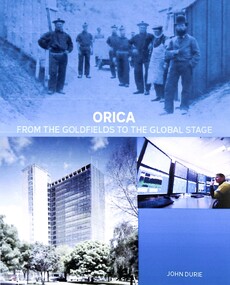
Book - Orica From The Goldfields To The Global Stage, John Durie, 2024
... During the 2010's - 2020's the site has been going through remediation works to remove any remaining contaminates prior to being redeveloped. A small section of the land between Ballarat Road and the Kororoit Creek (Former Residential Section) was put out for sale in 2025....During the 2010's - 2020's the site has been going through remediation works to remove any remaining contaminates prior to being redeveloped. A small section of the land between Ballarat Road and the Kororoit Creek (Former Residential Section) was put out for sale in 2025. ...
In January 2008 Akzo Nobel chief Hans Wijers triumphantly signed the US$19.2 billion deal (€11.6 billion) that would seal the end of the 81-year-old Imperial Chemical Industries (ICI).
Sixteen years later, ICI’s one-time subsidiary Orica marches on, transforming itself again from its explosives base to a global mining services giant employing 12,500 people, serving customers in over a hundred countries, with more than 62 per cent of sales outside Australia and Asia.
Explosives remain the company’s core, accounting for more than 75 per cent of revenues, with copper and gold making up 45 per cent of output. Not bad for a company governed by a strict covenant, with its parent detailing what products could be sold into what market. The covenant laid down what products could be imported and exported and what investments could be made, although Philip Weickhardt, the last ICI Australia chief executive, admitted he had never seen a copy of the document. It was the preserve of the company’s lawyers, and something referred to in passing. In any case, in 1997 when he took over, Weickhardt’s task as to lead the company to independence after 123 years of foreign rule. Negotiations, he said, were very pragmatic because Australia wanted to be on its own and ICI wanted to get out. The covenant was no longer something even the lawyers needed to know about.
ICI ultimately failed because of a corporate model that tried to serve too many different products and markets. Orica has stuck to its core, while over the years learning and benefiting from the strengths of its former parent
Digital PDF Filenon-fictionIn January 2008 Akzo Nobel chief Hans Wijers triumphantly signed the US$19.2 billion deal (€11.6 billion) that would seal the end of the 81-year-old Imperial Chemical Industries (ICI).
Sixteen years later, ICI’s one-time subsidiary Orica marches on, transforming itself again from its explosives base to a global mining services giant employing 12,500 people, serving customers in over a hundred countries, with more than 62 per cent of sales outside Australia and Asia.
Explosives remain the company’s core, accounting for more than 75 per cent of revenues, with copper and gold making up 45 per cent of output. Not bad for a company governed by a strict covenant, with its parent detailing what products could be sold into what market. The covenant laid down what products could be imported and exported and what investments could be made, although Philip Weickhardt, the last ICI Australia chief executive, admitted he had never seen a copy of the document. It was the preserve of the company’s lawyers, and something referred to in passing. In any case, in 1997 when he took over, Weickhardt’s task as to lead the company to independence after 123 years of foreign rule. Negotiations, he said, were very pragmatic because Australia wanted to be on its own and ICI wanted to get out. The covenant was no longer something even the lawyers needed to know about.
ICI ultimately failed because of a corporate model that tried to serve too many different products and markets. Orica has stuck to its core, while over the years learning and benefiting from the strengths of its former parentorica, deer park, ici

 Rutherglen Historical Society
 Rutherglen Historical Society
 Sunshine and District Historical Society Incorporated