
Showing 18 items matching "language essays"
-
 Victorian Aboriginal Corporation for Languages
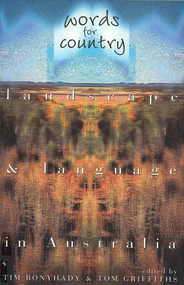
Book, Tim Bonyhady, Words for country : landscape &? language in Australia, 2002
... ...language essays...language and landscape language essays writing storytelling Maps Landscape and Language -- Lubra Creek -- The River Runs Backwards -- These Blarsted Hills -- Scarcely Any Water on Its Surface -- Everyone Who Has Ever Done A Tree Sit Always Says That The Tree Talks To You -- The Spirit of the Plains Kangaroo -- The Graveyard of a Century -- So Much for a Name -- Blackfellow Oven Roads -- The Ends of the Earth -- Natural Beauty, Man-Made -- Uluru -- The Outside Country -- It's Only Words. ...Landscape and Language -- Lubra Creek -- The River Runs Backwards -- These Blarsted Hills -- Scarcely Any Water on Its Surface -- Everyone Who Has Ever Done A Tree Sit Always Says That The Tree Talks To You -- The Spirit of the Plains Kangaroo -- The Graveyard of a Century -- So Much for a Name -- Blackfellow Oven Roads -- The Ends of the Earth -- Natural Beauty, Man-Made -- Uluru -- The Outside Country -- It's Only Words.Mapslanguage and landscape, language essays, writing, storytelling -
 Victorian Aboriginal Corporation for Languages
Book, Nicholas Thieberger, Paper and talk : a manual for reconstituting materials in Australian Indigenous languages from historical sources, 1995
... Collection of essays about language and language sources....linguistics Murri endangered languages Sheet music, b&w photographs, maps, word lists Collection of essays about language and language sources. ...Collection of essays about language and language sources.Sheet music, b&w photographs, maps, word listslinguistics, murri, endangered languages -
 Victorian Aboriginal Corporation for Languages
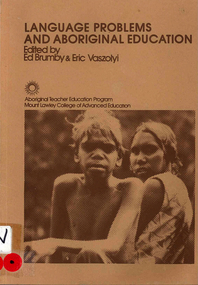
Book, Ed Brumby, Language problems and Aboriginal education, 1977
... A collection of essays about language retention, differences and bilingual education....bilingualism in Australia linguistics bilingual education Aboriginal English b&w photographs, tables, word lists A collection of essays about language retention, differences and bilingual education. ...A collection of essays about language retention, differences and bilingual education.b&w photographs, tables, word listsbilingualism in australia, linguistics, bilingual education, aboriginal english -
 Victorian Aboriginal Corporation for Languages
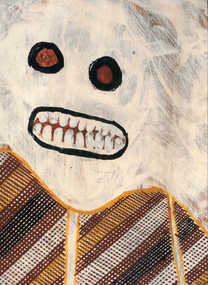
Book, Hetti Perkins, Crossing country : the alchemy of Western Arnhem Land art, 2004
... The book includes interviews with traditional rock and bark artists (including some language), and essays describing the connection of the people to the land, their spiritual beliefs and their art. ...The book includes interviews with traditional rock and bark artists (including some language), and essays describing the connection of the people to the land, their spiritual beliefs and their art. ...Hetti Perkins introduces this collection of reproductions of of Western Arnhem Land bark paintings, rock art, woven fibre art and wooden sculpture that was exhibited by the Art Gallery of NSW in 2004, emphasising the cultural foundations of the Kuninjku artists, their beliefs, artistic conventions and innovations. The book includes interviews with traditional rock and bark artists (including some language), and essays describing the connection of the people to the land, their spiritual beliefs and their art. There are also reproductions of works on paper and woven forms and an essay on the role of women in producing these art forms. An essay by Professor Jon Altmann is entitled "Brokering Kuninjku Art: Artists, Institutions and the Market. A chronolgy details the history of aboriginal art in the area, there are biographies of the artists whose works were included in the exhibition, a list of the works themselves, a glossary of place names, art terms, aboriginal, linguistic and anthropological terms, and a select bibliography. The list of contributors includes, as well as the two mentioned above, Dr Murray Garde, Apolline Kohen, Steven Miller, Cara Pinchbeck and Dr Luke Taylor.Colour photographs -
 Flagstaff Hill Maritime Museum and Village
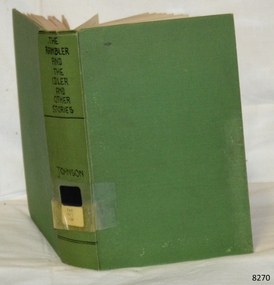
Book - Periodical Essays, Dr. Samuel Johnson et al, The Rambler, The Idler, The Adventurer & The Connoisseur, 1876
... essays. For The Rambler and The Idler, it is Dr Samuel Johnson (1709–1784), one of the most towering figures in English literary history. A brilliant lexicographer, essayist, and poet, he is famous for single handedly writing A Dictionary of the English Language in 1755. ...essays. For The Rambler and The Idler, it is Dr Samuel Johnson (1709–1784), one of the most towering figures in English literary history. A brilliant lexicographer, essayist, and poet, he is famous for single handedly writing A Dictionary of the English Language in 1755. ...This single 1876 volume combines four of the most influential weekly and semi weekly periodical essay series of the mid-18th century. Despite the phrasing of the era, these are not fiction stories or novels. They are periodical essays brief, single-topic pieces written to critique, educate, and entertain 18th-century readers. The collection covers three themes: morality and human nature, with a focus on reflections relating to the disappointments of life, the inevitability of death, managing one's passions, and the search for true happiness, featuring mainly in The Rambler; social satire and manners, with lighthearted and witty take downs of London high society, modern trends, vanity, and standard eccentric characters of the town; and literary criticism, with essays that analyse contemporary poetry and the theatre, along with the evolving English language.Hard cover book,The Rambler & The Idler Author: Dr. Samuel Johnson, Mr. Town, John Hawkesworth Publisher: William P Nimmo, 14 King William St, The Strand, London. W1. Date: 1876 Further Information: The flyleaf reads The Rambler and the Idler. By Samuel Johnson. The Adventurer. By John Hawkesworth. The Connoisseur. By (Mr. Town Pen Name) Green Cloth hardcover with a green spine and lettering in black texter. The spine has a Library label with an inscription.non-fictionThis single 1876 volume combines four of the most influential weekly and semi weekly periodical essay series of the mid-18th century. Despite the phrasing of the era, these are not fiction stories or novels. They are periodical essays brief, single-topic pieces written to critique, educate, and entertain 18th-century readers. The collection covers three themes: morality and human nature, with a focus on reflections relating to the disappointments of life, the inevitability of death, managing one's passions, and the search for true happiness, featuring mainly in The Rambler; social satire and manners, with lighthearted and witty take downs of London high society, modern trends, vanity, and standard eccentric characters of the town; and literary criticism, with essays that analyse contemporary poetry and the theatre, along with the evolving English language.flagstaff hill, warrnambool, shipwrecked coast, flagstaff hill maritime museum, maritime museum, shipwreck coast, flagstaff hill maritime village, great ocean road, book, pattison collection, warrnambool library, warrnambool mechanics’ institute, ralph eric pattison, corangamite regional library service, warrnambool city librarian, mechanics’ institute library, victorian library board, warrnambool books and records, warrnambool children’s library, the rambler and the idler, john hawkesworth., mr. town, samuel johnson -
 Federation University Historical Collection
Book, Edward Lhuyd, Archaeologia Britannica, 1707, 1707
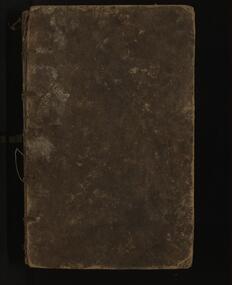
... Includes a Cornish Grammar and dictionary of the Irish language, Archaeologia Britannica, Giving Some Account Additional to What Has Been Hitherto Published, of The Languages, Histories and Customs of the Original Inhabitants of Great Britain: From Collections and Observations in Travels Through Wales, Cornwal, Bas-Bretagne, Ireland and Scotland. Chapters on: The comparative Etymology, The comparative Vocabulary, The Armoric Grammar and Vocabulary, Dr Davies's Dictionary, Cornish Grammar, Catalogue of British Manuscripts in Welsh and Latin, Essay towards a British Etymologicon, The Introduction to the Irish, Irish Dictionary etc. ...Includes a Cornish Grammar and dictionary of the Irish language, Archaeologia Britannica, Giving Some Account Additional to What Has Been Hitherto Published, of The Languages, Histories and Customs of the Original Inhabitants of Great Britain: From Collections and Observations in Travels Through Wales, Cornwal, Bas-Bretagne, Ireland and Scotland. Chapters on: The comparative Etymology, The comparative Vocabulary, The Armoric Grammar and Vocabulary, Dr Davies's Dictionary, Cornish Grammar, Catalogue of British Manuscripts in Welsh and Latin, Essay towards a British Etymologicon, The Introduction to the Irish, Irish Dictionary etc. ...Printed at the Theater for the author, MDCCVII . And sold by Mr . Bateman in Pater -Noster-Row, London: and Jeremiah Pepyat bookseller at Dublin. Lhuyd [Lhwyd; formerly Lloyd], Edward (1659/60?-1709), was a naturalist and philologist and the Keeper of the Ashmolean Museum. Lhuyd was a pioneering linguist. In the late 17th century, Lhuyd was contacted by a group of scholars, led by John Keigwin of Mousehole, who were trying to preserve and further the Cornish language and he accepted the invitation to travel to Cornwall to study the language. Early Modern Cornish was the subject of a study published by Lhuyd in 1702; it differs from the medieval language in having a considerably simpler structure and grammar. In 1707, having been assisted in his research by fellow Welsh scholar Moses Williams, he published the first volume of Archaeologia Britannica: an Account of the Languages, Histories and Customs of Great Britain, from Travels through Wales, Cornwall, Bas-Bretagne, Ireland and Scotland. This book is an important source for its linguistic description of Cornish, but even more so for its understanding of historical linguistics. Some of the ideas commonly attributed to linguists of the nineteenth century have their roots in this work by Lhuyd, who was "considerably more sophisticated in his methods and perceptions than [Sir William] Jones’’. Lhuyd noted the similarity between the two Celtic language families: Brythonic or P–Celtic (Breton, Cornish and Welsh); and Goidelic or Q–Celtic (Irish, Manx and Scottish Gaelic). He argued that the Brythonic languages originated in Gaul (France), and that the Goidelic languages originated in the Iberian Peninsula. Lhuyd concluded that as the languages had been of Celtic origin, the people who spoke those languages were Celts. From the 18th century, the peoples of Brittany, Cornwall, Ireland, Isle of Man, Scotland and Wales were known increasingly as Celts, and are regarded as the modern Celtic nations today. (Wikipedia)Oversize book. Includes the original languages of England and Ireland, Amoric Grammar, Amoric-English Vocabulary, Welsh words ommitted from Dr Davies' dictionary, Cornish Grammar, Ancient Scottish language, Irish-English Dictionary. Four page index which includes the errata, has the list of subscribers, mainly 3 columns per page. Includes a Cornish Grammar and dictionary of the Irish language, Archaeologia Britannica, Giving Some Account Additional to What Has Been Hitherto Published, of The Languages, Histories and Customs of the Original Inhabitants of Great Britain: From Collections and Observations in Travels Through Wales, Cornwal, Bas-Bretagne, Ireland and Scotland. Chapters on: The comparative Etymology, The comparative Vocabulary, The Armoric Grammar and Vocabulary, Dr Davies's Dictionary, Cornish Grammar, Catalogue of British Manuscripts in Welsh and Latin, Essay towards a British Etymologicon, The Introduction to the Irish, Irish Dictionary etc. language, gaelic, irish, scottish, edward lhuyd, welsh, latin, greek, etymologicon, celtic -
 Flagstaff Hill Maritime Museum and Village
Book - Reference Book/Social & Writing Protocols, Thomas DeQuincey, On Style and Conversation, 1862
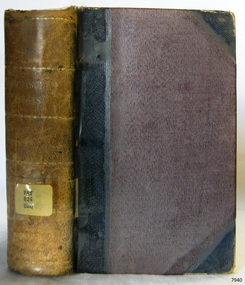
... DeQuincey’s essays argue that style matters in writing because manner and substance are often inseparable. They explore how language works in books, public speaking, newspapers, and everyday speech. ...DeQuincey’s essays argue that style matters in writing because manner and substance are often inseparable. They explore how language works in books, public speaking, newspapers, and everyday speech. ...This is a volume from Thomas DeQuincey’s collected works, and the contents around “Style” and “Conversation” are essays on prose style, rhetoric, language, and communication rather than a biography in the modern sense. DeQuincey’s essay sequence is described as a continuous discussion of style and rhetoric, originally these essays on style and rhetoric first appeared serially in Blackwood’s Edinburgh Magazine in the 1840s. William Blackwood and Sons, a Scottish publishing house and printer was founded by William Blackwood in Edinburgh in 1804. He became famous both as a book publisher and as the publisher of the influential literary magazine Blackwood’s Edinburgh Magazine.On Style and Conversation A series of essays Author: Thomas DeQuincey Publisher: Adam & Charles Black Date: 1862non-fictionThis is a volume from Thomas DeQuincey’s collected works, and the contents around “Style” and “Conversation” are essays on prose style, rhetoric, language, and communication rather than a biography in the modern sense. DeQuincey’s essay sequence is described as a continuous discussion of style and rhetoric, originally these essays on style and rhetoric first appeared serially in Blackwood’s Edinburgh Magazine in the 1840s. William Blackwood and Sons, a Scottish publishing house and printer was founded by William Blackwood in Edinburgh in 1804. He became famous both as a book publisher and as the publisher of the influential literary magazine Blackwood’s Edinburgh Magazine. shipwrecked-coast, flagstaff-hill, flagstaff-hill-maritime-museum, maritime-museum, shipwreck-coast, shipwrecked-artefact, book, pattison collection, warrnambool library, warrnambool mechanics’ institute, ralph eric pattison, corangamite regional library service, warrnambool city librarian, mechanics’ institute library, victorian library board, warrnambool books and records, on style and conversation, thomas dequincey, adam & charles black, essays -
 Victorian Aboriginal Corporation for Languages
Book, In other words : souvenir program 2005, 2005
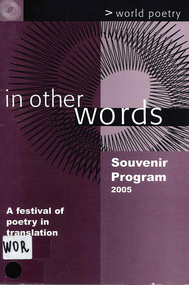
... Features poetry, essays and songs from Jeanie Bell & Vanessa Fisher, Lou Bennet, Ricardo Idagi, and Bruce Pascoe. Works in English and Language....Features poetry, essays and songs from Jeanie Bell & Vanessa Fisher, Lou Bennet, Ricardo Idagi, and Bruce Pascoe. Works in English and Language. ...A program from the "In Other Words" Festival, celebrating poets and translators from around Australia and across the world. Features poetry, essays and songs from Jeanie Bell & Vanessa Fisher, Lou Bennet, Ricardo Idagi, and Bruce Pascoe. Works in English and Language.Black and white photographsvacl, south-east queensland, cherbourg, dungibara, ewamin, garumngar, jiman, inala, tiddas, yorta yorta, mer, murray island, wurundjeri, aunty joy murphy wandin, wathaurong aboriginal cooperative, jeanie bell, vanessa fisher, lou bennett, ricardo idagi, bruce pascoe -
 Victorian Aboriginal Corporation for Languages
Book, Australia talks : essays on the sociology of Australian immigrant and Aboriginal languages, 1983
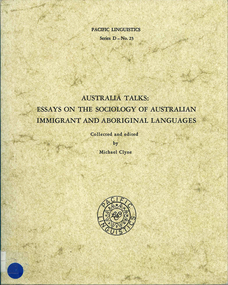
... linguistics sociolinguistics immigrants Tables Australia is becoming a living laboratory for research into socio-linguistic/sociology of languages, offering three main fields; aboriginal languages, local varieties of English and immigrant languages in contact with English. Australia talks : essays on the sociology of Australian immigrant and Aboriginal languages Book Michael Clyne ...Australia is becoming a living laboratory for research into socio-linguistic/sociology of languages, offering three main fields; aboriginal languages, local varieties of English and immigrant languages in contact with English.Tableslinguistics, sociolinguistics, immigrants -
 Victorian Aboriginal Corporation for Languages
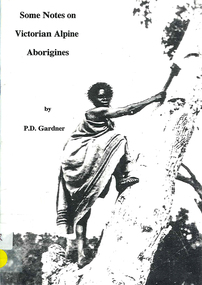
Book, P D Gardner, Some notes on Victorian Alpine Aborigines, 1997
... A short essay of the tribes in the Victorian Alpine district, their contact with White Settlement and their languages and customs. ...Jaitmathang Ngarigo Monaro Djilamatang Minjambuta Krauatungalung Bidawal Brabiralung Braiakaulung Wurundjeri Taungarong Taungurung Mount Buffalo Omeo Gippsland A short essay of the tribes in the Victorian Alpine district, their contact with White Settlement and their languages and customs. ...A short essay of the tribes in the Victorian Alpine district, their contact with White Settlement and their languages and customs. Includes information on massacres.jaitmathang, ngarigo, monaro, djilamatang, minjambuta, krauatungalung, bidawal, brabiralung, braiakaulung, wurundjeri, taungarong, taungurung, mount buffalo, omeo, gippsland -
 Sunshine and District Historical Society Incorporated
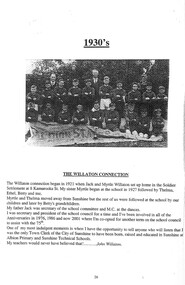
Essay - Albion State School 1920s The Willaton Connection
... language all students learn at Albion. All children participate in a student wellbeing program that focuses on developing strong connections and a sense of belonging within the school. Our school student leaders participate in programs that help develop their leadership skills. Albion State School Albion Primary School Adelaide Street Albion John Willaton 5168.01 - Albion State School 1930s The Willaton Connection Page 1 5168.02 - Albion State School 1930s The Willaton Connection Page 2 5168.03 - Albion State School 1930s The Willaton Connection Page 3 Collection of Digital Photographs Essay Albion State School 1920s The Willaton Connection ...The current school, Albion Primary School, No 4265 opened in 1926. It was built on a site once owned by John Fitzgerald (1850s). The land was later acquired by H. V. McKay who had transferred his Sunshine Harvester Works to the area in 1905 - 7. In 1920, the Albion railway station was moved nearer Ballarat Road at the request of Mr McKay. More people came to live in the area including soldier settlers.Albion Primary School's mission is to 'Aim High' in all we do so that our students grow to be socially capable, reach their full academic potential and become caring, respectful community minded people. Albion Primary School is located in a residential area in Albion, a small pocket of the local government area of Brimbank, approximately 10 kilometres west of Melbourne and was established in 1926. Our current enrolment is 199 students. We have a rich cultural diversity amongst our school community. The school is set around a courtyard with spacious playing areas including a grassed oval, running track, games courts, an adventure playground, sand pit, jumping pits, shady courtyard and garden areas, a vegetable garden and fruit tree orchard. As well as classroom groups, we have our learning teams, student house groups (siblings are allocated to the same house) and a Junior School Council. The school has four main buildings. All classrooms have air conditioning and interactive screens. Block A houses classrooms, staff areas and the administration offices. Our newest building has classrooms and some small group/office spaces. Block B includes our library, canteen and a multi-purpose room used for indoor physical education, Perceptual Motor Program, drama, visiting performers, and community activities. Block C houses classrooms and specialist rooms. We expect and receive the best from our students in terms of their learning and behaviour. The school’s dedicated and effective staff is strongly committed to helping students achieve personal, behavioural, social and academic success. In terms of learning, the highest priority is placed on the work in English and Mathematics. We also have a range of specialist and extra-curricular programs that we provide. Our specialist teacher-librarian is involved in reading extension programs that support development in literacy. All children are able to develop their artistic abilities through visual arts and music program. Our music program is supported by the Australian Children's Music Foundation. A specialist Physical Education teacher provides lessons for all children as well as the opportunity for students to participate in organised lunch time sporting competitions between the house groups. Auslan is the additional language all students learn at Albion. All children participate in a student wellbeing program that focuses on developing strong connections and a sense of belonging within the school. Our school student leaders participate in programs that help develop their leadership skills. 5168.01 - Albion State School 1930s The Willaton Connection Page 1 5168.02 - Albion State School 1930s The Willaton Connection Page 2 5168.03 - Albion State School 1930s The Willaton Connection Page 3albion state school, albion primary school, adelaide street, albion, john willaton -
 Sunshine and District Historical Society Incorporated
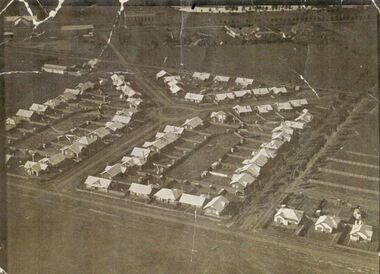
Essay - The Soldier Settlement
... language all students learn at Albion. All children participate in a student wellbeing program that focuses on developing strong connections and a sense of belonging within the school. Our school student leaders participate in programs that help develop their leadership skills. Albion State School Albion Primary School Adelaide Street Albion 5170.01 - The Soldier Settlement 5170.02 - The Soldier Settlement Details Collection of Digital Photographs Essay ...The current school, Albion Primary School, No 4265 opened in 1926. It was built on a site once owned by John Fitzgerald (1850s). The land was later acquired by H. V. McKay who had transferred his Sunshine Harvester Works to the area in 1905 - 7. In 1920, the Albion railway station was moved nearer Ballarat Road at the request of Mr McKay. More people came to live in the area including soldier settlers.Albion Primary School's mission is to 'Aim High' in all we do so that our students grow to be socially capable, reach their full academic potential and become caring, respectful community minded people. Albion Primary School is located in a residential area in Albion, a small pocket of the local government area of Brimbank, approximately 10 kilometres west of Melbourne and was established in 1926. Our current enrolment is 199 students. We have a rich cultural diversity amongst our school community. The school is set around a courtyard with spacious playing areas including a grassed oval, running track, games courts, an adventure playground, sand pit, jumping pits, shady courtyard and garden areas, a vegetable garden and fruit tree orchard. As well as classroom groups, we have our learning teams, student house groups (siblings are allocated to the same house) and a Junior School Council. The school has four main buildings. All classrooms have air conditioning and interactive screens. Block A houses classrooms, staff areas and the administration offices. Our newest building has classrooms and some small group/office spaces. Block B includes our library, canteen and a multi-purpose room used for indoor physical education, Perceptual Motor Program, drama, visiting performers, and community activities. Block C houses classrooms and specialist rooms. We expect and receive the best from our students in terms of their learning and behaviour. The school’s dedicated and effective staff is strongly committed to helping students achieve personal, behavioural, social and academic success. In terms of learning, the highest priority is placed on the work in English and Mathematics. We also have a range of specialist and extra-curricular programs that we provide. Our specialist teacher-librarian is involved in reading extension programs that support development in literacy. All children are able to develop their artistic abilities through visual arts and music program. Our music program is supported by the Australian Children's Music Foundation. A specialist Physical Education teacher provides lessons for all children as well as the opportunity for students to participate in organised lunch time sporting competitions between the house groups. Auslan is the additional language all students learn at Albion. All children participate in a student wellbeing program that focuses on developing strong connections and a sense of belonging within the school. Our school student leaders participate in programs that help develop their leadership skills. 5170.01 - The Soldier Settlement 5170.02 - The Soldier Settlement Detailsalbion state school, albion primary school, adelaide street, albion -
 Sunshine and District Historical Society Incorporated
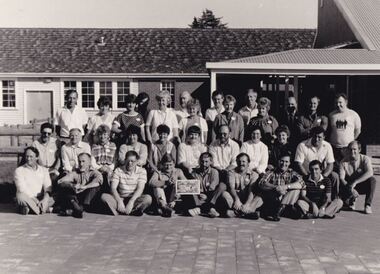
Essay - Albion State School Reunion
... language all students learn at Albion. All children participate in a student wellbeing program that focuses on developing strong connections and a sense of belonging within the school. Our school student leaders participate in programs that help develop their leadership skills. Albion State School Albion Primary School Adelaide Street Albion 5171.01 - Albion State School Reunion Collection of Digital Photographs Essay ...The current school, Albion Primary School, No 4265 opened in 1926. It was built on a site once owned by John Fitzgerald (1850s). The land was later acquired by H. V. McKay who had transferred his Sunshine Harvester Works to the area in 1905 - 7. In 1920, the Albion railway station was moved nearer Ballarat Road at the request of Mr McKay. More people came to live in the area including soldier settlers.Albion Primary School's mission is to 'Aim High' in all we do so that our students grow to be socially capable, reach their full academic potential and become caring, respectful community minded people. Albion Primary School is located in a residential area in Albion, a small pocket of the local government area of Brimbank, approximately 10 kilometres west of Melbourne and was established in 1926. Our current enrolment is 199 students. We have a rich cultural diversity amongst our school community. The school is set around a courtyard with spacious playing areas including a grassed oval, running track, games courts, an adventure playground, sand pit, jumping pits, shady courtyard and garden areas, a vegetable garden and fruit tree orchard. As well as classroom groups, we have our learning teams, student house groups (siblings are allocated to the same house) and a Junior School Council. The school has four main buildings. All classrooms have air conditioning and interactive screens. Block A houses classrooms, staff areas and the administration offices. Our newest building has classrooms and some small group/office spaces. Block B includes our library, canteen and a multi-purpose room used for indoor physical education, Perceptual Motor Program, drama, visiting performers, and community activities. Block C houses classrooms and specialist rooms. We expect and receive the best from our students in terms of their learning and behaviour. The school’s dedicated and effective staff is strongly committed to helping students achieve personal, behavioural, social and academic success. In terms of learning, the highest priority is placed on the work in English and Mathematics. We also have a range of specialist and extra-curricular programs that we provide. Our specialist teacher-librarian is involved in reading extension programs that support development in literacy. All children are able to develop their artistic abilities through visual arts and music program. Our music program is supported by the Australian Children's Music Foundation. A specialist Physical Education teacher provides lessons for all children as well as the opportunity for students to participate in organised lunch time sporting competitions between the house groups. Auslan is the additional language all students learn at Albion. All children participate in a student wellbeing program that focuses on developing strong connections and a sense of belonging within the school. Our school student leaders participate in programs that help develop their leadership skills. 5171.01 - Albion State School Reunionalbion state school, albion primary school, adelaide street, albion -
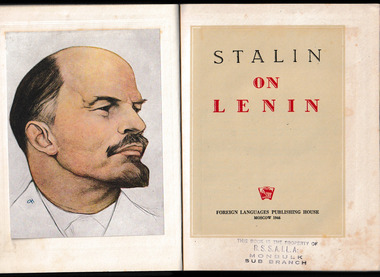 Mrs Aeneas Gunn Memorial Library
Book, Foreign Languages Publishing House, Stalin on Lenin, 1946
... Vladimir Illich Lenin 1870-1924 Soviet Union - Politics and government Collection of essays and speeches lauding the achievements of Lenin Ill, p.95. Stalin on Lenin. Book Foreign Languages Publishing House Joseph Stalin ...Collection of essays and speeches lauding the achievements of LeninIll, p.95.non-fictionCollection of essays and speeches lauding the achievements of Leninvladimir illich lenin 1870-1924, soviet union - politics and government -
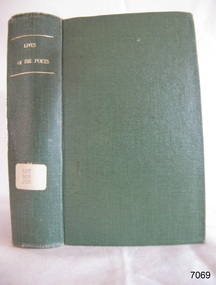 Flagstaff Hill Maritime Museum and Village
Book - Essays on Poetry, Dr. Samuel Johnson, The Lives of the Most Eminent English Poets, 1857
... He spent years in poverty doing hack work: journalism, translation, poetry, and essays for magazines like The Gentleman's Magazine. His breakthrough was A Dictionary of the English Language in 1755, compiled almost single handedly over about eight years. ...He spent years in poverty doing hack work: journalism, translation, poetry, and essays for magazines like The Gentleman's Magazine. His breakthrough was A Dictionary of the English Language in 1755, compiled almost single handedly over about eight years. ...The Lives of the Most Eminent English Poets (often called Lives of the Poets) is Samuel Johnson's collection of 52 short biographies and critical essays on English poets, most from the 17th and 18th centuries, arranged roughly by date of death. Originally commissioned by a group of London booksellers as prefaces to a multi-volume anthology of poetry, Johnson ended up writing far more than intended the "prefaces" grew into full biographical-critical essays. It was first published in 1779–81 (as Prefaces, Biographical and Critical), then reissued under this now-familiar title. His essays on Cowley, Milton, Dryden, Swift, and Pope in particular were quickly recognised as setting a new standard for English literary biography.Hard cover book. The Lives of the Most Eminent English Poets Author: Samuel Johnson Publisher: George Clark & Co Date: 1857 Further Information: Green Cloth hardcover reprinted edition with lettering to spine in gilt. The spine has a Library label with an inscription.fictionThe Lives of the Most Eminent English Poets (often called Lives of the Poets) is Samuel Johnson's collection of 52 short biographies and critical essays on English poets, most from the 17th and 18th centuries, arranged roughly by date of death. Originally commissioned by a group of London booksellers as prefaces to a multi-volume anthology of poetry, Johnson ended up writing far more than intended the "prefaces" grew into full biographical-critical essays. It was first published in 1779–81 (as Prefaces, Biographical and Critical), then reissued under this now-familiar title. His essays on Cowley, Milton, Dryden, Swift, and Pope in particular were quickly recognised as setting a new standard for English literary biography.shipwrecked-coast, flagstaff-hill, flagstaff-hill-maritime-museum, warrnambool, maritime-museum, shipwreck-coast, flagstaff-hill-maritime-village, shipwrecked-artefact, book, pattison collection, warrnambool library, warrnambool mechanics’ institute, ralph eric pattison, corangamite regional library service, warrnambool city librarian, mechanics’ institute library, victorian library board, warrnambool books and records, warrnambool children’s library, the lives of the most eminent english poets, samuel johnson -
Emerald Museum & Nobelius Heritage Park
Book - History book, Don Watson, Caledonia Australis Scottish Highlanders on the Frontier of Australia, 6/06/2005 12:00:00 AM
... His 2001 Quarterly Essay Rabbit Syndrome: Australia and America won the inaugural Alfred Deakin Prize in the Victorian Premier's Literary Awards. Death Sentence, his book about the decay of public language, was also a best seller and won the Australian Booksellers Association Book of the Year. ...His 2001 Quarterly Essay Rabbit Syndrome: Australia and America won the inaugural Alfred Deakin Prize in the Victorian Premier's Literary Awards. Death Sentence, his book about the decay of public language, was also a best seller and won the Australian Booksellers Association Book of the Year. ...Don Watson grew up on a farm in Gippsland, took his undergraduate degree at La Trobe University and a PhD at Monash University and was for ten years an academic historian. He wrote three books on Australian history before turning his hand to TV and the stage. For several years he combined writing political satire for the actor Max Gillies with political speeches for the then Premier of Victoria, John Cain. In 1992 he became Prime Minister of Australia Paul Keating's speech-writer and adviser and his best-selling account of those years, Recollections of a Bleeding Heart: A Portrait of Paul Keating PM, won both The Age Book of the Year and non-fiction Prizes, the Brisbane Courier Mail Book of the Year, the National Biography Award and the Australian Literary Studies Association's Book of the Year. In addition to regular books, articles and essays, in recent years he has also written feature films, including The Man Who Sued God, starring Billy Connolly and Judy Davis, and Passion, a film about Percy Grainger starring Richard Roxburgh. His 2001 Quarterly Essay Rabbit Syndrome: Australia and America won the inaugural Alfred Deakin Prize in the Victorian Premier's Literary Awards. Death Sentence, his book about the decay of public language, was also a best seller and won the Australian Booksellers Association Book of the Year. Watson's Dictionary of Weasel Words was published in 2004 and continued to encourage readers to renounce what he perceives to be meaningless corporate and government jargon that is spreading throughout Australia, and to embrace meaningful, precise language. More recently, Watson contributed the preface to a selection of Mark Twain's writings, The Wayward Tourist. In 2014 "The Bush; Travels in the heart of Australia" was published to critical acclaim for its content and for the beauty and effectiveness of Watson's writing. [6] It is a combination of personal and family memoir, travelogue, history, natural history and reflection in which Watson invites readers to ponder the bush and its place in the story of Australia and Australians, both Indigenous and post-1788 arrivals and their descendants, those of the past and those of today.The publication is historically and socially significant as it documents the impact of Scottish settlers in the Gippsland area.Cream cardboard bound book with colourised picture of highland settlers as well as mirrored picture of an aboriginal holding a spear.Donated by Bob Ayresbook, gippsland, scottish, settlers, don, watson, caledonia, australis -
Emerald Museum & Nobelius Heritage Park
Book - Local history book, Nettie Palmer, The Dandenongs, 1953 (Second Edition)
... languages. The Palmers returned to Melbourne in 1915 and moved to Katharine Prichard's cottage at Emerald. Between 1918-19 she lived with her aunt Ina Higgins, returning to Emerald living at Rose Charman Cottage in the early 1920s. Nettie emerged as possibly the most important literary critic in Australia. After the publication of Modern Australian Literature 1900-1923 (1924), a landmark in criticism which won the Lothian essay...languages. The Palmers returned to Melbourne in 1915 and moved to Katharine Prichard's cottage at Emerald. Between 1918-19 she lived with her aunt Ina Higgins, returning to Emerald living at Rose Charman Cottage in the early 1920s. Nettie emerged as possibly the most important literary critic in Australia. After the publication of Modern Australian Literature 1900-1923 (1924), a landmark in criticism which won the Lothian essay ...Janet Gertrude (Nettie) Palmer (1885-1964), writer and critic, was born on 18 August 1885 at Sandhurst (Bendigo), Victoria. Nettie's education began at home with her mother and continued at Miss Rudd's Seminary at Malvern. In 1900-04 she attended Presbyterian Ladies' College. n 1905 Nettie enrolled at the University of Melbourne (B.A., 1909; M.A., 1912). She was awarded the exhibition and first-class honours in first-year English and gained honours in modern languages. The Palmers returned to Melbourne in 1915 and moved to Katharine Prichard's cottage at Emerald. Between 1918-19 she lived with her aunt Ina Higgins, returning to Emerald living at Rose Charman Cottage in the early 1920s. Nettie emerged as possibly the most important literary critic in Australia. After the publication of Modern Australian Literature 1900-1923 (1924), a landmark in criticism which won the Lothian essay prize, she had many more regular outlets, notably her weekly literary causerie in the Illustrated Tasmanian Mail (212 articles in 5½ years), the Brisbane Courier, All About Books and the Bulletin Red Page. Nettie was committed to the development of a national literature as a means of achieving a more enlightened community. Much of her writing dealt with the themes, subjects and idiom of Australian writers, notably Henry Handel Richardson. She played a seminal role in establishing the canons of Australian literary criticism but she also wrote widely on world literature. Some of her essays were published in Talking it Over (1932); her 1928 anthology, An Australian Story-Book, set standards for the short story. Nettie's lively correspondence from Caloundra, and from 1929 from Melbourne, established a network of contact and encouragement between many Australian and overseas writers and intellectuals, and especially for young women writers such as Marjorie Barnard and Eleanor Dark for whom she provided an anchor. In 1931 she published her biography, Henry Bournes Higgins, and in 1934 she co-edited The Centenary Gift Book. Active in the Australian Literature Society, the Verse-Speaking Association, and later the Fellowship of Australian Writers, she lectured and broadcasted.The book is socially, artistically and historically significant as it is an account of the gradual settlement of the Dandenongs, and Nettie Palmer was a significant figure in Australian art circlesRed hard cover book with buff dust jacket, dust jacket protected with plastic cover.$4.95 (crosses out), 200,$1707 263dandenongs, book, nettie, palmer -
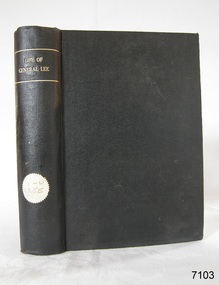 Flagstaff Hill Maritime Museum and Village
Book - Autobiography, Edward Lee Childe, The Life and Campaigns of General Lee, 1875
... essays, such as Sermons from Ash Wednesday to Easter Day (1894) and various published homilies (including For a Flower Service and Christian Character Forceful). During the 1870s, Litting actively translated significant French non-fiction and prose works into English for major London publishing houses such as Chatto and Windus, including the subject volume, The Life and Campaigns of General Lee, which remains his most widely cited translation work. He translated Edward Lee Childe's French biography (Le Général Lee) into English, and this book remains a primary Victorian-era English-language...essays, such as Sermons from Ash Wednesday to Easter Day (1894) and various published homilies (including For a Flower Service and Christian Character Forceful). During the 1870s, Litting actively translated significant French non-fiction and prose works into English for major London publishing houses such as Chatto and Windus, including the subject volume, The Life and Campaigns of General Lee, which remains his most widely cited translation work. He translated Edward Lee Childe's French biography (Le Général Lee) into English, and this book remains a primary Victorian-era English-language ...The Life and Campaigns of General Lee, published in London by Chatto and Windus in 1875, is a biography of the Confederate general Robert E. Lee, written by his French-based nephew, Edward Lee Childe. The book traces Lee's family history and upbringing, including his education at West Point and his early military service, then covers his major campaigns the Seven Days Battles, Second Bull Run, and Chancellorsville before turning to Lee's personal life, his marriage to Mary Custis, and his views on slavery and the Confederacy. It runs to roughly 336 pages in most editions. Notably, the book opens with a lengthy, strongly pro-Confederate defence of secession and states' rights; its Introductory chapter argues at length that slavery was not the war's real cause a reminder that this is very much a partisan Southern sympathiser's account, not a neutral military history.Hard cover book. The Life and Campaigns of General Lee Author: Edward Lee Childe Translator: George Litting, M.A., LL.B. Publisher: Chatto and Windus Date: 1875 Further Information: Black Cloth hardcover with lettering to spine in gilt. The spine has a Library label with an inscription.non-fictionThe Life and Campaigns of General Lee, published in London by Chatto and Windus in 1875, is a biography of the Confederate general Robert E. Lee, written by his French-based nephew, Edward Lee Childe. The book traces Lee's family history and upbringing, including his education at West Point and his early military service, then covers his major campaigns the Seven Days Battles, Second Bull Run, and Chancellorsville before turning to Lee's personal life, his marriage to Mary Custis, and his views on slavery and the Confederacy. It runs to roughly 336 pages in most editions. Notably, the book opens with a lengthy, strongly pro-Confederate defence of secession and states' rights; its Introductory chapter argues at length that slavery was not the war's real cause a reminder that this is very much a partisan Southern sympathiser's account, not a neutral military history.book, the life and campaigns of general lee, edward lee child, shipwrecked-coast, flagstaff-hill, flagstaff-hill-maritime-museum, warrnambool, maritime-museum, shipwreck-coast, flagstaff-hill-maritime-village, shipwrecked-artefact, pattison collection, warrnambool library, warrnambool mechanics’ institute, ralph eric pattison, corangamite regional library service, warrnambool city librarian, mechanics’ institute library, victorian library board, warrnambool books and records, warrnambool children’s library, great ocean road
