
Showing 298 items matching "law -- australia -- victoria"
-
 RMIT GSBL Justice Smith Collection
Book, Bourke, J. P. et al, Police Offences Act 1958 : Butterworths annotated acts Victoria, 1959
... contraventions (criminal law) -- australia -- victoria...contraventions (criminal law) -- australia -- victoria criminal law -- victoria Butterworths annotated acts Victoria Police Offences Act 1958 : Butterworths annotated acts Victoria Book Bourke, J. ...Butterworths annotated acts Victoriacontraventions (criminal law) -- australia -- victoria, criminal law -- victoria -
RMIT GSBL Justice Smith Collection
Folio, [Chief Justice of the Supreme Court of Victoria], Supreme Court of Victoria practice notes [loose-leaf papers in folder belonging to The Hon. Justice Smith], [2007]
... practice of law -- australia -- victoria...practice of law -- australia -- victoria court rules -- victoria victoria. supreme court [2006-2007] Dividers hang out the side a bit Supreme Court of Victoria practice notes [loose-leaf papers in folder belonging to The Hon. ...[2006-2007] Dividers hang out the side a bitpractice of law -- australia -- victoria, court rules -- victoria, victoria. supreme court -
![Journal series, Parliament of Victoria, The Victorian Statutes, [1866]](/media/collectors/54a9bcce2162f11b1cc120f2/items/54ec09c22162f10f9cc0ba35/item-media/54ec09fb2162f10f9cc0be8f/item-fit-380x285.jpg?cb=6) RMIT GSBL Justice Smith Collection
RMIT GSBL Justice Smith CollectionJournal series, Parliament of Victoria, The Victorian Statutes, [1866]
... law -- australia -- victoria...Smith law -- australia -- victoria No. of volumes: 30 Volume range: 1866 Vol. ...Previous owners: T. H. Smith, T. W. SmithNo. of volumes: 30 Volume range: 1866 Vol. I-III, 1890 Vol. I-V & VII, 1917 Vol. I-VII, 1929 Vol. I-V, 1958 Vol. I-IX Missing volumes: 1866 Vol. IV, 1890 Vol. VI law -- australia -- victoria -
RMIT GSBL Justice Smith Collection
Books, Adamson, T, Acts and ordinances in force in Victoria [Acts of council], 1855
... law -- australia -- victoria...Smith, Department of Agriculture Melbourne, Board of Agriculture Melbourne Victoria law -- australia -- victoria 2 volumes On spine: Victoria, Acts of Council Acts and ordinances in force in Victoria [Acts of council] Books Adamson, T. ...Previous owners: T. H. Smith, T. W. Smith, Department of Agriculture Melbourne, Board of Agriculture Melbourne Victoria2 volumes On spine: Victoria, Acts of Councillaw -- australia -- victoria -
![Journal series, Res judicatae : the magazine of the Law Students' Society of Victoria [became Melbourne University Law Review], 1940](/media/collectors/54a9bcce2162f11b1cc120f2/items/54bc347b2162f10b90518c4d/item-media/54ebee9c2162f10f9cbec56f/item-fit-380x285.jpg?cb=6) RMIT GSBL Justice Smith Collection
RMIT GSBL Justice Smith CollectionJournal series, Res judicatae : the magazine of the Law Students' Society of Victoria [became Melbourne University Law Review], 1940
... law -- australia -- periodicals...law reviews -- australia -- victoria...Smith, Victorian Law Foundation law -- australia -- periodicals law reviews -- australia -- victoria ISBN: 00258938 No. of volumes: 20 Volume range: Res Judicatae: Vol. 1 (1935-38) - Vol. 7 (1955-57) NB: Vol. 4&5 are bound in same book Melbourne University law review: Vol. 1 part 1 (1957) [p. i-xii only], Vol. 1 parts 3 & 4, Vol. 2 parts 1-4, Vol. 3 parts 1-4, Vol. 4 parts 2-3 (1964) Missing volumes: Vols. 1 parts 1&2, 4 part 1 Res judicatae : the magazine of the Law Students' Society of Victoria [became Melbourne University Law Review] Journal series The Law Students' Society of Victoria The Law Book Co. of Australasia Pty Ltd ...Previous owners: T. H. Smith, T. W. Smith, Victorian Law FoundationNo. of volumes: 20 Volume range: Res Judicatae: Vol. 1 (1935-38) - Vol. 7 (1955-57) NB: Vol. 4&5 are bound in same book Melbourne University law review: Vol. 1 part 1 (1957) [p. i-xii only], Vol. 1 parts 3 & 4, Vol. 2 parts 1-4, Vol. 3 parts 1-4, Vol. 4 parts 2-3 (1964) Missing volumes: Vols. 1 parts 1&2, 4 part 1 ISBN: 00258938law -- australia -- periodicals, law reviews -- australia -- victoria -
RMIT GSBL Justice Smith Collection
Book, Butterworths, Bourke's criminal law Victoria comprising the Crimes Act 1958 of Victoria as amended to 1968 and the Commonwealth Crimes Act 1914-1966, 1969
... law -- australia...criminal law -- victoria...Smith criminal law -- australia criminal law -- victoria Second edition Bourke's criminal law Victoria comprising the Crimes Act 1958 of Victoria as amended to 1968 and the Commonwealth Crimes Act 1914-1966 Book Sonenberg, David Shoburn and New, C.I Butterworths ...Previous owner: T. H. SmithSecond editioncriminal law -- australia, criminal law -- victoria -
RMIT GSBL Justice Smith Collection
Folio, Hudson, Nina, Sentencing, parole revocation and confiscation orders : discussion and options paper, 2009
... sentencing & corrections -- australia -- victoria...law...sentencing & corrections -- australia -- victoria law -- australia parole -- australia -- victoria ISBN: 9781921100383 Sentencing, parole revocation and confiscation orders : discussion and options paper Folio Sentencing Advisory Council Victoria Hudson, Nina ...ISBN: 9781921100383sentencing & corrections -- australia -- victoria, law -- australia, parole -- australia -- victoria -
 Flagstaff Hill Maritime Museum and Village
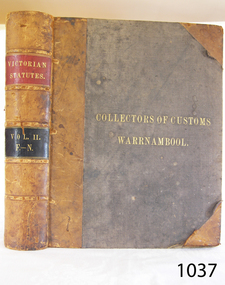
Book - Reference/Legal Acts, John Ferres, Government Printer, The Victorian Statutes Vol 2 Collectors of Customs, 1866
... law library reference volume collecting the Acts of the Victorian Parliament in force at that date, and organised for practical use by lawyers, magistrates, and officials of the colony. A companion volume of Imperial (British) statutes still in force in Victoria was issued in 1868 as a supplement to this set, and it appears to have been the only edition of this particular compilation before the later series (like Louis Horwitz's 1898–99 Victorian Statutes) superseded it. John Ferres was a major figure in early Australian...For more information on the Pattison Collection see item 3678 Flagstaff Hill collections) https://victoriancollections.net.au/items/5580c7e72162f114d8b758db flagstaff hill warrnambool shipwrecked-coast flagstaff-hill flagstaff-hill-maritime-museum maritime-museum shipwreck-coast flagstaff-hill-maritime-village the victorian statutes vol 2 collectors of customs book Because the subject item is a book of law, it would not traditionally have a singular author, but rather a corporate author, specifically the Colony of Victoria and, more precisely, the Parliament of Victoria. The Victorian Statutes of 1866 is an official compilation of the statute law of the Colony of Victoria, Australia, 'Published by Authority', and printed by John Ferres, who was the Victorian Government Printer at the time. ...Because the subject item is a book of law, it would not traditionally have a singular author, but rather a corporate author, specifically the Colony of Victoria and, more precisely, the Parliament of Victoria. The Victorian Statutes of 1866 is an official compilation of the statute law of the Colony of Victoria, Australia, 'Published by Authority', and printed by John Ferres, who was the Victorian Government Printer at the time. Ferres was the printer/publisher, not an author or editor in the usual sense, as this is a government publication rather than an individually authored work.Hard cover book, The Victorian Statutes Vol 2 Author: Corporate Author “The Colony of Victoria” Publisher: John Ferres Government Printer Melbourne. Date: 1866 Three quarter leather, Olive Front Cover, Brown Spine with Gold embossed Title on spine & front cover "Collector of Customs Warrnambool"non-fictionBecause the subject item is a book of law, it would not traditionally have a singular author, but rather a corporate author, specifically the Colony of Victoria and, more precisely, the Parliament of Victoria. The Victorian Statutes of 1866 is an official compilation of the statute law of the Colony of Victoria, Australia, 'Published by Authority', and printed by John Ferres, who was the Victorian Government Printer at the time. Ferres was the printer/publisher, not an author or editor in the usual sense, as this is a government publication rather than an individually authored work.flagstaff hill, warrnambool, shipwrecked-coast, flagstaff-hill, flagstaff-hill-maritime-museum, maritime-museum, shipwreck-coast, flagstaff-hill-maritime-village, the victorian statutes vol 2 collectors of customs, book -
 Flagstaff Hill Maritime Museum and Village
Equipment - Lifebuoy, late 19th to early 20th century
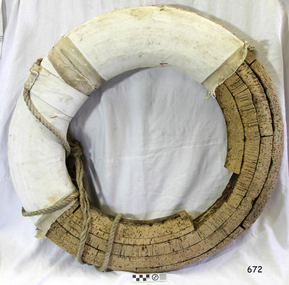
... Laws were passed over time that has required aeroplanes and water going-vessels to carry life-preservers on board. The lifebuoy is an example of equipment carried on vessels in the late 19th and early 20th century to help preserve life. There were many lives lost in Australia’s colonial period, particularly along the coast of South West Victoria ...This lifebuoy is part of the lifesaving equipment that would be carried on vessels in the late 19th and early 20th century. The strips of cork wood have been joined together to make the ring shape. A lifebuoy, or life-preserver, is used as a buoyancy device to keep a person afloat in the. It is usually connected by a rope to a person in a safe area such a nearby vessel or on shore. The lifebuoy is thrown to a person in distress in the water, allowing the rescuer to pull the person to safety. The lifebuoy is a made from a buoyant material such as cork or rubber and is usually covered with canvas for protection and to make it easy to grip. The first use of life saving devices in recent centuries was by the Nordic people, who used light weight wood or cork blocks to keep afloat. From the early 20th century Kapok fibre was used as a filling for buoys. Light weight balsa wood was used as a filler after WW1. In 1928 Peter Markus invented and patented the first inflatable life-preserver. By WW2 foam was combined with Kapok. Laws were passed over time that has required aeroplanes and water going-vessels to carry life-preservers on board. The lifebuoy is an example of equipment carried on vessels in the late 19th and early 20th century to help preserve life. There were many lives lost in Australia’s colonial period, particularly along the coast of South West Victoria.Lifebuoy, round cork object covered with white stiffened material wound around it. flagstaff hill, warrnambool, shipwrecked-coast, flagstaff-hill, flagstaff-hill-maritime-museum, maritime-museum, shipwreck-coast, flagstaff-hill-maritime-village, lifebuoy, life rings, safety ring, life-saving buoy, ring buoy, life preserver, personal floating device, floatation device, safety equipment -
 Flagstaff Hill Maritime Museum and Village
Equipment - Lifebuoy, late 19th to early 20th century
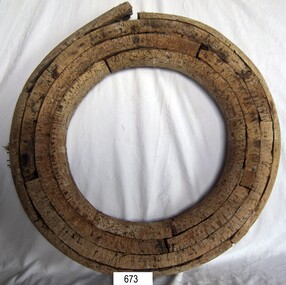
... Laws were passed over time that has required aeroplanes and water going-vessels to carry life-preservers on board. The lifebuoy is an example of equipment carried on vessels in the late 19th and early 20th century to help preserve life. There were many lives lost in Australia’s colonial period, particularly along the coast of South West Victoria ...This lifebuoy is part of the lifesaving equipment that would be carried on vessels in the late 19th and early 20th century. The strips of cork wood have been joined together to make the ring shape. A lifebuoy, or life-preserver, is used as a buoyancy device to keep a person afloat in the. It is usually connected by a rope to a person in a safe area such a nearby vessel or on shore. The lifebuoy is thrown to a person in distress in the water, allowing the rescuer to pull the person to safety. The lifebuoy is a made from a buoyant material such as cork or rubber and is usually covered with canvas for protection and to make it easy to grip. The first use of life saving devices in recent centuries was by the Nordic people, who used light weight wood or cork blocks to keep afloat. From the early 20th century Kapok fibre was used as a filling for buoys. Light weight balsa wood was used as a filler after WW1. In 1928 Peter Markus invented and patented the first inflatable life-preserver. By WW2 foam was combined with Kapok. Laws were passed over time that has required aeroplanes and water going-vessels to carry life-preservers on board. The lifebuoy is an example of equipment carried on vessels in the late 19th and early 20th century to help preserve life. There were many lives lost in Australia’s colonial period, particularly along the coast of South West Victoria.Lifebuoy, round cork object with no covering. flagstaff hill, warrnambool, shipwrecked-coast, flagstaff-hill, flagstaff-hill-maritime-museum, maritime-museum, shipwreck-coast, flagstaff-hill-maritime-village, life rings, lifebuoy, safety ring, life-saving buoy, ring buoy, life preserver, personal floating device, floatation device, safety equipment -
 Flagstaff Hill Maritime Museum and Village
Equipment - Lifebuoy, late 19th to early 20th century
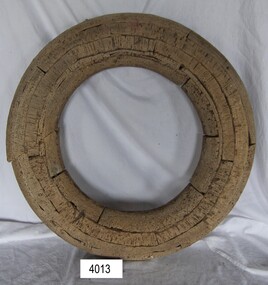
... Laws were passed over time that has required aeroplanes and water going-vessels to carry life-preservers on board. The lifebuoy is an example of equipment carried on vessels in the late 19th and early 20th century to help preserve life. There were many lives lost in Australia’s colonial period, particularly along the coast of South West Victoria ...Lifebuoys are flotation devices used to rescue and save people whose lives are at risk in the water. They are part of a ship's safety equipment. The cork material is very buoyant. The first use of life saving devices in recent centuries was by the Nordic people, who used light weight wood or cork blocks to keep afloat. From the early 20th century Kapok fibre was used as a filling for buoys. Light weight balsa wood was used as a filler after WW1. In 1928 Peter Markus invented and patented the first inflatable life-preserver. By WW2 foam was combined with Kapok. Laws were passed over time that has required aeroplanes and water going-vessels to carry life-preservers on board. The lifebuoy is an example of equipment carried on vessels in the late 19th and early 20th century to help preserve life. There were many lives lost in Australia’s colonial period, particularly along the coast of South West Victoria.Lifebuoy, round cork inner only, no canvas covering.flagstaff hill, warrnambool, shipwrecked-coast, flagstaff-hill, flagstaff-hill-maritime-museum, maritime-museum, shipwreck-coast, flagstaff-hill-maritime-village, lifebuoy, cork lifebuoy, flotation device, safety equipment, life rings, safety ring, life-saving buoy, ring buoy, life preserver, personal floating device, floatation device -
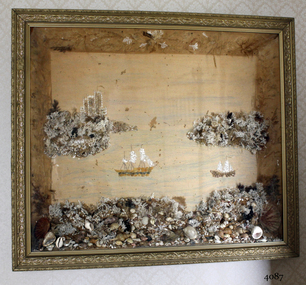 Flagstaff Hill Maritime Museum and Village
Artwork, other - Wall decoration, late 19th century
... Australia from Ireland with his children in 1851. Family documents confirm that Anna most probably made the diorama for her sister-in-law, who married a member of the Giles family. The diorama was later given to Vera Giles who was a family friend and possibly related to Anna’s sister-in-law by marriage. The diorama is now part of the Giles Collection. Anna married William Wilson in 1860, who had arrived in Australia from County Tarrane in about 1850, aged 19. In 1869 they moved to their new property called ‘Glenlyall’ in Cooramook, north of Grassmere, Victoria...Australia from Ireland with his children in 1851. Family documents confirm that Anna most probably made the diorama for her sister-in-law, who married a member of the Giles family. The diorama was later given to Vera Giles who was a family friend and possibly related to Anna’s sister-in-law by marriage. The diorama is now part of the Giles Collection. Anna married William Wilson in 1860, who had arrived in Australia from County Tarrane in about 1850, aged 19. In 1869 they moved to their new property called ‘Glenlyall’ in Cooramook, north of Grassmere, Victoria ...This unusual wall decoration was created by Anna Wilson (nee Henry), daughter of pioneer John Stephenson Henry, who arrived in Australia from Ireland with his children in 1851. Family documents confirm that Anna most probably made the diorama for her sister-in-law, who married a member of the Giles family. The diorama was later given to Vera Giles who was a family friend and possibly related to Anna’s sister-in-law by marriage. The diorama is now part of the Giles Collection. Anna married William Wilson in 1860, who had arrived in Australia from County Tarrane in about 1850, aged 19. In 1869 they moved to their new property called ‘Glenlyall’ in Cooramook, north of Grassmere, Victoria, where he lived for 49 years until his death in 1918. He left behind a family of four sons and a daughter. The Giles Family There are many 19th century items of furniture, linen and crockery donated to Flagstaff Hill Maritime Village by Vera and Aurelin Giles. The items are associated with the Giles Family and are known as the “Giles Collection”. These items mostly came from the simple home of Vera’s parents-in-law, Henry Giles and his wife Mary Jane (nee Freckleton), whose photos are in the parlour. They married in 1880. Henry Giles was born at Tower Hill in 1858. He was a labourer on the construction of the Breakwater before leaving in 1895 to build bridges in N.S.W. for about seven years. Mary Jane was born in 1860 at Cooramook. She attended Mailor’s Flat State School where she was also a student teacher before, as family legend has it, she became a governess at “Injemiara” where her grandfather, Francis Freckleton, once owned land. Henry and Mary’s family of six, some of whom were born at Mailor’s Flat and later children at Wangoom, lived with their parents at Wangoom and Purnim west, where Henry died in 1933 and Mary Jane in 1940. The family of the creator Anna Wilson nee Henry and her husband William Wilson are of significance to the early history of Victoria and the South West of Victoria in particular, being pioneer families who farmed the land, built the towns and cities and contributed to their communities. The Giles family collection has social significance at a local level, because it illustrates the level of material support the Warrnambool community gave to Flagstaff Hill when the Museum was established. Wall decoration, diorama with decorative gild frame and glass front. The 3-dimensional seascape includes sailing boats, land and sea, all made from materials such as shells, coral and seaweed. The work was made by Anna Wilson. It is part of the Giles Collection.Noneflagstaff hill, warrnambool, shipwrecked-coast, flagstaff-hill, flagstaff-hill-maritime-museum, maritime-museum, shipwreck-coast, flagstaff-hill-maritime-village, giles collection, henry giles, tower hill, cooramook, warrnambool breakwater, mailor’s flat, wangoom, 19th century household goods, 19th century decor, 19th century handcraft, handcraft, wall hanging, diorama of a seascape -
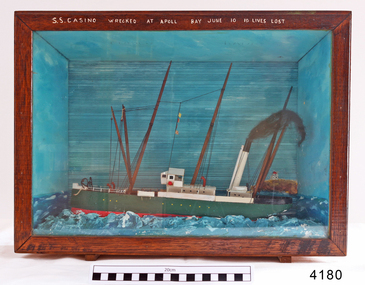 Flagstaff Hill Maritime Museum and Village
Craft - Ship Model, S.S. Casino
... Victoria's West Coast in the late 19th and early 20th century. The wreck of the S.S. Casino is considered an important part of Victorian and Australian cultural heritage and as such has been declared and protected as an Historic Shipwreck under State and Commonwealth Law in the Commonwealth Historic Shipwrecks Act (1976). flagstaff hill warrnambool shipwrecked coast flagstaff hill maritime museum maritime museum shipwreck coast flagstaff hill maritime village great ocean road newcastle and hunter river steam navigation company belfast and koroit steam navigation company h. sautau and sons s.s. casino west coast trader s.s. casino victorian coastal trader captain boyd captain w. robertson captain chapman captain middleton apollo bay shipwreck s.s. casino at lady bay warrnambool ship model s.s. casino Saltau and Osburne Painted in white on wood across top of case "SS CASINO WRECKED AT APOLL BAY JUNE 10 10 LIVES LOST". ...Ship model of coastal trader SS Casino in glass fronted case with stained wood frame. Ship has both steam and sail. Background of lighthouse on cliff, sea and sky. Ship painted green, 3 flags flying. Details (incorrect) of ship painted in white across top frame of case. The S.S. Casino was a passenger and freight steamer built in Dundee, Scotland, in 1882 for the Newcastle and Hunter River Steam Navigation Company of N.S.W. She weighed 425 tons gross with a length of 160.4 feet, beam of 24.1 feet and depth of 10.2 feet. She had saloon accommodation for 35 people, forecabin for 25 more people, and she carried 300 tons of cargo. While on her delivery journey on May 30th 1882 the S.S. Casino called in at the Port of Warrnambool for coal ., narrowly escaping going ashore in gale force winds due to the quick action of the pilot. At that time, still at anchor, she impressed the directors of the Belfast and Koroit Steam Navigation Company so much that they bought her immediately; she was ideal for trade in along the West Coast of Victoria. (Belfast is the original name for Port Fairy, South West Victoria. The Belfast and Koroit Steam Navigation Company was first managed by Messers. Saltau and Osburne and after the passing of Mr. Osburne, by produce merchants Messers H. Sautau and Sons, whose had a hay and corn store and shipping agency was on the corner of Liebig and Koroit Streets in Warrnambool. ) The S.S. Casino became “the most famous steamer to operate in Victorian waters along the West Coast” by author Jack Loney. Captain Boyd was her first Master, followed by Captain Chapman, who stayed with her 1890 until 1924. Captain W. Robertson followed for a short term, then Captain Middleton then took command 1925 - 1932. The S.S. Casino had several mishaps during her life. One was on 3rd January 1898 when she collided with the S.S. Flinders in Apollo Bay with minor damage. Another was on 24th October 1924 when she grounded on a reef at Point Hawdon near Grey River and most of her cargo (of Christmas goods) had to be dumped into the sea. Then in February 1929 she was ‘holed’ when she struck a submerged object as she entered Lady Bay, Warrnambool. On the morning of 10th July 1932, after attempting to berth at Apollo Bay jetty in heavy seas, Captain Middleton decided to take her out into the bay and wait until the seas abated. It was not realised that the anchor used to steady her as she manoeuvred to her berth had pierced her hull. She put about and headed for the beach but sank. Captain Middleton and nine others lost their lives; nine people were rescued including the two female passengers . Captain Middleton had been in charge of the S.S. Casino for seven years. He was the first ship’s Master to lose his life through shipwreck in the West Coast trade. In the years following the turn of the century the S.S. Casino remained the only regular trader with normal passenger accommodation along the West Coast. From 1882 she had made at least 2,500 voyages on the one run. Flagstaff Hill’s collection has a photograph of a portrait of Captain Chapman, , a ship model of the S.S. Casino that shows both forms of power under which she sailed, steam and sail. The ship is painted green and flies three flags. The inscription across the case of the ship model, incorrectly dated, tells the sad story of the wreck of the ship and the loss of lives on July 10th 1932 at Apollo Bay. A print in the Collection show S.S. Casino underway in heavy sea off Point Lonsdale, another two photographs show her at the Port of Warrnambool, leaving from the Breakwater in Lady Bay and another identifies the S.S. Casino as a ship from the Belfast and Koroit Steam Navigation Company. (Belfast is the original name for the township of Port Fairy). This ship model is significant because of its association with the coastal trader S.S. Casino 1882-1932 and its significance to trade along Victoria's West Coast in the late 19th and early 20th century. The wreck of the S.S. Casino is considered an important part of Victorian and Australian cultural heritage and as such has been declared and protected as an Historic Shipwreck under State and Commonwealth Law in the Commonwealth Historic Shipwrecks Act (1976). Ship model SS Casino in glass fronted case with stained wood frame. Ship has both steam and sail. Background of lighthouse on cliff, sea and sky. Ship painted green, 3 flags flying. Details of ship painted in white across top frame of case. NOTE: Correct details for shipwreck is 10 July 1932, at Apollo BayPainted in white on wood across top of case "SS CASINO WRECKED AT APOLL BAY JUNE 10 10 LIVES LOST".flagstaff hill, warrnambool, shipwrecked coast, flagstaff hill maritime museum, maritime museum, shipwreck coast, flagstaff hill maritime village, great ocean road, newcastle and hunter river steam navigation company, belfast and koroit steam navigation company, h. sautau and sons, s.s. casino, west coast trader s.s. casino, victorian coastal trader, captain boyd, captain w. robertson, captain chapman, captain middleton, apollo bay shipwreck, s.s. casino at lady bay warrnambool, ship model s.s. casino, saltau and osburne -
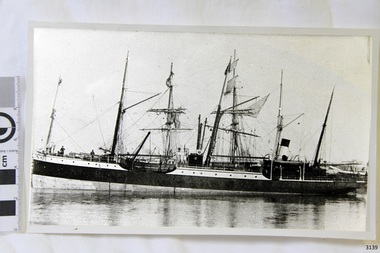 Flagstaff Hill Maritime Museum and Village
Photograph
... Victoria's West Coast in the late 19th and early 20th century. The wreck of the S.S. Casino is considered an important part of Victorian and Australian cultural heritage and as such has been declared and protected as an Historic Shipwreck under State and Commonwealth Law in the Commonwealth Historic Shipwrecks Act (1976). flagstaff hill warrnambool shipwrecked coast flagstaff hill maritime museum maritime museum shipwreck coast flagstaff hill maritime village great ocean road newcastle and hunter river steam navigation company belfast and koroit steam navigation company h. sautau and sons s.s. casino west coast trader s.s. casino victorian coastal trader captain boyd captain w. robertson captain chapman captain middleton apollo bay shipwreck s.s. casino at lady bay warrnambool saltau and osburne Black and White photograph of vessel S.S. ...Black and White photograph of vessel S.S. Casino in calm water, taken 1882-1932. The coastal trader has light rigging and steam funnel, lifeboat on side, two men on deck. Background shows other ships. The S.S. Casino was a passenger and freight steamer built in Dundee, Scotland, in 1882 for the Newcastle and Hunter River Steam Navigation Company of N.S.W. She weighed 425 tons gross with a length of 160.4 feet, beam of 24.1 feet and depth of 10.2 feet. She had saloon accommodation for 35 people, forecabin for 25 more people, and she carried 300 tons of cargo. While on her delivery journey on May 30th 1882 the S.S. Casino called in at the Port of Warrnambool for coal ., narrowly escaping going ashore in gale force winds due to the quick action of the pilot. At that time, still at anchor, she impressed the directors of the Belfast and Koroit Steam Navigation Company so much that they bought her immediately; she was ideal for trade in along the West Coast of Victoria. (Belfast is the original name for Port Fairy, South West Victoria. The Belfast and Koroit Steam Navigation Company was first managed by Messers. Saltau and Osburne and after the passing of Mr. Osburne, by produce merchants Messers H. Sautau and Sons, whose had a hay and corn store and shipping agency was on the corner of Liebig and Koroit Streets in Warrnambool. ) The S.S. Casino became “the most famous steamer to operate in Victorian waters along the West Coast” by author Jack Loney. Captain Boyd was her first Master, followed by Captain Chapman, who stayed with her 1890 until 1924. Captain W. Robertson followed for a short term, then Captain Middleton then took command 1925 - 1932. The S.S. Casino had several mishaps during her life. One was on 3rd January 1898 when she collided with the S.S. Flinders in Apollo Bay with minor damage. Another was on 24th October 1924 when she grounded on a reef at Point Hawdon near Grey River and most of her cargo (of Christmas goods) had to be dumped into the sea. Then in February 1929 she was ‘holed’ when she struck a submerged object as she entered Lady Bay, Warrnambool. On the morning of 10th July 1932, after attempting to berth at Apollo Bay jetty in heavy seas, Captain Middleton decided to take her out into the bay and wait until the seas abated. It was not realised that the anchor used to steady her as she manoeuvred to her berth had pierced her hull. She put about and headed for the beach but sank. Captain Middleton and nine others lost their lives; nine people were rescued including the two female passengers . Captain Middleton had been in charge of the S.S. Casino for seven years. He was the first ship’s Master to lose his life through shipwreck in the West Coast trade. In the years following the turn of the century the S.S. Casino remained the only regular trader with normal passenger accommodation along the West Coast. From 1882 she had made at least 2,500 voyages on the one run. Flagstaff Hill’s collection has a photograph of a portrait of Captain Chapman, , a ship model of the S.S. Casino that shows both forms of power under which she sailed, steam and sail. The ship is painted green and flies three flags. The inscription across the case of the ship model, incorrectly dated, tells the sad story of the wreck of the ship and the loss of lives on July 10th 1932 at Apollo Bay. A print in the Collection show S.S. Casino underway in heavy sea off Point Lonsdale, another two photographs show her at the Port of Warrnambool, leaving from the Breakwater in Lady Bay and another identifies the S.S. Casino as a ship from the Belfast and Koroit Steam Navigation Company. (Belfast is the original name for the township of Port Fairy). This photograph was taken 1882-1932. It is significant because of its association with the coastal trader S.S. Casino and its significance to trade along Victoria's West Coast in the late 19th and early 20th century. The wreck of the S.S. Casino is considered an important part of Victorian and Australian cultural heritage and as such has been declared and protected as an Historic Shipwreck under State and Commonwealth Law in the Commonwealth Historic Shipwrecks Act (1976). Black and White photograph of vessel S.S. Casino in calm water, taken 1882-1932. The coastal trader has light rigging and steam funnel, lifeboat on side, two men on deck. Background shows other ships.flagstaff hill, warrnambool, shipwrecked coast, flagstaff hill maritime museum, maritime museum, shipwreck coast, flagstaff hill maritime village, great ocean road, newcastle and hunter river steam navigation company, belfast and koroit steam navigation company, h. sautau and sons, s.s. casino, west coast trader s.s. casino, victorian coastal trader, captain boyd, captain w. robertson, captain chapman, captain middleton, apollo bay shipwreck, s.s. casino at lady bay warrnambool, saltau and osburne -
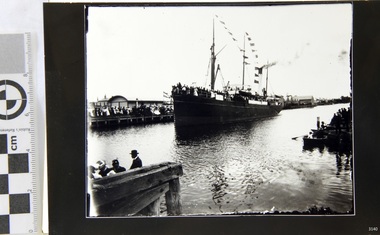 Flagstaff Hill Maritime Museum and Village
Photograph
... Victoria's West Coast in the late 19th and early 20th century. The wreck of the S.S. Casino is considered an important part of Victorian and Australian cultural heritage and as such has been declared and protected as an Historic Shipwreck under State and Commonwealth Law in the Commonwealth Historic Shipwrecks Act (1976). flagstaff hill warrnambool shipwrecked coast flagstaff hill maritime museum maritime museum shipwreck coast flagstaff hill maritime village great ocean road newcastle and hunter river steam navigation company belfast and koroit steam navigation company h. sautau and sons s.s. casino west coast trader s.s. casino victorian coastal trader captain boyd captain w. robertson captain chapman captain middleton apollo bay shipwreck s.s. casino at lady bay warrnambool saltau and osburne Black and White Photograph of S.S Casino arriving in port, taken 1930-1932. ...Black and White Photograph of S.S Casino arriving in port, taken 1930-1932. Decks are laden with men and women , crowd of waving people along the river bank, smoke coming from funnel. Warehouse and homes in the background. The S.S. Casino was a passenger and freight steamer built in Dundee, Scotland, in 1882 for the Newcastle and Hunter River Steam Navigation Company of N.S.W. She weighed 425 tons gross with a length of 160.4 feet, beam of 24.1 feet and depth of 10.2 feet. She had saloon accommodation for 35 people, forecabin for 25 more people, and she carried 300 tons of cargo. While on her delivery journey on May 30th 1882 the S.S. Casino called in at the Port of Warrnambool for coal ., narrowly escaping going ashore in gale force winds due to the quick action of the pilot. At that time, still at anchor, she impressed the directors of the Belfast and Koroit Steam Navigation Company so much that they bought her immediately; she was ideal for trade in along the West Coast of Victoria. (Belfast is the original name for Port Fairy, South West Victoria. The Belfast and Koroit Steam Navigation Company was first managed by Messers. Saltau and Osburne and after the passing of Mr. Osburne, by produce merchants Messers H. Sautau and Sons, whose had a hay and corn store and shipping agency was on the corner of Liebig and Koroit Streets in Warrnambool. ) The S.S. Casino became “the most famous steamer to operate in Victorian waters along the West Coast” by author Jack Loney. Captain Boyd was her first Master, followed by Captain Chapman, who stayed with her 1890 until 1924. Captain W. Robertson followed for a short term, then Captain Middleton then took command 1925 - 1932. The S.S. Casino had several mishaps during her life. One was on 3rd January 1898 when she collided with the S.S. Flinders in Apollo Bay with minor damage. Another was on 24th October 1924 when she grounded on a reef at Point Hawdon near Grey River and most of her cargo (of Christmas goods) had to be dumped into the sea. Then in February 1929 she was ‘holed’ when she struck a submerged object as she entered Lady Bay, Warrnambool. On the morning of 10th July 1932, after attempting to berth at Apollo Bay jetty in heavy seas, Captain Middleton decided to take her out into the bay and wait until the seas abated. It was not realised that the anchor used to steady her as she manoeuvred to her berth had pierced her hull. She put about and headed for the beach but sank. Captain Middleton and nine others lost their lives; nine people were rescued including the two female passengers . Captain Middleton had been in charge of the S.S. Casino for seven years. He was the first ship’s Master to lose his life through shipwreck in the West Coast trade. In the years following the turn of the century the S.S. Casino remained the only regular trader with normal passenger accommodation along the West Coast. From 1882 she had made at least 2,500 voyages on the one run. Flagstaff Hill’s collection has a photograph of a portrait of Captain Chapman, , a ship model of the S.S. Casino that shows both forms of power under which she sailed, steam and sail. The ship is painted green and flies three flags. The inscription across the case of the ship model, incorrectly dated, tells the sad story of the wreck of the ship and the loss of lives on July 10th 1932 at Apollo Bay. A print in the Collection show S.S. Casino underway in heavy sea off Point Lonsdale, another two photographs show her at the Port of Warrnambool, leaving from the Breakwater in Lady Bay and another identifies the S.S. Casino as a ship from the Belfast and Koroit Steam Navigation Company. (Belfast is the original name for the township of Port Fairy). This photograph is significant because of its association with the coastal trader S.S. Casino 1882-1932 and its significance to trade along Victoria's West Coast in the late 19th and early 20th century. The wreck of the S.S. Casino is considered an important part of Victorian and Australian cultural heritage and as such has been declared and protected as an Historic Shipwreck under State and Commonwealth Law in the Commonwealth Historic Shipwrecks Act (1976). Black and White Photograph of S.S Casino arriving in port, taken 1930-1932. Decks are laden with men and women , crowd of waving people along the river bank, smoke coming from funnel. Warehouse and homes in the background. flagstaff hill, warrnambool, shipwrecked coast, flagstaff hill maritime museum, maritime museum, shipwreck coast, flagstaff hill maritime village, great ocean road, newcastle and hunter river steam navigation company, belfast and koroit steam navigation company, h. sautau and sons, s.s. casino, west coast trader s.s. casino, victorian coastal trader, captain boyd, captain w. robertson, captain chapman, captain middleton, apollo bay shipwreck, s.s. casino at lady bay warrnambool, saltau and osburne -
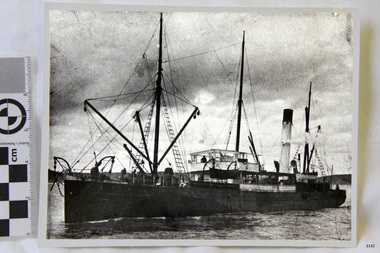 Flagstaff Hill Maritime Museum and Village
Photograph
... Victoria's West Coast in the late 19th and early 20th century. The wreck of the S.S. Casino is considered an important part of Victorian and Australian cultural heritage and as such has been declared and protected as an Historic Shipwreck under State and Commonwealth Law in the Commonwealth Historic Shipwrecks Act (1976). flagstaff hill warrnambool shipwrecked coast flagstaff hill maritime museum maritime museum shipwreck coast flagstaff hill maritime village great ocean road newcastle and hunter river steam navigation company belfast and koroit steam navigation company h. sautau and sons s.s. casino west coast trader s.s. casino victorian coastal trader captain boyd captain w. robertson captain chapman captain middleton apollo bay shipwreck s.s. casino at lady bay warrnambool Saltau and Osburne Black and White Photograph of S.S Casino taken 1932-1932. ...Black and White Photograph of S.S Casino taken 1930-1932. Ship has men on deck and a man at the helm. Hills and the shore can be seen in the background. The S.S. Casino was a passenger and freight steamer built in Dundee, Scotland, in 1882 for the Newcastle and Hunter River Steam Navigation Company of N.S.W. She weighed 425 tons gross with a length of 160.4 feet, beam of 24.1 feet and depth of 10.2 feet. She had saloon accommodation for 35 people, forecabin for 25 more people, and she carried 300 tons of cargo. While on her delivery journey on May 30th 1882 the S.S. Casino called in at the Port of Warrnambool for coal ., narrowly escaping going ashore in gale force winds due to the quick action of the pilot. At that time, still at anchor, she impressed the directors of the Belfast and Koroit Steam Navigation Company so much that they bought her immediately; she was ideal for trade in along the West Coast of Victoria. (Belfast is the original name for Port Fairy, South West Victoria. The Belfast and Koroit Steam Navigation Company was first managed by Messers. Saltau and Osburne and after the passing of Mr. Osburne, by produce merchants Messers H. Sautau and Sons, whose had a hay and corn store and shipping agency was on the corner of Liebig and Koroit Streets in Warrnambool. ) The S.S. Casino became “the most famous steamer to operate in Victorian waters along the West Coast” by author Jack Loney. Captain Boyd was her first Master, followed by Captain Chapman, who stayed with her 1890 until 1924. Captain W. Robertson followed for a short term, then Captain Middleton then took command 1925 - 1932. The S.S. Casino had several mishaps during her life. One was on 3rd January 1898 when she collided with the S.S. Flinders in Apollo Bay with minor damage. Another was on 24th October 1924 when she grounded on a reef at Point Hawdon near Grey River and most of her cargo (of Christmas goods) had to be dumped into the sea. Then in February 1929 she was ‘holed’ when she struck a submerged object as she entered Lady Bay, Warrnambool. On the morning of 10th July 1932, after attempting to berth at Apollo Bay jetty in heavy seas, Captain Middleton decided to take her out into the bay and wait until the seas abated. It was not realised that the anchor used to steady her as she manoeuvred to her berth had pierced her hull. She put about and headed for the beach but sank. Captain Middleton and nine others lost their lives; nine people were rescued including the two female passengers . Captain Middleton had been in charge of the S.S. Casino for seven years. He was the first ship’s Master to lose his life through shipwreck in the West Coast trade. In the years following the turn of the century the S.S. Casino remained the only regular trader with normal passenger accommodation along the West Coast. From 1882 she had made at least 2,500 voyages on the one run. Flagstaff Hill’s collection has a photograph of a portrait of Captain Chapman, , a ship model of the S.S. Casino that shows both forms of power under which she sailed, steam and sail. The ship is painted green and flies three flags. The inscription across the case of the ship model, incorrectly dated, tells the sad story of the wreck of the ship and the loss of lives on July 10th 1932 at Apollo Bay. A print in the Collection show S.S. Casino underway in heavy sea off Point Lonsdale, another two photographs show her at the Port of Warrnambool, leaving from the Breakwater in Lady Bay and another identifies the S.S. Casino as a ship from the Belfast and Koroit Steam Navigation Company. (Belfast is the original name for the township of Port Fairy). This ohotograph is significant because of its association with the coastal trader S.S. Casino 1882-1932 and its significance to trade along Victoria's West Coast in the late 19th and early 20th century. The wreck of the S.S. Casino is considered an important part of Victorian and Australian cultural heritage and as such has been declared and protected as an Historic Shipwreck under State and Commonwealth Law in the Commonwealth Historic Shipwrecks Act (1976). Black and White Photograph of S.S Casino taken 1932-1932. Ship has men on deck and a man at the helm. Hills and the shore can be seen in the background.flagstaff hill, warrnambool, shipwrecked coast, flagstaff hill maritime museum, maritime museum, shipwreck coast, flagstaff hill maritime village, great ocean road, newcastle and hunter river steam navigation company, belfast and koroit steam navigation company, h. sautau and sons, s.s. casino, west coast trader s.s. casino, victorian coastal trader, captain boyd, captain w. robertson, captain chapman, captain middleton, apollo bay shipwreck, s.s. casino at lady bay warrnambool, saltau and osburne -
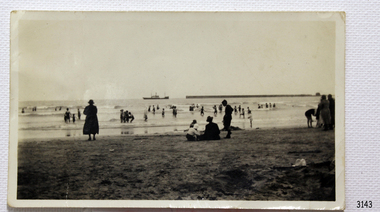 Flagstaff Hill Maritime Museum and Village
Photograph - Coastal Scene, 1930-1932
... Victoria's West Coast in the late 19th and early 20th centuries. The wreck of the S.S. Casino is considered an important part of Victorian and Australian cultural heritage and as such has been declared and protected as a Historic Shipwreck under State and Commonwealth Law in the Commonwealth Historic Shipwrecks Act (1976). ...The black and white photograph is a typical beach scene taken at Lady Bay, Warrnambool, between 1930 and 1932. In the background is the coastal trader, the steamship SS Casino. Adults and children are in the foreground, playing on the beach and in the water. The Warrnambool Breakwater is on the horizon. The S.S. Casino was a passenger and freight steamer built in Dundee, Scotland, in 1882 for the Newcastle and Hunter River Steam Navigation Company of N.S.W. The vessel weighed 425 tons gross with a length of 160.4 feet, a beam of 24.1 feet and a depth of 10.2 feet. Accommodation for 35 people was provided in the saloon, and 25 passengers in the fore-cabin, plus room for 300 tons of cargo. On May 30th 1882 the S.S. Casino called in at the Port of Warrnambool for coal, narrowly escaping being swept ashore in gale-force winds due to the pilot's quick action. At that time, still at anchor, the directors of the Belfast and Koroit Steam Navigation Company were so impressed that they bought the S S Casino immediately; being ideally suited for trade along the West Coast of Victoria; Belfast is the original name for Port Fairy, South West Victoria. The Belfast and Koroit Steam Navigation Company was first managed by Messers Saltau and Osburne, and after the passing of Mr Osburne, by produce merchants Messers H. Sautau and Sons, owners of a hay and corn store and shipping agency was on the corner of Liebig and Koroit Streets in Warrnambool. The S.S. Casino was named “the most famous steamer to operate in Victorian waters along the West Coast” by maritime author Jack Loney. Captain Boyd was her first Master, followed by Captain Chapman, who stayed with her from 1890 until 1924. Captain W. Robertson followed for a short term, and then Captain Middleton took command from 1925 to 1932. The S.S. Casino had several mishaps during her life. One was on 3rd January 1898 when the ship collided with the S.S. Flinders in Apollo Bay with minor damage. Another was on 24th October 1924 when the Casino was grounded on a reef at Point Hawdon near Grey River and most of her cargo of Christmas goods had to be dumped into the sea. Then in February 1929, the Casino was ‘holed’ when it struck a submerged object as it entered Lady Bay, Warrnambool. On the morning of 10th July 1932, after attempting to berth at Apollo Bay jetty in heavy seas, Captain Middleton decided to take S S Casino out into the bay and wait until the seas abated. It was not realised that the anchor that steadied the ship during a manoeuver had pierced its hull, and it sank as it headed for the beach. Captain Middleton and nine others lost their lives, but nine people were rescued including the two female passengers. Captain Middleton had been in charge of the S.S. Casino for seven years. He was the first ship’s Master to lose his life in a shipwreck in the West Coast trade. In the years following the turn of the century, the S.S. Casino remained the only regular trader with normal passenger accommodation along the West Coast. From 1882 it had made at least 2,500 voyages on the one run. Flagstaff Hill’s collection has a portrait photograph of Captain Chapman, a ship model of the S.S. Casino that shows both forms of power under which it sailed, steam and sail. The ship is painted green and flies three flags. The inscription across the case of the ship model, incorrectly dated, tells the sad story of the wreck of the ship and the loss of lives on July 10th 1932 at Apollo Bay. A print in the Collection shows S.S. Casino underway in the heavy sea off Point Lonsdale, another two photographs show it at the Port of Warrnambool, leaving from the Breakwater in Lady Bay, and another identifies the S.S. Casino as a ship from the Belfast and Koroit Steam Navigation Company.The photograph shows an example of the Warrnambool community and family bathing and beach activities of the 1930s. The photograph is significant because of its association with the coastal trader S.S. Casino 1882-1932 and its significance to cargo and passenger trade along Victoria's West Coast in the late 19th and early 20th centuries. The wreck of the S.S. Casino is considered an important part of Victorian and Australian cultural heritage and as such has been declared and protected as a Historic Shipwreck under State and Commonwealth Law in the Commonwealth Historic Shipwrecks Act (1976). Black and white photograph of steamship S.S Casino. Taken from the beach, adults and children on shore and in the water. Circa 1930-1932.newcastle and hunter river steam navigation company, belfast and koroit steam navigation company, h. sautau and sons, s.s. casino, west coast trader s.s. casino, victorian coastal trader, captain boyd, captain w. robertson, captain chapman, captain middleton, apollo bay shipwreck, lady bay warrnambool, saltau and osburne, port of warrnambool, warrnambool breakwater, beach, bathing, 1039, 1931, 1932, beach scene, swim -
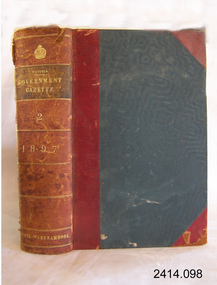 Flagstaff Hill Maritime Museum and Village
Book - Reference/Colonial Government Notification Gazette, Robert Smith Brain, The Victoria Government Gazette 1897 Vol 2 /102, 1897
... law was recorded and distributed. As an individual issue, the 1897 Gazette is not a landmark historical document in itself gazettes were routine administrative publications, issued weekly and sometimes more often. As the colony's official record, their significance is cumulative and archival for research purposes rather than as a dramatic publication, given that they are the primary legal record of government actions taken in colonial Victoria. Courts and historians still rely on them to establish exact dates of proclamations, appointments, and land dealings. The year 1897 falls in the lead-up to Australian ...The Victoria Government Gazette and other government documents from 1887 were printed and published by Robert S. Brain, Government Printer, Melbourne. Brain held the position of Victorian Government Printer through the 1890s and into the early 1900s. The same imprint appears on other official Victorian publications from that era, such as the annual reports of the Board for the Protection of the Aborigines and the colony's Statistical Register. There wasn't really an editor in the modern sense the Gazette was compiled and issued under the authority of the colonial government, via the Chief Secretary's Department, with Brain's printing office producing and publishing it.Hard cover book. The Victorian Government Gazette 1897 Vol 2 /102 Printer: Robert Smith, Brain Publisher: Robert Smith, Brain Publisher: Authority of The Colonial Government Date: 1897 Further Information: Textured hard cover bound book leather burgundy colour spine with gilt lettering, covers embossed blue cloth & reinforced corners to front and back cover. non-fictionThe Victoria Government Gazette and other government documents from 1887 were printed and published by Robert S. Brain, Government Printer, Melbourne. Brain held the position of Victorian Government Printer through the 1890s and into the early 1900s. The same imprint appears on other official Victorian publications from that era, such as the annual reports of the Board for the Protection of the Aborigines and the colony's Statistical Register. There wasn't really an editor in the modern sense the Gazette was compiled and issued under the authority of the colonial government, via the Chief Secretary's Department, with Brain's printing office producing and publishing it.flagstaff hill, warrnambool, shipwrecked-coast, flagstaff-hill, flagstaff-hill-maritime-museum, maritime-museum, shipwreck-coast, flagstaff-hill-maritime-village, book, the victoria government gazette 1897, the victoria government gazette 1897 2 vol 102, the victoria government gazette -
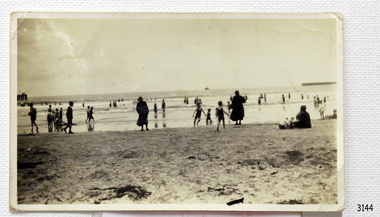 Flagstaff Hill Maritime Museum and Village
Photograph - Coastal Scene, 1930-1932
... Victoria's West Coast in the late 19th and early 20th centuries. The wreck of the S.S. Casino is considered an important part of Victorian and Australian cultural heritage and as such has been declared and protected as a Historic Shipwreck under State and Commonwealth Law in the Commonwealth Historic Shipwrecks Act (1976). ...The black and white photograph is a typical beach scene taken at Lady Bay, Warrnambool, between 1930 and 1932. In the background is the coastal trader, the steamship SS Casino. Adults and children are in the foreground, playing on the beach and in the water. The old jetty is on the left and the Warrnambool Breakwater is on the horizon. The S.S. Casino was a passenger and freight steamer built in Dundee, Scotland, in 1882 for the Newcastle and Hunter River Steam Navigation Company of N.S.W. The vessel weighed 425 tons gross with a length of 160.4 feet, a beam of 24.1 feet and a depth of 10.2 feet. Accommodation for 35 people was provided in the saloon, and 25 passengers in the fore-cabin, plus room for 300 tons of cargo. On May 30th 1882 the S.S. Casino called in at the Port of Warrnambool for coal, narrowly escaping being swept ashore in gale-force winds due to the pilot's quick action. At that time, still at anchor, the directors of the Belfast and Koroit Steam Navigation Company were so impressed that they bought the S S Casino immediately; being ideally suited for trade along the West Coast of Victoria; Belfast is the original name for Port Fairy, South West Victoria. The Belfast and Koroit Steam Navigation Company was first managed by Messers Saltau and Osburne, and after the passing of Mr Osburne, by produce merchants Messers H. Sautau and Sons, owners of a hay and corn store and shipping agency was on the corner of Liebig and Koroit Streets in Warrnambool. The S.S. Casino was named “the most famous steamer to operate in Victorian waters along the West Coast” by maritime author Jack Loney. Captain Boyd was her first Master, followed by Captain Chapman, who stayed with her from 1890 until 1924. Captain W. Robertson followed for a short term, and then Captain Middleton took command from 1925 to 1932. The S.S. Casino had several mishaps during her life. One was on 3rd January 1898 when the ship collided with the S.S. Flinders in Apollo Bay with minor damage. Another was on 24th October 1924 when the Casino was grounded on a reef at Point Hawdon near Grey River and most of her cargo of Christmas goods had to be dumped into the sea. Then in February 1929, the Casino was ‘holed’ when it struck a submerged object as it entered Lady Bay, Warrnambool. On the morning of 10th July 1932, after attempting to berth at Apollo Bay jetty in heavy seas, Captain Middleton decided to take S S Casino out into the bay and wait until the seas abated. It was not realised that the anchor that steadied the ship during a manoeuver had pierced its hull, and it sank as it headed for the beach. Captain Middleton and nine others lost their lives, but nine people were rescued including the two female passengers. Captain Middleton had been in charge of the S.S. Casino for seven years. He was the first ship’s Master to lose his life in a shipwreck in the West Coast trade. In the years following the turn of the century, the S.S. Casino remained the only regular trader with normal passenger accommodation along the West Coast. From 1882 it had made at least 2,500 voyages on the one run. Flagstaff Hill’s collection has a portrait photograph of Captain Chapman, a ship model of the S.S. Casino that shows both forms of power under which it sailed, steam and sail. The ship is painted green and flies three flags. The inscription across the case of the ship model, incorrectly dated, tells the sad story of the wreck of the ship and the loss of lives on July 10th 1932 at Apollo Bay. A print in the Collection shows S.S. Casino underway in the heavy sea off Point Lonsdale, another two photographs show it at the Port of Warrnambool, leaving from the Breakwater in Lady Bay, and another identifies the S.S. Casino as a ship from the Belfast and Koroit Steam Navigation Company.The photograph shows an example of the Warrnambool community and family bathing and beach activities of the 1930s. It also shows a point in time when the jetty and the Breakwater were in the Bay. The photograph is significant because of its association with the coastal trader S.S. Casino 1882-1932 and its significance to cargo and passenger trade along Victoria's West Coast in the late 19th and early 20th centuries. The wreck of the S.S. Casino is considered an important part of Victorian and Australian cultural heritage and as such has been declared and protected as a Historic Shipwreck under State and Commonwealth Law in the Commonwealth Historic Shipwrecks Act (1976).Black and white photograph of steamship S.S Casino leaving Warrnambool. Taken from the beach, adults and children on shore and in the water. There is a jetty on the left and and the Breakwater on the right. Circa 1930-1932.newcastle and hunter river steam navigation company, belfast and koroit steam navigation company, h. sautau and sons, s.s. casino, west coast trader s.s. casino, victorian coastal trader, captain boyd, captain w. robertson, captain chapman, captain middleton, apollo bay shipwreck, lady bay warrnambool, saltau and osburne, port of warrnambool, warrnambool breakwater, beach, bathing, 1039, 1931, 1932, beach scene, swim, warrnambool jetty -
 Flagstaff Hill Maritime Museum and Village
Photograph
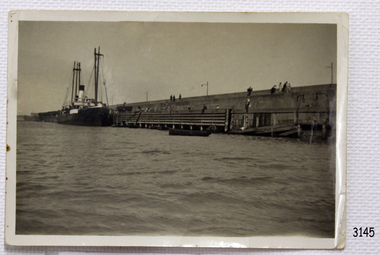
... Victoria's West Coast in the late 19th and early 20th century. The wreck of the S.S. Casino is considered an important part of Victorian and Australian cultural heritage and as such has been declared and protected as an Historic Shipwreck under State and Commonwealth Law in the Commonwealth Historic Shipwrecks Act (1976). flagstaff hill warrnambool shipwrecked coast flagstaff hill maritime museum maritime museum shipwreck coast flagstaff hill maritime village great ocean road newcastle and hunter river steam navigation company belfast and koroit steam navigation company h. sautau and sons s.s. casino west coast trader s.s. casino victorian coastal trader captain boyd captain w. robertson captain chapman captain middleton apollo bay shipwreck s.s. casino at lady bay warrnambool Saltau and Osburne Black and White Photograph of S.S Casino taken 1930-1932. ...Black and White Photograph of S.S Casino taken 1930-1932. The Casino is berthed at the Warrnambool Breakwater, either loading or unloading. A person is attending a container at the bottom of a ramp between ship to Breakwater. People are sitting or standing on the Breakwater. The S.S. Casino was a passenger and freight steamer built in Dundee, Scotland, in 1882 for the Newcastle and Hunter River Steam Navigation Company of N.S.W. She weighed 425 tons gross with a length of 160.4 feet, beam of 24.1 feet and depth of 10.2 feet. She had saloon accommodation for 35 people, forecabin for 25 more people, and she carried 300 tons of cargo. While on her delivery journey on May 30th 1882 the S.S. Casino called in at the Port of Warrnambool for coal ., narrowly escaping going ashore in gale force winds due to the quick action of the pilot. At that time, still at anchor, she impressed the directors of the Belfast and Koroit Steam Navigation Company so much that they bought her immediately; she was ideal for trade in along the West Coast of Victoria. (Belfast is the original name for Port Fairy, South West Victoria. The Belfast and Koroit Steam Navigation Company was first managed by Messers. Saltau and Osburne and after the passing of Mr. Osburne, by produce merchants Messers H. Sautau and Sons, whose had a hay and corn store and shipping agency was on the corner of Liebig and Koroit Streets in Warrnambool. ) The S.S. Casino became “the most famous steamer to operate in Victorian waters along the West Coast” by author Jack Loney. Captain Boyd was her first Master, followed by Captain Chapman, who stayed with her 1890 until 1924. Captain W. Robertson followed for a short term, then Captain Middleton then took command 1925 - 1932. The S.S. Casino had several mishaps during her life. One was on 3rd January 1898 when she collided with the S.S. Flinders in Apollo Bay with minor damage. Another was on 24th October 1924 when she grounded on a reef at Point Hawdon near Grey River and most of her cargo (of Christmas goods) had to be dumped into the sea. Then in February 1929 she was ‘holed’ when she struck a submerged object as she entered Lady Bay, Warrnambool. On the morning of 10th July 1932, after attempting to berth at Apollo Bay jetty in heavy seas, Captain Middleton decided to take her out into the bay and wait until the seas abated. It was not realised that the anchor used to steady her as she manoeuvred to her berth had pierced her hull. She put about and headed for the beach but sank. Captain Middleton and nine others lost their lives; nine people were rescued including the two female passengers . Captain Middleton had been in charge of the S.S. Casino for seven years. He was the first ship’s Master to lose his life through shipwreck in the West Coast trade. In the years following the turn of the century the S.S. Casino remained the only regular trader with normal passenger accommodation along the West Coast. From 1882 she had made at least 2,500 voyages on the one run. Flagstaff Hill’s collection has a photograph of a portrait of Captain Chapman, , a ship model of the S.S. Casino that shows both forms of power under which she sailed, steam and sail. The ship is painted green and flies three flags. The inscription across the case of the ship model, incorrectly dated, tells the sad story of the wreck of the ship and the loss of lives on July 10th 1932 at Apollo Bay. A print in the Collection show S.S. Casino underway in heavy sea off Point Lonsdale, another two photographs show her at the Port of Warrnambool, leaving from the Breakwater in Lady Bay and another identifies the S.S. Casino as a ship from the Belfast and Koroit Steam Navigation Company. (Belfast is the original name for the township of Port Fairy). This object is significant because of its association with the coastal trader S.S. Casino 1882-1932 and its significance to trade along Victoria's West Coast in the late 19th and early 20th century. The wreck of the S.S. Casino is considered an important part of Victorian and Australian cultural heritage and as such has been declared and protected as an Historic Shipwreck under State and Commonwealth Law in the Commonwealth Historic Shipwrecks Act (1976). Black and White Photograph of S.S Casino taken 1930-1932. The Casino is berthed at the Warrnambool Breakwater, either loading or unloading. A person is attending a container at the bottom of a ramp between ship to Breakwater. People are sitting or standing on the Breakwater.flagstaff hill, warrnambool, shipwrecked coast, flagstaff hill maritime museum, maritime museum, shipwreck coast, flagstaff hill maritime village, great ocean road, newcastle and hunter river steam navigation company, belfast and koroit steam navigation company, h. sautau and sons, s.s. casino, west coast trader s.s. casino, victorian coastal trader, captain boyd, captain w. robertson, captain chapman, captain middleton, apollo bay shipwreck, s.s. casino at lady bay warrnambool, saltau and osburne -
 Flagstaff Hill Maritime Museum and Village
Photograph - Vessel, Steam Ship, after 1890
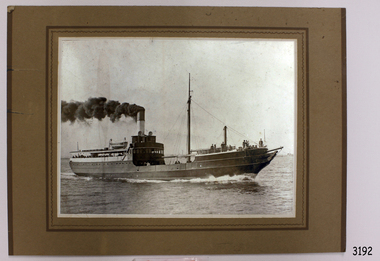
... The SS Edina’s original ‘fair maid of Judea’ figurehead was broken to pieces in a collision with another vessel (the SS Dandenong) in a gale off Warrnambool, Victoria, in 1870. warrnambool shipwrecked coast flagstaff hill flagstaff hill maritime museum maritime museum shipwreck coast flagstaff hill maritime village shipwrecked artefact barclay & curle figurehead 'fair maid of judea' centenary maritime exhibition 1934 a brief review of steam navigation in victoria pleasure steamer edina trade and travel late 19th and early 20th century trade melbourne to geelong screw steamer edina coastal trader edina lighter dinah cargo carrying for cremean war cargo carrying for american civil war passenger and trade in western district of victoria export gold and currency and gold diggers to new zealand export vessel to h r h the duke of edinburgh melbourne - warrnambool - port fairy - portland cargo run warrnambool steam packet company stephen henty captain john thompson chief engineer john davies lady bay warrnambool lighter edina shipping victoria port phillip bay steamers steamship great britain edina, vhr s199 victorian heritage database photograph of ss edina post 1890 photograph australian screw steamer pleasure vessel victoria post 1890 Inscription on the reverse: "Donated by Mrs. Nancy Mason, Bayview. Receipt 409a. Owned by Mac Fordham, Chief Engineer, 'Edina', then given to Mrs. Mason's father-in-law ...This photograph was donated by Mrs Nancy Mason, daughter-in-law of the last owner, Arnold Mason. Andrew Mason had been given the photograph by Mr. Mac Fordham, who was the Chief Engineer of the SS Edina. Both men had been Engineers in WW I. The configuration of the SS Edina in the photograph is post 1890. ABOUT THE S S EDINA The three-masted iron screw steamer SS Edina was built in Glasgow, Scotland, in 1854 by Barclay and Curle. She was adorned with the figurehead of ‘fair maid of Judea’. The many years of service made SS Edina famous worldwide as the longest-serving screw steamer. (The term screw steamer comes from being driven by a single propeller, sometimes called a screw, driven by a steam engine.) SS Edina’s interesting history includes English Channel runs, serving in the Crimean War carrying ammunition, horses and stores to the Black Sea, and further service in the American Civil War and later, serving in the western district of Victoria as well as in Queensland and carried gold, currency and gold prospectors Australia to New Zealand. SS Edina had the privilege of being an escort vessel to H.R.H. the Duke of Edinburgh during his visit to Australia in 1867. In March 1863, SS Edina arrived in Port Phillip Bay, Melbourne and was bought by Stephen Henty, of Portland fame, to work the cargo and passenger run from Melbourne – Warrnambool – Port Fairy - Portland. After a short time of working the run from Australia to New Zealand, with passengers and cargo that included gold and currency, she returned to her Melbourne - Warrnambool – Port Fairy run, with cargo including bales of wool produced in the western district of Victoria. The Warrnambool Steam Packet Company purchased SS Edina in 1867; she was now commanded by Captain John Thompson and Chief Engineer John Davies. She survived several mishaps at sea, had a complete service and overhaul and several changes of commanders. In 1870 SS Edina was in Lady Bay, Warrnambool, when a gale sprung up and caused a collision with the iron screw steamer SS Dandenong. SS Edina’s figurehead was broken into pieces and it was not ever replaced. SS Edina was refitted in 1870 then was used as a coastal trader in Queensland for a period. She was then brought to Melbourne to carry cargo and passengers between Melbourne and Geelong and performed this service 1880-1938. During this time (1917) she was again refitted with a new mast, funnel, bridge and promenade deck, altering her appearance. In 1938, after more collisions, SS Edina was taken out of service. However, she was later renamed Dinah and used as a ‘lighter’ (a vessel without engine or superstructure) to be towed and carry wool and general cargo between Melbourne and Geelong. In 1957, after 104 years, the SS Edina was broken up at Footscray, Melbourne. Remains of SS Edina’s hull can be found in the Maribyrnong River, Port Phillip Bay. This photograph of the SS Edina is significant for its association with the screw steamer SS Edina. The SS Edina is heritage listed on the Victorian Heritage Database VHR S199. She had endeared herself to the people of Port Phillip Bay as a passenger ferry, part of their history and culture. She played a significant role in the Crimean War, the American Civil War and the gold rush in New Zealand. She also served western Victoria for many years in her cargo and passenger runs. The SS Edina is famous for being the longest serving screw steamer in the world. After spending her first nine years overseas she arrived in Melbourne and her work included running the essential service of transporting cargo and passengers between Melbourne and the western Victoria ports of Warrnambool, Port Fairy and Portland. The SS Edina was purchased in the late 1860’s by local Warrnambool business, the Warrnambool Steam Packet Co. and continued trading from there as part of the local business community. The SS Edina’s original ‘fair maid of Judea’ figurehead was broken to pieces in a collision with another vessel (the SS Dandenong) in a gale off Warrnambool, Victoria, in 1870.Black and White photograph mounted on brown card of SS Edina. Inscription on the reverse side. The photograph shows the SS Edina moving under steam power, with many people on both the bow and stern and a few people in the centre of the vessel. There are buildings on the shore in the background. The ship's configuration is dated post 1890.Inscription on the reverse: "Donated by Mrs. Nancy Mason, Bayview. Receipt 409a. Owned by Mac Fordham, Chief Engineer, 'Edina', then given to Mrs. Mason's father-in-law Arnold Mason. (both Engineers W.W 1)."warrnambool, shipwrecked coast, flagstaff hill, flagstaff hill maritime museum, maritime museum, shipwreck coast, flagstaff hill maritime village, shipwrecked artefact, barclay & curle, figurehead 'fair maid of judea', centenary maritime exhibition 1934, a brief review of steam navigation in victoria, pleasure steamer edina, trade and travel late 19th and early 20th century, trade melbourne to geelong, screw steamer edina, coastal trader edina, lighter dinah, cargo carrying for cremean war, cargo carrying for american civil war, passenger and trade in western district of victoria, export gold and currency and gold diggers to new zealand, export vessel to h r h the duke of edinburgh, melbourne - warrnambool - port fairy - portland cargo run, warrnambool steam packet company, stephen henty, captain john thompson, chief engineer john davies, lady bay warrnambool, lighter edina, shipping victoria, port phillip bay steamers, steamship great britain, edina, vhr s199 victorian heritage database, photograph of ss edina post 1890, photograph australian screw steamer, pleasure vessel victoria post 1890 -
 Flagstaff Hill Maritime Museum and Village
Equipment - Lifebuoy, late 19th to early 20th century
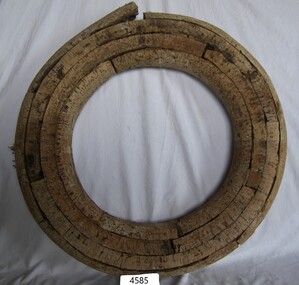
... Laws were passed over time that has required aeroplanes and water going-vessels to carry life-preservers on board. The lifebuoy is an example of equipment carried on vessels in the late 19th and early 20th century to help preserve life. There were many lives lost in Australia’s colonial period, particularly along the coast of South West Victoria ...This lifebuoy is part of the lifesaving equipment that would be carried on vessels in the late 19th and early 20th century. The strips of cork wood have been joined together to make the ring shape. A lifebuoy, or life-preserver, is used as a buoyancy device to keep a person afloat in the. It is usually connected by a rope to a person in a safe area such a nearby vessel or on shore. The lifebuoy is thrown to a person in distress in the water, allowing the rescuer to pull the person to safety. The lifebuoy is a made from a buoyant material such as cork or rubber and is usually covered with canvas for protection and to make it easy to grip. The first use of life saving devices in recent centuries was by the Nordic people, who used light weight wood or cork blocks to keep afloat. From the early 20th century Kapok fibre was used as a filling for buoys. Light weight balsa wood was used as a filler after WW1. In 1928 Peter Markus invented and patented the first inflatable life-preserver. By WW2 foam was combined with Kapok. Laws were passed over time that has required aeroplanes and water going-vessels to carry life-preservers on board. The lifebuoy is an example of equipment carried on vessels in the late 19th and early 20th century to help preserve life. There were many lives lost in Australia’s colonial period, particularly along the coast of South West Victoria.Lifebuoy; round, cork filling of lifebuoy. The nails joining the layers are visible. flagstaff hill, warrnambool, shipwrecked-coast, flagstaff-hill, flagstaff-hill-maritime-museum, maritime-museum, shipwreck-coast, flagstaff-hill-maritime-village, life rings, lifebuoy, safety ring, life-saving buoy, ring buoy, life preserver, personal floating device, floatation device, safety equipment -
 Flagstaff Hill Maritime Museum and Village
Equipment - Lifebuoy, late 19th to early 20th century
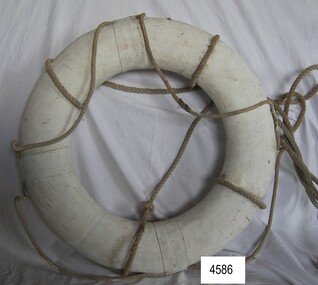
... Laws were passed over time that has required aeroplanes and water going-vessels to carry life-preservers on board. The lifebuoy is an example of equipment carried on vessels in the late 19th and early 20th century to help preserve life. There were many lives lost in Australia’s colonial period, particularly along the coast of South West Victoria ...This lifebuoy is part of the lifesaving equipment that would be carried on vessels in the late 19th and early 20th century. The strips of cork wood have been joined together to make the ring shape. A lifebuoy, or life-preserver, is used as a buoyancy device to keep a person afloat in the. It is usually connected by a rope to a person in a safe area such a nearby vessel or on shore. The lifebuoy is thrown to a person in distress in the water, allowing the rescuer to pull the person to safety. The lifebuoy is a made from a buoyant material such as cork or rubber and is usually covered with canvas for protection and to make it easy to grip. The first use of life saving devices in recent centuries was by the Nordic people, who used light weight wood or cork blocks to keep afloat. From the early 20th century Kapok fibre was used as a filling for buoys. Light weight balsa wood was used as a filler after WW1. In 1928 Peter Markus invented and patented the first inflatable life-preserver. By WW2 foam was combined with Kapok. Laws were passed over time that has required aeroplanes and water going-vessels to carry life-preservers on board. The lifebuoy is an example of equipment carried on vessels in the late 19th and early 20th century to help preserve life. There were many lives lost in Australia’s colonial period, particularly along the coast of South West Victoria.Lifebuoy, round cork filling inside white canvas cover with four reinforced bands. Four ropes are attached.flagstaff hill, warrnambool, shipwrecked-coast, flagstaff-hill, flagstaff-hill-maritime-museum, maritime-museum, shipwreck-coast, flagstaff-hill-maritime-village, life rings, lifebuoy, safety ring, life-saving buoy, ring buoy, life preserver, personal floating device, floatation device, safety equipment -
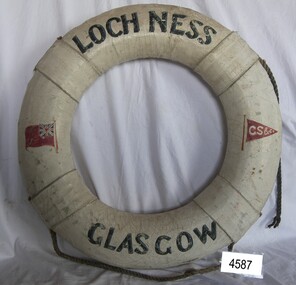 Flagstaff Hill Maritime Museum and Village
Equipment - Lifebuoy, Loch Ness, 1869-1909
... Laws were passed over time that has required aeroplanes and water going-vessels to carry life-preservers on board. The ship LOCH NESS 1869-1922 … The ship Loch Ness, of Glasgow, was the same ship what William Carmichael sailed on to Australia when he laid the commemoration stone on behalf of his sister Eva and himself, dedicated to their parents, brothers and sisters. The family members lost their lives on June 1, 1878, when their ship, the Loch Ard, was wrecked at Mutton Bird Island in south west Victoria...Laws were passed over time that has required aeroplanes and water going-vessels to carry life-preservers on board. The ship LOCH NESS 1869-1922 … The ship Loch Ness, of Glasgow, was the same ship what William Carmichael sailed on to Australia when he laid the commemoration stone on behalf of his sister Eva and himself, dedicated to their parents, brothers and sisters. The family members lost their lives on June 1, 1878, when their ship, the Loch Ard, was wrecked at Mutton Bird Island in south west Victoria ...This lifebuoy bears the name of the ship, its origin, the shipping company and the red ensign. These details mean that the lifebuoy was part of the lifesaving equipment on the sailing ship the Loch Ness, part of the Glasgow Shipping Company’s Loch Line (G.S.C. on the red pennant) and a British-registered ship (the red flag with the Union Jack on it). Lifebuoys were part of the emergency lifesaving equipment carried on vessels in the late 19th and early 20th century. The ring was made of strips of cork wood joined together to make the ring shape then covered in canvas and sealed usually with white paint. Four evenly spaced canvas reinforcing bands would be added for strength and for a place to thread a rope or line. A lifebuoy, or life-preserver, is used as a buoyancy device often thrown to an endangered or distressed person in the water to keep them afloat while they receive help. It is usually connected by a rope to a person in a safe area such a nearby vessel or on shore. Lifebuoys is a made from a buoyant materials such as cork or foam and ae usually covered with canvas for protection and to make it easy to grip. The first use of life saving devices in recent centuries was by the Nordic people, who used light weight wood or cork blocks to keep afloat. Cork lifebuoys were used from the late 19th to early 20th century. Kapok fibre was then used as a filling for buoys but wasn’t entirely successful. Light weight balsa wood was used as a filler after WW1. In 1928 Peter Markus invented and patented the first inflatable life-preserver. By WW2 foam was combined with Kapok. Laws were passed over time that has required aeroplanes and water going-vessels to carry life-preservers on board. The ship LOCH NESS 1869-1922 … The ship Loch Ness, of Glasgow, was the same ship what William Carmichael sailed on to Australia when he laid the commemoration stone on behalf of his sister Eva and himself, dedicated to their parents, brothers and sisters. The family members lost their lives on June 1, 1878, when their ship, the Loch Ard, was wrecked at Mutton Bird Island in south west Victoria. Eva Carmichael was one of the two survivors from that shipwreck, the other 52 tragically lost their lives. The ship Loch Ness was a three-masted sailing ship built in 1869 for the Loch Line owned by the Glasgow Shipping Company. The line transported cargo and passengers from Glasgow, Scotland, to Australian ports. The Loch Ness was sold in 1908 to Stevedore & Shipping Co, Sydney for use as a coal hulk. In 1914 the Australian Government took over the ship for naval defence purposeless. In 1926 the ship was sunk during gunfire practice by the 1922 built, light cruiser HMAS Melbourne, near Fremantle, Western Australia. The lifebuoy is an example of equipment carried on vessels in the late 19th and early 20th century to help preserve life. There were many lives lost in Australia’s colonial period, particularly along the coast of South West Victoria. The lifebuoy is significant for its connection to the ship Loch Ness on which William Carmichael, brother of Eva Carmichael, travelled to lay a memorial to their parents and all of their other siblings who lost their lives in the Loch Ard disaster of 1878 near Peterborough, Victoria. Lifebuoy, round, cork filling inside canvas cover, painted white, with rope attached. Lifebuoy has printed name of vessel Loch Ness, Glasgow. Symbols of red flag with white initials G S Co. There is also a red ensign."LOCH NESS", "GLASGOW" "G S Co"flagstaff hill, warrnambool, shipwrecked-coast, flagstaff-hill, flagstaff-hill-maritime-museum, maritime-museum, shipwreck-coast, flagstaff-hill-maritime-village, loch ness, loch ard, william carmichael, eva carmichael, lifebuoy, glasgow sailing ship, loch ness of glasgow, life rings, safety ring, life-saving buoy, ring buoy, life preserver, personal floating device, floatation device, safety equipment, g s c, glasgow shipping company, hmas melbourne, cruiser melbourne -
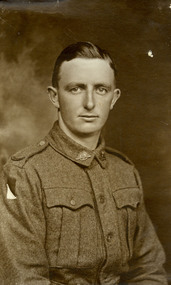 Federation University Historical Collection
Photograph - Photograph - Sepia Postcard, Henry Smerdon Holmes, c 1915
... Victoria and called it 'Launchley Park' on their first son's return from World War 2. In 1953 Harry purchased William and Charlotte's portion of 'Sauchieburn' for his son, Bill, and daughter-in-law Margaret. [Source: Unpublished notes by Jane Dyer ( nee Chatham)] chatham chatham family collection holmes harry holmes henry holmes smerdon world war world war 1 world war i uniform Verso in pen "The boys say this isn't to (sic) bad so it will show you any changes. Heaps of love to all. Harry Sepia photographic postcard of a World War 1 Australian ...HENRY SMERDON (Harry) HOLMES was born in 1897 at the family property, ’Sauchieburn’, 17 km north of Ballarat, in the Ascot district. He was the youngest of four children. After finishing his education at St Patrick’s College, Ballarat, Henry joined the Holmes family farming interests. At the age of 18 he enlisted and served with AIF in Egypt, France and Belgium 1915-1918. Henry served at the famous battlegrounds of Ypes and Somme in the Australian Army 8th Battalion https://www.awm.gov.au/collection/U51448 He was a Driver with the 4th D.A.C.https://www.awm.gov.au/collection/U51219 According to his Soldier's Pay Books (Cat. No. 20112) Holmes Registration number was 7983. He was Catholic and enlisted in the Third Military District on 17 September 1915, and embarked on 8 November 1915. Holmes was in the 18th AASC Unit with the rank of Driver at that time. On 15 November 1918 Holmes was promoted to Lance Corporal. He received leave on: * 3 August 1917 - London (10 days) * 19 February 1918 - Paris (10 days) * 27 August 1918 - London (14 days) In 1922 Harry married Edith Pickford of 'Yeovil', Clunes, and they lived at 'Sauchieburn' with Henry's brother Willie. In 1933 Harry and Edith built a new timber home 'Launchley' (Ascot) on the rise east of 'Sauchieburn' on the Ballarat - Maryborough Road. The home was built by Con Zilles to the designs of Clegg and Morrow. In 1938 Harry and Edith purchased a property at Derrinallum, Victoria and called it 'Launchley Park' on their first son's return from World War 2. In 1953 Harry purchased William and Charlotte's portion of 'Sauchieburn' for his son, Bill, and daughter-in-law Margaret. [Source: Unpublished notes by Jane Dyer ( nee Chatham)]Sepia photographic postcard of a World War 1 Australian soldier in uniform, Henry Smerdon Holmes from Ascot Victoria.Verso in pen "The boys say this isn't to (sic) bad so it will show you any changes. Heaps of love to all. Harrychatham, chatham family collection, holmes, harry holmes, henry holmes, smerdon, world war, world war 1, world war i, uniform -
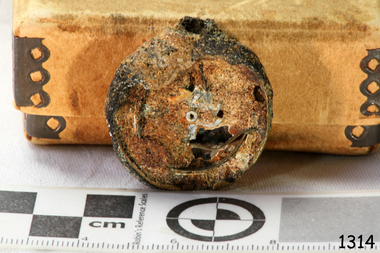 Flagstaff Hill Maritime Museum and Village
Instrument - Fob Watch, ca 1878
... Victoria, Australia”; though the family at that address had the surname “Morton”. Mrs J. Morton, formerly Elizabeth Ford, married her second husband, James Morton, in 1904, the year before the date of the letter. The couple lived at the Nepean Hotel before they were at “Glencove”. Although they never owned that property, it was their home when James died in 1937. Elizabeth’s nephew, Alfred Sandle Ford (1894-1981), and a nephew-in-law...Victoria, Australia”; though the family at that address had the surname “Morton”. Mrs J. Morton, formerly Elizabeth Ford, married her second husband, James Morton, in 1904, the year before the date of the letter. The couple lived at the Nepean Hotel before they were at “Glencove”. Although they never owned that property, it was their home when James died in 1937. Elizabeth’s nephew, Alfred Sandle Ford (1894-1981), and a nephew-in-law ...The story of this gold fob watch is intriguing. The letter is dated March 6, 1905, 27 years after the Loch Ard was wrecked. It appears to be a quick personal note from a relative or friend who briefly writes the history of the enclosed ‘souvenir’ watch, found in Loch Ard Gorge at Port Campbell. Although the finder is not named, it is likely the letter’s author. The writer mentions that the letter and watch would be sent once photographs of the area where the watch was found had been added. The fancy, lined envelope’s date stamp is October 12th, 1917 (12.10.17), almost 12 years after the letter was written. It has a postmark from Florence (Firenze), Italy. The handwriting on the envelope differs from that of the letter, and there is no further mention of photographs being included. The condition of the watch certainly shows the effects of time in the sea. Some inner workings can be seen through broken encrustations and missing sections of its case. The winding knob on the top is recognisable even though it is covered by sand and other adhesions from the sea. Its dainty size and gold case suggest that it was made for a well-to-do female. The watch, envelope and letter were donated along with a 1971 newspaper cutting, all neatly folded and tucked with the watch into a small, strong cardboard box with metal reinforcing on the corners and a fitted lid. The newspaper article gives context to the watch, telling the story of the Loch Ard shipwreck tragedy and the two survivors, but does not refer to the watch. Perhaps one of the 17 passengers sailing on the Loch Ard, including members of the Carmichael family, owned the watch, or maybe it was amongst the cargo, as the ship’s manifest includes ‘clocks and watches £25’. . Considering the dates of the letter and the envelope, did the finder of the ‘souvenir’ watch take it to Europe? Was it used for good luck during service in the military? . Comparing the different writing on the letter and the envelope, does it suggest that the watch’s finder was overseas and asked someone to send the envelope to the intended recipient, with postage from Italy? ABOUT the address, “Glencove”: The details on the envelope are faint and obscured by stiff creases in the paper. The address appears to be “Mrs J. Mortton, Glencove, Portsea, Victoria, Australia”; though the family at that address had the surname “Morton”. Mrs J. Morton, formerly Elizabeth Ford, married her second husband, James Morton, in 1904, the year before the date of the letter. The couple lived at the Nepean Hotel before they were at “Glencove”. Although they never owned that property, it was their home when James died in 1937. Elizabeth’s nephew, Alfred Sandle Ford (1894-1981), and a nephew-in-law were overseas during World War I. Alfred Ford had moved to Melbourne as a young boy with his father. He entered service as Second Lieutenant in 1915, naming his father, Alfred Sandle Ford, as his next of kin. He served in Egypt, France and Belgium with the Australian Imperial Forces as a member of the Field Artillery Brigades. He returned to Melbourne in 1919 and worked in Richmond and Box Hill. He later married Frances Whyburn. Previously, in 1872, Elizabeth Ford’s sister, Julia Ford, acquired the 1-acre property with a 3-room house that became known as “Glencove”, Portsea. The building was originally the first school in the area, established before Crown Land sales. In the Parish of Nepean, it was first assessed for rates in 1871. Julia Ford (1843-1912) and Elizabeth Ford (1859-1957) were daughters of James Sandle Ford (1811-1890), a well-known pioneer of Portsea, formerly a convict limeburner. James Ford acquired several Crown allotments in Portsea. In 1872, he converted his old hotel into the large residential establishment known as the Nepean Hotel, which his family largely ran until it was demolished in 1971. During those years, different family members lived at the Nepean Hotel or Glencove. In 1877, Julia Ford married a significant landowner, John Cain, a limeburner from Rye. They had five daughters, four of whom were never married; Kathleen (1880-1949), Mabel (1881-1973), who was the last family member to own the house until her death, Hilda (1884-1974) and Julia Ethel (1888-1949). Some of the newspaper records refer to “Glencove”, Portsea, inform that: 1927 - Dr. and Mrs. J. E. Shilliday are staying with Mrs. R. B. Sanderson at Glencove. (Australasian) 1937 - James Morton died at his property, Glencove, Portsea, aged 83 years (Argus) 1949 - Julia Ethel Cain died at Glencove, Portsea. (Argus) 1949 - Probate application by sisters of Julia Ethel Cain, deceased, formerly of Nepean Hotel, Portsea, but late of Glencove, Nepean Highway, Portsea. The connection of the watch with the sands of Loch Ard Gorge and to the ship Loch Ard contributes to our knowledge of personal items brought to Australia in 1878, whether as the belongings of a passenger or as cargo; a gold watch would be intended for a wealthy buyer. The little artefact helps us understand the survival of artefacts in the powerful sea, over a quarter of a century after the wreck of the ship. Although many people would have visited the shipwreck site, the length of time before it was found helps us understand the effects of the sea on shipwreck artefacts. The survival of the carefully packaged watch and related documents shows the respectful understanding of preservation of historic artefacts, even from almost 150 years ago at the time of writing (2025). Ladies' fob watch, thought to be gold. It is now covered in encrustation. A bump on the edge would be the winding mechanism for the watch. A small section of the back of the case has broken away, and an engraved surface can be seen. Face and hands are missing, revealing the spring workings inside. Donated with the watch were two documents and a newspaper cutting about the story of the shipwreck of the Loch Ard. They are all in a strong cardboard box with reinforced corners on the base and lid. Found at Loch Ard Gorge and said to have been from the Loch Ard. The three donated documents are: - 1. A rectangular envelope made of cream waxy paper lined with black and white diagonally striped paper. The top right corner, usually meant for a postage stamp, has been torn off, partly exposing text on a rectangular printed logo. A round black postmark stamp near the top centre shows the post office location and date. The address on the front is handwritten in black ink. The creases on the envelope suggest it has been folded three times. 2. A letter on cream rectangular paper features clear, handwritten script in black ink. The unevenly cut bottom edge has two short black vertical lines, possibly the tops of tall written letters. There are creases where the page has been folded three times. 3. A newspaper clipping featuring text, an illustration, and handwritten details of the newspaper’s source.1. Envelope: - Address: ”Australia (per Postage) / [looks like “Mrs J. Mortton”] / Glencove, (Portsea) / Victoria” Postmark: “FIRENZE” 12 10 17” “ - - - -PORTEN – (illegible)” Logo inside envelope: “BUSTA BRE--- / Earliera Lialia” [Italian; Busta = envelope, Earliera == earlier] 2. Letter: - “I am sending you a ‘souvenir’ from the wreck of the Loch Ard 28 years ago at Port Campbell. It is the remains of a lady’s gold watch found in the gorge where Miss Carmichael & Tom Pearce (the only two saved) were washed up. This souvenir was lying there ever since. I went down into the awful gorge & saw the cave where these two unfortunates (or fortunate perhaps, as they were saved) lived until rescued. I also saw the graves of those who were washed up from the wreck. One grave contains Dr and Mrs Carmichael & six of their children. Later on, when I can get some good views of that wild coast I will send them to you. 6/3/05.” 3. Newspaper cutting: - History of the Lochard. Refer to the Sydney Morning Herald, Nov. 28th, 1971: “Loch Ard: the wreck that became a legend” flagstaff hill, warrnambool, shipwreck coast, flagstaff hill maritime museum, maritime museum, flagstaff hill maritime village, great ocean road, loch ard, eva carmichael, tom pearce, loch ard gorge, loch ard souvenir, port campbell, miss carmichael, mrs carmichael, dr carmichael, 1878, loch ard: the wreck that became a legend, ladies fob watch, gold watch, fob watch, pocket watch, horology, accessory, time keeping, scientific instrument, ladies' watch, ladies' pocket watch, lady's watch, souvenir watch, survivor, clocks and watches, diagonally striped envelope lining, firenze, busta, earliera, florence, italy, glencove, portsea, victoria, 1905, 1917, nepean hotel, moreton, morton, elizabeth morton, mrs j. morton, james morton, elizabeth ford, julia ford, alfred sandle ford, frances whyburn, james sandle ford, john cain, kathleen cain, mabel cain, hilda cain, julia ethel cain, australian imperial forces, field artillery brigades, limeburner -
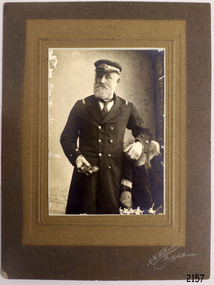 Flagstaff Hill Maritime Museum and Village
Photograph
... Victoria's West Coast in the late 19th and early 20th century. The wreck of the S.S. Casino is considered an important part of Victorian and Australian cultural heritage and as such has been declared and protected as an Historic Shipwreck under State and Commonwealth Law in the Commonwealth Historic Shipwrecks Act (1976). ...The S.S. Casino was a passenger and freight steamer built in Dundee, Scotland, in 1882 for the Newcastle and Hunter River Steam Navigation Company of N.S.W. She weighed 425 tons gross with a length of 160.4 feet, beam of 24.1 feet and depth of 10.2 feet. She had saloon accommodation for 35 people, forecabin for 25 more people, and she carried 300 tons of cargo. While on her delivery journey on May 30th 1882 the S.S. Casino called in at the Port of Warrnambool for coal ., narrowly escaping going ashore in gale force winds due to the quick action of the pilot. At that time, still at anchor, she impressed the directors of the Belfast and Koroit Steam Navigation Company so much that they bought her immediately; she was ideal for trade in along the West Coast of Victoria. (The Belfast and Koroit Steam Navigation Company was first managed by Messers. Saltau and Osburne and after the passing of Mr. Osburne, by produce merchants Messers H. Sautau and Sons, whose had a hay and corn store and shipping agency was on the corner of Liebig and Koroit Streets in Warrnambool. ) The S.S. Casino became “the most famous steamer to operate in Victorian waters along the West Coast” by author Jack Loney. Captain Boyd was her first Master, followed by Captain Chapman, who stayed with her 1890 until 1924. Captain W. Robertson followed for a short term, then Captain Middleton then took command 1925 - 1932. The S.S. Casino had several mishaps during her life. One was on 3rd January 1898 when she collided with the S.S. Flinders in Apollo Bay with minor damage. Another was on 24th October 1924 when she grounded on a reef at Point Hawdon near Grey River and most of her cargo (of Christmas goods) had to be dumped into the sea. Then in February 1929 she was ‘holed’ when she struck a submerged object as she entered Lady Bay, Warrnambool. On the morning of 10th July 1932, after attempting to berth at Apollo Bay jetty in heavy seas, Captain Middleton decided to take her out into the bay and wait until the seas abated. It was not realised that the anchor used to steady her as she manoeuvred to her berth had pierced her hull. She put about and headed for the beach but sank. Captain Middleton and nine others lost their lives; nine people were rescued including the two female passengers . Captain Middleton had been in charge of the S.S. Casino for seven years. He was the first ship’s Master to lose his life through shipwreck in the West Coast trade. In the years following the turn of the century the S.S. Casino remained the only regular trader with normal passenger accommodation along the West Coast. From 1882 she had made at least 2,500 voyages on the one run. Flagstaff Hill’s collection has a photograph of a portrait of Captain Chapman, , a ship model of the S.S. Casino that shows both forms of power under which she sailed, steam and sail. The ship is painted green and flies three flags. The inscription across the case of the ship model, incorrectly dated, tells the sad story of the wreck of the ship and the loss of lives on July 10th 1932 at Apollo Bay. A print in the Collection show S.S. Casino underway in the heavy sea off Point Lonsdale, another two photographs show her at the Port of Warrnambool, leaving from the Breakwater in Lady Bay and another identifies the S.S. Casino as a ship from the Belfast and Koroit Steam Navigation Company. (Belfast is the original name for the township of Port Fairy).This photograph of Captain Capman is significant because of its association with the coastal trader S.S. Casino and its significance to trade along Victoria's West Coast in the late 19th and early 20th century. The wreck of the S.S. Casino is considered an important part of Victorian and Australian cultural heritage and as such has been declared and protected as an Historic Shipwreck under State and Commonwealth Law in the Commonwealth Historic Shipwrecks Act (1976). Photograph of Captain Chapman of the "S.S.Casino", mounted on card board. flagstaff hill, warrnambool, shipwrecked coast, flagstaff hill maritime museum, maritime museum, shipwreck coast, flagstaff hill maritime village, great ocean road, newcastle and hunter river steam navigation company, belfast and koroit steam navigation company, h. sautau and sons, s.s. casino, west coast trader s.s. casino, victorian coastal trader, captain boyd, captain w. robertson, captain chapman, captain middleton, apollo bay shipwreck, s.s. casino at lady bay warrnambool, saltau and osburne -
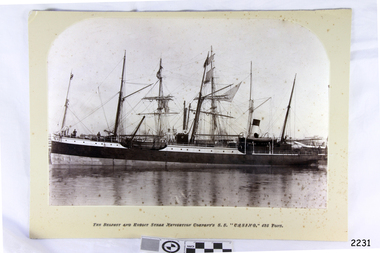 Flagstaff Hill Maritime Museum and Village
Photograph - Vessels, Sailing Ships, The Belfast and Koroit Steam Navigation Company's S.S. "Casino, 425 Ton, Late 19th to early 20th centuries
... Victoria's West Coast in the late 19th and early 20th century. It was taken 1882-1932 The wreck of the S.S. Casino is considered an important part of Victorian and Australian cultural heritage and as such has been declared and protected as an Historic Shipwreck under State and Commonwealth Law in the Commonwealth Historic Shipwrecks Act (1976). flagstaff hill warrnambool shipwrecked coast flagstaff hill maritime museum maritime museum shipwreck coast flagstaff hill maritime village great ocean road newcastle and hunter river steam navigation company belfast and koroit steam navigation company h. sautau and sons s.s. casino west coast trader s.s. casino victorian coastal trader captain boyd captain w. robertson captain chapman captain middleton apollo bay shipwreck s.s. casino at lady bay warrnambool saltau and osburne Under the photograph "The Belfast and Koroit Steam Navigation Company's S.S. ...This black and white photograph shows the image of the coastal trading vessel S.S. Casino, with both sail masts and steam funnel. Men in hats are clearly visible on deck. The ship is in calm water and only light rigging is on the masts. Other vessels are in the background. Photograph is taken 1882-1932. The S.S. Casino was a passenger and freight steamer built in Dundee, Scotland, in 1882 for the Newcastle and Hunter River Steam Navigation Company of N.S.W. She weighed 425 tons gross with a length of 160.4 feet, beam of 24.1 feet and depth of 10.2 feet. She had saloon accommodation for 35 people, forecabin for 25 more people, and she carried 300 tons of cargo. While on her delivery journey on May 30th 1882 the S.S. Casino called in at the Port of Warrnambool for coal ., narrowly escaping going ashore in gale force winds due to the quick action of the pilot. At that time, still at anchor, she impressed the directors of the Belfast and Koroit Steam Navigation Company so much that they bought her immediately; she was ideal for trade in along the West Coast of Victoria. (Belfast is the original name for Port Fairy, South West Victoria. The Belfast and Koroit Steam Navigation Company was first managed by Messers. Saltau and Osburne and after the passing of Mr. Osburne, by produce merchants Messers H. Sautau and Sons, whose had a hay and corn store and shipping agency was on the corner of Liebig and Koroit Streets in Warrnambool. ) The S.S. Casino became “the most famous steamer to operate in Victorian waters along the West Coast” by author Jack Loney. Captain Boyd was her first Master, followed by Captain Chapman, who stayed with her 1890 until 1924. Captain W. Robertson followed for a short term, then Captain Middleton then took command 1925 - 1932. The S.S. Casino had several mishaps during her life. One was on 3rd January 1898 when she collided with the S.S. Flinders in Apollo Bay with minor damage. Another was on 24th October 1924 when she grounded on a reef at Point Hawdon near Grey River and most of her cargo (of Christmas goods) had to be dumped into the sea. Then in February 1929 she was ‘holed’ when she struck a submerged object as she entered Lady Bay, Warrnambool. On the morning of 10th July 1932, after attempting to berth at Apollo Bay jetty in heavy seas, Captain Middleton decided to take her out into the bay and wait until the seas abated. It was not realised that the anchor used to steady her as she manoeuvred to her berth had pierced her hull. She put about and headed for the beach but sank. Captain Middleton and nine others lost their lives; nine people were rescued including the two female passengers . Captain Middleton had been in charge of the S.S. Casino for seven years. He was the first ship’s Master to lose his life through shipwreck in the West Coast trade. In the years following the turn of the century the S.S. Casino remained the only regular trader with normal passenger accommodation along the West Coast. From 1882 she had made at least 2,500 voyages on the one run. Flagstaff Hill’s collection has a photograph of a portrait of Captain Chapman, , a ship model of the S.S. Casino that shows both forms of power under which she sailed, steam and sail. The ship is painted green and flies three flags. The inscription across the case of the ship model, incorrectly dated, tells the sad story of the wreck of the ship and the loss of lives on July 10th 1932 at Apollo Bay. A print in the Collection show S.S. Casino underway in heavy sea off Point Lonsdale, another two photographs show her at the Port of Warrnambool, leaving from the Breakwater in Lady Bay and another identifies the S.S. Casino as a ship from the Belfast and Koroit Steam Navigation Company. (Belfast is the original name for the township of Port Fairy). This photograph is significant because of its association with the coastal trader S.S. Casino and its significance to trade along Victoria's West Coast in the late 19th and early 20th century. It was taken 1882-1932 The wreck of the S.S. Casino is considered an important part of Victorian and Australian cultural heritage and as such has been declared and protected as an Historic Shipwreck under State and Commonwealth Law in the Commonwealth Historic Shipwrecks Act (1976). Photograph, black and white, taken 1882-1932. Foreground is vessel SS Casino, the Belfast and Koroit Steam Navigation Company's coastal trading ship. The ship, in calm water, has light rigging on its masts and also a steam funnel. One lifeboat is visible. People are on the deck. The background shows other vessels.Under the photograph "The Belfast and Koroit Steam Navigation Company's S.S. "Casino," 425 Tons"flagstaff hill, warrnambool, shipwrecked coast, flagstaff hill maritime museum, maritime museum, shipwreck coast, flagstaff hill maritime village, great ocean road, newcastle and hunter river steam navigation company, belfast and koroit steam navigation company, h. sautau and sons, s.s. casino, west coast trader s.s. casino, victorian coastal trader, captain boyd, captain w. robertson, captain chapman, captain middleton, apollo bay shipwreck, s.s. casino at lady bay warrnambool, saltau and osburne -
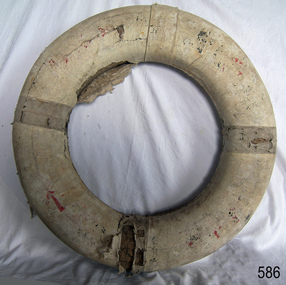 Flagstaff Hill Maritime Museum and Village
Equipment - Lifebuoy
... Laws were passed over time that has required aeroplanes and water going-vessels to carry life-preservers on board. The lifebuoy is an example of equipment carried on vessels in the late 19th and early 20th century to help preserve life. There were many lives lost in Australia’s colonial period, particularly along the coast of South West Victoria ...This lifebuoy is part of the lifesaving equipment that would be carried on vessels in the late 19th and early 20th century. The strips of cork wood have been joined together to make the ring shape. The broad arrow symbol indicates that it was once the property of the British or Australian defence force. A lifebuoy, or life-preserver, is used as a buoyancy device to keep a person afloat in the. It is usually connected by a rope to a person in a safe area such a nearby vessel or on shore. The lifebuoy is thrown to a person in distress in the water, allowing the rescuer to pull the person to safety. The lifebuoy is a made from a buoyant material such as cork or rubber and is usually covered with canvas for protection and to make it easy to grip. The first use of life saving devices in recent centuries was by the Nordic people, who used light weight wood or cork blocks to keep afloat. From the early 20th century Kapok fibre was used as a filling for buoys. Light weight balsa wood was used as a filler after WW1. In 1928 Peter Markus invented and patented the first inflatable life-preserver. By WW2 foam was combined with Kapok. Laws were passed over time that has required aeroplanes and water going-vessels to carry life-preservers on board. The lifebuoy is an example of equipment carried on vessels in the late 19th and early 20th century to help preserve life. There were many lives lost in Australia’s colonial period, particularly along the coast of South West Victoria. The lifebuoy was once the property of the British or Australian defence force.Lifebuoy, round cork object with canvas wrapped around it and rope attached to one side. Broad arrow mark and other red marks indecipherable. Painted white.Symbol of broad arrow. indecipherable markings.flagstaff hill, warrnambool, shipwrecked-coast, flagstaff-hill, flagstaff-hill-maritime-museum, maritime-museum, shipwreck-coast, flagstaff-hill-maritime-village, life rings, lifebuoy, safety ring, life-saving buoy, ring buoy, life preserver, personal floating device, floatation device, safety equipment, government lifebuoy, broad arrow -
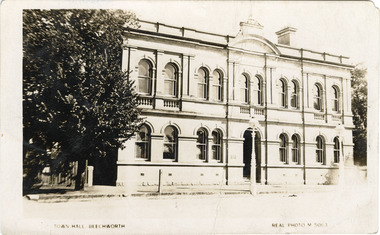 The Beechworth Burke Museum
Photograph - Postcard, Town Hall Beechworth, c1910
... It is of considerable historical significance as activity on the site dates from Australia’s gold rush period and was the administrative centre for north-eastern Victoria. The building has seen continual use from 1858 as an important public building and displays many aspects of the history of law enforcement in Victoria. ...Beechworth Town Hall was designed by architects J.J. Coe and Thomas Dalziel and is dated to 1859. The building was made of granite and constructed to local builders Donald and William Fiddes. The original front to the building was replaced by a two story facade in 1889 designed by George Jobbins and built by Thomas Sandham according to a plaque on the front. The Town Hall is remarkable for its vaulted ceilings and columns. Originally the building was used as the Shire Offices but also doubled as a fire station and a courthouse, with still surviving cells underneath. Among the inmates was notorious bushranger Harry Power who was originally transported to Van Dieman’s Land for stealing a pair of shoes. He gained his freedom six years later but spent time in and out of gaol for the rest of his life for a variety of offences including a number of armed robberies. The Town Hall is now home to the Visitor Information Centre which helps visitors with amongst other things, accommodation, tours, event enquiries, and is the commencement point for Precinct walking tours. The Beechworth Town Hall is one of five distinctive granite buildings on Ford Street that comprise the Justice Precinct. It is of considerable historical significance as activity on the site dates from Australia’s gold rush period and was the administrative centre for north-eastern Victoria. The building has seen continual use from 1858 as an important public building and displays many aspects of the history of law enforcement in Victoria. The building is also of substantial architectural significance for its construction from local honey coloured granite, which also showcases early stone masonry techniques and craftsmanship. The Precinct is listed on the Victorian Heritage register and is protected by Heritage Victoria under the Victorian Heritage Act 2017. The buildings are also registered by the National Estate, the National Trust and protected by Indigo Shire Council’s Planning Scheme. Black and White rectangular postcard printed on cardReverse: 1906-1910?beechworth, beechworth town hall, town hall, jj coe, thomas dalziel, granite, beechworth historic building, courthouse, cells, geoge jobbins, thomas sandham, 1859, 1889, walking tours, beechworth historic precinct, historic precinct, harry power, bushranger, australian bushrangers, van dieman's land, transportation, armed robberies
