
Showing 44 items matching "lead fitting"
-
 Flagstaff Hill Maritime Museum and Village
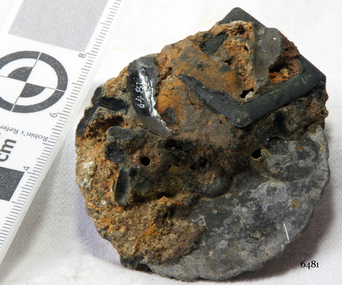
Lead fitting
... Lead fitting......Lead Fitting...Ornate Lead Fitting with shoe-buckle in attached concretion. ...Recovered from the wreck of the Schomberg. Lead fitting ...When the ship Schomberg was launched in 1855, she was considered the most perfect clipper ship ever to be built. James Blaine’s Black Ball Line had commissioned her to be built for their fleet of passenger liners. At a cost of £43,103, the Aberdeen builders designed her to sail faster than the quick clippers designed by North American Donald McKay. She was a three masted wooden clipper ship, built with diagonal planking of British oat with layers of Scottish larch. This luxury vessel was designed to transport emigrants to Melbourne in superior comfort. She had ventilation ducts to provide air to the lower decks and a dining saloon, smoking room, library and bathrooms for the first class passengers. At the launch of Schomberg’s maiden voyage, her master Captain ‘Bully’ Forbes, drunkenly predicted that he would make the journey between Liverpool and Melbourne in 60 days. Schomberg departed Liverpool on 6 October 1855 with 430 passengers and 3000 tons cargo including iron rails and equipment intended the build the Geelong Railway and a bridge over the Yarra from Melbourne to Hawthorn. The winds were poor as Schomberg sailed across the equator, slowing her journey considerably. She was 78 days out of Liverpool when she ran aground on a sand-spit near Peterborough, Victoria, on 27 December; the sand spit and the currents were not marked on Forbes’s map. Overnight, the crew launched a lifeboat to find a safe place to land the ship’s passengers. The scouting party returned to Schomberg and advised Forbes that it was best to wait until morning because the rough seas could easily overturn the small lifeboats. The ship’s Chief Officer spotted SS Queen at dawn and signalled the steamer. The master of the SS Queen approached the stranded vessel and all of Schomberg’s passengers were able to disembark safely. The Black Ball Line’s Melbourne agent sent a steamer to retrieve the passengers’ baggage from the Schomberg. Other steamers helped unload her cargo until the weather changed and prevented the salvage teams from accessing the ship. Local merchants Manifold & Bostock bought the wreck and cargo, but did not attempt to salvage the cargo still on board the ship. They eventually sold it on to a Melbourne businessman and two seafarers. After two of the men drowned when they tried to reach Schomberg, salvage efforts were abandoned. In 1975, divers from Flagstaff Hill, including Peter Ronald, found an ornate communion set at the wreck. The set comprised a jug, two chalices, a plate and a lid. The lid did not fit any of the other objects and in 1978 a piece of the lid broke off, revealing a glint of gold. As museum staff carefully examined the lid and removed marine growth, they found a diamond ring, which is currently on display in the Great Circle Gallery. Flagstaff Hill also holds ship fittings and equipment, personal effects, a lithograph, tickets and photograph from the Schomberg. Most of the artefacts were salvaged from the wreck by Peter Ronald, former director of Flagstaff Hill The Schomberg, which is on the Victorian Heritage Register (VHR S612), has great historical significance as a rare example of a large, fast clipper ship on the England to Australia run, carrying emigrants at the time of the Victorian gold rush. She represents the technical advances made to break sailing records between Europe and Australia. Flagstaff Hill’s collection of artefacts from the Schomberg is significant for its association with the shipwreck, The collection is primarily significant because of the relationship between the objects, as together they have a high potential to interpret the story of the Schomberg. It is archaeologically significant as the remains of an international passenger Ship. It is historically significant for representing aspects of Victoria’s shipping history and for its association with the shipwreck and the ship, which was designed to be fastest and most luxurious of its day Ornate Lead Fitting with shoe-buckle in attached concretion. Recovered from the wreck of the Schomberg.flagstaff hill, warrnambool, shipwrecked-coast, flagstaff-hill, flagstaff-hill-maritime-museum, maritime-museum, shipwreck-coast, flagstaff-hill-maritime-village, schomberg, shipwrecked-artefact, clipper ship, black ball line, 1855 shipwreck, aberdeen clipper ship, captain forbes, peterborough shipwreck, ss queen, ornate, lead fitting -
 Park Orchards Community House
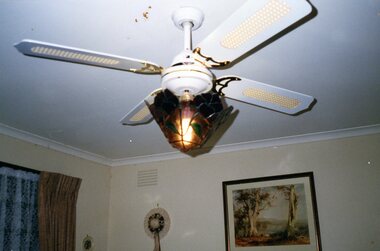
Photograph, Lead-light light fitting at Park Orchards Community Centre, Unknown date
... Lead-light light fitting at Park Orchards Community Centre...Lead-light light fitting at Park Orchards Community Centre Photograph ... -
 Parks Victoria - State Coal Mine - Wonthaggi
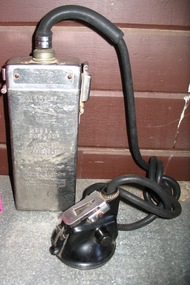
Lamp, Thomas A Edison
... Stainless steel battery case, black lead to lamp fitting. See (SCM 0938) for printed manual....fitting " EDISON SAFETY LAMP MFD. BY THOMAS A. EDISON. INC. WEST ORANGE. N.J. UNITED STATES OF AMERICA" On top of battery case "EDISON" The side of the top of the battery case has "365" stamped on it showing that it was not the original top. The battery case has "M78". Side of battery has the "Thomas A Edison" seal. Below that reads "MODEL J CAP LAMP Approved Under Lighting Schedule Approval issued to THOMAS A EDISON CAUTION The battery and headpiece housings shall not be unlocked or opened by the lamp user." Stainless steel battery case, black lead ...Used in S.C.M by an unknown minerStainless steel battery case, black lead to lamp fitting. See (SCM 0938) for printed manual.On front of lamp fitting " EDISON SAFETY LAMP MFD. BY THOMAS A. EDISON. INC. WEST ORANGE. N.J. UNITED STATES OF AMERICA" On top of battery case "EDISON" The side of the top of the battery case has "365" stamped on it showing that it was not the original top. The battery case has "M78". Side of battery has the "Thomas A Edison" seal. Below that reads "MODEL J CAP LAMP Approved Under Lighting Schedule Approval issued to THOMAS A EDISON CAUTION The battery and headpiece housings shall not be unlocked or opened by the lamp user." -
 Flagstaff Hill Maritime Museum and Village
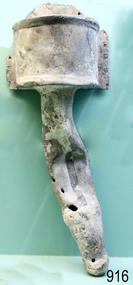
Functional object - Urinal, circa 1825
... lead ship’s plumbing...crew urinal...the ‘heads’...ship plumbing...james henty...portland bay...urinal...ship's urinal...ship’s fitting...Little is left on the seabed to mark the tragedy, apart from some of the house bricks intended for the Henty settlement. flagstaff hill warrnambool flagstaff-hill flagstaff-hill-maritime-museum shipwreck-coast shipwreck artefact the children lead ship’s plumbing crew urinal the ‘heads’ ship plumbing james henty portland bay urinal ship's urinal ship’s fitting ship’s lead plumbing ship’s toilet ship’s urinal Children Childer’s Cove Port Campbell 1839 shipwreck James Henty and Co Henty Brothers Captain H. ...The urinal was probably situated in the forward part of the ship rather than the stern, being one of two placed on either side of the deck and housed immediately adjacent to the doors into the forward castle, or crew sleeping quarters. The toilets on maritime vessels were (and still are) called the ‘heads’, after the sanitation arrangements common until the end of the eighteenth century. The name was given to the ‘head’ of the ship, forward of the forecastle and around the beak or bowsprit. These first lavatories were floored with grating or nets so the force of the sea could wash them clean, and they were always used on the lee or non-weather side so the effluent fell directly into the water rather than back on board. The Children's wrecking: The barque Children was one of the first vessels to be lost in the Western District. The vessel was wrecked to the east of Warrnambool on 14th January 1838. When it ran ashore in hurricane-force winds, 22 passengers and crew were fortunate to escape being battered to death on the rocks. The Children broke up within 20 minutes, sweeping sixteen of those on board to their deaths. After eleven days, the rescued survivors, all of whom were injured, had been taken to Portland. According to Lloyd's Shipping Register 1837-1839, the Children was built in 1825 at Liverpool and operated by owners Gordon & Co, of London. Registration number 123/1837, James Henty then bought her in 1837 as a three-masted barque of 254 tons, with a hull of “part pitch pine, felt sheathed” and “coppered in 1837” at Launceston, registered number 6/1837. In 1838, the Children, under her master Captain H. Browne, completed a successful round trip from Launceston to London (carrying wool and whale oil loaded in Portland), returning in late November of that year carrying a general cargo including house bricks used for ballast. On the 11th of January 1839, the Children sailed from Launceston for Adelaide, with 24 passengers, 14 crew, and an awkward mixed cargo, including 1500 sheep, 8 bullocks, 7 horses, farming implements, and six whaleboats with associated whaling gear. One account states that when the Children was “put out from port, she was light and badly ballasted”. The vessel immediately encountered four days of hurricane-force storms, eventually clearing on the early morning of the 14th. However, it was too late to take accurate measurements of the sun or stars to establish their position relative to the coast. The Children collided with a limestone stack at the entrance of what is now Childers Cove, and the seas smashed the vessel into pieces within half an hour. All the cargo and 16 lives were lost, including 9 children. The Henty brothers contributed £150 towards a fund for the 22 survivors at a memorial service held in Launceston later that year. It was a major financial setback for James Henty and his brothers, but one from which they recovered. In a submission to the Governor of New South Wales dated 24 March 1840, the Henrys summarised their work over the previous six years of establishing the Portland settlement, stating “Six stations have been occupied, one at Portland Bay three at the open country about 60 miles inland called ‘Merino Downs’ They have erected two houses at Portland Bay and two others at Merino Downs”.The urinal recovered from the Children's wreck is significant as part of the original fittings of the early 19th-century barque. The 1839 wreck and recovered artefacts are examples of the construction methods and materials used in that era and can be used to study the evolution of shipbuilding methods and principles. The wreck of the Children is of state significance as one of colonial Victoria’s earliest and most significant maritime disasters, and one of the first vessels lost in the Western District. This is recognised by its inclusion on the Victorian Heritage Register, VHR No. S116. Little is left on the seabed to mark the tragedy, apart from some of the house bricks intended for the Henty settlement. A lead urinal with a rounded back at the top splash plate with an attached semi-circular receptacle or basin (20cm deep and projecting forward 30cm). At the sides are flanges with bolt holes connecting to a ship's wall. The urinal is drained by a funnel-shaped outlet also made of lead, reducing from a 10cm radius to a joined 5 cm pipe. The urinal was recovered from the wreck of the CHILDREN.flagstaff hill, warrnambool, flagstaff-hill, flagstaff-hill-maritime-museum, shipwreck-coast, shipwreck artefact, the children, lead ship’s plumbing, crew urinal, the ‘heads’, ship plumbing, james henty, portland bay, urinal, ship's urinal, ship’s fitting, ship’s lead plumbing, ship’s toilet, ship’s urinal, children, childer’s cove, port campbell, 1839 shipwreck, james henty and co, henty brothers, captain h. browne, portland -
 Flagstaff Hill Maritime Museum and Village
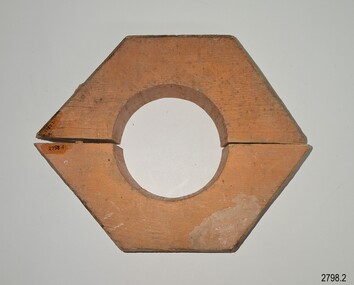
Equipment - Pattern, Briggs Brass Foundry, Early 20th century
... Flagstaff Hill Flagstaff Hill Maritime Museum and Village Warrnambool Maritime Museum Maritime Village Great Ocean Road Shipwreck Coast Briggs' Bronze trade sand cast cast brass alloy copper alloy pattern mould foundry brass foundry metal foundry casting sand mould sand casting marine equipment Marine Tools marine fittings copper tin zinc lead non-ferrous non-corrosive brassware metalware foundering metalwork maritime bell founders Ship chandlers marine products Briggs family Herbert Harrison Briggs H H Briggs George Edward Briggs Cyril Falkiner McKinnon Briggs Cyril Briggs Briggs & Son Brass Foundry H H Briggs & Sons Foundry Briggs Marine Alliance Casting & Engineering Solutions Grassmere Cheese Factory Cornish chimney curved bricks Collingwood Moorabbin Collingwood Foundry Moorabbin Foundry 1912 Briggs Briggs Brass Foundry Briggs Marine Foundry Briggs Marine Products Frank Lee Les Lee Eva Lee Briggs Marine Warrnambool non-ferrous founders bell specialists ship bell specialists founders traditional send casting Pattern; hexagonal wooden shape painted orange. ...The wooden pattern forms part of a larger collection, securely stored within a durable wooden crate. This pattern was an essential tool at Briggs’ Brass Foundry, specifically designed for creating sand casts. Sand casting is a time-honoured technique, with a history exceeding 2,000 years. The handcrafted nature of this process results in the production of brass and copper alloy items, which are particularly suitable for maritime applications. Typical products include bells, boat hooks, cowls, propellers, handles, lids, rowlocks, hooks, letters, bolts, rail holders, brackets, deck plates, flanges, rudder guides, portholes and covers. The distinctive bronze mixture used at Briggs’ Foundry is copper-based, composed of local ingots of copper, tin, zinc and lead, blended in precisely measured quantities. The resulting alloy is non-ferrous, known for its exceptional durability and longevity. In the early years of Flagstaff Hill, the Briggs family generously donated the crate of patterns along with other related items such as brassware, tools and machinery. These items were prominently displayed in a simulated Brass Foundry within the Village, alongside other working crafts, trades and services typical of a maritime town. From the completion of the building in 1986 until its repurposing in 1994, visitors could view these items and gain insight into the foundering and metalwork trades that supported maritime industries, including shipwrights and boatbuilders. The castings produced at the foundry were also vital for farmers, manufacturers and other local industries. The Brass Foundry display featured a historic Cornish chimney, constructed as a working model to illustrate the process of smelting metal in furnaces and pouring it into sand moulds. The chimney, crafted from specially curved bricks, currently stands at approximately two-thirds of its original height, having previously been located at the Grassmere Cheese factory. The craft of sand-casting, which utilises intricately carved wooden patterns to create metal objects, stands as a testament to the enduring value of traditional skills. This age-old technique remains relevant today, linking past craftsmanship to ongoing industrial practices. The foundry pattern set holds particular significance due to its strong associations with brass foundries, both locally and in coastal regions across Victoria. In these areas, marine industries such as ship and boat building have long depended on high-quality metal castings for the machinery, equipment, and fittings essential to their operations. The alloys formulated by Briggs Brass Foundry, crafted from non-ferrous metals, were specifically designed to provide superior longevity and durability in maritime environments. These patterns are closely tied to the history of the Briggs Brass Foundry, a respected and long-running company that specialised in producing cast goods for the marine sector. The foundry was equipped to supply both unique, one-off items and mass-produced components, ensuring that its products found their way onto a variety of sail and steam vessels along the Victorian coast, including in Warrnambool. In addition to its broader marine applications, Briggs Brass Foundry established itself as a bell-founder specialist. The company’s expertise is notably linked to the historic Schomberg Bell at Flagstaff Hill, which they restored to its original splendour as a fine example of a bell from a luxury migrant ship of the mid-19th century. The significance of the pattern set is further heightened by its association with Briggs Brass Founders, a firm established in the early 20th century and widely recognised for its proficiency in producing, repairing, and restoring ship bells and other marine equipment. Renowned for their non-ferrous metal casting, Briggs Brass Founders consistently supplied high-quality fittings and equipment vital to maritime pursuits. Moreover, the company expanded its influence by opening a branch in Warrnambool. Through this local presence, Briggs Brass Founders supported the regional marine industry and forged strong connections with fishermen and businesses. This not only reinforced their reputation as skilled manufacturers but also highlighted their commitment to community engagement and support. Pattern; hexagonal wooden shape painted orange. The thick carved wooden shape is in halves forming a hole when locked together with the dowel pegs and opposing drilled holes. The pattern is part of a set of foundry patterns from Briggs Brass Foundry.flagstaff hill, flagstaff hill maritime museum and village, warrnambool, maritime museum, maritime village, great ocean road, shipwreck coast, briggs' bronze, trade, sand cast, cast, brass alloy, copper alloy, pattern, mould, foundry, brass foundry, metal foundry, casting, sand mould, sand casting, marine equipment, marine tools, marine fittings, copper tin zinc lead, non-ferrous, non-corrosive, brassware, metalware, foundering, metalwork, maritime, bell founders, ship chandlers, marine products, briggs family, herbert harrison briggs, h h briggs, george edward briggs, cyril falkiner mckinnon briggs, cyril briggs, briggs & son brass foundry, h h briggs & sons foundry, briggs marine, alliance casting & engineering solutions, grassmere cheese factory, cornish chimney, curved bricks, collingwood, moorabbin, collingwood foundry, moorabbin foundry, 1912, briggs, briggs brass foundry, briggs marine foundry, briggs marine products, frank lee, les lee, eva lee, briggs marine warrnambool, non-ferrous founders, bell specialists, ship bell specialists, founders, traditional send casting -
 Flagstaff Hill Maritime Museum and Village
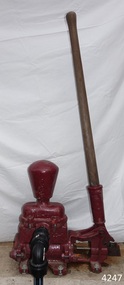
Equipment - Pump, circa 1930's - 1940's
... McPHERSON’S FOUNDER and COMPANY TIMELINE 1860 – Thomas McPherson, a Scottish immigrant (c. 1853 ), founded McPherson’s in Melbourne, supplying pig iron (lead ingots imported as ballast in ships) to local manufacturers. 1882 – Thomas McPherson established a warehouse in Collins St Melbourne and included tools, steam fittings and machinery in his wares. ...McPHERSON’S FOUNDER and COMPANY TIMELINE 1860 – Thomas McPherson, a Scottish immigrant (c. 1853 ), founded McPherson’s in Melbourne, supplying pig iron (lead ingots imported as ballast in ships) to local manufacturers. 1882 – Thomas McPherson established a warehouse in Collins St Melbourne and included tools, steam fittings and machinery in his wares. ...This pump is an Ajax Type L2 Series A model, made and sold by McPherson’s Pty Ltd of Melbourne circa 1930’s to 1940’s, is a mechanical, hand operated, constant flow pressure pump. It would have been used to pump fluids from one area to another, for example from a dam to a tank or used as a bilge pump on a small vessel, mounted on the vessel’s bulkhead, floor or deck. This type of hand pump is sometimes called a ‘Reciprocating Suction Pump’. It has a mechanical pumping action of the lever moves the piston inside the pump up and down. The water is lifted from below the pump through the inlet pipe and into the pump’s cylinder. This action causes the lower valve to close and the piston’s valve opens and the pressure within the pump forces the water out of the pump through the exit pipe. The limitation of this type of pump is that it can only raise the water a maximum of about 7 metres from beneath the ground and yields 24-26 Litres per minute. This type of pump could be used for many purposes such as pumping water or fuel. McPherson’s 1940’s advertisement proclaims “For all jobs on the land – irrigation, spraying, tank, plumbing, fire-fighting – there’s a suitable “Ajax” pump. Send us the details of you pumping problem. Our Expert’s advice will help you choose the right pump – the one that will give you most years of PROFITABLE PUMPING.” (The Australasian (Melbourne) Sat. 26th October 1940.) McPherson’s Pty Ltd, the manufacturer, advertised a similar pump to this one in The Australasian (Melbourne) in 1936, calling it the Ajax Double Acting Hand Pump. In 1942 another advertisement advised that a representative for a fire-fighting equipment supplier was visiting the western district of Victoria. The company could now supply double-action two-spray Ajax pumps at lower prices than similar pumps the district had recently purchased from Adelaide. McPHERSON’S FOUNDER and COMPANY TIMELINE 1860 – Thomas McPherson, a Scottish immigrant (c. 1853 ), founded McPherson’s in Melbourne, supplying pig iron (lead ingots imported as ballast in ships) to local manufacturers. 1882 – Thomas McPherson established a warehouse in Collins St Melbourne and included tools, steam fittings and machinery in his wares. The business expanded to include steam saw mills and became known as Thomas McPherson and Sons (William Murray and Edward). 1888 – Thomas passed away and his sons inherited the business. In 1896 William Murray became the sole proprietor after his brother Edward’s death. 1900 – The firm expanded, establishing Acme Bolt Company to manufacture nuts and bolts. 1912 – McPhersons Pty Ltd established a machinery warehouse and showroom in 554-556 Collins St Melbourne. McPherson’s went on to establish branches in Sydney (1911), Adelaide (1921) and Perth (1930) 1917 - McPherson’s supplied ‘dog spikes’ for the transcontinental railway, running from Eastern to Western Australia. 1918 – A tool works set up in Kensington, Melbourne, manufacturing Macson lathes and made machine tools that previously had to be imported. 1924 – The Bolt Works was transferred to a new building in Melbourne. McPhersons began making pumps. 1929 – McPherson retired. His son (Sir) William Edward McPherson (known as ‘WE’), was born in Hawthorne, Melbourne, in 1898. After his education he began work in his father’s Melbourne hardware and machinery business He took over as governing director when his father retired. 1929-1932 – McPherson’s supplied thousands of tons of rivets from its Richmond (Melbourne) Bolt Works for the construction of the Sydney Harbour Bridge. 1936 – McPherson’s Pty Ltd is advertising Ajax Pumps in newspapers 1934 – McPhersons purchased the property adjoining the warehouse in Collins Street, and during 1935-1936 built a new office and showrooms on the site of 546-445 Collins St. 1939 - McPherson’s acquired the Tool Equipment Co. Pty. Ltd and Associated Machine Tools Australia Pty Ltd was formed to separate McPherson’s machine-tool manufacturing and merchandising interests. 1939 – Ajax Pump Works, a foundry and pump manufacturing plant, was established in Tottenham, Melbourne, and the Ajax Bolt and Rivet Co Pty Ltd began manufacturing in New Zealand. 1944 - McPherson’s became a public company, McPherson’s Ltd. 1948 - The Ajax Pump Foundry opened at Kyneton, Victoria and in the post war years it grew to became a large manufacturer. 1980’s – Ajax Pumps brochure lists the address as 6 Buckhurst St, South Melbourne, Vic 3205 with the Telephone number 03 669 3588 1988 - Ajax Pumps acquired the Forrers Company, which was established in 1921. Manufacturing in Ipswich, Queensland, specialising in submersible sewage pumps. 1991 – KSB Ajax was formed, bringing together the companies KSB and Ajax Pumps 1993 – Manufacturing was moved to state-of-the-art premises in Tottenham, Victoria 2001 - The Forrers facility was moved to Tottenham. 2007 - Company name KSB Ajax Pumps was changed to KSB Australia Pty Ltd. 2009 - KSB Australia opened a branch in Townsville, Queensland. 2011 - KSB Australia moved to its dedicated Water and Waste Water Competence Centre in Bundamba, Queensland. DISPLAY OF THIS AJAX PUMP This pump was installed at Flagstaff Hill Maritime Village as part of a working display in the village by the Friends of Flagstaff Hill, in acknowledgement of the dedicated involvement of one of its long serving members, Bob Crossman. The display was officially opened 31st March 2018 and incorporates a restored Furphy Tank and Water Pipe Stand. The pump is used to draw water from the lake, through the water stand pipe and into the reconditioned Furphy Tank. This Ajax pump made by McPherson’s Pty Ltd is significant for its association with McPherson’s, a prominent manufacturer of hardware in Victoria. McPherson’s is famous for supplying ‘dog-spikes’ for the transcontinental railway (eastern to western Australia, 1917) and rivets for the Sydney Harbour Bridge (1929-1932). The Ajax pump is also of significance because of its association with McPherson’s Governing Director (Sir) William McPherson, former premier and treasurer in Victoria 1928-1929. The former McPherson’s Pty Ltd building in Collins Street Melbourne is now on the Victorian Heritage Register VHR H0942 This pump is representative of mechanical pumps popular in the early to mid-1900’s and still used today. Hand operated pressure pump, double acting. Cast metal case, painted red, with steel hose attachments and long metal lever. Pump is bolted to wooden plank. Model of pump is AJAX, Type L2, Series A pump. Embossed on lower section of pump "L2 - 10", "L2 - -1", "AJAX" “(?) –2-1” Embossed on lower handle “3-7” “L – 4” Embossed on attached plate “FOR SPARE PARTS / TYPE L2 / SERIES A / PUMP ASSEMBLED BY T R” Manufactured by McPherson’s Pty Ltd of Melbourne circa 1930’s - 1940’s.flagstaff hill, warrnambool, flagstaff hill maritime museum, shipwreck coast, flagstaff hill maritime village, great ocean road, ajax pump works tottenham melbourne, ajax pump factory kyneton, william edward mcpherson, thomas mcpherson of melbourne, mcpherson’s pty ltd melbourne, acme bolt company, tool equipment co. pty. ltd, associated machine tools australia pty ltd, ajax bolt and rivet co. pty ltd new zealand, forrers company ipswich queensland, ksb ajax pumps, ksb australia pty ltd, macson lathes, tool manufacturer early to mid- 20th century, ajax double acting hand pump, ajax type l2 series a pump, qisjax pumps, water pump 1940’s, fuel pump 1940’s, hand operated constant flow pressure pump, reciprocating suction pump, agricultural hand pump, plumber’s hand pump, portable hand pump -
 Flagstaff Hill Maritime Museum and Village
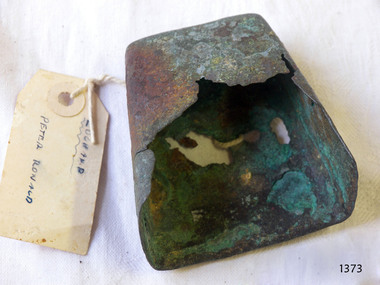
Functional object - Cow Bell, Circa 1878
... Flagstaff Hill divers in the 1970s reported finds of “Bottles of champagne, window panes, rolls of zinc, barrels of cement, iron rails, clocks, lead shot, corrugated iron, lead, marble, salad oil bottles, ink bottles, copper wire, gin bottles, rolls of carpet, floor tiles, copper rivets, gas light fittings, pocket knives, toys, crystal chandeliers, beer mugs, cutlery, candles sticks, wick scissors, cow bells, and sauce bottles.” ...Flagstaff Hill divers in the 1970s reported finds of “Bottles of champagne, window panes, rolls of zinc, barrels of cement, iron rails, clocks, lead shot, corrugated iron, lead, marble, salad oil bottles, ink bottles, copper wire, gin bottles, rolls of carpet, floor tiles, copper rivets, gas light fittings, pocket knives, toys, crystal chandeliers, beer mugs, cutlery, candles sticks, wick scissors, cow bells, and sauce bottles.” ...The artefact is a damaged brass cow bell recovered from the 1878 shipwreck of the LOCH ARD near Port Campbell. It was raised by Flagstaff Hill divers in 1973 and is in storage at the Maritime Village. The LOCH ARD was constructed on the Clyde in 1873 for the prestigious Loch Line of colonial clipper ships, designed for the Australian run. She sailed from England on 1 March 1878 carrying 37 crew, 17 passengers and a diverse general cargo ranging from luxury items to bulk railway iron. On 1 June 1878, emerging from fog and hearing too late the sound of breakers against the tall limestone cliffs, the vessel struck the southern foot of Mutton Bird Island and sank in 23 metres of water. Of the fifty-four people on board only two survived, one young male crewman and one young female passenger. A century later, despite the pounding seas and the efforts of looters, the wreck site continued to provide ample evidence of the extraordinary range of goods being imported into the Colony of Victoria in the post-Gold Rush era. Flagstaff Hill divers in the 1970s reported finds of “Bottles of champagne, window panes, rolls of zinc, barrels of cement, iron rails, clocks, lead shot, corrugated iron, lead, marble, salad oil bottles, ink bottles, copper wire, gin bottles, rolls of carpet, floor tiles, copper rivets, gas light fittings, pocket knives, toys, crystal chandeliers, beer mugs, cutlery, candles sticks, wick scissors, cow bells, and sauce bottles.” From this array of objects on the ocean floor emerged the humble brass cow bell. Cow bells were common to colonial agriculture and transport, used wherever animals were turned out to graze overnight and had to be rounded up again next morning. Bells were fastened around the necks of household milking cows, domestic goats, bullock teams, horse teams, and camel teams, to help find them in the pre-dawn light. Station shepherds and cattle drovers also used them to warn of any disturbances to their flocks and herds overnight. The bells were a necessary item in a largely unfenced continent. So important, that Anthony Mongon began making his pot-bells at Yackandandah from 1861, August Menneke produced the “Wagga Pot” from 1867, and Samuel Jones started manufacturing his distinctively shaped “Condamine Bell” in 1868. However, these deeply resonant Australian bells were made from iron — Mongon and Jones were blacksmiths who simply beat old pitsaw blades into shape. Few genuinely brass cow bells were made here, the vast majority being imported from Britain where the industry of brass founding was already well established. (Some bells were also imported from the United States, but these too were nearly all of iron).This bell is historically significant as typical of a cow bell used by farmers and herdsmen in Colonial Victoria. Its significance is increased by being one of a collection of artefact recovered by the Flagstaff Hill Divers from the wreck of the Loch Ard in the early 1970s. Items that come from several wrecks along Victoria's coast have also been recovered for Flagstaff Hill Maritime Village’s museum collection under Government permit, illustrating this item’s level of historical value. The cow bell is also significant for being part of Flagstaff Hill’s collection of artefacts from LOCH ARD, which is significant for being one of the largest collections of artefacts from this shipwreck in Victoria. It is significant for its association with the shipwreck, which is on the Victorian Heritage Register (VHR S417). The collection is significant because of the relationship between the objects, as together they have a high potential to interpret the story of the LOCH ARD. The LOCH ARD collection is archaeologically significant as the remains of a large international passenger and cargo ship. The LOCH ARD collection is historically significant for representing aspects of Victoria’s shipping history and its potential to interpret sub-theme 1.5 of Victoria’s Framework of Historical Themes (living with natural processes). The collection is also historically significant for its association with the LOCH ARD, which was one of the worst and best known shipwrecks in Victoria’s history.A small brass cow bell, in poor condition. It is blunt-wedge shaped. The sides expand outwards from the smaller rectangular roof of the bell to a larger open rectangle or bell mouth. A handwritten label is attached to the bel. Recovered from the wreck of the Loch Ard.Label text "["10/6/73, Brass Cow Bell, LOCH ARD, Found in the sandy hole in the centre of the wreck site. Cow bells were part of the cargo" - "10/6/73, LOCH ARD, small brass cow bell salvaged by FHMV divers"]. "LOCH ARD / PETER RONALD"flagstaff hill, warrnambool, shipwrecked coast, flagstaff hill maritime museum, maritime museum, shipwreck coast, flagstaff hill maritime village, great ocean road, loch line, loch ard, eva carmichael, mutton bird island, loch ard gorge, brass cow bell, colonial cow bells, 1878 shipwreck, shipwreck artefact, flagstaff hill divers -
 Flagstaff Hill Maritime Museum and Village
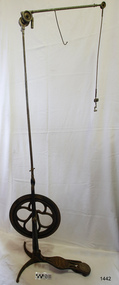
Equipment - Dentist Drill, Late 19th century
... lead to the invention of new burs and drills for the handpieces, improving speed and the surgical process of dentistry. They were the fore-runner of today’s electrically powered dental engines. flagstaff hill warrnambool shipwrecked coast flagstaff hill maritime museum maritime museum shipwreck coast flagstaff hill maritime village great ocean road dentist teeth dental drill dental engine treadle drill foot powered drill treadle engine orthodontics dental surgery james morrison the brentfield richter de trey german dental fitting london dental drill "The ____/ Brentfield / __ DE IN L___" (Made in London) painted on the long foot of the base. ...The design of this and other similar treadle powered dental engine (or dentist drill) was in common use by dentists from the 1870’s into the 1920's. When electricity became accessible to most communities the electrically powered dental engines began to take over from the treadle power. Over the ages teeth were extracted using picks and scissors and other gouging instruments. Bow drills, hand drills and even a "bur thimble" drill were later used to prepare cavities for filling. Some drills were made bendable by attaching flexible shanks between the metal bur and the handle, giving access to the teeth at the back of the mouth. Other mechanical devices were introduced along the way, such as clockwork drills, but they were hard to handle and inefficient. Over the centuries “dentistry has been performed by priests, monks and other healers. This was followed by barbers; the barber’s chair may well have been the precursor to the dental chair. “(SA Medical Heritage Society Inc.) In 1871 James Morrison patented the first commercially manufactured 'foot treadle dental engine', the first practica dental engine although others had been introduced as early as 1790 (by John Greenwood). Handmade steel burs or drills were introduced for dental handpieces, taking advantage of the significant increase in the speed of the drill. In 1891 the first machine-made steel burs were in use. The treadle drill reduced the time to prepare a cavity from hours to less than ten minutes. In 1876 the Samuel S. White Catalogue of Dentist Instruments listed a 12 ½ inch wheel diameter dental engine, with 14 bright steel parts, for sale at US $55 In today’s market, this is the equivalent to US $1200 approx. The specifications of that dental engine are very similar to the this one in our Flagstaff Hill Maritime Village’s collection. It is interesting to note that workings of a similar treadle dentist drill were used and modified to power a treadle spinning wheel of one of the volunteer spinners at Flagstaff Hill Maritime Village. The foot treadle dental engine was a milestone in dental history. “Historic importance of treadle powered machines; they made use of human power in an optimal way” (Lowtech Magazine “Short history of early pedal powered machines”) The invention of a machine to speed up the process of excavation of a tooth lead to the invention of new burs and drills for the handpieces, improving speed and the surgical process of dentistry. They were the fore-runner of today’s electrically powered dental engines. This treadle-powered dentist drill, or dentist engine, is made of iron and steel and provides power for a mechanical dental handpiece that would be fitted with a dental tool. On the foot is painted lettering naming it "The Brentfield" and there is a fine line of light coloured paint creating a border around the name. The paint under the lettering is peeling off. The drill has a Y-shaped, three footed cast iron base, one foot being longer than the other two. A vertical frame is joined into the centre of the base, holding an axle that has a driving-wheel (or flywheel) and connecting to a crank. A slender, shoulder height post, made from adjustable telescoping pipes, joins into the top of this frame. On the post just above the frame is a short metal, horizontal bar (to hold the hand-piece when it is not in use). A narrow tubular arm is attached to the top of the stand at a right angle and can move up, down and around. There is a pulley each side of the joint of the arm and a short way along the arm is fitted a short metal pipe. A little further along the arm a frayed-ended cord hangs down from a hole. At the end of the arm is another pulley and a joint from which hangs a long, thin metal pipe with two pulleys and a fitting on the end. A treadle, or foot pedal, is joined to the long foot of the base, and joined at the toe to the crank that turns the driving-wheel. The metal driving-wheel has a wide rim. Touching the inside of the rim are four tubular rings that bulge towards the outside of the driving-wheel, away from the pole, and all meet at the hub of the axle. The axle fits between the inside of the driving-wheel and the frame then passes through the frame and is attached on the other side. The driving-wheel has a groove around which a belt would sit. The belt would also fit around a pulley on the arm, at the top of the post. The pulley is joined to a rod inside the arm and this spins the drill's hand-piece and dental tool holder. The foot pedal has a cross-hatch pattern on the heel and the ball of the foot has tread lines across it. The end of the toe and the instep areas have cut-out pattern in them. "The ____/ Brentfield / __ DE IN L___" (Made in London) painted on the long foot of the base. Marked on the drill connection is “Richter De Trey, Germany”flagstaff hill, warrnambool, shipwrecked coast, flagstaff hill maritime museum, maritime museum, shipwreck coast, flagstaff hill maritime village, great ocean road, dentist, teeth, dental drill, dental engine, treadle drill, foot powered drill, treadle engine, orthodontics, dental surgery, james morrison, the brentfield, richter de trey, german dental fitting, london dental drill -
 Flagstaff Hill Maritime Museum and Village
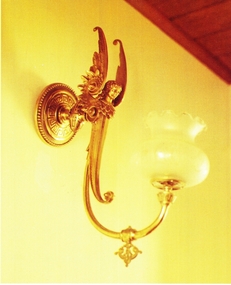
Functional object - Lamp, circa 1878
... Flagstaff Hill divers in the 1970s reported finds of “Bottles of champagne, window panes, rolls of zinc, barrels of cement, iron rails, clocks, lead shot, corrugated iron, lead, marble, salad oil bottles, ink bottles, copper wire, gin bottles, rolls of carpet, floor tiles, copper rivets, gas light fittings, pocket knives, toys, crystal chandeliers, beer mugs, cutlery, candles sticks, wick scissors, cow bells, and sauce bottles.” ...Flagstaff Hill divers in the 1970s reported finds of “Bottles of champagne, window panes, rolls of zinc, barrels of cement, iron rails, clocks, lead shot, corrugated iron, lead, marble, salad oil bottles, ink bottles, copper wire, gin bottles, rolls of carpet, floor tiles, copper rivets, gas light fittings, pocket knives, toys, crystal chandeliers, beer mugs, cutlery, candles sticks, wick scissors, cow bells, and sauce bottles.” ...This Flying Angel lamp bracket was recovered from the wreck site of the steam sailing ship, "Loch Ard", which sank near Port Campbell, Victoria in 1878. It formed part of the ship's cargo. The 'flying angel' lamp was, for a time, displayed in the St Nicholas Seamen's Church at Flagstaff Hill. The design was very appropriate to the Missions to Seamen, being associated with the emblem of the 'flying angel' on the Missions' to Seamen's flag. Brief history of the Loch Ard: The vessel Loch Ard was constructed on the Clyde River in Scotland in 1873 for the prestigious Loch Line of colonial clipper ships, designed for the Australian run. She sailed from England on 1 March 1878 carrying 37 crew, 17 passengers and a diverse general cargo ranging from luxury items to bulk railway iron. On 1 June 1878, emerging from fog and hearing too late the sound of breakers against the tall limestone cliffs, the vessel struck the southern foot of Mutton Bird Island and sank in 23 metres of water. Of the fifty-four people on board only two survived, one young male crewman, Tom Pearce, and one young female passenger, Eva Carmichael. A century later, despite the pounding seas and the efforts of looters, the wreck site continued to provide ample evidence of the extraordinary range of goods being imported into the Colony of Victoria in the post-Gold Rush era. Flagstaff Hill divers in the 1970s reported finds of “Bottles of champagne, window panes, rolls of zinc, barrels of cement, iron rails, clocks, lead shot, corrugated iron, lead, marble, salad oil bottles, ink bottles, copper wire, gin bottles, rolls of carpet, floor tiles, copper rivets, gas light fittings, pocket knives, toys, crystal chandeliers, beer mugs, cutlery, candles sticks, wick scissors, cow bells, and sauce bottles.” The lamp bracket is significant for its connection with the wreck of the sailing ship, Loch Ard, in 1878. Flagstaff Hill’s collection of artefacts from LOCH ARD is significant for being one of the largest collections of artefacts from this shipwreck in Victoria. It is significant for its association with the shipwreck, which is on the Victorian Heritage Register (VHR S417). The collection is significant because of the relationship between the objects, as together they have a high potential to interpret the story of the LOCH ARD. The LOCH ARD collection is archaeologically significant as the remains of a large international passenger and cargo ship. The LOCH ARD collection is historically significant for representing aspects of Victoria’s shipping history and its potential to interpret sub-theme 1.5 of Victoria’s Framework of Historical Themes (living with natural processes). The collection is also historically significant for its association with the LOCH ARD, which was one of the worst and best known shipwrecks in Victoria’s history. Gas lamp, brass, single burner, wall-mounting bracket, delicately crafted. Ornate decoration features bust of an angel with up-swept wings, or 'flying angel'. Recovered from the wreck of the Loch Ard.Noneflagstaff hill, warrnambool, shipwrecked coast, flagstaff hill maritime museum, maritime museum, shipwreck coast, flagstaff hill maritime village, great ocean road, loch line, loch ard, captain gibbs, eva carmichael, tom pearce, glenample station, mutton bird island, loch ard gorge, lamp fitting, shipwreck artifact, 1878, shipwreck cargo, household effects, 19th century lighting, angel lamp, loch ard lamp, angelic lamp, lighting at sea, marine technology, ship's lighting, flying angel, gas lamp, maritime archaeology, port campbell -
 Federation University Historical Collection
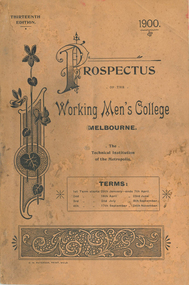
Book - Book - Prospectus, The Working Men's College Melbourne, Prospectus,1900, 1900
... fitting coachbuilding and carriagedrafting Tan soft covered book of 112 pages. The thirteenth edition of the Working Men's College (later Royal Melbourne Institute of Technology [RMIT]). It inlcudes the following photographic images: Main Building, Assaying, 1899 council (W.C. Kernot, W.H. Embling, Thomas smith, F.H. Bromley, John Reid, R.H. Solly, E. Findley, D. McIvor, James Robb, John Hancock, C.E. Oliver, A.J. Arnot, James Smith, Joseph Nixon, R.L.Jellery. C.S. Paterson), UNveiling the Ormond Statue, Victorian Lead ...The Working Men’s College was founded in 1881 by a prominent grazier and philanthropist, The Hon. Francis Ormond, who donated £5000 towards the establishment of the college. The Council of the Melbourne Trades Hall then matched Ormond's initial donation by rallying its members. On 4 June 1887, the college opened in its purpose-built building on the corners of Bowen Street and La Trobe Street in Melbourne, with a gala ceremony. It became the third official provider of higher education in the new Colony of Victoria (the Melbourne Athenaeum was founded in 1839 and the University of Melbourne in 1853). The college was the predecessor to the current-day Royal Melbourne Institute of Technology (RMIT University). Adjoining the college in the 1890s were the Supreme Court of Victoria (later the Melbourne Magistrates' Court) and the Melbourne Gaol - both which are now part of RMIT today. A list of Scholarship Governors and Life Governors is included. The former have donated 250 Pounds Sterling and upwards, the later have donated 20 Pounds and over but less than 250 Pounds Sterling. The Patron of The Working Men's College was His Excellency The Right Honourable Lord Brassey. The President of the Council was Professor W C Kernot. The majority of classes were at night and on Saturdays. Tan soft covered book of 112 pages. The thirteenth edition of the Working Men's College (later Royal Melbourne Institute of Technology [RMIT]). It inlcudes the following photographic images: Main Building, Assaying, 1899 council (W.C. Kernot, W.H. Embling, Thomas smith, F.H. Bromley, John Reid, R.H. Solly, E. Findley, D. McIvor, James Robb, John Hancock, C.E. Oliver, A.J. Arnot, James Smith, Joseph Nixon, R.L.Jellery. C.S. Paterson), UNveiling the Ormond Statue, Victorian Lead and Shot Works, Francis Ormond, Telegraphy room, Lecture Theatre, photography, painting class, wool sorting, plumbing, Remington typewriter, W. Ison, H.D. Evans, library, Verdon prize, Denton Hat Mills. working men's college melbourne, rmit, w.c. kernot, w.h. embling, ormond statue, f. ormond, electricity, surveying, architecture, photography, assaying, dressmaking, veterinary science, plumbing, letterpress printing, w. ison, h.d. evans, library, denton hat mills, literary and commercial department, typewriting department, languages, telegraphy, department of music, department of mathematics, department of engineering, 'department of architecture, department of art and applied art, department of mining and metallurgy, department of chemistry, department of household economy, department of agriculture and rural industries, woodworking, carpentry and joinery, turning and fitting, coachbuilding and carriagedrafting -
 Flagstaff Hill Maritime Museum and Village
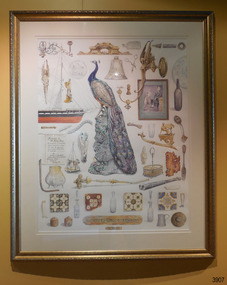
Artwork, other - Framed poster, Tim Walker, Loch Ard Shipwreck, circa 2010
... Flagstaff Hill divers in the 1970s reported finds of “Bottles of champagne, window panes, rolls of zinc, barrels of cement, iron rails, clocks, lead shot, corrugated iron, lead, marble, salad oil bottles, ink bottles, copper wire, gin bottles, rolls of carpet, floor tiles, copper rivets, gas light fittings, pocket knives, toys, crystal chandeliers, beer mugs, cutlery, candles sticks, wick scissors, cow bells, and sauce bottles.” ...Flagstaff Hill divers in the 1970s reported finds of “Bottles of champagne, window panes, rolls of zinc, barrels of cement, iron rails, clocks, lead shot, corrugated iron, lead, marble, salad oil bottles, ink bottles, copper wire, gin bottles, rolls of carpet, floor tiles, copper rivets, gas light fittings, pocket knives, toys, crystal chandeliers, beer mugs, cutlery, candles sticks, wick scissors, cow bells, and sauce bottles.” ...Tim Walker’s work is an eye-catching array of shipwreck artefacts and associated items. They help tell the story of the 19th century ships that travelled across the world full of people and cargo that are now part of our history. The work was commissioned especially for Flagstaff Hill and highlights the famous story of the 1878 ‘Loch Ard’ shipwreck. The images also include two small items from the 1981 ‘Fiji’ shipwreck. Local professional artist Timothy “Tim” Walker was born in Britain in 1970. He was self-taught had the desire to use his talents for full-time work. He specialised in painting local scenes, landscape and people of Warrnambool and district after he moved there in 1990. As he worked at the location of his subjects, people often told him interesting and amusing stories. He soon became involved in the Warrnambool and District Artists’ Society, where he has served for a period as President. In 2010 Warrnambool Art Gallery hosted an exhibition “Nine Lives” with works from nine local artists including Tim Walker. The ‘LOCH ARD’ 1873-1878 - brief history The clipper ship ‘Loch Ard’ was a built in Scotland in 1873. In 1978 the ship was sailing to Melbourne with 54 people on board as well as a mixed cargo of items, some of which were bound for the 1880 International Exhibition in Melbourne. On June 1st 1878 it was very close to its destination when it crashed into Mutton Bird Island, east of Port Campbell. Only two people survived. The wreck was re-discovered in 1967, almost a century later, and the site continues to provide evidence of the range of goods imported into the Colony of Victoria in the post-Gold Rush era. Flagstaff Hill divers in the 1970s reported finds of “Bottles of champagne, window panes, rolls of zinc, barrels of cement, iron rails, clocks, lead shot, corrugated iron, lead, marble, salad oil bottles, ink bottles, copper wire, gin bottles, rolls of carpet, floor tiles, copper rivets, gas light fittings, pocket knives, toys, crystal chandeliers, beer mugs, cutlery, candles sticks, wick scissors, cow bells, and sauce bottles.” The famous Loch Ard Peacock was also on board. The ‘FIJI’ 1875-1891 – brief history The barque ‘Fiji’ was built in Ireland in 1875. The sailing ship left Hamburg in May 1891, bound for Melbourne with a crew of twenty-five plus the captain. The ‘Fiji’ had almost reached her destination after a trip of 100 days at sea when, on September 5th 1891, she struck rock 300 metres from the shore at Moonlight Head, near Cape Otway. Eleven men lost their lives but with the help of locals including members of the Rocket Rescue Crew, the rest of the men were saved. In anticipation of Christmas, the cargo had included a wide variety of children’s toys, amongst which were dolls with china limbs, wooden rocking horses, miniature ships, and red and white rubber balls. There were also cases of dynamite, pig iron, steel goods, spirits, sailcloth, tobacco, fencing wire, concrete, 400 German pianos, concertinas and other musical instruments, artists’ supplies, porcelain, furniture, china and candles. This artwork has historical significance as it shows a small sample of the variety of items on board the late 19th century ships bound for Australia in the Colonial and late God Rush period. The cargo contained personal luggage, items intended as gifts, and goods ordered for domestic, commercial or industrial use. The wreck sites of both vessels, ‘Loch Ard’ and ‘Fiji’ are classified on the Victorian Heritage Register as significant and are now protected by government law. The sites are popular with divers and provide interpretive material regarding social and maritime history. Framed poster of a watercolour painting by Tim Walker, gilt frame, behind glass. Subject is a group of objects, most of which are connected with the 1878 shipwreck Loch Ard, such as items recovered from the shipwreck and the famous ‘Loch Ard Peacock’. Two items are from the wreck of the ‘Fiji’. Inscriptions on ingot, a handwritten letter, bell, clear bottle, and small plaque.On ingot: “PONTIFEX & WOOD. LONDON”. On letter: “Presented to Mr. Thomas Pearce”. On small ingot: “TIM WALKER”. On bell: “LOCH ARD”. On clear bottle “THE SINGER MANUFACTURING COMPANY“. On plaque: TIM WALKER”.warrnambool, flagstaff hill maritime museum, maritime museum, shipwreck coast, flagstaff hill maritime village, great ocean road, flagstaff hill, loch ard, fiji, watercolour, timothy walker, tim walker, warrnambool & district artists’ society, warrnambool art gallery, poster, henna street picture framers, cargo, print -
 Flagstaff Hill Maritime Museum and Village
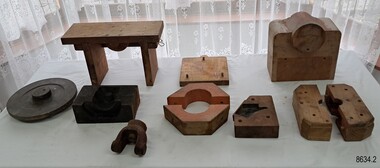
Equipment - Foundry Patterns set, Briggs Brass Foundry, 1912-1972
... Flagstaff Hill Maritime Museum and Village Great Ocean Road Shipwreck Coast pattern mould foundry brass foundry metal foundry crate box wooden container Briggs traditional method trade sand cast cast brass alloy copper alloy marine equipment Marine Tools marine fittings Briggs' Bronze copper tin zinc lead non-corrosive Briggs family brassware metalware foundering metalwork maritime casting Cornish chimney curved bricks Grassmere Cheese Factory 1912 Herbert Harrison Briggs H H Briggs George Edward Briggs Briggs & Son Foundry Collingwood Cyril Falkiner McKinnon Briggs Cyril Briggs H H Briggs & Sons Foundry bell founders Schomberg Bell Alliance Casting & Engineering Solutions Collingwood Foundry Ship chandlers marine products Flagstaff Hill Warrnambool Maritime Museum Maritime Village Briggs & Son Brass Foundry Briggs Marine Moorabbin Briggs Brass Foundry Briggs Marine Foundry Briggs Marine Products Frank Lee Les Lee Eva Lee Briggs Marine Warrnambool non-ferrous founders bell specialists ship bell specialists founders metalworking traditional sand casting casting pattern foundry pattern Stamped: "H.33 / II" (H may be N or a square B) Wooden rectangular crate with removable wooden lid. ...The wooden pattern forms part of a larger collection; some of them were secured within a durable wooden crate. The cast pattern was an essential tool at Briggs Brass Foundry, specifically designed for creating sand casts. Sand casting is a time-honoured technique, with a history exceeding 2,000 years. The handcrafted nature of this process produces brass and copper alloy items particularly suitable for maritime applications. Typical products include bells, boat hooks, cowls, propellers, handles, lids, rowlocks, hooks, letters, bolts, rail holders, brackets, deck plates, flanges, rudder guides, portholes and covers. The distinctive bronze mixture used at Briggs’ Foundry is copper based. It is composed of local ingots of copper, tin, zinc and lead, blended in precisely measured quantities. The resulting alloy is non-ferrous, known for its exceptional durability and longevity. HISTORY OF BRIGGS MARINE: The Briggs Brass Foundry, trading as Briggs & Son Foundry, was established in 1912 by Herbert Harrison Briggs (1863-1931) with his son George Edward Briggs. In 1922, the youngest son, Cyril Falkiner McKinnon Briggs, joined the foundry. After Herbert died in 1931, his sons George and Cyril ran the foundry. The business became known as Briggs Marine Foundry, the “non-ferrous founders” and “bell specialists”. The foundry products were made using the traditional sand-casting method, which is now over two thousand years old and is becoming a dying art. The foundry operated at 70 Wellington St, Collingwood, and specialised in casting ship bells and other marine equipment and fittings. It also made decorative items such as miniature ship propellers. The great-granddaughter of Herbert Briggs inherited a Briggs brass bell, similar to one at Flagstaff Hill Maritime Village. In 1965, Cyril was the only remaining family member involved in Briggs Marine Products. The firm relocated to Chesterville Rd, Moorabbin and Cyril went into partnership with Frank Lee. In the same year, the firm exhibited its products at the 1965 Boat Show. When Cyril passed away in 1967, Frank took over the business with two new partners. After Frank Lee died in 1971, the foundry was run by his son and daughter-in-law, Les and Eva Lee. Briggs Marine still exists today, but the Briggs family is no longer involved. Briggs Foundry had a community-minded retail branch in Warrnambool, selling cast boat fittings and equipment to fishermen and others in the regional marine industry. The branch closed in 1972. In Flagstaff Hill’s formative years, 1972-1975, many Briggs Marine brassware products were generously donated from its Melbourne foundry, along with casting patterns, tools, machinery and a cupboard. EXHIBITION and LEGACY: The donated items were displayed in a simulated Brass Foundry within the Village, where visitors could view them and gain insight into the foundering and metalwork trades that supported maritime industries, including shipwrights and boatbuilders. The castings produced at the foundry were also vital for farmers, manufacturers and other local industries. This exhibit was part of a broader showcase of working crafts, trades and services typical of a Maritime town. The display was available to the public from the completion of the building in 1986 until 1994, when the space was repurposed. It is believed that Briggs Marine’s family members gave personal assistance in setting up the displays in the original village shops, particularly the ‘Brass Foundry’ building. A notable feature of the Village Brass Foundry was the historic Cornish chimney, presented as a working model. This chimney visually demonstrated the process of smelting metal in furnaces and pouring it into sand moulds. Constructed from specially curved bricks, the chimney now stands at about two-thirds of its original height, having been relocated from the Grassmere Cheese factory. The hand-cast sand patterns hold considerable significance due to their association with Briggs Brass Founders, a firm established in the early 20th century and widely recognised for its expertise in producing, repairing, and restoring ship bells and marine equipment. Known for their specialisation in non-ferrous metal casting, Briggs Brass Founders supplied high-quality fittings and equipment for maritime use. The company extended its operations by opening a branch in Warrnambool, where it actively supported the local community. The foundry’s ability to cast essential products was important to local and regional industries, like fishing, farming, manufacturing and commercial businesses. Through its presence, its reputation was reinforced as both a skilled manufacturer and a community-minded enterprise. The foundry is notably associated with the Schomberg Bell at Flagstaff Hill, having restored this small, historic bell to its original condition. The Schomberg Bell is a fine example from a luxury migrant vessel dating back to the mid-19th century, reflecting the craftsmanship and heritage preserved by Briggs Brass Foundry. Wooden rectangular crate with removable wooden lid. Inside is a set of wooden patterns of various shapes and sizes for making sand moulds in a metal foundry. The crate is made from thick wooden planks nailed together. The extended wooden struts on the long sides form a frame to hold the wooden lid. A pair of metal handles is at each short end of the crate, fixed with strong metal bolts. Between each pair of handles is an inscription stamped into the wood. The underside of the crate has red paint splashes. There are insect holes in the wood, but no active infestation. The patterns were made and used at Briggs Brass Foundry in Melbourne.Stamped: "H.33 / II" (H may be N or a square B)flagstaff hill maritime museum and village, great ocean road, shipwreck coast, pattern, mould, foundry, brass foundry, metal foundry, crate, box, wooden container, briggs, traditional method, trade, sand cast, cast, brass alloy, copper alloy, marine equipment, marine tools, marine fittings, briggs' bronze, copper tin zinc lead, non-corrosive, briggs family, brassware, metalware, foundering, metalwork, maritime, casting, cornish chimney, curved bricks, grassmere cheese factory, 1912, herbert harrison briggs, h h briggs, george edward briggs, briggs & son foundry, collingwood, cyril falkiner mckinnon briggs, cyril briggs, h h briggs & sons foundry, bell founders, schomberg bell, alliance casting & engineering solutions, collingwood foundry, ship chandlers, marine products, flagstaff hill, warrnambool, maritime museum, maritime village, briggs & son brass foundry, briggs marine, moorabbin, briggs brass foundry, briggs marine foundry, briggs marine products, frank lee, les lee, eva lee, briggs marine warrnambool, non-ferrous founders, bell specialists, ship bell specialists, founders, metalworking, traditional sand casting, casting pattern, foundry pattern -
 Flagstaff Hill Maritime Museum and Village
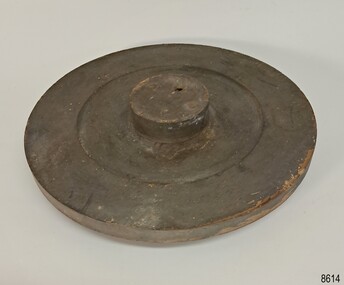
Equipment - Pattern, Briggs Brass Foundry, 1912-1972
... Flagstaff Hill Flagstaff Hill Maritime Museum and Village Warrnambool Maritime Museum Maritime Village Great Ocean Road Shipwreck Coast Briggs' Bronze traditional method trade sand cast cast brass alloy copper alloy pattern mould foundry brass foundry metal foundry casting sand mould sand casting marine equipment Marine Tools marine fittings copper tin zinc lead non-ferrous non-corrosive brassware metalware foundering metalwork maritime bell founders Ship chandlers marine products Biggs Briggs family Herbert Harrison Briggs H H Briggs George Edward Briggs Cyril Falkiner McKinnon Briggs Cyril Briggs Briggs & Son Brass Foundry H H Briggs & Sons Foundry Briggs Marine Alliance Casting & Engineering Solutions Grassmere Cheese Factory Cornish chimney curved bricks Collingwood Moorabbin Collingwood Foundry Moorabbin Foundry 1912 Briggs Briggs Brass Foundry Briggs Marine Foundry Briggs Marine Products Frank Lee Les Lee Eva Lee Briggs Marine Warrnambool non-ferrous founders bell specialists ship bell specialists founders metalworking traditional sand casting casting pattern foundry pattern Pattern; round wooden shape with a wide concave centre and a round flat handle in the middle, painted dark brown. ...The wooden pattern forms part of a larger collection; some of them were secured within a durable wooden crate. The cast pattern was an essential tool at Briggs Brass Foundry, specifically designed for creating sand casts. Sand casting is a time-honoured technique, with a history exceeding 2,000 years. The handcrafted nature of this process produces brass and copper alloy items particularly suitable for maritime applications. Typical products include bells, boat hooks, cowls, propellers, handles, lids, rowlocks, hooks, letters, bolts, rail holders, brackets, deck plates, flanges, rudder guides, portholes and covers. The distinctive bronze mixture used at Briggs’ Foundry is copper based. It is composed of local ingots of copper, tin, zinc and lead, blended in precisely measured quantities. The resulting alloy is non-ferrous, known for its exceptional durability and longevity. HISTORY OF BRIGGS MARINE: The Briggs Brass Foundry, trading as Briggs & Son Foundry, was established in 1912 by Herbert Harrison Briggs (1863-1931) with his son George Edward Briggs. In 1922, the youngest son, Cyril Falkiner McKinnon Briggs, joined the foundry. After Herbert died in 1931, his sons George and Cyril ran the foundry. The business became known as Briggs Marine Foundry, the “non-ferrous founders” and “bell specialists”. The foundry products were made using the traditional sand-casting method, which is now over two thousand years old and is becoming a dying art. The foundry operated at 70 Wellington St, Collingwood, and specialised in casting ship bells and other marine equipment and fittings. It also made decorative items such as miniature ship propellers. The great-granddaughter of Herbert Briggs inherited a Briggs brass bell, similar to one at Flagstaff Hill Maritime Village. In 1965, Cyril was the only remaining family member involved in Briggs Marine Products. The firm relocated to Chesterville Rd, Moorabbin and Cyril went into partnership with Frank Lee. In the same year, the firm exhibited its products at the 1965 Boat Show. When Cyril passed away in 1967, Frank took over the business with two new partners. After Frank Lee died in 1971, the foundry was run by his son and daughter-in-law, Les and Eva Lee. Briggs Marine still exists today, but the Briggs family is no longer involved. Briggs Foundry had a community-minded retail branch in Warrnambool, selling cast boat fittings and equipment to fishermen and others in the regional marine industry. The branch closed in 1972. In Flagstaff Hill’s formative years, 1972-1975, many Briggs Marine brassware products were generously donated from its Melbourne foundry, along with casting patterns, tools, machinery and a cupboard. EXHIBITION and LEGACY: The donated items were displayed in a simulated Brass Foundry within the Village, where visitors could view them and gain insight into the foundering and metalwork trades that supported maritime industries, including shipwrights and boatbuilders. The castings produced at the foundry were also vital for farmers, manufacturers and other local industries. This exhibit was part of a broader showcase of working crafts, trades and services typical of a Maritime town. The display was available to the public from the completion of the building in 1986 until 1994, when the space was repurposed. It is believed that Briggs Marine’s family members gave personal assistance in setting up the displays in the original village shops, particularly the ‘Brass Foundry’ building. A notable feature of the Village Brass Foundry was the historic Cornish chimney, presented as a working model. This chimney visually demonstrated the process of smelting metal in furnaces and pouring it into sand moulds. Constructed from specially curved bricks, the chimney now stands at about two-thirds of its original height, having been relocated from the Grassmere Cheese factory. The hand-cast sand patterns hold considerable significance due to their association with Briggs Brass Founders, a firm established in the early 20th century and widely recognised for its expertise in producing, repairing, and restoring ship bells and marine equipment. Known for their specialisation in non-ferrous metal casting, Briggs Brass Founders supplied high-quality fittings and equipment for maritime use. The company extended its operations by opening a branch in Warrnambool, where it actively supported the local community. The foundry’s ability to cast essential products was important to local and regional industries, like fishing, farming, manufacturing and commercial businesses. Through its presence, its reputation was reinforced as both a skilled manufacturer and a community-minded enterprise. The foundry is notably associated with the Schomberg Bell at Flagstaff Hill, having restored this small, historic bell to its original condition. The Schomberg Bell is a fine example from a luxury migrant vessel dating back to the mid-19th century, reflecting the craftsmanship and heritage preserved by Briggs Brass Foundry. Pattern; round wooden shape with a wide concave centre and a round flat handle in the middle, painted dark brown. The underside has a large wooden disc added to the centre. The pattern is part of a set of foundry patterns from Briggs Brass Foundry.flagstaff hill, flagstaff hill maritime museum and village, warrnambool, maritime museum, maritime village, great ocean road, shipwreck coast, briggs' bronze, traditional method, trade, sand cast, cast, brass alloy, copper alloy, pattern, mould, foundry, brass foundry, metal foundry, casting, sand mould, sand casting, marine equipment, marine tools, marine fittings, copper tin zinc lead, non-ferrous, non-corrosive, brassware, metalware, foundering, metalwork, maritime, bell founders, ship chandlers, marine products, biggs, briggs family, herbert harrison briggs, h h briggs, george edward briggs, cyril falkiner mckinnon briggs, cyril briggs, briggs & son brass foundry, h h briggs & sons foundry, briggs marine, alliance casting & engineering solutions, grassmere cheese factory, cornish chimney, curved bricks, collingwood, moorabbin, collingwood foundry, moorabbin foundry, 1912, briggs, briggs brass foundry, briggs marine foundry, briggs marine products, frank lee, les lee, eva lee, briggs marine warrnambool, non-ferrous founders, bell specialists, ship bell specialists, founders, metalworking, traditional sand casting, casting pattern, foundry pattern -
 Flagstaff Hill Maritime Museum and Village
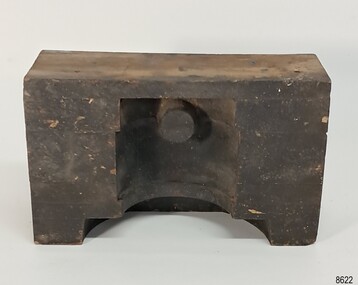
Equipment - Pattern, Briggs Brass Foundry, 1912-1972
... Flagstaff Hill Flagstaff Hill Maritime Museum and Village Warrnambool Maritime Museum Maritime Village Great Ocean Road Shipwreck Coast Briggs' Bronze traditional method trade sand cast cast brass alloy copper alloy pattern mould foundry brass foundry metal foundry casting sand mould sand casting marine equipment Marine Tools marine fittings copper tin zinc lead non-ferrous non-corrosive brassware metalware foundering metalwork maritime bell founders Ship chandlers marine products Biggs Briggs family Herbert Harrison Briggs H H Briggs George Edward Briggs Cyril Falkiner McKinnon Briggs Cyril Briggs Briggs & Son Brass Foundry H H Briggs & Sons Foundry Briggs Marine Alliance Casting & Engineering Solutions Grassmere Cheese Factory Cornish chimney curved bricks Collingwood Moorabbin Collingwood Foundry Moorabbin Foundry 1912 Briggs Briggs Brass Foundry Briggs Marine Foundry Briggs Marine Products Frank Lee Les Lee Eva Lee Briggs Marine Warrnambool non-ferrous founders bell specialists ship bell specialists founders metalworking traditional sand casting casting pattern foundry pattern Pattern; rectangular wooden block made from laminated sections of wood painted black. ...The wooden pattern forms part of a larger collection; some of them were secured within a durable wooden crate. The cast pattern was an essential tool at Briggs Brass Foundry, specifically designed for creating sand casts. Sand casting is a time-honoured technique, with a history exceeding 2,000 years. The handcrafted nature of this process produces brass and copper alloy items particularly suitable for maritime applications. Typical products include bells, boat hooks, cowls, propellers, handles, lids, rowlocks, hooks, letters, bolts, rail holders, brackets, deck plates, flanges, rudder guides, portholes and covers. The distinctive bronze mixture used at Briggs’ Foundry is copper based. It is composed of local ingots of copper, tin, zinc and lead, blended in precisely measured quantities. The resulting alloy is non-ferrous, known for its exceptional durability and longevity. HISTORY OF BRIGGS MARINE: The Briggs Brass Foundry, trading as Briggs & Son Foundry, was established in 1912 by Herbert Harrison Briggs (1863-1931) with his son George Edward Briggs. In 1922, the youngest son, Cyril Falkiner McKinnon Briggs, joined the foundry. After Herbert died in 1931, his sons George and Cyril ran the foundry. The business became known as Briggs Marine Foundry, the “non-ferrous founders” and “bell specialists”. The foundry products were made using the traditional sand-casting method, which is now over two thousand years old and is becoming a dying art. The foundry operated at 70 Wellington St, Collingwood, and specialised in casting ship bells and other marine equipment and fittings. It also made decorative items such as miniature ship propellers. The great-granddaughter of Herbert Briggs inherited a Briggs brass bell, similar to one at Flagstaff Hill Maritime Village. In 1965, Cyril was the only remaining family member involved in Briggs Marine Products. The firm relocated to Chesterville Rd, Moorabbin and Cyril went into partnership with Frank Lee. In the same year, the firm exhibited its products at the 1965 Boat Show. When Cyril passed away in 1967, Frank took over the business with two new partners. After Frank Lee died in 1971, the foundry was run by his son and daughter-in-law, Les and Eva Lee. Briggs Marine still exists today, but the Briggs family is no longer involved. Briggs Foundry had a community-minded retail branch in Warrnambool, selling cast boat fittings and equipment to fishermen and others in the regional marine industry. The branch closed in 1972. In Flagstaff Hill’s formative years, 1972-1975, many Briggs Marine brassware products were generously donated from its Melbourne foundry, along with casting patterns, tools, machinery and a cupboard. EXHIBITION and LEGACY: The donated items were displayed in a simulated Brass Foundry within the Village, where visitors could view them and gain insight into the foundering and metalwork trades that supported maritime industries, including shipwrights and boatbuilders. The castings produced at the foundry were also vital for farmers, manufacturers and other local industries. This exhibit was part of a broader showcase of working crafts, trades and services typical of a Maritime town. The display was available to the public from the completion of the building in 1986 until 1994, when the space was repurposed. It is believed that Briggs Marine’s family members gave personal assistance in setting up the displays in the original village shops, particularly the ‘Brass Foundry’ building. A notable feature of the Village Brass Foundry was the historic Cornish chimney, presented as a working model. This chimney visually demonstrated the process of smelting metal in furnaces and pouring it into sand moulds. Constructed from specially curved bricks, the chimney now stands at about two-thirds of its original height, having been relocated from the Grassmere Cheese factory. The hand-cast sand patterns hold considerable significance due to their association with Briggs Brass Founders, a firm established in the early 20th century and widely recognised for its expertise in producing, repairing, and restoring ship bells and marine equipment. Known for their specialisation in non-ferrous metal casting, Briggs Brass Founders supplied high-quality fittings and equipment for maritime use. The company extended its operations by opening a branch in Warrnambool, where it actively supported the local community. The foundry’s ability to cast essential products was important to local and regional industries, like fishing, farming, manufacturing and commercial businesses. Through its presence, its reputation was reinforced as both a skilled manufacturer and a community-minded enterprise. The foundry is notably associated with the Schomberg Bell at Flagstaff Hill, having restored this small, historic bell to its original condition. The Schomberg Bell is a fine example from a luxury migrant vessel dating back to the mid-19th century, reflecting the craftsmanship and heritage preserved by Briggs Brass Foundry. Pattern; rectangular wooden block made from laminated sections of wood painted black. A half-cylinder shape was carved into the long side, and a dowel shape was placed at the lower side. The pattern is part of a set of foundry patterns from Briggs Brass Foundry.flagstaff hill, flagstaff hill maritime museum and village, warrnambool, maritime museum, maritime village, great ocean road, shipwreck coast, briggs' bronze, traditional method, trade, sand cast, cast, brass alloy, copper alloy, pattern, mould, foundry, brass foundry, metal foundry, casting, sand mould, sand casting, marine equipment, marine tools, marine fittings, copper tin zinc lead, non-ferrous, non-corrosive, brassware, metalware, foundering, metalwork, maritime, bell founders, ship chandlers, marine products, biggs, briggs family, herbert harrison briggs, h h briggs, george edward briggs, cyril falkiner mckinnon briggs, cyril briggs, briggs & son brass foundry, h h briggs & sons foundry, briggs marine, alliance casting & engineering solutions, grassmere cheese factory, cornish chimney, curved bricks, collingwood, moorabbin, collingwood foundry, moorabbin foundry, 1912, briggs, briggs brass foundry, briggs marine foundry, briggs marine products, frank lee, les lee, eva lee, briggs marine warrnambool, non-ferrous founders, bell specialists, ship bell specialists, founders, metalworking, traditional sand casting, casting pattern, foundry pattern -
 Flagstaff Hill Maritime Museum and Village
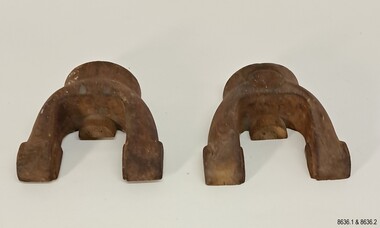
Equipment - Pattern, Briggs Brass Foundry, 1912-1972
... The Schomberg Bell is a fine example from a luxury migrant vessel dating back to the mid-19th century, reflecting the craftsmanship and heritage preserved by Briggs Brass Foundry Flagstaff Hill Flagstaff Hill Maritime Museum and Village Warrnambool Maritime Museum Maritime Village Great Ocean Road Shipwreck Coast Briggs' Bronze traditional method trade sand cast cast brass alloy copper alloy pattern mould foundry brass foundry metal foundry casting sand mould sand casting marine equipment Marine Tools marine fittings copper tin zinc lead non-ferrous non-corrosive brassware metalware foundering metalwork maritime bell founders Ship chandlers marine products Biggs Briggs family Herbert Harrison Briggs H H Briggs George Edward Briggs Cyril Falkiner McKinnon Briggs Cyril Briggs Briggs & Son Brass Foundry H H Briggs & Sons Foundry Briggs Marine Alliance Casting & Engineering Solutions Grassmere Cheese Factory Cornish chimney curved bricks Collingwood Moorabbin Collingwood Foundry Moorabbin Foundry 1912 Briggs Briggs Brass Foundry Briggs Marine Foundry Briggs Marine Products Frank Lee Les Lee Eva Lee Briggs Marine Warrnambool non-ferrous founders bell specialists ship bell specialists founders metalworking traditional sand casting casting pattern foundry pattern Pattern: pair of U-shaped carved blocks, unpainted. ...The wooden pattern forms part of a larger collection; some of them were secured within a durable wooden crate. The cast pattern was an essential tool at Briggs Brass Foundry, specifically designed for creating sand casts. Sand casting is a time-honoured technique, with a history exceeding 2,000 years. The handcrafted nature of this process produces brass and copper alloy items particularly suitable for maritime applications. Typical products include bells, boat hooks, cowls, propellers, handles, lids, rowlocks, hooks, letters, bolts, rail holders, brackets, deck plates, flanges, rudder guides, portholes and covers. The distinctive bronze mixture used at Briggs’ Foundry is copper based. It is composed of local ingots of copper, tin, zinc and lead, blended in precisely measured quantities. The resulting alloy is non-ferrous, known for its exceptional durability and longevity. HISTORY OF BRIGGS MARINE: The Briggs Brass Foundry, trading as Briggs & Son Foundry, was established in 1912 by Herbert Harrison Briggs (1863-1931) with his son George Edward Briggs. In 1922, the youngest son, Cyril Falkiner McKinnon Briggs, joined the foundry. After Herbert died in 1931, his sons George and Cyril ran the foundry. The business became known as Briggs Marine Foundry, the “non-ferrous founders” and “bell specialists”. The foundry products were made using the traditional sand-casting method, which is now over two thousand years old and is becoming a dying art. The foundry operated at 70 Wellington St, Collingwood, and specialised in casting ship bells and other marine equipment and fittings. It also made decorative items such as miniature ship propellers. The great-granddaughter of Herbert Briggs inherited a Briggs brass bell, similar to one at Flagstaff Hill Maritime Village. In 1965, Cyril was the only remaining family member involved in Briggs Marine Products. The firm relocated to Chesterville Rd, Moorabbin and Cyril went into partnership with Frank Lee. In the same year, the firm exhibited its products at the 1965 Boat Show. When Cyril passed away in 1967, Frank took over the business with two new partners. After Frank Lee died in 1971, the foundry was run by his son and daughter-in-law, Les and Eva Lee. Briggs Marine still exists today, but the Briggs family is no longer involved. Briggs Foundry had a community-minded retail branch in Warrnambool, selling cast boat fittings and equipment to fishermen and others in the regional marine industry. The branch closed in 1972. In Flagstaff Hill’s formative years, 1972-1975, many Briggs Marine brassware products were generously donated from its Melbourne foundry, along with casting patterns, tools, machinery and a cupboard. EXHIBITION and LEGACY: The donated items were displayed in a simulated Brass Foundry within the Village, where visitors could view them and gain insight into the foundering and metalwork trades that supported maritime industries, including shipwrights and boatbuilders. The castings produced at the foundry were also vital for farmers, manufacturers and other local industries. This exhibit was part of a broader showcase of working crafts, trades and services typical of a Maritime town. The display was available to the public from the completion of the building in 1986 until 1994, when the space was repurposed. It is believed that Briggs Marine’s family members gave personal assistance in setting up the displays in the original village shops, particularly the ‘Brass Foundry’ building. A notable feature of the Village Brass Foundry was the historic Cornish chimney, presented as a working model. This chimney visually demonstrated the process of smelting metal in furnaces and pouring it into sand moulds. Constructed from specially curved bricks, the chimney now stands at about two-thirds of its original height, having been relocated from the Grassmere Cheese factory. The hand-cast sand patterns hold considerable significance due to their association with Briggs Brass Founders, a firm established in the early 20th century and widely recognised for its expertise in producing, repairing, and restoring ship bells and marine equipment. Known for their specialisation in non-ferrous metal casting, Briggs Brass Founders supplied high-quality fittings and equipment for maritime use. The company extended its operations by opening a branch in Warrnambool, where it actively supported the local community. The foundry’s ability to cast essential products was important to local and regional industries, like fishing, farming, manufacturing and commercial businesses. Through its presence, its reputation was reinforced as both a skilled manufacturer and a community-minded enterprise. The foundry is notably associated with the Schomberg Bell at Flagstaff Hill, having restored this small, historic bell to its original condition. The Schomberg Bell is a fine example from a luxury migrant vessel dating back to the mid-19th century, reflecting the craftsmanship and heritage preserved by Briggs Brass Foundry Pattern: pair of U-shaped carved blocks, unpainted. The blocks have opposing metal pins and holes to hold them together. One block has a disc shape carved into the base. The pattern is part of a set of foundry patterns from Briggs Brass Foundry.flagstaff hill, flagstaff hill maritime museum and village, warrnambool, maritime museum, maritime village, great ocean road, shipwreck coast, briggs' bronze, traditional method, trade, sand cast, cast, brass alloy, copper alloy, pattern, mould, foundry, brass foundry, metal foundry, casting, sand mould, sand casting, marine equipment, marine tools, marine fittings, copper tin zinc lead, non-ferrous, non-corrosive, brassware, metalware, foundering, metalwork, maritime, bell founders, ship chandlers, marine products, biggs, briggs family, herbert harrison briggs, h h briggs, george edward briggs, cyril falkiner mckinnon briggs, cyril briggs, briggs & son brass foundry, h h briggs & sons foundry, briggs marine, alliance casting & engineering solutions, grassmere cheese factory, cornish chimney, curved bricks, collingwood, moorabbin, collingwood foundry, moorabbin foundry, 1912, briggs, briggs brass foundry, briggs marine foundry, briggs marine products, frank lee, les lee, eva lee, briggs marine warrnambool, non-ferrous founders, bell specialists, ship bell specialists, founders, metalworking, traditional sand casting, casting pattern, foundry pattern -
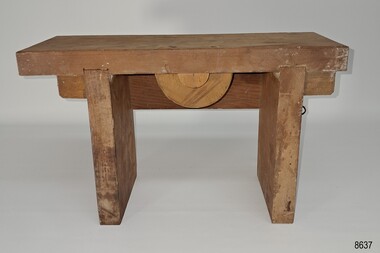 Flagstaff Hill Maritime Museum and Village
Equipment - Pattern, Briggs Brass Foundry, 1912-1972
... Flagstaff Hill Flagstaff Hill Maritime Museum and Village Warrnambool Maritime Museum Maritime Village Great Ocean Road Shipwreck Coast Briggs' Bronze traditional method trade sand cast cast brass alloy copper alloy pattern mould foundry brass foundry metal foundry casting sand mould sand casting marine equipment Marine Tools marine fittings copper tin zinc lead non-ferrous non-corrosive brassware metalware foundering metalwork maritime bell founders Ship chandlers marine products Biggs Briggs family Herbert Harrison Briggs H H Briggs George Edward Briggs Cyril Falkiner McKinnon Briggs Cyril Briggs Briggs & Son Brass Foundry H H Briggs & Sons Foundry Briggs Marine Alliance Casting & Engineering Solutions Grassmere Cheese Factory Cornish chimney curved bricks Collingwood Moorabbin Collingwood Foundry Moorabbin Foundry 1912 Briggs Briggs Brass Foundry Briggs Marine Foundry Briggs Marine Products Frank Lee Les Lee Eva Lee Briggs Marine Warrnambool non-ferrous founders bell specialists ship bell specialists founders metalworking traditional sand casting casting pattern foundry pattern Stamped: "X" "X" Pattern; an unpainted, rectangular wooden frame with a top and sides, similar to a small rectangular stool. ...The wooden pattern forms part of a larger collection; some of them were secured within a durable wooden crate. The cast pattern was an essential tool at Briggs Brass Foundry, specifically designed for creating sand casts. Sand casting is a time-honoured technique, with a history exceeding 2,000 years. The handcrafted nature of this process produces brass and copper alloy items particularly suitable for maritime applications. Typical products include bells, boat hooks, cowls, propellers, handles, lids, rowlocks, hooks, letters, bolts, rail holders, brackets, deck plates, flanges, rudder guides, portholes and covers. The distinctive bronze mixture used at Briggs’ Foundry is copper based. It is composed of local ingots of copper, tin, zinc and lead, blended in precisely measured quantities. The resulting alloy is non-ferrous, known for its exceptional durability and longevity. HISTORY OF BRIGGS MARINE: The Briggs Brass Foundry, trading as Briggs & Son Foundry, was established in 1912 by Herbert Harrison Briggs (1863-1931) with his son George Edward Briggs. In 1922, the youngest son, Cyril Falkiner McKinnon Briggs, joined the foundry. After Herbert died in 1931, his sons George and Cyril ran the foundry. The business became known as Briggs Marine Foundry, the “non-ferrous founders” and “bell specialists”. The foundry products were made using the traditional sand-casting method, which is now over two thousand years old and is becoming a dying art. The foundry operated at 70 Wellington St, Collingwood, and specialised in casting ship bells and other marine equipment and fittings. It also made decorative items such as miniature ship propellers. The great-granddaughter of Herbert Briggs inherited a Briggs brass bell, similar to one at Flagstaff Hill Maritime Village. In 1965, Cyril was the only remaining family member involved in Briggs Marine Products. The firm relocated to Chesterville Rd, Moorabbin and Cyril went into partnership with Frank Lee. In the same year, the firm exhibited its products at the 1965 Boat Show. When Cyril passed away in 1967, Frank took over the business with two new partners. After Frank Lee died in 1971, the foundry was run by his son and daughter-in-law, Les and Eva Lee. Briggs Marine still exists today, but the Briggs family is no longer involved. Briggs Foundry had a community-minded retail branch in Warrnambool, selling cast boat fittings and equipment to fishermen and others in the regional marine industry. The branch closed in 1972. In Flagstaff Hill’s formative years, 1972-1975, many Briggs Marine brassware products were generously donated from its Melbourne foundry, along with casting patterns, tools, machinery and a cupboard. EXHIBITION and LEGACY: The donated items were displayed in a simulated Brass Foundry within the Village, where visitors could view them and gain insight into the foundering and metalwork trades that supported maritime industries, including shipwrights and boatbuilders. The castings produced at the foundry were also vital for farmers, manufacturers and other local industries. This exhibit was part of a broader showcase of working crafts, trades and services typical of a Maritime town. The display was available to the public from the completion of the building in 1986 until 1994, when the space was repurposed. It is believed that Briggs Marine’s family members gave personal assistance in setting up the displays in the original village shops, particularly the ‘Brass Foundry’ building. A notable feature of the Village Brass Foundry was the historic Cornish chimney, presented as a working model. This chimney visually demonstrated the process of smelting metal in furnaces and pouring it into sand moulds. Constructed from specially curved bricks, the chimney now stands at about two-thirds of its original height, having been relocated from the Grassmere Cheese factory. The hand-cast sand patterns hold considerable significance due to their association with Briggs Brass Founders, a firm established in the early 20th century and widely recognised for its expertise in producing, repairing, and restoring ship bells and marine equipment. Known for their specialisation in non-ferrous metal casting, Briggs Brass Founders supplied high-quality fittings and equipment for maritime use. The company extended its operations by opening a branch in Warrnambool, where it actively supported the local community. The foundry’s ability to cast essential products was important to local and regional industries, like fishing, farming, manufacturing and commercial businesses. Through its presence, its reputation was reinforced as both a skilled manufacturer and a community-minded enterprise. The foundry is notably associated with the Schomberg Bell at Flagstaff Hill, having restored this small, historic bell to its original condition. The Schomberg Bell is a fine example from a luxury migrant vessel dating back to the mid-19th century, reflecting the craftsmanship and heritage preserved by Briggs Brass Foundry. Pattern; an unpainted, rectangular wooden frame with a top and sides, similar to a small rectangular stool. A solid half-cylinder shape was added under the horizontal 'seat' with another smaller half-cylinder attached to it, end-to-end. A string is tied between two metal loops attached to the back. There are two X marks stamped into the back. The pattern is part of a set of foundry patterns from Briggs Brass Foundry.Stamped: "X" "X"flagstaff hill, flagstaff hill maritime museum and village, warrnambool, maritime museum, maritime village, great ocean road, shipwreck coast, briggs' bronze, traditional method, trade, sand cast, cast, brass alloy, copper alloy, pattern, mould, foundry, brass foundry, metal foundry, casting, sand mould, sand casting, marine equipment, marine tools, marine fittings, copper tin zinc lead, non-ferrous, non-corrosive, brassware, metalware, foundering, metalwork, maritime, bell founders, ship chandlers, marine products, biggs, briggs family, herbert harrison briggs, h h briggs, george edward briggs, cyril falkiner mckinnon briggs, cyril briggs, briggs & son brass foundry, h h briggs & sons foundry, briggs marine, alliance casting & engineering solutions, grassmere cheese factory, cornish chimney, curved bricks, collingwood, moorabbin, collingwood foundry, moorabbin foundry, 1912, briggs, briggs brass foundry, briggs marine foundry, briggs marine products, frank lee, les lee, eva lee, briggs marine warrnambool, non-ferrous founders, bell specialists, ship bell specialists, founders, metalworking, traditional sand casting, casting pattern, foundry pattern -
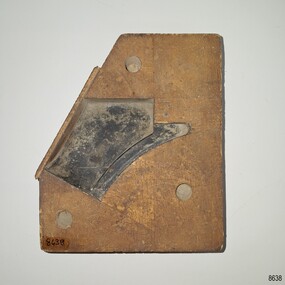 Flagstaff Hill Maritime Museum and Village
Equipment - Pattern, Briggs Brass Foundry, 1912-1972
... Flagstaff Hill Flagstaff Hill Maritime Museum and Village Warrnambool Maritime Museum Maritime Village Great Ocean Road Shipwreck Coast Briggs' Bronze traditional method trade sand cast cast brass alloy copper alloy pattern mould foundry brass foundry metal foundry casting sand mould sand casting marine equipment Marine Tools marine fittings copper tin zinc lead non-ferrous non-corrosive brassware metalware foundering metalwork maritime bell founders Ship chandlers marine products Biggs Briggs family Herbert Harrison Briggs H H Briggs George Edward Briggs Cyril Falkiner McKinnon Briggs Cyril Briggs Briggs & Son Brass Foundry H H Briggs & Sons Foundry Briggs Marine Alliance Casting & Engineering Solutions Grassmere Cheese Factory Cornish chimney curved bricks Collingwood Moorabbin Collingwood Foundry Moorabbin Foundry 1912 Craftman Marine Craftsman Marine Briggs Briggs Brass Foundry Briggs Marine Foundry Briggs Marine Products Frank Lee Les Lee Eva Lee Briggs Marine Warrnambool non-ferrous founders bell specialists ship bell specialists founders metalworking traditional sand casting casting pattern foundry pattern In black handwriting: "1 # H AL" Handwritten in a different hand: "CRAFTMAN MARINE" Written the the first hand: BRIGGS" (or "BRICK") Pattern; rectangular wooden block with a corner cut diagonally. ...The wooden pattern was possibly made for casting a part for Craftman Marine, makers of engines for boats and other applications. It is part of a larger collection; some of them were secured within a durable wooden crate. The cast pattern was an essential tool at Briggs Brass Foundry, specifically designed for creating sand casts. Sand casting is a time-honoured technique, with a history exceeding 2,000 years. The handcrafted nature of this process produces brass and copper alloy items particularly suitable for maritime applications. Typical products include bells, boat hooks, cowls, propellers, handles, lids, rowlocks, hooks, letters, bolts, rail holders, brackets, deck plates, flanges, rudder guides, portholes and covers. The distinctive bronze mixture used at Briggs’ Foundry is copper based. It is composed of local ingots of copper, tin, zinc and lead, blended in precisely measured quantities. The resulting alloy is non-ferrous, known for its exceptional durability and longevity. HISTORY OF BRIGGS MARINE: The Briggs Brass Foundry, trading as Briggs & Son Foundry, was established in 1912 by Herbert Harrison Briggs (1863-1931) with his son George Edward Briggs. In 1922, the youngest son, Cyril Falkiner McKinnon Briggs, joined the foundry. After Herbert died in 1931, his sons George and Cyril ran the foundry. The business became known as Briggs Marine Foundry, the “non-ferrous founders” and “bell specialists”. The foundry products were made using the traditional sand-casting method, which is now over two thousand years old and is becoming a dying art. The foundry operated at 70 Wellington St, Collingwood, and specialised in casting ship bells and other marine equipment and fittings. It also made decorative items such as miniature ship propellers. The great-granddaughter of Herbert Briggs inherited a Briggs brass bell, similar to one at Flagstaff Hill Maritime Village. In 1965, Cyril was the only remaining family member involved in Briggs Marine Products. The firm relocated to Chesterville Rd, Moorabbin and Cyril went into partnership with Frank Lee. In the same year, the firm exhibited its products at the 1965 Boat Show. When Cyril passed away in 1967, Frank took over the business with two new partners. After Frank Lee died in 1971, the foundry was run by his son and daughter-in-law, Les and Eva Lee. Briggs Marine still exists today, but the Briggs family is no longer involved. Briggs Foundry had a community-minded retail branch in Warrnambool, selling cast boat fittings and equipment to fishermen and others in the regional marine industry. The branch closed in 1972. In Flagstaff Hill’s formative years, 1972-1975, many Briggs Marine brassware products were generously donated from its Melbourne foundry, along with casting patterns, tools, machinery and a cupboard. EXHIBITION and LEGACY: The donated items were displayed in a simulated Brass Foundry within the Village, where visitors could view them and gain insight into the foundering and metalwork trades that supported maritime industries, including shipwrights and boatbuilders. The castings produced at the foundry were also vital for farmers, manufacturers and other local industries. This exhibit was part of a broader showcase of working crafts, trades and services typical of a Maritime town. The display was available to the public from the completion of the building in 1986 until 1994, when the space was repurposed. It is believed that Briggs Marine’s family members gave personal assistance in setting up the displays in the original village shops, particularly the ‘Brass Foundry’ building. A notable feature of the Village Brass Foundry was the historic Cornish chimney, presented as a working model. This chimney visually demonstrated the process of smelting metal in furnaces and pouring it into sand moulds. Constructed from specially curved bricks, the chimney now stands at about two-thirds of its original height, having been relocated from the Grassmere Cheese factory. The hand-cast sand patterns hold considerable significance due to their association with Briggs Brass Founders, a firm established in the early 20th century and widely recognised for its expertise in producing, repairing, and restoring ship bells and marine equipment. Known for their specialisation in non-ferrous metal casting, Briggs Brass Founders supplied high-quality fittings and equipment for maritime use. The company extended its operations by opening a branch in Warrnambool, where it actively supported the local community. The foundry’s ability to cast essential products was important to local and regional industries, like fishing, farming, manufacturing and commercial businesses. Through its presence, its reputation was reinforced as both a skilled manufacturer and a community-minded enterprise. The foundry is notably associated with the Schomberg Bell at Flagstaff Hill, having restored this small, historic bell to its original condition. The Schomberg Bell is a fine example from a luxury migrant vessel dating back to the mid-19th century, reflecting the craftsmanship and heritage preserved by Briggs Brass Foundry. Pattern; rectangular wooden block with a corner cut diagonally. A five-sided shape has been carved into the centre, with one side curved inwards and slightly shallower than the other sides. The cut-out area is painted black. Three holes are drilled in the cut-out side to align the pattern with another piece of work. A wooden slat is fixed across the diagonal side. The back of the pattern has a handwritten inscription, possibly by two writers. The pattern is part of a set of foundry patterns from Briggs Brass Foundry and is connected to Craftman Marine.In black handwriting: "1 # H AL" Handwritten in a different hand: "CRAFTMAN MARINE" Written the the first hand: BRIGGS" (or "BRICK")flagstaff hill, flagstaff hill maritime museum and village, warrnambool, maritime museum, maritime village, great ocean road, shipwreck coast, briggs' bronze, traditional method, trade, sand cast, cast, brass alloy, copper alloy, pattern, mould, foundry, brass foundry, metal foundry, casting, sand mould, sand casting, marine equipment, marine tools, marine fittings, copper tin zinc lead, non-ferrous, non-corrosive, brassware, metalware, foundering, metalwork, maritime, bell founders, ship chandlers, marine products, biggs, briggs family, herbert harrison briggs, h h briggs, george edward briggs, cyril falkiner mckinnon briggs, cyril briggs, briggs & son brass foundry, h h briggs & sons foundry, briggs marine, alliance casting & engineering solutions, grassmere cheese factory, cornish chimney, curved bricks, collingwood, moorabbin, collingwood foundry, moorabbin foundry, 1912, craftman marine, craftsman marine, briggs, briggs brass foundry, briggs marine foundry, briggs marine products, frank lee, les lee, eva lee, briggs marine warrnambool, non-ferrous founders, bell specialists, ship bell specialists, founders, metalworking, traditional sand casting, casting pattern, foundry pattern -
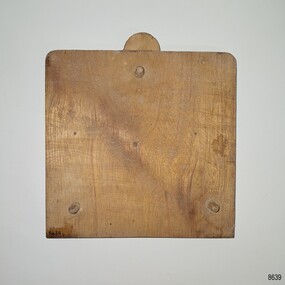 Flagstaff Hill Maritime Museum and Village
Equipment - Pattern, Briggs Brass Foundry, 1912-1972
... Flagstaff Hill Flagstaff Hill Maritime Museum and Village Warrnambool Maritime Museum Maritime Village Great Ocean Road Shipwreck Coast Briggs' Bronze traditional method trade sand cast cast brass alloy copper alloy pattern mould foundry brass foundry metal foundry casting sand mould sand casting marine equipment Marine Tools marine fittings copper tin zinc lead non-ferrous non-corrosive brassware metalware foundering metalwork maritime bell founders Ship chandlers marine products Biggs Briggs family Herbert Harrison Briggs H H Briggs George Edward Briggs Cyril Falkiner McKinnon Briggs Cyril Briggs Briggs & Son Brass Foundry H H Briggs & Sons Foundry Briggs Marine Alliance Casting & Engineering Solutions Grassmere Cheese Factory Cornish chimney curved bricks Collingwood Moorabbin Collingwood Foundry Moorabbin Foundry 1912 Briggs Briggs Brass Foundry Briggs Marine Foundry Briggs Marine Products Frank Lee Les Lee Eva Lee Briggs Marine Warrnambool non-ferrous founders bell specialists ship bell specialists founders metalworking traditional sand casting casting pattern foundry pattern Pattern; unpainted, square wooden block with a semi-circle of dowel added to the centre of the side with rounded corners. ...The wooden pattern is part of a set that is stored in a strong wooden crate and may be part of another similar pattern. It was used at Briggs’ Brass Foundry for making sand casts. The traditional craft of sand casting is over 2000 years old. The handcrafted process produces brass and copper alloy goods that are well suited to marine use; bells, boat hooks, cowls, propellers, handles, lids, rowlocks, hooks, letters, bolts, rail holders, brackets, deck plates, flanges, rudder guides, portholes and covers. Briggs’ Bronze mixture is a copper-based alloy made from local ingots of copper, tin, zinc and lead in carefully measured quantities. The finished product is non-ferrous and can last indefinitely. The crate of patterns was donated by the Briggs family in the early years of Flagstaff Hill, along with other related items such as brassware, tools and machinery. The donated items were displayed in a simulated Brass Foundry in the Village along with other working crafts, trades and services found in a Maritime town. The items were on show from the completion of the building in 1986 until 1994 when the building was repurposed. The patterns represent the trades of foundering and metalwork, both supporting maritime industries such as shipwrights and boatbuilders. Farmers, manufacturers and other local industries also needed the castings made by foundries. The Brass Foundry included a historic Cornish chimney set up as a working model, to tell the story of smelted metal heated in furnaces then be poured into the sand moulds. This chimney was made from specially curved bricks and is now about two-thirds of its full height when originally located at the Grassmere Cheese factory. The hand-cast sand patterns hold considerable significance due to their association with Briggs Brass Founders, a firm established in the early 20th century and widely recognised for its expertise in producing, repairing, and restoring ship bells and marine equipment. Known for their specialisation in non-ferrous metal casting, Briggs Brass Founders supplied high-quality fittings and equipment for maritime use. The company extended its operations by opening a branch in Warrnambool, where it actively supported the local community. The foundry’s ability to cast essential products was important to local and regional industries, like fishing, farming, manufacturing and commercial businesses. Through its presence, its reputation was reinforced as both a skilled manufacturer and a community-minded enterprise. The foundry is notably associated with the Schomberg Bell at Flagstaff Hill, having restored this small, historic bell to its original condition. The Schomberg Bell is a fine example from a luxury migrant vessel dating back to the mid-19th century, reflecting the craftsmanship and heritage preserved by Briggs Brass Foundry. Pattern; unpainted, square wooden block with a semi-circle of dowel added to the centre of the side with rounded corners. Three short dowel pegs are inserted on one flat side; one below the semi-circle and one near the lower corners in an overall triangle configuration. The pattern is part of a set of foundry patterns from Briggs Brass Foundry.flagstaff hill, flagstaff hill maritime museum and village, warrnambool, maritime museum, maritime village, great ocean road, shipwreck coast, briggs' bronze, traditional method, trade, sand cast, cast, brass alloy, copper alloy, pattern, mould, foundry, brass foundry, metal foundry, casting, sand mould, sand casting, marine equipment, marine tools, marine fittings, copper tin zinc lead, non-ferrous, non-corrosive, brassware, metalware, foundering, metalwork, maritime, bell founders, ship chandlers, marine products, biggs, briggs family, herbert harrison briggs, h h briggs, george edward briggs, cyril falkiner mckinnon briggs, cyril briggs, briggs & son brass foundry, h h briggs & sons foundry, briggs marine, alliance casting & engineering solutions, grassmere cheese factory, cornish chimney, curved bricks, collingwood, moorabbin, collingwood foundry, moorabbin foundry, 1912, briggs, briggs brass foundry, briggs marine foundry, briggs marine products, frank lee, les lee, eva lee, briggs marine warrnambool, non-ferrous founders, bell specialists, ship bell specialists, founders, metalworking, traditional sand casting, casting pattern, foundry pattern -
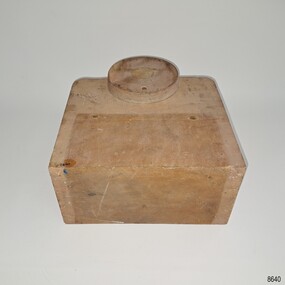 Flagstaff Hill Maritime Museum and Village
Equipment - Pattern, Briggs Brass Foundry, 1912-1972
... Flagstaff Hill Flagstaff Hill Maritime Museum and Village Warrnambool Maritime Museum Maritime Village Great Ocean Road Shipwreck Coast Briggs' Bronze traditional method trade sand cast cast brass alloy copper alloy pattern mould foundry brass foundry metal foundry casting sand mould sand casting marine equipment Marine Tools marine fittings copper tin zinc lead non-ferrous non-corrosive brassware metalware foundering metalwork maritime bell founders Ship chandlers marine products Biggs Briggs family Herbert Harrison Briggs H H Briggs George Edward Briggs Cyril Falkiner McKinnon Briggs Cyril Briggs Briggs & Son Brass Foundry H H Briggs & Sons Foundry Briggs Marine Alliance Casting & Engineering Solutions Grassmere Cheese Factory Cornish chimney curved bricks Collingwood Moorabbin Collingwood Foundry Moorabbin Foundry 1912 Briggs Briggs Brass Foundry Briggs Marine Foundry Briggs Marine Products Frank Lee Les Lee Eva Lee Briggs Marine Warrnambool non-ferrous founders bell specialists ship bell specialists founders metalworking traditional sand casting casting pattern foundry pattern Pattern: thick square mostly unopainted wooden block with a solid half-cylinder added to the top, which has rounded shoulders. ...The wooden pattern forms part of a larger collection; some of them were secured within a durable wooden crate. The cast pattern was an essential tool at Briggs Brass Foundry, specifically designed for creating sand casts. Sand casting is a time-honoured technique, with a history exceeding 2,000 years. The handcrafted nature of this process produces brass and copper alloy items particularly suitable for maritime applications. Typical products include bells, boat hooks, cowls, propellers, handles, lids, rowlocks, hooks, letters, bolts, rail holders, brackets, deck plates, flanges, rudder guides, portholes and covers. The distinctive bronze mixture used at Briggs’ Foundry is copper based. It is composed of local ingots of copper, tin, zinc and lead, blended in precisely measured quantities. The resulting alloy is non-ferrous, known for its exceptional durability and longevity. HISTORY OF BRIGGS MARINE: The Briggs Brass Foundry, trading as Briggs & Son Foundry, was established in 1912 by Herbert Harrison Briggs (1863-1931) with his son George Edward Briggs. In 1922, the youngest son, Cyril Falkiner McKinnon Briggs, joined the foundry. After Herbert died in 1931, his sons George and Cyril ran the foundry. The business became known as Briggs Marine Foundry, the “non-ferrous founders” and “bell specialists”. The foundry products were made using the traditional sand-casting method, which is now over two thousand years old and is becoming a dying art. The foundry operated at 70 Wellington St, Collingwood, and specialised in casting ship bells and other marine equipment and fittings. It also made decorative items such as miniature ship propellers. The great-granddaughter of Herbert Briggs inherited a Briggs brass bell, similar to one at Flagstaff Hill Maritime Village. In 1965, Cyril was the only remaining family member involved in Briggs Marine Products. The firm relocated to Chesterville Rd, Moorabbin and Cyril went into partnership with Frank Lee. In the same year, the firm exhibited its products at the 1965 Boat Show. When Cyril passed away in 1967, Frank took over the business with two new partners. After Frank Lee died in 1971, the foundry was run by his son and daughter-in-law, Les and Eva Lee. Briggs Marine still exists today, but the Briggs family is no longer involved. Briggs Foundry had a community-minded retail branch in Warrnambool, selling cast boat fittings and equipment to fishermen and others in the regional marine industry. The branch closed in 1972. In Flagstaff Hill’s formative years, 1972-1975, many Briggs Marine brassware products were generously donated from its Melbourne foundry, along with casting patterns, tools, machinery and a cupboard. EXHIBITION and LEGACY: The donated items were displayed in a simulated Brass Foundry within the Village, where visitors could view them and gain insight into the foundering and metalwork trades that supported maritime industries, including shipwrights and boatbuilders. The castings produced at the foundry were also vital for farmers, manufacturers and other local industries. This exhibit was part of a broader showcase of working crafts, trades and services typical of a Maritime town. The display was available to the public from the completion of the building in 1986 until 1994, when the space was repurposed. It is believed that Briggs Marine’s family members gave personal assistance in setting up the displays in the original village shops, particularly the ‘Brass Foundry’ building. A notable feature of the Village Brass Foundry was the historic Cornish chimney, presented as a working model. This chimney visually demonstrated the process of smelting metal in furnaces and pouring it into sand moulds. Constructed from specially curved bricks, the chimney now stands at about two-thirds of its original height, having been relocated from the Grassmere Cheese factory. The hand-cast sand patterns hold considerable significance due to their association with Briggs Brass Founders, a firm established in the early 20th century and widely recognised for its expertise in producing, repairing, and restoring ship bells and marine equipment. Known for their specialisation in non-ferrous metal casting, Briggs Brass Founders supplied high-quality fittings and equipment for maritime use. The company extended its operations by opening a branch in Warrnambool, where it actively supported the local community. The foundry’s ability to cast essential products was important to local and regional industries, like fishing, farming, manufacturing and commercial businesses. Through its presence, its reputation was reinforced as both a skilled manufacturer and a community-minded enterprise. The foundry is notably associated with the Schomberg Bell at Flagstaff Hill, having restored this small, historic bell to its original condition. The Schomberg Bell is a fine example from a luxury migrant vessel dating back to the mid-19th century, reflecting the craftsmanship and heritage preserved by Briggs Brass Foundry. Pattern: thick square mostly unopainted wooden block with a solid half-cylinder added to the top, which has rounded shoulders. A disc is added to the front, aligned with the curve at the top. The top curve has orange paint, and the dial is pink. Three holes are drilled in the back, in a triangular configuration. It is similar in shape to a mantle clock or an early-style radio. The pattern is part of a set of foundry patterns from Briggs Brass Foundry.flagstaff hill, flagstaff hill maritime museum and village, warrnambool, maritime museum, maritime village, great ocean road, shipwreck coast, briggs' bronze, traditional method, trade, sand cast, cast, brass alloy, copper alloy, pattern, mould, foundry, brass foundry, metal foundry, casting, sand mould, sand casting, marine equipment, marine tools, marine fittings, copper tin zinc lead, non-ferrous, non-corrosive, brassware, metalware, foundering, metalwork, maritime, bell founders, ship chandlers, marine products, biggs, briggs family, herbert harrison briggs, h h briggs, george edward briggs, cyril falkiner mckinnon briggs, cyril briggs, briggs & son brass foundry, h h briggs & sons foundry, briggs marine, alliance casting & engineering solutions, grassmere cheese factory, cornish chimney, curved bricks, collingwood, moorabbin, collingwood foundry, moorabbin foundry, 1912, briggs, briggs brass foundry, briggs marine foundry, briggs marine products, frank lee, les lee, eva lee, briggs marine warrnambool, non-ferrous founders, bell specialists, ship bell specialists, founders, metalworking, traditional sand casting, casting pattern, foundry pattern -
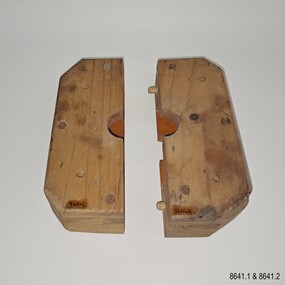 Flagstaff Hill Maritime Museum and Village
Equipment - Pattern, Briggs Brass Foundry, 1912-1972
... Flagstaff Hill Flagstaff Hill Maritime Museum and Village Warrnambool Maritime Museum Maritime Village Great Ocean Road Shipwreck Coast Briggs' Bronze traditional method trade sand cast cast brass alloy copper alloy pattern mould foundry brass foundry metal foundry casting sand mould sand casting marine equipment Marine Tools marine fittings copper tin zinc lead non-ferrous non-corrosive brassware metalware foundering metalwork maritime bell founders Ship chandlers marine products Biggs Briggs family Herbert Harrison Briggs H H Briggs George Edward Briggs Cyril Falkiner McKinnon Briggs Cyril Briggs Briggs & Son Brass Foundry H H Briggs & Sons Foundry Briggs Marine Alliance Casting & Engineering Solutions Grassmere Cheese Factory Cornish chimney curved bricks Collingwood Moorabbin Collingwood Foundry Moorabbin Foundry 1912 Briggs Briggs Brass Foundry Briggs Marine Foundry Briggs Marine Products Frank Lee Les Lee Eva Lee Briggs Marine Warrnambool non-ferrous founders bell specialists ship bell specialists founders metalworking traditional sand casting casting pattern foundry pattern Pattern: a pair of blocks that form a rectangle with a carved centre hole and a disc shape inside. ...The wooden pattern forms part of a larger collection; some of them were secured within a durable wooden crate. The cast pattern was an essential tool at Briggs Brass Foundry, specifically designed for creating sand casts. Sand casting is a time-honoured technique, with a history exceeding 2,000 years. The handcrafted nature of this process produces brass and copper alloy items particularly suitable for maritime applications. Typical products include bells, boat hooks, cowls, propellers, handles, lids, rowlocks, hooks, letters, bolts, rail holders, brackets, deck plates, flanges, rudder guides, portholes and covers. The distinctive bronze mixture used at Briggs’ Foundry is copper based. It is composed of local ingots of copper, tin, zinc and lead, blended in precisely measured quantities. The resulting alloy is non-ferrous, known for its exceptional durability and longevity. HISTORY OF BRIGGS MARINE: The Briggs Brass Foundry, trading as Briggs & Son Foundry, was established in 1912 by Herbert Harrison Briggs (1863-1931) with his son George Edward Briggs. In 1922, the youngest son, Cyril Falkiner McKinnon Briggs, joined the foundry. After Herbert died in 1931, his sons George and Cyril ran the foundry. The business became known as Briggs Marine Foundry, the “non-ferrous founders” and “bell specialists”. The foundry products were made using the traditional sand-casting method, which is now over two thousand years old and is becoming a dying art. The foundry operated at 70 Wellington St, Collingwood, and specialised in casting ship bells and other marine equipment and fittings. It also made decorative items such as miniature ship propellers. The great-granddaughter of Herbert Briggs inherited a Briggs brass bell, similar to one at Flagstaff Hill Maritime Village. In 1965, Cyril was the only remaining family member involved in Briggs Marine Products. The firm relocated to Chesterville Rd, Moorabbin and Cyril went into partnership with Frank Lee. In the same year, the firm exhibited its products at the 1965 Boat Show. When Cyril passed away in 1967, Frank took over the business with two new partners. After Frank Lee died in 1971, the foundry was run by his son and daughter-in-law, Les and Eva Lee. Briggs Marine still exists today, but the Briggs family is no longer involved. Briggs Foundry had a community-minded retail branch in Warrnambool, selling cast boat fittings and equipment to fishermen and others in the regional marine industry. The branch closed in 1972. In Flagstaff Hill’s formative years, 1972-1975, many Briggs Marine brassware products were generously donated from its Melbourne foundry, along with casting patterns, tools, machinery and a cupboard. EXHIBITION and LEGACY: The donated items were displayed in a simulated Brass Foundry within the Village, where visitors could view them and gain insight into the foundering and metalwork trades that supported maritime industries, including shipwrights and boatbuilders. The castings produced at the foundry were also vital for farmers, manufacturers and other local industries. This exhibit was part of a broader showcase of working crafts, trades and services typical of a Maritime town. The display was available to the public from the completion of the building in 1986 until 1994, when the space was repurposed. It is believed that Briggs Marine’s family members gave personal assistance in setting up the displays in the original village shops, particularly the ‘Brass Foundry’ building. A notable feature of the Village Brass Foundry was the historic Cornish chimney, presented as a working model. This chimney visually demonstrated the process of smelting metal in furnaces and pouring it into sand moulds. Constructed from specially curved bricks, the chimney now stands at about two-thirds of its original height, having been relocated from the Grassmere Cheese factory. The hand-cast sand patterns hold considerable significance due to their association with Briggs Brass Founders, a firm established in the early 20th century and widely recognised for its expertise in producing, repairing, and restoring ship bells and marine equipment. Known for their specialisation in non-ferrous metal casting, Briggs Brass Founders supplied high-quality fittings and equipment for maritime use. The company extended its operations by opening a branch in Warrnambool, where it actively supported the local community. The foundry’s ability to cast essential products was important to local and regional industries, like fishing, farming, manufacturing and commercial businesses. Through its presence, its reputation was reinforced as both a skilled manufacturer and a community-minded enterprise. The foundry is notably associated with the Schomberg Bell at Flagstaff Hill, having restored this small, historic bell to its original condition. The Schomberg Bell is a fine example from a luxury migrant vessel dating back to the mid-19th century, reflecting the craftsmanship and heritage preserved by Briggs Brass Foundry. Pattern: a pair of blocks that form a rectangle with a carved centre hole and a disc shape inside. The block is made from laminated pieces of wood with cut corners. Both sides have four drilled holes in a square configuration, but in different positions. The cut faces, and the space carved into them, are painted red; one piece has two dowel pins that fit into two drilled holes on the other. The pattern is part of a set of foundry patterns from Briggs Brass Foundry.flagstaff hill, flagstaff hill maritime museum and village, warrnambool, maritime museum, maritime village, great ocean road, shipwreck coast, briggs' bronze, traditional method, trade, sand cast, cast, brass alloy, copper alloy, pattern, mould, foundry, brass foundry, metal foundry, casting, sand mould, sand casting, marine equipment, marine tools, marine fittings, copper tin zinc lead, non-ferrous, non-corrosive, brassware, metalware, foundering, metalwork, maritime, bell founders, ship chandlers, marine products, biggs, briggs family, herbert harrison briggs, h h briggs, george edward briggs, cyril falkiner mckinnon briggs, cyril briggs, briggs & son brass foundry, h h briggs & sons foundry, briggs marine, alliance casting & engineering solutions, grassmere cheese factory, cornish chimney, curved bricks, collingwood, moorabbin, collingwood foundry, moorabbin foundry, 1912, briggs, briggs brass foundry, briggs marine foundry, briggs marine products, frank lee, les lee, eva lee, briggs marine warrnambool, non-ferrous founders, bell specialists, ship bell specialists, founders, metalworking, traditional sand casting, casting pattern, foundry pattern -
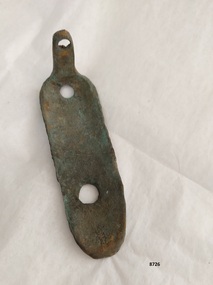 Flagstaff Hill Maritime Museum and Village
Weapon - Gun Butt Plate, circa 1870's
... fittings added to the end of guns or rifles in order to protect the wood from splitting or suffering damage. The ship Loch Ard was built on the River Clyde in Scotland in 1873 for the prestigious Loch Line of colonial clipper ships, designed for the Australian run. It sailed from England on 1st March 1878 carrying 37 crew, 17 passengers and a load of cargo including "firearms" worth 173 Pounds (plus 22 tons of lead...fittings added to the end of guns or rifles in order to protect the wood from splitting or suffering damage. The ship Loch Ard was built on the River Clyde in Scotland in 1873 for the prestigious Loch Line of colonial clipper ships, designed for the Australian run. It sailed from England on 1st March 1878 carrying 37 crew, 17 passengers and a load of cargo including "firearms" worth 173 Pounds (plus 22 tons of lead ...This Butt Plate was salvaged from the wreck of the Loch Ard, on the southwest coast of Victoria and donated by a friend of the diver. Butt plates were fittings added to the end of guns or rifles in order to protect the wood from splitting or suffering damage. The ship Loch Ard was built on the River Clyde in Scotland in 1873 for the prestigious Loch Line of colonial clipper ships, designed for the Australian run. It sailed from England on 1st March 1878 carrying 37 crew, 17 passengers and a load of cargo including "firearms" worth 173 Pounds (plus 22 tons of lead shot). The general cargo reflected the affluence of Melbourne at the time. Also on board were straw hats, umbrellas, perfumes, clay pipes, pianos, clocks, confectionary, linen and candles, as well as a heavier load of railway irons, cement, lead and copper. There were items included that were intended for display in the Melbourne International Exhibition in 1880 - a diverse general cargo ranging from luxury items to bulk railway iron. On 1 June 1878, emerging from fog and hearing too late the sound of breakers against the tall limestone cliffs, the vessel struck the southern foot of Mutton Bird Island and sank in 23 metres of water. Of the fifty-four people on board only two survived, one young male crewman, Tom Pearce, and one young female passenger, Eva Carmichael. Ten days after the Loch Ard tragedy, salvage rights to the wreck were sold at auction for £2,120. Cargo valued at £3,000 was salvaged and placed on the beach, but most washed back into the sea when another storm developed. The wreck of Loch Ard still lies at the base of Mutton Bird Island. Much of the cargo has now been salvaged and some was washed up into what is now known as Loch Ard Gorge. Cargo and artefacts have also been illegally salvaged over many years before protective legislation was introduced in 1976. One of the most unlikely pieces of cargo to have survived the shipwreck was a Minton porcelain peacock - one of only seven in the world. The peacock was destined for the Melbourne International Exhibition in 1880. It had been well packed, which gave it adequate protection during the violent storm. Today, the Minton peacock can be seen at the Flagstaff Hill Maritime Museum in Warrnambool. From Australia's most dramatic shipwreck it has now become Australia's most valuable shipwreck artefact and is one of very few 'objects' on the Victorian State Heritage Register.Flagstaff Hill’s collection of artefacts from LOCH ARD is significant for being one of the largest collections of artefacts from this shipwreck in Victoria. It is significant for its association with the shipwreck, which is on the Victorian Heritage Register (VHR S417). The collection is significant because of the relationship between the objects, as together they have a high potential to interpret the story of the LOCH ARD. The LOCH ARD collection is archaeologically significant as the remains of a large international passenger and cargo ship. The LOCH ARD collection is historically significant for representing aspects of Victoria’s shipping history and its potential to interpret sub-theme 1.5 of Victoria’s Framework of Historical Themes (living with natural processes). The collection is also historically significant for its association with the LOCH ARD, which was one of the worst and best known shipwrecks in Victoria’s history.An L shaped metal plate with one long, concave side (with two formed holes) and a narrow, short vertical arm with one hole. It is hand-forged and shaped with no joins and has green oxidation patina (indicating a copper based metal) on the inner side and green verdigris and a rusty, flaking layer on the outer side.flagstaff hill maritime museum and village, warrnambool, great ocean road, shipwreck coast, firearms, butt plate, gun butt plate, rifle butt plate, salvage, loch ard, loch ard wreck, loch ard salvage -
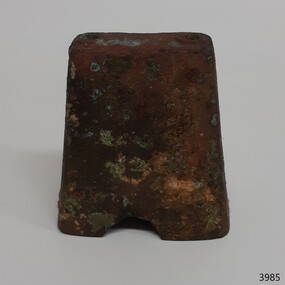 Flagstaff Hill Maritime Museum and Village
Functional object - Cow Bell, Circa 1878
... Flagstaff Hill divers in the 1970s reported finds of “Bottles of champagne, window panes, rolls of zinc, barrels of cement, iron rails, clocks, lead shot, corrugated iron, lead, marble, salad oil bottles, ink bottles, copper wire, gin bottles, rolls of carpet, floor tiles, copper rivets, gas light fittings, pocket knives, toys, crystal chandeliers, beer mugs, cutlery, candles sticks, wick scissors, cow bells, and sauce bottles.” ...Flagstaff Hill divers in the 1970s reported finds of “Bottles of champagne, window panes, rolls of zinc, barrels of cement, iron rails, clocks, lead shot, corrugated iron, lead, marble, salad oil bottles, ink bottles, copper wire, gin bottles, rolls of carpet, floor tiles, copper rivets, gas light fittings, pocket knives, toys, crystal chandeliers, beer mugs, cutlery, candles sticks, wick scissors, cow bells, and sauce bottles.” ...The artefact is a damaged brass cow bell recovered from the 1878 shipwreck of the LOCH ARD near Port Campbell. It was raised by Flagstaff Hill divers in 1973 and is in storage at the Maritime Village. The LOCH ARD was constructed on the Clyde in 1873 for the prestigious Loch Line of colonial clipper ships, designed for the Australian run. She sailed from England on 1 March 1878 carrying 37 crew, 17 passengers and a diverse general cargo ranging from luxury items to bulk railway iron. On 1 June 1878, emerging from fog and hearing too late the sound of breakers against the tall limestone cliffs, the vessel struck the southern foot of Mutton Bird Island and sank in 23 metres of water. Of the fifty-four people on board only two survived, one young male crewman and one young female passenger. A century later, despite the pounding seas and the efforts of looters, the wreck site continued to provide ample evidence of the extraordinary range of goods being imported into the Colony of Victoria in the post-Gold Rush era. Flagstaff Hill divers in the 1970s reported finds of “Bottles of champagne, window panes, rolls of zinc, barrels of cement, iron rails, clocks, lead shot, corrugated iron, lead, marble, salad oil bottles, ink bottles, copper wire, gin bottles, rolls of carpet, floor tiles, copper rivets, gas light fittings, pocket knives, toys, crystal chandeliers, beer mugs, cutlery, candles sticks, wick scissors, cow bells, and sauce bottles.” From this array of objects on the ocean floor emerged the humble brass cow bell. Cow bells were common to colonial agriculture and transport, used wherever animals were turned out to graze overnight and had to be rounded up again next morning. Bells were fastened around the necks of household milking cows, domestic goats, bullock teams, horse teams, and camel teams, to help find them in the pre-dawn light. Station shepherds and cattle drovers also used them to warn of any disturbances to their flocks and herds overnight. The bells were a necessary item in a largely unfenced continent. So important, that Anthony Mongon began making his pot-bells at Yackandandah from 1861, August Menneke produced the “Wagga Pot” from 1867, and Samuel Jones started manufacturing his distinctively shaped “Condamine Bell” in 1868. However, these deeply resonant Australian bells were made from iron — Mongon and Jones were blacksmiths who simply beat old pitsaw blades into shape. Few genuinely brass cow bells were made here, the vast majority being imported from Britain where the industry of brass founding was already well established. (Some bells were also imported from the United States, but these too were nearly all of iron).This bell is historically significant as typical of a cow bell used by farmers and herdsmen in Colonial Victoria. It was included in the cargo of the Loch Ard. Its significance is increased by being one of a collection of artefacts recovered by the Flagstaff Hill Divers from the wreck of the Loch Ard in the early 1970s. Items that come from several wrecks along Victoria's coast have also been recovered for Flagstaff Hill Maritime Village’s museum collection under a Government permit, illustrating this item’s level of historical value. The cow bell is also significant for being part of Flagstaff Hill’s collection of artefacts from LOCH ARD, which is significant for being one of the largest collections of artefacts from this shipwreck in Victoria. It is significant for its association with the shipwreck, which is on the Victorian Heritage Register (VHR S417). The collection is significant because of the relationship between the objects, as together they have a high potential to interpret the story of the LOCH ARD. The LOCH ARD collection is archaeologically significant as the remains of a large international passenger and cargo ship. The LOCH ARD collection is historically significant for representing aspects of Victoria’s shipping history and its potential to interpret sub-theme 1.5 of Victoria’s Framework of Historical Themes (living with natural processes). The collection is also historically significant for its association with the LOCH ARD, which was one of the worst and best-known shipwrecks in Victoria’s history.Cow bell; a small brass bell, blunt-wedge shaped. The sides expand outwards from the smaller rectangular roof of the bell to a larger open rectangle or bell mouth. The handle, now missing, was fixed in two places at the top. A neat half-circle piece has been cut from the base on a long edge. Recovered from the wreck of the Loch Ard.flagstaff hill, warrnambool, shipwrecked coast, flagstaff hill maritime museum, maritime museum, shipwreck coast, flagstaff hill maritime village, great ocean road, loch line, loch ard, eva carmichael, mutton bird island, loch ard gorge, brass cow bell, colonial cow bells, 1878 shipwreck, shipwreck artefact, flagstaff hill divers, cow bell -
 Glenelg Shire Council Cultural Collection
Functional object - Diver's Weight, SIEBE GORMAN & CO lTD lONDON, n.d
... Lead breast weight (circular) with bronze fitting and lifting rope....From the Port of Portland Authority dibing Port of Portland maritime marine Lead breast weight (circular) with bronze fitting and lifting rope. ...From the Port of Portland AuthorityLead breast weight (circular) with bronze fitting and lifting rope.dibing, port of portland, maritime, marine -
Glenelg Shire Council Cultural Collection
Functional object - Diver's Weight, n.d
... Diver's lead breast weight (circular) with bronze fittings and lifting rope...Port of Portland Authority diving weight diving Port of Portland Authority archives maritime marine Diver's lead breast weight (circular) with bronze fittings and lifting rope Functional object Diver's Weight SIEBE GORMAN & CO LTD LONDON ...Port of Portland AuthorityDiver's lead breast weight (circular) with bronze fittings and lifting ropediving weight, diving, port of portland authority archives, maritime, marine -
Glenelg Shire Council Cultural Collection
Equipment - Shot Flask, n.d
... Leather lead shot flask. Brass dispensing fitting, iron ring on bottom. ...Leather lead shot flask. Brass dispensing fitting, iron ring on bottom. ...Leather lead shot flask. Brass dispensing fitting, iron ring on bottom. Flask contains lead shot. String wound around neck of flaskFront: Stamped circle in leather 'WARRANATH SOLID' around border, indecipherable writing in centre of circle. -
Glenelg Shire Council Cultural Collection
Domestic object - Shot Flask, n.d
... Leather lead shot flask, brass dispensing fitting...Leather lead shot flask, brass dispensing fitting Domestic object Shot Flask ...Leather lead shot flask, brass dispensing fitting -
Glenelg Shire Council Cultural Collection
Functional object - Diver's Weight, SIEBE GORMAN & CO LTD LONDON, n.d
... Diver's lead breast weight (circular) with bronze fittings and lifting rope...A weight worn by a diver to help them ascend and descend in the water marine technology diving gear weight Diver's lead breast weight (circular) with bronze fittings and lifting rope Functional object Diver's Weight SIEBE GORMAN & CO LTD LONDON ...A weight worn by a diver to help them ascend and descend in the waterDiver's lead breast weight (circular) with bronze fittings and lifting ropemarine technology, diving, gear, weight -
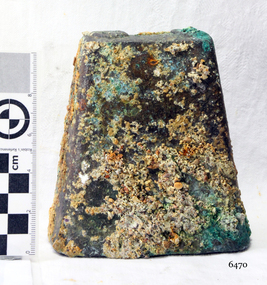 Flagstaff Hill Maritime Museum and Village
Functional object - Cow Bell, Circa 1878
... Flagstaff Hill divers in the 1970s reported finds of “Bottles of champagne, window panes, rolls of zinc, barrels of cement, iron rails, clocks, lead shot, corrugated iron, lead, marble, salad oil bottles, ink bottles, copper wire, gin bottles, rolls of carpet, floor tiles, copper rivets, gas light fittings, pocket knives, toys, crystal chandeliers, beer mugs, cutlery, candles sticks, wick scissors, cow bells, and sauce bottles.” ...Flagstaff Hill divers in the 1970s reported finds of “Bottles of champagne, window panes, rolls of zinc, barrels of cement, iron rails, clocks, lead shot, corrugated iron, lead, marble, salad oil bottles, ink bottles, copper wire, gin bottles, rolls of carpet, floor tiles, copper rivets, gas light fittings, pocket knives, toys, crystal chandeliers, beer mugs, cutlery, candles sticks, wick scissors, cow bells, and sauce bottles.” ...The artefact is a brass cow bell recovered from the 1878 shipwreck of the LOCH ARD near Port Campbell. It was raised by Flagstaff Hill divers in 1973 and is in storage at the Maritime Village. The LOCH ARD was constructed on the Clyde in 1873 for the prestigious Loch Line of colonial clipper ships, designed for the Australian run. She sailed from England on 1 March 1878 carrying 37 crew, 17 passengers and a diverse general cargo ranging from luxury items to bulk railway iron. On 1 June 1878, emerging from fog and hearing too late the sound of breakers against the tall limestone cliffs, the vessel struck the southern foot of Mutton Bird Island and sank in 23 metres of water. Of the fifty-four people on board only two survived, one young male crewman, Tom Pearce, and one young female passenger, Eva Carmichael. A century later, despite the pounding seas and the efforts of looters, the wreck site continued to provide ample evidence of the extraordinary range of goods being imported into the Colony of Victoria in the post-Gold Rush era. Flagstaff Hill divers in the 1970s reported finds of “Bottles of champagne, window panes, rolls of zinc, barrels of cement, iron rails, clocks, lead shot, corrugated iron, lead, marble, salad oil bottles, ink bottles, copper wire, gin bottles, rolls of carpet, floor tiles, copper rivets, gas light fittings, pocket knives, toys, crystal chandeliers, beer mugs, cutlery, candles sticks, wick scissors, cow bells, and sauce bottles.” From this array of objects on the ocean floor emerged the humble brass cow bell. Cow bells were common to colonial agriculture and transport, used wherever animals were turned out to graze overnight and had to be rounded up again next morning. Bells were fastened around the necks of household milking cows, domestic goats, bullock teams, horse teams, and camel teams, to help find them in the pre-dawn light. Station shepherds and cattle drovers also used them to warn of any disturbances to their flocks and herds overnight. The bells were a necessary item in a largely unfenced continent. So important, that Anthony Mongon began making his pot-bells at Yackandandah from 1861, August Menneke produced the “Wagga Pot” from 1867, and Samuel Jones started manufacturing his distinctively shaped “Condamine Bell” in 1868. However, these deeply resonant Australian bells were made from iron — Mongon and Jones were blacksmiths who simply beat old pitsaw blades into shape. Few genuinely brass cow bells were made here, the vast majority being imported from Britain where the industry of brass founding was already well established. (Some bells were also imported from the United States, but these too were nearly all of iron). This bell is historically significant as typical of a cow bell used by farmers and herdsmen in Colonial Victoria. Its significance is increased by being one of a collection of artefact recovered by the Flagstaff Hill Divers from the wreck of the Loch Ard in the early 1970s. Items that come from several wrecks along Victoria's coast have also been recovered for Flagstaff Hill Maritime Village’s museum collection under Government permit, illustrating this item’s level of historical value. The cow bell is also significant for being part of Flagstaff Hill’s collection of artefacts from LOCH ARD, which is significant for being one of the largest collections of artefacts from this shipwreck in Victoria. It is significant for its association with the shipwreck, which is on the Victorian Heritage Register (VHR S417). The collection is significant because of the relationship between the objects, as together they have a high potential to interpret the story of the LOCH ARD. The LOCH ARD collection is archaeologically significant as the remains of a large international passenger and cargo ship. The LOCH ARD collection is historically significant for representing aspects of Victoria’s shipping history and its potential to interpret sub-theme 1.5 of Victoria’s Framework of Historical Themes (living with natural processes). The collection is also historically significant for its association with the LOCH ARD, which was one of the worst and best known shipwrecks in Victoria’s history. Brass cow bell, flat-top pyramid shape, rectangular head, shoulders flare out to a rectangular mouth. The hanging yoke is missing. Noneflagstaff hill, warrnambool, shipwrecked-coast, flagstaff-hill, flagstaff-hill-maritime-museum, maritime-museum, shipwreck-coast, flagstaff-hill-maritime-village, loch ard, cowbell, great ocean road, loch line, captain gibbs, eva carmichael, tom pearce, glenample station, mutton bird island, loch ard gorge, cow bell, brass cow bell, shipwreck artefact, flagstaff hill divers, horse bell, bell smith, vintage bell, farmer, shepherd, drover, stock bell, brass bell -
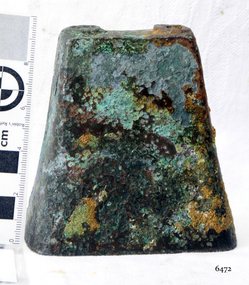 Flagstaff Hill Maritime Museum and Village
Functional object - Cow Bell, circa 1878
... Flagstaff Hill divers in the 1970s reported finds of “Bottles of champagne, window panes, rolls of zinc, barrels of cement, iron rails, clocks, lead shot, corrugated iron, lead, marble, salad oil bottles, ink bottles, copper wire, gin bottles, rolls of carpet, floor tiles, copper rivets, gas light fittings, pocket knives, toys, crystal chandeliers, beer mugs, cutlery, candles sticks, wick scissors, cow bells, and sauce bottles.” ...Flagstaff Hill divers in the 1970s reported finds of “Bottles of champagne, window panes, rolls of zinc, barrels of cement, iron rails, clocks, lead shot, corrugated iron, lead, marble, salad oil bottles, ink bottles, copper wire, gin bottles, rolls of carpet, floor tiles, copper rivets, gas light fittings, pocket knives, toys, crystal chandeliers, beer mugs, cutlery, candles sticks, wick scissors, cow bells, and sauce bottles.” ...The artefact is a brass cow bell recovered from the 1878 shipwreck of the LOCH ARD near Port Campbell. It was raised by Flagstaff Hill divers in 1973 and is in storage at the Maritime Village. The LOCH ARD was constructed on the Clyde in 1873 for the prestigious Loch Line of colonial clipper ships, designed for the Australian run. She sailed from England on 1 March 1878 carrying 37 crew, 17 passengers and a diverse general cargo ranging from luxury items to bulk railway iron. On 1 June 1878, emerging from fog and hearing too late the sound of breakers against the tall limestone cliffs, the vessel struck the southern foot of Mutton Bird Island and sank in 23 metres of water. Of the fifty-four people on board only two survived, one young male crewman, Tom Pearce, and one young female passenger, Eva Carmichael. A century later, despite the pounding seas and the efforts of looters, the wreck site continued to provide ample evidence of the extraordinary range of goods being imported into the Colony of Victoria in the post-Gold Rush era. Flagstaff Hill divers in the 1970s reported finds of “Bottles of champagne, window panes, rolls of zinc, barrels of cement, iron rails, clocks, lead shot, corrugated iron, lead, marble, salad oil bottles, ink bottles, copper wire, gin bottles, rolls of carpet, floor tiles, copper rivets, gas light fittings, pocket knives, toys, crystal chandeliers, beer mugs, cutlery, candles sticks, wick scissors, cow bells, and sauce bottles.” From this array of objects on the ocean floor emerged the humble brass cow bell. Cow bells were common to colonial agriculture and transport, used wherever animals were turned out to graze overnight and had to be rounded up again next morning. Bells were fastened around the necks of household milking cows, domestic goats, bullock teams, horse teams, and camel teams, to help find them in the pre-dawn light. Station shepherds and cattle drovers also used them to warn of any disturbances to their flocks and herds overnight. The bells were a necessary item in a largely unfenced continent. So important, that Anthony Mongon began making his pot-bells at Yackandandah from 1861, August Menneke produced the “Wagga Pot” from 1867, and Samuel Jones started manufacturing his distinctively shaped “Condamine Bell” in 1868. However, these deeply resonant Australian bells were made from iron — Mongon and Jones were blacksmiths who simply beat old pitsaw blades into shape. Few genuinely brass cow bells were made here, the vast majority being imported from Britain where the industry of brass founding was already well established. (Some bells were also imported from the United States, but these too were nearly all of iron). This bell is historically significant as typical of a cow bell used by farmers and herdsmen in Colonial Victoria. Flagstaff Hill’s collection of artefacts from LOCH ARD is significant for being one of the largest collections of artefacts from this shipwreck in Victoria. It is significant for its association with the shipwreck, which is on the Victorian Heritage Register (VHR S417). The collection is significant because of the relationship between the objects, as together they have a high potential to interpret the story of the LOCH ARD. The LOCH ARD collection is archaeologically significant as the remains of a large international passenger and cargo ship. The LOCH ARD collection is historically significant for representing aspects of Victoria’s shipping history and its potential to interpret sub-theme 1.5 of Victoria’s Framework of Historical Themes (living with natural processes). The collection is also historically significant for its association with the LOCH ARD, which was one of the worst and best known shipwrecks in Victoria’s history. Cow bell, brass, covered in encrustation, handle missing from the top.flagstaff hill, warrnambool, shipwreck coast, flagstaff hill maritime museum, flagstaff hill maritime village, maritime museum, great ocean road, shipwreck artefact, loch ard, mutton bird island, glenample, eva carmichael, tom pearce, flagstaff hill divers, cow bell, horse bell, bell smith, vintage bell, farmer, shepherd, drover, stock bell, brass bell -
 Geoffrey Kaye Museum of Anaesthetic History
Ephemera - Label, Cylinder, Austox et al
... . / (The percentages stated above are subject to tolerance) / KEEP COOL [in red] / CONTENTS: Imperial Gallons / WARNING - Great caution must be exercised to prevent any oil entering the cylinder, or being applied to the valve or fittings. The use of oil may lead to a dangerous explosion. .... / (The percentages stated above are subject to tolerance) / KEEP COOL [in red] / CONTENTS: Imperial Gallons / WARNING - Great caution must be exercised to prevent any oil entering the cylinder, or being applied to the valve or fittings. The use of oil may lead to a dangerous explosion. ...Large unused diamond shaped Austox label made for use on carbogen cylinders. Beige with a black border, and green and red lettering.Information printed on label: SPECIALLY PREPARED FOR MEDICAL USES. / AUSTOX [logo] / COMPRESSED / CARBOGEN / CO2..........% OXYGEN.......... / (The percentages stated above are subject to tolerance) / KEEP COOL [in red] / CONTENTS: Imperial Gallons / WARNING - Great caution must be exercised to prevent any oil entering the cylinder, or being applied to the valve or fittings. The use of oil may lead to a dangerous explosion. [in red] / Australian Oxygen & Industrial Gases / Pty. Ltd. / MELBOURNElabel, cylinder, austox, australian oxygen and industrial gases pty ltd, carbogen, compressed carbogen
