
Showing 27 items matching "leo port"
-
 Emerald Museum & Nobelius Heritage Park
Book - Information Book, Port, Leo et al, Australian Inventors, 1978
... ...Leo Port...Contains 53 chapters each dealing with an Australian invention. The author, Leo Port (1922-1978) was a consulting engineer and a panelist on ABC TV's The Inventors in the 1970s. ...Port, Leo...Contains 53 chapters each dealing with an Australian invention. The author, Leo Port (1922-1978) was a consulting engineer and a panelist on ABC TV's The Inventors in the 1970s. ...Contains 53 chapters each dealing with an Australian invention. The author, Leo Port (1922-1978) was a consulting engineer and a panelist on ABC TV's The Inventors in the 1970s. The book may be useful for identification of farm and domestic equipment.Hard cover with paper jacket, 205 pages with illustrations; ISBN 0 7269 6798 xagriculture, farm and garden equipment, wool, public utilities, leo port, brian murray -
Port Melbourne Historical & Preservation Society
Photograph - Wendy LOWENSTEIN addresses a gathering of friends of Tom HILLS after his death, Maritime Workers Union, John Ellis, Aug 1995
... ...Leo 'Doc' WOOD...Port...Tom HILLS June WOOD Leo 'Doc' WOOD Port Melbourne Town Hall Piers and Wharves - Waterside Workers Wendy LOWENSTEIN Werner LOWENSTEIN Perce McGuire WHITE Perce WHITE Pat GRAINGER Number 2 of a set of 6 photos: Wendy LOWENSTEIN addressing the gathering of friends of wharfie Tom HILLS at the Maritime Workers Union, after his death May 1995. ...Taken at Waterside Workers' commemoration for Tom HILLS (Union Headquarters), and afterward at the Town Hall, where a wreath was hung below his citizen of the year plaque in the foyer.Number 2 of a set of 6 photos: Wendy LOWENSTEIN addressing the gathering of friends of wharfie Tom HILLS at the Maritime Workers Union, after his death May 1995.tom hills, june wood, leo 'doc' wood, port melbourne town hall, piers and wharves - waterside workers, wendy lowenstein, werner lowenstein, perce mcguire white, perce white, pat grainger -
 City of Moorabbin Historical Society (Operating the Box Cottage Museum)
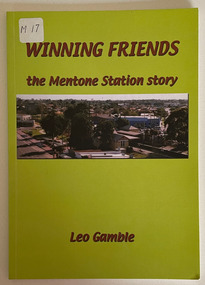
Book, Gamble, Leo, Winning friends : the Mentone Station story, 2012
... ports. Winning friends : the Mentone Station story Book Gamble, Leo ..."This book celebrates the great community contribution of the Friends of Mentone Station & Gardens Inc. over the last decade. The group's hard work and co-operation with many other community, local, state and federal governments and commercial organisations has resulted in many community awards and grants. Numerous community gatherings and soirées are held in the gardens." -- Back cover.44 p. : ill. (some col.), maps, ports. non-fiction"This book celebrates the great community contribution of the Friends of Mentone Station & Gardens Inc. over the last decade. The group's hard work and co-operation with many other community, local, state and federal governments and commercial organisations has resulted in many community awards and grants. Numerous community gatherings and soirées are held in the gardens." -- Back cover.mentone, mentone railway station gardens, friends of mentone station & garden, railroad stations -
Port Melbourne Historical & Preservation Society
Photograph - Gathering of friends of Tom Hills after his death, Maritime Workers Union, John Ellis, Aug 1995
... ...Leo 'Doc' WOOD...Tom HILLS...Port...June WOOD Leo 'Doc' WOOD Tom HILLS Port Melbourne Town Hall Piers and Wharves - Waterside Workers Wendy LOWENSTEIN Werner LOWENSTEIN Perce McGuire WHITE Perce WHITE Pat GRAINGER Number 1 of a set of 6 photos: Gathering of friends of wharfie Tom HILLS at the Maritime Workers Union, after his death May 1995 Photograph Gathering of friends of Tom Hills after his death, Maritime Workers Union John Ellis ...Taken at Waterside Workers' commemoration for Tom HILLS (Union Headquarters), and afterward at the Town Hall, where a wreath was hung below his citizen of the year plaque in the foyer.Number 1 of a set of 6 photos: Gathering of friends of wharfie Tom HILLS at the Maritime Workers Union, after his death May 1995june wood, leo 'doc' wood, tom hills, port melbourne town hall, piers and wharves - waterside workers, wendy lowenstein, werner lowenstein, perce mcguire white, perce white, pat grainger -
Port Melbourne Historical & Preservation Society
Photograph - Tom HILLS' wake, John Ellis, Aug 1995
... Port Melbourne Town Hall...Piers and Wharves - Waterside Workers...Tom HILLS...June WOOD...Leo...Port Melbourne Town Hall Piers and Wharves - Waterside Workers Tom HILLS June WOOD Leo 'Doc' WOOD Perce McGuire WHITE Perce WHITE Wendy LOWENSTEIN Werner LOWENSTEIN Pat GRAINGER Number 6 of a set of 6 photos: Perce WHITE, Werner and Wendy LOWENSTEIN, Pat GRAINGER, June and 'Doc' WOOD, following Tom HILLS' wake, May 1995 Photograph Tom HILLS' wake John Ellis ...Taken at Waterside Workers' commemoration for Tom HILLS (Union Headquarters), and afterward at the Town Hall, where a wreath was hung below his citizen of the year plaque in the foyer.Number 6 of a set of 6 photos: Perce WHITE, Werner and Wendy LOWENSTEIN, Pat GRAINGER, June and 'Doc' WOOD, following Tom HILLS' wake, May 1995port melbourne town hall, piers and wharves - waterside workers, tom hills, june wood, leo 'doc' wood, perce mcguire white, perce white, wendy lowenstein, werner lowenstein, pat grainger -
Port Melbourne Historical & Preservation Society
Photograph - Buildings in Cruikshank Street, Port Melbourne, May 2009
... Families Business and Traders - Hotels Built Environment - Domestic Cruikshank Street Knight's Transport Cricketers Arms Hotel Valerie Lawson Black Family Congues Family Leo Congues Olly Congues Carroll Family Albert 'Tich' Mowlam Pat FRISBY nee MOWLAM Elva MASON nee MOWLAM Jack HOLDENS Lila HOLDENS John HOLDENS Stan HOLDENS Barbara HOLDENS William (Bill) HEGARTY Alice HEGARTY nee MOTT Barbara GARDINER nee HEGARTY Marlene McPHERSON nee HEGARTY Moya HORTON Ameers TAYLOR 'Toot' TAYLOR Margie TAYLOR Graham TAYLOR Carmel MOWLAM nee CONGUES Norah CARROLL Twenty-three (23) colour images in a Picasa slideshow of buildings in Cruikshank Street, Port Melbourne. ...Twenty-three (23) colour images in a Picasa slideshow of buildings in Cruikshank Street, Port Melbourne. Houses pictured Numbers 10, 16, 18, 20, 30, 32, 34, 35, 36, 45, 56, 64, 68, 91, 93, 95 Also images of Cricketers Arms Hotel and Knights Transport Depotfamilies, business and traders - hotels, built environment - domestic, cruikshank street, knight's transport, cricketers arms hotel, valerie lawson, black family, congues family, leo congues, olly congues, carroll family, albert 'tich' mowlam, pat frisby nee mowlam, elva mason nee mowlam, jack holdens, lila holdens, john holdens, stan holdens, barbara holdens, william (bill) hegarty, alice hegarty nee mott, barbara gardiner nee hegarty, marlene mcpherson nee hegarty, moya horton, ameers taylor, 'toot' taylor, margie taylor, graham taylor, carmel mowlam nee congues, norah carroll -
 Port Melbourne Historical & Preservation Society
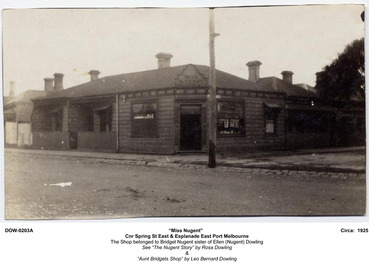
Album - CD-ROM, Miss Nugent's Shop, 2003
... business and traders domestic life mary moloney jim moloney ellie moloney ellen dowling nugent bridget nugent leo bernard dowling cath dowling margaret nugent maloney tot moloney ellen hoogen dowling leo robert dowling jack moloney rosa dowling frank dowling rob dowling ellen (nell) dowling rosa nugent Digital album in PDF format of Miss Nugent's shop, Corner Spring St East and Esplanade East Port Melbourne . ...Digital album in PDF format of Miss Nugent's shop, Corner Spring St East and Esplanade East Port Melbourne . Plus images of Nugent, Dowling, Maloney and Moloney families.business and traders, domestic life, mary moloney, jim moloney, ellie moloney, ellen dowling nugent, bridget nugent, leo bernard dowling, cath dowling, margaret nugent maloney, tot moloney, ellen hoogen dowling, leo robert dowling, jack moloney, rosa dowling, frank dowling, rob dowling, ellen (nell) dowling, rosa nugent -
Port Melbourne Historical & Preservation Society
Document - Memoir of 'The Flat' between Lt Bay and Lt Dow Streets, Port Melbourne, 1936
... Social Activities Engineering - Roads Streets Lanes and Footpaths Domestic Life Built Environment Edwin WHITING Violet WOOD Thelma TREMBETH Lionel WOOD Micky CLEZISHEN Alf WOOD Leo 'Doc' WOOD Memoir written by Ed Whiting about "The Flat", Bay St and Litle Bay St, during the 1930s. Document Memoir of 'The Flat' between Lt Bay and Lt Dow Streets, Port Melbourne. ...Memoir written by Ed Whiting about "The Flat", Bay St and Litle Bay St, during the 1930s. social activities, engineering - roads streets lanes and footpaths, domestic life, built environment, edwin whiting, violet wood, thelma trembeth, lionel wood, micky clezishen, alf wood, leo 'doc' wood -
Port Melbourne Historical & Preservation Society
Photograph - Group, including Ed Whiting, 'The Flat' between Lt Bay and Lt Dow Streets, Port Melbourne, 1936
... Leo 'Doc' WOOD B&W photo of group including Ed Whiting. Taken in 'the flat' between Lt Bay & Lt Dow Street in 1936. Photograph Group, including Ed Whiting, 'The Flat' between Lt Bay and Lt Dow Streets, Port Melbourne ...B&W photo of group including Ed Whiting. Taken in 'the flat' between Lt Bay & Lt Dow Street in 1936. social activities, engineering - roads streets lanes and footpaths, domestic life, built environment, edwin whiting, violet wood, thelma trembeth, lionel wood, micky clezishen, alf wood, leo 'doc' wood -
Port Melbourne Historical & Preservation Society
Photograph - Various Port Melbourne related, 1920s - 1940s
... Religion - Roman Catholic Church (St Josephs) Business and Traders War - World War II Armed Services - Army Lois STOCKS Veronica JENKINS Dan LEYDEN Phil JOHNSON Leo PREST Jim SHANAHAN Brian McCLUSKY Edie RASMUSSEN John McCLUSKY Bill WOODRUFF Tom CONNELLY Andy POWER Bill RICHARDSON Kevin WOODRUFF Frank QUINN Joe ADDICOAT An inscription is writen on the rear of each photograph. 5 B&W photos: .01 - St Joseph's 1932 Merit class .02 - St Joseph's 1924 class .03 - St Joseph's altar boys 1930s .04 - First ladies to work at kitchens. Lady top left Veronica Jenkins. .05 - Troops on Kokoda track. Featuring Dan Leyden from Port ...5 B&W photos: .01 - St Joseph's 1932 Merit class .02 - St Joseph's 1924 class .03 - St Joseph's altar boys 1930s .04 - First ladies to work at kitchens. Lady top left Veronica Jenkins. .05 - Troops on Kokoda track. Featuring Dan Leyden from Port Melbourne.An inscription is writen on the rear of each photograph.religion - roman catholic church (st josephs), business and traders, war - world war ii, armed services - army, lois stocks, veronica jenkins, dan leyden, phil johnson, leo prest, jim shanahan, brian mcclusky, edie rasmussen, john mcclusky, bill woodruff, tom connelly, andy power, bill richardson, kevin woodruff, frank quinn, joe addicoat -
Port Melbourne Historical & Preservation Society
Photograph - Port Melbourne Setttlement Football Team, 1940
... Port Melbourne Settlement...Jack PHILLIPS...Ern TURNER...Ken TURNER...Les CAUSLAND...Larry TILLEY...Wingy JACKSON...Amos BILOTTI...Arthur KERR...Jim SINCLAIR...Mickey CLEARAHAN...Mickey CAR...Leo...Sport - Australian Rules Football Societies Clubs Unions and other Organisations Port Melbourne Settlement Jack PHILLIPS Ern TURNER Ken TURNER Les CAUSLAND Larry TILLEY Wingy JACKSON Amos BILOTTI Arthur KERR Jim SINCLAIR Mickey CLEARAHAN Mickey CAR Leo 'Doc' WOOD Lionel WOOD Wills OLDMAN Les STEVENS Fred HEATHCOTE Jim NICHOLLS Mr OLDMAN Sydney ROSS Dave MATTHEWS John ROSS Len SALLSBURY Lasercopy of photo of Port Melbourne Settlement Football team 1940. ...Copied from an original loaned by Ken TURNER. Wills OLDMAN (Killed in NG). Syd ROSS (Killed in PNG). Mickey Car was a boxer. Mr Oldman was the president.Lasercopy of photo of Port Melbourne Settlement Football team 1940. One of a group of settlement photos copied in 1998. (Refer #939)sport - australian rules football, societies clubs unions and other organisations, port melbourne settlement, jack phillips, ern turner, ken turner, les causland, larry tilley, wingy jackson, amos bilotti, arthur kerr, jim sinclair, mickey clearahan, mickey car, leo 'doc' wood, lionel wood, wills oldman, les stevens, fred heathcote, jim nicholls, mr oldman, sydney ross, dave matthews, john ross, len sallsbury -
Port Melbourne Historical & Preservation Society
Photograph - Class photo, St Joseph's Primary School, Port Melbourne, 1932
... Education - Primary Schools Edward Walter (Ted) Raven Andy Power Brian McClusky Leo Prest Frank Magree Kevin Jennings Bokker Forysta Ted Harris Ted Davis Charles Jordon Alf Skinner Woodruff St Josephs Catholic Primary School .01 Class photo St Joseph's Primary 1932 .02 list of names Photograph Class photo, St Joseph's Primary School, Port Melbourne ....01 Class photo St Joseph's Primary 1932 .02 list of nameseducation - primary schools, edward walter (ted) raven, andy power, brian mcclusky, leo prest, frank magree, kevin jennings, bokker forysta, ted harris, ted davis, charles jordon, alf skinner, woodruff, st josephs catholic primary school -
 Port Melbourne Historical & Preservation Society
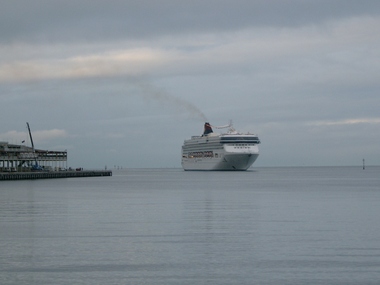
Photograph - Cruise liner, Star Leo, arriving at Station Pier, Port Melbourne, Glen Stuart, 2 May 2003
... Cruise liner, Star Leo, arriving at Station Pier, Port Melbourne...transport - shipping star leo 4 colour photos of cruise liner Star Leo arriving at Station Pier 02.05.2003 Photograph Cruise liner, Star Leo, arriving at Station Pier, Port Melbourne Glen Stuart ...4 colour photos of cruise liner Star Leo arriving at Station Pier 02.05.2003transport - shipping, star leo -
 Port Melbourne Historical & Preservation Society
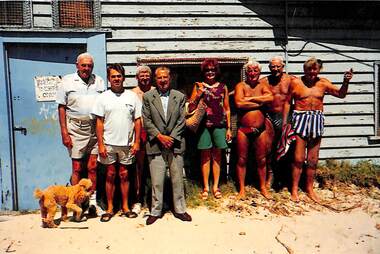
Photograph - Group of people, old Life Saving Club, Port Melbourne, 1990 - 1991
... ...port melbourne life saving club...Leo...sport - swimming societies clubs unions and other organisations ian murphy orb smith colin ward reg 'ox' earle colin quigley port melbourne life saving club Leo 'Doc' WOOD Details in ballpoint ink on back Colour photo of group in front of old Life Saving Club (originally Port Melbourne Yacht Club) c1990, including Reg 'Ox' Earle at right Photograph Group of people, old Life Saving Club, Port Melbourne ...Colour photo of group in front of old Life Saving Club (originally Port Melbourne Yacht Club) c1990, including Reg 'Ox' Earle at rightDetails in ballpoint ink on backsport - swimming, societies clubs unions and other organisations, ian murphy, orb smith, colin ward, reg 'ox' earle, colin quigley, port melbourne life saving club, leo 'doc' wood -
 Port Melbourne Historical & Preservation Society
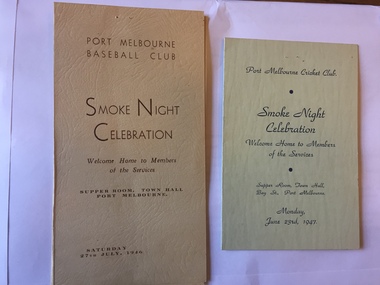
Programme - Port Melbourne Baseball Club, Smoke Night Celebration, Welcome home to members of the Services, Smoke Night Celebration. "Welcome home to members of the Services", 1946 - 1947
... Port Melbourne Cricket Club...Les RHOMER...Henry Melville FENNELL...E RUSSELL...James Peter CRICHTON...Roy BARRAND...LEO...Sport - Baseball War - World War II Port Melbourne Baseball Club Port Melbourne Cricket Club Les RHOMER Henry Melville FENNELL E RUSSELL James Peter CRICHTON Roy BARRAND LEO WOODWARD W Woodruff On the rear of each card is a Roll of Honour of those who served (including Killed in Action) .01 - Yellow program with brown printing for Smoke Night Celebration for Port Melbourne Baseball Club, 27 July 1946 .02- pale green program with blue printing for Smoke Night Celebration for Port Melbourne Cricket Club, 23 June 1947 These "Welcome home to members of the Services" were held in the Supper Room of the Port Melbourne Town Hall. ....01 - Yellow program with brown printing for Smoke Night Celebration for Port Melbourne Baseball Club, 27 July 1946 .02- pale green program with blue printing for Smoke Night Celebration for Port Melbourne Cricket Club, 23 June 1947 These "Welcome home to members of the Services" were held in the Supper Room of the Port Melbourne Town Hall.On the rear of each card is a Roll of Honour of those who served (including Killed in Action)sport - baseball, war - world war ii, port melbourne baseball club, port melbourne cricket club, les rhomer, henry melville fennell, e russell, james peter crichton, roy barrand, leo woodward, w woodruff -
 Port Melbourne Historical & Preservation Society
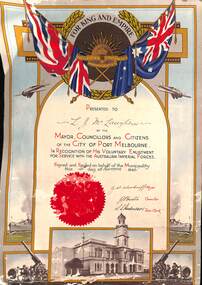
Certificate - WWII Certificate of Appreciation - L J McLAUGHLIN, 24 November 1946
... Port Melbourne...Australian Commonwealth Military Forces...Leo...At the bottom of the certificate is a coloured drawing of the Port Melbourne Town Hall with guns, battleships and planes on the sides. This certificate was presented to Leo John McLAUGHLIN on 24 November 1946. ...War - World War II Local Government - City of Port Melbourne Australian Commonwealth Military Forces Leo John McLAUGHLIN Joseph BERTIE Sydney Sims ANDERSON John William (Jack) WOODRUFF Coloured certificate presented by the Mayor, Councillors and Citizens of the City of Port Melbourne to ex-service personnel who volunteered for the Australian Imperial Forces in World War 2. ...Coloured certificate presented by the Mayor, Councillors and Citizens of the City of Port Melbourne to ex-service personnel who volunteered for the Australian Imperial Forces in World War 2. At the top is the Australian Commonwealth Military Forces badge inside the Australian & Victorian flags. At the bottom of the certificate is a coloured drawing of the Port Melbourne Town Hall with guns, battleships and planes on the sides. This certificate was presented to Leo John McLAUGHLIN on 24 November 1946. "L J McLoughlin" handwritten in the space provided and signed by the Mayor, J W Woodruff, Councillor, J Bertie and Town Clerk, S S Anderson.war - world war ii, local government - city of port melbourne, australian commonwealth military forces, leo john mclaughlin, joseph bertie, sydney sims anderson, john william (jack) woodruff -
 Glen Eira Historical Society
Article - CAULFIELD CITY CHOIR
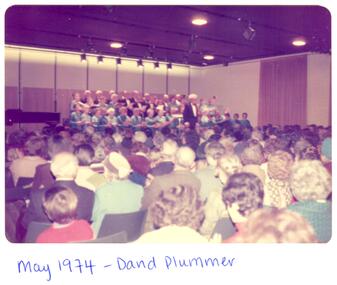
... Port Maureen... Stanley-Low Dorothy... Nicholas Norma... Mealy Melville... Howells Connie... Glasson Margaret... Griffin Betty... Walshe Gaye... Holmes Win... Sneddon Marj... Kuca Marie... Fraser Glad... Rose Ruth... Provelsen Marcia... Copley Marie... Granger Thea... Dobbin Leo...Plummer David Caulfield City Choir Caulfield Arts Centre Lees Ian Southern Cross Newspaper Brown Murray Caulfield Council Caulfield Choir Franklin Dorothy Hankin A Caulfield Contact Cylich Sam Balaclava Road Mayors Celebrations St Stephen’s Uniting Church Hall Anniversaries Campbell J Caulfield Heywood Douglas Shewan Joan Sneddon Marj Mrs Snowden Avenue Caulfield City Choir Inc Caulfield Historical Society Heywood Doug Lee Ian Caulfield South Caulfield City Council Ingram Rene Ford Del Musicians Conductors (music) Uniting Church Official Buildings Singers Choirs Music People Associated with Culture Jeffries Carla Duncan Dorothy Roberts Christine Port Maureen Stanley-Low Dorothy Nicholas Norma Mealy Melville Howells Connie Glasson Margaret Griffin Betty Walshe Gaye Holmes Win Sneddon Marj Kuca Marie Fraser Glad Rose Ruth Provelsen Marcia Copley Marie Granger Thea Dobbin Leo Platt Eric Campbell Scott Franklin Clyde Newbold Ron Prebble Ron Barnett Margaret Alcock Judy Davis-Ward Amanda McAsey Francine McAlpine Carol Cook Doll Musical events and activities Clubs and associations Festivals and celebrations Religious structures and establishments McConchie Christine Heywood Joan Nutt Tony Warden Nelson Ingram Bert Henderson Vic Beeson Barbara Eggington Edna Article CAULFIELD CITY CHOIR ...This file contains 5 items: 1/4 Colour Photographs of the Caulfield City Choir and the farewell of its retiring conductor David Plummer, dating from May 1974 to 16/08/1978. 2/1 Black and white article taken from Southern Cross newspaper dated October 1975. The article relates the retirement of Caulfield City Choir’s foundation conductor David Plummer and the subsequent appointment of their new conductor Murray Brown. 3/1 black and white photograph of a choir taken by Sam Cylich for the Caulfield Contact newspaper regarding Ethnic Radio in Melbourne. 4/1 black and white photograph of the Caulfield City Choir dated September 1986 for the 40th anniversary concert taken at St Stephen’s Uniting Church Hall. 5/1 colour photograph of the Caulfield City Choir taken for their 40th anniversary concert on 07/09/1986 at St Stephen’s Church, Caulfield. Attached to the back is a letter to the Mayor, J. Campbell from Mrs Marj Sneddon dated 16/03/1987 as well as a list of the choir members photographed.plummer david, caulfield city choir, caulfield arts centre, lees ian, southern cross newspaper, brown murray, caulfield council, caulfield choir, franklin dorothy, hankin a, caulfield contact, cylich sam, balaclava road, mayors, celebrations, st stephen’s uniting church hall, anniversaries, campbell j, caulfield, heywood douglas, shewan joan, sneddon marj mrs, snowden avenue, caulfield city choir inc, caulfield historical society, heywood doug, lee ian, caulfield south, caulfield city council, ingram rene, ford del, musicians, conductors (music), uniting church, official buildings, singers, choirs, music, people associated with culture, jeffries carla, duncan dorothy, roberts christine, port maureen, stanley-low dorothy, nicholas norma, mealy melville, howells connie, glasson margaret, griffin betty, walshe gaye, holmes win, sneddon marj, kuca marie, fraser glad, rose ruth, provelsen marcia, copley marie, granger thea, dobbin leo, platt eric, campbell scott, franklin clyde, newbold ron, prebble ron, barnett margaret, alcock judy, davis-ward amanda, mcasey francine, mcalpine carol, cook doll, musical events and activities, clubs and associations, festivals and celebrations, religious structures and establishments, mcconchie christine, heywood joan, nutt tony, warden nelson, ingram bert, henderson vic, beeson barbara, eggington edna -
Glen Eira Historical Society
Document - CAULFIELD CITY CHOIR
... Port M.... Provelsen M.... Provelson M.... Rose R.... Simmons H.... Terkuile K.... Alcock J.... Bannister J.... Barnett M.... Beeson B.... Cinaglia C.... Glasson M.... Griffon B.... Holmes W.... Sneddon M.... Weickhardt J.... Henderson V.... Ingram H.... Ketels M.... Nutt A.... Polites C.... Warden N.... Dobbin L.... McCaffrey P.... Newbold R.... Prebble R... Shewan J.... St. Stephen’s Uniting Church Hall... Balaclava Road... Hawthorn Road... Kooyong Road... Dobbin Leo...Port M. Provelsen M. Provelson M. Rose R. Simmons H. Terkuile K. Alcock J. Bannister J. Barnett M. Beeson B. Cinaglia C. Glasson M. Griffon B. Holmes W. Sneddon M. Weickhardt J. Henderson V. Ingram H. Ketels M. Nutt A. Polites C. Warden N. Dobbin L. McCaffrey P. Newbold R. Prebble R Shewan J. St. Stephen’s Uniting Church Hall Balaclava Road Hawthorn Road Kooyong Road Dobbin Leo ...This file contains five items: 1/A program of the ‘Second Folk Song Festival’ presented by Caulfield City Choir conducted by David Plummer. Date unknown. 2/Three musical score sheets transcribed by Michael Finnissy for the Caulfield City Choir, dated 1983. 3/A black and white program for the Caulfield City Choir’s Christmas Celebrations at St. John’s Uniting Church on 06/12/1986, conducted by Douglas Heywood. 4/Two black and white programs of presentations given by the Caulfield City Choir and the Camberwell Chorale with the Camerata Orchestra, conducted by Douglas Heywood, at the Camberwell Centre. The first is of the Verdi Requiem on 03/05/1987; the second is ‘The Creation’ by Joseph Haydn on 14/05/1988. 5/A black and white program of the Caulfield City Choir Inc.’s presentation of Victorian Lollipops, conducted by Douglas Heywood at St. Stephen’s Uniting Church Hall on 13/09/1987.emms betty miss, kooyong road, caulfield, caulfield city choir, plummer david, law bernard, butler eric, finnissy michael, murrumbeena, harries rita, st. john’s uniting church, glenhuntly road, glen huntly road, elsternwick, hopetown gardens, heywood douglas, shewan joan, st. margaret’s anglican church caulfield, baptist church murrumbeena, church of christ carnegie, st. james’ lutheran church moorabbin, st. andrew’s presbyterian church caulfield south, holy cross roman catholic church caulfield south, st. john’s uniting church elsternwick, baker tim, sneddon j.f. mrs., snowdon avenue, caulfield city council, caulfield philharmonic society, sneddon marjorie, snedden marjorie, north road, ormond, barnard j., cook d., copley m., duncan d., field b., ford r., fraser g., granger t., greenhaugh h., howells c., jefferies c., kuca m., lockett j., mcalpine c., mcconchie c., mealy m., moorees j., nicholas n., nixon v., polites s., pope m., port m., provelsen m., provelson m., rose r., simmons h., terkuile k., alcock j., bannister j., barnett m., beeson b., cinaglia c., glasson m., griffon b., holmes w., sneddon m., weickhardt j., henderson v., ingram h., ketels m., nutt a., polites c., warden n., dobbin l., mccaffrey p., newbold r., prebble r, shewan j., st. stephen’s uniting church hall, balaclava road, hawthorn road, kooyong road, dobbin leo, heywood thomas, ford dellys, the scotsglen players, caulfield city hall, glen eira road, new city hall, st. stephen’s uniting church, glasson m. mrs, new caulfield city hall, nicholas n. miss, quaife merlyn, ashton-smith david, lukey desmond, reither charles, caulfield town hall, hirst susan, anderson peter, town halls, orchestras, music, people associated with culture, singers, choirs, official buildings, uniting church, festivals and celebrations, musical events and activities, cultural events and activities, musicians, conductors (music), operas, religious festivals, christmas, official buildings, clubs and associations -
 Tatura Irrigation & Wartime Camps Museum
Photograph, Sacred Heart Primary School
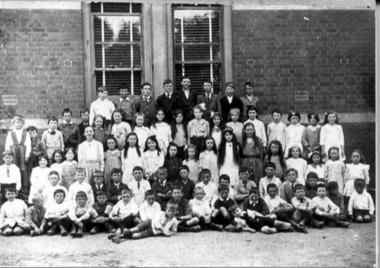
... Second Front: Clem Mitchell, Leo Fenaughty, Martie Malone, Bill Hogan, Bill Lupton, Frank Brady, Bill Port, Paul O'Toole,Bill Hunter, Jim and Fred McMahon, Jack Cussen, King O'Brien, Vern Pascoe. ...Second Front: Clem Mitchell, Leo Fenaughty, Martie Malone, Bill Hogan, Bill Lupton, Frank Brady, Bill Port, Paul O'Toole,Bill Hunter, Jim and Fred McMahon, Jack Cussen, King O'Brien, Vern Pascoe. ...Sacred Heart Primary School, 1919. Back :Leo Cussen, Leo Kilmartin, Hillas Clarke, Harry Pascoe, Jack O'Brien, Tom Hogan, Andy O'Brien, Leo Cussen, Tom Colliver, Stan Cussen, Jack Kilbride, Neil Colliver, Second Row : Mary Mitchell, Kitty Beckwith, Annie Hogan, Kath Lockwood, Julie Brady, Kath Kilbride, Monica Nugent, Alice Kilmartin, Anne Hunter, Annie O'Brien, Tup Hunter, Grace Cussen, Girl Burls. Third Row: Leo Kilbride, Betty Brady, Annie Lockwood, Nell Brady, Francie Young, Girlie Colliver, Lucy Young, Kath Brady, Joan Kennedy, May Hogan, Liz Brady, Mary Brady, Gertie Baynham, Eileen Pascoe, Girl Burls, Bibbie Nugent, Eileen Beckwith, Mary Fenaughty. Second Front: Clem Mitchell, Leo Fenaughty, Martie Malone, Bill Hogan, Bill Lupton, Frank Brady, Bill Port, Paul O'Toole,Bill Hunter, Jim and Fred McMahon, Jack Cussen, King O'Brien, Vern Pascoe. Front Row: Tom Hunter, Tm Coonerty, Palmy Young, Mack Colliver, Bernie Cussen, Drohan O'Toole, Pat O'Toole, Frank Hunt, Charlie Brady, Harry Port, Vin (?) Brady, Alick Hogan, Vin (?) Brady, Tommy O'Reilly. In Front: Fr. Mick Brady and Chappie Kennedy. -
 Ballarat Heritage Services
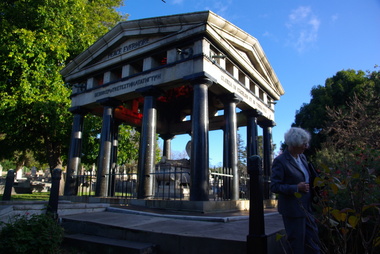
Photograph - Digital photographs, L.J. Gervasoni, Boroondara General Cemetery Springthorpe Memorial, c2005-2015
... Two variegated Port Jackson Figs are planted at either end. The Cussen Memorial (VHR 2036) was constructed in 1912-13 by Sir Leo Cussen in memory of his young son Hubert. ...The Boroondara General Cemetery is registerd by Heritage VictoriaFrom Heritage Victoria Statement of Significance Last updated on - December 15, 2005 What is significant? Boroondara Cemetery, established in 1858, is within an unusual triangular reserve bounded by High Street, Park Hill Road and Victoria Park, Kew. The caretaker's lodge and administrative office (1860 designed by Charles Vickers, additions, 1866-1899 by Albert Purchas) form a picturesque two-storey brick structure with a slate roof and clock tower. A rotunda or shelter (1890, Albert Purchas) is located in the centre of the cemetery: this has an octagonal hipped roof with fish scale slates and a decorative brick base with a tessellated floor and timber seating. The cemetery is surrounded by a 2.7 metre high ornamental red brick wall (1895-96, Albert Purchas) with some sections of vertical iron palisades between brick pillars. Albert Purchas was a prominent Melbourne architect who was the Secretary of the Melbourne General Cemetery from 1852 to 1907 and Chairman of the Boroondara Cemetery Board of Trustees from 1867 to 1909. He made a significant contribution to the design of the Boroondara Cemetery Boroondara Cemetery is an outstanding example of the Victorian Garden Cemetery movement in Victoria, retaining key elements of the style, despite overdevelopment which has obscured some of the paths and driveways. Elements of the style represented at Boroondara include an ornamental boundary fence, a system of curving paths which are kerbed and follow the site's natural contours, defined views, recreational facilities such as the rotunda, a landscaped park like setting, sectarian divisions for burials, impressive monuments, wrought and cast iron grave surrounds and exotic symbolic plantings. In the 1850s cemeteries were located on the periphery of populated areas because of concerns about diseases like cholera. They were designed to be attractive places for mourners and visitors to walk and contemplate. Typically cemeteries were arranged to keep religions separated and this tended to maintain links to places of origin, reflecting a migrant society. Other developments included cast iron entrance gates, built in 1889 to a design by Albert Purchas; a cemetery shelter or rotunda, built in 1890, which is a replica of one constructed in the Melbourne General Cemetery in the same year; an ornamental brick fence erected in 1896-99(?); the construction and operation of a terminus for a horse tram at the cemetery gates during 1887-1915; and the Springthorpe Memorial built between 1897 and 1907. A brick cremation wall and a memorial rose garden were constructed near the entrance in the mid- twentieth century(c.1955-57) and a mausoleum completed in 2001.The maintenance shed/depot close to High Street was constructed in 1987. The original entrance was altered in 2000 and the original cast iron gates moved to the eastern entrance of the Mausoleum. The Springthorpe Memorial (VHR 522) set at the entrance to the burial ground commemorates Annie Springthorpe, and was erected between 1897 and 1907 by her husband Dr John Springthorpe. It was the work of the sculptor Bertram Mackennal, architect Harold Desbrowe Annear, landscape designer and Director of the Melbourne Bortanic Gardens, W.R. Guilfoyle, with considerable input from Dr Springthorpe The memorial is in the form of a small temple in a primitive Doric style. It was designed by Harold Desbrowe Annear and includes Bertram Mackennal sculptures in Carrara marble. Twelve columns of deep green granite from Scotland support a Harcourt granite superstructure. The roof by Brooks Robinson is a coloured glass dome, which sits within the rectangular form and behind the pediments. The sculptural group raised on a dais, consists of the deceased woman lying on a sarcophagus with an attending angel and mourner. The figure of Grief crouches at the foot of the bier and an angel places a wreath over Annie's head, symbolising the triumph of immortal life over death. The body of the deceased was placed in a vault below. The bronze work is by Marriots of Melbourne. Professor Tucker of the University of Melbourne composed appropriate inscriptions in English and archaic Greek lettering.. The floor is a geometric mosaic and the glass dome roof is of Tiffany style lead lighting in hues of reds and pinks in a radiating pattern. The memorial originally stood in a landscape triangular garden of about one acre near the entrance to the cemetery. However, after Dr Springthorpe's death in 1933 it was found that transactions for the land had not been fully completed so most of it was regained by the cemetery. A sundial and seat remain. The building is almost completely intact. The only alteration has been the removal of a glass canopy over the statuary and missing chains between posts. The Argus (26 March 1933) considered the memorial to be the most beautiful work of its kind in Australia. No comparable buildings are known. The Syme Memorial (1908) is a memorial to David Syme, political economist and publisher of the Melbourne Age newspaper. The Egyptian memorial designed by architect Arthur Peck is one of the most finely designed and executed pieces of monumental design in Melbourne. It has a temple like form with each column having a different capital detail. These support a cornice that curves both inwards and outwards. The tomb also has balustradings set between granite piers which create porch spaces leading to the entrance ways. Two variegated Port Jackson Figs are planted at either end. The Cussen Memorial (VHR 2036) was constructed in 1912-13 by Sir Leo Cussen in memory of his young son Hubert. Sir Leo Finn Bernard Cussen (1859-1933), judge and member of the Victorian Supreme Court in 1906. was buried here. The family memorial is one of the larger and more impressive memorials in the cemetery and is an interesting example of the 1930s Gothic Revival style architecture. It takes the form of a small chapel with carvings, diamond shaped roof tiles and decorated ridge embellishing the exterior. By the 1890s, the Boroondara Cemetery was a popular destination for visitors and locals admiring the beauty of the grounds and the splendid monuments. The edge of suburban settlement had reached the cemetery in the previous decade. Its Victorian garden design with sweeping curved drives, hill top views and high maintenance made it attractive. In its Victorian Garden Cemetery design, Boroondara was following an international trend. The picturesque Romanticism of the Pere la Chaise garden cemetery established in Paris in 1804 provided a prototype for great metropolitan cemeteries such as Kensal Green (1883) and Highgate (1839) in London and the Glasgow Necropolis (1831). Boroondara Cemetery was important in establishing this trend in Australia. The cemetery's beauty peaked with the progressive completion of the spectacular Springthorpe Memorial between 1899 and 1907. From about the turn of the century, the trustees encroached on the original design, having repeatedly failed in attempts to gain more land. The wide plantations around road boundaries, grassy verges around clusters of graves in each denomination, and most of the landscaped surround to the Springthorpe memorial are now gone. Some of the original road and path space were resumed for burial purposes. The post war period saw an increased use of the Cemetery by newer migrant groups. The mid- to late- twentieth century monuments were often placed on the grassed edges of the various sections and encroached on the roadways as the cemetery had reached the potential foreseen by its design. These were well tended in comparison with Victorian monuments which have generally been left to fall into a state of neglect. The Boroondara Cemetery features many plants, mostly conifers and shrubs of funerary symbolism, which line the boundaries, road and pathways, and frame the cemetery monuments or are planted on graves. The major plantings include an impressive row of Bhutan Cypress (Cupressus torulosa), interplanted with Sweet Pittosporum (Pittosporum undulatum), and a few Pittosporum crassifolium, along the High Street and Parkhill Street, where the planting is dominated by Sweet Pittosporum. Planting within the cemetery includes rows and specimen trees of Bhutan Cypress and Italian Cypress (Cupressus sempervirens), including a row with alternate plantings of both species. The planting includes an unusual "squat" form of an Italian Cypress. More of these trees probably lined the cemetery roads and paths. Also dominating the cemetery landscape near the Rotunda is a stand of 3 Canary Island Pines (Pinus canariensis), a Bunya Bunya Pine (Araucaria bidwillii) and a Weeping Elm (Ulmus glabra 'Camperdownii') Amongst the planting are the following notable conifers: a towering Bunya Bunya Pine (Araucaria bidwillii), a Coast Redwood (Sequoia sempervirens), a rare Golden Funeral Cypress (Chamaecyparis funebris 'Aurea'), two large Funeral Cypress (Chamaecyparis funebris), and the only known Queensland Kauri (Agathis robusta) in a cemetery in Victoria. The Cemetery records, including historical plans of the cemetery from 1859, are held by the administration and their retention enhances the historical significance of the Cemetery. How is it significant? Boroondara Cemetery is of aesthetic, architectural, scientific (botanical) and historical significance to the State of Victoria. Why is it significant? The Boroondara Cemetery is of historical and aesthetic significance as an outstanding example of a Victorian garden cemetery. The Boroondara Cemetery is of historical significance as a record of Victorian life from the 1850s, and the early settlement of Kew. It is also significant for its ability to demonstrate, through the design and location of the cemetery, attitudes towards burial, health concerns and the importance placed on religion, at the time of its establishment. The Boroondara Cemetery is of architectural significance for the design of the gatehouse or sexton's lodge and cemetery office (built in stages from 1860 to 1899), the ornamental brick perimeter fence and elegant cemetery shelter to the design of prominent Melbourne architects, Charles Vickers (for the original 1860 cottage) and Albert Purchas, cemetery architect and secretary from 1864 to his death in 1907. The Boroondara Cemetery has considerable aesthetic significance which is principally derived from its tranquil, picturesque setting; its impressive memorials and monuments; its landmark features such as the prominent clocktower of the sexton's lodge and office, the mature exotic plantings, the decorative brick fence and the entrance gates; its defined views; and its curving paths. The Springthorpe Memorial (VHR 522), the Syme Memorial and the Cussen Memorial (VHR 2036), all contained within the Boroondara Cemetery, are of aesthetic and architectural significance for their creative and artistic achievement. The Boroondara Cemetery is of scientific (botanical) significance for its collection of rare mature exotic plantings. The Golden Funeral Cypress, (Chamaecyparis funebris 'Aurea') is the only known example in Victoria. The Boroondara Cemetery is of historical significance for the graves, monuments and epitaphs of a number of individuals whose activities have played a major part in Australia's history. They include the Henty family, artists Louis Buvelot and Charles Nuttall, businessmen John Halfey and publisher David Syme, artist and diarist Georgiana McCrae, actress Nellie Stewart and architect and designer of the Boroondara and Melbourne General Cemeteries, Albert Purchas.Digital image of the Springthorpe Memorial in the Boroondara General Cemeterycemetery, boroondara, kew, gatehouse, clock, tower, clocktower, heritage, memorial, springthorpe memorial -
 Ballarat Heritage Services
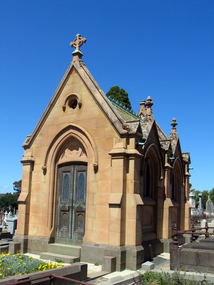
Photograph - Digital photographs, Cussen Memorial in the Boroondara General Cemetery, Kew, Victoria, c2005-2015
... Two variegated Port Jackson Figs are planted at either end. The Cussen Memorial (VHR 2036) was constructed in 1912-13 by Sir Leo Cussen in memory of his young son Hubert. ...The Boroondara General Cemetery is registerd by Heritage VictoriaFrom Heritage Victoria Statement of Significance Last updated on - December 15, 2005 What is significant? Boroondara Cemetery, established in 1858, is within an unusual triangular reserve bounded by High Street, Park Hill Road and Victoria Park, Kew. The caretaker's lodge and administrative office (1860 designed by Charles Vickers, additions, 1866-1899 by Albert Purchas) form a picturesque two-storey brick structure with a slate roof and clock tower. A rotunda or shelter (1890, Albert Purchas) is located in the centre of the cemetery: this has an octagonal hipped roof with fish scale slates and a decorative brick base with a tessellated floor and timber seating. The cemetery is surrounded by a 2.7 metre high ornamental red brick wall (1895-96, Albert Purchas) with some sections of vertical iron palisades between brick pillars. Albert Purchas was a prominent Melbourne architect who was the Secretary of the Melbourne General Cemetery from 1852 to 1907 and Chairman of the Boroondara Cemetery Board of Trustees from 1867 to 1909. He made a significant contribution to the design of the Boroondara Cemetery Boroondara Cemetery is an outstanding example of the Victorian Garden Cemetery movement in Victoria, retaining key elements of the style, despite overdevelopment which has obscured some of the paths and driveways. Elements of the style represented at Boroondara include an ornamental boundary fence, a system of curving paths which are kerbed and follow the site's natural contours, defined views, recreational facilities such as the rotunda, a landscaped park like setting, sectarian divisions for burials, impressive monuments, wrought and cast iron grave surrounds and exotic symbolic plantings. In the 1850s cemeteries were located on the periphery of populated areas because of concerns about diseases like cholera. They were designed to be attractive places for mourners and visitors to walk and contemplate. Typically cemeteries were arranged to keep religions separated and this tended to maintain links to places of origin, reflecting a migrant society. Other developments included cast iron entrance gates, built in 1889 to a design by Albert Purchas; a cemetery shelter or rotunda, built in 1890, which is a replica of one constructed in the Melbourne General Cemetery in the same year; an ornamental brick fence erected in 1896-99(?); the construction and operation of a terminus for a horse tram at the cemetery gates during 1887-1915; and the Springthorpe Memorial built between 1897 and 1907. A brick cremation wall and a memorial rose garden were constructed near the entrance in the mid- twentieth century(c.1955-57) and a mausoleum completed in 2001.The maintenance shed/depot close to High Street was constructed in 1987. The original entrance was altered in 2000 and the original cast iron gates moved to the eastern entrance of the Mausoleum. The Springthorpe Memorial (VHR 522) set at the entrance to the burial ground commemorates Annie Springthorpe, and was erected between 1897 and 1907 by her husband Dr John Springthorpe. It was the work of the sculptor Bertram Mackennal, architect Harold Desbrowe Annear, landscape designer and Director of the Melbourne Bortanic Gardens, W.R. Guilfoyle, with considerable input from Dr Springthorpe The memorial is in the form of a small temple in a primitive Doric style. It was designed by Harold Desbrowe Annear and includes Bertram Mackennal sculptures in Carrara marble. Twelve columns of deep green granite from Scotland support a Harcourt granite superstructure. The roof by Brooks Robinson is a coloured glass dome, which sits within the rectangular form and behind the pediments. The sculptural group raised on a dais, consists of the deceased woman lying on a sarcophagus with an attending angel and mourner. The figure of Grief crouches at the foot of the bier and an angel places a wreath over Annie's head, symbolising the triumph of immortal life over death. The body of the deceased was placed in a vault below. The bronze work is by Marriots of Melbourne. Professor Tucker of the University of Melbourne composed appropriate inscriptions in English and archaic Greek lettering.. The floor is a geometric mosaic and the glass dome roof is of Tiffany style lead lighting in hues of reds and pinks in a radiating pattern. The memorial originally stood in a landscape triangular garden of about one acre near the entrance to the cemetery. However, after Dr Springthorpe's death in 1933 it was found that transactions for the land had not been fully completed so most of it was regained by the cemetery. A sundial and seat remain. The building is almost completely intact. The only alteration has been the removal of a glass canopy over the statuary and missing chains between posts. The Argus (26 March 1933) considered the memorial to be the most beautiful work of its kind in Australia. No comparable buildings are known. The Syme Memorial (1908) is a memorial to David Syme, political economist and publisher of the Melbourne Age newspaper. The Egyptian memorial designed by architect Arthur Peck is one of the most finely designed and executed pieces of monumental design in Melbourne. It has a temple like form with each column having a different capital detail. These support a cornice that curves both inwards and outwards. The tomb also has balustradings set between granite piers which create porch spaces leading to the entrance ways. Two variegated Port Jackson Figs are planted at either end. The Cussen Memorial (VHR 2036) was constructed in 1912-13 by Sir Leo Cussen in memory of his young son Hubert. Sir Leo Finn Bernard Cussen (1859-1933), judge and member of the Victorian Supreme Court in 1906. was buried here. The family memorial is one of the larger and more impressive memorials in the cemetery and is an interesting example of the 1930s Gothic Revival style architecture. It takes the form of a small chapel with carvings, diamond shaped roof tiles and decorated ridge embellishing the exterior. By the 1890s, the Boroondara Cemetery was a popular destination for visitors and locals admiring the beauty of the grounds and the splendid monuments. The edge of suburban settlement had reached the cemetery in the previous decade. Its Victorian garden design with sweeping curved drives, hill top views and high maintenance made it attractive. In its Victorian Garden Cemetery design, Boroondara was following an international trend. The picturesque Romanticism of the Pere la Chaise garden cemetery established in Paris in 1804 provided a prototype for great metropolitan cemeteries such as Kensal Green (1883) and Highgate (1839) in London and the Glasgow Necropolis (1831). Boroondara Cemetery was important in establishing this trend in Australia. The cemetery's beauty peaked with the progressive completion of the spectacular Springthorpe Memorial between 1899 and 1907. From about the turn of the century, the trustees encroached on the original design, having repeatedly failed in attempts to gain more land. The wide plantations around road boundaries, grassy verges around clusters of graves in each denomination, and most of the landscaped surround to the Springthorpe memorial are now gone. Some of the original road and path space were resumed for burial purposes. The post war period saw an increased use of the Cemetery by newer migrant groups. The mid- to late- twentieth century monuments were often placed on the grassed edges of the various sections and encroached on the roadways as the cemetery had reached the potential foreseen by its design. These were well tended in comparison with Victorian monuments which have generally been left to fall into a state of neglect. The Boroondara Cemetery features many plants, mostly conifers and shrubs of funerary symbolism, which line the boundaries, road and pathways, and frame the cemetery monuments or are planted on graves. The major plantings include an impressive row of Bhutan Cypress (Cupressus torulosa), interplanted with Sweet Pittosporum (Pittosporum undulatum), and a few Pittosporum crassifolium, along the High Street and Parkhill Street, where the planting is dominated by Sweet Pittosporum. Planting within the cemetery includes rows and specimen trees of Bhutan Cypress and Italian Cypress (Cupressus sempervirens), including a row with alternate plantings of both species. The planting includes an unusual "squat" form of an Italian Cypress. More of these trees probably lined the cemetery roads and paths. Also dominating the cemetery landscape near the Rotunda is a stand of 3 Canary Island Pines (Pinus canariensis), a Bunya Bunya Pine (Araucaria bidwillii) and a Weeping Elm (Ulmus glabra 'Camperdownii') Amongst the planting are the following notable conifers: a towering Bunya Bunya Pine (Araucaria bidwillii), a Coast Redwood (Sequoia sempervirens), a rare Golden Funeral Cypress (Chamaecyparis funebris 'Aurea'), two large Funeral Cypress (Chamaecyparis funebris), and the only known Queensland Kauri (Agathis robusta) in a cemetery in Victoria. The Cemetery records, including historical plans of the cemetery from 1859, are held by the administration and their retention enhances the historical significance of the Cemetery. How is it significant? Boroondara Cemetery is of aesthetic, architectural, scientific (botanical) and historical significance to the State of Victoria. Why is it significant? The Boroondara Cemetery is of historical and aesthetic significance as an outstanding example of a Victorian garden cemetery. The Boroondara Cemetery is of historical significance as a record of Victorian life from the 1850s, and the early settlement of Kew. It is also significant for its ability to demonstrate, through the design and location of the cemetery, attitudes towards burial, health concerns and the importance placed on religion, at the time of its establishment. The Boroondara Cemetery is of architectural significance for the design of the gatehouse or sexton's lodge and cemetery office (built in stages from 1860 to 1899), the ornamental brick perimeter fence and elegant cemetery shelter to the design of prominent Melbourne architects, Charles Vickers (for the original 1860 cottage) and Albert Purchas, cemetery architect and secretary from 1864 to his death in 1907. The Boroondara Cemetery has considerable aesthetic significance which is principally derived from its tranquil, picturesque setting; its impressive memorials and monuments; its landmark features such as the prominent clocktower of the sexton's lodge and office, the mature exotic plantings, the decorative brick fence and the entrance gates; its defined views; and its curving paths. The Springthorpe Memorial (VHR 522), the Syme Memorial and the Cussen Memorial (VHR 2036), all contained within the Boroondara Cemetery, are of aesthetic and architectural significance for their creative and artistic achievement. The Boroondara Cemetery is of scientific (botanical) significance for its collection of rare mature exotic plantings. The Golden Funeral Cypress, (Chamaecyparis funebris 'Aurea') is the only known example in Victoria. The Boroondara Cemetery is of historical significance for the graves, monuments and epitaphs of a number of individuals whose activities have played a major part in Australia's history. They include the Henty family, artists Louis Buvelot and Charles Nuttall, businessmen John Halfey and publisher David Syme, artist and diarist Georgiana McCrae, actress Nellie Stewart and architect and designer of the Boroondara and Melbourne General Cemeteries, Albert Purchas.Digital imagescemetery, boroondara, kew, gatehouse, clock, tower, clocktower, heritage, memorial, cussen -
 Ballarat Heritage Services
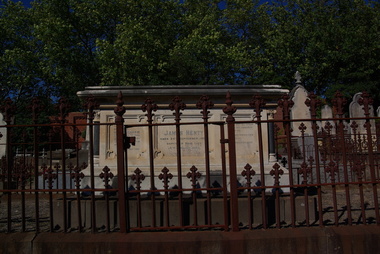
Photograph - Digital photographs, L.J. Gervasoni, Henty Memorial in Boroondara General Cemetery, c2005-2015
... Two variegated Port Jackson Figs are planted at either end. The Cussen Memorial (VHR 2036) was constructed in 1912-13 by Sir Leo Cussen in memory of his young son Hubert. ...The Boroondara General Cemetery is registered by Heritage Victoria. The Henty's were some of the earliest settlers in Victoria.From Heritage Victoria Statement of Significance Last updated on - December 15, 2005 What is significant? Boroondara Cemetery, established in 1858, is within an unusual triangular reserve bounded by High Street, Park Hill Road and Victoria Park, Kew. The caretaker's lodge and administrative office (1860 designed by Charles Vickers, additions, 1866-1899 by Albert Purchas) form a picturesque two-storey brick structure with a slate roof and clock tower. A rotunda or shelter (1890, Albert Purchas) is located in the centre of the cemetery: this has an octagonal hipped roof with fish scale slates and a decorative brick base with a tessellated floor and timber seating. The cemetery is surrounded by a 2.7 metre high ornamental red brick wall (1895-96, Albert Purchas) with some sections of vertical iron palisades between brick pillars. Albert Purchas was a prominent Melbourne architect who was the Secretary of the Melbourne General Cemetery from 1852 to 1907 and Chairman of the Boroondara Cemetery Board of Trustees from 1867 to 1909. He made a significant contribution to the design of the Boroondara Cemetery Boroondara Cemetery is an outstanding example of the Victorian Garden Cemetery movement in Victoria, retaining key elements of the style, despite overdevelopment which has obscured some of the paths and driveways. Elements of the style represented at Boroondara include an ornamental boundary fence, a system of curving paths which are kerbed and follow the site's natural contours, defined views, recreational facilities such as the rotunda, a landscaped park like setting, sectarian divisions for burials, impressive monuments, wrought and cast iron grave surrounds and exotic symbolic plantings. In the 1850s cemeteries were located on the periphery of populated areas because of concerns about diseases like cholera. They were designed to be attractive places for mourners and visitors to walk and contemplate. Typically cemeteries were arranged to keep religions separated and this tended to maintain links to places of origin, reflecting a migrant society. Other developments included cast iron entrance gates, built in 1889 to a design by Albert Purchas; a cemetery shelter or rotunda, built in 1890, which is a replica of one constructed in the Melbourne General Cemetery in the same year; an ornamental brick fence erected in 1896-99(?); the construction and operation of a terminus for a horse tram at the cemetery gates during 1887-1915; and the Springthorpe Memorial built between 1897 and 1907. A brick cremation wall and a memorial rose garden were constructed near the entrance in the mid- twentieth century(c.1955-57) and a mausoleum completed in 2001.The maintenance shed/depot close to High Street was constructed in 1987. The original entrance was altered in 2000 and the original cast iron gates moved to the eastern entrance of the Mausoleum. The Springthorpe Memorial (VHR 522) set at the entrance to the burial ground commemorates Annie Springthorpe, and was erected between 1897 and 1907 by her husband Dr John Springthorpe. It was the work of the sculptor Bertram Mackennal, architect Harold Desbrowe Annear, landscape designer and Director of the Melbourne Bortanic Gardens, W.R. Guilfoyle, with considerable input from Dr Springthorpe The memorial is in the form of a small temple in a primitive Doric style. It was designed by Harold Desbrowe Annear and includes Bertram Mackennal sculptures in Carrara marble. Twelve columns of deep green granite from Scotland support a Harcourt granite superstructure. The roof by Brooks Robinson is a coloured glass dome, which sits within the rectangular form and behind the pediments. The sculptural group raised on a dais, consists of the deceased woman lying on a sarcophagus with an attending angel and mourner. The figure of Grief crouches at the foot of the bier and an angel places a wreath over Annie's head, symbolising the triumph of immortal life over death. The body of the deceased was placed in a vault below. The bronze work is by Marriots of Melbourne. Professor Tucker of the University of Melbourne composed appropriate inscriptions in English and archaic Greek lettering.. The floor is a geometric mosaic and the glass dome roof is of Tiffany style lead lighting in hues of reds and pinks in a radiating pattern. The memorial originally stood in a landscape triangular garden of about one acre near the entrance to the cemetery. However, after Dr Springthorpe's death in 1933 it was found that transactions for the land had not been fully completed so most of it was regained by the cemetery. A sundial and seat remain. The building is almost completely intact. The only alteration has been the removal of a glass canopy over the statuary and missing chains between posts. The Argus (26 March 1933) considered the memorial to be the most beautiful work of its kind in Australia. No comparable buildings are known. The Syme Memorial (1908) is a memorial to David Syme, political economist and publisher of the Melbourne Age newspaper. The Egyptian memorial designed by architect Arthur Peck is one of the most finely designed and executed pieces of monumental design in Melbourne. It has a temple like form with each column having a different capital detail. These support a cornice that curves both inwards and outwards. The tomb also has balustradings set between granite piers which create porch spaces leading to the entrance ways. Two variegated Port Jackson Figs are planted at either end. The Cussen Memorial (VHR 2036) was constructed in 1912-13 by Sir Leo Cussen in memory of his young son Hubert. Sir Leo Finn Bernard Cussen (1859-1933), judge and member of the Victorian Supreme Court in 1906. was buried here. The family memorial is one of the larger and more impressive memorials in the cemetery and is an interesting example of the 1930s Gothic Revival style architecture. It takes the form of a small chapel with carvings, diamond shaped roof tiles and decorated ridge embellishing the exterior. By the 1890s, the Boroondara Cemetery was a popular destination for visitors and locals admiring the beauty of the grounds and the splendid monuments. The edge of suburban settlement had reached the cemetery in the previous decade. Its Victorian garden design with sweeping curved drives, hill top views and high maintenance made it attractive. In its Victorian Garden Cemetery design, Boroondara was following an international trend. The picturesque Romanticism of the Pere la Chaise garden cemetery established in Paris in 1804 provided a prototype for great metropolitan cemeteries such as Kensal Green (1883) and Highgate (1839) in London and the Glasgow Necropolis (1831). Boroondara Cemetery was important in establishing this trend in Australia. The cemetery's beauty peaked with the progressive completion of the spectacular Springthorpe Memorial between 1899 and 1907. From about the turn of the century, the trustees encroached on the original design, having repeatedly failed in attempts to gain more land. The wide plantations around road boundaries, grassy verges around clusters of graves in each denomination, and most of the landscaped surround to the Springthorpe memorial are now gone. Some of the original road and path space were resumed for burial purposes. The post war period saw an increased use of the Cemetery by newer migrant groups. The mid- to late- twentieth century monuments were often placed on the grassed edges of the various sections and encroached on the roadways as the cemetery had reached the potential foreseen by its design. These were well tended in comparison with Victorian monuments which have generally been left to fall into a state of neglect. The Boroondara Cemetery features many plants, mostly conifers and shrubs of funerary symbolism, which line the boundaries, road and pathways, and frame the cemetery monuments or are planted on graves. The major plantings include an impressive row of Bhutan Cypress (Cupressus torulosa), interplanted with Sweet Pittosporum (Pittosporum undulatum), and a few Pittosporum crassifolium, along the High Street and Parkhill Street, where the planting is dominated by Sweet Pittosporum. Planting within the cemetery includes rows and specimen trees of Bhutan Cypress and Italian Cypress (Cupressus sempervirens), including a row with alternate plantings of both species. The planting includes an unusual "squat" form of an Italian Cypress. More of these trees probably lined the cemetery roads and paths. Also dominating the cemetery landscape near the Rotunda is a stand of 3 Canary Island Pines (Pinus canariensis), a Bunya Bunya Pine (Araucaria bidwillii) and a Weeping Elm (Ulmus glabra 'Camperdownii') Amongst the planting are the following notable conifers: a towering Bunya Bunya Pine (Araucaria bidwillii), a Coast Redwood (Sequoia sempervirens), a rare Golden Funeral Cypress (Chamaecyparis funebris 'Aurea'), two large Funeral Cypress (Chamaecyparis funebris), and the only known Queensland Kauri (Agathis robusta) in a cemetery in Victoria. The Cemetery records, including historical plans of the cemetery from 1859, are held by the administration and their retention enhances the historical significance of the Cemetery. How is it significant? Boroondara Cemetery is of aesthetic, architectural, scientific (botanical) and historical significance to the State of Victoria. Why is it significant? The Boroondara Cemetery is of historical and aesthetic significance as an outstanding example of a Victorian garden cemetery. The Boroondara Cemetery is of historical significance as a record of Victorian life from the 1850s, and the early settlement of Kew. It is also significant for its ability to demonstrate, through the design and location of the cemetery, attitudes towards burial, health concerns and the importance placed on religion, at the time of its establishment. The Boroondara Cemetery is of architectural significance for the design of the gatehouse or sexton's lodge and cemetery office (built in stages from 1860 to 1899), the ornamental brick perimeter fence and elegant cemetery shelter to the design of prominent Melbourne architects, Charles Vickers (for the original 1860 cottage) and Albert Purchas, cemetery architect and secretary from 1864 to his death in 1907. The Boroondara Cemetery has considerable aesthetic significance which is principally derived from its tranquil, picturesque setting; its impressive memorials and monuments; its landmark features such as the prominent clocktower of the sexton's lodge and office, the mature exotic plantings, the decorative brick fence and the entrance gates; its defined views; and its curving paths. The Springthorpe Memorial (VHR 522), the Syme Memorial and the Cussen Memorial (VHR 2036), all contained within the Boroondara Cemetery, are of aesthetic and architectural significance for their creative and artistic achievement. The Boroondara Cemetery is of scientific (botanical) significance for its collection of rare mature exotic plantings. The Golden Funeral Cypress, (Chamaecyparis funebris 'Aurea') is the only known example in Victoria. The Boroondara Cemetery is of historical significance for the graves, monuments and epitaphs of a number of individuals whose activities have played a major part in Australia's history. They include the Henty family, artists Louis Buvelot and Charles Nuttall, businessmen John Halfey and publisher David Syme, artist and diarist Georgiana McCrae, actress Nellie Stewart and architect and designer of the Boroondara and Melbourne General Cemeteries, Albert Purchas.Digital imagescemetery, boroondara, kew, gatehouse, clock, tower, clocktower, heritage, memorial, henty, james henty -
 Port Fairy Historical Society Museum and Archives
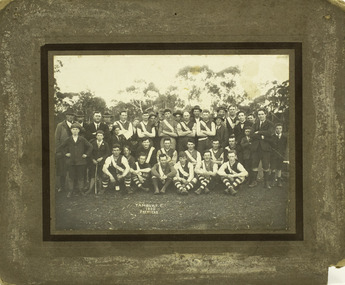
Photograph, Yambuk F.C. 1920 Premiers, 1920
... Con Carroll, Gus Crowe, Leo Barker, Frank Gracie, Frank Crowe, Len Crowe. Boy 2nd from left (holding stick) - Laurie Spooner - now lives at 75 Bank St. Port...Con Carroll, Gus Crowe, Leo Barker, Frank Gracie, Frank Crowe, Len Crowe. Boy 2nd from left (holding stick) - Laurie Spooner - now lives at 75 Bank St. Port ...Players and supporters of the Yambuk Football Club. 1920 Premiers. Historic sporting photograph showing players and supporteres of the Yambuk Football Club, 1920 Premiers.Black and white photograph mounted on card, rectangular of Formal pose of group of Football players, officials and childrenYambuk F.C. 1920 Premiers. W. Ryan, Rueben Bartlett, Tom Martin, Ron Bartlett, G. Spooner, Jack Dalton, Fred Barker, Tom Leddin, Geo. Hockley. J. Spooner, Tom McInerney, Claude Bolger, Jack Carroll, x, Jack Moutray, Rol Leddin, Archie Barker, Mat McInerney. Con Carroll, Gus Crowe, Leo Barker, Frank Gracie, Frank Crowe, Len Crowe. Boy 2nd from left (holding stick) - Laurie Spooner - now lives at 75 Bank St. Port Fairy - 72 Years of age at 7.1.82 K. Fry, Orford, ?, Mick Barker, George Barker. Sitting & Kneeling:- Walter Barker, Athol Thomas, Din Burger, Jack Crowe, Mick Leddin, Stan Bence, Ike Barker, Des Barker, Jim Davidson, Jack Lanigan, Jack McInerney, Joe Carroll. Property of Leo Carroll. football, yambuk football club, 1920 premiers, yambuk -
 Port Fairy Historical Society Museum and Archives
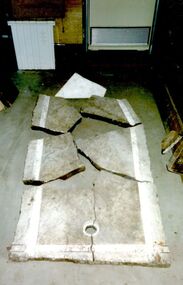
Functional object - Bath base, c. 1861
... Hot water sea baths established in 1889 in Bank Street Port Fairy for separate men and women bathing. The bathes were closed in 1916. One bath was taken by Leo Brady when baths were demolished and used in his home until 1939. ...Hot water sea baths established in 1889 in Bank Street Port Fairy for separate men and women bathing. The bathes were closed in 1916. One bath was taken by Leo Brady when baths were demolished and used in his home until 1939. ...Hot water sea baths established in 1889 in Bank Street Port Fairy for separate men and women bathing. The bathes were closed in 1916. One bath was taken by Leo Brady when baths were demolished and used in his home until 1939. These items are from this bath.1. Metal bolt used to clamp slabs of marble for bath , from hot water baths. Bolt tapers from top to bottom and round knob on top. 2. Piece of white marble used in the sea baths - roughly triagular in shape. 3.Large piece of marble from the base of a sea bathlocal history, buildings, fittings -
 Port Melbourne Historical & Preservation Society
Photograph - Port Melbourne Setttlement Football Team, c. 1941
... Sport - Australian Rules Football Societies Clubs Unions and other Organisations Jack PHILLIPS Ern TURNER Ken TURNER Les CAUSLAND Larry TILLEY Wingy JACKSON Amos BILOTTI Arthur KERR Jim SINCLAIR Mickey CLEARAHAN Mickey CAR Leo 'Doc' WOOD Lionel WOOD Wills OLDMAN Les STEVENS Fred HEATHCOTE Jim NICHOLLS Mr OLDMAN Small black and white photo and colour lasercopy of Port Melbourne Settlement Football team probably 1941. ...Copied from an original loaned by Ken TURNER. Wills OLDMAN (Killed in NG). Syd ROSS (Killed in PNG). Mickey CAR was a boxer. Mr OLDMAN was President.Small black and white photo and colour lasercopy of Port Melbourne Settlement Football team probably 1941. One of a group of settlement photos copied in 1998. (Refer #937)sport - australian rules football, societies clubs unions and other organisations, jack phillips, ern turner, ken turner, les causland, larry tilley, wingy jackson, amos bilotti, arthur kerr, jim sinclair, mickey clearahan, mickey car, leo 'doc' wood, lionel wood, wills oldman, les stevens, fred heathcote, jim nicholls, mr oldman -
 Port Melbourne Historical & Preservation Society
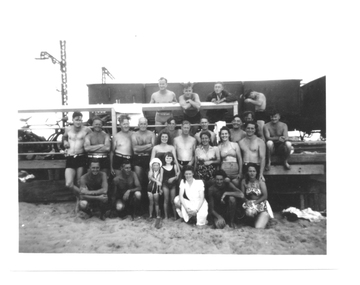
Photograph - Group at beach and Princes Pier, Port Melbourne, 1946
... The two spellings of Mc/MacLaughlin are as identified on the print. piers and wharves - princes pier sport swimming margaret smith Iris MCLAUGHIN Peg SMITH Leo MACLAUGHLIN Nayda MCLAUGHLIN Lionel WOOD Tom RENDALL Jack SMITH B&W photo of men, women and two little girls, most in swimming costumes, on the beach and Princes Pier in the 1940s. Margaret Smith is the taller of the two little girls centre front Supplementary file. Photograph Group at beach and Princes Pier, Port ...This group used to meet after school or work for a swim at Princes Pier. Back 2nd from left is possibly Lionel WOOD. Below him to the left is Jack SMITH. Standing group far left possibly Tom RENDALL with George SMITH 4th from left. In the centre front are two little girls on the left is Nayda MCLAUGHLIN and beside her Margaret SMITH. Standing behind the children is Peg SMITH with Iris MCLAUGHIN to her right. Leo MACLAUGHLIN is seated to the right . NB. The two spellings of Mc/MacLaughlin are as identified on the print.B&W photo of men, women and two little girls, most in swimming costumes, on the beach and Princes Pier in the 1940s. Margaret Smith is the taller of the two little girls centre front Supplementary file.piers and wharves - princes pier, sport, swimming, margaret smith, iris mclaughin, peg smith, leo maclaughlin, nayda mclaughlin, lionel wood, tom rendall, jack smith -
 Victorian Railway History Library
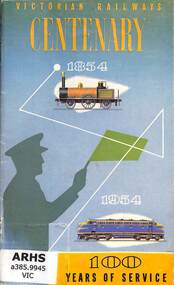
Booklet, Harrigan, Leo J, Victorian Railways Centenary: 1854 1954 100 Years of Service, 1954
... Leo J. Harrigan, for the celebration of the centenary of the opening of the railway to Port Melbourne. ill, p.48. ...A brief history of the Victorian Railways condensed from the a history compiled by Leo J. Harrigan, for the celebration of the centenary of the opening of the railway to Port Melbourne.ill, p.48.non-fictionA brief history of the Victorian Railways condensed from the a history compiled by Leo J. Harrigan, for the celebration of the centenary of the opening of the railway to Port Melbourne.railroad construction - victoria - history, railroad operations - victoria - history
