
Showing 5 items matching "lightships"
-
 Port Melbourne Historical & Preservation Society
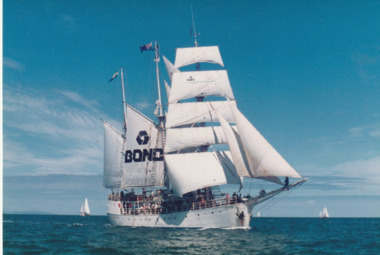
Photograph - Amorina, former lightship, Bicentenary of First Fleet, 1988
... Amorina, former lightship, from set of nine colour photos of the 1988 BiCentenary 'First Fleet' visit 1988...transport - shipping celebrations fetes and exhibitions amorina In ink on back: 'No 50 Amorina' Amorina, former lightship, from set of nine colour photos of the 1988 BiCentenary 'First Fleet' visit 1988 Photograph Amorina, former lightship, Bicentenary of First Fleet ...Amorina, former lightship, from set of nine colour photos of the 1988 BiCentenary 'First Fleet' visit 1988In ink on back: 'No 50 Amorina'transport - shipping, celebrations fetes and exhibitions, amorina -
 Queenscliffe Maritime Museum
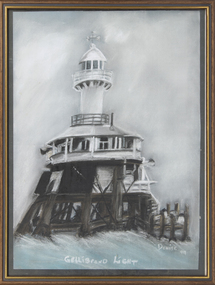
Painting - Pastel painting of the Gellibrand Light, Gellibrand Light
... The reef off Point Gellibrand at Williamstown was lit for nearly 120 years by a series of lights, beginning with three separate lightships over the mid-late 1800s, to a pile light which lasted seventy years before it was dramatically destroyed when hit by a ship the Melbourne Trader on the foggy morning of 21 June 1976....The reef off Point Gellibrand at Williamstown was lit for nearly 120 years by a series of lights, beginning with three separate lightships over the mid-late 1800s, to a pile light which lasted seventy years before it was dramatically destroyed when hit by a ship the Melbourne Trader on the foggy morning of 21 June 1976. ...The reef off Point Gellibrand at Williamstown was lit for nearly 120 years by a series of lights, beginning with three separate lightships over the mid-late 1800s, to a pile light which lasted seventy years before it was dramatically destroyed when hit by a ship the Melbourne Trader on the foggy morning of 21 June 1976.A pastel painting of the Gellibrand Pile Light made by Denise Clarke in 1999.Gellibrand Light; Denise '99point gellibrand pile light -
 Williamstown Historical Society Inc
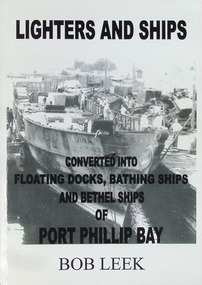
Book - Book - Lighters and Ships, Bob Leek and Peter Taylor, Lighters and Ships - Converted into Floating Docks, Bathing Ships and Bethel Ships of Port Phillip Bay, 2006
... ...Lightships...Untold stories of lighters, floating docks, lightships, bathing ships, bethel ships. Authors Bob Leek and Peter Taylor. ...An untold part of Melbourne's and Victorias shipping history has never been covered as thoroughly as this volume. Untold stories of lighters, floating docks, lightships, bathing ships, bethel ships.Authors Bob Leek and Peter Taylor. Reprint of the 2006 original. 152 pages, b/w illustrations, 7 colour photos.non-fictionAn untold part of Melbourne's and Victorias shipping history has never been covered as thoroughly as this volume. Untold stories of lighters, floating docks, lightships, bathing ships, bethel ships.williamstown, bathing ships, floating docks, bethel ships, lightships, bob leek, peter taylor, floating churches, point gellibrand -
 Mission to Seafarers Victoria
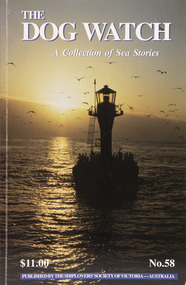
Journal (item) - Periodicals-Annual, Shiplovers' Society of Victoria, The Annual Dog Watch
... Contents Editorial - Harrow Morgan - 5 Captain Angel’s Daughter - Anne Morgan - 6 Australia’s Last Lightships - Ross Meredith - 17 Duyfken Sets Sail — 394 years on - Nick Burningham - 25 Episodes in King Sound - Capt. ...Contributes to our knowledge of the importance of shipping and places on record those stories of the sea which would otherwise be lost. sailing ships steamships shipping seafaring life shiplovers' society of victoria dog watch Contents Editorial - Harrow Morgan - 5 Captain Angel’s Daughter - Anne Morgan - 6 Australia’s Last Lightships - Ross Meredith - 17 Duyfken Sets Sail — 394 years on - Nick Burningham - 25 Episodes in King Sound - Capt. ...This journal provides the reader with glimpses of the adventures and hardships of a seaman's life. Many of the stories are of sailing ships.Contributes to our knowledge of the importance of shipping and places on record those stories of the sea which would otherwise be lost.Contents Editorial - Harrow Morgan - 5 Captain Angel’s Daughter - Anne Morgan - 6 Australia’s Last Lightships - Ross Meredith - 17 Duyfken Sets Sail — 394 years on - Nick Burningham - 25 Episodes in King Sound - Capt. John Abernethy - 33 Time and Tide - Lynn Sunderland - 38 Explosives in the Port of Melbourne - Cliff Gibson - 39 A Small Misunderstanding - ‘Flinders Bar’ - 51 Mr Bligh’s Bad Health - Ian Campbell - 55 Shipmates - Bernie Sprunt - 64 A Life at Sea - Capt. Ted Daubeny -65 Ketch Hands are Impervious - Noel Smith - Noel Smith - 73 The Devil’s Handwork - R N Thiele - 83 The Beginning of Herzogin Cecilie’s Last Round of Voyage — 1935 - Pamela Eriksson - 85 A Scrap of Flotsam - Esther Hardware - 93 The Waning Skills of Shipwrights - Arthur E Woodley - 96 Trouble in Paradise - Capt. R Jolly - 101 History & Heritage HMAS Castlemaine — the first 60 years - Peter J Williams - 104 The Days of ‘Whack’ and ‘Slush’ - Sir James Bissett - 108 An Unusual Lectern - George C Hogben SSV - 111 Book Reviews - - 112sailing ships, steamships, shipping, seafaring life, shiplovers' society of victoria, dog watch -
 Parks Victoria - Wilsons Promontory Lightstation
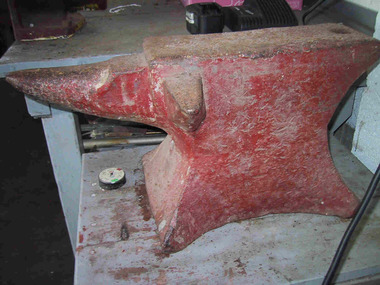
Anvil
... As a lightstation manager Chris Richter used the anvil to manufacture pulley blocks for sash windows, repair brass door hinges & sharpen cold chisels, crowbars and picks and other lightkeepers have used this anvil for many fabricating jobs such as manufacturing ducting for the generator room ventilation system."The lightship only came in every three months with supplies and there would have been repairs to do between visits from a blacksmith - who would have had to travel on the ship. ...As a lightstation manager Chris Richter used the anvil to manufacture pulley blocks for sash windows, repair brass door hinges & sharpen cold chisels, crowbars and picks and other lightkeepers have used this anvil for many fabricating jobs such as manufacturing ducting for the generator room ventilation system."The lightship only came in every three months with supplies and there would have been repairs to do between visits from a blacksmith - who would have had to travel on the ship. ...As quoted from Wikipedia, ‘An anvil is a block with a hard surface on which another object is, struck. The block is as massive as it is practical, because the higher the inertia of the anvil, the more efficiently it causes the energy of the striking tool to be transferred to the work piece’. The lightstation’s anvil is a red-painted iron block with a conical beak or horn at one end that was used for hammering curved pieces of metal. It would have stood on a heavy free-standing pedestal, such as a large tree stump, to allow complete access to the item being hammered. Some anvils display the manufacturer’s name in the metal on the side, but this is not the case here, and its age, although unknown appears to be quite old, perhaps c.1900. It appears to have had a lot of use, and although no record of this survives, it is presumed that a forge operated on site for hammering, cutting, shaping and repairing tools such as bolts, nails, hooks, chain segments, pulley blocks, hinges, crow bars, picks, chisels, horseshoes and harness hardware. A hames hook (which forms part of the collar worn by a draught horse) survives at the lightstation as do many other heavy metal tools and pieces of equipment. The anvil is an example of the necessary resourcefulness and self sufficiency practiced by lightkeepers working and living in a remotely located workplace and home, and many of the iron items in the collection may have been repaired or even made on its working surface. As a lightstation manager Chris Richter used the anvil to manufacture pulley blocks for sash windows, repair brass door hinges & sharpen cold chisels, crowbars and picks and other lightkeepers have used this anvil for many fabricating jobs such as manufacturing ducting for the generator room ventilation system."The lightship only came in every three months with supplies and there would have been repairs to do between visits from a blacksmith - who would have had to travel on the ship. Also, the ship was only anchored in the bay long enough to unload supplies and collect and deliver lightkeeping staff – probably not enough time to get much smithy work done – especially if the weather packed it in and the ship had to depart. Lightkeepers in our time had to be self sufficient, resourceful and innovative and I imagine that would have been the case in the past." It has second level contributory significance.Red painted blacksmith's anvil.
