
Showing 2 items matching "literary and social judgements"
-
 Flagstaff Hill Maritime Museum and Village
Book - Periodical Essays, William Rathbone Greg, Literary and Social Judgements, 1869–1873
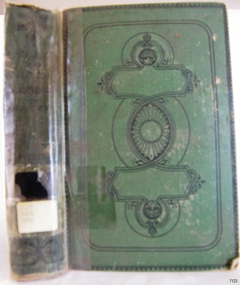
... Literary and Social Judgements......literary and social judgements...Hard cover book. Literary and Social Judgements Author: William Rathbone Greg Publisher: Trubner and Co Date: 1869–1873 Further Information: Green Cloth hardcover with a pattern to front cover in black lettering and patterning to spine also in black. ...The spine has a Library label with an inscription. Literary and Social Judgements Book Periodical Essays William Rathbone Greg Trubner and Co ...The volume collects Greg's periodical essays on writers and on the "woman question". A library catalogue lists the contents as "Madame de Staël", "British and Foreign Characteristics", "False Morality of Lady Novelists", "Kingsley and Carlyle", "French Fiction", "Chateaubriand", "M. de Tocqueville" and "Why Are Women Redundant?". In effect, the literary pieces judge authors by their moral and social influence, not by aesthetics alone. The best-known essay is "Why Are Women Redundant?", which dealt with the surplus of unmarried women in Victorian Britain. It first appeared in the National Review before being collected and published in book form.Hard cover book. Literary and Social Judgements Author: William Rathbone Greg Publisher: Trubner and Co Date: 1869–1873 Further Information: Green Cloth hardcover with a pattern to front cover in black lettering and patterning to spine also in black. The spine has a Library label with an inscription. non-fiction The volume collects Greg's periodical essays on writers and on the "woman question". A library catalogue lists the contents as "Madame de Staël", "British and Foreign Characteristics", "False Morality of Lady Novelists", "Kingsley and Carlyle", "French Fiction", "Chateaubriand", "M. de Tocqueville" and "Why Are Women Redundant?". In effect, the literary pieces judge authors by their moral and social influence, not by aesthetics alone. The best-known essay is "Why Are Women Redundant?", which dealt with the surplus of unmarried women in Victorian Britain. It first appeared in the National Review before being collected and published in book form. book, literary and social judgements, w r greg, shipwrecked-coast, flagstaff-hill, flagstaff-hill-maritime-museum, warrnambool, maritime-museum, shipwreck-coast, flagstaff-hill-maritime-village, shipwrecked-artefact, pattison collection, warrnambool library, warrnambool mechanics’ institute, ralph eric pattison, corangamite regional library service, warrnambool city librarian, mechanics’ institute library, victorian library board, warrnambool books and records, warrnambool children’s library, great ocean road -
 Flagstaff Hill Maritime Museum and Village
Book - A Fictional Story, John Galsworthy, Flowering Wilderness, 1932
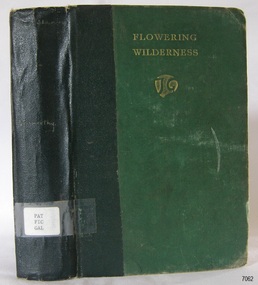
... The novel explores the social scandal and moral judgement that follows him back to England, and Dinny's loyalty to him in the face of society's condemnation. ...Flowering Wilderness (1932) is a novel by John Galsworthy, and it's the second book in his 'End of the Chapter' trilogy it's a sequel to 'Maid in Waiting', continuing the story of the Cherrell family. It centres on Dinny Cherrell (niece of the Forsyth-adjacent Cherrell clan) and her love affair with Wilfred Desert, a poet who under threat of death while a captive in the Middle East had renounced Christianity and converted to Islam. The novel explores the social scandal and moral judgement that follows him back to England, and Dinny's loyalty to him in the face of society's condemnation. It's part of Galsworthy's broader fictional universe that includes the famous Forsyte Saga, although this particular trilogy follows a different but related family branch.Hard cover book. Flowering Wilderness Author: John Galsworthy Publisher: William Heinemann Ltd Date: 1932 Further Information: Green cloth boards, gilt/black spine with gilt lettering. William Heinemann publisher's device on the title page, and rebound spine in black cloth. fiction Flowering Wilderness (1932) is a novel by John Galsworthy, and it's the second book in his 'End of the Chapter' trilogy it's a sequel to 'Maid in Waiting', continuing the story of the Cherrell family. It centres on Dinny Cherrell (niece of the Forsyth-adjacent Cherrell clan) and her love affair with Wilfred Desert, a poet who under threat of death while a captive in the Middle East had renounced Christianity and converted to Islam. The novel explores the social scandal and moral judgement that follows him back to England, and Dinny's loyalty to him in the face of society's condemnation. It's part of Galsworthy's broader fictional universe that includes the famous Forsyte Saga, although this particular trilogy follows a different but related family branch. shipwrecked-coast, flagstaff-hill, flagstaff-hill-maritime-museum, warrnambool, maritime-museum, shipwreck-coast, flagstaff-hill-maritime-village, shipwrecked-artefact, book, pattison collection, warrnambool library, warrnambool mechanics’ institute, ralph eric pattison, corangamite regional library service, warrnambool city librarian, mechanics’ institute library, victorian library board, warrnambool books and records, warrnambool children’s library, flowering wilderness, john galsworthy
