
Showing 6 items matching "live lures"
-
 Sunshine and District Historical Society Incorporated
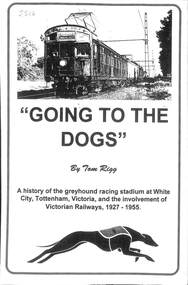
Booklet - Going to the Dogs - A history of the greyhound racing stadium at White City, Tottenham, Victoria and the involvement of the Victorian Railways 1927 - 1955, Sunshine & District Historical Society, 1997
... ...live lures...Tottenham Greyhound White City Railway Tom Rigg gambling live lures mechanical lures A collection of historical documents relating to greyhound racing and railways. ...The book details the history and chronicles the the track's origins beginning with its first meeting on December 10th, 1927, and examines the involvement of the Victorian Railways between 1927 and December 1955, when it closed down. Transport to the White City stadium was provided by train, with only a single platform available on the downside of Tottenham, even though double train lines existed. Special train services were run from Flinders Street to the White City platform, and for a while a parcels coach was provided for the transport of dogs. Greyhound racing has always been popular in Melbourne's western suburbs. The White City stadium in Tottenham was a major centre for the sport until 1955, enabling those who could not afford race horses to take part in an animal racing sport. The demolition of first the stadium and years later the railway platform, has relegated the name White City and its past relevance to the western suburbs, into history.Going to the Dogs. A history of the greyhound racing stadium at White City Tottenham Victoria and the involvement of the Victorian Railways 1927 - 1955tottenham, greyhound, white city, railway, tom rigg, gambling, live lures, mechanical lures -
 City of Moorabbin Historical Society (Operating the Box Cottage Museum)
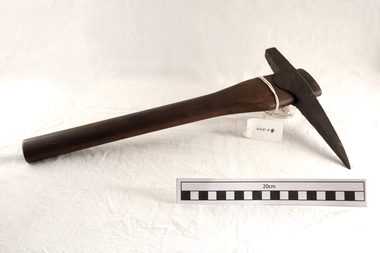
Tool - Gold-miner's Pick, Ballarat c 1920, c1920
... lured by the Gold, there was an increased demand for food. The market gardeners were getting very good prices for their produce and many increased their wealth considerably and many of these tenant farmers were able to purchase their blocks of land and live a profitable life. ...lured by the Gold, there was an increased demand for food. The market gardeners were getting very good prices for their produce and many increased their wealth considerably and many of these tenant farmers were able to purchase their blocks of land and live a profitable life. ...This gold miner's pick from the Ballarat Goldfields c 1920 was donated by Mr David Hopcraft, a dealer at the Arkuna Market Berwick, Victoria in December 2010. When Gold was discovered in Victoria c1853 most of the labourers and some landowners left the market gardens and farms to try their luck on the goldfields. Local Blacksmiths made picks similar to this one for them. There was a great shortage of labour in Melbourne and at the same time, due to the huge influx of people lured by the Gold, there was an increased demand for food. The market gardeners were getting very good prices for their produce and many increased their wealth considerably and many of these tenant farmers were able to purchase their blocks of land and live a profitable life. There was such a shortage of labour that J.B.Were applied for Irish immigrants to work the farms. This pick is an example of the hand made tools many pioneers took with them when they abandoned their farms and market gardens in the District of Brighton to try their luck at prospecting when gold was discovered in Ballarat and Bendigo c1853. Some were successful , most were not and retuned again to the hard life of farming. A forged steel pick with a wooden handle. The steel pick-head was hand-forged by a blacksmith. This miner's pick was used on the Ballarat gold-fields c1920gold mining, ballarat, bendigo, early settlers, market gardeners, moorabbin, bentleigh, mining equipment, gold rush, immigrants, blacksmiths, forges, tools -
 Eltham District Historical Society Inc
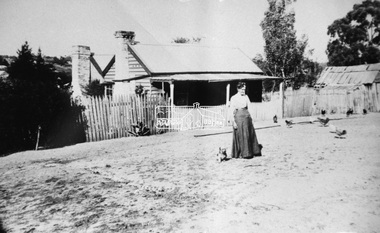
Negative - Photograph, Mary Jane Smart (nee Bailey) ouside the Smart family home in Bridge Street, Eltham, c.1915
... Smart himself lived here till the time when many years ago, the "lure of gold" got into his blood and he cleared out to Western Australia, to follow the digging rushes, gradually becom ing more and more estranged, till at length all communication ceased and be became lost to his wife and children. ...Smart himself lived here till the time when many years ago, the "lure of gold" got into his blood and he cleared out to Western Australia, to follow the digging rushes, gradually becom ing more and more estranged, till at length all communication ceased and be became lost to his wife and children. ...Located on the north side of Bridge Street at the intersection with Bolton Street, facing Bolton Street (now part of present day Brisbane Street and occupied by the Kitchen Design Centre). Show's an original early settler's cottage in Bridge Street. The cottage was built by Mrs Mary Jane Smart's parents, Edwin Bailey and Jane (nee Matthews). Mary Jane Smart was born in the cottage. She married an Englishman, Alexander Wilson Smart who disappeared to Western Australia in the early 1900s in search of gold. He ultimately married again in W.A., committing bigamy and then committed murder and was hung in 1911. This photo was taken c.1903 not long before both Mrs Bailey and her grand daughter both passed away. Jane Bailey died 2 Dec. 1904 and Mary Jane Smart and Ruby Jane Bertha Smart died July 1903 are all buried in Eltham Cemetery. SMART'S HOME AT ELTHAM. HIS WIFE AND SONS. In a little bush cottage surrounded by tall gum trees, through which appear glimpses of a willow fringed creek, of road ways hedged by masses of snowy flowering hawthorn, of growing crops and vividly green grazing paddocks, lives Mrs. Smart, the lawful wife of the man who is now in the hands of the police of Western Australia on suspicion of having committed a dreadful crime. Here, about half a mile out of the picturesque village of Eltham, she was born, and has lived her whole life — about 50 years. Smart himself lived here till the time when many years ago, the "lure of gold" got into his blood and he cleared out to Western Australia, to follow the digging rushes, gradually becom ing more and more estranged, till at length all communication ceased and be became lost to his wife and children. "I did not want him to go away," said Mrs. Smart, "because I had heard of so many men who had forgotten their homes in the excite ment of gold seeking, and of many others who died unknown and uncared for. But he would go, and when I saw his mind was set on it I placed no obstacles in his way. My parents built and lived in this cottage, where I was born, and they died in it. When I grew up I met my husband, a young Englishman, and married him. His name is Alexander, not Alfred, and his age is 52. We were very happy here, and although we were not well off we were comfortable, for he was a steady, sober, industrious man and had constant employment. He was just a manual worker, but could turn his hand to anything. We had five children, but one died. Four sons grew up in this little cottage. Thus three generations lived in it, somewhat unusual in an Australian bush home, I think. My eldest son is married and has a family; one is in Western Australia— not with his father— another is away working for him self, and one (indicating a young man by her side) has always stuck to his mother. He is my sole support, and he is as good to me now as his father once was. Yes, his father was a good, home-loving man in our younger days. He was fond of his children and was highly respected in these parts.' "It is fifteen years since my husband went away first. He had then been work ing for the Metropolitan Board of Works, and was engaged in the tunnel under the Yarra near Queen's-bridge when it col-lapsed. After he went to the West he sent me money regularly and wrote constantly. He came home three times — twice for a week or two at a time, the third time, eight years ago, when the Eitham railway was nearing completion. I induced him to stay till the railway opened, and he re-mained with me several months. I tried to get him to leave the West and settle down in his home, but he would not; he seemed restless and anxious to be off. One day when we were in Collingwood together he left me, saying he wanted to see what boats were going West. I implored him not to go away, and he said he would see. However, he returned to me soon after wards and said he had taken his ticket and would go by the next boat, and he went. For a year he wrote at irregular intervals, and then his letters ceased and I heard no more of him. For seven years I have not known whether he was alive or dead. Before that time my two sons in Western Australian used to see him some times, though they did not live with him; they used to tell me in their letters that he was well. It was a hard blow to be forgotten by him, but as my sons grew up I became more reconciled, and now I seem to look back at my life with him as some thing that happened a long time ago and is only a memory. Of his life and doings in Western Australia I know nothing. The last time I heard of him he was working in a foundry at Midland Junction. He was at Cue working on the railway when it opened there, and he caught the fever, but all that time he sent me money. When he returned the first time he took our eldest son with him, and the other boy followed later. They did not stay with him, how ever, and as far as I know they did not know how he lived." 'Mrs. Smart is a quiet, toil worn woman who has the respect of everyone who knows her.Roll of 35mm colour negative film, 3 strips Associated print from negative (Copy of original print)Fuji 100bridge street, cottage, smart home, houses, mary jane smart (nee bailey), smart family home, alexander wilson smart, bigamy, bush cottage, early settlers, eltham, jane bailey (nee matthews), murder, ruby jane bertha smart -
 Eltham District Historical Society Inc
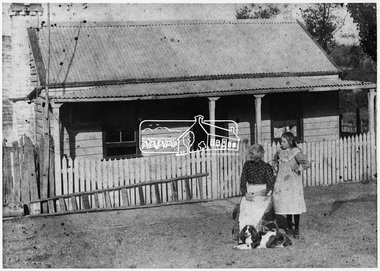
Negative - Photograph, Smart family home in Bridge Street, Eltham, c.1903
... Smart himself lived here till the time when many years ago, the "lure of gold" got into his blood and he cleared out to Western Australia, to follow the digging rushes, gradually becom ing more and more estranged, till at length all communication ceased and be became lost to his wife and children. ...Smart himself lived here till the time when many years ago, the "lure of gold" got into his blood and he cleared out to Western Australia, to follow the digging rushes, gradually becom ing more and more estranged, till at length all communication ceased and be became lost to his wife and children. ...Believed to be Mrs Jane Bailey (nee Matthews) (d. 1904) and her grand-daughter Ruby Jane Bertha Smart (1890-1903) in front of the Smart family cottage in Bridge Street, Eltham, c.1903 Located on the north side of Bridge Street at the intersection with Bolton Street, facing Bolton Street (now part of present day Brisbane Street and occupied by the Kitchen Design Centre). Ruby Jane Bertha Smart born abt 1890 died in 1903 in Eltham. Her brother Alfred Francis Smart was born abt 1887 and died 1966 in Mont Albert, Vic. (Accessed via Ancestry.com) Show's an original early settler's cottage in Bridge Street. The cottage was built by Mrs Mary Jane Smart's parents, Edwin Bailey and Jane (nee Matthews). Mary Jane Smart was born in the cottage. She married an Englishman, Alexander Wilson Smart who disappeared to Western Australia in the early 1900s in search of gold. He ultimately married again in W.A., committing bigamy and then committed murder and was hung in 1911. This photo was taken c.1903 not long before both Mrs Bailey and her grand daughter both passed away. Jane Bailey died 2 Dec. 1904 and Mary Jane Smart and Ruby Jane Bertha Smart died July 1903 are all buried in Eltham Cemetery. SMART'S HOME AT ELTHAM. HIS WIFE AND SONS. In a little bush cottage surrounded by tall gum trees, through which appear glimpses of a willow fringed creek, of road ways hedged by masses of snowy flowering hawthorn, of growing crops and vividly green grazing paddocks, lives Mrs. Smart, the lawful wife of the man who is now in the hands of the police of Western Australia on suspicion of having committed a dreadful crime. Here, about half a mile out of the picturesque village of Eltham, she was born, and has lived her whole life — about 50 years. Smart himself lived here till the time when many years ago, the "lure of gold" got into his blood and he cleared out to Western Australia, to follow the digging rushes, gradually becom ing more and more estranged, till at length all communication ceased and be became lost to his wife and children. "I did not want him to go away," said Mrs. Smart, "because I had heard of so many men who had forgotten their homes in the excite ment of gold seeking, and of many others who died unknown and uncared for. But he would go, and when I saw his mind was set on it I placed no obstacles in his way. My parents built and lived in this cottage, where I was born, and they died in it. When I grew up I met my husband, a young Englishman, and married him. His name is Alexander, not Alfred, and his age is 52. We were very happy here, and although we were not well off we were comfortable, for he was a steady, sober, industrious man and had constant employment. He was just a manual worker, but could turn his hand to anything. We had five children, but one died. Four sons grew up in this little cottage. Thus three generations lived in it, somewhat unusual in an Australian bush home, I think. My eldest son is married and has a family; one is in Western Australia— not with his father— another is away working for him self, and one (indicating a young man by her side) has always stuck to his mother. He is my sole support, and he is as good to me now as his father once was. Yes, his father was a good, home-loving man in our younger days. He was fond of his children and was highly respected in these parts.' "It is fifteen years since my husband went away first. He had then been work ing for the Metropolitan Board of Works, and was engaged in the tunnel under the Yarra near Queen's-bridge when it col-lapsed. After he went to the West he sent me money regularly and wrote constantly. He came home three times — twice for a week or two at a time, the third time, eight years ago, when the Eitham railway was nearing completion. I induced him to stay till the railway opened, and he re-mained with me several months. I tried to get him to leave the West and settle down in his home, but he would not; he seemed restless and anxious to be off. One day when we were in Collingwood together he left me, saying he wanted to see what boats were going West. I implored him not to go away, and he said he would see. However, he returned to me soon after wards and said he had taken his ticket and would go by the next boat, and he went. For a year he wrote at irregular intervals, and then his letters ceased and I heard no more of him. For seven years I have not known whether he was alive or dead. Before that time my two sons in Western Australian used to see him some times, though they did not live with him; they used to tell me in their letters that he was well. It was a hard blow to be forgotten by him, but as my sons grew up I became more reconciled, and now I seem to look back at my life with him as some thing that happened a long time ago and is only a memory. Of his life and doings in Western Australia I know nothing. The last time I heard of him he was working in a foundry at Midland Junction. He was at Cue working on the railway when it opened there, and he caught the fever, but all that time he sent me money. When he returned the first time he took our eldest son with him, and the other boy followed later. They did not stay with him, how ever, and as far as I know they did not know how he lived." 'Mrs. Smart is a quiet, toil worn woman who has the respect of everyone who knows her.This photo forms part of a collection of photographs gathered by the Shire of Eltham for their centenary project book,"Pioneers and Painters: 100 years of the Shire of Eltham" by Alan Marshall (1971). The collection of over 500 images is held in partnership between Eltham District Historical Society and Yarra Plenty Regional Library (Eltham Library) and is now formally known as the 'The Shire of Eltham Pioneers Photograph Collection.' It is significant in being the first community sourced collection representing the places and people of the Shire's first one hundred years.Digital image 4 x 5 inch B&W Neg Original print 10.5 x 16.5 cmFor postcard print: Inscribed on envelope: "Return to Mrs H. Butherway, 22 Bridge St, Eltham." Also "Photo Mrs Clark Hampton (nee Smart), original Smart's house - Bridge Street, 95 years ago." Also "Right - Mrs Clark's grandmother Mrs J Smart Left - Her daughter Ruby dies soon after photo taken. Brother Alf Smart died about 6 years ago." Inscribed on back of photo "247 Vincent St, Leederville" It is believed that this inscription may be somewhat mixed up.sepp, shire of eltham pioneers photograph collection, eltham, bridge street, alexander wilson smart, bigamy, bush cottage, early settlers, houses, jane bailey (nee matthews), mary jane smart (nee bailey), murder, ruby jane bertha smart, smart family home, smart home -
 Sunshine and District Historical Society Incorporated
Article - Sunshine history collection of articles 1989 to 1999, 1989 -1999
... Newspaper Article Western Independent 23 February 1993 School finds Kellers mark|Newspaper Article Brimbank Independent 16 June 1998 The bridges of Keilor county|Newspaper Article The Advocate 26 October 1994 Author recalls childhood My Paddock Prue McGoldrick|Newspaper Article Brimbank Independent 3 February 1998 A Passion for History|Newspaper Article The Advocate 6 December 1995 Links to museums Travel by Rail Mooted|Newspaper Article The Advocate 19 February 1986 Prue digs our past|Newspaper Article Brimbank Independent 10 December 1996 Aboriginal Heritage study|Newspaper Article the Advocate 4 December 1996 In memory of pioneer women|Brochure Australia Remembers January 1995 Australia remembers 1945 to 1995|Newspaper Article Throwing light on Sunshine|Newspaper Article Sunshine history too costly - council told|Newspaper Article The Herald 20 October 1989 Living Museum of the west|Newspaper Article Brimbank Independent 24th September 1996 Trust classifies Shire Hall|Invitation to the Graduation of this participants of the We Came To Sunshine LEAP Project 23 August 1996|Newspaper Article Brimbank Independent 18 April 1995 Through the looking glass|Newspaper Article The Advocate 12 May 1999 Images Found Early days Sunshine Pipe band asembled for the HV Mckay company|Newspaper Article The Advocate 14 December 1999 Historical house is left to ruin and A mess Stevens Farmhouse|Newspaper Article The Advocate 14 December 1999 Sorry Sight Drugs haven in farmhouse|Newspaper Article The Advocate 20 June 2000 History revealed Aboriginal artefacts West Sunshine|Newspaper Article Brimbank Independent 26 January 1999 King Charles 1 commemorate service in Sunshine|Newspaper The Echo 24 November 1999 Lure of our history Cecil Anderson|Newspaper Brimbank Messenger 16 November 1999 A Journey through time|Newspaper Article Fifty Plus News February 1999 New ways to solve the puzzles of the past Eric Wegener|Newspaper Article Brimbank Messenger 25 August 1998 The west turns to tourism|Newspaper Article The Advocate 4 December 2001 Railroad research Tom Rigg|Newspaper Article Brimbank Leader 27 November 2001 Photographic Memories live on Des Johnson|Newspaper Article The Advocate 5 March 2002 The first days of Sunshine Olwen Ford|Newspaper Article Brimbank Leader 4 December 2001 Exhibiting an explosive history|Newspaper Article Brimbank Leader 10 July 2001 Heritage in peril|Newspaper Article The Advocate 12 May 1999 of the past in clean-up|Newspaper Article Brimbank Independent 7 May 1996 Marking time|Newspaper Article Wests pioneer women remembered|Newspaper Article The Weekly times 17 February 1999 Camels race for museum|Newspaper Article The Weekly Times 3 September 1986 Committee to decide use of explosives site...Sunshine History Newspaper Article Western Independent 23 February 1993 School finds Kellers mark|Newspaper Article Brimbank Independent 16 June 1998 The bridges of Keilor county|Newspaper Article The Advocate 26 October 1994 Author recalls childhood My Paddock Prue McGoldrick|Newspaper Article Brimbank Independent 3 February 1998 A Passion for History|Newspaper Article The Advocate 6 December 1995 Links to museums Travel by Rail Mooted|Newspaper Article The Advocate 19 February 1986 Prue digs our past|Newspaper Article Brimbank Independent 10 December 1996 Aboriginal Heritage study|Newspaper Article the Advocate 4 December 1996 In memory of pioneer women|Brochure Australia Remembers January 1995 Australia remembers 1945 to 1995|Newspaper Article Throwing light on Sunshine|Newspaper Article Sunshine history too costly - council told|Newspaper Article The Herald 20 October 1989 Living Museum of the west|Newspaper Article Brimbank Independent 24th September 1996 Trust classifies Shire Hall|Invitation to the Graduation of this participants of the We Came To Sunshine LEAP Project 23 August 1996|Newspaper Article Brimbank Independent 18 April 1995 Through the looking glass|Newspaper Article The Advocate 12 May 1999 Images Found Early days Sunshine Pipe band asembled for the HV Mckay company|Newspaper Article The Advocate 14 December 1999 Historical house is left to ruin and A mess Stevens Farmhouse|Newspaper Article The Advocate 14 December 1999 Sorry Sight Drugs haven in farmhouse|Newspaper Article The Advocate 20 June 2000 History revealed Aboriginal artefacts West Sunshine|Newspaper Article Brimbank Independent 26 January 1999 King Charles 1 commemorate service in Sunshine|Newspaper The Echo 24 November 1999 Lure of our history Cecil Anderson|Newspaper Brimbank Messenger 16 November 1999 A Journey through time|Newspaper Article Fifty Plus News February 1999 New ways to solve the puzzles of the past Eric Wegener|Newspaper Article Brimbank Messenger 25 August 1998 The west turns to tourism|Newspaper Article The Advocate 4 December 2001 Railroad research Tom Rigg|Newspaper Article Brimbank Leader 27 November 2001 Photographic Memories live on Des Johnson|Newspaper Article The Advocate 5 March 2002 The first days of Sunshine Olwen Ford|Newspaper Article Brimbank Leader 4 December 2001 Exhibiting an explosive history|Newspaper Article Brimbank Leader 10 July 2001 Heritage in peril|Newspaper Article The Advocate 12 May 1999 of the past in clean-up|Newspaper Article Brimbank Independent 7 May 1996 Marking time|Newspaper Article Wests pioneer women remembered|Newspaper Article The Weekly times 17 February 1999 Camels race for museum|Newspaper Article The Weekly Times 3 September 1986 Committee to decide use of explosives site Various articles regarding local history, heritage registers and historical societies Part of E Wegeners collection of historically significant articles from various of local papers of the Sunshine district Including article from the Brimbank Independent and The Advocate also includes The Age and Herald Sun Article Sunshine history collection of articles 1989 to 1999 ...Newspaper Article Western Independent 23 February 1993 School finds Kellers mark|Newspaper Article Brimbank Independent 16 June 1998 The bridges of Keilor county|Newspaper Article The Advocate 26 October 1994 Author recalls childhood My Paddock Prue McGoldrick|Newspaper Article Brimbank Independent 3 February 1998 A Passion for History|Newspaper Article The Advocate 6 December 1995 Links to museums Travel by Rail Mooted|Newspaper Article The Advocate 19 February 1986 Prue digs our past|Newspaper Article Brimbank Independent 10 December 1996 Aboriginal Heritage study|Newspaper Article the Advocate 4 December 1996 In memory of pioneer women|Brochure Australia Remembers January 1995 Australia remembers 1945 to 1995|Newspaper Article Throwing light on Sunshine|Newspaper Article Sunshine history too costly - council told|Newspaper Article The Herald 20 October 1989 Living Museum of the west|Newspaper Article Brimbank Independent 24th September 1996 Trust classifies Shire Hall|Invitation to the Graduation of this participants of the We Came To Sunshine LEAP Project 23 August 1996|Newspaper Article Brimbank Independent 18 April 1995 Through the looking glass|Newspaper Article The Advocate 12 May 1999 Images Found Early days Sunshine Pipe band asembled for the HV Mckay company|Newspaper Article The Advocate 14 December 1999 Historical house is left to ruin and A mess Stevens Farmhouse|Newspaper Article The Advocate 14 December 1999 Sorry Sight Drugs haven in farmhouse|Newspaper Article The Advocate 20 June 2000 History revealed Aboriginal artefacts West Sunshine|Newspaper Article Brimbank Independent 26 January 1999 King Charles 1 commemorate service in Sunshine|Newspaper The Echo 24 November 1999 Lure of our history Cecil Anderson|Newspaper Brimbank Messenger 16 November 1999 A Journey through time|Newspaper Article Fifty Plus News February 1999 New ways to solve the puzzles of the past Eric Wegener|Newspaper Article Brimbank Messenger 25 August 1998 The west turns to tourism|Newspaper Article The Advocate 4 December 2001 Railroad research Tom Rigg|Newspaper Article Brimbank Leader 27 November 2001 Photographic Memories live on Des Johnson|Newspaper Article The Advocate 5 March 2002 The first days of Sunshine Olwen Ford|Newspaper Article Brimbank Leader 4 December 2001 Exhibiting an explosive history|Newspaper Article Brimbank Leader 10 July 2001 Heritage in peril|Newspaper Article The Advocate 12 May 1999 of the past in clean-up|Newspaper Article Brimbank Independent 7 May 1996 Marking time|Newspaper Article Wests pioneer women remembered|Newspaper Article The Weekly times 17 February 1999 Camels race for museum|Newspaper Article The Weekly Times 3 September 1986 Committee to decide use of explosives sitesunshine, history -
 Sunshine and District Historical Society Incorporated
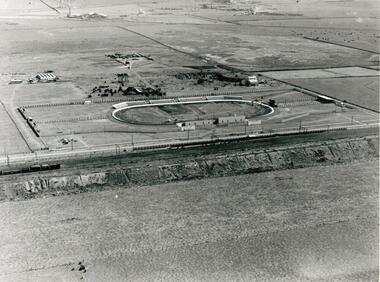
Photograph - White City Aerial photographs of White City greyhound racing venue, Pratt, Charles Daniel, (1892 - 1968)
... Live hare...Mechanical lure...The White City Greyhound racing stadium was built at Tottenham in 1927, with the intention that mechanical lures and not live hares be used as pacemakers. The first meeting was held on 10 December 1927 but within 3 days, after strong lobbying by other sports bodies, the Victorian Government banned betting on greyhound racing if mechanical lures were used instead of live hares. ...White City Greyhound racing stadium Coursing track White City station Tottenham Whippet Gambling Live hare Mechanical lure Only on the negatives at the State Library. ...The White City Greyhound racing stadium was built at Tottenham in 1927, with the intention that mechanical lures and not live hares be used as pacemakers. The first meeting was held on 10 December 1927 but within 3 days, after strong lobbying by other sports bodies, the Victorian Government banned betting on greyhound racing if mechanical lures were used instead of live hares. This caused some financial problems to the shareholders. For a time the average weekly attendances were 9000, and races were held on Mondays, Wednesdays, and Saturdays. Whippet Races, Goat Races, Monkeys on greyhounds, and Professional Foot racing were also tried to attract attendances. After 28 years of bureaucratic interference, and using live hares as greyhound pacemakers, the White City stadium held its last meeting on 29 December 1955. On 31 December the Victorian Government finally allowed betting on greyhound races that used mechanical lures. Manufacturing industry (Olex Cables) took over the White City site. Transport to the White City stadium was provided by train, with only a single platform available on the Down side of Tottenham, even though double train lines existed. Special train services were run from Flinders Street to the White City platform, and for a while a parcels coach was provided for the transport of dogs. As industry developed in the area some trains also stopped at the White City platform in the mornings and late afternoons to transport workers. In 1981 when the grade separation at Ashley Street next to the Tottenham station was completed, the new train lines on the Upper Level came into operation, and so the White City platform was closed down and eventually demolished. Greyhound racing has always been popular in Melbourne's western suburbs. The White City stadium in Tottenham was a major centre for the sport until 1955, enabling those who could not afford race horses to take part in an animal racing sport. The demolition of first the stadium and years later the railway platform, has relegated the name White City and its past relevance to the western suburbs, into history.Only on the negatives at the State Library. We do not hold a copy of these.white city, greyhound racing stadium, coursing track, white city station, tottenham, whippet, gambling, live hare, mechanical lure
