
Showing 715 items matching "local family members"
-
 Buninyong & District Historical Society
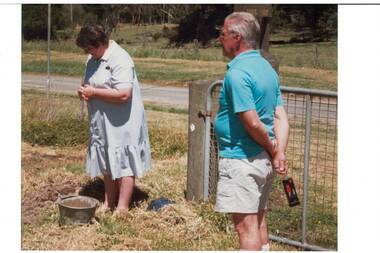
Photograph - Commemorative tree planting at Lal Lal Falls park entrance, Bicentennial tree planting at Lal Lal Falls
... ...Local family members...Lal Lal Falls. Local family members Colour print in good condition. ...Of significance to local area and identities.Colour print in good condition.bicentennial celebrations., lal lal falls., local family members -
 Warrnambool and District Historical Society Inc.
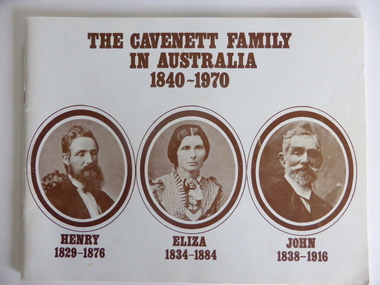
Booklet, The Cavenett Family 1840-1985, 1970
... family. As far as can be ascertained it does not have any local significance. john and eliza cavenett south australian pioneer families warrnambool Front Cover: ‘The Cavenett Family in Australia 1840-1970’ ‘Henry 1829-1876, Eliza 1834-1884. John 1838-1916’ This is soft cover booklet of 41 pages. The cover has a cream-coloured background with sepia-coloured photographs of three Cavenett family members ...This booklet gives information on the Cavenett families from 1840 to 1970. John and Eliza Cavenett with four children set sail from England to Adelaide in 1840 but Eliza and one child died on the voyage. John Cavenett married again and settled in Adelaide. Most descendants of John Cavenett that are mentioned in the booklet also lived in South Australia but some settled later in Victoria, New South Wales and Western Australia. The book has been produced by Kingsley Ireland. This book is of some interest as an example of a family history written by a descendant of the pioneer family. As far as can be ascertained it does not have any local significance. This is soft cover booklet of 41 pages. The cover has a cream-coloured background with sepia-coloured photographs of three Cavenett family members on the front cover and a sepia-coloured reproduction of an S.T. Gill sketch on the back cover. The book contains a Foreword, a Preamble, information on members of the Cavenatt families, an Appendix and a Surname Index. There are many black and white photographs of the Cavenett family members. The booklet is stapled. Front Cover: ‘The Cavenett Family in Australia 1840-1970’ ‘Henry 1829-1876, Eliza 1834-1884. John 1838-1916’john and eliza cavenett, south australian pioneer families, warrnambool -
 Warrnambool and District Historical Society Inc.
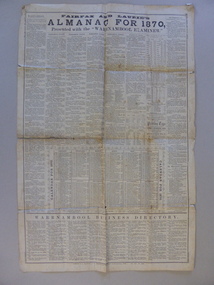
Document, News Sheet Almanac for 1870, 1870
... member of the Fairfax family which was, and still is, associated with the publication of many Australian newspapers. Henry Laurie later became well-known as a Melbourne University Philosophy Professor. This single sheet of newspaper is an interesting and valuable record of Warrnambool and its people in 1870. There are names of many local ...This Almanac records the many various organisations, such as churches schools councils and law related information.It lists public holidays, members of Parliament as well as births and deaths natural events such as rainfall, sunrise/sunsets and moon charts. it records mail charges and coach timetables.A middle section presents a calendar for 1870 with a record of events which were deemed important since the time of settlement It lists such things as the first telegram from Melbourne to Sydney1858, Governor Bligh deposed 1808, Burke and Wills funeral 1863. At the bottom of the page is a Warrnambool Business Directory which includes J S Rowley Corio brewery, Royal Hotel , J H Rule Painter, plumber and glazier, J Brady , tinsmith and A Lanagan , Golden Boot The Warrnambool Examiner was founded by John Wilkinson and Richard Osburne in 1851. After a gap of a couple of years Richard Osburne resumed publication in October 1853 and continued until 1867. William Fairfax and Henry Laurie then leased the paper (1867 to 1872) before Richard Osburne again became the proprietor from October 1872 to April 1878 and from December 1879 to December 1880 when publication ceased. Fairfax and Laurie were the proprietors of the paper when this Almanac was published. William Fairfax was a member of the Fairfax family which was, and still is, associated with the publication of many Australian newspapers. Henry Laurie later became well-known as a Melbourne University Philosophy Professor.This single sheet of newspaper is an interesting and valuable record of Warrnambool and its people in 1870. There are names of many local people recorded and it also gives an insight into the variety of businesses and orhganisations which were established by 1870. It is also interesting to note that there are at least ten different styles of print on the page.Large single broadsheet of newspaper with large black heading and eight columns of print. The back of the page is blank.Fairfax and Laurie's Almanac for 1870 presented with the Warrnambool Examiner. Published as a supplement to the Warrnambool Examiner of 7th January 1870 Vol.XX No 1597.warrnambool, warrnambool almanac 1870,, examiner almanac warrnambool, fairfax and laurie, examiner warrnambool -
 Warrnambool and District Historical Society Inc.
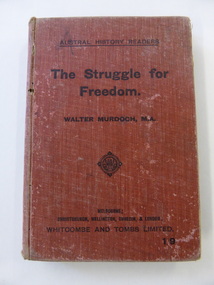
Book, The Struggle for Freedom, 1903
... This copy of the book ‘The Struggle for Freedom’ was owned by a member of the Goodall family, a name prominent in Warrnambool’s history. The stamp of the stationer Walter Davies shows that it was originally bought at a well-known local Warrnambool bookstore. ...This book has been written by Walter Murdoch while he was living in Warrnambool in 1903. Walter Logie Forbes Murdoch (1874-1970) had a distinguished academic career and became Australia’s best-known essayist. He was a household name to two generations of Australians through his radio broadcasts and syndicated literary columns in many Australian newspapers. In 1901 Walter Murdoch came to Warrnambool going into partnership with James Scott, the proprietor of Warrnambool College. They bought out Warrnambool Grammar School previously run by John Stanley. When Scott retired Murdoch became the sole owner and headmaster of the school. While in Warrnambool Murdoch wrote the school history textbook ‘The Struggle for Freedom’ which covers British constitutional history and has chapters on Australian government at all levels, including the new Federal Government. In 1904 Murdoch left Warrnambool to take up a lecturing position in English at Melbourne University. He went on to become the foundation Professor of English at the University of Western Australia and later its Chancellor. Murdoch University in Western Australia is named after him. During his lifetime Murdoch published over 40 works and he was knighted in 1964. This book is of major significance as it was written by the distinguished writer and academic Walter Murdoch whilst he was working in Warrnambool. The address at the end of the book’s Preface is ‘The College, Warrnambool’ and the date is ‘October 7th 1903’. The book sold 10,000 copies in its first year. This copy of the book ‘The Struggle for Freedom’ was owned by a member of the Goodall family, a name prominent in Warrnambool’s history. The stamp of the stationer Walter Davies shows that it was originally bought at a well-known local Warrnambool bookstore.This is a hard cover book of 248 pages. It has a dark red cover with black printed material and a Whitcombe and Tombs logo. The cover is torn near the spine and there is much foxing. The book contains a Preface, Contents pages, an Introductory chapter, 28 other chapters on the development of Government in Britain and the Federation of Australia and an Index. There are some black and white photographs and some sketches.Inside front cover and on page edges: ‘T. Goodall, (changed to ‘E’ in one place) S.School Warrnambool’ Inside front cover: Stamp of Walter Davies, Warrnambool Bookseller history of warrnambool, warrnambool college (early 20th century), walter murdoch -
 Warrnambool and District Historical Society Inc.
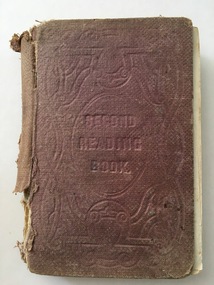
Book, Second Reading Book, 1876
... families named Hugh and it is unclear which one owned this book. This book is of interest as an early school reader used in the Warrnambool area and as a book belonging to a member of a local Adams family in the 19th century. school readers education in warrnambool hugh adams ‘Hugh Adams’ (back pages and on page 279) This is a hard cover book of 285 pages. ...This is a Reading Book of the Irish National Board of Education adapted for use in schools in Victoria, Australia. Irish School Readers were used in Victoria under the National School System in the 1850s and continued to be used in the 1860s and 70s under the Common School System and the introduction of the State School System after 1872. Readers produced in Victoria for Australian children did not become prominent until the 20th century (School Papers 1898 and Victorian Readers 1928). The signature of Hugh Adams in this book indicates that the book may have come from one of the Adams families farming in the Wangoom area near Warrnambool. There were several boys in these families named Hugh and it is unclear which one owned this book. This book is of interest as an early school reader used in the Warrnambool area and as a book belonging to a member of a local Adams family in the 19th century.This is a hard cover book of 285 pages. It has a brown cover with the title and ornamentation etched into the cover. The book contains prose extracts and poetry with the extracts headed by the derivation and pronunciation of some of the words in the text. There are a few illustrations and sketches. Some of the illustrations have been coloured and scribbled on. The book has been bound with string and glue with the lower portion of the spine cover missing. The book is very tattered. ‘Hugh Adams’ (back pages and on page 279) school readers, education in warrnambool, hugh adams -
 Warrnambool and District Historical Society Inc.
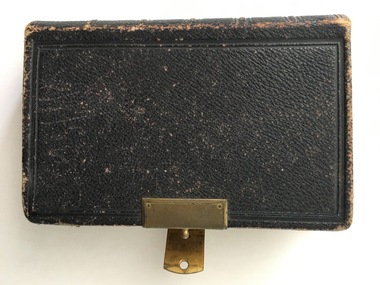
Book, Holy Bible, 19th century
... local Councillor and Mayor in 1868-9. He was also an early commercial photographer in Warrnambool. This small Bible is of great interest because of its connection to the Hose family in Warrnambool. In the book are recorded the births and deaths of members ...This Bible was owned by Janet Hose (nee Murfitt) 1856-1947. She was married to George Hose and they lived in Warrnambool for all of their married life. They had eleven children and all the births and some of the deaths of the children are recorded in this little Bible. The book was purchased from James Hider who had been a carpenter, a land agent and a rate collector before he established a bookstore in Timor Street in the 1860s. He was heavily involved in community affairs, being a local Councillor and Mayor in 1868-9. He was also an early commercial photographer in Warrnambool. This small Bible is of great interest because of its connection to the Hose family in Warrnambool. In the book are recorded the births and deaths of members of the Hose family. It was a common custom in the 19th century to include family history details in family Bibles and some larger-style Bibles had pages specifically printed to include family history material. This Bible is also of antiquarian interest, an attractive item with its leather cover and gold clasp.This is a mottled brown leather-covered Bible of 840 pages. The pages are gilt-edged and there is a gold metal clasp to close over the pages. Inside the front and back pages there are signatures and other handwritten material, some written in black ink and some in pencil. There is also a label from the Warrnambool book shop and stationery store of James Hider. The inscription pages and the front cover are stained. The cover is also rubbed. ‘J.Hider Opposite the Post Office Warrnambool’ ‘Janet Hose 19/07, 78,83 (Plus the family history details of the Hose Family, mostly on the back pages) janet and george hose, history of warrnambool, hose family -
 Warrnambool and District Historical Society Inc.
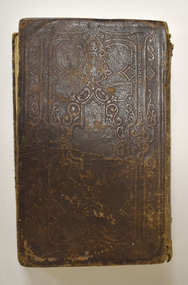
Book - 1869 Bible Curtis Owen, American Bible Society, The Holy Bible, 1869
... Warrnambool and District Historical Society Inc. 2 Gilles Street (south of Merri St) Warrnambool great-ocean-road This 1869 bible contains names of previous owners Eliza Curtis, David Owen, and members of the Owen family with connections to Warrnambool and Allansford. This bible has strong social significance firstly as a link to local families but also from the perspective that it belongs to a time when many households would have had a family bible. 19th century bible eliza curtis david owen e isabel owen l florence owen lorraine owen sulhamstead coulstock street warrnambool riverside allansford b aymar 1869 American Bible Society Bible presented to Eliza Curtis in 1870. ...1869 American Bible Society Bible presented to Eliza Curtis in 1870.772 page 1869 bible with a brown cardboard cover embossed with a cover embossed with a geometric design. The spine has Holy Bible imprinted in gold upper case lettering and is well worn with some damage exposing the stitched binding of the pages. non-fiction1869 American Bible Society Bible presented to Eliza Curtis in 1870.19th century bible, eliza curtis, david owen, e isabel owen, l florence owen, lorraine owen, sulhamstead, coulstock street, warrnambool, riverside, allansford, b aymar -
 Warrnambool and District Historical Society Inc.
Album - Bonnett Family Scrapbook
... It was collected by a member of the Bonnett family , who farmed at Mepunga over a number of years. The Historical Society has another exercise book of cuttings from the local paper which printed letters from the front by soldiers from WW1....It was collected by a member of the Bonnett family , who farmed at Mepunga over a number of years. The Historical Society has another exercise book of cuttings from the local paper which printed letters from the front by soldiers from WW1. ...This is a collection of newspaper cuttings many of which relate to district soldiers who enlisted in World War 1. There are also a number of household recipes and hints from " Women's Sphere" and the "Australian Journal" in the time period of 1906 to 1935. There are also cuttings from the " Australian Dairy Farmer" from 1940. There are also a number of handwritten recipes for baking and medicinal purposes. It was collected by a member of the Bonnett family , who farmed at Mepunga over a number of years. The Historical Society has another exercise book of cuttings from the local paper which printed letters from the front by soldiers from WW1.This is an interesting collection of items which sparked the interest of a farming family in early 20th century.White two ring bantex folder of 37 plastic sleeves containing white A4 pages with newspaper cuttings. There are some handwritten pages at the rear.Early 20thC. newspaper cuttings. (kept by Bonnett family - Mepunga East)bonnett family, mepunga east, scrapbook, gall, chambers, morgan, moloney, jenkins, mclean, rev samuel fraser, spence, adams, bennett, robisson, sheedy, patrick maher, w j freckleton, j j buckley, john steel, f j hennessy, thomas gordon scott, william r jackway, c c williams, c w cooke, henry w frich, leo p gartlan, w f heazlewood, william k o'dowd, ralph j levings, w ewart murnane, t d donovan, j w connolly, arthur butler, george white, jim g davidson, a roberts, jack keith, w. allwood, voutier, edward somerville, harold wright, w a egan, p macnamara, carl d fisher, p morgan, david watson, cecil h fox, james tinker, gordon patterson -
Warrnambool and District Historical Society Inc.
Book - Note Book, Note Book (Tennis), Early 20th century
... The second section at the back of the notebook concerns the Christ Church Tennis Club (1912-1922) and its participation in local association matches and in tournaments – the Easter Tournament and those to aid the war effort – the Red Cross Tournaments and the Patriotic Tennis Tournament. Some members of the Ardlie family...The second section at the back of the notebook concerns the Christ Church Tennis Club (1912-1922) and its participation in local association matches and in tournaments – the Easter Tournament and those to aid the war effort – the Red Cross Tournaments and the Patriotic Tennis Tournament. Some members of the Ardlie family ...This notebook comes from the Ardlie estate material. The book has two sections. One section contains newspaper cuttings concerning the matches played and the results of the Warrnambool and District Tennis Association (1914-1919). Some of the teams in this association include Dennington, Swintons, Koroit, Wesley, Woodford, St. Joseph’s, St. John’s, Christ Church and the Civil Service. The second section at the back of the notebook concerns the Christ Church Tennis Club (1912-1922) and its participation in local association matches and in tournaments – the Easter Tournament and those to aid the war effort – the Red Cross Tournaments and the Patriotic Tennis Tournament. Some members of the Ardlie family were involved in these matches though it is not known which one compiled this notebook. The Ardlie association with Warrnambool began with John and Mary Ardlie, early settlers in the town. John Ardlie was the Clerk of Courts in Warrnambool from 1852 to 1872 and was prominent in community affairs. One of his sons William was a well-known lawyer in Warrnambool, practising from 1867 to the early 1930s. This note book is of minor significance as a memento of the Ardlie family in Warrnambool. Most of the cuttings in the book are related to early tennis club matches and results and this material can be researched elsewhere. This is a black-covered exercise book or note book with pages ruled with blue lines. Some of the pages have newspaper cuttings pasted in and some other cuttings and other handwritten and typed sheets are loose in the note book. The cover is creased and rubbed and the inside pages of the cover have handwritten material in pencil. ardlie family, warrnambool -
 Warrnambool and District Historical Society Inc.
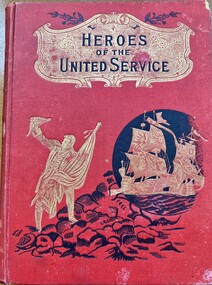
Literary work - Antiquarian Book, Heroes of The United Service, 1901
... members of the Jackman family at the Clear Lake cemetery near Horsham. The two schools mentioned on the name plate St Patrick's and St Francis Xavier Colleges were both public Schools which were run by the Catholic order of priests, The Jesuits.(SJ) The bookplate is signed by Father Patrick Keating was one of the most highly regarded Jesuits to come to Australia at that time. This book has significance on two levels. Firstly the book is indicative of its time and contains a large number of good quality illustrations and secondly with its strong links to a local ...This book contains a number of stories which relate to heroes of the British Army and Navy . After a brief synopsis of the history of British military, it then commences from the conquest of Canada in 1759 and relates the stories of renown personnel through to the beginning of the 20th century.This book has a red cloth over card cover with black text mounted in a gold shield at the top of the cover with a gold figure of a sailor who is standing on black rocks. There is a gold image of two galleons inside a black circle. The spine has the title in black on a gold shield , similar to the front cover . The back cover is plain. It has 248 pages relating to the Armed Forces and 256 pages relating to naval stories.There are a number of colour plates and black and white drawings many depicting military scenes. Inside front and back covers are faced with brown and mustard coloured pages. There is a name plate inside the front cover. non-fictionThis book contains a number of stories which relate to heroes of the British Army and Navy . After a brief synopsis of the history of British military, it then commences from the conquest of Canada in 1759 and relates the stories of renown personnel through to the beginning of the 20th century.heroes of the united service, arthur jackman, jackman family, clear lake cemetery, jesuits st patricks college melbourne, jesuits st francis xavier melbourne, rector patrick keating -
 Warrnambool and District Historical Society Inc.
Camera, Photography, 1920s
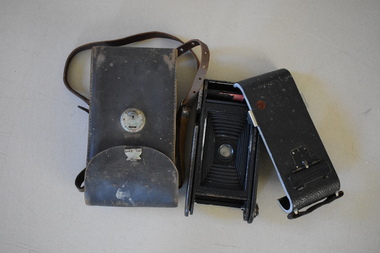
... Warrnambool and District Historical Society Inc. 2 Gilles Street (south of Merri St) Warrnambool great-ocean-road This camera comes from the 1920s and originally belonged to a member of the Shadbolt family but no information has been found on this family. The Kodak junior camera was very popular in the first half of the 20th Century This camera has no known local provenance but is retained as an interesting example of an early Kodak camera history of warrnambool kodak cameras 1. ...This camera comes from the 1920s and originally belonged to a member of the Shadbolt family but no information has been found on this family. The Kodak junior camera was very popular in the first half of the 20th Century This camera has no known local provenance but is retained as an interesting example of an early Kodak camera This is KODAK junior camera in a leather covering with a leather handle. It has a concertina mechanism. It has an outer leather case with a leather strap and a broken metal catch. The cover is much scuffed and rubbed. The camera is rectangular in shape with curved ends.1. Kodak No.1a Autographic Kodak Jr. .2 Molly Shadbolt Ulverstone Tasmania M.A. Shadbolt Burnleigh Church Terrace Walkerville A Mitchell Hyde Park history of warrnambool, kodak cameras -
 Warrnambool and District Historical Society Inc.
Artefact, G.W.Scott & Sons, Picnic Case, 1930s
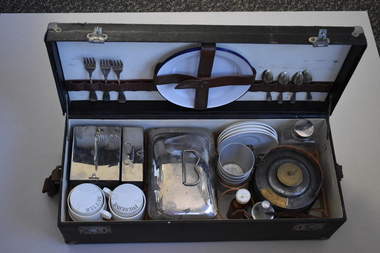
... He was an early member of the Royal Australian College of Surgeons and was prominent in Warrnambool community affairs (Foundation President of Warrnmbool Rotary Club, a member of the local Masonic Lodge for over 50 years, Warrnambool Hospital Committee member, long-term Trustee of the Warrnambool Methodist Church and President of the Lyndoch Hostel for the Aged Committee). Dr Holmes also had agricultural interests and enjoyed fishing, golf and bowls. He also had a motor car and this picnic set would have been used for family...He was an early member of the Royal Australian College of Surgeons and was prominent in Warrnambool community affairs (Foundation President of Warrnmbool Rotary Club, a member of the local Masonic Lodge for over 50 years, Warrnambool Hospital Committee member, long-term Trustee of the Warrnambool Methodist Church and President of the Lyndoch Hostel for the Aged Committee). Dr Holmes also had agricultural interests and enjoyed fishing, golf and bowls. He also had a motor car and this picnic set would have been used for family ...This is a car picnic set made by the English firm of G. W. Scott and Sons who were producers of wickerwork crafts, basketry and luxury leather goods. The business was founded in 1661 and ceased operations in 1967. The picnic set belonged to Dr Horace Iles Holmes (1877-1959) who was born and educated in Tasmania and completed a medical degree at Melbourne University. He commenced a practice in Warrnambool in 1906 and was the Honorary Medical Officer at the Warrnambool Hospital and Warrnambool’s Health Officer. His practice was at ‘Ierne’ at the corner of Spence and Kepler Streets. He was an early member of the Royal Australian College of Surgeons and was prominent in Warrnambool community affairs (Foundation President of Warrnmbool Rotary Club, a member of the local Masonic Lodge for over 50 years, Warrnambool Hospital Committee member, long-term Trustee of the Warrnambool Methodist Church and President of the Lyndoch Hostel for the Aged Committee). Dr Holmes also had agricultural interests and enjoyed fishing, golf and bowls. He also had a motor car and this picnic set would have been used for family picnics. This picnic set is of considerable significance because: 1. It is a good example of the luxury picnic sets owned by more affluent people in the 1930s and 40s. 2. It has important local provenance as it belonged to Horace Holmes, a doctor associated with the professional and community life of Warrnambool for over 50 years. This is a rectangular wooden box with a leather covering. It has metal hinges on the corners of the box and two two metal catches on the side with a leather belt and metal buckle on one of these catches with one leather belt missing on the other side. These leather straps were to attach the picnic box to the running board of the car. There are also two metal catches or locks on the front of the box. Inside the box there is a white lining with a plaited wickerwork insert containing spaces for the following: 1. large china container with a silver top 2. smaller metal container with a silver lid 3. small rectangular metal tin with a silver lid. This container still has some loose tea leaves inside 4. four china cups 5. two circular china dishes for jam and butter 6. four china saucers 7. one glass bottle with a silver top 8. one metal phial, silver-coloured 9. one amber-coloured glass bottle (probably not an original) 10. four nickel silver spoons 11. three metal forks 12. three white enamel plates, blue edged Numbers 10,11 and 12 are held in place by leather straps on the inside of the lid of the box 13. two loose metal straps 14. one metal kettle with a handle with cane strapping, a brass lid, a brass spout with an end chain and a metal inscription 15. The kettle is sitting in a metal tray which has a lighting mechanism to heat the water The picnic set has some rusted metal catches on the exterior of the box and the leather is very stained and torn in places. ‘Remove screw before lighting G.W.S. & S ‘ ‘Coracle brand’ antique luxury picnic set, dr horace holmes, history of warrnambool -
 Warrnambool and District Historical Society Inc.
Book, Jimmy of Murrumbar by E D Oakley, 1938
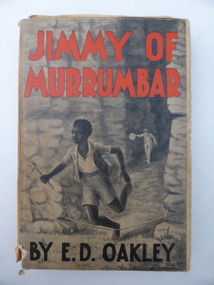
... It was written by a local Warrnambool businessman, Edward Oakley. He and other members of his family were prominent residents of the city in the late 19th and early to mid 20th centuries 2. ...This book subtitled, ‘A Story of the Amazing Ability and Fidelity of an Australian Black Tracker’, has been written in the late 1930s by Edward Daniel Oakley (1877-1962). He was the fourth child of Thomas and Eliza Oakley who had the farm, Oakbank, near the mouth of the Hopkins River, Warrnambool (Otway Road area today). Edward Oakley first worked at Saltau’s shipping office in Warrnambool then ran a dairy farm, Halifax, near Cudgee. He later had wheat farms in the Grampians area and at Willaura before returning to Warrnambool in 1923. He built a row of shops in Liebig Street and opened a boot and shoe store. He was instrumental in persuading Fletcher Jones to open a shop in Warrnambool. After he retired he researched and wrote the story of Jimmy of Murrumbar. This book is of high significance because: 1. It was written by a local Warrnambool businessman, Edward Oakley. He and other members of his family were prominent residents of the city in the late 19th and early to mid 20th centuries 2. It was written in the late 1930s and tells of the story of a young aboriginal boy, one of the early writings appreciating the talents and worth of young aborigines. This is a hard cover book of 181 pages. A buff-coloured dust cover has been pasted over the hard cover and it has a black, grey and white illustration of a young aboriginal boy being chased. This illustration is repeated in black and white on the second page. The titling on the cover is in red and black printing. The front cover has become almost detached from the pages. An inscription on the inside cover is handwritten in black ink. The book has a foreword, an appreciation, a contents page and 23 chapters. ‘Best Wishes for a Happy Birthday from Graeme Dorman Dec 8th 1942’ edward oakley, history of warrnambool, aboriginal literature, jimmy of murrumbar, thomas and eliza oakley -
 Warrnambool and District Historical Society Inc.
Household, Glass Container, Early 20th century
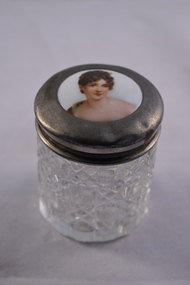
... Such items as these would have been given as presents to members of the more affluent families in the early 20th century. This container has no known local provenance but is retained as an attractive item from the past. ...This item is a container that would have been used by a woman to hold small items such as pins. It may also have originally contained some lotion or powder but there is no trade name to indicate this. It would have been found in a bedroom. Such items as these would have been given as presents to members of the more affluent families in the early 20th century. This container has no known local provenance but is retained as an attractive item from the past. It will be useful for display.This is a round-shaped cut glass container with a plain glass base and a metal lid which fits over the top of the container. The top of the lid has an enamel circular piece inserted into the metal. This piece has a white background with a painted image of the head and shoulders of a woman in brown and flesh-coloured tonings. The lid has some dents and some discoloration.household items, dressing table containers -
 Warrnambool and District Historical Society Inc.
Book, David Blair, The History of Australasia, 1878
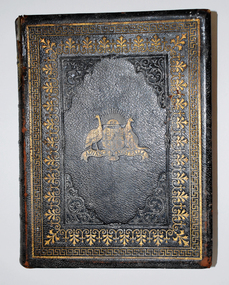
... The inscription shows that the book belonged to a member of the Gamble family, Alice Gamble (nee Hilder) who married William Gamble in 1879, the same year as she was given this book. This book is retained chiefly for its antiquarian interest but also because of its local provenance. ...A history of Australasia written in late 1800'sThe book has black leather covers which are heavily embossed with an Australian Coat of Arms and featuring gold printing, scroll work and patterns. The title of the book is on the spine which also has gold patterns. The cover is torn at the top left hand corner. The inside cover is water damaged. The gilt edged pages contain printed text, black and white and tinted illustrations and coloured maps. There is a narrow ribbon book mark , a pressed leaf and a cut out card flower inserted in the pages.non-fictionA history of Australasia written in late 1800'saustralasian history, alice gamble, a history of australasia 1870, warrnambool, alice hilder -
 Warrnambool and District Historical Society Inc.
Booklet, Walter Davies, Warrnambool, Warrnambool - Landscape, Seascape, Buildings, early 20th century
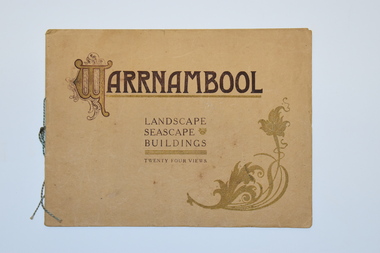
... The souvenir booklet has been issued by Walter Davies, a member of a local pioneer family and a well-known Warrnambool bookseller. ...The souvenir booklet has been issued by Walter Davies, a member of a local pioneer family and a well-known Warrnambool bookseller. ...This is a souvenir booklet Souvenir Booklet of WarrnamboolThis is a booklet of 16 pages. The cover is buff-coloured and has ornamental patterns and brown printing on the front cover. The pages contain printed text and 24 black and white photographs. Some pages have handwritten annotations.non-fictionThis is a souvenir booklet Souvenir Booklet of Warrnamboolwarrnambool tourism, walter davies bookseller warrnambool -
 Warrnambool and District Historical Society Inc.
Badges (2), 1 Stokes, 1960s
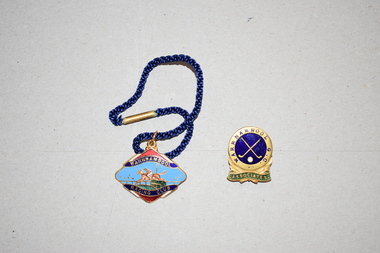
... members, both men and women. Female membership of the Warrnambool Golf Club was well established by 1890 and the course then was in Albert Park. These two badges are of interest as having local provenance, belonging to a member or members of a prominent family in Warrnambool in the mid 20th century. ...These two badges came from the estate of Dorothy and Agnes Ardlie of Warrnambool. Dorothy Ardlie (1910-1993) and Agnes Ardlie (1915-1993) were the daughters of Arthur and Ethel Ardlie of Warrnambool, the granddaughters of the prominent Warrnambool lawyer, William Ardlie and his wife Mary and the great granddaughters of John and Mary Ardlie, pioneer settlers in Warrnambool. The badges appear to have belonged to Agnes Ardlie who was known to have been a keen sportswoman. The Warrnambool Racing Club was founded in the 1870s and annually produced badges for members, both men and women. Female membership of the Warrnambool Golf Club was well established by 1890 and the course then was in Albert Park. These two badges are of interest as having local provenance, belonging to a member or members of a prominent family in Warrnambool in the mid 20th century..1 This is a metal badge in an elliptical shape with gold edging. The image on the badge shows a horse and jockey clearing a hurdle with wording around the image. The colours used are blue, red, gold and green. The badge has a metal clip at the top with a blue cord attached. The back of the badge has wording imprinted on it. .2 This is an oval-shaped metal badge with an image of two golf clubs in blue and gold and the word ‘Associates’ in gold and green. On the back is a metal clip and some hand writing scratched on. The maker’s name cannot be deciphered. .1 Warrnambool Racing Club Not Transferable Season 1965-66 9 Stokes .2 Warrnambool G.C. Associates Ardlie A.A. ardlie family, history of warrnambool -
Warrnambool and District Historical Society Inc.
Correspondence (Rose Park), 1940s
... member of the Warrnambool and District Historical Society for many years and contributed many articles and booklets on local historical matters. This correspondence is of interest as an example of the establishment of Soldier Settlement farms in Victoria post World War Two and the difficulties faced by some property owners opposed to the acquisition of their land. These items will be useful for research. Baulch Family ...These are four letters and a document regarding the proposal in the 1940s by the Victorian Department of Lands and Survey to acquire sections of the property, Rose Park, to establish several Soldier Settlement farms. Rose Park, near Willatook, was owned by Stan Baulch (1897-1980), the son of Samuel and Eliza Baulch. Samuel Baulch had acquired the property of Dunmore, between Macarthur and Hawkesdale, in 1893 and Stan had inherited portion of this property after his father’s death. He named his portion Rose Park. The Soldier Settlement Commission wanted to acquire 1500 acres of Rose Park but Stan Baulch argued successfully that the management of his farm could not withstand the loss of so much land and eventually 300 acres of Rose Park land was sold for closer settlement. Stan Baulch was a prominent member of the Warrnambool and District Historical Society for many years and contributed many articles and booklets on local historical matters. This correspondence is of interest as an example of the establishment of Soldier Settlement farms in Victoria post World War Two and the difficulties faced by some property owners opposed to the acquisition of their land. These items will be useful for research. .1 A six-page letter written in pencil .2 A two page letter in black typing ( contents as in .1 above) .3 A one page letter, typed, with a handwritten signature .4 A sheet of paper containing a statement re purchase of land with some inserted handwritten material .5 A two page letter with handwritten material baulch family, western district, victoria, history of warrnambool -
 Warrnambool and District Historical Society Inc.
Criterion Hotel Glass, Glass, Mid 20th century
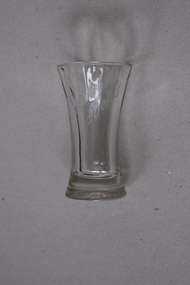
... local resident, James Godfrey. The Criterion Hotel opened in Kepler Street, Warrnambool in April 1872. The first licensee was John Tate and the Humm family members of Woodford and the McGennan family of Warrnambool were prominent licensees and owners in the late 19th and 20th centuries. ...local resident, James Godfrey. The Criterion Hotel opened in Kepler Street, Warrnambool in April 1872. The first licensee was John Tate and the Humm family members of Woodford and the McGennan family of Warrnambool were prominent licensees and owners in the late 19th and 20th centuries. ...This small glass has been kept as a souvenir of the Warrnambool Criterion Hotel by a local resident, James Godfrey. The Criterion Hotel opened in Kepler Street, Warrnambool in April 1872. The first licensee was John Tate and the Humm family members of Woodford and the McGennan family of Warrnambool were prominent licensees and owners in the late 19th and 20th centuries. In the second half of the 20th century the hotel was an important centre in Warrnambool for live pop music. The hotel closed in 2008. The building was partially destroyed by fire in 2010 and the remaining structure was demolished in 2013. This glass is significant because it has local provenance as a memento of a hotel in Warrnambool prominent in the local business world for 136 years and as an example of the souvenirs kept of this hotel by Warrnambool residents.This is a small clear glass tumbler with a heavy base and a slightly tapered neck and a circular open top. The name ‘Criterion Hotel’ has been etched on to the side of the glass.Criterion Hotelcriterion hotel warrnambool, history of warrnambool, glass -
 Warrnambool and District Historical Society Inc.
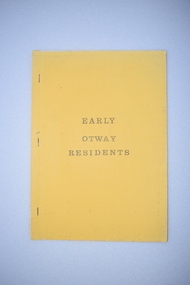
Booklet, David Pitt and Perce Hampshire, Early Otway residents, 1989
... families in the Otways region. The material has been provided by the members of the families. This book is of interest as it contains short histories of some pioneer families in the Otway Ranges and will therefore be of particular use to historians. Otway Ranges, Victoria Pioneers of the Otway Ranges This is a soft-cover booklet of 35 pages. It is bound with metal staples. The booklet has a yellow cover with black printing. The booklet contains details on the lives of some Otway Ranges pioneer families and has been typed and produced by a local ...This booklet has been collated by a committee of Otway Ranges residents in 1989. It contains historical information on 32 pioneer families in the Otways region. The material has been provided by the members of the families. This book is of interest as it contains short histories of some pioneer families in the Otway Ranges and will therefore be of particular use to historians.This is a soft-cover booklet of 35 pages. It is bound with metal staples. The booklet has a yellow cover with black printing. The booklet contains details on the lives of some Otway Ranges pioneer families and has been typed and produced by a local committee.otway ranges, victoria, pioneers of the otway ranges -
 Warrnambool and District Historical Society Inc.
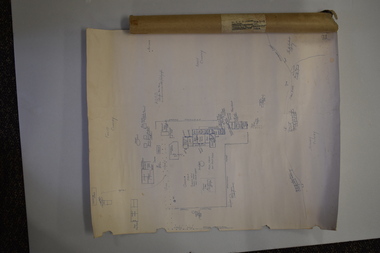
Document (Sketch Plan of Dunmore), Stan Baulch, 1972
... member of the Warrnambool & District Historical Society and he contributed many local history articles and donated many local artefacts to the Society. This sketch plan is of interest as it tells us what the historic homestead of Dunmore in Western Victoria was like in the early 1970s. It will be useful for research. Dunmore Property Western Victoria Baulch family ...This card has a sketch map showing the properties surrounding Dunmore on one side and a detailed sketch plan of Dunmore homestead in the early 1970s on the other side. The plan of Dunmore homestead shows interesting features such as the brick oven for bread making, the croquet lawn, the site of the aboriginal mia mias, the Turkish baths and the fowl house used later as a poison house. Francis and Ann Baulch were pioneer settlers in the Kirkstall area and their son Samuel worked at Dunmore in the Macarthur area before purchasing in the early 1870s the property he named Rose Park. In the 1890s he acquired property in the Dunmore estate and his son Stan Baulch gained a section of the Dunmore property after his father’s death. Stan Baulch named this Dunmore section, Rose Park, a property to the west of his father’s original Rose Park property. Stan Baulch was a long time member of the Warrnambool & District Historical Society and he contributed many local history articles and donated many local artefacts to the Society.This sketch plan is of interest as it tells us what the historic homestead of Dunmore in Western Victoria was like in the early 1970s. It will be useful for research. This is a sheet of white lightweight cardboard with a pencilled sketch on one side and a blue ink sketch plan of a house on the other side. The edges of the card have some torn sections. The card is enclosed in an oval cardboard cylinder (recycled and torn at the ends). Both the card and the cover have handwritten titles in ink. Dunmore Homestead & History by S. Baulch Dunmore Homestead drawn by Stan Baulch c.1972 dunmore property, western victoria, baulch family -
 Warrnambool and District Historical Society Inc.
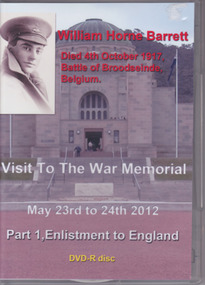
Film - DVD, Newell Barrett, Tower Hill, W. H Barrett, 2012
... local enlistment. His mother was Mary Ann Horne and the Hornes were farmers in the Allansford/Nullawarre area. Barrett was killed in action in October 1917 at Broodseinde, Belgium. He was buried near the trench he was occupying and today has no known grave. This DVD is of some significance as it contains information on a World War One soldier who was connected to the Warrnambool area through his mother, a member of the Horne family ...William Horne Barrett was the great uncle of the donor and maker of the DVD, Newell Barrett. The DVD contains photographs of Barrett’s enlistment and embarkation for England and the photographs are accompanied by a commentary and text. Sergeant William Barrett enlisted in the 39th Battalion, C Company in 1916, and, although he came from Ballarat, his name is on the Warrnambool War Memorial as a local enlistment. His mother was Mary Ann Horne and the Hornes were farmers in the Allansford/Nullawarre area. Barrett was killed in action in October 1917 at Broodseinde, Belgium. He was buried near the trench he was occupying and today has no known grave. This DVD is of some significance as it contains information on a World War One soldier who was connected to the Warrnambool area through his mother, a member of the Horne family who were farmers in the Allansford/Nullawarre area. It will be useful for researchers.This is a DVD-R disc of the enlistments and embarkation details of William Horne Barrett (World War One). The running time is 56 minutes. The cover has two photographs of the Canberra Australian War Memorial in muted colour and an inset photograph of William Barrett. Front Cover: ‘William Horne Barrett, died 4th October 1917, Battle of Broodseinde, Belgium, Visit to the War Memorial, May 23rd to 24th 2012, Part One, Enlistment to England’. world war one, horne family, william horne barrett -
 Warrnambool and District Historical Society Inc.
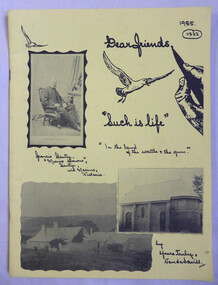
Book - Paperback, Vanda Savill (1913-2005), Such is life, 1985
... The Henty family members are regarded as the first permanent European settlers in the Colony of Victoria. The author, Vanda Savill, lived at Heywood on a dairy farm and had the Bower Birds Nest Museum and History Centre and produced local history books over a period of 20 years. ...The Henty family members are regarded as the first permanent European settlers in the Colony of Victoria. The author, Vanda Savill, lived at Heywood on a dairy farm and had the Bower Birds Nest Museum and History Centre and produced local history books over a period of 20 years. ...An example of Vanda Savill's handwritten books documenting western district local histories focussing on the Henty family.This is a paper back book with a yellow cover with black headings and annotations, black and white sketches and black and white photographs. There are 52 pages of handwritten and copied material with photographs and illustrations. The pages are stapled.non-fictionAn example of Vanda Savill's handwritten books documenting western district local histories focussing on the Henty family.henty family, vanda savill, warrnambool -
 Warrnambool and District Historical Society Inc.
Album - Family Photos & UK views
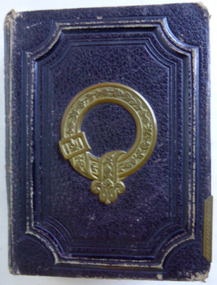
... local connection. There are twelve photographs of people and twenty-nine photographs of buildings and scenes, mostly of places in England (Nottinghamshire and Derbyshire). The photographers’ names listed are from Nottingham. The photographs probably date from the 1860s and 1870s. This is most likely an album of some significance as the name ‘Vickers’ on the inside cover of this album suggests that the photographs belonged to the Vickers family. Robert Vickers, who came from Nottingham, was a farmer at Summerside in Panmure in the 1860s, 70s and 80s so the photographs in the album are likely to be of his family members ...The origin and owner of this album are unknown but the name’ Vickers’ suggests some local connection. There are twelve photographs of people and twenty-nine photographs of buildings and scenes, mostly of places in England (Nottinghamshire and Derbyshire). The photographers’ names listed are from Nottingham. The photographs probably date from the 1860s and 1870s. This is most likely an album of some significance as the name ‘Vickers’ on the inside cover of this album suggests that the photographs belonged to the Vickers family. Robert Vickers, who came from Nottingham, was a farmer at Summerside in Panmure in the 1860s, 70s and 80s so the photographs in the album are likely to be of his family members. This is a small photograph album with a brown leather cover There is a raised gold-coloured metal belt motif on the front cover and one piece of gold-coloured metal on the lower side of the front cover,Inside the front cover, in blue biro, the handwritten name ‘Vickers’ The word ‘Album’ is printed on the spine. warrnambool, vickers, robert vickers -
 Warrnambool and District Historical Society Inc.
Album - Autograph Album, Early 1900s
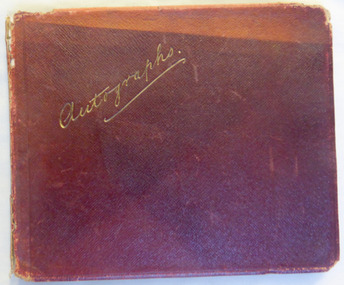
... family farm at Mepunga. She was a keen collector of newspaper cuttings recipes, postcards and collectable cards of the day. She won prizes at the local agricultural show for her flower collections. Most young girls early to mid 20th century had autograph albums Today the entries in these are a source of great social history. This album contains many local names of the time (Flett, Wiggs, Jenkinson Philips, Hortle etc.) and there are several interesting sketches and works of art. This album is of considerable significance as it was owned by Jessie Bonnett a member ...This album is believed to have belonged to Jessie Bonnett ( 1897-1990) the daughter of Frederick and Charity (nee Phillips) Bonnett. Jessie spent her life on the family farm at Mepunga. She was a keen collector of newspaper cuttings recipes, postcards and collectable cards of the day. She won prizes at the local agricultural show for her flower collections. Most young girls early to mid 20th century had autograph albums Today the entries in these are a source of great social history. This album contains many local names of the time (Flett, Wiggs, Jenkinson Philips, Hortle etc.) and there are several interesting sketches and works of art. This album is of considerable significance as it was owned by Jessie Bonnett a member of a pioneer family in the Mepunga district. It is an important contribution to social history (1910 -12).This is an autograph album with a dark red leather cover. It has gold lettering on the front cover, pages with gilt edges, hand written entries, hand paintings and sketches. Autographs vintage autograph albums, jessie bonnett -
 Warrnambool and District Historical Society Inc.
Bat, Cricket bat, 1870s
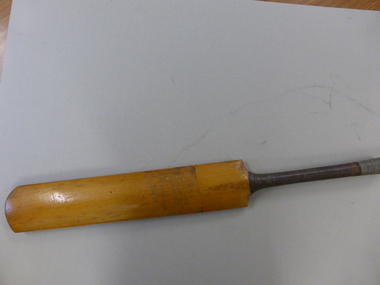
... local Council for many years as a Councillor and Mayor. Thomas Junior appears to have migrated to U.S.A. and died there in 1904. The cricket bat was manufactured by the British firm of James Lillywhite, Frowd & Co. James Lillywhite was an English cricketer whose uncle had originally established the sports store and manufacturing business which lasted under various names until the 21st century. A cricketer named Lillywhite played in Warrnambool in 1874 with an All England Team under the captaincy of W.G.Grace. It is not known whether this was James Lillywhite or another member of the Liilywhite family...local Council for many years as a Councillor and Mayor. Thomas Junior appears to have migrated to U.S.A. and died there in 1904. The cricket bat was manufactured by the British firm of James Lillywhite, Frowd & Co. James Lillywhite was an English cricketer whose uncle had originally established the sports store and manufacturing business which lasted under various names until the 21st century. A cricketer named Lillywhite played in Warrnambool in 1874 with an All England Team under the captaincy of W.G.Grace. It is not known whether this was James Lillywhite or another member of the Liilywhite family ...This bat was awarded to Thomas William Southcombe in 1876 for the best batting average during the 1875-6 season at Warrnambool Cricket Club. Thomas William Southcombe was the son of Thomas and Mary Southcombe of Port Fairy. With his parents, Thomas and Mary, he arrived in Port Fairy in 1854. Thomas Senior was a carpenter who established several businesses in Port Fairy and served on the local Council for many years as a Councillor and Mayor. Thomas Junior appears to have migrated to U.S.A. and died there in 1904. The cricket bat was manufactured by the British firm of James Lillywhite, Frowd & Co. James Lillywhite was an English cricketer whose uncle had originally established the sports store and manufacturing business which lasted under various names until the 21st century. A cricketer named Lillywhite played in Warrnambool in 1874 with an All England Team under the captaincy of W.G.Grace. It is not known whether this was James Lillywhite or another member of the Liilywhite family as several of them played first class cricket.. The impression of the signature of W.H.Ponsford on the bat is an intriguing one. W.H. (Bill) Ponsford was a famous Australian cricketer who retired in the late 1930s. The Southcombe cricket bat was given by Mary Southcombe (Thomas’ sister) to the old Warrnambool Museum in 1923 and it is surmised that Bill Ponsford visited Warrnambool in 1957 (tthis appears to be the date under the signature imprint) and was shown the bat. It is then surmised that he rested a piece of paper or an album page on the bat while he signed his name and the impression of the signature has come through onto the bat. The old Museum closed in the 1960s and the bat was then passed on to the Warrnambool and District Historical Society from the Warrnambool City Council collection of items from the Museum. This bat is of considerable importance because of its provenance and its connection with the Warrnambool Cricket Club, the Southcombe family of Port Fairy, the Lillywhite manufacturers, the old Warrnambool Museum and Bill Ponsford. It is also a good example of the type of cricket bat used in Australia in the 1870s. This is a wooden cricket bat (light colour wood, presumably willow) with a handle covered in oiled thread. It has an etched inscription on one side of the bat and the names of the manufacturer and distributor on the other side. There is also a faint impression of another signature. The blade of the bat is slightly curved. ‘W.C.C. Season 1875-6 Presented to T.W. Southcombe, for Best Batting Average’ ‘James Lillywhite Frowd & Co., Manufacturers, Borough, England’ ‘Made for George Marsh, Melbourne’ ‘W.H.Ponsford, -/1/1957’ warrnambool cricket club, thomas william southcombe, w.h.ponsford, warrnambool’s old museum -
 Warrnambool and District Historical Society Inc.
Book, The Holy Bible, 1924
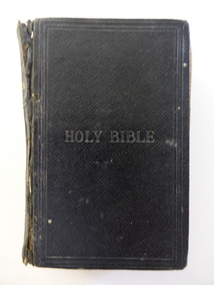
... member of the Swinton family well-known in Warrnambool. William and Ann Swinton came to Warrnambool in 1854 and established a store in Timor Street and several branches of their business in other local towns. ...member of the Swinton family well-known in Warrnambool. William and Ann Swinton came to Warrnambool in 1854 and established a store in Timor Street and several branches of their business in other local towns. ...This Bible belonged to Meryl Swinton, a member of the Swinton family well-known in Warrnambool. William and Ann Swinton came to Warrnambool in 1854 and established a store in Timor Street and several branches of their business in other local towns. The Swinton family had commercial interests in Timor Street until February 2024. This Bible is of interest as it belonged to Meryl Swinton, a member of the Swinton family, prominent in business and community circles in Warrnambool since the mid 1800s. This is a hard cover book of 1016 pages. It has a brown leather cover with lettering embossed on the front cover and with gold lettering on the spine. The spine has become partly detached and has been mended in the past with adhesive tape, traces of which still remain on the spine and on the first and back pages. The cover is a little scuffed and stained. The inscriptions are handwritten in black ink. ‘Meryl Swinton 1925’ ‘Swinton 74’ swinton family, warrnambool, meryl swinton, history of warrnambool -
 Warrnambool and District Historical Society Inc.
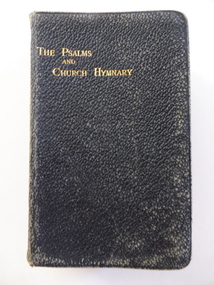
Book, In Psalms & Church Hymnary, 1922
... local towns. The Swinton family had commercial interests in Timor Street until February 2024. This book is of interest because it belonged to Charlotte Swinton, a member of the Swinton family important in Warrnambool’s commercial and community history. ...The name ‘Ruttledge’ may have no local significance though the name ‘Rutledge’ is important in our history, commencing with William Rutledge who purchased the Farnham Special Survey in the 1840s( Tower Hill to Dennington). The name ‘Swinton’ is prominent in our history. Mrs John Swinton (Charlotte Scott nee Dunn, 1871-1944) was married to John Swinton, the son of William and Ann Swinton who came to Warrnambool in 1854. William established a store in Timor Street in the 1850s and opened branches of this store in several local towns. The Swinton family had commercial interests in Timor Street until February 2024.This book is of interest because it belonged to Charlotte Swinton, a member of the Swinton family important in Warrnambool’s commercial and community history. This is a black leather-covered book of 656 pages plus a Supplement of Hymns of 32 pages. The cover has gold lettering on the front and the spine. The pages have a gilt edging. The inscriptions are handwritten in pencil. The cover is somewhat scuffed and worn.‘Mrs John Swinton’ ‘A. Ruttledge, 317 Wattletree Rd., E. Malvern’swinton family, warrnambool, john swinton, charlotte swinton, history of warrnambool -
 Warrnambool and District Historical Society Inc.
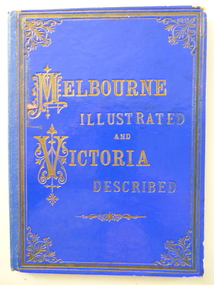
Book, Melbourne illustrated & Victoria described, c.1885
... member for 39 years, a Methodist church office-bearer and an active worker for the welfare of local returned soldiers. It was said that he greeted every returning soldier at the Warrnambool Railway Station. Mrs Sharpe was one of those who benefited from his solicitude and kindness. This is book is of antiquarian interest but more importantly it is a lovely memento of Henry Smith’s untiring concern for local soldiers returning from World War One and for their family ...This book was given to Henry Huntingdon Smith in 1918 by a grateful sister of a soldier killed in World War One. Private Percy Palmer was listed as coming from the Warrnambool area even though his enlistment place was given as Bannockburn. H.H.Smith (1857-1941) is an important figure in Warrnambool’s history. He had a bakery business at the corner of Lava and Fairy Streets. He was a Warrnambool Councillor and Mayor, a Hospital Committee member for 39 years, a Methodist church office-bearer and an active worker for the welfare of local returned soldiers. It was said that he greeted every returning soldier at the Warrnambool Railway Station. Mrs Sharpe was one of those who benefited from his solicitude and kindness.This is book is of antiquarian interest but more importantly it is a lovely memento of Henry Smith’s untiring concern for local soldiers returning from World War One and for their family members. This is a hard cover book of 38 pages. The cover is blue with gold lettering and gold ornamentation on the front and back covers. There are two sepia-coloured photographs of Melbourne at the front of the book and two blue stamps of the Warrnambool and District Historical Society at the front and the back of the book. The pages of the book have become detached from the binding. The inscription at the front of the book is handwritten in purple ink.‘Melbourne, Aug. 28, 1918, To Mr H. Smith as a small token for kindness shown on behalf of my dear late brother, Private Percy Palmer from N. Sharpe.’private percy palmer, world war one and warrnambool, henry huntingdon smith, warrnambool history -
 Warrnambool and District Historical Society Inc.
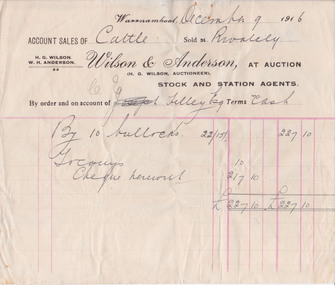
Document - Docket: Wilson & Anderson CE Tilley 1916, Early 20th century
... member of the Tilley family, with Joseph Tilley running the property of ‘Aringa’ in the early 20th century. Joseph Tilley was also the owner at the time of the Penshurst Hotel. This docket is of some importance as it is an original one and gives details of a 1916 sale of cattle with the names Wilson and Anderson and Tilley of some local interest. ...This docket from the firm of Wilson and Anderson, auctioneers, gives details of the sale of 10 bullocks on behalf of C.E. Tilley of ‘Aringa’, Port Fairy. The total profit for Mr Tilley was £217-10-0. Wilson and Anderson were stock and station agents operating in the early 20th century from the Royal Chambers in Kepler Street in Warrnambool. C.E. Tilley was a member of the Tilley family, with Joseph Tilley running the property of ‘Aringa’ in the early 20th century. Joseph Tilley was also the owner at the time of the Penshurst Hotel. This docket is of some importance as it is an original one and gives details of a 1916 sale of cattle with the names Wilson and Anderson and Tilley of some local interest. It gives us the prices for bullocks in 1916 and the type of account form used at the timeThis is an original docket of 1916. It is a printed one from the firm of Wilson and Anderson with printed red lines for entering the details of the sale. The client’s name and sale details are handwritten in black ink. joseph tilley, wilson and anderson, penshurst hotel, aringa’
