
Showing 101 items matching "local force battalion"
-
 National Vietnam Veterans Museum (NVVM)
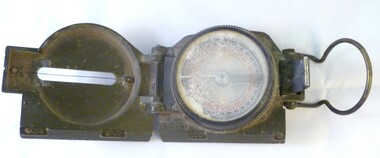
Equipment - Equipment, Army, US Magnetic Compass
... ...Local Force Battalion...Compass Survival US Magnetic Compass Rung Sat Swamp Death Mekong Delta Quang Tri Provence Phuoc Tuy Province 4/1 ARVN Bn 1st Regt 1 Div Thua Thien Province Local Force Battalion 302 Bn 3 Corps WO2 (Temp) George MacLauchlan Logan 33649 Royal Australian Infantry Corps 7th Battalion Royal Australian Regiment Australian Army Training Team Vietnam (AATTV) Jungle Training Centre Canungra Compass with folding clip cover. ...Compass with folding clip cover. There is a written description about the compass which is on display. Please see media file for more information.compass, survival, us magnetic compass, rung sat, swamp death, mekong delta, quang tri provence, phuoc tuy province, 4/1 arvn bn, 1st regt, 1 div, thua thien province, local force battalion, 302 bn, 3 corps, wo2 (temp) george maclauchlan logan, 33649, royal australian infantry corps, 7th battalion, royal australian regiment, australian army training team vietnam (aattv), jungle training centre, canungra -
 Federation University Historical Collection
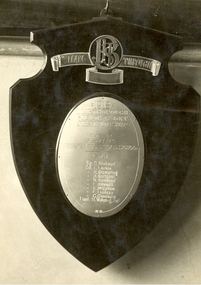
Photograph - Black and White, Ballarat Junior Trophy for the Senior Cadet Championships, 1918, c1918
... local militia unit. * After 1 July of the year a Cadet turned 18, the Cadet left the Senior Cadets and became a member of the Citizen Military Force. * In October 1918 the AIF, Militia and Cadets were renamed to give some connection to the AIF battalion raised in the area. ...local militia unit. * After 1 July of the year a Cadet turned 18, the Cadet left the Senior Cadets and became a member of the Citizen Military Force. * In October 1918 the AIF, Militia and Cadets were renamed to give some connection to the AIF battalion raised in the area. ...According to Neil Leckie, Manager of the Ballarat Ranger Military Museum: * Originally 12 – 14 year olds went to Junior Cadets attached to their school. * From age 14 – 17 they were Senior Cadets attached to the local militia unit. * After 1 July of the year a Cadet turned 18, the Cadet left the Senior Cadets and became a member of the Citizen Military Force. * In October 1918 the AIF, Militia and Cadets were renamed to give some connection to the AIF battalion raised in the area. Ballarat saw: 8th Australian Infantry Regiment comprising: * 8th Battalion AIF renamed 1st Battalion 8th Australian Infantry Regiment * 70th Infantry Militia renamed 2nd Battalion 8th Australian Infantry Regiment * 70th Infantry Cadets renamed 3rd B, 8th Australian Infantry. 39th Australian Infantry Regiment comprising: * 39th Battalion AIF renamed 1st Battalion 39th Australian Regiment * 71st Infantry Militia renamed 2nd Bn, 39th Australian Infantry Regiment * 71st Infantry Cadets renamed 3rd Bn, 39th Australian Infantry Regiment Prior to the reorganisation in 1918 the 18th Brigade was the 70th, 71st and 73rd Infantry. It is thought that the 18th Brigade Cadet units in 1920 were those that came from the old: * 69th Infantry (Geelong/Queenscliff) * 70th Infantry (Ballarat/Colac) * 71st Infantry (Ballarat West) * 72nd Infantry Warrnambool) * 73rd Infantry (NW Vic) The next name change came in 1921!Black and white photograph of a timber shield with engraving on silver metal. The trophy is the 1918 Maryborough Senior Cadet Championship which was won by the Ballarat Junior Technical School. The winning team comprised Sgt T. Krahnert, I Larkin, H. Siemering, R. Serjeant, H. Beanland, L. Rowsell, A. McCallum; L. Lindsay, C. Chambers. The instructor was Lieutenant Harold Wakeling.ballarat junior technical school, cadets, trophy, shield -
 Federation University Historical Collection
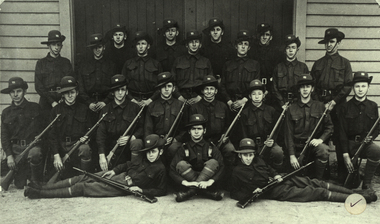
Photograph - Photograph - black and white, Ballarat Junior Technical School Cadet Team, 1916, 1916
... local militia unit. * After 1 July of the year a Cadet turned 18, the Cadet left the Senior Cadets and became a member of the Citizen Military Force. * In October 1918 the AIF, Militia and Cadets were renamed to give some connection to the AIF battalion raised in the area. ...local militia unit. * After 1 July of the year a Cadet turned 18, the Cadet left the Senior Cadets and became a member of the Citizen Military Force. * In October 1918 the AIF, Militia and Cadets were renamed to give some connection to the AIF battalion raised in the area. ...Francis Davis was the only former student of the Ballarat Junior Technical School to die during World War One. "Francis Davis was accorded a full military funeral, firing party, bugler and pallbearers. The coffin was draped in the Union Jack and surmounted in several beautiful wreathes sent from his brother 2/A.M. E.H. Davis (A.F.C Leighterton), officer of the A.F.C. Leighterton, Gloucester, Cadets of A.F.C. and many other personal friends of the deceased. The "Last Post" was sounded at the graveside, and the Rev. Major K.D. Norman C. of E. A.I.F. officiated. The grave was to be turfed and an oak cross erected by the A.I.F. London. Administrative Headquarters A.I.F. London were represented at the funeral. (http://naa12.naa.gov.au/scripts/Imagine.asp?B=1858392, accessed 24 January 2014.) According to Neil Leckie, Manager of the Ballarat Ranger Military Museum: * Originally 12 – 14 year olds went to Junior Cadets attached to their school. * From age 14 – 17 they were Senior Cadets attached to the local militia unit. * After 1 July of the year a Cadet turned 18, the Cadet left the Senior Cadets and became a member of the Citizen Military Force. * In October 1918 the AIF, Militia and Cadets were renamed to give some connection to the AIF battalion raised in the area. Ballarat saw: 8th Australian Infantry Regiment comprising: * 8th Battalion AIF renamed 1st Battalion 8th Australian Infantry Regiment * 70th Infantry Militia renamed 2nd Battalion 8th Australian Infantry Regiment * 70th Infantry Cadets renamed 3rd B, 8th Australian Infantry. 39th Australian Infantry Regiment comprising: * 39th Battalion AIF renamed 1st Battalion 39th Australian Regiment * 71st Infantry Militia renamed 2nd Bn, 39th Australian Infantry Regiment * 71st Infantry Cadets renamed 3rd Bn, 39th Australian Infantry Regiment Prior to the reorganisation in 1918 the 18th Brigade was the 70th, 71st and 73rd Infantry. It is thought that the 18th Brigade Cadet units in 1920 were those that came from the old: * 69th Infantry (Geelong/Queenscliff) * 70th Infantry (Ballarat/Colac) * 71st Infantry (Ballarat West) * 72nd Infantry Warrnambool) * 73rd Infantry (NW Vic) The next name change came in 1921!Black and white photograph of a group of school boys in army uniform. They are members of the Ballarat Junior Technical School Cadets. Back Row: D.O. Taylor, Albert E. Williams, B. Burrows, J.B. Hobba Standing: Francis Davis, Miller, A. Burge, P. [Peter] Chatham. J. Minster, H. Witter, H. Siemering Kneeling: T.G. Wasley, Alan Riley, A.H. Hoskin. N.C. Carmichael, Harold G. Wakeling, T. Rees, W.H. Shattock, F.N. Gibbs Front: S.J. Chambers, F.J. Procter, Charles H. Beanland francis davis, frank davis, ballarat junior technical school cadets, cadets, d.o. taylor, albert e. williams, b. burrows, j.b. hobba, miller, a. burge, p. chatham, j. minster, h. witter, h. siemering, t.g. wasley, a. riley, a.h. hoskin, n.c. carmichael, harold wakeling, t. rees, w.h. shattock, f.n. gibbs, s.j. chambers, f.j. procter, charles h. beanland, alan riley -
 Federation University Historical Collection
Document, Ballarat School of Mines - List of Student involved in military encampment
... local militia unit. * After 1 July of the year a Cadet turned 18, the Cadet left the Senior Cadets and became a member of the Citizen Military Force. * In October 1918 the AIF, Militia and Cadets were renamed to give some connection to the AIF battalion raised in the area. ...local militia unit. * After 1 July of the year a Cadet turned 18, the Cadet left the Senior Cadets and became a member of the Citizen Military Force. * In October 1918 the AIF, Militia and Cadets were renamed to give some connection to the AIF battalion raised in the area. ...According to Neil Leckie, Manager of the Ballarat Ranger Military Museum: * Originally 12 – 14 year olds went to Junior Cadets attached to their school. * From age 14 – 17 they were Senior Cadets attached to the local militia unit. * After 1 July of the year a Cadet turned 18, the Cadet left the Senior Cadets and became a member of the Citizen Military Force. * In October 1918 the AIF, Militia and Cadets were renamed to give some connection to the AIF battalion raised in the area. Ballarat saw: 8th Australian Infantry Regiment comprising: * 8th Battalion AIF renamed 1st Battalion 8th Australian Infantry Regiment * 70th Infantry Militia renamed 2nd Battalion 8th Australian Infantry Regiment * 70th Infantry Cadets renamed 3rd B, 8th Australian Infantry. 39th Australian Infantry Regiment comprising: * 39th Battalion AIF renamed 1st Battalion 39th Australian Regiment * 71st Infantry Militia renamed 2nd Bn, 39th Australian Infantry Regiment * 71st Infantry Cadets renamed 3rd Bn, 39th Australian Infantry Regiment Prior to the reorganisation in 1918 the 18th Brigade was the 70th, 71st and 73rd Infantry. It is thought that the 18th Brigade Cadet units in 1920 were those that came from the old: * 69th Infantry (Geelong/Queenscliff) * 70th Infantry (Ballarat/Colac) * 71st Infantry (Ballarat West) * 72nd Infantry Warrnambool) * 73rd Infantry (NW Vic) The next name change came in 1921! School of Mines Ballarat is a predecessor of Federation University.Ballarat School of Mines - List of Student involved in military encampment ballarat school of mines, students, military encampment, j.a greensfield, roderick dunn, w.o. knott, j.l. daniel, c.h. hill, j.g. bato, e.t. raine, a.g.m. elliott, t.k. jebb, roy eva, lieutenent bastian, private wightman, 70th infantry, 71st infantry, 30th aamc, r.o. buchanan, e.l. fidge, r.c. valentine, h.c. smith, j.m. turnbull, w.l. carroll, e.w. siemering, j.m. wesley, k.whittle, a.t bernaloo, j.b sutcliffe, 18th aamc, e, e.n.t. henry, f.j. jellet, a.p. dorman, private tonkin, private somerville, t.h. robinson, s.k. mciver, 18th asc, w.g. walker, r.m. fleming, g.s. richards, j.f. maughan, c.w. schroder, r. jenkyns, l. vernon, 19th light horse, allan bernaldo -
 Federation University Historical Collection
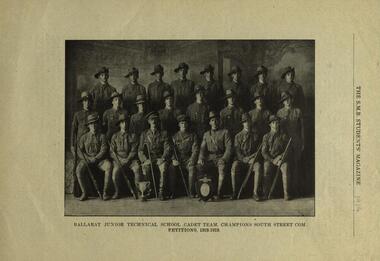
Photograph, Ballarat Junior Technical School Cadet Team: Champions South Street Competition, 1919
... local militia unit. * After 1 July of the year a Cadet turned 18, the Cadet left the Senior Cadets and became a member of the Citizen Military Force. * In October 1918 the AIF, Militia and Cadets were renamed to give some connection to the AIF battalion raised in the area. ...local militia unit. * After 1 July of the year a Cadet turned 18, the Cadet left the Senior Cadets and became a member of the Citizen Military Force. * In October 1918 the AIF, Militia and Cadets were renamed to give some connection to the AIF battalion raised in the area. ...The Ballarat Junior Technical School Cadet team were the champions at the South Street Competitions 1918-1919. The Ballarat Junior Technical School Cadets were established in 1917 by Lieutenant Harold G Wakeling. According to Neil Leckie, Manager of the Ballarat Ranger Military Museum: * Originally 12 – 14 year olds went to Junior Cadets attached to their school. * From age 14 – 17 they were Senior Cadets attached to the local militia unit. * After 1 July of the year a Cadet turned 18, the Cadet left the Senior Cadets and became a member of the Citizen Military Force. * In October 1918 the AIF, Militia and Cadets were renamed to give some connection to the AIF battalion raised in the area. Ballarat saw: 8th Australian Infantry Regiment comprising: * 8th Battalion AIF renamed 1st Battalion 8th Australian Infantry Regiment * 70th Infantry Militia renamed 2nd Battalion 8th Australian Infantry Regiment * 70th Infantry Cadets renamed 3rd B, 8th Australian Infantry. 39th Australian Infantry Regiment comprising: * 39th Battalion AIF renamed 1st Battalion 39th Australian Regiment * 71st Infantry Militia renamed 2nd Bn, 39th Australian Infantry Regiment * 71st Infantry Cadets renamed 3rd Bn, 39th Australian Infantry Regiment Prior to the reorganisation in 1918 the 18th Brigade was the 70th, 71st and 73rd Infantry. It is thought that the 18th Brigade Cadet units in 1920 were those that came from the old: * 69th Infantry (Geelong/Queenscliff) * 70th Infantry (Ballarat/Colac) * 71st Infantry (Ballarat West) * 72nd Infantry Warrnambool) * 73rd Infantry (NW Vic) The next name change came in 1921!Twenty-three uniformed males pose with a shield and a crest - photo from "The S.M.B. Students' Magazine, 1919ballarat, ballarat junior technical school, cadets, champions, south street, south street competition, harold wakeling, lieutenant -
 Federation University Historical Collection
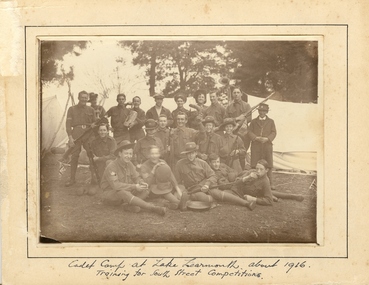
Photograph - Photograph - Sepia, Ballarat School of Mines Cadets, 1916, c1916
... local militia unit. * After 1 July of the year a Cadet turned 18, the Cadet left the Senior Cadets and became a member of the Citizen Military Force. * In October 1918 the AIF, Militia and Cadets were renamed to give some connection to the AIF battalion raised in the area. ...local militia unit. * After 1 July of the year a Cadet turned 18, the Cadet left the Senior Cadets and became a member of the Citizen Military Force. * In October 1918 the AIF, Militia and Cadets were renamed to give some connection to the AIF battalion raised in the area. ...Field Marshal Viscount Kitchener of Great Britain was invited by Prime Minister Deakin in 1909 to visit Australia and advise on the best way to provide Australia with a land defence. Kitchener’s report echoed the bill, introduced to Parliament in 1909 and supported by the Opposition Labor Party at its 1908 conference, to introduce compulsory military training in peace time (referred to as universal training). On 1 January 1911, the Commonwealth Defence Act 1911 (Cth) was passed as law and all males aged 12 to 26 were required to receive military training. Men were divided according to age, with junior cadets comprising boys 12-14 years of age, senior cadets comprising boys 14-18, and young men aged 18-26 assigned to the home militia defence. The support of schools was vital to the success of the scheme, since the system of cadet training began in the primary schools, with physical training prescribed by military authorities. Junior cadet training was entirely in the hands of school teachers, who had first been trained by military officers. This early training was less military in nature than focused on physical drill and sport. It also acted to inculcate boys with the notions of loyalty to country and empire. At this age, uniforms were not worn, although there were schools with pre-existing uniformed cadet units, who continued to do so. Senior Cadets were organised by Training Areas, administered by Area Officers. If a school had at least 60 senior cadets, they could form their own units. Unlike their junior counterparts, Senior Cadets were issued uniforms, a rifle, and learned the foundations necessary for service in any arm of the defence forces. Boys and men could be exempted from compulsory training if they lived more than five miles from the nearest training site, or were passed medically unfit. Those who failed to register for training were punished with fines or jail sentences, and the severity of this punishment generated some of the strongest opposition to the scheme. While institutions such as the political parties and most churches generally supported universal training, some in the broader labour movement were less enthusiastic, as evidenced in the Daily Herald newspaper’s editorials and letters. Universal military training persisted after the conclusion of World War 1, with the Junior Cadet scheme the first to go, in 1922. Senior cadets and service with the militia was suspended in November 1929. (http://guides.slsa.sa.gov.au/content.php?pid=575383&sid=4788359, accessed 29/10/2015) According to Neil Leckie, Manager of the Ballarat Ranger Military Museum: * Originally 12 – 14 year olds went to Junior Cadets attached to their school. * From age 14 – 17 they were Senior Cadets attached to the local militia unit. * After 1 July of the year a Cadet turned 18, the Cadet left the Senior Cadets and became a member of the Citizen Military Force. * In October 1918 the AIF, Militia and Cadets were renamed to give some connection to the AIF battalion raised in the area. Ballarat saw: 8th Australian Infantry Regiment comprising: * 8th Battalion AIF renamed 1st Battalion 8th Australian Infantry Regiment * 70th Infantry Militia renamed 2nd Battalion 8th Australian Infantry Regiment * 70th Infantry Cadets renamed 3rd B, 8th Australian Infantry. 39th Australian Infantry Regiment comprising: * 39th Battalion AIF renamed 1st Battalion 39th Australian Regiment * 71st Infantry Militia renamed 2nd Bn, 39th Australian Infantry Regiment * 71st Infantry Cadets renamed 3rd Bn, 39th Australian Infantry Regiment Prior to the reorganisation in 1918 the 18th Brigade was the 70th, 71st and 73rd Infantry. It is thought that the 18th Brigade Cadet units in 1920 were those that came from the old: * 69th Infantry (Geelong/Queenscliff) * 70th Infantry (Ballarat/Colac) * 71st Infantry (Ballarat West) * 72nd Infantry Warrnambool) * 73rd Infantry (NW Vic) The next name change came in 1921!Mounted sepia photograph of 21 young males. They are the Ballarat School of Mines Cadets on a training camp at Lake Learmonth. Back row left to right: Harold Wakeling; ? ; T. Wasley; H. Witter; H.V. Maddison (staff); Lieutenant S.J. Proctor, Joe ? ; ? ; B.C. Burrows. Centre left to right: Howard Beanland; ? ; F.N. Gibbs; H. Siemering; P. Riley; ? : E. Adamthwaite. Front row left to right: Albert E. Williams; Francis Davis (RAAF Dec.); A. Miller; W. Shattock; T. Rees From the Ballarat School of Mines Magazine, 1916 "Our Competition Team, 1916 At a parade, held on the 25th August competition teams were called from from the three colleges - Ballarat College, St Patrick's College, and the School of Mines. In each case, a large muster was obtained, twenty-nine volunteering fro the School of Mines. On account of the number in a team being limited to 21, some had to be weeded out. The team decided to have a camp at Learmonth in the vacation for the benefit of training for the coming competitions. The tents, within our baggage, were brought to the Junior Technical School at 10 a.m. on Monday, 11 September. Everything was carted to the station on a lorry, which was very kindly lent by Mr C. Burrow. ... Arriving at our camp, which was in the Park, we first raised the tents. This was done in record time. Three large tents, A.B.C., were pitched one behind the other. We also pitched a smaller one to act as a provisions tent. The provisions supplied by each cadet were placed in this tent. Dinner was ready by 3.30, and was prepared by the three senior non-coms., who also acted as orderlies. Things went alright Monday night, the two senior non-coms. acting as sentries for the first two hours. On Tuesday morning Reville sounded at 7. There was no need for it, however, as nearly all the cadets were up before daylight, owing to their beds being too hard. After physical exercises were gone through we had breakfast. We then had rifle exercises until Messrs A.W. Steane and F.N. King arrived. The former put the team through the table of physical exercises set down for competition work, many valuable points being obtained. The visitors remained for dinner, afterwards returning to Ballarat. Wednesday was uneventful, until the soldiers arrived at about 11 a.m., stopping at the park for lunch. As we handed over the coppers, etc., to them, our lunch was delayed. Two more visitors arrived after lunch, and after taking a few photos returned home. That night we had a "Sing-a-long" in C Tent until "Lights out" sounded at 9.30. After physical exercises ad breakfast on Thursday, we went for a six mile route march round the lake, doing skirmishing on the way. In the afternoon we practised rifle exercises and the march past. A concert was arranged for that night, the chief singers being cadets H. Siemering and W. Shattock. Supper was served at the end of the entertainment. On Friday, Reveille sounded at 6.30 instead of 7, and, as usual, we had physical exercises before breakfast, after which the team went through skirmishing at the reserve. In the afternoon, section drill and the march past were practised. Friday night, being our last night in camp, leave was granted until 10 p.m., "lights out" sounding at 11. Reveille sounded on Saturday at 4.30, the reason being that all kits, tents, etc., had to be packed away ready to catch the 8.15 train to Balalrat. At 7.30 we were all ready to leave for the station. We had a very enjoyable time in the train, each cadet having a chip in at the patriotic songs. On arriving at Ballarat, we found the lorry awaiting us. The luggage was carted to the Junior Technical School, the team following. The team were here dismissed, everyone feeling that he had had a very good time. F.G. Davis"Written in ink on front 'cadet camp at Lake Learmonth about 1916. Training for South Street Competitions. ballarat school of mines, cadets, ballarat school of mines cadets, lake learmonth, world war one, boomerang, camp, cadet camp, h.g. wakeling, harold wakeling, f.g. davis, albert w. steane, f.n. king, h. siermering, w. shattock, francis davis, harold wakeling, t. wasley, h. witter, h.v. maddison, s.j. proctor, b.c. burrows, howard beanland, f.n. gibbs, h. siemering, p. riley, e. adamthwaite, albert e. williams; francis davis, a. miller, w. shattock, t. rees, photography, foto, boxing gloves -
 Federation University Historical Collection
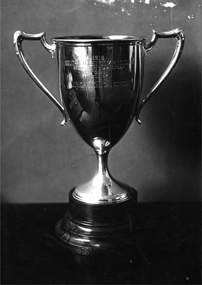
Photograph - Colour, South Street Trophy - Senior Cadet Championships 'A' Grade won by the Ballarat Junior Technical School, 1918, 1918
... local militia unit. * After 1 July of the year a Cadet turned 18, the Cadet left the Senior Cadets and became a member of the Citizen Military Force. * In October 1918 the AIF, Militia and Cadets were renamed to give some connection to the AIF battalion raised in the area. ...local militia unit. * After 1 July of the year a Cadet turned 18, the Cadet left the Senior Cadets and became a member of the Citizen Military Force. * In October 1918 the AIF, Militia and Cadets were renamed to give some connection to the AIF battalion raised in the area. ...According to Neil Leckie, Manager of the Ballarat Ranger Military Museum: * Originally 12 – 14 year olds went to Junior Cadets attached to their school. * From age 14 – 17 they were Senior Cadets attached to the local militia unit. * After 1 July of the year a Cadet turned 18, the Cadet left the Senior Cadets and became a member of the Citizen Military Force. * In October 1918 the AIF, Militia and Cadets were renamed to give some connection to the AIF battalion raised in the area. Ballarat saw: 8th Australian Infantry Regiment comprising: * 8th Battalion AIF renamed 1st Battalion 8th Australian Infantry Regiment * 70th Infantry Militia renamed 2nd Battalion 8th Australian Infantry Regiment * 70th Infantry Cadets renamed 3rd B, 8th Australian Infantry. 39th Australian Infantry Regiment comprising: * 39th Battalion AIF renamed 1st Battalion 39th Australian Regiment * 71st Infantry Militia renamed 2nd Bn, 39th Australian Infantry Regiment * 71st Infantry Cadets renamed 3rd Bn, 39th Australian Infantry Regiment Prior to the reorganisation in 1918 the 18th Brigade was the 70th, 71st and 73rd Infantry. It is thought that the 18th Brigade Cadet units in 1920 were those that came from the old: * 69th Infantry (Geelong/Queenscliff) * 70th Infantry (Ballarat/Colac) * 71st Infantry (Ballarat West) * 72nd Infantry Warrnambool) * 73rd Infantry (NW Vic) The next name change came in 1921!Black and white photograph of a trophy cup. 1918 South Street Competitionssouth street, south street championships, ballarat junior technical school, cadets, ballarat junior technical school cadets, trophy, cup -
 City of Moorabbin Historical Society (Operating the Box Cottage Museum)
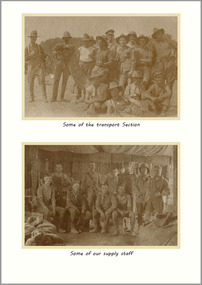
Album - Kodak album 24pp WW1 1914-1919, c1914-1918
... local businesses enlisted c 1914 at the beginning of WWI. The older men, women and children then had to manage the farms while they worried about the dangers facing their beloved family members. A record of some of the experiences of men from Moorabbin Shire who enlisted c1914 and were sent to Egypt at the beginning of WW1 1914-19 ww1 1914-1918 photographs australian light horse battalion egypt 1st australian infantry force war horses kodak ltd WWI moorabbin marriott Harry Beach Front cover KODAK Inside back cover KODAK LTD. / SERIES D / ALBUM Some photographs have inscriptions on the back A thick cardboard album of 24 pages with inserts for 2 small black and white photographs per page . ...The photos in this album show the carefree, adventurous spirit of the young men soon to be ANZACS Many young men from the market garden, dairy, poultry and fruit farms as well local businesses enlisted c 1914 at the beginning of WWI. The older men, women and children then had to manage the farms while they worried about the dangers facing their beloved family members. A record of some of the experiences of men from Moorabbin Shire who enlisted c1914 and were sent to Egypt at the beginning of WW1 1914-19A thick cardboard album of 24 pages with inserts for 2 small black and white photographs per page . Scenes from Egypt c 1914 - 1918 showing Australian soldiers, naval vessels, horses, carts, pyramids, houses, buildings, camels, local inhabitants and countryside. Inscriptions on the back of some of the photographs mention Arthur (Ebsary), Clarrie (Burgess), Reg (Marriott), and a horse named Nell.Front cover KODAK Inside back cover KODAK LTD. / SERIES D / ALBUM Some photographs have inscriptions on the backww1 1914-1918, photographs, australian light horse battalion, egypt, 1st australian infantry force, war horses, kodak ltd, wwi, moorabbin, marriott, harry beach -
Frankston RSL Sub Branch
Document, Certificate, W. and J. Barr, ca 1918
... Battalion Australian Imperial Force. Evans had enlisted at Carlton, Melbourne, on the 20th July, 1915 and embarked from Melbourne for overseas service with the 5th Battalion on 7th March, 1916. Evans was later killed in action in France on the 19th July, 1916. This is an example of the certificate presented by the City of Fitzroy to local...Battalion Australian Imperial Force. Evans had enlisted at Carlton, Melbourne, on the 20th July, 1915 and embarked from Melbourne for overseas service with the 5th Battalion on 7th March, 1916. Evans was later killed in action in France on the 19th July, 1916. This is an example of the certificate presented by the City of Fitzroy to local ...Framed certificate in honour of Australian Army World War 1 serviceman Private Frederick Alfred Evans, service number 4803 of the 60th Battalion Australian Imperial Force. Evans had enlisted at Carlton, Melbourne, on the 20th July, 1915 and embarked from Melbourne for overseas service with the 5th Battalion on 7th March, 1916. Evans was later killed in action in France on the 19th July, 1916. This is an example of the certificate presented by the City of Fitzroy to local servicemen who had enlisted. The certificate is dated 15 April, 1918, and in this case, the certificate was presented to the deceased serviceman's family. The elaborate certificate is printed, in colour, on a quality card type paper and has a number 375 printed at the bottom left hand corner. The certificate is complete with the original cardboard tube in which it was stored.The certificate has the inscription: W. and J. Barr, Print., 105-7 Brunswick Street, Fitzroy -
 Bendigo Historical Society Inc.
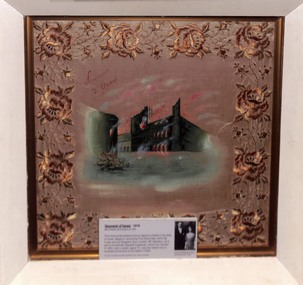
Decorative object - Jack Lockett Collection: Souvenir of Ypres 1919, 1919
... local farm. Later, he worked for his uncles in the Mallee. On 24 March 1916, he travelled to Mildura to enlist in the Australian Imperial Force. He served in France with the 38th Battalion...local farm. Later, he worked for his uncles in the Mallee. On 24 March 1916, he travelled to Mildura to enlist in the Australian Imperial Force. He served in France with the 38th Battalion ...John Henry Lockett OAM (22 January 1891 – 25 May 2002) was the oldest man ever in Australia when he died aged 111 years, 123 days. As one of the last surviving veterans of World War I, he was acclaimed as a national hero during the last decade of his life. Lockett was born in the small Victorian town of Waanyarra, near Bendigo. He left school aged nine to work on a local farm. Later, he worked for his uncles in the Mallee. On 24 March 1916, he travelled to Mildura to enlist in the Australian Imperial Force. He served in France with the 38th Battalion, earning promotion to sergeant and was discharged on 20 September 1919. https://en.wikipedia.org/wiki/Jack_Lockett After the war, Jack returned to The Mallee and selected a 640 acres (260 ha) block of land in Linga, Victoria, deciding to make his living as a farmer. In 1923, he married Maybell Ingwerson and they had four children together. In 1963, the couple retired to Bendigo, leaving the farmland (which now covered more than 130,000 acres (53,000 ha), in the care of their children and grandchildren. Ypres souvenir, from World War 1, was brought home by Jack Lockett, for his then sweetheart and later wife, Mabel Ingwersen. Cream wooden frame, with light gold insert. Inside frame, silk embroidered flowers and leaves cream silk fabric, form a frame for the painted image of partly destroyed building in centre. Written in cursive script on top left of building: 'Souvenir d'Ypres'. Embroidery in golden tones forms a frame for the building. Attached to bottom of frame, interpretive label: 'Souvenir d'Ypres, 1919. Silk thread and paint on silk. This hand-embroidered picture depicts a battle in the area of Ypres, Belgium, during the First World War (1914 -18) it was sent by Sergeant Jack Lockett, 38th Battalion, as a gift to his fiancee Maybell (sic) Ingwersen, whom he married in 1923. Attached to back of frame alongside handwritten note is an invitation to the Shrine of Remembrance, opening of the 'Threads of Connection', embroidery and textiles from the First World War to the present exhibition. 29/1/2010. Attached to back of frame, handwritten in black pen on lined paper: Souvenir d'Ypres France. Scene depicts a battle in WW1 believed to be a present brought back to Australia in 1919 by Jack Lockett for his then fiancee Mabel Victoria (Doll) Ingwersen whom he married on 23.9.1923. Exhibited at the Shrine of Remembrance from 29.1.2010 until 16.5.2010'.jack lockett, ypres, mabel ingwersen, world war 1, france -
 Bendigo Historical Society Inc.
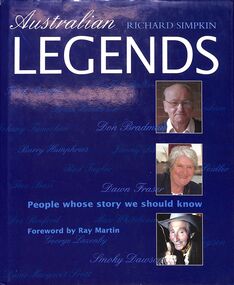
Book - "Australian Legends", 2005
... local farm. Later, he worked for his uncles in the Mallee. On 24 March 1916, he travelled to Mildura to enlist in the Australian Imperial Force. He served in France with the 38th Battalion...local farm. Later, he worked for his uncles in the Mallee. On 24 March 1916, he travelled to Mildura to enlist in the Australian Imperial Force. He served in France with the 38th Battalion ...John Henry Lockett OAM (22 January 1891 – 25 May 2002) was the oldest man ever in Australia when he died aged 111 years, 123 days. As one of the last surviving veterans of World War I, he was acclaimed as a national hero during the last decade of his life. Lockett was born in the small Victorian town of Waanyarra, near Bendigo. He left school aged nine to work on a local farm. Later, he worked for his uncles in the Mallee. On 24 March 1916, he travelled to Mildura to enlist in the Australian Imperial Force. He served in France with the 38th Battalion, earning promotion to sergeant and was discharged on 20 September 1919. https://en.wikipedia.org/wiki/Jack_Lockett After the war, Jack returned to The Mallee and selected a 640 acres (260 ha) block of land in Linga, Victoria, deciding to make his living as a farmer. In 1923, he married Maybell Ingwerson and they had four children together. In 1963, the couple retired to Bendigo in 1953, leaving the farmland (which now covered more than 130,000 acres (53,000 ha), in the care of their children and grandchildren. "Australian Legends People whose story we should know" written by Richard Simpkin. Foreword by Ray Martin. A unique collection of interviews collected by the author from around Australia. Published in Australia by New Holland Publishers in 2005. Dark blue hard cover book with a dark blue dust jacket with three photographs on the front and four photographs on the back. Titles printed in white and bright blue. Book includes full page black and white or coloured photographs of featured people. Each featured person has a one-page story facing their photograph. Includes an article on Jack Lockett on Page 104. 176 pp.jack lockett -
 Bendigo Historical Society Inc.
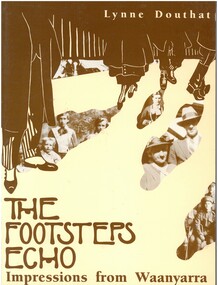
Book - 'The Footsteps echo. Impressions from Waanyarra.'
... local farm. Later, he worked for his uncles in the Mallee. On 24 March 1916, he travelled to Mildura to enlist in the Australian Imperial Force. He served in France with the 38th Battalion...local farm. Later, he worked for his uncles in the Mallee. On 24 March 1916, he travelled to Mildura to enlist in the Australian Imperial Force. He served in France with the 38th Battalion ...Waanyarra has its legends and myths set around the early gold-rush days of the 1850's. This book relates many of these stories with photographs. Over fifty family histories and stories contribute to this book. Today, Waanyarra is mainly State forest and farmland. Jack Lockett is mentioned in this publiocation on page 192. John Henry Lockett OAM (22 January 1891 – 25 May 2002) was the oldest man ever in Australia when he died aged 111 years, 123 days. As one of the last surviving veterans of World War I, he was acclaimed as a national hero during the last decade of his life. Lockett was born in the small Victorian town of Waanyarra, near Bendigo. He left school aged nine to work on a local farm. Later, he worked for his uncles in the Mallee. On 24 March 1916, he travelled to Mildura to enlist in the Australian Imperial Force. He served in France with the 38th Battalion, earning promotion to sergeant and was discharged on 20 September 1919. https://en.wikipedia.org/wiki/Jack_Lockett After the war, Jack returned to The Mallee and selected a 640 acres (260 ha) block of land in Linga, Victoria, deciding to make his living as a farmer. In 1923, he married Maybell Ingwerson and they had four children together. In 1963, the couple retired to Bendigo in 1953, leaving the farmland (which now covered more than 130,000 acres (53,000 ha), in the care of their children and grandchildren. Soft cover. 196 pp. Cover is two toned - brown and tan. Edited by Lynne Douthat. Historic photographs by Ken Morton. Cover Design by Diane Thompson. Published in 1989. Phototypeset by Victorian Typesetting Service, Castlemaine. Black and white photographs, charts and graphs. Dimensions of book: 18cm wide, 24cm long, and 1.6cm high. Non-fiction. Book divided into 3 parts - 'Beginnings', 'Families' and 'Remedies, Recipes, Concoctions and Cures'.Signed L. J. Douthat in front page.gold rush, waanyarra, family history, jack lockett -
 Bendigo Historical Society Inc.
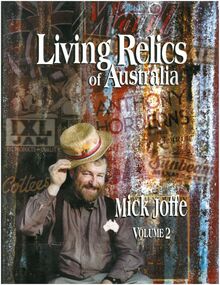
Book - 'Living Relics of Australia', 2001
... local farm. Later, he worked for his uncles in the Mallee. On 24 March 1916, he travelled to Mildura to enlist in the Australian Imperial Force. He served in France with the 38th Battalion...local farm. Later, he worked for his uncles in the Mallee. On 24 March 1916, he travelled to Mildura to enlist in the Australian Imperial Force. He served in France with the 38th Battalion ...John Henry Lockett OAM (22 January 1891 – 25 May 2002) was the oldest man ever in Australia when he died aged 111 years, 123 days. As one of the last surviving veterans of World War I, he was acclaimed as a national hero during the last decade of his life. Lockett was born in the small Victorian town of Waanyarra, near Bendigo. He left school aged nine to work on a local farm. Later, he worked for his uncles in the Mallee. On 24 March 1916, he travelled to Mildura to enlist in the Australian Imperial Force. He served in France with the 38th Battalion, earning promotion to sergeant and was discharged on 20 September 1919. https://en.wikipedia.org/wiki/Jack_Lockett After the war, Jack returned to The Mallee and selected a 640 acres (260 ha) block of land in Linga, Victoria, deciding to make his living as a farmer. In 1923, he married Maybell Ingwerson and they had four children together. In 1963, the couple retired to Bendigo in 1953, leaving the farmland (which now covered more than 130,000 acres (53,000 ha), in the care of their children and grandchildren. 'Living Relics of Australia. Volume 2' by Mick Joffe. Foreword by Alan Jones. Edited by Phyl Joffe. Copyright 2001. Limited Edition of 5,000 - not available in book stores. Volume 2 in the series 'Endangered Characters of Australia'. Contains 25 short biographies of Australians - many of whom were in their 90's and several of them over 100 years of age. Printed by Dai Nippon Printing Co. (Hong Kong). Colored hard cover which is the same image as the dust jacket. Dust jacket and hard cover has image of author on front with Australian product images in background; and five caricatures with Australian product images in background. Titles printed in white. Each personality covered has description of their history and life accompanied by photographs relevant to them and a caricature. Includes pages dedicated to Jack Lockett on Pages 38 to 45. 128 pp. Two copies in library.Inscribed "Yours fairdinkumly. Mick Jofe. 2001."jack lockett -
 Bendigo Historical Society Inc.
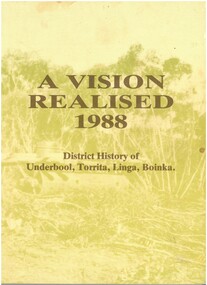
Book - "A Vision Realised. 1988. District History of Underbool, Torrita, Linga, and Boinka.", 1988
... local farm. Later, he worked for his uncles in the Mallee. On 24 March 1916, he travelled to Mildura to enlist in the Australian Imperial Force. He served in France with the 38th Battalion...local farm. Later, he worked for his uncles in the Mallee. On 24 March 1916, he travelled to Mildura to enlist in the Australian Imperial Force. He served in France with the 38th Battalion ...John Henry Lockett OAM (22 January 1891 – 25 May 2002) was the oldest man ever in Australia when he died aged 111 years, 123 days. As one of the last surviving veterans of World War I, he was acclaimed as a national hero during the last decade of his life. Lockett was born in the small Victorian town of Waanyarra, near Bendigo. He left school aged nine to work on a local farm. Later, he worked for his uncles in the Mallee. On 24 March 1916, he travelled to Mildura to enlist in the Australian Imperial Force. He served in France with the 38th Battalion, earning promotion to sergeant and was discharged on 20 September 1919. https://en.wikipedia.org/wiki/Jack_Lockett After the war, Jack returned to The Mallee and selected a 640 acres (260 ha) block of land in Linga, Victoria, deciding to make his living as a farmer. In 1923, he married Maybell Ingwerson and they had four children together. In 1963, the couple retired to Bendigo in 1953, leaving the farmland (which now covered more than 130,000 acres (53,000 ha), in the care of their children and grandchildren. "A Vision Realised. 1988. District History of Underbool, Torrita, Linga and Boinka" compiled and edited by Janet Lynch, Margaret Willsmore, and Christy Brown. Foreword by Janet Lynch, Margaret Willsmore, and Christy Brown. A history of the Mallee towns of Underbool, Torrita, Linga and Boinka containing a collection of 61 local family histories. Discusses aspects affecting locals, including the local Shire, Water supply, the Railway, Roads, Farming, Salt, Businesses, Sporting Clubs, and School. Published in Australia by Underbool Back To Committee. Printed by Sunnyland Press, Red Cliffs. Soft cover book, with tones of green and tan on cover - back, front and spine. Titles printed in brown. Book includes black and white photographs of locals, and local events. Includes an article on Jack Lockett on Pages 127 and 128. 151 pp.jack lockett, underbool, torrita, linga, boinka -
 Bendigo Historical Society Inc.
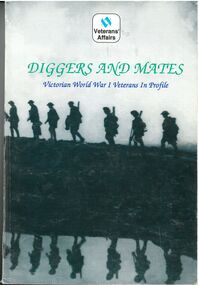
Book - "Diggers And Mates. Victorian World War 1 Veterans In Profile.", 1995
... local farm. Later, he worked for his uncles in the Mallee. On 24 March 1916, he travelled to Mildura to enlist in the Australian Imperial Force. He served in France with the 38th Battalion...local farm. Later, he worked for his uncles in the Mallee. On 24 March 1916, he travelled to Mildura to enlist in the Australian Imperial Force. He served in France with the 38th Battalion ...John Henry Lockett OAM (22 January 1891 – 25 May 2002) was the oldest man ever in Australia when he died aged 111 years, 123 days. As one of the last surviving veterans of World War I, he was acclaimed as a national hero during the last decade of his life. Lockett was born in the small Victorian town of Waanyarra, near Bendigo. He left school aged nine to work on a local farm. Later, he worked for his uncles in the Mallee. On 24 March 1916, he travelled to Mildura to enlist in the Australian Imperial Force. He served in France with the 38th Battalion, earning promotion to sergeant and was discharged on 20 September 1919. https://en.wikipedia.org/wiki/Jack_Lockett After the war, Jack returned to The Mallee and selected a 640 acres (260 ha) block of land in Linga, Victoria, deciding to make his living as a farmer. In 1923, he married Maybell Ingwerson and they had four children together. In 1963, the couple retired to Bendigo in 1953, leaving the farmland (which now covered more than 130,000 acres (53,000 ha), in the care of their children and grandchildren. "Diggers And mates. Victorian World War 1 Veterans In Profile." Compiled by Kylie McKenzie. Preamble by Con Sciacca, Minister for Veterans' Affairs. Foreward by Brian Flynn, Deputy Commissioner for Veterans' Affairs. Produced by the Commonwealth Department of Veteran's Affairs, Melbourne. Printed by the Australian Government Publishing Service in 1995. Contains a collection of the experiences and insights of many of Victoria's then surviving World war 1 veterans. Soft cover book with image of 'Supporting Troops of the 1st Australian Division photographed on a duckboard track near Ypres, Belgium, 1917. Titles printed in Green and dark blue. Vererans' Affairs logo in centre at top of front cover. Book includes service particulars of each service person, personal particulars of person, and image(s) of service person at time of publication (1995) and whilst in service. Includes an article on Jack Lockett - serviceman 43 as presented in book . jack lockett, world war 1 -
 Bendigo Historical Society Inc.
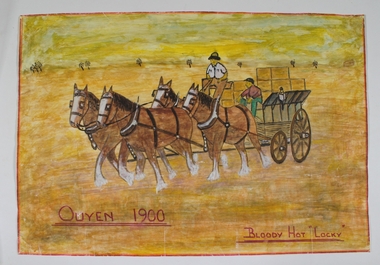
Painting - Jack Lockett Collection: Sketch of four horses and cart, 1991
... local farm. Later, he worked for his uncles in the Mallee. On 24 March 1916, he travelled to Mildura to enlist in the Australian Imperial Force. He served in France with the 38th Battalion...local farm. Later, he worked for his uncles in the Mallee. On 24 March 1916, he travelled to Mildura to enlist in the Australian Imperial Force. He served in France with the 38th Battalion ...John Henry Lockett OAM (22 January 1891 – 25 May 2002) was the oldest man ever in Australia when he died aged 111 years, 123 days. As one of the last surviving veterans of World War I, he was acclaimed as a national hero during the last decade of his life. Lockett was born in the small Victorian town of Waanyarra, near Bendigo. He left school aged nine to work on a local farm. Later, he worked for his uncles in the Mallee. On 24 March 1916, he travelled to Mildura to enlist in the Australian Imperial Force. He served in France with the 38th Battalion, earning promotion to sergeant and was discharged on 20 September 1919. https://en.wikipedia.org/wiki/Jack_Lockett After the war, Jack returned to The Mallee and selected a 640 acres (260 ha) block of land in Linga, Victoria, deciding to make his living as a farmer. In 1923, he married Maybell Ingwerson and they had four children together. In 1963, the couple retired to Bendigo, leaving the farmland (which now covered more than 130,000 acres (53,000 ha), in the care of their children and grandchildren. Sketch in Acrylic and water colour of four brown horses with white noses and hoofs pulling a cart with a man on the driver's seat wearing a white shirt and brown trousers and another in the cart wearing a maroon shirt and green trousers. Light brown background with some trees on the horizon and a blue yellow sky. Written in red underneath - OUYEN 1900 BLOODY HOT "LOCKY" Written on the back of the sketch - SKETCH IN ACRYLIC AND WATER COLOUR PRESENTED TO MR JACK. H. 'LOCKY' LOCKETT 1891-1991 100 YEARS Arther Eaton 22nd Jan 1997 Bgo East Bowling Club jack lockett, mabel ingwersen, world war 1, france, ouyen, arther eaton, bendigo east bowling club -
 Bendigo Historical Society Inc.
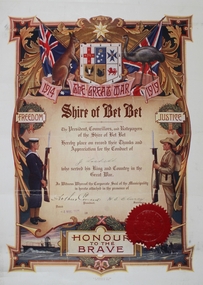
Certificate - Jack Lockett Collection: Shire of Bet Bet Great War Certificate, D. W. Paterson Co. Pty. Ltd. 495 Collins St. Melbourne, 1921
... local farm. Later, he worked for his uncles in the Mallee. On 24 March 1916, he travelled to Mildura to enlist in the Australian Imperial Force. He served in France with the 38th Battalion...local farm. Later, he worked for his uncles in the Mallee. On 24 March 1916, he travelled to Mildura to enlist in the Australian Imperial Force. He served in France with the 38th Battalion ...John Henry Lockett OAM (22 January 1891 – 25 May 2002) was the oldest man ever in Australia when he died aged 111 years, 123 days. As one of the last surviving veterans of World War I, he was acclaimed as a national hero during the last decade of his life. Lockett was born in the small Victorian town of Waanyarra, near Bendigo. He left school aged nine to work on a local farm. Later, he worked for his uncles in the Mallee. On 24 March 1916, he travelled to Mildura to enlist in the Australian Imperial Force. He served in France with the 38th Battalion, earning promotion to sergeant and was discharged on 20 September 1919. https://en.wikipedia.org/wiki/Jack_Lockett After the war, Jack returned to The Mallee and selected a 640 acres (260 ha) block of land in Linga, Victoria, deciding to make his living as a farmer. In 1923, he married Maybell Ingwerson and they had four children together. In 1963, the couple retired to Bendigo, leaving the farmland (which now covered more than 130,000 acres (53,000 ha), in the care of their children and grandchildren. Bet Bet became a shire in 1864 with Dunolly in its centre. On 20 January 1995, the Shire of Bet Bet was abolished, and along with the City of Maryborough, the Shire of Tullaroop , was merged into the newly created Shire of Central Goldfields. D. W. Paterson Co 1907?- 1961Winfield Building, 495 Collins Street, Melbourne, Victoria, Australia A coloured certificate on white paper from the Shire of Bet Bet for service in the first World War. An Australian Coat of arms at the top with 1914 THE GREAT WAR 1919 Printed and handwritten underneath between an image of a sailor and a soldier FREEDOM Shire of Bet Bet JUSTICE The President, Councilors, and Ratepayers of the Shire of Bet Bet hearby place on record Thanks and Appreciation for the Conduct of J Lockett who served his King and Country in the Great War. In Witness Whereof the Corporate Seal of the Municipality is hereto attached in the presence of Arthur Green President H E Clancy Secretary. Dated 4 AUG 1921 HONOUR TO THE BRAVE D. W. PATERSON CO. PTY. LTD. 495 COLLINS ST. MELB. a jack lockett, mabel ingwersen, world war 1, france, 38th battalion, shire of bet bet, d. w. paterson co. -
 Bendigo Historical Society Inc.
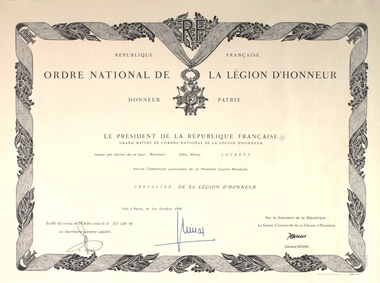
Certificate - Jack Lockett Collection: Legion of Honour Certificate and R.S.L. War Record, 1998
... local farm. Later, he worked for his uncles in the Mallee. On 24 March 1916, he travelled to Mildura to enlist in the Australian Imperial Force. He served in France with the 38th Battalion...local farm. Later, he worked for his uncles in the Mallee. On 24 March 1916, he travelled to Mildura to enlist in the Australian Imperial Force. He served in France with the 38th Battalion ...John Henry Lockett OAM (22 January 1891 – 25 May 2002) was the oldest man ever in Australia when he died aged 111 years, 123 days. As one of the last surviving veterans of World War I, he was acclaimed as a national hero during the last decade of his life. Lockett was born in the small Victorian town of Waanyarra, near Bendigo. He left school aged nine to work on a local farm. Later, he worked for his uncles in the Mallee. On 24 March 1916, he travelled to Mildura to enlist in the Australian Imperial Force. He served in France with the 38th Battalion, earning promotion to sergeant and was discharged on 20 September 1919. https://en.wikipedia.org/wiki/Jack_Lockett After the war, Jack returned to The Mallee and selected a 640 acres (260 ha) block of land in Linga, Victoria, deciding to make his living as a farmer. In 1923, he married Maybell Ingwerson and they had four children together. In 1963, the couple retired to Bendigo, leaving the farmland (which now covered more than 130,000 acres (53,000 ha), in the care of their children and grandchildren. In 1998to mark the 80th anniversary of the end of World War One the French Government awarded the Chevalier (Knight) Legion of Honour to all surviving Allied veterans who had fought in France A certificate on cream coloured thick paper with black printing. A decorative scroll with leaves and berries and RF is around the border. Printed text REPUBLIQU FRANCAISE HONNEUR PATRIE LE PRESIDENT DE LA REPUBLIQUE FRANCAISE GRAND MAITRE DE L'ORDE NATIONAL DE LA LOGION D'HONNEUR nomme par decret de ce dour, Monsieur John, Henry LOCKETT Ancien Combattant australien de la Premiere Guerre Mondiale CHEVALIER DE LA LEGION D'HONNEUR Fait a Paris, le 1er Octobre 1998 Scelle du sceau de I'Ordre sous le n' 253 LHE 98 Le Secretaire General adjiont singed F. SISNE Par le president de la Republique LE GRAND CHANCELIER DE LA LEGION D' HONNEUR signed General DOUIN Also included is two A4 pages description of Jack Lockett's life and War Record compiled by Alan Holmes, President of Bendigo Sub Branch Returned Servies League of Australia and a letter (now laminated) from the French Ambassy signed Dominque Girard a jack lockett, mabel ingwersen, world war 1, france, 38th battalion, legion of honour -
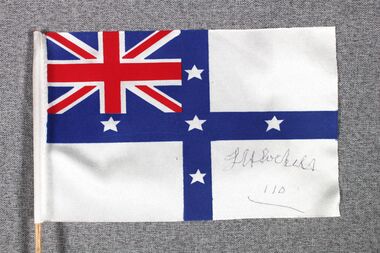 Bendigo Historical Society Inc.
Flag - Jack Lockett Collection: Signed Miniature Flag
... local farm. Later, he worked for his uncles in the Mallee. On 24 March 1916, he travelled to Mildura to enlist in the Australian Imperial Force. He served in France with the 38th Battalion...local farm. Later, he worked for his uncles in the Mallee. On 24 March 1916, he travelled to Mildura to enlist in the Australian Imperial Force. He served in France with the 38th Battalion ...John Henry Lockett OAM (22 January 1891 – 25 May 2002) was the oldest man ever in Australia when he died aged 111 years, 123 days. As one of the last surviving veterans of World War I, he was acclaimed as a national hero during the last decade of his life. Lockett was born in the small Victorian town of Waanyarra, near Bendigo. He left school aged nine to work on a local farm. Later, he worked for his uncles in the Mallee. On 24 March 1916, he travelled to Mildura to enlist in the Australian Imperial Force. He served in France with the 38th Battalion, earning promotion to sergeant and was discharged on 20 September 1919. https://en.wikipedia.org/wiki/Jack_Lockett After the war, Jack returned to The Mallee and selected a 640 acres (260 ha) block of land in Linga, Victoria, deciding to make his living as a farmer. In 1923, he married Maybell Ingwerson and they had four children together. In 1963, the couple retired to Bendigo, leaving the farmland (which now covered more than 130,000 acres (53,000 ha), in the care of their children and grandchildren. A small flag with a white background, a Union Jack in the upper left quadrant, a dark blueline in the centre horizontal and vertical with a five-pointed star on each axis and in centre. Signed in the lower right quarter J H Lockett 110 jack lockett, mabel ingwersen, flag -
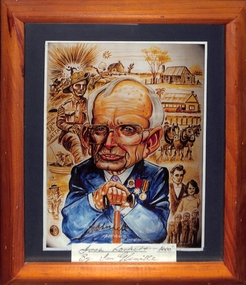 Bendigo Historical Society Inc.
Artwork, other - Jack Lockett Collection: Drawing Jack Lockett 2000, Ian Glanville, 2000
... local farm. Later, he worked for his uncles in the Mallee. On 24 March 1916, he travelled to Mildura to enlist in the Australian Imperial Force. He served in France with the 38th Battalion...local farm. Later, he worked for his uncles in the Mallee. On 24 March 1916, he travelled to Mildura to enlist in the Australian Imperial Force. He served in France with the 38th Battalion ...John Henry Lockett OAM (22 January 1891 – 25 May 2002) was the oldest man ever in Australia when he died aged 111 years, 123 days. As one of the last surviving veterans of World War I, he was acclaimed as a national hero during the last decade of his life. Lockett was born in the small Victorian town of Waanyarra, near Bendigo. He left school aged nine to work on a local farm. Later, he worked for his uncles in the Mallee. On 24 March 1916, he travelled to Mildura to enlist in the Australian Imperial Force. He served in France with the 38th Battalion, earning promotion to sergeant and was discharged on 20 September 1919. https://en.wikipedia.org/wiki/Jack_Lockett After the war, Jack returned to The Mallee and selected a 640 acres (260 ha) block of land in Linga, Victoria, deciding to make his living as a farmer. In 1923, he married Maybell Ingwerson and they had four children together. In 1963, the couple retired to Bendigo, leaving the farmland (which now covered more than 130,000 acres (53,000 ha), in the care of their children and grandchildren. A coloured caricature of Jack Lockett wearing a blue coat with an RSL badge and two medals which are probably A Legion of Honour and a WW1 Victory Medal. His hands are clasped in front of him holding a walking stick. Signed Jack Lockett "MEMORIES" By IAN GLANVILLE Written white paper at the bottom- Jack Lockett 2000 By Ian Glanville The background has numerous sepia tone sketches of various parts of Jack's life. It has dark grey mount with a light brown wooden frame and is behind glass. a jack lockett, mabel ingwersen, world war 1, france, 38th battalion, legion of honour, ian glanville -
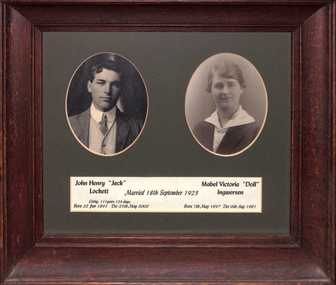 Bendigo Historical Society Inc.
Photograph - Jack Lockett Collection: Photo of Jack and Doll Lockett, Strath Prints & Framing, 2000
... local farm. Later, he worked for his uncles in the Mallee. On 24 March 1916, he travelled to Mildura to enlist in the Australian Imperial Force. He served in France with the 38th Battalion...local farm. Later, he worked for his uncles in the Mallee. On 24 March 1916, he travelled to Mildura to enlist in the Australian Imperial Force. He served in France with the 38th Battalion ...John Henry Lockett OAM (22 January 1891 – 25 May 2002) was the oldest man ever in Australia when he died aged 111 years, 123 days. As one of the last surviving veterans of World War I, he was acclaimed as a national hero during the last decade of his life. Lockett was born in the small Victorian town of Waanyarra, near Bendigo. He left school aged nine to work on a local farm. Later, he worked for his uncles in the Mallee. On 24 March 1916, he travelled to Mildura to enlist in the Australian Imperial Force. He served in France with the 38th Battalion, earning promotion to sergeant and was discharged on 20 September 1919. https://en.wikipedia.org/wiki/Jack_Lockett After the war, Jack returned to The Mallee and selected a 640 acres (260 ha) block of land in Linga, Victoria, deciding to make his living as a farmer. In 1923, he married Maybell Ingwerson and they had four children together. In 1963, the couple retired to Bendigo, leaving the farmland (which now covered more than 130,000 acres (53,000 ha), in the care of their children and grandchildren. Two black and white head and shoulders photographs of Jack and Doll Lockett in oval cut out shapes of a grey mount. A rectangle cut out below the photographs has printing in it - John Henry "Jack" Lockett living,111years 124 days. Born 22Jan 1891 Dec 25th May 2002 Married 18th September 1923 Mabel Victoria "Doll" Ingwersen Born 7th May 1897 Dec 6th Aug 1981 In a dark brown wooden frame behind glass. jack lockett, mabel ingwersen, world war 1, france, 38th battalion -
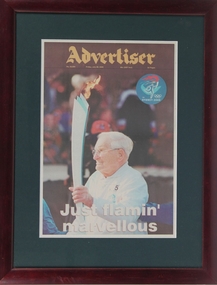 Bendigo Historical Society Inc.
Photograph - Jack Lockett Collection: Newspaper Poster, Geof Sayer, 2000
... local farm. Later, he worked for his uncles in the Mallee. On 24 March 1916, he travelled to Mildura to enlist in the Australian Imperial Force. He served in France with the 38th Battalion...local farm. Later, he worked for his uncles in the Mallee. On 24 March 1916, he travelled to Mildura to enlist in the Australian Imperial Force. He served in France with the 38th Battalion ...John Henry Lockett OAM (22 January 1891 – 25 May 2002) was the oldest man ever in Australia when he died aged 111 years, 123 days. As one of the last surviving veterans of World War I, he was acclaimed as a national hero during the last decade of his life. Lockett was born in the small Victorian town of Waanyarra, near Bendigo. He left school aged nine to work on a local farm. Later, he worked for his uncles in the Mallee. On 24 March 1916, he travelled to Mildura to enlist in the Australian Imperial Force. He served in France with the 38th Battalion, earning promotion to sergeant and was discharged on 20 September 1919. https://en.wikipedia.org/wiki/Jack_Lockett After the war, Jack returned to The Mallee and selected a 640 acres (260 ha) block of land in Linga, Victoria, deciding to make his living as a farmer. In 1923, he married Maybell Ingwerson and they had four children together. In 1963, the couple retired to Bendigo, leaving the farmland (which now covered more than 130,000 acres (53,000 ha), in the care of their children and grandchildren. The 2000 Olympic flame was relayed from Olympia in Greece to Sydney by 13400 carriers including 11000 Australians, each carrier had their torch Coloured photograph of a Bendigo Advertiser poster with Jack Lockett holding the Olympic Flame. At the top of the poster- Advertiser No. 42694 Friday, July 28, 2000 90c (GST Inc) A blue circle with a white image of a person carrying a flaming torch, five white Olympic Rings, SYDNEY 2000 In the main part of the poster Jack Lockett, in a white shirt is holding an Olympic torch Printed across the lower part of the poster - Just flamin' marvellous It has a dark grey mount and dark brown wooden frame behind glass. jack lockett, mabel ingwersen, world war 1, france, 38th battalion, olympic torch relay 2000 -
 Bendigo Historical Society Inc.
Magazine - Jack Lockett Collection: Our land our century 1900-1929, The Weekly Times, 1999
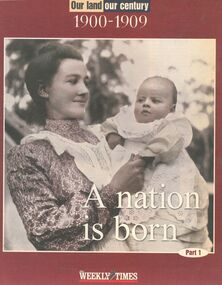
... local farm. Later, he worked for his uncles in the Mallee. On 24 March 1916, he travelled to Mildura to enlist in the Australian Imperial Force. He served in France with the 38th Battalion...local farm. Later, he worked for his uncles in the Mallee. On 24 March 1916, he travelled to Mildura to enlist in the Australian Imperial Force. He served in France with the 38th Battalion ...John Henry Lockett OAM (22 January 1891 – 25 May 2002) was the oldest man ever in Australia when he died aged 111 years, 123 days. As one of the last surviving veterans of World War I, he was acclaimed as a national hero during the last decade of his life. Lockett was born in the small Victorian town of Waanyarra, near Bendigo. He left school aged nine to work on a local farm. Later, he worked for his uncles in the Mallee. On 24 March 1916, he travelled to Mildura to enlist in the Australian Imperial Force. He served in France with the 38th Battalion, earning promotion to sergeant and was discharged on 20 September 1919. https://en.wikipedia.org/wiki/Jack_Lockett After the war, Jack returned to The Mallee and selected a 640 acres (260 ha) block of land in Linga, Victoria, deciding to make his living as a farmer. In 1923, he married Maybell Ingwerson and they had four children together. In 1963, the couple retired to Bendigo, leaving the farmland (which now covered more than 130,000 acres (53,000 ha), in the care of their children and grandchildren. Three coloured magazines, each with 30 pages titled Our land our century 1900 - 1909, 1910 - 1919, 1920 - 1929. The magazines contain detailed articles and photographs of each decade The front page of the first one has a dark red border around a photo of a female holding a baby with - A nation is born - printed in its lower section and Part 1 is in the lower right corner. Printed at the top of the page - Our land our century 1900-1909 The front page of the second one has an off-white border around a photo of a young male with - War beckons - printed in its lower section and Part 2 is in the lower right corner. Printed at the top of the page - Our land our century 1910 - 1919 The front page of the third one has a blue border around a photo five males cutting a log of wood. At the cutting edge is printed in its lower section and Part 2 is in the lower right corner. Printed at the top of the page - Our land our century 1920 - 1929 The Weekly Times, with an image of a magpie in the middle. is printed in lower centre of each front page. Jack Lockett tells the story of his life in the three magazines with photographs him. Starting in part 1 pages 24 and 25, continuing in part 2 pages 56 and 57, and part 3 pages 88 and 89 It starts from when he was school at Wanyarra near Bendigo. Part three finishes with Jack on his farm in northwest Victoria. Next week: Jack jnr on the Depetession years. The double pages also include the stories of Charlie Coster and Joe Coster from Bairnsdale Victoria. jack lockett, mabel ingwersen, our land our centry, weekly times, charlie coster, joe coster -
 Bendigo Historical Society Inc.
Photograph - Jack Lockett Collection: Family Photograph
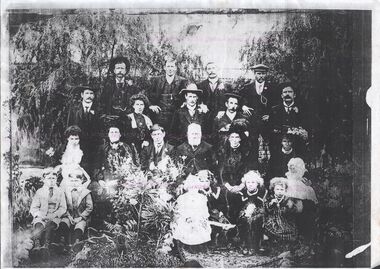
... local farm. Later, he worked for his uncles in the Mallee. On 24 March 1916, he travelled to Mildura to enlist in the Australian Imperial Force. He served in France with the 38th Battalion...local farm. Later, he worked for his uncles in the Mallee. On 24 March 1916, he travelled to Mildura to enlist in the Australian Imperial Force. He served in France with the 38th Battalion ...John Henry Lockett OAM (22 January 1891 – 25 May 2002) was the oldest man ever in Australia when he died aged 111 years, 123 days. As one of the last surviving veterans of World War I, he was acclaimed as a national hero during the last decade of his life. Lockett was born in the small Victorian town of Waanyarra, near Bendigo. He left school aged nine to work on a local farm. Later, he worked for his uncles in the Mallee. On 24 March 1916, he travelled to Mildura to enlist in the Australian Imperial Force. He served in France with the 38th Battalion, earning promotion to sergeant and was discharged on 20 September 1919. https://en.wikipedia.org/wiki/Jack_Lockett After the war, Jack returned to The Mallee and selected a 640 acres (260 ha) block of land in Linga, Victoria, deciding to make his living as a farmer. In 1923, he married Maybell Ingwerson and they had four children together. In 1963, the couple retired to Bendigo, leaving the farmland (which now covered more than 130,000 acres (53,000 ha), in the care of their children and grandchildren. An A3 copy of a group photograph of three rows of adults and a front of children with foliage in the background and foreground. Four males in the back row, four males and one female in second row, two males and four females and two infants in the third row and six infants in the front row. On the back of the photo there is a list of names Baack Row Bob Birstall, Richard(Dick) Lockett, George Lockett, Herbert(Herb) Lockett 2nd Row William(Bill) Bertha(Birdie) Lockett, Tom Lockett, George Scholes, James(Jim) Lockett 3rd Row Elizabeth Lockett(Jim on Knee), Mary Birstall, Alf Lockett. Grandfather Lockett. Edith Lockett(Scholes), Jane Lockett(Ina on Knee) Front Bob Burstall, Clarance, Ivy Scholes, Les' Birstall, Florence Birstall Front Bob+Clarie Burstall, Annie Lockett, Ivy Scholes, Sis Burstall, Floe Burstall (Cooper) jack lockett, mabel ingwersen -
 Bendigo Historical Society Inc.
Plan - Jack Lockett Collection: Copies of Mallee land Allotments
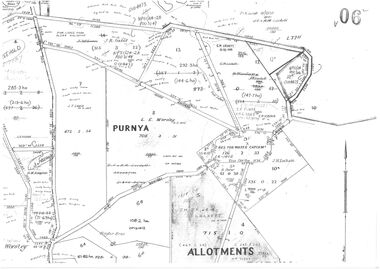
... local farm. Later, he worked for his uncles in the Mallee. On 24 March 1916, he travelled to Mildura to enlist in the Australian Imperial Force. He served in France with the 38th Battalion...local farm. Later, he worked for his uncles in the Mallee. On 24 March 1916, he travelled to Mildura to enlist in the Australian Imperial Force. He served in France with the 38th Battalion ...John Henry Lockett OAM (22 January 1891 – 25 May 2002) was the oldest man ever in Australia when he died aged 111 years, 123 days. As one of the last surviving veterans of World War I, he was acclaimed as a national hero during the last decade of his life. Lockett was born in the small Victorian town of Waanyarra, near Bendigo. He left school aged nine to work on a local farm. Later, he worked for his uncles in the Mallee. On 24 March 1916, he travelled to Mildura to enlist in the Australian Imperial Force. He served in France with the 38th Battalion, earning promotion to sergeant and was discharged on 20 September 1919. https://en.wikipedia.org/wiki/Jack_Lockett After the war, Jack returned to The Mallee and selected a 640 acres (260 ha) block of land in Linga, Victoria, deciding to make his living as a farmer. In 1923, he married Maybell Ingwerson and they had four children together. In 1963, the couple retired to Bendigo, leaving the farmland (which now covered more than 130,000 acres (53,000 ha), in the care of their children and grandchildren . People with the name Burstall are in Lockett Family photo (item number 11170.6) Two A3 copies of plans of allotments in northwest Victoria in the Parishes of Mamencoroock and Purnya. Some of the allotments have Lockett and Burstall names. Dates of Title on the Lockett allotments range from 1857 to 1964 jack lockett, mabel ingwersen, malley farm allotments -
 Bendigo Historical Society Inc.
Newspaper - Jack Lockett Collection: Weekly Times Cutting, The Weekly Times, 08/09/1999
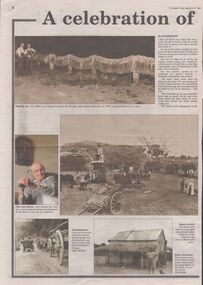
... local farm. Later, he worked for his uncles in the Mallee. On 24 March 1916, he travelled to Mildura to enlist in the Australian Imperial Force. He served in France with the 38th Battalion...local farm. Later, he worked for his uncles in the Mallee. On 24 March 1916, he travelled to Mildura to enlist in the Australian Imperial Force. He served in France with the 38th Battalion ...John Henry Lockett OAM (22 January 1891 – 25 May 2002) was the oldest man ever in Australia when he died aged 111 years, 123 days. As one of the last surviving veterans of World War I, he was acclaimed as a national hero during the last decade of his life. Lockett was born in the small Victorian town of Waanyarra, near Bendigo. He left school aged nine to work on a local farm. Later, he worked for his uncles in the Mallee. On 24 March 1916, he travelled to Mildura to enlist in the Australian Imperial Force. He served in France with the 38th Battalion, earning promotion to sergeant and was discharged on 20 September 1919. https://en.wikipedia.org/wiki/Jack_Lockett After the war, Jack returned to The Mallee and selected a 640 acres (260 ha) block of land in Linga, Victoria, deciding to make his living as a farmer. In 1923, he married Maybell Ingwerson and they had four children together. In 1963, the couple retired to Bendigo, leaving the farmland (which now covered more than 130,000 acres (53,000 ha), in the care of their children and grandchildren . People with the name Burstall are in Lockett Family photo (item number 11170.6) Two pages of the Weekly Times, September 8, 1999. Pages 4and 5 headline across both pages - A celebration of the country spirit. An article by Xavier Duff covers both pages with black and white photos of early 20th century farming and a contemporary photo of Jack Lockett. There is a description of Jack's pioneer life at age 19 and quotes from Jack when he worked with his uncles Alf and Dick on their farm at Linga near Underbool in Northwest Victoria. The article promotes a series of ten magazines in the Weekly, each one covering a decade of the 20th century jack lockett, mabel ingwersen, the weekly times our land our century, mallee farming -
 Bendigo Historical Society Inc.
Newspaper - Jack Lockett Collection: Five Newspaper cuttings referring to Jack Lockett
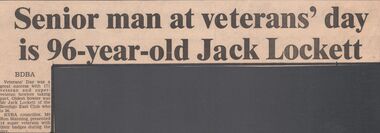
... local farm. Later, he worked for his uncles in the Mallee. On 24 March 1916, he travelled to Mildura to enlist in the Australian Imperial Force. He served in France with the 38th Battalion...local farm. Later, he worked for his uncles in the Mallee. On 24 March 1916, he travelled to Mildura to enlist in the Australian Imperial Force. He served in France with the 38th Battalion ...John Henry Lockett OAM (22 January 1891 – 25 May 2002) was the oldest man ever in Australia when he died aged 111 years, 123 days. As one of the last surviving veterans of World War I, he was acclaimed as a national hero during the last decade of his life. Lockett was born in the small Victorian town of Waanyarra, near Bendigo. He left school aged nine to work on a local farm. Later, he worked for his uncles in the Mallee. On 24 March 1916, he travelled to Mildura to enlist in the Australian Imperial Force. He served in France with the 38th Battalion, earning promotion to sergeant and was discharged on 20 September 1919. https://en.wikipedia.org/wiki/Jack_Lockett After the war, Jack returned to The Mallee and selected a 640 acres (260 ha) block of land in Linga, Victoria, deciding to make his living as a farmer. In 1923, he married Maybell Ingwerson and they had four children together. In 1963, the couple retired to Bendigo, leaving the farmland (which now covered more than 130,000 acres (53,000 ha), in the care of their children and grandchildren . Five newspaper cuttings referring to Jack Lockett First cutting Bendigo Advertiser Tuesday, March 17, 1987- page 8 For the Bowler (Headline) Senior man at veterans' day is 96-year-old Jack Lockett BDBA Veterans Day was a great success with 171 veteran and super-veteran bowlers taking part. Oldest bowler taking part was Mr Jack Lockett of the Bendigo East Club who is 96. RVBA councillor, Mr Ron Manning, presented 14 super veterans their badges during the day. Second cutting Bendigo Advertiser, Môn, Jan. 25 1982-3 A black and white photograph of brothers Alf, 94 and Jack, 91 Lockett in Eaglehawk. There is brief description of their lives in Tarnagulla in a family of ten siblings, their move together to their uncles' pioneering property in Northwest Victoria in 1912, Jack's World War 1 service and their currant addresses in Bendigo and Eaglehawk. Third cutting Bendigo Advertiser, Tuesday, September 24, 1991- page 13. (heading) BOWLS ROUND-UP A black and white photograph of three men wearing white shirts and trousers, dark jackets and ties Below the photo in large print - Centenarian starts season. ABOVE: Bendigo East Bowling Club president Frank Slater with the club's longest serving member Jack Lockett and BDBA president Vic Canobie at the opening of the 1991-92 season. Mr. Lockett sent down the first bowl. Fourth cutting Bendigo Advertiser, Friday, April 22, 1988 - Page 3. (headline) Licensed to drive till he's 102! Below there is a close up photograph of Jack's face and his DRIVER LICENCE VICTORIA AUSTRALIA. A collum to the right of the photograph is headed - But don't worry he gave up at 97 The article talks about the silliness of issuing a driving licence for someone to use till they are 102. It also highlights that his date of birth on the licence is 22/ 01/91 and the licence expires on 27/06/93 A two-year old motorist?! Fifth cutting The Litchfield Times, July5 2000 page 4 Heading in the middle of the page - Proud as punch below there a photograph of three adults and two children with one child holding a photograph of Jack Lockett with names under neath Debbie Hermann, Babara Lockett, Jake Hermann, Kelly Hermann and Kevin Lockett. jack lockett, mabel ingwersen, alf lockett, bendigo east bowling club, taragulla, the bendigo advertiser, the litchfield times, mallee farming -
 Bendigo Historical Society Inc.
Newspaper - Jack Lockett Collection: Thirteen Newspaper cuttings of Jack with Olympic Torch, July, August 2000
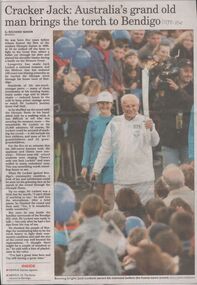
... local farm. Later, he worked for his uncles in the Mallee. On 24 March 1916, he travelled to Mildura to enlist in the Australian Imperial Force. He served in France with the 38th Battalion...local farm. Later, he worked for his uncles in the Mallee. On 24 March 1916, he travelled to Mildura to enlist in the Australian Imperial Force. He served in France with the 38th Battalion ...John Henry Lockett OAM (22 January 1891 – 25 May 2002) was the oldest man ever in Australia when he died aged 111 years, 123 days. As one of the last surviving veterans of World War I, he was acclaimed as a national hero during the last decade of his life. Lockett was born in the small Victorian town of Waanyarra, near Bendigo. He left school aged nine to work on a local farm. Later, he worked for his uncles in the Mallee. On 24 March 1916, he travelled to Mildura to enlist in the Australian Imperial Force. He served in France with the 38th Battalion, earning promotion to sergeant and was discharged on 20 September 1919. https://en.wikipedia.org/wiki/Jack_Lockett After the war, Jack returned to The Mallee and selected a 640 acres (260 ha) block of land in Linga, Victoria, deciding to make his living as a farmer. In 1923, he married Maybell Ingwerson and they had four children together. In 1963, the couple retired to Bendigo, leaving the farmland (which now covered more than 130,000 acres (53,000 ha), in the care of their children and grandchildren . The 2000 Olympic flame was relayed from Olympia in Greece to Sydney by 13400 carriers including 11000 Australians, each carrier had their torch Thirteen newspaper cuttings from various newspapers dating from July28 2000 to August24 2000 all relating to Jack Lockett carrying the Olympic Flame on July27 2000 in Bendigo. Twelve pages of The Bendigo Advertiser July 28, 2000 are included with a four-page colour wrap around front-page photo of Jack carrying the torch and is signed Jack Lockett 110. The centre page of the warp around has individual photos of 53 people carrying the flame through Bendigo. jack lockett, mabel ingwersen, the bendigo advertiser, olympic flame in bendigo -
 Bendigo Historical Society Inc.
Newspaper - Jack Lockett Collection: Three Newspaper Posters referring to Jack Lockett, Bendigo Advertiser, July28, 2000 May27, 2002
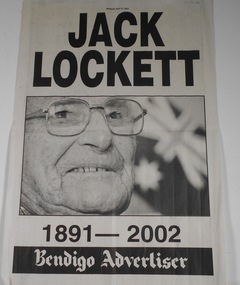
... local farm. Later, he worked for his uncles in the Mallee. On 24 March 1916, he travelled to Mildura to enlist in the Australian Imperial Force. He served in France with the 38th Battalion...local farm. Later, he worked for his uncles in the Mallee. On 24 March 1916, he travelled to Mildura to enlist in the Australian Imperial Force. He served in France with the 38th Battalion ...John Henry Lockett OAM (22 January 1891 – 25 May 2002) was the oldest man ever in Australia when he died aged 111 years, 123 days. As one of the last surviving veterans of World War I, he was acclaimed as a national hero during the last decade of his life. Lockett was born in the small Victorian town of Waanyarra, near Bendigo. He left school aged nine to work on a local farm. Later, he worked for his uncles in the Mallee. On 24 March 1916, he travelled to Mildura to enlist in the Australian Imperial Force. He served in France with the 38th Battalion, earning promotion to sergeant and was discharged on 20 September 1919. https://en.wikipedia.org/wiki/Jack_Lockett After the war, Jack returned to The Mallee and selected a 640 acres (260 ha) block of land in Linga, Victoria, deciding to make his living as a farmer. In 1923, he married Maybell Ingwerson and they had four children together. In 1963, the couple retired to Bendigo, leaving the farmland (which now covered more than 130,000 acres (53,000 ha), in the care of their children and grandchildren . The 2000 Olympic flame was relayed from Olympia in Greece to Sydney by 13400 carriers including 11000 Australians, each carrier had their torch Three Newspaper Posters featuring Jack Lockett First poster is black and white, printed from top to bottom MONDAY, MAY27, 2002 large print JACK LOCKET A large close-up photo of Jack's face 1891 - 2002 (white print on black background) Bendigo Advertiser Second poster is black and white printed from top to bottom FRIDAY, JULY28, 2000 (large print) FLAMING' A head and photo of Jack carrying the Olympic Torch (large print) MAGIC (white print on black background) Bendigo Advertiser. Third poster is colour and black and white printed from top to bottom (white print on blue background) THE AGE A coloured photo of Jack carrying the Olympic Torch with a crowd in the background JULY 28, 2000 printed by The Age Company Ltd. 250 Spencer Street, Melbourne. ACN 004262702 a . jack lockett, mabel ingwersen, the bendigo advertiser, olympic flame in bendigo, the age -
 Bendigo Historical Society Inc.
Mixed media - Jack Lockett Collection: Tribute to Jack Lockett, Reflections 100yrs, Ian Dyett, July28, 2000 May27, 2002
... local farm. Later, he worked for his uncles in the Mallee. On 24 March 1916, he travelled to Mildura to enlist in the Australian Imperial Force. He served in France with the 38th Battalion...local farm. Later, he worked for his uncles in the Mallee. On 24 March 1916, he travelled to Mildura to enlist in the Australian Imperial Force. He served in France with the 38th Battalion ...John Henry Lockett OAM (22 January 1891 – 25 May 2002) was the oldest man ever in Australia when he died aged 111 years, 123 days. As one of the last surviving veterans of World War I, he was acclaimed as a national hero during the last decade of his life. Lockett was born in the small Victorian town of Waanyarra, near Bendigo. He left school aged nine to work on a local farm. Later, he worked for his uncles in the Mallee. On 24 March 1916, he travelled to Mildura to enlist in the Australian Imperial Force. He served in France with the 38th Battalion, earning promotion to sergeant and was discharged on 20 September 1919. https://en.wikipedia.org/wiki/Jack_Lockett After the war, Jack returned to The Mallee and selected a 640 acres (260 ha) block of land in Linga, Victoria, deciding to make his living as a farmer. In 1923, he married Maybell Ingwerson and they had four children together. In 1963, the couple retired to Bendigo, leaving the farmland (which now covered more than 130,000 acres (53,000 ha), in the care of their children and grandchildren . The 2000 Olympic flame was relayed from Olympia in Greece to Sydney by 13400 carriers including 11000 Australians, each carrier had their torch Two pieces The first piece is handwritten in pencil all upper-case letters and there's no identification of the author, probably Jack Lockett Headed REFELECTIONS 100yrs. the first lines are 38th BATT FORMED 1-3-1916 EPSOM.R.C. HORZ OVAL PURPLE OVER RED BRUISES BLOOD ENLISTED 1-4-16 There are 8 more lines with dates in 1916 referring to training and sailing to Plymouth via Capetown for three months 22-11-16 EMBARKED SOUTHHAMPTON 20-9-19 RETURNED TO AUST - MILTIDES PLYMOUTH 20-9-19 DISCHARGED 1268 DAYS RULES of WAR (GERMAN SPIES) LOST HAT BALACLARVEERS FINED 7 LOST PR SOX The second piece is black print on white A3 paper with a black line one centmetre from the edge around the entire page. A poem with ten verses of four lines is printed in the middle of the page is headed A TIME AND LAND OF GIANTS (A TRIBUTE TO JACK LOCKETT, 1891 - 2002 printed below the poem - Ian Dyett 27/05/2002jack lockett, mabel ingwersen, 38th battalion, ian dyett
