
Showing 12 items matching "loch ard bell"
-
 Flagstaff Hill Maritime Museum and Village
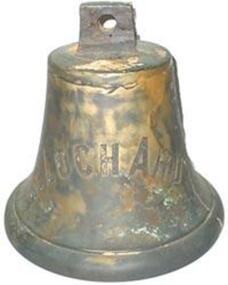
Equipment - Ship's Bell, Loch Ard
... ...Loch Ard bell...This Loch Ard ship's bell was kindly loaned by Heritage Victoria. ...The bell was recovered from the wreck of the sailing ship Loch Ard in 1967, and is on loan from Heritage Victoria. ...This Loch Ard ship's bell was kindly loaned by Heritage Victoria. ...This Loch Ard ship's bell was kindly loaned by Heritage Victoria. The Loch Ard was an 85-metre, three-masted square-rigged iron clipper that sank in bad weather after hitting Mutton Bird Island, near Port Campbell, on June 1, 1878, just days after completing its three-month journey from Britain. Loch Ard carried some of the finest items that 19th-century Europe had to offer, intended for display at Melbourne’s International Exhibition in 1880. Before the modern age, a ship’s bell was one of the most important functional objects on a ship, used to regulate the daily routine of life, sound the time, and to signal watches and emergencies to everyone on board. The Loch Ard Bell is made of lead, bronze and copper alloy, and weighs 33 kg. It is missing its clapper. The bell disappeared after being recovered from the wreck in the 1960s, and reappeared in November 2003 when it was soon returned to Heritage Victoria staff. Ship bells are used for time-keeping, with codes to signify every half-hour and the fourth hour, to mark the time to change the watch or shift. They are also used in emergencies, to warn of fire and other danger, and to alert nearby vessels of their presence, especially in poor weather. Ship bells are usually cast or engraved with the ship’s name and often its launch date. If time allowed during an imminent disaster, seamen would save the ship’s bell, but if the ship sank, its bell would be searched for by those who discovered the wreck, as proof of the ship’s identification. Some ships, such as the famous luxury sailing ship Schomberg, had two bells: the main deck bell and a small bell used in the pilot house. The location of another bell from the Loch Ard is currently unknown. Sometime after the initial salvaging of the wreckage of the Loch Ard, a ship's bell for the Loch Ard was washed up. It was used for several years to summon men to meals at Glenample homestead, where part-owner Hugh Gibson and his family had previously sheltered the Loch Ard survivors, Tom Pearce and Eva Carmichael, as they recovered. Gibson's business partner, Peter McArthur, purchased Gibson's share of the property in 1887. In 1942, the Princetown A.R.P. (Air Raid Precautions, part of the World War 2 Air Raid Warden Service) and Observation group accepted the offer of the Loch Ard Bell from Mrs R.E. McArthur of Glenample homestead, for sounding an air raid alarm. Mrs McArthur was the daughter-in-law of Peter McArthur, and the mother of Colin McArthur, who had then inherited Glenample. Since then, the bell's whereabouts is unclear.Ship's bell: a cast bell of metal alloy - lead, bronze and copper. It has a square flat head with a central hole, a flat head, a band at the shoulder and waist, and a rounded sound bow. It no longer has its clapper. The surface is uneven and discoloured, and a vertical split has been mended at some stage. This ship's name has been cast into the bell's body. The bell was recovered from the wreck of the sailing ship Loch Ard in 1967, and is on loan from Heritage Victoria. "LOCH ARD"flagstaff hill maritime museum and village, great ocean road, shipwreck coast, flagstaff hill, warrnambool, maritime museum, loch ard, loch ard gorge, victorian heritage register, ship bell, ship's bell, loch ard bell, marine equipment, signal, alarm, marinter's watch, shipwreck artefact, shipwreck discovery -
 Flagstaff Hill Maritime Museum and Village
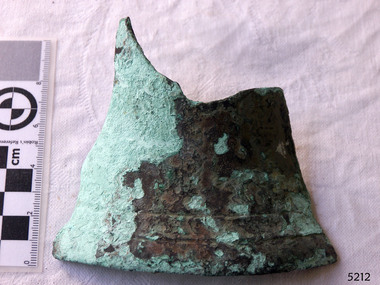
Bell
... loch ard...captain gibbs...eva carmichael...tom pearce...glenample station...mutton bird island...loch ard gorge...bell...bell. Green corrosion and some traces of bronze disease. . Artefact Reg no LA/106. Recovered from the wreck of the Loch Ard....Recovered from the wreck of the Loch Ard. Bell ...Ref: LA 3-32-281 HISTORY OF THE LOCH ARD The LOCH ARD belonged to the famous Loch Line which sailed many ships from England to Australia. Built in Glasgow by Barclay, Curdle and Co. in 1873, the LOCH ARD was a three-masted square rigged iron sailing ship. The ship measured 262ft 7" (79.87m) in length, 38ft (11.58m) in width, 23ft (7m) in depth and had a gross tonnage of 1693 tons. The LOCH ARD's main mast measured a massive 150ft (45.7m) in height. LOCH ARD made three trips to Australia and one trip to Calcutta before its final voyage. LOCH ARD left England on March 2, 1878, under the command of Captain Gibbs, a newly married, 29 year old. She was bound for Melbourne with a crew of 37, plus 17 passengers and a load of cargo. The general cargo reflected the affluence of Melbourne at the time. On board were straw hats, umbrella, perfumes, clay pipes, pianos, clocks, confectionary, linen and candles, as well as a heavier load of railway irons, cement, lead and copper. There were items included that intended for display in the Melbourne International Exhibition in 1880. The voyage to Port Phillip was long but uneventful. At 3am on June 1, 1878, Captain Gibbs was expecting to see land and the passengers were becoming excited as they prepared to view their new homeland in the early morning. But LOCH ARD was running into a fog which greatly reduced visibility. Captain Gibbs was becoming anxious as there was no sign of land or the Cape Otway lighthouse. At 4am the fog lifted. A man aloft announced that he could see breakers. The sheer cliffs of Victoria's west coast came into view, and Captain Gibbs realised that the ship was much closer to them than expected. He ordered as much sail to be set as time would permit and then attempted to steer the vessel out to sea. On coming head on into the wind, the ship lost momentum, the sails fell limp and LOCH ARD's bow swung back. Gibbs then ordered the anchors to be released in an attempt to hold its position. The anchors sank some 50 fathoms - but did not hold. By this time LOCH ARD was among the breakers and the tall cliffs of Mutton Bird Island rose behind the ship. Just half a mile from the coast, the ship's bow was suddenly pulled around by the anchor. The captain tried to tack out to sea, but the ship struck a reef at the base of Mutton Bird Island, near Port Campbell. Waves broke over the ship and the top deck was loosened from the hull. The masts and rigging came crashing down knocking passengers and crew overboard. When a lifeboat was finally launched, it crashed into the side of LOCH ARD and capsized. Tom Pearce, who had launched the boat, managed to cling to its overturned hull and shelter beneath it. He drifted out to sea and then on the flood tide came into what is now known as LOCH ARD Gorge. He swam to shore, bruised and dazed, and found a cave in which to shelter. Some of the crew stayed below deck to shelter from the falling rigging but drowned when the ship slipped off the reef into deeper water. Eva Carmichael had raced onto deck to find out what was happening only to be confronted by towering cliffs looming above the stricken ship. In all the chaos, Captain Gibbs grabbed Eva and said, "If you are saved Eva, let my dear wife know that I died like a sailor". That was the last Eva Carmichael saw of the captain. She was swept off the ship by a huge wave. Eva saw Tom Pearce on a small rocky beach and yelled to attract his attention. He dived in and swam to the exhausted woman and dragged her to shore. He took her to the cave and broke open case of brandy which had washed up on the beach. He opened a bottle to revive the unconscious woman. A few hours later Tom scaled a cliff in search of help. He followed hoof prints and came by chance upon two men from nearby Glenample Station three and a half miles away. In a state of exhaustion, he told the men of the tragedy. Tom returned to the gorge while the two men rode back to the station to get help. By the time they reached LOCH ARD Gorge, it was cold and dark. The two shipwreck survivors were taken to Glenample Station to recover. Eva stayed at the station for six weeks before returning to Ireland, this time by steamship. In Melbourne, Tom Pearce received a hero's welcome. He was presented with the first gold medal of the Royal Humane Society of Victoria and a £1000 cheque from the Victorian Government. Concerts were performed to honour the young man's bravery and to raise money for those who lost family in the LOCH ARD disaster. Of the 54 crew members and passengers on board, only two survived: the apprentice, Tom Pearce and the young woman passenger, Eva Carmichael, who lost all of her family in the tragedy. Ten days after the LOCH ARD tragedy, salvage rights to the wreck were sold at auction for £2,120. Cargo valued at £3,000 was salvaged and placed on the beach, but most washed back into the sea when another storm developed. The wreck of LOCH ARD still lies at the base of Mutton Bird Island. Much of the cargo has now been salvaged and some was washed up into what is now known as LOCH ARD Gorge. Cargo and artefacts have also been illegally salvaged over many years before protective legislation was introduced. One of the most unlikely pieces of cargo to have survived the shipwreck was a Minton porcelain peacock - one of only nine in the world. The peacock was destined for the Melbourne International Exhibition in 1880. It had been well packed, which gave it adequate protection during the violent storm. Today, the Minton peacock can be seen at the Flagstaff Hill Maritime Museum in Warrnambool. From Australia's most dramatic shipwreck it has now become Australia's most valuable shipwreck artefact and is one of very few 'objects' on the Victorian State Heritage Register. Flagstaff Hill’s collection of artefacts from LOCH ARD is significant for being one of the largest collections of artefacts from this shipwreck in Victoria. It is significant for its association with the shipwreck, which is on the Victorian Heritage Register (VHR S417). The collection is significant because of the relationship between the objects, as together they have a high potential to interpret the story of the LOCH ARD. The LOCH ARD collection is archaeologically significant as the remains of a large international passenger and cargo ship. The LOCH ARD collection is historically significant for representing aspects of Victoria’s shipping history and its potential to interpret sub-theme 1.5 of Victoria’s Framework of Historical Themes (living with natural processes). The collection is also historically significant for its association with the LOCH ARD, which was one of the worst and best known shipwrecks in Victoria’s history. Part of the base of a small bronze bell. Green corrosion and some traces of bronze disease. . Artefact Reg no LA/106. Recovered from the wreck of the Loch Ard.flagstaff hill, warrnambool, shipwrecked coast, flagstaff hill maritime museum, maritime museum, shipwreck coast, flagstaff hill maritime village, great ocean road, loch line, loch ard, captain gibbs, eva carmichael, tom pearce, glenample station, mutton bird island, loch ard gorge, bell, bronze bell -
 Flagstaff Hill Maritime Museum and Village
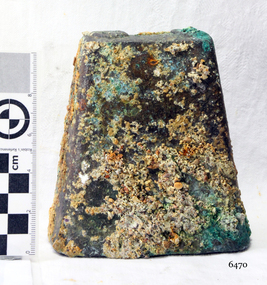
Functional object - Cow Bell, Circa 1878
... loch ard...cowbell...great ocean road...loch line...captain gibbs...eva carmichael...tom pearce...glenample station...mutton bird island...loch ard gorge...cow bell...The artefact is a brass cow bell recovered from the 1878 shipwreck of the LOCH ARD near Port Campbell. ...LOCH ARD collection is historically significant for representing aspects of Victoria’s shipping history and its potential to interpret sub-theme 1.5 of Victoria’s Framework of Historical Themes (living with natural processes). The collection is also historically significant for its association with the LOCH ARD, which was one of the worst and best known shipwrecks in Victoria’s history. flagstaff hill warrnambool shipwrecked-coast flagstaff-hill flagstaff-hill-maritime-museum maritime-museum shipwreck-coast flagstaff-hill-maritime-village loch ard cowbell great ocean road loch line captain gibbs eva carmichael tom pearce glenample station mutton bird island loch ard gorge cow bell brass cow bell shipwreck artefact Flagstaff Hill Divers Horse bell Bell smith Vintage bell Farmer Shepherd Drover Stock bell Brass bell None Brass cow bell, flat-top pyramid shape, rectangular head, shoulders flare out to a rectangular mouth. ...The artefact is a brass cow bell recovered from the 1878 shipwreck of the LOCH ARD near Port Campbell. It was raised by Flagstaff Hill divers in 1973 and is in storage at the Maritime Village. The LOCH ARD was constructed on the Clyde in 1873 for the prestigious Loch Line of colonial clipper ships, designed for the Australian run. She sailed from England on 1 March 1878 carrying 37 crew, 17 passengers and a diverse general cargo ranging from luxury items to bulk railway iron. On 1 June 1878, emerging from fog and hearing too late the sound of breakers against the tall limestone cliffs, the vessel struck the southern foot of Mutton Bird Island and sank in 23 metres of water. Of the fifty-four people on board only two survived, one young male crewman, Tom Pearce, and one young female passenger, Eva Carmichael. A century later, despite the pounding seas and the efforts of looters, the wreck site continued to provide ample evidence of the extraordinary range of goods being imported into the Colony of Victoria in the post-Gold Rush era. Flagstaff Hill divers in the 1970s reported finds of “Bottles of champagne, window panes, rolls of zinc, barrels of cement, iron rails, clocks, lead shot, corrugated iron, lead, marble, salad oil bottles, ink bottles, copper wire, gin bottles, rolls of carpet, floor tiles, copper rivets, gas light fittings, pocket knives, toys, crystal chandeliers, beer mugs, cutlery, candles sticks, wick scissors, cow bells, and sauce bottles.” From this array of objects on the ocean floor emerged the humble brass cow bell. Cow bells were common to colonial agriculture and transport, used wherever animals were turned out to graze overnight and had to be rounded up again next morning. Bells were fastened around the necks of household milking cows, domestic goats, bullock teams, horse teams, and camel teams, to help find them in the pre-dawn light. Station shepherds and cattle drovers also used them to warn of any disturbances to their flocks and herds overnight. The bells were a necessary item in a largely unfenced continent. So important, that Anthony Mongon began making his pot-bells at Yackandandah from 1861, August Menneke produced the “Wagga Pot” from 1867, and Samuel Jones started manufacturing his distinctively shaped “Condamine Bell” in 1868. However, these deeply resonant Australian bells were made from iron — Mongon and Jones were blacksmiths who simply beat old pitsaw blades into shape. Few genuinely brass cow bells were made here, the vast majority being imported from Britain where the industry of brass founding was already well established. (Some bells were also imported from the United States, but these too were nearly all of iron). This bell is historically significant as typical of a cow bell used by farmers and herdsmen in Colonial Victoria. Its significance is increased by being one of a collection of artefact recovered by the Flagstaff Hill Divers from the wreck of the Loch Ard in the early 1970s. Items that come from several wrecks along Victoria's coast have also been recovered for Flagstaff Hill Maritime Village’s museum collection under Government permit, illustrating this item’s level of historical value. The cow bell is also significant for being part of Flagstaff Hill’s collection of artefacts from LOCH ARD, which is significant for being one of the largest collections of artefacts from this shipwreck in Victoria. It is significant for its association with the shipwreck, which is on the Victorian Heritage Register (VHR S417). The collection is significant because of the relationship between the objects, as together they have a high potential to interpret the story of the LOCH ARD. The LOCH ARD collection is archaeologically significant as the remains of a large international passenger and cargo ship. The LOCH ARD collection is historically significant for representing aspects of Victoria’s shipping history and its potential to interpret sub-theme 1.5 of Victoria’s Framework of Historical Themes (living with natural processes). The collection is also historically significant for its association with the LOCH ARD, which was one of the worst and best known shipwrecks in Victoria’s history. Brass cow bell, flat-top pyramid shape, rectangular head, shoulders flare out to a rectangular mouth. The hanging yoke is missing. Noneflagstaff hill, warrnambool, shipwrecked-coast, flagstaff-hill, flagstaff-hill-maritime-museum, maritime-museum, shipwreck-coast, flagstaff-hill-maritime-village, loch ard, cowbell, great ocean road, loch line, captain gibbs, eva carmichael, tom pearce, glenample station, mutton bird island, loch ard gorge, cow bell, brass cow bell, shipwreck artefact, flagstaff hill divers, horse bell, bell smith, vintage bell, farmer, shepherd, drover, stock bell, brass bell -
 Flagstaff Hill Maritime Museum and Village
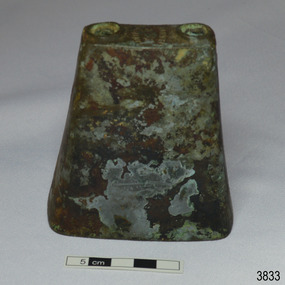
Functional object - Cow Bell, James Barwell, 1860s-1878
... loch ard...mutton bird island...glenample...eva carmichael...tom pearce...james barwell...cow bell...Cow bells were listed as part of the cargo on board the Loch Ard. This bell is now part of the John Chance collection. ...Cow bells were listed as part of the cargo on board the Loch Ard. This bell is now part of the John Chance collection. ...This brass cow bell was recovered from the wreck of the sailing ship ‘Loch Ard’ at Mutton Bird Island, near Port Campbell, Victoria, from late 1960s to early 1970s. Cow bells were listed as part of the cargo on board the Loch Ard. This bell is now part of the John Chance collection. Flagstaff Hill Maritime Village’s divers also recovered similar bells from the Loch Ard wreck in 1973. One of them was found in a sandy hole in the centre of the wreck site. All of the recovered cow bells are without their hangers. A bell of this size could have been used by horse or cattle teams. Cow bells were a common Colonial item. They were hung around the necks of grazing domestic cows and goats, bullock and horse teams, even camel teams so that they could be found again. Sheep and cattle drovers used them as a warning for night time disturbances such as wild animals. The maker of the cow bell, James Barwell, was a bell founder established in Birmingham, England, from 1784. In 1842 he acquired Fiddian’s firm of ‘Steam and Water’, keeping its name and stamping it on some of his products. According to his advertisement in the Exhibitors guide for the Church Congress of 1887, he made bells and fittings for churches and schools. He also made bells for cloches and chimes, and made tuned musical handbells. He repaired and reproduced bells, and he had a team of experienced ringers to “inspect towers and report upon the tone and condition of bells and fittings.” In 1903 he became incorporated as a Limited Company, ‘engineers’ and plumbers’ brasswork, and bell founders.’ In 1914 he advertised as ‘Cock and Bell Founders’, specialising in plumbing and engineering fittings, church bells, and “every description of hanging and hand bells.” Some of Barwell’s products were stamped with his maker’s mark (his initials J. B. either side of a cross entwined with a ‘B’ in an oval of oak leaves (for Birmingham)). James Barwell bells were no longer made after 1920. James Barwell was among makers who exported bells to the Australian colony from the 1860s. Early Australian iron animal bells were also made from the 1860s by blacksmiths such as Anthony Morgan from 1861, August Menneke from 1867, and Samuel Jones from 1868. Few brass bells were produced here in those times. This bell is historically significant as typical of a cow bell used by farmers and herdsmen in Colonial Victoria. Its significance is increased by being an artefact recovered by John Chance, a diver from the wreck of the Loch Ard and other wrecks in the late 1960s to early 1970s. Items that come from several wrecks along Victoria's coast have since been donated to the Flagstaff Hill Maritime Village’s museum collection by his family, illustrating this item’s level of historical value. The cow bell is also significant for being part of Flagstaff Hill’s collection of artefacts from LOCH ARD, which is significant for being one of the largest collections of artefacts from this shipwreck in Victoria. It is significant for its association with the shipwreck, which is on the Victorian Heritage Register (VHR S417). The collection is significant because of the relationship between the objects, as together they have a high potential to interpret the story of the LOCH ARD. The LOCH ARD collection is archaeologically significant as the remains of a large international passenger and cargo ship. The LOCH ARD collection is historically significant for representing aspects of Victoria’s shipping history and its potential to interpret sub-theme 1.5 of Victoria’s Framework of Historical Themes (living with natural processes). The collection is also historically significant for its association with the LOCH ARD, which was one of the worst and best known shipwrecks in Victoria’s history. Cow bell; heavy brass, flat top, pyramid shape, rectangular head, shoulders flare out to rectangular mouth. The head has two same-sized tooled holes for adding the hanging yoke. Inscription on top and one side. Encrustations are on the metal in places. The hanger and clapper are missing. Made by James Barwell of Birmingham.Stamped on the head "BARWELL / - - - / - - -- ING" [Perhaps BARWELL - - - BIRMING. Could size be in centre? 3 3/4 IN?] Stamped on side [motif] (undecipherable) flagstaff hill, warrnambool, flagstaff hill maritime museum, maritime museum, shipwreck coast, flagstaff hill maritime village, great ocean road, john chance, loch ard, mutton bird island, glenample, eva carmichael, tom pearce, james barwell, cow bell, horse bell, bell founder, bell smith, vintage bell, birmingham bell foundry, farmer, shepherd, drover, stock bell -
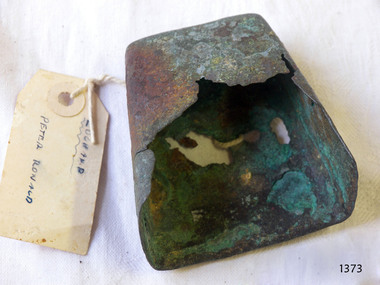 Flagstaff Hill Maritime Museum and Village
Functional object - Cow Bell, Circa 1878
... loch ard...eva carmichael...mutton bird island...loch ard gorge...brass cow bell...The artefact is a damaged brass cow bell recovered from the 1878 shipwreck of the LOCH ARD near Port Campbell. ...bell mouth. A handwritten label is attached to the bel. Recovered from the wreck of the Loch Ard....Label text "["10/6/73, Brass Cow Bell, LOCH ARD, Found in the sandy hole in the centre of the wreck site. ...Cow bells were part of the cargo" - "10/6/73, LOCH ARD, small brass cow bell salvaged by FHMV divers"]. ...The artefact is a damaged brass cow bell recovered from the 1878 shipwreck of the LOCH ARD near Port Campbell. It was raised by Flagstaff Hill divers in 1973 and is in storage at the Maritime Village. The LOCH ARD was constructed on the Clyde in 1873 for the prestigious Loch Line of colonial clipper ships, designed for the Australian run. She sailed from England on 1 March 1878 carrying 37 crew, 17 passengers and a diverse general cargo ranging from luxury items to bulk railway iron. On 1 June 1878, emerging from fog and hearing too late the sound of breakers against the tall limestone cliffs, the vessel struck the southern foot of Mutton Bird Island and sank in 23 metres of water. Of the fifty-four people on board only two survived, one young male crewman and one young female passenger. A century later, despite the pounding seas and the efforts of looters, the wreck site continued to provide ample evidence of the extraordinary range of goods being imported into the Colony of Victoria in the post-Gold Rush era. Flagstaff Hill divers in the 1970s reported finds of “Bottles of champagne, window panes, rolls of zinc, barrels of cement, iron rails, clocks, lead shot, corrugated iron, lead, marble, salad oil bottles, ink bottles, copper wire, gin bottles, rolls of carpet, floor tiles, copper rivets, gas light fittings, pocket knives, toys, crystal chandeliers, beer mugs, cutlery, candles sticks, wick scissors, cow bells, and sauce bottles.” From this array of objects on the ocean floor emerged the humble brass cow bell. Cow bells were common to colonial agriculture and transport, used wherever animals were turned out to graze overnight and had to be rounded up again next morning. Bells were fastened around the necks of household milking cows, domestic goats, bullock teams, horse teams, and camel teams, to help find them in the pre-dawn light. Station shepherds and cattle drovers also used them to warn of any disturbances to their flocks and herds overnight. The bells were a necessary item in a largely unfenced continent. So important, that Anthony Mongon began making his pot-bells at Yackandandah from 1861, August Menneke produced the “Wagga Pot” from 1867, and Samuel Jones started manufacturing his distinctively shaped “Condamine Bell” in 1868. However, these deeply resonant Australian bells were made from iron — Mongon and Jones were blacksmiths who simply beat old pitsaw blades into shape. Few genuinely brass cow bells were made here, the vast majority being imported from Britain where the industry of brass founding was already well established. (Some bells were also imported from the United States, but these too were nearly all of iron).This bell is historically significant as typical of a cow bell used by farmers and herdsmen in Colonial Victoria. Its significance is increased by being one of a collection of artefact recovered by the Flagstaff Hill Divers from the wreck of the Loch Ard in the early 1970s. Items that come from several wrecks along Victoria's coast have also been recovered for Flagstaff Hill Maritime Village’s museum collection under Government permit, illustrating this item’s level of historical value. The cow bell is also significant for being part of Flagstaff Hill’s collection of artefacts from LOCH ARD, which is significant for being one of the largest collections of artefacts from this shipwreck in Victoria. It is significant for its association with the shipwreck, which is on the Victorian Heritage Register (VHR S417). The collection is significant because of the relationship between the objects, as together they have a high potential to interpret the story of the LOCH ARD. The LOCH ARD collection is archaeologically significant as the remains of a large international passenger and cargo ship. The LOCH ARD collection is historically significant for representing aspects of Victoria’s shipping history and its potential to interpret sub-theme 1.5 of Victoria’s Framework of Historical Themes (living with natural processes). The collection is also historically significant for its association with the LOCH ARD, which was one of the worst and best known shipwrecks in Victoria’s history.A small brass cow bell, in poor condition. It is blunt-wedge shaped. The sides expand outwards from the smaller rectangular roof of the bell to a larger open rectangle or bell mouth. A handwritten label is attached to the bel. Recovered from the wreck of the Loch Ard.Label text "["10/6/73, Brass Cow Bell, LOCH ARD, Found in the sandy hole in the centre of the wreck site. Cow bells were part of the cargo" - "10/6/73, LOCH ARD, small brass cow bell salvaged by FHMV divers"]. "LOCH ARD / PETER RONALD"flagstaff hill, warrnambool, shipwrecked coast, flagstaff hill maritime museum, maritime museum, shipwreck coast, flagstaff hill maritime village, great ocean road, loch line, loch ard, eva carmichael, mutton bird island, loch ard gorge, brass cow bell, colonial cow bells, 1878 shipwreck, shipwreck artefact, flagstaff hill divers -
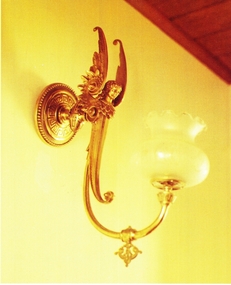 Flagstaff Hill Maritime Museum and Village
Functional object - Lamp, circa 1878
... bells, and sauce bottles.” The lamp bracket is significant for its connection with the wreck of the sailing ship, Loch Ard, in 1878. ...This Flying Angel lamp bracket was recovered from the wreck site of the steam sailing ship, "Loch Ard", which sank near Port Campbell, Victoria in 1878. It formed part of the ship's cargo. The 'flying angel' lamp was, for a time, displayed in the St Nicholas Seamen's Church at Flagstaff Hill. The design was very appropriate to the Missions to Seamen, being associated with the emblem of the 'flying angel' on the Missions' to Seamen's flag. Brief history of the Loch Ard: The vessel Loch Ard was constructed on the Clyde River in Scotland in 1873 for the prestigious Loch Line of colonial clipper ships, designed for the Australian run. She sailed from England on 1 March 1878 carrying 37 crew, 17 passengers and a diverse general cargo ranging from luxury items to bulk railway iron. On 1 June 1878, emerging from fog and hearing too late the sound of breakers against the tall limestone cliffs, the vessel struck the southern foot of Mutton Bird Island and sank in 23 metres of water. Of the fifty-four people on board only two survived, one young male crewman, Tom Pearce, and one young female passenger, Eva Carmichael. A century later, despite the pounding seas and the efforts of looters, the wreck site continued to provide ample evidence of the extraordinary range of goods being imported into the Colony of Victoria in the post-Gold Rush era. Flagstaff Hill divers in the 1970s reported finds of “Bottles of champagne, window panes, rolls of zinc, barrels of cement, iron rails, clocks, lead shot, corrugated iron, lead, marble, salad oil bottles, ink bottles, copper wire, gin bottles, rolls of carpet, floor tiles, copper rivets, gas light fittings, pocket knives, toys, crystal chandeliers, beer mugs, cutlery, candles sticks, wick scissors, cow bells, and sauce bottles.” The lamp bracket is significant for its connection with the wreck of the sailing ship, Loch Ard, in 1878. Flagstaff Hill’s collection of artefacts from LOCH ARD is significant for being one of the largest collections of artefacts from this shipwreck in Victoria. It is significant for its association with the shipwreck, which is on the Victorian Heritage Register (VHR S417). The collection is significant because of the relationship between the objects, as together they have a high potential to interpret the story of the LOCH ARD. The LOCH ARD collection is archaeologically significant as the remains of a large international passenger and cargo ship. The LOCH ARD collection is historically significant for representing aspects of Victoria’s shipping history and its potential to interpret sub-theme 1.5 of Victoria’s Framework of Historical Themes (living with natural processes). The collection is also historically significant for its association with the LOCH ARD, which was one of the worst and best known shipwrecks in Victoria’s history. Gas lamp, brass, single burner, wall-mounting bracket, delicately crafted. Ornate decoration features bust of an angel with up-swept wings, or 'flying angel'. Recovered from the wreck of the Loch Ard.Noneflagstaff hill, warrnambool, shipwrecked coast, flagstaff hill maritime museum, maritime museum, shipwreck coast, flagstaff hill maritime village, great ocean road, loch line, loch ard, captain gibbs, eva carmichael, tom pearce, glenample station, mutton bird island, loch ard gorge, lamp fitting, shipwreck artifact, 1878, shipwreck cargo, household effects, 19th century lighting, angel lamp, loch ard lamp, angelic lamp, lighting at sea, marine technology, ship's lighting, flying angel, gas lamp, maritime archaeology, port campbell -
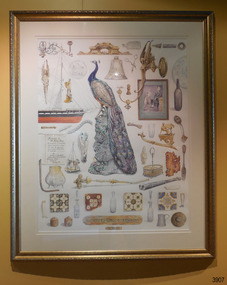 Flagstaff Hill Maritime Museum and Village
Artwork, other - Framed poster, Tim Walker, Loch Ard Shipwreck, circa 2010
... Flagstaff Hill divers in the 1970s reported finds of “Bottles of champagne, window panes, rolls of zinc, barrels of cement, iron rails, clocks, lead shot, corrugated iron, lead, marble, salad oil bottles, ink bottles, copper wire, gin bottles, rolls of carpet, floor tiles, copper rivets, gas light fittings, pocket knives, toys, crystal chandeliers, beer mugs, cutlery, candles sticks, wick scissors, cow bells, and sauce bottles.” The famous Loch Ard Peacock was also on board. ...Subject is a group of objects, most of which are connected with the 1878 shipwreck Loch Ard, such as items recovered from the shipwreck and the famous ‘Loch Ard Peacock’. Two items are from the wreck of the ‘Fiji’. Inscriptions on ingot, a handwritten letter, bell...On small ingot: “TIM WALKER”. On bell: “LOCH ARD”. On clear bottle “THE SINGER MANUFACTURING COMPANY“. ...Loch Ard’ and ‘Fiji’ are classified on the Victorian Heritage Register as significant and are now protected by government law. The sites are popular with divers and provide interpretive material regarding social and maritime history. Warrnambool flagstaff hill maritime museum maritime museum shipwreck coast flagstaff hill maritime village great ocean road Flagstaff Hill Loch Ard Fiji Watercolour Timothy Walker Tim Walker Warrnambool & District Artists’ Society Warrnambool Art Gallery Poster Henna Street Picture Framers Cargo print On ingot: “PONTIFEX & WOOD. LONDON”. On letter: “Presented to Mr. Thomas Pearce”. On small ingot: “TIM WALKER”. On bell ...Tim Walker’s work is an eye-catching array of shipwreck artefacts and associated items. They help tell the story of the 19th century ships that travelled across the world full of people and cargo that are now part of our history. The work was commissioned especially for Flagstaff Hill and highlights the famous story of the 1878 ‘Loch Ard’ shipwreck. The images also include two small items from the 1981 ‘Fiji’ shipwreck. Local professional artist Timothy “Tim” Walker was born in Britain in 1970. He was self-taught had the desire to use his talents for full-time work. He specialised in painting local scenes, landscape and people of Warrnambool and district after he moved there in 1990. As he worked at the location of his subjects, people often told him interesting and amusing stories. He soon became involved in the Warrnambool and District Artists’ Society, where he has served for a period as President. In 2010 Warrnambool Art Gallery hosted an exhibition “Nine Lives” with works from nine local artists including Tim Walker. The ‘LOCH ARD’ 1873-1878 - brief history The clipper ship ‘Loch Ard’ was a built in Scotland in 1873. In 1978 the ship was sailing to Melbourne with 54 people on board as well as a mixed cargo of items, some of which were bound for the 1880 International Exhibition in Melbourne. On June 1st 1878 it was very close to its destination when it crashed into Mutton Bird Island, east of Port Campbell. Only two people survived. The wreck was re-discovered in 1967, almost a century later, and the site continues to provide evidence of the range of goods imported into the Colony of Victoria in the post-Gold Rush era. Flagstaff Hill divers in the 1970s reported finds of “Bottles of champagne, window panes, rolls of zinc, barrels of cement, iron rails, clocks, lead shot, corrugated iron, lead, marble, salad oil bottles, ink bottles, copper wire, gin bottles, rolls of carpet, floor tiles, copper rivets, gas light fittings, pocket knives, toys, crystal chandeliers, beer mugs, cutlery, candles sticks, wick scissors, cow bells, and sauce bottles.” The famous Loch Ard Peacock was also on board. The ‘FIJI’ 1875-1891 – brief history The barque ‘Fiji’ was built in Ireland in 1875. The sailing ship left Hamburg in May 1891, bound for Melbourne with a crew of twenty-five plus the captain. The ‘Fiji’ had almost reached her destination after a trip of 100 days at sea when, on September 5th 1891, she struck rock 300 metres from the shore at Moonlight Head, near Cape Otway. Eleven men lost their lives but with the help of locals including members of the Rocket Rescue Crew, the rest of the men were saved. In anticipation of Christmas, the cargo had included a wide variety of children’s toys, amongst which were dolls with china limbs, wooden rocking horses, miniature ships, and red and white rubber balls. There were also cases of dynamite, pig iron, steel goods, spirits, sailcloth, tobacco, fencing wire, concrete, 400 German pianos, concertinas and other musical instruments, artists’ supplies, porcelain, furniture, china and candles. This artwork has historical significance as it shows a small sample of the variety of items on board the late 19th century ships bound for Australia in the Colonial and late God Rush period. The cargo contained personal luggage, items intended as gifts, and goods ordered for domestic, commercial or industrial use. The wreck sites of both vessels, ‘Loch Ard’ and ‘Fiji’ are classified on the Victorian Heritage Register as significant and are now protected by government law. The sites are popular with divers and provide interpretive material regarding social and maritime history. Framed poster of a watercolour painting by Tim Walker, gilt frame, behind glass. Subject is a group of objects, most of which are connected with the 1878 shipwreck Loch Ard, such as items recovered from the shipwreck and the famous ‘Loch Ard Peacock’. Two items are from the wreck of the ‘Fiji’. Inscriptions on ingot, a handwritten letter, bell, clear bottle, and small plaque.On ingot: “PONTIFEX & WOOD. LONDON”. On letter: “Presented to Mr. Thomas Pearce”. On small ingot: “TIM WALKER”. On bell: “LOCH ARD”. On clear bottle “THE SINGER MANUFACTURING COMPANY“. On plaque: TIM WALKER”.warrnambool, flagstaff hill maritime museum, maritime museum, shipwreck coast, flagstaff hill maritime village, great ocean road, flagstaff hill, loch ard, fiji, watercolour, timothy walker, tim walker, warrnambool & district artists’ society, warrnambool art gallery, poster, henna street picture framers, cargo, print -
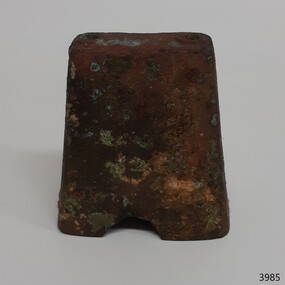 Flagstaff Hill Maritime Museum and Village
Functional object - Cow Bell, Circa 1878
... loch ard...eva carmichael...mutton bird island...loch ard gorge...brass cow bell...The artefact is a damaged brass cow bell recovered from the 1878 shipwreck of the LOCH ARD near Port Campbell. ...bell mouth. The handle, now missing, was fixed in two places at the top. A neat half-circle piece has been cut from the base on a long edge. Recovered from the wreck of the Loch Ard...bell mouth. The handle, now missing, was fixed in two places at the top. A neat half-circle piece has been cut from the base on a long edge. Recovered from the wreck of the Loch Ard ...The artefact is a damaged brass cow bell recovered from the 1878 shipwreck of the LOCH ARD near Port Campbell. It was raised by Flagstaff Hill divers in 1973 and is in storage at the Maritime Village. The LOCH ARD was constructed on the Clyde in 1873 for the prestigious Loch Line of colonial clipper ships, designed for the Australian run. She sailed from England on 1 March 1878 carrying 37 crew, 17 passengers and a diverse general cargo ranging from luxury items to bulk railway iron. On 1 June 1878, emerging from fog and hearing too late the sound of breakers against the tall limestone cliffs, the vessel struck the southern foot of Mutton Bird Island and sank in 23 metres of water. Of the fifty-four people on board only two survived, one young male crewman and one young female passenger. A century later, despite the pounding seas and the efforts of looters, the wreck site continued to provide ample evidence of the extraordinary range of goods being imported into the Colony of Victoria in the post-Gold Rush era. Flagstaff Hill divers in the 1970s reported finds of “Bottles of champagne, window panes, rolls of zinc, barrels of cement, iron rails, clocks, lead shot, corrugated iron, lead, marble, salad oil bottles, ink bottles, copper wire, gin bottles, rolls of carpet, floor tiles, copper rivets, gas light fittings, pocket knives, toys, crystal chandeliers, beer mugs, cutlery, candles sticks, wick scissors, cow bells, and sauce bottles.” From this array of objects on the ocean floor emerged the humble brass cow bell. Cow bells were common to colonial agriculture and transport, used wherever animals were turned out to graze overnight and had to be rounded up again next morning. Bells were fastened around the necks of household milking cows, domestic goats, bullock teams, horse teams, and camel teams, to help find them in the pre-dawn light. Station shepherds and cattle drovers also used them to warn of any disturbances to their flocks and herds overnight. The bells were a necessary item in a largely unfenced continent. So important, that Anthony Mongon began making his pot-bells at Yackandandah from 1861, August Menneke produced the “Wagga Pot” from 1867, and Samuel Jones started manufacturing his distinctively shaped “Condamine Bell” in 1868. However, these deeply resonant Australian bells were made from iron — Mongon and Jones were blacksmiths who simply beat old pitsaw blades into shape. Few genuinely brass cow bells were made here, the vast majority being imported from Britain where the industry of brass founding was already well established. (Some bells were also imported from the United States, but these too were nearly all of iron).This bell is historically significant as typical of a cow bell used by farmers and herdsmen in Colonial Victoria. It was included in the cargo of the Loch Ard. Its significance is increased by being one of a collection of artefacts recovered by the Flagstaff Hill Divers from the wreck of the Loch Ard in the early 1970s. Items that come from several wrecks along Victoria's coast have also been recovered for Flagstaff Hill Maritime Village’s museum collection under a Government permit, illustrating this item’s level of historical value. The cow bell is also significant for being part of Flagstaff Hill’s collection of artefacts from LOCH ARD, which is significant for being one of the largest collections of artefacts from this shipwreck in Victoria. It is significant for its association with the shipwreck, which is on the Victorian Heritage Register (VHR S417). The collection is significant because of the relationship between the objects, as together they have a high potential to interpret the story of the LOCH ARD. The LOCH ARD collection is archaeologically significant as the remains of a large international passenger and cargo ship. The LOCH ARD collection is historically significant for representing aspects of Victoria’s shipping history and its potential to interpret sub-theme 1.5 of Victoria’s Framework of Historical Themes (living with natural processes). The collection is also historically significant for its association with the LOCH ARD, which was one of the worst and best-known shipwrecks in Victoria’s history.Cow bell; a small brass bell, blunt-wedge shaped. The sides expand outwards from the smaller rectangular roof of the bell to a larger open rectangle or bell mouth. The handle, now missing, was fixed in two places at the top. A neat half-circle piece has been cut from the base on a long edge. Recovered from the wreck of the Loch Ard.flagstaff hill, warrnambool, shipwrecked coast, flagstaff hill maritime museum, maritime museum, shipwreck coast, flagstaff hill maritime village, great ocean road, loch line, loch ard, eva carmichael, mutton bird island, loch ard gorge, brass cow bell, colonial cow bells, 1878 shipwreck, shipwreck artefact, flagstaff hill divers, cow bell -
 Flagstaff Hill Maritime Museum and Village
Functional object - Weight, 1878
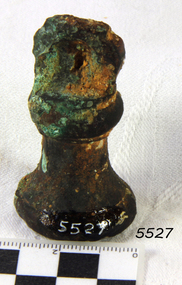
... Small copper alloy weight shaped like a domed bell. Recovered from the wreck of the Loch Ard...The collections historically significance is that it is associated unfortunately with the worst and best-known shipwreck in Victoria's history. flagstaff hill warrnambool shipwrecked coast flagstaff hill maritime museum maritime museum shipwreck coast flagstaff hill maritime village great ocean road loch line loch ard captain gibbs eva carmichael tom pearce glenample station mutton bird island loch ard gorge copper alloy weight weight weights and measures scale weight Small copper alloy weight shaped like a domed bell. ...History of the Loch Ard: The Loch Ard got its name from ”Loch Ard” a loch which lies to the west of Aberfoyle, and the east of Loch Lomond. It means "high lake" in Scottish Gaelic. The vessel belonged to the famous Loch Line which sailed many vessels from England to Australia. The Loch Ard was built in Glasgow by Barclay, Curdle and Co. in 1873, the vessel was a three-masted square-rigged iron sailing ship that measured 79.87 meters in length, 11.58 m in width, and 7 m in depth with a gross tonnage of 1693 tons with a mainmast that measured a massive 45.7 m in height. Loch Ard made three trips to Australia and one trip to Calcutta before its fateful voyage. Loch Ard left England on March 2, 1878, under the command of 29-year-old Captain Gibbs, who was newly married. The ship was bound for Melbourne with a crew of 37, plus 17 passengers. The general cargo reflected the affluence of Melbourne at the time. Onboard were straw hats, umbrella, perfumes, clay pipes, pianos, clocks, confectionery, linen and candles, as well as a heavier load of railway irons, cement, lead and copper. There were other items included that were intended for display in the Melbourne International Exhibition of 1880. The voyage to Port Phillip was long but uneventful. Then at 3 am on June 1, 1878, Captain Gibbs was expecting to see land. But the Loch Ard was running into a fog which greatly reduced visibility. Captain Gibbs was becoming anxious as there was no sign of land or the Cape Otway lighthouse. At 4 am the fog lifted and a lookout aloft announced that he could see breakers. The sheer cliffs of Victoria's west coast came into view, and Captain Gibbs realised that the ship was much closer to them than expected. He ordered as much sail to be set as time would permit and then attempted to steer the vessel out to sea. On coming head-on into the wind, the ship lost momentum, the sails fell limp and Loch Ard's bow swung back towards land. Gibbs then ordered the anchors to be released in an attempt to hold its position. The anchors sank some 50 fathoms - but did not hold. By this time the ship was among the breakers and the tall cliffs of Mutton Bird Island rose behind. Just half a mile from the coast, the ship's bow was suddenly pulled around by the anchor. The captain tried to tack out to sea, but the ship struck a reef at the base of Mutton Bird Island, near Port Campbell. Waves subsequently broke over the ship and the top deck became loosened from the hull. The masts and rigging came crashing down knocking passengers and crew overboard. When a lifeboat was finally launched, it crashed into the side of Loch Ard and capsized. Tom Pearce, who had launched the boat, managed to cling to its overturned hull and shelter beneath it. He drifted out to sea and then on the flood tide came into what is now known as Loch Ard Gorge. He swam to shore, bruised and dazed, and found a cave in which to shelter. Some of the crew stayed below deck to shelter from the falling rigging but drowned when the ship slipped off the reef into deeper water. Eva Carmichael a passenger had raced onto the deck to find out what was happening only to be confronted by towering cliffs looming above the stricken ship. In all the chaos, Captain Gibbs grabbed Eva and said, "If you are saved Eva, let my dear wife know that I died like a sailor". That was the last Eva Carmichael saw of the captain. She was swept off the ship by a huge wave. Eva saw Tom Pearce on a small rocky beach and yelled to attract his attention. He dived in and swam to the exhausted woman and dragged her to shore. He took her to the cave and broke the open case of brandy which had washed up on the beach. He opened a bottle to revive the unconscious woman. A few hours later Tom scaled a cliff in search of help. He followed hoof prints and came by chance upon two men from nearby Glenample Station three and a half miles away. In a complete state of exhaustion, he told the men of the tragedy. Tom then returned to the gorge while the two men rode back to the station to get help. By the time they reached Loch Ard Gorge, it was cold and dark. The two shipwreck survivors were taken to Glenample Station to recover. Eva stayed at the station for six weeks before returning to Ireland by steamship. In Melbourne, Tom Pearce received a hero's welcome. He was presented with the first gold medal of the Royal Humane Society of Victoria and a £1000 cheque from the Victorian Government. Concerts were performed to honour the young man's bravery and to raise money for those who lost family in the disaster. Of the 54 crew members and passengers on board, only two survived: the apprentice, Tom Pearce and the young woman passenger, Eva Carmichael, who lost her family in the tragedy. Ten days after the Loch Ard tragedy, salvage rights to the wreck were sold at auction for £2,120. Cargo valued at £3,000 was salvaged and placed on the beach, but most washed back into the sea when another storm developed. The wreck of Loch Ard still lies at the base of Mutton Bird Island. Much of the cargo has now been salvaged and some items were washed up into Loch Ard Gorge. Cargo and artefacts have also been illegally salvaged over many years before protective legislation was introduced in March 1982. One of the most unlikely pieces of cargo to have survived the shipwreck was a Minton majolica peacock- one of only nine in the world. The peacock was destined for the Melbourne 1880 International Exhibition in. It had been well packed, which gave it adequate protection during the violent storm. Today the Minton peacock can be seen at the Flagstaff Hill Maritime Museum in Warrnambool. From Australia's most dramatic shipwreck it has now become Australia's most valuable shipwreck artifact and is one of very few 'objects' on the Victorian State Heritage Register.The shipwreck of the Loch Ard is of significance for Victoria and is registered on the Victorian Heritage Register ( S 417). Flagstaff Hill has a varied collection of artefacts from Loch Ard and its collection is significant for being one of the largest accumulation of artefacts from this notable Victorian shipwreck. The collections object is to also give us a snapshot into history so we can interpret the story of this tragic event. The collection is also archaeologically significant as it represents aspects of Victoria's shipping history that allows us to interpret Victoria's social and historical themes of the time. The collections historically significance is that it is associated unfortunately with the worst and best-known shipwreck in Victoria's history. Small copper alloy weight shaped like a domed bell. Recovered from the wreck of the Loch Ardflagstaff hill, warrnambool, shipwrecked coast, flagstaff hill maritime museum, maritime museum, shipwreck coast, flagstaff hill maritime village, great ocean road, loch line, loch ard, captain gibbs, eva carmichael, tom pearce, glenample station, mutton bird island, loch ard gorge, copper alloy weight, weight, weights and measures, scale weight -
 Flagstaff Hill Maritime Museum and Village
Functional object - Cow Bell, Circa 1878
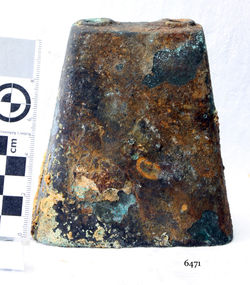
... Loch Ard...Mutton bird Island...Glenample...Eva Carmichael...Tom Pearce...Flagstaff Hill Divers...Cow bell...The artefact is a brass cow bell recovered from the 1878 shipwreck of the LOCH ARD near Port Campbell. ...The artefact is a brass cow bell recovered from the 1878 shipwreck of the LOCH ARD near Port Campbell. ...The artefact is a brass cow bell recovered from the 1878 shipwreck of the LOCH ARD near Port Campbell. It was raised by Flagstaff Hill divers in 1973 and is in storage at the Maritime Village. A cow bell is a bell worn around the neck of free-roaming livestock so herders can keep track of an animal via the sound of the bell when the animal is grazing out of view in hilly landscapes. Although they are typically referred to as "cow bells" due to their extensive use with cattle, the bells are used on a wide variety of animals. The earliest examples of truly recognizable cow bells date back to the Iron Age. The use of iron bells in sub-Saharan African music and the Niger–Congo area is linked to the early iron-making technology spread during the Bantu migrations. The earliest archaeological evidence of bells dates back to more than 5000 years ago, from the 3rd millennium BC in Neolithic China. During this era, there is evidence of early forms of pottery cow bells, which were likely used to keep track of goats, sheep, and cattle. These pottery bells were later replaced by metal bells using brass and other materials. The LOCH ARD was constructed on the Clyde in 1873 for the prestigious Loch Line of colonial clipper ships, designed for the Australian run. She sailed from England on 1 March 1878 carrying 37 crew, 17 passengers and a diverse general cargo ranging from luxury items to bulk railway iron. On 1 June 1878, emerging from fog and hearing too late the sound of breakers against the tall limestone cliffs, the vessel struck the southern foot of Mutton Bird Island and sank in 23 metres of water. Of the fifty-four people on board only two survived, one young male crewman, Tom Pearce, and one young female passenger, Eva Carmichael. (See References or Notes below for further details.)The cow bell is believed to be part of the cargo of the Loch Ard and this shipwreck of the Loch Ard is of historical significance for Victoria. Registered on the Victorian Heritage Register ( S 417), with Flagstaff Hill having a varied collection of artefacts from the Loch Ard. Its collection is significant for being one of the largest accumulation of artefacts from this notable Victorian shipwreck. The collections object is to also give us a snapshot into history so we can interpret the story of this tragic event. The collection is also archaeologically significant as it represents aspects of Victoria's shipping history that allows us to interpret Victoria's social and historical themes of the time. The collections historically significance is that it is associated unfortunately with the worst and best-known shipwreck in Victoria's history. Brass cow bell, covered in encrustations. flagstaff hill, warrnambool, shipwreck coast, flagstaff hill maritime museum, flagstaff hill maritime village, maritime museum, great ocean road, shipwreck artefact, loch ard, mutton bird island, glenample, eva carmichael, tom pearce, flagstaff hill divers, cow bell, horse bell, bell smith, vintage bell, farmer, shepherd, drover, stock bell, brass bell -
 Flagstaff Hill Maritime Museum and Village
Functional object - Cow Bell, circa 1878
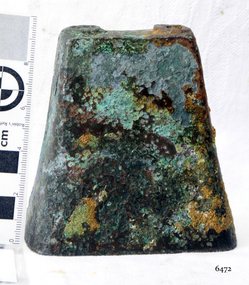
... Loch Ard...Mutton bird Island...Glenample...Eva Carmichael...Tom Pearce...Flagstaff Hill Divers...Cow bell...The artefact is a brass cow bell recovered from the 1878 shipwreck of the LOCH ARD near Port Campbell. ...The artefact is a brass cow bell recovered from the 1878 shipwreck of the LOCH ARD near Port Campbell. ...The artefact is a brass cow bell recovered from the 1878 shipwreck of the LOCH ARD near Port Campbell. It was raised by Flagstaff Hill divers in 1973 and is in storage at the Maritime Village. The LOCH ARD was constructed on the Clyde in 1873 for the prestigious Loch Line of colonial clipper ships, designed for the Australian run. She sailed from England on 1 March 1878 carrying 37 crew, 17 passengers and a diverse general cargo ranging from luxury items to bulk railway iron. On 1 June 1878, emerging from fog and hearing too late the sound of breakers against the tall limestone cliffs, the vessel struck the southern foot of Mutton Bird Island and sank in 23 metres of water. Of the fifty-four people on board only two survived, one young male crewman, Tom Pearce, and one young female passenger, Eva Carmichael. A century later, despite the pounding seas and the efforts of looters, the wreck site continued to provide ample evidence of the extraordinary range of goods being imported into the Colony of Victoria in the post-Gold Rush era. Flagstaff Hill divers in the 1970s reported finds of “Bottles of champagne, window panes, rolls of zinc, barrels of cement, iron rails, clocks, lead shot, corrugated iron, lead, marble, salad oil bottles, ink bottles, copper wire, gin bottles, rolls of carpet, floor tiles, copper rivets, gas light fittings, pocket knives, toys, crystal chandeliers, beer mugs, cutlery, candles sticks, wick scissors, cow bells, and sauce bottles.” From this array of objects on the ocean floor emerged the humble brass cow bell. Cow bells were common to colonial agriculture and transport, used wherever animals were turned out to graze overnight and had to be rounded up again next morning. Bells were fastened around the necks of household milking cows, domestic goats, bullock teams, horse teams, and camel teams, to help find them in the pre-dawn light. Station shepherds and cattle drovers also used them to warn of any disturbances to their flocks and herds overnight. The bells were a necessary item in a largely unfenced continent. So important, that Anthony Mongon began making his pot-bells at Yackandandah from 1861, August Menneke produced the “Wagga Pot” from 1867, and Samuel Jones started manufacturing his distinctively shaped “Condamine Bell” in 1868. However, these deeply resonant Australian bells were made from iron — Mongon and Jones were blacksmiths who simply beat old pitsaw blades into shape. Few genuinely brass cow bells were made here, the vast majority being imported from Britain where the industry of brass founding was already well established. (Some bells were also imported from the United States, but these too were nearly all of iron). This bell is historically significant as typical of a cow bell used by farmers and herdsmen in Colonial Victoria. Flagstaff Hill’s collection of artefacts from LOCH ARD is significant for being one of the largest collections of artefacts from this shipwreck in Victoria. It is significant for its association with the shipwreck, which is on the Victorian Heritage Register (VHR S417). The collection is significant because of the relationship between the objects, as together they have a high potential to interpret the story of the LOCH ARD. The LOCH ARD collection is archaeologically significant as the remains of a large international passenger and cargo ship. The LOCH ARD collection is historically significant for representing aspects of Victoria’s shipping history and its potential to interpret sub-theme 1.5 of Victoria’s Framework of Historical Themes (living with natural processes). The collection is also historically significant for its association with the LOCH ARD, which was one of the worst and best known shipwrecks in Victoria’s history. Cow bell, brass, covered in encrustation, handle missing from the top.flagstaff hill, warrnambool, shipwreck coast, flagstaff hill maritime museum, flagstaff hill maritime village, maritime museum, great ocean road, shipwreck artefact, loch ard, mutton bird island, glenample, eva carmichael, tom pearce, flagstaff hill divers, cow bell, horse bell, bell smith, vintage bell, farmer, shepherd, drover, stock bell, brass bell -
 Flagstaff Hill Maritime Museum and Village
Instrument - Fob watch, 1814
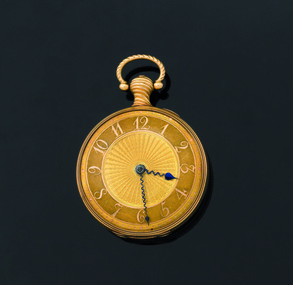
... Bells Building, Fleet Street, on 2nd April 1781. He was made an Honorary Freeman of the Clockmakers Company. The House of McCabe was renowned for the sheer variety of its designs, and the creativity and prestige of its manufacture were celebrated and revered by owners worldwide. These pieces remain highly collectable today and fetch increasingly higher prices at auction houses worldwide. Watch association with the Loch Ard...Bells Building, Fleet Street, on 2nd April 1781. He was made an Honorary Freeman of the Clockmakers Company. The House of McCabe was renowned for the sheer variety of its designs, and the creativity and prestige of its manufacture were celebrated and revered by owners worldwide. These pieces remain highly collectable today and fetch increasingly higher prices at auction houses worldwide. Watch association with the Loch Ard ...Watchmaker History: James McCabe was born in 1748. He was the son of Patrick McCabe, a notable watchmaker from Lurgan in County Armagh, Ireland. James McCabe immigrated to London in 1775 and established his business in Bells Building, Fleet Street, on 2nd April 1781. He was made an Honorary Freeman of the Clockmakers Company. The House of McCabe was renowned for the sheer variety of its designs, and the creativity and prestige of its manufacture were celebrated and revered by owners worldwide. These pieces remain highly collectable today and fetch increasingly higher prices at auction houses worldwide. Watch association with the Loch Ard: The watch was saved from the sea when discovered on the body of Mrs Rebecca Carmichael from Dublin and handed to Eva Carmichael, the only family member to survive the fatal wreck of the Loch Ard on 1st June 1878. Eva gifted the watch to her husband, Thomas Achilles Townsend when they married in 1884; his name is engraved on the rear movement cover. The watch was held by the family until 2011 when they decided to bring the watch, to Australia for auction. At this time the watch was in the possession of Eva Carmichael's grandson, Robert Townsend. Given its connection with the Loch Ard shipwreck, it was purchased at auction by Flagstaff Hill Maritime Village on 25th October 2011 to add to its Loch Ard collection and is currently referred to as the Carmichael watch. It is now on display alongside the Minton Peacock, which also survived the Loch Ard shipwreck, and other artefacts from the collection. James McCabe was originally a Belfast watchmaker who had moved his business to London. At the time James McCabe was much esteemed for producing fine watches and clocks, especially for export to India. Only the best watches were inscribed “James McCabe” and many with highly decorated cases were intended for the Indian market. Contemporary newspaper accounts of the watch's discovery echoed a Carmichael family tradition that the watch had been intended as a gift from the City of Dublin to King George IV to mark his planned visit to the city in 1821, however, there is no evidence to support this theory. Dr Evory Carmichael, according to some accounts, bought this watch from a nobleman for about £100 at some point and so it travelled with him on his final fateful journey to Australia. Today we can only guess at the actions of Mrs Carmichael in the chaos and darkness of the pre-dawn shipwreck. Perhaps the two items that were found on her body, the watch and a locket, were items that reminded her of those she held most dear, her husband and her family. When Mrs Carmichael's body was washed ashore the watch was found secreted in the waistband of her dress. In its own right the watch is of artistic and monetary value and is a rare and beautiful object depicting watch making in the early 19th century. It is a historically significant object in it’s own right and there is additional importance, surviving a significant event in the maritime history of Victoria. The wreck of the Loch Ard, Victoria's greatest maritime disaster has also been declared an event of National Significance because of its strong connection to Australia's immigration and maritime history. The watch, together with the Loch Ard Peacock, make up the two most significant shipwreck artefacts in Australia. Both of these items are of great social significance to not only local people but the wider Australian community. Funding for the watches purchase came from six local trusts and one anonymous citizen and is now on permanent display. Both these artefacts symbolise and helps to interpret the stories of survival along the Shipwreck Coast. Fob Watch, known as the "Carmichael Watch" or the "Loch Ard Watch". 1814 fob pocket watch belonging to the Carmichael family, recovered from the wreck of the Loch Ard. Fob watch (or pocket watch)and winding key, made by James McCabe and Son, of Cornhill, London. The watch is in excellent condition and its design is decorative and intricate. The gold face is covered by glass. The gold rear cover is hinged over a silver inner cover that includes the winding hole. The watch has a knob with a swinging ring from which it can be hung. The dial of the gold watch face is textured and has raised Arabic numerals and every minute is marked around the perimeter by a dot, with the 5-minute dots slightly larger. The numerals and dots are a different coloured gold than the rest of the face. The centre of the face has a wavy pattern fanning out to the base of the numerals. The hour and minute hands are of a dark colour. The stems of the hands are a wavy shape and finish with spade shaped tips; the tip of the hour hand is larger than that of the minute hand. The hour hand reaches to the base of the numerals and the minute hand is long enough to rest between the minute dots. The back of the watch is decorated with a detailed design on a textured gold background. The design is embossed in coloured metals; gold, silver, greenish-gold and pink. In the centre is a dove resting on leaves of a pot plant that sits on a silver circular base. Another dove is flying above it, and their beaks touch together. On the right of the base of the pot plant is a dog resting on its hind legs, body facing away from the plant and head twisted around to look at the birds. On the sides of this design and meeting at the base are sprigs of leaves and buds. Around this central design is a rope-like border. Around the perimeter of the case is a border of leaves and budding stems. The inside of this cover has embossed hallmarks, numbers and etched markings indicating that the watch is 18 carat gold, made by James McCabe, assayed in London in 1814 and the case may have been made by Daniel Willmott, case maker. The silver inner workings cover has a full name beautifully engraved on it. There is a winding hole that accesses a square-ended lever for the key to fit over. The handle of the watch is a twisted gold knob with a hollow ‘D’-shaped swinging ring attached to the end of it. This knob also has a hallmark.On the silver inner workings cover “Thomas Achilles Townshend” is engraved, underscored by a thin, delicately decorated line. On the gold handle is the logo of a crown with “18”’ next to it. Inside the gold rear case is stamped “DW’. Under that is etched “JAN 77 II”. Underneath this are 3 logos; a logo “leopard, crowned”’, a logo “ crown on top of 18”, and a logo “T”. Under these 3 symbols is part of a stamp that could possibly be “IMC”. Under this is “ ’ 5 9 4 ”. Other numbers, symbols and letters are etched into this case including “15001”, “2/5/19”. Others are difficult to read.warrnambool, shipwrecked coast, shipwreck coast, flagstaff hill, flagstaff hill maritime museum, flagstaff hill maritime village, maritime museum, shipwrecked artefact, shipwreck artefact, carmichael, townshend, townsend, carmichael watch, loch ard watch, pocket watch, loch ard, 1st june 1878, james mccabe, thomas walker, robert townshend, loch ard gorge, great ocean road, victoria., memorial headstone
