
Showing 2 items matching "louise whiting"
-
 Vision Australia
Document - Text, Mary Guy, Royal Blind Society of New South Wales Client Services structure, 1989
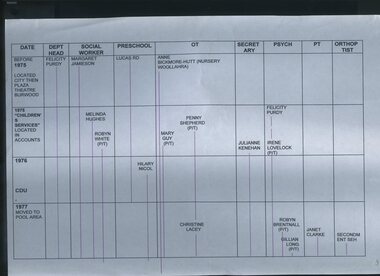
... ...Louise Whiting...Royal Blind Society of NSW Felicity Purdy Margaret Jamieson Anne Bickmore-Hutt Melinda Hughes Robyn White Mary Guy Penny Shepherd Julianne Kenehan Irene Lovelock Hilary Nicol Christine Lacey Robyn Brentnall Gillian Long Janet Clarke Fran Murphy Wendy Macdonald Jutta Williams Jane Pardey Jan Wulff Alan Weiss Rosemary McGomery Sue Slattery Judith Lawliss Margaret Onus Ingrid Simon Robyn Wellington Lorraine Smith Joan Rowlands Louise Whiting Annette McGraine Leah Francis Maryann Bonney Christine Johnston Lizette Campbell Sue Wood Toni Williams Glenn Larner Josephine Key Chris Rubie Merrianne Sinclair Ann Spicer Phillipa Matthews Karen Nix Denis Thomas Di Uther Roma St Clair Imelda Hernon Betty Simon Sharon Hopper Sue Gibson Sherry Mak Ann Lancastor Sandy Norton Rosalie Driver Geraldine Doney Jenny Begg Paulo Olymbios Gail Martin Nadine Khoury Robyn Dagwell Maree LaMacchia Gillian Brooks Alana Matthews Liz Barker Kerrie Mulhearn Annette Collins Liz Williams Chris Maple Information booklet designed to create awareness of the Royal Blind Society of New South Wales and the services it provides. 4 pages of names and departments Royal Blind Society of New South Wales Client Services structure Document Text Mary Guy ...Staffing outline of the Client Services unit from circa 1975 to 1988, as created by Mary Guy. It covers the timeline of staff entering the unit, including Department Head, Social Worker, Preschool, Occupational Therapy, Secretary, Psychology, Physical Therapy and Orthoptist, as well as some location changes: pre 1975 - located in city then Plaza Theatre, Burwood 1975 - Children's Services located in accounts 1977 Moved to Pool Area 1981 - Expanded into flat upstairs. 4 pages of names and departmentsnon-fictionroyal blind society of nsw, felicity purdy, margaret jamieson, anne bickmore-hutt, melinda hughes, robyn white, mary guy, penny shepherd, julianne kenehan, irene lovelock, hilary nicol, christine lacey, robyn brentnall, gillian long, janet clarke, fran murphy, wendy macdonald, jutta williams, jane pardey, jan wulff, alan weiss, rosemary mcgomery, sue slattery, judith lawliss, margaret onus, ingrid simon, robyn wellington, lorraine smith, joan rowlands, louise whiting, annette mcgraine, leah francis, maryann bonney, christine johnston, lizette campbell, sue wood, toni williams, glenn larner, josephine key, chris rubie, merrianne sinclair, ann spicer, phillipa matthews, karen nix, denis thomas, di uther, roma st clair, imelda hernon, betty simon, sharon hopper, sue gibson, sherry mak, ann lancastor, sandy norton, rosalie driver, geraldine doney, jenny begg, paulo olymbios, gail martin, nadine khoury, robyn dagwell, maree lamacchia, gillian brooks, alana matthews, liz barker, kerrie mulhearn, annette collins, liz williams, chris maple -
 City of Melbourne Libraries
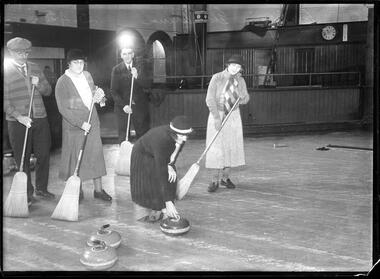
Photograph, Bull, Hugh Jones, 1897-1993, Curling at the Glaciarium, South Melbourne
... Louise Lovely, who had achieved success in Hollywood. The basketball and gymnastic competitions for the 1956 Melbourne Olympic Games were held there. Public skating sessions always finished with “Till we Meet Again”, a popular WWI song about the parting of a soldier and his sweetheart, written by Richard A Whiting and Raymond B Egan. ...Louise Lovely, who had achieved success in Hollywood. The basketball and gymnastic competitions for the 1956 Melbourne Olympic Games were held there. Public skating sessions always finished with “Till we Meet Again”, a popular WWI song about the parting of a soldier and his sweetheart, written by Richard A Whiting and Raymond B Egan. ...Curling at the Glaciarium Mr A G Outhwaite, Mrs Lorna Moffatt-Pender and others, play a game of curling at Melbourne’s Glaciarium, c1933. “Game for Women who are “getting on”!” ran The Herald headline reporting that, “Mrs Moffatt-Pender finds curling a delightful game for the woman who is not quite as young as she was and wants something livelier than croquet. “There is no reason why women should not play up to 50 years of age. And there is always the domestic appeal of the broom which accompanies the curler on ice. Accuracy is the great thing in the game.” Arthur Grenby Outhwaite co-wrote popular “fairy” books, illustrated by his wife, Ida Rentoul Outhwaite. Featured in "Newsworthy: Melbourne in photographs 1933-1936" exhibition at East Melbourne Library, October to December 2023. Exhibition caption by project volunteer, Fiona Collyer. Photographer notations on slide: "Curling - Glaciarium B42" Description: Mr A G Outhwaite, Mrs Lorna Moffatt-Pender, Mrs S J Allen and two unidentified people play a game of curling at Melbourne Glaciarium. Research by project volunteer, Fiona Collyer: Mr Arthur Grenby Outhwaite was married to Ida Rentoul Outhwaite, who was regarded as Australia’s greatest children’s book illustrator and they, along with Ida’s sister Annie, collaborated on many books about fairies, elves and koalas. Ida designed four beautiful stained glass windows at St Marks Fitzroy, which are still there. Mrs Lorna Moffatt-Pender née Smith was married to Captain Iain Moffatt-Pender, a former Scottish Rugby Union international player and Seaforth Highlander in WWI, before he emigrated to Australia and became a wealthy sheep farmer. They were both keen curlers and participated in the NZ v Australia bonspiels at Melbourne Glaciarium in 1935. According to The Herald 9/4/1934, Mrs Moffatt-Pender wore fur-lined suede moccasins on the ice and found curling to be "a delightful game for the woman who is not quite as young as she was and wants something livelier than croquet. “There is no reason why women should not play up to 50 years of age. And there is always the domestic appeal of the broom which accompanies the curler on ice. There is a good sprinkling of women among curlers overseas. Accuracy is the great thing in the game.”" The Curling Club of Australia was formed in Melbourne in 1933 with Wimbledon Singles Champion 1907 and 1914, Sir Norman Brookes, the inaugural president. It disbanded in 1939. Curling was invented in Scotland in 1541, where the tradition is that the laird and the crofter are the same on the ice and after bonspiels (curling tournaments) everybody adjourn for a meal of beef and greens. Rocks of granite are sourced from the Scottish island of Ailsa Craig and weigh 20 kg each. Curling is similar to lawn bowls, but on ice. Two teams of four people each take turns to slide granite stones towards a target known as a house. The team with the most rocks closest to the centre of the house, scores points. Curling stones are delivered with a pre-determent rotation so that they curl as they travel – hence “curling”. Opposition teams can throw guards to block the house or take out the opponent’s stone. The sweeping is to gently warm the surface of the ice where the stone will glide, to extend the path of the stone. In 1934, an Australian team which included the Moffatt-Penders, travelled to New Zealand to compete in a bonspiel on frozen Idaburn Dam near Oturehua, Central Otago. New Zealand won. In June 1935, for the Melbourne Centenary, the New Zealand team came to Melbourne to compete for the Silver Fern Trophy. They voyaged on the M.S. Wanganella and the crew nicknamed the curlers the “Ladies Hairdressers”. Australia won two tests and the third test was a draw. At the conclusion of the bonspiel, a secret, centuries old initiation was held at a “curlers’ court” at Anzac House with seven Australian curlers initiated. Afterwards, a dinner was held at the Occidental Hotel (corner of Exhibition and Collins streets, demolished 1950s), where the haggis was carried in under an archway of curling brooms. The “Ode to the Haggis” was recited by “My Lord of the Court”, Captain Moffatt-Pender before he presented each New Zealand team member with a miniature curling stone as a souvenir of their visit. The Melbourne Glaciarium (also known as "The Glaci" or "The Glassy") opened in 1906 at 16 City Road, South Melbourne and was the third largest ice rink in the world at the time. There was seating for 2000 people which was heated with hot water pipes, and they could hire out 1500 pairs of skates. Up to 5000 people could attend hockey matches and ice sports carnivals at any one time. Patrons could watch films in summer or dance to the Glaciarium’s own orchestra conducted by Frank Bladen, who had played with the Pavlova and the Gilbert and Sullivan orchestras. In 1911 John Sousa, creator of the Sousaphone, and his band played a season of concerts. In 1924, the Glaciarium was turned into a makeshift film studio for filming of the interior scenes of "Jewelled Nights", starring Australian actress Louise Lovely, who had achieved success in Hollywood. The basketball and gymnastic competitions for the 1956 Melbourne Olympic Games were held there. Public skating sessions always finished with “Till we Meet Again”, a popular WWI song about the parting of a soldier and his sweetheart, written by Richard A Whiting and Raymond B Egan. The Glaciarium closed in 1959 and was demolished after a fire in 1963. References: WOMAN CURLER RETURNS (1934, April 9). The Herald (Melbourne, Vic. : 1861 - 1954), p. 14. Retrieved September 14, 2023, from http://nla.gov.au/nla.news-article243253779 CURLERS INITIATED (1935, June 24). The Argus (Melbourne, Vic. : 1848 - 1957), p. 4. Retrieved February 2, 2024, from http://nla.gov.au/nla.news-article12251790 Melbourne Glaciarium, Only Melbourne, https://www.onlymelbourne.com.au/melbourne-glaciarium Melbourne Glaciarium, Legends of Australian Ice, https://icelegendsaustralia.com/glaciariums.htmlPhotographer notations on slide: "Curling - Glaciarium B42".curling, 1930-1939, glaciarium, fires
