
Showing 40 items matching "magnesium "
-
 Moorabbin Air Museum
Manual (Item) - Military Standardization Handbook Magnesium and Magnesium Alloys MIL-HDBK-693A, Military Standardization Handbook Magnesium and Magnesium Alloys
... Military Standardization Handbook Magnesium and Magnesium Alloys...Military Standardization Handbook Magnesium and Magnesium Alloys Manual Military Standardization Handbook Magnesium and Magnesium Alloys MIL-HDBK-693A ... -
 Mission to Seafarers Victoria
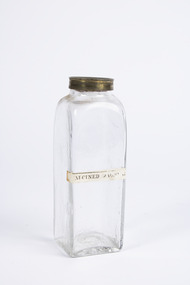
Container - Square Based Glass Container with Metal Lid
... Square based glass container with a circular opening on the top and a paper label with the cursive text: Calcined Magnesium. Features a corresponding metal lid with a red cork protrusion on the bottom to seal the container. ...Calcined Magnesium...volum collection Calcined Magnesium Square based glass container with a circular opening on the top and a paper label with the cursive text: Calcined Magnesium. ...Square based glass container with a circular opening on the top and a paper label with the cursive text: Calcined Magnesium. Features a corresponding metal lid with a red cork protrusion on the bottom to seal the container. Found in the top container location of the parent item.Calcined Magnesiumvolum collection, -
Moorabbin Air Museum
Document (item) - CAC Collection - Avon RA3 Part II Sand Castings In Iron, Aluminium & Magnesium
... CAC Collection - Avon RA3 Part II Sand Castings In Iron, Aluminium & Magnesium...CAC Collection - Avon RA3 Part II Sand Castings In Iron, Aluminium & Magnesium Document CAC Collection - Avon RA3 Part II Sand Castings In Iron, Aluminium & Magnesium ... -
Moorabbin Air Museum
Book (Item) - Technology of Magnesium & Alloys ALSO Aluminium & Light Alloys
... Technology of Magnesium & Alloys ALSO Aluminium & Light Alloys...Technology of Magnesium & Alloys ALSO Aluminium & Light Alloys Book Technology of Magnesium & Alloys ALSO Aluminium & Light Alloys ... -
 The Beechworth Burke Museum
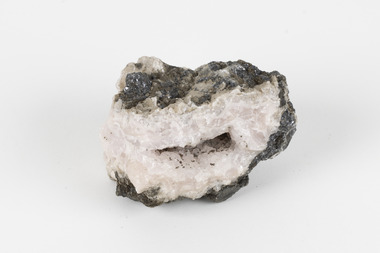
Geological specimen - Dolomite
... Dolomite is a mineral, calcium magnesium carbonate, with the chemical formula CaMg(CO3)2. ...Hand-sized piece of pale pink dolomite (calcium magnesium carbonate) with dark grey rim and hollowed centre. ...Dolomite is a mineral, calcium magnesium carbonate, with the chemical formula CaMg(CO3)2. ...Dolomite is a mineral, calcium magnesium carbonate, with the chemical formula CaMg(CO3)2. It is a principle component of various rock types sometimes also referred to as dolomite, including dolostone, dolomitic marble and dolomitic limestone (according to the composition of each type). Dolomite rock is found in sedimentary basins throughout the world, comprising approximately 2% of the Earth's crust. It is formed when lime mud or limestone encounters groundwater containing magnesium. Dolomite can contain elements such as lead, zinc and copper. Dolomite and limestone are used in various construction, landscaping and agricultural processes. This specimen was donated to the Burke Museum in 1868 by Alfred Selwyn as part of the Geological Survey of Victoria. It was donated to the Museum in 1868. Victoria and other regions of Australia were surveyed for sites of potential mineral wealth throughout the 19th Century. The identification of sites containing valuable commodities such as gold, iron ore and gemstones in a locality had the potential to shape the development and history of communities and industries in the area. The discovery of gold in Victoria, for instance, had a significant influence on the development of the area now known as 'the goldfields', including Beechworth; the city of Melbourne and Victoria as a whole. Dolomite and limestone are mined at several locations in Victoria, including sites in the North-East of the state in Bindi and Limestone Creek. There are notable dolomite deposits in most Australian states. The dolomitised form of the mineral tends to come from older limestone deposits, formed during the palaeozoic era in marine settings, so this specimen may have come from a deposit located along a coastline in Victoria or another state. The specimen is significant as an example of surveying activity undertaken to assess and direct the development of the mineral resource industries in Victoria and Australia, as well as the movement to expand human knowledge of earth sciences such as mineralogy and geology in the nineteenth century. This specimen is part of a larger collection of geological and mineral specimens collected from around Australia (and some parts of the world) and donated to the Burke Museum between 1868-1880. A large percentage of these specimens were collected in Victoria as part of the Geological Survey of Victoria that begun in 1852 (in response to the Gold Rush) to study and map the geology of Victoria. Collecting geological specimens was an important part of mapping and understanding the scientific makeup of the earth. Many of these specimens were sent to research and collecting organisations across Australia, including the Burke Museum, to educate and encourage further study.Hand-sized piece of pale pink dolomite (calcium magnesium carbonate) with dark grey rim and hollowed centre. geological specimen, geology, geology collection, burke museum, beechworth, dolomite, mineralogy, geological survey, alfred selwyn, limestone, calcium magnesium carbonate -
 The Beechworth Burke Museum
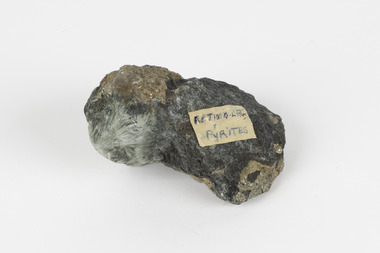
Geological specimen - Actionlite and Pyrite
... It also occurs as a product of the metamorphism of magnesium-rich limestones. Pyrite is usually found with other sulfides or oxides in quartz veins, sedimentary rock, and metamorphic rock, as well coal beds, and as a replacement mineral in fossils. ...Actinolite is an amphibole mineral in the tremolite-actinolite series of calcium, magnesium, and iron silicates. Pyrite is an iron disulfide mineral....Actinolite is an amphibole mineral in the tremolite-actinolite series of calcium, magnesium, and iron silicates. Pyrite is an iron disulfide mineral. ...Actinolite is usually found in metamorphic rocks, such as contact aureoles surrounding cooled intrusive igneous rocks. It also occurs as a product of the metamorphism of magnesium-rich limestones. Pyrite is usually found with other sulfides or oxides in quartz veins, sedimentary rock, and metamorphic rock, as well coal beds, and as a replacement mineral in fossils. Actinolite is an amphibole silicate mineral. It is named after the Greek word "aktinos" meaning “ray” in allusion to the mineral's fibrous nature. Fibrous actinolite is a type of asbestos and was once mined along Jones Creek at Gundagai, New South Wales. Pyrite or "Fool's Gold" is the most common sulfide mineral. It is named after the Greek "pyr" meaning "fire" because it can be used to create sparks needed for a fire if struck against metal or a hard surface. Due to its gold colour, pyrite can be mistaken for gold and often forms alongside it, causing small amounts of gold to be present in rocks containing pyrite. Most importantly, pyrite is an ore of gold. Pyrite is sometimes used as a gemstone but is not great for jewellery as it easily tarnishes. In some fossils of ammonites – shelled cephalopods that died ~66 million years ago – pyrite also replaces the shell. This specimen is part of a larger collection of geological and mineral specimens collected from around Australia (and some parts of the world) and donated to the Burke Museum between 1868-1880. A large percentage of these specimens were collected in Victoria as part of the Geological Survey of Victoria that begun in 1852 (in response to the Gold Rush) to study and map the geology of Victoria. Collecting geological specimens was an important part of mapping and understanding the scientific makeup of the earth. Many of these specimens were sent to research and collecting organisations across Australia, including the Burke Museum, to educate and encourage further study. A small-medium-sized solid specimen with the minerals actinolite (dark green fibrous) and pyrite (brassy) with shades of brown, black/grey, and white. Actinolite is an amphibole mineral in the tremolite-actinolite series of calcium, magnesium, and iron silicates. Pyrite is an iron disulfide mineral.geological specimen, geology, geology collection, burke museum, beechworth, indigo shire, geological, mineralogy, pyrite, actinolite, victoria, sewyln, alfred selwyn -
 The Beechworth Burke Museum
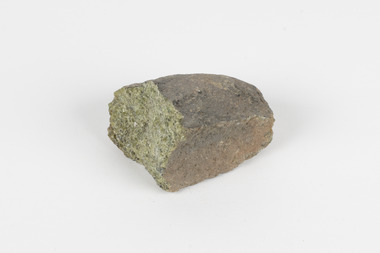
Geological specimen - Olivine Crystals, Unknown
... A solid iron-magnesium silicate mineral with shades of green and brown...Many of these specimens were sent to research and collecting organisations across Australia, including the Burke Museum, to educate and encourage further study. burke museum beechworth geological geological specimen olivine igneous rock volcanic gemstones volcanic bomb meteorites asteroids plantes mount noorat mount shadwell indigenous kirrae wuurong people newer volcanics province victoria European settlement eruption A solid iron-magnesium silicate mineral with shades of green and brown Geological specimen Olivine Crystals ...Olivine is mostly found on the Earth's surface in igneous rocks that are dark-coloured. It is common at divergent plate boundaries and at warm spots, such as volcanic areas. It crystalises and forms during the cooling of magma. Olivine is used in refractory sand, bricks, and gemstones. Olivine has been found on a number of meteorites, which might have originated from large asteroids or the mantle of a now-destroyed planet. This olivine crystal is thought to originate from Mount Noorat, with speculation that it could have originated from Mount Shadwell. Mount Noorat is a dormant volcano cone located in the Newer Volcanics Province of Victoria. Mount Noorat belongs to the Kirrae Wuurong people, who used the Mount as a place for meetings and gatherings prior to European settlement. Contact was first made between European settlers and the Indigenous people in 1841. The Mount has mostly been used for cattle and sheep grazing. Mount Shadwell is a well-known source of olivine and is the highest of a gathering of volcanic cones. The New Volcanic Province is located in South East Australia and covers 15000 square kilometres. It contains 400 explosive vents and small shield volcanoes. The last eruption is thought to have occurred 5000 years ago at Mount Gambier and Mount Schank. This olivine crystal has been identified as a volcanic bomb, which is a molten rock which was pushed out and ejected into the air when a volcano reupts. A rock needs to be larger than 65 mm in diameter to be classified as a volcanic bomb. This olivine volcanic bomb and its locality is historically and socially significant. The olivine was found in the Newer Volcanic Province, an area which contains over 400 dormant volcanoes. This olivine is one part of a volcanic bomb, which would have ejected when magma erupted out of a volcano. This specimen is part of a larger collection of geological and mineral specimens collected from around Australia (and some parts of the world) and donated to the Burke Museum between 1868-1880. A large percentage of these specimens were collected in Victoria as part of the Geological Survey of Victoria that begun in 1852 (in response to the Gold Rush) to study and map the geology of Victoria. Collecting geological specimens was an important part of mapping and understanding the scientific makeup of the earth. Many of these specimens were sent to research and collecting organisations across Australia, including the Burke Museum, to educate and encourage further study.A solid iron-magnesium silicate mineral with shades of green and brownburke museum, beechworth, geological, geological specimen, olivine, igneous rock, volcanic, gemstones, volcanic bomb, meteorites, asteroids, plantes, mount noorat, mount shadwell, indigenous, kirrae wuurong people, newer volcanics province, victoria, european settlement, eruption -
Port Melbourne Historical & Preservation Society
Container - Bottle, Lewis & Whitty milk of magnesium, excavated from cesspit at All England Eleven Hotel, 1850s - 1860s
... Lewis & Whitty (Melbourne) milk of magnesium bottle from group of 1850/1860s bottles dug up at 282 Rouse Street in 1999...Dug from ground at demolished 282 Rouse Street in 1999 and donated by Peter LIBBIS Domestic Life - Containers Business and Traders - Hotels All England Eleven Hotel W H Dawbarn & Son Health - General Health Lewis & Whitty (Melbourne) Lewis & Whitty (Melbourne) Lewis & Whitty (Melbourne) milk of magnesium bottle from group of 1850/1860s bottles dug up at 282 Rouse Street in 1999 Container Bottle, Lewis & Whitty milk of magnesium, excavated from cesspit at All England Eleven Hotel ...Dug from ground at demolished 282 Rouse Street in 1999 and donated by Peter LIBBISLewis & Whitty (Melbourne) milk of magnesium bottle from group of 1850/1860s bottles dug up at 282 Rouse Street in 1999Lewis & Whitty (Melbourne)domestic life - containers, business and traders - hotels, all england eleven hotel, w h dawbarn & son, health - general health, lewis & whitty (melbourne) -
Port Melbourne Historical & Preservation Society
Container - Bottle, Lewis & White milk of magnesium, excavated from cesspit at All England Eleven Hotel, 1850s - 1860s
... Lewis & White (Melbourne) milk of magnesium bottle from group of 1850/1860s bottles dug up at 282 Rouse Street in 1999...Dug from ground at demolished 282 Rouse Street in 1999 and donated by Peter LIBBIS Domestic Life - Containers Business and Traders - Hotels All England Eleven Hotel Health - General Health Lewis & White (Melbourne) Lewis & White (Melbourne) Lewis & White (Melbourne) milk of magnesium bottle from group of 1850/1860s bottles dug up at 282 Rouse Street in 1999 Container Bottle, Lewis & White milk of magnesium, excavated from cesspit at All England Eleven Hotel ...Dug from ground at demolished 282 Rouse Street in 1999 and donated by Peter LIBBISLewis & White (Melbourne) milk of magnesium bottle from group of 1850/1860s bottles dug up at 282 Rouse Street in 1999Lewis & White (Melbourne)domestic life - containers, business and traders - hotels, all england eleven hotel, health - general health, lewis & white (melbourne) -
 Mont De Lancey
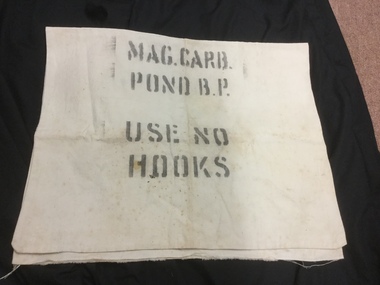
Domestic object - Bag - Calico, ca. 20th century
... Magnesium carbonate powder. British Pharmacopoeia. ...Magnesium carbonate powder. British Pharmacopoeia. bags MAG.CARB.POND.B.P. ...Magnesium carbonate powder. British Pharmacopoeia. One large calico bag.MAG.CARB.POND.B.P. Use no hooks.bags -
 Kiewa Valley Historical Society
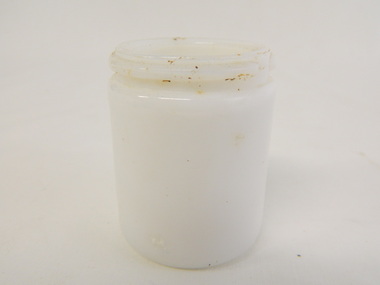
Jar - Ointment - Medical
... Used for ointment e.g.. zinc, magnesium sulphate. Embossed on base. Base is 'pushed inwards/upwards' forming a lip around the circumference....Used for ointment e.g.. zinc, magnesium sulphate. Embossed on base. Base is 'pushed inwards/upwards' forming a lip around the circumference. ...This jar was used in the Tawonga District General Hospital which was built in the 11950's specifically for the increase in population due to the Kiewa Hydro Scheme.Small wide white 'milk glass' jar with screw top. Used for ointment e.g.. zinc, magnesium sulphate. Embossed on base. Base is 'pushed inwards/upwards' forming a lip around the circumference.Base: Common Seal - A with G above and M below / 15 medical, hospital, ointment -
Moorabbin Air Museum
Document (item) - Mirage 111O correspondence re magnesium alloy castings for the ATAR 9C engine, Mirage correspondence - ATAR Project - File 6
... Letters from SNECMA to CAC re magnesium alloy castings for the ATAR engine...Letters from SNECMA to CAC re magnesium alloy castings for the ATAR engine Mirage correspondence - ATAR Project - File 6 Document Mirage 111O correspondence re magnesium alloy castings for the ATAR 9C engine ...Letters from SNECMA to CAC re magnesium alloy castings for the ATAR engine -
Moorabbin Air Museum
Document (item) - Mirage 111O correspondence re magnesium alloy castings for the ATAR 9C engine, Mirage correspondence - ATAR Project - File 7
... Letters between SNECMA and CAC re magnesium alloy castings for the ATAR engine...Letters between SNECMA and CAC re magnesium alloy castings for the ATAR engine Mirage correspondence - ATAR Project - File 7 Document Mirage 111O correspondence re magnesium alloy castings for the ATAR 9C engine ...Letters between SNECMA and CAC re magnesium alloy castings for the ATAR engine -
 Tennis Australia
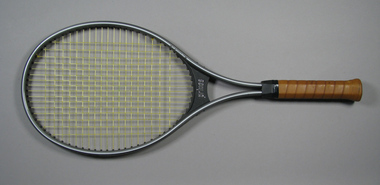
Racquet, Circa 1984
... A Prince 'Magnesium Pro' split shaft oversize tennis racquet, with black plastic bridge, and Prince 'Synthetic Gut' strings. ...Tennis A Prince 'Magnesium Pro' split shaft oversize tennis racquet, with black plastic bridge, and Prince 'Synthetic Gut' strings. ...A Prince 'Magnesium Pro' split shaft oversize tennis racquet, with black plastic bridge, and Prince 'Synthetic Gut' strings. Materials: Synthetic Gut, Metal composite, Plastic, Adhesive tape, Ink, Synthetic material, Leathertennis -
 City of Moorabbin Historical Society (Operating the Box Cottage Museum)
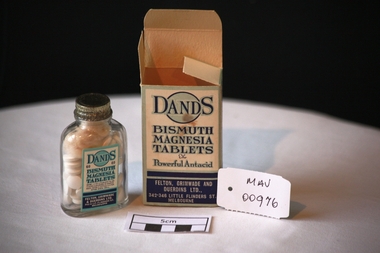
Manufactured Glass, bottle 'Dands' tablets with box, mid 20thC
... Bismuth and Magnesium tablets were used as a medication used to treat temporary discomforts of the stomach and gastrointestinal tract, such as diarrhoea, indigestion, heartburn and nausea. ...Bismuth and Magnesium tablets were used as a medication used to treat temporary discomforts of the stomach and gastrointestinal tract, such as diarrhoea, indigestion, heartburn and nausea. pharmacy medicines felton grimwade and duerdins ltd. dands melbourne early settlers market gardeners moorabbin bentleigh cheltenham bismuth magnesia antacids Bottle Front; DANDS / 60 / BISMUTH / MAGNESIA / TABLETS / DOSE - 1TO 3 TABLETS TO BE / TAKEN ( CRUSHED) IF PREFERED / WITH A LITTLE WATER / AFTER EACH MEAL / FELTON, GRIMWADE /& DUERDINS LTD. / 342-6 LIT. ...Bismuth and Magnesium tablets were used as a medication used to treat temporary discomforts of the stomach and gastrointestinal tract, such as diarrhoea, indigestion, heartburn and nausea. A clear glass bottle, with a metal screw top, containing 60 Bismuth Magnesia tablets. Bottle Front; DANDS / 60 / BISMUTH / MAGNESIA / TABLETS / DOSE - 1TO 3 TABLETS TO BE / TAKEN ( CRUSHED) IF PREFERED / WITH A LITTLE WATER / AFTER EACH MEAL / FELTON, GRIMWADE /& DUERDINS LTD. / 342-6 LIT. FLINDERS ST., / MELBOURNE BOX Front & Back: DANDS / BISMUTH ...... / The / Powerful Antacid / FELTON .......... Left side: An EFFICACIOUS / REMEDY FOR THE / RELIEF OF / INDIGESTION / FLATULENCE...... Right side:DIRECTIONS / Dose / ........pharmacy, medicines, felton, grimwade and duerdins ltd., dands melbourne, early settlers, market gardeners, moorabbin, bentleigh, cheltenham, bismuth, magnesia, antacids -
 Wodonga & District Historical Society Inc
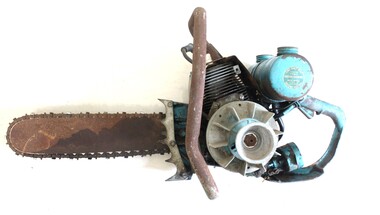
Tool - L-30 Chain saw, Lombard, 1962 - 1964
... It was made primarily of sand cast magnesium. The main cylinder was constructed of aluminium with a cast iron sleeve. ...It was made primarily of sand cast magnesium. The main cylinder was constructed of aluminium with a cast iron sleeve. ...This chainsaw was one of the earliest models sold in Australia. It was manufactured by the Lombard company which was established in 1894 when Nathaniel Lombard developed the first practical water wheel governor in Roxbury, Massachusetts, USA. In 1904, the company moved to Ashland, Massachusetts. During the first World War, Lombard Governor produced hydraulic lathes for the manufacture of artillery shells At the conclusion of the war, Lombard expanded into the areas of chain saws and plastic molding injection machines. This model, the L-30 was only produced for 2 years from 1962 - 1964, primarily due to safety concerns and the fact that it did not have any way to sharpen or tighten the chain. This chainsaw was sold by Mann of Wodonga and donated to the Wodonga and District Historical society by David Mann, owner and manager of Mann Wodonga.This item is significant as it was produced for a limited time. It was also sold by a prominent Wodonga business.A single operator chain saw from Lombard, Ashland, Massachusetts, USA. The chainsaw was relatively lightweight but had no safety features such as a chain brake. It was made primarily of sand cast magnesium. The main cylinder was constructed of aluminium with a cast iron sleeve. It had a manual oil pump, the crankshaft operated on ball bearings and it had a maximum rpm of 4,500. See the Model profile in the accompanying Media item for details.On side of fuel tank: "ONE HALF PINT/SAE-30 OIL/ FOR EACH/ GALLON GASOLINE/ MIX WELL IN SEPARATE CONTAINER/BEFORE FILLING" On opposite side: "STARTING INSTRUCTIONS 1: FILL FUEL TANK WITH PROPER FUEL MIXTURE ( AS NOTED ON TANK) 2. FILL OIL RESERVOIR WITH #30 MOTOR OIL 3. CLOSE CHOKE, MOVE LEVER BACK TOWARDS AIR FILTER 4. HOLD THROTTLE WIDE OPEN 5. PULL STARTER HANDLE SLOWLY UNTIL STARTER ENGAGES, THEN GIVE IT A SHARP YANK 6. AS ENGINE WARMS UP, EASE CHOKE LEVER TO OPEN POSITION"hand tools, vintage chainsaws, david mann, mann wodonga -
 The Beechworth Burke Museum
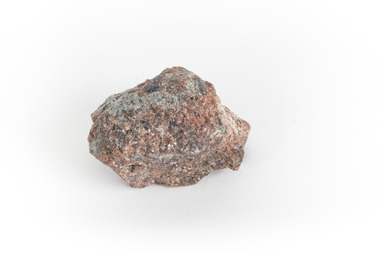
Geological specimen - Loellingite in Rhodonite
... Rhodonite is a reddish-pink manganese silicate material and often contains iron, magnesium and calcium. It is usually found in metamorphic rocks (rocks which have been altered by heat, pressure or chemical process). ...Rhodonite is a reddish-pink manganese silicate material and often contains iron, magnesium and calcium. It is usually found in metamorphic rocks (rocks which have been altered by heat, pressure or chemical process). ...Rhodonite is a reddish-pink manganese silicate material and often contains iron, magnesium and calcium. It is usually found in metamorphic rocks (rocks which have been altered by heat, pressure or chemical process). It can range in size from tiny to massive. Because of their composition they are not suitable for use in jewellery because they are hard enough. It is quite rare to find, though has been found in Australia, North America, South America and Europe.This specimen is part of a larger collection of geological and mineral specimens collected from around Australia (and some parts of the world) and donated to the Burke Museum between 1868-1880. A large percentage of these specimens were collected in Victoria as part of the Geological Survey of Victoria that begun in 1852 (in response to the Gold Rush) to study and map the geology of Victoria. Collecting geological specimens was an important part of mapping and understanding the scientific makeup of the earth. Many of these specimens were sent to research and collecting organisations across Australia, including the Burke Museum, to educate and encourage further study. This specimen is a palm shaped piece of loellingite within rhodonite. It is mostly reddish-pink coloured, with flecks of light and dark grey. Loellingite is a grey iron arsenide which often forms into crystal shapes. It is mostly found in mesothermal veins (caused by immense heat) with sulfides or in limestone. It is toxic when heated or struck. rhodonite, loellingite, burke museum, beechworth, geological survey of victoria -
 Emerald Museum & Nobelius Heritage Park
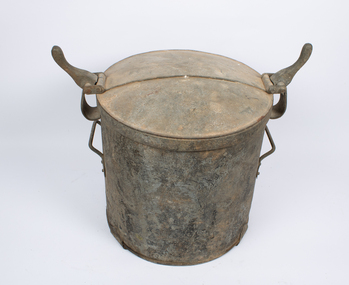
Container - Sanitary Can, Early 20th Century
... This item was provided by the Shire of Ferntree Gully to the Air Raid Precautions organisation in the shire during the Second World War to store Magnesium turnings. These were used to simulate incendiary bombs during ARP training. ...This item was provided by the Shire of Ferntree Gully to the Air Raid Precautions organisation in the shire during the Second World War to store Magnesium turnings. These were used to simulate incendiary bombs during ARP training. ...Galvanised toilet buckets (dunny cans) were used in Australian ARP (Air Raid Precautions) training during the Second World War. They show the improvised nature of civil‑defence work with limited resources. They were commonly used to simulate bombs, practise bomb marking, conduct casualty and rescue drills, and train responses to incendiary attacks. This item was provided by the Shire of Ferntree Gully to the Air Raid Precautions organisation in the shire during the Second World War to store Magnesium turnings. These were used to simulate incendiary bombs during ARP training. Example of a once common household item, used for civil defence training during the Second World War.Metal bucket with handles on either sides and a lid with horned clasps.Noneair raid precautions -
 Nillumbik Shire Council
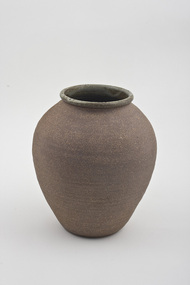
Pottery (vase): Joan Armfield, Joan Armfield, Vessel - Iron Clay, c.1975
... This is a low alumina tenmoku glaze, containing magnesium oxide which is responsible for the dark yellow/green striations of speckling which are formed during the slow cooling process of a reduction firing. ...This is a low alumina tenmoku glaze, containing magnesium oxide which is responsible for the dark yellow/green striations of speckling which are formed during the slow cooling process of a reduction firing. ...Vessel - Iron Clay, is a wheel thrown vase that curves upwards from a narrow base to form a wide, rounded shoulder before concluding at a short, delicate rim. In contrast to the unglazed, rough texture of the exterior surface, the entrance to the vessel is smooth and shiny due to a tea leaf dust glaze. This is a low alumina tenmoku glaze, containing magnesium oxide which is responsible for the dark yellow/green striations of speckling which are formed during the slow cooling process of a reduction firing. This patterning is intermittent and dispersed with a grey/green pebbled effect. The stoneware vessel is built from clay with a high percentage of iron. -
 Federation University Art Collection
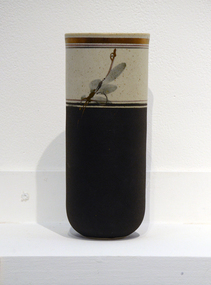
Ceramic - Artwork - Ceramics, Vic Greenaway, Porcelain Cylinder by Victor Greenaway, 1980, 1982
... Hand-decorated wheel thrown porcelaneous stoneware glazed with semi-matt, silky white and dry black glaze and magnesium carbonate. The brushwork and banding is cobalt and iron with bronzelustre on-glaze bands. ...Hand-decorated wheel thrown porcelaneous stoneware glazed with semi-matt, silky white and dry black glaze and magnesium carbonate. The brushwork and banding is cobalt and iron with bronzelustre on-glaze bands. ...Victor GREENAWAY (1947 - ) Born Sale, Victoria Victor Greenaway studied Ceramics at RMIT. He established his first workshop in Hawthorn in 1968, before moving to Ian Sprague's Mungeriba Pottery, Upper Beaconsfield in 1969. He studied under Tatsuzo Shimoaka in Mashiko, Japan under a Churchill Fellowship awarded in 1974. Upon his return he established Broomhill Pottery in Upper Beaconsfield in 1975, and in 1976 started employing trainees. He was a visiting lecturer at the Gippsland Centre for Art and Design (GCAD) c1980. Hand-decorated wheel thrown porcelaneous stoneware glazed with semi-matt, silky white and dry black glaze and magnesium carbonate. The brushwork and banding is cobalt and iron with bronzelustre on-glaze bands. This work is part of the Jan Feder Memorial Ceramics Collection. Jan Feder was an alumna of the Gippsland Campus who studied ceramics on the campus. She passed away in the mid 1980s. Her student peers raised funds to buy ceramic works in her memory. They bought works from visiting lecturers who became leading ceramic artists around the world, as well as from many of the staff who taught there.Artist's stamp on base.gippsland campus, victor greenaway, ceramics, artists, artwork, jan feder memorial ceramics collectrion -
 Mission to Seafarers Victoria
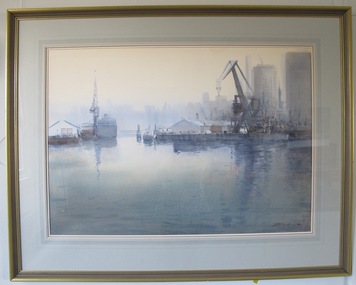
Painting, David K Taylor, Marking Time: Melbourne Waterfront, 1989
... Many hand skills were learned such as hand engraving, lino and wood cutting also etching with zinc, copper and magnesium, later etching on film in lithography. ...Many hand skills were learned such as hand engraving, lino and wood cutting also etching with zinc, copper and magnesium, later etching on film in lithography. ...A period view of later 20th century waterside. Possibly MelbourneFrom the Artist website: "Born in Melbourne Australia in 1941, David’s early career began in etching and a 6-year apprenticeship at the north Melbourne Printing School of Graphic Arts to colour etching assisted in his future career as an artist painter. Many hand skills were learned such as hand engraving, lino and wood cutting also etching with zinc, copper and magnesium, later etching on film in lithography. David’s painting career expands many years of studying the art of watercolour painting and he has been involved in teaching his great love of this medium to painters both in Australia and overseas since the late sixties. He is involved in regularly tutoring for the Australian and International Artist magazine."Maritime ArtMatted framed and glazed watercolour painting of a waterfront with vessels and cranesArtist signature at lwr right corner On verso: number 31 in black ink / name and address of the artist written in black ink (top left corner) / sticker with number AMAA3053, name of artist, title of painting and number GFAM 047/ in pencil : GFAM 047waterside, docks, cranes, shipping, port, david k taylor, artwork, marine art, artwork-paintings -
 City of Moorabbin Historical Society (Operating the Box Cottage Museum)
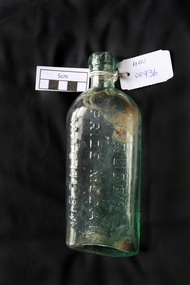
Manufactured Glass, bottle 'Kruse's Magnesia', 20thC
... Improves general well being, corrects magnesium deficiency. Helps relieve indigestion, when due to acidity. ...Improves general well being, corrects magnesium deficiency. Helps relieve indigestion, when due to acidity. ...Johann August (John) Kruse was instrumental in the development of the pharmaceutical industry and pharmacy training in Victoria. He was a driving force behind the creation of the Pharmaceutical Society of Victoria and was appointed a founding member of the Society's inaugural council in 1857. He manufactured many pharmaceuticals and health products such as mineral waters and 'Kruse's Fluid Magnesia' (1863) which is still in use today. He later went on to produce insecticides and dynamite, then established his own analytical chemistry service. In 1878 Kruse established Victoria's first pharmacy training facility - the Melbourne School of Pharmacy. There pharmacy apprentices were taught chemistry, botany, materia medica and Latin, while country students could study by correspondence. The School was endorsed and monitored by the Pharmacy Board of Victoria to which Kruse was appointed in 1880. Kruse's pharmacy school was the forerunner of the Victorian College of Pharmacy, Monash University, which remains Victoria's only pharmacy training institute. In 1853, shortly after qualifying as pharmacist at the University of Göttingen, Johann August (John) Kruse, moved to London. The medical practitioner Dr S. Weil sent Kruse to Victoria, Australia to manage a new pharmacy and tobacconist's shop which he was having built at 136 Bridge Rd in Richmond. In 1856 Kruse opened a second pharmacy 'John Kruse and Company Chemists and Druggists' at 207 Bourke Street. 1857 the Richmond shop was destroyed by fire, so all pharmaceutical production was moved to the Bourke St premises and later to his new location at 184 Bourke St.. Kruse was forced to sell his business in 1868 to Felton Grimwade and Company and work for them as manager of their chemical works. By the early 1870s he had regained financial independence so left the company to establish his own businesses again. He opened up a pharmacy at 31 Swanston St and in c1874 leased Victoria's premier natural springs, Clifton Springs, on the northern side of the Bellarine Peninsula, where he established a bottling plant. Suspensions of magnesium hydroxide in water, often called Milk of Magnesia, are used as an antacid to neutralize stomach acid, and as a laxative. Milk of magnesia is sold for medical use as chewable tablets, capsules, and as liquids having various added flavours Kruses Fluid Magnesia 300ml Extralife Kruse’s Fluid Magnesia, Magnesium supplement. Rapidly absorbed, easily digested. Improves general well being, corrects magnesium deficiency. Helps relieve indigestion, when due to acidity. In 1878 Kruse established Victoria's first pharmacy training facility - the Melbourne School of Pharmacy, the forerunner of the Victorian College of Pharmacy, Monash University, which remains Victoria's only pharmacy training institute. A glass bottle containing ‘Kruse’s’ Magnesia’ medicineKRUSE’S / PRIZE MEDAL / MAGNESIA/ K / FELTON-GRIMWADE & CO. MELBOURNE Directions for use ......glass works, pharmaceutical glass, pharmacy, kruse johann august (john), dr weil s, ., victorian college of pharmacy, monash university, university of göttingen, felton grimwade and company, magnesium bicarbonate, magnesium oxide -
 The Beechworth Burke Museum
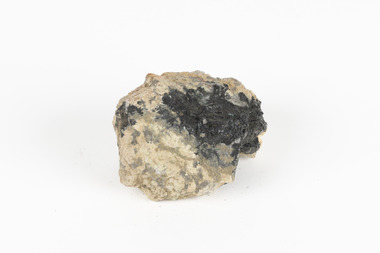
Geological specimen - Tourmaline (schorl), Unknown
... Tourmaline's chemical composition is complex, but it typically includes elements such as aluminium, iron, magnesium, sodium, lithium, and potassium. The specific arrangement of these elements in the crystal lattice gives rise to the different colours and properties of tourmaline specimens. ...Tourmaline's chemical composition is complex, but it typically includes elements such as aluminium, iron, magnesium, sodium, lithium, and potassium. The specific arrangement of these elements in the crystal lattice gives rise to the different colours and properties of tourmaline specimens. ...Tourmaline is a group of minerals belonging to the complex borosilicate mineral class. These minerals are known for their striking and varied colours, making them prized gemstones. Tourmaline crystals can come in various shades, including pink, green, blue, brown, black, and colourless. They are often transparent or translucent. Tourmaline's chemical composition is complex, but it typically includes elements such as aluminium, iron, magnesium, sodium, lithium, and potassium. The specific arrangement of these elements in the crystal lattice gives rise to the different colours and properties of tourmaline specimens. Tourmaline specimens from Beechworth, Victoria, Australia, are a notable part of the region's mineral heritage. These tourmalines are of interest to mineral collectors and enthusiasts. While the tourmaline found in Beechworth is not as well-known as some other tourmaline varieties, it has unique characteristics and a historical context associated with the gold mining areas in Beechworth.The significance of tourmaline in Beechworth, Victoria, Australia, lies in its unique geological and historical context, contributing to both scientific and cultural aspects. The tourmaline mined in Beechworth is a rare and unique variety of tourmaline that is primarily found in the historic gold mining areas surrounding Beechworth. Its occurrence is closely linked to the geological processes that shaped the region during the Gold Rush era. The discovery of tourmaline in Beechworth adds to the rich mineral heritage of the area, which was historically known for gold mining. The specimens serve as a tangible connection to the region's mining history and contribute to preserving its geological legacy. The presence of tourmaline in Beechworth showcases the mineralogical diversity of the area. Tourmaline is known for its wide range of colours and unique properties, making it a valuable subject of study for mineralogists and geologists. Tourmaline specimens from Beechworth have educational significance, providing opportunities for research and study. They offer insights into the geological processes and mineral formation in the region, contributing to a better understanding of Earth's geological history.A hand-sized solid mineral specimen in shades of brown, green, light grey and dark greyTOURMALINE (schorl) / (Silicate of boron and aluminum) burke museum, beechworth, indigo shire, geological, geological specimen, mineralogy, tourmaline -
 The Beechworth Burke Museum
Geological specimen - Tourmaline in Quartz, Unknown
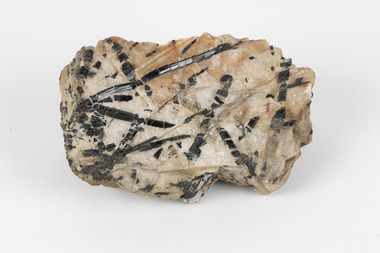
... Tourmaline specimens are members of a crystalline silicate mineral group based on boron but influenced by elements including aluminium, iron, magnesium, sodium, lithium, or potassium. Specimens present a wide variety of colours and forms according to the specific mix of these elements. ...Tourmaline specimens are members of a crystalline silicate mineral group based on boron but influenced by elements including aluminium, iron, magnesium, sodium, lithium, or potassium. Specimens present a wide variety of colours and forms according to the specific mix of these elements. ...Tourmaline specimens are members of a crystalline silicate mineral group based on boron but influenced by elements including aluminium, iron, magnesium, sodium, lithium, or potassium. Specimens present a wide variety of colours and forms according to the specific mix of these elements. Tourmalines are semi-precious gemstones with many applications, including commercial jewellery production. The word 'tourmaline' derives from the Sinhalese term for the carnelian or red-shaded specimens, "tōramalli". This specimen has been classified by geologists as 'Black Schoalou/Tourmaline in quartz'. Schoalou may equate to a common black-hued type of Tourmaline associated since around 1400 with mines in Saxony, Germany near a village called Schorl (today's Zchorlau). If this specimen is part of the 'Schorl' species of tourmaline it is a member of the most common group of Tourmalines, a divalent sodium ion influenced group accounting for 95% of specimens. On assessment, it was noted that the crossed lines (XIs) of this tourmaline have been fractured and rehealed by the quartz matrix in which the tourmaline rests. This item is significant as an example of its type of gemstone and the geological processes leading to its formation. A solid medium-sized piece of Black Schoalou/Tourmaline in a cream and peach coloured quartz matrix. Existing label: Black Schoalou / Tourmaline in / quartz. / Tourmalines XIs have / been fractured and / rehealed with / quartz / C. Willman / 15/4/21 /geological specimen, geology, geology collection, burke museum, beechworth, indigo shire, north-east victoria, tourmaline, quartz, boron, crystals, minerals, gemstones, semi-precious, black schoalou, zchorlau, schorl -
 The Beechworth Burke Museum
Geological specimen - Greenstone, Hokitika Jade Company, unknown
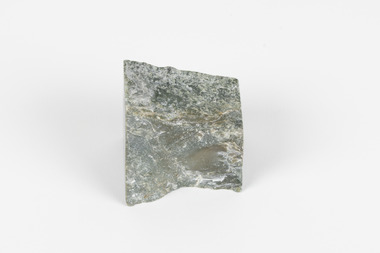
... It is a form of the mineral nephrite, also known as jade, and is a tough stone with a crystalline structure, made up of calcium magnesium and iron silicate. Its hardness means it is ideal for carving, and has been used for this purpose throughout history, especially by the Maori people of New Zealand. ...It is a form of the mineral nephrite, also known as jade, and is a tough stone with a crystalline structure, made up of calcium magnesium and iron silicate. Its hardness means it is ideal for carving, and has been used for this purpose throughout history, especially by the Maori people of New Zealand. ...New Zealand Greenstone, also called Pounamu is found on New Zealand’s South Island in riverbeds and boulders, and colours vary depending on the source, but always include green tones. It is a form of the mineral nephrite, also known as jade, and is a tough stone with a crystalline structure, made up of calcium magnesium and iron silicate. Its hardness means it is ideal for carving, and has been used for this purpose throughout history, especially by the Maori people of New Zealand. Greenstone features heavily in Maori mythology, and the traditional name for the South Island, Te-Wai-Pounamu, literally translates to waters of greenstone. Wearing of Greenstone pendants with different carvings is practiced by Maori to represent connection to land and ancestors, or to endow the wearer with certain attributes. The sticker on the base of the specimen identifies it as a product of Hokitika Jade Company. The company, which was active in the 1970s, sold jade and greenstone specimens and ornaments. Hokitika, which started life as an 1860s gold rush town, is the origin of most nephrite found in New Zealand, and the centre of the Greenstone carving industry. The object has scientific and research potential as part of the Burke Museum's Geology Collection, and as and example of New Zealand Greenstone. It also has spiritual significance for it's role in Maori beliefs and communities, where it is both traditionally worn and features in mythology. As a valuable stone regularly used in carving and jewellery, it has aesthetic significance. Sticker on base: "N.Z. Greenstone/ a product of/ Hokitika Jade Coy."geological specimen, geology, geology collection, burke museum, beechworth, new zealand, greenstone, hokitika, nephrite, jade -
 Wodonga & District Historical Society Inc
Sign - Andrews Liver Salt
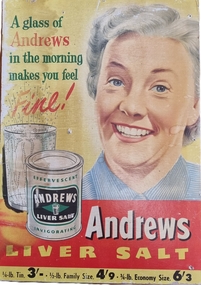
... The powder contained sugar; an antacid, sodium bicarbonate (22.6% w/w); citric acid (to provide effervescence) (19.5% w/w); and a laxative, magnesium sulphate (17.4% w/w). Andrews Liver Salts was first sold from 1894, by William Henry Scott and William Murdoch Turner. ...The powder contained sugar; an antacid, sodium bicarbonate (22.6% w/w); citric acid (to provide effervescence) (19.5% w/w); and a laxative, magnesium sulphate (17.4% w/w). Andrews Liver Salts was first sold from 1894, by William Henry Scott and William Murdoch Turner. ...Andrews Liver Salts was a laxative and antacid for mild stomach complaints. It was sold as a powder which was added to water and mixed, creating effervescence, before being swallowed. The powder contained sugar; an antacid, sodium bicarbonate (22.6% w/w); citric acid (to provide effervescence) (19.5% w/w); and a laxative, magnesium sulphate (17.4% w/w). Andrews Liver Salts was first sold from 1894, by William Henry Scott and William Murdoch Turner. Their business in the north-east of England originally imported margarine in the 1870s and 1880s. Their offices were in Gallowgate, Newcastle upon Tyne, and the product was named after St Andrew's church nearby. The trademark "Andrews Liver Salt" was registered in 1909. From the 1930s, promotional materials recommended taking the salts for "inner cleanliness". The company was acquired by Frederick Stearns & Co, a subsidiary of Sterling Drug, in 1923, and acquired by SmithKline Beecham in 1995. Haleon, the successor to SmithKline Beecham, ceased production of Andrews Liver Salts in November 2023. This item is significant because it represents a popular health product used throughout Australia from 1894 to 2023.A coloured advertising sign featuring a smiling woman and text in colours of red, yellow and white. It features two cans of Andrew Liver Saltandrews liver salt, advertising 1940s -
 City of Moorabbin Historical Society (Operating the Box Cottage Museum)
Containers, glass jar ‘Vince’ mouth hygeine, c1950
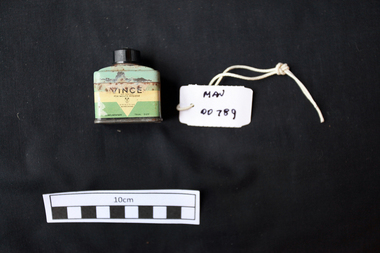
... Ingredients : Sodium Alum, Calcium Carbonate, Sodium Perborate Monohydrate, Sodium Carbonate, Magnesium Trisillicate, Tricalcium Phosphate, Sodium Saccharin, Flavor, D&CRed#28. ...Ingredients : Sodium Alum, Calcium Carbonate, Sodium Perborate Monohydrate, Sodium Carbonate, Magnesium Trisillicate, Tricalcium Phosphate, Sodium Saccharin, Flavor, D&CRed#28. ...Vince® is an oral rinse and dentifrice used to cleanse and refresh your gums. Vince is pleasantly flavoured and buffered for safe daily use. It releases oxygen – a helpful adjunct in promoting better oral hygiene for the mouth, teeth and gums. Vince also helps promote healing of the mouth and gums to relieve occasional soreness and irritation from dental appliances such as braces or dentures or mouth sores and wounds such as a split lip.. Ingredients : Sodium Alum, Calcium Carbonate, Sodium Perborate Monohydrate, Sodium Carbonate, Magnesium Trisillicate, Tricalcium Phosphate, Sodium Saccharin, Flavor, D&CRed#28. Lee Pharmaceuticals (Lee) incorporated in 1971 may have bought Vince Pty Ltd. It is a manufacturer of personal care and cosmetic products and is based in South El Monte, California. The Company’s portfolio of products includes aloe vera products, antacids, cosmetics and douche, cough and cold products, cough and cold products, baby care, laxatives, lip balm products, men's personal care, Monticello drug division, oral care, pain relievers, personal care, skin care, tobacco accessories, topical ointments and creams and vitamins and nutritional items. Vince may still be available from the Monticello Drug Division of Lee Pharmaceuticals Ltd Bocasan (British market name) and Amosan (U.S. market name) are oral rinse preparations that are similar to Vince they are now made by Oral-B Laboratories. A small green glass jar, with a screw top lid, containing 'VINCE' mouth hygiene solutionFront label : VINCE / Regd. Trade Mark / FOR/ MOUTH HYGIENE / EFFECTIVE / REFRESHING / COMPLEMENTARY TRIAL SIZE Back label : DIRECTIONS ................./ VINCE LABORATORIES / LTD / NEW YORK N.Y. SYDNEY N.S.W.toiletries, mouth wash, medications, chemicals, pharmacy, cheltenham, moorabbin, vince laboratories ltd., sydney, new york, early settlers -
 Waverley RSL Sub Branch
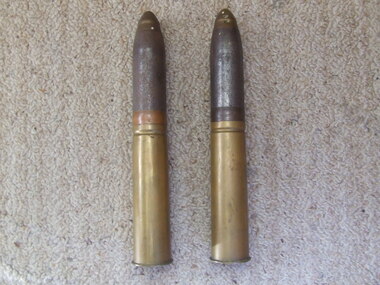
Shell 40 Cal
... In addition to the TNT bursting charge, the shell contained a pellet of powdered magnesium and aluminum as an incendiary. Production of ammunition peaked at 12 million rounds per month in the winter of 1944. ...In addition to the TNT bursting charge, the shell contained a pellet of powdered magnesium and aluminum as an incendiary. Production of ammunition peaked at 12 million rounds per month in the winter of 1944. ...The Bofors 40 mm gun, often referred to simply as the Bofors gun, is an anti-aircraft/multi-purpose autocannon designed in the 1930s by the Swedish arms manufacturer AB Bofors. It was one of the most popular medium-weight anti-aircraft systems during World War II, used by most of the western Allies as well as by the Axis powers. The shells were manufactured according to a British design after it was discovered that the Swedish shells had much too sensitive a contact fuse, "which functioned on impact with rain drops". Although the shells could nominally reach out to 11,000 yards (10,000 meters), almost all the shells manufactured had self-destroying tracers that detonated the rounds at a range of 4000-5000 yards (3700-4600 meters.) This helped prevent friendly fire incidents or other collateral damage. In addition to the TNT bursting charge, the shell contained a pellet of powdered magnesium and aluminum as an incendiary. Production of ammunition peaked at 12 million rounds per month in the winter of 1944. Ammunition type Contact fused HE/incendiary fixed shell. AP shells were also available. Projectile weight 1.985 lb 0.80 kg Velocity 2890 feet/s 881 m/s Maximum elevation 90 degrees Range 11,000 yards 10,000 meters Altitude 22,800 feet 6950 meters Rate of fire 120 rounds per minuteCollected by Norman Hall D.J Hall 17455 RAN2 shells (complete) for a Bofors 40mm Anti Aircraft Gun used by the R.A.N.See Imagesbofors 40 mm, anti aircraft gun, shell, r.a.n. bofors gun, world war ii, wwii, norman hall -
 Coal Creek Community Park & Museum
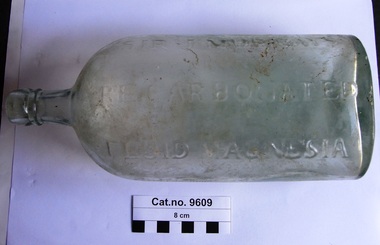
Bottle, glass, Post 1809
... In 1809 he developed the foundations of a fluid magnesia, which contained a base ingredient of magnesium sulfate. He modified it in order for it to act as an aid for "weak nerves", low fever, spasms, cholera, and diarrhoea. ...In 1809 he developed the foundations of a fluid magnesia, which contained a base ingredient of magnesium sulfate. He modified it in order for it to act as an aid for "weak nerves", low fever, spasms, cholera, and diarrhoea. ...Wikpedia : James Murray (physician) Sir James Murray (1788–1871) was an Irish physician, whose research into digestion led to his discovery of the stomach aid Milk of Magnesia in 1809. He later studied in electrotherapy and led the research into the causes of cholera and other epidemics as a result of exposure to natural electricity. He was the first physician to recommend the breathing in of iodine in water vapour for respiratory diseases. Born in County Londonderry, Murray became a licentiate in midwifery having studied at the Edinburgh College of Surgeons in 1807. He undertook studies in pharmaceuticals, an area in which he became competent. In 1809 he developed the foundations of a fluid magnesia, which contained a base ingredient of magnesium sulfate. He modified it in order for it to act as an aid for "weak nerves", low fever, spasms, cholera, and diarrhoea. He named his recipe Fluid Magnesia, and set up the company Sir James Murray & Son in order to successfully market it. Murray graduated from the University of Edinburgh as a Doctor of Medicine in 1829, and became the resident physician to Henry Paget, 1st Marques of Anglesey, in 1831, a post Murray held until the 1840s. Murray was knighted in 1833 and received an honorary degree in Medicine from Dublin University the following year. He was appointed as an inspector of anatomical schools in Ireland, and was a member of the central board of health, as well as the resident physician to the Netterville Dispensary and the Anglesey Lying-In Hospital, Dublin. Murray died at his home in Dublin on 8 December 1871. Large clear green tinted glass bottle with small neck, for stopped seal, oval in section. Embossed text on two sides, concave impression in base. Seed bubbles in the glassSide 1 : 'SIR J MURRAY'S PATENT RECARBONATED FLUID MAGNESIA'. Side 2 : 'LONDON & DUBLIN'. -
 The Beechworth Burke Museum
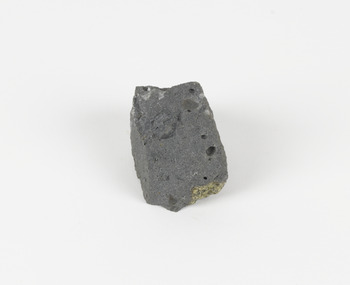
Geological specimen - Basalt (igneous-volcanic) containing Olivine, unknown
... Basalt is rich in iron and magnesium and is mainly composed of olivine, pyroxene, and plagioclase. ...Basalt is rich in iron and magnesium and is mainly composed of olivine, pyroxene, and plagioclase. ...This particular geological specimen was found in Mount Franklin or Lalgambook in Djadjawurrung, located between Daylesford and Newstead, approximately ninety minutes drive from Melbourne. The mountain is an example of a breached scoria cone (a steep conical hill of loose pyroclastic fragments) which was created by a volcanic eruption about 470,000 years ago, a date which may indicate the age of this geological specimen. The volcanic eruptions of Mount Franklin were most likely witnessed by members of the Dja Dja Wurrung Aboriginal tribe, who referred to this country as the 'smoking grounds'. Mount Franklin and the surrounding area appears to have been a place of considerable religious significance to Aboriginal people, there is evidence which indicates that frequent large ceremonial gatherings took place in the area. Basalt is the most common rock on Earth’s surface, more than 90% of all volcanic rock on Earth is basalt. Basalt is an aphanitic extrusive igneous rock formed from the rapid cooling of low-viscosity lava exposed at or very near the surface of a rocky planet or moon. Specimens are black in colour and weather to dark green or brown. Basalt is rich in iron and magnesium and is mainly composed of olivine, pyroxene, and plagioclase. Olivine is the name of a group of rock-forming silicate minerals with compositions ranging between Mg2SiO4 and Fe2SiO4. Unlike other minerals, Olivine has a very high crystallisation temperature which makes it the first of the minerals to crystallise from magma. As magma cools, the crystals begin to form and settle on the bottom of the lava and form basalts that are abnormally enriched in olivine in the lower part of lava flows. According to H. M. King (on geology.com) "Olivine is thought to be an important mineral in Earth's mantle. Its presence as a mantle mineral has been inferred by a change in the behaviour of seismic waves as they cross the boundary between Earth's crust and mantle". Lava from Mount Franklin and other volcanoes in the area filled valleys and buried the gold bearing streams that became the renowned ‘deep leads’ of the gold mining era. In 1852, as part of the Victorian gold rush, gold was discovered in the immediate area, this gold was created by lava flows during the Newer Volcanic period, which were mined intensively during the nineteenth century. Around 1865 the presence of a deep lead in Mount Franklin was established. Deep lead mining was initially unsuccessful, and it was not until the late 1870s that the Franklinford Gold Mining Company mined at Mount Franklin on a significant scale. A few years later the Mount Franklin Estate Gold Mining Company also struck gold, followed by the Shakespeare and Great Western companies in the mid-1880s. By the late 1880s, however, deep lead mining had ceased in the area. Soon after gold was discovered in 1851, Victoria’s Governor La Trobe wrote to the Colonial Office in London, urging ‘the propriety of selecting and appointing as Mineral Surveyor for this Colony a gentleman possessed of the requisite qualifications and acquaintance with geological science and phenomena’. Alfred Selwyn was appointed geological surveyor in Australia in 1852 which began the Geological Survey of Victoria. In 1853-69 the Geological Survey issued under Selwyn's direction sixty-one geological maps and numerous reports; they were of such high standard that a writer in the Quarterly Journal of the Geological Society of London bracketed the survey with that of the United States of America as the best in the world. During his years spent in Australia, Selwyn collected numerous significant geological specimens, examples of which are held in collections such as the Burke Museum.This geological specimen is an example of basalt and olivine which shows the volcanic lava activity and geographical specific nature of Mt Franklin as a significant volcanic site. According to Agriculture Victoria 'The crater is one of the deepest in the Central Highlands area. It is a major megacryst site with some of the largest known Victorian examples of megacrysts of augite and an orthoclase. The small parasitic mound of Lady Franklin on the western flanks adds to the geological interest of the site'. This specimen also highlights the locality as a significant place for both indigenous activity and Victorian gold rush era mining practices. This specimen is part of a larger collection of geological and mineral specimens collected from around Australia (and some parts of the world) and donated to the Burke Museum between 1868-1880. A large percentage of these specimens were collected in Victoria as part of the Geological Survey of Victoria that begun in 1852 (in response to the Gold Rush) to study and map the geology of Victoria. Collecting geological specimens was an important part of mapping and understanding the scientific makeup of the earth. Many of these specimens were sent to research and collecting organisations across Australia, including the Burke Museum, to educate and encourage further study.An angular, solid hand-sized piece of grey volcanic Basalt with green/brown Olivine phenocrysts along one flat edge.Olivine in basalt / - label is probably / correct. / C. Willman / 15/4/21burke museum, beechworth, indigo shire, beechworth museum, geological, geological specimen, mineralogy, basalt, igneous rock, igneous-volcanic, volcanic geology, volcanic, olivine, olivine specimen, basaltoid
