
Showing 180 items matching "mark english"
-
 Flagstaff Hill Maritime Museum and Village
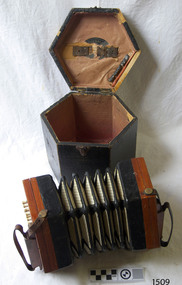
Instrument - Concertina, Lachenal and Co, 1879-1933
... ...english make...trade mark... application was made by Richard Ballinger on behalf of Lachenal & Co. on 31st August 1878 and the Number 19,555 was published in the Trade Mark Journal January 8, 1879. The symbol was an English-style reed-shoe with the words 'Trade Mark' and 'English Make'. ...Label within oval cut-out "LACHENAL & Co / PATENT CONCERTINA / MANUFACTURERS / LONDON", Label inside lid " - CHENAL -", Impressed into wood STEEL REEDS", "ENGLAND", "TRADE MARK ENGLISH MAKE [reed-shoe symbol]" , (originally marked with Number "98030" )... application was made by Richard Ballinger on behalf of Lachenal & Co. on 31st August 1878 and the Number 19,555 was published in the Trade Mark Journal January 8, 1879. The symbol was an English-style reed-shoe with the words 'Trade Mark' and 'English Make'. ...Louis Lachenal manufactured concertinas for C Wheatstone & Co. from around 1848-1858 in a combined home and manufactory in Cheswick, England. He then establish up his own business 'Lachenal's' at 8 Little James Street in London. In 1863 the firm began advertising both 'Anglo and English concertinas, which were more expensive. Lachenal passed away in 1861, so his wife Elizabeth took over the business. The firm was sold to a group of five businessmen in about 1873 and in 1874 the firm became ‘Lachenal & Co.’ A Trade Mark application was made by Richard Ballinger on behalf of Lachenal & Co. on 31st August 1878 and the Number 19,555 was published in the Trade Mark Journal January 8, 1879. The symbol was an English-style reed-shoe with the words 'Trade Mark' and 'English Make'. It was stamped on the right-hand rail (handle) of the Lachenal Anglos, to distinguish them from the German-made ones. It seems that the company ceased business in 1933.This concertina, made in the late 19th to early 20th century, represents the portable musical entertainment of the early settlers in the colony of Australia. Concertina, six sided, 21 buttons, with fitted case. Wooden ends have carved cut-outs and leather straps attached to brass buttons. Five-fold bellows have light coloured sides with reinforced edges and corners. Constructed with steel reeds and bone key-buttons. Wooden, black fabric-covered hexagonal case with triangular metal catch, two brass hinges, leather handle and faded red lining. Inscriptions on label inside lid and on wooden ends of bellows. Lachenal, Anglo design, made by Lachenal & Co. of London. Label within oval cut-out "LACHENAL & Co / PATENT CONCERTINA / MANUFACTURERS / LONDON", Label inside lid " - CHENAL -", Impressed into wood STEEL REEDS", "ENGLAND", "TRADE MARK ENGLISH MAKE [reed-shoe symbol]" , (originally marked with Number "98030" )flagstaff hill, warrnambool, shipwrecked-coast, flagstaff-hill, flagstaff-hill-maritime-museum, maritime-museum, shipwreck-coast, flagstaff-hill-maritime-village, concertina, squeeze box, musical instrument, london, english make, trade mark 15222, english-style reed, richard ballinger, louis lachenal, concertina manufacturer, reed-shoe, lachenal anglo, lachenal & co, lachenal -
 Moorabbin Air Museum
Manual - CAC Canberra bomber mark 1 to mark 8 notes from English Electric, CAC Canberra bomber notes mark 1 to mark 8
... CAC Canberra bomber mark 1 to mark 8 notes from English Electric...CAC Canberra bomber notes mark 1 to mark 8 Manual CAC Canberra bomber mark 1 to mark 8 notes from English Electric ... -
Federation University Historical Collection
Yellow Booklet, Graduate Grapevine Newsletter, November 1992
... ...mark english...Graduate newsletter for Ballarat University College, Graduate Diploma of Librarianship students, 1992 graduate diploma of librarianship ballarat university college graduate grapevine newsletter jean goh kaye cleary lindon marks liz widdop anne beggs sunter barry golding paul frood mark english andrew shiells library librarian Karen K handwritten on front cover Yellow booklet, Graduate Grapevine Newsletter, Vol 2 (No 2) November 1992. ...Graduate newsletter for Ballarat University College, Graduate Diploma of Librarianship students, 1992Yellow booklet, Graduate Grapevine Newsletter, Vol 2 (No 2) November 1992. All pages yellow with black border and black printKaren K handwritten on front covergraduate diploma of librarianship, ballarat university college, graduate grapevine newsletter, jean goh, kaye cleary, lindon marks, liz widdop, anne beggs sunter, barry golding, paul frood, mark english, andrew shiells, library, librarian -
Federation University Historical Collection
Pamphlet - Librarianship Course Information, Graduate Diploma in Librarianship Course Information 1980s, 1980s
... ...Mark English...Ballarat College of Advanced Education is a predecessor of Federation University Thelma Rungkat Librarianship Graduate Diploma Ballarat College of Advanced Education Bachelor of Arts Mark English Jackie Cartledge Sharon van den Brule Peter Ryan .10 has Thelma R written on the front and notations througout. .1 White flyer with black writing and two tone green checkerboard pattern on the front .2 White Flyer with green panel and black writing .3 Apricot flyer with image of books and black writing .4 Lavender flyer with black writing .5 Green covered flyer with image of librarians on the front and black writing 1984 .6 Green covered flyer with image of librarians on the front and black writing 1983 .7 Yellow flyer with outline drawing of people and buildings with black writing .8 Beige Flyer with outline drawing of people and buildings with black writing 1981 .9 Beige booklet with maroon writing and image .10 White booklet with green and yellow image and green writing .11 Lavendar booklet with grey, lavendar and balck checkerboard pattern. ...Ballarat College of Advanced Education is a predecessor of Federation University .1 White flyer with black writing and two tone green checkerboard pattern on the front .2 White Flyer with green panel and black writing .3 Apricot flyer with image of books and black writing .4 Lavender flyer with black writing .5 Green covered flyer with image of librarians on the front and black writing 1984 .6 Green covered flyer with image of librarians on the front and black writing 1983 .7 Yellow flyer with outline drawing of people and buildings with black writing .8 Beige Flyer with outline drawing of people and buildings with black writing 1981 .9 Beige booklet with maroon writing and image .10 White booklet with green and yellow image and green writing .11 Lavendar booklet with grey, lavendar and balck checkerboard pattern..10 has Thelma R written on the front and notations througout.thelma rungkat, librarianship, graduate diploma, ballarat college of advanced education, bachelor of arts, mark english, jackie cartledge, sharon van den brule, peter ryan -
Glen Eira Historical Society
Ephemera - Ormond Amateur Football Club
... Mark... Hungerford Tom... Sa Will... Saunders Luke... Ryde Nick... Haysom Tom... Machin David... Stephens Scott... Rayson Brad... Kingston David... Singleton Jack... Leggett John... Hastings-Dodge Andrew... Hastings-Dodge James... Cleary Damien... Rizarti Daneil... Franklin Jarrod... English...McAsey Kitely Sporting Clubs Football AFL Milhen Laurie Ormond Juniors Russell Luke Barnes Michael Holdsworth Joss Martin Ryan Hayson Daniel Simon Henry Upstill Boyd Bond Trent Holman Matt Cribbes Anthony Oaten Matthew Lack Orry Duthie Luke Naylor Tim McCooke Alistair Anrep Lloyd Ashton San Clinch Andrew Saunders Luke Coghlan Chris Barnes Sam Gibney Tom Anastasio Anthony Kulikov Simon Holman Aaron Casey Damien Lukas Evan Ryde Nick Gay Stuart Frazier Dan Hammond Greg Veal Mitchell Blatman Lukas O’Brien Luke Harry Hared Australian Rules Football Barker Steven Blackburn Tim Calvert Leon Franklin Brett McCooke Stewart Rizati Daniel Pedersen Jake Olsen Chris Tucker Michael Allen Keith Sainty Jackson Hecker Chris Raymond James Saunders Matthew Olson Andrew Scanlen Edward Bannan Michael Young James Bannan Chris Parsons Jesse McCrabb Tom McDonald Ryan Atkins Blair Pappas Mark Hungerford Tom Sa Will Saunders Luke Ryde Nick Haysom Tom Machin David Stephens Scott Rayson Brad Kingston David Singleton Jack Leggett John Hastings-Dodge Andrew Hastings-Dodge James Cleary Damien Rizarti Daneil Franklin Jarrod English Mark Isles Harry Fay Trevor Medcraft Chris Fowler Tim Ashley Jeremy Keane Richard Bishop Matthew McDonald Jason Sinclair Nick Medcraft Andrew Southwick David Ormond Cricket Club Naylor Alan Blandford Sam Kingston (Jack) Richard John Haysom Dan Simon Jeremy Alan Lofts Memorial Trophy Hirschman Cale Lofts Paul Lofts Terry Upstill Boyd Martinov Matt Simon Richard Seehusen David Chisholm Rob Rowe Brett Tabakman J. ...4 articles related to Ormond Football Club: 1/4 newspaper articles from Glen Eira Leader 12/03/2013 about future railworks by Vicroads and discussion about dumping soil on E. E. Gunn’s homeground. 2/Ormond Amateur Football Club, flyer with Ormond McKinnon Community Bank Sponsor. 3/17 articles on season games and players including photographs Herald Sun Tribute notices to life members Richard John Kingston, Ormond Amateur Football Club 29 June, 2013. 4/Flyer. Alan Lotts Memorial Trophy 2013 winner.fisher marian, mcdonald d., schuhkraft , orr , joblring andrew, bushfield mark, francis russell, kilner andrew, clinch steve, simon richard, toohey justin, dalgleish darren, bell robert, mccarthy steve, ridd geoff, cramly, wilson, miller, james, mccooke, ritchie, bourke, mehrten a., mcasey, kitely, sporting clubs, football, afl, milhen laurie, ormond juniors, russell luke, barnes michael, holdsworth joss, martin ryan, hayson daniel, simon henry, upstill boyd, bond trent, holman matt, cribbes anthony, oaten matthew, lack orry, duthie luke, naylor tim, mccooke alistair, anrep lloyd, ashton san, clinch andrew, saunders luke, coghlan chris, barnes sam, gibney tom, anastasio anthony, kulikov simon, holman aaron, casey damien, lukas evan, ryde nick, gay stuart, frazier dan, hammond greg, veal mitchell, blatman lukas, o’brien luke, harry hared, australian rules football, barker steven, blackburn tim, calvert leon, franklin brett, mccooke stewart, rizati daniel, pedersen jake, olsen chris, tucker michael, allen keith, sainty jackson, hecker chris, raymond james, saunders matthew, olson andrew, scanlen edward, bannan michael, young james, bannan chris, parsons jesse, mccrabb tom, mcdonald ryan, atkins blair, pappas mark, hungerford tom, sa will, saunders luke, ryde nick, haysom tom, machin david, stephens scott, rayson brad, kingston david, singleton jack, leggett john, hastings-dodge andrew, hastings-dodge james, cleary damien, rizarti daneil, franklin jarrod, english mark, isles harry, fay trevor, medcraft chris, fowler tim, ashley jeremy, keane richard, bishop matthew, mcdonald jason, sinclair nick, medcraft andrew, southwick david, ormond cricket club, naylor alan, blandford sam, kingston (jack) richard john, haysom dan, simon jeremy, alan lofts memorial trophy, hirschman cale, lofts paul, lofts terry, upstill boyd, martinov matt, simon richard, seehusen david, chisholm rob, rowe brett, tabakman j., upstill b., elkman dylan, holdsworth joss, lack orry, gay stewart -
 Orbost & District Historical Society
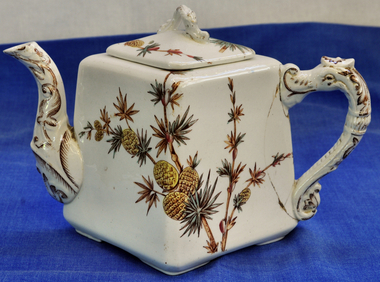
teapot, Untitled, 9.10.1871
... Manufactured by Ridgways, a Staffordshire Pottery in England, with the English registry mark dating its registration to 1871. ...Manufactured by Ridgways, a Staffordshire Pottery in England, with the English registry mark dating its registration to 1871. ...Square-shaped china teapot. White background with brown transfer images of pineapples. Spout and handle ornately designed. Manufactured by Ridgways, a Staffordshire Pottery in England, with the English registry mark dating its registration to 1871. In the pattern, “Cenis”. Bottom-Ridgeways, -Cenis, Stoke on Trentteapot domestic-items food-drink-consumption ridgways -
 Wangaratta RSL Sub Branch
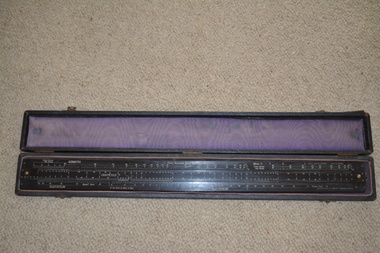
Instrument - Pilot Balloon Slide Rule
... The W & G rule uses serif fonts and has some fiducial marks that the English rule lacks. Exact dates of production are not known but the MK II is known to have started production by 1927. ...The W & G rule uses serif fonts and has some fiducial marks that the English rule lacks. Exact dates of production are not known but the MK II is known to have started production by 1927. ...The Mark II Pilot Balloon Slide Rule was made of wood laminated with heavy white plastic with a length of 24.5-in. and width of 2.5 inches. Mark II rules were manufactured in Australia by W & G (Melbourne). The W & G rule differs only slightly from the English A. G. Thornton LTD rule. The W & G rule uses serif fonts and has some fiducial marks that the English rule lacks. Exact dates of production are not known but the MK II is known to have started production by 1927. The printed scales are engraved in the plastic faces. The slide rule has 4 captive cursors (glass windows and brass guides) that ride in slots on the top and bottom edges. Each can be moved independently of one another. The cursors are missing from this item. Brass knobs at both ends of the slide facilitate its movement. The case is fabric covered wood with felt lining. No known history for this item as located in a property after purchase. The Pilot Balloon slide rule is used to convert the observed azimuth and elevation readings into wind velocity and direction records. The use of slide rules was abandoned with the wide spread adoption of computers and programs to do the calculations, as well as the decline in the use of optical pilot balloon theodolites.Made in Australia by White & Gillespie (Melb) Pty Ltd. Established in 1910, the firm was involved mainly in printing plate manufacture, but during the Second World War it manufactured a variety of navigational aids and range finding devices for the military. About 250,000 instruments were made during that period. After the war the company produced, among other items, drawing instruments and slide rules. The long narrow case is fabric covered wood with felt fabric lining containing a long black laminate ruler with numerous white markings and numbers. Top of the ruler is in three sections with the centre section movable by small gold metal knobs at either end. This slide rule contains a engraved notation on the rear face "IMPORTANT. NORMALLY NUMBER OF GRATICULE SCALE DIVISIONS PER RADIAN (K) X LENGTH OF TAIL IN FEET (I) = 12X 105. IN OTHER CASES MULTIPLY GRATICULE READINGS BY 1.2/KI BEFORE CALCULATION ON RULE" Top of Slide Rule - RAAF Ident No G268/480 Serial WG/22pilot balloon slide rule, raaf -
 Carlton Football Club
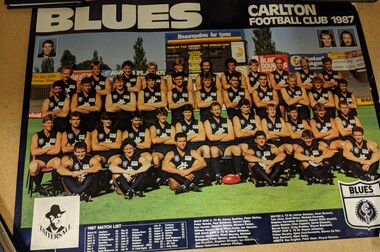
Poster, Blues Carlton Football Club 1987, 1987
... Front Row (L to R) Wayne Johnston, Fraser Murphy, Spiro Kourkoumelis, Steven Da Rui, Paul Starbuck, Mark Naley. Insets Des English, Peter Dean, Wayne Harmes. ...Front Row (L to R) Wayne Johnston, Fraser Murphy, Spiro Kourkoumelis, Steven Da Rui, Paul Starbuck, Mark Naley. Insets Des English, Peter Dean, Wayne Harmes. ...Team photograph with list of games for 1987 season. From Roger Skien Collection. Back Row (L to R) Jimmy Buckley,Peter Motley, Peter Rohde, Paul Meldrum, Darren Ogier, Ken Hunter, Richard Dennis, Richard Foster, Milham Hanna, David Rhys-Jones, Ian Herman. 2nd Back Row (L to R) Mark Williams, Warren McKenzie, Rhett Baynes, Michael Gallagher, Peter Sartori, Jamie Dunlop, Jon Dorotich, Stephen Silvagni, Ian Aitken, Shane Robertson, Andrew Phillips. Setaed (L to R) Adrian Gleeson, Dean Strauch, Tom Alvin, Brad Shine, Michael Kennedy, Stephen Kernahan (Captain), Justin Madden (Vice-captain), David Glascott, Bernie Evans, Craig Bradley, Wayne Blackwell. Front Row (L to R) Wayne Johnston, Fraser Murphy, Spiro Kourkoumelis, Steven Da Rui, Paul Starbuck, Mark Naley. Insets Des English, Peter Dean, Wayne Harmes. Colour photographic poster -
 Flagstaff Hill Maritime Museum and Village
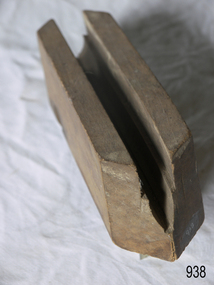
Tool - Sash Window Template, Late 19th to first quarter of the 20th century
... The sash window has had a significant impact on western architecture, used in nearly every style of English domestic architecture since the late 17th century. The subject item is a template used by the carpenter to mark or scribe the vertical track in which to window will slide up and down....The sash window has had a significant impact on western architecture, used in nearly every style of English domestic architecture since the late 17th century. The subject item is a template used by the carpenter to mark or scribe the vertical track in which to window will slide up and down. ...A window sash is a type of moveable window frame that can slide, usually vertically. Unlike a window frame built into the wall, a sash allows glass window panes to slide up and down. The sashes fit inside a track that runs along another window frame attached to the house. Lead weights traditionally counterbalanced sashes, but today they are counterbalanced by springs. The traditional sash window is double-hung; this means it has two sashes that can both slide along a vertical track. However, some sash windows have a single moveable sash, and sashes may slide horizontally. A sash usually contains panels of glass, called lights. The lights are traditionally held together by a grid of bars. The sash window was developed in 17th century England and allowed for greater airflow. The sash window has had a significant impact on western architecture, used in nearly every style of English domestic architecture since the late 17th century. The subject item is a template used by the carpenter to mark or scribe the vertical track in which to window will slide up and down.An item used when sash windows were made by hand from the 17th to the early 20th century. The template allowed the carpenter to mark accurately a channel that was then planed and the Mitre to join the bars.Wooden Ovalo sash template with two screws each side. It has slot along length and has 45 degree bevelled edge each end.Noneflagstaff hill, warrnambool, shipwrecked-coast, flagstaff-hill, flagstaff-hill-maritime-museum, maritime-museum, shipwreck-coast, flagstaff-hill-maritime-village, wooden ovalo sash template, ovalo sash template, template, sash template, sash templet, window sash, tool -
 Flagstaff Hill Maritime Museum and Village
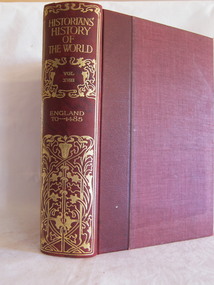
Book - Reference Book/History, Henry Smith Williams, The Historians History of the World Vol 18 set 1 - Edited by Henry Smith Williams L.L.D. Published by “The Times” 1908, 1908
... The development of English law and parliament is explored along with the dynastic civil war of the Roses between the houses of Lancaster and York. Ending with the Battle of Bosworth Field in 1485, which marks the traditional end of the Reign of Richard III and the English middle ages....The development of English law and parliament is explored along with the dynastic civil war of the Roses between the houses of Lancaster and York. Ending with the Battle of Bosworth Field in 1485, which marks the traditional end of the Reign of Richard III and the English middle ages. ...Henry Smith Williams’ “The Historians' History of the World” is a chronological and geographical "tapestry" of human events, these twenty five volumes occupy a very specific and prestigious place in historical research. Volume 18 specifically focuses on the history of England to 1485, it serves as the foundational text for British history within the series. It chronicles the evolution of the English nation from its earliest recorded beginnings through the end of the Middle Ages.The Book is part of a 25 volume set with red cloth bindings and gold filigree design to rib.non-fictionHenry Smith Williams’ “The Historians' History of the World” is a chronological and geographical "tapestry" of human events, these twenty five volumes occupy a very specific and prestigious place in historical research. Volume 18 specifically focuses on the history of England to 1485, it serves as the foundational text for British history within the series. It chronicles the evolution of the English nation from its earliest recorded beginnings through the end of the Middle Ages.flagstaff hill, warrnambool, shipwrecked-coast, flagstaff-hill, flagstaff-hill-maritime-museum, maritime-museum, shipwreck-coast, flagstaff-hill-maritime-village, book, the historians history of the world vol 18 set 1 -
 Flagstaff Hill Maritime Museum and Village
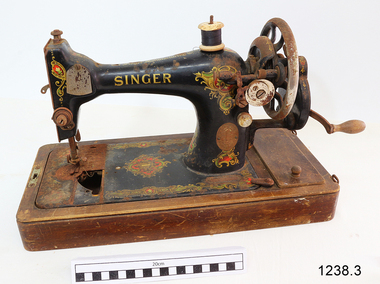
Domestic object - Sewing Machine & case, Singer Sewing Machine Company, 1920
... On top in Old English print "The Singer Manufacturing Co". Gold discs on front and back with the Singer Trade Mark. ...MARK" plaque on front and back of machine. "The Singer Manufacturing Co." in gold lettering across top of machine. "SINGER" in gold lettering across the front. Sewing machine, hand operated, black with decorative painted patterning in green, red and gold in wood case. On top in Old English ...Sewing machine, hand operated, black with decorative painted patterning in green, red and gold in wood case. On top in Old English print "The Singer Manufacturing Co". Gold discs on front and back with the Singer Trade Mark. Decorative silver swivel cover plate over machine's workings at back of machine. Has small green instructions booklet called "Instructions For Using Singer Machines No 127 and 128." Also wooden base has compartment space for various alternative machine "shoes". Dated 1920 "THE SINGER MACHINE CO. TRADE MARK" plaque on front and back of machine. "The Singer Manufacturing Co." in gold lettering across top of machine. "SINGER" in gold lettering across the front.flagstaff hill, warrnambool, shipwrecked-coast, flagstaff-hill, flagstaff-hill-maritime-museum, maritime-museum, shipwreck-coast, flagstaff-hill-maritime-village, sewing machine, the singer manufacturing co -
 Flagstaff Hill Maritime Museum and Village
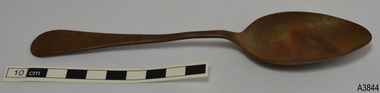
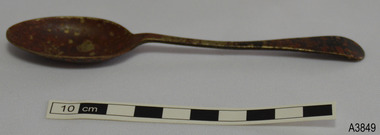
Domestic object - Spoon, Cooper Brothers, 1866-1932
... Mark of the letters ‘CB&s’ within a shield. They also used the Sheffield Assay Hallmark of a Crown. A diagram on a Copper Brothers & Sons, Don Plate Works, advertisement showed three styles of cutlery; No. 393, Old English, and Fiddle. ...Handle is Old English design and is embossed - some marks are worn and unidentifiable. ...Handle is Old English design and is embossed - some marks are worn and unidentifiable. ...This tablespoon was recovered from an unknown shipwreck in the coastal waters of Victoria in the late 1960s to early 1970s. The shipwrecks in the area range from around the 1840s to the early 1930s, and this particular spoon dates from about 1866 to 1932. It is part of the John Chance Collection. This spoon has the embossed names of Pompton and Silver and appears to have other marks that have worn off. The Pompton brand was used on silver flatware made by Cooper Brothers & Sons. Ltd of Sheffield. In Australia the Pompton Silver cutlery was advertised for sale in Sydney in the mid-1920s. The spoon is likely to be plated silver or silver plate, which is a base metal such as nickel or nickel alloy with copper and/or zinc that has been plated or coated with a thin layer of silver. Wear on the metal will cause the base metals to appear through the silver plating. Some manufacturers gave a warranty that the cutlery was ‘white throughout’ but didn’t necessarily say it was solid silver. Cooper Brothers was established in 1866 by brothers Thomas and John William Cooper in High Street, Sheffield. They bought Don Plate Works in 1872. By 1876 they were at Bridge Street and in 1885 they purchased the works at 44 Arundel St Sheffield. In 1895 the firm became Cooper Brothers & Sons Ltd. By 1914 they had branches in London, Sydney, Melbourne and Montreal, advertising as silversmiths, silver cutlers, electroplaters, Britannia Metal smiths and cutlers, particularly spoons and forks. The firm also used the trademarks of DON SILVER, POMPTON SILVER and a logo of a Cooper (barrel maker) in different formats. Cooper Brothers & Sons had a reputation for producing good quality silver and silver plate. In 1900 they registered their Maker’s Mark of the letters ‘CB&s’ within a shield. They also used the Sheffield Assay Hallmark of a Crown. A diagram on a Copper Brothers & Sons, Don Plate Works, advertisement showed three styles of cutlery; No. 393, Old English, and Fiddle. They announced that they were the ‘sole makers of the celebrated “Don” brand of nickel silver spoons and forks’. A burglary in NSW in 1929 listed a stolen flatware set as ‘all Sheffield Silver plate and branded Pompton Silver Works A.1.’. It was ‘guaranteed to wear white throughout’ and was a ‘good, medium quality, nickel silver line’. Cooper Brothers & Sons Ltd. was acquired in 1983 by Frank Cobb & Co. Ltd. Although the spoon is not linked to a particular shipwreck, it is recognised as being historically significant as an example of cutlery either as part of the ship’s flatware service or imported for use in Colonial Victoria in the 19th to early 20th century. The spoon is significant for its association with renowned makers Cooper Brothers of Sheffield, makers of silverware from the 1860s to the 1980s and exporters into the Colonies. The spoon is also significant as it was recovered by John Chance, a diver in Victoria’s coastal waters in the late 1960s to early 1970s. Items that come from several wrecks have since been donated to the Flagstaff Hill Maritime Village’s museum collection by his family, illustrating this item’s level of historical value. Spoon; plated silver tablespoon with brown base metal. Handle is Old English design and is embossed - some marks are worn and unidentifiable. Branded Pompton Silver.Embossed within two rectangular shapes “POMPTON” and “SILVER” (other marks have worn off)flagstaff hill, warrnambool, flagstaff hill maritime museum, maritime museum, shipwreck coast, flagstaff hill maritime village, great ocean road, john chance, cutlery, flatware silver, silver plate, antique flatware, old english flatware pattern, eating utensils, spoon, tablespoon, silverware, dining utensil, cooper brothers, don plate works, pompton silver, sheffield silver -
 Flagstaff Hill Maritime Museum and Village
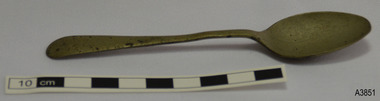
Domestic object - Spoon, Henry Barnascone & Sons, 1860s-early1930s
... Items that come from several wrecks have since been donated to the Flagstaff Hill Maritime Village’s museum collection by his family, illustrating this item’s level of historical value. flagstaff hill maritime museum maritime museum shipwreck coast flagstaff hill maritime village great ocean road shipwreck artefact john chance henry barnascone sheffield cutlery eating utensils electroplate silver plate silverware flatware empire works prolific hungry wolf brand antique flatware old english flatware pattern spoon teaspoon Embossed “EMPIRE“ (trefoil or clover logo) “SILVER” Spoon; teaspoon, electroplate nickel-silver, silver discoloured to brown. Fiddle design. Five embossed Hallmarks. Five embossed Maker’s Marks ...This spoon, made by Henry Barnascone of Sheffield, was recovered from an unknown shipwreck in the coastal waters of Victoria in the late 1960s to early 1970s. The spoon is one-o-a-kind in our Flagstaff Hill Maritime Village Collection of shipwreck artefacts. It is possibly from a passenger’s luggage on one of the shipwrecks. The shipwrecks in the area range from around the 1840s to the early 1930s. It is part of the John Chance Collection. HENRY BARNASCONE & SONS, Sheffield, UK- Henry Barnascone (1827-1894) was born in Switzerland. He and his brother Lewis settled in Sheffield in 1851. Henry operated as Henry Barnascone from 1868 to 1883, trading in Angel Street as a cutler, manufacturer and general merchant, moving to York Street in 1874. His work included electroplating metalware. Products ranged from cutlery and serving trays to straight razors, measuring tapes and pocket knives. In 1884 his firm became H. Barnascone & Son and from 1901 to 1934 be firm was renamed H. Barnascone & Sons, with his son (or nephew) Charles Henry ‘Harry’ Barnascone brought in to join the business. The firm employed eight men and four women in 1881. Around 1892 the firm moved to Empire Works in Eyre Street. Charles (Harry) inherited the business when Henry died in 1894. In 1909 the company became ‘Ltd.’, with Charles continuing until his death in 1917. The firms trademarks were EMPIRE (with ‘trefoil’ or ‘clover’ symbol), THE HUNGRY WOLF BRAND and PROLIFIC. The firm was liquidated in 1934 and acquired by Harrison Fisher & Co. Ltd., which specialised in plated goods and silverware, and retained Barnascone’s trademarks. In the early 1990s Harrison Fisher, which employed about 200, was arguably the only surviving example of the type of firm that had flourished in nineteenth century Sheffield – one which marketed a full range of cutlery. It remained family-owned. In 2007 Harrison Fisher & Co. Ltd. was renamed Taylor’s Eye Witness Ltd, which, in 2016, ‘swapped’ the nineteenth century historic factory for a new industrial unit in Sheffield. Although the spoon is not linked to a particular shipwreck, it is recognised as being historically significant as an example of hardware either as part of the ship’s flatware service or imported for use in Colonial Victoria in the 19th to early 20th century. The spoon is significant for being Flagstaff Hill’s only shipwreck artefact amongst many hundreds of objects, including cutlery, to be branded with ‘Empire Silver’ and the only piece in our collection by Sheffield manufacturer Henry Barnascone. The spoon is also significant as it was recovered by John Chance, a diver in Victoria’s coastal waters in the late 1960s to early 1970s. Items that come from several wrecks have since been donated to the Flagstaff Hill Maritime Village’s museum collection by his family, illustrating this item’s level of historical value. Spoon; teaspoon, electroplate nickel-silver, silver discoloured to brown. Fiddle design. Five embossed Hallmarks. Five embossed Maker’s Marks on back of handle, arranged in a column from tip towards bowl. Made by William Page and Co., Birmingham. The spoon no longer has its silver plating. Bowl has a cut in the side, and is nicked and dented. Embossed “EMPIRE“ (trefoil or clover logo) “SILVER” flagstaff hill maritime museum, maritime museum, shipwreck coast, flagstaff hill maritime village, great ocean road, shipwreck artefact, john chance, henry barnascone, sheffield, cutlery, eating utensils, electroplate, silver plate, silverware, flatware, empire works, prolific, hungry wolf brand, antique flatware, old english flatware pattern, spoon, teaspoon -
 Flagstaff Hill Maritime Museum and Village
Domestic object - Spoon, Walker & Hall, C.1910-1920
... Spoon, teaspoon, electroplated, silver-bronze colour with dark flecks. Old English design. Maker’s Marks on back of spoon. Made by Walker & Hall, Sheffield....Items that come from several wrecks have since been donated to the Flagstaff Hill Maritime Village’s museum collection by his family, illustrating this item’s level of historical value. flagstaff hill maritime museum maritime museum shipwreck coast flagstaff hill maritime village great ocean road shipwreck artefact john chance sheffield cutlery eating utensils electroplate silver plate silverware flatware antique flatware old english flatware pattern spoon teaspoon silver flatware dining silver plated epnns 20th century silverware walker & hall george walker henry hall john wright elkington Embossed individual stamps “W”, “&”, “H”, “S” Embossed shape [SHIELD] with letters within, possibly “N S” Embossed shape of [FLAG] with letters with “W & H” Spoon, teaspoon, electroplated, silver-bronze colour with dark flecks. Old English design. Maker’s Marks on back of spoon. Made by Walker & Hall, Sheffield. ...This electroplated teaspoon made by Walker & Hall of Sheffield. It was recovered from an unknown shipwreck in the coastal waters of Victoria in the late 1960s to early 1970s. The shipwrecks in the area range from around the 1840s to the early 1930s. It is part of the John Chance Collection. Walker & Hall’s Marks on this teaspoon, the SHIELD and the FLAG, date the spoon between 1910 and before 1920. The letters, possibly N S, within a shield may stand for Nickel Silver. The first Sheffield licence to make electroplated pieces of work was granted to John Harrison in 1843. One of his employees, George Walker, had been sent to learn electroplating skills at Elkington’s in Birmingham, who had patented the process discovered by Dr John Wright. Walker left Harrison in 1845 and started up his own company with Samuel Coulson and William Robson, to become George Walker & Co., electro-platers and gilders, taking out a licence with Elkington’s. In 1848 Robson retired and Henry Hall joined the partnership, operating at Electro Works at 11 Howard Street Sheffield, with a showroom in at 45 Holborn Viaduct, London. The firm had changes in the partnership and by 1853 it was called Walker & Hall. Over the years the company grew, with branches in the UK and overseas in Australia and South Africa. Then John Bingham, and later his brother Charles Bingham, became involved in the business, increasing profits. In 1861 the firm registered its first Trademark, a stamped ‘Flag’ with a banner with letters ‘W & H’. In 1884 Walker & Hall were one of the largest manufacturers and the second to introduce a voluntary system of using dating marks for silver plate, based on the alphabet and styles of shields or figures. The firm grew and prospered. It was described as ‘comprehensive … touching almost every department of Social life’, selling all manner of silverware and other goods. In 1920 the firm became Walker & Hall Limited and continued to expand in the goods produced and the member employed. Then the effects of war brought economic depression and fewer people able to afford the quality luxury goods. Eventually, in 1963, the company amalgamated with Mappin & Webb and Elkington & Co., becoming British Silverware Ltd. Although the spoon is not linked to a particular shipwreck, it is recognised as being historically significant as an example of cutlery, perhaps part of a passenger’s luggage or imported for use in Victoria in the early 20th century. This spoon is significant for its association with makers Walker & Hall, famous for silverware and silver plate in the mid-19th to early-20th century. It is the only example in Flagstaff Hill’s shipwreck artefact collection. The spoon is also significant as it was recovered by John Chance, a diver in Victoria’s coastal waters in the late 1960s to early 1970s. Items that come from several wrecks have since been donated to the Flagstaff Hill Maritime Village’s museum collection by his family, illustrating this item’s level of historical value. Spoon, teaspoon, electroplated, silver-bronze colour with dark flecks. Old English design. Maker’s Marks on back of spoon. Made by Walker & Hall, Sheffield.Embossed individual stamps “W”, “&”, “H”, “S” Embossed shape [SHIELD] with letters within, possibly “N S” Embossed shape of [FLAG] with letters with “W & H” flagstaff hill maritime museum, maritime museum, shipwreck coast, flagstaff hill maritime village, great ocean road, shipwreck artefact, john chance, sheffield, cutlery, eating utensils, electroplate, silver plate, silverware, flatware, antique flatware, old english flatware pattern, spoon, teaspoon, silver flatware, dining, silver plated, epnns, 20th century silverware, walker & hall, george walker, henry hall, john wright, elkington -
 Flagstaff Hill Maritime Museum and Village
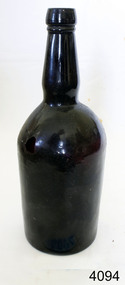
Container - Bottle, 1850's - 1900
... The bottle gives a snapshot into history and a social life that occurred during the early days of Melbourne's development and the sea trade that visited the port in those days. flagstaff hill warrnambool flagstaff hill maritime museum maritime museum shipwreck coast flagstaff hill maritime village great ocean road handmade bottle handmade english beer bottle pontil bottle black glass gallon purple bottle ale bottle porter bottle Bottle, glass, solid dark purple (black), round, matt surface. Glass ring below mouth, neck is slightly bulbous, body tapers slightly inward from shoulder to base. Base is concave with pontil mark ...This bottle is sometimes referred to as a black glass 'Gallon' bottle. It is used for storing and transporting liquor such as port or madeira. Glass bottles and glass jars are in many households around the world. The first glass bottles were produced in south-east Asia around 100 B.C. and the Roman Empire around 1 AD. America's glass bottle and glass jar industry were born in the early 1600s when settlers in Jamestown built the first glass-melting furnace. The invention of the automatic glass bottle blowing machine in 1880 industrialized the process of making bottles. In 2019, plans were made to re-introduce milk glass bottle deliveries to Auckland in early 2020. The earliest bottles or vessels were made by ancient man. Ingredients were melted to make glass and then clay forms were dipped into the molten liquid. When the glass cooled off, the clay was chipped out of the inside leaving just the hollow glass vessel. This glass was very thin as the fire was not as hot as modern-day furnaces. The blowpipe was invented around 1 B.C. This allowed molten glass to be gathered at the end of the blowpipe and blown into the other end to create a hollow vessel. Eventually, the use of moulding was introduced, followed by the invention of the semi-automatic machine called the Press and Blow. In 1904 Michael Owens invented the automatic bottle machine. Before this time most glass bottles in England were hand blown. This is one of four bottles in Flagstaff Hill Maritime Museum collection that were recovered by a local diver from the quarantine area just inside the Port Phillip Heads. Ships were required to pull into this area to check for diseases and other medical issues before they could head up to Melbourne. Quite often they would drink and throw the bottles overboard. Handmade glass bottle, manufactured in the 1850s. The bottle gives a snapshot into history and a social life that occurred during the early days of Melbourne's development and the sea trade that visited the port in those days. Bottle, glass, solid dark purple (black), round, matt surface. Glass ring below mouth, neck is slightly bulbous, body tapers slightly inward from shoulder to base. Base is concave with pontil mark. Bottle has no inscription. Generally used for storing port.flagstaff hill, warrnambool, flagstaff hill maritime museum, maritime museum, shipwreck coast, flagstaff hill maritime village, great ocean road, handmade bottle, handmade english beer bottle, pontil bottle, black glass, gallon, purple bottle, ale bottle, porter bottle -
 Flagstaff Hill Maritime Museum and Village
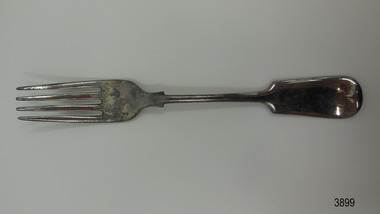
Domestic object - Fork, c. 1878
... The fork is the Old English design and is embossed with several marks. it has recently been restored. ...The fork is the Old English design and is embossed with several marks. it has recently been restored. ...This fork was recovered from the wreck of the Loch Ard. It is the Old English design that has been very popular since the 19th century. It has been restored to resemble its original state prior to the disaster in 1878. The for was originally plated with silver, which is when a base metal such as nickel or nickel alloy with copper and/or zinc has been plated or coated with a thin layer of silver. Wear on the metal will cause the base metals to appear through the silver plating. Some manufacturers gave a warranty that the cutlery was ‘white throughout’ but didn’t necessarily say it was solid silver. LOCH ARD 1873-1878 – The Scottish-built clipper ship Loch Ard was bound for Melbourne in 1878 with 54 people on board. The mixed cargo it carried included items for the 1880 International Exhibition in Melbourne, one of which was the now famous Majorca ware Minton ‘Peacock’ statue. The Loch Ard was wrecked on June 1st when the ship crashed into Mutton Bird Island, east of Port Campbell. The only survivors were Tom Pearce, a crew member, and Eva Carmichael, a young passenger who was rescued by Pearce. The Gibsons, owners of nearby Glenample Homestead, cared for Tom, and for Eva who stayed longer before returning to Ireland. The wreck of the Loch Ard was discovered in 1967, before the introduction of the Victorian historic shipwreck legislation. In 1969 it was decided that all recovered material should be lodged with the Receiver of Wrecks. In 1980 Flagstaff Hill Maritime Museum Divers received a permit to recover artefacts from the wreck to safeguard them from looters. In 1982 the site was listed as a Historic Shipwreck, and the Maritime Archaeology Unit recovered loose artefact material. The fork is recognised as being historically significant as an example of cutlery either as part of the flatware service of the ship ‘Loch Ard’ or part of the ship’s cargo, imported for use in Colonial Victoria in the 19th to early 20th century. Flagstaff Hill’s collection of artefacts from LOCH ARD is significant for being one of the largest collections of artefacts from this shipwreck in Victoria. It is significant for its association with the shipwreck, which is on the Victorian Heritage Register (VHR S417). The collection is significant because of the relationship between the objects, as together they have a high potential to interpret the story of the LOCH ARD. The LOCH ARD collection is archaeologically significant as the remains of a large international passenger and cargo ship. The LOCH ARD collection is historically significant for representing aspects of Victoria’s shipping history and its potential to interpret sub-theme 1.5 of Victoria’s Framework of Historical Themes (living with natural processes). The collection is also historically significant for its association with the LOCH ARD, which was one of the worst and best known shipwrecks in Victoria’s history. Fork; silver plated. The fork is the Old English design and is embossed with several marks. it has recently been restored. Shipwreck artefact from the Loch Ard. 3 letters within an oval (- - S) 4 letters within circles (E) (P) (N) (S) 1 letter within a shield appears to be a [B] flagstaff hill, warrnambool, shipwrecked coast, flagstaff hill maritime museum, maritime museum, shipwreck coast, flagstaff hill maritime village, great ocean road, shipwreck artefact, loch ard, victoria, eva carmichael, tom pearce, cutlery, silver flatware, silver plate, antique, old english flatware pattern, eating utensil, fork, silverware, dining utensil -
 Flagstaff Hill Maritime Museum and Village
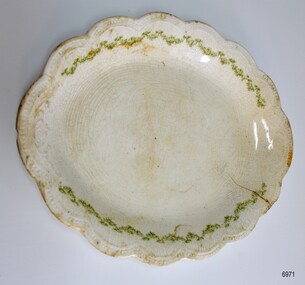
Domestic object - Plate, Johnson Bros, Early 20th century
... Flagstaff Hill Warrnambool Maritime Museum Maritime Village Great Ocean Road Shipwreck Coast dinnerware serving plate Johnson Bros English serving plate green leaf border oval plate platter chinaware plateware crockery chine porcelain earthenware Maker's Mark; [Crown symbol] above "JOHNSON BROS, ENGLAND" "PATD APRIL 15TH 1902" Plate, oval, earthenware, scalloped edge with impressed pattern and border of small green leaves. ...This white oval plate with a dainty green border and self-pattern was made by the famous ceramics manufacturer Johnson Brothers of England. The pattern was patented on April 15th 1902. The serving plate is typical of dinnerware brought into Australia by migrants or importers of pottery and used in Australian households, giving many years of service. The Johnson Brothers firm was established by Frederick Johnson in 1883, at works in Hanley, Stoke-on-Trent. Frederick was later joined by his brothers Henry and Robert. The company's focus was to supply the export market. In 1968 the company became part of the Wedgewood Group. J. & G. Meakin Eagle Pottery temporarily took over the tableware division in 2000, and China took over all Johnson Bros. products in 2003. All of the Wedgewood Group was taken over by Fiskers in 2015, who discontinued the Johnson Brothers line of products. This serving plate is an example of domestic crockery used in Australia in the late 19th and early 20th centuries. It originated from England and was made by a well-known ceramic manufacturer.Plate, oval, earthenware, scalloped edge with impressed pattern and border of small green leaves. Maker's mark and name is on reverse. Pattern was patented on April 15th 1902. Made by Johnson Bros. of England.Maker's Mark; [Crown symbol] above "JOHNSON BROS, ENGLAND" "PATD APRIL 15TH 1902"flagstaff hill, warrnambool, maritime museum, maritime village, great ocean road, shipwreck coast, dinnerware, serving plate, johnson bros, english serving plate, green leaf border, oval plate, platter, chinaware, plateware, crockery, chine, porcelain, earthenware -
 Flagstaff Hill Maritime Museum and Village
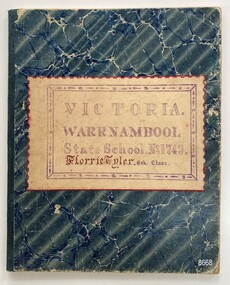
Book - School Exercise Book, 1898
... Each page covers a different subject - English (grammar, parsing, writing, spelling, syntax, poetry), Arithmetic, Geography, History, Science and Music. Each page has been stamped with a purple oval stamp containing the words CREDIT MARK and the initials W.W....Each page covers a different subject - English (grammar, parsing, writing, spelling, syntax, poetry), Arithmetic, Geography, History, Science and Music. Each page has been stamped with a purple oval stamp containing the words CREDIT MARK and the initials W.W. ...The school exercise book belonged to Florence Tyler who was born in 1884 and died in 1914 at 30 years of age. Two letters within the exercise book are dated 1898 so it is presumed this is the year Florence compiled the book. The school was Warrnambool State School No. 1743 which opened in 1876 after the earlier Warrnambool Common School closed. This exercise book is of interest as an example of school subjects and standards covered at a 6th grade level in the late 19th century. A school exercise book of 50 pages. The hard cover of the book has a blue pattern and a label to identify the school and student. The pages are ruled with handwriting in black ink and ruled dividing lines in red ink. Each page covers a different subject - English (grammar, parsing, writing, spelling, syntax, poetry), Arithmetic, Geography, History, Science and Music. Each page has been stamped with a purple oval stamp containing the words CREDIT MARK and the initials W.W.Front Cover - VICTORIA. WARRNAMBOOL. STATE SCHOOL No. 1743. Florrie Tyler. 6th Classflagstaff hill maritime museum and village, great ocean road, shipwreck coast, warrnambool, warrnambool state school, school exercise book, 6th grade, warrnambool schools, education -
 Flagstaff Hill Maritime Museum and Village
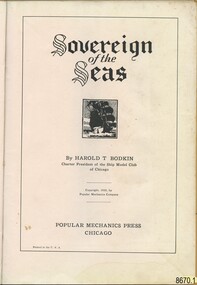
Book - "Sovereign of the Seas" book or manual for the ship model hobby enthusiast, Harold T. Bodkin, 1933, "Sovereign of the Seas", Popular Mechanics Press
... marks. The cover has a patina adding to variations of colour to the paper indicative of the book being handled often. The title page reads “Sovereign of the Seas” in an Old English font. ...marks. The cover has a patina adding to variations of colour to the paper indicative of the book being handled often. The title page reads “Sovereign of the Seas” in an Old English font. ...Jim (James Bernard) Williams, who was the owner of this manual, was a long-time resident of Warrnambool having the opportunity to work at two notable historical businesses of the town. The first, Cramond & Dickson a drapier store established around 1852-1855 and which remained a store that traded under the same name for the longest in Victoria, before it closed its doors in 1974. The second business was Fletcher Jones a highly successful textile and clothing Australian business. Some of Jim’s spare time was devoted to the model ship making which would conjure up many fascinating stories of maritime history. In addition to Jim witnessing the tail end of ships at port in Warrnambool, his "father was as sea captain and operated his vessel in Bass Strait coastal trade between Tasmania and Victoria". The intricately detailed model made by Jim is full of precise detail. The manual and the blueprints held by Flagstaff Hill Maritime Village also reflect the intricate process and devotion to the task completed by Jim. The history of the shipwreck and maritime stories of the Victorian Southwest coast surrounding Warrnambool would have continued to inspire his passion. Three photos of the model and Jim, like the photo of Harold T. Bodkin in the manual, attest to the enthusiasm and enjoyment that was gained by him through this hobby. The manual opens to a photo of “Mr. Harold T. Bodkin adding finishing touches to model of the “Sovereign of the Seas”. The “Forward to Reader” which is on the next page is written by “E. R. HAAN, Technical Editor, Popular Mechanics Magazine. The forward explains the methodology used to achieve the fine detail that is part of the body of the model, by “applying imitation carvings”, and is cited as “a museum type of model”. The following page “Blueprints and Craftmats on the ‘Sovereign of the Seas’” discusses the availability of a set of blueprints to purchase separately. Followed by a description of the moulding process for the “miniature carvings”. “Historical Notes of Interest on the “Sovereign of the Seas (1637)” follow on the next page. The manual is divided into the following parts from pages 8 to 71: “Part I – Shaping the Hull/Part II – The Rudder, Quarter Galleries and Gunports/Part III Wales, Gunport Covers and Initial Ornamentation/Part V – Beakhead Decoration, Bulkhead and Rails, Etc./Part VI Carvings, Lanterns, Knights, Bitts and Painting/Part VII – Details of Mast Construction/Part VIII – Standing Rigging/Part IX – Running Rigging and Final Details. All of these instructions include photographs and detailed graphs. Then instructions on “How to Read and Use Ship-Model Drawings”, “The Shop-Model Maker’s Tools”, and “Simplified Ship-in-a-Bottle”. This is finished off with “Helpful Hints….” And numerous pages of advertising. Some adverts include aids for completing the “Sovereign of the Seas” model. Part I uses blue and black ink to illustrate a dramatic picture of the “Sovereign”, otherwise all print is in black ink on buff paper. This book in significant to the collection as it was donated along with other tools and blueprints which have been used by the donor of the "Sovereign of the Seas" model ship. It also connects with the wider community in that it is related to historical maritime interest and the donor, Jim Williams is also connected to other significant retail and manufacturing businesses of the past in Warrnambool. This manual has been covered with brown paper, including an extra strip for the spine. The front has a watermark at the top middle, some pencilled compass circles segmented into eight parts across the area and a small amount of script writing. The back also has the same type of compass circles and some other small shapes. There are also grease marks. The cover has a patina adding to variations of colour to the paper indicative of the book being handled often. The title page reads “Sovereign of the Seas” in an Old English font. This is followed by a lithograph print around 1 inch square of a ship at full sale. By HAROLD T. BODKIN/Charter President of the Ship Model Club of Chicago/Copyright, 1933, By Popular Mechanics Company/POPULAR MECHANICS PRESS/CHICAGO/Printed in the U.S.A. By HAROLD T. BODKIN/Charter President of the Ship Model Club of Chicago/Copyright, 1933, By Popular Mechanics Company/POPULAR MECHANICS PRESS/CHICAGO/Printed in the U.S.A.flagstaff hill, warrnambool, shipwrecked coast, flagstaff hill maritime museum, maritime museum, shipwreck coast, flagstaff hill maritime village, great ocean road, model ship, vessel sovereign of the seas, jim williams, james bernard williams, the forth tasmania, freda williams, heather williams, phyllis bowditch, fletcher jones staff 1936, 17th century sailing ship, cramond and dickson, sovereign of the seas, royal sovereign, sovereign, charles 1, fletcher jones, warrnambool breakwater -
 Flagstaff Hill Maritime Museum and Village
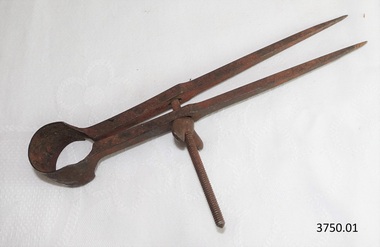
Instrument - Dividers, 1930-1955's
... The Sovereign of the Seas was a historic 17th century English war ship with important maritime heritage. flagstaff hill warrnambool flagstaff hill maritime museum maritime museum shipwreck coast flagstaff hill maritime village great ocean road jim williams james bernard williams ship model hobby ship model tools ship model making equipment ship model making accessories technical drawing instrument dividers for drawing and measuring set of dividers Sovereign of the sea Ship model Hobby Ship model tool English war ship measuring instrument Dividers, metal, adjustable with wingnut to hold in place. Used to measure and mark reoccurring distances. ...This set of dividers was used for measuring and marking details in the planning making of components for the ship model Sovereign of the Seas. It is part of a collection of objects used by Jim Williams, maker of fine ship models from about 1930-1955. Most of the components for the models, as well as many of the tools, were handmade by Jim Williams. Jim’s family has donated the ship model “Sovereign of the Seas” and many tools, accessories and documents used in the making of this and other ship models have been donated to Flagstaff Hill Maritime Village. Ship model of HMS Sovereign of the Seas, scale model of 17th Century English war ship, was handmade and carved from plans, enclosed in airtight glass case. All components of that model, including even the smallest pulleys, were hand crafted using tools designed and made by Jim. Outstanding details include functional rigging and moving cannons. Please see our record 3732 of the mode Sovereign of the Seas for further details of the ship and the maker.This set of dividers is connected with the hobby and skill of ship model making that has been crafted as a leisure activity for many generations. The hobby is often chosen by serving and retired mariners who appreciate the connection with maritime history. These dividers were used by local Warrnambool man, Jim Williams, who was employed at Cramond and Dickson clothing store, and then at Fletcher Jones menswear for 27 years. It was used in making components for the model of the historic ship, the Sovereign of the Seas. The Sovereign of the Seas was a historic 17th century English war ship with important maritime heritage. Dividers, metal, adjustable with wingnut to hold in place. Used to measure and mark reoccurring distances. This set of dividers is part of a collection of tools and accessories once used by Jim Williams, maker of a series of ship models 1930-1955 including “HMS Sovereign of the Seas”.flagstaff hill, warrnambool, flagstaff hill maritime museum, maritime museum, shipwreck coast, flagstaff hill maritime village, great ocean road, jim williams, james bernard williams, ship model hobby, ship model tools, ship model making equipment, ship model making accessories, technical drawing instrument, dividers for drawing and measuring, set of dividers, sovereign of the sea, ship model, hobby, ship model tool, english war ship, measuring instrument -
 Flagstaff Hill Maritime Museum and Village
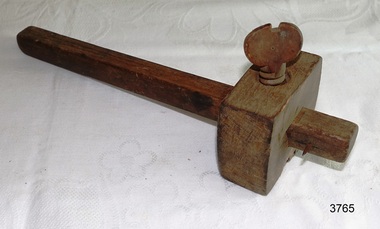
Tool - Gauge, 1930-1955's
... The Sovereign of the Seas was a historic 17th century English war ship with important maritime heritage. flagstaff hill warrnambool flagstaff hill maritime museum maritime museum shipwreck coast flagstaff hill maritime village great ocean road jim williams james bernard williams ship model hobby ship model tools ship model making equipment ship model making accessories wood working tool model making tool drawing instrument gauge tool Sovereign of the sea Ship model Hobby Ship model tool Gauge; marking gauge, wooden. Wooden handle threaded through hole in wooden block, adjusted along the handle by tightening a wing-nut screw. The end of the handle has a pointed pin fitted for scoring a mark ...This gauge was used in the making of components for the ship model Sovereign of the Seas. It is part of a collection of objects used by Jim Williams, maker of fine ship models from about 1930-1955. Most of the components for the models, as well as many of the tools, were handmade by Jim Williams. Jim’s family has donated the ship model “Sovereign of the Seas” and many tools, accessories and documents used in the making of this and other ship models have been donated to Flagstaff Hill Maritime Village. Ship model of HMS Sovereign of the Seas, scale model of 17th Century English war ship, was handmade and carved from plans, enclosed in airtight glass case. All components of that model, including even the smallest pulleys, were hand crafted using tools designed and made by Jim. Outstanding details include functional rigging and moving cannons. Please see our record 3732 of the mode Sovereign of the Seas for further details of the ship and the maker. This gauge is connected with the hobby and skill of ship model making that has been crafted as a leisure activity for many generations. The hobby is often chosen by serving and retired mariners who appreciate the connection with maritime history. This gauge was used by local Warrnambool man, Jim Williams, who was employed at Cramond and Dickson clothing store, and then at Fletcher Jones menswear for 27 years. It was used in making components for the model of the historic ship, the Sovereign of the Seas. The Sovereign of the Seas was a historic 17th century English war ship with important maritime heritage. Gauge; marking gauge, wooden. Wooden handle threaded through hole in wooden block, adjusted along the handle by tightening a wing-nut screw. The end of the handle has a pointed pin fitted for scoring a mark on the work surface to mark timber before cutting. This gauge is part of a collection of tools and accessories once used by Jim Williams, maker of a series of ship models 1930-1955 including “HMS Sovereign of the Seas”.flagstaff hill, warrnambool, flagstaff hill maritime museum, maritime museum, shipwreck coast, flagstaff hill maritime village, great ocean road, jim williams, james bernard williams, ship model hobby, ship model tools, ship model making equipment, ship model making accessories, wood working tool, model making tool, drawing instrument, gauge, tool, sovereign of the sea, ship model, hobby, ship model tool -
 Flagstaff Hill Maritime Museum and Village
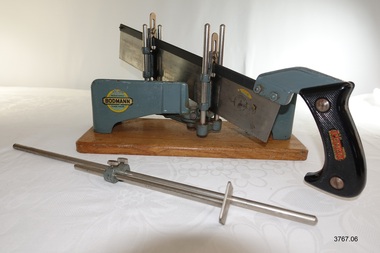
Tool - Mitre Saw Set, 1930-1955's
... The Sovereign of the Seas was a historic 17th century English war ship with important maritime heritage. flagstaff hill warrnambool flagstaff hill maritime museum maritime museum shipwreck coast flagstaff hill maritime village great ocean road jim williams james bernard williams ship model hobby ship model tools ship model making equipment ship model making accessories wood working tool model making tool mitre box set mitre saw bodmann and co Reinscheid, germany ulna ott of of Swabian Alb, germany ANKE of Swabian Alb, Germany Sovereign of the sea Ship model Hobby Ship model tool mitre saw set On mitre saw- 2x logos "REGISTERED / BODMANN / TRADE MARK" and embedded stamp “348”. ...This Bodmann mitre saw set was used in the making of components for the ship model Sovereign of the Seas. It is part of a collection of objects used by Jim Williams, maker of fine ship models from about 1930-1955. Most of the components for the models, as well as many of the tools, were handmade by Jim Williams. Jim’s family has donated the ship model “Sovereign of the Seas” and many tools, accessories and documents used in the making of this and other ship models have been donated to Flagstaff Hill Maritime Village. ABOUT the BRAND NAME ON THE SAW - BODMANN and CO, Germany In 1927 the Brisbane Courier Mail described Bodmann and Co of Reinscheid, Germany as "manufacturers of guaranteed tools and hardware. It appears that at least the saw has been re-badges and sold by Bodmann because (1) there are remnants of a label on the saw blade similar in shape to the Bodmann label on the mitre set (2) the removed label reveals the name and logo of "ULMIA Schutz OTT Marke" (3) one of the "Bodmann" labels on the saw handle has been applied in a crooked manner, almost leaving off the last "N". ULMIA is a German manufacturer of high quality woodworking tools. A drawing of a very similar mitre bset with saw can be seen on the ULMIA website. In 2002 the long established company ANKE of Swabian Alb, Germany (makers of cut timber, workbenches and countertops) bought out the name and trademark rights of ULMIA. HISTORY OF SOVEREIGN OF THE SEA (brief) Ship model of HMS Sovereign of the Seas, scale model of 17th Century English war ship, was handmade and carved from plans, enclosed in airtight glass case. All components of that model, including even the smallest pulleys, were hand crafted using tools designed and made by Jim. Outstanding details include functional rigging and moving cannons. Please see our record 3732 of the mode Sovereign of the Seas for further details of the ship and the Jim Williams. This mitre saw set is connected with the hobby and skill of ship model making that has been crafted as a leisure activity for many generations. The hobby is often chosen by serving and retired mariners who appreciate the connection with maritime history. This mitre saw set was used by local Warrnambool man, Jim Williams, who was employed at Cramond and Dickson clothing store, and then at Fletcher Jones menswear for 27 years. It was used in making components for the model of the historic ship, the Sovereign of the Seas. The Sovereign of the Seas was a historic 17th century English war ship with important maritime heritage. Bodmann Mitre Saw set model 348, comprising metal, adjustable mitre saw on timber stand, and metal hand saw with Bakelite handle. The mitre saw is labelled with the trademark of Bodmann, Germany, and stamped with the model number 348. The saw has Bodmann trademark badges on each side of the handle; the text on one of these badges is not quite aligned. The saw blade has remnants of a label under which the stamped logo of ULMIA Schutz OTT Marke is clearly visible. Saw is fitted with two metal guides that slide onto vertical posts on the mitre saw. Metal measuring guide holds the wood job to the correct length. Saw has a protective brown paper wrapper. This mitre saw set is part of a collection of tools and accessories once used by Jim Williams, maker of a series of ship models 1930-1955 including “HMS Sovereign of the Seas”.On mitre saw- 2x logos "REGISTERED / BODMANN / TRADE MARK" and embedded stamp “348”. On saw - Remnant of logo on blade “ULMIA Schutz OTT Marke” with image of a church-like tall building, and 2x , "BEST QUALITY / BODMANN / MADE IN GERMANY” flagstaff hill, warrnambool, flagstaff hill maritime museum, maritime museum, shipwreck coast, flagstaff hill maritime village, great ocean road, jim williams, james bernard williams, ship model hobby, ship model tools, ship model making equipment, ship model making accessories, wood working tool, model making tool, mitre box set, mitre saw, bodmann and co reinscheid, germany, ulna ott of of swabian alb, germany, anke of swabian alb, germany, sovereign of the sea, ship model, hobby, ship model tool, mitre saw set -
 Flagstaff Hill Maritime Museum and Village
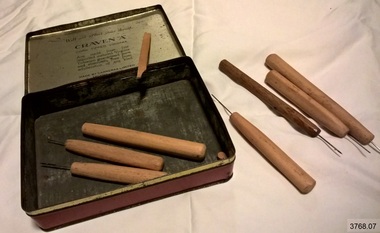
Tool - Set of Tools, 1930-1955's
... The Sovereign of the Seas was a historic 17th century English war ship with important maritime heritage. flagstaff hill warrnambool flagstaff hill maritime museum maritime museum shipwreck coast flagstaff hill maritime village great ocean road jim williams james bernard williams ship model hobby ship model tools ship model making equipment ship model making accessories wood working tool model making tool carving tools handmade wood carving tools craven a cigarette tin Sovereign of the sea Ship model Hobby Ship model tool On the tin; “CORK TIPPED / TRADE MARK / CRAVEN “A” / VIRGINIA / CIGARETTES” A set of 6 small, fine wood working and carving tools stored in a ‘Craven A’ cigarette tin. ...This set of handmade tools was made by Jim Williams for his own purposes to make designs and components for the ship model Sovereign of the Seas. It is part of a collection of objects used by Jim Williams, maker of fine ship models from about 1930-1955. Most of the components for the models, as well as many of the tools, were handmade by Jim Williams. Jim’s family has donated the ship model “Sovereign of the Seas” and many tools, accessories and documents used in the making of this and other ship models have been donated to Flagstaff Hill Maritime Village. Ship model of HMS Sovereign of the Seas, scale model of 17th Century English war ship, was handmade and carved from plans, enclosed in airtight glass case. All components of that model, including even the smallest pulleys, were hand crafted using tools designed and made by Jim. Outstanding details include functional rigging and moving cannons. Please see our record 3732 of the mode Sovereign of the Seas for further details of the ship and the maker. This set of handmade tools is connected with the hobby and skill of ship model making that has been crafted as a leisure activity for many generations. The hobby is often chosen by serving and retired mariners who appreciate the connection with maritime history. This set of tools was used by local Warrnambool man, Jim Williams, who was employed at Cramond and Dickson clothing store, and then at Fletcher Jones menswear for 27 years. It was used in making components for the model of the historic ship, the Sovereign of the Seas. The Sovereign of the Seas was a historic 17th century English war ship with important maritime heritage. A set of 6 small, fine wood working and carving tools stored in a ‘Craven A’ cigarette tin. The tools have been handmade by Jim Williams for the purpose of making ship models. This set of tools is part of a collection of tools and accessories once used by Jim Williams, maker of a series of ship models 1930-1955 including “HMS Sovereign of the Seas”. (Also included is a spare handle.)On the tin; “CORK TIPPED / TRADE MARK / CRAVEN “A” / VIRGINIA / CIGARETTES”flagstaff hill, warrnambool, flagstaff hill maritime museum, maritime museum, shipwreck coast, flagstaff hill maritime village, great ocean road, jim williams, james bernard williams, ship model hobby, ship model tools, ship model making equipment, ship model making accessories, wood working tool, model making tool, carving tools, handmade wood carving tools, craven a cigarette tin, sovereign of the sea, ship model, hobby, ship model tool -
 Flagstaff Hill Maritime Museum and Village
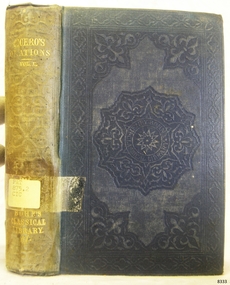
Book - Reference Book / Classics, Charles Duke Yonge (Translator), The Orations of Marcus Tullius Cicero Vol 1, 1856
... Mark Antony never forgave Cicero for the brutal public insults in these orations. When Antony formed an alliance with Octavian (later Augustus), Cicero was placed on the proscription list, becoming officially condemned, and was eventually hunted down and executed. His head and hands were cut off and nailed to the Rostra in the Roman Forum as a warning to others. Charles Duke Yonge (1812–1891) was an English...Mark Antony never forgave Cicero for the brutal public insults in these orations. When Antony formed an alliance with Octavian (later Augustus), Cicero was placed on the proscription list, becoming officially condemned, and was eventually hunted down and executed. His head and hands were cut off and nailed to the Rostra in the Roman Forum as a warning to others. Charles Duke Yonge (1812–1891) was an English ...Volume 1 of The Orations of Marcus Tullius Cicero is the beginning in the widely published 4-volume English translation by Charles Duke Yonge for Bohn's Classical Library series and focuses on Cicero's earliest legal masterpieces. The volume captures his meteoric rise from a brilliant young defense attorney to Rome's leading forensic advocate, culminating in his famous take down of a corrupt governor. The core contents in this volume contains several pivotal legal cases, which can be divided into his early legal defenses and his massive prosecution of Verres. Included is Cicero’s very first surviving public speech (delivered in 81 BC). It is a civil partnership dispute regarding property and debt. Notably, Cicero had to argue against Rome's greatest orator of the time, Quintus Hortensius. Key themes in this volume is his fight against corruption and the exposure of provincial extortion and the greed of the Roman senatorial class. He exercised judicial integrity with his struggle to keep Rome's legal courts fair when faced with political bribery and intimidation.The Orations of Marcus Tullius Cicero Vol 1 Translated by C D Yonge Publisher: Henry G Bohn Date: 1856non-fictionVolume 1 of The Orations of Marcus Tullius Cicero is the beginning in the widely published 4-volume English translation by Charles Duke Yonge for Bohn's Classical Library series and focuses on Cicero's earliest legal masterpieces. The volume captures his meteoric rise from a brilliant young defense attorney to Rome's leading forensic advocate, culminating in his famous take down of a corrupt governor. The core contents in this volume contains several pivotal legal cases, which can be divided into his early legal defenses and his massive prosecution of Verres. Included is Cicero’s very first surviving public speech (delivered in 81 BC). It is a civil partnership dispute regarding property and debt. Notably, Cicero had to argue against Rome's greatest orator of the time, Quintus Hortensius. Key themes in this volume is his fight against corruption and the exposure of provincial extortion and the greed of the Roman senatorial class. He exercised judicial integrity with his struggle to keep Rome's legal courts fair when faced with political bribery and intimidation.warrnambool, shipwrecked-coast, flagstaff-hill, flagstaff-hill-maritime-museum, maritime-museum, shipwreck-coast, flagstaff-hill-maritime-village, shipwrecked-artefact, book, pattison collection, warrnambool library, warrnambool mechanics’ institute, ralph eric pattison, corangamite regional library service, warrnambool city librarian, mechanics’ institute library, victorian library board, warrnambool books and records, warrnambool children’s library, great ocean road, the orations of marcus tullius cicero vol 1, the orations of marcus tullius cicero, c d yonge -
 Flagstaff Hill Maritime Museum and Village
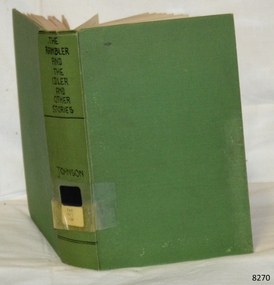
Book - Periodical Essays, Dr. Samuel Johnson et al, The Rambler, The Idler, The Adventurer & The Connoisseur, 1876
... mark of the mid-18th-century British essay tradition. Standing directly between the early foundations laid by Addison and Steele in The Spectator and the later Romantic essayists, these texts permanently shaped the cadence of English prose. ...mark of the mid-18th-century British essay tradition. Standing directly between the early foundations laid by Addison and Steele in The Spectator and the later Romantic essayists, these texts permanently shaped the cadence of English prose. ...This single 1876 volume combines four of the most influential weekly and semi weekly periodical essay series of the mid-18th century. Despite the phrasing of the era, these are not fiction stories or novels. They are periodical essays brief, single-topic pieces written to critique, educate, and entertain 18th-century readers. The collection covers three themes: morality and human nature, with a focus on reflections relating to the disappointments of life, the inevitability of death, managing one's passions, and the search for true happiness, featuring mainly in The Rambler; social satire and manners, with lighthearted and witty take downs of London high society, modern trends, vanity, and standard eccentric characters of the town; and literary criticism, with essays that analyse contemporary poetry and the theatre, along with the evolving English language.Hard cover book,The Rambler & The Idler Author: Dr. Samuel Johnson, Mr. Town, John Hawkesworth Publisher: William P Nimmo, 14 King William St, The Strand, London. W1. Date: 1876 Further Information: The flyleaf reads The Rambler and the Idler. By Samuel Johnson. The Adventurer. By John Hawkesworth. The Connoisseur. By (Mr. Town Pen Name) Green Cloth hardcover with a green spine and lettering in black texter. The spine has a Library label with an inscription.non-fictionThis single 1876 volume combines four of the most influential weekly and semi weekly periodical essay series of the mid-18th century. Despite the phrasing of the era, these are not fiction stories or novels. They are periodical essays brief, single-topic pieces written to critique, educate, and entertain 18th-century readers. The collection covers three themes: morality and human nature, with a focus on reflections relating to the disappointments of life, the inevitability of death, managing one's passions, and the search for true happiness, featuring mainly in The Rambler; social satire and manners, with lighthearted and witty take downs of London high society, modern trends, vanity, and standard eccentric characters of the town; and literary criticism, with essays that analyse contemporary poetry and the theatre, along with the evolving English language.flagstaff hill, warrnambool, shipwrecked coast, flagstaff hill maritime museum, maritime museum, shipwreck coast, flagstaff hill maritime village, great ocean road, book, pattison collection, warrnambool library, warrnambool mechanics’ institute, ralph eric pattison, corangamite regional library service, warrnambool city librarian, mechanics’ institute library, victorian library board, warrnambool books and records, warrnambool children’s library, the rambler and the idler, john hawkesworth., mr. town, samuel johnson -
 Flagstaff Hill Maritime Museum and Village
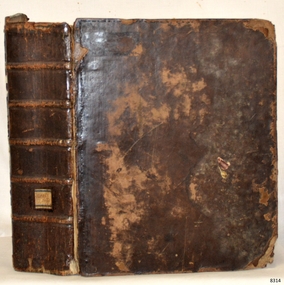
Book - Reference Bible, Mark & Charles Kerr, The Holy Bible 1789 (King James Version), 1789
... Interestingly, Bibles from this exact 1789 Mark & Charles Kerr run are highly sought after by museums and universities today. For instance, a beautifully annotated copy of this exact 1789 edition by the famous English religious writer Hannah More is preserved in the rare books collection at UCLA. ...Interestingly, Bibles from this exact 1789 Mark & Charles Kerr run are highly sought after by museums and universities today. For instance, a beautifully annotated copy of this exact 1789 edition by the famous English religious writer Hannah More is preserved in the rare books collection at UCLA. ...The subject Bible is an incredible piece of history in the Pattison Collection. A Bible printed in 1789 with a personal handwritten inscription from 1792 is a true artefact of the late 18th century. The information on the book's title page refers to King George III, as Mark and Charles Kerr were prominent Scottish printers and stationers based in Edinburgh. In the 18th century, printing the Holy Bible wasn't something just anyone could do; it required a royal patent granted by the Crown to ensure textual accuracy and high-quality production. The Kerr family held the coveted title of "King's Printers for Scotland" during the late 1700s. Bibles from their press were highly regarded for their clear typography, sturdy leather bindings, and standard-setting quality. Owning an Edinburgh-printed royal edition like the subject publication was a point of pride for families across the English-speaking world.The Holy Bible 1789 Publisher: Mark & Charles Kerr His Majesty's Printers Date: 1789 Further Information : non-fictionThe subject Bible is an incredible piece of history in the Pattison Collection. A Bible printed in 1789 with a personal handwritten inscription from 1792 is a true artefact of the late 18th century. The information on the book's title page refers to King George III, as Mark and Charles Kerr were prominent Scottish printers and stationers based in Edinburgh. In the 18th century, printing the Holy Bible wasn't something just anyone could do; it required a royal patent granted by the Crown to ensure textual accuracy and high-quality production. The Kerr family held the coveted title of "King's Printers for Scotland" during the late 1700s. Bibles from their press were highly regarded for their clear typography, sturdy leather bindings, and standard-setting quality. Owning an Edinburgh-printed royal edition like the subject publication was a point of pride for families across the English-speaking world.flagstaff hill, warrnambool, shipwrecked coast, flagstaff hill maritime museum, maritime museum, shipwreck coast, flagstaff hill maritime village, great ocean road, book, pattison collection, warrnambool library, warrnambool mechanics’ institute, ralph eric pattison, corangamite regional library service, warrnambool city librarian, mechanics’ institute library, victorian library board, warrnambool books and records, warrnambool children’s library, the holy bible 1789, the holy bible -
 Flagstaff Hill Maritime Museum and Village
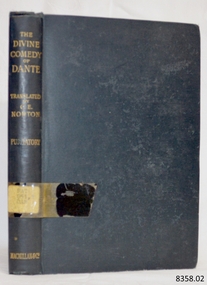
Book - Poem, Dante Alighieri, The Divine Comedy of Dante Alighieri ( Book 2 Purgatory), 1891
... English verse. There is a high historical significance for this volume, as the year 1891 marks the very first printing of Charles Eliot Norton’s translation of The Divine Comedy, published simultaneously by Houghton, Mifflin & Co. in America and Macmillan and Co. in London. ...The Divine Comedy is a 14th-century epic poem that serves as a profound allegory of the soul's journey toward God. It is divided into three parts (Inferno, Purgatorio, and Paradiso). In book two, Purgatory follows Dante and his guide, the Roman poet Virgil, as they leave the horrors of Hell behind and climb Mount Purgatory. While Hell is structured as a funnel descending into the earth, Purgatory is a massive mountain in the Southern Hemisphere consisting of seven terraces, each representing one of the Seven Deadly Sins (Pride, Envy, Wrath, Sloth, Avarice, Gluttony, and Lust).The Divine Comedy of Dante Alighieri ( Book 2 Purgatory) Author: Dante Alighieri Translated by C E Norton Publisher: Macmillan And Co Date: 1891 fictionThe Divine Comedy is a 14th-century epic poem that serves as a profound allegory of the soul's journey toward God. It is divided into three parts (Inferno, Purgatorio, and Paradiso). In book two, Purgatory follows Dante and his guide, the Roman poet Virgil, as they leave the horrors of Hell behind and climb Mount Purgatory. While Hell is structured as a funnel descending into the earth, Purgatory is a massive mountain in the Southern Hemisphere consisting of seven terraces, each representing one of the Seven Deadly Sins (Pride, Envy, Wrath, Sloth, Avarice, Gluttony, and Lust).flagstaff hil, warrnambool, flagstaff hill maritime museum, maritime museum, shipwreck coast, flagstaff hill maritime village, great ocean road, book, pattison collection, warrnambool library, warrnambool mechanics’ institute, ralph eric pattison, corangamite regional library service, warrnambool city librarian, mechanics’ institute library, victorian library board, warrnambool books and records, warrnambool children’s library, the divine comedy of dante alighieri ( book 2 purgatory), dante alighieri, c e norton -
 Flagstaff Hill Maritime Museum and Village
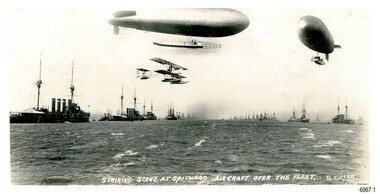
Postcard - Ships Collection, Stephen Cribb, circa 1914-1945
... Welch & Sons, English Photography 6967.25 The Royal Yacht, Victoria & Albert “50” 6967.26 The VICTORY, firing a Royal Salute “21” Published by E.A. Schwerdtfeger & Co. London E.C. Printed at their works in Berline. Trade Mark...Welch & Sons, English Photography 6967.25 The Royal Yacht, Victoria & Albert “50” 6967.26 The VICTORY, firing a Royal Salute “21” Published by E.A. Schwerdtfeger & Co. London E.C. Printed at their works in Berline. Trade Mark ...The postcards and photograph in this Ships Collection were found by the donor. Two of the cards are addressed to a local person "Master Jack de Little, Caramut House, Caramut, Victoria, Australia". Another has a message written in a different language. The remainder have no personal messages on them. The details of the postcards are- Published by Stephen Cribb, Southsea: 6967.1 Striking scene at Spithead; Aircraft over the fleet, including airships 6967.2 The King’s Ships; Fleet of ships. Aircraft overhead. 6967.3 HMS HIBERNIA; King Edward Class ship 6967.4 For Docking; Super Dreadnaughts, largest floating dock in the world, in Portsmouth Harbour 6967.5 HMS COLLINGWOOD; Dreadnaught, on which His Majesty’s son is serving. 6967.6 HMS BRITANNICA; Pre-Dreadnaught, 16,350 tons. Inscription “b1” or “61” written on the sea on the front of the postcard. 6967.7 HMS IRON DUKE; Fleet Flagship 6967.8 HMS Submarine D8. Ship numbered “78” 6967.9 HMS IRON DUKE, Fleet Flagship 6967.10 HMS SOUTHAMPTON 6967.11 SHAMROCK IV (Ketch rigged), leaving for America July 18, 14 (1914’) to fetch home the American to Gosport 6967.12 HMS CONQUEROR, June 1913 6967.13 Portsmouth Harbour, The Entrance (from Gosport Hard) 6967.14 Seaplane rising; 20th Century Marvel. Naval air defence. Types of airships, Seaplanes, Monoplanes in The Solent review 6967.15 HMS AUDACIOUS 6967.16 HMS DREADNAUGHT, pioneer of the all-big-gun warship ”Marcus Ward Series, McCaw Stevenson & Oms Ltd” 6967.17 HMS TERRIBLE, textured paper on front with aqua lower border, remnants of blue paper on the back. Published by Stephen Cribb, Southsea 6967.18 “In time of peace, prepare for war” Hoisting guns and torpedo heads on board a warship 6967.19 HMS LORD NELSON 6967.20 HMS HINDUSTAN 6967.21 Spitbank Fort, Spithead, on Solvent Sea 6967.22 HMS GARLAND of Netley Photographer Edgar Ward. “A halfpenny stamp for inland, one penny for foreign” 6967.23 Entrance to the Cambor, from Portsmouth Harbour. “312, copyright Edgar Ward” 6967.24 Royal yacht alongside Portsmouth Dockyard, “305” J. Welch & Sons, English Photography 6967.25 The Royal Yacht, Victoria & Albert “50” 6967.26 The VICTORY, firing a Royal Salute “21” Published by E.A. Schwerdtfeger & Co. London E.C. Printed at their works in Berline. Trade Mark E.A.S. 6967.27 The Hard and Viaduct, Portsea, Portsmouth 6967.28 SS MACEDONIA, P&O, 15212 tons, 1500 h.p., Coloured drawing. On reverse “Master Jack de Little, Caramut House, Caramut, Victoria, Australia” Published by Union Postale Universelle, Gibralta. 6967.29 HMS KING EDWARD VII leaving Dock N.3 GIBRALTAR – 11/3/05 (1905). Printer V.B. Cumbo, Gibraltar. Drawing. Handwritten “Oroton 28/5/06”. “Master Jack De Little Caramut, Victoria, Australia” 6967.30 7274 BARBARA, Hamburg. Imprinted “ ---O WEDDE ----- VORSETZEN 35/37” inscription, six lines of handwritten text in another language on the back. Published by the Valentine & Sons Co. Publishing Ltd., Melbourne, Sydney and Brisbane. Branches Sydney. London, Dundee, Cape Town, Montreal, Toronto. 6967.31 SS MOLDAVIA, the first dining saloon, Valentine Series M.4059. Valentines Real Photo Series Postcard. Postcard made in U.S.A. Agfa ANSCO 6967.32 Port McNicoll, Ont. DSR.. 6967.33 Orient Line SS ORONSAY, 20,000 tons. On board the Orient Line. Tuck’s Post Card, Carte Postale. ‘Our Navy’ Series II, Raphael Tuck & Sons. “Photogravure” Postcard Nu. 4305. Art publishers to their Majesties the King and Queen. 6967.34 HMS QUEEN MARY, HMS Queen Mary, Battle Cruiser, launched 1912, completed 1913, 27,000 tons, 75,000 S.H.P., 28 knots per hour, 8 13.5-inch guns, 16 4-inch guns, 2 torpedoes. Commissioned September 1913. Printed in England. 6967.35 HMS SUPERB 6967.36 HMS TEMERAIRE 6967.37 HMS MONARCH Small photograph, not a postcard, H 6 x W 9 cm 6967.38 PHOTOGRAPH NESTOR? Small sepia photograph, ship at dock. Stamped “Kodak print” “549”. Handwritten on back is “NESTOR?“ The Ships Collection of postcards and a small photograph depict maritime vessels connected to our Australian alliance with Britain, particularly during World War I. Two of the postcards are specifically addressed to a ‘Master Jack de Little’ at Caramut House, in the local township of Caramut which was a Pioneer Settlement and a Soldier Settlement area after World War I. Collection of thirty-eight postcards from various photographers. They depict shipping, harbours and naval vessels from the Great War to the Second War War. Most of the cards have a title, generally handwritten, on the front of the postcard. A few of the postcards have inscriptions.6967.6 Handwritten on the sea in the photograph “b1” or “61” 6967.28 Handwritten on reverse “Master Jack de Little, Caramut House, Caramut, Victoria, Australia” 6967.29 Handwritten “Oroton 28/5/06”. “Master Jack De Little Caramut, Victoria, Australia” 6967.30 Imprinted Stamp “ ---O WEDDE ----- VORSETZEN 35/37” (a location in Germany). Handwritten, six lines of text in another language, possibly German. 6967.38 Handwritten on the back is “NESTOR?“flagstaff hill, maritime village, maritime museum, postcard, world war ii, ww2, royal navy, british merchant navy, portsmouth, the great war, ship, world war i, wwi, british, 1914-1918, jack de little, caramut, caramut house, vorsetzen, spithead, sea fort, fort, spithead fort, aircraft, fleet, airship, the king’s ships, hms hibernia, king edward class ship, super dreadnaught, floating dock, portsmouth harbour, hms collingwood, dreadnaught, hms britannica, hms iron duke, fleet flagship, hms submarine d8, hms southampton, shamrock iv, hms conqueror, the entrance, gosport head, seaplane, naval air defence, monoplane, the solvent, hms audacious, hms dreadnaught, warship, marcus ward series, mccaw stevenson & oms ltd, s cribb, southsea, hms terrible, hms hindustan, hms garland, edgar ward, cambor, portsmouth dockyard, j. welch & sons, the royal yacht, victoria & albert “50”, victory, royal salute “21”, e.a. schwerdtfeger & co, e.a.s., the hard and viaduct, ss macedonia, p&o, master jack de little, hms king edward vii, dock n.3 gibraltar, v.b. cumbo, gibraltar, union postale universelle, 7274 barbara, ss moldavia, valentine series, valentine & sons co, port mcnicoll, agfa ansco, ss oronsay, orient line, raphael tuck & sons, hms queen mary, hms superb, hms temeraire, hms monarch, nestor, stephen cribb, stephen cribb photography, hms lord nelson -
 Flagstaff Hill Maritime Museum and Village
Book - A Fictional Story, Charles Dickens, Martin Chuzzlewit, 1910
... English novelists of the Victorian era, famous for vivid characters, social criticism, and stories that were first published in serial form. He began as a journalist, rose to enormous popularity during his lifetime, and wrote major works such as Oliver Twist, David Copperfield, and Great Expectations. “Martin Chuzzlewit” is Charles Dickens’s sixth novel serialised 1843-1844, with a novel published in 1844 by Chapman and Hall. The themes are about selfishness, hypocrisy, and moral reform, its plot follows young Martin, his proud grandfather, the hypocritical architect Pecksniff, the loyal Tom Pinch, and the good humoured Mark ...Charles Dickens (1812–1870) was one of the great English novelists of the Victorian era, famous for vivid characters, social criticism, and stories that were first published in serial form. He began as a journalist, rose to enormous popularity during his lifetime, and wrote major works such as Oliver Twist, David Copperfield, and Great Expectations. “Martin Chuzzlewit” is Charles Dickens’s sixth novel serialised 1843-1844, with a novel published in 1844 by Chapman and Hall. The themes are about selfishness, hypocrisy, and moral reform, its plot follows young Martin, his proud grandfather, the hypocritical architect Pecksniff, the loyal Tom Pinch, and the good humoured Mark Tapley. There is also a criminal subplot around Jonas Chuzzlewit. The core plot in short is where Martin becomes at odds with his miserly grandfather as he works for Pecksniff, becomes friends with Tom Pinch. He travels to America, is nearly ruined by a swindle, eventually returning to England. Several villains are ultimately exposed and punished while virtuous characters are rewarded.Martin Chuzzlewit. Author: Charles Dickens. Introduction by Kenneth Hayens. Publisher: Collins, London & Glasgow. Date: 1953. (See note section this document for more information on Edition). Blue leather hardcover with title on spine in gold lettering and pattern. The spine has a Library label and no Volume information only title and author.fictionCharles Dickens (1812–1870) was one of the great English novelists of the Victorian era, famous for vivid characters, social criticism, and stories that were first published in serial form. He began as a journalist, rose to enormous popularity during his lifetime, and wrote major works such as Oliver Twist, David Copperfield, and Great Expectations. “Martin Chuzzlewit” is Charles Dickens’s sixth novel serialised 1843-1844, with a novel published in 1844 by Chapman and Hall. The themes are about selfishness, hypocrisy, and moral reform, its plot follows young Martin, his proud grandfather, the hypocritical architect Pecksniff, the loyal Tom Pinch, and the good humoured Mark Tapley. There is also a criminal subplot around Jonas Chuzzlewit. The core plot in short is where Martin becomes at odds with his miserly grandfather as he works for Pecksniff, becomes friends with Tom Pinch. He travels to America, is nearly ruined by a swindle, eventually returning to England. Several villains are ultimately exposed and punished while virtuous characters are rewarded.book, the old curiosity shop, charles dickens, shipwrecked-coast, flagstaff-hill, flagstaff-hill-maritime-museum, warrnambool, maritime-museum, flagstaff-hill-maritime-village, pattison collection, warrnambool library, warrnambool mechanics’ institute, ralph eric pattison, corangamite regional library service, warrnambool city librarian, mechanics’ institute library, victorian library board, warrnambool books and records, warrnambool children’s library, great ocean road -
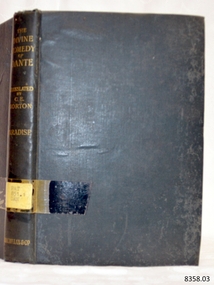 Flagstaff Hill Maritime Museum and Village
Book - Poem, Dante Alighieri, The Divine Comedy of Dante Alighieri ( Book 3 Paradise ), 1891
... English verse. There is a high historical significance for this volume, as the year 1891 marks the very first printing of Charles Eliot Norton’s translation of The Divine Comedy, published simultaneously by Houghton, Mifflin & Co. in America and Macmillan and Co. in London. ...The Divine Comedy is a 14th-century epic poem that serves as a profound allegory of the soul's journey toward God. It is divided into three parts (Inferno, Purgatorio, and Paradiso). In book two, Purgatory follows Dante and his guide, the Roman poet Virgil, as they leave the horrors of Hell behind and climb Mount Purgatory. While Hell is structured as a funnel descending into the earth, Purgatory is a massive mountain in the Southern Hemisphere consisting of seven terraces, each representing one of the Seven Deadly Sins (Pride, Envy, Wrath, Sloth, Avarice, Gluttony, and Lust).The Divine Comedy of Dante Alighieri ( Book 3 Paradise ) Author: Dante Alighieri Translated by C E Norton Publisher: Macmillan And Co Date: 1892fictionThe Divine Comedy is a 14th-century epic poem that serves as a profound allegory of the soul's journey toward God. It is divided into three parts (Inferno, Purgatorio, and Paradiso). In book two, Purgatory follows Dante and his guide, the Roman poet Virgil, as they leave the horrors of Hell behind and climb Mount Purgatory. While Hell is structured as a funnel descending into the earth, Purgatory is a massive mountain in the Southern Hemisphere consisting of seven terraces, each representing one of the Seven Deadly Sins (Pride, Envy, Wrath, Sloth, Avarice, Gluttony, and Lust).flagstaff hil, warrnambool, flagstaff hill maritime museum, maritime museum, shipwreck coast, flagstaff hill maritime village, great ocean road, book, pattison collection, warrnambool library, warrnambool mechanics’ institute, ralph eric pattison, corangamite regional library service, warrnambool city librarian, mechanics’ institute library, victorian library board, warrnambool books and records, warrnambool children’s library, the divine comedy of dante alighieri ( book 2 purgatory), dante alighieri, c e norton
