
Showing 12 items matching "marram grass"
-
 Port Fairy Historical Society Museum and Archives
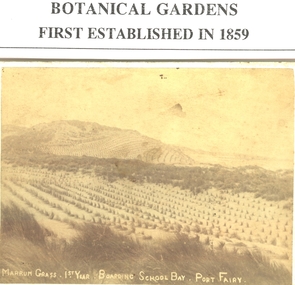
Photograph, 1884
... marram grass...Marram grass (1st year) South Beach about 1884 planted to stop the erosion of the sand dunes having been stripped of all the tea tree and native grass cover, the tea tree bark being used for tanning leather...Black and white Photograph of the dunes above Boarding School Bay sewn with Marram grass ...Marram grass (1st year) South Beach about 1884...Marram grass (1st year) South Beach about 1884 planted to stop the erosion of the sand dunes having been stripped of all the tea tree and native grass cover, the tea tree bark being used for tanning leather marram grass south beach agriculture dunes Marram grass (1st year) South Beach about 1884 Black and white Photograph of the dunes above Boarding School Bay sewn with Marram grass Photograph Photograph ...Marram grass (1st year) South Beach about 1884 planted to stop the erosion of the sand dunes having been stripped of all the tea tree and native grass cover, the tea tree bark being used for tanning leatherBlack and white Photograph of the dunes above Boarding School Bay sewn with Marram grass Marram grass (1st year) South Beach about 1884marram grass, south beach, agriculture, dunes -
 Flagstaff Hill Maritime Museum and Village
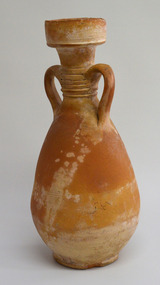
Ceramic - Amphora, mid-to-late 19th century
... ...Marram grass...According to reports, this amphora was discovered in 1934 by Joe O'Keeffe, in a sand blowout, or sand hummocks, west of Levy's Point, west of Warrnambool, while he was planting marram grass for Mr Duncan. An article in the Warrnambool Standard newspaper of December 21, 1985, states that the amphora may be linked to the wooden sailing ship called the Mahogany Ship (also called the Ancient Wreck). ...According to reports, this amphora was discovered in 1934 by Joe O'Keeffe, in a sand blowout, or sand hummocks, west of Levy's Point, west of Warrnambool, while he was planting marram grass for Mr Duncan. An article in the Warrnambool Standard newspaper of December 21, 1985, states that the amphora may be linked to the wooden sailing ship called the Mahogany Ship (also called the Ancient Wreck). ...This amphora or jug has a silhouette shaped like a woman with her hands on her hips, wearing a long, flared-out skirt. The design was used in ancient Greece for pottery storage jars, the neck being narrower than the body. According to reports, this amphora was discovered in 1934 by Joe O'Keeffe, in a sand blowout, or sand hummocks, west of Levy's Point, west of Warrnambool, while he was planting marram grass for Mr Duncan. An article in the Warrnambool Standard newspaper of December 21, 1985, states that the amphora may be linked to the wooden sailing ship called the Mahogany Ship (also called the Ancient Wreck). Thermoluminescence testing indicates the relic was made in the mid-to-late 19th century, and experts suggest it was of North African origin. The presence of the amphora in the dunes, and the amphora itself, is still a mystery. The amphora was donated to Flagstaff Hill on a long-term loan by the Duncan family and displayed to the public for the first time on December 21, 1985. The exhibition continued until February 2023, when the objects on display in the Assistant Lighthouse Keepers Cottage (Shipwreck Museum) were returned to storage to rest, and the redevelopment of the Cottage began. A search for members of the Duncan Family was undertaken by Flagstaff Hill and stakeholders to resolve the loan term, but the family at that time was unknown. As such, to properly care for the amphora, it has been registered until ownership can be determined. The amphora is currently on display in the Great Circle Gallery, where members of the Duncan family recognised it and have since made contact with the museum. The amphora's presence in the hummocks remains an intriguing and tantalising mystery, yet to be solved!The amphora is significant for the mystery it holds. Its origin and connection with the local area have led to local speculation since it was discovered in 1934. Amphora or jug; earthenware, orange clay with areas of cream. The vessel has a wide mouth, a deep lip, two opposing handles between the neck and shoulder, and a bulbous body. The curved handles have a design of six bands between them. There are three rings of small dots encircling the body. The underside has concentric circles in the clay, an uneven edge and pinhole markings. The amphora is kindly on loan from the Duncan family.Pinhole patterns: [3 holes above 3 holes] opposite [3 holes above 3 holes], 1 hole] [ 1 hole above 2 holes] flagstaff hill maritime museum and village, warrnambool, great ocean road, shipwreck coast, amphora, jug, mahogany ship, ancient wreck, joe o'keefe, duncan, thermoluminescence, north africa, levy point, pottery, storage jar, flagstaff hill, maritime museum, maritime village, shipwreck artefact, relic, shipwreck museum, pottery jar, ancient jar, egyptian water pot, greek jar, ceramic jar, mystery, exotic jar, mystery antique, historic jug, 1934, joe o’keefe, marshall duncan, port fairy, 1935, 1985, marshall mckenzie duncan, mac duncan, duncan family, 1981, dan madden, scientific investigation, scientific analysis, scientific dating, north african origin, mid-late 19th century, marram grass, levy’s point -
 Phillip Island and District Historical Society Inc.
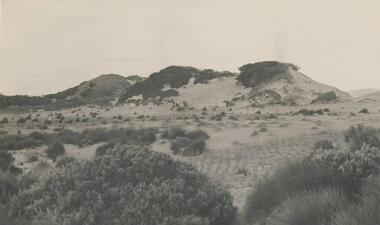
Photograph
... Photograph of Marram Grass plantings in the dunes at Woolamai Promontory...One of a collection of over 400 photographs in an album commenced in 1960 and presented to the Phillip Island & Westernport Historical Society by the Shire of Phillip Island local history photography dunes at cape woolamai black & white photograph coastline cape woolamai sand dunes Dr A B Edwards John Jenner Bryant West Photograph of Marram Grass plantings in the dunes at Woolamai Promontory Photograph John Jenner Bryant West ...One of a collection of over 400 photographs in an album commenced in 1960 and presented to the Phillip Island & Westernport Historical Society by the Shire of Phillip IslandPhotograph of Marram Grass plantings in the dunes at Woolamai Promontorylocal history, photography, dunes at cape woolamai, black & white photograph, coastline, cape woolamai, sand dunes, dr a b edwards, john jenner, bryant west -
 Port Fairy Historical Society Museum and Archives
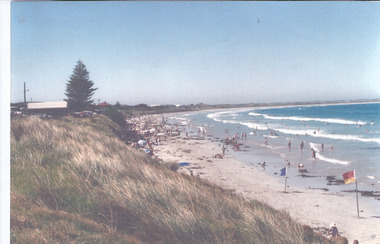
Photograph - Photocopy
... ...marram grass...East beach looking north East beach marram grass Crowd people bathers Coloured photograph of East Beach with summer crowd and life savers flags Photograph Photocopy ...East beach looking northColoured photograph of East Beach with summer crowd and life savers flagseast beach, marram grass, crowd, people, bathers -
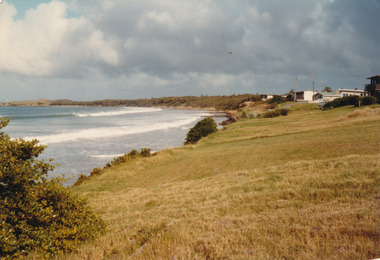 Port Fairy Historical Society Museum and Archives
Photograph
... ...marram grass...East Beach looking South June 1983 East beach Groins houses marram grass dune 1983 Photograph Photograph ...East Beach looking South June 1983east beach, groins, houses, marram grass, dune, 1983 -
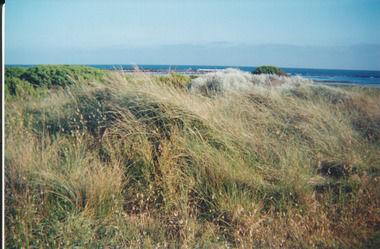 Port Fairy Historical Society Museum and Archives
Photograph
... ...marram grass...South Beach South beach marram grass dune ocean sea Photograph Photograph ...South Beach south beach, marram grass, dune, ocean, sea -
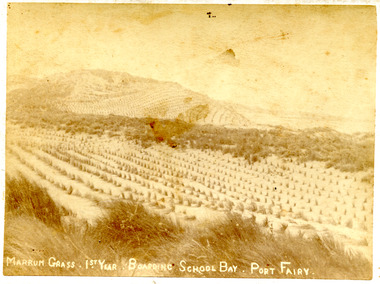 Port Fairy Historical Society Museum and Archives
Photograph
... black and white photograph of the newly planted Marram Grass on the dunes at South Beach...Port Fairy black and white photograph of the newly planted Marram Grass on the dunes at South Beach Photograph Photograph ...The first year planting of Marrum Grass on Boarding School Bay dunes to stop the erosion of the sand caused by denuding the dunes of the scrubby tea tree that would have covered the dunes. They cut the tea trees down to use for tanning animal hides for leather and clothing rare photograph of the first years progress of the planting of marrum grass on the dunes of Boarding School Bay to halt the sand drift caused by the removal of tea trees.black and white photograph of the newly planted Marram Grass on the dunes at South Beachhandwritten: About 1884 See also 10.00.002 --- W.H.Storey - Marrum Grass. 1st Year. Boarding School Bay. Port Fairybotanical, marrum grass, boarding school bay, samuel avery -
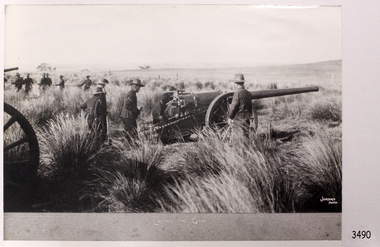 Flagstaff Hill Maritime Museum and Village
Photograph
... Black and Whtie Photograph of Lay The Gun- 2 gun crew in Marram Grass. 254mm x 201mm FV024 Fortifications Volunteer Corps....flagstaff hill warrnambool shipwrecked-coast flagstaff-hill flagstaff-hill-maritime-museum maritime-museum shipwreck-coast flagstaff-hill-maritime-village photograph volunteer corps Black and Whtie Photograph of Lay The Gun- 2 gun crew in Marram Grass. 254mm x 201mm FV024 Fortifications Volunteer Corps. ...Black and Whtie Photograph of Lay The Gun- 2 gun crew in Marram Grass. 254mm x 201mm FV024 Fortifications Volunteer Corps.flagstaff hill, warrnambool, shipwrecked-coast, flagstaff-hill, flagstaff-hill-maritime-museum, maritime-museum, shipwreck-coast, flagstaff-hill-maritime-village, photograph, volunteer corps -
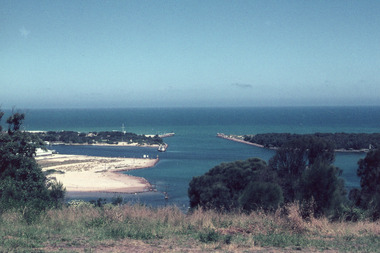 Lakes Entrance Historical Society
Photograph - Bullock Island c1975, Scarce, Keith
... Colour photograph of Bullock Island, after establishment of Pecks Factory and Fishermans Co-op, shows marram grass plantings to stabilise dumped sand. ...Waterways Islands Colour photograph of Bullock Island, after establishment of Pecks Factory and Fishermans Co-op, shows marram grass plantings to stabilise dumped sand. ...Second photograph showing part of Bullock Island and the entrance.Colour photograph of Bullock Island, after establishment of Pecks Factory and Fishermans Co-op, shows marram grass plantings to stabilise dumped sand. Rough surf breaking on offshore bar. Lakes Entrance Victoriawaterways, islands -
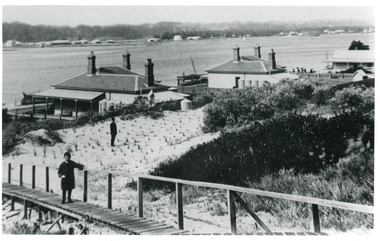 Lakes Entrance Historical Society
Photograph - Carpentertown Lakes Entrance Victoria c1900, 1900c
... Child on boardwalk and newly planted marram grass on dune. Township across Cunninghame Arm. ...Child on boardwalk and newly planted marram grass on dune. Township across Cunninghame Arm. ...Also black and white copy 9 x 13 cmBlack and white photograph showing buildings on dunes. From left is harbour masters house, harbour engineers house, and Carpenters house. Child on boardwalk and newly planted marram grass on dune. Township across Cunninghame Arm. Lakes Entrance Victoriawaterways, topography, township -
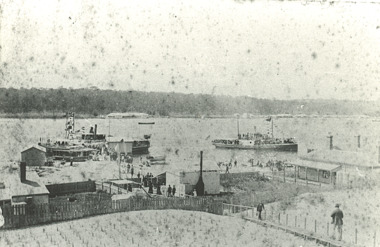 Lakes Entrance Historical Society
Photograph, New Works Lakes Entrance Victoria, 1900 c
... Black and white photograph showing three excursion boats near jetty, residences and offices and boardwalk between recently planted marram grass on slope at New Works Lakes Entrance Victoria. ...Boats and Boating Government Gippsland Ports Black and white photograph showing three excursion boats near jetty, residences and offices and boardwalk between recently planted marram grass on slope at New Works Lakes Entrance Victoria. ...Black and white photograph showing three excursion boats near jetty, residences and offices and boardwalk between recently planted marram grass on slope at New Works Lakes Entrance Victoria. Also a black and white photograph of boats at New Works taken before June 1889 boats and boating, government, gippsland ports -
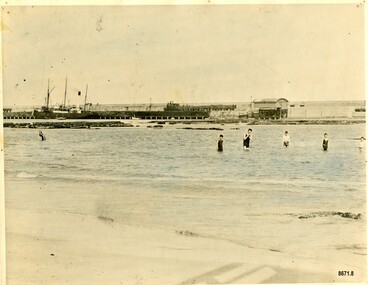 Flagstaff Hill Maritime Museum and Village
Photograph - Vessel S. S. Casino in Lady Bay Warrnambool, 1920's - 1930's
... They worked with the local council to develop a "Beach Improvement Fund" and a comprehensive plan of "Beach Improvement" which included erecting and maintaining beach boxes, building a kiosk, improving paths and roads to the beach, planting marram grass on the sand dunes, building new enclosures for vehicles and horses and generally making the beach more attractive for visitors and townspeople. ...They worked with the local council to develop a "Beach Improvement Fund" and a comprehensive plan of "Beach Improvement" which included erecting and maintaining beach boxes, building a kiosk, improving paths and roads to the beach, planting marram grass on the sand dunes, building new enclosures for vehicles and horses and generally making the beach more attractive for visitors and townspeople. ...This photograph was one of ten photographs donated to Flagstaff Hill Maritime Museum and Village by Fred Trewartha. Frederick John Fox Trewartha (Fred) was a well-known Warrnambool businessman. He was born in Beeac near Geelong in 1920 and came to Warrnambool with his family as a very young child. He was apprenticed to his father John, as a saddler and later opened his own shop on Raglan Parade. He then moved into working with tarpaulins and canvases for the trucking industry. Fred was keenly interested in photography (and was a member of the Warrnambool Cine Club), yachting and boat building. He kept his yacht moored at Port Fairy for many years and participated in sailing events locally and interstate. He also built boats with his sons. He had the opportunity to meet many older sailors and it's thought this photo (and others in the set) may have been given to him by one of these men. Fred Trewartha died in 2016 in Warrnambool. Warrnambool by the 1920's and 1930's had become a popular holiday destination with visitors arriving by steamer and train. It was during these decades that a "Surf Bathers Association" began in Warrnambool in response to the growing popularity of local sea bathing. They worked with the local council to develop a "Beach Improvement Fund" and a comprehensive plan of "Beach Improvement" which included erecting and maintaining beach boxes, building a kiosk, improving paths and roads to the beach, planting marram grass on the sand dunes, building new enclosures for vehicles and horses and generally making the beach more attractive for visitors and townspeople. The 1930's was also an era when free "Herald" Learn-to-Swim classes were being held throughout Victoria. In 1931 it was reported in "The Age" newspaper that "over the past week in Warrnambool, 250 pupils had passed through the hands of the local life saving club swimming instructors". The Port of Warrnambool - In the early years the Port of Warrnambool was a busy port. Steamships and sailing ships were frequent visitors to the port. Steam navigation companies were plentiful, carrying passengers and freighting cargo such as coal, timber, food, livestock, furniture, hardware and haberdashery between Melbourne and the ports along the southwest coast of Victoria, including Warrnambool. The carts would take their loads into the township for distribution. The Breakwater was built (using 32 ton blocks of concrete) between 1874 and 1890 to provide ships with greater protection from the Southern Ocean. The Lifeboat and Rocket House - The coastline of South West Victoria has had over 600 shipwrecks and many lost lives; even in Warrnambool’s Lady Bay there were around 16 known shipwrecks between 1850 and 1905, with eight lives lost. In 1859 the first Government-built lifeboat arrived at Warrnambool Harbour and a shed was soon built to house it, followed in 1864 by a rocket house to safely store the Rocket Rescue equipment. In 1878 the buildings were moved to the Breakwater area, and in 1910 the new Lifeboat Warrnambool arrived with its ‘self-righting’ design. For almost one hundred years the lifeboat and rocket crews, mostly local volunteers, trained regularly to maintain and improve their skills, summoned when needed by alarms, gunshots, ringing bells and foghorns. Some became local heroes but all served an important role. By the end of the 1950s the lifeboat and rescue equipment had become obsolete. The S.S. Casino was a passenger and freight steamer built in Dundee, Scotland, in 1882 for the Newcastle and Hunter River Steam Navigation Company of N.S.W. She weighed 425 tons gross with a length of 160.4 feet, beam of 24.1 feet and a depth of 10.2 feet. She had saloon accommodation for 35 people, a fore cabin for 25 more people, and she carried 300 tons of cargo. While on her delivery journey on May 30th 1882, the S.S. Casino called in at the Port of Warrnambool for coal, narrowly escaping going ashore in gale force winds due to the quick action of the pilot. At that time, still at anchor, she impressed the directors of the Belfast and Koroit Steam Navigation Company so much that they bought her immediately; she was ideal for trade along the West Coast of Victoria. (The Belfast and Koroit Steam Navigation Company was first managed by Messers. Saltau and Osburne and after the passing of Mr. Osburne, by produce merchants Messers H. Sautau and Sons, who had a hay and corn store and shipping agency on the corner of Liebig and Koroit Streets in Warrnambool. ) The S.S. Casino became “the most famous steamer to operate in Victorian waters along the West Coast” by author Jack Loney. Captain Boyd was her first Master, followed by Captain Chapman, who stayed with her from 1890 until 1924. Captain W. Robertson followed for a short term, and then Captain Middleton then took command from 1925 - 1932. An article published on Monday 11th June 1932 in The Sun News Pictorial (Melbourne) giving a detailed history of S. S. Casino said "owned by Port Fairy interests, she was an integral part of the town's development ... for a long time, her arrival in Port Fairy was an event, the townspeople going down to the wharf to see her come in". It also said "Except when the weather was bad, the Casino hugged the coast on her trips and passengers obtained wonderful views of the sandstone terraces and caves. A little time ago every member of her regular crew except one, was a Scotsman." The S.S. Casino had several mishaps during her life. One was on 3rd January 1898 when she collided with the S.S. Flinders in Apollo Bay with minor damage. Another was on 24th October 1924 when she grounded on a reef at Point Hawdon near Grey River and most of her cargo (of Christmas goods) had to be dumped into the sea. Then in February 1929 she was ‘holed’ when she struck a submerged object as she entered Lady Bay, Warrnambool. In the years following the turn of the century, the S.S. Casino remained the only regular trader with normal passenger accommodation along the West Coast. From 1882 she had made at least 2,500 voyages on the one run. On the morning of 10th July 1932, after attempting to berth at Apollo Bay jetty in heavy seas, Captain Middleton decided to take her out into the bay and wait until the seas abated. It was not realised that the anchor used to steady her as she manoeuvred to her berth had pierced her hull. She put about and headed for the beach but sank. Captain Middleton and nine others lost their lives; nine people were rescued including the two female passengers. Captain Middleton had been in charge of the S.S. Casino for seven years. He was the first ship’s Master to lose his life in a shipwreck in the West Coast trade. In June 1932, the directors of the Belfast and Koroit Steam Navigation Company had proposed to celebrate the completion of fifty years of trading by the steamer Casino in August, but tragically the Casino was wrecked only one month later (and "was only one month off completing its fifty years of valuable service between Melbourne and Portland.") Flagstaff Hill’s collection has a photograph of a portrait of Captain Chapman, a ship model of the S.S. Casino that shows both forms of power under which she sailed, steam and sail. The ship is painted green and flies three flags. The inscription across the case of the ship model, incorrectly dated, tells the sad story of the wreck of the ship and the loss of lives on July 10th 1932 at Apollo Bay. A print in the Collection shows S.S. Casino underway in the heavy sea off Point Lonsdale, another two photographs show her at the Port of Warrnambool, leaving from the Breakwater in Lady Bay and another identifies the S.S. Casino as a ship from the Belfast and Koroit Steam Navigation Company. (Belfast is the original name for the township of Port Fairy).This photograph is significant because of its association with the coastal trader S.S. Casino and its significance to trade along Victoria's West Coast in the late 19th and early 20th centuries. The wreck of the S.S. Casino is considered an important part of Victorian and Australian cultural heritage and as such has been declared and protected as an Historic Shipwreck under State and Commonwealth Law in the Commonwealth Historic Shipwrecks Act (1976). It is also significant as it shows the early years of tourism in Warrnambool and the important role the beach played in the lives of residents and visitors.A black and white photograph (with colour tinting) showing Lady Bay in Warrnambool with the Breakwater in the background. The S. S. Casino is moored at the Breakwater and the lifeboat shed and a coal train can be seen on the Breakwater. Six swimmers are standing in the water. On the back of the photograph are the donor's name and telephone number (written in black biro) and the name of the S. S. Casino and its tonnage written in blue ink. A blurred number has been stamped on plus a "M' written in pencil.Donor's name, address and phone number / "S. S. Casino" / "500 TONS" / "REG" "- - - 09 " (blurred numbers) / "M"warrnambool, great ocean road, shipwreck coast, lady bay, breakwater, fred trewartha, frederick john fox trewartha, surf bathers association, sea bathing, swimming, warrnambool beach, beach improvement fund, port of warrnambool, steamships, lifeboat house, rocket house, lifeboat crew, s. s. casino, belfast and koroit steam navigation company, saltau and osburne, captain middleton, apollo bay, apollo bay shipwreck
