
Showing 130 items matching "married 1949"
-
 Federation University Historical Collection
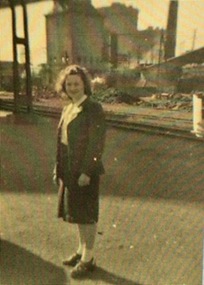
Article - Article - Women, Ballarat School of Mines: Women of Note; Jeanette Perkins, First Female Geology Student, (1927 - )
... ...married 1949...Johns Valves, Ballarat. In 1949 she married Alfred Watson. In 1951 Jeanette and Alf Watson moved to Melbourne where she commenced work as a metallurgical chemist at the Maribyrnong Ordnance Factory while studying geology part time: Alf returned to study at the University of Melbourne. ...In 1991 Jeanette Watson was awarded a Doctorate from Deakin University. women of note ballarat school of mines alfredton state school pleasant street state school ballarat high school leaving certificate maths interview with principal heseltine geologist applied chemistry course no female geologists metallurgical chemist married 1949 melbourne ordinance factory part time study melbourne technical college rmit part time lecturer scuba diving science teacher for ten years masters degree doctorate deakin university Ballarat School of Mines: Women of Note; Jeanette Perkins, First Female Geology Student, (1927 - ) Article Article - Women ...Jeanette Perkins was born in 1927 at Ballarat. She attended Alfredton State School and Pleasant Street State School before completing her secondary schooling at Ballarat High School (BHS). During her later years at BHS Perkins decided that she wanted to become a geologist, but was ineligible for university when she failed Leaving Certificate maths. She attended an interview with the principal (Heseltine) at the Ballarat School of Mines (SMB) and announced that she wanted to be a geologist. Heseltine was, according to Perkins, aghast: he informed her that there had never been a female geologist at SMB and they didn't want one. But Perkins persisted. Only then did Heseltine reluctantly enrol her in the School's Applied Chemistry Course which offered the most geological subjects, moreover, it was the only one he considered available to a 'mere' female. After graduating Perkins was employed as a metallurgical chemist with M.B. Johns Valves, Ballarat. In 1949 she married Alfred Watson. In 1951 Jeanette and Alf Watson moved to Melbourne where she commenced work as a metallurgical chemist at the Maribyrnong Ordnance Factory while studying geology part time: Alf returned to study at the University of Melbourne. Once again, Watson set a precedent by becoming the first female student to study geology part-time at the Melbourne Technical College. Increasing demands brought about by her growing family, she turned to part-time lecturing second and third year stratigraphy and palaeontology at RMIT. In 1957 the Watsons moved to the Mary Kathleen Uranium Mine in NW Queensland where he was appointed electrical design engineer. After their return to Melbourne in 1960, Jeanette taught herself to SCUBA dive and quickly developed a passion for the sport and the marine environment. She taught senior science to secondary students for 10 years whilst working towards a Masters degree. In 1991 Jeanette Watson was awarded a Doctorate from Deakin University.women of note, ballarat school of mines, alfredton state school, pleasant street state school, ballarat high school, leaving certificate maths, interview with principal, heseltine, geologist, applied chemistry course, no female geologists, metallurgical chemist, married 1949, melbourne, ordinance factory, part time study, melbourne technical college, rmit, part time lecturer, scuba diving, science teacher for ten years, masters degree, doctorate, deakin university -
 Ithacan Historical Society
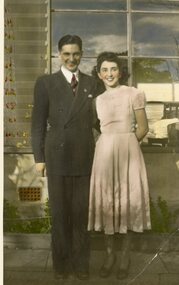
Photograph, Dennis and Rita Varigos, January 1946
... Dennis and Rita were married in 1949. Dennis, a pharmacist, was president of the Ithacan Philanthropic Society from 1960 to 1965. ...Dennis and Rita were married in 1949. Dennis, a pharmacist, was president of the Ithacan Philanthropic Society from 1960 to 1965. ...Pictured are Rita (Margarita) Paizis and Dennis (Menelaos) Varigos. Dennis and Rita were married in 1949. Dennis, a pharmacist, was president of the Ithacan Philanthropic Society from 1960 to 1965. A tinted photograph of a couple standing outside a brick house. -
 Bendigo Historical Society Inc.
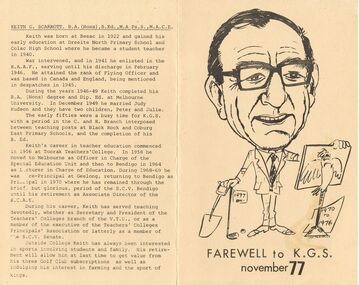
Programme - LA TROBE UNIVERSITY BENDIGO COLLECTION: MR. KEITH SCARROTT
... Keith George Scarrott (1922-1990) was the son of Lawrence Scarrott and Margaret O'Malley. In 1949 he married Judith Elizabeth Hudson. He fought in the RAAF during WW2...Keith George Scarrott (1922-1990) was the son of Lawrence Scarrott and Margaret O'Malley. In 1949 he married Judith Elizabeth Hudson. He fought in the RAAF during WW2 BENDIGO Education bendigo teachers' college La Trobe University Bendigo Collection collection Bendigo Teachers' College Bendigo education teaching programme program teachers students person individual male female Mr. ...Keith George Scarrott (1922-1990) was the son of Lawrence Scarrott and Margaret O'Malley. In 1949 he married Judith Elizabeth Hudson. He fought in the RAAF during WW2(1) A program relating to the retirement of Mr.Keith Scarrott the Associate Director of the Bendigo College of Advanced Education. The front page has a cartoon picture of Mr. Scarrott and the words 'Farewell to K.G.S. November77.' The inside cover has an outline of the program followed by the menu for the dinner. The back page has a brief outline of the life of Mr. G. Scarrott. (11) A Bendigo Advertiser newspaper article describing the dinner titled 'College farewells Scarrott.' It also has a photo of Mr. Keith Scarrott with the Master of Ceremonies Mr. Bryan Clemson. Dated 24/11/77.bendigo, education, bendigo teachers' college, la trobe university bendigo collection, collection, bendigo teachers' college, bendigo, education, teaching, programme, program, teachers, students, person, individual, male, female, mr. keith scarrott, mr. bryan clemson, staff, dr. max mckay, bishop oliver heyward, mrs. judy scarrott, miss alice downward, mrs. val broard, miss elizabeth mcconnell, mr. doug mcdonell, mr. brian geary -
 Bendigo Historical Society Inc.
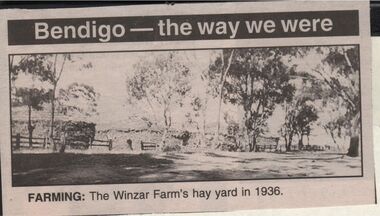
Newspaper - JENNY FOLEY COLLECTION: FARMING
... Robert Charles Winzar (1879-1949) married Florence Whitford (1884-1919) in 1906. ...Robert Charles Winzar (1879-1949) married Florence Whitford (1884-1919) in 1906. ...Robert Charles Winzar (1879-1949) married Florence Whitford (1884-1919) in 1906. They had the following children:- Ellen (1907- 1920); Robert (1909-1909); Edna (1910-24/10/1917); Florence (1912-1914); Ruth (1915- 4/10/1938). Following Florence's death, Robert married Victoria May Warren (1891-1934) in 1922. They had one child, Jean May in 1923. Robert is buried at Marong with Florence and all their children.Bendigo Advertiser '' The way we were'' from Saturday, March 6, 2004. Farming: the Winzar farm's hay yard in 1936. The clip is in a folder.newspaper, bendigo advertiser, the way we were -
 Eltham District Historical Society Inc
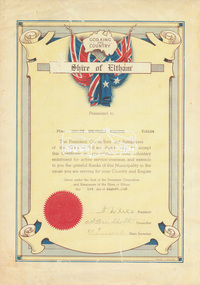
Certificate, Shire of Eltham: Presented to Pte. George Melville Balfour, VX6104, 1 August 1942
... In the UK post May 1945 and in Australia December 1949. Never married....In the UK post May 1945 and in Australia December 1949. Never married. 2/8 Battallion, AIF, Certiificate, Cr. ...Certificate of appreciation presented to Private George Melville Balfour, VX6104, for voluntary enlistment for active service overseas. Prior to the war, George Balfour lived at Wangakeirra(?), Kangaroo Ground. Post war, he lived at Lavender Park, Eltham. He served in the 2/8 Batallion, AIF, in North Africa and taken prisoner of war in Greece. In the UK post May 1945 and in Australia December 1949. Never married.Colour photocopy 33 x 24 cm of a certificate 2/8 battallion, aif, certiificate, cr. a. brinkkotter, cr. price, eltham, george melville balfour, lavender park, prisoner of war, second word war, shire of eltham, vx6104 -
 Bendigo Historical Society Inc.
Literary work - "Glorious toil" and "The crusaders" by John Ellison
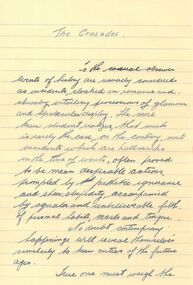
... He became a teacher and in the 1940s he dropped the "f" from his surname. In 1949 he married Aileen Beryl Ervin (6/3/1924-24/5/2004) John was interested in history and specially in Christian church history. ...He became a teacher and in the 1940s he dropped the "f" from his surname. In 1949 he married Aileen Beryl Ervin (6/3/1924-24/5/2004) John was interested in history and specially in Christian church history. ...Leslie John Ellison was born in Horsham in 1920. He was the son of Charles Ellifson (1892-1969) and Lilly May Rogers (1897-!966). He became a teacher and in the 1940s he dropped the "f" from his surname. In 1949 he married Aileen Beryl Ervin (6/3/1924-24/5/2004) John was interested in history and specially in Christian church history. He recorded his thoughts and research in writing. John died 25/7/1981 and is buried with his wife at the Kangaroo Flat Cemetery. Part of the Aileen and John Ellison collection.Fourteen pages handwritten essay on the crusades and an exercise book with the first chapter of the historical novel "Glorious Toil". A typewritten synopsis of the historical novel "Glorious Toil". Also, an envelope addressed to J. Ellison esq. Jacka-Jacka, Tooan posted 20/12/1946 john ellison, historical novel, history of crusades -
 Surrey Hills Historical Society Collection
Photograph, Dr George Doery
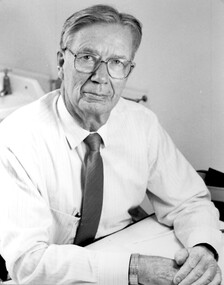
... George Edward Doery (was one of 3 children of William Henry Doery and wife Theodora M Bartholomew who were married in 1914 and resided from this time until c1963 at 16 Tower Street, Surrey Hills. The Doery family were stalwarts of the Canterbury Baptist Church. George graduated MBBS from the University of Melbourne in 1949...George Edward Doery (was one of 3 children of William Henry Doery and wife Theodora M Bartholomew who were married in 1914 and resided from this time until c1963 at 16 Tower Street, Surrey Hills. The Doery family were stalwarts of the Canterbury Baptist Church. George graduated MBBS from the University of Melbourne in 1949 ...George Edward Doery (was one of 3 children of William Henry Doery and wife Theodora M Bartholomew who were married in 1914 and resided from this time until c1963 at 16 Tower Street, Surrey Hills. The Doery family were stalwarts of the Canterbury Baptist Church. George graduated MBBS from the University of Melbourne in 1949. He married Mary Elizabeth Weller (1922-2004) in 1950. He joined the Mont Albert medical Group and practised there until his retirement, The photo was taken to mark his retirement and appeared in a local newspaper. He died 21/9/2011. A black and white photograph of a man sitting at a desk. He is wearing a shirt and tie and a pair of glasses.george doery (dr), george edward doery (dr), medical practitioners, doctors, mont albert medical group, mary doery (mrs), mary elizabeth doery (mrs), mary weller (miss), mary elizabeth weller (miss), canterbury baptist church -
 Surrey Hills Historical Society Collection
Photograph, Beatrice Mary Stalker, later Mrs Howard Breedon Everard, at the beach, 1930s
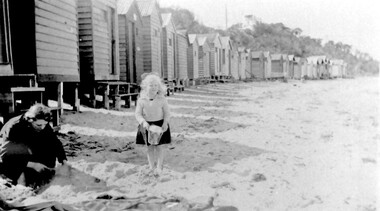
... Mary Stalker married in 1949 and by 1954 she and Howard were living at 44 Wandsworth Road, Surrey Hills, which was their home for decades. ...Mary Stalker married in 1949 and by 1954 she and Howard were living at 44 Wandsworth Road, Surrey Hills, which was their home for decades. ...Mary Stalker’s engagement notice in The Argus in July 1947 indicates that she was the youngest daughter of Mr & Mrs A M Stalker of Montlare [Monclair] Avenue, North Brighton. It announces her engagement to ”Cr Howard Breedon Everard JP Ev-Ron, Woori Yallock, Youngest son of Hon WH Everard Wellington St Kew and the late Mrs Everard.” Beatrice Mary Stalker was born in 1919. Her parents were Alexander MacLaren Stalker (1885-1970/1973) and Charlotte Eleanor Hayward (1884-1953) who were married in 1911. Her sisters were Joan Winnock Stalker, Betty Neil Stalker and Ruth McLaren Stalker. Charlotte was a teacher prior to her marriage. Alexander, an accountant, lived in Wattle Valley Road, Canterbury in 1910. From 1912-1931 they are listed at ‘Benwerrin’, Wandsworth Road, Surrey Hills. Mary Stalker married in 1949 and by 1954 she and Howard were living at 44 Wandsworth Road, Surrey Hills, which was their home for decades. Howard was born in 1914 and died in October 2010: "EVERARD. - Howard Breedon. In loving memory of Howard, who lived life to the full to the very end of his 96 years. Greatly loved and honoured by Mary, Rosemary, David, Elizabeth, John and extended families." Beatrice Mary Everard died on 25 September 2019, aged 93. it is assumed that the woman in the photo is Mary's mother, Charlotte Eleanor Stalker (nee Hayward). The photo taken at the beach in 1930's may have been at Brighton, given the family’s later association with the suburb. This photo documents part of the social history of a family with a long and strong association with Surrey Hills. The backdrop of the typical bathing boxes used for changing into swimsuits, for lunch and for storing sports and beach gear, documents beach recreation and culture of the 1930s. Given the family's later residence in Brighton, this may well have been taken at Brighton Beach. For many years in the late nineteenth century, Brighton was Melbourne's favourite seaside destination. The now iconic bathing boxes were a response to Victorian ideas of morality and sea bathing. There are 82 Brighton bathing boxes, which protected by a heritage overlay because of their uniform scale and proportion, building materials, sentry order alignment. All retain their classic Victorian architectural features with timber framing, weatherboards and corrugated iron roofs. They remain as they did over one hundred years ago, as licensed bathing boxes. Service amenities such as electricity or water were never connected.A black and white photograph of a lady and little girl on the beach. There is a row of bathing boxes behind them.(miss) mary stalker, bathing boxes, (mrs) mary everard, (miss beatrice mary stalker, (mrs) beatrice mary everard, (mrs) charlotte eleanor stalker, (miss) charlotte eleanor hayward -
 Bendigo Historical Society Inc.
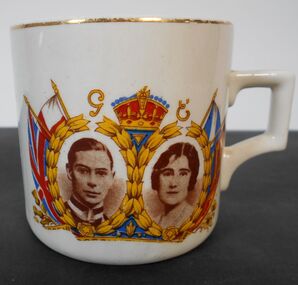
Memorabilia - Commemoration Mug
... He was also the last Emperor of India from 1936 until the British Raj was dissolved in August 1947, and the first head of the Commonwealth following the London Declaration of 1949, He married Lady Elizabeth Bowes-Lyon in 1923, and they had two daughters, Elizabeth and Margaret. ...He was also the last Emperor of India from 1936 until the British Raj was dissolved in August 1947, and the first head of the Commonwealth following the London Declaration of 1949, He married Lady Elizabeth Bowes-Lyon in 1923, and they had two daughters, Elizabeth and Margaret. ...George VI (Albert Frederick Arthur George; 14 December 1895 – 6 February 1952) was King of the United Kingdom and the Dominions of the British Commonwealth from 11 December 1936 until his death on 6 February 1952. He was also the last Emperor of India from 1936 until the British Raj was dissolved in August 1947, and the first head of the Commonwealth following the London Declaration of 1949, He married Lady Elizabeth Bowes-Lyon in 1923, and they had two daughters, Elizabeth and Margaret. KEELE STREET POTTERY (K.S.P) CO. LTD 1915–1958 Earthenware manufacturer at Keele St, Tunstall (to c.1958) and then at Meir Airport, Longton, as part of the Staffordshire Potteries Group.Coronation of King George VI and Queen Elizabeth c.1937 Commemorative Ceramic Mug. Individual Photo of King George and Queen Elizabeth surrounded by yellow wreath. 2 Flags either side. Crown in center of photos and G and E either side of Crown. Gold embossing on lip of mug. Writing at bottom of transfer is missing.KSP C England on basecoronation 1936, king george vi -
 Federation University Historical Collection
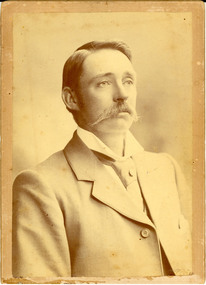
Photograph, William Smerdon Holmes, c1890, c1890
... married Violet Mary Macfie (1859 – 1942) on 9 April 1890 at Geelong. William and Violet lived at "Sauchieburn", Ascot on the 291 ha (720 acre) property that William inherited from his aunt Catherine Coghill (nee Holmes). William and Violet Holmes had four children: • Violet Catherine (1891- 1949...married Violet Mary Macfie (1859 – 1942) on 9 April 1890 at Geelong. William and Violet lived at "Sauchieburn", Ascot on the 291 ha (720 acre) property that William inherited from his aunt Catherine Coghill (nee Holmes). William and Violet Holmes had four children: • Violet Catherine (1891- 1949 ...William Smerdon Holmes married Violet Mary Macfie (1859 – 1942) on 9 April 1890 at Geelong. William and Violet lived at "Sauchieburn", Ascot on the 291 ha (720 acre) property that William inherited from his aunt Catherine Coghill (nee Holmes). William and Violet Holmes had four children: • Violet Catherine (1891- 1949) married Samuel Gordon Spittle 11 August 1920; Mary Coghill (1892 - 1979); • William Edward (1894 - 1964) married Charlotte Anne Alexander 20 June 1933; • Henry Smerdon (1897 - 1954) married Edith Sarah Pickford 28/2/1922. William Smerdon Holmes was the grandfather of Henry John (Jack) Holmes (1922-1972) William Smerdon Holmes (1927-1993), David Coghill Holmes (1929-1950) and Mary Elizabeth Chatham (Elizabeth) (nee Holmes) (1932 - 2006). William Smerdon Holmes died in June 1914 and is buried at the Ballarat New Cemetery. A black and white photograph glued into card. It shows a moustached man in coat, collar, tie and tie-pin. It is William Smerdon Holmeschatham family archive, chatham, holmes, william holmes, william smerdon holmes, ascot, sauchieburn -
 Ballarat Clarendon College
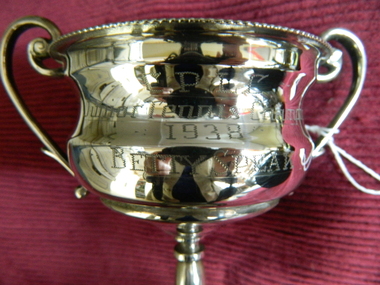
Trophy, Junior tennis champion
... Betty worked as a telephonist at Coleraine Post Office after leaving CPLC in 1938. In 1949, she married Leslie James Steff from Konongwootong. ...Betty worked as a telephonist at Coleraine Post Office after leaving CPLC in 1938. In 1949, she married Leslie James Steff from Konongwootong. ...Elizabeth (Betty) Ann Speak attended Clarendon Presbyterian Ladies College 1937 - 1938. She won the Junior Tennis Champion in 1938. Betty worked as a telephonist at Coleraine Post Office after leaving CPLC in 1938. In 1949, she married Leslie James Steff from Konongwootong. They had two daughters. In 1967 Betty returned to work at the Coleraine Post Office and worked for 17 years, moving to the Hamilton PO after the Coleraine PO closed around 1980. She continued to play tennis throughout her adult years. Daughter Gwenda Steff, who donated the trophy to the school in 2016, says 'Mum was passionate about her tennis. She had a formidable backhand shot that few could return. She played Saturday afternoon competition tennis up until her late 40's and she instilled her love of the game into both my sister Margaret and myself. Mum was always too humble to acknowledge her amazing abilities - both on and off the tennis court. But this is an early public acknowledgement of her skills.'Medium silver cup with double handles and silver base and stem on melamine standEngraved on face of cup: C P L C / Junior Tennis Champion / 1938 / BETTY SPEAKbetty-speak, sports, tennis, trophy, 1930s -
 Surrey Hills Historical Society Collection
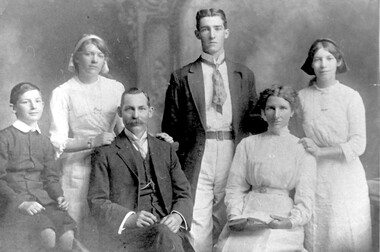
Photograph, Formal photo of the Kleinert family of 34 Union Road, Surrey Hills
... Friedrich Johann Wilhelm (William) Kleinert (1870-1949) married (1872-1937) in 1893. Their children were: Ernest Henry John (1892-1971) married Ida Grace Vassie. ...Friedrich Johann Wilhelm (William) Kleinert (1870-1949) married (1872-1937) in 1893. Their children were: Ernest Henry John (1892-1971) married Ida Grace Vassie. ...William was a coach-builder, wheelwright and blacksmith. He moved from Prahran (13 Regent Street) to Surrey Hills to property owned by the family. The house at 34 Union Road was built in 1905 for William and his wife Emily. Their son Ernest worked with him as a coach painter and also worked as a painter undertaking intricate hand painting on early cars. Their other son Martin played for the Surrey Hills Football Club. In return for the support given to the club by Mrs Emily Kleinert, it built a rotunda in South Surrey Park as a memorial to her. Alan Holt research: Lot 6 was sold to Martin Kleinert by Karl Richter in 1860 together with a portion of another adjacent lot. From 1860-1885 Martin worked it as a market garden leasing some land for grazing when it was not required for gardening. He died in 1898. In a formal document, William declared he was the son of Martin "who purchased land in 1860, died in 1898 and the land has been continually occupied by father and family since. It has been cultivated as a market garden; when not being used for gardening it was let for cultivation and grazing." William died in 1939 and the property passed to his sons Martin and Ernest. The Kleinert land extended from Union Road to Essex Road. They ran horses, ducks and fowls and Emily Kleinert grew flowers. The Kleinert property later became the South Surrey Park. The family sold the land to the Camberwell Council in the 1950s. Ernest and Ida Kleinert lived on the corner of Scotsdale and Warrigal Roads. The donor of the photo Nada Harris, nee Kleinert, was Ernest and Ida's daughter. Ida lived to a good age (> 93 years) and in later life lived in Burwood. Many of the family are buried in Box Hill Cemetery. Friedrich Johann Wilhelm (William) Kleinert (1870-1949) married (1872-1937) in 1893. Their children were: Ernest Henry John (1892-1971) married Ida Grace Vassie. Ivy Louise (1898-1952) Martin William (1903-1964) Henriette Rose (Hetta Rose) 1896-1958.Black and white photo of William and Emily Kleinert and family. The children are L to R: Martin, Rose, Ernest and Ivy.surrey hills football club, blacksmiths, wheelwrights, coachbuilders, south surrey park, rotunda, friedrich johann wilhelm kleinert, william kleinert, emily florence radford, emily florence kleinert, ernest henry john kleinert, ida grace vassie, ida grace kleinert, ivy louise kleinert, martin william kleinert, henriette rose kleinert, hetta rose kleinert, rose kleinert, nada harris, nada kleinert -
 Wodonga & District Historical Society Inc
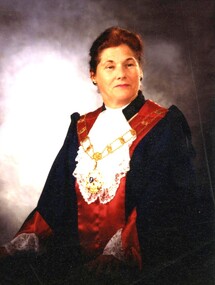
Photograph - Pam Stone - Wodonga's first female Councillor and Mayor
... Pam attended school in Melbourne and was also a member of the Catholic Club where she met her future husband, Les Stone. They married on 18th April 1949 at St. Patrick’s Cathedral Melbourne. ...Pam attended school in Melbourne and was also a member of the Catholic Club where she met her future husband, Les Stone. They married on 18th April 1949 at St. Patrick’s Cathedral Melbourne. ...Pam Stone was the first woman elected to the Wodonga City Council and first woman elected Deputy Mayor and later Mayor of the Rural City of Wodonga. She was born in Swan Hill on 22nd January 1929. Her early years were spent in Mildura, Melbourne and Swan Hill but she lived most of her adult life in Albury Wodonga. Pam attended school in Melbourne and was also a member of the Catholic Club where she met her future husband, Les Stone. They married on 18th April 1949 at St. Patrick’s Cathedral Melbourne. On graduating from Melbourne Teachers College, Les was posted to several small country schools before being transferred to Wodonga in 1956. After a period teaching in Gippsland, the Stone Family returned to Wodonga. Les taught at several schools in the district before being promoted to Principal of Wodonga West Primary. Following involvement in many community organisations Les was elected as Councillor for the West Ward, Wodonga in 1967. He was re-elected unopposed in 1970 and 1971, becoming Mayor in 1973. He passed away in office in December 1974 Les Stone’s service was only possible with the support of Pam who also took a major role in public life and serving the Wodonga community. Four years after his death, Pam stood for and won the Council Ward of Wodonga West Riding, previously held by Les. Pam held the West Riding unopposed for her 15 years on Council from February 1977 to August 1992. This included a term as Deputy Mayor from August 1979 to August 1980. In August 1985 Pam was elected as Wodonga’s 6th Mayor and served in that role until August 1986. In 1978 Pam was made a Justice of the Peace and regularly sat in the Court of Petty Sessions Magistrates Court Wodonga. Pam’s commitment to education from preschool to post-secondary education was also a lifelong passion. Her strong advocacy made a defining difference to education available in Albury Wodonga from pre-school to tertiary education. On 27th October 1994, she was named by Wodonga Technical and Further Education College as a Friend of the College. Pam was conferred with the Order of Australia Medal on Australia Day 26th January 1994. Her citation read: “For service to local government and the community”. In 2010 Wodonga City Council dedicated parkland to mark her contribution. The signage reads: ‘Pam Stone OAM Wodonga’s first female Councillor (1977) and Mayor (1985), is recognised among the most important centenary pioneers of Wodonga. Pam was married to Les Stone, also a Mayor of Wodonga. Pam gave compassionate and effective support to the underprivileged people of Wodonga. She had a profound input in establishing Post-school education in Wodonga and Albury’. Pam Stone passed away in Albury on 6th August 2022. These photos are significant because they depict a female pioneer of local government and education in Wodonga.A set of black and white and colour images of Pamela Mary Stone.pamela stone, wodonga councillors, wodonga local government, wodonga mayors -
 Flagstaff Hill Maritime Museum and Village
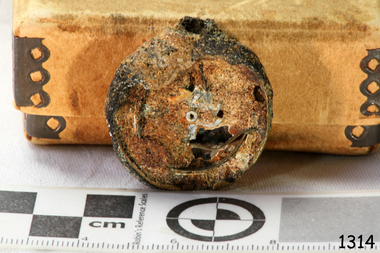
Instrument - Fob Watch, ca 1878
... They had five daughters, four of whom were never married; Kathleen (1880-1949), Mabel (1881-1973), who was the last family member to own the house until her death, Hilda (1884-1974) and Julia Ethel (1888-1949). ...They had five daughters, four of whom were never married; Kathleen (1880-1949), Mabel (1881-1973), who was the last family member to own the house until her death, Hilda (1884-1974) and Julia Ethel (1888-1949). ...The story of this gold fob watch is intriguing. The letter is dated March 6, 1905, 27 years after the Loch Ard was wrecked. It appears to be a quick personal note from a relative or friend who briefly writes the history of the enclosed ‘souvenir’ watch, found in Loch Ard Gorge at Port Campbell. Although the finder is not named, it is likely the letter’s author. The writer mentions that the letter and watch would be sent once photographs of the area where the watch was found had been added. The fancy, lined envelope’s date stamp is October 12th, 1917 (12.10.17), almost 12 years after the letter was written. It has a postmark from Florence (Firenze), Italy. The handwriting on the envelope differs from that of the letter, and there is no further mention of photographs being included. The condition of the watch certainly shows the effects of time in the sea. Some inner workings can be seen through broken encrustations and missing sections of its case. The winding knob on the top is recognisable even though it is covered by sand and other adhesions from the sea. Its dainty size and gold case suggest that it was made for a well-to-do female. The watch, envelope and letter were donated along with a 1971 newspaper cutting, all neatly folded and tucked with the watch into a small, strong cardboard box with metal reinforcing on the corners and a fitted lid. The newspaper article gives context to the watch, telling the story of the Loch Ard shipwreck tragedy and the two survivors, but does not refer to the watch. Perhaps one of the 17 passengers sailing on the Loch Ard, including members of the Carmichael family, owned the watch, or maybe it was amongst the cargo, as the ship’s manifest includes ‘clocks and watches £25’. . Considering the dates of the letter and the envelope, did the finder of the ‘souvenir’ watch take it to Europe? Was it used for good luck during service in the military? . Comparing the different writing on the letter and the envelope, does it suggest that the watch’s finder was overseas and asked someone to send the envelope to the intended recipient, with postage from Italy? ABOUT the address, “Glencove”: The details on the envelope are faint and obscured by stiff creases in the paper. The address appears to be “Mrs J. Mortton, Glencove, Portsea, Victoria, Australia”; though the family at that address had the surname “Morton”. Mrs J. Morton, formerly Elizabeth Ford, married her second husband, James Morton, in 1904, the year before the date of the letter. The couple lived at the Nepean Hotel before they were at “Glencove”. Although they never owned that property, it was their home when James died in 1937. Elizabeth’s nephew, Alfred Sandle Ford (1894-1981), and a nephew-in-law were overseas during World War I. Alfred Ford had moved to Melbourne as a young boy with his father. He entered service as Second Lieutenant in 1915, naming his father, Alfred Sandle Ford, as his next of kin. He served in Egypt, France and Belgium with the Australian Imperial Forces as a member of the Field Artillery Brigades. He returned to Melbourne in 1919 and worked in Richmond and Box Hill. He later married Frances Whyburn. Previously, in 1872, Elizabeth Ford’s sister, Julia Ford, acquired the 1-acre property with a 3-room house that became known as “Glencove”, Portsea. The building was originally the first school in the area, established before Crown Land sales. In the Parish of Nepean, it was first assessed for rates in 1871. Julia Ford (1843-1912) and Elizabeth Ford (1859-1957) were daughters of James Sandle Ford (1811-1890), a well-known pioneer of Portsea, formerly a convict limeburner. James Ford acquired several Crown allotments in Portsea. In 1872, he converted his old hotel into the large residential establishment known as the Nepean Hotel, which his family largely ran until it was demolished in 1971. During those years, different family members lived at the Nepean Hotel or Glencove. In 1877, Julia Ford married a significant landowner, John Cain, a limeburner from Rye. They had five daughters, four of whom were never married; Kathleen (1880-1949), Mabel (1881-1973), who was the last family member to own the house until her death, Hilda (1884-1974) and Julia Ethel (1888-1949). Some of the newspaper records refer to “Glencove”, Portsea, inform that: 1927 - Dr. and Mrs. J. E. Shilliday are staying with Mrs. R. B. Sanderson at Glencove. (Australasian) 1937 - James Morton died at his property, Glencove, Portsea, aged 83 years (Argus) 1949 - Julia Ethel Cain died at Glencove, Portsea. (Argus) 1949 - Probate application by sisters of Julia Ethel Cain, deceased, formerly of Nepean Hotel, Portsea, but late of Glencove, Nepean Highway, Portsea. The connection of the watch with the sands of Loch Ard Gorge and to the ship Loch Ard contributes to our knowledge of personal items brought to Australia in 1878, whether as the belongings of a passenger or as cargo; a gold watch would be intended for a wealthy buyer. The little artefact helps us understand the survival of artefacts in the powerful sea, over a quarter of a century after the wreck of the ship. Although many people would have visited the shipwreck site, the length of time before it was found helps us understand the effects of the sea on shipwreck artefacts. The survival of the carefully packaged watch and related documents shows the respectful understanding of preservation of historic artefacts, even from almost 150 years ago at the time of writing (2025). Ladies' fob watch, thought to be gold. It is now covered in encrustation. A bump on the edge would be the winding mechanism for the watch. A small section of the back of the case has broken away, and an engraved surface can be seen. Face and hands are missing, revealing the spring workings inside. Donated with the watch were two documents and a newspaper cutting about the story of the shipwreck of the Loch Ard. They are all in a strong cardboard box with reinforced corners on the base and lid. Found at Loch Ard Gorge and said to have been from the Loch Ard. The three donated documents are: - 1. A rectangular envelope made of cream waxy paper lined with black and white diagonally striped paper. The top right corner, usually meant for a postage stamp, has been torn off, partly exposing text on a rectangular printed logo. A round black postmark stamp near the top centre shows the post office location and date. The address on the front is handwritten in black ink. The creases on the envelope suggest it has been folded three times. 2. A letter on cream rectangular paper features clear, handwritten script in black ink. The unevenly cut bottom edge has two short black vertical lines, possibly the tops of tall written letters. There are creases where the page has been folded three times. 3. A newspaper clipping featuring text, an illustration, and handwritten details of the newspaper’s source.1. Envelope: - Address: ”Australia (per Postage) / [looks like “Mrs J. Mortton”] / Glencove, (Portsea) / Victoria” Postmark: “FIRENZE” 12 10 17” “ - - - -PORTEN – (illegible)” Logo inside envelope: “BUSTA BRE--- / Earliera Lialia” [Italian; Busta = envelope, Earliera == earlier] 2. Letter: - “I am sending you a ‘souvenir’ from the wreck of the Loch Ard 28 years ago at Port Campbell. It is the remains of a lady’s gold watch found in the gorge where Miss Carmichael & Tom Pearce (the only two saved) were washed up. This souvenir was lying there ever since. I went down into the awful gorge & saw the cave where these two unfortunates (or fortunate perhaps, as they were saved) lived until rescued. I also saw the graves of those who were washed up from the wreck. One grave contains Dr and Mrs Carmichael & six of their children. Later on, when I can get some good views of that wild coast I will send them to you. 6/3/05.” 3. Newspaper cutting: - History of the Lochard. Refer to the Sydney Morning Herald, Nov. 28th, 1971: “Loch Ard: the wreck that became a legend” flagstaff hill, warrnambool, shipwreck coast, flagstaff hill maritime museum, maritime museum, flagstaff hill maritime village, great ocean road, loch ard, eva carmichael, tom pearce, loch ard gorge, loch ard souvenir, port campbell, miss carmichael, mrs carmichael, dr carmichael, 1878, loch ard: the wreck that became a legend, ladies fob watch, gold watch, fob watch, pocket watch, horology, accessory, time keeping, scientific instrument, ladies' watch, ladies' pocket watch, lady's watch, souvenir watch, survivor, clocks and watches, diagonally striped envelope lining, firenze, busta, earliera, florence, italy, glencove, portsea, victoria, 1905, 1917, nepean hotel, moreton, morton, elizabeth morton, mrs j. morton, james morton, elizabeth ford, julia ford, alfred sandle ford, frances whyburn, james sandle ford, john cain, kathleen cain, mabel cain, hilda cain, julia ethel cain, australian imperial forces, field artillery brigades, limeburner -
![Postcard - photographic, A. Gordon Spittle [and Harry Holmes?] , 1916, 23/03/1916](/media/collectors/4f729f6797f83e0308601707/items/4ffe16342162ef0da4e1a9a6/item-media/4ffe169c2162ef0da4e1a9bc/item-fit-380x285.jpg?cb=6) Federation University Historical Collection
Federation University Historical CollectionPostcard - photographic, A. Gordon Spittle [and Harry Holmes?] , 1916, 23/03/1916
... Gordon Spittle married Violet Holmes and both lived at "Mt Cavern" until their deaths. Gordon died in 1942 aged 51. Violet Holmes-Spittle died in 1949 aged 56. ...Gordon Spittle married Violet Holmes and both lived at "Mt Cavern" until their deaths. Gordon died in 1942 aged 51. Violet Holmes-Spittle died in 1949 aged 56. ...Gordon Spittle was the youngest of Three brothers. He grew up in Creswick and attended Creswick Grammar School. Gordon purchased 'Mt Cavern' in 1912. It had 4 years of a 10 year lease to run. His mother and father took delivery of it on 1 April 1916. They lived there and farmed it until Gordon returned from active service in May 1919. S. Gordon Spittle married Violet Holmes and both lived at "Mt Cavern" until their deaths. Gordon died in 1942 aged 51. Violet Holmes-Spittle died in 1949 aged 56. Handwritten lower front 'Do we look down hearted?' Handwritten verso 'Egypt, March 23rd 1916. Dear Mrs Troup. Your very fine and interesting letter dated Feb 15th came to hand to-day and needless to add was delighted to receive it, and can promise you that I'll answer it at my earliest opportunity. We are now having a better time since we came to this part, as we are able to enjoy a little of city life, although we have a good deal more work to do, & which is mostly carting goods to & from the ships & railway stations etc, all of which is interesting & quite a change from our life on the Desert. Hope this card finds you in good health. I will now have to say au revoir for the present with kindest regards to Mr Troup, self and family. From your very sincere friends, A. Gordon Spittle."Two uniformed Australian soldiers pose for a photograph during World War One.chatham family archive, chatham, holmes, world war, world war 1, world war i, world war one, france, spittle, gordon spittle -
 Federation University Historical Collection
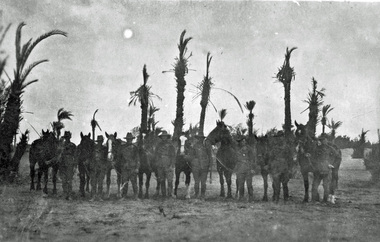
Postcard - photographic, The Ascot (Victoria) Soldiers
... He married Violet Holmes and both lived at "Mt Cavern" until their deaths. Gordon died in 1942 aged 51. Violet Holmes-Spittle died in 1949 aged 56. ...He married Violet Holmes and both lived at "Mt Cavern" until their deaths. Gordon died in 1942 aged 51. Violet Holmes-Spittle died in 1949 aged 56. ...Gordon Spittle was the youngest of Three brothers. He grew up in Creswick and attended Creswick Grammar School. Gordon purchased 'Mt Cavern' in 1912. It had 4 years of a 10 year lease to run. His mother and father took delivery of it on 1 April 1916. They lived there and farmed it until Gordon returned from active service in May 1919. He married Violet Holmes and both lived at "Mt Cavern" until their deaths. Gordon died in 1942 aged 51. Violet Holmes-Spittle died in 1949 aged 56. Image of eight Australian soldiers during World War One. They stand in front of damaged palm trees alongside their horses. Each of the soldiers are from Ascot, Victoria. They are Harry [Holmes], Jack Nase, Harold Reid, Gordon Spittle, Les Walters, Archie May, Frank Thomas, Joe Fawcett.'Verso 'A group of the Ascot boy. Taken with our own horses. from left to right:- Harry [Holmes], Jack Nase, Harold Reid, Gordon Spittle, Les Walters, Archie May, Frank Thomas, Joe Fawcett.'chatham family archive, chatham, holmes, world war, world war 1, world war i, world war one, france, ascot, harry holmes, gordon spittle, les walters, archie may, frank thomas. mase, reif, spittle, walters, may, thomas, fawcett -
 Federation University Historical Collection
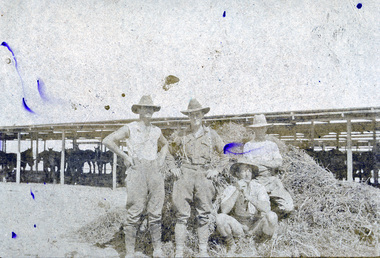
Photograph, Australian Soldiers at Moarcar, Egypt, c1914
... He married Violet Holmes and both lived at "Mt Cavern" until their deaths. Gordon died in 1942 aged 51. Violet Holmes-Spittle died in 1949 aged 56. ...He married Violet Holmes and both lived at "Mt Cavern" until their deaths. Gordon died in 1942 aged 51. Violet Holmes-Spittle died in 1949 aged 56. ...The photograph was associated with Harry Holmes who was a member of the Australian Imperial Force based in Egypt at the time. Gordon Spittle was the youngest of three brothers. He grew up in Creswick and attended Creswick Grammar School. Gordon purchased 'Mt Cavern' in 1912. It had 4 years of a 10 year lease to run. His mother and father took delivery of it on 1 April 1916. They lived there and farmed it until Gordon returned from active service in May 1919. He married Violet Holmes and both lived at "Mt Cavern" until their deaths. Gordon died in 1942 aged 51. Violet Holmes-Spittle died in 1949 aged 56. They were the aunty and uncle of Mary Elziabeth Holme ( m Chatham) Egypt was a major base for the AIF from December 1914. A number of campaigns were fought in this theatre. There were two campaigns involving the AIF. Note that not all the fighting was actually geographically in Egypt. (http://www.aif.adfa.edu.au:8888/about3.html)Four Australian soldiersVerso: 'Moascar, Egypt, June 14th '16. From left to right. S.G.S. [Gordon Spittle], Cam Williamson & Harry [Holmes]. Sitting is Private Berry a son of the big merchants in Melbourne. Am sending these negatives to Jim W. so if they arrive safely, you'll be able to get better proofs from him. From Gordon [Spittle].chatham family archive, chatham, holmes, world war, world war 1, world war i, world war one, moascar, egypt, suez canal, spittle, williamson, harry holmes, berry, egypt, moarcar, ascot -
 Federation University Historical Collection
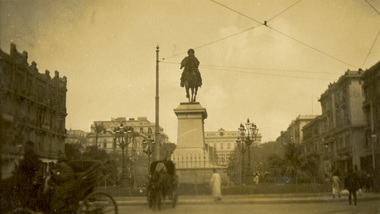
Photograph - black and white postcard, Gordon Spittle, Monument to Mohamed Aly, Alexandria, Egypt, 30/03/1916
... He married Violet Holmes and both lived at "Mt Cavern" until their deaths. Gordon died in 1942 aged 51. Violet Holmes-Spittle dies in 1949 aged 56. ...He married Violet Holmes and both lived at "Mt Cavern" until their deaths. Gordon died in 1942 aged 51. Violet Holmes-Spittle dies in 1949 aged 56. ...The photograph is associated with Harry Holmes and Gordon Spittle who were members of the Australian Imperial Force based in Egypt at the time. Egypt was a major base for the AIF from December 1914. A number of campaigns were fought in this theatre. There were two campaigns involving the AIF. Note that not all the fighting was actually geographically in Egypt. (http://www.aif.adfa.edu.au:8888/about3.html) Gordon Spittle was the youngest of Three brothers. He grew up in Creswick and attended Creswick Grammar School. Gordon purchased 'Mt Cavern' in 1912. It had 4 years of a 10 year lease to run. His mother and father took delivery of it on 1 April 1916. They lived there and farmed it until Gordon returned from active service in May 1919. He married Violet Holmes and both lived at "Mt Cavern" until their deaths. Gordon died in 1942 aged 51. Violet Holmes-Spittle dies in 1949 aged 56. Black and white postcard showing a statue in the middle of a townscape in Alexandria, Egypt. The monument is Mohamed Aly.Verso "Monument to Mohamed Aly which is erected in the square Alexandria. Gordon. 30/3/16chatham family archive, chatham, holmes, world war, world war 1, world war i, world war one, egypt, spittle, gordon spittle, ascot -
 Mission to Seafarers Victoria
Letter - Correspondence, 28/11/1949
... He has spent some time with is friend Norm Cowley, who has married and settled in San Francisco. Quinn Collection letters-from-abroad quinn 1949 san francisco norm cowley The letter is from Allan to his mother. ...Allan writes it is three months now that he has been ashore waiting to sign onto another ship and most of his savings have been used up. He has met up with several old friends when their ships have docked in San Francisco. He has spent some time with is friend Norm Cowley, who has married and settled in San Francisco. Quinn CollectionPale green self-folding letter written with green ink (0831.a) headed San Francisco and dated 28/11/49.The letter is from Allan to his mother.letters-from-abroad, quinn, 1949, san francisco, norm cowley -
 Flagstaff Hill Maritime Museum and Village
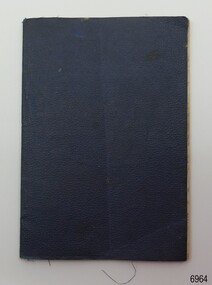
Book - Trade Union Rules, Shipwrights' Provident Union of the Port of London, Rules of the Shipwrights' Provident Union of the Port of London, 28-09-1895
... 1949, Norman met his wife-to-be, Daphne, in Melbourne. Daphne had migrated from London with her family and her father found work with the Melbourne Harbour Trust. They married...1949, Norman met his wife-to-be, Daphne, in Melbourne. Daphne had migrated from London with her family and her father found work with the Melbourne Harbour Trust. They married ...A number of items once belonging to shipwright Norman McKenzie were donated to Flagstaff Hill Maritime Museum and Village. They are related to Norman’s apprenticeship and certification as a Shipwright in Belfast, his Union membership and his employment as a shipwright in Melbourne. One of the items, a union Rules Book inscribed with the name H.B. Thomas and dated 1902, had within its pages Norman’s Indenture of Apprenticeship, dated 1941, Norman Desmond McKenzie was born in Belfast in 1925 and lived at 10 Pansy Street Belfast, Northern Ireland. At the age of 16 years, he began a 5-year Shipwright’s apprenticeship with Harland & Wolff Limited, Shipbuilding & Engineering Works, Belfast. He became a member of the Ship Constructors’ and Shipwrights’ Association, Belfast (B) Branch 20. His Registration Number was 38748. He completed his apprenticeship on December 16th, 1946, aged 21 years, his address was 26 Connsbrook Drive, Sydenham, N. Belfast. In October 1949 Norman received Clearance from his Union as a financial member to move to another branch. He completed his Apprenticeship on December 16th 1946. Two months later he migrated to Australia, and he arrived in Victoria, and he became a Financial Member of the Victorian branch of the Federated Shipwrights, Ship constructors, Naval Architects, Ships’ Draughtsmen and Boat Builders’ Association of Australia, Victoria branch. One of Norman’s donated books is the Rules of the Shipwrights' Provident Union of the Port of London. It is inscribed on several pages with the name H.B. Thomas and includes the year 1902 and the address of 29 Brickwood Street, Gardenvale. This is a location in Victoria, Australia. The Victoria Government Gazette, February 1959, in the section “Removal from Registration on The Architects Registration Board of Victoria, during the year ended 31st December 1956” lists “Deceased – Thomas, H.B., 29 Brickwood Street, Gardenvale”. The Architects Union includes Naval Architects and Shipwrights and other related trades came under the same union. It seems likely that when he was in Melbourne, Norman worked as a Shipwright for H.B. Thomas and was given the Rules book by Thomas, perhaps as a reference book or maybe as a gift. Around that same time, December 1949, Norman met his wife-to-be, Daphne, in Melbourne. Daphne had migrated from London with her family and her father found work with the Melbourne Harbour Trust. They married in Melbourne in 1953 and went on to have a family of five children. In 2003 Norman and Daphne moved to Warrnambool and then years later they celebrated their 60th wedding anniversary. Norman passed away on July 28th 2015 at Warrnambool’s South West Healthcare hospital. SUBJECTS Flagstaff Hill, Warrnambool, Maritime Village, Maritime Museum, Shipwreck coast, Great Ocean Road, Norman McKenzie, Norman Desmond McKenzie, Belfast shipwright, Shipwright's apprenticeship, Harland & Wolff Limited, Shipbuilding & Engineering Works, the Ship Constructors’ and Shipwrights’ Association, Registered Shipwright, Victorian branch of the Federated Shipwrights, Ship constructors, Naval Architects, Ships’ Draughtsmen and Boat Builders’ Association of Australia, Victoria branch, Shipwrights' Provident Union, H.B. Thomas, Architects Registration Board of Victoria, Naval Architect, Daphne, Norman and Daphne McKenzie, Indenture of Apprenticeship SIGNIFICANCE Norman McKenzie's Rules Book, Union Cards, Indenture of Apprenticeship, and other documents tell the story of a young Irish lad's work and qualifications to become a shipwright and his migration to Australia. The young man found a job and a wife who had also migrated, and they raised a family in Melbourne. He and his wife then retired to Warrnambool to enjoy their later years. The collection of documents relating to Norman McKenzie is significant for its connection with the shipping industry of the early 1900s, the migration of qualified tradesmen to Victoria, and their contribution to the development of Victoria. The collection also shows the role of the Union in the shipping industry. The documents link shipwright Norman McKenzie to the Shipwright's Union in London and in Australia, and to shipbuilder H B Thomas in Melbourne, most likely his employer.Norman McKenzie's Rules Book, Union Cards, Indenture of Apprenticeship, and other documents tell the story of a young Irish lad's work and qualifications to become a shipwright and his migration to Australia. The young man found a job and a wife who had also migrated, and they raised a family in Melbourne. He and his wife then retired to Warrnambool to enjoy their later years. The collection of documents relating to Norman McKenzie is significant for its connection with the shipping industry of the early 1900s, the migration of qualified tradesmen to Victoria, and their contribution to the development of Victoria. The collection also shows the role of the Union in the shipping industry. The documents link shipwright Norman McKenzie to the Shipwright's Union in London and in Australia, and to shipbuilder H B Thomas in Melbourne, most likely his employer. Book, small handbook. Rules of the Shipwrights' Provident Union of the Port of London. Rules were Registered with the Shipwrights' Provident Union of the Port of London, Register No. 527, September 28th 1895. A small book with dark blue textured fabric covers. Pages, 56, are bound with staples. The book has handwritten inscriptions dated 1902.Handwritten in black pen: Inside cover, "H.B. Thomas, 1902" Page 45 "H B Thomas, 29 Brickwood Street, Gardenvale" Page 49, handwritten in blue ink "H B Thomas, 1902"flagstaff hill, warrnambool, maritime village, maritime museum, shipwreck coast, great ocean road, norman mckenzie, norman desmond mckenzie, belfast shipwright, shipwright's apprenticeship, harland & wolff limited, shipbuilding & engineering works, the ship constructors’ and shipwrights’ association, registered shipwright, victorian branch of the federated shipwrights, ship constructors, naval architects, ships’ draughtsmen and boat builders’ association of australia, victoria branch, shipwrights' provident union, h.b. thomas, architects registration board of victoria, naval architect, daphne, norman and daphne mckenzie -
 Flagstaff Hill Maritime Museum and Village
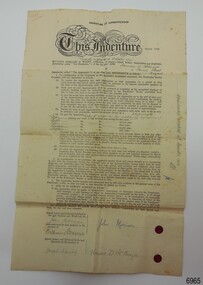
Document - Certificate, Harland & Wolff Limited, Shipbuilding & Engineering Works, Indenture of Apprenticeship, 28th October 1941
... 1949, Norman met his wife-to-be, Daphne, in Melbourne. Daphne had migrated from London with her family and her father found work with the Melbourne Harbour Trust. They married...1949, Norman met his wife-to-be, Daphne, in Melbourne. Daphne had migrated from London with her family and her father found work with the Melbourne Harbour Trust. They married ...A number of items once belonging to shipwright Norman McKenzie were donated to Flagstaff Hill Maritime Museum and Village. They are related to Norman’s apprenticeship and certification as a Shipwright in Belfast, his Union membership and his employment as a shipwright in Melbourne. One of the items, a union Rules Book inscribed with the name H.B. Thomas and dated 1902, had within its pages Norman’s Indenture of Apprenticeship, dated 1941, Norman Desmond McKenzie was born in Belfast in 1925 and lived at 10 Pansy Street Belfast, Northern Ireland. At the age of 16 years, he began a 5-year Shipwright’s apprenticeship with Harland & Wolff Limited, Shipbuilding & Engineering Works, Belfast. He became a member of the Ship Constructors’ and Shipwrights’ Association, Belfast (B) Branch 20. His Registration Number was 38748. He completed his apprenticeship on December 16th, 1946, aged 21 years, his address was 26 Connsbrook Drive, Sydenham, N. Belfast. In October 1949 Norman received Clearance from his Union as a financial member to move to another branch. He completed his Apprenticeship on December 16th 1946. Two months later he migrated to Australia, and he arrived in Victoria, and he became a Financial Member of the Victorian branch of the Federated Shipwrights, Ship constructors, Naval Architects, Ships’ Draughtsmen and Boat Builders’ Association of Australia, Victoria branch. One of Norman’s donated books is the Rules of the Shipwrights' Provident Union of the Port of London. It is inscribed on several pages with the name H.B. Thomas and includes the year 1902 and the address of 29 Brickwood Street, Gardenvale. This is a location in Victoria, Australia. The Victoria Government Gazette, February 1959, in the section “Removal from Registration on The Architects Registration Board of Victoria, during the year ended 31st December 1956” lists “Deceased – Thomas, H.B., 29 Brickwood Street, Gardenvale”. The Architects Union includes Naval Architects and Shipwrights and other related trades came under the same union. It seems likely that when he was in Melbourne, Norman worked as a Shipwright for H.B. Thomas and was given the Rules book by Thomas, perhaps as a reference book or maybe as a gift. Around that same time, December 1949, Norman met his wife-to-be, Daphne, in Melbourne. Daphne had migrated from London with her family and her father found work with the Melbourne Harbour Trust. They married in Melbourne in 1953 and went on to have a family of five children. In 2003 Norman and Daphne moved to Warrnambool and then years later they celebrated their 60th wedding anniversary. Norman passed away on July 28th 2015 at Warrnambool’s South West Healthcare hospital.Norman McKenzie's Rules Book, Union Cards, Indenture of Apprenticeship, and other documents tell the story of a young Irish lad's work and qualifications to become a shipwright and his migration to Australia. The young man found a job and a wife who had also migrated, and they raised a family in Melbourne. He and his wife then retired to Warrnambool to enjoy their later years. The collection of documents relating to Norman McKenzie is significant for its connection with the shipping industry of the early 1900s, the migration of qualified tradesmen to Victoria, and their contribution to the development of Victoria. The collection also shows the role of the Union in the shipping industry. The documents link shipwright Norman McKenzie to the Shipwright's Union in London and in Australia, and to shipbuilder H B Thomas in Melbourne, most likely his employer.Certificate printed on cream paper; Indenture of Apprenticeship, between Norman McKenzie of Belfast, and Harland & Wolff Ltd. of Queen's Island, Belfast on 28th October 1941. The Certificate was donated within the pages of a book, Rules of the Shipwrights' Provident Union of the Port of London published in 1895 and inscribed in 1905 with the name H. B. Thomas. Inscriptions are on the front and reverse of the certificate. There are two red wax seals beside the signatures of John Morrison and Norman D. McKenzie. Handwritten and underlined in red pen, top right of Certificate's front "1499" Printed on the Certificate, employer "HARLAND & WOLFF Limited, of Queen's Island, Belfast, Shipbuilders and Engineers" Handwritten in black pen "Twenty-eighth (day of ) October 1941" "Norman D. McKenzie, 10 Pansy Street, Belfast" "Shipwright Rates of wages as per National agreement" SIGNED: "John Morrison" "William Donald" "Joseph Kenney" "Norman D. McKenzie" Along the right margin "Apprenticeship completed 16th December 1946" In pencil on the reverse "N McKenzie, 26 Connsbrook Drive, Sydenham, N. Belfast" flagstaff hill, warrnambool, maritime village, maritime museum, shipwreck coast, great ocean road, norman mckenzie, norman desmond mckenzie, belfast shipwright, shipwright's apprenticeship, harland & wolff limited, shipbuilding & engineering works, the ship constructors’ and shipwrights’ association, registered shipwright, victorian branch of the federated shipwrights, ship constructors, naval architects, ships’ draughtsmen and boat builders’ association of australia, victoria branch, shipwrights' provident union, h.b. thomas, architects registration board of victoria, naval architect, daphne, norman and daphne mckenzie, indenture of apprenticeship -
 Orbost & District Historical Society
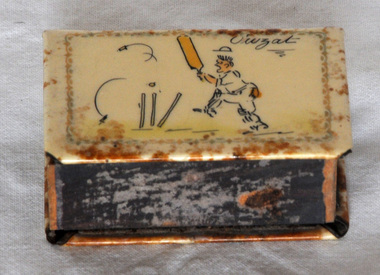
match box cover, 1950-1960's
... married Jean Cameron. After WW11 when he served overseas in the islands) He resumed his trade at the Snowy River Mail until 1949 when began J.G.& J.M. ...married Jean Cameron. After WW11 when he served overseas in the islands) He resumed his trade at the Snowy River Mail until 1949 when began J.G.& J.M. ...This was owned and used by J.G. Ralston of Orbost. John Gavin Ralston was born 26 July 1914 at Eden, N.S.W. and came to Orbost in the early 1920's, with his parents and siblings. They lived at the corner of Tennyson and Salisbury Streets. Jack was educated at Orbost Higher Elementary School before being apprenticed to William Ross at the Snowy River Mail as a lino-type operator. He married Jean Cameron. After WW11 when he served overseas in the islands) He resumed his trade at the Snowy River Mail until 1949 when began J.G.& J.M. Ralston, Seed & Produce Merchants. Jack Ralston was very involved in the Orbost sporting community, the Presbyterian Church and the Orbost Municipal Band. He also served in the Orbost sub-branch of the R.S.L. He died on April 15 1967. (ref. Margaret Smith O.D.H.S. Newsletter) Collecting match box holders / grips was a popular hobby. They were made to fit over a box of matches for protection. Some were especially produced for significant occasions. This item is an example of a very common personal item rarely used today.A painted metal matchbox cover with a thin wooden matchbox inside. It is cream coloured with a picture of a cricketer being bowled out. In the top right hand corner is "OWZAT". The matches are Bryant & May's Crown Safety Matches. it is a rectangular cardboard box with a sliding cardboard drawer. The box has a paper label with text reading, "BRYANT & MAY'S CROWN SAFETY MATCHES" and an image of a crown. The top and bottom side has a purple striking paper, to light match. Bottom and sides of sliding drawer are a green color.J.G.Ralstonmatchbox-holder smoking-accessories ralston-j.g. -
 Orbost & District Historical Society
medal, 1928
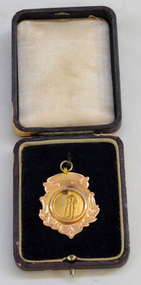
... married Jean Cameron. After WW11 when he served overseas in the islands) He resumed his trade at the Snowy River Mail until 1949 when began J.G.& J.M. ...married Jean Cameron. After WW11 when he served overseas in the islands) He resumed his trade at the Snowy River Mail until 1949 when began J.G.& J.M. ...This medal was presented to J.G.Ralston by the Orbost Cricket Club in 1929 for Fielding. John Gavin Ralston was born 26 July 1914 at Eden, N.S.W. and came to Orbost in the early 1920's, with his parents and siblings. They lived at the corner of Tennyson and Salisbury Streets. Jack was educated at Orbost Higher Elementary School before being apprenticed to William Ross at the Snowy River Mail as a lino-type operator. He married Jean Cameron. After WW11 when he served overseas in the islands) He resumed his trade at the Snowy River Mail until 1949 when began J.G.& J.M. Ralston, Seed & Produce Merchants. Jack Ralston was very involved in the Orbost sporting community, the Presbyterian Church and the Orbost Municipal Band. He also served in the Orbost sub-branch of the R.S.L. He died on April 15 1967. (ref. Margaret Smith O.D.H.S. Newsletter)John Ralston was a prominent Orbost citizen.A 9 ct gold shield-shaped medal with a small hanging hoop. In the centre is an embossed picture of a batsman at the wicket. This is inside a circle. The bottom edge is decorated with leaves. The medal is inside a thin leather look wooden box which is hinged and has a push button metal latch. The box is brown and the inside lid is padded.on back - OCC At bottom - 9 ct Presented to J.G. Ralston Fielding Trophy 1928-1929cricket-orbost sport ralston-john-gavin medal -
 Orbost & District Historical Society
knitted vests/singlets, Burton, Marjorie, WW11
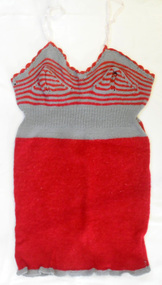
... married in 1938 to a salesman who later became a mechanic in the R.A.F. during WW11. Her father served in Civil Defence during the war. Marjorie was in Birmingham during the war and remembered sheltering with her young daughter, Anne (Quaadgras) in the air raid shelter during bombing. This item is an example of a handcrafted item and reflects the handcraft skills of women necessary during WW11 when clothing became scarce. Clothes rationing began on June 1, 1941, two years after food rationing started. Clothes rationing ended on 15 March 1949 ...This was knitted by Marjorie Burton during WW11 in England. She used to knit while in an air raid shelter escaping the bombing with her young daughter. Marjorie Burton ( nee Whiteman), born 12 June, in Birmingham, England came to Orbost in 1995. In England she did office work – typing, shorthand and secretarial work - in accountants’ offices and also trained as a comptometrist with Burroughs in London. She came from middle-class working church-going family. Her mother was a milliner who made most of Marjorie’s clothes, hats and outfits. Marjorie married in 1938 to a salesman who later became a mechanic in the R.A.F. during WW11. Her father served in Civil Defence during the war. Marjorie was in Birmingham during the war and remembered sheltering with her young daughter, Anne (Quaadgras) in the air raid shelter during bombing. This item is an example of a handcrafted item and reflects the handcraft skills of women necessary during WW11 when clothing became scarce. Clothes rationing began on June 1, 1941, two years after food rationing started. Clothes rationing ended on 15 March 1949.Two hand-knitted lady's vests(singlets). Both have been knitted from left over wools. Both have crocheted necklines and ribbon straps and are fitted styles. 2483.12 is red and grey with a V neck. 2483.13 is pink, grey and blue with a V neck.ww11 knitwear handcraft nightgown sleepwear burton-marjorie -
 Orbost & District Historical Society
six pairs of gloves, Burton, Marjorie, 1940's -1950's
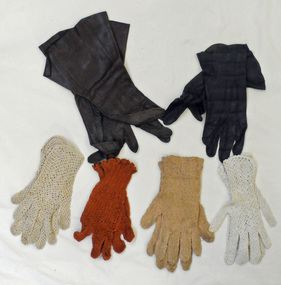
... married in 1938 to a salesman who later became a mechanic in the R.A.F. during WW11. Her father served in Civil Defence during the war. Marjorie was in Birmingham during the war and remembered sheltering with her young daughter, Anne (Quaadgras) in the air raid shelter during bombing. These items are examples of handcrafted items and reflect the handcraft skills of women necessary during WW11 when clothing became scarce. Clothes rationing began on June 1, 1941, two years after food rationing started. Clothes rationing ended on 15 March 1949 ...Marjorie Burton ( nee Whiteman), born 12 June, in Birmingham, England came to Orbost in 1995. In England she did office work – typing, shorthand and secretarial work - in accountants’ offices and also trained as a comptometrist with Burroughs in London. She came from middle-class working church-going family. Her mother was a milliner who made all of Marjorie’s clothes, hats and outfits. Marjorie married in 1938 to a salesman who later became a mechanic in the R.A.F. during WW11. Her father served in Civil Defence during the war. Marjorie was in Birmingham during the war and remembered sheltering with her young daughter, Anne (Quaadgras) in the air raid shelter during bombing. These items are examples of handcrafted items and reflect the handcraft skills of women necessary during WW11 when clothing became scarce. Clothes rationing began on June 1, 1941, two years after food rationing started. Clothes rationing ended on 15 March 1949.Six pairs of ladies' gloves. 2483.16 is a white crocheted cotton pair. 2483.17 is a light tan knitted woolen pair. 2483.18 is a brown crocheted cotton pair. 2483.19 is an ecru crocheted cotton pair. 2483.20 is a black leather pair and 2483.21 is a brown leather pair. women's-accessories gloves crochet knitting burton-marjorie -
 Orbost & District Historical Society
paper bag of feathers, C. 1940's
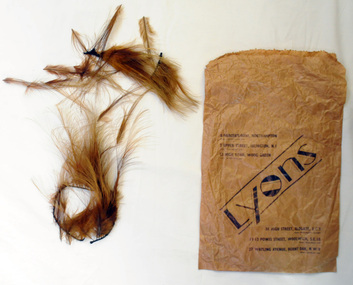
... married in 1938 to a salesman who later became a mechanic in the R.A.F. during WW11. This item is an example of the materials used in handcrafting women's hats and reflects the skills of women women necessary during WW11 when clothing became scarce. Clothes rationing began on June 1, 1941, two years after food rationing started. Clothes rationing ended on 15 March 1949 ...The bag is probably not connected to the contents. The feathers would have been used by Marjorie Burton to decorate or trim hats. Marjorie Burton ( nee Whiteman), born 12 June, in Birmingham, England came to Orbost in 1995. In England she did office work – typing, shorthand and secretarial work - in accountants’ offices and also trained as a comptometrist with Burroughs in London. She came from middle-class working church-going family. Her mother was a milliner who made many of Marjorie’s clothes, hats and outfits. Marjorie married in 1938 to a salesman who later became a mechanic in the R.A.F. during WW11. This item is an example of the materials used in handcrafting women's hats and reflects the skills of women women necessary during WW11 when clothing became scarce. Clothes rationing began on June 1, 1941, two years after food rationing started. Clothes rationing ended on 15 March 1949.A brown paper bag containing feathers for hat trimming. Some are loose and others are attached to covered wire mounts. the feathers are dark brown.LYONS - diagonally across paper bag in black print. There are addresses of U.K.shops on either side .feathers millinery accessories burton-marjorie -
 Orbost & District Historical Society
knitted collar, Burton, Marjorie, 1940's
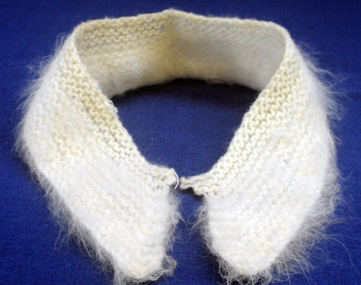
... married in 1938 to a salesman who later became a mechanic in the R.A.F. during WW11. Her father served in Civil Defence during the war. Marjorie was in Birmingham during the war and remembered sheltering with her young daughter, Anne (Quaadgras) in the air raid shelter during bombing. This item is an example of a handcrafted item and reflects the handcraft skills of women necessary during WW11 when clothing became scarce. Clothes rationing began on June 1, 1941, two years after food rationing started. Clothes rationing ended on 15 March 1949 ...This was knitted by Marjorie Burton during WW11 in England. She used to knit while in an air raid shelter escaping the bombing with her young daughter. Marjorie Burton ( nee Whiteman), born 12 June, in Birmingham, England came to Orbost in 1995. In England she did office work – typing, shorthand and secretarial work - in accountants’ offices and also trained as a comptometrist with Burroughs in London. She came from a middle-class, working, church-going family. Her mother was a milliner who mademany of Marjorie’s clothes, hats and outfits. Marjorie married in 1938 to a salesman who later became a mechanic in the R.A.F. during WW11. Her father served in Civil Defence during the war. Marjorie was in Birmingham during the war and remembered sheltering with her young daughter, Anne (Quaadgras) in the air raid shelter during bombing. This item is an example of a handcrafted item and reflects the handcraft skills of women necessary during WW11 when clothing became scarce. Clothes rationing began on June 1, 1941, two years after food rationing started. Clothes rationing ended on 15 March 1949.A narrow, detachable hand-knitted lady's collar. It is hand-knitted in white brushed wool.women's -clothing accessory burton-marjorie -
 Flagstaff Hill Maritime Museum and Village
Photograph - Vessel, Steam Ship, H.M.A.S. Warrnambool J202, Between 1941-1947
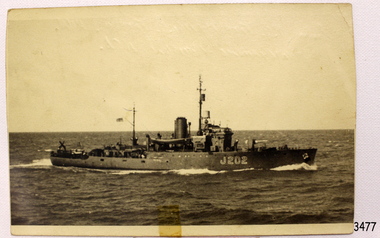
... Annie married her landlord, John O’Keefe but was still issued a deportation order in 1949. ...Annie married her landlord, John O’Keefe but was still issued a deportation order in 1949. ...This photograph is connected to the first HMAS Warrnambool (J202), which was one of 60 Bathurst class corvette vessels built during World War II by Mort's Dock & Engineering Co Ltd of Sydney under the commission of the Royal Australian Navy (RAN). It was the namesake of the City of Warrnambool in Victoria. The armed minesweeper was 57 metres long and could had a complement of 85 personnel. Its armament included 1 × 4 inch Mk XIX gun, 1 × 40 mm Bofors AA gun (installed later), 3 × 20 mm Oerlikon guns (1 later removed), machine guns and depth charge chutes and throwers. It was launched in Sydney in May, 1941. The HMAS Warrnambool began service with patrols off Bass Strait in 1941. In December the ship docked in Warrnambool Harbour and the crew marched in a parade along Timor Street. The ship’s crew received a donation of 110 books from the Warrnambool Patriotic Fund, and a plaque of the City of Warrnambool’s Coat of Arms presented by the Mayor, Cr. John R Astbury. In September 1942 a Dutch East Indies family, Samuel and Annie Jacob and seven of their eight children, was rescued by the HMAS Warrnambool and evacuated to Darwin. The family settled in Melbourne, then in 1944 Samuel tragically died. After the war ended the family was threatened with deportation under Australia’s Immigration Restriction Act 1901 (known also as the White Australia policy). Annie married her landlord, John O’Keefe but was still issued a deportation order in 1949. The family appealed to the High Court and the case became famous for being the first successful legal challenge to the Act. The HMAS Warrnambool was in Darwin during the time it was bombed, attacked by the Japanese while rescuing 73 crew from a merchant vessel that had also been attacked. The ship was involved in several other rescues and carried troops to New Guinea. Other events included escort and patrol duties on Australia's east coast, then at Fremantle and back to Darwin. When the Japanese surrendered on September 11, 1945, at the end of World War II, the ship was at Timor. It performed mine clearance work around the Solomon Islands and New Guinea after the war. On 13th September 1947 the ship was sent to lead a flotilla at the Great Barrier Reef, off the Queensland coast. The mission was to clear the defensive British mines that were laid during1941-43 to protect Australia’s boarders. The HMAS Warrnambool hit a mine near Cockburn Reef, exploded and sank shortly afterwards. One of the 70 or so men on board was killed at the time and thirty-two men were badly injured; three of these also lost their lives. The four deceased were Victorian seamen. The wounded men were transferred by boats to the nearby HMAS Swan II, where the Swan’s and the Warrnambool’s doctors cared for them. The HMAS Swan II took the survivors to Cairns, and from there the men were flown by RAAF to either Brisbane or Sydney hospitals. The HMAS Warrnambool was the only RAN ship to be sunk by a mine, and the four who lost their livers were the last naval casualties from World War II. The ship’s wartime service was recognised by three honours. In May 1948 a number of items were recovered by Navy divers from the wreck of HMAS Warrnambool. The items included the ship’s bell (inscribed HMAS Warrnambool 1941) and the round plaque with the Seal of the Warrnambool City Council. In 1949 the plaque was returned to the Council, and the bell was donated to the Australian War Memorial. Further objects were recovered by the new owners of the wreck, Southern Cross Diving and Salvage, in 1972-75. A memorial plaque, honouring the memories of all those who served on the HMAS Warrnambool until is sunk on September 13 1947, was erected in Warrnambool on September 13, 1995. NOTE: (1)- The second HMAS Warrnambool (FCPB204), also the namesake of the City of Warrnambool, was built in 1980 in Cairns, one of fifteen Fremantle Class Patrol Boats ordered by the RAN. It was just over 41 metres long with a compliment of 22 personnel. It patrolled Australia’s northern waters for illegal fishing vessels. This vessel was decommissioned in 2005. (2)- There was also a steam and sail ship named the S.S. Warrnambool, built in 1892 in London and broken up in 1926.This photograph is significant for its association with Royal Australian Navy and its vessel, HMAS Warrnambool (j202). The HMAS Warrnambool played a nationally significant role in overturning Australia’s Immigration Restriction Act 1901 (colloquially known as the White Australia policy). The ship rescued, and brought to Australia, Samuel and Annie Jacob and their family after they evacuated Dutch East India. The family was threatened with deportation and made the first successful appeal to High Court regarding that Act. The HMAS Warrnambool has - Local significance for being the namesake of the City of Warrnambool - Local significance, having docked in Warrnambool Harbour - Local significance, the crew having paraded in Timor Street, Warrnambool - State significance for its first patrol being in Bass Strait. - National significance, being present in Timor at the Japanese surrender - National significance as part of Australia’s defence force history, being one of only four Bathurst class corvettes lost while in Australian service, the only Bathurst class corvette lost after World War II, the only RAN vessel to be sunk by a mine, and associated with the last four Navy deaths of WWIIBlack and white photograph of vessel H.M.A.S. Warrnambool J202 on an open sea. The identifying number is painted on the hull. The ship is flying a white ensign. A lifeboat is suspended near the centre of the ship. Figures can be seen on deck. Hand written inscription on the reverse side. On ship's hull "J202" On reverse of photo "From P.O. FRED MATTHEWS. 23378. R.A.N." "MARIBYRNONG MAIDSTON RSL" "H.M.A.S. WARRNAMBOOL"flagstaff hill, warrnambool, shipwrecked-coast, flagstaff-hill, flagstaff-hill-maritime-museum, maritime-museum, shipwreck-coast, flagstaff-hill-maritime-village, photograph, h.m.a.s. warrnambool, maritime village, maritime museum, shipwreck coast, mort's dock & engineering co ltd, hmas warrnambool, hmas warrnambool i, hmas warrnambool j202, hmas swan ii, j202, world war ii, bathurst class corvette, royal australian navy, ran, sydney built ship, bass strait patrol, sea mine patrol, mine sweeper, mine clearance, navy divers, great barrier reef, cockburn reef, southern cross diving and salvage, warrnambool city council, cr j r astbury, mayor j r astbury, warrnambool patriotic fund, seal, coat of arms, ship’s bell, hmas warrnambool 1941, shipwreck by sea mine 1947, sea rescue, life saving, lifesaving, sinking ship, sunk ship, immigration restrictions act 1901, white australia policy, samuel and annie jacob, john o'keere, minesweeper -
 Flagstaff Hill Maritime Museum and Village
Financial record - Membership Card, Shipconstructors’ and Shipwrights’ Association, Shipconstructors' and Shipwrights' Association, 1946
... 1949, Norman met his wife-to-be, Daphne, in Melbourne. Daphne had migrated from London with her family and her father found work with the Melbourne Harbour Trust. They married...1949, Norman met his wife-to-be, Daphne, in Melbourne. Daphne had migrated from London with her family and her father found work with the Melbourne Harbour Trust. They married ...Several items once belonging to shipwright Norman McKenzie were donated to Flagstaff Hill Maritime Museum and Village. They relate to Norman’s apprenticeship and certification as a Shipwright in Belfast, his Union membership and his employment as a shipwright in Melbourne. One of the items, a union Rules Book inscribed with the name H.B. Thomas and dated 1902, had within its pages Norman’s Indenture of Apprenticeship, dated 1941, Norman Desmond McKenzie was born in Belfast in 1925 and lived at 10 Pansy Street Belfast, Northern Ireland. At the age of 16 years, he began a 5-year Shipwright’s apprenticeship with Harland & Wolff Limited, Shipbuilding & Engineering Works, Belfast. He was a member of the Ship Constructors’ and Shipwrights’ Association, Belfast (B) Branch 20. His Registration Number was 38748. He completed his apprenticeship on December 16th, 1946, aged 21 years, his address was 26 Connsbrook Drive, Sydenham, N. Belfast. In October 1949 Norman received Clearance from his Union as a financial member to move to another branch. He had completed his Apprenticeship on December 16th 1946. Two months later he migrated to Australia, arrived in Victoria and became a Financial Member of the Victorian branch of the Federated Shipwrights, Ship Constructors, Naval Architects, Ships’ Draughtsmen and Boat Builders’ Association of Australia, Victoria branch. One of Norman’s donated books is the Rules of the Shipwrights' Provident Union of the Port of London. It is inscribed on several pages with the name H.B. Thomas and includes the year 1902 and the address of 29 Brickwood Street, Gardenvale. This is a location in Victoria, Australia. The Victoria Government Gazette, February 1959, in the section “Removal from Registration on The Architects Registration Board of Victoria, during the year ended 31st December 1956” lists “Deceased – Thomas, H.B., 29 Brickwood Street, Gardenvale”. The Architects Union includes Naval Architects and Shipwrights and other trades that came under the same union. It seems likely that when he was in Melbourne, Norman worked as a Shipwright for H.B. Thomas and was given the Rules book by Thomas, perhaps as a reference book or maybe as a gift. Around that same time, December 1949, Norman met his wife-to-be, Daphne, in Melbourne. Daphne had migrated from London with her family and her father found work with the Melbourne Harbour Trust. They married in Melbourne in 1953 and their family grew to include five children. In 2003 Norman and Daphne moved to Warrnambool and then years later they celebrated their 60th wedding anniversary. Norman passed away on July 28th 2015 at Warrnambool’s South West Healthcare hospital.Norman McKenzie's Rules Book, Union Cards, Indenture of Apprenticeship, and other documents tell the story of a young Irish lad's work and qualifications to become a shipwright and his migration to Australia. The young man found a job and a wife who had also migrated, and they raised a family in Melbourne. He and his wife then retired to Warrnambool to enjoy their later years. The collection of documents relating to Norman McKenzie is significant for its connection with the shipping industry of the early 1900s, the migration of qualified tradesmen to Victoria, and their contribution to the development of Victoria. The collection also shows the role of the Union in the shipping industry. The documents link shipwright Norman McKenzie to the Shipwright's Union in London and in Australia, and to shipbuilder H B Thomas in Melbourne, most likely his employer.- Apprentice's Membership Card, Shipconstructors' and Shipwrights' Association; pink fabric covered card covers with white paper pages that record the member's contributions. for the year 1946 - enclosed within the Card is a printed and signed white paper Certificate of Shipwrights' Clearance Line, Shipconstructors' and Shipwrights' Association, Branch Transfer papers for N.McKenzie, 1st October 1949. ON THE CARD: Stamped "BELFAST (B) branch" "J ALEXANDER" Handwritten "N. McKenzie, 26 Connsbrook Drive, Sydenham," NIR", (Branch Nu.) "20", (Reg No.) "38748" "9/3/46", (Rate) "APP" ON CERTIFICATE: "(99) BELFAST B" "N McKenzie" "NIR" "38748" (Member No.) "221" "24" (years of age) (CLASS OF MEMBER" "Full Benefit" "!st October 1949" (Signature Of) "John Alexander"union card, apprentice shipwright, branch transfer papers, union membership, m mckenzie, 1946, flagstaff hill, warrnambool, maritime village, maritime museum, shipwreck coast, great ocean road, norman mckenzie, norman desmond mckenzie, belfast shipwright, shipwright's apprenticeship, harland & wolff limited, shipbuilding & engineering works, the ship constructors’ and shipwrights’ association, registered shipwright, victorian branch of the federated shipwrights, ship constructors, naval architects, ships’ draughtsmen and boat builders’ association of australia, victoria branch, shipwrights' provident union, h.b. thomas, architects registration board of victoria, naval architect, daphne, norman and daphne mckenzie, indenture of apprenticeship, 1941, 1949 -
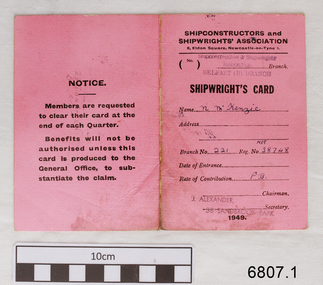 Flagstaff Hill Maritime Museum and Village
Financial record - Union Membership, Shipconstructiors’ and Shipwrights’ Association et al, From 1941 to 1950
... 1949, Norman met his wife-to-be, Daphne, in Melbourne. Daphne had migrated from London with her family and her father found work with the Melbourne Harbour Trust. They married...1949, Norman met his wife-to-be, Daphne, in Melbourne. Daphne had migrated from London with her family and her father found work with the Melbourne Harbour Trust. They married ...A number of items once belonging to shipwright Norman Desmond McKenzie were donated to Flagstaff Hill Maritime Museum and Village. They are related to Norman’s apprenticeship and certification as a Shipwright in Belfast, his Union membership and his employment as a shipwright in Melbourne. One of the items, a union Rules Book inscribed with the name H.B. Thomas and dated 1902, had within its pages Norman’s Indenture of Apprenticeship, dated 1941, Norman Desmond McKenzie was born in Belfast in 1925 and lived at 10 Pansy Street Belfast, Northern Ireland. At the age of 16 years, he began a 5-year Shipwright’s apprenticeship with Harland & Wolff Limited, Shipbuilding & Engineering Works, Belfast. He became a member of the Ship Constructors’ and Shipwrights’ Association, Belfast (B) Branch 20. His Registration Number was 38748. He completed his apprenticeship on December 16th, 1946, aged 21 years, his address was 26 Connsbrook Drive, Sydenham, N. Belfast. In October 1949 Norman received Clearance from his Union as a financial member to move to another branch. He completed his Apprenticeship on December 16th 1946. Two months later he migrated to Australia, and he arrived in Victoria, and he became a Financial Member of the Victorian branch of the Federated Shipwrights, Ship constructors, Naval Architects, Ships’ Draughtsmen and Boat Builders’ Association of Australia, Victoria branch. One of Norman’s donated books is the Rules of the Shipwrights' Provident Union of the Port of London. It is inscribed on several pages with the name H.B. Thomas and includes the year 1902 and the address of 29 Brickwood Street, Gardenvale. This is a location in Victoria, Australia. The Victoria Government Gazette, February 1959, in the section “Removal from Registration on The Architects Registration Board of Victoria, during the year ended 31st December 1956” lists “Deceased – Thomas, H.B., 29 Brickwood Street, Gardenvale”. The Architects Union includes Naval Architects and Shipwrights and other related trades came under the same union. It seems likely that when he was in Melbourne, Norman worked as a Shipwright for H.B. Thomas and was given the Rules book by Thomas, perhaps as a reference book or maybe as a gift. Around that same time, December 1949, Norman met his wife-to-be, Daphne, in Melbourne. Daphne had migrated from London with her family and her father found work with the Melbourne Harbour Trust. They married in Melbourne in 1953 and went on to have a family of five children. In 2003 Norman and Daphne moved to Warrnambool and then years later they celebrated their 60th wedding anniversary. Norman passed away on July 28th 2015 at Warrnambool’s South West Healthcare hospital.Norman McKenzie's Rules Book, Union Cards, Indenture of Apprenticeship, and other documents tell the story of a young Irish lad's work and qualifications to become a shipwright and his migration to Australia. The young man found a job and a wife who had also migrated, and they raised a family in Melbourne. He and his wife then retired to Warrnambool to enjoy their later years. The collection of documents relating to Norman McKenzie is significant for its connection with the shipping industry of the early 1900s, the migration of qualified tradesmen to Victoria, and their contribution to the development of Victoria. The collection also shows the role of the Union in the shipping industry. The documents link shipwright Norman McKenzie to the Shipwright's Union in London and in Australia, and to shipbuilder H B Thomas in Melbourne, most likely his employer.Documents owned by Norman Desmond McKenzie, Shipwright: (1) Shipwright's card with a pink cover and record of contributions for 1949 (2) Clearance Certificate from Victorian Branch of the Federated Shipwrights' Ship Constructors, Naval Architects, Ships' Draughtsmen and Boat Builders' Association of Australia, 14-12-1949,4-12-1949 (3) Contribution book with blue cover and stapled in pages with payment records for 1947 (4) Apprenticeship and Employment Reference, typed, from Harland & Wolff Ltd. Shipbuilding & Engineering Works, Belfast, dated 9-9-1949SHIPWRIGHT'S CARD - Printed: "SHIPWRIGHT'S CARD" "SHIPCONSTRUCTORS and SHIPWRIGHTS' ASSOCIATION" "8, Eldon Square, Newcastle-on-Tyne 1". "J ALEXANDER, SECRETARY", "38 Sandbrook Park" Stamped "BELFAST (B) BRANCH" . Handwritten "N McKenzie" "221" (Reg.) "38748" "PB" CLEARANCE CERTIFICATE: Printed "Federated Shipwrights', Ship Constructors', Naval Architects', Ships' Draftsmen and Boat Builders' Association of Australia" Handwritten "Dec 14 [19] 49", "Norman D McKenzie" ""Victorian [BranchH]" "'til Feb 1st 1950" CONTRIBUTION BOOK: Printed "BELFAST SHIPWRIGHT'S MUTUAL AID ASSOCIATION" "CONTRIBUTION BOOK" Stamped "Herbert Taylor" Handwritten "N McKenzie" "415" EMPLOYMENT REFERENCE: Printed "HARLAND & WOLFF Limited, Shipbuilding & Engineering Works, Belfast" Typed "9th September 1949" and "This is to certify that Norman D. MaKenzie, 26 Connstrook Drive, Belfast, served a five-year Apprenticeship with us as a Shipwright, completing this on the 16th December 1946. He continued in our employment, and is now leaving of his own accord. We would state that during the time Mr. McKenzie was with us, he was a good workman and steady timekeeper."flagstaff hill, warrnambool, maritime village, maritime museum, shipwreck coast, great ocean road, norman mckenzie, norman desmond mckenzie, belfast shipwright, shipwright's apprenticeship, harland & wolff limited, shipbuilding & engineering works, the ship constructors’ and shipwrights’ association, registered shipwright, victorian branch of the federated shipwrights, ship constructors, naval architects, ships’ draughtsmen and boat builders’ association of australia, victoria branch, shipwrights' provident union, h.b. thomas, architects registration board of victoria, naval architect, daphne, norman and daphne mckenzie, indenture of apprenticeship, 1941, 1946, 1947, 1949, 1953, union card, shipwright’s association card, n mckenzie, certificate of clearance
