
Showing 198 items matching "medical facilities"
-
 Lakes Entrance Historical Society
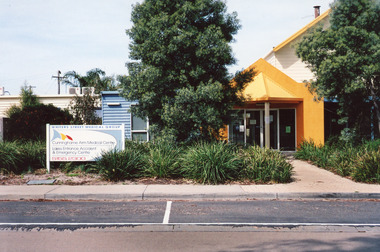
Photograph - Medical Centre, Holding M, 2009
... Medical facilities...Date made September 2009 Site building was originally (games room) part of caravan park Also one other colour photograph closer view of front entrance doorway. Medical facilities Local History Colour photograph of the front entry to Cunninghame Arm Medical Centre at 8 Whiters Street. ...Date made September 2009 Site building was originally (games room) part of caravan park Also one other colour photograph closer view of front entrance doorway.Colour photograph of the front entry to Cunninghame Arm Medical Centre at 8 Whiters Street. Appears to be brick or concrete slab facade painted bright yellow. Information sign in native plant garden, brick pathways. Lakes Entrance Victoriamedical facilities, local history -
 Falls Creek Historical Society
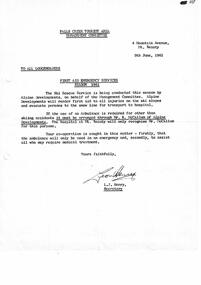
Letter - First Aid Emergency Services Season
... ...Medical Facilities Falls Creek 1961...Falls Creek Tourist Area Management Committee Medical Facilities Falls Creek 1961 A letter from the Management Committee outlining procedures established for First Aid Emergency Services during the upcoming snow season. ...Bob (Herman) Hymans (a former member of the Royal Netherlands Navy) was born in Bloemendaal, Holland on 30th September 1922. During World War II he fought against the Japanese in the Dutch East Indies (now Indonesia) and was imprisoned in Changi and on the Burma Railway. After gaining qualifications as a Ski Instructor, Bob arrived in Falls Creek in July 1950. Working as an Instructor and Supervisor at Bogong Lodge, Bob decided his future was in accommodation. He was successful in negotiating an indenture for land from the State Electricity Commission (SEC). It took Bob two years to build his Grand Coeur Chalet but, tragically, it was burned down in August 1961. Bob also built the first Chairlift in Australia. This was a single chairlift and the structure was built from wooden electricity poles. He was constantly full of new ideas and proposals for the village. Bob Hymans died on 7th July 2007. This Collection of documents and letters tells the story of Bob's endeavours to develop Falls Creek into the ski village it is today.This letter is significant because it documents procedures put in place by the Falls Creek Tourist Area Management Committee for safe functioning of the area under its jurisdiction.A letter from the Management Committee outlining procedures established for First Aid Emergency Services during the upcoming snow season.falls creek tourist area management committee, medical facilities falls creek 1961 -
 Eltham District Historical Society Inc
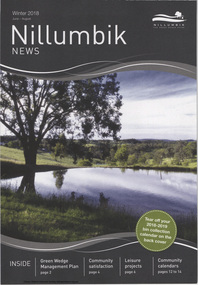
Journal - Newsletter, Nillumbik Shire Council, Nillumbik News, July 2018
... ...Medical transport...sports facilities...Council Newsletters Nillumbik News Nillumbik Shire Council Eltham North Adventure Playground St Andrews Riding for the Disabled Centre Noel Sinclair Volunteers Medical transport sports facilities Shayla Meredith dog pound Jodi Stewart Mark Feary Living and Learning Nillumbik Pauline Berick Diamond Valley Miniature Railway Eltham Lower Park Eltham Men's Shed Edendale Farm research park Green Wedge play spaces A4, double stapled, 16 pages plus 4 page insert Nillumbik News Journal Newsletter Nillumbik Shire Council ...Quarterly community newsletter produced by the Shire of Nillumbik featuring feature stories, council plans, Mayor's report, community satisafaction report, budget 2018-2019, arts and culture development, profiles, community calandar, reports from Councillors and more.council newsletters, nillumbik news, nillumbik shire council, eltham north adventure playground, st andrews riding for the disabled centre, noel sinclair, volunteers, medical transport, sports facilities, shayla meredith, dog pound, jodi stewart, mark feary, living and learning nillumbik, pauline berick, diamond valley miniature railway, eltham lower park, eltham men's shed, edendale farm, research park, green wedge, play spaces -
 Kiewa Valley Historical Society
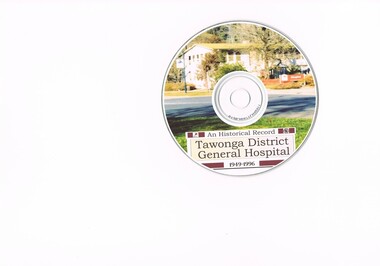
DVD - Tawonga Hospital, early 2000's
... It was a period of intense evolution of both the expansion in population and the increase in the medical facilities provided by a once slightly remote rural hospital to that of one of a regional and alpine advanced hospital. ...It was a period of intense evolution of both the expansion in population and the increase in the medical facilities provided by a once slightly remote rural hospital to that of one of a regional and alpine advanced hospital. ...This DVD of the development of the Tawonga and Mount Beauty General Hospital covers the time period 1949 to 1996. It was a period of intense evolution of both the expansion in population and the increase in the medical facilities provided by a once slightly remote rural hospital to that of one of a regional and alpine advanced hospital. The population expansion of the region during this period was due to the greater growth of local (Kiewa Hydro Scheme) and tourism population provided the need of advancement in the modus operandi of hospital treatments.This DVD details the medical evolution in rural areas and the greater availability of medical professionals to rural areas. The relative isolation of the Kiewa Valley before transport and communications were greatly advanced in the mid to late 1900's resulted in not only increases in population but also the tourism trade. These two important factors required the degree of professionalism for the hospital and with an increasing aged population the diversity into aged care.This DVD has a coloured photograph of the Tawonga District Hospital as a background drop. Printed in black on the front 'An Historical Record / Tawonga District General Hospital / 1949 - 1996.'On the DVD label "An Historical record" below this "Tawonga District General Hospital" below this "1946-1996"hospital dvd, tawonga, mount beauty hospital, specialised treatments -
 National Vietnam Veterans Museum (NVVM)
Slide - Sims Image Collection
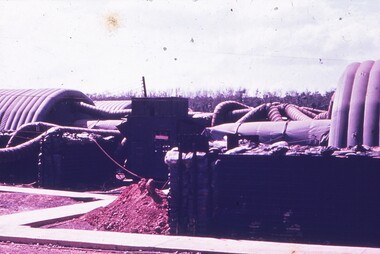
... These hospitals utilized inflatable shelters, expandable structures, and auxiliary power units to create self-contained medical facilities. They could be constructed relatively easily and were capable of supporting a large number of patients. ...These hospitals utilized inflatable shelters, expandable structures, and auxiliary power units to create self-contained medical facilities. They could be constructed relatively easily and were capable of supporting a large number of patients. ...During the war in Vietnam, a MUST hospital (Medical Unit, Self-Contained, Transportable) was a type of field hospital developed by the US Army. These hospitals utilized inflatable shelters, expandable structures, and auxiliary power units to create self-contained medical facilities. They could be constructed relatively easily and were capable of supporting a large number of patients. This image is from a collection of 253 images on slides taken by Corporal Peter Stanley Sims (Service no:44304), while on deployment in Vietnam 1969 -1970. He served in the Royal Australian Army Medical Corps. Medical Unit, Self-contained, Transportable (MUST) inflatable shelters used for wards and operating theatres at American 20 Surgical hospital, Vietnam 1969/70.peter stanley sims, 44304, slides, royal australian army medical corps, vietnam war, sims, australian forces vietnam, hq australian forces vietnam, 20 surgical hospital, quonset hut, medical unit self contained transportable, must, hospital -
 National Vietnam Veterans Museum (NVVM)
Slide - Sims Image Collection
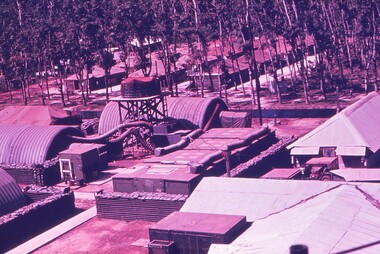
... These hospitals utilized inflatable shelters, expandable structures, and auxiliary power units to create self-contained medical facilities. They could be constructed relatively easily and were capable of supporting a large number of patients. ...These hospitals utilized inflatable shelters, expandable structures, and auxiliary power units to create self-contained medical facilities. They could be constructed relatively easily and were capable of supporting a large number of patients. ...During the war in Vietnam, a MUST hospital (Medical Unit, Self-Contained, Transportable) was a type of field hospital developed by the US Army. These hospitals utilized inflatable shelters, expandable structures, and auxiliary power units to create self-contained medical facilities. They could be constructed relatively easily and were capable of supporting a large number of patients. This image is from a collection of 253 images on slides taken by Corporal Peter Stanley Sims (Service no:44304), while on deployment in Vietnam 1969 -1970. He served in the Royal Australian Army Medical Corps. Equipment used for operating wards and operating theatres at American 20 Surgical hospital, Vietnam 1969/70.peter stanley sims, 44304, slides, royal australian army medical corps, vietnam war, sims, australian forces vietnam, hq australian forces vietnam, 20 surgical hospital, medical unit self contained transportable, must -
 National Vietnam Veterans Museum (NVVM)
Slide - Sims Image Collection
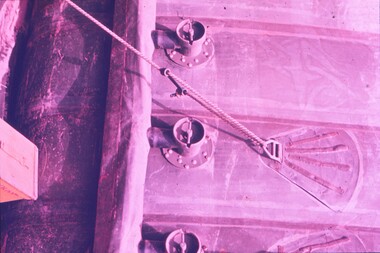
... These hospitals utilized inflatable shelters, expandable structures, and auxiliary power units to create self-contained medical facilities. They could be constructed relatively easily and were capable of supporting a large number of patients. ...These hospitals utilized inflatable shelters, expandable structures, and auxiliary power units to create self-contained medical facilities. They could be constructed relatively easily and were capable of supporting a large number of patients. ...During the war in Vietnam, a MUST hospital (Medical Unit, Self-Contained, Transportable) was a type of field hospital developed by the US Army. These hospitals utilized inflatable shelters, expandable structures, and auxiliary power units to create self-contained medical facilities. They could be constructed relatively easily and were capable of supporting a large number of patients. This image is from a collection of 253 images on slides taken by Corporal Peter Stanley Sims (Service no:44304), while on deployment in Vietnam 1969 -1970. He served in the Royal Australian Army Medical Corps. Anchor point on buildings at American 20 Surgical hospital, Vietnam 1969/70.peter stanley sims, 44304, slides, royal australian army medical corps, vietnam war, sims, australian forces vietnam, hq australian forces vietnam, 20 surgical hospital, must -
 National Vietnam Veterans Museum (NVVM)
Slide - Sims Image Collection
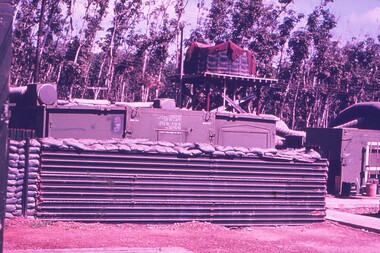
... These hospitals utilized inflatable shelters, expandable structures, and auxiliary power units to create self-contained medical facilities. They could be constructed relatively easily and were capable of supporting a large number of patients. ...These hospitals utilized inflatable shelters, expandable structures, and auxiliary power units to create self-contained medical facilities. They could be constructed relatively easily and were capable of supporting a large number of patients. ...During the war in Vietnam, a MUST hospital (Medical Unit, Self-Contained, Transportable) was a type of field hospital developed by the US Army. These hospitals utilized inflatable shelters, expandable structures, and auxiliary power units to create self-contained medical facilities. They could be constructed relatively easily and were capable of supporting a large number of patients. This image is from a collection of 253 images on slides taken by Corporal Peter Stanley Sims (Service no:44304), while on deployment in Vietnam 1969 -1970. He served in the Royal Australian Army Medical Corps. Fortified barrier protecting equipment that runs wards and operating theatres at the 20 surgical Hospital , Vietnam 1969/70.peter stanley sims, 44304, slides, royal australian army medical corps, vietnam war, sims, australian forces vietnam, hq australian forces vietnam, 20 surgical hospital, fortified barriers, must, hospital -
 National Vietnam Veterans Museum (NVVM)
Slide - Sims Image Collection
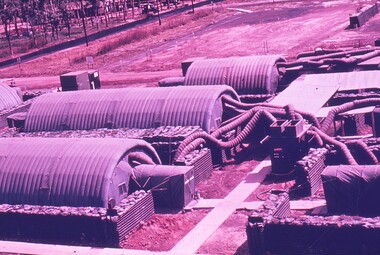
... These hospitals utilized inflatable shelters, expandable structures, and auxiliary power units to create self-contained medical facilities. They could be constructed relatively easily and were capable of supporting a large number of patients. ...These hospitals utilized inflatable shelters, expandable structures, and auxiliary power units to create self-contained medical facilities. They could be constructed relatively easily and were capable of supporting a large number of patients. ...During the war in Vietnam, a MUST hospital (Medical Unit, Self-Contained, Transportable) was a type of field hospital developed by the US Army. These hospitals utilized inflatable shelters, expandable structures, and auxiliary power units to create self-contained medical facilities. They could be constructed relatively easily and were capable of supporting a large number of patients. This image is from a collection of 253 images on slides taken by Corporal Peter Stanley Sims (Service no:44304), while on deployment in Vietnam 1969 -1970. He served in the Royal Australian Army Medical Corps. Medical Unit, Self-contained, Transportable (MUST) inflatable shelters used for wards and operating theatres at American 20 Surgical hospital, Vietnam 1969/70.peter stanley sims, 44304, slides, royal australian army medical corps, vietnam war, sims, australian forces vietnam, hq australian forces vietnam, 20 surgical hospital, quonset hut, medical unit self contained transportable, must -
 National Vietnam Veterans Museum (NVVM)
Slide - Sims Image Collection
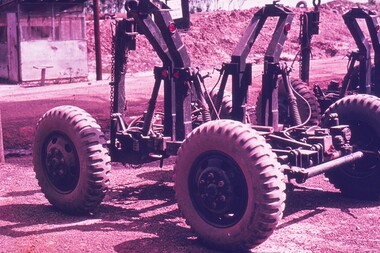
... These hospitals utilized inflatable shelters, expandable structures, and auxiliary power units to create self-contained medical facilities. They could be constructed relatively easily and were capable of supporting a large number of patients. ...These hospitals utilized inflatable shelters, expandable structures, and auxiliary power units to create self-contained medical facilities. They could be constructed relatively easily and were capable of supporting a large number of patients. ...During the war in Vietnam, a MUST hospital (Medical Unit, Self-Contained, Transportable) was a type of field hospital developed by the US Army. These hospitals utilized inflatable shelters, expandable structures, and auxiliary power units to create self-contained medical facilities. They could be constructed relatively easily and were capable of supporting a large number of patients. This image is from a collection of 253 images on slides taken by Corporal Peter Stanley Sims (Service no:44304), while on deployment in Vietnam 1969 -1970. He served in the Royal Australian Army Medical Corps. Cart for moving equipment at the 20 Surgical Hospital, Vietnam 1970. peter stanley sims, 44304, slides, royal australian army medical corps, vietnam war, sims, australian forces vietnam, hq australian forces vietnam, 20 surgical hospital -
 National Vietnam Veterans Museum (NVVM)
Slide - Sims Image Collection
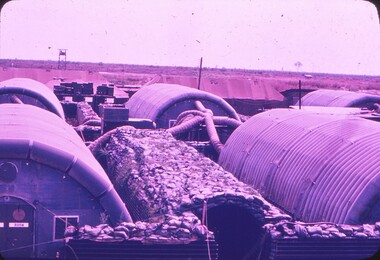
... These hospitals utilized inflatable shelters, expandable structures, and auxiliary power units to create self-contained medical facilities. They could be constructed relatively easily and were capable of supporting a large number of patients. ...These hospitals utilized inflatable shelters, expandable structures, and auxiliary power units to create self-contained medical facilities. They could be constructed relatively easily and were capable of supporting a large number of patients. ...During the war in Vietnam, a MUST hospital (Medical Unit, Self-Contained, Transportable) was a type of field hospital developed by the US Army. These hospitals utilized inflatable shelters, expandable structures, and auxiliary power units to create self-contained medical facilities. They could be constructed relatively easily and were capable of supporting a large number of patients. This image is from a collection of 253 images on slides taken by Corporal Peter Stanley Sims (Service no:44304), while on deployment in Vietnam 1969 -1970. He served in the Royal Australian Army Medical Corps. Inflatable buildings and fortified storage areas at the 20 Surgical hospital, Vietnam 1969/70.peter stanley sims, 44304, slides, royal australian army medical corps, vietnam war, sims, australian forces vietnam, hq australian forces vietnam, 20 surgical hospital, must -
 National Vietnam Veterans Museum (NVVM)
Slide - Sims Image Collection
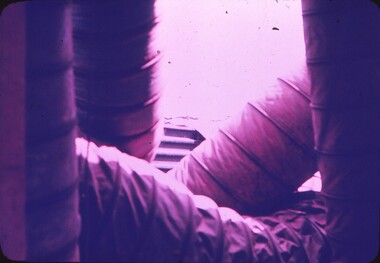
... These hospitals utilized inflatable shelters, expandable structures, and auxiliary power units to create self-contained medical facilities. They could be constructed relatively easily and were capable of supporting a large number of patients. ...These hospitals utilized inflatable shelters, expandable structures, and auxiliary power units to create self-contained medical facilities. They could be constructed relatively easily and were capable of supporting a large number of patients. ...During the war in Vietnam, a MUST hospital (Medical Unit, Self-Contained, Transportable) was a type of field hospital developed by the US Army. These hospitals utilized inflatable shelters, expandable structures, and auxiliary power units to create self-contained medical facilities. They could be constructed relatively easily and were capable of supporting a large number of patients. This image is from a collection of 253 images on slides taken by Corporal Peter Stanley Sims (Service no:44304), while on deployment in Vietnam 1969 -1970. He served in the Royal Australian Army Medical Corps. Large piping to take air to inflatable buildings at the 20 Surgical hospital, Vietnam 1969/70.peter stanley sims, 44304, slides, royal australian army medical corps, vietnam war, sims, australian forces vietnam, hq australian forces vietnam, 20 surgical hospital, must, hospital, field hospital -
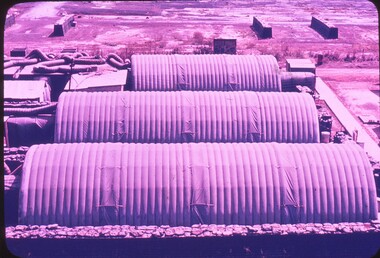 National Vietnam Veterans Museum (NVVM)
Slide - Sims Image Collection
... These hospitals utilized inflatable shelters, expandable structures, and auxiliary power units to create self-contained medical facilities. They could be constructed relatively easily and were capable of supporting a large number of patients. ...These hospitals utilized inflatable shelters, expandable structures, and auxiliary power units to create self-contained medical facilities. They could be constructed relatively easily and were capable of supporting a large number of patients. ...During the war in Vietnam, a MUST hospital (Medical Unit, Self-Contained, Transportable) was a type of field hospital developed by the US Army. These hospitals utilized inflatable shelters, expandable structures, and auxiliary power units to create self-contained medical facilities. They could be constructed relatively easily and were capable of supporting a large number of patients. This image is from a collection of 253 images on slides taken while on deployment in Vietnam by Corporal Peter Stanley Sims (44304), who served in the Royal Australian Army Medical Corps, 1969 -1970.Inflated roofs of buildings at the 20 Surgical hospital, Vietnam 1969/70.peter stanley sims, 44304, slides, royal australian army medical corps, vietnam war, sims, australian forces vietnam, hq australian forces vietnam, 20 surgical hospital -
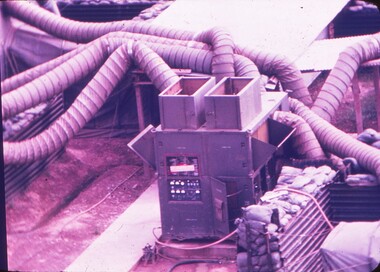 National Vietnam Veterans Museum (NVVM)
Slide - Sims Image Collection
... These hospitals utilized inflatable shelters, expandable structures, and auxiliary power units to create self-contained medical facilities. They could be constructed relatively easily and were capable of supporting a large number of patients. ...These hospitals utilized inflatable shelters, expandable structures, and auxiliary power units to create self-contained medical facilities. They could be constructed relatively easily and were capable of supporting a large number of patients. ...During the war in Vietnam, a MUST hospital (Medical Unit, Self-Contained, Transportable) was a type of field hospital developed by the US Army. These hospitals utilized inflatable shelters, expandable structures, and auxiliary power units to create self-contained medical facilities. They could be constructed relatively easily and were capable of supporting a large number of patients. This image is from a collection of 253 images on slides taken by Corporal Peter Stanley Sims (Service no:44304), while on deployment in Vietnam 1969 -1970. He served in the Royal Australian Army Medical Corps. Flexible pipes connected to equipment to inflate the Medical unit self contained transportable (MUST) temporary buildings at the 20 Surgical hospital, Vietnam 1969/70.peter stanley sims, 44304, slides, royal australian army medical corps, vietnam war, sims, australian forces vietnam, hq australian forces vietnam, 20 surgical hospital, medical unit self contained transportable -
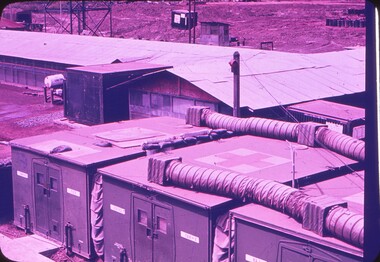 National Vietnam Veterans Museum (NVVM)
Slide - Sims Image Collection
... These hospitals utilized inflatable shelters, expandable structures, and auxiliary power units to create self-contained medical facilities. They could be constructed relatively easily and were capable of supporting a large number of patients. ...These hospitals utilized inflatable shelters, expandable structures, and auxiliary power units to create self-contained medical facilities. They could be constructed relatively easily and were capable of supporting a large number of patients. ...During the war in Vietnam, a MUST hospital (Medical Unit, Self-Contained, Transportable) was a type of field hospital developed by the US Army. These hospitals utilized inflatable shelters, expandable structures, and auxiliary power units to create self-contained medical facilities. They could be constructed relatively easily and were capable of supporting a large number of patients. This image is from a collection of 253 images on slides taken while on deployment in Vietnam by Corporal Peter Stanley Sims (44304), who served in the Royal Australian Army Medical Corps, 1969 -1970.Medical buildings at the 20 Surgical hospital (USA), Vietnam 1969/70.peter stanley sims, 44304, slides, royal australian army medical corps, vietnam war, sims, australian forces vietnam, hq australian forces vietnam, 20 surgical hospital -
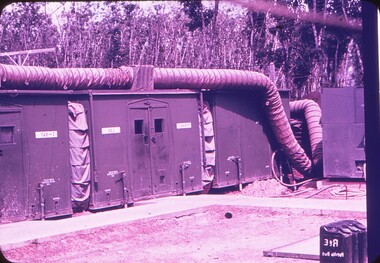 National Vietnam Veterans Museum (NVVM)
Slide - Sims Image Collection
... These hospitals utilized inflatable shelters, expandable structures, and auxiliary power units to create self-contained medical facilities. They could be constructed relatively easily and were capable of supporting a large number of patients. ...These hospitals utilized inflatable shelters, expandable structures, and auxiliary power units to create self-contained medical facilities. They could be constructed relatively easily and were capable of supporting a large number of patients. ...During the war in Vietnam, a MUST hospital (Medical Unit, Self-Contained, Transportable) was a type of field hospital developed by the US Army. These hospitals utilized inflatable shelters, expandable structures, and auxiliary power units to create self-contained medical facilities. They could be constructed relatively easily and were capable of supporting a large number of patients. This image is from a collection of 253 images on slides taken while on deployment in Vietnam by Corporal Peter Stanley Sims (44304), who served in the Royal Australian Army Medical Corps, 1969 -1970.Medical buildings at the 20 Surgical hospital, Vietnam 1969/70.peter stanley sims, 44304, slides, royal australian army medical corps, vietnam war, sims, australian forces vietnam, hq australian forces vietnam, 20 surgical hospital, must, hospital -
 Kiewa Valley Historical Society
Vaporiser Cresolene, circa late1800's to early 1900's
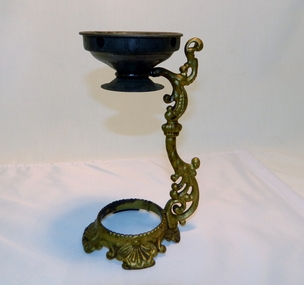
... This Cresolene vapouriser is an "American" product when "home" based remedial products were of a high demand due to lack of specialised medical facilities such as a hospital in rural communities. ...This Cresolene vapouriser is an "American" product when "home" based remedial products were of a high demand due to lack of specialised medical facilities such as a hospital in rural communities. ...This Cresolene vapouriser is an "American" product when "home" based remedial products were of a high demand due to lack of specialised medical facilities such as a hospital in rural communities. "An apparatus for reducing medicated liquids to a state of vapor suitable for inhalation or application to accessible mucous membrane A device for volatising liquid anesthetics." The only criteria used by Health authorities in the decision to provide a community with hospitals was and still is the size of the population it feeds. The introduction of the SEC Victorian Hydro Electricity Scheme started in the 1940's, was the impetus for health planners to build a hospital in the Kiewa Valley. Rural regions especially those considered semi or fully remote locations had to rely on farm based remedial health "alternative medical treatment". This product is such a remedy.This vapouriser is very significant to a rural area such as the Kiewa Valley as it demonstrates the "home" remedies that were available to rural communities such as the cattle and sheep stations before the Kiewa Valley had a hospital(1949). The influx of workers employed by the SEC Vic. Hydro Electricity Scheme(circa 1940's onward) changed dramatically the need for a hospital and specialised medical treatment. The reliance of "health products" such as this vaporiser were still in high demand especially when on the box of this product was printed "Guaranteed under the Food and Drugs Act, June 30, 1906, Serial no. 436". Also on the packaging is printed "A remedy Whooping Cough also Asthma, Catarrh, Colds Diptheria, Croup, Coughs Hay Fever, Sore Throat, Influenza, Etc." An additional benefit of this product "Is obnoxious to Moths, Flies, Mosquitos, Ants, Cock Roaches, Hen Lice, and other Troublesome insects." This advertising is dated before a tightening in the "advertising" legislation of post mid 1900's. However it was a good attraction for rural communities wanting relief of "rural" pests. This vaporiser stand with its cradle and dish is made from cast iron (stand) and tin (dish). At the bottom of the "dish" is a flame diffusion port with eight heat directional holes. The stand upright is painted gold in colour.See KVHS 0342 (B) for markings and advertising material printed on the box which contains this item.home based vaporisers, first aid, home nursing, over-the-counter medicines -
 Falls Creek Historical Society
Document - Circular To Licence Holders & Others Interested In Committee Plans
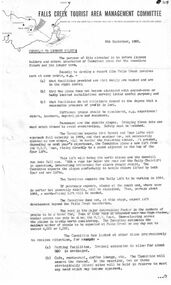
... This included completion of the Gully Chairlift, earmarking sites for cafes and restaurants and improvement in public facilities and medical services....This included completion of the Gully Chairlift, earmarking sites for cafes and restaurants and improvement in public facilities and medical services. Circular To Licence Holders & Others Interested In Committee Plans. ...Bob (Herman) Hymans (a former member of the Royal Netherlands Navy) was born in Bloemendaal, Holland on 30th September 1922. During World War II he fought against the Japanese in the Dutch East Indies (now Indonesia) and was imprisoned in Changi and on the Burma Railway. After gaining qualifications as a Ski Instructor, Bob arrived in Falls Creek in July 1950. Working as an Instructor and Supervisor at Bogong Lodge, Bob decided his future was in accommodation. He was successful in negotiating an indenture for land from the State Electricity Commission (SEC). It took Bob two years to build his Grand Coeur Chalet but, tragically, it was burned down in August 1961. Bob also built the first Chairlift in Australia. This was a single chairlift and the structure was built from wooden electricity poles. He was constantly full of new ideas and proposals for the village. Bob Hymans died on 7th July 2007. This Collection of documents and letters tells the story of Bob's endeavours to develop Falls Creek into the ski village it is today.This letter is significant because it documents developments made or endorsed by the Falls Creek Tourist Area Management Committee.A circular from the Management Committee outlining their plans for the development of the Falls Creek Tourist Area. This included completion of the Gully Chairlift, earmarking sites for cafes and restaurants and improvement in public facilities and medical services.falls creek tourist area management committee, falls creek administration -
 The Beechworth Burke Museum
Photograph - Lantern Slide, c1900
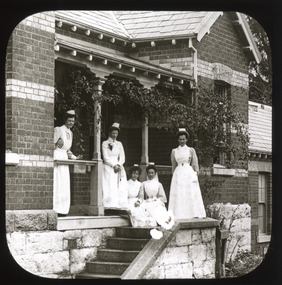
... Beechworth has a long history of nursing, beginning with the establishment 3 medical facilities in the mid-1800s, the Ovens District Hospital (opened in 1857), the Ovens Benevolent Asylum (opened in 1863), and the Mayday Hills Hospital (opened in 1867). ...Beechworth has a long history of nursing, beginning with the establishment 3 medical facilities in the mid-1800s, the Ovens District Hospital (opened in 1857), the Ovens Benevolent Asylum (opened in 1863), and the Mayday Hills Hospital (opened in 1867). ...This image shows 5 nurses of Mayday Hills Mental Asylum gathered on the porch and staircase of a building. Beechworth has a long history of nursing, beginning with the establishment 3 medical facilities in the mid-1800s, the Ovens District Hospital (opened in 1857), the Ovens Benevolent Asylum (opened in 1863), and the Mayday Hills Hospital (opened in 1867). Lantern slides, sometimes called 'magic lantern' slides, are glass plates on which an image has been secured for the purpose of projection. Glass slides were etched or hand-painted for this purpose from the Eighteenth Century but the process became more popular and accessible to the public with the development of photographic-emulsion slides used with a 'Magic Lantern' device in the mid-Nineteenth Century. Photographic lantern slides comprise a double-negative emulsion layer (forming a positive image) between thin glass plates that are bound together. A number of processes existed to form and bind the emulsion layer to the base plate, including the albumen, wet plate collodion, gelatine dry plate and Woodburytype techniques. Lantern slides and magic lantern technologies are seen as foundational precursors to the development of modern photography and film-making techniquesThis glass slide is significant because it provides insight into Beechworth's social amenities and religious infrastructure in the late Nineteenth Century. It is also an example of an early photographic and film-making technology in use in regional Victoria in the time period.Thin translucent sheet of glass with a square image printed on the front and framed in a black backing. It is held together by metals strips to secure the edges of the slide.burke museum, beechworth, lantern slide, slide, glass slide, plate, burke museum collection, photograph, monochrome, nurses, nursing, mayday hill hospital -
 Melbourne Tram Museum
Document, Tramway Benefit Society, "An invitation to Join the Tramways Benefit Society", c1980
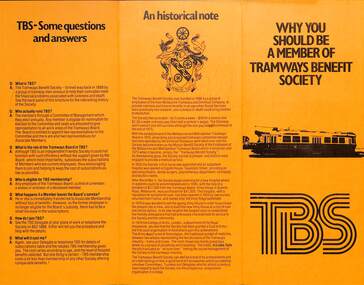
... The Tramway Benefit Society was a health fund that tramway personnel could join and be supported with medical and hospital facilities - Vimy House. Was established in 1888. ...The Tramway Benefit Society was a health fund that tramway personnel could join and be supported with medical and hospital facilities - Vimy House. Was established in 1888. ...The Tramway Benefit Society was a health fund that tramway personnel could join and be supported with medical and hospital facilities - Vimy House. Was established in 1888. When health funds were merged and reorganised during the 1990s it became Transport Health. See reference for the story of Vimy House.Provides information about the Tramway Benefit Society and its work.Flyer or document - 3 fold quarto printed on gloss paper with an accompanying brown paper envelope. A pre-printed brown paper envelope also held.tramways, vimy house, tbs, tramways benefit society, health funds, transport health -
 Phillip Island and District Historical Society Inc.
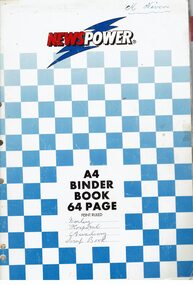
Booklet, Warley Hospital Auxiliary scrapbook, About 2002
... The Warley Hospital Auxiliary was formed in 1952 and held many fundraising events eg. fetes, stalls. duck races and special Woolamai race days, to raise money for medical equipment and facilities. It appears to have ended in 2002. ...The Warley Hospital Auxiliary was formed in 1952 and held many fundraising events eg. fetes, stalls. duck races and special Woolamai race days, to raise money for medical equipment and facilities. It appears to have ended in 2002. ...The Warley Hospital Auxiliary was formed in 1952 and held many fundraising events eg. fetes, stalls. duck races and special Woolamai race days, to raise money for medical equipment and facilities. It appears to have ended in 2002. The last baby born at the hospital was Cassie Smith in 1996. The scrapbook may have been compiled by Margaret Niven.HistoricalLarge A4 binder book with a collection of newspaper cuttings, photographs, hand written and typed pages of reports.warley hospital, fundraising, dilys gilby, joy burgoyne, margaret niven, ruth partridge, dorothy bolte, maree blanchard, gwen roberts, june cutter, rita broome, cassie smith -
 Robin Boyd Foundation
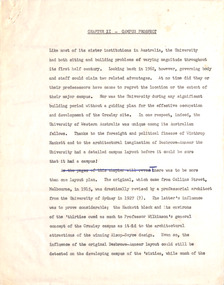
Document, Robin Boyd, Chapter XI - Campus Prospect
... Elements of Desbrowe-Annear's original layout plan that were retained, include the placement of the medical school and sporting facilities....Elements of Desbrowe-Annear's original layout plan that were retained, include the placement of the medical school and sporting facilities. University of Western Australia Crawley Harold Desbrowe-Annear Leslie Wilkinson Talbot Hobbs Professor Whitfeld W.B. ...Boyd presents a thorough description of Harold Desbrowe-Annear's 1915 design for The University of Western Australia, Crawley with a focus on siting and how this was revised by Leslie Wilkinson in the late 1920s. Elements of Desbrowe-Annear's original layout plan that were retained, include the placement of the medical school and sporting facilities.Typewritten, carbon copy, foolscap, 12 pagesBlue pen mark up on pages 1, 2, 3, 4, 8, 9, 10, 11. Pencil mark up on pages 5, 6.university of western australia, crawley, harold desbrowe-annear, leslie wilkinson, talbot hobbs, professor whitfeld, w.b. hardwick, a.r.l. wright -
 Port Melbourne Historical & Preservation Society
Booklet - Amenities Block, J Kitchen & Sons, Unilever Australia Pty Ltd, 1957
... Written in 1957 it includes section headings - Progress of amenities, Port Melbourne; Design of the building ; Dining and canteen facilities ; Locker and toilet facilities ; Medical centre ; Entrance and time clocks ; Personnel Department ; Social Club library ; Conference room ; Vehicles; Changes in the use ofbuildings ; Use of the building; and drawing of the layout of each floor....Written in 1957 it includes section headings - Progress of amenities, Port Melbourne; Design of the building ; Dining and canteen facilities ; Locker and toilet facilities ; Medical centre ; Entrance and time clocks ; Personnel Department ; Social Club library ; Conference room ; Vehicles; Changes in the use ofbuildings ; Use of the building; and drawing of the layout of each floor. ...Nineteen page booklet with pale blue card cover (with drawing of Amenities Block) and brighter blue binding. The introduction states that the building is about to be completed and it is for all employees use. Written in 1957 it includes section headings - Progress of amenities, Port Melbourne; Design of the building ; Dining and canteen facilities ; Locker and toilet facilities ; Medical centre ; Entrance and time clocks ; Personnel Department ; Social Club library ; Conference room ; Vehicles; Changes in the use ofbuildings ; Use of the building; and drawing of the layout of each floor.industry - manufacturing, business and traders - soaps/candles, built environment - industrial, workers, unilever australia (holdings) ltd, j kitchen & sons pty ltd -
 The Beechworth Burke Museum
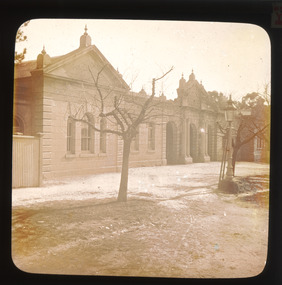
Photograph - Lantern Slide, c1900
... The hospital had two wards, a dispensary, apartments for a resident surgeon and the matron, an operating theatre and a board room. Further medical facilities including services to meet the cultural and health needs of the local Chinese community were later added, in addition to a Palladian-style cut-granite face built in 1862-63. ...The hospital had two wards, a dispensary, apartments for a resident surgeon and the matron, an operating theatre and a board room. Further medical facilities including services to meet the cultural and health needs of the local Chinese community were later added, in addition to a Palladian-style cut-granite face built in 1862-63. ...This lantern slide shows the Ovens District Hospital (also called the Ovens Goldfields Hospital) in Beechworth in approximately 1900. The Hospital was built as part of a community push to develop the infrastructure needed for a permanent town in the 1850s. At the time there was no hospital located between Melbourne and the NSW town of Goulburn and it was recognised that the nature of mining and agricultural work predisposed people to serious injury. The community voted in 1853 to raise funds for a hospital and a voluntary committee elected from people who contributed £2 or more annually determined the organisation's management policies, which aimed to provide care for poor people at rates levied according to the person's means. Ongoing operations of the hospital were primarily supported by Government grants, however. The foundation stone was laid at a site in Church Street at a ceremony held 1st September 1856 which was attended by 2000 people using a locally crafted trowel with a tin ore handle and pure gold blade. The hospital, which was designed by J.H. Dobbyn, cost £2347. The hospital had two wards, a dispensary, apartments for a resident surgeon and the matron, an operating theatre and a board room. Further medical facilities including services to meet the cultural and health needs of the local Chinese community were later added, in addition to a Palladian-style cut-granite face built in 1862-63. It functioned as the region's primary hospital until surpassed by the Wangaratta Hospital in 1910. In the 1940s much of the building materials were salvaged and repurposed, with the exception of the facade which was restored in 1963 by the Beechworth Lions Club and still stands today. The facade featured on the covers of local history volume 'Beechworth: a Titan's Field' by Carole Woods and heritage-focused travel guide the 'Readers Digest Book of Historic Australian Towns'. Lantern slides, sometimes called 'magic lantern' slides, are glass plates on which an image has been secured for the purpose of projection. Glass slides were etched or hand-painted for this purpose from the Eighteenth Century but the process became more popular and accessible to the public with the development of photographic-emulsion slides used with a 'Magic Lantern' device in the mid-Nineteenth Century. Photographic lantern slides comprise a double-negative emulsion layer (forming a positive image) between thin glass plates that are bound together. A number of processes existed to form and bind the emulsion layer to the base plate, including the albumen, wet plate collodion, gelatine dry plate and woodburytype techniques. Lantern slides and magic lantern technologies are seen as foundational precursors to the development of modern photography and film-making techniques.This glass slide is significant because it provides insight into Beechworth's built environment and infrastructure in the early Twentieth Century, around the time of Australia's Federation. It is also an example of an early photographic and film-making technology in use in regional Victoria in the time period.Thin translucent sheet of glass with a round-edged square image printed on the front and framed in a black backing. It is held together by metal strips to secure the edges of the slide.Obverse: Y /burke museum, beechworth, lantern slide, slide, glass slide, plate, burke museum collection, photograph, monochrome, ovens district hospital, indigo shire, north-east victoria, hospital, palladian architecture, granite, community fundraising, community infrastructure, j.h. dobbyn, beechworth lions club, ovens goldfields hospital, chinese community -
 Warrnambool and District Historical Society Inc.
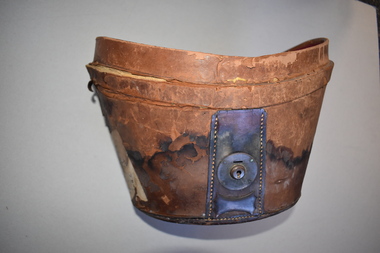
Top Hat and Bowler Hat, Woodrow & Sons, Early 20th century (.1 Top Hat)
... The John Hunter Henderson fund was established at the Warrnambool Hospital to develop the training facilities for medical and nursing staff. The bowler hat belonged to his driver (name unknown) and it is presumed that he drove a horse and buggy in the early years of the 20th century. ...The John Hunter Henderson fund was established at the Warrnambool Hospital to develop the training facilities for medical and nursing staff. The bowler hat belonged to his driver (name unknown) and it is presumed that he drove a horse and buggy in the early years of the 20th century. ...This top hat, with the initials J.H.H., belonged to John Hunter Henderson, a doctor who practised in Warrnambool from 1904 to 1939. For many years he was a member of the Warrnambool Hospital Board of Management. On his retirement in 1939 he went to live in Melbourne where he died aged 81. The John Hunter Henderson fund was established at the Warrnambool Hospital to develop the training facilities for medical and nursing staff. The bowler hat belonged to his driver (name unknown) and it is presumed that he drove a horse and buggy in the early years of the 20th century. These items are of considerable significance as they are associated with Dr Henderson, a long-serving doctor in Warrnambool and they show the status and comparative affluence of doctors in the first half of the 20th century. .1 This is a black top hat with the crown covered in beaver fur or felt of some kind. The upturned brim is slightly worn on one edge. The crown has a black corded band with a bow on one side. There is a stud with an air hole on the crown. Inside there is a brown leather lining with information on the maker on the inside base and a crown image. .2 This is a bowler hat made of black felt with lining on the edges of black cotton material. The brim is slightly turned up on the sides. The crown has a black corded band with a bow at one side. There is a circle of air holes on the side of the hat. Inside there is leather lining with some information on the maker on the inside base. .3 This is a hat box lid with a leather covering over cardboard. It is a spherical shape with some side damage where the leather is peeling. There is a leather strap handle with a metal buckle. There are remnants of travel labels pasted on to the lid. .4 This is a hat box made of leather with a metal lock on one side. It has remnants of paper travel labels on the sides. Inside the box is an insert made of maroon-coloured cardboard for storing the top hat. This insert has a leather strap to stabilize the hat. There is a name on the base of the box written on a piece of adhesive plaster. .1 J.H.H. Woodrow & Sons Hat Manufacturers to H.M. the King 13 Market St Manchester, 8 Castle St Liverpool, 45 Piccadilly London, 42 Cornhill, London, 11 Gordon St Glasgow, 40 Westmoreland St Dublin, Made in England Lincoln, Stuart & Coy Proprietary Limited Flinders St Melbourne .2 The Tropical Hat .3 Midland Railway .4 Dunedin, F.H.Moreton doctor john henderson, warrnambool, history of warrnambool, top hat -
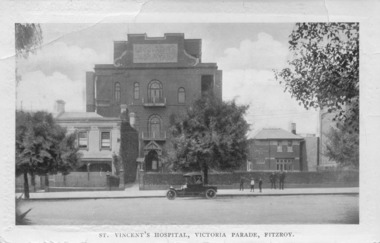 St Vincent's Hospital Melbourne Archives
Postcard, C.W. Series, Melbourne, St Vincent's Hospital, Victoria Parade, Fitzroy, Circa 1914
... At left is the original hospital building, a converted terrace house, alongside the first purpose-built wing opened 1905 and the Cullen Wing (with facilities for medical students and residents) on the right. ...At left is the original hospital building, a converted terrace house, alongside the first purpose-built wing opened 1905 and the Cullen Wing (with facilities for medical students and residents) on the right. ...The postcard shows St Vincent's Hospital, on the northern side of Victoria Parade, Fitzroy, circa 1914. At left is the original hospital building, a converted terrace house, alongside the first purpose-built wing opened 1905 and the Cullen Wing (with facilities for medical students and residents) on the right. A group of two men and three boys stands on the footpath outside the Cullen Wing and a car is parked outside the main hospital building in the centre of the photograph. The reverse of the postcard is a letter from a niece to her uncle and aunt detailing their day trip into Melbourne, the places they saw, the people they met and the activities they took part in.This postcard is significant since it provides a rare view of the hospital from this location at this point in its history.Black and white postcard showing photograph of St Vincent's Hospital Melbourne on the front and a letter is written in pencil on the reverse.On the reverse is a handwritten letter in pencil from a niece to her aunt and uncle about a day trip they took into Melbourne. The message is dated January 27, 1914.st vincent's hospital melbourne, streetviews, postcards, hospital buildings, fitzroy -
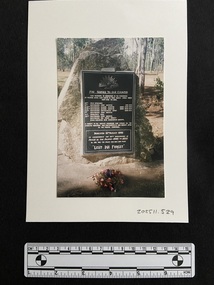 Returned Nurses RSL Sub-branch
Photograph - 6x4 coloured photograph
... The Memorial Park is a unique design of individual plaques, set amongst the trees and located along the lines of the original locations of units stations at the Rocky Creek Medical and other facilities during the Second World War. ...The Memorial Park is a unique design of individual plaques, set amongst the trees and located along the lines of the original locations of units stations at the Rocky Creek Medical and other facilities during the Second World War. ...War memorial for units that served in World War II. It is located in the Rocky Creek Memorial Park in Tolga (Far North Queensland). 'Memorial information: Dedicated 15th August 1995. The Memorial Park is a unique design of individual plaques, set amongst the trees and located along the lines of the original locations of units stations at the Rocky Creek Medical and other facilities during the Second World War. Built on the old camp site of the Convalescent Depot of the 2/2nd Australian General Hospital, where thousands received treatment in 1942-1945. Atherton Shire Council supplies plaques and a local businessman supplies boulders. In 1997 there were 3 plaques and by August 2000 there were 36. The numbers will have increased since these figures. The park has been chosen as the appropriate location due to the cultural, spiritual, historical and sentimental value to the local community. Several Army Divisions camped on the Atherton Tablelands during 1942-45. Approximately 60,000 Australian soldiers were treated for war related conditions at these hospitals, by a caring and efficient staff of approximately 2,000. Many were rehabilitated at the adjoining 2/1 Convalescence Depot. The complex was recognised as the largest military hospital in the Southern Hemisphere.' [Taken from the ANZAC Square website]Coloured photograph of a large memorial plaque set on stone for units that served in World War II, trees behind in the distance. A floral wreath has been placed at its base.'Rocky Creek Memorial / Park - Tolga FNQ' [Handwritten in pencil on the back of the photograph]rocky creek memorial park, war memorials, world war 1939-1945, ww2, wwii -
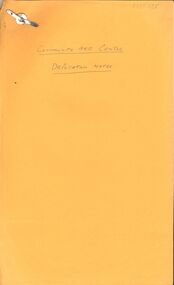 Bendigo Historical Society Inc.
Document - MERLE HALL COLLECTION: ''COMMUNITY ARTS CENTRE DEPUTATION NOTES''
... Cannon with the names of six supportive speakers; handwritten Notes from Public Meeting 25th June 1975 (two pages); handwritten ''Notes from Public Meeting 36 June 75'' (meeting to hear address from Federal Department of Tourism and Recreation (with newspaper advertisements of meeting); Loddon Campaspe Regional Council for Social Development Interim Committee questionnaire for seminar on nine aspects - housing, educational facilities, medical and welfare services, municipal and other public services, transport and communication, conservation features, active and passive recreation, employment, shopping; handwritten notes for Public Meeting 25th June ; handwritten notes re the Plaza theatre being up for sale, letter to The Editor re the recent reported announcement by the City Council of its intention to seek Federal finance to assist in the purchase of the Plaze theatre; two-paged document (letter??) ...Cannon with the names of six supportive speakers; handwritten Notes from Public Meeting 25th June 1975 (two pages); handwritten ''Notes from Public Meeting 36 June 75'' (meeting to hear address from Federal Department of Tourism and Recreation (with newspaper advertisements of meeting); Loddon Campaspe Regional Council for Social Development Interim Committee questionnaire for seminar on nine aspects - housing, educational facilities, medical and welfare services, municipal and other public services, transport and communication, conservation features, active and passive recreation, employment, shopping; handwritten notes for Public Meeting 25th June ; handwritten notes re the Plaza theatre being up for sale, letter to The Editor re the recent reported announcement by the City Council of its intention to seek Federal finance to assist in the purchase of the Plaze theatre; two-paged document (letter??) ...On front cover is: ''Community Arts Centre - Deputation Notes''. Within this stapled collection are the following: typed notes for presentation at a Public Meeting at Bendigo Municipal Offices (25/6/1975) re the ''establishment of a cultural centre in Bendigo''. J. Cannon with the names of six supportive speakers; handwritten Notes from Public Meeting 25th June 1975 (two pages); handwritten ''Notes from Public Meeting 36 June 75'' (meeting to hear address from Federal Department of Tourism and Recreation (with newspaper advertisements of meeting); Loddon Campaspe Regional Council for Social Development Interim Committee questionnaire for seminar on nine aspects - housing, educational facilities, medical and welfare services, municipal and other public services, transport and communication, conservation features, active and passive recreation, employment, shopping; handwritten notes for Public Meeting 25th June ; handwritten notes re the Plaza theatre being up for sale, letter to The Editor re the recent reported announcement by the City Council of its intention to seek Federal finance to assist in the purchase of the Plaze theatre; two-paged document (letter??) re the problems of keeping the Plaza theatre and, instead, promoting a ''fine modern facility'' of the Bendigo Arts Council (no named author); ; handwritten notes of Sub-committee - Arts Centre Building (Report - J. Cannon); handwritten notes from the ''Tours Officer'' for comments on the past year's activities; handwritten list of 30-40 local people with 'ticks'' for their (potential) interest and time??community arts center, merle hall collection -
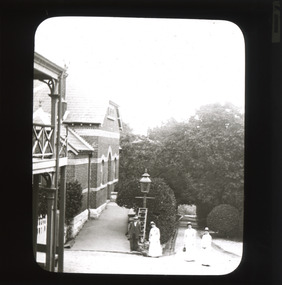 The Beechworth Burke Museum
Photograph - Lantern Slide, c1900
... Three medical or social welfare facilities opened in the mid-1800s as part of a push by the township to become a regional centre for Government services. ...Three medical or social welfare facilities opened in the mid-1800s as part of a push by the township to become a regional centre for Government services. ...This image appears to show nurses at what is now the Mayday Hills Mental Asylum arriving for work in approximately 1900. These individuals are part of a long history of nursing in Beechworth. Three medical or social welfare facilities opened in the mid-1800s as part of a push by the township to become a regional centre for Government services. These were the Ovens District Hospital (opened in 1857), the Ovens Benevolent Asylum (opened in 1863), and the Beechworth Mental Hospital (opened in 1867 and renamed Mayday Hills Hospital at Centenary celebrations in 1967). It was recognised that the unsettled living conditions, poverty and relative isolation of the Goldfields environment could produce 'mental disturbances' which required local treatment facilities as services in Melbourne were too far away. Carole Woods' publication 'A Titan's Field' describes activities undertaken by patients at Beechworth Mental Hospital as including monthly balls and occasional concerts as well as work to make the facility self-supporting such as farm work and making clothes. She mentions a report in 1870 that the approximately 300 patients were clean and neat with 'no-one in restraint or seclusion' but that by 1905 the organisation had 623 patients which placed strain on building infrastructure such as heating and water supplies, leading to high turnover of nurses and other issues. A program of building works to extend and improve facilities followed over subsequent decades. Lantern slides, sometimes called 'magic lantern' slides, are glass plates on which an image has been secured for the purpose of projection. Glass slides were etched or hand-painted for this purpose from the Eighteenth Century but the process became more popular and accessible to the public with the development of photographic-emulsion slides used with a 'Magic Lantern' device in the mid-Nineteenth Century. Photographic lantern slides comprise a double-negative emulsion layer (forming a positive image) between thin glass plates that are bound together. A number of processes existed to form and bind the emulsion layer to the base plate, including the albumen, wet plate collodion, gelatine dry plate and Woodburytype techniques. Lantern slides and magic lantern technologies are seen as foundational precursors to the development of modern photography and film-making techniques This glass slide is significant because it provides insight into Beechworth's social and medical amenities in the early Twentieth Century, around the time of Australia's Federation into one nation. It is also an example of an early photographic and film-making technology in use in regional Victoria in the time period.Thin translucent sheet of glass with a rectangular image printed on the front and framed in a black backing. It is held together by metals strips to secure the edges of the slide.Obverse: i /burke museum, beechworth, lantern slide, slide, glass slide, plate, burke museum collection, photograph, monochrome, magic lantern, indigo shire, north-east victoria, nineteenth century, 1900s, twentieth century, emulsion slides, nursing, nurses, mental hospitals, lunatic asylums, asylums, social services, social welfare, insane asylums, mental health, infrastructure -
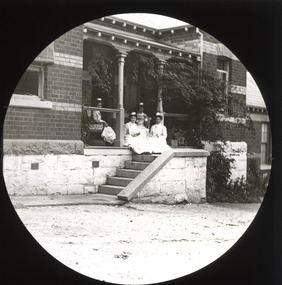 The Beechworth Burke Museum
Photograph - Lantern Slide, c1900
... Three medical or social welfare facilities opened in the mid-1800s as part of a push by the township to become a regional centre for Government services. ...Three medical or social welfare facilities opened in the mid-1800s as part of a push by the township to become a regional centre for Government services. ...This image appears to show nurses at what is now the Mayday Hills Mental Asylum in approximately 1900. These individuals are part of a long history of nursing in Beechworth. Three medical or social welfare facilities opened in the mid-1800s as part of a push by the township to become a regional centre for Government services. These were the Ovens District Hospital (opened in 1857), the Ovens Benevolent Asylum (opened in 1863), and the Beechworth Mental Hospital (opened in 1867 and renamed Mayday Hills Hospital at Centenary celebrations in 1967). It was recognised that the unsettled living conditions, poverty and relative isolation of the Goldfields environment could produce 'mental disturbances' which required local treatment facilities as services in Melbourne were too far away. Carole Woods' publication 'A Titan's Field' describes activities undertaken by patients at Beechworth Mental Hospital as including monthly balls and occasional concerts as well as work to make the facility self-supporting such as farm work and making clothes. She mentions a report in 1870 that the approximately 300 patients were clean and neat with 'no-one in restraint or seclusion' but that by 1905 the organisation had 623 patients which placed strain on building infrastructure such as heating and water supplies, leading to high turnover of nurses and other issues. A program of building works to extend and improve facilities followed over subsequent decades. Lantern slides, sometimes called 'magic lantern' slides, are glass plates on which an image has been secured for the purpose of projection. Glass slides were etched or hand-painted for this purpose from the Eighteenth Century but the process became more popular and accessible to the public with the development of photographic-emulsion slides used with a 'Magic Lantern' device in the mid-Nineteenth Century. Photographic lantern slides comprise a double-negative emulsion layer (forming a positive image) between thin glass plates that are bound together. A number of processes existed to form and bind the emulsion layer to the base plate, including the albumen, wet plate collodion, gelatine dry plate and Woodburytype techniques. Lantern slides and magic lantern technologies are seen as foundational precursors to the development of modern photography and film-making techniques.This glass slide is significant because it provides insight into Beechworth's social and medical amenities in the early Twentieth Century, around the time of Australia's Federation into one nation. It is also an example of an early photographic and film-making technology in use in regional Victoria in the time period.Thin translucent sheet of glass with a circular image printed on the front and framed in a black backing. It is held together by metals strips to secure the edges of the slide.burke museum, beechworth, lantern slide, slide, glass slide, plate, burke museum collection, photograph, monochrome, magic lantern, indigo shire, north-east victoria, nineteenth century, 1900s, twentieth century, emulsion slides, nursing, nurses, mental hospitals, lunatic asylums, asylums, social services, social welfare, insane asylums, mental health, infrastructure
