
Showing 5 items matching "medicine - burma"
-
 Returned Nurses RSL Sub-branch
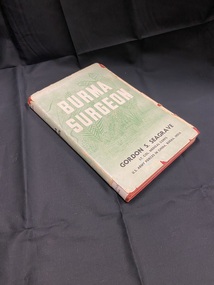
Book - Hardcover book, Dymock's Book Arcade, Burma Surgeon, 1944
... ...medicine - Burma...WW2 WWII World War Two medicine - Burma Gordon S Seagrave medical missionary - Burma Second World War medical personnel World War Two - medical care Gordon S. ...Gordon S. Seagrave's 'Burma Surgeon' is a compelling memoir detailing his experiences as a medical missionary and surgeon in Burma during World War II. The book is divided into three parts, capturing Seagrave's journey from building a hospital in Burma, his experiences on the Burma Road, to his role in the Battle of Burma. Seagrave, a Lieutenant Colonel and medical officer, recounts the challenges faced by his medical team, the construction of medical facilities, and the provision of care under dire conditions. He provides vivid descriptions of the terrain, the hardships of war, and the resilience of the Burmese people. The book also highlights his interactions with the American Volunteer Group and the logistical struggles of wartime medicine. Aimed at readers interested in military history and medicine, the memoir serves as both a historical account and a tribute to the courage and dedication of medical personnel during the war. [taken from Trove]Red hard cover book with a very faded and torn green dust jacket. The spine label and front cover have a green hand drawn image of jungle plants in the background with the title printed in large white letters across the front. Author is printed in black at the bottom. Title printed in black on the spine and a spine label is taped to the base.non-fictionGordon S. Seagrave's 'Burma Surgeon' is a compelling memoir detailing his experiences as a medical missionary and surgeon in Burma during World War II. The book is divided into three parts, capturing Seagrave's journey from building a hospital in Burma, his experiences on the Burma Road, to his role in the Battle of Burma. Seagrave, a Lieutenant Colonel and medical officer, recounts the challenges faced by his medical team, the construction of medical facilities, and the provision of care under dire conditions. He provides vivid descriptions of the terrain, the hardships of war, and the resilience of the Burmese people. The book also highlights his interactions with the American Volunteer Group and the logistical struggles of wartime medicine. Aimed at readers interested in military history and medicine, the memoir serves as both a historical account and a tribute to the courage and dedication of medical personnel during the war. [taken from Trove]ww2, wwii, world war two, medicine - burma, gordon s seagrave, medical missionary - burma, second world war medical personnel, world war two - medical care -
 Lara RSL Sub Branch
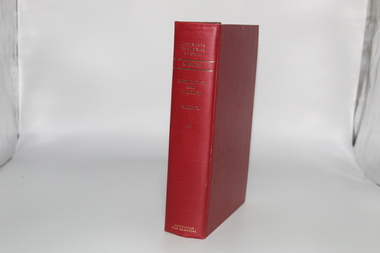
Book, Australia in the War of 1939-1945 - MEDICAL Middle East and Far East. Author Allan.S.Walker MD, Ch.M. F.R.A.C.P, First Published 1953
... medicine...malaria...medical conditions...burma...The complete record of the Medical conditions setting up camp hospitals, medical transport, medical records, tobruk crete general health in the desert surgical conditions in the desert syria nurses tropical medicine malaria medical conditions burma thai railway labour forces prison camps Australian War Memorial Photographs, Maps,Illustrations Australia in the War of 1939-1945 - MEDICAL Middle East and Far East. ...The complete record of the Medical conditions setting up camp hospitals, medical transport, medical records,Photographs, Maps,IllustrationsAustralian War Memorialtobruk, crete, general health in the desert, surgical conditions in the desert, syria, nurses, tropical medicine, malaria, medical conditions, burma thai railway, labour forces, prison camps -
 City of Ballarat
Artwork, other - Public Artwork, Albert Coates Memorial by Louis Laumen, 2012
... Burma-Siam Railway POW camps. The bronze statue by Louis Laumen captures his down-to-earth nature. Laumen is a Melbourne sculptor who has completed many commissioned bronze public artworks around Australia. The statue is of aesthetic and historic significance to the people of Ballarat albert coates medicine ...Leading surgeon and academic Sir Albert Coates (1895-1977) is one of Ballarat's most celebrated sons. A medical orderly during WWI, he returned home to become a pioneering neurosurgeon. A medical man in the worst of circumstances, Coates is often mentioned for his compassion and care in his role as a doctor in the Burma-Siam Railway POW camps. The bronze statue by Louis Laumen captures his down-to-earth nature. Laumen is a Melbourne sculptor who has completed many commissioned bronze public artworks around Australia.The statue is of aesthetic and historic significance to the people of BallaratBronze figure mounted on granite, amid garden plantings and plaques.Inscription details the life of Albert Coates.albert coates, medicine, pow camps -
 Wodonga & District Historical Society Inc
Book - Bunyabagoose! The Memoirs of Ned Monte, Edward Rupert Monte, 2008
... Burma Railway. Ned’s account of these years is matter-of-fact, but does not understate the awful conditions the POWs endured. He mentions many times the courage and risks taken to get additional items of food. Ned also acknowledged the help given by the local people in Thailand who traded food and medicines ...In this memoir Edward Rupert (Ned) Monte reflects on his early life. He begins with memories of his father William Monte who was a timber getter and champion axeman. Ned tells of his childhood and schooling at Bonegilla where he earned much needed pocket money catching Murray Cod to sell at hotels and boarding houses as well as rabbits for their skins and to feed the family. Ned worked in the motor business in Albury before joining the Army in 1941. He was taken prisoner in Singapore and spent 3½ years on the Burma Railway. Ned’s account of these years is matter-of-fact, but does not understate the awful conditions the POWs endured. He mentions many times the courage and risks taken to get additional items of food. Ned also acknowledged the help given by the local people in Thailand who traded food and medicines in spite of Japanese threats. Before leaving Singapore, Ned located 16 Albury boys among the POWs. One of his sad tasks when he returned in 1946, was to visit families and recount how their sons died. When Ned returned to Albury, his brother-in-law, Ern Bleasdale took him trout fishing for a week near Mitta Mitta. That week in the bush was the start of Ned’s rehabilitation. However, the trauma of his years of captivity never completely left him. This book is dedicated to all surviving Prisoners of War.A small book of 88 pages with green binding featuring a photo of Ned Monte on the cover. It includes a map of the Siam-Burma Railway 1942-1945non-fictionIn this memoir Edward Rupert (Ned) Monte reflects on his early life. He begins with memories of his father William Monte who was a timber getter and champion axeman. Ned tells of his childhood and schooling at Bonegilla where he earned much needed pocket money catching Murray Cod to sell at hotels and boarding houses as well as rabbits for their skins and to feed the family. Ned worked in the motor business in Albury before joining the Army in 1941. He was taken prisoner in Singapore and spent 3½ years on the Burma Railway. Ned’s account of these years is matter-of-fact, but does not understate the awful conditions the POWs endured. He mentions many times the courage and risks taken to get additional items of food. Ned also acknowledged the help given by the local people in Thailand who traded food and medicines in spite of Japanese threats. Before leaving Singapore, Ned located 16 Albury boys among the POWs. One of his sad tasks when he returned in 1946, was to visit families and recount how their sons died. When Ned returned to Albury, his brother-in-law, Ern Bleasdale took him trout fishing for a week near Mitta Mitta. That week in the bush was the start of Ned’s rehabilitation. However, the trauma of his years of captivity never completely left him. This book is dedicated to all surviving Prisoners of War.ned monte, prisoners of war, bonegila families, burma railway -
 Returned Nurses RSL Sub-branch
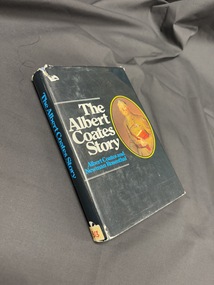
Book, Albert Ernest Coates, The Albert Coates story : The will that found the way, 1977
... Burma and Thailand. Written on scraps of paper of all kinds, toilet paper, anything, in rare moments of solitude between improvising medicines, amputating legs, appealing to the Japanese authorities and administering hospital camps, Albert Coates describes on of history's great feats of medicine. ...'The Albert Coates story is one of heroism, of courage, endurance and service. he is a great civilian as well as a great soldier and the book tells of his contributions to the development of medical studies and services in Melbourne-but the core of the book is his description of three-and-a-half years as a prisoner of the Japanese in Sumatra, Burma and Thailand. Written on scraps of paper of all kinds, toilet paper, anything, in rare moments of solitude between improvising medicines, amputating legs, appealing to the Japanese authorities and administering hospital camps, Albert Coates describes on of history's great feats of medicine. The first and last sections of the book have been written by Newman Rosenthal who also edited the prisoner of war section-so there is continuity of narrative.' [From front dust jacket]Book with a black dustjacket, has a painted portrait of an older man in uniform on cover and white and blue text on cover and spinenon-fiction'The Albert Coates story is one of heroism, of courage, endurance and service. he is a great civilian as well as a great soldier and the book tells of his contributions to the development of medical studies and services in Melbourne-but the core of the book is his description of three-and-a-half years as a prisoner of the Japanese in Sumatra, Burma and Thailand. Written on scraps of paper of all kinds, toilet paper, anything, in rare moments of solitude between improvising medicines, amputating legs, appealing to the Japanese authorities and administering hospital camps, Albert Coates describes on of history's great feats of medicine. The first and last sections of the book have been written by Newman Rosenthal who also edited the prisoner of war section-so there is continuity of narrative.' [From front dust jacket]world war two, wwii, ww2, prisoner of war, japan
