
Showing 15 items matching "medicine-biography"
-
 Alfred Hospital Nurses League - Nursing History Collection
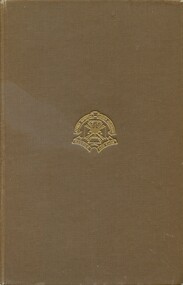
Book - Illustrated book, William Doolin 1887-1962, Wayfarers in medicine, 1947
... ...medicine-biography...Of significance to the AHNL as it was a prize awarded by the Alfred Hospital to a nurse during her training. medicine-history medicine-biography Collection of biographies of contributors to medicine from ancient times to the 1940's On front end page is a bookplate with black print: inside a decorative border are the words ' Alfred Hospital Training School for Nurses then the hospital's logo (lamp on red cross with motto surrounding) Melbourne S.1. ...Collection of biographies of contributors to medicine from ancient times to the 1940'sIllustrated book with brown cloth binding, Alfred hospital logo embossed in gilt on front cover, title, author's name & publisher's name and mark embossed in gilt on spine. non-fiction Collection of biographies of contributors to medicine from ancient times to the 1940's medicine-history, medicine-biography -
 Alfred Hospital Nurses League - Nursing History Collection
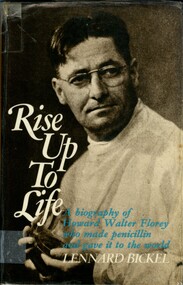
Book - Illustrated book, Lennard Bickel 1913-2002, Rise up to life: a biography of Howard Walter Florey who made penicillin and gave it to the world, 1972
... ...history of medicine-biography...Howard Florey Penicillin history of medicine-biography "Rise Up to Life" follows Howard Florey’s career from his university days in Adelaide, through the period of his greatest research projects at Oxford, Cambridge and Sheffield which culminated in his success with penicillin, to the final years of his life when he was the first Australian to be elected President of the Royal Society. ..."Rise Up to Life" follows Howard Florey’s career from his university days in Adelaide, through the period of his greatest research projects at Oxford, Cambridge and Sheffield which culminated in his success with penicillin, to the final years of his life when he was the first Australian to be elected President of the Royal Society. But this biography goes beyond exploring with insight and sympathy the life of a great scientist to give the reader a vivid and dramatic picture of the scientific processes that led up to a new discovery and a new era in medicine.Illustrated book with dustjacket. Book is bound in brown cloth with abbreviated title, author's name and printer's mark embossed in gilt on spine. Dustjacket has title printed in white and green and author's name in white print on a black and white photograph of a man with dark hair, wearing glasses and a white coat (Walter Florey), Abbreviated title (in white) author's name (in green) and printer's mark (in black) are printed on a brown background on the spine. The back of the dust jacket has a black and white photo of Penicillin notatum growing in a petri dish. "Rise Up to Life" follows Howard Florey’s career from his university days in Adelaide, through the period of his greatest research projects at Oxford, Cambridge and Sheffield which culminated in his success with penicillin, to the final years of his life when he was the first Australian to be elected President of the Royal Society. But this biography goes beyond exploring with insight and sympathy the life of a great scientist to give the reader a vivid and dramatic picture of the scientific processes that led up to a new discovery and a new era in medicine. howard florey, penicillin, history of medicine-biography -
 Bendigo Military Museum
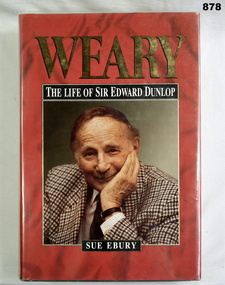
Book, Sue Ebury, Weary - The Life of Sir Edward Dunlop, 1994
... books-military-history-biography...medicine...books-military-history-biography medicine Book, black buckram hard cover with gold print, coloured dust cover with plastic, photo of Sir Edawrd Dunlop on front, red background, black, white, gold print. 709 pages, illustrated, black & white photos. ...Book, black buckram hard cover with gold print, coloured dust cover with plastic, photo of Sir Edawrd Dunlop on front, red background, black, white, gold print. 709 pages, illustrated, black & white photos. books-military-history-biography, medicine -
 Bendigo Historical Society Inc.
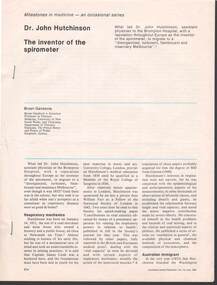
Document - ARTICLE: LIFE OF DR JOHN HUTCHINSON, 10th July 1981
... Hutchinson was the inventor of the spirometer and had noted accomplishments in thoracic medicine. An interesting biography of Hutchinson by Bryan Gandevia...Hutchinson was the inventor of the spirometer and had noted accomplishments in thoracic medicine. An interesting biography of Hutchinson by Bryan Gandevia Document ARTICLE: LIFE OF DR JOHN HUTCHINSON ...Cream coloured , stapled Article - re life of Dr John Hutchinson in Vol10, July 1981 issue of the Australian Family Physician ''Milestones in medicine - an occasional series'' pp 574-578. Hutchinson (b. 14/1/1811) came to Australia(1852) and practised in medicine in Sandhurst 1855 - 1861. Hutchinson was the inventor of the spirometer and had noted accomplishments in thoracic medicine. An interesting biography of Hutchinson by Bryan Gandevia person, individual, dr john hutchinson -
 Flagstaff Hill Maritime Museum and Village
Photograph - Portrait, William Roy Angus, c. 1920's
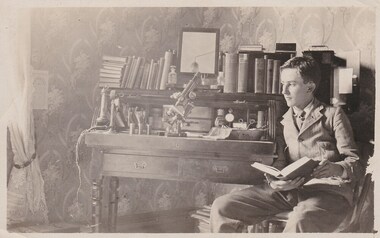
... medicine from the late 19th to mid-20th century. Dr Angus assisted Dr Tom Ryan, a pioneer in the use of X-rays and in ocular surgery. flagstaff hill warrnambool shipwrecked coast flagstaff hill maritime museum maritime museum shipwreck coast flagstaff hill maritime village great ocean road dr w r angus dr ryan surgical instrument t.s.s. largs bay warrnambool base hospital nhill base hospital mira hospital flying doctor roy angus photograph roy angus student photographic history W.R. Angus Collection W.R. Angus Biography ...This is a photograph of (William) Roy Angus, at his desk as a medical student in Adelaide, South Australia. It was donated to Flagstaff Hill Maritime Museum and Village by the family. He later qualified as Doctor William Roy Angus, Surgeon and Oculist. It is part of the “W.R. Angus Collection” which includes historical medical equipment, surgical instruments and materials once belonging to Dr Edward Ryan and Dr Thomas Francis Ryan, (both of Nhill, Victoria) as well as Dr Angus’ own belongings. The Collection’s history spans the medical practices of the two Doctors Ryan, from 1885-1926 plus that of Dr Angus, up until 1969. ABOUT THE “W.R. ANGUS COLLECTION” updated 20-01-2023 Doctor William Roy Angus M.B., B.S., Adel., 1923, F.R.C.S. Edin.,1928 (also known as Dr Roy Angus) was born in Murrumbeena, Victoria on 28th June 1901 and lived until 1970. He qualified as a doctor, M.B.B.S. (Bachelor of Medicine-Bachelor of Surgery) in the 1923 at University of Adelaide, was Resident Medical Officer at the Royal Adelaide Hospital in 1924 and for a period was house surgeon to Sir (then Mr.) Henry Simpson Newland, from whom he acquired his interest in plastic surgery. He was also House Surgeon to Dr J.J. O’Grady, under whom he did his early Ophthalmological training. Dr Angus was briefly an Assistant to Dr Riddell of Kapunda, then commenced private practice at Curramulka, Yorke Peninsula, SA, where he was a physician, surgeon and chemist. In 1926, he was appointed as the new Medical Assistant to Dr Thomas Francis Ryan (T.F. Ryan, or Tom), in Nhill, Victoria, whose practice had been established by his brother, Dr Edward Ryan. Consequently, a considerable amount of eye work was done. Dr Angus’ experiences included radiology and pharmacy. In 1927 he was Acting House Surgeon in Dr Tom Ryan’s six-month trip abroad. Dr Angus had become engaged to Gladys Forsyth and they decided he further his studies overseas in the UK in 1927, sailing in the ship SS Banffshire. He studied at London University College Hospital and at Edinburgh Royal Infirmary and in 1928, was awarded FRCS (Fellow from the Royal College of Surgeons), Edinburgh, Scotland. He worked his passage back to Australia as a Ship’s Surgeon on the Australian Commonwealth Line T.S.S. Largs Bay, which was purchased by the White Star Line in 1928. He returned to South Australia, where he practised general surgery 1928-1932. He was a surgeon at the Curramulka Hospital, Yorke Peninsula, South Australia. Dr Angus was a ‘flying doctor’ for the A.I.M. (Australian Inland Ministry) Aerial Medical Service in 1928. Its first station was in the remote town of Oodnadatta, where Dr Angus was stationed. He was locum tenens there on North-South Railway at 21 Mile Camp. He took up this ‘flying doctor’ position in response to a call from Dr John Flynn; the organisation was later known as the Flying Doctor Service, then the Royal Flying Doctor Service. His work during this time involved general surgery, eye work, plastic surgery, radiology, pathology and even dental surgery. Dr Angus married Gladys in 1929, in Ballarat. (They went on to have one son (Graham 1932, born in SA) and two daughters (Helen (died 12/07/1996) and Berenice (Berry), both born at Mira, Nhill ). According to Berry, her mother Gladys made a lot of their clothes. She was very talented and did some lovely embroidery including lingerie for her trousseau and beautifully handmade baby clothes. In 1933 Dr Angus returned to Nhill and purchased a share of the Nelson Street practice and Mira hospital (a 2-bed ward at the Nelson Street Practice) from Dr Les Middleton one of the Middleton Brothers, the current owners of what previously once Dr Tom Ryan’s practice, where Dr Angus was previously Medical Assistant. Dr Tom and his brother had worked as surgeons including in eye surgery. Dr Tom Ryan performed many of his operations in the Mira private hospital on his premises. He had been House Surgeon at the Nhill Hospital from 1902-1926. Dr Tom Ryan had one of the only two pieces of radiology equipment in Victoria during his practicing years – The Royal Melbourne Hospital had the other one. Over the years Dr Tom Ryan had gradually set up what was effectively a training school for country general-practitioner-surgeons. Each patient was carefully examined, including using the X-ray machine, and any surgery was discussed and planned with Dr Ryan’s assistants several days in advance. Dr Angus gained experience in using the X-ray machine there during his time as assistant to Dr Ryan. The doctors Ryan were related to the Ryan Eye Doctors in Melbourne. When Dr Angus bought into the Nelson Street premises in Nhill he was also appointed as the Nhill Hospital’s Honorary House Surgeon 1933-1938. His practitioner’s plate from his Nhill surgery is now mounted on the doorway to the Port Medical Office at Flagstaff Hill Maritime Village, Warrnambool. When Dr Angus took up practice in Dr Edward and Dr Tom Ryan’s old premises, he obtained their extensive collection of historical medical equipment and materials spanning 1884-1926. A large part of this collection is now on display at the Port Medical Office at Flagstaff Hill Maritime Village in Warrnambool. In 1939 Dr Angus and his family moved to Warrnambool where he purchased “Birchwood,” the 1852 home and medical practice of Dr John Hunter Henderson, at 214 Koroit Street. (This property was sold in1965 to the State Government and is now the site of the Warrnambool Police Station. and an ALDI store is on the land that was once their tennis court). The Angus family could afford gardeners, cooks and maids; their home was a popular place for visiting dignitaries to stay whilst visiting Warrnambool. Dr Angus had his own silkworm farm at home in a Mulberry tree. His young daughter used his centrifuge for spinning the silk. Dr Angus was appointed on a part-time basis as Port Medical Officer (Health Officer) in Warrnambool and held this position until the 1940s when the government no longer required the service of a Port Medical Officer in Warrnambool; he was thus Warrnambool’s last serving Port Medical Officer. (Masters of immigrant ships arriving in port reported incidents of diseases, illness and death and the Port Medical Officer made a decision on whether the ship required Quarantine and for how long, in this way preventing contagious illness from spreading from new immigrants to the residents already in the colony.) Dr Angus was a member of the Australian Medical Association, for 35 years and a surgeon at the Warrnambool Base Hospital from 1939-1942, Soon after his move to Warrnambool, war was declared. Dr Angus joined the Australian Department of Defence as a Surgeon Captain during WWII 1942-45, in Ballarat, Victoria, and in Bonegilla, N.S.W., at 106 A.G.H., completing his service just before the end of the war due to suffering from a heart attack. During his twelve moth convalescence and rehabilitation, he carved an intricate and ‘most artistic’ chess set from the material that dentures were made from. He returned to Warrnambool to commence practice as an ophthalmologist, pioneering artificial eye improvements. He was an Honorary Consultant Ophthalmologist at Warrnambool Base Hospital for 31 years. He made monthly visits to Portland as a visiting surgeon, to perform eye surgery. He represented the Victorian South-West subdivision of the Australian Medical Association as its secretary between 1949 and 1956 and as chairman from 1956 to 1958. Altogether he had interests in nine various medical organisations. In his personal life, Dr Angus was a Presbyterian and treated Sunday as a Sabbath, a day of rest. He would visit 3 or 4 country patients on a Sunday, taking his children along ‘for the ride’ and visiting with him. Sunday evenings he would play the pianola or piano and sing Scottish songs to his family. He loved Scottish music. He owned a farm in the Heytesbury district, where he found his hobbies of metalwork and carpentry useful in the workshop. He also enjoyed painting, mainly watercolour, and took part in many exhibitions. One of Dr Angus’ patients was Margaret MacKenzie, author of a book on local shipwrecks that she’d seen as an eyewitness from the late 1880’s in Peterborough, Victoria. In the early 1950’s Dr Angus, painted a picture of a shipwreck for the cover jacket of Margaret’s book, Shipwrecks and More Shipwrecks. She was blind in later life and her daughter wrote the actual book for her. Dr Angus and his wife Gladys were very involved in Warrnambool’s society with a strong interest in civic affairs. He had an interest in people and the community They were both involved in the creation of Flagstaff Hill, including the layout of the gardens. After serving in the Army, Dr Angus studied ophthalmology and became a Clinical Assistant at the Royal Melbourne Eye and Ear Hospital. He had been interested in an article on cartilage grafting by Dr Lyndon Peer of St. Barnabas Medical Centre, New Jersey, U.S., which he happened to see in a dental journal. After thought and research, Dr Angus decided to try his idea of living intrascleral implants and was able to present a paper on his results at the Combined Scientific Meeting of the O.S.A. at Surfers’ Paradise in 1962. This was followed by a further report on the results of the different methods used, given in Adelaide at the O.S.A. meeting in 1965. In 1967, during an extended holiday abroad, he was invited to spend time at the Barraquer Institute in Barcelona. While there, showed a film of his operation with slides and, translated by Professor Barraquer, gave an abridged lecture. He was elected as a member of the Instituto Barraquer, one of only a few Australians to receive the honour. He received many requests for copies of his paper. He was also invited to lecture and show the films in England and at the St Barnabas Medical Centre in New Jersey. He completed his work on Living Intrascleral Implants and gave his final paper and film Inaugural Meeting of the Australian College of Ophthalmologists in Melbourne in October 1969. Angus received accolades from the Ophthalmological Society of Australasia for this work. Two weeks after presenting his paper in Melbourne in 1969 Dr Angus became critically ill. He died on 28th March 1970. His family requested his practitioner’s plate, medical instruments and some personal belongings to be displayed in the Port Medical Office surgery at Flagstaff Hill Maritime Village, and be called the “W. R. Angus Collection”. The W.R. Angus Collection is significant for still being located at the site it is connected with, Doctor Angus being the last Port Medical Officer in Warrnambool. The collection of medical instruments and other equipment is culturally significant, being a historical example of medicine from the late 19th to mid-20th century. Dr Angus assisted Dr Tom Ryan, a pioneer in the use of X-rays and in ocular surgery. Photograph, black and white, of (William) Roy Angus as a student at his desk in his study, pre 1923. Part of the W.R. Angus Collection. flagstaff hill, warrnambool, shipwrecked coast, flagstaff hill maritime museum, maritime museum, shipwreck coast, flagstaff hill maritime village, great ocean road, dr w r angus, dr ryan, surgical instrument, t.s.s. largs bay, warrnambool base hospital, nhill base hospital, mira hospital, flying doctor, roy angus photograph, roy angus student, photographic history, w.r. angus collection, w.r. angus biography, pianola, piano, scotland, scottish music -
 Eltham District Historical Society Inc
Document - Folder, Wainer, Jo
... Biography of Bert Wainer. Jan Richardson Sue Richardson Peta Heywood Jo Wainer Bertram Barney Wainer Centre for Gender and Medicine at Monash University Preshil School Kew "Lost:Illegal Abortion Stories" book "Children of the Lucky Country?" ...Abortion law reformers Jo and Bert Wainer lived in Diamond Valley. Contents Newspaper article: "Brains - it's all in the family", The Age, 9 October 2006. Achievements of Jo Wainer and her three sisters. Newspaper article: "Lifelong crusade pays off", Diamond Valley Leader, 27 August 2008. Jo Wainer's response to Victorian Bill which would remove abortion as a crime. Note: "Celebrate Sisters, the Battle Is Won", 25 November 2008, by Jo Wainer. Note: "Dr Jo Wainer", no date. Biography of Jo Wainer. Note: "Bertram Barney Wainer", no date. Biography of Bert Wainer. Newspaper clippings, A4 photocopies, etc jan richardson, sue richardson, peta heywood, jo wainer, bertram barney wainer, centre for gender and medicine at monash university, preshil school kew, "lost:illegal abortion stories" book, "children of the lucky country?" book, margot prior, "no time to lose" book, stam daveu, abortion law reform -
 Narre Warren and District Family History Group
Book, Frank Madill et al, If you faint, fall backwards! : or medicine, warts and all, 2005
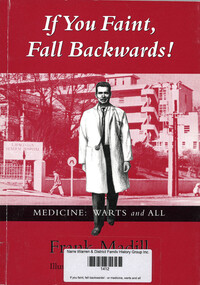
... Frank Madill biography This book is about Frank's progress through medical school in Melbourne and Tasmania where he trained as a resident at the LGH and then became a general practitioner in Launceston's northern suburbs. xii, 320 p.; 21 cm If you faint, fall backwards! : or medicine ...This book is about Frank's progress through medical school in Melbourne and Tasmania where he trained as a resident at the LGH and then became a general practitioner in Launceston's northern suburbs.xii, 320 p.; 21 cm non-fiction This book is about Frank's progress through medical school in Melbourne and Tasmania where he trained as a resident at the LGH and then became a general practitioner in Launceston's northern suburbs. frank madill, biography -
 Alfred Hospital Nurses League - Nursing History Collection
Book - Illustrated book, John Collier Trinca, Neither hypocrite nor saint, 1994
... Biography of Alfred John Trinca (1884-1981) an Australian pathologist and surgeon, it explores his life and career, highlighting his contributions to medicine, particularly his work at the Alfred Hospital Melbourne....Biography of Alfred John Trinca (1884-1981) an Australian pathologist and surgeon, it explores his life and career, highlighting his contributions to medicine, particularly his work at the Alfred Hospital Melbourne. ...Biography of Alfred John Trinca (1884-1981) an Australian pathologist and surgeon, it explores his life and career, highlighting his contributions to medicine, particularly his work at the Alfred Hospital Melbourne. Of significance to the AHNL as Alfred Trinca had a long association with the Alfred Hospital. Illustrated book with dustjacket and clear protective film. Book has a dark blue cover with abbreviated title and authors surname embossed in gilt on spine. Dustjacket has a white background and black print, title, author's name printed on front. and A.J. Trinca on spine. Previous catalogue number handwritten in black ink on small white sticker at top right of front-end page. alfred john trinca, physicians-australia-biography, medical personnel-australia-biography -
Clunes Museum
Document - BIOGRAPHICAL DOCUMENT
... biography .1 Handwritten in ink, "Died in Grimsby where he was a Public Health Doctor looking after children" 1. Photocopy RESUME OF DOCTOR WILLIAM GEORGE SOUTHEY 1910-1927 .2 Photocopy Reference written from E.O.S. Kurdan, No. 9 Indian General Hospital, dated April 4th, 1919 .3 Photocopy Reference written from Sidney V. Sewell M.D., Melbourne Hospital dated July 3rd .4 Photocopy Reference written from William R. Smith Knt. M.D., D.Sc., R.F.S.Ed Emeritus Professor Forensic Medicine ...1. Photocopy RESUME OF DOCTOR WILLIAM GEORGE SOUTHEY 1910-1927 .2 Photocopy Reference written from E.O.S. Kurdan, No. 9 Indian General Hospital, dated April 4th, 1919 .3 Photocopy Reference written from Sidney V. Sewell M.D., Melbourne Hospital dated July 3rd .4 Photocopy Reference written from William R. Smith Knt. M.D., D.Sc., R.F.S.Ed Emeritus Professor Forensic Medicine and Toxicology, King's College University of London dated 15th December 1927 .5 Photocopy Reference written from E. Goodwin Rawlinson M.D., D.P.H., Asst.Director of The Royal Institute of Public Health dated 14th December 1927 .6 Photocopy Reference written from J.F. Mackeddie Hon. Physician, Alfred Hospital, 110 Collins Street dated 3/7/1911 .7 Photocopy Reference written from A.E. Blackett Forster M.B., R.S., (Mel) dated 18/5/1915 .8.9 Photocopy of semi profile of Dr. Southey .10.11.12 Photocopy of semi profile of Dr. Southey with white border around image .1 Handwritten in ink, "Died in Grimsby where he was a Public Health Doctor looking after children" local history, documents, biography -
 Wodonga & District Historical Society Inc
Book - Schlink of Prince Alfred - A Biography of Sir Herbert Schlink, Kempson Maddox, 1978
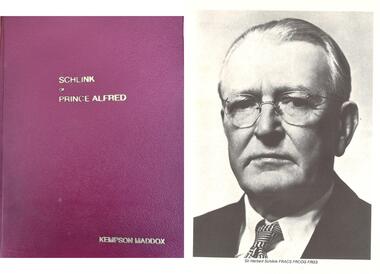
... biography of the life and achievements of Sir Herbert Schlink. He was born on 28 March 1883 in Wodonga, Victoria to German migrants Albert Joseph Schlink and Franziska Trudewind. Herbert initially enrolled in the Faculty of Arts at the University of Sydney, but after one year he transferred to medicine and graduated in 1907. ...A detailed biography of the life and achievements of Sir Herbert Schlink. He was born on 28 March 1883 in Wodonga, Victoria to German migrants Albert Joseph Schlink and Franziska Trudewind. Herbert initially enrolled in the Faculty of Arts at the University of Sydney, but after one year he transferred to medicine and graduated in 1907. This marked the beginning of a brilliant career. Herbert was appointed as Honorary Gynaecological Surgeon at Royal Prince Alfred, Sydney NSW from 1922. As a director of the hospital board from 1926, Schlink as Chairman (1934-62) supervised the opening of Gloucester House, King George V Memorial Hospital for Mothers and Babies, Queen Mary Nurses' Home, the neurosurgical and psychiatric blocks, the (Sir Earle) Page Chest Pavilion and the hospital chapel. As a gynaecologist, Herbert pioneered the use of cobalt ray therapy in treating pelvic cancer and instigated the systematic follow-up of cancer patients. In 1954, Herbert was created Knight Bachelor for his public services and his service to medicine. He had previously received the Silver Jubilee Medal from his Majesty King George V, and the Coronation Medals of 1937 and 1953.This book is bound in maroon leather with gold lettering. It includes biographical information and images. The appendix includes an extensive Curriculum Vitae containing a list of medical publications by Sir Herbert Schlink and develops made at the Royal Prince Alfred Hospital during his Chairmanship. The book has an extensive bibliographical references and an index. fiction A detailed biography of the life and achievements of Sir Herbert Schlink. He was born on 28 March 1883 in Wodonga, Victoria to German migrants Albert Joseph Schlink and Franziska Trudewind. Herbert initially enrolled in the Faculty of Arts at the University of Sydney, but after one year he transferred to medicine and graduated in 1907. This marked the beginning of a brilliant career. Herbert was appointed as Honorary Gynaecological Surgeon at Royal Prince Alfred, Sydney NSW from 1922. As a director of the hospital board from 1926, Schlink as Chairman (1934-62) supervised the opening of Gloucester House, King George V Memorial Hospital for Mothers and Babies, Queen Mary Nurses' Home, the neurosurgical and psychiatric blocks, the (Sir Earle) Page Chest Pavilion and the hospital chapel. As a gynaecologist, Herbert pioneered the use of cobalt ray therapy in treating pelvic cancer and instigated the systematic follow-up of cancer patients. In 1954, Herbert was created Knight Bachelor for his public services and his service to medicine. He had previously received the Silver Jubilee Medal from his Majesty King George V, and the Coronation Medals of 1937 and 1953. sir herbert schlink, schlink family of wodonga -
 Returned Nurses RSL Sub-branch
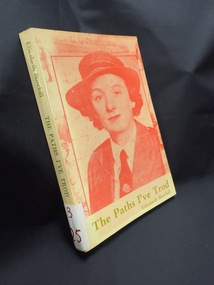
Book, Elizabeth Burchill, The paths I've trod, 1981
... Medicine. Nursing. Burchill, Elizabeth, 1908-. Australia. Biographies (ANB/PRECIS SIN 0516392). ...'Dora Elizabeth Burchill was born in Hawthorn, Victoria and trained as a triple certificate nurse in Melbourne and London. Proving that nursing is the best passport for travel she subsequently travelled widely and became registered as a nurse in seven countries of the world. Cherishing the ideals of Florence Nightingale in peace and war, Sister Burchill volunteered to serve in Ethiopia during the Italian-Abyssinian War in 1936, nursed refugee children during the Spanish Civil War in 1937 and served with the 2nd AIF in Palestine and Egypt in 1940. Following six years as a member of the Australian Army Nursing Service, she took another challenging path, becoming involved in radio broadcasting [Working for 3SR Radio Station, Shepparton p185], writing and lecturing for the Commonwealth Institute in England. Six years later she returned to nursing and started the first full-time infant welfare clinic in Darwin for the Northern Territory Department of Health and remained in this important post of increasing development in post-war Darwin for five years. Sister Burchill continued this work in Thursday Island and the Sepik District of New Guinea into the 1960s. Many published articles in magazines and newspapers and five published books testify to her skill and determination as a factual writer. ?Innamincka?, is her best-known book. Seeking further worthwhile challenges in the 1970s, Sister Burchill studied for the Higher School Certificate which resulted in her earning a place in the Faculty of Arts, Monash University. She graduated as Bachelor of Arts in 1981. In 1986, she graduated as Bachelor of Letters at the University of Melbourne. Includes index. Bibliography: p. [249]-250. Medicine. Nursing. Burchill, Elizabeth, 1908-. Australia. Biographies (ANB/PRECIS SIN 0516392). Includes bibliographical references (pages 249-250) and index.' From TroveBook with green text on cover and spine and red image on cover fiction 'Dora Elizabeth Burchill was born in Hawthorn, Victoria and trained as a triple certificate nurse in Melbourne and London. Proving that nursing is the best passport for travel she subsequently travelled widely and became registered as a nurse in seven countries of the world. Cherishing the ideals of Florence Nightingale in peace and war, Sister Burchill volunteered to serve in Ethiopia during the Italian-Abyssinian War in 1936, nursed refugee children during the Spanish Civil War in 1937 and served with the 2nd AIF in Palestine and Egypt in 1940. Following six years as a member of the Australian Army Nursing Service, she took another challenging path, becoming involved in radio broadcasting [Working for 3SR Radio Station, Shepparton p185], writing and lecturing for the Commonwealth Institute in England. Six years later she returned to nursing and started the first full-time infant welfare clinic in Darwin for the Northern Territory Department of Health and remained in this important post of increasing development in post-war Darwin for five years. Sister Burchill continued this work in Thursday Island and the Sepik District of New Guinea into the 1960s. Many published articles in magazines and newspapers and five published books testify to her skill and determination as a factual writer. ?Innamincka?, is her best-known book. Seeking further worthwhile challenges in the 1970s, Sister Burchill studied for the Higher School Certificate which resulted in her earning a place in the Faculty of Arts, Monash University. She graduated as Bachelor of Arts in 1981. In 1986, she graduated as Bachelor of Letters at the University of Melbourne. Includes index. Bibliography: p. [249]-250. Medicine. Nursing. Burchill, Elizabeth, 1908-. Australia. Biographies (ANB/PRECIS SIN 0516392). Includes bibliographical references (pages 249-250) and index.' From Trove nursing in warfare, elizabeth burchill, world war two, wwii, ww2, china-ethiopian war, spanish civil war, australian army nursing service -
 Returned Nurses RSL Sub-branch
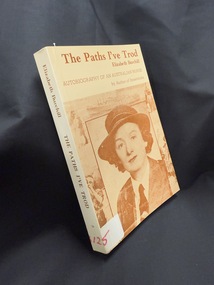
Book, Elizabeth Burchill, The paths I've trod, 1981
... Medicine. Nursing. Burchill, Elizabeth, 1908-. Australia. Biographies (ANB/PRECIS SIN 0516392). ...'Dora Elizabeth Burchill was born in Hawthorn, Victoria and trained as a triple certificate nurse in Melbourne and London. Proving that nursing is the best passport for travel she subsequently travelled widely and became registered as a nurse in seven countries of the world. Cherishing the ideals of Florence Nightingale in peace and war, Sister Burchill volunteered to serve in Ethiopia during the Italian-Abyssinian War in 1936, nursed refugee children during the Spanish Civil War in 1937 and served with the 2nd AIF in Palestine and Egypt in 1940. Following six years as a member of the Australian Army Nursing Service, she took another challenging path, becoming involved in radio broadcasting [Working for 3SR Radio Station, Shepparton p185], writing and lecturing for the Commonwealth Institute in England. Six years later she returned to nursing and started the first full-time infant welfare clinic in Darwin for the Northern Territory Department of Health and remained in this important post of increasing development in post-war Darwin for five years. Sister Burchill continued this work in Thursday Island and the Sepik District of New Guinea into the 1960s. Many published articles in magazines and newspapers and five published books testify to her skill and determination as a factual writer. ?Innamincka?, is her best-known book. Seeking further worthwhile challenges in the 1970s, Sister Burchill studied for the Higher School Certificate which resulted in her earning a place in the Faculty of Arts, Monash University. She graduated as Bachelor of Arts in 1981. In 1986, she graduated as Bachelor of Letters at the University of Melbourne. Includes index. Bibliography: p. [249]-250. Medicine. Nursing. Burchill, Elizabeth, 1908-. Australia. Biographies (ANB/PRECIS SIN 0516392). Includes bibliographical references (pages 249-250) and index.' From TroveBook with brown text on cover and spine and brown image on cover fiction 'Dora Elizabeth Burchill was born in Hawthorn, Victoria and trained as a triple certificate nurse in Melbourne and London. Proving that nursing is the best passport for travel she subsequently travelled widely and became registered as a nurse in seven countries of the world. Cherishing the ideals of Florence Nightingale in peace and war, Sister Burchill volunteered to serve in Ethiopia during the Italian-Abyssinian War in 1936, nursed refugee children during the Spanish Civil War in 1937 and served with the 2nd AIF in Palestine and Egypt in 1940. Following six years as a member of the Australian Army Nursing Service, she took another challenging path, becoming involved in radio broadcasting [Working for 3SR Radio Station, Shepparton p185], writing and lecturing for the Commonwealth Institute in England. Six years later she returned to nursing and started the first full-time infant welfare clinic in Darwin for the Northern Territory Department of Health and remained in this important post of increasing development in post-war Darwin for five years. Sister Burchill continued this work in Thursday Island and the Sepik District of New Guinea into the 1960s. Many published articles in magazines and newspapers and five published books testify to her skill and determination as a factual writer. ?Innamincka?, is her best-known book. Seeking further worthwhile challenges in the 1970s, Sister Burchill studied for the Higher School Certificate which resulted in her earning a place in the Faculty of Arts, Monash University. She graduated as Bachelor of Arts in 1981. In 1986, she graduated as Bachelor of Letters at the University of Melbourne. Includes index. Bibliography: p. [249]-250. Medicine. Nursing. Burchill, Elizabeth, 1908-. Australia. Biographies (ANB/PRECIS SIN 0516392). Includes bibliographical references (pages 249-250) and index.' From Trove nursing in warfare, elizabeth burchill, world war two, wwii, ww2, china-ethiopian war, spanish civil war, australian army nursing service -
 Returned Nurses RSL Sub-branch
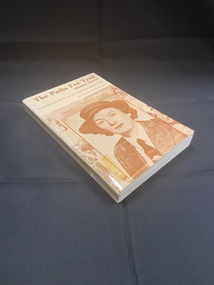
Book, Elizabeth Burchill, The paths I've trod: autobigraphy of an Australian nurse, 1981
... Medicine. Nursing. Burchill, Elizabeth, 1908-. Australia. Biographies (ANB/PRECIS SIN 0516392). ...'Dora Elizabeth Burchill was born in Hawthorn, Victoria and trained as a triple certificate nurse in Melbourne and London. Proving that nursing is the best passport for travel she subsequently travelled widely and became registered as a nurse in seven countries of the world. Cherishing the ideals of Florence Nightingale in peace and war, Sister Burchill volunteered to serve in Ethiopia during the Italian-Abyssinian War in 1936, nursed refugee children during the Spanish Civil War in 1937 and served with the 2nd AIF in Palestine and Egypt in 1940. Following six years as a member of the Australian Army Nursing Service, she took another challenging path, becoming involved in radio broadcasting [Working for 3SR Radio Station, Shepparton p185], writing and lecturing for the Commonwealth Institute in England. Six years later she returned to nursing and started the first full-time infant welfare clinic in Darwin for the Northern Territory Department of Health and remained in this important post of increasing development in post-war Darwin for five years. Sister Burchill continued this work in Thursday Island and the Sepik District of New Guinea into the 1960s. Many published articles in magazines and newspapers and five published books testify to her skill and determination as a factual writer. ?Innamincka?, is her best-known book. Seeking further worthwhile challenges in the 1970s, Sister Burchill studied for the Higher School Certificate which resulted in her earning a place in the Faculty of Arts, Monash University. She graduated as Bachelor of Arts in 1981. In 1986, she graduated as Bachelor of Letters at the University of Melbourne. Includes index. Bibliography: p. [249]-250. Medicine. Nursing. Burchill, Elizabeth, 1908-. Australia. Biographies (ANB/PRECIS SIN 0516392). Includes bibliographical references (pages 249-250) and index.' From TroveSepia toned paperback book with title and author details printed in brown text along spine and cover. Front cover shows a sepia photo of an Army Nurse overlaying an image of soldiers, camels and a ship. non-fiction 'Dora Elizabeth Burchill was born in Hawthorn, Victoria and trained as a triple certificate nurse in Melbourne and London. Proving that nursing is the best passport for travel she subsequently travelled widely and became registered as a nurse in seven countries of the world. Cherishing the ideals of Florence Nightingale in peace and war, Sister Burchill volunteered to serve in Ethiopia during the Italian-Abyssinian War in 1936, nursed refugee children during the Spanish Civil War in 1937 and served with the 2nd AIF in Palestine and Egypt in 1940. Following six years as a member of the Australian Army Nursing Service, she took another challenging path, becoming involved in radio broadcasting [Working for 3SR Radio Station, Shepparton p185], writing and lecturing for the Commonwealth Institute in England. Six years later she returned to nursing and started the first full-time infant welfare clinic in Darwin for the Northern Territory Department of Health and remained in this important post of increasing development in post-war Darwin for five years. Sister Burchill continued this work in Thursday Island and the Sepik District of New Guinea into the 1960s. Many published articles in magazines and newspapers and five published books testify to her skill and determination as a factual writer. ?Innamincka?, is her best-known book. Seeking further worthwhile challenges in the 1970s, Sister Burchill studied for the Higher School Certificate which resulted in her earning a place in the Faculty of Arts, Monash University. She graduated as Bachelor of Arts in 1981. In 1986, she graduated as Bachelor of Letters at the University of Melbourne. Includes index. Bibliography: p. [249]-250. Medicine. Nursing. Burchill, Elizabeth, 1908-. Australia. Biographies (ANB/PRECIS SIN 0516392). Includes bibliographical references (pages 249-250) and index.' From Trove nursing in warfare, elizabeth burchill, world war two, wwii, ww2, china-ethiopian war, spanish civil war, australian army nursing service -
 Returned Nurses RSL Sub-branch
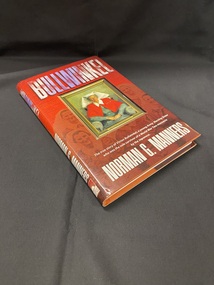
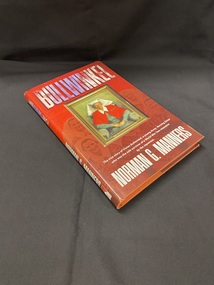
Book - Hardcover book, Hesperion Press, Bullwinkel: the true story of Vivian Bullwinkel, a young Army Nursing Sister, who was the sole survivor of a World War Two massacre by the Japanese, 1999
... biography. The story of Sister Vivian Bullwinkel and the wartime massacre of 21 Australian Army Nursing Service sisters. As the sole survivor of that massacre and a captive of the Japanese, she survived starvation, torture and lack of medicine by luck and sheer determination to live. ...The true story of Vivian Bullwinkel, a young army nursing sister who was sole survivor of WW2 massacre by the Japanese, the book details her ordeal in the Sumatran jungle POW camps. Her determination to survive is the basis of this factual biography. The story of Sister Vivian Bullwinkel and the wartime massacre of 21 Australian Army Nursing Service sisters. As the sole survivor of that massacre and a captive of the Japanese, she survived starvation, torture and lack of medicine by luck and sheer determination to live. [From Trove]Bronze coloured hardcover book with gold writing on the cover depicting title and auther's name. The book is covered with a brown and red dust jacket with an image on the cover of a framed oil painting of Vivian Bullwinkel wearing her nurses' uniform. non-fiction The true story of Vivian Bullwinkel, a young army nursing sister who was sole survivor of WW2 massacre by the Japanese, the book details her ordeal in the Sumatran jungle POW camps. Her determination to survive is the basis of this factual biography. The story of Sister Vivian Bullwinkel and the wartime massacre of 21 Australian Army Nursing Service sisters. As the sole survivor of that massacre and a captive of the Japanese, she survived starvation, torture and lack of medicine by luck and sheer determination to live. [From Trove] vivian bullwinkel, royal australian army nursing corps, prisoners of war, ww2, wwii, world war two, world war 2 -
 Returned Nurses RSL Sub-branch
Book - Hardcover book, Hesperion Press, Bullwinkel: the true story of Vivian Bullwinkel, a young Army Nursing Sister, who was the sole survivor of a World War Two massacre by the Japanese, 1999
... biography. The story of Sister Vivian Bullwinkel and the wartime massacre of 21 Australian Army Nursing Service sisters. As the sole survivor of that massacre and a captive of the Japanese, she survived starvation, torture and lack of medicine by luck and sheer determination to live. ...The true story of Vivian Bullwinkel, a young army nursing sister who was sole survivor of WW2 massacre by the Japanese, the book details her ordeal in the Sumatran jungle POW camps. Her determination to survive is the basis of this factual biography. The story of Sister Vivian Bullwinkel and the wartime massacre of 21 Australian Army Nursing Service sisters. As the sole survivor of that massacre and a captive of the Japanese, she survived starvation, torture and lack of medicine by luck and sheer determination to live. [From Trove]Bronze coloured hardcover book with gold writing on the cover depicting title and auther's name. The book is covered with a brown and red dust jacket with an image on the cover of a framed oil painting of Vivian Bullwinkel wearing her nurses' uniform. non-fiction The true story of Vivian Bullwinkel, a young army nursing sister who was sole survivor of WW2 massacre by the Japanese, the book details her ordeal in the Sumatran jungle POW camps. Her determination to survive is the basis of this factual biography. The story of Sister Vivian Bullwinkel and the wartime massacre of 21 Australian Army Nursing Service sisters. As the sole survivor of that massacre and a captive of the Japanese, she survived starvation, torture and lack of medicine by luck and sheer determination to live. [From Trove] vivian bullwinkel, royal australian army nursing corps, prisoners of war, ww2, wwii, world war two, world war 2
