
Showing 118 items matching "melbourne's royal botanic gardens"
-
 Clunes Museum
Book, ANDREW LEMON, MELBOURNE'S PRIDE & GLORY, 1996
... ...MELBOURNE'S ROYAL BOTANIC GARDENS...150TH ANNIVERSARY OF THE ESTABLISHMENT OF THE GARDENS 1876 BOOK MELBOURNE'S ROYAL BOTANIC GARDENS SOFT COVER BOOK WITH A COLOURED IMAGE OF THE SITE OF MELBOURNE'S BOTANIC GARDENS MELBOURNE'S PRIDE & GLORY Book BOOK ANDREW LEMON ...SOFT COVER BOOK WITH A COLOURED IMAGE OF THE SITE OF MELBOURNE'S BOTANIC GARDENSnon-fictionbook, melbourne's royal botanic gardens -
 Victoria Police Museum
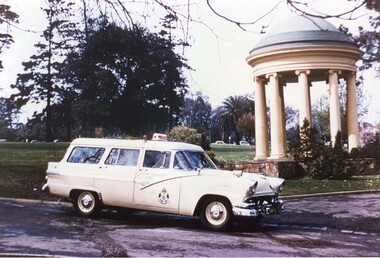
Photograph (police car)
... Ford Customline for the Accident Appreciation Squad in the Melbourne Royal Botanic Gardens. Circa 1957...police vehicles; wireless patrol; motor transport branch; motor transport section; accident appreciation squad; ford customline Ford Customline for the Accident Appreciation Squad in the Melbourne Royal Botanic Gardens. Circa 1957 Photograph (police car) ...Ford Customline for the Accident Appreciation Squad in the Melbourne Royal Botanic Gardens. Circa 1957police vehicles; wireless patrol; motor transport branch; motor transport section; accident appreciation squad; ford customline -
 Melbourne Legacy
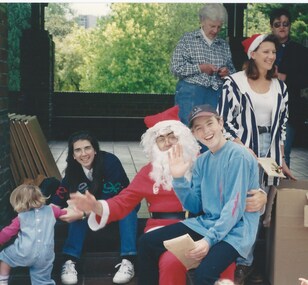
Photograph, Christmas Party 1993, 1993
... Photos of a Christmas Party held for the Junior Legatees at the Stapley Pavilion in the Melbourne Royal Botanic Gardens. It was 11 December 1993. ...Photos of a Christmas Party held for the Junior Legatees at the Stapley Pavilion in the Melbourne Royal Botanic Gardens. It was 11 December 1993. ...Photos of a Christmas Party held for the Junior Legatees at the Stapley Pavilion in the Melbourne Royal Botanic Gardens. It was 11 December 1993. There was a performance by a clown and a visit by Santa Claus. A record of the activities and experiences that Melbourne Legacy provides for the children in their care.Colour photo x 8 of a junior legatee Christmas Party in the Botanic Gardens in 1993.Date is shown in the photos as 11 December 1993.junior legatee outing, christmas -
 Musculoskeletal Health Australia (now held by the Glen Eira Historical Society)
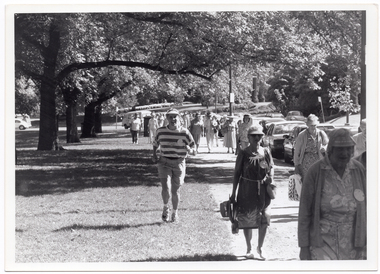
Photograph - Group photo, 1992
... As part of the 1992 National Arthritis Week events, there was a Joint Walk through the Melbourne Royal Botanic Gardens. This photo depicts a large group of people taking part in the walk. ...As part of the 1992 National Arthritis Week events, there was a Joint Walk through the Melbourne Royal Botanic Gardens. This photo depicts a large group of people taking part in the walk. ...As part of the 1992 National Arthritis Week events, there was a Joint Walk through the Melbourne Royal Botanic Gardens. This photo depicts a large group of people taking part in the walk. They are walking along a path with some cars parked along it.B&W photo of a large group of people walking along a wide path in a park. There are several large trees along the path, with their branches overhanging above the path. There are some cars parked to the left of the walking group.arthritis foundation of victoria, afv, national arthritis week, naw, joint walk, royal botanic gardens, trees, melbourne, 1992 -
 University of Melbourne, Burnley Campus Archives
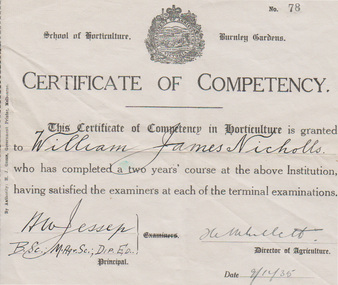
Certificate - Award Certificate, Department of Agriculture, Victoria, Department of Agriculture, Victoria, School of Horticulture, Burnley Gardens, Certificate of Competency, 1935
... Firth commenced working at Melbourne's Royal Botanic Gardens and sat for the special examinations and collected certificates in December 1935. ...Firth commenced working at Melbourne's Royal Botanic Gardens and sat for the special examinations and collected certificates in December 1935. ...In October 1934 W. Nicholls, D. Ross and J. Firth commenced working at Melbourne's Royal Botanic Gardens and sat for the special examinations and collected certificates in December 1935. Certificate No 78 awarded to William James Nicholls. From Certificate Booklet B92.0500 Box 76Original certificate detached from book (B92.500) Signed by Principal A.W. Jessep and Director of Agriculture H.M. Cullett, ,dated 9/12/35. Awardee William James Nicholls.School of Horticulture Burnley Gardens (Emblem of Department of Agriculture Victoria in centre) No. 78 CERTIFICATE OF COMPETENCY This certificate of competency in horticulture is granted to William Jame Nicholls who has completed a two years' course at the above Institution, having satisfied the examiners at each of the terminal examinations. A.W.Jessep B.Sc. M.Agr.Sc., DIP. ED. Principal (the word Examiners crossed out by hand) H.M. Cullett Director of Agriculture Date 9/12/35william james nicholls, a.w.jessep, m.m.cullett, certificate of competency in horticulture, 1935, royal botanic gardens melbourne -
 Hymettus Cottage & Garden Ballarat
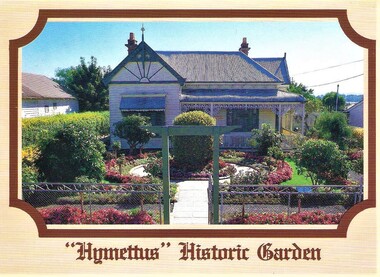
Postcard, Nu-Color-Vue Productions Pty Ltd, Hymettus Historic Garden, 1986
... Historic Garden, Ballarat, Hymettus, postcard, Royal Botanical Gardens Melbourne, restoration, City of Ballaarat....The interpretive work was undertaken by Mr and a team from Melbourne's Royal Botanical Gardens and the Taffe family. ...The interpretive work was undertaken by Mr and a team from Melbourne's Royal Botanical Gardens and the Taffe family. ...Hymettus Historic Garden and its cottage museum were opened to the public in 1985 after two years of garden restoration work. The interpretive work was undertaken by Mr and a team from Melbourne's Royal Botanical Gardens and the Taffe family. Plans were drawn up by Peter Lumley and Michael Looker of the Royal Botanical Gardens and the work of restoration undertaken by the family with financial assistance from Heritage Victoria and The City of Ballaarat. historic garden, ballarat, hymettus, postcard, royal botanical gardens melbourne, restoration, city of ballaarat. -
 Musculoskeletal Health Australia (now held by the Glen Eira Historical Society)
Photograph - Group photo, 1992
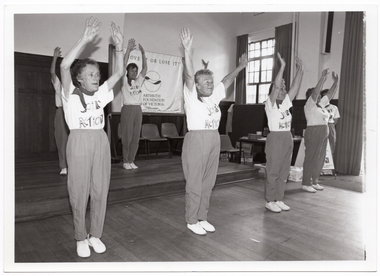
... As part of the 1992 National Arthritis Week events, there was a Joint Walk through the Melbourne Royal Botanic Gardens. Following the walk, members of the Joint Action Group (JAG) conducted an exercise demonstration at the National Herbarium hall in the Botanic Gardens. ...As part of the 1992 National Arthritis Week events, there was a Joint Walk through the Melbourne Royal Botanic Gardens. Following the walk, members of the Joint Action Group (JAG) conducted an exercise demonstration at the National Herbarium hall in the Botanic Gardens. ...As part of the 1992 National Arthritis Week events, there was a Joint Walk through the Melbourne Royal Botanic Gardens. Following the walk, members of the Joint Action Group (JAG) conducted an exercise demonstration at the National Herbarium hall in the Botanic Gardens. This photo appears on page 4 of the Vol 5 No 2, Winter 1992 issue of the Arthritis Foundation of Victoria's quarterly magazine, Arthritis Update under the heading, "Arthritis Week success". It is captioned: "Above, and below right, the "Joint Action" team delighted the audience at the National Herbarium following the city Joint Walk in the Botanic Gardens."B&W photo of a group of people performing an exercise demonstration in a hall. Hanging up on the wall behind them is a large banner containing the text "Move it or lose it" and "Arthritis Foundation of Victoria", with a logo in between. To one side, there is an information table with boxes underneath and an A-frame sign in front.arthritis foundation of victoria, afv, national arthritis week, naw, joint walk, royal botanic gardens, melbourne, national herbarium, joint action group, jag, exercise demonstration, move it or lose it, arthritis update, 1992 -
 Musculoskeletal Health Australia (now held by the Glen Eira Historical Society)
Photograph - Group photo, 1992
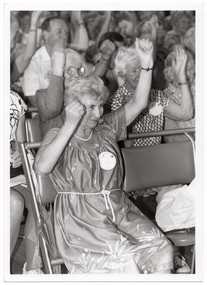
... As part of the 1992 National Arthritis Week events, there was a Joint Walk through the Melbourne Royal Botanic Gardens. Following the walk, members of the Joint Action Group led a session of chair-based exercises at the National Herbarium within the Botanic Gardens. ...As part of the 1992 National Arthritis Week events, there was a Joint Walk through the Melbourne Royal Botanic Gardens. Following the walk, members of the Joint Action Group led a session of chair-based exercises at the National Herbarium within the Botanic Gardens. ...As part of the 1992 National Arthritis Week events, there was a Joint Walk through the Melbourne Royal Botanic Gardens. Following the walk, members of the Joint Action Group led a session of chair-based exercises at the National Herbarium within the Botanic Gardens. This photo appears under the heading, "Arthritis Week success" on page 4 of the Vol 5 No 2, Winter 1992 issue of the Arthritis Foundation of Victoria's quarterly magazine, Arthritis Update. It is referred to in the caption for the photo above it: "Above, and below right, the "Joint Action" team delighted the audience at the National Herbarium following the city Joint Walk in the Botanic Gardens."B&W close up photo of a woman sitting on a seat in a row of seats. There is a large crowd of people, also sitting in rows of seats, behind her. Everyone has their arms up, with fists clenched.arthritis foundation of victoria, afv, national arthritis week, naw, joint walk, royal botanic gardens, melbourne, national herbarium, joint action group, jag, chair-based exercise, move it or lose it, arthritis update, 1992 -
 Musculoskeletal Health Australia (now held by the Glen Eira Historical Society)
Photograph - Group photo, 1992
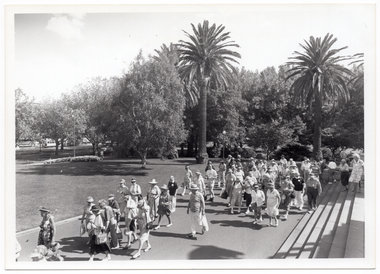
... As part of the 1992 National Arthritis Week events, there was a Joint Walk through the Melbourne Royal Botanic Gardens. This photo depicts a large group of people walking along a wide path in the Queen Victoria Gardens near St Kilda Rd, adjacent to the Botanic Gardens. ...As part of the 1992 National Arthritis Week events, there was a Joint Walk through the Melbourne Royal Botanic Gardens. This photo depicts a large group of people walking along a wide path in the Queen Victoria Gardens near St Kilda Rd, adjacent to the Botanic Gardens. ...As part of the 1992 National Arthritis Week events, there was a Joint Walk through the Melbourne Royal Botanic Gardens. This photo depicts a large group of people walking along a wide path in the Queen Victoria Gardens near St Kilda Rd, adjacent to the Botanic Gardens. The photo appears under the heading, "Arthritis Week success" on page 4 of the Vol 5 No 2, Winter 1992 issue of the Arthritis Foundation of Victoria's quarterly magazine, Arthritis Update. A caption for the photo above it states: "Above left and below, people enjoy walking through the Melbourne Botanic Gardens. Some 6,000 people participated in Joint Walks, demonstrating the benefits and pleasure of walking with others."B&W photo of a large group of people walking along a concrete path and down some wide steps in a park. There are two tall palm trees amongst other trees in the park, and there is a tram on the road in the distance (to the left of the frame). The photo has been taken at an angle from above, with the walkers below.arthritis foundation of victoria, afv, national arthritis week, naw, joint walk, queen victoria gardens, royal botanic gardens, melbourne, tram, st kilda road, palm trees, arthritis update, 1992 -
 University of Melbourne, Burnley Campus Archives
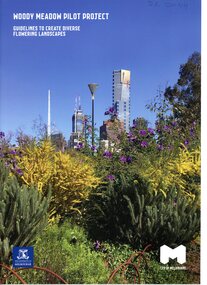
Booklet, The University of Melbourne et al, Woody Meadows Pilot Project, April 2020
... Collaboration between The Univdersity of Melbourne, the University of Sheffield, City of Melbourne and the Royal Botanic Gardens Victoria 2015-2018....woody meadows landscape gardening city of melbourne university of sheffield the university of melbourne royal botanic gardens melbourne Booklet with light cardboard covers. ...woody meadows, landscape gardening, city of melbourne, university of sheffield, the university of melbourne, royal botanic gardens melbourne -
Port Melbourne Historical & Preservation Society
Photograph - Aerial view of J Kitchen and Sons site, Ingles Street, Port Melbourne, early 1930s, 1930s
... Large Black and White aerial photograph on brown cardboard showing Kitchen and Sons buildings including the 1925 Administrative Building No 34 on Ingles st.Photograph taken looking North Easterly with Swanston and Barret Pty concrete works; Port Melbourne Football ground in foreground; Yarra River in top left hand corner; showing South Melbourne and Royal Botanic Gardens in the distance. Taken in the early 1930s...Industry - Manufacturing Built Environment - Industrial J Kitchen & Sons Pty Ltd Large Black and White aerial photograph on brown cardboard showing Kitchen and Sons buildings including the 1925 Administrative Building No 34 on Ingles st.Photograph taken looking North Easterly with Swanston and Barret Pty concrete works; Port Melbourne Football ground in foreground; Yarra River in top left hand corner; showing South Melbourne and Royal Botanic Gardens in the distance. Taken in the early 1930s Photograph Aerial view of J Kitchen and Sons site, Ingles Street, Port Melbourne, early 1930s ...Large Black and White aerial photograph on brown cardboard showing Kitchen and Sons buildings including the 1925 Administrative Building No 34 on Ingles st.Photograph taken looking North Easterly with Swanston and Barret Pty concrete works; Port Melbourne Football ground in foreground; Yarra River in top left hand corner; showing South Melbourne and Royal Botanic Gardens in the distance. Taken in the early 1930sindustry - manufacturing, built environment - industrial, j kitchen & sons pty ltd -
![Album (item) - Photographic Album, digital copy, Freda Kathleen Oxley (1882-1969), Album of photographs of a voyage to Australia and visit to the Mission to Seamen, Melbourne [picture] / Freda Oxley, 1925-1928](/media/collectors/4f729f5897f83e0308601603/items/672c59ac552587060c889944/item-media/67a6dc3cd7095b7115fefda2/item-fit-380x285.jpg?cb=6) Mission to Seafarers Victoria
Mission to Seafarers VictoriaAlbum (item) - Photographic Album, digital copy, Freda Kathleen Oxley (1882-1969), Album of photographs of a voyage to Australia and visit to the Mission to Seamen, Melbourne [picture] / Freda Oxley, 1925-1928
... Freda Kathleen Oxley 1882-1969 ss persic gardens botanical garden picnics officers portsea sydney rev. w.m robertson dora simpson nee walker wedding alice sibthorpe tracy ethel augusta godfrey 1861-1935 royal botanical garden nellie melba coombe zoo seamen sailors Walter Richmond Butler (1864–1949) Juan Oyarzo John Oyarzo Fern Tree gully Kerferd family The album was donated to the National Library of Australia by Miss Elizabeth Phillips, with her address in England, with a typed note attached that reads: 'These photographs were taken by my aunt Miss Freda Oxley between 1925 and 1928. She went out to Melbourne ...This is a copy of an album of photographs held at the National Library of Australia. The album was photographed by Reverend's Weller grand daughter. Freda Oxley was a friend of the Wellers. She was born in Windsor in 1882 where Alexina Weller (nee Caley) was also born in 1885. She travelled on the SS Persic from England and arrived in 1925. She stayed at the Mission for several years, and became a host of the many picnics, making friends with the ladies from the Guild, taking photographs of people and events. Page 1 to 3: Outward Bound - SS Persic - September 26th .... November 12th 1925 Page 4: Interiors of the Mission to Seamen Melbourne Page 5: Mission to Seamen exteriors and wharf Page 6: Wellers with officers during lunch in the Manse Page 7-8: Mission's staff, garden, Wellers Page 8: Freda Oxley, the Wellers, Alexina Weller, Xmas Day 1927, Dora Walker and Rev. Weller Page 9: Gardens: the photographs show the garden's plants in its early years / Botanical Gardens / Nellie Melba's gardens in her estate Coombe: Walter Butler, the architect of the Mission had designed some extensions for Nellie Melba's estate and part of the gardens of the property, so it was likely through they acquaintance that the Mission's reverend and friends were invited. Page 10: Ships in the Yarra River Page 11: Skaregrom and Mitchell ships Page 12-15: Picnics Page 16: Christmas at the Mission, tennis court Page 17: Picnic Page 18: Dora Walker's wedding Page 19: Beach holiday Freda went back to the UK in March 1929 on the Cathay. But she came back to help the Mission as she's listed on the electoral roll in 1931 living there with the Olivers.This album provides valuable photographs of the Mission's interiors, garden, staff, guests and activities during the Wellers stay. It also provides the provenance of the Weller album held in the Mission's collection.The album was donated to the National Library of Australia by Miss Elizabeth Phillips, with her address in England, with a typed note attached that reads: 'These photographs were taken by my aunt Miss Freda Oxley between 1925 and 1928. She went out to Melbourne at that time and stayed at the Mission to Seamen with her friends the Revd Jack Weller and Mrs Weller. The Revd Weller later became Bishop of the Falkland Islands.'freda kathleen oxley 1882-1969, ss persic, gardens, botanical garden, picnics, officers, portsea, sydney, rev. w.m robertson, dora simpson nee walker, wedding, alice sibthorpe tracy, ethel augusta godfrey 1861-1935, royal botanical garden, nellie melba, coombe, zoo, seamen, sailors, walter richmond butler (1864–1949), juan oyarzo, john oyarzo, fern tree gully, kerferd family -
Federation University Historical Collection
Handbook, The School Paper Grades V and VI Victoria Education Department, 1964-1966
... 1964 handbook alex ball victorian education department school paper grade v and vi hymns poetry songs short story charles kingsford smith 1965 1966 matthew flinders baron sir ferdinand von mueller patrick hannan paddy hannan charles yelverton o'connor john ridley thomas sutcliffe mort sir sidney kidman hugh victor mckay robert hoddle james simpson kirkpatrick alex mcdonell frederick h. brooks rudyard kipling victorian government house, royal botanic gardens victorian railways school broadcasts, victorian public libraries forests commission of victoria correspondence school royal mint her majesty's mail victoria police fire brigades port melbourne sid kidman cattle king cattle trade .1) , "Grade 5 Classroom Copy" and "1964" recto. ...Three handbooks with green patterns on recto and verso. Linen tape is on the spine. Paper is bound by string, connected at the top and bottom. .1)This handbook is a collection of The School Paper for grades V and VI, by the Victorian Education Department for 1964. It's contents are including by not limited to poetry and short stories submitted to the paper from a variety of authors such as "Beside the Road" by Louis H. Clark, information regarding the events of the time such as Air Force Commemoration Week, writings such as piece regarding self-control while using alcohol. and sheet music for various songs, such as "God save the queen". A history of Port Melbourne is included on page 2. A history of Australia's cattle trade is included on pages 11-12. In addition, A biography of Sid Kidman, Australia's "cattle king" is included between pages 36-37. .2)This handbook is a collection of The School Paper for grades V and VI, by the Victorian Education Department for 1965. It's contents are including by not limited to poetry and short stories submitted to the paper from a variety of authors, such as "Pit-Pony" by S.A. Bainbridge, information regarding the events of the time such as the Fig Harvest at El-Flaye, and sheet music for various songs, such as "Old John Braddleum". The short story "The ANZACS at Gallipoli" includes a photograph of James Simpson Kirkpatrick with his donkey, bearing a wounded soldier (Page 33). A piece titled "A good-bye and a welcome" on pages 50-51 details the farewell to Alex McDonell, the director of Education for Victoria from 1960 to 1965, and the welcoming of Frederick H. Brooks as the new Director of Education in Victoria. A supplement is included in regards to "Scholarships and Allowances available for further education" for July 1965. A biography of Rudyard Kipling is on pages 103-105. A monthly series titled "The Seed from which they grew" detailed the history of some of Victoria's historical institutions: Victoria's Government House, The Royal Botanic Gardens, Victorian Railways, School Broadcasts, (Victorian) Public Libraries, The Forests Commission of Victoria, The Correspondence School, The Royal Mint, Her Majesty's Mail, Victoria Police, and Fire brigades. .3)This handbook is a collection of The School Paper for grades V and VI, by the Victorian Education Department for 1966. It's contents are including by not limited to poetry and short stories submitted to the paper from a variety of authors such as "The Emu" by Joan Wise, information regarding the events of the time such as Australian Literature Week, and sheet music for various songs, such as "Potatoes"'. "The Nation Builders" was a monthy series serialised in the paper about explorers who helped to found Australia, such as Matthew Flinders, Baron Sir Ferdinand Von Mueller, Patrick ("Paddy") Hannan, Charles Yelverton O'Connor, John Ridley, Thomas Sutcliffe Mort, Sir Sidney Kidman, Hugh Victor McKay,Robert Hoddle, and Charles Kingsford Smith. A supplement is included in regards to "Scholarships and Allowances available for further education" for July 1966..1) , "Grade 5 Classroom Copy" and "1964" recto. Pages 17, 32, 81, 97,113, 129 features the text "A.J. Mathieson".Page 49 has the text "Grades 5/6 Staff Copy A.J. Mathieson". Page 17 has tick marks on lower right hand corner. Registration number written on verso bounding as "11735.1" in pencil. .2)"Grade 5 Classroom Copy" and "1965" recto.Registration number written on verso bounding as "11735.2" in pencil. .3)"Classroom Copy", "1966", "5" and a black curved line in the middle of the page recto. Page 1 has "A.J. Mathieson" on the top right hand side in red marker. In the middle of Page 35, there is some text underlined, and the comment "Quote Governor King" in green ink.Registration number written on verso bounding as "11735.3" in pencil.1964, handbook, alex ball, victorian education department, school paper, grade v and vi, hymns, poetry, songs, short story, charles kingsford smith, 1965, 1966, matthew flinders, baron sir ferdinand von mueller, patrick hannan, paddy hannan, charles yelverton o'connor, john ridley, thomas sutcliffe mort, sir sidney kidman, hugh victor mckay, robert hoddle, james simpson kirkpatrick, alex mcdonell, frederick h. brooks, rudyard kipling, victorian government house,, royal botanic gardens, victorian railways, school broadcasts,, victorian public libraries, forests commission of victoria, correspondence school, royal mint, her majesty's mail, victoria police, fire brigades, port melbourne, sid kidman, cattle king, cattle trade -
Glenelg Shire Council Cultural Collection
Administrative record - Administrative record - History of William Allitt, HISTORY OF WILLIAM ALLITT, 21/12/1970
... Botanic Gardens. It bears the stamp of the Director and Government Botanist, at the Royal Botanic Gardens, Melbourne....Botanic Gardens. It bears the stamp of the Director and Government Botanist, at the Royal Botanic Gardens, Melbourne. ...Two-page typed history of William Allitt (1828-1893) Gardner and nurseryman who was instrumental in establishing the Portland Botanic Gardens. It bears the stamp of the Director and Government Botanist, at the Royal Botanic Gardens, Melbourne. -
 Bendigo Historical Society Inc.
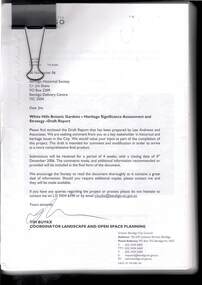
Document - WHITE HILLS BOTANIC GARDENS, BENDIGO: HERITAGE SIGNIFICANCE ASSESSMENT AND STRATEGY PROJECT
... DOCUMENT White Hills Botanic Gardens Bendigo - Heritage Significance Assessment and Strategy Project Bendigo Historical Society Jim Evans Tim Buykx Greater Bendigo City Council Lee Andrews & Associates Heritage Consulting Bendigo Advertiser The Bendigonian Bendigo Independent Argus Bendigo Homes and Property Mal Gregory Mitch Kemp Anthony Sheean Casey Ely Vicki Johnson Sandra Crump Friends of Bendigo's botanic Gardens Jane Cleary Judy Milner Jan Orr Heritage Victoria John Hawker Department of Sustainability and Environment Historic Places Norm Stimson Bill Dundas Janette Hodgson Royal Botanic Gardens Melbourne Roger Spencer University of Melbourne Burnley Campus Greg Moore Goldfields Research Centre Bendigo Library Vivien Newton Rita Hull State Library of Victoria Matheson Library Monash University Mueller Correspondence Project Sara Maroske Library of the Royal Botanic Gardens Melbourne Jill Thurlow Helen Cohn Gwen Pascoe John Dwyer Larritt and Russell Four hundred and forty three page report titled 'White Hills Botanic Gardens, Bendigo - Heritage Significance Assessment and Strategy Project by Lee Andrews & Associates Heritage Consulting, dated 31 October 2006. ...Four hundred and forty three page report titled 'White Hills Botanic Gardens, Bendigo - Heritage Significance Assessment and Strategy Project by Lee Andrews & Associates Heritage Consulting, dated 31 October 2006. Contains History of White Hills Botanic Gardens, Physical Survey ad Analysis, Comparative Analysis, Analysis and Assessment of Cultural Significance, Developing the Conservation Policy, Conservation Policy, Conservation Guidelines, Conservation Actions,References and Appendices. Also contains a number of photos, copies of plans and documents, and a plan of the area with the trees marked and identified.document, white hills botanic gardens bendigo - heritage significance assessment and strategy project, bendigo historical society, jim evans, tim buykx, greater bendigo city council, lee andrews & associates heritage consulting, bendigo advertiser, the bendigonian, bendigo independent, argus, bendigo homes and property, mal gregory, mitch kemp, anthony sheean, casey ely, vicki johnson, sandra crump, friends of bendigo's botanic gardens, jane cleary, judy milner, jan orr, heritage victoria, john hawker, department of sustainability and environment historic places, norm stimson, bill dundas, janette hodgson, royal botanic gardens melbourne, roger spencer, university of melbourne burnley campus, greg moore, goldfields research centre, bendigo library, vivien newton, rita hull, state library of victoria, matheson library monash university, mueller correspondence project, sara maroske, library of the royal botanic gardens melbourne jill thurlow, helen cohn, gwen pascoe, john dwyer, larritt and russell -
 Bendigo Historical Society Inc.
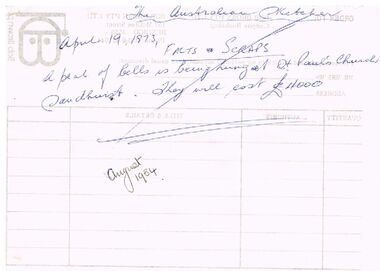
Document - THE AUSTRALIAN SKETCHER 1873
... EVENT Entertainment Sandhurst The Australian Sketcher 1873 Rev Mr Croxton The Bendigo Advertiser Hallas' Band Northcott's Regimantal Band Captain Moorhead Captain Boyd Lieutenant Sibley Lieutenant Henderson Mr Morrison Bendigo Rifles Major Taylor Captain Joseph Lieutenant Blackham Bendigo Hotel Bank of Victoria Prince Alfred Mr Abbott St Paul's Church Bells Hustlers Mine Prince Bismarck James Park Bell William Hartlett Mr Williamson Mr Purcell Connell Watson & Hogarth MR J B Watson The Engineers Engine-drivers And Blacksmiths Association Melbourne Botanical Gardens Mr Hodgkinson Baron von Muellerus Patrick Hugo McHugh Golden Fleece Mine Orpheus C Kerr Jones The Victorian Racing Club Mr Walker Spencer Robert Chambers's Index to Heirs-at-Law Legatees Missing Friends and persons advertised for during 150 years past Mr Higinbotham Mr D R Morrison Mr McCosh Mr Hicks Carlisle Company James Hamilton Samuel Rochford Royal Hustlers Claim William Mycroft Rifle Brigade Hotel Mr Randall The Right Rev Dr Gould R M S S China James Kennedy Handwritten, detailed account of Hospital Sunday at Sandhurst. ...Handwritten, detailed account of Hospital Sunday at Sandhurst. It mentions the crowds coming into town, the procession, and the day’s entertainment at the Reserve. Also mentions the donations raised for charity. Also a number of small pages titled Facts & Scraps. Mentions a number of daily happenings and the bells at St. Paul's Church.event, entertainment, sandhurst, the australian sketcher 1873, rev mr croxton, the bendigo advertiser, hallas' band, northcott's regimantal band, captain moorhead, captain boyd, lieutenant sibley, lieutenant henderson, mr morrison, bendigo rifles, major taylor, captain joseph, lieutenant blackham, bendigo hotel, bank of victoria, prince alfred, mr abbott, st paul's church bells, hustlers mine, prince bismarck, james park, bell, william hartlett, mr williamson, mr purcell, connell watson & hogarth, mr j b watson, the engineers engine-drivers and blacksmiths association, melbourne botanical gardens, mr hodgkinson, baron von muellerus, patrick hugo mchugh, golden fleece mine, orpheus c kerr, jones, the victorian racing club, mr walker, spencer, robert chambers's index to heirs-at-law legatees missing friends and persons advertised for during 150 years past, mr higinbotham, mr d r morrison, mr mccosh, mr hicks, carlisle company, james hamilton, samuel rochford, royal hustlers claim, william mycroft, rifle brigade hotel, mr randall, the right rev dr gould, r m s s china, james kennedy -
 Warrnambool and District Historical Society Inc.
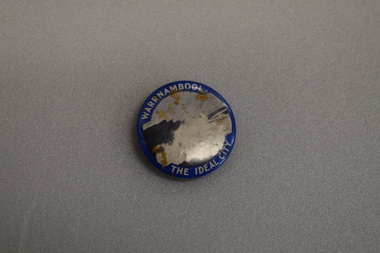
Badge, Warrnambool the Ideal City
... Melbourne newspaper and 1927-8 was the first year of the award. Warrnambool celebrated the win with a week's celebrations in February 1928 of street processions and entertainments in the Botanic Gardens . The badge is of considerable interest as a memento of the year 1928 when Warrnambool won the title of Victoria's Ideal Town THUNDER POINT WARRNAMBOOL THE IDEAL CITY Circular metal concave badge featuring an image of Thunder Point surrounded by a royal blue border with text. ...This badge commemorates the awarding to Warrnambool in 1928 of the title of Victoria's Ideal Town. This was an award sponsored by the Sun News-Pictorial Melbourne newspaper and 1927-8 was the first year of the award. Warrnambool celebrated the win with a week's celebrations in February 1928 of street processions and entertainments in the Botanic Gardens . The badge is of considerable interest as a memento of the year 1928 when Warrnambool won the title of Victoria's Ideal Town Circular metal concave badge featuring an image of Thunder Point surrounded by a royal blue border with text. It has a pin clip on the reverse .THUNDER POINT WARRNAMBOOL THE IDEAL CITY -
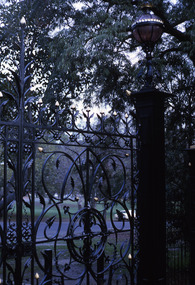 Robin Boyd Foundation
Slide, Robin Boyd, 1967
... Royal Botanical Gardens, Gate D, Melbourne, Victoria Australia...Melbourne slide Made in Australia / 3 / JUL 67M6 / Encircled 4 (Handwritten) Colour slide in a mount. Royal Botanical Gardens, Gate D, Melbourne, Victoria Australia Slide Robin Boyd ...Colour slide in a mount. Royal Botanical Gardens, Gate D, Melbourne, Victoria AustraliaMade in Australia / 3 / JUL 67M6 / Encircled 4 (Handwritten)melbourne, slide -
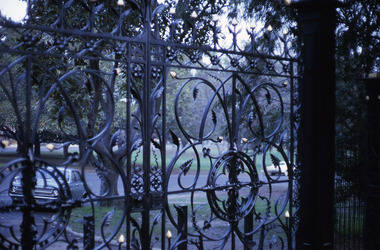 Robin Boyd Foundation
Slide, Robin Boyd, 1967
... Royal Botanical Gardens, Gate D, Melbourne, Victoria Australia...Melbourne slide Made in Australia / 2 / JUL 67M6 / Encircled 3 (Handwritten) Colour slide in a mount. Royal Botanical Gardens, Gate D, Melbourne, Victoria Australia Slide Robin Boyd ...Colour slide in a mount. Royal Botanical Gardens, Gate D, Melbourne, Victoria AustraliaMade in Australia / 2 / JUL 67M6 / Encircled 3 (Handwritten)melbourne, slide -
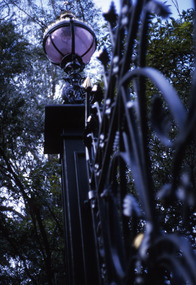 Robin Boyd Foundation
Slide, Robin Boyd, 1967
... Royal Botanical Gardens, Gate D, Melbourne, Victoria Australia...Melbourne slide Made in Australia / 4 / JUL 67M6 / Encircled 5 (Handwritten) Colour slide in a mount. Royal Botanical Gardens, Gate D, Melbourne, Victoria Australia Slide Robin Boyd ...Colour slide in a mount. Royal Botanical Gardens, Gate D, Melbourne, Victoria AustraliaMade in Australia / 4 / JUL 67M6 / Encircled 5 (Handwritten)melbourne, slide -
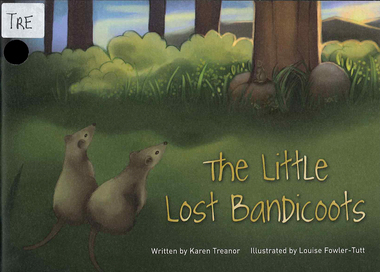 Victorian Aboriginal Corporation for Languages
Book, Karen Treanor, The little lost bandicoots, 2011
... Cranbourne Royal Botanic Gardens juvenile fiction animals Colour illustrations A storybook for For primary school age children. The little lost bandicoots Book Karen Treanor Louise Fowler-Tutt Linking Melbourne Authority ...A storybook for For primary school age children.Colour illustrationscranbourne royal botanic gardens, juvenile fiction, animals -
 St Kilda Historical Society
Ephemera - Postcard, City of Port Phillip, St Vincent Gardens annual bedding display 1995, c. 1995
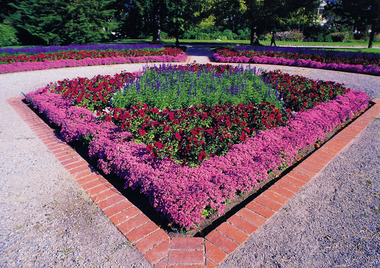
... One of a series of postcards celebrating the launch of 'Flora for Victoria 1996', a project to celebrate the Royal Botanic Gardens of Melbourne`s 150th anniversary and the centenary of the death of its first director Baron Ferdinand von Mueller (1825 -1896). ...St Vincent Gardens annual bedding display 1995 Historic gardens in the City of Port Phillip postcard series celebrating the launch of the Royal Botanic Garden's [sic] Melbourne, 'Flora for Victoria 1996' Produced by the City of Port Phillip, Melbourne Victoria Australia 9209 6209 City of Port Phillip logo...One of a series of postcards celebrating the launch of 'Flora for Victoria 1996', a project to celebrate the Royal Botanic Gardens of Melbourne`s 150th anniversary and the centenary of the death of its first director Baron Ferdinand von Mueller (1825 -1896). ...One of a series of postcards celebrating the launch of 'Flora for Victoria 1996', a project to celebrate the Royal Botanic Gardens of Melbourne`s 150th anniversary and the centenary of the death of its first director Baron Ferdinand von Mueller (1825 -1896). St Vincent Gardens is of national significance for its English style. Designed by Clement Hodgkinson in 1868 the garden reflects the Georgian era. Image description: Tree plantings are arranged in symmetrical patterns with themed plantings throughout the gardens timescale, four of which are registered with the National Trust. Message to residents on two of the postcards reads: "Dear Resident. NATURE STRIPS MOWING: The nature strips are a vital part of the streetscapes and the assistance you provide by maintaining the grassed nature strip is appreciated. The Parks team has mown your nature strip today as it was becoming quite long, however, Council encourages residents to mow their nature strip as it has limited resources. Pensioners or others unable to mow the nature strip are encouraged to advise the Parks team. Council also operates a 'Free lawn mower borrowing service' from the Albert Park Nursery, at 42 Mills Street, Albert Park. Lawn mowers are available daily 9.00am to 4.00pm except Christmas Day, Good Friday, and Anzac Day. For further information contact Parks on 9209 6672."Colour postcard (3 identical photos on each)St Vincent Gardens annual bedding display 1995 Historic gardens in the City of Port Phillip postcard series celebrating the launch of the Royal Botanic Garden's [sic] Melbourne, 'Flora for Victoria 1996' Produced by the City of Port Phillip, Melbourne Victoria Australia 9209 6209 City of Port Phillip logoalbert park, st vincent gardens, clement hodgkinson, city of port phillip, parks, gardens -
 St Kilda Historical Society
Ephemera - Postcard, City of Port Phillip, St Kilda Botanical Gardens 1995, c. 1995
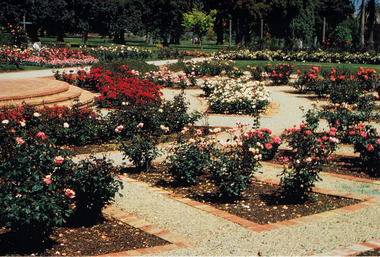
... City of Port Phillip postcard series celebrating the launch of the Royal Botanic Garden's Melbourne 'Flora of Victoria' 1996. ...St Kilda Botanical Gardens [Image title] Historic gardens in the City of Port Phillip postcard series celebrating the launch of the Royal Botanic Garden's [sic] Melbourne, 'Flora for Victoria 1996' Produced by the City of Port Phillip, Melbourne Victoria Australia 9209 6209 City of Port Phillip...St Kilda Botanical Gardens Alister Clark Alister Clark Memorial Rose Garden St Kilda St Kilda Botanical Gardens [Image title] Historic gardens in the City of Port Phillip postcard series celebrating the launch of the Royal Botanic Garden's [sic] Melbourne, 'Flora for Victoria 1996' Produced by the City of Port Phillip, Melbourne Victoria Australia 9209 6209 City of Port Phillip Colour postcards, unused St Kilda Botanical Gardens 1995 Ephemera Postcard City of Port Phillip ...City of Port Phillip postcard series celebrating the launch of the Royal Botanic Garden's Melbourne 'Flora of Victoria' 1996. The St Kilda Botanical Gardens gardens were formally established in 1859 when a boundary fence was erected and were opened in 1861. Exotic forest trees were planted during the 1870s and Australian species were included in 1932. In 1950, the Alister Clark Memorial Rose Garden was created and in 1985 it was rebuilt to a sunken garden. It is the largest garden in Australia to pay tribute to this famous rosarian.Colour postcards, unusedSt Kilda Botanical Gardens [Image title] Historic gardens in the City of Port Phillip postcard series celebrating the launch of the Royal Botanic Garden's [sic] Melbourne, 'Flora for Victoria 1996' Produced by the City of Port Phillip, Melbourne Victoria Australia 9209 6209 City of Port Phillipst kilda botanical gardens, alister clark, alister clark memorial rose garden, st kilda -
 St Kilda Historical Society
Ephemera - Postcard, City of Port Philip, St Kilda Botanical Garden view over lake to Conservatory 1995, 1995
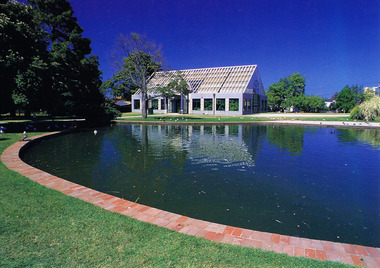
... One of a series of postcards celebrating the launch of 'Flora for Victoria 1996', a project to celebrate the Royal Botanic Gardens of Melbourne`s 150th anniversary and the centenary of the death of its first director Baron Ferdinand von Mueller (1825 -1896) The postcard was used by the City of Port Phillip to send the following message to residents: "Dear Resident, RE: DUMPING OF GREEN WASTE: the Parks Department has had to remove a considerable amount of dumped Green Waste in your nearby reserve. ...Botanical Garden view over lake to Conservatory 1995. Historic gardens in the City of Port Phillip Postcard series celebrating the launch of the Royal Botanic Garden's Melbourne, 'Flora for Victoria' 1996...garden waste can be left at the Port Phillip Transfer Station at no charge to residents, Corner White and Boundary Street South Melbourne. 7 days a week. Free mulch is available to take away. Should you require green waste collection outside of Councils February / March and July / August collections contact Councils 'Dial-A-Garbo' Service, for further details ph 9209 6533" St Kilda Botanical Gardens St Kilda Botanical Gardens conservatory St Kilda Botanical Garden view over lake to Conservatory 1995. Historic gardens in the City of Port Phillip Postcard series celebrating the launch of the Royal ...One of a series of postcards celebrating the launch of 'Flora for Victoria 1996', a project to celebrate the Royal Botanic Gardens of Melbourne`s 150th anniversary and the centenary of the death of its first director Baron Ferdinand von Mueller (1825 -1896) The postcard was used by the City of Port Phillip to send the following message to residents: "Dear Resident, RE: DUMPING OF GREEN WASTE: the Parks Department has had to remove a considerable amount of dumped Green Waste in your nearby reserve. The dumping of any rubbish, outside of your property other than on the Council collection days is a fineable offence and can be enforced. Clean green garden waste can be left at the Port Phillip Transfer Station at no charge to residents, Corner White and Boundary Street South Melbourne. 7 days a week. Free mulch is available to take away. Should you require green waste collection outside of Councils February / March and July / August collections contact Councils 'Dial-A-Garbo' Service, for further details ph 9209 6533"Colour postcard. Four copies held, three of which have a message to residents from the City of Port Phillip on the reverse side.St Kilda Botanical Garden view over lake to Conservatory 1995. Historic gardens in the City of Port Phillip Postcard series celebrating the launch of the Royal Botanic Garden's Melbourne, 'Flora for Victoria' 1996st kilda botanical gardens, st kilda botanical gardens conservatory -
 St Kilda Historical Society
Ephemera - Postcard, City of Port Philip, St Kilda Botanical Garden, 1995
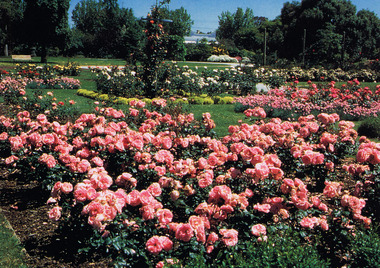
... Botanical Garden. Alister Clark Rose Garden 1995. Historic gardens in the City of Port Phillip postcard series celebrating the launch of the Royal Botanic Garden's Melboure, 'Flora for Victoria 1996. [City of Port Philip logo]. Produced by the City of Port Phillip melbourne...Botanical Garden. Alister Clark Rose Garden 1995. Historic gardens in the City of Port Phillip postcard series celebrating the launch of the Royal Botanic Garden's Melboure, 'Flora for Victoria 1996'. City of St Kilda St Kilda Botanical Gardens Alister Clark St Kilda Botanical Garden. Alister Clark Rose Garden 1995. Historic gardens in the City of Port Phillip postcard series celebrating the launch of the Royal Botanic Garden's Melboure, 'Flora for Victoria 1996. [City of Port Philip logo]. Produced by the City of Port Phillip melbourne ...St Kilda Botanical Garden. Alister Clark Rose Garden 1995. Historic gardens in the City of Port Phillip postcard series celebrating the launch of the Royal Botanic Garden's Melboure, 'Flora for Victoria 1996'. Colour postcard. St Kilda Botanical Garden. Alister Clark Rose Garden 1995. Historic gardens in the City of Port Phillip postcard series celebrating the launch of the Royal Botanic Garden's Melboure, 'Flora for Victoria 1996. [City of Port Philip logo]. Produced by the City of Port Phillip melbourne Victoria Australia 92096209. city of st kilda, st kilda botanical gardens, alister clark -
 St Kilda Historical Society
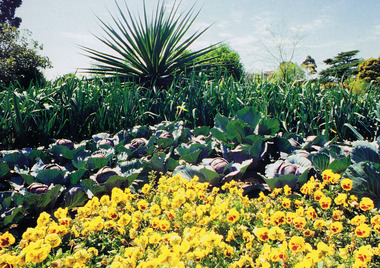
St Kilda Botanical Gardens postcard, City of Port Philip, St Kilda Botanical Garden
... Botanical Garden. Bedding display of ornamental vegetables 1994. Historic gardens in the City of Port Phillip postcard series celebrating the launch of the Royal Botanic Garden's Melboure, 'Flora for Victoria 1996'. [Port Philip Logo]. Produced by the City of Port Phillip Melbourne...Botanical Garden St Kilda Botanical Gardens St Kilda Botanical Garden. Bedding display of ornamental vegetables 1994. Historic gardens in the City of Port Phillip postcard series celebrating the launch of the Royal Botanic Garden's Melboure, 'Flora for Victoria 1996'. [Port Philip Logo]. Produced by the City of Port Phillip Melbourne ...Postcard of St Kilda Botanical GardenColour postcard of bedding display at St Kilda Botanical Garden. St Kilda Botanical Garden. Bedding display of ornamental vegetables 1994. Historic gardens in the City of Port Phillip postcard series celebrating the launch of the Royal Botanic Garden's Melboure, 'Flora for Victoria 1996'. [Port Philip Logo]. Produced by the City of Port Phillip Melbourne Victoria Australia 9209 6209. st kilda botanical gardens -
 St Kilda Historical Society
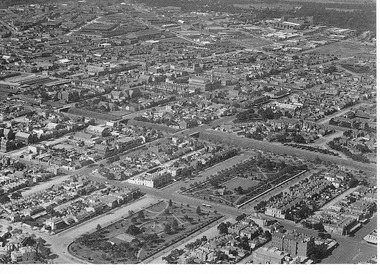
Ephemera - Postcard, City of Port Phillip, St Vincent Gardens and aerial view of Sth Melbourne circa 1900, 1900
... One of a series of postcards celebrating the launch of 'Flora for Victoria 1996', a project to celebrate the Royal Botanic Gardens of Melbourne`s 150th anniversary and the centenary of the death of its first director Baron Ferdinand von Mueller (1825 -1896)...Gardens and aerial view of South Melbourne circa 1900. Historic gardens in the City of Port Phillip Postcard series celebrating the launch of the Royal Botanic Garden's Melbourne, 'Flora for Victoria' 1996....One of a series of postcards celebrating the launch of 'Flora for Victoria 1996', a project to celebrate the Royal Botanic Gardens of Melbourne`s 150th anniversary and the centenary of the death of its first director Baron Ferdinand von Mueller (1825 -1896) South Melbourne St Vincent Gardens St Vincent Gardens and aerial view of South Melbourne circa 1900. ...Foreground showing St Vincent Gardens. One of a series of postcards celebrating the launch of 'Flora for Victoria 1996', a project to celebrate the Royal Botanic Gardens of Melbourne`s 150th anniversary and the centenary of the death of its first director Baron Ferdinand von Mueller (1825 -1896)Postcard black and white aerial view of South Melbourne (2 copies). St Vincent Gardens and aerial view of South Melbourne circa 1900. Historic gardens in the City of Port Phillip Postcard series celebrating the launch of the Royal Botanic Garden's Melbourne, 'Flora for Victoria' 1996.south melbourne, st vincent gardens -
 St Kilda Historical Society
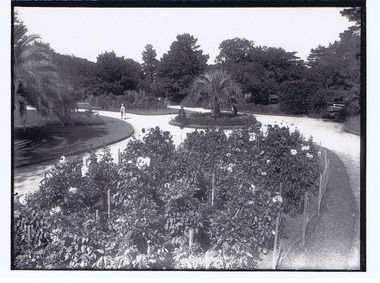
Ephemera - Postcard, City of Port Phillip, St Kilda Botanical Gardens circa 1950, c. 1950
... One of a series of postcards celebrating the launch of 'Flora for Victoria 1996', a project to celebrate the Royal Botanic Gardens of Melbourne`s 150th anniversary and the centenary of the death of its first director Baron Ferdinand von Mueller (1825 -1896). ...Botanical Garden circa 1950. Port Phillip City Collection. Historic gardens in the City of Port Phillip postcard series celebrating the launch of the Royal Botanic Garden's Melbourne, Flora for Victoria. ...One of a series of postcards celebrating the launch of 'Flora for Victoria 1996', a project to celebrate the Royal Botanic Gardens of Melbourne`s 150th anniversary and the centenary of the death of its first director Baron Ferdinand von Mueller (1825 -1896). ...One of a series of postcards celebrating the launch of 'Flora for Victoria 1996', a project to celebrate the Royal Botanic Gardens of Melbourne`s 150th anniversary and the centenary of the death of its first director Baron Ferdinand von Mueller (1825 -1896). black and white postcard (2 copies)St Kilda Botanical Garden circa 1950. Port Phillip City Collection. Historic gardens in the City of Port Phillip postcard series celebrating the launch of the Royal Botanic Garden's Melbourne, Flora for Victoria. st kilda botanical gardens -
 St Kilda Historical Society
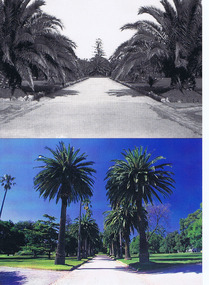
Ephemera - Postcard, City of Port Philip, St Kilda Botanical Garden palm avenue at Blessington Street entrance circa 1950 and 1995, c. 1950 and c. 1995
... One of a series of postcards celebrating the launch of 'Flora for Victoria 1996', a project to celebrate the Royal Botanic Gardens of Melbourne`s 150th anniversary and the centenary of the death of its first director Baron Ferdinand von Mueller (1825 -1896). ...Botanical Garden. Palm Avenue at Blessington Street entrance circa. 1950 and 1995. Port Phillip City Collection. Historic gardens in the City of Port Phillip postcard series celebrating the launch of the Royal Botanic Garden's Melbourne, Flora for Victoria 1996. ...One of a series of postcards celebrating the launch of 'Flora for Victoria 1996', a project to celebrate the Royal Botanic Gardens of Melbourne`s 150th anniversary and the centenary of the death of its first director Baron Ferdinand von Mueller (1825 -1896). ...One of a series of postcards celebrating the launch of 'Flora for Victoria 1996', a project to celebrate the Royal Botanic Gardens of Melbourne`s 150th anniversary and the centenary of the death of its first director Baron Ferdinand von Mueller (1825 -1896). colour and black and white postcard (2 post cards - identical)St Kilda Botanical Garden. Palm Avenue at Blessington Street entrance circa. 1950 and 1995. Port Phillip City Collection. Historic gardens in the City of Port Phillip postcard series celebrating the launch of the Royal Botanic Garden's Melbourne, Flora for Victoria 1996. st kilda botanical gardens -
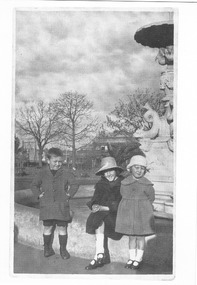 St Kilda Historical Society
Photograph, St Vincent Gardens, Sth Melbourne c1915, c. 1915
... Historic gardens in the City of Port Phillip postcard series celebrating the launch of the Royal Botanic Gardens Melbourne. Flora for Victoria 1996....Gardens South Melbourne c. 1915. Historic Gardens in the City of Port Phillip postcard series, 1996. Showing three children St Vincent Gardens. Historic gardens in the City of Port Phillip postcard series celebrating the launch of the Royal Botanic Gardens Melbourne. ...St Vincent Gardens South Melbourne c. 1915. Historic Gardens in the City of Port Phillip postcard series, 1996. Showing three childrenblack and white postcardSt Vincent Gardens. Historic gardens in the City of Port Phillip postcard series celebrating the launch of the Royal Botanic Gardens Melbourne. Flora for Victoria 1996.
