
Showing 85 items matching "melbourne booksellers"
-
 Robin Boyd Foundation
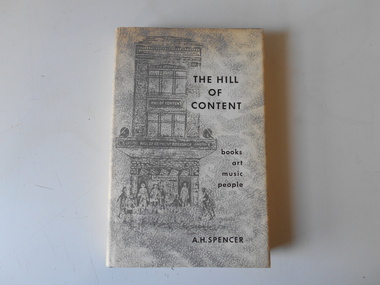
Book, A.H. Spencer, The Hill of Content: Books, Art, Music, People, 1959
... Melbourne booksellers...Melbourne booksellers autobiography Walsh St library Hardcover w/ Dust Jacket The Hill of Content: Books, Art, Music, People Book A.H. ...Hardcover w/ Dust Jacketmelbourne booksellers, autobiography, walsh st library -
 St Vincent's Hospital Melbourne Archives
Book - A General Textbook of Nursing by Evelyn C Pearce, 1939
... A 898-page blue bound book published by Faber and Faber, London and distributed by Robertson and Mullen Booksellers, Melbourne....St Vincent's Hospital Melbourne nurse training Patricia Holschier Robertson and Mullen Stationers Evelyn C Pearce A 898-page blue bound book published by Faber and Faber, London and distributed by Robertson and Mullen Booksellers, Melbourne. ...A comprehensive reference guide to the introduction to nursing and practice in hospital. All aspects of the curriculum are covered with text, illustrations and pictures, for example, from the setting up of a blanket bathing trolley to a tracheostomy equipment trolley.st vincent's hospital melbourne nurse training, patricia holschier, robertson and mullen stationers, evelyn c pearce -
 Bendigo Military Museum
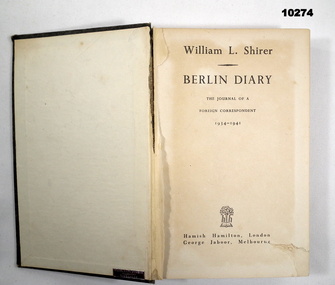
Book - MEMOIR, WW2, William L. Shirer, "BERLIN DIARY", 1941, Reprint 1943
... Adhesive label details - silver print "MARGARETA WEBBER/ Bookseller/ Melbourne"...."BERLIN DIARY/ THE JOURNAL OF A / FOREIGN CORRESPONDENT/ 1934-1941" Publication Book Diary WW2 Berlin Germany Adhesive label details - silver print "MARGARETA WEBBER/ Bookseller/ Melbourne". Hardcover book Cover - cardboard with black colour buckram. ...From Title page. "BERLIN DIARY/ THE JOURNAL OF A / FOREIGN CORRESPONDENT/ 1934-1941"Hardcover book Cover - cardboard with black colour buckram. Very faded gold colour print on spine. Written in diary form. 491 pages - cut, plain, off white paper - no illustrations. Front endpaper - book sellers adhesive label.Adhesive label details - silver print "MARGARETA WEBBER/ Bookseller/ Melbourne".publication, book, diary, ww2, berlin, germany -
 Flagstaff Hill Maritime Museum and Village
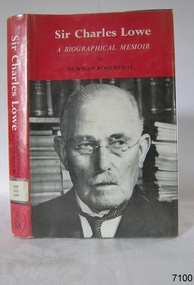
Book - Biography, Newman Rosenthal, Sir Charles Lowe, 1968
... The publisher, Robertson & Mullens, was one of Melbourne's premier 20th-century booksellers, publishers, and stationers. ...The publisher, Robertson & Mullens, was one of Melbourne's premier 20th-century booksellers, publishers, and stationers. ...This volume is a biographical account of Sir Charles John Lowe (1880–1969), one of Australia’s most prominent 20th-century jurists. The book details his life and career, including his 37-year tenure (1927–1964) as a judge of the Supreme Court of Victoria the longest in the court's history. It also outlines the high-profile royal commissions and major Australian government inquiries he led, including those into the 1940 Canberra air disaster, the 1942 bombing of Darwin, the 1943 "Brisbane Line" allegation, and the 1949–1950 Royal Commission into the Communist Party. Additionally, it highlights his academic leadership as Chancellor of the University of Melbourne from 1941 to 1954.Hard cover book. Sir Charles Lowe Author: Newman Rosenthal Publisher: Newman H Rosenthal Date: 1968 Further Information: Dust Cover with publication details and picture of Sir Charles Lowe, Cloth covered boards with lettering and patterning to spine in black. The spine has a Library label with an inscription.non-fictionThis volume is a biographical account of Sir Charles John Lowe (1880–1969), one of Australia’s most prominent 20th-century jurists. The book details his life and career, including his 37-year tenure (1927–1964) as a judge of the Supreme Court of Victoria the longest in the court's history. It also outlines the high-profile royal commissions and major Australian government inquiries he led, including those into the 1940 Canberra air disaster, the 1942 bombing of Darwin, the 1943 "Brisbane Line" allegation, and the 1949–1950 Royal Commission into the Communist Party. Additionally, it highlights his academic leadership as Chancellor of the University of Melbourne from 1941 to 1954.warrnambool, shipwrecked-coast, flagstaff-hill, flagstaff-hill-maritime-museum, maritime-museum, shipwreck-coast, flagstaff-hill-maritime-village, shipwrecked-artefact, book, sir charles lowe, newman rosenthal -
 Alfred Hospital Nurses League - Nursing History Collection
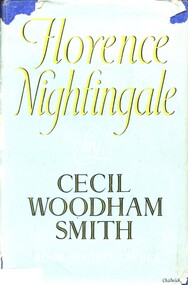
Book - Illustrated book, Cecil Woodham-Smith 1896-1977, Florence Nightingale 1820-1910, 1950
... Inside the front cover is a small rectangular printed sticker 'Margaret Webber, Bookseller, Melbourne....Inside the front cover is a small rectangular printed sticker 'Margaret Webber, Bookseller, Melbourne. Hardcover book with white dust jacket. ...Biography of Florence NightingaleHardcover book with white dust jacket. Cover page has title 'Florence Nightingale' in (yellow ink) 'by' Cecil Woodham Smith (white ink) author's name (black ink) and publisher's name (white ink) are also printed on the spine of the dustjacket. There is also a white rectangular sticker, on which the previous catalogue number is printed, on the dustjacket spine. On the back of the dustjacket is printed Lord Ellesmere's tribute to Florence Nightingale, House of Lords, May 5, 1856. non-fictionBiography of Florence Nightingaleflorence nightingale, crimena war, nurses-great britain-history, nursing-history -
 Royal Australian and New Zealand College of Obstetricians & Gynaecologists (RANZCOG)
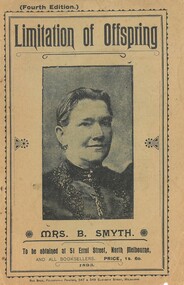
Booklet, Rae Bros, Limitation of offspring : being the substance of a lecture delivered in the North Melbourne Town Hall and elsewhere, to large audiences of women only, 1893
... /To be obtained at 51 Errol Street, North Melbourne,/AND ALL BOOKSELLERS. PRICE, 1S. 6D./1893/RAE BROS., POLYGRAPHIC PRINTERS, 547 & 549 ELIZABETH STREET, MELBOURNE.".../To be obtained at 51 Errol Street, North Melbourne,/AND ALL BOOKSELLERS. PRICE, 1S. 6D./1893/RAE BROS., POLYGRAPHIC PRINTERS, 547 & 549 ELIZABETH STREET, MELBOURNE." ...Paper booklet, consisting of 40 pages plus 18 preface pages. Front cover of booklet is printed with with a black and white portrait image of a woman (the author of the booklet) at centre. The woman has short hair and is wearing a black gown buttoned at the neck. Text printed on front cover reads: "(Fourth Edition.)/Limitation of Offspring/MRS. B. SMYTH./To be obtained at 51 Errol Street, North Melbourne,/AND ALL BOOKSELLERS. PRICE, 1S. 6D./1893/RAE BROS., POLYGRAPHIC PRINTERS, 547 & 549 ELIZABETH STREET, MELBOURNE."non-fictioncontraception, birth control -
 Flagstaff Hill Maritime Museum and Village
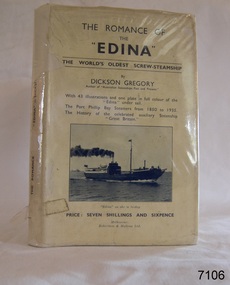
Book - Historical Maritime Research, Robertson & Mullens, The Romance of The Edina, 1935
... The publisher, Robertson & Mullens Ltd., was a prominent Melbourne-based bookseller and publisher formed on 1 July 1921 through the merger of two major bookselling firms: George Robertson & Co. and Melville & Mullen. ...The publisher, Robertson & Mullens Ltd., was a prominent Melbourne-based bookseller and publisher formed on 1 July 1921 through the merger of two major bookselling firms: George Robertson & Co. and Melville & Mullen. ...The Romance of The "Edina" (1935) is a specialised maritime history book. It chronicles the service history of the SS Edina, an iron-hulled screw steamship built in Glasgow in 1854. The key topics covered in the book are the ship's longevity as it served for over 80 years and its role in the Crimean War and early gold rushes, and its decades as a coastal vessel in Victoria’s Port Phillip Bay. It also includes additional chapters on the auxiliary steamship Great Britain and a broader overview of Port Phillip Bay steamers from 1850 to 1935.Hard cover book. The Romance of The Edina Author: Charles Dickson Gregory Publisher: Robertson & Mullens Ltd. Date: 1935 Further Information: Dust cover over hardcover with lettering to cover. There is no Library label or inscription visible.non-fictionThe Romance of The "Edina" (1935) is a specialised maritime history book. It chronicles the service history of the SS Edina, an iron-hulled screw steamship built in Glasgow in 1854. The key topics covered in the book are the ship's longevity as it served for over 80 years and its role in the Crimean War and early gold rushes, and its decades as a coastal vessel in Victoria’s Port Phillip Bay. It also includes additional chapters on the auxiliary steamship Great Britain and a broader overview of Port Phillip Bay steamers from 1850 to 1935.warrnambool, shipwrecked coast, flagstaff hill, flagstaff hill maritime museum, maritime museum, shipwreck coast, flagstaff hill maritime village, shipwrecked artefact, barclay & curle, figurehead 'fair maid of judea', centenary maritime exhibition 1934, a brief review of steam navigation in victoria, pleasure steamer edina, trade and travel late 19th and early 20th century, trade melbourne to geelong, screw steamer edina, coastal trader edina, lighter dinah, cargo carrying for cremean war, cargo carrying for american civil war, passenger and trade in western district of victoria, export gold and currency and gold diggers to new zealand, export vessel to h r h the duke of edinburgh, melbourne - warrnambool - port fairy - portland cargo run, warrnambool steam packet company, stephen henty, captain john thompson, chief engineer john davies, lady bay warrnambool, lighter edina, shipping victoria, port phillip bay steamers, steamship great britain, edina, vhr s199 victorian heritage database, book, the romance of the edina, c dickson gregory, robertson & mullens melbourne -
 Flagstaff Hill Maritime Museum and Village
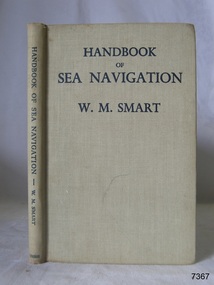
Book - Reference guide, William Marshall Smart (W M Smart), Professor of Astronomy, A Handbook of Sea Navigation, 1943
... In 1929 the form became a Proprietary Limited Company with an additional two stores, at 95 Elizabeth and 361 Swanston Streets, Melbourne. Collins Booksellers is still owned by the Stamen family. ...In 1929 the form became a Proprietary Limited Company with an additional two stores, at 95 Elizabeth and 361 Swanston Streets, Melbourne. Collins Booksellers is still owned by the Stamen family. ...Author W M Smart, M.A., D.SC., F.R.A.S. (William Marshall Smart), (1889-1975) Regius Professor of Astronomy in the University of Glasgow, Instructor-Lieut. in the Royal Navy during World War I. and John Couch Adams Astronomer in the University of Cambridge. In 1943 he was elected as a fellow of the Royal Society of Edinburg. From 1949-1951 he was President of the Royal Astronomical Society and a member of the Royal Institute of Navigation. In 1958 he was awarded the Lorimer Medal of the Astronomical Society of Edinburgh. The publisher firm, Longmans, Green & Co, was originally founded in 1724 in London by Thomas Longman under the name Longman. In August of that year, he bought the two shops and goods of William Taylor and set up his publishing house there at 39 Paternoster Row. The shops were called Black Swan and Ship, and it is said that the 'ship' sign was the inspiration for Longman's Logo. After many changes of name and management, the firm was incorporated in 1926 as Longmans, Green & Co. Pty Ltd. The firm was acquired by Pearson in 1968 and was known as Pearson Longman or Pearson PLC. The book was sold by Collins Book Depot which was founded by Frederick Henry (Harry) Slamen in 1922. In 1929 the form became a Proprietary Limited Company with an additional two stores, at 95 Elizabeth and 361 Swanston Streets, Melbourne. Collins Booksellers is still owned by the Stamen family. It is the largest Australian-owned bookselling chain.The book is significant due to its connection with navigation at sea. Its author W M Smart was a learned astronomer and an Instructor-Lieutenant for the Royal Navy during World War I. His achievements were recognised in 1958 when he was awarded the Lorimer Medal of the Astronomical Society of Edinburgh.A Handbook of Sea Navigation: The Theory & Practice of Astronomical Navigation at Sea, with diagrams and charts Author: W M Smart, M.A., D.SC., F.R.A.S. (William Marshall Smart) Publisher: Longmans, Green and Co Printer: Collins Book Depot Date: 1943 Textured green hardcover book. Inscriptions on the Fly page.Pencil: "12/6" [12 shillings 6 pence] Sticker: "G.F. Byrne / Faunce Crescent / O'Connor, A.C.T. / Australia 2001" Stamp: "COLLINS BOOK DEPOT PTY. LTD. / Technical Book Department / 361 Swanston St., Melb. G - - -"flagstaff hill, flagstaff hill maritime museum and village, warrnambool, maritime museum, maritime village, great ocean road, shipwreck coast, longmans green and co., thomas longman, paternoster row london, w m smart, william marshall smart, astronomer, navigator, professor of astronomy, 1943, g.f. byrne, collins book depot, technical book department, 361 swanston st., melbourne, frederick henry (harry) slamen, 361 swanston street melbourne, a handbook of sea navigation, maritime handbook, navigation instructiono, sea navigation -
 Flagstaff Hill Maritime Museum and Village
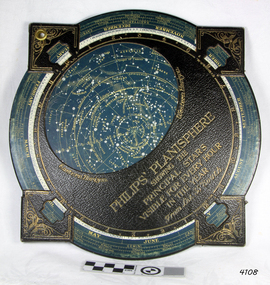
Planisphere, Early 20th Century
... "Sold by J DONNE & SON, Booksellers & Stationers, 349 Post Office Place Melbourne 349. Admiralty Chart Agents" and " Made in Germany for George Philip & Son Ltd" England . ...Bartsch was the son-in-law of Johannes Kepler, discoverer of Kepler's laws of planetary motion A significant item of celestial mapping used by marine navigators This particular item was made and used in the first quarter to half of the 20th century. flagstaff hill warrnambool shipwrecked-coast flagstaff-hill flagstaff-hill-maritime-museum maritime-museum shipwreck-coast flagstaff-hill-maritime-village Star map marine navigation maps George Philip & Sons "Sold by J DONNE & SON, Booksellers & Stationers, 349 Post Office Place Melbourne 349. Admiralty Chart Agents" and " Made in Germany for George Philip & Son Ltd" England . ...The word Planisphere (Latin planisphaerium) was originally used in the second century by Claudius Ptolemy to describe the representation of a spherical Earth by a map drawn in the plane. This usage continued into the Renaissance: for example Gerardus Mercator described his 1569 world map as a Planisphere. The word describes the representation of the star-filled celestial sphere on the plane. The first star chart to have the name "Planisphere" was made in 1624 by Jacob Bartsch. Bartsch was the son-in-law of Johannes Kepler, discoverer of Kepler's laws of planetary motionA significant item of celestial mapping used by marine navigators This particular item was made and used in the first quarter to half of the 20th century.Planisphere consists of a circular star chart attached at its centre to an opaque circular overlay that has a clear elliptical window or hole so that only a portion of the sky map will be visible in the window or hole area at any given time. The chart and overlay are mounted so that they are free to rotate about a common pivot point at their centers. The star chart contains the brightest stars, constellations and (possibly) deep-sky objects visible from a particular latitude on Earth. The night sky that one sees from the Earth depends on whether the observer is in the northern or southern hemispheres and the latitude. A Planisphere window is designed for a particular latitude and will be accurate enough for a certain band either side of that. Planisphere makers will usually offer them in a number of versions for different latitudes. Planispheres only show the stars visible from the observer's latitude; stars below the horizon are not included. A complete twenty-four-hour time cycle is marked on the rim of the overlay. A full twelve months of calendar dates are marked on the rim of the star chart. The window is marked to show the direction of the eastern and western horizons. The disc and overlay are adjusted so that the observer's local time of day on the overlay corresponds to that day's date on the star chart disc. The portion of the star chart visible in the window then represents (with a distortion because it is a flat surface representing a spherical volume) the distribution of stars in the sky at that moment for the Planispheres designed location. Users hold the Planisphere above their head with the eastern and western horizons correctly aligned to match the chart to actual star positions. "Sold by J DONNE & SON, Booksellers & Stationers, 349 Post Office Place Melbourne 349. Admiralty Chart Agents" and " Made in Germany for George Philip & Son Ltd" England . Signature "Capt E. B. ?..id, 22 Baund St"flagstaff hill, warrnambool, shipwrecked-coast, flagstaff-hill, flagstaff-hill-maritime-museum, maritime-museum, shipwreck-coast, flagstaff-hill-maritime-village, star map, marine navigation, maps, george philip & sons -
 Flagstaff Hill Maritime Museum and Village
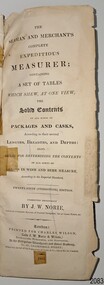
Book - Reference, navigation, J. W. Norie (author and editor), The Seaman and Merchants Complete Expeditious Measurer, 1853
... Norrie & Wilson), Bookseller, Publisher and Stationer, At the Navigation Waterhouse and Naval Academy, No. 157, Leadenhall Street, where may be had all the publications of Steel & Co. Late at No. 70, Cornhill. Printer: Bateman and Dennis, 95 Leadenhall Street, London, England, 1853 The book has handwritten, pen and ink inscriptions. It refers to the Schooner, Rose Anna, Melbourne...Norrie & Wilson), Bookseller, Publisher and Stationer, At the Navigation Waterhouse and Naval Academy, No. 157, Leadenhall Street, where may be had all the publications of Steel & Co. Late at No. 70, Cornhill. Printer: Bateman and Dennis, 95 Leadenhall Street, London, England, 1853 The book has handwritten, pen and ink inscriptions. It refers to the Schooner, Rose Anna, Melbourne ...The book was published at the same address as London’s Navigation Waterhouse and Naval Academy. It is likely to be one of the textbooks used in educating seafarers, both naval and merchant. It is the twenty-fifth edition, showing that it was in great demand in the early to mid-19th century. Sea merchants could have used this as a reference for working out freight costs for their cargo. Customs Officers could have referred to it as well to calculate fees and taxes. The book’s owner had inscribed in pen and ink "Rose Anna, Schooner, Melbourne, March 25th 1857". At that time, the registered owners were Thomas Lamb & E. Keays, who were freighting cargo between Melbourne and Geelong. Schooner, ROSE ANNA: - The schooner Rose Anna was built in 1844 at Fremantle, W.A., by H. Edwards for Capt. William Heard. The 2-masted wooden vessel was carvel-built. Captain Heard registered Rose Anna at Fremantle in 1845 and in the same year, registered it at Port Adelaide. in 1852, Rose Anna was crushed and sunk at Port Adelaide by the Selma and raised. In 1852, the schooner was lengthened by William Hardy. In 1853, William Burton and W. Roberts registered Rose Anna at Melbourne. In 1855, W. Roberts registered, followed by John Balston & Thomas Ross. In 1856, it was registered by Thomas Lamb & E. Keays, in 1857 by William Howes & Charles Holland, in 1865 by Charles Holland & John Balfour, and in 1866 registered in Melbourne by mariners John Balfour & David Griffiths. In the 1940s, Rose Anna traded between Hobart, Melbourne, Adelaide, Sydney, Circular Head, Port Fairy, and Port Albert. In the 1950s and 1960s, it traded between Geelong Heads and Hobsons Bay, Melbourne, in lime, wool, general cargo and ballast. In 1857, when Rose Anna’s registered owners were Thomas Lamb & E. Keays, an advertisement was placed in The Age on March 9th, announcing that the Rose Anna was taking freight from Melbourne to Geelong. Later in the year, in October, the registered owners were William Howes & Charles Holland. They were still trading with Geelong, as on October 7th, The Age announced that Rose Anna arrived in Geelong from Melbourne on October 5th. On October 6th, 1866, Rose Anna went ashore while loading wheat at Sandridge, Port Phillip Bay, in severe gales and heavy seas and became a total wreck. The book is significant for its association with reference information to instruct sea merchant traders and naval officers. The publication is in its twenty-fifth edition, indicating the importance of such an instructional book. The book of tables and calculations shows the evolution of such reference texts, going from handwritten notes, to printed tables like these, and forward to slide rules, calculators, and to modern time computers. it demonstrates the importance of accuracy in calculating weights and measures at sea and for the purposes of fess, charges and taxes. The book is important to the history of the schooner Rose Anna, which is listed as a significant vessel on the Victorian Heritage Register, S582, as it has an inscription with the ship's name, date, and destination. Book, tall and narrow, with index tabs on the side edges of the pages. FULL Title: The Seaman and Merchants Complete Expeditious Measurer: The Seaman and Merchants Complete Expeditious Measure; containing a set of tables which show, at one view, the solid contents of all kinds of packags and casks, according to their several lengths, breadths and depths: also, rules for determining the contents of all sorts of casks in wine and beer measure, according to the Imperial Standard. Twenty-Fifth (Stereotype) Edition. Author: Mr J W Norie (John William Norie) Date: 1853 Publisher: Charles Wilson (late J.W. Norrie & Wilson), Bookseller, Publisher and Stationer, At the Navigation Waterhouse and Naval Academy, No. 157, Leadenhall Street, where may be had all the publications of Steel & Co. Late at No. 70, Cornhill. Printer: Bateman and Dennis, 95 Leadenhall Street, London, England, 1853 The book has handwritten, pen and ink inscriptions. It refers to the Schooner, Rose Anna, Melbourne, March 25th 1857.Handwritten in script with pen and ink: "Rose Anna / Schooner / Melbourne, / March 25th 1857"flagstaff hill, warrnambool, shipwrecked-coast, flagstaff-hill, flagstaff-hill-maritime-museum, maritime-museum, shipwreck-coast, flagstaff-hill-maritime-village, the seaman and merchants complete expeditious measurer, book, sea merchants, cargo, calculations, measurements, sea trade, maritime book, sea transportation, cargo rate calculations, naval academy, navy education, navigation, navigation instruction, navigation waterhouse and naval academy, twenty-fifth edition, 19th century, 1853, 1857, customs, freight, ullage, rose anna, schooner, 2-masted, march 25th 1857, melbourne, 25 march 1857, thomas lamb & e. keays, geelong, 1844, h. edwards, fremantle, carvel-built, port adelaide, selma, william hardy, william burton and w. roberts, john balston & thomas ross., charles holland & john balfour, john balfour & david griffiths, hobart, sydney, circular head, port fairy, port albert, hobsons bay, sandridge, port phillip bay -
 The Beechworth Burke Museum
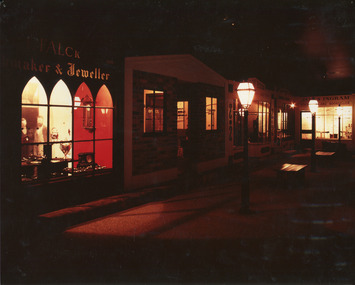
Photograph, 1990s--estimated
... Melbourne in 1865. This act signposted Beechworth's progress as a nineteenth-century gold rush town with a population of around 3000. In the mid-1850s, newsagent James Ingram established a newsagency and supplied papers and stationary to the goldfields. He and bookseller ...Taken in 1990, this photograph depicts a row of shops in Beechworth, with the shopfront of watchmaker and jewellers, William Turner and C.F. Falck, in the foreground, and newsagent and bookseller James Ingram's shop in the background.This photograph is of social significance to the Beechworth community in depicting the Street of Shops, the creation of curator, Roy Harvey, which opened in 1979 at Burke Museum. According to the Indigo Shire Council webpage for Burke Museum, this addition 'began a new period of collecting with Roy Harvey calling to the community for donations. The response resulted in an influx of material adding to the town history/ development and local identities collections. The Shops and their contents reflect another period in museology.' The historic shopfronts in this image portray those of local settlers, William Turner and CF Falck's Watchmaker and Jeweller store, and James Ingram's news agency and bookshop. William Turner was originally a goldfields official who became a commissioner on the Ovens goldfield, and later a resident warden, at times performing magisterial duties and chairing the Local Court. Charles Frederick Falck, born in Korlin, Germany, in 1833, a skilled watchmaker and jeweller, ran the jewellery business from 1862. Along with William Turner and Melbourne barrister, George Milner Stephen, he prepared a dazzling display of gems and jewellery from Beechworth for the Royal Society's Exhibition in Melbourne in 1865. This act signposted Beechworth's progress as a nineteenth-century gold rush town with a population of around 3000. In the mid-1850s, newsagent James Ingram established a newsagency and supplied papers and stationary to the goldfields. He and bookseller R.T. Vale stocked a wide range of literary, historical and religious works, textbooks, periodicals and newspapers, as well as hosting a reading and writing room on Camp Street{?}. James Ingram was a 'devoted instigator and supporter of the town's welfare institutions', who raised funds for to establish a hospital, primary school and benevolent asylum, and assisted people who'd fallen on hard times with his wife. He was also a mainstay of the early Baptist church, holding meetings in his house. He died in 1928, six weeks short of his 100th birthday. Ingram's Rock, north-west of Beechworth near where he lived in later life, was named after him. Colour rectangular photograph printed on matte photographic paper.Obverse: FALCK 1880 / maker & Jeweller/ WARDENS OFFICE/COACHING OFFICE/ EST. ??55/ ????ON HOUSE/ JAMES INGRAM/ NEWS?????? AND BOOKSELLER/ TOYS visible above shopfront in left foreground. Reverse: Catalogue item number 3305 pencilled in top right-hand corner.beechworth, beechworth historic shops, william turner, cf falck, james ingram, turner and falck watchmaker and jeweller, james ingram newsagent and bookseller, burke museum, promoting settlement, marketing and retailing, living in country towns, making regional centres, preserving traditions and commemorating, beechworth founders, victorian gold rush towns, beechworth pioneers, ingram's rock, 1860s beechworth, street of shops, roy harvey -
 Marysville & District Historical Society
Book, Rex Dixon, Pete of the Wild Grass Country, 1954
... Reynolds/ Bookseller/ &/ Stationer/ ALEXANDRA Other books in the Panther Library/ PETE AND THE PRAIRIE PEOPLE by Rex Dixon/ JOEY OF JASMINE STREET/ by Robert Martin/ JOEY AND THE RIVER PIRATES/ by Robert Martin PETE OF THE/ WILD GRASS COUNTRY/ by/ REX DIXON Illustrated by Jack Harman THOMAS NELSON AND SONS LTD/ LONDON EDINBURGH PARIS MELBOURNE/ TORONTO AND NEW YORK THOMAS NELSON AND SONS LTD/ Parkside Works Edinburgh 9/ 3 Henrietta Street London WC2/ 312 Flinders Street Melbourne C1/ 5 Parker's Buildings Burg Street Cape Town/ THOMAS NELSON AND SONS (CANADA) LTD/ 91-93 Wellington Street West Toronto 1/ THOMAS NELSON AND SONS/ 19 East 47th Street New York 17/ SOCIETE FRANCAISE D'EDITIONS NELSON/ 25 rue Henri Barbusse Paris Ve/ First published 1954 Stamp of the Marysville & District / Historical Society Inc/ P.O. ...Reynolds/ Bookseller/ &/ Stationer/ ALEXANDRA Other books in the Panther Library/ PETE AND THE PRAIRIE PEOPLE by Rex Dixon/ JOEY OF JASMINE STREET/ by Robert Martin/ JOEY AND THE RIVER PIRATES/ by Robert Martin PETE OF THE/ WILD GRASS COUNTRY/ by/ REX DIXON Illustrated by Jack Harman THOMAS NELSON AND SONS LTD/ LONDON EDINBURGH PARIS MELBOURNE/ TORONTO AND NEW YORK THOMAS NELSON AND SONS LTD/ Parkside Works Edinburgh 9/ 3 Henrietta Street London WC2/ 312 Flinders Street Melbourne C1/ 5 Parker's Buildings Burg Street Cape Town/ THOMAS NELSON AND SONS (CANADA) LTD/ 91-93 Wellington Street West Toronto 1/ THOMAS NELSON AND SONS/ 19 East 47th Street New York 17/ SOCIETE FRANCAISE D'EDITIONS NELSON/ 25 rue Henri Barbusse Paris Ve/ First published 1954 Stamp of the Marysville & District / Historical Society Inc/ P.O. ...Pete Cimarron, the wild boy, was raised by Indians in the Wild Grass Country of Texas. When the Indians moved on to new hunting grounds Pete was left to take care of himself. This he does by roaming over the Wild Grass Country catching wild horses, which he sells to his friend Murky Joe. When the wagon trains from the east begin to settle near the Wild Grass Country, Pete finds himself swept into an exciting struggle to claim and hold his land.Front dust cover shows a boy holding a rope lasso hiding behind tall grasses watching a black horse. There are other horses in the background. Also in the background is a grass plain which is ringed by mountains. The book itself is bound in red with the title in black writing. On the front of the book there is a logo of the Panther Library. The name of the author, the title and the publisher are written in black down the spine of the book.fictionPete Cimarron, the wild boy, was raised by Indians in the Wild Grass Country of Texas. When the Indians moved on to new hunting grounds Pete was left to take care of himself. This he does by roaming over the Wild Grass Country catching wild horses, which he sells to his friend Murky Joe. When the wagon trains from the east begin to settle near the Wild Grass Country, Pete finds himself swept into an exciting struggle to claim and hold his land.indians, texas, horses, rex dixon, panther library, fiction -
 Federation University Historical Collection
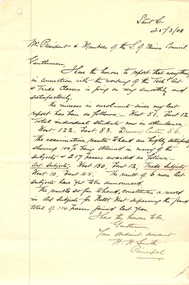
Document - Documents, Ballarat School of Mines Correspondence Relating to the Ballarat Technical Art School, 1907-1914, 24/12/1907 - 28/08/1914
... Melbourne at the suggestion of Posonby Carew-Smyth, and H.H. Smith suggested she be appointed to teach the class, 1910 .31) Report on the Junior Technical School, 1915 .32) Quarterly Report on the Ballarat Technical Art School by Principal Herbert H. Smith, 1911 .34) Report on the progress of the Ballarat Technical Art School by Principal Herbert H. Smith, 1914 .34b) Invoice from James Ingram and Son, Booksellers...Melbourne at the suggestion of Posonby Carew-Smyth, and H.H. Smith suggested she be appointed to teach the class, 1910 .31) Report on the Junior Technical School, 1915 .32) Quarterly Report on the Ballarat Technical Art School by Principal Herbert H. Smith, 1911 .34) Report on the progress of the Ballarat Technical Art School by Principal Herbert H. Smith, 1914 .34b) Invoice from James Ingram and Son, Booksellers ...The dates 1907-1914 cover the first eight years of the Ballarat Technical Art School No. 15, a division of the Ballarat School of Mines. This covers that time before the custom built Ballarat Technical Art School opened in 1915.48 pieces of hand and type written correspondence relating to the Ballarat Technical Art School, covering its first eight years. .1) Transferal of money from the Ballarat Fine Art Public Gallery Association to the Ballarat School of Mines for credit to the Ballarat Technical Art School No 15. .3) Letter from Herbert H. Smith reporting on the appointment of Thomas Trengove to the position of Art Director at the Stawell School of Mines, and the appointment of Arthur Lilburne and Pridgeon as student assistants. .5) Application from Arthur M. Lilburne for a position at the Ballarat Technical Art School. .7) Resignation of Thomas Trengrove from the Ballarat Technical Art School so he could take up a position at the Stawell School of Mines, 1908. .9) Correspondence from H.H. Smith concerning expectations. 1908 .10) Report from Herbert H. Smith on the number of Art enrolments at the Ballarat West Art School, the Ballarat East Art School and the Drawing Centre. .8) Correspondence from Henry H. Hall regarding his teaching appointment, 1908 .11) A Report on architectural studies at the Ballarat Technical Art School on Clegg and Miller letterhead. .12) Report from M.C. Young. .13) Report from Arthur Lilburne .14) Reorrt from J.A. Wright, 1908 .15) Report on student numbers from Edith M. Cornell, 1908 .16) Report on classes in Freehand Geometry and Perspective by Fred Foster, 1908 .16b) Report by Decorating and Signwriting teacher John Barber, 1908 .17) Report from Esther and Lily Green from the East Public Library, 1908 .18) Report from Percy Isaac of the Ballarat East Public Library re manual training and Sloyd classes. .19) Report on the progress of the Ballarat Technical Art School by Principal Herbert H. Smith, 1908 .20) Report from Arthur M. Lilburn on the Elementary Evening Classes and the State School Teachers Saturday class, 1908 .21) Report by M.C. Young on drawing classes at the Ballarat Technical Art School, 1908 ,22) Report by Fred Foster on Freehand Geometry of Perspective classes at the Ballarat Technical Art School, 1908 .24) Report by E. and L. Green on classes at the Ballarat Technical Art School, 1908 .25) Report by Miss Wright on Dresscutting classes at the Ballarat Technical Art School, 1908 .26) Report by John Barber on Signs and Decorating classes at the Ballarat Technical Art School, 1908 .27) Report by Edith Cornell on Millinery classes at the Ballarat Technical Art School, 1908 .28) Report by Percy R. Green on Manual Training ad Carpentry classes at the Ballarat Technical Art School, 1908 .29) Correspondence from Posenby Carew-Smyth and Melbourne Education Department letterhead, 1908, .30) Report on the need for instruction in Decorative Needlework at the Ballarat Technical Art School by Principal Herbert H. Smith. Ida Johnston undertook classes from Miss Macgeorge in Melbourne at the suggestion of Posonby Carew-Smyth, and H.H. Smith suggested she be appointed to teach the class, 1910 .31) Report on the Junior Technical School, 1915 .32) Quarterly Report on the Ballarat Technical Art School by Principal Herbert H. Smith, 1911 .34) Report on the progress of the Ballarat Technical Art School by Principal Herbert H. Smith, 1914 .34b) Invoice from James Ingram and Son, Booksellers and School Stationers, 1908 .35) Report on the progress of the Ballarat Technical Art School by Principal Herbert H. Smith, 1914 .36) Correspondence from F.N. King seeking employment at the Ballarat Junior Technical Scool due to the resignation of A.W. Steane, 1914 .37) Correspondence regarding the qualifications of F.N. King, including Sloyd at NAAS, Sweden, 1914 Reference from F.V. Burridge of the London County Council Central School of Arts and Crafts (incorporating The Royal Female School of Art), Southamoton Row, London, regarding Francis N. King, 1913 .40) Correspondence on Ballarat Junior Technical School letterhead when it was located at 104 Doveton Street, Ballarat (Dana Street Primary School) from Albert W. Steane. The report mentioned to appointment of R.W. Richards commencing duties as a science ad mathematics master and Francis N. King as Woodwork and Modeling instructor, 1914 .41) Report on the progress of the Ballarat Technical Art School by Principal Herbert H. Smith, 1914 .42) Correspondence on Stanley Mullen Company letterhead requesting a junior (lady) to help in designing and drawing from Needlework, 1914 .43) Report on the progress of the Ballarat Technical Art School by Principal Herbert H. Smith, 1914 .44) Report on the progress of the Ballarat Technical Art School by Principal Herbert H. Smith, 1914. The report includes the resignation of Donadl Johnston to take up the position of assistant to Posonby Carew-Smyth. Harold Herbert to travel to England, and Edwin Cannon to to apply his art knowledge commercially. H.H. Smith suggested they be replaced with Ken Moss and Harold Brown .45) Report on the progress of the Ballarat Technical Art School by Principal Herbert H. Smith .46) Hours and duties of the caretaker and attendant at the Ballarat Technical Art School .47) Letter from the J.A. Powell, secretary of the Ballarat West Art School to the Ballarat School of Mines. ballarat technical school, henry j. hall, arthur m lilburn, thomas h. trengrove, herbert h. smith, g.w. clegg, m.c. young, j.w. wright, fred foster, j. barber, etsher green, lily green, p. isaac, e.m. cornell, albert steane, f.n. king, letterhead, ballarat fine art public gallery association, richard maddern, j. powell, j.a. powell, frederick martell, ponsonby carew-smyth, stawell school of mines, lilburne, pridgeon, arthur lilburne, henry hall, edith m. cornell, john barber, east ballarat library, esther green, percy isaac, sloyd, millinery, r.w. richards, frank king, a.w. steane, naas, majorie walker, art needlework, stanley mullen company, donald johnston, ted cannon, edwin cannon, harold brown, harold herbert, art gallery of ballarat -
 Flagstaff Hill Maritime Museum and Village
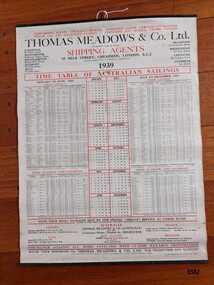
Poster - Shipping Timetable, Barclay and Fry Ltd. London, Time Table of Australian Sailings, circa 1939
... Melbourne. This poster was sold by "Smarts Authorised Newsagency" in 1988 in Warrnambool - a business that had been owned by Neil and Shirley Smart at 168 Timor Street, Warrnambool since 1976. Previously it had been "Reed's Newsagency and Book Shop" (a local business established by William Reed circa 1912 and known as "William Reed Bookseller and Stationer"). ...Melbourne. This poster was sold by "Smarts Authorised Newsagency" in 1988 in Warrnambool - a business that had been owned by Neil and Shirley Smart at 168 Timor Street, Warrnambool since 1976. Previously it had been "Reed's Newsagency and Book Shop" (a local business established by William Reed circa 1912 and known as "William Reed Bookseller and Stationer"). ..."Freight forwarding" is the arranging of the shipping of goods from their point of origin to their final destination. Freight Forwarders worked as an intermediary between companies that needed to ship products and the shipping and transportation firms that could ensure delivery. A key element of "freight forwarding" was the advice and professional handling of documentation and customs requirements provided. Early "freight forwarders" tended to be innkeepers who forwarded on the luggage of their hotel guests. One of the first "freight forwarding" companies was established by Thomas Meadows in 1836 which made it one of the earliest freight companies in Europe. More reliable rail and steamships were beginning to be used to transport goods and this created a demand for the new "freight forwarding" industry. The combination of railroads and steamships became very important in the late 19th and early 20th century. International shipments became common and freight forwarding that could handle their complexity became an integral part of the manufacturing and shipping landscape. Thomas Meadows & Company Ltd moved to offices in Milk Street, London in 1854 (where they remained until 1969 when they moved out of the city to Leytonstone) and continued in the freight business until 1987 when the company was acquired by Rockwell International Freight. The growth of Thomas Meadows & Company Ltd coincided with the growth and development of the colony of Victoria with an increasing need for the transporting of large numbers of people as well as important goods required by the growing colony - furniture, spirits, food, clothing, agricultural implements, household items etc. In the late 1840's only two or three overseas ships a month visited Melbourne but by late 1852 (after gold was discovered) more than a dozen ships arrived each week. By 1939, Thomas Meadows & Co. Ltd. had offices in Canada, U.S.A., New Zealand, France, Belgium and in Flinders Street Melbourne. This poster was sold by "Smarts Authorised Newsagency" in 1988 in Warrnambool - a business that had been owned by Neil and Shirley Smart at 168 Timor Street, Warrnambool since 1976. Previously it had been "Reed's Newsagency and Book Shop" (a local business established by William Reed circa 1912 and known as "William Reed Bookseller and Stationer"). The original owners, Reed's Newsagency and Bookshop were operating the shop in 1939 which suggests the poster may have been on display (for the information of their customers) in their shop at that time. This poster is significant through its association with Thomas Meadows and Co. Ltd. who is considered to be the founder of the "freight forwarding" industry in the early 19th century. It is an example of advertising used by shipping agents in the mid-19th to early 20th centuries. Its information includes the addresses of the firm's different offices in the U.K. and abroad, ships, shipping lines and ports used and the timetable the vessels were likely to follow. It is also significant through its association with a well known and long standing local Warrnambool business.A 1939 Timetable of "Australian Sailings" produced by the shipping agents Thomas Meadows and Co Ltd. It lists all their ships (plus dates and ports) sailing from the UK to Australia as well as the addresses of their offices in other cities in the U.K., Canada, U.S.A., Australia, New Zealand, France and Belgium. It has three vertical columns depicting (from left to right) January to June sailings, a simple 1939 calendar and their July to December 1939 sailings. The poster is attached on the top and bottom to two thin black metal strips. The top strip has a metal ring with a hole. A stamped label on the back of the poster has the name, telephone number and address of Smarts newsagency plus the date.Front of poster - "FORWARDING AGENTS. INSURANCE BROKERS.PASSENGER AGENTS.CARTAGE CONTRACTORS / MOTOR CAR AND MACHINERY PACKERS.FURNITURE AND GENERALEXPORT PACKERS" "THOMAS MEADOWS & CO Ltd." "ESTABLISHED OVER 100 YEARS" "SHIPPING AGENTS / 35 MILK STREET, CHEAPSIDE, LONDON, E.C.2" "PACKING WAREHOUSES IN LONDON & MANCHESTER" "1939" "TIME TABLE OF AUSTRALIAN SAILINGS" "JANUARY TO JUNE, 1939/ FROM LONDON" "JULY TO DECEMBER, 1939 / FROM LONDON" "HAVE YOUR SMALL PACKAGES SENT BY OUR SPECIAL "SMALLS" SERVICE AT LOWER RATES/RATES TO PORT ONLY OR INCLUDING DELIVERY THROUGHOUT AUSTRALIA" "INSURANCE AGAINST ALL RISKS EFFECTED WITH CLAIMS PAYABLE DESTINATION" "ROUTE YOUR SHIPMENTS VIA THOMAS MEADOWS & CO LTD. FOR PROMPTNESS AND ECONOMY" Stamp on back of poster - "SMART'S AUTHORISED NEWSAGENCY' "168 Timor Street, Warrnambool 3280" "Telephone: (055) 62 2092" "12 DEC 1988" Sticker at bottom - "51"flagstaff hill maritime museum and village, great ocean road, shipping, shipping agents, freight forwarding, freight, shipping time table, thomas meadows & co. ltd., thomas meadows shipping agent, shipping and forwarding agent, smart's newsagency, warrnambool, warrnambool newsagency, chart, poster, smart's authorised newsagency, neil and shirley smart, william reed, reed's newsagency and bookshop -
 Flagstaff Hill Maritime Museum and Village
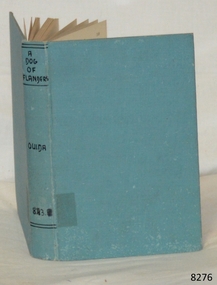
Book - A Fictional Story, Ouida (Maria Louise Ramé), A Dog of Flanders, 1873
... bookseller. Born in Glasgow, Scotland, he emigrated to Victoria during the gold rush era, arriving in Melbourne in 1852. ...bookseller. Born in Glasgow, Scotland, he emigrated to Victoria during the gold rush era, arriving in Melbourne in 1852. ...A Dog of Flanders (originally published in 1872) is a deeply moving, bittersweet story set in Belgium. It follows Nello, an impoverished orphan boy with a passion for art, and Patrasche a loyal, cart-pulling, abandoned, and abused draft dog whom Nello and his gentle grandfather, Jehan Daas, rescue and nurse back to health. The story focuses on the bond between Nello and Patrasche as they become inseparable, helping the aging Jehan pull a milk cart into Antwerp each day to earn a meagre living. Nello longs to become a great painter like the Baroque master Peter Paul Rubens. His only hope is to win a prestigious local drawing contest with a portrait he has laboured over. After a series of devastating setbacks his grandfather passes away, they are evicted, and Nello loses the drawing competition he and Patrasche his cart pulling dog seek shelter from a freezing Christmas Eve blizzard inside the Cathedral of Our Lady in Antwerp. There, Nello finally gazes upon Rubens’s shielded masterpieces, The Descent from the Cross and The Elevation of the Cross. The story ends sadly as, the next morning, the loyal dog and the young boy are found frozen to death, locked in a final embrace in front of the altar.Hard cover book, A Dog of Flanders Author: Ouida (Maria Louise Ramé) Publisher: George Robertson Date: 1873 Further Information: Blue cloth hardcover and spine with spine lettering in black texter. The spine has a Library label with inscription. fictionA Dog of Flanders (originally published in 1872) is a deeply moving, bittersweet story set in Belgium. It follows Nello, an impoverished orphan boy with a passion for art, and Patrasche a loyal, cart-pulling, abandoned, and abused draft dog whom Nello and his gentle grandfather, Jehan Daas, rescue and nurse back to health. The story focuses on the bond between Nello and Patrasche as they become inseparable, helping the aging Jehan pull a milk cart into Antwerp each day to earn a meagre living. Nello longs to become a great painter like the Baroque master Peter Paul Rubens. His only hope is to win a prestigious local drawing contest with a portrait he has laboured over. After a series of devastating setbacks his grandfather passes away, they are evicted, and Nello loses the drawing competition he and Patrasche his cart pulling dog seek shelter from a freezing Christmas Eve blizzard inside the Cathedral of Our Lady in Antwerp. There, Nello finally gazes upon Rubens’s shielded masterpieces, The Descent from the Cross and The Elevation of the Cross. The story ends sadly as, the next morning, the loyal dog and the young boy are found frozen to death, locked in a final embrace in front of the altar.flagstaff hill, warrnambool, shipwrecked coast, flagstaff hill maritime museum, maritime museum, shipwreck coast, flagstaff hill maritime village, great ocean road, book, pattison collection, warrnambool library, warrnambool mechanics’ institute, ralph eric pattison, corangamite regional library service, warrnambool city librarian, mechanics’ institute library, victorian library board, warrnambool books and records, warrnambool children’s library, a dog of flanders, ouida, maria louise ramé, marie louise de la ramée -
 Flagstaff Hill Maritime Museum and Village
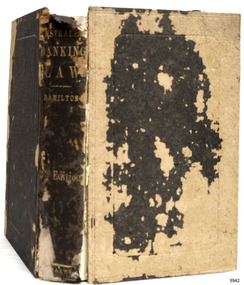
Book - Legal reference, Charles E Maxwell (G Partridge & Co.), Low booksellers and publishers, The Law and Practice of Banking in Australia and New Zealand, 1900
... Partridge & Co.), 458, Chancery Lane, London, Law Booksellers and Publishers, 1900. Published in Melbourne. Marked with purple oval stamp and pencil inscription....Partridge & Co.), 458, Chancery Lane, London, Law Booksellers and Publishers, 1900. Published in Melbourne. Marked with purple oval stamp and pencil inscription. ...This book is a legal reference book used by the Bank of Australasia after 1900. The Bank of Australasia was incorporated by the Royal Charter of England in March 1834. The bank began in Australia on 14th December 1835, opening in Sydney. The Acting Superintendent of the bank at that time was David Charters McArthur. He was Superintendent from 1867-to 1876. The Melbourne branch opened on 28th August 1838 in a two-roomed brick cottage on the north side of Little Collins Street, where two huge mastiff dogs were used at night to guard the bank. The government also provided an armed military sentinel. Due to the bank's rapid growth, a new building for the Melbourne branch was opened in 1840 at 75 Collins Street West. By 1879 the bank had been upgraded to a magnificent two-storey building on the corners of Collins and Queens Streets, with the entry on Collins Street. In 1951 the Bank of Australasia amalgamated with the Union Bank to form the Australia and New Zealand Bank, now known as the ANZ. Then in 1970, the ANZ merged with both the ES&A and the London Bank of Australia to form the ANZ Banking Group Limited. The ANZ Banking Group Ltd kindly donated a variety of historic items from the Bank of Australasia. BANK of AUSTRALASIA, WARRNAMBOOL – In 1854 Warrnambool had two banks, the Union Bank and the Bank of Australasia. Later, completely different bank businesses opened; in 1867 the National Bank of Australasia, then in 1875 the Colonial Bank of Australasia. The original Warrnambool branch of the Bank of Australasia was established in July 1854, and operated from a leased cottage on Merri Street, close to Liebig Street. The bank later bought a stone building previously erected by drapers Cramond & Dickson on the corner of Timor and Gibson Streets. Samuel Hannaford was a teller and then Manager at the Warrnambool branch from 1855 to 1856 and the Warrnambool Council chose that bank for its dealings during 1856-57. In 1859 Roberts & Co. was awarded the contract to build the new Bank of Australasia branch for the sum of £3,000. The land was on a sand hill on the northeast corner of Timor and Kepler Streets and had been bought in 1855 from investor James Cust. The new building opened on May 21, 1860. The bank continued to operate there until 1951 when it merged with the Union Bank to form the ANZ Bank, which continued operating from its Liebig Street building. Warrnambool City Council purchased the former Bank of Australasia building in 1971 and renovated it, then on 3rd December 1973 it was officially opened as the Art Gallery by Cr. Harold Stephenson and Gallery Director John Welsh. The Gallery transferred to the purpose-built building in Liebig Street in 1986 and the old bank building is now the Gallery club. Staff at the Bank of Australasia in Warrnambool included the following men but others were also involved: Samuel Hannaford, Teller then Manager from 1855-1856; W H Palmer, Manager from January 1857 until November 1869 when the Teller Basil Spence was promoted to Manager; H B Chomley, Manager from April 1873 and still there in 1886; A Butt, Manager in 1895-1904; J R McCleary Accountant and Acting Manager for 12 months, until 1900; A Kirk, Manager 1904; J Moore, staff until his transfer to Bendigo in December 1908; J S Bath was Manager until 1915; C C Cox, Manager until April 1923; Richard C Stanley, Manager 1923 to April 1928. The book has historical significance as it is connected to the Bank of Australasia which was established in Australia in 1835 by Royal Charter during the early Colonial period of Australia's history. The book was used as a reference to financial law by the Bank. The book is significant for its association with the Bank of Australasia in Warrnambool, the first bank in Warrnambool, established in 1854. The bank continued to operate until its merger in 1951 when it became the ANZ Bank, which is still in operation today. The Bank was an integral part of the establishment and growth of commerce in Colonial Warrnambool and throughout Australia.Book, dark brown, hard-covers with embossed borders front and back. The title on the spine is embossed and gilt. Title: The Law and Practice of Banking in Australia and New Zealand Author: Edward B. Hamilton, B.A., Judge of County Courts, Victoria, assisted by J.G. Eagleson, B.A., LL.B, Barrister-at-Law Edition: Second Edition Publisher: Charles E. Maxwell, (G. Partridge & Co.), 458, Chancery Lane, London, Law Booksellers and Publishers, 1900. Published in Melbourne. Marked with purple oval stamp and pencil inscription.Text within oval stamp "THE BANK OF AUSTRALASIA LIMITED" Pencil, handwritten "L35"flagstaff hill, warrnambool, shipwrecked coast, flagstaff hill maritime museum, maritime museum, shipwreck coast, flagstaff hill maritime village, great ocean road, commerce, banking, bank of australasia, australia, financial law, legal reference, banking law, bank law, legal practice, edward b. hamilton, charles e. maxwell, banking practice, g. partridge & co -
 Flagstaff Hill Maritime Museum and Village
Book - Atlas, F.E. Hiscocks and Co, New Victorian Counties Atlas, 1874
... Flagstaff Hill Warrnambool Maritime Village Maritime Museum Shipwreck coast Great Ocean Road New Victorian Counties Atlas Hiscocks and Co Atlas Maps Published in Melbourne in 1874 by the prominent bookseller and publisher George Robertson, F.E. ...Published in Melbourne in 1874 by the prominent bookseller and publisher George Robertson, F.E. Hiscocks & Co.’s New Victorian Counties Atlas is a monumental 19th-century cartographic and statistical record of the colony of Victoria. While George Robertson was the publisher responsible for production, marketing, and distribution, the detailed compiling and surveying were executed by F.E. Hiscocks & Co., with the striking colour lithography handled by the renowned Melbourne firm Hamel & Ferguson.Hard cover book, New Victorian Counties Atlas Author: F.E. Hiscocks and Co, Publisher: George Robertson, Melbourne Vic. Date: 1874 Morocco Olive hardcover with a damaged black spine, reinforced corners to hardcover gold edging to where spine meets hardcover. Title in a lozenge on front cover edged with a decorative panel. non-fictionPublished in Melbourne in 1874 by the prominent bookseller and publisher George Robertson, F.E. Hiscocks & Co.’s New Victorian Counties Atlas is a monumental 19th-century cartographic and statistical record of the colony of Victoria. While George Robertson was the publisher responsible for production, marketing, and distribution, the detailed compiling and surveying were executed by F.E. Hiscocks & Co., with the striking colour lithography handled by the renowned Melbourne firm Hamel & Ferguson.flagstaff hill, warrnambool, maritime village, maritime museum, shipwreck coast, great ocean road, new victorian counties atlas, hiscocks and co, atlas, maps -
 Greensborough Historical Society
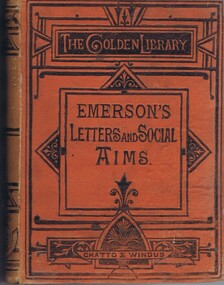
Book, Ralph Waldo Emerson, Letters and social aims, by Ralph Waldo Emerson, 1877_
... Symons, Fitzroy, Melbourne, Victoria on fly leaf. Bookseller's label "A. B. Scott, second-hand bookseller, Swanston St Melbourne"...Symons, Fitzroy, Melbourne, Victoria on fly leaf. Bookseller's label "A. B. Scott, second-hand bookseller, Swanston St Melbourne" Hardback, 267 p. + 36 p. advertisements Letters and social aims, by Ralph Waldo Emerson Book Book Ralph Waldo Emerson Chatto and Windus ...Ralph Waldo Emerson (1803-1882) was an American writer. This is a compilation of his works published a few years before his death.Hardback, 267 p. + 36 p. advertisementsE. K. W. Symons, Fitzroy, Melbourne, Victoria on fly leaf. Bookseller's label "A. B. Scott, second-hand bookseller, Swanston St Melbourne"essays, ralph waldo emerson -
 Glenelg Shire Council Cultural Collection
Book, The Methodist Hymn Book with Tunes. Australian Edition, 1904
... Bookseller, Portland, inside front cover. Front: Charles French Book Seller Portland (sticker, fly leaf verso) Navy blue cloth-covered board binding. Two horizontal panels of embossed decoration at top and bottom of covers and spine. Embossed title on front cover. Title pages missing. The Methodist Hymn Book with Tunes. Australian Edition Book Book Printed in Melbourne ...This edition prepared for and copyrighted in the Australian Commonwealth and New Zealand. The hymn book was located in an antique shop 'Granny's Chattels' by Alan G. Cleland of Portland while on holidays in Echuca, Vic. After purchase he discovered that it was believed to have been originally purchased in Portland - see label for Charles French, Bookseller, Portland, inside front cover.Navy blue cloth-covered board binding. Two horizontal panels of embossed decoration at top and bottom of covers and spine. Embossed title on front cover. Title pages missing.Front: Charles French Book Seller Portland (sticker, fly leaf verso) -
Glenelg Shire Council Cultural Collection
Book, Robertson & Mullens Ltd. Melbourne 1941, Seashore Swamp and Bush: Exploring Nature's Mysteries, 1941
... Bookseller, Authorised Newsagent and Stationery, Box 28, Phone 48 Bentinck and Julia Streets Portland Label on rear cover and stamps within leaves. Light green cloth-covered cardboard covers and spine. Black text and graphics. Part of dust jacket fixed to front cover and inner front cover. Seashore Swamp and Bush: Exploring Nature's Mysteries Book Book Jackson, Ada M.S.C. Robertson & Mullens Ltd. Melbourne ...Ex - Jenkin's Lending LibraryLight green cloth-covered cardboard covers and spine. Black text and graphics. Part of dust jacket fixed to front cover and inner front cover.Front: Label on rear cover. 'Jenkin's Lending Library. Bookseller, Authorised Newsagent and Stationery, Box 28, Phone 48 Bentinck and Julia Streets Portland Label on rear cover and stamps within leaves. -
 Glenelg Shire Council Cultural Collection
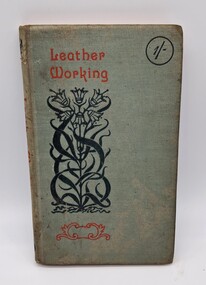
Book, Edited by Paul N. Hasluck, Leather Working, 1904
... Sticker in the front - Technical Booksellers - J.E. Bishop & Co. Publishers Sydney and Melbourne....Sticker in the front - Technical Booksellers - J.E. Bishop & Co. Publishers Sydney and Melbourne. Leather Working Book Edited by Paul N. ...Book, hardcover, green, red print on cover and spine, dark blue and red decoration on front cover, Cassell & Company Limited logo on back cover, dark blue. 160 pages plus advertisements for other 'Work' handbooks and industry magazines. Sticker in the front - Technical Booksellers - J.E. Bishop & Co. Publishers Sydney and Melbourne.non-fictionportland, saddlery, leatherwork, business, glenelg shire cultural collection -
Phillip Island and District Historical Society Inc.
Book, DICKENS, Charles, American notes
... Spencer Pty Ltd., New secondhand, and rare booksellers, 86 Bourke St Melbourne (The 'Hill of Content') Aust. ...Spencer Pty Ltd., New secondhand, and rare booksellers, 86 Bourke St Melbourne (The 'Hill of Content') Aust. ...Book from the Cleeland Bequest - a comprehensive collection of books relating to the History of England, Civil & Military, Religious, Intellectual & Social. Stamped ' Cowes Free Public Library'. Labelled 'Cowes Free Public Library', 'Phillip Island Historical Society, Cleeland Bequest', A.H. Spencer Pty Ltd., New secondhand, and rare booksellers, 86 Bourke St Melbourne (The 'Hill of Content') Aust. Tel.: Cent. 8856.cleeland bequest -
Phillip Island and District Historical Society Inc.
Book, PEPYS, Samuel, Diary of Samuel Pepys, 1906
... Ltd., new, secondhand and rare booksellers, 86 Bourke St., Melbourne (The 'Hill of Content') Aust. ...Ltd., new, secondhand and rare booksellers, 86 Bourke St., Melbourne (The 'Hill of Content') Aust. ...Stamped ' Cowes Public Library'. Labelled 'Phillip Island Historical Society, Cleeland Bequest', 'A.H. Spencer Pty. Ltd., new, secondhand and rare booksellers, 86 Bourke St., Melbourne (The 'Hill of Content') Aust. Tel: JM 1856. -
 Orbost & District Historical Society
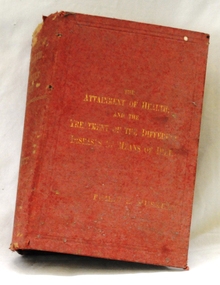
book, The Attainment of Health and the Treatment of the Different Diseases by Means of Diet, 1908
... Author, Philip Edward Muskett (1857-1909), medical practitioner and health reformer, was born on 5 February 1857 at Collingwood, Melbourne, son of English-born, Particular Baptist parents Charles Muskett, bookseller, and his wife Phoebe, née Charlwood. ...Author, Philip Edward Muskett (1857-1909), medical practitioner and health reformer, was born on 5 February 1857 at Collingwood, Melbourne, son of English-born, Particular Baptist parents Charles Muskett, bookseller, and his wife Phoebe, née Charlwood. ...Author, Philip Edward Muskett (1857-1909), medical practitioner and health reformer, was born on 5 February 1857 at Collingwood, Melbourne, son of English-born, Particular Baptist parents Charles Muskett, bookseller, and his wife Phoebe, née Charlwood. His work focused on infant health and welfare. His writing advocated radical changes in the diet of Australians. His last work, The Attainment of Health (1909), was a detailed guide to foods to eat or avoid for specific complaints and diseases. This book was owned by Helena Warren of Newmerella, Orbost. Mrs Warren was a well known photographer and local press correspondent.This book, written by Philip Muskett who was he was well known for his writing on medical subjects, was an influential guide to family health in the early 20th century.A thick red covered book of 678 pp. It contains many advertisements for food suitable for treating diseases and is a detailed guide to foods to eat or avoid for specific complaints and diseases.muskett-philip health diet book-attainment-of-health-and treatment-by-diet -
 Flagstaff Hill Maritime Museum and Village
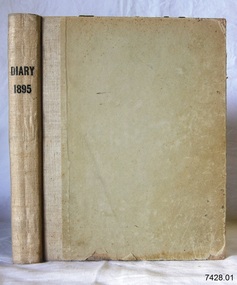
Book - Diary, Sands & McDougall Limited, Diary 1895, ca. 1895
... Melbourne stationers, Sands & Mc Dougall Limited. The business was established as a printing partnership in 1851 by John Sands and his brother-in-law Thomas Kenny, and in 1860 Dugald McDougal joined them. The firm was re-named Sands & McDougall a year later after Kenny retired. The company was renowned as stationers, booksellers...Melbourne stationers, Sands & Mc Dougall Limited. The business was established as a printing partnership in 1851 by John Sands and his brother-in-law Thomas Kenny, and in 1860 Dugald McDougal joined them. The firm was re-named Sands & McDougall a year later after Kenny retired. The company was renowned as stationers, booksellers ...This Bank Manager’s Diary is one of a set of five Bank of Australasia, Warrnambool branch, diaries that span the years 1895 to 1899. A Butt was Manager from 1895-1904 and J R McCleary was Accountant and Acting Manager for 12 months, until 1900. Either or both of these men could have filled in the bank’s Diary. This diary cost five shillings (5//-). Each of the diaries in the set was manufactured by the famous Melbourne stationers, Sands & Mc Dougall Limited. The business was established as a printing partnership in 1851 by John Sands and his brother-in-law Thomas Kenny, and in 1860 Dugald McDougal joined them. The firm was re-named Sands & McDougall a year later after Kenny retired. The company was renowned as stationers, booksellers, printers and account book manufacturers and by the 1870s was one of the largest businesses in Australia. The Bank of Australasia was incorporated by Royal Charter of England in March 1834. It had its Australian beginning on 14th December 1835, opening in Sydney. The Acting Superintendent of the bank at that time was David Charters McArthur. He was Superintendent from 1867 to 1876. The Melbourne branch opened on 28th August 1838 in a two-roomed brick cottage on the north side of Little Collins Street. By 1879 the bank had been upgraded to a magnificent two-storey building on the corners of Collins and Queens Streets, with the entry on Collins Street In 1951 the Bank of Australasia amalgamated with the Union Bank to form the Australia and New Zealand Bank, now known as the ANZ. Then in 1970, the ANZ merged with both the ES&A and the London Bank of Australia to form the ANZ Banking Group Limited. The ANZ Banking Group Ltd kindly donated a variety of historic items from the Bank of Australasia. BANK of AUSTRALASIA, WARRNAMBOOL – In 1854 Warrnambool had two banks, the Union Bank and the Bank of Australasia. Later, completely different bank businesses opened; in 1867 the National Bank of Australasia, then in 1875 the Colonial Bank of Australasia. The original Warrnambool branch of the Bank of Australasia was established in July 1854, and operated from a leased cottage on Merri Street, close to Liebig Street. The bank next bought a stone building previously erected by drapers Cramond & Dickson on the corner of Timor and Gibson Streets. Samuel Hannaford was a teller and then Manager at the Warrnambool branch from 1855 to 1856 and the Warrnambool Council chose that bank for its dealings during 1856-57. In 1859 Roberts & Co. was awarded the contract to build the new Bank of Australasia branch for the sum of £3,000; the firm built the Warrnambool Post Office in 1856 and purchased land in Timor Street in 1858. The land was on a sand hill on the northeast corner of Timor and Kepler Streets and had been bought in 1855 by investor James Cust. The new building opened on May 21, 1860. The bank continued to operate there until 1951 when it merged with the Union Bank to form the ANZ Bank, which continued operating from its Liebig Street building. Warrnambool City Council purchased the former Bank of Australasia building in 1971 and renovated it, then on 3rd December 1973 it was officially opened as the Art Gallery by Cr. Harold Stephenson and Gallery Director John Welsh. The Gallery transferred to the purpose-built building in Liebig Street in 1986 and the old bank building is now the Gallery club. Staff at the Bank of Australasia in Warrnambool included the following men but others were also involved: Samuel Hannaford, Teller then Manager from 1855-1856; Hawkins, Manager in 1856, W H Palmer, Manager from January 1857 until November 1869 when the Teller Basil Spence was promoted to Manager; H B Chomley, Manager from April 1873 and still there in 1886; A Butt, Manager in 1895-1904; J R McCleary Accountant and Acting Manager for 12 months, until 1900; A Kirk, Manager 1904; J Moore, staff until his transfer to Bendigo in December 1908; J S Bath was Manager until 1915; C C Cox, Manager until April 1923; Richard C Stanley, Manager 1923 to April 1928. The set of diaries has significance through its association with the Bank of Australasia. The early Australian bank was established in 1834 by Royal Charter and opened in Sydney, Australia, in Sydney in 1835. The bank had many Australian offices in November 1877, particularly on the east and south coasts. Victoria had 45 per cent of all Offices. The set of diaries is locally significant for its association with the Warrnambool Bank of Australasia, which was established in 1854. It was Warrnambool Council’s first bank. The bank continued to operate until the organisation's merger in 1951 when it became the ANZ Bank Group today. The Bank was an integral part of the growth of local commerce and the community.Bank Manager's Diary, 1895. One of a set of five diaries of the Bank of Australasia, Warrnambool, from 1895 to 1899. The front endpper has a pencil inscription and printed label attached. Manufactured by Sands McDougall Limited, Melbourne.Printed on spine "DIARY / 1895" Printed on label in blue ink "NO. __ Date __ 18 __ / Sands & McDougall Limited / Manufacturing Stationers / 365 Collins Street / Melbourne" "IN RE-ORDERING THIS BOOK IT IS NECESSARY THE NO. & DATE ONLY" In pencil "R- - - - - 5/-" [Five shillings]flagstaff hill, warrnambool, shipwrecked coast, flagstaff hill maritime museum, maritime museum, shipwreck coast, flagstaff hill maritime village, great ocean road, bank of australasia, boa, union bank, australia & new zealand bank, anz bank, commerce, david charters mcarthur, d c mcarthur, bank of australasia warrnambool, sands & mcdougall, diary, set of 5 diaries 1895-1899, 1895, samuel hannaford, w h palmer, basil spence, h b chomley, a butt, j r mccleary, a kirk, j moore, j s bath, c c cox, richard c stanley -
 Flagstaff Hill Maritime Museum and Village
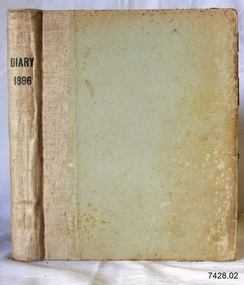
Book - Diary, Sands & McDougall Limited, Diary 1896, 1896
... Melbourne stationers, Sands & Mc Dougall Limited. The business was established as a printing partnership in 1851 by John Sands and his brother-in-law Thomas Kenny, and in 1860 Dugald McDougal joined them. The firm was re-named Sands & McDougall a year later after Kenny retired. The company was renowned as stationers, booksellers...Melbourne stationers, Sands & Mc Dougall Limited. The business was established as a printing partnership in 1851 by John Sands and his brother-in-law Thomas Kenny, and in 1860 Dugald McDougal joined them. The firm was re-named Sands & McDougall a year later after Kenny retired. The company was renowned as stationers, booksellers ...This Bank Manager’s Diary is one of a set of five Bank of Australasia, Warrnambool branch, diaries that span the years 1895 to 1899. A Butt was Manager from 1895-1904 and J R McCleary was Accountant and Acting Manager for 12 months, until 1900. Either or both of these men could have filled in the bank’s Diary. Each of the diaries in the set was manufactured by the famous Melbourne stationers, Sands & Mc Dougall Limited. The business was established as a printing partnership in 1851 by John Sands and his brother-in-law Thomas Kenny, and in 1860 Dugald McDougal joined them. The firm was re-named Sands & McDougall a year later after Kenny retired. The company was renowned as stationers, booksellers, printers and account book manufacturers and by the 1870s was one of the largest businesses in Australia. The Bank of Australasia was incorporated by Royal Charter of England in March 1834. It had its Australian beginning on 14th December 1835, opening in Sydney. The Acting Superintendent of the bank at that time was David Charters McArthur. He was Superintendent from 1867 to 1876. The Melbourne branch opened on 28th August 1838 in a two-roomed brick cottage on the north side of Little Collins Street. By 1879 the bank had been upgraded to a magnificent two-storey building on the corners of Collins and Queens Streets, with the entry on Collins Street In 1951 the Bank of Australasia amalgamated with the Union Bank to form the Australia and New Zealand Bank, now known as the ANZ. Then in 1970, the ANZ merged with both the ES&A and the London Bank of Australia to form the ANZ Banking Group Limited. The ANZ Banking Group Ltd kindly donated a variety of historic items from the Bank of Australasia. BANK of AUSTRALASIA, WARRNAMBOOL – In 1854 Warrnambool had two banks, the Union Bank and the Bank of Australasia. Later, completely different bank businesses opened; in 1867 the National Bank of Australasia, then in 1875 the Colonial Bank of Australasia. The original Warrnambool branch of the Bank of Australasia was established in July 1854, and operated from a leased cottage on Merri Street, close to Liebig Street. The bank next bought a stone building previously erected by drapers Cramond & Dickson on the corner of Timor and Gibson Streets. Samuel Hannaford was a teller and then Manager at the Warrnambool branch from 1855 to 1856 and the Warrnambool Council chose that bank for its dealings during 1856-57. In 1859 Roberts & Co. was awarded the contract to build the new Bank of Australasia branch for the sum of £3,000; the firm built the Warrnambool Post Office in 1856 and purchased land in Timor Street in 1858. The land was on a sand hill on the northeast corner of Timor and Kepler Streets and had been bought in 1855 by investor James Cust. The new building opened on May 21, 1860. The bank continued to operate there until 1951 when it merged with the Union Bank to form the ANZ Bank, which continued operating from its Liebig Street building. Warrnambool City Council purchased the former Bank of Australasia building in 1971 and renovated it, then on 3rd December 1973 it was officially opened as the Art Gallery by Cr. Harold Stephenson and Gallery Director John Welsh. The Gallery transferred to the purpose-built building in Liebig Street in 1986 and the old bank building is now the Gallery club. Staff at the Bank of Australasia in Warrnambool included the following men but others were also involved: Samuel Hannaford, Teller then Manager from 1855-1856; Hawkins, Manager in 1856, W H Palmer, Manager from January 1857 until November 1869 when the Teller Basil Spence was promoted to Manager; H B Chomley, Manager from April 1873 and still there in 1886; A Butt, Manager in 1895-1904; J R McCleary Accountant and Acting Manager for 12 months, until 1900; A Kirk, Manager 1904; J Moore, staff until his transfer to Bendigo in December 1908; J S Bath was Manager until 1915; C C Cox, Manager until April 1923; Richard C Stanley, Manager 1923 to April 1928. The set of diaries has significance through its association with the Bank of Australasia. The early Australian bank was established in 1834 by Royal Charter and opened in Sydney, Australia, in Sydney in 1835. The bank had many Australian offices in November 1877, particularly on the east and south coasts. Victoria had 45 per cent of all Offices. The set of diaries is locally significant for its association with the Warrnambool Bank of Australasia, which was established in 1854. It was Warrnambool Council’s first bank. The bank continued to operate until the organisation's merger in 1951 when it became the ANZ Bank Group today. The Bank was an integral part of the growth of local commerce and the community.Bank Manager's Diary, 1896. One of a set of five diaries of the Bank of Australasia, Warrnambool, from 1885 to 1899. Printed label attached on front endpaper. Manufactured by Sands McDougall Limited, Melbourne.Printed on spine "DIARY / 1896" Printed on label in blue ink "NO a 41969 Date 3 7 1895/ Sands & McDougall Limited / Manufacturing Stationers / 365 Collins Street / Melbourne" "IN RE-ORDERING THIS BOOK IT IS NECESSARY THE NO. & DATE ONLY"flagstaff hill, warrnambool, shipwrecked coast, flagstaff hill maritime museum, maritime museum, shipwreck coast, flagstaff hill maritime village, great ocean road, bank of australasia, boa, union bank, australia & new zealand bank, anz bank, commerce, david charters mcarthur, d c mcarthur, bank of australasia warrnambool, sands & mcdougall, diary, set of 5 diaries 1895-1899, 1896, samuel hannaford, w h palmer, basil spence, h b chomley, a butt, j r mccleary, a kirk, j moore, j s bath, c c cox, richard c stanley -
 Flagstaff Hill Maritime Museum and Village
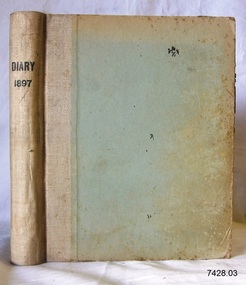
Book - Diary, Sands & McDougall Limited, Diary 1897, 1897
... Melbourne stationers, Sands & Mc Dougall Limited. The business was established as a printing partnership in 1851 by John Sands and his brother-in-law Thomas Kenny, and in 1860 Dugald McDougal joined them. The firm was re-named Sands & McDougall a year later after Kenny retired. The company was renowned as stationers, booksellers...Melbourne stationers, Sands & Mc Dougall Limited. The business was established as a printing partnership in 1851 by John Sands and his brother-in-law Thomas Kenny, and in 1860 Dugald McDougal joined them. The firm was re-named Sands & McDougall a year later after Kenny retired. The company was renowned as stationers, booksellers ...This Bank Manager’s Diary is one of a set of five Bank of Australasia, Warrnambool branch, diaries that span the years 1895 to 1899. A Butt was Manager from 1895-1904 and J R McCleary was Accountant and Acting Manager for 12 months, until 1900. Either or both of these men could have filled in the bank’s Diary. Each of the diaries in the set was manufactured by the famous Melbourne stationers, Sands & Mc Dougall Limited. The business was established as a printing partnership in 1851 by John Sands and his brother-in-law Thomas Kenny, and in 1860 Dugald McDougal joined them. The firm was re-named Sands & McDougall a year later after Kenny retired. The company was renowned as stationers, booksellers, printers and account book manufacturers and by the 1870s was one of the largest businesses in Australia. The Bank of Australasia was incorporated by Royal Charter of England in March 1834. It had its Australian beginning on 14th December 1835, opening in Sydney. The Acting Superintendent of the bank at that time was David Charters McArthur. He was Superintendent from 1867 to 1876. The Melbourne branch opened on 28th August 1838 in a two-roomed brick cottage on the north side of Little Collins Street. By 1879 the bank had been upgraded to a magnificent two-storey building on the corners of Collins and Queens Streets, with the entry on Collins Street In 1951 the Bank of Australasia amalgamated with the Union Bank to form the Australia and New Zealand Bank, now known as the ANZ. Then in 1970, the ANZ merged with both the ES&A and the London Bank of Australia to form the ANZ Banking Group Limited. The ANZ Banking Group Ltd kindly donated a variety of historic items from the Bank of Australasia. BANK of AUSTRALASIA, WARRNAMBOOL – In 1854 Warrnambool had two banks, the Union Bank and the Bank of Australasia. Later, completely different bank businesses opened; in 1867 the National Bank of Australasia, then in 1875 the Colonial Bank of Australasia. The original Warrnambool branch of the Bank of Australasia was established in July 1854, and operated from a leased cottage on Merri Street, close to Liebig Street. The bank next bought a stone building previously erected by drapers Cramond & Dickson on the corner of Timor and Gibson Streets. Samuel Hannaford was a teller and then Manager at the Warrnambool branch from 1855 to 1856 and the Warrnambool Council chose that bank for its dealings during 1856-57. In 1859 Roberts & Co. was awarded the contract to build the new Bank of Australasia branch for the sum of £3,000; the firm built the Warrnambool Post Office in 1856 and purchased land in Timor Street in 1858. The land was on a sand hill on the northeast corner of Timor and Kepler Streets and had been bought in 1855 by investor James Cust. The new building opened on May 21, 1860. The bank continued to operate there until 1951 when it merged with the Union Bank to form the ANZ Bank, which continued operating from its Liebig Street building. Warrnambool City Council purchased the former Bank of Australasia building in 1971 and renovated it, then on 3rd December 1973 it was officially opened as the Art Gallery by Cr. Harold Stephenson and Gallery Director John Welsh. The Gallery transferred to the purpose-built building in Liebig Street in 1986 and the old bank building is now the Gallery club. Staff at the Bank of Australasia in Warrnambool included the following men but others were also involved: Samuel Hannaford, Teller then Manager from 1855-1856; Hawkins, Manager in 1856, W H Palmer, Manager from January 1857 until November 1869 when the Teller Basil Spence was promoted to Manager; H B Chomley, Manager from April 1873 and still there in 1886; A Butt, Manager in 1895-1904; J R McCleary Accountant and Acting Manager for 12 months, until 1900; A Kirk, Manager 1904; J Moore, staff until his transfer to Bendigo in December 1908; J S Bath was Manager until 1915; C C Cox, Manager until April 1923; Richard C Stanley, Manager 1923 to April 1928. The set of diaries has significance through its association with the Bank of Australasia. The early Australian bank was established in 1834 by Royal Charter and opened in Sydney, Australia, in Sydney in 1835. The bank had many Australian offices in November 1877, particularly on the east and south coasts. Victoria had 45 per cent of all Offices. The set of diaries is locally significant for its association with the Warrnambool Bank of Australasia, which was established in 1854. It was Warrnambool Council’s first bank. The bank continued to operate until the organisation's merger in 1951 when it became the ANZ Bank Group today. The Bank was an integral part of the growth of local commerce and the community.Bank Manager's Diary, 1897. One of a set of five diaries of the Bank of Australasia, Warrnambool, from 1885 to 1899. Printed label attached on front endpaper. Manufactured by Sands McDougall Limited, Melbourne.Printed on spine "DIARY / 1897" Printed on label in blue ink "NO. __ Date __ 18 __ / Sands & McDougall Limited / Manufacturing Stationers / 365 Collins Street / Melbourne" "IN RE-ORDERING THIS BOOK IT IS NECESSARY THE NO. & DATE ONLY"flagstaff hill, warrnambool, shipwrecked coast, flagstaff hill maritime museum, maritime museum, shipwreck coast, flagstaff hill maritime village, great ocean road, bank of australasia, boa, union bank, australia & new zealand bank, anz bank, commerce, david charters mcarthur, d c mcarthur, bank of australasia warrnambool, sands & mcdougall, diary, set of 5 diaries 1895-1899, 1897, samuel hannaford, w h palmer, basil spence, h b chomley, a butt, j r mccleary, a kirk, j moore, j s bath, c c cox, richard c stanley -
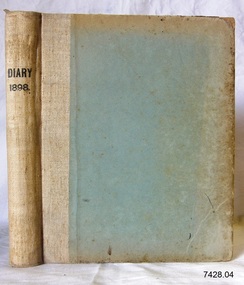 Flagstaff Hill Maritime Museum and Village
Book - Diary, Sands & McDougall Limited, Diary 1898, 1897
... Melbourne stationers, Sands & Mc Dougall Limited. The business was established as a printing partnership in 1851 by John Sands and his brother-in-law Thomas Kenny, and in 1860 Dugald McDougal joined them. The firm was re-named Sands & McDougall a year later after Kenny retired. The company was renowned as stationers, booksellers...Melbourne stationers, Sands & Mc Dougall Limited. The business was established as a printing partnership in 1851 by John Sands and his brother-in-law Thomas Kenny, and in 1860 Dugald McDougal joined them. The firm was re-named Sands & McDougall a year later after Kenny retired. The company was renowned as stationers, booksellers ...This Bank Manager’s Diary is one of a set of five Bank of Australasia, Warrnambool branch, diaries that span the years 1895 to 1899. A Butt was Manager from 1895-1904 and J R McCleary was Accountant and Acting Manager for 12 months, until 1900. Either or both of these men could have filled in the bank’s Diary. Each of the diaries in the set was manufactured by the famous Melbourne stationers, Sands & Mc Dougall Limited. The business was established as a printing partnership in 1851 by John Sands and his brother-in-law Thomas Kenny, and in 1860 Dugald McDougal joined them. The firm was re-named Sands & McDougall a year later after Kenny retired. The company was renowned as stationers, booksellers, printers and account book manufacturers and by the 1870s was one of the largest businesses in Australia. The Bank of Australasia was incorporated by Royal Charter of England in March 1834. It had its Australian beginning on 14th December 1835, opening in Sydney. The Acting Superintendent of the bank at that time was David Charters McArthur. He was Superintendent from 1867 to 1876. The Melbourne branch opened on 28th August 1838 in a two-roomed brick cottage on the north side of Little Collins Street. By 1879 the bank had been upgraded to a magnificent two-storey building on the corners of Collins and Queens Streets, with the entry on Collins Street In 1951 the Bank of Australasia amalgamated with the Union Bank to form the Australia and New Zealand Bank, now known as the ANZ. Then in 1970, the ANZ merged with both the ES&A and the London Bank of Australia to form the ANZ Banking Group Limited. The ANZ Banking Group Ltd kindly donated a variety of historic items from the Bank of Australasia. BANK of AUSTRALASIA, WARRNAMBOOL – In 1854 Warrnambool had two banks, the Union Bank and the Bank of Australasia. Later, completely different bank businesses opened; in 1867 the National Bank of Australasia, then in 1875 the Colonial Bank of Australasia. The original Warrnambool branch of the Bank of Australasia was established in July 1854, and operated from a leased cottage on Merri Street, close to Liebig Street. The bank next bought a stone building previously erected by drapers Cramond & Dickson on the corner of Timor and Gibson Streets. Samuel Hannaford was a teller and then Manager at the Warrnambool branch from 1855 to 1856 and the Warrnambool Council chose that bank for its dealings during 1856-57. In 1859 Roberts & Co. was awarded the contract to build the new Bank of Australasia branch for the sum of £3,000; the firm built the Warrnambool Post Office in 1856 and purchased land in Timor Street in 1858. The land was on a sand hill on the northeast corner of Timor and Kepler Streets and had been bought in 1855 by investor James Cust. The new building opened on May 21, 1860. The bank continued to operate there until 1951 when it merged with the Union Bank to form the ANZ Bank, which continued operating from its Liebig Street building. Warrnambool City Council purchased the former Bank of Australasia building in 1971 and renovated it, then on 3rd December 1973 it was officially opened as the Art Gallery by Cr. Harold Stephenson and Gallery Director John Welsh. The Gallery transferred to the purpose-built building in Liebig Street in 1986 and the old bank building is now the Gallery club. Staff at the Bank of Australasia in Warrnambool included the following men but others were also involved: Samuel Hannaford, Teller then Manager from 1855-1856; Hawkins, Manager in 1856, W H Palmer, Manager from January 1857 until November 1869 when the Teller Basil Spence was promoted to Manager; H B Chomley, Manager from April 1873 and still there in 1886; A Butt, Manager in 1895-1904; J R McCleary Accountant and Acting Manager for 12 months, until 1900; A Kirk, Manager 1904; J Moore, staff until his transfer to Bendigo in December 1908; J S Bath was Manager until 1915; C C Cox, Manager until April 1923; Richard C Stanley, Manager 1923 to April 1928. The set of diaries has significance through its association with the Bank of Australasia. The early Australian bank was established in 1834 by Royal Charter and opened in Sydney, Australia, in Sydney in 1835. The bank had many Australian offices in November 1877, particularly on the east and south coasts. Victoria had 45 per cent of all Offices. The set of diaries is locally significant for its association with the Warrnambool Bank of Australasia, which was established in 1854. It was Warrnambool Council’s first bank. The bank continued to operate until the organisation's merger in 1951 when it became the ANZ Bank Group today. The Bank was an integral part of the growth of local commerce and the community.Bank Manager's Diary, 1898. One of a set of five diaries of the Bank of Australasia, Warrnambool, from 1885 to 1899. Handwritten inscription on a printed label attached on front endpaper. Manufactured by Sands McDougall Limited, Melbourne.Printed on spine "DIARY / 1898" Printed on label in blue ink "NO.a 08005_ Date 27 5 1887 / Sands & McDougall Limited / Manufacturing Stationers / 365 Collins Street / Melbourne" "IN RE-ORDERING THIS BOOK IT IS NECESSARY THE NO. & DATE ONLY"flagstaff hill, warrnambool, shipwrecked coast, flagstaff hill maritime museum, maritime museum, shipwreck coast, flagstaff hill maritime village, great ocean road, bank of australasia, boa, union bank, australia & new zealand bank, anz bank, commerce, david charters mcarthur, d c mcarthur, bank of australasia warrnambool, sands & mcdougall, diary, set of 5 diaries 1895-1899, 1898, samuel hannaford, w h palmer, basil spence, h b chomley, a butt, j r mccleary, a kirk, j moore, j s bath, c c cox, richard c stanley -
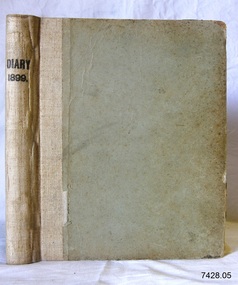 Flagstaff Hill Maritime Museum and Village
Book - Diary, Sands & McDougall Limited, Diary 1899, 1899
... Melbourne stationers, Sands & Mc Dougall Limited. The business was established as a printing partnership in 1851 by John Sands and his brother-in-law Thomas Kenny, and in 1860 Dugald McDougal joined them. The firm was re-named Sands & McDougall a year later after Kenny retired. The company was renowned as stationers, booksellers...Melbourne stationers, Sands & Mc Dougall Limited. The business was established as a printing partnership in 1851 by John Sands and his brother-in-law Thomas Kenny, and in 1860 Dugald McDougal joined them. The firm was re-named Sands & McDougall a year later after Kenny retired. The company was renowned as stationers, booksellers ...This Bank Manager’s Diary is one of a set of five Bank of Australasia, Warrnambool branch, diaries that span the years 1895 to 1899. A Butt was Manager from 1895-1904 and J R McCleary was Accountant and Acting Manager for 12 months, until 1900. Either or both of these men could have filled in the bank’s Diary. This diary of 1899 has handwritten names on the front endpage, with figures beside each name. Perhaps people with loans and repayments. Each of the diaries in the set was manufactured by the famous Melbourne stationers, Sands & Mc Dougall Limited. The business was established as a printing partnership in 1851 by John Sands and his brother-in-law Thomas Kenny, and in 1860 Dugald McDougal joined them. The firm was re-named Sands & McDougall a year later after Kenny retired. The company was renowned as stationers, booksellers, printers and account book manufacturers and by the 1870s was one of the largest businesses in Australia. The Bank of Australasia was incorporated by Royal Charter of England in March 1834. It had its Australian beginning on 14th December 1835, opening in Sydney. The Acting Superintendent of the bank at that time was David Charters McArthur. He was Superintendent from 1867 to 1876. The Melbourne branch opened on 28th August 1838 in a two-roomed brick cottage on the north side of Little Collins Street. By 1879 the bank had been upgraded to a magnificent two-storey building on the corners of Collins and Queens Streets, with the entry on Collins Street In 1951 the Bank of Australasia amalgamated with the Union Bank to form the Australia and New Zealand Bank, now known as the ANZ. Then in 1970, the ANZ merged with both the ES&A and the London Bank of Australia to form the ANZ Banking Group Limited. The ANZ Banking Group Ltd kindly donated a variety of historic items from the Bank of Australasia. BANK of AUSTRALASIA, WARRNAMBOOL – In 1854 Warrnambool had two banks, the Union Bank and the Bank of Australasia. Later, completely different bank businesses opened; in 1867 the National Bank of Australasia, then in 1875 the Colonial Bank of Australasia. The original Warrnambool branch of the Bank of Australasia was established in July 1854, and operated from a leased cottage on Merri Street, close to Liebig Street. The bank next bought a stone building previously erected by drapers Cramond & Dickson on the corner of Timor and Gibson Streets. Samuel Hannaford was a teller and then Manager at the Warrnambool branch from 1855 to 1856 and the Warrnambool Council chose that bank for its dealings during 1856-57. In 1859 Roberts & Co. was awarded the contract to build the new Bank of Australasia branch for the sum of £3,000; the firm built the Warrnambool Post Office in 1856 and purchased land in Timor Street in 1858. The land was on a sand hill on the northeast corner of Timor and Kepler Streets and had been bought in 1855 by investor James Cust. The new building opened on May 21, 1860. The bank continued to operate there until 1951 when it merged with the Union Bank to form the ANZ Bank, which continued operating from its Liebig Street building. Warrnambool City Council purchased the former Bank of Australasia building in 1971 and renovated it, then on 3rd December 1973 it was officially opened as the Art Gallery by Cr. Harold Stephenson and Gallery Director John Welsh. The Gallery transferred to the purpose-built building in Liebig Street in 1986 and the old bank building is now the Gallery club. Staff at the Bank of Australasia in Warrnambool included the following men but others were also involved: Samuel Hannaford, Teller then Manager from 1855-1856; Hawkins, Manager in 1856, W H Palmer, Manager from January 1857 until November 1869 when the Teller Basil Spence was promoted to Manager; H B Chomley, Manager from April 1873 and still there in 1886; A Butt, Manager in 1895-1904; J R McCleary Accountant and Acting Manager for 12 months, until 1900; A Kirk, Manager 1904; J Moore, staff until his transfer to Bendigo in December 1908; J S Bath was Manager until 1915; C C Cox, Manager until April 1923; Richard C Stanley, Manager 1923 to April 1928. The set of diaries has significance through its association with the Bank of Australasia. The early Australian bank was established in 1834 by Royal Charter and opened in Sydney, Australia, in Sydney in 1835. The bank had many Australian offices in November 1877, particularly on the east and south coasts. Victoria had 45 per cent of all Offices. The set of diaries is locally significant for its association with the Warrnambool Bank of Australasia, which was established in 1854. It was Warrnambool Council’s first bank. The bank continued to operate until the organisation's merger in 1951 when it became the ANZ Bank Group today. The Bank was an integral part of the growth of local commerce and the community.Bank Manager's Diary, 1899. One of a set of five diaries of the Bank of Australasia, Warrnambool, from 1885 to 1899. Handwritten inscriptions are on the front endpage. The right edges of the pages are alphabetically indexed. Manufactured by Sands McDougall Limited, Melbourne.Printed on spine "DIARY / 1899" Handwritten inscriptions on front endpaper include names with figures beside them e.g. - "Allansford Bacon Curing Co. 23.26, 89, 133.323 / Anderson John 27, / Aitkin John 32, / Archie a.S. 55 / Angus David 65, 131 /Allen Bridget 100, 285 / Aitkin & Darling 174 / Angus Lorris 202 / Abraham W. S. 204, 246 / Anderson Elizabeth 264 / Allen W.B. 348." flagstaff hill, warrnambool, shipwrecked coast, flagstaff hill maritime museum, maritime museum, shipwreck coast, flagstaff hill maritime village, great ocean road, bank of australasia, boa, union bank, australia & new zealand bank, anz bank, commerce, david charters mcarthur, d c mcarthur, bank of australasia warrnambool, sands & mcdougall, diary, set of 5 diaries 1895-1899, 1899, samuel hannaford, w h palmer, basil spence, h b chomley, a butt, j r mccleary, a kirk, j moore, j s bath, c c cox, richard c stanley, allansford bacon curing co. -
 Mission to Seafarers Victoria
Letter - Petition, October November 1897
... My former appeals through your columns for leading matter have always been liberally responded to, and I trust that should any of our booksellers have any surplus stock of periodicals, religious and secular, illustrated or otherwise, at the end of the year, they will kindly remember the Victorian Seamen's Mission and the sailors. Private individuals also who may have stacks of literature by them, if they would kindly send some to the Seamen's Institute, Beach street, Port Melbourne, would cause the cheering of many a dark and lonely hour in the seamen's life. ...My former appeals through your columns for leading matter have always been liberally responded to, and I trust that should any of our booksellers have any surplus stock of periodicals, religious and secular, illustrated or otherwise, at the end of the year, they will kindly remember the Victorian Seamen's Mission and the sailors. Private individuals also who may have stacks of literature by them, if they would kindly send some to the Seamen's Institute, Beach street, Port Melbourne, would cause the cheering of many a dark and lonely hour in the seamen's life. ...This document reveals the way in which Mission to Seafarers grew in response to demand. With increased shipping to Australia for all purposes, the need for the then existing Mission to grow to be conveniently located and to accommodate seafarers became increasingly evident. This document also shows the formal nature of documents and petitions in the 1890s and documents the names of twenty-two contemporaneous ships and their respective captains. The Anna, Dharwar and Mermerus arrived in port at the end of July 1897. The Carmanina arrived on the 21 October 1897. The Loch Katrine, at the end of the list, arrived on 5 November 1897. The letter was published in the Argus, 22 December 1897: "APPEAL FOR SEAMEN. TO THE EDITOR OF THE ARGUS. Sir, I beg that in the interests of the Victorian Seamen's Mission you will be kind enough to publish the appended testimony of the ship masters who for many years have been trading to this port, and therefore have had many opportunities of judging the effects of his work. The mission has much need of monetary assistance, and, should any of your numenous leaders deem it worthy of support, the committee would feel most grateful for any help that may be given in this direction. It has been the pleasure of the committee as far as possible to supply the crews of all outward bound steamers and sailing vessels with literature for their use on the voyage. My former appeals through your columns for leading matter have always been liberally responded to, and I trust that should any of our booksellers have any surplus stock of periodicals, religious and secular, illustrated or otherwise, at the end of the year, they will kindly remember the Victorian Seamen's Mission and the sailors. Private individuals also who may have stacks of literature by them, if they would kindly send some to the Seamen's Institute, Beach street, Port Melbourne, would cause the cheering of many a dark and lonely hour in the seamen's life. From 900 to 1.200 parcels have hitherto been given to the sailors and firemen annually by this mission, and we should be extremely grateful to those who would place us in a position to continue such donations in the future. Yours, &c. , E. JAMES, Chaplain to the Mission. Seamen's Institute, Beach street, Port Melbourne, Dec. 10." -------------------------------------------------- "To the Executive Committee of the Victorian Seamen's Mission, Melbourne. "Ladies and Gentleman, "We, the undersigned captains of several ships now lying at the Melbourne wharves think it most desirable that the Victorian Seamen's Mission, being the mission that has for so many years shown a most part their interest in the spiritual, moral, and social well-being of the seamen of all nationalities, shall him on the banks of the Yarra an institute such as that at Port Melbourne, where sailors of every grade could profitably and pleasantly spend their evenings. At almost every other seaport in the world such institutions are being provided for seamen, and we are satisfied from our opinion of the Melbourne public that the matter needs only to be prominently brought under their notice to be accomplished. We are confident that the good work of the mission is being hampered by its not having such a place near the shipping at the Melbourne wharves. Our crews are at present placed at a great dis advantage through not having an institute more convenient to the scene of their labours than that at Port Melbourne, which, on a very wet or a very hot, is not easily reached. If a site could be obtained immediately above the Gasworks but on the other side of Flinders street extension, that is to say, on the lower part of the land on which the Harbour Trust offices are built, it would be most convenient for the shipping on both the north and south side of the river. Trusting that it may be possible to do some thing to meet this long felt want, We suscribe ourselves, Yours respectfully, Geo.H Steven, master ship Dharwar; Thos. Curd, master ship Narcissus; James Horne, master ship Loch Garry; T.Tait, master ship Loch Ryan; T. Nilsen, master ship Hebe; G. Ch Christian, master ship Anna; R.E. Peasley, master ship Seminole; Wm. Martin, master ship Loch Ness; T.C. Martin, master ship Loch Tay; W.H. Bennett, master ship Loch Vennachar; J. Raglan Brodie, master s.s. Warrnambool; James E. Coles, master ship Mermerus; J. H. Walker, master ship Hinemoa; R.J. Johns, master ship Ariel; D. Gorchem (sic. Gerckens), master ship Matador; H. Petersen, master ship Nesaia; Wm. J. Reid, master s.s. Star of New Zealand; A. F. Svhanstrom, master ship Hermes; Alex. Smith, master ship Sophocles; W. Y. Bunn, master ship Carmanian; William Anderson, master ship Loch Katrine."This petition is historically significant as it is documentary evidence of the need for a new facility for seafarers signed and presented by the captains of 21 ships, including several of the sister ships of the Loch Ard. The need for a new facility was a result of changes in shipping and the use of the Melbourne ports in the 1890's and this document supported the pressure on the Harbour offices to finally release land for an appropriate building in the early 20th C.Mounted hand-written petition to the Executive Committee of the Victorian Seaman's Mission Melbourne. The letter petitions the Executive Committee to create a facility on the wharves, "where sailors of every grade could profitably and pleasantly spend their evenings." This portion of the letter takes up three quarters of the document. The remainder has two lists, one of twelve captain's signatures and the other of the names of their ships. The list is continued on the reverse side with an additional nine signatures and corresponding ship names.In cursive handwriting: To The Executive Committee of the Victorian Seamans Mission', / Melbourne / Ladies and Gentlemen / we the undersigned captains....... We subscribe / ourselves respectfully, Captain signatures and names of ships ( NB Ship names in upper case for this entry ): Geo H. Stevens - DHARWAR / Thomas Curd - NARCISSUS; / James Horn - LOCH GARRY / T.Tait - LOCH RYAN ; / T.NIlsen - Hebe ; / G.C. Christians - ANNA ;/ R E Peasley - SEMIOLE ; / William Martin - LOCH NESS ; / T C Martin - LOCH TAY;/ W H Bennett - LOCH VENNUACHAR; / RJ Raglan Brodie - SS WARRNAMBOOL; ; / James E. Coles - MERMERUS; / ( signatures continue overleaf) J H Walker - HINEMORA ; / R J Johns - ARIEL; / D Gorchem - MATADOR; / H Petersen - NESAIA;/ William J Reid - STAR of N. ZELAND [sic] ; / TJ Sohanstrom - HERMES;/ Alex Smith - SOPHOCLES; / W Y Bunn - CARMANIAN;./ William Anderson - LOCH KATRINE;/ Handwritten in red ink on the front of the parchment: "8182" NB The second digit in the number sequence appears to have been written over and could also be a "9", an "8" or a "3". paper Watermark "HERCULES". Prior to conservation and taped to the glass on the reverse side of the parchment was a small piece of paper reading: "Letter written in 1897 and signed between the last week of October and the first week of November." T and C probably stands for Trade and Customs and 8382 is the file no." (H8.4 x W11.8)victoria, melbourne, ships, petition, australia-wharf, captains, signatures, 717-flinders-street-docklands, maritime welfare services, mission to seafarers, seamen's mission, mission to seamen, mermerus, captain coles, sir john coode, loch line, loch ness, loch gary, loch ryan, ss warrnambool, loch tay, loch vennachar, matador, nesaia, d. gerckens, h. petersen, a.f. svhanstrom, hermes, ariel, loch katrine, william anderson, dharwar, narcissus, hebe, anna, hinemoa, sophocles, carmanian, captains' petition
