
Showing 71 items matching "melbourne mansions"
-
 Melbourne Tram Museum
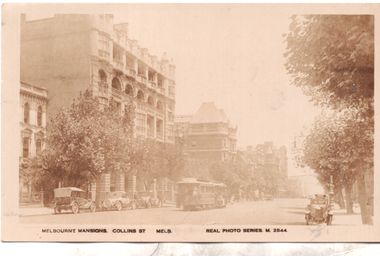
Postcard, Valentine's, "Melbourne Mansions Collins St Melb", 1919c
... "Melbourne Mansions Collins St Melb"...Postcard Real photo number M2844, titled "Melbourne Mansions Collins St Melb", by Valentine Sons. ...Postcard Real photo number M2844, titled "Melbourne Mansions Collins St Melb", by Valentine Sons. ...Postcard Real photo number M2844, titled "Melbourne Mansions Collins St Melb", by Valentine Sons. Featuring a west bound cable tram set in Collins Street between Exhibition and Russell Streets bound for Spencer Street, The trailer car appears to be No 52 and also has a non-standard destination box fitted on the side. The Melbourne Mansions Building. 91 - 101 Collins Street, was funded by David Syme proprietor of The Age newspaper and built in 1906. It is thought to be the first block of residential flats within the city limits. The building was demolished in 1958 to make way for Consolidated Zinc Building (CRA) completed in 1962. but since demolished. The large building further along Collins Street is the Austral Building completed in 1891. There are several parked cars and horse drawn wagons on the south side of Collins Street and an early Morris Oxford (Bullnose) on the northside. Behind that is one of the early ornate electric street lighting poles of the era. The photo has been taken around 1919 as the fourth floor addition to The Alexandra Club is visible in the photo. Unfortunately this particular copy of the photo has faded over time.Demonstrates a Valentine and Sons Real photograph postcard.Postcard - Real photograph - divided back unused.cable trams, collins st, tramways, tram 52 -
 Canterbury History Group
Article - "Haslemere"
... ... Melbourne Mansions Data Base...Canterbury Mont Albert Road "Haslemere" Melbourne Mansions Data Base Lewis> Miles Quittenton> Richard Wiseman> George Coghill and Haughton Copy of entry from the Melbourne Mansions Data Base by Miles Lewis. ...Copy of entry from the Melbourne Mansions Data Base by Miles Lewis. Includes notes on ownership of the house to 1928, copy of the auction notice for the sale of the house in 1928, with an illustration of the front of the house and garden. Also includes an auction notice for furnishings of the house to be sold on the same day.Copy of entry from the Melbourne Mansions Data Base by Miles Lewis. Includes notes on ownership of the house to 1928, copy of the auction notice for the sale of the house in 1928, with an illustration of the front of the house and garden. Also includes an auction notice for furnishings of the house to be sold on the same day.canterbury, mont albert road, "haslemere", melbourne mansions data base, lewis> miles, quittenton> richard, wiseman> george, coghill and haughton -
 Kew Historical Society Inc
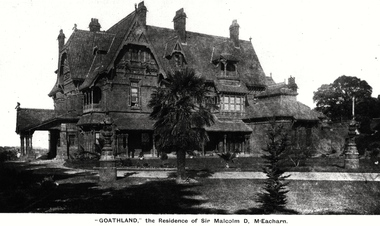
Photograph, 'Goathland', The Residence of Sir Malcolm D McEacharn, 1901-1911
... ...melbourne mansions...The house was demolished in 1960, despite opposition from the National Trust (Victoria), and its gardens subdivided into residential allotments. byram goathland tara hall lowan studley park road -- kew (vic.) melbourne mansions e g kilburn - architect "'Goathland', The Residence of Sir Malcolm D McEacharn" An early photograph of Goathland (also known as Byram, Lowan and Tara Hall). ...The architect, Edward Kilburn designed Byram in the Arts & Crafts style for the industrialist George Ramsden. Construction began in 1888 and was reputed to have lasted three years. The mansion had frontages to Studley Park Road and Stevenson Street, including gardens laid out with great taste, including pleasure grounds, tennis lawn, fruit and flower garden, and paddock.The size of many of the trees in the garden indicate that many survived from the garden of Clifton Villa, the previous single-storeyed house built on the site by the Stevenson brothers. Byram had views to Melbourne and Port Phillip Bay. The house was demolished in 1960, despite opposition from the National Trust (Victoria), and its gardens subdivided into residential allotments.An early photograph of Goathland (also known as Byram, Lowan and Tara Hall). The photo shows the front of the building during the period of Sir Malcolm McEacharn’s occupation of the house (1901-11). Edward George Kilburn, of Ellerker & Kilburn, had originally designed the house for the industrialist George Ramsden in 1888. When Sir Malcolm McEacharn purchased Byram, he was to rename it as Goathland. This has led to some confusion, as Goathland was also the name used for McEacharn’s other home in St. Kilda. The period of McEacharn’s ownership represented the high point of the mansion’s history. 'Lost Glories: a memorial to forgotten Australian buildings' was published by David Latta in 1986. It tells the story of a number of significant Australian buildings that had previously been demolished. A chapter in the book was devoted to Goathland, later known as Tara Hall. To supplement the text, he sourced photographs from a range of suppliers, chiefly the Royal Women's Hospital which had once owned Tara Hall, but had sold it in 1960. This is one of the photographs donated to KHS by the author."'Goathland', The Residence of Sir Malcolm D McEacharn"byram, goathland, tara hall, lowan, studley park road -- kew (vic.), melbourne mansions, e g kilburn - architect -
Canterbury History Group
Archive - Haslemere, 137 Mont Albert Road, Miles Lewis
... 1889 Record from Melbourne Mansions Data Base author Miles Lewis ...1889 Record from Melbourne Mansions Data Base author Miles Lewis G.Butler Camberwell Conservation Study Haslemere 137 Mont Albert Road James Gall (architect) Original owner R.Quittenton A4 Typed Sheet Archive Haslemere, 137 Mont Albert Road Miles Lewis ...1889 Record from Melbourne Mansions Data Base author Miles Lewis A4 Typed Sheetg.butler, camberwell conservation study, haslemere, 137 mont albert road, james gall (architect), original owner r.quittenton -
Canterbury History Group
Archive - Wiora - 21 Iribarra Road, Miles Lewis
... 1889 Record from Melbourne Mansions Data Base author Miles Lewis ...1889 Record from Melbourne Mansions Data Base author Miles Lewis G.Butler Camberwell Conservation Study Wiora 21 Iribarra Road Reed Henderson & Smart (architects) A4 Typed Sheet Archive Wiora - 21 Iribarra Road Miles Lewis ...1889 Record from Melbourne Mansions Data Base author Miles Lewis A4 Typed Sheetg.butler, camberwell conservation study, wiora, 21 iribarra road, reed henderson & smart (architects) -
Canterbury History Group
Archive - Ericstane 136 Canterbury Road, Miles Lewis
... 1891 Record from Melbourne Mansions Data Base author Miles Lewis ...1891 Record from Melbourne Mansions Data Base author Miles Lewis G.Butler Camberwell Conservation Study Ericstane 136 Canterbury Road Original Owner John Grieve A4 Typed Sheet Archive Ericstane 136 Canterbury Road Miles Lewis ...1891 Record from Melbourne Mansions Data Base author Miles Lewis A4 Typed Sheetg.butler, camberwell conservation study, ericstane, 136 canterbury road, original owner john grieve -
Canterbury History Group
Archive - Mont Albert Road, North Side between Railway Bridge and Boston Road, Miles Lewis
... pre 1897 Record from Melbourne Mansions Data Base author Miles Lewis ...pre 1897 Record from Melbourne Mansions Data Base author Miles Lewis G.Butler Camberwell Conservation Study Beverley Ussher (architect). ...pre 1897 Record from Melbourne Mansions Data Base author Miles Lewis A4 Typed Sheetg.butler, camberwell conservation study, beverley ussher (architect). -
Canterbury History Group
Archive - Frognall, 54 Mont Albert Road, Miles Lewis
... 1888-1890 Record from Melbourne Mansions Data Base author Miles Lewis ...1888-1890 Record from Melbourne Mansions Data Base author Miles Lewis G.Butler Camberwell Conservation Study 54 Mont Albert Road James Gall (architect) Frognall A4 Typed Sheet Archive Frognall, 54 Mont Albert Road Miles Lewis ...1888-1890 Record from Melbourne Mansions Data Base author Miles Lewis A4 Typed Sheetg.butler, camberwell conservation study, 54 mont albert road, james gall (architect), frognall -
Canterbury History Group
Archive - Roystead, 51 Mont Albert Road, Miles Lewis
... 1884-1887 Record from Melbourne Mansions Data Base author Miles Lewis ...1884-1887 Record from Melbourne Mansions Data Base author Miles Lewis G.Butler Camberwell Conservation Study Roystead Camberwell Grammar 51 Mont Albert Road A4 Typed Sheet Archive Roystead, 51 Mont Albert Road Miles Lewis ...1884-1887 Record from Melbourne Mansions Data Base author Miles Lewis A4 Typed Sheetg.butler, camberwell conservation study, roystead, camberwell grammar, 51 mont albert road -
Canterbury History Group
Archive - Ouitchambo, Miles Lewis
... 1880's - late Record from Melbourne Mansions Data Base author Miles Lewis ...1880's - late Record from Melbourne Mansions Data Base author Miles Lewis G.Butler Camberwell Conservation Study Ouitchambo 13-15 Iribarra Road A4 Typed Sheet Archive Ouitchambo Miles Lewis ...1880's - late Record from Melbourne Mansions Data Base author Miles Lewis A4 Typed Sheetg.butler, camberwell conservation study, ouitchambo, 13-15 iribarra road -
Canterbury History Group
Archive - Hazeldene , 8Balwyn Road Canterbury, Miles Lewis
... Built for George Grenville Mercy Built 1889 Record from Melbourne Mansions Data Base author Miles Lewis ...Built for George Grenville Mercy Built 1889 Record from Melbourne Mansions Data Base author Miles Lewis Hazeldene 8 Balwyn Road Canterbury George Mercy Danks Family Organs Red Cross A4 Typed Sheet Archive Hazeldene , 8Balwyn Road Canterbury Miles Lewis ...Built for George Grenville Mercy Built 1889 Record from Melbourne Mansions Data Base author Miles Lewis A4 Typed Sheethazeldene, 8 balwyn road, canterbury, george mercy, danks family, organs, red cross -
Canterbury History Group
Archive - Rowena, 12-14 Stanley Grove Canterbury, Miles Lewis
... Rowena, 12-14 Stanley Grove Canterbury Record from Melbourne Mansions Data Base author Miles Lewis ...Rowena, 12-14 Stanley Grove Canterbury Record from Melbourne Mansions Data Base author Miles Lewis Canterbury Rowena Edwardian architecture Stanley Grove A4 Typed Sheet Archive Rowena, 12-14 Stanley Grove Canterbury Miles Lewis ...Rowena, 12-14 Stanley Grove Canterbury Record from Melbourne Mansions Data Base author Miles Lewis A4 Typed Sheetcanterbury, rowena, edwardian architecture, stanley grove -
Canterbury History Group
Archive - Valhalla 228 Canterbury Road Canterbury, Miles Lewis
... Valhalla 228 Canterbury Road Canterbury, circa 1880 Record from Melbourne Mansions Data Base author Miles Lewis ...Valhalla 228 Canterbury Road Canterbury, circa 1880 Record from Melbourne Mansions Data Base author Miles Lewis Canterbury Valhalla 228 Canterbury Rd Victorian Architecture A4 Typed Sheet Archive Valhalla 228 Canterbury Road Canterbury Miles Lewis ...Valhalla 228 Canterbury Road Canterbury, circa 1880 Record from Melbourne Mansions Data Base author Miles Lewis A4 Typed Sheetcanterbury, valhalla 228 canterbury rd, victorian architecture -
Canterbury History Group
Document - Mont Albert, South-West corner Stanley Grove, Miles Lewis
... Record from Melbourne Mansions Data Base author Miles Lewis. ...Record from Melbourne Mansions Data Base author Miles Lewis. Mont Albert Road G.Butler James Wood (architect) Camberwell Conservation Study A4 Typed Sheet Document Mont Albert, South-West corner Stanley Grove Miles Lewis ...Builder William Davies erected a house for George Nelson at Camberwell under direction of James Wood. Record from Melbourne Mansions Data Base author Miles Lewis. A4 Typed Sheetmont albert road, g.butler, james wood (architect), camberwell conservation study -
Canterbury History Group
Archive - 62 Bryson Street Canterbury, Miles Lewis
... Äge 13 June 1998, p16 -adv. c, 4 bedr c1890, Land 66'x 160 Record from Melbourne Mansions Data Base author Miles Lewis ...Äge 13 June 1998, p16 -adv. c, 4 bedr c1890, Land 66'x 160 Record from Melbourne Mansions Data Base author Miles Lewis 62 Bryson Canterbury Suburban architecture A4 Typed Sheet Archive 62 Bryson Street Canterbury Miles Lewis ...Äge 13 June 1998, p16 -adv. c, 4 bedr c1890, Land 66'x 160 Record from Melbourne Mansions Data Base author Miles Lewis A4 Typed Sheet62 bryson, canterbury, suburban architecture -
Canterbury History Group
Archive - Balwyn Road Canterbury, Miles Lewis
... MMBW ref 2221 July 1906) Record from Melbourne Mansions Data Base author Miles Lewis ...MMBW ref 2221 July 1906) Record from Melbourne Mansions Data Base author Miles Lewis Canterbury Suburban architecture The Pines east side Balwyn Rd south of "Shrublands" MMBW ref 2221 July 1906 A4 Typed Sheet Archive Balwyn Road Canterbury Miles Lewis ...The Pines, Balwyn Rd (east side, south of "Shrublands". Large basement, complex shaped house. MMBW ref 2221 July 1906) Record from Melbourne Mansions Data Base author Miles Lewis A4 Typed Sheetcanterbury, suburban architecture, the pines, east side balwyn rd south of "shrublands", mmbw ref 2221 july 1906 -
Canterbury History Group
Archive - Torrington, 2 Burke Road, Miles Lewis
... S&M 1894 [1st listing], Williams, Thomas, Burke Rd, Canterbury (east side, only listing bet Woodstock St & Rathmines Rd, ie Canterbury Rd)S&M 1895 vacant, Burke Rd, Canterbury (east side, only) Record from Melbourne Mansions Data Base author Miles Lewis ...S&M 1894 [1st listing], Williams, Thomas, Burke Rd, Canterbury (east side, only listing bet Woodstock St & Rathmines Rd, ie Canterbury Rd)S&M 1895 vacant, Burke Rd, Canterbury (east side, only) Record from Melbourne Mansions Data Base author Miles Lewis Torrington Camberwell CEGGS A4 Typed Sheet Archive Torrington, 2 Burke Road Miles Lewis ...S&M 1894 [1st listing], Williams, Thomas, Burke Rd, Canterbury (east side, only listing bet Woodstock St & Rathmines Rd, ie Canterbury Rd) S&M 1895 vacant, Burke Rd, Canterbury (east side, only) Record from Melbourne Mansions Data Base author Miles Lewis A4 Typed Sheettorrington, camberwell ceggs -
 Glen Eira Historical Society
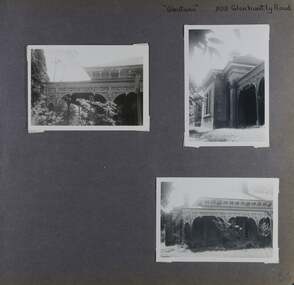
Album - Album page, Glentana, Glen Huntly Road, 805, Circa 1972
... All photographs are black and white except where stated, with 386 photographs over 198 pages. Melbourne Mansions database indicates that its architect may have been Charles Webb....All photographs are black and white except where stated, with 386 photographs over 198 pages. Melbourne Mansions database indicates that its architect may have been Charles Webb. trevor hart brick polychrome brickwork cast iron frieze decorative brackets italianate return verandah glentana glen huntly road caulfield cast iron work verandahs glenhuntly road charles webb glen tana house names Hand written: "Glentana" 805 Glenhuntly Road [top right] / 66 [bottom right] Page 66 of Photograph Album with three exterior photographs (two portrait and one landscape) of Glentana, a single storey Victorian residence, focussing on views of its verandah. ...This photograph is part of the Caulfield Historical Album 1972. This album was created in approximately 1972 as part of a project by the Caulfield Historical Society to assist in identifying buildings worthy of preservation. The album is related to a Survey the Caulfield Historical Society developed in collaboration with the National Trust of Australia (Victoria) and Caulfield City Council to identify historic buildings within the City of Caulfield that warranted the protection of a National Trust Classification. Principal photographer thought to be Trevor Hart, member of Caulfield Historical Society. Most photographs were taken between 1966-1972 with a small number of photographs being older and from unknown sources. All photographs are black and white except where stated, with 386 photographs over 198 pages. Melbourne Mansions database indicates that its architect may have been Charles Webb.Page 66 of Photograph Album with three exterior photographs (two portrait and one landscape) of Glentana, a single storey Victorian residence, focussing on views of its verandah.Hand written: "Glentana" 805 Glenhuntly Road [top right] / 66 [bottom right] trevor hart, brick, polychrome brickwork, cast iron frieze, decorative brackets, italianate, return verandah, glentana, glen huntly road, caulfield, cast iron work, verandahs, glenhuntly road, charles webb, glen tana, house names -
 Glen Eira Historical Society
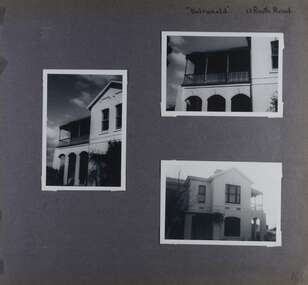
Album - Album page, Balranald, Poath Road, Circa 1972
... Originally named Crofthead or The Croft Head, later changed to Balranald according to Melbourne Mansions database....Originally named Crofthead or The Croft Head, later changed to Balranald according to Melbourne Mansions database. From Victorian Heritage Database citation for HO136 13 Poath Street MURRUMBEENA https://vhd.heritagecouncil.vic.gov.au/places/35389 as at 30/10/2020 "Croft Head" is situated at no. 13 Poath Road, Murrumbeena, and was built in 1887 for the accountant Edward Tweddell. ...This photograph is part of the Caulfield Historical Album 1972. This album was created in approximately 1972 as part of a project by the Caulfield Historical Society to assist in identifying buildings worthy of preservation. The album is related to a Survey the Caulfield Historical Society developed in collaboration with the National Trust of Australia (Victoria) and Caulfield City Council to identify historic buildings within the City of Caulfield that warranted the protection of a National Trust Classification. Principal photographer thought to be Trevor Hart, member of Caulfield Historical Society. Most photographs were taken between 1966-1972 with a small number of photographs being older and from unknown sources. All photographs are black and white except where stated, with 386 photographs over 198 pages. Originally named Crofthead or The Croft Head, later changed to Balranald according to Melbourne Mansions database.From Victorian Heritage Database citation for HO136 13 Poath Street MURRUMBEENA https://vhd.heritagecouncil.vic.gov.au/places/35389 as at 30/10/2020 "Croft Head" is situated at no. 13 Poath Road, Murrumbeena, and was built in 1887 for the accountant Edward Tweddell. It is historically and aesthetically significant. It is historically significant (Criterion A) as a substantial and now rare (Criterion B) surviving late Victorian villa residence east of Booran Road within the Municipality and demonstrating the attraction of Melbourne's rural fringe as a residential location rendered accessible by the opening of the railway between South Yarra and Oakleigh in 1879. It is aesthetically significant (Criterion E) as one of the Municipality's finest late Victorian polychrome brick villas, comparing with ''Fresch'' and ''Monkleigh'' both erected in 1899 at nos. 11 and 12 Gladstone Parade, Elsternwick respectively, ''Hartington'' (1888) at 15 Gladstone Parade and ''Hengar'' (1889) at no. 356 Glen Eira Road, Caulfield South. Elements of stylistic significance include the ornamentation of the brickwork in polychrome work with tiled panels, the effect of the banding being especially striking and representative of the period.Page 166 of Photograph Album with three photographs of Balranald on Poath Road.Handwritten: "Balranald" 13 Poath Road [top right] / 166 [bottom right]trevor hart, decorative brackets, chimneys, verandah, porch, poath road, arches, cast iron columns, return verandah, croft head, balranald, victorian villa, restoration, 1880's, edward tweddell, murrumbeena, hughesdale, cast iron frieze, victorian style, cast iron work, rendered brick, house names, polychrome brick, poath street, crofthead, the croft head -
Glen Eira Historical Society
Article - Glen Eira
... Six items about the Glen Eira Mansion: 1/Letter dated 2/06/2012 from the St Kilda Historical Society to Glen Eira Historical Society asking for further information as well as providing some items on Glen Eira’s history 2/ Attachment to above letter of information about Glen Eira printed from Melbourne Mansions Database on 30/05/2012 about Glen Eira House referencing the Argus newspaper for 10/03/1865 and 25/07/1881, ‘Sand, Swamp and Heath’, ‘Caulfield’s Building Heritage and Pioneer Families’. ...Six items about the Glen Eira Mansion: 1/Letter dated 2/06/2012 from the St Kilda Historical Society to Glen Eira Historical Society asking for further information as well as providing some items on Glen Eira’s history 2/ Attachment to above letter of information about Glen Eira printed from Melbourne Mansions Database on 30/05/2012 about Glen Eira House referencing the Argus newspaper for 10/03/1865 and 25/07/1881, ‘Sand, Swamp and Heath’, ‘Caulfield’s Building Heritage and Pioneer Families’. ...Six items about the Glen Eira Mansion: 1/Letter dated 2/06/2012 from the St Kilda Historical Society to Glen Eira Historical Society asking for further information as well as providing some items on Glen Eira’s history 2/ Attachment to above letter of information about Glen Eira printed from Melbourne Mansions Database on 30/05/2012 about Glen Eira House referencing the Argus newspaper for 10/03/1865 and 25/07/1881, ‘Sand, Swamp and Heath’, ‘Caulfield’s Building Heritage and Pioneer Families’. Entry is dated 27/06/1997. 3/ Second attachment to above letter of a memo detailing information about Glen Eira mansion form History and Heritage Officer at City of Glen Eira together with an image extract of birth notices from the Argus 22/5/1863 re the birth of a daughter to W.Lamborn Esq on 20/05/1863 at Glenalry house Caulfield 4/ Third attachment to above letter of questions and parish plan image re properties including area occupied by Glen Eira from Heritage Officer St Kilda Historical Society 5/ Southern Scenarion quarterly newsletter of the Royal Southern Memorial Hospital Issue No. 7 Winter 1988. It contains a black and white photograph of Glen Eira with a brief history of the residence and owner on p2 plus an article on p3 about the bequest from the late Rudolph Ashley Ricketson for the Ashley Ricketson Centre in the hospital. Demolition of the mansion occurred in 1965. 6/ Newspaper article (source & date unknown) about the bequest from Ashley Ricketson of $10.5 million to the Southern Memorial Hospital in Caulfield. It is on the site of Glen Eira, demolished 4 years prior. A sketch and photo of the hospital.glen eira, glen eira house, ricketson henry, lamborn william, kooyong road, caulfield, alison road, seymour road, beemery park, elsternwick, watts thomas, mansions, sargood frederick, rippon lea, australian general military hospital no. 11, southern memorial hospital, architects, staniforth georgina, were edith alice mary, were jonathon binns, fulton thomas, caulfield district crown land, glen huntly road, glen eira road, hawthorn road, military hospitals, ricketson rudolph ashley, towers, jacka albert captain vc, the white house, soldiers, hospitals, caulfield geriatric hospital, glenalry, caulfield roads board, foot henry boorn, surveyors, southern scenario, ashley ricketson centre, royal southern memorial hospital, best joan mrs, caulfield grammar school, the white house, barrata, house names -
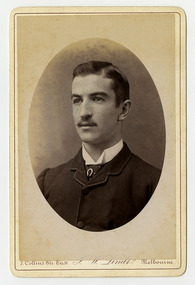 Marysville & District Historical Society
Photograph (Item) - Black and white portrait, John William Lindt, 1870s
... He was a welcome photographer of members of parliament and other Melbourne personalities, their society and cultural life including the theatre, and was known as a ‘rich man’s photographer’ for those whose families he grouped informally on the lawns in front of their mansions, with servants at the rails of the upstairs balconies. ...A black and white portrait of an unknown man taken by John William Lindt.A black and white portrait of an unknown man taken by John William Lindt. John William Lindt was born in Germany in 1845. At 17 he took a working passage to Australia on a Dutch sailing ship. Taking up work as an itinerant piano-tuner, he traveled amongst towns in Victoria and New South Wales before settling in Grafton in 1863 where he became assistant and apprentice to photographer Conrad Wagner. After a brief return to Germany in 1867 Lindt took over management of Wagner’s studio in 1869. He married Wagner’s daughter, Anna on 13 January 1872. Over 1873-1874, using the slow and laborious wet-plate collodion process, John Lindt produced photographs of the local indigenous people both in their environment conducting actual traditional ceremonies in the Clarence River district, and in his studio. Twelve of this series is included in his 1874 album Australian Aboriginals. John Lindt moved to Melbourne in 1876 where he worked for Batchelder & Co. before opening his own opulent studios at number 7 at the top of Collins Street opposite the Treasury, in 1877. John Lindt's business of this period was wide-ranging, and included portraits, records of Melbourne public buildings and streetscapes, the Botanical Gardens, and Port Melbourne. He was a welcome photographer of members of parliament and other Melbourne personalities, their society and cultural life including the theatre, and was known as a ‘rich man’s photographer’ for those whose families he grouped informally on the lawns in front of their mansions, with servants at the rails of the upstairs balconies. He continued with landscape, producing folios Fernshaw and Watt River Scenery, Victoria ( c.1878-82), Scenery on the Ovens and Buckland Rivers, Victoria (c.1878–82) and Lorne, Louttit Bay and Cape Otway Ranges (1883). Sales of his Black Spur scenery amounted to approximately 25,000 copies printed from the original negatives between 1882 and 1892. John Lindt, in collaboration with Nicholas John Caire, produced a tourist booklet on the area around "The Hermitage" in 1913.7 Collins Str. East/ J.W. Lindt/ Melbournejohn william lindt, conrad wagner, australian aboriginals, batchelder & co, nicholas john caire, anna lindt -
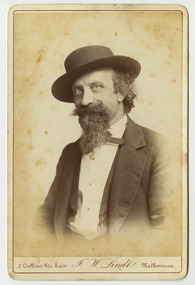 Marysville & District Historical Society
Photograph (Item) - Black and white portrait, John William Lindt, 1870s
... He was a welcome photographer of members of parliament and other Melbourne personalities, their society and cultural life including the theatre, and was known as a ‘rich man’s photographer’ for those whose families he grouped informally on the lawns in front of their mansions, with servants at the rails of the upstairs balconies. ...A black and white portrait of an unknown man taken by John William Lindt.A black and white portrait of an unknown man taken by John William Lindt. John William Lindt was born in Germany in 1845. At 17 he took a working passage to Australia on a Dutch sailing ship. Taking up work as an itinerant piano-tuner, he traveled amongst towns in Victoria and New South Wales before settling in Grafton in 1863 where he became assistant and apprentice to photographer Conrad Wagner. After a brief return to Germany in 1867 Lindt took over management of Wagner’s studio in 1869. He married Wagner’s daughter, Anna on 13 January 1872. Over 1873-1874, using the slow and laborious wet-plate collodion process, John Lindt produced photographs of the local indigenous people both in their environment conducting actual traditional ceremonies in the Clarence River district, and in his studio. Twelve of this series is included in his 1874 album Australian Aboriginals. John Lindt moved to Melbourne in 1876 where he worked for Batchelder & Co. before opening his own opulent studios at number 7 at the top of Collins Street opposite the Treasury, in 1877. John Lindt's business of this period was wide-ranging, and included portraits, records of Melbourne public buildings and streetscapes, the Botanical Gardens, and Port Melbourne. He was a welcome photographer of members of parliament and other Melbourne personalities, their society and cultural life including the theatre, and was known as a ‘rich man’s photographer’ for those whose families he grouped informally on the lawns in front of their mansions, with servants at the rails of the upstairs balconies. He continued with landscape, producing folios Fernshaw and Watt River Scenery, Victoria ( c.1878-82), Scenery on the Ovens and Buckland Rivers, Victoria (c.1878–82) and Lorne, Louttit Bay and Cape Otway Ranges (1883). Sales of his Black Spur scenery amounted to approximately 25,000 copies printed from the original negatives between 1882 and 1892. John Lindt, in collaboration with Nicholas John Caire, produced a tourist booklet on the area around "The Hermitage" in 1913.7 Collins Str. East/ J.W. Lindt/ Melbournejohn william lindt, conrad wagner, australian aboriginals, batchelder & co, nicholas john caire, anna lindt -
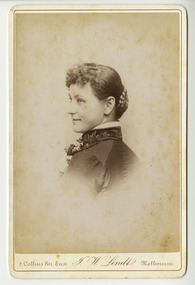 Marysville & District Historical Society
Photograph (Item) - Black and white portrait, John William Lindt, 1870s
... He was a welcome photographer of members of parliament and other Melbourne personalities, their society and cultural life including the theatre, and was known as a ‘rich man’s photographer’ for those whose families he grouped informally on the lawns in front of their mansions, with servants at the rails of the upstairs balconies. ...A black and white portrait of an unknown woman taken by John William Lindt.A black and white portrait of an unknown woman taken by John William Lindt. John William Lindt was born in Germany in 1845. At 17 he took a working passage to Australia on a Dutch sailing ship. Taking up work as an itinerant piano-tuner, he traveled amongst towns in Victoria and New South Wales before settling in Grafton in 1863 where he became assistant and apprentice to photographer Conrad Wagner. After a brief return to Germany in 1867 Lindt took over management of Wagner’s studio in 1869. He married Wagner’s daughter, Anna on 13 January 1872. Over 1873-1874, using the slow and laborious wet-plate collodion process, John Lindt produced photographs of the local indigenous people both in their environment conducting actual traditional ceremonies in the Clarence River district, and in his studio. Twelve of this series is included in his 1874 album Australian Aboriginals. John Lindt moved to Melbourne in 1876 where he worked for Batchelder & Co. before opening his own opulent studios at number 7 at the top of Collins Street opposite the Treasury, in 1877. John Lindt's business of this period was wide-ranging, and included portraits, records of Melbourne public buildings and streetscapes, the Botanical Gardens, and Port Melbourne. He was a welcome photographer of members of parliament and other Melbourne personalities, their society and cultural life including the theatre, and was known as a ‘rich man’s photographer’ for those whose families he grouped informally on the lawns in front of their mansions, with servants at the rails of the upstairs balconies. He continued with landscape, producing folios Fernshaw and Watt River Scenery, Victoria ( c.1878-82), Scenery on the Ovens and Buckland Rivers, Victoria (c.1878–82) and Lorne, Louttit Bay and Cape Otway Ranges (1883). Sales of his Black Spur scenery amounted to approximately 25,000 copies printed from the original negatives between 1882 and 1892. John Lindt, in collaboration with Nicholas John Caire, produced a tourist booklet on the area around "The Hermitage" in 1913.7 Collins Str. East/ J.W. Lindt/ Melbournejohn william lindt, conrad wagner, australian aboriginals, batchelder & co, nicholas john caire, anna lindt -
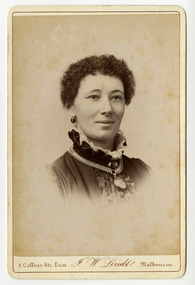 Marysville & District Historical Society
Photograph (Item) - Black and white portrait, John William Lindt, 1870s
... He was a welcome photographer of members of parliament and other Melbourne personalities, their society and cultural life including the theatre, and was known as a ‘rich man’s photographer’ for those whose families he grouped informally on the lawns in front of their mansions, with servants at the rails of the upstairs balconies. ...A black and white portrait of an unknown woman taken by John William Lindt.A black and white portrait of an unknown woman taken by John William Lindt. John William Lindt was born in Germany in 1845. At 17 he took a working passage to Australia on a Dutch sailing ship. Taking up work as an itinerant piano-tuner, he traveled amongst towns in Victoria and New South Wales before settling in Grafton in 1863 where he became assistant and apprentice to photographer Conrad Wagner. After a brief return to Germany in 1867 Lindt took over management of Wagner’s studio in 1869. He married Wagner’s daughter, Anna on 13 January 1872. Over 1873-1874, using the slow and laborious wet-plate collodion process, John Lindt produced photographs of the local indigenous people both in their environment conducting actual traditional ceremonies in the Clarence River district, and in his studio. Twelve of this series is included in his 1874 album Australian Aboriginals. John Lindt moved to Melbourne in 1876 where he worked for Batchelder & Co. before opening his own opulent studios at number 7 at the top of Collins Street opposite the Treasury, in 1877. John Lindt's business of this period was wide-ranging, and included portraits, records of Melbourne public buildings and streetscapes, the Botanical Gardens, and Port Melbourne. He was a welcome photographer of members of parliament and other Melbourne personalities, their society and cultural life including the theatre, and was known as a ‘rich man’s photographer’ for those whose families he grouped informally on the lawns in front of their mansions, with servants at the rails of the upstairs balconies. He continued with landscape, producing folios Fernshaw and Watt River Scenery, Victoria ( c.1878-82), Scenery on the Ovens and Buckland Rivers, Victoria (c.1878–82) and Lorne, Louttit Bay and Cape Otway Ranges (1883). Sales of his Black Spur scenery amounted to approximately 25,000 copies printed from the original negatives between 1882 and 1892. John Lindt, in collaboration with Nicholas John Caire, produced a tourist booklet on the area around "The Hermitage" in 1913.7 Collins Str. East/ J.W. Lindt/ Melbournejohn william lindt, conrad wagner, australian aboriginals, batchelder & co, nicholas john caire, anna lindt -
 Marysville & District Historical Society
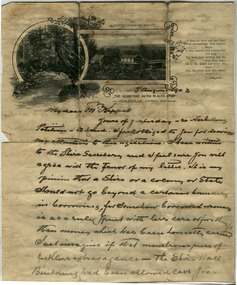
Letter (Item) - Hand written letter, John William Lindt, 1903
... He was a welcome photographer of members of parliament and other Melbourne personalities, their society and cultural life including the theatre, and was known as a ‘rich man’s photographer’ for those whose families he grouped informally on the lawns in front of their mansions, with servants at the rails of the upstairs balconies. ...A letter written to Maurice Keppel by John William Lindt in 1903.A letter written to Maurice Keppel by John William Lindt in 1903. John William Lindt was born in Germany in 1845. At 17 he took a working passage to Australia on a Dutch sailing ship. Taking up work as an itinerant piano-tuner, he traveled amongst towns in Victoria and New South Wales before settling in Grafton in 1863 where he became assistant and apprentice to photographer Conrad Wagner. After a brief return to Germany in 1867 Lindt took over management of Wagner’s studio in 1869. He married Wagner’s daughter, Anna on 13 January 1872. Over 1873-1874, using the slow and laborious wet-plate collodion process, John Lindt produced photographs of the local indigenous people both in their environment conducting actual traditional ceremonies in the Clarence River district, and in his studio. Twelve of this series is included in his 1874 album Australian Aboriginals. John Lindt moved to Melbourne in 1876 where he worked for Batchelder & Co. before opening his own opulent studios at number 7 at the top of Collins Street opposite the Treasury, in 1877. John Lindt's business of this period was wide-ranging, and included portraits, records of Melbourne public buildings and streetscapes, the Botanical Gardens, and Port Melbourne. He was a welcome photographer of members of parliament and other Melbourne personalities, their society and cultural life including the theatre, and was known as a ‘rich man’s photographer’ for those whose families he grouped informally on the lawns in front of their mansions, with servants at the rails of the upstairs balconies. He continued with landscape, producing folios Fernshaw and Watt River Scenery, Victoria ( c.1878-82), Scenery on the Ovens and Buckland Rivers, Victoria (c.1878–82) and Lorne, Louttit Bay and Cape Otway Ranges (1883). Sales of his Black Spur scenery amounted to approximately 25,000 copies printed from the original negatives between 1882 and 1892. John Lindt, in collaboration with Nicholas John Caire, produced a tourist booklet on the area around "The Hermitage" in 1913. Maurice Keppel, from Ireland, was one of the first landholders in the newly surveyed town of Marysville in 1864. He and his wife ran the successful Keppel’s Australian Hotel. Two of their sons, John and Jerry, established a farm and opened up the surrounding high country. The Keppel lease was one of the longest held in the high country and the Keppel Family were amongst Marysville's pioneering families.maurice keppel, keppel family, keppel's australian hotel, marysville, victoria, john william lindt, conrad wagner, australian aboriginals, batchelder & co, nicholas john caire, anna lindt -
 Ringwood and District Historical Society
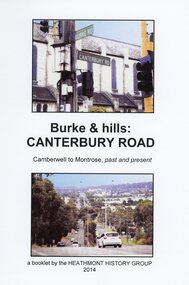
Book, Burke & Hills: Canterbury Road Camberwell to Montrose, by Heathmont History Group - 2014
... mansions, orchards, swamps ... Delaneys Road, renamed Canterbury Road after a 19th century Victorian Governor, is a fascinating study in land use and history as suburban Melbourne has continually diversified and pushed outwards. ...mansions, orchards, swamps ... Delaneys Road, renamed Canterbury Road after a 19th century Victorian Governor, is a fascinating study in land use and history as suburban Melbourne has continually diversified and pushed outwards. ...Soft cover book of 40 pages with spiral wire spine. Compilation of images and descriptive timeline of the geology, geography and European settlement history of Canterbury Road.Soon after beginning at Burke Road Camberwell, Canterbury Road moves into the gentle hills of Canterbury, then on to Surrey Hills, Box Hill and Forest Hill. Further along past these three "hills" come three "monts" - Vermont, Heathmont and at its other end, Montrose, by then in the foothills of the Dandenongs. Grand homes and churches at one end, major and minor shopping centres along the 25km, factories now where farms were, big box stores, fast food outlets, train stations, resrvoir, traffic, residential stretches, modern apartment blocks, parklands, child-minding centres, sporting ovals, a sewage farm, hotels, quarries, commercial developments, plant nurseries, a golf course, bridges, memorials, Asian food shops, telecommunication towers, bushland, creeks, crossroads, traffic lights, mansions, orchards, swamps ... Delaneys Road, renamed Canterbury Road after a 19th century Victorian Governor, is a fascinating study in land use and history as suburban Melbourne has continually diversified and pushed outwards. Compiled by Heathmont History Group, Rita James, Les Prato, Betty Colbert, Jeff Leipold, Gerry Robinson (convenor). -
 Mission to Seafarers Victoria
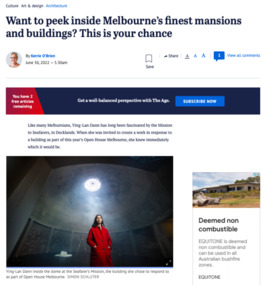
Article, Kerrie O'Brien, Want to peek inside Melbourne’s finest mansions and buildings? This is your chance, 30 June 2022
... Melbourne’s executive director. “As a public festival, it has always had a spirit of generosity, this gesture of opening up and allowing visitors to come and look and experience things.” Swinging open their doors at the end of the month will be some of the city’s finest mansions...The articles gives an insight of the création of the artwork by Ying-Lan Dann. open house melbourne 2022 ying-lan dann take hold of the clouds norla dome exhibition the age cultural events digital copy of an article with photographs published in the Age Want to peek inside Melbourne’s finest mansions and buildings? This is your chance Article Kerrie O'Brien The Age ...Open House 2022: "Like many Melburnians, Ying-Lan Dann has long been fascinated by the Mission to Seafarers, in Docklands. When she was invited to create a work in response to a building as part of this year’s Open House Melbourne, she knew immediately which it would be. Taking a peek behind the closed doors of some of Melbourne’s finest and most interesting buildings is a core premise of the weekend event, now in its 15th year. During that time, the program has grown from half a dozen buildings to a 200-plus strong list that extends to Ballarat and Bendigo. “[It’s] much more expansive and citizen-led,” says Fleur Watson, Open House Melbourne’s executive director. “As a public festival, it has always had a spirit of generosity, this gesture of opening up and allowing visitors to come and look and experience things.” Swinging open their doors at the end of the month will be some of the city’s finest mansions, including Villa Alba in Kew and Brighton’s Billilla, the Cairo flats in Fitzroy, the newly renovated Jewish Museum designed by Kerstin Thompson, the Melbourne Quakers Centre, the Albanian Mosque in Carlton North and many more. Considering how to approach the event this year, held remotely for the past two, Watson decided to explore beyond the traditional, with associate professor and director of curatorial practice at Monash University Tara McDowell. The two have co-curated an exhibition of works to run concurrently with the Open House program, called Take Hold of the Clouds. That’s where Dann’s work, Circular Temporalities, comes in, one of seven commissions around town in which local and international artists respond to chosen buildings or sites. A lecturer in interior design at RMIT as well as an artist, she is interested in time and finding different mediums to show things in flux and, having grown up on Phillip Island, she often uses water as a theme. When she started spending time at the Mission, Dann found there was an oculus at the top of the dome, known as the Norla Dome. She thought about how that small but significant opening related to where sailors spent so many months of the year, the sky being the only thing they would see much of the time, stars guiding the way in times gone by, and of the recent stories she’d heard about sailors being trapped at sea during COVID. Built in the Arts and Craft style between 1916 and 1919 and designed by architect Walter Butler, the Mission includes a chapel, clubroom, Chaplain’s house, a small cottage and the Norla Dome, which was apparently inspired by the Pantheon. The Mission was funded by the government and the Ladies Harbour Lights Guild, who Dann was also intrigued by. “One of the things those women identified is that life at sea is very dangerous [and they] wanted to give them a space of sanctuary and support,” she says, adding that for many years, the dome was used as a gymnasium. Her work inside the dome includes a 35-minute loop film, recorded from the ferry during the crossing from Queenscliff to Sorrento. The horizon takes up about a third of the shot and moves as the waves rise and fall, mirroring the journeys made by the sailors who found refuge at the mission over the years; it will be projected onto a gauze-like fabric, allowing glimpses of the building behind. Dann also plans to activate the site over the course of the weekend and will read a poem by Justin Clemens.The articles gives an insight of the création of the artwork by Ying-Lan Dann. digital copy of an article with photographs published in the Ageopen house melbourne, 2022, ying-lan dann, take hold of the clouds, norla dome, exhibition, the age, cultural events -
 Glen Eira Historical Society
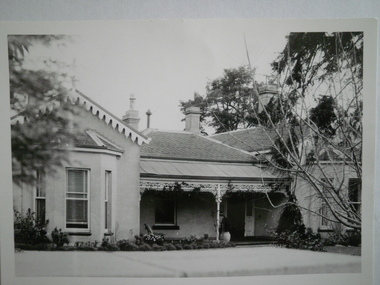
Photograph - NETTALIE
... Melbourne Grammar School... Caulfield Conservation Study... Mansions...Shaw Herbert Shaw Alfred Henry Shaw Arthur Shaw Amelia Shaw Lavinia Forsyth William Blundell Mary Fosbery John Bakewell John Hailes George B Blundell Miss Stephen George Sir Billings Richard Ware Martha Desailly Alfred Cameron William Dr Cameron J Mrs Nettalie The Nest Netley House House names Caulfield North Balaclava Road Grimwade House Orrong Road Harleston Caulfield Road District St Kilda East The Curragh Shelford Helenslea Sylliot Hall Labassa O’Loughlin Street Ormond Hotham Street Melbourne Grammar School Caulfield Conservation Study Mansions Teachers Schools Independent schools Hardware stores Business people Lawyers Businesses Brick houses Outbuildings Architectural styles Classrooms Bunya bunya pine trees Trees Orchards Land subdivisions Land sales Doctors Photograph NETTALIE ...Various documents about and photographs of Nettalie or Netley House or The Nest on Balaclava Road Caulfield now part of Melbourne Grammar School: 1/The first is an article undated and unattributed accessed from Beresford.org on 14/07/2006 detailing with bibliography the history of Netley House including the owners especially the Shaw family. 2/There are several separately colour-printed photographs of the front facade of Nettalie most undated and unattributed, and one family portrait of the Shaw family circa 1863. All were also accessed from Beresford.org on 14/07/2006. 3/One black and white photograph is inscribed '73 Balaclava Rd Caulfield 3/9/72 Neg 16A'. 4/Two copies of a plan of Nettalie next to The Curragh and Harleston, also in the article and likely accessed from same source on same date. 5/A copy of Dr Cameron’s letter to Herbert Shaw dated 24/05/1949. 6/One copy of a letter from Herbert Shaw to Dr William Cameron dated 25/05/1949. 7/A plan of Melbourne Grammar School with each building dated to when it was built including Netley House in 1863.shaw herbert, shaw alfred henry, shaw arthur, shaw amelia, shaw lavinia, forsyth william, blundell mary, fosbery john, bakewell john, hailes george b, blundell miss, stephen george sir, billings richard, ware martha, desailly alfred, cameron william dr, cameron j mrs, nettalie, the nest, netley house, house names, caulfield north, balaclava road, grimwade house, orrong road, harleston, caulfield road district, st kilda east, the curragh, shelford, helenslea, sylliot hall, labassa, o’loughlin street, ormond, hotham street, melbourne grammar school, caulfield conservation study, mansions, teachers, schools, independent schools, hardware stores, business people, lawyers, businesses, brick houses, outbuildings, architectural styles, classrooms, bunya bunya pine trees, trees, orchards, land subdivisions, land sales, doctors -
Glen Eira Historical Society
Document - Nettalie
... Melbourne Grammar School... Cast iron work... Verandahs... Victorian style... Stained glass... Architectural features... Architectural styles... Brick houses... Stables... Mansions...Ward Andrew Forsyth William Forsyte William Noall William Grimwade Frederick Shepherd Desailly Alfred Bryant Bessie Bryant Herbert Ware Martha Cameron William Nettalie Balaclava Road Orrong Road Caulfield North Fosbery Ave Netley Harleston Caulfield North Historic Building Register National Estate Register National Trust Register Melbourne Grammar School Cast iron work Verandahs Victorian style Stained glass Architectural features Architectural styles Brick houses Stables Mansions Pharmacists Lawyers Doctors Flats Schools Bay windows Land values Document Nettalie ...Two photocopies of the October 1994 Caulfield Conservation Study by Andrew Ward of the house at 73 Balaclava Rd Caulfield named Nettalie by 1899. In the documents(s) Ward details the history of ownership and land values the architectural features and historical significance. A bibliography is included as well as a photograph of the front facade of Nettalie which like the study includes two copies but of varying sizes.ward andrew, forsyth william, forsyte william, noall william, grimwade frederick shepherd, desailly alfred, bryant bessie, bryant herbert, ware martha, cameron william, nettalie, balaclava road, orrong road, caulfield north, fosbery ave, netley, harleston, caulfield north, historic building register, national estate register, national trust register, melbourne grammar school, cast iron work, verandahs, victorian style, stained glass, architectural features, architectural styles, brick houses, stables, mansions, pharmacists, lawyers, doctors, flats, schools, bay windows, land values -
Glen Eira Historical Society
Letter - Crotonhurst
... Melbourne Hunt Club... St Mary’s Church... Geo. Fincham and Sons... City Hall Gallery... Mansions...Philip Gillespie Ray Lindsay Joan Ring M Paterson Mrs Coffey Eileen Fitzsimmons Eileen Ronald Heather William Gluyas Maidment Isobel Langdon RR Langdon Charles Langdon R B Knox David Langdon Dick Hart Trevor McLaughlin J Ballantyne R Webb Matilda Sarah Somers Charles Mckenzie Barbara McLeod Lexie Richards Barbara Richards Lexie Sims Betty Anderson Irene Victoria Short hand writer Lawyers Phthisis Queen’s Counsel Judge of the Supreme Court Court reporter Architectural features World War 1914-1918 Soldiers Point to Point Steeplechase Master of the Hounds Organs Sculptor Statues Stained glass Crests and emblems Elsternwick Congregational Church Government Shorthand Writers’ Department Eureka treason trials Swamp Sand and Heath Dickson and Yorston Caulfield Council Caulfield Historical Society Harrison Ramsay Time Without Clocks The Hounds are Running Melbourne Hunt Club St Mary’s Church Geo. Fincham and Sons City Hall Gallery Mansions Letter Crotonhurst ...A letter from Mrs M Ring to the Caulfield Historical Society, dated 14/03/1986, conveying gratitude for the information provided about the house Crotonhurst located at the corner of Hawthorn Road and Glen Eira Road, Caulfield North, and requesting information about the Langdon and Webb families and the property Lirrewa. Enclosed with the letter is a copy of a two page report on the Life of George Frederick Webb. The file also includes a seven page report conducted by Irene Victoria Anderson in 1982 on the history of the Langdon and Webb families and the house Crotonhurst. Two earlier drafts of the same report are included and one of these has further handwritten notes.crotonhurst, rosecraddock, lirrewa, caulfield north, hawthorn road, langdon road, glen eira road, mitchell road, crotonhurst avenue, caulfield city hall, city of caulfield, polo ground, polo parade, neerim road, powderham road, walworth avenue, langdon family, webb family, rosecraddock family, webb george henry frederick, webb george henry webb justice, field matilda, agg sophia sarah, agg sophia sarah annie, webb sophie sarah annie, agg dottie, webb dottie, langdon william farrar, langdon willie, langdon bill, langdon h j mrs, langdon mrs, webb george edward, webb matilda elizabeth, webb isabella elizabeth, webb james hemming, murray peter r, wells john c, langdon marie, langdon clive, murdoch keith, egerton-warburton mr, yorston mr, yorston rita, langdon violet, langdon. philip, gillespie ray, lindsay joan, ring m, paterson mrs, coffey eileen, fitzsimmons eileen, ronald heather, william gluyas, maidment isobel, langdon rr, langdon charles, langdon r b, knox david, langdon dick, hart trevor, mclaughlin j, ballantyne r, webb matilda sarah, somers charles, mckenzie barbara, mcleod lexie, richards barbara, richards lexie, sims betty, anderson irene victoria, short hand writer, lawyers, phthisis, queen’s counsel, judge of the supreme court, court reporter, architectural features, world war 1914-1918, soldiers, point to point steeplechase, master of the hounds, organs, sculptor, statues, stained glass, crests and emblems, elsternwick congregational church, government shorthand writers’ department, eureka treason trials, swamp sand and heath, dickson and yorston, caulfield council, caulfield historical society, harrison ramsay, time without clocks, the hounds are running, melbourne hunt club, st mary’s church, geo. fincham and sons, city hall gallery, mansions
