
Showing 70 items matching "melbourne morning herald"
-
 University of Melbourne, Burnley Campus Archives
Newspaper - Newspaper Cutting, The Melbourne Morning Herald, Horticultural Society AGM, 03.01.1850
... the melbourne morning herald...Photocopy of advertisement in "The Melbourne Morning Herald" 03.01.1850. Notice of Annual General meeting for 5th January. ...The Melbourne Morning Herald...the melbourne morning herald annual general meeting horticultural society victorian horticultural society Photocopy of advertisement in "The Melbourne Morning Herald" 03.01.1850. ...Photocopy of advertisement in "The Melbourne Morning Herald" 03.01.1850. Notice of Annual General meeting for 5th January. Not clear enough to scan.the melbourne morning herald, annual general meeting, horticultural society, victorian horticultural society -
University of Melbourne, Burnley Campus Archives
Newspaper, The Melbourne Morning Herald, Victoria Horticultural Society, 1851
... melbourne morning herald...Photocopies of newspaper articles reporting on the 2nd Annual General Meeting of the Victoria Horticultural Society 2. The Melbourne Morning Herald 15.01.1851 mainly reporting on the rules for Membership and Exhibitors. ...The Melbourne Morning Herald...melbourne morning herald Victoria Horticultural Society membership rules annual general meeting 1. ...1. Photocopies of newspaper articles reporting on the 2nd Annual General Meeting of the Victoria Horticultural Society 2. The Melbourne Morning Herald 15.01.1851 mainly reporting on the rules for Membership and Exhibitors. melbourne morning herald, victoria horticultural society, membership, rules, annual general meeting -
University of Melbourne, Burnley Campus Archives
Article - Photocopy, Port Phillip Gazette, Victoria Horticultural Society, 1848-1850
... ...melbourne morning herald...Supplement to Port Phillip Herald 14.12.1848: "Horticultural Society." 3. Melbourne Morning Herald 10.08.1850: "Victoria Horticultural Society."......The Melbourne Morning Herald...Supplement to Port Phillip Herald 14.12.1848: "Horticultural Society." 3. Melbourne Morning Herald 10.08.1850: "Victoria Horticultural Society." ...Photocopies of newspaper articles on formation of the (Victoria) Horticultural Society 1. Port Phillip Gazette 28.11.1848: "Formation of a Horticultural Society." 2. Supplement to Port Phillip Herald 14.12.1848: "Horticultural Society." 3. Melbourne Morning Herald 10.08.1850: "Victoria Horticultural Society."victoria horticultural society, john pascoe fawkner, port phillip gazette, port phillip herald, melbourne morning herald, horticultural society -
University of Melbourne, Burnley Campus Archives
Article - Newspaper Cutting, The Argus, The Victoria Horticultural Society, 07.01.1850
... ...The Melbourne Morning Herald...Pages from the Melbourne Morning Herald 07.01.1850, as for 1. 3. Pages from Melbourne Morning Hertald "Horticultural Society". ......The Melbourne Morning Herald...Pages from the Melbourne Morning Herald 07.01.1850, as for 1. 3. Pages from Melbourne Morning Hertald "Horticultural Society". ...Photocopies of various pages from Melbourne newspapers 1. Pages from The Argus 07.01.1850 summarizing the first Annual General Meeting of the Society. Discussion about the variety of plants that could be grown in Victoria. Setting up of the Committee of Management. 2. Pages from the Melbourne Morning Herald 07.01.1850, as for 1. 3. Pages from Melbourne Morning Hertald "Horticultural Society". "Editorial" Why a Horticultural Society is needed.victoria horticultural society, the melbourne morning herald, the argus, annual general meeting, 1850, plants that could be grown in victoria, committee of management, why horticultural society needed -
 Falls Creek Historical Society
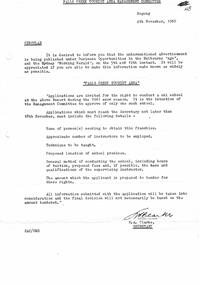
Document - Circular Re Advertisement In Melbourne Age & Sydney Morning Herald
... Circular Re Advertisement In Melbourne Age & Sydney Morning Herald...Circular Re Advertisement In Melbourne Age & Sydney Morning Herald...Circular Re Advertisement In Melbourne Age & Sydney Morning Herald Document Circular Re Advertisement In Melbourne Age & Sydney Morning Herald ...Bob Hymans Collection Bob (Herman) Hymans (a former member of the Royal Netherlands Navy) was born in Bloemendaal, Holland on 30th September 1922. During World War II he fought against the Japanese in the Dutch East Indies (now Indonesia) and was imprisoned in Changi and on the Burma Railway. After gaining qualifications as a Ski Instructor, Bob arrived in Falls Creek in July 1950. Working as an Instructor and Supervisor at Bogong Lodge, Bob decided his future was in accommodation. He was successful in negotiating an indenture for land from the State Electricity Commission (SEC). It took Bob two years to build his Grand Coeur Chalet but, tragically, it was burned down in August 1961. Bob also built the first Chairlift in Australia. This was a single chairlift and the structure was built from wooden electricity poles. He was constantly full of new ideas and proposals for the village. Bob Hymans died on 7th July 2007. This Collection of documents and letters tells the story of Bob's endeavours to develop Falls Creek into the ski village it is today.This document is significant because it outlines plans for the development of the Falls Creek Tourist Area.A circular from the Falls Creek Tourist Area Management Committee inviting applications to conduct a ski school at Falls Creek Tourist Area during the 1961 snow season. falls creek tourist area management committee, ski lift proposals -
Federation University Historical Collection
Journal, Exercise Books used for Newspaper article notes, 1851
... ...melbourne morning herald...buninyong gold fields melbourne morning herald melbourne argus dunlop and regan ballarat gold diggings melbourne news Buninyong Blue tartan covered book of lined paper with handwritten notes inside Exercise Books used for Newspaper article notes Journal ...Blue tartan covered book of lined paper with handwritten notes insidebuninyong gold fields, melbourne morning herald, melbourne argus, dunlop and regan, ballarat gold diggings, melbourne news, buninyong -
Federation University Historical Collection
Journal, Donald Douglas Mather, Exercise Books used for Newspaper article notes, 1954
... ...melbourne morning herald...buninyong gold fields melbourne morning herald melbourne argus dunlop and regan ballarat gold diggings melbourne news Donald Douglas Mather Keith Rash James Jones gold discovery Handwritten on front cover. ...Blue covered embassy exercise book of lined paper with handwritten notes inside and some loose notesHandwritten on front cover. From Donald Douglas Mather Rock St, Ivanhoe, Victoria. Ballaarat of Historical Society, Australian History from 1512 to 1890 to Keith Rash August 1968. buninyong gold fields, melbourne morning herald, melbourne argus, dunlop and regan, ballarat gold diggings, melbourne news, donald douglas mather, keith rash, james jones, gold discovery -
 Bendigo Historical Society Inc.
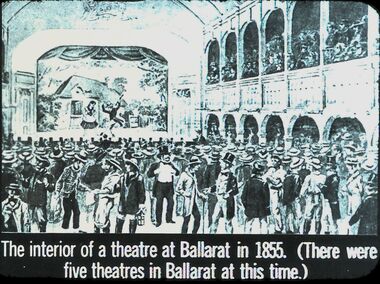
Slide - DIGGERS & MINING: THE DIGGINGS - THE DIGGERS
... Slide reads; A correspondent of the Melbourne Morning Herald, surveying the diggings at Castlemaine when the noise had died down and the fires had burnt out, described the seen as follows;. . . ...Slide reads; A correspondent of the Melbourne Morning Herald, surveying the diggings at Castlemaine when the noise had died down and the fires had burnt out, described the seen as follows;. . . ...Diggers & Mining: The Digging - The Diggers. Slide reads; A correspondent of the Melbourne Morning Herald, surveying the diggings at Castlemaine when the noise had died down and the fires had burnt out, described the seen as follows;. . . Black and white side. Markings: 37 994.LIF:6. Used as a teaching aid.hanimounteducation, tertiary, goldfields -
 Bendigo Historical Society Inc.
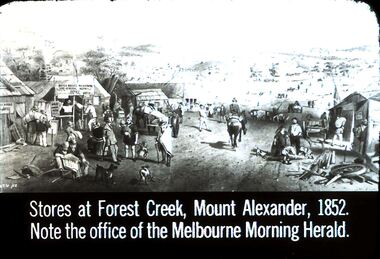
Slide - DIGGERS & MINING. STORES AT THE DIGGINGS, c1852
... Note the office of the Melbourne Morning Herald. Slide show the busy area of Forest Creek stores. ...Note the office of the Melbourne Morning Herald. Slide show the busy area of Forest Creek stores. ...Diggers & Mining. Stores at the diggings. Stores at Forest Creek, Mount Alexander, 1852. Note the office of the Melbourne Morning Herald. Slide show the busy area of Forest Creek stores. From left to right the signs that can be read: ? Argus Office, Gold bought and sold here, Bryce Ross's Newspaper and General Agency Office, STG '52 marked at bottom left corner of picture. Markings: 7 994.LIF. 5. Used as a teaching aid.hanimounteducation, tertiary, goldfields -
 Bendigo Historical Society Inc.
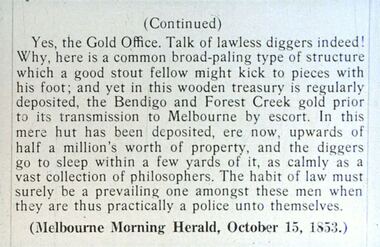
Slide - DIGGERS & MINING: THE DIGGINGS - THE DIGGERS
... Previously it had been transported to Melbourne under guard, now upwards of half a million was kept here (Bendigo and Fyers Creek), and diggers slept within a few yards of it. Melbourne Morning Herald 15 Oct, 1853. Black and white side. ...Previously it had been transported to Melbourne under guard, now upwards of half a million was kept here (Bendigo and Fyers Creek), and diggers slept within a few yards of it. Melbourne Morning Herald 15 Oct, 1853. Black and white side. ...Diggers & Mining: The Digging - The Diggers. Slide is a continuation of 1802.85 slide: States that the Gold Office was built of broad palings that could easily be kicked to pieces by a good stout fellow. Previously it had been transported to Melbourne under guard, now upwards of half a million was kept here (Bendigo and Fyers Creek), and diggers slept within a few yards of it. Melbourne Morning Herald 15 Oct, 1853. Black and white side. Markings: 39 994.LIF:6. Used as a teaching aid.hanimounteducation, tertiary, goldfields -
 Bendigo Historical Society Inc.
Slide - DIGGERS & MINING. THE DIGGINGS THE DIGGERS, c1850s
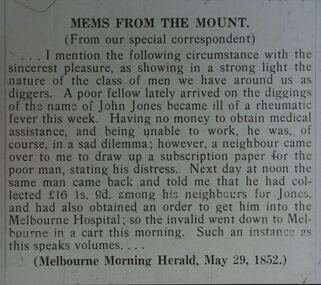
... Next day at noon the same man came back and told me that he had collected 16 pounds 1shilling and sixpence among his neighbours for Jones and had also obtained an order to get him into the Melbourne Hospital; so the invalid went down to Melbourne I a cart this morning. Such an instance as this speaks volumes. (Melbourne Morning Herald, May 29, 1852) Markings: 76 994.LIF:4. ...Next day at noon the same man came back and told me that he had collected 16 pounds 1shilling and sixpence among his neighbours for Jones and had also obtained an order to get him into the Melbourne Hospital; so the invalid went down to Melbourne I a cart this morning. Such an instance as this speaks volumes. (Melbourne Morning Herald, May 29, 1852) Markings: 76 994.LIF:4. ...Diggers & Mining. The Diggings The Diggers. Slide: MEMS FROM THE MOUNT (From the special correspondent) I mention the following circumstance with the sincerest pleasure, as showing in a strong light the nature of the class of men we have around us as diggers. A poor fellow lately arrived on the diggings of the name of John Jones became ill of a rheumatic fever this week. Having no money to obtain medical assistance, and being unable to work, he was, of course, in a sad dilemma; however, a neighbour came over to me to draw up a subscription paper for the poor man, stating his distress. Next day at noon the same man came back and told me that he had collected 16 pounds 1shilling and sixpence among his neighbours for Jones and had also obtained an order to get him into the Melbourne Hospital; so the invalid went down to Melbourne I a cart this morning. Such an instance as this speaks volumes. (Melbourne Morning Herald, May 29, 1852) Markings: 76 994.LIF:4. Used as a teaching aid.hanimounteducation, tertiary, goldfields -
 Falls Creek Historical Society
Article - Business Opportunities At Falls Creek Tourist Area
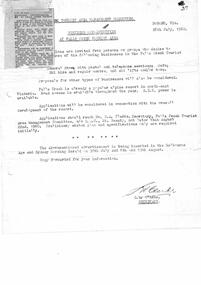
... THe advertisement was to be placed in the Melbourne Age and Sydney Morning Herald....THe advertisement was to be placed in the Melbourne Age and Sydney Morning Herald. Business Opportunities At Falls Creek Tourist Area Article Business Opportunities At Falls Creek Tourist Area ...Bob Hymans Collection Bob (Herman) Hymans (a former member of the Royal Netherlands Navy) was born in Bloemendaal, Holland on 30th September 1922. During World War II he fought against the Japanese in the Dutch East Indies (now Indonesia) and was imprisoned in Changi and on the Burma Railway. After gaining qualifications as a Ski Instructor, Bob arrived in Falls Creek in July 1950. Working as an Instructor and Supervisor at Bogong Lodge, Bob decided his future was in accommodation. He was successful in negotiating an indenture for land from the State Electricity Commission (SEC). It took Bob two years to build his Grand Coeur Chalet but, tragically, it was burned down in August 1961. Bob also built the first Chairlift in Australia. This was a single chairlift and the structure was built from wooden electricity poles. He was constantly full of new ideas and proposals for the village. Bob Hymans died on 7th July 2007. This Collection of documents and letters tells the story of Bob's endeavours to develop Falls Creek into the ski village it is today.This document is significant because it outlines plans for the development of the Falls Creek Tourist Area.A newspaper advertisement and transcript aimed at people to apply to establish new businesses in Falls Creek. Businesses being sought were a General Store with postal and telephone services; Cafe; Ski hire and repair centre and ski lifts and/or tows. Proposals for other types of businesses would be considered. THe advertisement was to be placed in the Melbourne Age and Sydney Morning Herald.falls creek tourist area management committee, development plans, falls creek businesses -
Glenelg Shire Council Cultural Collection
Document - Military Submission, John Ferres, Government Printer, Defences of the Colony, 1864
... There he joined the staff of the Melbourne Morning Herald and soon became manager. On his advice a steam-driven printing machine was imported and installed in the Herald office. ...There he joined the staff of the Melbourne Morning Herald and soon became manager. On his advice a steam-driven printing machine was imported and installed in the Herald office. ...1864 group of 4 submissions bound in to one document. Heavy paper sewn together with twine, black print on white.portland battery, military, major scratchley, commodore wiseman, governor, john ferres -
 Flagstaff Hill Maritime Museum and Village
Book - Reference/Legal Statutes, John Ferres, Government Printer, The Victorian Imperial Statutes Vol 5 Customs Warrnambool, 1868
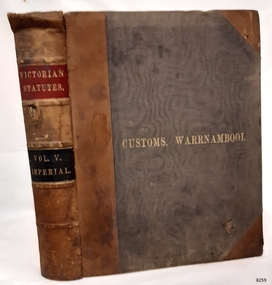
... Ferres joined the staff of the Melbourne Morning Herald as a compositor (typesetter). ...Ferres joined the staff of the Melbourne Morning Herald as a compositor (typesetter). ...This volume is part of the first comprehensive consolidation of laws for the Colony of Victoria after it separated from New South Wales and established its own parliament. Specifically, Volume 5 (published in 1868) is dedicated to "A selection of the imperial statutes apparently in force in Victoria". Because Victoria was still a British colony, laws passed by the British (Imperial) Parliament in Westminster still applied locally if they hadn't been superseded by local Victorian colonial acts. Volume 5 was the legal handbook used by lawyers, judges, and government officials to determine exactly which British laws still governed colonial matters, ranging from shipping and trade to criminal law and merchant customs.The Victorian Statutes Vol 5 Customs Warrnambool Publisher: John Ferres Government Printer Melbourne Date: 1868 Further Information: Three quarter leather. Junction between front board and spine slightly exposed. Top section of leather on spine damaged. non-fictionThis volume is part of the first comprehensive consolidation of laws for the Colony of Victoria after it separated from New South Wales and established its own parliament. Specifically, Volume 5 (published in 1868) is dedicated to "A selection of the imperial statutes apparently in force in Victoria". Because Victoria was still a British colony, laws passed by the British (Imperial) Parliament in Westminster still applied locally if they hadn't been superseded by local Victorian colonial acts. Volume 5 was the legal handbook used by lawyers, judges, and government officials to determine exactly which British laws still governed colonial matters, ranging from shipping and trade to criminal law and merchant customs.flagstaff hill, warrnambool, shipwrecked coast, flagstaff hill maritime museum, maritime museum, shipwreck coast, flagstaff hill maritime village, great ocean road, book, pattison collection, warrnambool library, warrnambool mechanics’ institute, ralph eric pattison, corangamite regional library service, warrnambool city librarian, mechanics’ institute library, victorian library board, warrnambool books and records, warrnambool children’s library -
 Flagstaff Hill Maritime Museum and Village
Book - Reference/Legal Statutes, John Ferres, Government Printer, The Victorian Statutes Vol 4 Various Legal Statues /Warrnambool, 1866
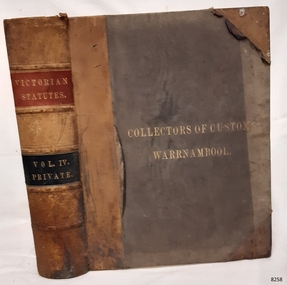
... Ferres joined the staff of the Melbourne Morning Herald as a compositor (typesetter). ...Ferres joined the staff of the Melbourne Morning Herald as a compositor (typesetter). ...This volume is part of the first comprehensive consolidation of laws for the Colony of Victoria after it separated from New South Wales and established its own parliament. Specifically, Volume 4 (published in 1866) contains Local Colonial Acts. These were laws debated, passed, and enacted right here in Melbourne by the newly formed Parliament of the Colony of Victoria. They dealt with purely domestic, local matters, such as Victorian land selection, goldfields regulations, local municipal boundaries, and colonial courts. Volume 4 was the handbook for everyday domestic Victorian life, governing how a local town council operated, how gold claims were filed, or how local debts were settled in a Victorian county court.The Victorian Statutes Vol 4 Various Legal Statues /Warrnambool Publisher: John Ferres Government Printer Melbourne Date: 1866 Further Information: Three quarter leather. Junction between front board and spine slightly exposed. non-fictionThis volume is part of the first comprehensive consolidation of laws for the Colony of Victoria after it separated from New South Wales and established its own parliament. Specifically, Volume 4 (published in 1866) contains Local Colonial Acts. These were laws debated, passed, and enacted right here in Melbourne by the newly formed Parliament of the Colony of Victoria. They dealt with purely domestic, local matters, such as Victorian land selection, goldfields regulations, local municipal boundaries, and colonial courts. Volume 4 was the handbook for everyday domestic Victorian life, governing how a local town council operated, how gold claims were filed, or how local debts were settled in a Victorian county court.flagstaff hill, warrnambool, shipwrecked coast, flagstaff hill maritime museum, maritime museum, shipwreck coast, flagstaff hill maritime village, great ocean road, book, pattison collection, warrnambool library, warrnambool mechanics’ institute, ralph eric pattison, corangamite regional library service, warrnambool city librarian, mechanics’ institute library, victorian library board, warrnambool books and records, warrnambool children’s library -
 Flagstaff Hill Maritime Museum and Village
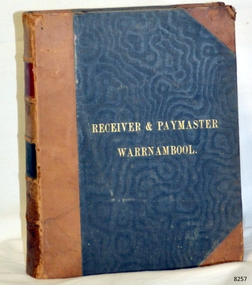
Book - Reference/Legal Statutes, John Ferres, Government Printer, The Victorian Legal Statutes Vol 3, Receiver Paymaster/Warrnambool, 1866
... Ferres joined the staff of the Melbourne Morning Herald as a compositor (typesetter). ...Ferres joined the staff of the Melbourne Morning Herald as a compositor (typesetter). ...This volume is part of the first comprehensive consolidation of laws for the Colony of Victoria after it separated from New South Wales and established its own parliament. Specifically, Volume 3 is the final part of the core "Public and General" Victorian colonial laws. The first three volumes of the 1866 consolidation were organised alphabetically by legal topic. Volume 3 specifically contains all the major public acts running from P to W. Because it covers the tail end of the alphabet, it holds some of the most critical laws that built day-to-day society in 19th-century Victoria. These include: · Police Offences and Public Order: The legal frameworks for policing the goldfield boomtowns, managing public behaviour, and running early colonial prisons. · Public Works and Infrastructure: The acts authorising the construction of roads, bridges, and early municipal water supplies across the fast-growing colony. · Railways: The specific general legislation governing the expansion of Victoria's heavily subsidised, state-expanding railway networks. · Property and Land Transfer: Crucial laws managing land ownership, inheritance, and the foundational transfers of property as the colony shifted away from old squatter runs to permanent towns. · Wines, Beer, and Spirits: The colonial acts regulating the licensing of hotels and public houses, and managing the highly lucrative, tightly controlled alcohol trade.The Victorian Statutes Vol 3 Various Legal Statues /Warrnambool Publisher: John Ferres Government Printer Melbourne Date: 1866 Further Information: Three quarter leather. Corners worn lettering in gilt. non-fictionThis volume is part of the first comprehensive consolidation of laws for the Colony of Victoria after it separated from New South Wales and established its own parliament. Specifically, Volume 3 is the final part of the core "Public and General" Victorian colonial laws. The first three volumes of the 1866 consolidation were organised alphabetically by legal topic. Volume 3 specifically contains all the major public acts running from P to W. Because it covers the tail end of the alphabet, it holds some of the most critical laws that built day-to-day society in 19th-century Victoria. These include: · Police Offences and Public Order: The legal frameworks for policing the goldfield boomtowns, managing public behaviour, and running early colonial prisons. · Public Works and Infrastructure: The acts authorising the construction of roads, bridges, and early municipal water supplies across the fast-growing colony. · Railways: The specific general legislation governing the expansion of Victoria's heavily subsidised, state-expanding railway networks. · Property and Land Transfer: Crucial laws managing land ownership, inheritance, and the foundational transfers of property as the colony shifted away from old squatter runs to permanent towns. · Wines, Beer, and Spirits: The colonial acts regulating the licensing of hotels and public houses, and managing the highly lucrative, tightly controlled alcohol trade.flagstaff hill, warrnambool, shipwrecked coast, flagstaff hill maritime museum, maritime museum, shipwreck coast, flagstaff hill maritime village, great ocean road, book, pattison collection, warrnambool library, warrnambool mechanics’ institute, ralph eric pattison, corangamite regional library service, warrnambool city librarian, mechanics’ institute library, victorian library board, warrnambool books and records, warrnambool children’s library -
 Flagstaff Hill Maritime Museum and Village
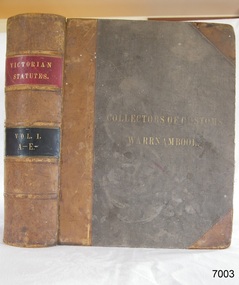
Book - Reference Colonial Legal Statutes, John Ferres, Government Printer, The Victorian Statutes Vol 1 Collectors of Customs A-E, 1866
... Ferres joined the staff of the Melbourne Morning Herald as a compositor (typesetter). ...Ferres joined the staff of the Melbourne Morning Herald as a compositor (typesetter). ...This volume is part of the first comprehensive consolidation of laws for the Colony of Victoria after it separated from New South Wales and established its own parliament. Specifically, Volume 1 (published in 1866) contains Local Colonial Acts. These were laws debated, passed, and enacted right here in Melbourne by the newly formed Parliament of the Colony of Victoria. They dealt with purely domestic, local matters, such as Victorian land selection, goldfields regulations, local municipal boundaries, and colonial courts. Volume 1 was the handbook for everyday domestic Victorian life, governing how a local town council operated, how gold claims were filed, or how local debts were settled in a Victorian county court or how customs should operate.Hard cover book,The Victorian Statutes Vol 1. Collectors of Customs A-E Author: Corporate Author “The Colony of Victoria” Publisher: John Ferres Government Printer Melbourne. Date: 1866 The Victorian Statutes Vol 1, front cover has title Collectors of Customs Warrnambool. Brown leather binding and corners, black canvas cover, red and black bands on spine. non-fictionThis volume is part of the first comprehensive consolidation of laws for the Colony of Victoria after it separated from New South Wales and established its own parliament. Specifically, Volume 1 (published in 1866) contains Local Colonial Acts. These were laws debated, passed, and enacted right here in Melbourne by the newly formed Parliament of the Colony of Victoria. They dealt with purely domestic, local matters, such as Victorian land selection, goldfields regulations, local municipal boundaries, and colonial courts. Volume 1 was the handbook for everyday domestic Victorian life, governing how a local town council operated, how gold claims were filed, or how local debts were settled in a Victorian county court or how customs should operate.warrnambool, shipwrecked-coast, flagstaff-hill, flagstaff-hill-maritime-museum, maritime-museum, shipwreck-coast, flagstaff-hill-maritime-village, shipwrecked-artefact, book, government statutes for victoria 1866, warrnambool's copy of government statutes 1866 -
 Flagstaff Hill Maritime Museum and Village
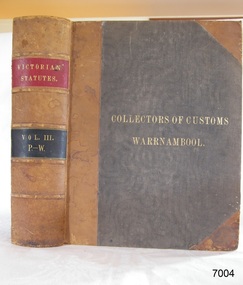
Book - Reference Colonial Legal Statutes, John Ferres, Government Printer, The Victorian Statutes Vol 3 Collectors of Customs P-W, 1866
... Ferres joined the staff of the Melbourne Morning Herald as a compositor (typesetter). ...Ferres joined the staff of the Melbourne Morning Herald as a compositor (typesetter). ...This volume is part of the first comprehensive consolidation of laws for the Colony of Victoria after it separated from New South Wales and established its own parliament. Specifically, Volume 3 (published in 1866) contains Local Colonial Acts. These were laws debated, passed, and enacted right here in Melbourne by the newly formed Parliament of the Colony of Victoria. They dealt with purely domestic, local matters, such as Victorian land selection, goldfields regulations, local municipal boundaries, and colonial courts. Volume 3 was the handbook for everyday domestic Victorian life, governing how a local town council operated, how gold claims were filed, or how local debts were settled in a Victorian county court or how customs should operate.Hard cover book,The Victorian Statutes Vol 3. Collectors of Customs P-W Author: Corporate Author “The Colony of Victoria” Publisher: John Ferres Government Printer Melbourne. Date: 1866 The Victorian Statutes Vol 3, front cover has title Collectors of Customs Warrnambool. Brown leather binding and corners, black canvas cover, red and black bands on spine. non-fictionThis volume is part of the first comprehensive consolidation of laws for the Colony of Victoria after it separated from New South Wales and established its own parliament. Specifically, Volume 3 (published in 1866) contains Local Colonial Acts. These were laws debated, passed, and enacted right here in Melbourne by the newly formed Parliament of the Colony of Victoria. They dealt with purely domestic, local matters, such as Victorian land selection, goldfields regulations, local municipal boundaries, and colonial courts. Volume 3 was the handbook for everyday domestic Victorian life, governing how a local town council operated, how gold claims were filed, or how local debts were settled in a Victorian county court or how customs should operate.warrnambool, shipwrecked-coast, flagstaff-hill, flagstaff-hill-maritime-museum, maritime-museum, shipwreck-coast, flagstaff-hill-maritime-village, shipwrecked-artefact, book, government statutes for victoria 1866, warrnambool's copy of government statutes 1866 -
 Flagstaff Hill Maritime Museum and Village
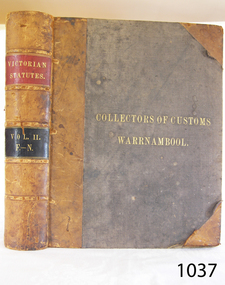
Book - Reference/Legal Acts, John Ferres, Government Printer, The Victorian Statutes Vol 2 Collectors of Customs, 1866
... Ferres joined the staff of the Melbourne Morning Herald as a compositor (typesetter). ...Ferres joined the staff of the Melbourne Morning Herald as a compositor (typesetter). ...Because the subject item is a book of law, it would not traditionally have a singular author, but rather a corporate author, specifically the Colony of Victoria and, more precisely, the Parliament of Victoria. The Victorian Statutes of 1866 is an official compilation of the statute law of the Colony of Victoria, Australia, 'Published by Authority', and printed by John Ferres, who was the Victorian Government Printer at the time. Ferres was the printer/publisher, not an author or editor in the usual sense, as this is a government publication rather than an individually authored work.Hard cover book, The Victorian Statutes Vol 2 Author: Corporate Author “The Colony of Victoria” Publisher: John Ferres Government Printer Melbourne. Date: 1866 Three quarter leather, Olive Front Cover, Brown Spine with Gold embossed Title on spine & front cover "Collector of Customs Warrnambool"non-fictionBecause the subject item is a book of law, it would not traditionally have a singular author, but rather a corporate author, specifically the Colony of Victoria and, more precisely, the Parliament of Victoria. The Victorian Statutes of 1866 is an official compilation of the statute law of the Colony of Victoria, Australia, 'Published by Authority', and printed by John Ferres, who was the Victorian Government Printer at the time. Ferres was the printer/publisher, not an author or editor in the usual sense, as this is a government publication rather than an individually authored work.flagstaff hill, warrnambool, shipwrecked-coast, flagstaff-hill, flagstaff-hill-maritime-museum, maritime-museum, shipwreck-coast, flagstaff-hill-maritime-village, the victorian statutes vol 2 collectors of customs, book -
 Flagstaff Hill Maritime Museum and Village
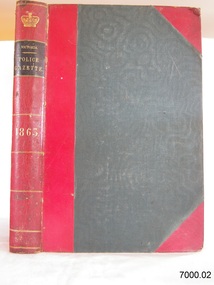
Administrative record - Reference Sociology/History, John Ferres, Government Printer, Victoria Police Gazettes for 1863, 1863
... Ferres joined the staff of the Melbourne Morning Herald as a compositor (typesetter). ...Ferres joined the staff of the Melbourne Morning Herald as a compositor (typesetter). ...The Victoria Police Gazette was a confidential, internal publication of the Victoria Police, issued to inform police officers, court and justice officials, and government departments about matters relevant to policing across the colony. It commenced in December 1853 and was initially published weekly by the Victoria Police. It was distributed each week to city and rural police stations and to government offices and newspaper publishers. Inclusions in this weekly publication were people wanted for questioning in relation to various crimes, prisoners discharged from city or country gaols, extracts from Police Gazettes in New South Wales, South Australia, Queensland, Tasmania, New Zealand, and occasionally overseas countries, as well as extracts from the Hobart Town Gazette listing escaped convicts and the person to whom they were assigned. There was also a "Missing Friends" section, where most people listed were not criminals but were sought by police so relatives, old friends, or government officials could renew contact with them. In addition, there was a record of deserted wives and children, listing the offender's name, birthplace, age, occupation, last known area of residence, likely future movements and known relatives. There was also a section on court lists, warrants issued, appointments and staffing changes within the police service, arrest and discharge records with physical descriptions, and lists of pastoralists with descriptions of their livestock brands.Hard Bound Volume. Victorian Police Gazettes for 1863 Author: Institutional Government Publication Publisher: John Ferres, Melbourne Date: 1863 Further Information: Compilation of Weekly Victorian Police Gazettes for 1863 in a hard bound volume with red spine and red corner reinforcing. Front panel grey coloured lettering in gilt with gilt banding to spine. Inside is twelve issues of the Police Gazettes for 1863.non-fictionThe Victoria Police Gazette was a confidential, internal publication of the Victoria Police, issued to inform police officers, court and justice officials, and government departments about matters relevant to policing across the colony. It commenced in December 1853 and was initially published weekly by the Victoria Police. It was distributed each week to city and rural police stations and to government offices and newspaper publishers. Inclusions in this weekly publication were people wanted for questioning in relation to various crimes, prisoners discharged from city or country gaols, extracts from Police Gazettes in New South Wales, South Australia, Queensland, Tasmania, New Zealand, and occasionally overseas countries, as well as extracts from the Hobart Town Gazette listing escaped convicts and the person to whom they were assigned. There was also a "Missing Friends" section, where most people listed were not criminals but were sought by police so relatives, old friends, or government officials could renew contact with them. In addition, there was a record of deserted wives and children, listing the offender's name, birthplace, age, occupation, last known area of residence, likely future movements and known relatives. There was also a section on court lists, warrants issued, appointments and staffing changes within the police service, arrest and discharge records with physical descriptions, and lists of pastoralists with descriptions of their livestock brands.warrnambool, shipwrecked-coast, flagstaff-hill, flagstaff-hill-maritime-museum, maritime-museum, shipwreck-coast, flagstaff-hill-maritime-village, shipwrecked-artefact, book, victoria police gazette 1862, victoria police gazette, warrnambool books and records, great ocean road -
 Flagstaff Hill Maritime Museum and Village
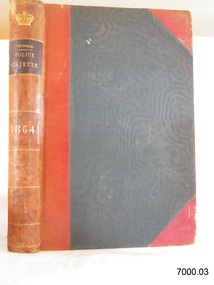
Administrative record - Reference Sociology/History, John Ferres, Government Printer, Victoria Police Gazettes for 1864, 1864
... Ferres joined the staff of the Melbourne Morning Herald as a compositor (typesetter). ...Ferres joined the staff of the Melbourne Morning Herald as a compositor (typesetter). ...The Victoria Police Gazette was a confidential, internal publication of the Victoria Police, issued to inform police officers, court and justice officials, and government departments about matters relevant to policing across the colony. It commenced in December 1853 and was initially published weekly by the Victoria Police. It was distributed each week to city and rural police stations and to government offices and newspaper publishers. Inclusions in this weekly publication were people wanted for questioning in relation to various crimes, prisoners discharged from city or country gaols, extracts from Police Gazettes in New South Wales, South Australia, Queensland, Tasmania, New Zealand, and occasionally overseas countries, as well as extracts from the Hobart Town Gazette listing escaped convicts and the person to whom they were assigned. There was also a "Missing Friends" section, where most people listed were not criminals but were sought by police so relatives, old friends, or government officials could renew contact with them. In addition, there was a record of deserted wives and children, listing the offender's name, birthplace, age, occupation, last known area of residence, likely future movements and known relatives. There was also a section on court lists, warrants issued, appointments and staffing changes within the police service, arrest and discharge records with physical descriptions, and lists of pastoralists with descriptions of their livestock brands.Hard Bound Volume. Victorian Police Gazettes for 1864 Author: Institutional Government Publication Publisher: John Ferres, Melbourne Date: 1864 Further Information: Compilation of Weekly Victorian Police Gazettes for 1864 in a hard bound volume with red spine and red corner reinforcing. Front panel grey coloured lettering in gilt with gilt banding to spine. Inside is twelve issues of the Police Gazettes for 1864.non-fictionThe Victoria Police Gazette was a confidential, internal publication of the Victoria Police, issued to inform police officers, court and justice officials, and government departments about matters relevant to policing across the colony. It commenced in December 1853 and was initially published weekly by the Victoria Police. It was distributed each week to city and rural police stations and to government offices and newspaper publishers. Inclusions in this weekly publication were people wanted for questioning in relation to various crimes, prisoners discharged from city or country gaols, extracts from Police Gazettes in New South Wales, South Australia, Queensland, Tasmania, New Zealand, and occasionally overseas countries, as well as extracts from the Hobart Town Gazette listing escaped convicts and the person to whom they were assigned. There was also a "Missing Friends" section, where most people listed were not criminals but were sought by police so relatives, old friends, or government officials could renew contact with them. In addition, there was a record of deserted wives and children, listing the offender's name, birthplace, age, occupation, last known area of residence, likely future movements and known relatives. There was also a section on court lists, warrants issued, appointments and staffing changes within the police service, arrest and discharge records with physical descriptions, and lists of pastoralists with descriptions of their livestock brands.warrnambool, shipwrecked-coast, flagstaff-hill, flagstaff-hill-maritime-museum, maritime-museum, shipwreck-coast, flagstaff-hill-maritime-village, shipwrecked-artefact, book, victoria police gazette 1862, victoria police gazette, warrnambool books and records, great ocean road -
 Flagstaff Hill Maritime Museum and Village
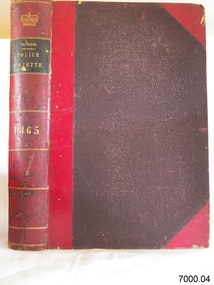
Administrative record - Reference Sociology/History, John Ferres, Government Printer, Victoria Police Gazettes for 1865, 1865
... Ferres joined the staff of the Melbourne Morning Herald as a compositor (typesetter). ...Ferres joined the staff of the Melbourne Morning Herald as a compositor (typesetter). ...The Victoria Police Gazette was a confidential, internal publication of the Victoria Police, issued to inform police officers, court and justice officials, and government departments about matters relevant to policing across the colony. It commenced in December 1853 and was initially published weekly by the Victoria Police. It was distributed each week to city and rural police stations and to government offices and newspaper publishers. Inclusions in this weekly publication were people wanted for questioning in relation to various crimes, prisoners discharged from city or country gaols, extracts from Police Gazettes in New South Wales, South Australia, Queensland, Tasmania, New Zealand, and occasionally overseas countries, as well as extracts from the Hobart Town Gazette listing escaped convicts and the person to whom they were assigned. There was also a "Missing Friends" section, where most people listed were not criminals but were sought by police so relatives, old friends, or government officials could renew contact with them. In addition, there was a record of deserted wives and children, listing the offender's name, birthplace, age, occupation, last known area of residence, likely future movements and known relatives. There was also a section on court lists, warrants issued, appointments and staffing changes within the police service, arrest and discharge records with physical descriptions, and lists of pastoralists with descriptions of their livestock brands.Hard Bound Volume. Victorian Police Gazettes for 1865 Author: Institutional Government Publication Publisher: John Ferres, Melbourne Date: 1865 Further Information: Compilation of Weekly Victorian Police Gazettes for 1865 in a hard bound volume with red spine and red corner reinforcing. Front panel grey coloured lettering in gilt with gilt banding to spine. Inside is twelve issues of the Police Gazettes for 1865.non-fictionThe Victoria Police Gazette was a confidential, internal publication of the Victoria Police, issued to inform police officers, court and justice officials, and government departments about matters relevant to policing across the colony. It commenced in December 1853 and was initially published weekly by the Victoria Police. It was distributed each week to city and rural police stations and to government offices and newspaper publishers. Inclusions in this weekly publication were people wanted for questioning in relation to various crimes, prisoners discharged from city or country gaols, extracts from Police Gazettes in New South Wales, South Australia, Queensland, Tasmania, New Zealand, and occasionally overseas countries, as well as extracts from the Hobart Town Gazette listing escaped convicts and the person to whom they were assigned. There was also a "Missing Friends" section, where most people listed were not criminals but were sought by police so relatives, old friends, or government officials could renew contact with them. In addition, there was a record of deserted wives and children, listing the offender's name, birthplace, age, occupation, last known area of residence, likely future movements and known relatives. There was also a section on court lists, warrants issued, appointments and staffing changes within the police service, arrest and discharge records with physical descriptions, and lists of pastoralists with descriptions of their livestock brands.warrnambool, shipwrecked-coast, flagstaff-hill, flagstaff-hill-maritime-museum, maritime-museum, shipwreck-coast, flagstaff-hill-maritime-village, shipwrecked-artefact, book, victoria police gazette 1862, victoria police gazette, warrnambool books and records, great ocean road -
 Flagstaff Hill Maritime Museum and Village
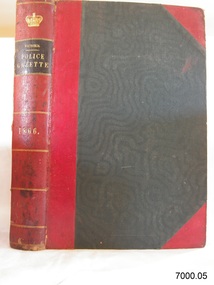
Administrative record - Reference Sociology/History, John Ferres, Government Printer, Victoria Police Gazettes for 1866, 1866
... Ferres joined the staff of the Melbourne Morning Herald as a compositor (typesetter). ...Ferres joined the staff of the Melbourne Morning Herald as a compositor (typesetter). ...The Victoria Police Gazette was a confidential, internal publication of the Victoria Police, issued to inform police officers, court and justice officials, and government departments about matters relevant to policing across the colony. It commenced in December 1853 and was initially published weekly by the Victoria Police. It was distributed each week to city and rural police stations and to government offices and newspaper publishers. Inclusions in this weekly publication were people wanted for questioning in relation to various crimes, prisoners discharged from city or country gaols, extracts from Police Gazettes in New South Wales, South Australia, Queensland, Tasmania, New Zealand, and occasionally overseas countries, as well as extracts from the Hobart Town Gazette listing escaped convicts and the person to whom they were assigned. There was also a "Missing Friends" section, where most people listed were not criminals but were sought by police so relatives, old friends, or government officials could renew contact with them. In addition, there was a record of deserted wives and children, listing the offender's name, birthplace, age, occupation, last known area of residence, likely future movements and known relatives. There was also a section on court lists, warrants issued, appointments and staffing changes within the police service, arrest and discharge records with physical descriptions, and lists of pastoralists with descriptions of their livestock brands.Hard Bound Volume. Victorian Police Gazettes for 1866 Author: Institutional Government Publication Publisher: John Ferres, Melbourne Date: 1866 Further Information: Compilation of Weekly Victorian Police Gazettes for 1866 in a hard bound volume with red spine and red corner reinforcing. Front panel grey coloured lettering in gilt with gilt banding to spine. Inside is twelve issues of the Police Gazettes for 1866.non-fictionThe Victoria Police Gazette was a confidential, internal publication of the Victoria Police, issued to inform police officers, court and justice officials, and government departments about matters relevant to policing across the colony. It commenced in December 1853 and was initially published weekly by the Victoria Police. It was distributed each week to city and rural police stations and to government offices and newspaper publishers. Inclusions in this weekly publication were people wanted for questioning in relation to various crimes, prisoners discharged from city or country gaols, extracts from Police Gazettes in New South Wales, South Australia, Queensland, Tasmania, New Zealand, and occasionally overseas countries, as well as extracts from the Hobart Town Gazette listing escaped convicts and the person to whom they were assigned. There was also a "Missing Friends" section, where most people listed were not criminals but were sought by police so relatives, old friends, or government officials could renew contact with them. In addition, there was a record of deserted wives and children, listing the offender's name, birthplace, age, occupation, last known area of residence, likely future movements and known relatives. There was also a section on court lists, warrants issued, appointments and staffing changes within the police service, arrest and discharge records with physical descriptions, and lists of pastoralists with descriptions of their livestock brands.warrnambool, shipwrecked-coast, flagstaff-hill, flagstaff-hill-maritime-museum, maritime-museum, shipwreck-coast, flagstaff-hill-maritime-village, shipwrecked-artefact, book, victoria police gazette 1862, victoria police gazette, warrnambool books and records, great ocean road -
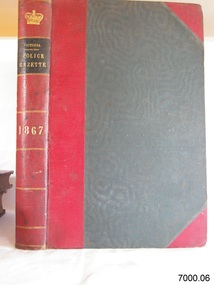 Flagstaff Hill Maritime Museum and Village
Administrative record - Reference Sociology/History, John Ferres, Government Printer, Victoria Police Gazettes for 1867, 1867
... Ferres joined the staff of the Melbourne Morning Herald as a compositor (typesetter). ...Ferres joined the staff of the Melbourne Morning Herald as a compositor (typesetter). ...The Victoria Police Gazette was a confidential, internal publication of the Victoria Police, issued to inform police officers, court and justice officials, and government departments about matters relevant to policing across the colony. It commenced in December 1853 and was initially published weekly by the Victoria Police. It was distributed each week to city and rural police stations and to government offices and newspaper publishers. Inclusions in this weekly publication were people wanted for questioning in relation to various crimes, prisoners discharged from city or country gaols, extracts from Police Gazettes in New South Wales, South Australia, Queensland, Tasmania, New Zealand, and occasionally overseas countries, as well as extracts from the Hobart Town Gazette listing escaped convicts and the person to whom they were assigned. There was also a "Missing Friends" section, where most people listed were not criminals but were sought by police so relatives, old friends, or government officials could renew contact with them. In addition, there was a record of deserted wives and children, listing the offender's name, birthplace, age, occupation, last known area of residence, likely future movements and known relatives. There was also a section on court lists, warrants issued, appointments and staffing changes within the police service, arrest and discharge records with physical descriptions, and lists of pastoralists with descriptions of their livestock brands.Hard Bound Volume. Victorian Police Gazettes for 1867 Author: Institutional Government Publication Publisher: John Ferres, Melbourne Date: 1867 Further Information: Compilation of Weekly Victorian Police Gazettes for 1867 in a hard bound volume with red spine and red corner reinforcing. Front panel grey coloured lettering in gilt with gilt banding to spine. Inside is twelve issues of the Police Gazettes for 1867.non-fictionThe Victoria Police Gazette was a confidential, internal publication of the Victoria Police, issued to inform police officers, court and justice officials, and government departments about matters relevant to policing across the colony. It commenced in December 1853 and was initially published weekly by the Victoria Police. It was distributed each week to city and rural police stations and to government offices and newspaper publishers. Inclusions in this weekly publication were people wanted for questioning in relation to various crimes, prisoners discharged from city or country gaols, extracts from Police Gazettes in New South Wales, South Australia, Queensland, Tasmania, New Zealand, and occasionally overseas countries, as well as extracts from the Hobart Town Gazette listing escaped convicts and the person to whom they were assigned. There was also a "Missing Friends" section, where most people listed were not criminals but were sought by police so relatives, old friends, or government officials could renew contact with them. In addition, there was a record of deserted wives and children, listing the offender's name, birthplace, age, occupation, last known area of residence, likely future movements and known relatives. There was also a section on court lists, warrants issued, appointments and staffing changes within the police service, arrest and discharge records with physical descriptions, and lists of pastoralists with descriptions of their livestock brands.warrnambool, shipwrecked-coast, flagstaff-hill, flagstaff-hill-maritime-museum, maritime-museum, shipwreck-coast, flagstaff-hill-maritime-village, shipwrecked-artefact, book, victoria police gazette 1862, victoria police gazette, warrnambool books and records, great ocean road -
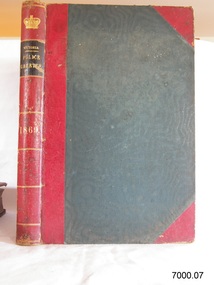 Flagstaff Hill Maritime Museum and Village
Administrative record - Reference Sociology/History, John Ferres, Government Printer, Victoria Police Gazettes for 1869, 1869
... Ferres joined the staff of the Melbourne Morning Herald as a compositor (typesetter). ...Ferres joined the staff of the Melbourne Morning Herald as a compositor (typesetter). ...The Victoria Police Gazette was a confidential, internal publication of the Victoria Police, issued to inform police officers, court and justice officials, and government departments about matters relevant to policing across the colony. It commenced in December 1853 and was initially published weekly by the Victoria Police. It was distributed each week to city and rural police stations and to government offices and newspaper publishers. Inclusions in this weekly publication were people wanted for questioning in relation to various crimes, prisoners discharged from city or country gaols, extracts from Police Gazettes in New South Wales, South Australia, Queensland, Tasmania, New Zealand, and occasionally overseas countries, as well as extracts from the Hobart Town Gazette listing escaped convicts and the person to whom they were assigned. There was also a "Missing Friends" section, where most people listed were not criminals but were sought by police so relatives, old friends, or government officials could renew contact with them. In addition, there was a record of deserted wives and children, listing the offender's name, birthplace, age, occupation, last known area of residence, likely future movements and known relatives. There was also a section on court lists, warrants issued, appointments and staffing changes within the police service, arrest and discharge records with physical descriptions, and lists of pastoralists with descriptions of their livestock brands.Hard Bound Volume. Victorian Police Gazettes for 1869 Author: Institutional Government Publication Publisher: John Ferres, Melbourne Date: 1869 Further Information: Compilation of Weekly Victorian Police Gazettes for 1869 in a hard bound volume with red spine and red corner reinforcing. Front panel grey coloured lettering in gilt with gilt banding to spine. Inside is twelve issues of the Police Gazettes for 1869.non-fictionThe Victoria Police Gazette was a confidential, internal publication of the Victoria Police, issued to inform police officers, court and justice officials, and government departments about matters relevant to policing across the colony. It commenced in December 1853 and was initially published weekly by the Victoria Police. It was distributed each week to city and rural police stations and to government offices and newspaper publishers. Inclusions in this weekly publication were people wanted for questioning in relation to various crimes, prisoners discharged from city or country gaols, extracts from Police Gazettes in New South Wales, South Australia, Queensland, Tasmania, New Zealand, and occasionally overseas countries, as well as extracts from the Hobart Town Gazette listing escaped convicts and the person to whom they were assigned. There was also a "Missing Friends" section, where most people listed were not criminals but were sought by police so relatives, old friends, or government officials could renew contact with them. In addition, there was a record of deserted wives and children, listing the offender's name, birthplace, age, occupation, last known area of residence, likely future movements and known relatives. There was also a section on court lists, warrants issued, appointments and staffing changes within the police service, arrest and discharge records with physical descriptions, and lists of pastoralists with descriptions of their livestock brands.warrnambool, shipwrecked-coast, flagstaff-hill, flagstaff-hill-maritime-museum, maritime-museum, shipwreck-coast, flagstaff-hill-maritime-village, shipwrecked-artefact, book, victoria police gazette 1862, victoria police gazette, warrnambool books and records, great ocean road -
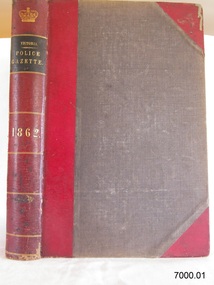 Flagstaff Hill Maritime Museum and Village
Administrative record - Reference Sociology/History, John Ferres, Government Printer, Victoria Police Gazettes for 1862, 1862
... Ferres joined the staff of the Melbourne Morning Herald as a compositor (typesetter). ...Ferres joined the staff of the Melbourne Morning Herald as a compositor (typesetter). ...The Victoria Police Gazette was a confidential, internal publication of the Victoria Police, issued to inform police officers, court and justice officials, and government departments about matters relevant to policing across the colony. It commenced in December 1853 and was initially published weekly by the Victoria Police. It was distributed each week to city and rural police stations and to government offices and newspaper publishers. Inclusions in this weekly publication were people wanted for questioning in relation to various crimes, prisoners discharged from city or country gaols, extracts from Police Gazettes in New South Wales, South Australia, Queensland, Tasmania, New Zealand, and occasionally overseas countries, as well as extracts from the Hobart Town Gazette listing escaped convicts and the person to whom they were assigned. There was also a "Missing Friends" section, where most people listed were not criminals but were sought by police so relatives, old friends, or government officials could renew contact with them. In addition, there was a record of deserted wives and children, listing the offender's name, birthplace, age, occupation, last known area of residence, likely future movements and known relatives. There was also a section on court lists, warrants issued, appointments and staffing changes within the police service, arrest and discharge records with physical descriptions, and lists of pastoralists with descriptions of their livestock brands.Hard Bound Volume. Victorian Police Gazettes for 1862 Author: Institutional Government Publication Publisher: John Ferres, Melbourne Date: 1862 Further Information: Compilation of Weekly Victorian Police Gazettes for 1862 in a hard bound volume with red spine and red corner reinforcing. Front panel grey coloured lettering in gilt with gilt banding to spine. Inside is twelve issues of the Police Gazettes for 1862.non-fictionThe Victoria Police Gazette was a confidential, internal publication of the Victoria Police, issued to inform police officers, court and justice officials, and government departments about matters relevant to policing across the colony. It commenced in December 1853 and was initially published weekly by the Victoria Police. It was distributed each week to city and rural police stations and to government offices and newspaper publishers. Inclusions in this weekly publication were people wanted for questioning in relation to various crimes, prisoners discharged from city or country gaols, extracts from Police Gazettes in New South Wales, South Australia, Queensland, Tasmania, New Zealand, and occasionally overseas countries, as well as extracts from the Hobart Town Gazette listing escaped convicts and the person to whom they were assigned. There was also a "Missing Friends" section, where most people listed were not criminals but were sought by police so relatives, old friends, or government officials could renew contact with them. In addition, there was a record of deserted wives and children, listing the offender's name, birthplace, age, occupation, last known area of residence, likely future movements and known relatives. There was also a section on court lists, warrants issued, appointments and staffing changes within the police service, arrest and discharge records with physical descriptions, and lists of pastoralists with descriptions of their livestock brands.warrnambool, shipwrecked-coast, flagstaff-hill, flagstaff-hill-maritime-museum, maritime-museum, shipwreck-coast, flagstaff-hill-maritime-village, shipwrecked-artefact, book, victoria police gazette 1862, victoria police gazette, warrnambool books and records, great ocean road -
 Bendigo Historical Society Inc.
Newspaper - NEWSPAPER COLLECTION: THE ADVERTISER
... Folder 113 1) Tuesday, December 9, 2003. 2) Tuesday, September 5, 1995. 3) Saturday, January 1, 2000. 4) Wednesday, August 16, 1995. 5) Friday, September 25, 1987. 6) Friday, May 29, 1987. 7) Thursday, May 28, 1987. 8) Tuesday, May 26, 1987. 9) Wednesday, May 27, 1987. 10) Friday, April 15, 1983. 11) Monday, November 22, 1982. 12) Saturday, February 16, 1963. 13) Monday, July 30, 1962. 14) Tuesday, July 31, 1962. 15) Saturday, February 3, 1917. 16) Thursday, April 13, 1972. 17) Saturday, January 23, 1988. 18) October 1980. 19) Wednesday, June 7, 1989. 20) Monday, May 25, 1987. 21) Bendigo Advertiser Saturday, July 3, 1971 22) Bendigo Advertiser Saturday, august 22, 1992 23) Herald March 8, 1990 copy of Melbourne Morning Herald November 19, 1850 24) Bendigo Advertiser - Wednesday, July 26, 2000 25) Bendigo Advertiser - Thursday, July 27, 2000 26) Herald Sun - Thursday July 27, 2000 27) Bendigo Advertiser - Friday, July 28, 2000 28) The Gazette - Wednesday, November 12, 1980 29) The Gazette - Wednesday, April 8, 1981 30) The Gazette - Wednesday, November 25, 1981 31) The Gazette - Wednesday, February 10, 1982 32) The Gazette - Wednesday, February 17, 1982 33) The Gazette - Wednesday, May 12, 1982 34) The Gazette - Wednesday, May 19, 1982 35) The Gazette - Wednesday, June 23, 1982 36) The Gazette - Wednesday, June 30, 1982 37) The Gazette - Wednesday, July 7, 1982 38) The Gazette - Wednesday, August 4, 1982 39) The Gazette - Wednesday, August 11, 1982 40) The Gazette - Wednesday, August 18, 1982 41) The Gazette - Wednesday, September 22, 1982 42) The Gazette - Wednesday, September 29, 1982 43) The Gazette - Wednesday, October 13, 1982 44) The Gazette - Wednesday, October 20, 1982 45) The Gazette - Wednesday, November 3, 1982 46) The Gazette - Wednesday, November 17, 1982 47) Golden City Gazette - December 1, 1976 48) Golden City Gazette - April 27, 1977 49) The Mail Bendigo - November 27, 1968 50) The Mail Bendigo - December 11, 1968 51) The Mail Bendigo - March 26, 1969 52) The Mail Bendigo - March 19, 1969 53) The Mail Bendigo - November 26, 1969 54) The Mail Bendigo - February 11, 1970...NEWSPAPER Bendigo advertiser Folder 113 1) Tuesday, December 9, 2003. 2) Tuesday, September 5, 1995. 3) Saturday, January 1, 2000. 4) Wednesday, August 16, 1995. 5) Friday, September 25, 1987. 6) Friday, May 29, 1987. 7) Thursday, May 28, 1987. 8) Tuesday, May 26, 1987. 9) Wednesday, May 27, 1987. 10) Friday, April 15, 1983. 11) Monday, November 22, 1982. 12) Saturday, February 16, 1963. 13) Monday, July 30, 1962. 14) Tuesday, July 31, 1962. 15) Saturday, February 3, 1917. 16) Thursday, April 13, 1972. 17) Saturday, January 23, 1988. 18) October 1980. 19) Wednesday, June 7, 1989. 20) Monday, May 25, 1987. 21) Bendigo Advertiser Saturday, July 3, 1971 22) Bendigo Advertiser Saturday, august 22, 1992 23) Herald March 8, 1990 copy of Melbourne Morning Herald November 19, 1850 24) Bendigo Advertiser - Wednesday, July 26, 2000 25) Bendigo Advertiser - Thursday, July 27, 2000 26) Herald Sun - Thursday July 27, 2000 27) Bendigo Advertiser - Friday, July 28, 2000 28) The Gazette - Wednesday, November 12, 1980 29) The Gazette - Wednesday, April 8, 1981 30) The Gazette - Wednesday, November 25, 1981 31) The Gazette - Wednesday, February 10, 1982 32) The Gazette - Wednesday, February 17, 1982 33) The Gazette - Wednesday, May 12, 1982 34) The Gazette - Wednesday, May 19, 1982 35) The Gazette - Wednesday, June 23, 1982 36) The Gazette - Wednesday, June 30, 1982 37) The Gazette - Wednesday, July 7, 1982 38) The Gazette - Wednesday, August 4, 1982 39) The Gazette - Wednesday, August 11, 1982 40) The Gazette - Wednesday, August 18, 1982 41) The Gazette - Wednesday, September 22, 1982 42) The Gazette - Wednesday, September 29, 1982 43) The Gazette - Wednesday, October 13, 1982 44) The Gazette - Wednesday, October 20, 1982 45) The Gazette - Wednesday, November 3, 1982 46) The Gazette - Wednesday, November 17, 1982 47) Golden City Gazette - December 1, 1976 48) Golden City Gazette - April 27, 1977 49) The Mail Bendigo - November 27, 1968 50) The Mail Bendigo - December 11, 1968 51) The Mail Bendigo - March 26, 1969 52) The Mail Bendigo - March 19, 1969 53) The Mail Bendigo - November 26, 1969 54) The Mail Bendigo - February 11, 1970 Newspaper NEWSPAPER COLLECTION: THE ADVERTISER ...Folder 113 1) Tuesday, December 9, 2003. 2) Tuesday, September 5, 1995. 3) Saturday, January 1, 2000. 4) Wednesday, August 16, 1995. 5) Friday, September 25, 1987. 6) Friday, May 29, 1987. 7) Thursday, May 28, 1987. 8) Tuesday, May 26, 1987. 9) Wednesday, May 27, 1987. 10) Friday, April 15, 1983. 11) Monday, November 22, 1982. 12) Saturday, February 16, 1963. 13) Monday, July 30, 1962. 14) Tuesday, July 31, 1962. 15) Saturday, February 3, 1917. 16) Thursday, April 13, 1972. 17) Saturday, January 23, 1988. 18) October 1980. 19) Wednesday, June 7, 1989. 20) Monday, May 25, 1987. 21) Bendigo Advertiser Saturday, July 3, 1971 22) Bendigo Advertiser Saturday, august 22, 1992 23) Herald March 8, 1990 copy of Melbourne Morning Herald November 19, 1850 24) Bendigo Advertiser - Wednesday, July 26, 2000 25) Bendigo Advertiser - Thursday, July 27, 2000 26) Herald Sun - Thursday July 27, 2000 27) Bendigo Advertiser - Friday, July 28, 2000 28) The Gazette - Wednesday, November 12, 1980 29) The Gazette - Wednesday, April 8, 1981 30) The Gazette - Wednesday, November 25, 1981 31) The Gazette - Wednesday, February 10, 1982 32) The Gazette - Wednesday, February 17, 1982 33) The Gazette - Wednesday, May 12, 1982 34) The Gazette - Wednesday, May 19, 1982 35) The Gazette - Wednesday, June 23, 1982 36) The Gazette - Wednesday, June 30, 1982 37) The Gazette - Wednesday, July 7, 1982 38) The Gazette - Wednesday, August 4, 1982 39) The Gazette - Wednesday, August 11, 1982 40) The Gazette - Wednesday, August 18, 1982 41) The Gazette - Wednesday, September 22, 1982 42) The Gazette - Wednesday, September 29, 1982 43) The Gazette - Wednesday, October 13, 1982 44) The Gazette - Wednesday, October 20, 1982 45) The Gazette - Wednesday, November 3, 1982 46) The Gazette - Wednesday, November 17, 1982 47) Golden City Gazette - December 1, 1976 48) Golden City Gazette - April 27, 1977 49) The Mail Bendigo - November 27, 1968 50) The Mail Bendigo - December 11, 1968 51) The Mail Bendigo - March 26, 1969 52) The Mail Bendigo - March 19, 1969 53) The Mail Bendigo - November 26, 1969 54) The Mail Bendigo - February 11, 1970newspaper, bendigo advertiser -
 Flagstaff Hill Maritime Museum and Village
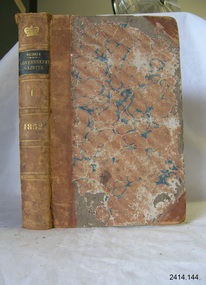
Book - Reference/Legal Statutes, John Ferres, Government Printer, The Victorian Government Gazette Vol 1 (January 1st to 30th June), 1852
... Ferres joined the staff of the Melbourne Morning Herald as a compositor (typesetter). ...Ferres joined the staff of the Melbourne Morning Herald as a compositor (typesetter). ...This volume is a primary historical document recording the foundational legal acts, official proclamations, and government notices that established the administration of the newly independent Colony of Victoria. Volume 1, one of the earliest Victorian Statutes, contains the initial Acts passed by the newly formed Legislative Council of Victoria following its formal separation from New South Wales on 1 July 1851. The inclusion of Charles Joseph La Trobe, Victoria's first Lieutenant-Governor, appointed in July 1851, signifies that this volume records official proclamations establishing colonial courts, administrative divisions, civil service appointments, and public order measures.Hard cover book,The Victorian Statutes Vol 1. Author: Corporate Author Charles Joseph L A Trobe “The Colony of Victoria” Publisher: John Ferres Government Printer Melbourne. Date: 1852 Three quarter leather, patterned covers. Top section of leather on spine frayed, lettering in gilt. No Library labels. Pencil text to flyleaf unreadable.non-fictionThis volume is a primary historical document recording the foundational legal acts, official proclamations, and government notices that established the administration of the newly independent Colony of Victoria. Volume 1, one of the earliest Victorian Statutes, contains the initial Acts passed by the newly formed Legislative Council of Victoria following its formal separation from New South Wales on 1 July 1851. The inclusion of Charles Joseph La Trobe, Victoria's first Lieutenant-Governor, appointed in July 1851, signifies that this volume records official proclamations establishing colonial courts, administrative divisions, civil service appointments, and public order measures.flagstaff hill, warrnambool, shipwrecked coast, flagstaff hill maritime museum, maritime museum, shipwreck coast, flagstaff hill maritime village, great ocean road, book, pattison collection, warrnambool library, warrnambool mechanics’ institute, ralph eric pattison, corangamite regional library service, warrnambool city librarian, mechanics’ institute library, victorian library board, warrnambool books and records, warrnambool children’s library -
 Flagstaff Hill Maritime Museum and Village
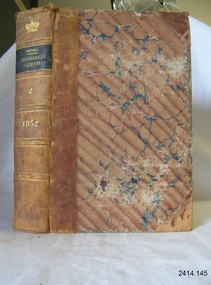
Book - Reference/Legal Statutes, John Ferres, Government Printer, The Victorian Government Gazette Vol 2 (July 1st to 31st December), 1852
... Ferres joined the staff of the Melbourne Morning Herald as a compositor (typesetter). ...Ferres joined the staff of the Melbourne Morning Herald as a compositor (typesetter). ...This volume is a primary historical document recording the foundational legal acts, official proclamations, and government notices that established the administration of the newly independent Colony of Victoria. Volume 1, one of the earliest Victorian Statutes, contains the initial Acts passed by the newly formed Legislative Council of Victoria following its formal separation from New South Wales on 1 July 1851. The inclusion of Charles Joseph La Trobe, Victoria's first Lieutenant-Governor, appointed in July 1851, signifies that this volume records official proclamations establishing colonial courts, administrative divisions, civil service appointments, and public order measures.Hard cover book,The Victorian Statutes Vol 2. Author: Corporate Author Charles Joseph L A Trobe “The Colony of Victoria” Publisher: John Ferres Government Printer Melbourne. Date: 1852 Further information: Three quarter leather, patterned covers. Top section of leather on spine frayed at top, lettering in gilt. No Library labels.non-fictionThis volume is a primary historical document recording the foundational legal acts, official proclamations, and government notices that established the administration of the newly independent Colony of Victoria. Volume 1, one of the earliest Victorian Statutes, contains the initial Acts passed by the newly formed Legislative Council of Victoria following its formal separation from New South Wales on 1 July 1851. The inclusion of Charles Joseph La Trobe, Victoria's first Lieutenant-Governor, appointed in July 1851, signifies that this volume records official proclamations establishing colonial courts, administrative divisions, civil service appointments, and public order measures.flagstaff hill, warrnambool, shipwrecked coast, flagstaff hill maritime museum, maritime museum, shipwreck coast, flagstaff hill maritime village, great ocean road, book, pattison collection, warrnambool library, warrnambool mechanics’ institute, ralph eric pattison, corangamite regional library service, warrnambool city librarian, mechanics’ institute library, victorian library board, warrnambool books and records, warrnambool children’s library -
 Flagstaff Hill Maritime Museum and Village
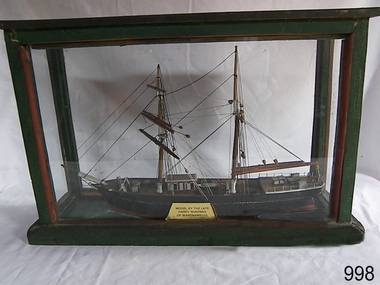
Craft - Ship Model, Mary Campbell, circa 1940
... Morning Herald). She had several owners over this time, the last one being Captain James A. Robilliard. On 29th April 1889, “Mary Campbell”, in the charge of her owner, Captain James A Robilliard, was on her way from Clarence River, NSW to Melbourne, Victoria with a cargo of railway girders for the Melbourne Harbour Trust. ...Morning Herald). She had several owners over this time, the last one being Captain James A. Robilliard. On 29th April 1889, “Mary Campbell”, in the charge of her owner, Captain James A Robilliard, was on her way from Clarence River, NSW to Melbourne, Victoria with a cargo of railway girders for the Melbourne Harbour Trust. ...This ship model is of the sailing brigantine MARY CAMPBELL, which once belonged to Captain James Arthur Robilliard. The model was made by Harry McKenna, a well-known ship model maker and Warrnambool resident. CAPTAIN ROBILLIARD James Arthur Robilliard, sea captain and tent maker, was born in 19th April 1843 in St. Helier, Jersey, Channel Islands. He trained there in his father’s sail loft as a sailmaker. He later became a skipper. His first job was as a sailor in Liverpool, England. In 1875, James Robilliard migrated to Australia as a mate on the “E.M. Young”. Captain Robilliard and his family were amongst the early settlers along the Curdies River in the Heytesbury district. In 1877, he became a Captain. On 14th November 1879, Captain Robilliard married Helen Beckett. James and Helen had ten children: James Arthur (Jnr), Henry William, Nellie Jessie, Alfred Albert, Rubena Nellie, De Jersy Norman, Clifford Beckett, Olive Ida, Frances Ridley Havergal and Nellie Elvie, all born in Victoria. THE MARY CAMPBELL The ship “Mary Campbell” was built by Alexander Newton Jr. She was carvel-planked, of iron bark and blue gum timber. The family shipyard was at Pelican, on the Manning River, NSW, and “Mary Campbell” was first launched by her builder in 1869 as “The Son”. Three months later, she was renamed “Mary Campbell’ by her purchaser J. Campbell in Sydney. She was used to carry equipment for the Sydney Sugar Refinery’s Mill in Southgate, NSW. She then traded for the next 20 years between Australian ports and rivers along the east coast, as well as regular ports in New Zealand. She was “recognised as one of the best carrying little vessels in the timber trade” (Sydney Morning Herald). She had several owners over this time, the last one being Captain James A. Robilliard. On 29th April 1889, “Mary Campbell”, in the charge of her owner, Captain James A Robilliard, was on her way from Clarence River, NSW to Melbourne, Victoria with a cargo of railway girders for the Melbourne Harbour Trust. Captain Robilliard encountered a storm off Port Macquarie. He sailed the vessel south to 25 miles (about 40km) east of Cape Hawke, near Tuncurry and Forster. At 7 pm, he discovered that the cargo had shifted during the stormy seas and the heavy girders had damaged the hull, causing a leak. The pumps were inadequate to stem the fast-flowing leak, and over a meter of water filled the hull during the next 2 hours. Some of the crew began throwing the cargo overboard to lighten the vessel, hoping to keep it afloat until daylight. When the water reached over 2 meters in the hull, they realised their efforts were in vain. At 1:30 am on 30th April 1889, the crew left the vessel. They stood by in the lifeboat until 3 am. The ship was sinking fast, so they left for the shore, looking for a safe place to beach their boat. While still miles off Cape Hawke, all 7 crew members, including the Captain, were rescued by the Government Tug “Rhea” and taken to Port Macquarie hospital, then returned to Sydney in the “Wellington”. Captain Robilliard managed to rescue his ship’s compass, but no cargo was saved from the vessel. It had been under-insured, only covered for half its value, due to a lack of funds. Many years later, in 1976, an anchor was caught up in the net of a trawler south of Forster and thought to be from the “Mary Campbell”. It was donated and installed in the Great Lakes Museum, Tuncurry, NSW. (The same museum also has a half-model of the hull of “Mary Campbell”.) The name of the last ship Captain Robilliard sailed is currently unknown; however, he sailed that ship from the port of Marlborough, Queensland, carting steel railway girders for the Geelong-to-Camperdown line. On one trip, it hit a storm, the cargo shifted, and the ship was wrecked along the NSW coast. After this, Captain Robilliard exchanged sea life for farming in Peterborough. In about 1897, verging on retirement, Capt. Robiilliard superintended the Melbourne Sailors’ Home in Spencer Street, Melbourne, before being asked to leave this position in 1902 for trying to shut down the local hotel! At this time, the Melbourne Sailors’ Home was about to change its location. On 6th May 191,7, Captain James Arthur Robilliard J.P. died at Blackwood Park, in the Cobden district of Brucknell, which is now considered the first official Robilliard family homestead in Australia. He was buried in the Melbourne General Cemetery, Victoria. His wife, Helen, passed away in 1947. The Becket and Robilliard family names continue to be well known in the Western District. Flagstaff Hill Maritime Village also has a ship’s compass in the collection that was owned by Capt. J. Robilliard and used on the ship Mary Campbell.This ship model of the MARY CAMPBELL is of local significance for its association with well well-known Warrnambool resident and ship model maker. The model is also significant for its association with the brigantine MARY CAMPBELL, a trading vessel that brought railway girders to the Melbourne Harbour Trust.Ship model "Mary Campbell": a two-masted vessel with black hull, brown masts and black rigging, displayed in a glass case with a timber frame painted green. Made by Harry McKenna.Painted on the bow in white “MARY CAMPBELL” Gold label with black print attached to display case “MODEL BY THE LATE HARRY McKENNA OF WARRNAMBOOL”flagstaff hill, warrnambool, shipwrecked coast, flagstaff hill maritime museum, maritime museum, shipwreck coast, flagstaff hill maritime village, great ocean road, marine artwork, model making, captain james arthur robilliard, j.a. robilliard, vessel mary campbell, ship mary campbell, melbourne sailors home, vessels, harry mckenna, mary campbell
