
Showing 9 items matching "military air transport"
-
 Moorabbin Air Museum
Book - BRASSEY'S AIRPOWER: AIRCRAFT, WEAPONS SYSTEMS AND TECHNOLOGY SERIES, GROUP CAPTAIN KEITH CHAPMAN, MPhil, BA, RAF, MILITARY AIR TRANSPORT OPERATIONS, 1989
... MILITARY AIR TRANSPORT OPERATIONS...MILITARY AIR TRANSPORT OPERATIONS Book BRASSEY'S AIRPOWER: AIRCRAFT, WEAPONS SYSTEMS AND TECHNOLOGY SERIES GROUP CAPTAIN KEITH CHAPMAN, MPhil, BA, RAF BRASSEY'S (UK) ... -
Moorabbin Air Museum
Book - Aviation history, Young America's Aviation Manual
... ...Military air transport...Aviation history The conquest of the air The US Air Force US Naval aviation Research for flight Russian air force Military air transport Strategic Air Command The B-36 Bomber The art of bombing History of American aviation for young readers Young America's Aviation Manual Book Aviation history ...History of American aviation for young readersnon-fictionHistory of American aviation for young readersthe conquest of the air, the us air force, us naval aviation, research for flight, russian air force, military air transport, strategic air command, the b-36 bomber, the art of bombing -
 Flagstaff Hill Maritime Museum and Village
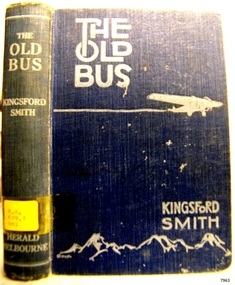
Book, The Old Bus
... Military Cross ‘for conspicuous gallantry and devotion to duty’. He was promoted to lieutenant in 1918 and served as a Flying Instructor with the R.F.C. Kingsford Smith was not allowed to participate in the 1919 England to Australia air race because of assumed lack of navigational experience. He and his pilot friend Cyril Maddocks formed a business and flew joy-flights in both England and America. In America he did some stunt flying with a Flying Circus. Kingsford Smith returned to Australia in 1921 and found employment as a pilot. He soon realised the value of air transport...Military Cross ‘for conspicuous gallantry and devotion to duty’. He was promoted to lieutenant in 1918 and served as a Flying Instructor with the R.F.C. Kingsford Smith was not allowed to participate in the 1919 England to Australia air race because of assumed lack of navigational experience. He and his pilot friend Cyril Maddocks formed a business and flew joy-flights in both England and America. In America he did some stunt flying with a Flying Circus. Kingsford Smith returned to Australia in 1921 and found employment as a pilot. He soon realised the value of air transport ...Sir Charles Edward Kingsford Smith is a famous Australian, well known in civil aviation history for his courageous endeavours in flight. He broken many flight records for long distance and time travelled and he was also a war hero in World War 1. He has been referred to as being “known to millions of Australians as “Smithy” … he was one of Australia’s true twentieth-century legends”. In honour of his place amongst the world’s famous pioneers his image is featured on Australia’s $20 note, Sydney airport is named after him, there is a memorial to Kingsford Smith, Taylor and Ulm at the Anderson Park, also in Sydney and his plane “Southern Cross” is on view at Brisbane Airport. Kingsford Smith wrote ‘The Old Bus’ (1932) and he and Ulm were co-authors of ‘Story of 'Southern Cross' Trans-Pacific Flight’ (1928). His also wrote a book about his own life ‘My Flying Life’ which was published after his death in 1937. and the story of his life was filmed in Australia in 1946. A BRIEF HISTORY OF SIR CHARLES EDWARD KINGSFORD SMITH (1897 – 1935) … Kingsford Smith was born 9th February 1897 in Brisbane, Queensland, Australia. His parents were William Charles Smith and Catherine Mary, nee Kingsford. His mother’s maiden name of “Kingsford” was added to the family name when they spent time in Canada from around 1903 to 1907, after which they returned to Sydney, Australia. In 1915 Kingsford Smith enlisted in Australian Imperial Force. He served in 4th Signal Troop, 2nd Division Signal Company at Gallipoli Peninsular as a ‘sapper’ or combat engineer and later in Egypt and in France as a dispatch rider. In 1916 Kingsford Smith was transferred to the Australian Flying Corps as a sergeant. He was discharged after training in England and commissioned as a second lieutenant in the Royal Flying Corps. He was appointed fling officer and soon joined the 23rd Squadron in France. He brought down four machines in his first month there and also did invaluable work attacking enemy targets. He was wounded and shot down and later awarded the Military Cross ‘for conspicuous gallantry and devotion to duty’. He was promoted to lieutenant in 1918 and served as a Flying Instructor with the R.F.C. Kingsford Smith was not allowed to participate in the 1919 England to Australia air race because of assumed lack of navigational experience. He and his pilot friend Cyril Maddocks formed a business and flew joy-flights in both England and America. In America he did some stunt flying with a Flying Circus. Kingsford Smith returned to Australia in 1921 and found employment as a pilot. He soon realised the value of air transport in such a vast country. He formed a partnership with pilot Keith Anderson in 1924 and they purchased two Bristol Tourer biplanes. Their business broadened to include Charles Ulm and became the Interstate Flying services in Sydney. Together they performed important ‘demonstration’ flights including a flight around Australia in 10 days and 5 hours using very limited navigational equipment. Kingsford Smith immediately started to search for support to do a trans-Pacific flight. This support came from the New South Wales government, Sidney Myer and G. Allan Hancock, an American oil magnate. On 31st May 1928 Kingsford Smith, Charles Ulm and two American crewmen, Harry Lyan and Jim Warner, took off from Oakland, California and flew to Brisbane via Hawaii and Suva. This historic flight took 83 hours and 38 minutes. Their Fokker plane had three engines and was named the “Southern Cross”. This amazing achievement resulted in huge financial subscriptions. Kingsford Smith was awarded the Air Force Cross and appointed as honorary squadron leader, Royal Australian Air Force. Kingsford Smith flew his Southern Cross plane from Point Cook in Victoria to Perth nonstop. Then in September – October 1928, with Charles Ulm and an Australian crew, he piloted the Southern Cross from Sidney to Christchurch New Zealand. This flight showed that was possible for regular passenger and mail services across the Tasman Sea. Kingsford Smith flew his plane to England to an order for four aircraft, planning to use them for an inter-capital air service in Australia. Sadly on 1st April 1929 he was forced to land, having lost radio contact with the ground and having run into bad weather over north – west Australia. Keith Anderson and Robert Hitchcock both perished before the search party reached them. Once official enquiries were completed the flight to England continued in June and was completed in record time of 12 days and 18 hours. In January 1930 Kingsford Smith piloted the “Southern Cloud”, one of the new Avro Ten planes, on the first flight of his airline, the Australian National Airways, from Sydney to Melbourne. The “Southern Cross” was overhauled in Holland by the Fokker Aircraft Co. and in June 1930 Kingsford Smith achieved an east-west crossing of the Atlantic from Ireland to Newfoundland in 31.5 hours. Kingsford Smith returned to England and took delivery of an Avro Avian biplane that he named the “Southern Cross Junior” and flew solo from England to Darwin, Australia. This record breaking flight took less than 10 days. He beat four other planes that had left England before him and he was 5.5 days faster than Hinkler. Sadly Kingsford Smith’s “Southern Cloud” was lost during a flight from Sydney to Melbourne in 1931 with no surviving crew or passengers; in 1958 the wreckage was discovered in the Snowy Mountains. Later that year Kingsford Smith flew his “Southern Cloud” from Australia to Timor, collecting mail from a damaged Imperial Airways plane in Timor. Other flights followed. Kingsford Smith was knighted in 1932 for his services in Aviation. He returned to selling joy flights then established the Kingsford Smith Air Service, a flying training school in Sydney. In 1933 Kingsford Smith flew the amazing record flight in “Miss Southern Cross” – a Percival Gull - from London to Wyndham in Western Australia in just over ten days. The Australian Commonwealth then gave Kingsford Smith a large grant and he was also appointed as aviation consultant to Vacuum Oil Co. Another flying record was made when Kingsford Smith and Sir P.G. Taylor flow “Lady Southern Cross” from Brisbane to San Francisco in order to sell her there; the west-east-trans-Pacific flight made aviation history. They returned to Australia to make an attempt at the trans-Tasman flight but their attempt failed due to engine failure; they managed to get back to Sydney safely, minus most of their cargo. Kingsford Smith had his unsold “Lady Southern Cross” shipped back to England, from where he and J. T. Pethybridge in the “Lady Southern Cross” attempted another record breaking flight from England The Old Bus Author: Charles Kingsford Smith Publisher: Distibuted by Herald Feature Service Date; 1932Label on spine cover with typed text RA 629.1309 KIN flagstaff hill, warrnambool, shipwrecked coast, flagstaff hill maritime museum, maritime museum, shipwreck coast, flagstaff hill maritime village, great ocean road, the old bus, charles kingsford smith -
 Bendigo Military Museum
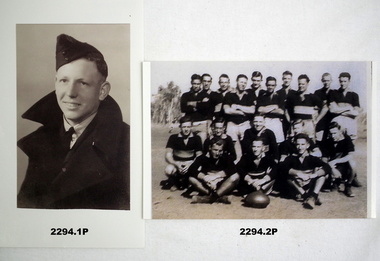
Photograph - PHOTOGRAPHS, RAAF WW2, c.WWII
... At discharge on 12.4.1946 he held the rank of LAC in No 6 Transport Movement Office RAAF. .2) - .5) Photographs reflect service life in Darwin during World War II. photography-photographs military history- army - airforce RAAF .1) ARTHUR HANDO, Air Force 2nd World War. .2) A HANDO 4th from top, 5 RC Air Force footy team. .3) 2nd World War, Darwin, ARTHUR J HANDO. ....1) Arthur John Gorsuch Hando No 116921 enlisted in the RAAF on 19.7.1942 age 18 years. At discharge on 12.4.1946 he held the rank of LAC in No 6 Transport Movement Office RAAF. .2) - .5) Photographs reflect service life in Darwin during World War II..1) Portrait of WWII Airmen - copy of original. .2) Group photograph of a football team - copy of original. .3) Group sitting on truck - copy of original. .4) x 2 Trucks - copy of original. .5) Group of 3 - copy of original..1) ARTHUR HANDO, Air Force 2nd World War. .2) A HANDO 4th from top, 5 RC Air Force footy team. .3) 2nd World War, Darwin, ARTHUR J HANDO. Pop 1st one sitting on car, no hat. .5) A HANDO.photography-photographs, military history- army - airforce, raaf -
 National Vietnam Veterans Museum (NVVM)
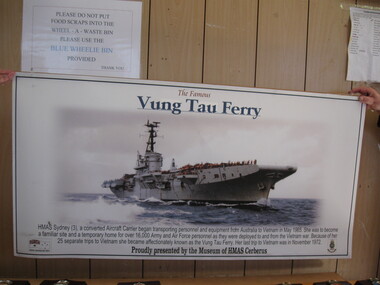
Poster, The Famous Vung Tau Ferry
... transporting personnel and equipment from Australia to Vietnam in May 1965. She was to become a familiar site and a temporary home for over 16,000 Army and Air Force personnel as they were deployed to and from The vietnam war. Because of her 25 seperate trips to vietnam she bacme affectionately known as the Vung Tau Ferry. Her last trip to Vietnam was in November 1972. Proudly presented by the Musuem of HMAS Cerberus A coloured wall poster freaturing a photograph of the Vung Tau Ferry (HMAS Sydney) with military ...A coloured wall poster freaturing a photograph of the Vung Tau Ferry (HMAS Sydney) with military personnel on the deck.HMAS Sydney (3) a converted Aircraft Carrier began transporting personnel and equipment from Australia to Vietnam in May 1965. She was to become a familiar site and a temporary home for over 16,000 Army and Air Force personnel as they were deployed to and from The vietnam war. Because of her 25 seperate trips to vietnam she bacme affectionately known as the Vung Tau Ferry. Her last trip to Vietnam was in November 1972. Proudly presented by the Musuem of HMAS Cerberusposter, hmas cerberus, vung tau ferry, cerberus collection -
 National Vietnam Veterans Museum (NVVM)
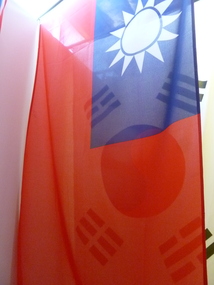
Flag - Taiwan - More Flags program
... Taiwan flag represents secret air transport, electronic reconnaisance, military commandos, raiding squads and other aid from November 1967 in the US "More Flags" aid program. ...Flag Taiwan Taiwan flag represents secret air transport, electronic reconnaisance, military commandos, raiding squads and other aid from November 1967 in the US "More Flags" aid program. ...Taiwan flag represents secret air transport, electronic reconnaisance, military commandos, raiding squads and other aid from November 1967 in the US "More Flags" aid program. Red with blue corner panel with white sunflag, taiwan -
 Alfred Hospital Nurses League - Nursing History Collection
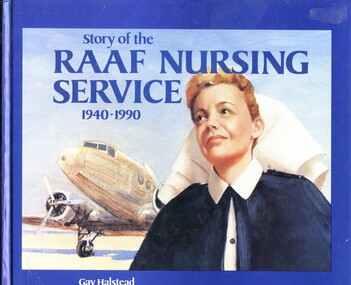
Book - Illustrated book, Gay Halstead 1929, Story of the RAAF Nursing Service 1940-1990, 1994
... Air Force Nursing Service-History World War 1939-1945-Medical Care-Australia Military Nursing-Australia Nurses Nursing Established in July 1914, the Royal Australian Airforce Nursing Service (RAAFNS) personnel expanded from 45 in December 1940 to 616 in December 1945. Miss Margaret Irene Lang was appointed Matron-in -Chief and her staff's conditions in service were similar to those of the Australian Army Nursing Service. The nurses were originally attached to RAAF bases in Australia but later served in New Guinea and the Pacific Islands. With the Medical Air Evacuation Transport ...Established in July 1914, the Royal Australian Airforce Nursing Service (RAAFNS) personnel expanded from 45 in December 1940 to 616 in December 1945. Miss Margaret Irene Lang was appointed Matron-in -Chief and her staff's conditions in service were similar to those of the Australian Army Nursing Service. The nurses were originally attached to RAAF bases in Australia but later served in New Guinea and the Pacific Islands. With the Medical Air Evacuation Transport Unit (MAETU), established in 1944, nurses helped with aerial evacuation of casualties and were involved with the liberation of Prisoners of War from Singapore and other areas. The service was disbanded at the end of World War Two, but in 1948 a peace-time service was formed, and the RAAF nurses have served in the Korean War, the Malayan Emergency and the Vietnam War. They continue to care for the sick and injured at RAAF hospitals. Includes honours, awards and the nominal roll of RAAFNS 1940-1952.Illustrated book with blue cover. Front cover has a coloured illustration by Vivian and Marjorie Mare of a nurse in uniform standing in front of a plane, the title is printed in blue and the author's name printed in white. Title and author's name are also printed in white on the spine. The back cover has a collage of black and white photographs of RAAF personnel including nurses. Limited edition of 1000 copies.non-fictionEstablished in July 1914, the Royal Australian Airforce Nursing Service (RAAFNS) personnel expanded from 45 in December 1940 to 616 in December 1945. Miss Margaret Irene Lang was appointed Matron-in -Chief and her staff's conditions in service were similar to those of the Australian Army Nursing Service. The nurses were originally attached to RAAF bases in Australia but later served in New Guinea and the Pacific Islands. With the Medical Air Evacuation Transport Unit (MAETU), established in 1944, nurses helped with aerial evacuation of casualties and were involved with the liberation of Prisoners of War from Singapore and other areas. The service was disbanded at the end of World War Two, but in 1948 a peace-time service was formed, and the RAAF nurses have served in the Korean War, the Malayan Emergency and the Vietnam War. They continue to care for the sick and injured at RAAF hospitals. Includes honours, awards and the nominal roll of RAAFNS 1940-1952.royal australian air force nursing service-history, world war 1939-1945-medical care-australia, military nursing-australia, nurses, nursing -
 Wangaratta RSL Sub Branch
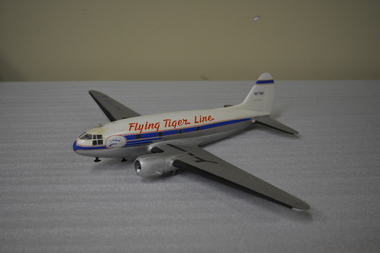
Model - Minature Model Aircraft, Flying Tiger
... It was used as a military transport during World War II by the United States Army Air Forces and also the U.S. ...Curtis Commando C46. One of a collection of 25 model aircraft made by Brian Anthony DOWD The Curtiss C-46 Commando is a twin-engine transport aircraft. It was used as a military transport during World War II by the United States Army Air Forces and also the U.S. Navy/Marine Corps. The C-46 served in a similar role to its Douglas-built counterpart, the C-47 Skytrain. Large white minature model plane with blue stripe down the sides. Flying Tiger Linemodel airplanes, curtis commando c46. -
Moorabbin Air Museum
Book - Australian military aircraft, Australia's Military Aircraft
... Australian military aircraft Aircraft 1915 - 1919 RAAF fighters & fighter bombers RAAF bombers RAAF & army helicopters RAAF reconnaisance aircraft RAAF transports RAAF communications aircraft Warbirds RAAF trainers Royal Australian Navy Fleet Air Arm History & specifications of Australia military aircraft from WW1 to 1988. ...History & specifications of Australia military aircraft from WW1 to 1988.non-fictionHistory & specifications of Australia military aircraft from WW1 to 1988.aircraft 1915 - 1919, raaf fighters & fighter bombers, raaf bombers, raaf & army helicopters, raaf reconnaisance aircraft, raaf transports, raaf communications aircraft, warbirds, raaf trainers, royal australian navy fleet air arm
