
Showing 13 items matching "military logistics"
-
 Monbulk RSL Sub Branch
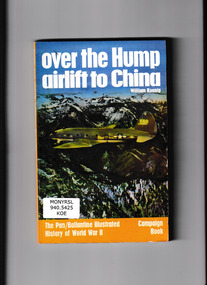
Book, Pan Books, Over the hump: Airlift to China, 1972
... ...Military logistics...World War 1939-1945 - Campaigns - Burma Military logistics The supply of military equipment by air from Burma to China Ill, maps, p.159. ...The supply of military equipment by air from Burma to ChinaIll, maps, p.159.non-fictionThe supply of military equipment by air from Burma to Chinaworld war 1939-1945 - campaigns - burma, military logistics -
 Shepparton RSL Sub Branch
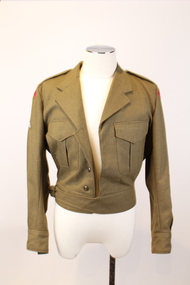
Uniform, Jacket, E.W. PTY/LTD, 1968
... logistics and organisational operations, such as maintenance of parachutes, fuel distribution, personnel administration, exlosive disposal and laundy operations. The jacket was manufactured in 1968 and was worn by an unknown RAAOC serviceman. The patches on his sleeves denote that he had earned qualifications as a parachuter and a marksman and that he was a Warrant Officer 1. Due to the period of manufacture it can be presumed that the serviceman whom this uniform belonged to served Vietnam War. As an historic military ...This jacket is part of a Royal Australian Army Ordnance Corps uniform. The Royal Australian Army Ordnance Corps (RAAOC) is responsible for various logistics and organisational operations, such as maintenance of parachutes, fuel distribution, personnel administration, exlosive disposal and laundy operations. The jacket was manufactured in 1968 and was worn by an unknown RAAOC serviceman. The patches on his sleeves denote that he had earned qualifications as a parachuter and a marksman and that he was a Warrant Officer 1. Due to the period of manufacture it can be presumed that the serviceman whom this uniform belonged to served Vietnam War.As an historic military uniform dating to 1968, it is presumed that this item would have been used in service during the Vietnam War. The wearer of the uniform is unknown, however the patches and flashes attached signify that the serviceman worked for the Royal Australian Army Ordnance Corps, earned qualifications as a parachuter and marksman and ranked highly as a Warrant Officer 1. The item is representative of a type of uniform worn by high ranking RAAOC servicemen during the 1960’s. It is also in very good condition for its age.A khaki coloured waist length jacket which is composed of a heavy fabric. The jacket fastens with five buttons down the front and a buckle. The buttons are composed of brown plastic and the buckle is a dark grey metal. The buckle is attached to a waistband on the right-hand side which loops around to a strip of fabric on the left-hand side which passes through the buckle. There are two breast pockets, one on each side of the chest. The right breast pocket is fastened with a brown plastic button and the left breast pocket is missing its button. Each pocket has a flap of fabric which covers the button area. The jacket has a collar and an epaulette on each shoulder which are each fastened with one brown plastic button. There is a ribbon of fabric on the interior of the collar with no inscriptions. There are identical crescent shaped red patches on each shoulder, each showing the words in navy blue stitching "Royal Australian Army Ordinance Corps". The upper right sleeve has a khaki coloured parachuting qualification patch, which depicts an air balloon in white stitching, with wings on either side in light blue stitching. The lower section of each sleeve has a Warrant Officer First Class khaki coloured patch. This depicts a shield in red, black, white, blue and gold stitching in the centre which sits beneath a gold and blue striped line and a gold star. There is a gold kangaroo to the left of these motifs and a gold emu to the right. Beneath these motifs there is a ribbon in white, blue and gold stitching with the word "Australia". In addition there are curvilinear green decorative elements with yellow flowers on their ends. The left-hand sleeve also has a brown marksmen qualification patch. This depicts two crossed rifles in white and brown stitching. There is a white label with printed inscriptions on the interior of the left breast pocket. There is also a band of fabric on the interior back waist band which has three button holes.Printed in black inscriptions on the white label: E.W. PTY/LTD. SOUTH AUSTRALIA 1968 (a broad arrow) Class 8405-66-025-641 Batch A.W... Mill (the ‘A.W...’ is in stamped purple ink and there are some other purple inscriptions that are difficult to decipher) SIZE OF CHEST 39/49PR MATCHING TROUSERS 37 PR DRY CLEAN ONLY CREASE UPPER HALF OF LAPELS ONLY NAME..... ARMY No..... (the number 40 is also wrtten in faded black ink in the top right corner of the label)military, jacket, army, raaoc, royal australian army ordnance corps, parachuting, marksman, warrant officer, uniform -
 Shepparton RSL Sub Branch
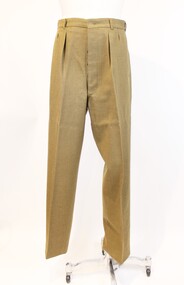
Uniform, trousers, Conway Bros. PTY. LTD, 1969
... logistics and organisational operations, such as maintenance of parachutes, fuel distribution, personnel administration, exlosive disposal and laundy operations. The trousers were manufactured in 1969 and were worn by an unknown RAAOC serviceman. The patches on the sleeves of the corresponding jacket denote that he had earned qualifications as a parachuter and a marksman and that he was a Warrant Officer 1. Due to the period of manufacture it can be presumed that the serviceman whom this uniform belonged to served in the Vietnam War. As historic military ...These trousers are part of a Royal Australian Army Ordnance Corps uniform. The Royal Australian Army Ordnance Corps (RAAOC) is responsible for various logistics and organisational operations, such as maintenance of parachutes, fuel distribution, personnel administration, exlosive disposal and laundy operations. The trousers were manufactured in 1969 and were worn by an unknown RAAOC serviceman. The patches on the sleeves of the corresponding jacket denote that he had earned qualifications as a parachuter and a marksman and that he was a Warrant Officer 1. Due to the period of manufacture it can be presumed that the serviceman whom this uniform belonged to served in the Vietnam War.As historic military uniform trousers dating to 1968, it is presumed that this item would have been used in service during the Vietnam War. The wearer of the uniform is unknown, however the patches and flashes attached signify that the serviceman worked for the Royal Australian Army Ordnance Corps, earned qualifications as a parachuter and marksman and ranked highly as a Warrant Officer 1. The item is representative of a type of uniform worn by high ranking RAAOC servicemen during the 1960’s. It is also in very good condition for its age.khaki coloured trousers which are composed of a heavy fabric. The trousers button up at the front with 6 plastic buttons. There is an additional strip of fabric attached to the right-hand fly which can be fastened with an extra button on the interior of the left-hand fly. There are an additional 6 buttons along the interior waistband. There are also three buttons on the exterior waistband down the front and a buckle. The buttons are composed of brown plastic. There are two open hip pockets, one on either side, and another button-up pocket on the right-hand side of the back. There is a white label with inscriptions attached to the interior of the back pocket with an extra piece of fabric attached for mending patches.Printed in black inscriptions on the white label: CONWAY BROS. PTY. LTD ADELAIDE 1969 (a broad arrow) Class 8405-66-025-6183 A W M 7 (these characters are stamped in faded black ink) SIZE & WAIST 33R MATCHING JACKET 37-38R in a box are the words: DRY CLEAN ONLY. Re-press on original seams. Creases set by Si-ro-set. Mending patch attached. (end of box containing words) NAME.....DOCKSEY (‘Docksey is in hand-written black ink) ARMY No.....216308 (numbers also hand-written in black ink) (the number 40 is also wrtten in faded black ink in the top right corner of the label)military, army, raaoc, marksman, royal australian army ordnance corps, parachuting, warrant officer, uniform, trousers -
 Shepparton RSL Sub Branch
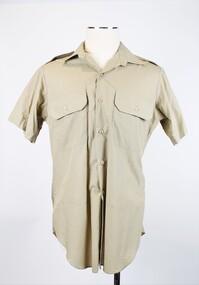
Uniform, Shirt, Australian Defence Industries, 1989
... The Royal Australian Army Ordnance Corps (RAAOC) is responsible for various logistics and organisational operations, such as maintenance of parachutes, fuel distribution, personnel administration, explosive disposal and laundy operations. military army raaoc royal australian army ordnance corps uniform parachuting marksman warrant officer Printed in black inscriptions on the white label: “ADI P/L/VIC 1989/[broad arrow]/SIZE. 40/8405-66-093-8319/SERVICE NO/NAME/DO NOT BOIL OR WRING/MACHINE WASHABLE/DRIP DRY, IRON LIGHTLY/WITH WARM IRON”. ...This shirt is part of a Royal Australian Army Ordnance Corps uniform. The Royal Australian Army Ordnance Corps (RAAOC) is responsible for various logistics and organisational operations, such as maintenance of parachutes, fuel distribution, personnel administration, explosive disposal and laundy operations.Short sleeved khaki shirt in light polyester material. Fastened by seven plastic buttons along centre. Two chest pockets fastene with externa flap and button. Fabric shoulder epaulettes on left and right side held in place with a plastic button. Label on interior back of neck and stamp on collar.Printed in black inscriptions on the white label: “ADI P/L/VIC 1989/[broad arrow]/SIZE. 40/8405-66-093-8319/SERVICE NO/NAME/DO NOT BOIL OR WRING/MACHINE WASHABLE/DRIP DRY, IRON LIGHTLY/WITH WARM IRON”. “SIZE 40” is stamped in black into on interior collar. Inscription handwritten on interior lower back panel “4800045/MARTINS.”military, army, raaoc, royal australian army ordnance corps, uniform, parachuting, marksman, warrant officer -
 Bendigo Military Museum
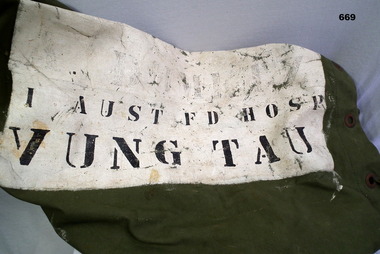
Equipment - KIT BAG VIETNAM
... 1st Australian Field Hospital Vung Tau was part of the 1st Australian Logistics Supprt group based in Vung Tau South Vietnam. Item in the collection of Malcolm Stuart Angus No 3112710, Vietnam. military equipment - kit bag personal effects- containers Vietnam (illegible top line) “1 Aust FD Hosp” “Vung Tau” Kit Bag, green colour canvas, 8 eyelets on top with flap and nylon tie cord, a section has been painted white to put details on. ...1st Australian Field Hospital Vung Tau was part of the 1st Australian Logistics Supprt group based in Vung Tau South Vietnam. Item in the collection of Malcolm Stuart Angus No 3112710, Vietnam.Kit Bag, green colour canvas, 8 eyelets on top with flap and nylon tie cord, a section has been painted white to put details on.(illegible top line) “1 Aust FD Hosp” “Vung Tau”military equipment - kit bag, personal effects- containers, vietnam -
 National Vietnam Veterans Museum (NVVM)
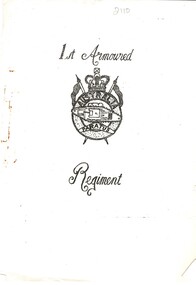
Booklet, Australian Army, Australian Army: Copies of 1st Armoured Regiment Administration and Logistics in the Field: APC Troop and other military documents, 1971
... Australian Army: Copies of 1st Armoured Regiment Administration and Logistics in the Field: APC Troop and other military documents...Australian Army: Copies of 1st Armoured Regiment Administration and Logistics in the Field: APC Troop and other military documents Booklet Australian Army ...Copies of 1st Armourd Regiment admistration and logistics in the field. There are several part sections of the booklets. Some of these are held togeher with metal staples, some are loose and one is held together with a metal slide.booklet, 1st armoured regiment, b squadron, 3 cav regt, small arms, crew drills -
 National Vietnam Veterans Museum (NVVM)
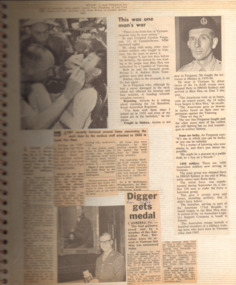
Memorabilia, A Collection of Newspaper Clippings
... Logistics Support Company...Ships Army Staff (HMAS Sydney)...Munday David Maxwell...L/Cpl David Maxwell Munday...214922...Military...Logistics Support Company and the second from March 1968 to April 1968 with Ships Army Staff (HMAS Sydney). L/Cpl David Maxwell Munday served with the Royal Australian Infantry Corps and served in Vietnam from May 1965 to July 1965 with the 1st Battalion, The Royal Australian Regiment when he was badly wounded. He was awarded the Military...Logistics Support Company and the second from March 1968 to April 1968 with Ships Army Staff (HMAS Sydney). L/Cpl David Maxwell Munday served with the Royal Australian Infantry Corps and served in Vietnam from May 1965 to July 1965 with the 1st Battalion, The Royal Australian Regiment when he was badly wounded. He was awarded the Military ...Cpl Gordon Maxwell Ferguson served with the Royal Australian Infantry Corps and he served in Vietnam from June 1965 to August 1965 with 1st Battalion, The Royal Australian Regiment. Copt/Major Peter John Naughton served with the Royal Australian Army Dental Corps. He did two tours of Vietnam, the first from May 1965 to May 1966 with Australian Logistics Support Company and the second from March 1968 to April 1968 with Ships Army Staff (HMAS Sydney). L/Cpl David Maxwell Munday served with the Royal Australian Infantry Corps and served in Vietnam from May 1965 to July 1965 with the 1st Battalion, The Royal Australian Regiment when he was badly wounded. He was awarded the Military Medal.A Collection of Newspaper Clippings from three separate donors. The first is titled "this Was one Man's War" which is a story on Cpl Gordon Maxwell Ferguson describing part of his time serving. Also mention in the article is Pte L.A. Bakker. The second article is a photograph of a small Vietnamese boy being treated by Australian Army dentist Capt Peter Naughton with is assistant Sgt Brian Wilson. There is an article under the photograph starting with the words A RAAMC Officer now in Britain. The third article is titled 'Digger gets medal' is about the bravery of L/Cpl David Maxwell Munday who was awarded a Military Medal. These are on page seventeen of Personal Collections 5.newspaper clippings, cpl gordon maxwell ferguson, ferguson gordon maxwell, 212779, royal australian infantry corps, 1st battalion, the royal australian regiment, major peter john naughton, capt peter john naughton, sgt brian wilson, 215193, royal australian army dental corps, australian logistics support company, ships army staff (hmas sydney), munday david maxwell, l/cpl david maxwell munday, 214922, military medal -
 National Vietnam Veterans Museum (NVVM)
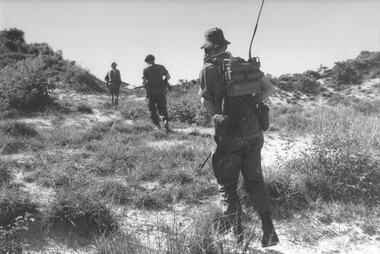
Photograph, Gibbons, Denis, Military Police Patrol
... Military Police...1st ALSG Base...Tactical Area Of Responsitility (TAOR)...1st Logistics...A black and white photograph of Military Police conduct a last light TAOR (Tactical Area of Responsibility) patrol aroundthe 1st Logistics Support Base at Vung Tau. ...Photograph Military Police 1st ALSG Base Tactical Area Of Responsitility (TAOR) 1st Logistics Support Base Vung Tau Gibbons Collection Catalogue TAOR Patrol Denis Gibbons A black and white photograph of Military Police conduct a last light TAOR (Tactical Area of Responsibility) patrol aroundthe 1st Logistics Support Base at Vung Tau. ...Denis Gibbons (1937 – 2011) Trained with the Australian Army, before travelling to Vietnam in January 1966, Denis stayed with the 1st Australian Task Force in Nui Dat working as a photographer. For almost five years Gibbons toured with nine Australian infantry battalions, posting compelling war images from within many combat zones before being flown out in late November 1970 after sustaining injuries. The images held within the National Vietnam Veterans Museum make up the Gibbons Collection. A black and white photograph of Military Police conduct a last light TAOR (Tactical Area of Responsibility) patrol aroundthe 1st Logistics Support Base at Vung Tau. Each unit at 1st ALSG Base were rostered to undertake first and last light patrols looking for possible enemy activity.photograph, military police, 1st alsg base, tactical area of responsitility (taor), 1st logistics support base, vung tau, gibbons collection catalogue, taor patrol, denis gibbons -
 National Vietnam Veterans Museum (NVVM)
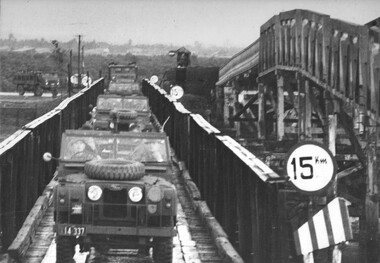
Photograph, Gibbons, Denis, Road Runner Supply Convoy
... A black and white photograph of an Australian 'Road Runner' military supply convoy from 1st Australain Logistics Support Base, Vung Tau to the 1st Australian Task Force Base, Nui Dat, crosses a specially built bridge for the extra weight of military transports, east of Baria, in Phuoc Tuy Province....Photograph Australian Road Runner 1st Australian Logistic Support Base Vung Tau 1st ATF Base Nui Dat Baria Phuoc Tuy Province Gibbons Collection Catalogue Denis Gibbons Photographer Vietnam War Convoy A black and white photograph of an Australian 'Road Runner' military supply convoy from 1st Australain Logistics Support Base, Vung Tau to the 1st Australian Task Force Base, Nui Dat, crosses a specially built bridge for the extra weight of military transports, east of Baria, in Phuoc Tuy Province. ...Denis Gibbons (1937 – 2011) Trained with the Australian Army, before travelling to Vietnam in January 1966, Denis stayed with the 1st Australian Task Force in Nui Dat working as a photographer. For almost five years Gibbons toured with nine Australian infantry battalions, posting compelling war images from within many combat zones before being flown out in late November 1970 after sustaining injuries. The images held within the National Vietnam Veterans Museum make up the Gibbons Collection.A black and white photograph of an Australian 'Road Runner' military supply convoy from 1st Australain Logistics Support Base, Vung Tau to the 1st Australian Task Force Base, Nui Dat, crosses a specially built bridge for the extra weight of military transports, east of Baria, in Phuoc Tuy Province.photograph, australian road runner, 1st australian logistic support base, vung tau, 1st atf base, nui dat, baria, phuoc tuy province, gibbons collection catalogue, denis gibbons, photographer, vietnam war, convoy -
 Bendigo Military Museum
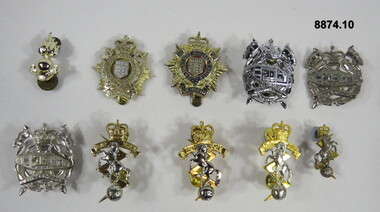
Badge - VARIOUS MILITARY BADGES, Unknown
... Military badges either gold, silver or brass colour with or without a backing mounting plate, pins. Sizes vary. 1. Royal Australian Engineers collar. 2. Royal Logistics...Passchendaele Barracks Trust PBT311TO320 Badges Military badges either gold, silver or brass colour with or without a backing mounting plate, pins. Sizes vary. 1. Royal Australian Engineers collar. 2. Royal Logistics ...Military badges either gold, silver or brass colour with or without a backing mounting plate, pins. Sizes vary. 1. Royal Australian Engineers collar. 2. Royal Logistics Corps OR's Hat (a). 3. Royal Logistics Corps OR's Hat (b). 4. Royal Australian Armoured Corps Hat (a). 5. Royal Australian Armoured Corps Hat (b), 6. Royal Australian Armoured Corps Hat (c). 7. Royal Australian Electrical & Mechanical Engineers Hat (a), 8. Royal Australian Electrical & Mechanical Engineers Hat (b), 9. Royal Australian Electrical & Mechanical Engineers Hat (c), 10. Royal Australian Electrical & Mechanical Engineers collar (a). passchendaele barracks trust, pbt311to320, badges -
 Sunshine and District Historical Society Incorporated
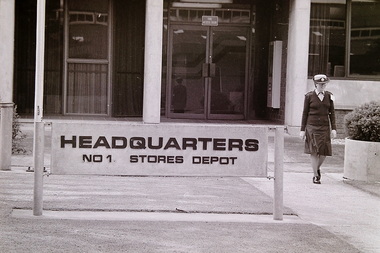
Photograph - RAAF No 1 Stores Depot South Road Braybrook Site Tour 1990 Photograph, C. McGee, 17th June 1991
... logistics base built in 1944–45 and operated until 1993. The site expanded significantly after WWII, adding: RAAF Police Dog Training Centre (established 1962), supply‑officer training facilities, accommodation blocks, mess halls, chapels, gyms and sports grounds which transformed the depot into a self‑contained military community. ...logistics base built in 1944–45 and operated until 1993. The site expanded significantly after WWII, adding: RAAF Police Dog Training Centre (established 1962), supply‑officer training facilities, accommodation blocks, mess halls, chapels, gyms and sports grounds which transformed the depot into a self‑contained military community. ...No. 1 RAAF Stores Depot in Braybrook (often called the Tottenham RAAF Stores Depot) was one of the most important defence facilities in Melbourne’s west, a massive wartime logistics base built in 1944–45 and operated until 1993. The site expanded significantly after WWII, adding: RAAF Police Dog Training Centre (established 1962), supply‑officer training facilities, accommodation blocks, mess halls, chapels, gyms and sports grounds which transformed the depot into a self‑contained military community. It shaped Braybrook’s industrial landscape, employed hundreds of locals, and played a central role in Australia’s WWII and post‑war supply chain. These photographs capture only a small part of the No. 1 RAAF Stores Depot that one of Australia’s major wartime and post‑war defence logistics centres, representing the scale, organisation, and industrial capability required to support the Royal Australian Air Force from 1945 to 1993. Established during the critical final years of the Second World War, the depot consolidated dozens of scattered storage sites into a single purpose‑built facility, demonstrating the Commonwealth’s shift toward modern, centralised military supply systems. Its extensive warehouses, rail sidings, and specialised training areas illustrate mid‑20th‑century defence planning and the functional architectural style of the Department of Works. The depot played a vital role in national logistics, handling equipment, clothing, barracks stores, demobilisation materials, and returned overseas supplies. It was also a major employer in Melbourne’s western suburbs, shaping the social and economic life of Braybrook, Sunshine, and Tottenham for nearly five decades. The presence of the RAAF Police Dog Training Centre further highlights the site’s operational diversity and long‑term importance to defence readiness. Although most of the depot has been demolished, the surviving guard house and office block on Ashley Street remain as rare physical evidence of a once‑vast military complex. The depot’s legacy endures in the urban form of Braybrook and in the community memory of the thousands who worked there. Its significance lies in its contribution to Australia’s defence history, its impact on the development of Melbourne’s west, and its representation of large‑scale wartime infrastructure.R.A.A.F. Base Tour 285.1raaf no 1 store, south road, braybrook -
 Wangaratta RSL Sub Branch
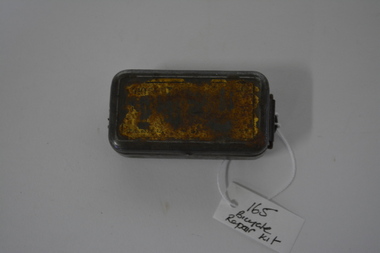
Equipment - Bicycle Repair Kit
... Object said to be a bicycle repair kit used in WW1 The AIF cycling units have often been forgotten in military history but the humble bicycle played a very important role in the logistics of warfare. ...Object said to be a bicycle repair kit used in WW1The AIF cycling units have often been forgotten in military history but the humble bicycle played a very important role in the logistics of warfare. The simplicity of the bike made transportation quick and reliable.Small metal box with two wire clips. Remnants of yellow paint on lidww1, bicycle repair kit -
 Wodonga & District Historical Society Inc
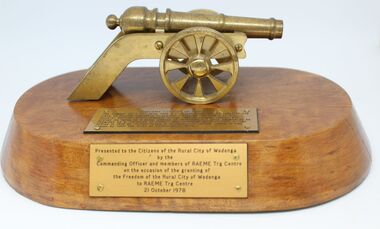
Memorabilia - Commemorative Award from RAEME unit to the Rural City of Wodonga, 1978
... The inscription on the side of the base reads: "Presented to the Citizens of the Rural City of Wodonga by the Commanding Officer and members of RAEME Trg Centre on the occasion of the granting of the Freedom of the Rural City of Wodonga to RAEME Trg Centre 21 October 1978 RAEME Corps has a long association with the city of Wodonga through its involvement in training and logistics at the army base at Bandiana. RAEME Rural City of Wodonga Freedom of the City Wodonga Australian military Bandiana Explanation of "Zamzama" beside cannon: "ZAMZAMA (CAPTOR OF FORTS)/ The original 14' 4 1/2" long, with 9 1/2" bore, was cast in brass in one/ piece by Muslim engineers in the year 1757 on the orders of the/ emperor AHMAD-SHAH-ABDALI. ...RAEME Corps was first established in 1942 when the Ordnance Corps and the Service Corps were combined. The royal ascent was granted in 1948. The Royal Australian Electrical and Mechanical Engineers (RAEME) is a technical corps tasked with the maintenance of the Army's modern hardware and equipment. RAEME personnel are represented in most Army units. The Royal Australian Electrical and Mechanical Engineers corps motto is ‘Arte et Marte’, which is Latin for ‘With Skill and Fighting’. This item, was presented to the Council of the Rural City of Wodonga in 1978. RAEME has a long association with Wodonga due to its service at the Bandiana base just outside of Wodonga. The inscription on the side of the base reads: "Presented to the Citizens of the Rural City of Wodonga by the Commanding Officer and members of RAEME Trg Centre on the occasion of the granting of the Freedom of the Rural City of Wodonga to RAEME Trg Centre 21 October 1978RAEME Corps has a long association with the city of Wodonga through its involvement in training and logistics at the army base at Bandiana.An award featuring a small model of the cannon "Zamzama" (Captor of Forts) mounted on a polished wooden base. The award includes a plaque outlining the significance of "Zamzama" on the top and another plaque explaining the significance on this award on the front of the base.Explanation of "Zamzama" beside cannon: "ZAMZAMA (CAPTOR OF FORTS)/ The original 14' 4 1/2" long, with 9 1/2" bore, was cast in brass in one/ piece by Muslim engineers in the year 1757 on the orders of the/ emperor AHMAD-SHAH-ABDALI. It was used in several battles and/ proved its value as a great weapon of destruction. It soon became to be/ regarded as a "Tallsman of Power" and continued as such until it was/ ruined in 1818 at Multan. Today it is housed in Lahore, where it was/ placed by H.R.H. the Duke of Edinburgh in 1870."raeme, rural city of wodonga, freedom of the city wodonga, australian military, bandiana
