
Showing 189 items matching "mining tool"
-
 Clunes Museum
Model - Gold Cradle, Unknown
... ...mining tool...Model of a cradle used during the Clunes goldrush gold cradle rocker mining tool Model of a rocker style gold cradle, made of timber and reinforced with metal. ...Model of a cradle used during the Clunes goldrushModel of a rocker style gold cradle, made of timber and reinforced with metal. Metal spikes are fixed underneath the unit, it has an upright wooden handle to rock the unit back and forth. A timber framed metal sieve insert with holes in it sits inside top of frame. gold, cradle, rocker, mining tool -
Clunes Museum
Tool - PULLEY
... ...MINING TOOL...USED IN UNDERGROWN MINING ON THE GOLD FIELDS UNDERGROUND MINING MINING TOOL WOODEN PULLEY Wooden Pulley with ropes attached. ...This wooden pulley was used in mineshafts. The pulley is a wheel with a grooved rim inside a wooden frame for carrying a rope, turning in the frame and serving to change the direction of, or transmit power, as in pulling at one end of the line to raise a weight or object at the other end.USED IN UNDERGROWN MINING ON THE GOLD FIELDSWooden Pulley with ropes attached. Pulley has rope bound round outside to form a metal lined loop to attach to hook above and one lead reinforced loop to attach load to be lowered. The grooved wheel in centre of pulley houses the rope or to attach the load for transport.underground mining, mining tool, wooden pulley -
Clunes Museum
Tool - PICK
... ...Mining tool...Miner's pick Mining tool Nil METAL MINER'S PICK USED UNDERGROUND Tool PICK ...METAL MINER'S PICK USED UNDERGROUNDNilminer's pick, mining tool -
Clunes Museum
Tool - GOUGE
... THE GOUGE WAS USED AS A GOLD MINING TOOL...THE GOUGE WAS USED AS A GOLD MINING TOOL LOCAL HISTORY TOOL TRADES SHIPWRIGHT LAURIE DILKS A GOUGE - A CHISEL WHOSE BLADE IS CURVED. ...THE GOUGE WAS USED AS A GOLD MINING TOOLA GOUGE - A CHISEL WHOSE BLADE IS CURVED. LONG SHAFT WITH CURVED BLADE AND T-BAR HANDLE local history, tool, trades, shipwright, laurie dilks -
Clunes Museum
Document - INVOICE, JULY 1880
... TIMBER MERCHANT, BUILDER IRONMONGER, PLATED GOODS, CUTLERY, UPHOLSTERERS, AND UNDERTAKER, AGRICULTURAL IMPLEMENTS, MINING TOOLS, ECT....TIMBER MERCHANT, BUILDER IRONMONGER, PLATED GOODS, CUTLERY, UPHOLSTERERS, AND UNDERTAKER, AGRICULTURAL IMPLEMENTS, MINING TOOLS, ECT. local history commerce book keeping mining GEORGE CHAPMAN DETAILED INVOICE TO MEF WILKINSON & PARTY. ...PORTION OF INVOICE - GEORGE CHAPMAN, CLUNES. TIMBER MERCHANT, BUILDER IRONMONGER, PLATED GOODS, CUTLERY, UPHOLSTERERS, AND UNDERTAKER, AGRICULTURAL IMPLEMENTS, MINING TOOLS, ECT.DETAILED INVOICE TO MEF WILKINSON & PARTY. PURCHASED FROM GEORGE CHAPMAN & CO.CLUNES. MINING SUPPLIES EG CANDLES, PICK HANDLES, FUSE, ROPE, DYNAMITE, HANDSAW ECT.local history, commerce, book keeping, mining, george chapman -
 Federation University Historical Collection
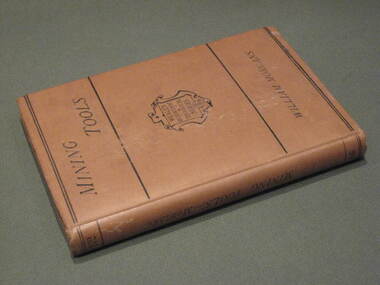
Book, Manual of Mining Tools, 1871, 1871
... It includes 235 wood engravings of mining tools drawn to scale. Tools include borers, hammers, sledges, picks, shovels, spades, saws, helves and handles....Manual of Mining Tools, 1871 Book Book William Morgans Lockwood & Co William Morgans Lockwood & Co ...The author, William Morgans, was a lecturer on mining at the Bristol School of Mines. The owner of the book, William Baragwanath, was a former student of the Ballarat School of Mines who held the following positions: Department of Mines (1897-1922); director of the geological survey (1922-24); chief mining surveyor (1924-32); secretary for mines (1932-34); chief mining surveyor (1934-43); consultant to the Department of Mines (1943-50); President, Royal Society of Victoria (1943-44), councillor of the Ballarat School of Mines (1916-50).Hard cover book of 207 pages with buff cloth cover. The books covers materials andf processes used in the manufacture of tools, special uses, qualities and efficiciency. It includes 235 wood engravings of mining tools drawn to scale. Tools include borers, hammers, sledges, picks, shovels, spades, saws, helves and handles.Title page handwritten in ink 'W.B.' [William Baragwanath]mining, tools, ballarat school of mines, geology, bristol school of mines, government geologist, william baragwanath -
Clunes Museum
Tool - MATTOCK
... Gold mining equipment...Hand tool...Gold mining equipment Hand tool Mattock Nil Mattock with splayed blade, hammered on end, full shoulder, broken end. ...Mattock with splayed blade, hammered on end, full shoulder, broken end. No handleNilgold mining equipment, hand tool, mattock -
Clunes Museum
Document - DOCUMENTS, 1879
... THEY SUPPLIED AGRICULTURAL IMLPEMENTS FENCING WIRE, MINING TOOLS,FUSE,POWDER,PRINTS,OILSAND BUILDING MATERIAL, FURNITURE,HOSE,SHOT,PLATED GOODS CUTLERY AND FUNERALS FURNISHED ON SHORTEST NOTICE....THEY SUPPLIED AGRICULTURAL IMLPEMENTS FENCING WIRE, MINING TOOLS,FUSE,POWDER,PRINTS,OILSAND BUILDING MATERIAL, FURNITURE,HOSE,SHOT,PLATED GOODS CUTLERY AND FUNERALS FURNISHED ON SHORTEST NOTICE. local history document accounts wattleworth lena. mrs. .1 - .11 DOCUMENTS FROM GEORGE CHAPMAN & CO.TO M& F WILKINSON FOR MINING REQUIREMENTS.1879. .2 TWO SECTIONS OF ACCOUNTS FROM GEORGE CHAPMAN& CO 1879 TO MRS. ...GEORGE CHAPMENT& CO WERE TIMBER MERCHANT, BUILDER, IRONMONGERS, UPHOLSTERERS AND UNDERTAKERS. THEY SUPPLIED AGRICULTURAL IMLPEMENTS FENCING WIRE, MINING TOOLS,FUSE,POWDER,PRINTS,OILSAND BUILDING MATERIAL, FURNITURE,HOSE,SHOT,PLATED GOODS CUTLERY AND FUNERALS FURNISHED ON SHORTEST NOTICE..1 - .11 DOCUMENTS FROM GEORGE CHAPMAN & CO.TO M& F WILKINSON FOR MINING REQUIREMENTS.1879. .2 TWO SECTIONS OF ACCOUNTS FROM GEORGE CHAPMAN& CO 1879 TO MRS. WILKINSON & PARTY.local history, document, accounts, wattleworth, lena. mrs. -
 Bendigo Historical Society Inc.
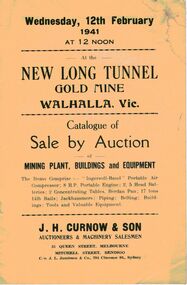
Document - IAN DYETT COLLECTION: AUCTION CATALOGUE - NEW LONG TUNNEL GOLD MINE - WALHALLA
... Items include: mining machinery, tools, buildings, corrugated iron and leather belting....Items include: mining machinery, tools, buildings, corrugated iron and leather belting. ...Catalogue for an auction sale held at the New Long Tunnel Gold Mine, Walhalla, Vic. On 12 February, 1941. Items include: mining machinery, tools, buildings, corrugated iron and leather belting.business, auctioneers, j h curnow & son pty ltd, ian dyett collection - auction catalogue - new long tunnel gold mine - walhalla, j h curnow & son, j l jamieson, the cambridge press -
 Old Colonists' Association of Ballarat Inc.
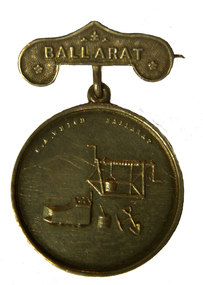
Photograph - Colour, Ballarat Old Identities Association Medallion Presented to R.W. Wright, 31/05/2017
... The medal shows a gold cradle and other mining tools, and was presented to members of the Old Indentities Association. ...The medal shows a gold cradle and other mining tools, and was presented to members of the Old Indentities Association. ...The Old Identities Association was the forerunner ofThe Old Colonists' Association. This particular medal was presented to R.W. Wright who arrived in Ballarat in August 1853. It was purchased by the Old Colonists' Association in 2014. Other known medals were presented to :- * Arthur Croft who arrived in 1852 (Museum of Victoria) * Isaac Croft who arrived in September 1851 (Gold Museum) * Ben Story (Ballarat Historical Society) * John Brokenshire (Private Collection)Ballarat Old Identities medal in a box. The medal shows a gold cradle and other mining tools, and was presented to members of the Old Indentities Association. To qualify as a member you had to have arrived in Ballarat between 1851 and 1854. "Mr Welch, jeweller, of Sturt street, has just manufactured 60 medals, for issue to the members of the Old Identities' Association of Ballarat. Each is suitably inscribed and ornamented. The medals will be on view to day in Mr Welch’s window. " (Ballarat Star, 11 October 1884)The Old Identities Association 1851-1854 Arrived Aug 1853 R.W. Wrightballarat old colonists' association, ballarat old colonists' club, old colonists' association, ballarat, ballarat old identities, r.w. wright -
 Bendigo Historical Society Inc.
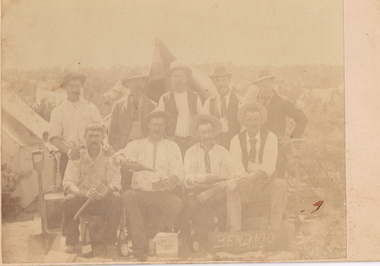
Photograph - GUINEY COLLECTION: PHOTO OF 9 MEN, 1896
... A handwritten sign in front of the men says 'BENDIGO'. There are mining tools beside them and one man is holding a wine bottle and pouring wine into a glass. ...A handwritten sign in front of the men says 'BENDIGO'. There are mining tools beside them and one man is holding a wine bottle and pouring wine into a glass. ...Sepia photograph of nine men. Four men seated in front row. Five men standing hehind. A handwritten sign in front of the men says 'BENDIGO'. There are mining tools beside them and one man is holding a wine bottle and pouring wine into a glass. There are tents in the background. Written on the back in red ink 'To Mackay and the Bendigonian Young Bendigonians in the West Christmas Day 1896 at Rocky Bay A Doughty C Wilkinson D Manners C Cudey S Nestor John Downes A McAllister J Burtonclay R Kuhlkens -
 Flagstaff Hill Maritime Museum and Village
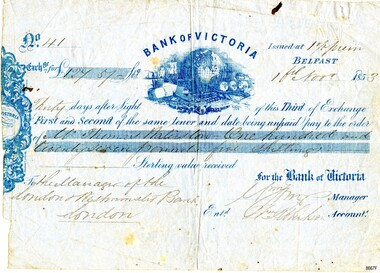
Currency - Banknote Belfast, Bank of Victoria, 1853
... The blue printed Bank of Victoria logo features a world globe, sailing ships, wool bails, sheep, colonial building and mining tools. ...The blue printed Bank of Victoria logo features a world globe, sailing ships, wool bails, sheep, colonial building and mining tools. Banknote of fine paper. There is a fold multi-crease down the centre top to bottom, lighter creasing across the top and angular creasing to the bottom left and right-hand corners. ...The promissory note issued at Belfast, now Port Fairy, Victoria by the “Bank of Victoria” is an early example of currency issued by a private bank. This note was issued in 1853 the same year that the bank commenced business in Belfast. Details of the first production of a banknote backed by the Australian Government occurred on 1 May 1913 following the "Australian Notes Act of 1910" (Australian National Museum). The first building the Bank of Victoria purchased in Belfast was of timber and later sold. Smith & Watts Architects advertised for tenders in the Melbourne Argus on Thursday 29/4/1869 for the erection of a substantial building that is now occupied by Moyne Shire Council in Cox Street. A meeting of the Directors of the Bank of Victoria elected on 1 October 1852. A ballot took place for four directors resulting in Wm. Highett Esq. Wm F. Splatt, Esq. M.L.C., Alex. Wilson, Esq. and W.H. Tuckett” elected as Directors. It was reported from a later meeting in “The Argus” Melbourne on 3 August 1853 that a branch had opened in Swanston Street, Melbourne on 3rd January 1852 with Henry Miller as Chairman of the Board and J. Matheson as the Manager; followed by Geelong on 12 August 1852. Then at the request of “influential inhabitants”, the Belfast branch commenced on 11 May 1853, which had “already met with very general support and encouragement”. This was a colonial bank at the time of vast pastoral runs and gold speculation – how "Mr Thomas [....ton?]" came by his fortune of One Hundred and Twenty-Seven Pound and five shillings can only be wondered at until further research reveals the story. This promissory note records the early colonial system of banking and reflects the economic growth and entrepreneurship of the South West Region of Victoria.Banknote of fine paper. There is a fold multi-crease down the centre top to bottom, lighter creasing across the top and angular creasing to the bottom left and right-hand corners. Yellow spotting is visible across the object breaking through the grey blue colour of the paper. A dark ink blot appears near the top right-hand corner. The left-hand side of the banknote is uneven. The back of the document has darker spotting, a used dirty look patina and some insect spotting. Horizontal crease markings can be seen creating quarter marks. The front of the banknote reads: "No.41/ Exch.ge for £127.57- Bank of Victoria/Issued at 1% prem/Thirty days after Sight of this Third of Exchange/First and Second of the same tenor and date being unpaid pay to the order of/Mr. Thomas [Raliston?]/One hundred and twenty seven pounds five shillings Sterling silver received/To the Manager of the London Westminister Bank London/for the Bank of Victoria [signed?] Manager/Ent.d [?] Robertson Account.t. The blue printed Bank of Victoria logo features a world globe, sailing ships, wool bails, sheep, colonial building and mining tools. flagstaff hill, warrnambool, maritime village, maritime museum, flagstaff hill maritime museum and village, shipwreck coast, great ocean road, promissory notes, bank notes, bank of victoria, smith & watts, smith & watts architects, 1853, william highett, william f. splatt, alex wilson, w.h. tuckett, henry miller, money miller, belfast (now port fairy), banknote -
 Bendigo Historical Society Inc.
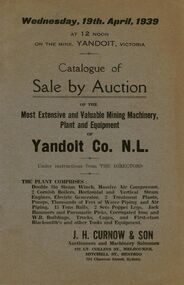
Document - IAN DYETT COLLECTION: AUCTION CATALOGUE - YANDOIT CO. N.L
... Grey covered auction catalogue for a sale of Mining Machinery, Tools,Buildings, Piping, engines, Poppet Legs and other Equipment at the Yandoit Co. ...BUSINESS Auctioneers j h curnow & son pty ltd Ian Dyett Collection - Auction Catalogue - Yandoit Co N L J H Curnow & Son The Cambridge Press Grey covered auction catalogue for a sale of Mining Machinery, Tools,Buildings, Piping, engines, Poppet Legs and other Equipment at the Yandoit Co. ...Grey covered auction catalogue for a sale of Mining Machinery, Tools,Buildings, Piping, engines, Poppet Legs and other Equipment at the Yandoit Co. N. L., Yandoit on 19/4/1939. J. H. Curnow & Son were the auctioneers.business, auctioneers, j h curnow & son pty ltd, ian dyett collection - auction catalogue - yandoit co n l, j h curnow & son, the cambridge press -
 Bendigo Historical Society Inc.
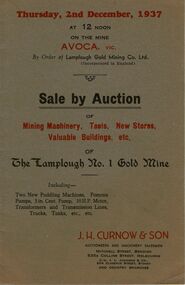
Document - IAN DYETT COLLECTION: AUCTION CATALOGUE - THE LAMPLOUGH NO. 1 GOLD MINE
... Grey covered auction catalogue with red and black printing for a sale of Mining Machinery, Tools, new Stores, Valuable Buildings, etc of The Lamplough No. 1 Gold Mine, Avoca, Vic. ...BUSINESS Auctioneers j h curnow & son pty ltd Ian Dyett Collection - Auction Catalogue - The Lamplough No.1 Gold Mine J H Curnow & Son J L Jamieson Bolton Bros Pty Ltd Grey covered auction catalogue with red and black printing for a sale of Mining Machinery, Tools, new Stores, Valuable Buildings, etc of The Lamplough No. 1 Gold Mine, Avoca, Vic. ...Grey covered auction catalogue with red and black printing for a sale of Mining Machinery, Tools, new Stores, Valuable Buildings, etc of The Lamplough No. 1 Gold Mine, Avoca, Vic. By Order of Lamplough Gold Mining Co. Ltd. (Incorporated in England). J. H. Curnow & Son were the auctioneers. Auction was held on the 2nd December, 1937.business, auctioneers, j h curnow & son pty ltd, ian dyett collection - auction catalogue - the lamplough no.1 gold mine, j h curnow & son, j l jamieson, bolton bros pty ltd -
 Bendigo Historical Society Inc.
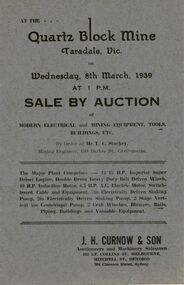
Document - IAN DYETT COLLECTION: AUCTION CATALOGUE - QUARTZ BLOCK MINE - TARADALE
... For sale were electrical and mining equipment, tools, buildings, scrap iron and piping. ...For sale were electrical and mining equipment, tools, buildings, scrap iron and piping. ...Grey covered auction catalogue for a sale at the Quartz Block Mine, Taradale, Vic. On 8 March, 1939. For sale were electrical and mining equipment, tools, buildings, scrap iron and piping. Part of the sale was at the Nigel Shaft and part at the Prospecting Shaft. Catalogue has the price of each item written beside it. J. H. Curnow & Son were the auctioneers.business, auctioneers, j h curnow & son pty ltd, ian dyett collection - auction catalogue - quartz block mine - taradale, mr l c stuckey, j h curnow & son, the cambridge press -
 Bendigo Historical Society Inc.
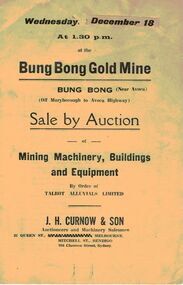
Document - IAN DYETT COLLECTION: AUCTION CATALOGUE - BUNG BONG GOLD MINE
... For sale was mining machinery, buildings, tools and equipment. Auctioneer was J. ...For sale was mining machinery, buildings, tools and equipment. Auctioneer was J. ...Two white auction catalogues for a sale at the Bung Bong Gold Mine at Bung Bong (Near Avoca) on 18 December (no year stated) by order of Talbot Alluvials Limited. For sale was mining machinery, buildings, tools and equipment. Auctioneer was J. H. Curnow & Son.business, auctioneers, j h curnow & son pty ltd, ian dyett collection - auction catalogue - bung bong gold mine, talbot alluvials limited, j h curnow & son, the cambridge press -
 Bendigo Historical Society Inc.
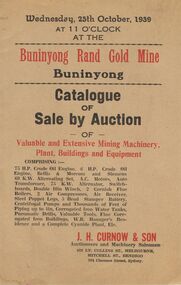
Document - IAN DYETT COLLECTION: AUCTION CATALOGUE - BUNINYONG RAND GOLD MINE
... Light brown covered auction catalogue for a sale on 25th October, 1939 at the Buninyong Rand Gold Mine, Buninyong of Mining Machinery, Plant, Buildings, Tools and Equipment. The auctioneers were J. ...BUSINESS Auctioneers j h curnow & son pty ltd Ian Dyett Collection - Auction Catalogue - Buninyong Rand Gold Mine J H Curnow & Son The Cambridge Press Light brown covered auction catalogue for a sale on 25th October, 1939 at the Buninyong Rand Gold Mine, Buninyong of Mining Machinery, Plant, Buildings, Tools and Equipment. The auctioneers were J. ...Light brown covered auction catalogue for a sale on 25th October, 1939 at the Buninyong Rand Gold Mine, Buninyong of Mining Machinery, Plant, Buildings, Tools and Equipment. The auctioneers were J. H. Curnow & Son and the catalogue was printed by the Cambridge Press, Bendigo.business, auctioneers, j h curnow & son pty ltd, ian dyett collection - auction catalogue - buninyong rand gold mine, j h curnow & son, the cambridge press -
 Bendigo Historical Society Inc.
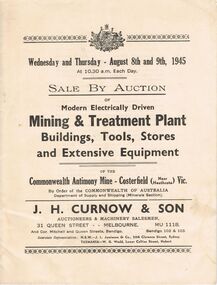
Document - IAN DYETT COLLECTION: AUCTION CATALOGUE - COMMONWEALTH ANTIMONY MINE - COSTERFIELD
... Two paper catalogues from an auction of electrically driven mining & treatment plant, buildings, tools, stores and extensive equipment of the Commonwealth Antimony Mine at Costerfield (near Heathcote) Vic. ...BUSINESS Auctioneers j h curnow & son pty ltd Ian Dyett Collection - Auction Catalogue - Commonwealth Antimony Mine - Costerfield Commonwealth of Australia Department of Supply and Shipping (Minerals Section) J H Curnow & Son J L Jamieson & Co W G Wedd Mr J Zoch Two paper catalogues from an auction of electrically driven mining & treatment plant, buildings, tools, stores and extensive equipment of the Commonwealth Antimony Mine at Costerfield (near Heathcote) Vic. ...Two paper catalogues from an auction of electrically driven mining & treatment plant, buildings, tools, stores and extensive equipment of the Commonwealth Antimony Mine at Costerfield (near Heathcote) Vic. Auction held on the 8th and 9th August, 1945. J. H. Curnow & Son were the auctioneers.business, auctioneers, j h curnow & son pty ltd, ian dyett collection - auction catalogue - commonwealth antimony mine - costerfield, commonwealth of australia, department of supply and shipping (minerals section), j h curnow & son, j l jamieson & co, w g wedd, mr j zoch -
 Bendigo Historical Society Inc.
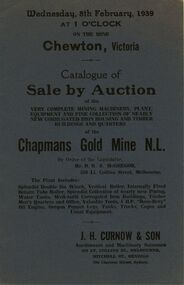
Document - IAN DYETT COLLECTION: AUCTION CATALOGUE - CHAPMAN'S GOLD MINE
... For sale was Mining Machinery, Plant, Equipment, Tools,Corrugated Iron Housing and Buildings. ...For sale was Mining Machinery, Plant, Equipment, Tools,Corrugated Iron Housing and Buildings. ...Darkish blue catalogue for an auction sale at the Chapmans Gold Mine N. L. at Chewton, Vic. On 8 February, 1939 by Order of the Liquidator, Mr. D. R. S. McGregor. For sale was Mining Machinery, Plant, Equipment, Tools,Corrugated Iron Housing and Buildings. J. H. Curnow & Son were the auctioneers.business, auctioneers, j h curnow & son pty ltd, ian dyett collection - auction catalogue - chapmans gold mine n. l., d r s mcgregor, j h curnow & son, old quartz hill mine, albion hotel (near chewton), roberts & son, the cambridge press -
 Bendigo Historical Society Inc.
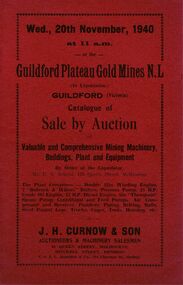
Document - IAN DYETT COLLECTION: AUCTION CATALOGUE - GUILFORD PLATEAU GOLD MINES
... For sale was mining machinery, buildings, plant, tools, tubular steel poppet legs, pumps and piping. ...For sale was mining machinery, buildings, plant, tools, tubular steel poppet legs, pumps and piping. ...Two red covered auction catalogues for a sale at the Guilford Plateau Gold Mines N. L. on 20 November, 1940. For sale was mining machinery, buildings, plant, tools, tubular steel poppet legs, pumps and piping. Contains description of some of the bigger machinery, etc. Auctioneers were J. H. Curnow & Son.business, auctioneers, j h curnow & son pty ltd, ian dyett collection - auction catalogue - guilford plateau gold mines n. l., mr e a arnold, j h curnow & son, the cambridge press -
 Bendigo Historical Society Inc.
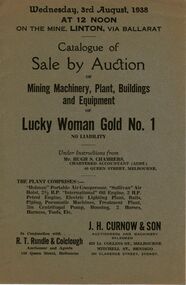
Document - IAN DYETT COLLECTION: AUCTION CATALOGUE - LUCKY WOMAN GOLD NO 1
... Sale consisted of mining machinery, plant, buildings, tools and equipment and also included two horses. ...Sale consisted of mining machinery, plant, buildings, tools and equipment and also included two horses. ...Two grey covered auction catalogues for a sale at the Lucky Woman Gold No. 1 No Liability Mine, Linton, Via Ballarat on 3 August, 1938. Sale consisted of mining machinery, plant, buildings, tools and equipment and also included two horses. J. H. Curnow & Son in Conjunction with R. T. Rundle & Colclough were the auctioneers.business, auctioneers, j h curnow & son pty ltd, ian dyett collection - auction catalogue - lucky woman gold no. 1 no liability, mr hugh s chambers, j h curnow & son, r t rundle & colclough, the cambridge press -
 Bendigo Historical Society Inc.
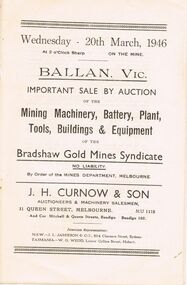
Document - IAN DYETT COLLECTION: AUCTION CATALOGUE - BRADSHAW GOLD MINES SYNDICATE
... Two Auction catalogues for a sale on 20th March, 1946 of Mining Machinery, Battery, Plant, Tools, Buildings & Equipment at the Bradshaw Gold Mines Syndicate No Liability at Ballan, Vic. ...BUSINESS Auctioneers j h curnow & son pty ltd Ian Dyett Collection - Auction Catalogue - Bradshaw Gold Mines Syndicate No Liability Mines Department J H Curnow & Son J L Jamieson W G Wedd Mr R Graham The Prahran Telegraph Print Two Auction catalogues for a sale on 20th March, 1946 of Mining Machinery, Battery, Plant, Tools, Buildings & Equipment at the Bradshaw Gold Mines Syndicate No Liability at Ballan, Vic. ...Two Auction catalogues for a sale on 20th March, 1946 of Mining Machinery, Battery, Plant, Tools, Buildings & Equipment at the Bradshaw Gold Mines Syndicate No Liability at Ballan, Vic. Sale by Order of the Mines Department, Melbourne. J. H. Curnow & Son were the auctioneers. Contains a description of some of the machinery and buildings. Also gives location of the Bradshaw Gold Mine. The Prahran Telegraph Print were the printers of the catalogue.business, auctioneers, j h curnow & son pty ltd, ian dyett collection - auction catalogue - bradshaw gold mines syndicate no liability, mines department, j h curnow & son, j l jamieson, w g wedd, mr r graham, the prahran telegraph print -
 Bendigo Historical Society Inc.
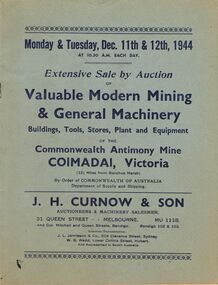
Document - IAN DYETT COLLECTION: AUCTION CATALOGUE - COMMONWEALTH ANTIMONY MINE
... Of Modern Mining & General Machinery, Buildings, Tools, Stores, Plant & Equipment by Order of Commonwealth of Australia, Department of Supply and Shipping. ...Of Modern Mining & General Machinery, Buildings, Tools, Stores, Plant & Equipment by Order of Commonwealth of Australia, Department of Supply and Shipping. ...Two blue covered with dark blue printing for an auction sale held on the 11th and 12th December, 1944 at the Commonwealth Antimony Mine at Coimadai, near Bacchus Marsh, Vic. Of Modern Mining & General Machinery, Buildings, Tools, Stores, Plant & Equipment by Order of Commonwealth of Australia, Department of Supply and Shipping. Sale conducted by permission of the Director of Machine Tools and Gauges under Regulation 59 of the National Security (General) Regulations. J. H. Curnow & Son ere the auctioneers.business, auctioneers, j h curnow & son pty ltd, ian dyett collection - auction catalogue - commonwealth antimony mine, j h curnow & son, j l jamieson & co, w g wedd, prahran telegraph print -
 Flagstaff Hill Maritime Museum and Village
Functional object - Standard Measure, James McEwan & Co, 1860s-1900s
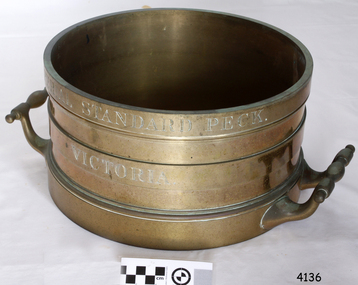
... This company provided and sold a large and varied amount of imported goods into the colony; agricultural equipment, building materials, mining items, steam engines, tools of all types and marble fireplaces. ...This company provided and sold a large and varied amount of imported goods into the colony; agricultural equipment, building materials, mining items, steam engines, tools of all types and marble fireplaces. ...This container is a pre-Decimal, Imperial Standard Peck, part of a three-piece set of Standard measures used in Victoria from around 1900 to 1940. The measures were made in Melbourne by J. McEwan & Co. These three measures were likely used by the local Melbourne authority that monitored weights and measures in the mid to late 19th century. . An Imperial Bushel was equal to 8 gallons, or 36.36872 litres . An Imperial Peck equals a quarter of a Bushel, or 9.09 litres Standards for weights and measures began in Victoria when the Melbourne Observatory received primary sets of Imperial Standard Weights and Measures from Britain. These were tested against the then British Imperial Standards to measure length, weight and currency. Administrative bodies in the Colony of Australia could then compare their weights and measures against these British Primary Standards and adjust their Measures accordingly, to maintain the Standards. The Weights and Measures Act of 1862 was passed in Victoria, and local inspectors were established throughout the colony. By the 1870s, local councils and shires in Victoria held a set of Standards used to test scales, weights, and measures used by manufacturers, wholesalers, and retailers. Every ten years, the councils’ Standards needed to be rechecked against the Victorian Standards. In the 19th Century, the Victorian Customs Department inspected and maintained the Standards. In 1901, the Customs Department was transferred to the Federal Government, but the Weights and Measures authority remained with the Victorian Government and relocated to the Melbourne Observatory. In 1904, the Standard weights and measures, and testing equipment, were installed in the room of a new building erected at the south end of the Great Melbourne Telescope House. The room became known as the Whirling Room, due to its large whirling apparatus that tested air meters. When the Melbourne Observatory closed in 1944, the Weights and Measures Branch was formed to continue maintaining the Standards. On February 14th, 1966, Australia began its conversion to metric measures and currency, and a new set of Standard Measures was introduced; the conversion took place in stages. The Weights and Measures Branch remained at the Observatory site until 1995. James McEwan & Co.: - The maker of this set of Standard Measures was James McEwan. His Melbourne business was established in 1852 and sold retail furniture and wholesale ironmongery. The firm’s warehouses were situated at the intersection of 81-83 Elizabeth and Little Collins Streets. Shortly afterwards, the firm partnered with William Kerr Thomson and Samuel Renwick. When McEwan died in 1868, his partners carried on and expanded the business under his name, J McEwan. The business was expanded to provide a retail shop, counting-house and private offices. Wholesale warehouses adjoined these premises at 4, 6 and 10 Little Collins Street, West. This company provided and sold a large and varied amount of imported goods into the colony; agricultural equipment, building materials, mining items, steam engines, tools of all types and marble fireplaces. The company grew to employ over 150 people in Melbourne and opened offices at 27 Lombard St, London, as well as in New Zealand and Fiji. It also serviced the Mauritius islands and the Pacific area with its steamship, the Suva, and a brig, the Shannon. The set of Imperial Standard Measures is an example of a bronze measure container made specifically for J. McEwan & Co. Today, it helps us to understand how imperial weights and measures were used, and how a standard of measurement for merchants was developed in the Australian colonies based on the Imperial British measurement system. The container has social significance as an item retailed by J McEwan, and used by Victoria’s authorities legally responsible for ensuring that dry goods sold in Victoria by wholesalers and retailers are correct. Imperial Standard Measure: a container to measure the volume of a Peck. It is part of a set of three precision measures - a Peck, a Half Bushel and a Bushel – used by government authorities in Victoria. The cast brass cylinder has straight sides and a flat base, and two handles are attached near the base by two posts on each handle. The wall inside is straight, and outside has grooves and horizontal bands. Inscriptions are engraved on the outside. The Measures were made for the retailer, J. McEwan & Co., London and Melbourne. Engraved on side: "IMPERIAL STANDARD PECK. / VICTORIA."flagstaff hill, flagstaff hill maritime museum and village, warrnambool, maritime museum, maritime village, great ocean road, shipwreck coast, weights and measurements, science, james mcewan & co., precision instrument, technology, melbourne observatory, british imperial standards, standard weights & measures, volume measure, dry measure, customs, commerce, victorian standard measure, pre-decimal measure, imperial standard, imperial bushel, imperial half bushel, imperial peck, peck measure, bronze container, brass container, cast container -
 Flagstaff Hill Maritime Museum and Village
Functional object - Standard Measure, James McEwan & Co, 1860s-1900s
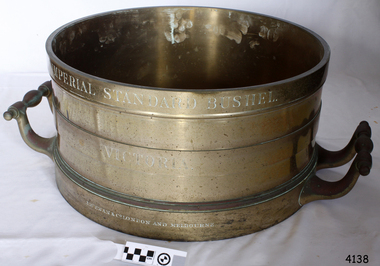
... This company provided and sold a large and varied amount of imported goods into the colony; agricultural equipment, building materials, mining items, steam engines, tools of all types and marble fireplaces. ...This company provided and sold a large and varied amount of imported goods into the colony; agricultural equipment, building materials, mining items, steam engines, tools of all types and marble fireplaces. ...This container is a pre-Decimal, Imperial Standard Bushel, part of a three-piece set of Standard measures used in Victoria from around 1900 to 1940. The measures were made in Melbourne by J. McEwan & Co. These three measures were likely used by the local Melbourne authority that monitored weights and measures in the mid to late 19th century. . An Imperial Bushel was equal to 8 gallons, or 36.36872 litres . An Imperial Peck equals a quarter of a Bushel, or 9.09 litres Standards for weights and measures began in Victoria when the Melbourne Observatory received primary sets of Imperial Standard Weights and Measures from Britain. These were tested against the then British Imperial Standards to measure length, weight and currency. Administrative bodies in the Colony of Australia could then compare their weights and measures against these British Primary Standards and adjust their Measures accordingly, to maintain the Standards. The Weights and Measures Act of 1862 was passed in Victoria, and local inspectors were established throughout the colony. By the 1870s, local councils and shires in Victoria held a set of Standards used to test scales, weights, and measures used by manufacturers, wholesalers, and retailers. Every ten years, the councils’ Standards needed to be rechecked against the Victorian Standards. In the 19th Century, the Victorian Customs Department inspected and maintained the Standards. In 1901, the Customs Department was transferred to the Federal Government, but the Weights and Measures authority remained with the Victorian Government and relocated to the Melbourne Observatory. In 1904, the Standard weights and measures, and testing equipment, were installed in the room of a new building erected at the south end of the Great Melbourne Telescope House. The room became known as the Whirling Room, due to its large whirling apparatus that tested air meters. When the Melbourne Observatory closed in 1944, the Weights and Measures Branch was formed to continue maintaining the Standards. On February 14th, 1966, Australia began its conversion to metric measures and currency, and a new set of Standard Measures was introduced; the conversion took place in stages. The Weights and Measures Branch remained at the Observatory site until 1995. James McEwan & Co.: - The maker of this set of Standard Measures was James McEwan. His Melbourne business was established in 1852 and sold retail furniture and wholesale ironmongery. The firm’s warehouses were situated at the intersection of 81-83 Elizabeth and Little Collins Streets. Shortly afterwards, the firm partnered with William Kerr Thomson and Samuel Renwick. When McEwan died in 1868, his partners carried on and expanded the business under his name, J McEwan. The business was expanded to provide a retail shop, counting-house and private offices. Wholesale warehouses adjoined these premises at 4, 6 and 10 Little Collins Street, West. This company provided and sold a large and varied amount of imported goods into the colony; agricultural equipment, building materials, mining items, steam engines, tools of all types and marble fireplaces. The company grew to employ over 150 people in Melbourne and opened offices at 27 Lombard St, London, as well as in New Zealand and Fiji. It also serviced the Mauritius islands and the Pacific area with its steamship, the Suva, and a brig, the ShannonThe set of Imperial Standard Measures is an example of a bronze measure container made specifically for J. McEwan & Co. Today, it helps us to understand how imperial weights and measures were used, and how a standard of measurement for merchants was developed in the Australian colonies based on the Imperial British measurement system. The container has social significance as an item retailed by J McEwan, and used by Victoria’s authorities legally responsible for ensuring that dry goods sold in Victoria by wholesalers and retailers are correct.Imperial Standard Measure: a container to measure the volume of a Busel. It is part of a set of three precision measures - a Peck, a Half Bushel and a Bushel – used by government authorities in Victoria. The cast brass cylinder has straight sides and a flat base, and two handles are attached near the base by two posts on each handle. The wall inside is straight, and outside has grooves and horizontal bands. Inscriptions are engraved on the outside. The Measures were made for the retailer, J. McEwan & Co., London and Melbourne.Engraved on side: "IMPERIAL STANDARD BUSHEL. / VICTORIA ./ J. MCEWAN & CO. LONDON AND MELBOURNE."flagstaff hill, flagstaff hill maritime museum and village, warrnambool, maritime museum, maritime village, great ocean road, shipwreck coast, weights and measurements, science, james mcewan & co., precision instrument, technology, melbourne observatory, british imperial standards, standard weights & measures, volume measure, dry measure, customs, commerce, victorian standard measure, pre-decimal measure, imperial standard, imperial bushel, peck measure, bronze container, brass container, cast container -
 Flagstaff Hill Maritime Museum and Village
Equipment - Standard Measure, James McEwan & Co, 1860s-1900s
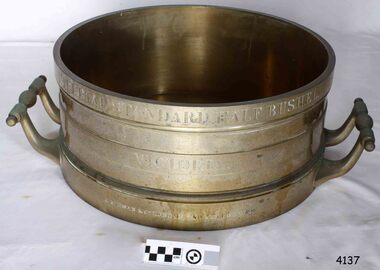
... This company provided and sold a large and varied amount of imported goods into the colony; agricultural equipment, building materials, mining items, steam engines, tools of all types and marble fireplaces. ...This company provided and sold a large and varied amount of imported goods into the colony; agricultural equipment, building materials, mining items, steam engines, tools of all types and marble fireplaces. ...This container is a pre-Decimal, Imperial Standard Half Bushel, part of a three-piece set of Standard measures used in Victoria from around 1900 to 1940. The measures were made in Melbourne by J. McEwan & Co. These three measures were likely used by the local Melbourne authority that monitored weights and measures in the mid to late 19th century. . An Imperial Bushel was equal to 8 gallons, or 36.36872 litres . An Imperial Peck equals a quarter of a Bushel, or 9.09 litres Standards for weights and measures began in Victoria when the Melbourne Observatory received primary sets of Imperial Standard Weights and Measures from Britain. These were tested against the then British Imperial Standards to measure length, weight and currency. Administrative bodies in the Colony of Australia could then compare their weights and measures against these British Primary Standards and adjust their Measures accordingly, to maintain the Standards. The Weights and Measures Act of 1862 was passed in Victoria, and local inspectors were established throughout the colony. By the 1870s, local councils and shires in Victoria held a set of Standards used to test scales, weights, and measures used by manufacturers, wholesalers, and retailers. Every ten years, the councils’ Standards needed to be rechecked against the Victorian Standards. In the 19th Century, the Victorian Customs Department inspected and maintained the Standards. In 1901, the Customs Department was transferred to the Federal Government, but the Weights and Measures authority remained with the Victorian Government and relocated to the Melbourne Observatory. In 1904, the Standard weights and measures, and testing equipment, were installed in the room of a new building erected at the south end of the Great Melbourne Telescope House. The room became known as the Whirling Room, due to its large whirling apparatus that tested air meters. When the Melbourne Observatory closed in 1944, the Weights and Measures Branch was formed to continue maintaining the Standards. On February 14th, 1966, Australia began its conversion to metric measures and currency, and a new set of Standard Measures was introduced; the conversion took place in stages. The Weights and Measures Branch remained at the Observatory site until 1995. James McEwan & Co.: - The maker of this set of Standard Measures was James McEwan. His Melbourne business was established in 1852 and sold retail furniture and wholesale ironmongery. The firm’s warehouses were situated at the intersection of 81-83 Elizabeth and Little Collins Streets. Shortly afterwards, the firm partnered with William Kerr Thomson and Samuel Renwick. When McEwan died in 1868, his partners carried on and expanded the business under his name, J McEwan. The business was expanded to provide a retail shop, counting-house and private offices. Wholesale warehouses adjoined these premises at 4, 6 and 10 Little Collins Street, West. This company provided and sold a large and varied amount of imported goods into the colony; agricultural equipment, building materials, mining items, steam engines, tools of all types and marble fireplaces. The company grew to employ over 150 people in Melbourne and opened offices at 27 Lombard St, London, as well as in New Zealand and Fiji. It also serviced the Mauritius islands and the Pacific area with its steamship, the Suva, and a brig, the Shannon.The set of Imperial Standard Measures is an example of a bronze measure container made specifically for J. McEwan & Co. Today, it helps us to understand how imperial weights and measures were used, and how a standard of measurement for merchants was developed in the Australian colonies based on the Imperial British measurement system. The container has social significance as an item retailed by J McEwan, and used by Victoria’s authorities legally responsible for ensuring that dry goods sold in Victoria by wholesalers and retailers are correct.Imperial Standard Measure: a container to measure the volume of a Half Bushel. It is part of a set of three precision measures - a Peck, a Half Bushel and a Bushel – used by government authorities in Victoria. The cast brass cylinder has straight sides and a flat base, and two handles are attached near the base by two posts on each handle. The wall inside is straight, and outside has grooves and horizontal bands. Inscriptions are engraved on the outside. The Measures were made for the retailer, J. McEwan & Co., London and Melbourne. Engraved test: "IMPERIAL STANDARD HALF BUSHEL. / VICTORIA / J. MCEWAN & O. LONDON AND MELBOURNE."flagstaff hill, flagstaff hill maritime museum and village, warrnambool, maritime museum, maritime village, great ocean road, shipwreck coast, weights and measurements, science, james mcewan & co., precision instrument, technology, melbourne observatory, british imperial standards, standard weights & measures, volume measure, dry measure, customs, commerce, victorian standard measure, pre-decimal measure, imperial standard, imperial half bushel, bronze container, brass container, cast container -
 Federation University Historical Collection
Letter - Correspondence, Walter M. Hitchcock, Letters from Walter M. Hitchcock concerning a model of a Ballarat tent (and more), 1911, 1911 (exact)
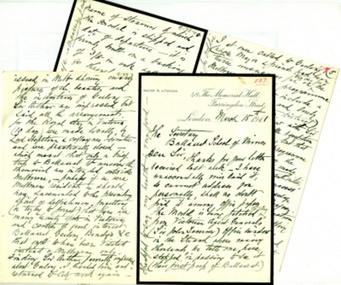
... I shall enclose in the glass case (which is 26 x 34 x 16 in high) some spare minced moss and gas (smoke) in case in transit the plateau suffers by shaking (though it is well glued down). All the tools, mining appliances, cradle, windlass, &c will be separately packed enclosed – which you can easily place in respective positions. ...I shall enclose in the glass case (which is 26 x 34 x 16 in high) some spare minced moss and gas (smoke) in case in transit the plateau suffers by shaking (though it is well glued down). All the tools, mining appliances, cradle, windlass, &c will be separately packed enclosed – which you can easily place in respective positions. ...The tent model mentioned in the letters was displayed in the Ballarat School of Mines Museum. During the 1960s it was transferred to the Ballarat Historical Society. Two handwritten letters on paper with black mourning edge written by Walter M. Hitchcock to the Ballarat School of Mines, and another written by Walter's brother George M. Hitchcock.Letter transcription follow: Letter from Walter M. Hitchcock regarding the death of James Oddie and early gold mining at Ballarat, 1910 and 1911 48 The Memorial Hall Farringdon St London Dec1/10 The Secretary Ballarat Museum Dear Sir, I am just now sending you this line, i anticipation of further correspondence later on, simply to forward you a Post Card of the 1st mining tent erected 1851 on the site of he then newly proclaimed Township of Ballarat, which, as the sole survivor of the party who built the original, I have had the pleasure in making, and have decided to present it to your museum, Sir Jno Lasenor out Agent General for Victoria came to a Bazaar recently held in London. where I had it on view in the museum from 3 days, - and desired I would allow its [ ? ] exhibited in the first large window of the beautiful new building of the Victoria Agency situate in the Strand. It is there for the past few days and he may wish it to remain a week or two longer, I know of no other exhibition of it to delay it being packed and shipped to my relatives in Geelong (Mr [?] Bright of Hitchock's Firm) who may wish to show it in one of their windows before forwarding it to your museum - I have had an itemised pane glass case made for it with drop down end and [?} it stands on a plateau of moss, to represent grass 32 x 13 x 13 high and chimney 14 1/2 - the case is made 34 x 26 x 20 high inside - I shall have it very carefully packed - tent emptied tools, beds, &c &c in separate packing and insured for 50 pounds - I will send you full details later on. I hope and believe your President will accept it in due time Meantime believe me to be very truly Cat Walter Hitchcock G.F.B. 48 The Memorial Hall Farringdon St London March 15th 1911 The Secretary Ballarat School of Mines Dear Sir, Thanks for your letter received last week – I have unaccountably mislaid it, so cannot address you personally, shall no doubt find it among office papers. The model is being fetched today from Victorian Agent General’s (Sir John [Lavernor?] office window in the Strand where many thousands, he tells me, have stopped in passing to see it (their first peep of Ballaarat). It will be on view at Blackheath (Kent) for a week, then packed and shipped without further delay. I shall enclose in the glass case (which is 26 x 34 x 16 in high) some spare minced moss and gas (smoke) in case in transit the plateau suffers by shaking (though it is well glued down). All the tools, mining appliances, cradle, windlass, &c will be separately packed enclosed – which you can easily place in respective positions. HRH Prince of Wales has graciously accepted a photo of it – and in my letter to him when sending it for his acceptance I said – as he would probably ere long visit Australia as did his grandfather and father, which ought to (and certainly will) include at least a day or two in seeing your beautiful City, and also something of your mines &c instead of the hurried visit of his father (2 hours) when he, as Duke of York, unveiled a statue to the memory of those slain in the sad Boer War, which now is admitted by almost everybody to have been a big political mistake, - though in the future with England’s present wise policy towards that country it will prove for Africa’s welfare. It may interest you to know that when I ascertained that Geelong was not to be visited by the Royal Pair – I went up to St James’s Palace by appointed time the Duke’s private Secy Sir Arthur Bigge – taking with me a specially illustrated paper issued in Melb. showing many pictures of the beauties and industries of Geelong – Sir Arthur was impressed but said all the arrangements for the Royal stay in Victoria (10 days) were made locally, by Lord Hopetoun and collegues and committee, and were practically closed – which meant that only a brief trip to Ballarat to uncover the memorial was intended outside Melbourne. Perhaps if we were Melbourne residents we should have succumbed to the prevailing spirit of selfishness – forgetting (or trying to forget) that there are many beauty spots in Victoria and centres of great interest - Ballarat, Geelong, Bendigo, &c that ought to have been visited instead of Melbourne only. Finding Sir Arthur favorably impressed about Geelong I thanked him and returned to City work again. I at once called to Geelong whose mayor and friends had been twice unsuccessful in trying for the Melbourne functions programme being altered to include a visit to Geelong and lovely spots in the Western District, reporting my interview with Sir A B and his favourable reception of my representations, but that any alteration to the programme of engagements during the Royal visit must be made locally and by the local authorities. This had the desired success for on receipt of my message the Geelong mayor and colleagues again reopened the question and went to Melbourne, resulting in a concession (but what an altogether inadequate one) and they graciously ? consented to the train, on its way with the Duke and Duchess to your city, to stop at the Geelong stn (15 minutes) and so it came about that by a hasty local effort, 3,000 school children, and not a few of the leading people including the Mayor &c were gathered to welcome them in Geelong. The National anthem being sung, an Address read and presented and kindly replied to. Now Ballarat should doubtless has influence. See to it when our P. Of Wales visits Victoria – an unselfish ¬ programme is fixed up – and HRH afforded ample opportunity of visiting leisurely your city, Geelong, Bendigo and other centres of beauty and importance. The Prince himself will be the gainer by such an equitable and enlightened programme, - and come back with all the more favourable views of the marvellous development ever since our family first settled in Geelong in 1850. A far preferable result of such a visit than night after night having Melbourne Banquets and the visiting of its undoubted attractions - whilst all the rest of the State remained unvisited. Such an official mistake must not be made again. I will write you again, stating name of steamer of which the model is shipped and date of departure – it is firmly built on a backing of 3/8 in oak tall uprights so through the 7/8 in plateau and am entrusting the packing be very careful. I expressed firm – so that except possibly any breakage in glass case – it should reach you in due time all right. The top of case will be screwed so that it can be readily removed temporarily to enable my [ ? ] firm to show it in one of their windows. Believe me Yours very truly Captn Walter M. Hitchcock My brother will deliver it on my a/c – all carriage paid. Mt very kind regards to my friend since 1850 Jas Oddie. University of Ballarat Historical Collection Cat. No. 8133.3 & .4 Letter from Walter M. Hitchcock regarding the death of James Oddie and early gold mining at Ballarat, 1911 48 The Memorial Hall Farringdon St London April 20th 1911 My Dear Sir, It is with no ordinary feeling of regret that I received the tidings of the death of my good friend, your fellow citizen for many years, Mr James Oddie. Living at Geelong from March 1850 I came to know him there as carrying on a foundry business in Ashby. With the discovery of gold at Ballarat started off almost of the working people, as well as of all other classes of the male population. Mr Oddie arrived in Ballarat I believe on or about September 1st 1851. My three comrades and I arrived October 1st 1851 – among the many thousands soon gathered within a mile or so of Golden Point – my friend Oddie and I often met. I returning to Geelong after a year mining – my friend on the other hand remaining at Ballarat ever since – a marvellous record, and I am sure his life has been one of unique value to your City in many ways, - his age (87) naturally prepared me for his call home – and only two mails before the news came I received from him on of his kindly chatty letters in which amongst other things – he referred with pleasure to having received from me two 10 x 12 photos – one being of my model and that he was arranging to have it placed in a shop window in your city. I am interested in the fact of your having known each of my three comrades of 1851/52. It was J.M. Garrett and I who got permission to conduct public Sunday morning service in their large Marquee – used all the week for issue of Licenses in the absence of any church buildings, and it being on wet Sundays impossible to have services as usual under the trees – Ballarat then was more like a Gentleman’s Park – than bush country – but the axe soon did its work – and all were felled for our cooking, and hencewith to make our kindling etc. Shafting of holes not being at first done because too shallow – our deepest (at Eureka) was only 115 ft. Bendigo I hear had now mines of 4,000 ft in depth (deeper than our tin or coal mines here). I fortunately have, in excellent state of preservation, my last of 12 licenses dated October 1 1852 and have recently purchased here a Miner’s Right dated 1864, to that when explaining on matters re Gold Licensing I can show sample of each. With kind regards Believe me Yours sincerely Walter M. Hitchcock Geelong June 20/11 Dear Sir, By rail to day through Messrs Bannister I send the model of miner’s tent packed in a case 50 donated by my brother Captain Walter M. Hitchcock of London. This model was made by my brother and represents the tent he worked in on the Ballarat Gold Fields in the year 1851 or 2. In a separate parcel a few extras omitted from the case. Please send me receipts in duplicate, one for my brother, the other for the Customs, Geelong, as being donated to your institution, after some little correspondence it was admitted [??] any payment for duty. You probably have my brother’s address and would like to acknowledge its arrival, direct. I hope it is in good order. I did not open it for show in Geelong, as there would be less risk of breakage on repacking. With kind remembrances. I am Yours Faithfully Geo. M. Hitchcock. A Mr G. F. B. Sharick who is living near my home called in to see my model – he said he knew FM [Fred Martell] and was lately at Ballaratballarat school of mines, frederick martell, fred martell, james oddie, walter m hitchcock, walter hitchcock, f m garratt, george hitchcock, hitchcock, golden point, gold discovery, j m garrett, gold license, j.m. garrett, t.m. hall, george m. hitchcock, f.m. garratt, walter m. hitchcock -
 Federation University Historical Collection
Book, The Economics of Mining (Non-Ferrous Metals), 1938, 1938
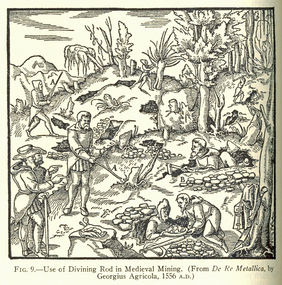
... tools, he studied their shapes and became proficient in making arrow heads. He was also interested in wild life, and was one of the founding members of the Cooper Ornithological Society. (http://engineering.stanford.edu/about/bio-hoover) charles bacon mining ...The book was used by Charles Bacon who studied at the University of Nevada in the late 1930s/early 1940s. Bacon worked at Bunker Hill Mines and Kellogg Idaho, before arriving in Australian in 1951. He worked for CN Myers, a company involved with paper converting. CN Myers was a family business (on Charles Bacon's maternal line). The Mackay School of Mines, Nevada was established in 1908. At the time of writing this mook T.J. Hoover was Professor of Mining and Metallurgy and Dean of the School of Engineering at Stanford University. Theodore Jesse Hoover, brother of the 31st President of the United States, was born in West Branch, Iowa, on January 28, 1871. He attended Stanford and received the Bachelor of Arts degree in Geology and Mining in 1901. Following graduation his professional career started with the position of assayer for the Keystone Consolidated Mining Company. After one year, he became assistant manager for the Standard Consolidated Mine, and a year later he was promoted to manager of the operation. In 1907 Hoover went to London as general manager of Minerals Separation, Ltd. This company was developing the froth flotation process for recovering minerals from ores. Hoover took an active part in the development of the flotation concentration process and authored one of the first books on the concentration of ores by flotation. After four years with Minerals Separation, Ltd., Hoover entered private practice as a consulting mining and metallurgical engineer with offices in London and in San Francisco. He was very successful and held positions of consulting engineer, managing director, director, and president of many mining companies in America, Europe, Asia, Africa, and Australia. He returned to Stanford in 1919 as Professor of Mining and Metallurgy and Executive Head of the Department of Mining and Metallurgy. His experience and ability in organization made him a natural leader. He was influential in the formation of the School of Engineering at Stanford. The School was formed in 1925 and he was made dean, a position he held until his retirement in 1936. As dean of engineering, he promoted a broad fundamental training program for undergraduate engineering students. Under his guidance, emphasis was placed upon graduate work and he was responsible for developing strong graduate engineering curricula at Stanford. While dean he continued teaching and his course, "The Economics of Mining," developed into a book which was published in 1933. He became interested in the functions of engineers and, with Professor Fish, wrote a book entitled "The Engineering Profession" which was published in 1940 and revised in 1950. In addition to his academic activities he was generous in his hospitality. Faculty and students alike enjoyed the annual field day and barbecue at his Rancho del Oso, near Santa Cruz. He was widely read and had a lively interest in all the things he encountered. He speculated on the antiquity of man and man's early production processes. To verify an idea regarding flint tools, he studied their shapes and became proficient in making arrow heads. He was also interested in wild life, and was one of the founding members of the Cooper Ornithological Society. (http://engineering.stanford.edu/about/bio-hoover) Blue hard covered book of 547 pages including an index. Contents include mine valuation (sampling, ore deposits, ore reserves, financial provisions, sale of mineral product, metal prices, reports) and Mining Organization (Co-operative effort, Mining Companies, Promoting Mining Enterprises, fluctuations of share prices, valuation of mining shares, fakes and fallacies, the mining Engineer and the law) and Mine Management (Organization of staff, mine manager, efficiency, industrial relations, training and discipline, safety). Inside front cover 'Charles Bacon Mackay School of Mines"charles bacon, mining engineering, metallurgy, university of nevada, mackay school of mines, stanford, bacon, mining, economics, divining, theodore hoover -
 Federation University Historical Collection
Photograph - Photograph - Black and White, Ballarat School of Mines Assay Room, c1900, c1901
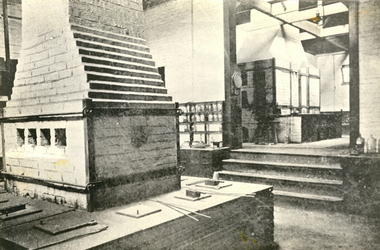
... mining Black and white photograph of the assay furnaces at the Ballarat School of Mines. The Assay-room contained 16 smelting furnaces, 16 muffle furnaces fro coke, charcoal, bituminous coal and gas, and featured all the usual tools and appliances. ...The depicted Ballarat School of Mines Assaying Furnace probably dates back to the mid 1890s. The photo first appears in the Ballarat School of Mines Calendar for 1900, but references to these facilities were mentioned in 1887. These facilities were updated and expanded on several occasions. Black and white photograph of the assay furnaces at the Ballarat School of Mines. The Assay-room contained 16 smelting furnaces, 16 muffle furnaces fro coke, charcoal, bituminous coal and gas, and featured all the usual tools and appliances. There was an adjoining weighing room.ballarat school of mines, scientific equipment, assaying, laboratory, mining -
 Federation University Historical Collection
Book, Machinery for Metalliferous Mines, 1894, 1894
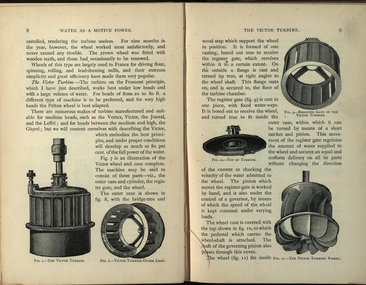
... mining, electric lighting and blasting, aerial wire ropeways, transport by rail and road. There a a number of lovely line illustrations in the book including: Poncelot's undershot waterwheel; Fromont furnace;Victor turbine; Pelton waterwheel; Root's positive blower;Cross section and front elevation of Lancashire boiler; Robey's Compound Mill Engine; Portable Winding Plant; Iron Pit Head Gear ; Loading Arrangement in an Incline Shaft; kibble; Worthington Pump; California Pump; Scram's Air Compressor; Rock drill Bits; Special Sharpening tools; Boring tools;Rotating Picking table; Ore Feeder; roller crusher; stamp battery; round buddle; slime table; vanner; amalgamating plant; belt elevator;roasting furnace;splicing wire rope; capel; tipping waggon;...mining, electric lighting and blasting, aerial wire ropeways, transport by rail and road. There a a number of lovely line illustrations in the book including: Poncelot's undershot waterwheel; Fromont furnace;Victor turbine; Pelton waterwheel; Root's positive blower;Cross section and front elevation of Lancashire boiler; Robey's Compound Mill Engine; Portable Winding Plant; Iron Pit Head Gear ; Loading Arrangement in an Incline Shaft; kibble; Worthington Pump; California Pump; Scram's Air Compressor; Rock drill Bits; Special Sharpening tools; Boring tools;Rotating Picking table; Ore Feeder; roller crusher; stamp battery; round buddle; slime table; vanner; amalgamating plant; belt elevator;roasting furnace;splicing wire rope; capel; tipping waggon; Machinery for Metalliferous Mines, 1894 Book Book Crosby Lockwood and Son E. ...The 1st edition of this famous work, giving an excellent account of the machinery used in late 19th century metal mining in the UK and overseas is very rare. It covers a wide range of equipment - pumps, steam engines, drills, winding engines, stamps & concentration mills, aerial ropeways, tramways and early uses of electricity etc. Brown hard cloth covered book. xvi 564 pages with additional advertisements, with over 300 illustrations and drawings, some fold out. Chapters include Water as a motive power, Wind engines and ventilating machinery, Steam boilers/engines and oil engines, hoisting machinery, draining of Mines, pumping engines, rock drilling machinery, boring machinery, concentration machinery, sizing and classifications trommels, joggers and jigging, fine concentration, milling of gold ores, milling of silver ores, amalgamation plates and machinery, dry and roasting machinery, chlorination and cyandide processes for the extraction of gold, electricity as a motive power for mining, electric lighting and blasting, aerial wire ropeways, transport by rail and road. There a a number of lovely line illustrations in the book including: Poncelot's undershot waterwheel; Fromont furnace;Victor turbine; Pelton waterwheel; Root's positive blower;Cross section and front elevation of Lancashire boiler; Robey's Compound Mill Engine; Portable Winding Plant; Iron Pit Head Gear ; Loading Arrangement in an Incline Shaft; kibble; Worthington Pump; California Pump; Scram's Air Compressor; Rock drill Bits; Special Sharpening tools; Boring tools;Rotating Picking table; Ore Feeder; roller crusher; stamp battery; round buddle; slime table; vanner; amalgamating plant; belt elevator;roasting furnace;splicing wire rope; capel; tipping waggon;mining, cornish pump, linkenbach table, water wheel, ventilation, oil engine, california, america, water, steam boilers, steam engines, oil engines, pumpimg, rock drilling, boring, jiggers, milling, silver, gold, drying and roasting, chlorination, cyaniding, lead, zinc, copper, electricity, electric lighting, wire ropes, transport, wind engine, poppet head
