
Showing 29 items matching "minor repairs"
-
 Moorabbin Air Museum
Document (Item) - CAC Combustion Starters for Aero Engines Rolls-Royce General and Technical Information and Minor Repairs
... CAC Combustion Starters for Aero Engines Rolls-Royce General and Technical Information and Minor Repairs...CAC Combustion Starters for Aero Engines Rolls-Royce General and Technical Information and Minor Repairs...CAC Combustion Starters for Aero Engines Rolls-Royce General and Technical Information and Minor Repairs Document CAC Combustion Starters for Aero Engines Rolls-Royce General and Technical Information and Minor Repairs ... -
Moorabbin Air Museum
Manual (item) - Canberra Aircraft Repair And Reconditioning Instructions (Minor Repairs) 101B-0400-6 Cover 1 (Formerly A.P.4326 Vol.6 Part 1), Canberra Aircraft Repair And Reconditioning Instructions (Minor Repairs)
... Canberra Aircraft Repair And Reconditioning Instructions (Minor Repairs) 101B-0400-6 Cover 1 (Formerly A.P.4326 Vol.6 Part 1)...Canberra Aircraft Repair And Reconditioning Instructions (Minor Repairs)...Canberra Aircraft Repair And Reconditioning Instructions (Minor Repairs) Manual Canberra Aircraft Repair And Reconditioning Instructions (Minor Repairs) 101B-0400-6 Cover 1 (Formerly A.P.4326 Vol.6 Part 1) ... -
Moorabbin Air Museum
Manual (Item) - Brystol Sycamore Helicopter Minor & Major Airframe Repairs, Sycamore Aircraft Minor & Major Airframe Repairs
... Brystol Sycamore Helicopter Minor & Major Airframe Repairs...Sycamore Aircraft Minor & Major Airframe Repairs...Air Ministry Sycamore Aircraft Minor & Major Airframe Repairs Manual Brystol Sycamore Helicopter Minor & Major Airframe Repairs ...Air Ministry -
 Moorabbin Air Museum
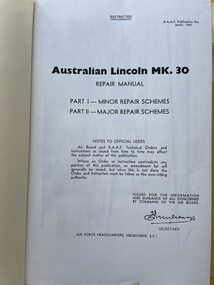
Manual (Item) - (SP) AAP RAAF Pub 802 Australian Lincoln Mk30 Major and Minor Repairs
... (SP) AAP RAAF Pub 802 Australian Lincoln Mk30 Major and Minor Repairs...Manual (SP) AAP RAAF Pub 802 Australian Lincoln Mk30 Major and Minor Repairs ... -
Moorabbin Air Museum
Manual (Item) - AP 4360 Vol 6 Part 1 Chap 1, 2, 3 and 4 DH Sea Venom List of Parts for Mk 20, 21, 22 and 53 for major and minor repairs
... AP 4360 Vol 6 Part 1 Chap 1, 2, 3 and 4 DH Sea Venom List of Parts for Mk 20, 21, 22 and 53 for major and minor repairs...Manual AP 4360 Vol 6 Part 1 Chap 1, 2, 3 and 4 DH Sea Venom List of Parts for Mk 20, 21, 22 and 53 for major and minor repairs ... -
Moorabbin Air Museum
Manual (Item) - Includes major repairs to the De Havilland Sea venom A.P 4360 vol.6, Minor repairs to the sea venom
... Minor repairs to the sea venom...Approx 200 pages, includes diagrams and tables. Minor repairs to the sea venom Manual Includes major repairs to the De Havilland Sea venom A.P 4360 vol.6 ... -
 National Vietnam Veterans Museum (NVVM)
Manual, Royal Australian Navy: Minor And In Service Repairs Gazelle MK. 165C01 Engine Change Unit
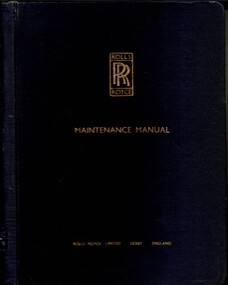
... Royal Australian Navy: Minor And In Service Repairs Gazelle MK. 165C01 Engine Change Unit...Down the spine there is a lael which reads Minor & In Service Repairs, Gazelle MK 165c01 Series Engine Change Unit. ...Down the spine there is a lael which reads Minor & In Service Repairs, Gazelle MK 165c01 Series Engine Change Unit. ...This item was donated by Colin Laurence Grey OAM. Colin was the driving force behind many of the displays at the National Vietnam Veterans Museum. He will be remembered for his expertise, and boundless enthusiasm for all things Australian. Colin organised teams of like-minded souls to bring home and restore many important historical aircraft. His success has been recognised and rewarded with an Order of Australian Medal 2000, and he is named in the Worldwide Who’s Who 2014-2015. Colin’s skills as an engineer, tool maker, boiler maker and organiser enabled him to restore steam trains, trucks, tanks, infantry weapons, various aircraft including a MIG-15 jet fighter and his largest project the Consolidated B-24 Liberator bomber. He even replicated two dinosaur skeletons for Museum Victoria. In 1989 Colin joined the fledgling B-24 Liberator Memorial Fund as Project Manager/Restoration Co-Ordinator with the task to build a volunteer organisation that could find the AUD$10m required, source parts and materials for the largest aircraft restoration in Australia. The B-24 program had 10 volunteers, 60 sponsors and an international support network that provided parts, tooling, aviation equipment and political support. Colin’s combined engineering, academic and logistical skills provided the basis for advancing the skills of a very disparate group of volunteers form all walks of life. Colin established links with Centrelink, Corrections Victoria, RMT Uni and the ADF to develop the skills base of many less fortunate individuals of all ages and backgrounds. Colin’s work in this area gained him an AOM (2000). He featured in an ABC Australian Stories program and was awarded a life membership of the organisation. Colin was a founding member and President of the Oceania Aviation Museum Inc. which was instrumental in the historic listing of the joint WW2 USAAC/RAAF facility at Werribee and the Preserve Point Cook Aerodrome Group. Colin developed best practice engineering and fund-raising programs for a volunteer group, the Phillip Island Aquatic Centre. Colin’s constant learning, curiosity, passion and contribution to all things Australian have been an inspiration and a great example to all of us. He will be sorely missed and fondly remembered.A dark blue cardboard cover with dark blue tape dwon the spine. On the front cover there is the Rolls Royce logo in gold. Under this reads Maintenance Manual then Rolls-Royce Limited, Derby England also in gold. Down the spine there is a lael which reads Minor & In Service Repairs, Gazelle MK 165c01 Series Engine Change Unit. Also the number 42 is handwritten in black on an orange and yellow label. the manual is held together with a metal binder in the inside of the cover.royal australian navy - technical manuals, gazelle mk 165c01 seriens engine change unit, rolls royce, maintenance manual -
Moorabbin Air Museum
Manual - Rolls Royce Gipsy Queen engine, Gipsy Queen Series 70 Maintenance Manual
... ...Minor repairs...Rolls Royce Gipsy Queen engine Engine description Lubrication system Fuel system Ignition system Installation & removal Operation Maintenance practices Running defects & their correction Anti corrosion precautions Tools & equipment Minor repairs Maintenance notes for Gipsy Queen series 70 engine, circa 1963/64 2 ring binder Gipsy Queen Series 70 Maintenance Manual Manual Rolls Royce Gipsy Queen engine ...Maintenance notes for Gipsy Queen series 70 engine, circa 1963/642 ring bindernon-fictionMaintenance notes for Gipsy Queen series 70 engine, circa 1963/64engine description, lubrication system, fuel system, ignition system, installation & removal, operation, maintenance practices, running defects & their correction, anti corrosion precautions, tools & equipment, minor repairs -
Moorabbin Air Museum
Book - Aeronautical Engineering, Aircraft Engineers "A" Licence
... ...Minor repairs...Aeronautical engineering Duties Aircraft licences Measuring & checking Airframe Construction Minor repairs Faults & adjustments Instructions for Air Registration Board ( UK ) exams for A licence applicants, circa 1945 Aircraft Engineers "A" Licence Book Aeronautical Engineering ...Instructions for Air Registration Board ( UK ) exams for A licence applicants, circa 1945non-fictionInstructions for Air Registration Board ( UK ) exams for A licence applicants, circa 1945duties, aircraft licences, measuring & checking, airframe construction, minor repairs, faults & adjustments -
 Wodonga & District Historical Society Inc
Domestic object - Men's Pocket tool kit, c1940
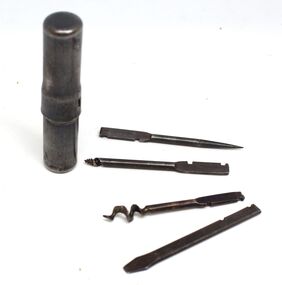
... These tool kits were often carried by men so they were equipped to deal with minor repair jobs away from home. A variety of companies in Britain and Germany manufactured similar kits prior to WW2....These tool kits were often carried by men so they were equipped to deal with minor repair jobs away from home. A variety of companies in Britain and Germany manufactured similar kits prior to WW2. ...This item is from a collection donated by descendants of John Francis Turner of Wodonga. Mr Turner was born on 6 June 1885. He completed all of his schooling at Scots Boarding School in Albury, New South Wales. On leaving school, he was employed at Dalgety’s, Albury as an auctioneer. In 1924 John was promoted to Manager of the Wodonga Branch of Dalgety’s. On 15/03/1900 he married Beatrice Neal (born 7/12/1887 and died 7/2/1953) from Collingwood, Victoria. They had four daughters – Frances (Nancy), Heather, Jessie and Mary. In 1920, the family moved from Albury to Wodonga, purchasing their family home “Locherbie” at 169 High Street, Wodonga. "Locherbie" still stands in Wodonga in 2022. The collection contains items used by the Turner family during their life in Wodonga. These tool kits were often carried by men so they were equipped to deal with minor repair jobs away from home. A variety of companies in Britain and Germany manufactured similar kits prior to WW2.A metal miniature tool kit including a screwdriver, an awl and 2 augers stored in a metal cylinder. The cylinder screws together in the centre. There is a central slot on each side of the cylinder sot that the end of each tool can be inserted. The cylinder then screws together to act as a handle.pocket tool kits, hand tools -
 Australian Gliding Museum
Machine - Glider - Sailplane, 1963
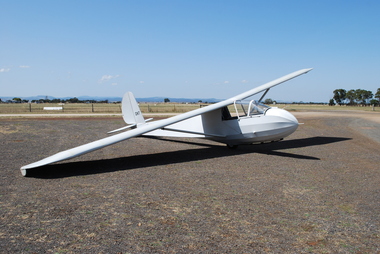
... A Certificate of Airworthiness inspection was done by various members of the Canberra Gliding Club where minor repairs were made. On 24 July 1983, it first flew on the airworthiness certificate test flight at Bunyan, NSW, the home of the Canberra Gliding Club. ...A Certificate of Airworthiness inspection was done by various members of the Canberra Gliding Club where minor repairs were made. On 24 July 1983, it first flew on the airworthiness certificate test flight at Bunyan, NSW, the home of the Canberra Gliding Club. ...The aircraft (Serial Number 159 – registration VH-GNT) was assembled by RAAF Richmond Gliding Club from a kit manufactured by Schweizer Aircraft Corporation, Elmira, New York State, USA, in 1963. First flown 21 December 1963. Served at RAAF Base, Richmond, NSW, until December 1978 at which time it had recorded 1981 hours from 9870 flights. The aircraft was sold to Peter Fitzgerald and moved to Gosford and later on, to Queanbeyan where it was stored under cover until April 1983. It was not flown between 1978 and July 1983. In 1983 the glider was sold to Harold Walton. A Certificate of Airworthiness inspection was done by various members of the Canberra Gliding Club where minor repairs were made. On 24 July 1983, it first flew on the airworthiness certificate test flight at Bunyan, NSW, the home of the Canberra Gliding Club. In service at Bunyan until November 1986 the hours flown increased to 2078 from 10249 flights. A certificate of airworthiness inspection was completed on 11 April 1987 but the aircraft was apparently only recorded a few more hours by 9 January 1998 when it last took to the air. When donated to the Australian Gliding Museum in January 2020, the aircraft was in storage at premises of the donor, Harold Walton, at Walkerville, South Australia.This aircraft is the only one of the 258 SGS 2.22s produced by Schweizer to come to Australia. It is a good representative example of the SGS 2.22 type which featured metal construction for production of a robust club trainer. The aircraft apparently played a useful role over many years at Richmond and Canberra.High wing two seat utility glider of metal construction with fabric covering.Registration letters ‘GNT’ on each side of vertical stabiliseraustralian gliding, sailplane, glider, schweizer, raaf, richmond, fitzgerald, walton, canberra, bunyan. -
 Melton City Libraries
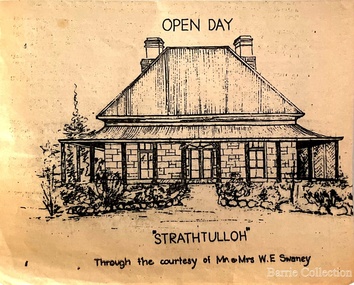
Drawing, Open Day at Strathtulloh, Unknown
... The former kitchen building has also undergone minor repairs and alterations". ...The former kitchen building has also undergone minor repairs and alterations". Local Architecture Strathtulloh Homestead at 1402-1600 Greigs Road, Melton South Open Day at Strathtulloh Drawing Barrie Collection ..."Strathtulloh, 1402-1600 Greigs Road, Melton South, is significant as an early property in Victoria, retaining different eras of pioneering dwellings, ranging from a ruin to a fine Colonial style homestead. The property has close historical association with the early settlement of the Melton district, and was owned by the Henty family in the 1840s. The Strathtulloh property was alienated by the Crown in 1840 to Charles James Garrard, who sold it in 1848 to Charles and Stephen Henty, whose sister Jane and her husband Samuel Bryan lived there in the late 1840s. In 1853 the property then passed to William Tulloh, after whom the homestead was named. A primitive bluestone ruin of near the Toolern Creek, built of vesicular bluestone and mud mortar, is of unknown origin. It has commonly been assumed to pre-date 1840, and to have belonged to the original holder of the Exford lease, Dr Watton or Port Phillip Association member Dr Cotterill. This is unlikely, as the 1841 census records Dr Watton, and everyone else in the district, as living in a ‘wood’ dwelling. It may instead have been the residence of Garrard, and the Bryans, in the 1840s and an early map names a site near here as ‘Bryan’s outstation’. It is assumed that the two-level stone building that became the kitchen is the earliest intact building on the site, and was the first homestead; it is likely to date to the 1840s or 1850s. The main homestead is a substantial villa constructed of random coursed bluestone, with a verandah facing three sides, attic bedrooms with dormer windows, a fan light over the front door, a hipped roof originally clad in slate, and a large cellar. Although demonstrating characteristics of pioneering construction, such as unworked log beams, pit sawn beams, hand-sawn lintels and colonial door locks, documentary evidence shows that it was built c.1869. The homestead has now been structurally repaired and decoratively restored; a sympathetic new semi-detached rear extension was added in the early years of the 21st century. The former kitchen building has also undergone minor repairs and alterations". Strathtulloh Homestead at 1402-1600 Greigs Road, Melton Southlocal architecture -
 Bendigo Historical Society Inc.
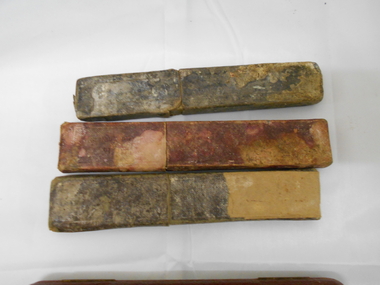
Tool - PITTOCK COLLECTION: THREE CUT-THROAT RAZORS
... Cadman & Sons, Sheffield England 22d - box has no discernible markings, but has minor taped repair on larger section. Black handle is unmarked, blade is marked Bengall, the reverse notes manufacturer as T. ...Cadman & Sons, Sheffield England 22d - box has no discernible markings, but has minor taped repair on larger section. Black handle is unmarked, blade is marked Bengall, the reverse notes manufacturer as T. ...Three cut-throat razors, boed units in deteriorated condition: 22b - box marked Pittock,blade marked Bengall, manufacturers name on reverse side T. R. Cadman & Sons, Sheffield England 22c - red box has remains of Sheffield England marked on the smaller end of box. Blade is damaged and rusted. Blade black handle is notated with Bengall, while blade itself is etched Made Specially for A. Edments Pty. Ltd.; reverse notes manufacturer as T. R. Cadman & Sons, Sheffield England 22d - box has no discernible markings, but has minor taped repair on larger section. Black handle is unmarked, blade is marked Bengall, the reverse notes manufacturer as T. R. Cadman & Sons, Sheffield England. Items stored in Pittock coach builders box, reference 13000. -
 Australian Gliding Museum
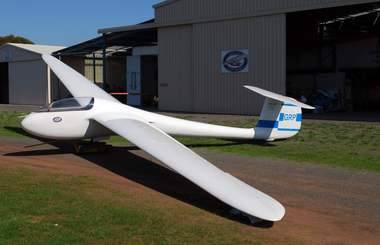
Machine - Glider –Sailplane, 1960
... As at January 2016, minor repairs and airworthiness certification are required to return the glider to flying condition. ...As at January 2016, minor repairs and airworthiness certification are required to return the glider to flying condition. ...The FS-24 Phonix is the first sailplane design to be built using a moulded fiberglass sandwich technique. It was designed by Hermann Nagele and Richard Eppler leading a group setup for the purpose at Stuttgart Technical University in the early 1950s. Initial construction was undertaken at workshops of Wolf Hirth and the first prototype was completed at the Bolkow Aircraft Company where Nagele and another member of the group, Rudi Lindner, had gained employment. It flew on 27 November 1957. Two further prototypes were built incorporating a T-tail and other refinements. Eight in all were built before production was stopped in 1961. A number of gliding records were broken in Phonix sailplanes in Germany in 1962-1963. It was found to have a best glide ratio of 40:1. The Museum’s example, No. 403 was originally a prototype built on 25 May 1960 [Registration D-8354]. It was converted at Bolkow to a Phonix T in 1963 and sold to a private owner in Switzerland [Registration HB-746] and later then to gliding club Segelfluggruppe Solothurn in 1965. The glider returned to Germany in 1971 (Meersburg) and re-registered as D-0738. It moved to a new owner in Allershausen in 1976, and again to Lindhoft in 1982. In 1983 the glider was sold to owners at Hasselt, Belgium and given registration OO-ZQD. In 1989 a further change of ownership occurred and the glider went to Leusden in the Netherlands where it was registered as PH-949. In 2006 the Phonix No.403 was imported into Australia by John Ashford of the Geelong Gliding Club. On 30 January 2007, it was registered as VH-GRP. However, as at January 2016 it has not been flown in Australia. In the course of its flying history the glider was damaged several times and repaired. At one stage a larger rudder was fitted and later on this modification was reversed. With the original conversion to a Phonix T and subsequent repairs and changes to equipment the weight of the airframe increased from 182 kg to approximately 220 kg. Nevertheless, the wing loading is a modest 20kg/square metre. As at January 2016, minor repairs and airworthiness certification are required to return the glider to flying condition. This exhibit is highly significant as it is one of only eight of this pioneering sailplane design. It is the only one in Australia. Glassfibre single seat sailplane, finished white with blue stripes on fin and rudder.Australian registration GRP on rudder; Serial Number 403 and Vintage glider club of Netherlands plaque in cockpitaustralian gliding, sailplane, glider, fs-24, phonix, nagele, eppler, lindner, stuttgart technical university, bolkov aircraft company, segelfluggruppe solothurn, ashford, geelong gliding club. -
 Australian Gliding Museum
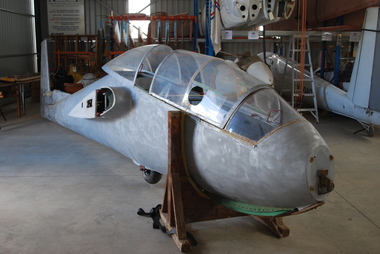
Machine - Glider – Sailplane, 1963
... The substantial repairs to the fuselage, both wings and tailplane and other minor repairs were completed on 13 October 1968. ...The substantial repairs to the fuselage, both wings and tailplane and other minor repairs were completed on 13 October 1968. ...The Bocian is a versatile training sailplane that first flew in 1952. The type has been modified in several respects over the course of production by SZD (tailplane and rudder in particular). About 600 have been built; many for export to 27 countries (including Australia). The aerobatic capability and fine performance (best glide ratio of 26) has enabled the Bocian to be used to train competition pilots as well as those of lesser experience. Many world gliding records were set in the 1950s and 1960s in Bocian gliders. The Museum’s example is a type D test flown in Poland on 3 and 4 April 1963. It was imported into Australia in September 1963 by Austerserve Pty Ltd. The first owner was the Alice Springs Gliding Club and the glider had name “Cumulus” painted on the side of the fuselage (since removed). The glider had recorded 726 hours 46 minutes flying time from 2138 launches as at July 1967 when it was transferred to the Darwin Gliding Club. It appears that the glider was damaged in June 1968. The substantial repairs to the fuselage, both wings and tailplane and other minor repairs were completed on 13 October 1968. The glider continued flying with the Darwin Gliding Club until August 1969 at which time the service to that club amounted to 59 hours 7 minutes flying time from 348 flights. Between August 1969 and August 1976 no flights are recorded in the logbook. It is understood that on its last flight at Bachelor, south of Darwin in the Northern Territory (August 1969) it was severely damaged when it crashed after spinning while being auto-tow launched (although this is not expressly mentioned in the logbook). Reg Hancock purchased the damaged glider and rebuilt the port wing and restored it to airworthy condition (September 1976). It was then transferred to Colac, Victoria, and used by the Colac Gliding Group at the Yeo airfield until February 1981, adding another 153 hours from 403 flights to the glider’s record. After airworthy inspection in September 1982 the glider was used by the Geelong Gliding Club until 1983 (logbook details not held). The 20 year survey was then due and the glider fell out of service. In the course of the most recent restoration attempt it was discovered that the glue used in construction had deteriorated and that it was no longer feasible to bring it back to an airworthy condition. Subject to restoration, this exhibit may be representative of the 1950s - 1960s Bocian two seat sailplane typeThis exhibit is a large two seat glider /sailplane of wood and fabric construction. All components are present with the exception of instruments. However, at the time that the aircraft was transferred to the Museum it had been taken apart for major restoration work. As received it is stripped of the top coats of paint and a number of components (including, amongst others, tip fairings, nose cone and cockpit elements) that were removed for facilitating the repair process. The glider, serial number 803, was registered as VH-GNLaustralian gliding, glider, sailplane, bocian, cumulus, alice springs gliding club, darwin gliding club, colac gliding group, geelong gliding club, hancock -
 Sunshine and District Historical Society Incorporated
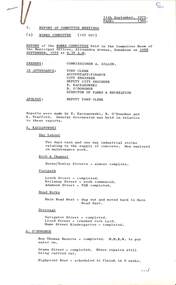
Administrative record - City of Sunshine - Commissioner Mr Alexander Alex George Gillon Collection 1976 - 1982 - Reports of committee meetings 11th September 1979, City of Sunshine, 11th September 1979
... Reports of Committee Meetings 11th September 1979 Report of the Works Committee Day Labour Two Days Rain & One Day Industrial Strike Kerb & Channel Burns Street & Sonley Street Almost Complete Footpath Lynch Street Completed Footpath Kellaway Street Work Commenced Footpath Adamson Street 85% Completed Road Works Main Road West Dug out and moved back to Main Road East Drainage Navigator Street Completed Drainage Lloyd Street Crush Rock Laid Drainage Hume Street Kindergarten Completed Bon Thomas Reserve Completed M.M.B.W. to put water on Orama Street Completed, minor repairs still be carried out Highpoint West Schedule to finish in 8 weeks Ballarat Road I.W.C. ahead of schedule by 3 - 4 weeks Depot Amenities Building Expected to be completed with 3 - 4 weeks Discussions were held on a plan for basic sports grounds pavilions instead of tin sheds Diamond Avenue Pre-School Centre Landscaping delayed Landscaping at other centres ready to go Tree Planting completed Tree Pruning 89% complete Emergency Work and other Tree Maintenance Work to be done All Ovals have been aerated in past week with fertilizer Report of the Finance Committee Report of Town Clerk Use of Council Vehicles Rate Payments Report of the City Librarian Workroom Backlog Central Library Report of the City Engineer & Planner Bon Thomas Reserve Proposition for the Partial Initial Development Report of the Agenda & Forward Planning Committee Meeting Report of the Chief Health Officer Sanitary Contract Report of the City Engineer & Planner Planning Permit Application Extension of Existing Pavilion (Place of Assembly) Kinder Smith Reserve Lily Street Braybrook Planning Permit Application Railways Siding Wright Street Sunshine Robert Barrett Reserve Sewerage Facilities...Albans Navigator Street Maribyrnong Lloyd Street Deer Park Hume Street Bon Thomas Reserve Quinn Street Orama Street Ballarat Road Diamond Avenue Pre-School Centre Diamond Avenue Albanvale Kinder Smith Reserve Lily Street Wright Street Robert Barrett Reserve Rosamond Road Reports of Committee Meetings 11th September 1979 Report of the Works Committee Day Labour Two Days Rain & One Day Industrial Strike Kerb & Channel Burns Street & Sonley Street Almost Complete Footpath Lynch Street Completed Footpath Kellaway Street Work Commenced Footpath Adamson Street 85% Completed Road Works Main Road West Dug out and moved back to Main Road East Drainage Navigator Street Completed Drainage Lloyd Street Crush Rock Laid Drainage Hume Street Kindergarten Completed Bon Thomas Reserve Completed M.M.B.W. to put water on Orama Street Completed, minor repairs still be carried out Highpoint West Schedule to finish in 8 weeks Ballarat Road I.W.C. ahead of schedule by 3 - 4 weeks Depot Amenities Building Expected to be completed with 3 - 4 weeks Discussions were held on a plan for basic sports grounds pavilions instead of tin sheds Diamond Avenue Pre-School Centre Landscaping delayed Landscaping at other centres ready to go Tree Planting completed Tree Pruning 89% complete Emergency Work and other Tree Maintenance Work to be done All Ovals have been aerated in past week with fertilizer Report of the Finance Committee Report of Town Clerk Use of Council Vehicles Rate Payments Report of the City Librarian Workroom Backlog Central Library Report of the City Engineer & Planner Bon Thomas Reserve Proposition for the Partial Initial Development Report of the Agenda & Forward Planning Committee Meeting Report of the Chief Health Officer Sanitary Contract Report of the City Engineer & Planner Planning Permit Application Extension of Existing Pavilion (Place of Assembly) Kinder Smith Reserve Lily Street Braybrook Planning Permit Application Railways Siding Wright Street Sunshine Robert Barrett Reserve Sewerage Facilities Foolscap sized document. ...Reports of Committee Meetings 11th September 1979 Report of the Works Committee Day Labour Two Days Rain & One Day Industrial Strike Kerb & Channel Burns Street & Sonley Street Almost Complete Footpath Lynch Street Completed Footpath Kellaway Street Work Commenced Footpath Adamson Street 85% Completed Road Works Main Road West Dug out and moved back to Main Road East Drainage Navigator Street Completed Drainage Lloyd Street Crush Rock Laid Drainage Hume Street Kindergarten Completed Bon Thomas Reserve Completed M.M.B.W. to put water on Orama Street Completed, minor repairs still be carried out Highpoint West Schedule to finish in 8 weeks Ballarat Road I.W.C. ahead of schedule by 3 - 4 weeks Depot Amenities Building Expected to be completed with 3 - 4 weeks Discussions were held on a plan for basic sports grounds pavilions instead of tin sheds Diamond Avenue Pre-School Centre Landscaping delayed Landscaping at other centres ready to go Tree Planting completed Tree Pruning 89% complete Emergency Work and other Tree Maintenance Work to be done All Ovals have been aerated in past week with fertilizer Report of the Finance Committee Report of Town Clerk Use of Council Vehicles Rate Payments Report of the City Librarian Workroom Backlog Central Library Report of the City Engineer & Planner Bon Thomas Reserve Proposition for the Partial Initial Development Report of the Agenda & Forward Planning Committee Meeting Report of the Chief Health Officer Sanitary Contract Report of the City Engineer & Planner Planning Permit Application Extension of Existing Pavilion (Place of Assembly) Kinder Smith Reserve Lily Street Braybrook Planning Permit Application Railways Siding Wright Street Sunshine Robert Barrett Reserve Sewerage Facilitiesburns street, sonley street, maidstone, lynch street, sunshine, kellaway street, adamson street, braybrook, main road west, main road east, st. albans, navigator street, maribyrnong, lloyd street, deer park, hume street, bon thomas reserve, quinn street, orama street, ballarat road, diamond avenue pre-school centre, diamond avenue, albanvale, kinder smith reserve, lily street, wright street, robert barrett reserve, rosamond road -
 Sunshine and District Historical Society Incorporated
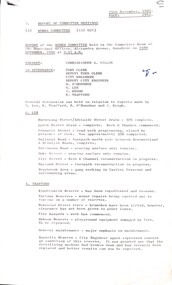
Administrative record - City of Sunshine - Commissioner Mr Alexander Alex George Gillon Collection 1976 - 1982 - Report of Committee Meetings 25th November 1980, City of Sunshine, 9th December 1980
... Approximately 50% complete Robinsons Road Deer Park wearing surface only remains Duke Street Sunshine wearing surface only remains Lily Street Braybrook kerb & channel reconstruction in progress Mayland Street footpath reconstruction in progress Braybrook Area gang working in Castley crescent and surrounding areas Kinde Smith Reserve has been top dressed and re-sown Various reserves minor repairs being carried out Newstead Street Trees branches have been lifted, however clearance have not been given to power lines Fire Hazards work has commenced Dobson Reserve playground equipment damaged by fire General Maintenance major emphasis on maintenance Sassella Park City Engineer again expressed concern about the condition of this reserve Depot Workshop internal fixing has commenced Pennell Reserve Pavilion steel work being fabricated. ...Approximately 50% complete Robinsons Road Deer Park wearing surface only remains Duke Street Sunshine wearing surface only remains Lily Street Braybrook kerb & channel reconstruction in progress Mayland Street footpath reconstruction in progress Braybrook Area gang working in Castley crescent and surrounding areas Kinde Smith Reserve has been top dressed and re-sown Various reserves minor repairs being carried out Newstead Street Trees branches have been lifted, however clearance have not been given to power lines Fire Hazards work has commenced Dobson Reserve playground equipment damaged by fire General Maintenance major emphasis on maintenance Sassella Park City Engineer again expressed concern about the condition of this reserve Depot Workshop internal fixing has commenced Pennell Reserve Pavilion steel work being fabricated. ...Report of Committee Meetings 25th November 1980 Report of the Works Committee Meeting Burnewang Street / Adelaide Street Albion drain 50% complete Lynch Street Sunshine Drain completed. Kerb & channel commence Cranwell Street Braybrook road work progressing slow due to rock. Approximately 50% complete Robinsons Road Deer Park wearing surface only remains Duke Street Sunshine wearing surface only remains Lily Street Braybrook kerb & channel reconstruction in progress Mayland Street footpath reconstruction in progress Braybrook Area gang working in Castley crescent and surrounding areas Kinde Smith Reserve has been top dressed and re-sown Various reserves minor repairs being carried out Newstead Street Trees branches have been lifted, however clearance have not been given to power lines Fire Hazards work has commenced Dobson Reserve playground equipment damaged by fire General Maintenance major emphasis on maintenance Sassella Park City Engineer again expressed concern about the condition of this reserve Depot Workshop internal fixing has commenced Pennell Reserve Pavilion steel work being fabricated. Anticipated to be completed by Marc or April 1981 Municipal Offices brickwork in progress Ralph Street Pavilion construction has commenced Cranwell Street Toilets brickwork completed Cherry Crescent Child Care Centre construction commenced on 24th November I.C.I. Oval underground drains completed, perimeter kerb & channel completed, underground irrigation 80% complete. Agricultural pipe laying and backfilling to be completed today. Top dressing to commence next week Finance Committee Meeting Report Report of the Town Clerk Charges for Abandonment Debtor Accounts Award Matters Work Value Study Municipal Employees (City of Sunshine) Award Award Matters Municipal Officers' (City of Sunshine) Award Award Matters Variation and Consolidation Municipal Employees' (City of Sunshine) Award General Rate, Sanitary & Interest Adustments / Abandonments Report of the Co-Ordinator of Welfare Services Y.M.C.A. Outreach Project Sunshine Report of the City Engineer & Planner Outdoor Staff Union and Award Matters Neale Road Construction Child Care Centre 24 Northumberland Road Sunshine Northdeer park, neale road, northumberland road, sunshine north, northumberland child care centre -
 Flagstaff Hill Maritime Museum and Village
Domestic object - Dinner plate, circa 1878
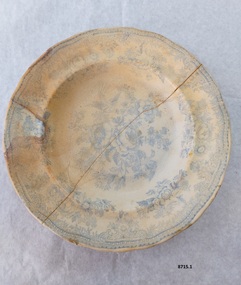
... The back of the plate shows evidence of the glue used to repair it. Plate 8715.2 has minor brown staining and is in better condition....The back of the plate shows evidence of the glue used to repair it. Plate 8715.2 has minor brown staining and is in better condition. ...These earthenware dinner plates were recovered from the wreck of the Loch Ard, on the southwest coast of Victoria and donated by a friend of the diver. The plates are very similar to other plates recovered from the wreck of the Loch Ard - some of which are already on display at Flagstaff Hill Museum and Village in Warrnambool. It is uncertain whether the plates were personal belongings or part of the cargo. The Asiatic Pheasant pattern is a transfer design and was the most popular design of the 19th-century Victorian era. It is still being produced today. The design was produced as high-quality, decorative dinnerware by the potters in the Staffordshire, England, area from the late 1830s, but no one is sure exactly who the original designer was. The industrial age made the production of this design more affordable to the ordinary person who purchased and proudly displayed settings in their homes. The high demand for production resulted in the loss of quality in both potting and design, particularly between 1860-1914 when the design reached its height of popularity, and the results were often a poor match for the earlier pieces’ quality and detail. Some engravers would make copies of the Asiatic Pheasant design (and other designs) onto copper plates and sell them to more than one pottery producer (the Copyright Act of 1842 was intended to control this very thing). Consequently, the list of Makers’ Marks associated with the Asiatic Pheasant is well over 100. A single pottery factory could have several owners, all with their own Marks. The makers mark on these two plates are also difficult to read but appear to include the letters "O H E ?' over "L". These factors all make the dating of pieces difficult. Also, after 1891, pieces produced for export were required to be stamped with “ENGLAND”, but pieces produced for the domestic market in England did not need this stamp, so early pieces and pieces produced for the domestic market would all be without the “ENGLAND” stamp, confusing the matter. Over time the body shape of the pieces changed, the feathered, curved and fluted edges giving way to simpler, cheaper oblong shapes The ship Loch Ard was built on the River Clyde in Scotland in 1873 for the prestigious Loch Line of colonial clipper ships, designed for the Australian run. It sailed from England on 1st March 1878 carrying 37 crew, 17 passengers and a load of cargo. The general cargo reflected the affluence of Melbourne at the time. On board were straw hats, umbrellas, perfumes, clay pipes, pianos, clocks, confectionary, linen and candles, as well as a heavier load of railway irons, cement, lead and copper. There were items included that were intended for display in the Melbourne International Exhibition in 1880 - a diverse general cargo ranging from luxury items to bulk railway iron. On 1 June 1878, emerging from fog and hearing too late the sound of breakers against the tall limestone cliffs, the vessel struck the southern foot of Mutton Bird Island and sank in 23 metres of water. Of the fifty-four people on board only two survived, one young male crewman, Tom Pearce, and one young female passenger, Eva Carmichael. Ten days after the Loch Ard tragedy, salvage rights to the wreck were sold at auction for £2,120. Cargo valued at £3,000 was salvaged and placed on the beach, but most washed back into the sea when another storm developed. The wreck of Loch Ard still lies at the base of Mutton Bird Island. Much of the cargo has now been salvaged and some was washed up into what is now known as Loch Ard Gorge. Cargo and artefacts have also been illegally salvaged over many years before protective legislation was introduced. One of the most unlikely pieces of cargo to have survived the shipwreck was a Minton porcelain peacock - one of only seven in the world. The peacock was destined for the Melbourne International Exhibition in 1880. It had been well packed, which gave it adequate protection during the violent storm. Today, the Minton peacock can be seen at the Flagstaff Hill Maritime Museum in Warrnambool. From Australia's most dramatic shipwreck it has now become Australia's most valuable shipwreck artefact and is one of very few 'objects' on the Victorian State Heritage Register.Flagstaff Hill’s collection of artefacts from LOCH ARD is significant for being one of the largest collections of artefacts from this shipwreck in Victoria. It is significant for its association with the shipwreck, which is on the Victorian Heritage Register (VHR S417). The collection is significant because of the relationship between the objects, as together they have a high potential to interpret the story of the LOCH ARD. The LOCH ARD collection is archaeologically significant as the remains of a large international passenger and cargo ship. The LOCH ARD collection is historically significant for representing aspects of Victoria’s shipping history and its potential to interpret sub-theme 1.5 of Victoria’s Framework of Historical Themes (living with natural processes). The collection is also historically significant for its association with the LOCH ARD, which was one of the worst and best known shipwrecks in Victoria’s history.Two plates recovered from the wreck of the Loch Ard. Earthenware dinner plates with blue and white transfer design (Asiatic Pheasant) with a clear over-glaze. The outer rim is scalloped. Plate 8715.1 has substantial brown stain over a large part of it and a large crack across the plate from rim to rim. The back of the plate shows evidence of the glue used to repair it. Plate 8715.2 has minor brown staining and is in better condition.Floral makers mark on the back featuring a scroll inscribed with "Asiatic Pheasant" and underneath the letters "O H E ?" over "L".flagstaff hill maritime museum and village, great ocean road, shipwreck coast, warrnambool, loch ard, lock ard wreck, plates, crockery, asiatic pheasant design, salvage, loch ard gorge, dinner plates -
 Montmorency–Eltham RSL Sub Branch
Memorabilia - Cup
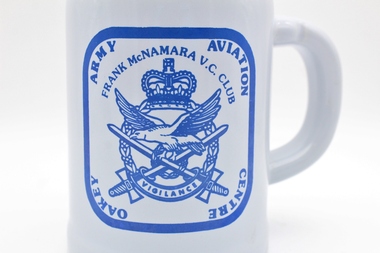
... repair and insect aircrafts and engines. At the end of the war in 1945, the depot was used to store surplus aircraft. In early 1946, the RAAF Station Oakey was disbanded and categorised ‘to be retained but not maintained’. Since then, the RAAF Station Oakey facilities have been used few times for some minor...repair and insect aircrafts and engines. At the end of the war in 1945, the depot was used to store surplus aircraft. In early 1946, the RAAF Station Oakey was disbanded and categorised ‘to be retained but not maintained’. Since then, the RAAF Station Oakey facilities have been used few times for some minor ...The Oakey Army Aviation Centre is a training facility formed in October 1943 at Oakey, Queensland. It was built with the purpose of providing a maintenance facility: the units would erect, repair and insect aircrafts and engines. At the end of the war in 1945, the depot was used to store surplus aircraft. In early 1946, the RAAF Station Oakey was disbanded and categorised ‘to be retained but not maintained’. Since then, the RAAF Station Oakey facilities have been used few times for some minor activities. Although there are no information relating to the owner or usage of the cup; it holds historic significance for its direct link with the Australian Army Aviation Centre in Oakey and its involvement in World War II; and more generally for its link to the Australian Army.Large white cup with a handle; decorated with a blue ink symbol (displaying a crown and below it, a bird handling two swords) and blue ink inscriptions (from the Army Aviation Centre Oakey). Inscription on top: 'Frank McNamara VC Club' Inscription at the bottom of the symbol: 'Vigilance' Inscription circling the symbol: 'Army Aviation Centre Oakey' -
 Otway Districts Historical Society
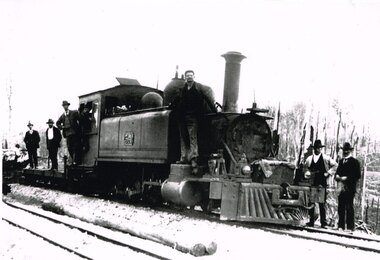
Photograph, Brucker, Beech Forest: Locomotive 5A during construction, c.1902, c.1902
... With earthworks specified to the bare minimum landslips in the narrow cuttings were frequent so a repairer was stationed in each length to deal quickly with minor slips until 1904 when the cuttings were widened....With earthworks specified to the bare minimum landslips in the narrow cuttings were frequent so a repairer was stationed in each length to deal quickly with minor slips until 1904 when the cuttings were widened. beech forest; railways; loco 5a; B/W. ...In 1898 a recommendation for a railway of 2 ft 6 in gauge was handed down by the Parliamentary Standing Committee on Railways, to cost $138,000. Construction began in 1900. About 100 men were engaged in laying and ballasting the track while others, not included in the 100, formed the earthworks, culverts and bridges. Locomotive operations initially were two 2-6-2 Tank engines of the narrow gauge A class, dubbed "Coffee Pots", and these were used on the work trains between 1900 and 1902. Because of the lengthy periods of waiting time required to unload sleepers and rails or to load ballast meant that a handy replenishment of coal and water supply was necessary. With earthworks specified to the bare minimum landslips in the narrow cuttings were frequent so a repairer was stationed in each length to deal quickly with minor slips until 1904 when the cuttings were widened.B/W. The driver and seven other men on locomotive 5A and its flat cars at Beech Forest during construction of the line in c.1902. beech forest; railways; loco 5a; -
Moorabbin Air Museum
Manual (Item) - Schedule Of Fits , Clearances And Repair Tolerances , Gipsy Minor Aero - Engine
... Schedule Of Fits , Clearances And Repair Tolerances , Gipsy Minor Aero - Engine...Schedule Of Fits , Clearances And Repair Tolerances , Gipsy Minor Aero - Engine...Schedule Of Fits , Clearances And Repair Tolerances , Gipsy Minor Aero - Engine Manual Schedule Of Fits , Clearances And Repair Tolerances , Gipsy Minor Aero - Engine ... -
Moorabbin Air Museum
Manual (item) - CAC Canberra Repair and Reconditioning Manual, Canberra Aircraft Repair and Reconditioning Instructions (Minor Repair)
... Canberra Aircraft Repair and Reconditioning Instructions (Minor Repair)...Red-pink hard-cover manual bound with rope Canberra Aircraft Repair and Reconditioning Instructions (Minor Repair) Manual CAC Canberra Repair and Reconditioning Manual ... -
 National Wool Museum
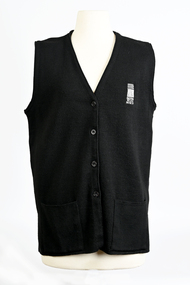
Textile - Black Woollen Vest, 2000s
... I was soon asked if I would mind repairing some of the garments that may have pulled a thread or a minor fault. ...I was soon asked if I would mind repairing some of the garments that may have pulled a thread or a minor fault. ...This vest was worn by Lynette Wekwerth when she worked as a volunteer in the National Wool Museum shop during the early 2000s. Lynette volunteered at the National Wool Museum for 25 years from 2001 until her passing in 2025, and was a much loved and respected member of the team. "I was born at Coonara Private Hospital at 173 Yarra Street, Geelong, on the 29th of March 1944, the third of five children. My father was in the RAAF when I was born, and on leaving the air force he became a carpenter/joiner. When I was young, we had the bread and milk delivered. There was a special tin for the bread and a big billy for the milk left of the front veranda to collect these items. My mother, elder sister, Wendy and my younger sister Zaidee, all went to “Physical Culture” held downstairs under the old Plaza Theatre building in Ryrie Street. We girls made our own sports clothes to do exercises (rods, dumbbells, and song and dance). It kept us fit, and we all won medals at some stage at the end-of-year concert. I was the only girl of my age in the street where I lived. There were boys my age, so I learned to play cricket and kick a football, all of which I did well. I attended Tate Street and then went on to Matthew Flinders Girls Secondary College in 1956. Matthew Flinders was a domestic arts school, where I learnt sewing, cookery, home management, and how to be a ‘good’ housekeeper. I enjoyed all the domestic subjects. Ray and I were engaged in August 1963. We purchased our engagement ring in Melbourne and went to dinner at the Playboy Club in Melbourne to celebrate. In preparation for our wedding, I spent many hours making my own wedding dress (with assistance from my mother). We were married at 11 am on Saturday, the 10th April 1965 at St. Matthew’s, Church of England, Geelong. When Ray retired, he responded to an advertisement for volunteers at the National Wool Museum to be a volunteer. He started in 1998. The year that the ‘Pharaohs exhibition’ started. That was fine by me, as he wouldn’t be getting under my feet. At this time I was playing golf regularly and didn’t want to miss out on this activity. I joined the volunteers in the Wool Museum in March/April 2001. I was allocated to the Museum Shop and thoroughly enjoyed being a member of the shop staff. I then became shop assistant. I enjoyed talking and serving the customers. I was soon asked if I would mind repairing some of the garments that may have pulled a thread or a minor fault. I also enjoyed doing ‘stock taking’ in the shop. (Not many staff enjoyed this job, but I did.) In those early days, the Museum staff wore the red blazer and the black wool cardigan." - Lynette WekwerthBlack woollen vest with four buttons at the front, and two pockets. Vest has National Wool Museum logo on left chest. printed [label]: BELLA / Collection / made in australia / WEKWERTH / TO FIT / SIZE / 12working life, volunteer, national wool museum, clothing, uniform, lynette wekwerth, staff, employment, wool clothing, geelong -
 National Wool Museum
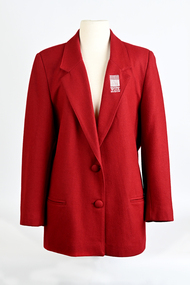
Textile - Red Woollen Jacket, Sabena, 2000s
... I was soon asked if I would mind repairing some of the garments that may have pulled a thread or a minor fault. ...I was soon asked if I would mind repairing some of the garments that may have pulled a thread or a minor fault. ...This jacket was worn by Lynette Wekwerth when she worked as a volunteer in the National Wool Museum shop during the early 2000s. Lynette volunteered at the National Wool Museum for 25 years from 2001 until her passing in 2025, and was a much loved and respected member of the team. "I was born at Coonara Private Hospital at 173 Yarra Street, Geelong, on the 29th of March 1944, the third of five children. My father was in the RAAF when I was born, and on leaving the air force he became a carpenter/joiner. When I was young, we had the bread and milk delivered. There was a special tin for the bread and a big billy for the milk left of the front veranda to collect these items. My mother, elder sister, Wendy and my younger sister Zaidee, all went to “Physical Culture” held downstairs under the old Plaza Theatre building in Ryrie Street. We girls made our own sports clothes to do exercises (rods, dumbbells, and song and dance). It kept us fit, and we all won medals at some stage at the end-of-year concert. I was the only girl of my age in the street where I lived. There were boys my age, so I learned to play cricket and kick a football, all of which I did well. I attended Tate Street and then went on to Matthew Flinders Girls Secondary College in 1956. Matthew Flinders was a domestic arts school, where I learnt sewing, cookery, home management, and how to be a ‘good’ housekeeper. I enjoyed all the domestic subjects. Ray and I were engaged in August 1963. We purchased our engagement ring in Melbourne and went to dinner at the Playboy Club in Melbourne to celebrate. In preparation for our wedding, I spent many hours making my own wedding dress (with assistance from my mother). We were married at 11 am on Saturday, the 10th April 1965 at St. Matthew’s, Church of England, Geelong. When Ray retired, he responded to an advertisement for volunteers at the National Wool Museum to be a volunteer. He started in 1998. The year that the ‘Pharaohs exhibition’ started. That was fine by me, as he wouldn’t be getting under my feet. At this time I was playing golf regularly and didn’t want to miss out on this activity. I joined the volunteers in the Wool Museum in March/April 2001. I was allocated to the Museum Shop and thoroughly enjoyed being a member of the shop staff. I then became shop assistant. I enjoyed talking and serving the customers. I was soon asked if I would mind repairing some of the garments that may have pulled a thread or a minor fault. I also enjoyed doing ‘stock taking’ in the shop. (Not many staff enjoyed this job, but I did.) In those early days, the Museum staff wore the red blazer and the black wool cardigan." - Lynette WekwerthRed jacket with two buttons and two pockets at the front, and two decorative buttons on each cuff. Jacket has National Wool Museum logo on the left lapel. printed [label]: SABENA / 14working life, volunteer, national wool museum, clothing, uniform, lynette wekwerth, staff, employment, wool clothing, geelong -
 Sunshine and District Historical Society Incorporated
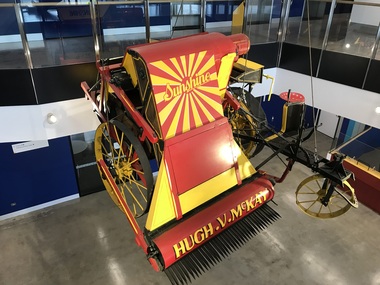
Photograph - H.V. McKay 1908 AL Type Stripper Harvester
... Prior to the new Brimbank Community and Civic Centre building works being completed, the harvester went through some minor restoration works of cleaning, repairing a damaged panel and repainting. ...Prior to the new Brimbank Community and Civic Centre building works being completed, the harvester went through some minor restoration works of cleaning, repairing a damaged panel and repainting. ...This harvester, a 1908 AL Type Stripper Harvester was made in the H.V. McKay Factory, Yuille Street, Ballarat. After sitting for many years in a paddock and in poor condition, the harvester was donated to the Sunshine and District Historical Society. Due to the lack of storage, the Society made temporary storage arrangements at Mt Derrimut. In the 1990's the Society obtained a grant for its restoration. Once these works were completed, the harvester was then located in the foyer outside the Sunshine Library Hampshire Road Sunshine. When this library was demolished to make way for the new Brimbank Community and Civic Centre, the harvester was once again put into temporary storage at the Brimbank City Council Operations Centre, Stadium Drive, Keilor Park. Prior to the new Brimbank Community and Civic Centre building works being completed, the harvester went through some minor restoration works of cleaning, repairing a damaged panel and repainting. All this worked was carried out on site at the Brimbank City Council Operations Centre by Artist Robert Jackson. Once the new Brimbank Community and Civic Centre building works were completed in 2016, the harvester was installed in the building and it is now suspended in the main foyer of the building. This is one of most significant objects that the Sunshine and District Historical Society has in its collection.Sunshine Hugh V. McKayyuille street, ballarat, h.v. mckay -
 Moorabbin Air Museum
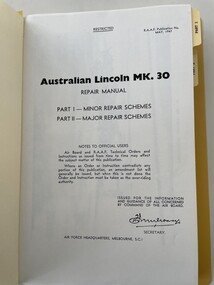
Manual (Item) - (SP) Australian Lincoln Mk 30 Repair Manual Part 1 - Minor / Part 2 Major Schemes
... (SP) Australian Lincoln Mk 30 Repair Manual Part 1 - Minor / Part 2 Major Schemes...Manual (SP) Australian Lincoln Mk 30 Repair Manual Part 1 - Minor / Part 2 Major Schemes ... -
Moorabbin Air Museum
Manual (Item) - Manual Of Instructions For Operation , Maintenance , Rigging And Repair Of The D.H. Moth "Minor" (Type D.H.94)
... Manual Of Instructions For Operation , Maintenance , Rigging And Repair Of The D.H. Moth "Minor" (Type D.H.94)...Manual Of Instructions For Operation , Maintenance , Rigging And Repair Of The D.H. Moth "Minor" (Type D.H.94)...Manual Of Instructions For Operation , Maintenance , Rigging And Repair Of The D.H. Moth "Minor" (Type D.H.94) Manual Manual Of Instructions For Operation , Maintenance , Rigging And Repair Of The D.H. ... -
 Kilmore Historical Society
THE VICTORIA GOVERNMENT GAZETTE, The Victoria Government Gazette. 2. Vol. XIV. 1st July - 31st December 1857, 1857
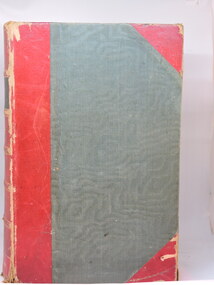
... Minor insect damage inside front cover and first flyleaf. Partial front hinge detachment. External hinge repair using stick tape. ...Minor insect damage inside front cover and first flyleaf. Partial front hinge detachment. External hinge repair using stick tape. ...Cloth cover with red leather spine and corners, very worn at extremities, leather corners torn. Minor insect damage inside front cover and first flyleaf. Partial front hinge detachment. External hinge repair using stick tape. Foxing front and rear pages. Poor condition.Nil.government, gazette, victoria, kilmore court house library -
![Uniform - Trainee nurses uniform [ca.1924 to 1927], Trainee uniform.Apron.Collar.Cuffs.Belt.3rd year armband, Ca 1920](/media/collectors/50187a8f023fd7201471f198/items/67d769110728dff6dcaf4fe5/item-media/67d76c0e0728dff6dcaf9d1a/item-fit-380x285.jpg?cb=6) Alfred Hospital Nurses League - Nursing History Collection
Alfred Hospital Nurses League - Nursing History CollectionUniform - Trainee nurses uniform [ca.1924 to 1927], Trainee uniform.Apron.Collar.Cuffs.Belt.3rd year armband, Ca 1920
... A sown on patch repair on left side. Minor ink or rust stains on skirt. ...A sown on patch repair on left side. Minor ink or rust stains on skirt. ...Trainee uniform 3rd year.Long sleeves worn until 1920s till 1947.Worn by Marjorie R.Hood.Grad 1927. (27.01) Catalogue work sheet missing.Thought to be one of the only examples of trainee nurses uniform of the 1920s era in the ahnl archive collection.Uniform comprised from multiple donations. Dress and two aprons and belt worn by Marjorie Hood graduated 1927 Dress: Full length dress, in reasonable condition. There are 2 small ink stains on the front of the skirt. The dress is made from fine houndstooth check blue and white cotton material. Small pocket on the left hand side of the bodice. Three white, fabric covered buttons on front of bodice. A metal press stud on neckline. Two hook and eyes at waistband and two press studs off centre on skirt opening. Full length sleeves. Gathered at the yoke, waist and sleeves. Slit pocket on right hand side of the skirt. Two aprons made from white Finleys sheeting. Apron one, yellow stains on shoulder straps and around neck. Repaired tear on bodice and patch on left side of skirt. Straps have been lengthened. Three buttons on back to attach crossover straps. Apron two stained on front skirt, hand repaired on skirt. A sown on patch repair on left side. Minor ink or rust stains on skirt. Some discolouration of skirt particularly over shoulders of apron straps on outside and underside of hemline. 3 cotton covered buttons on waistline to attach apron straps. Collar: Yellow discolouration. Neckline angular shape to fit neck. Tag at back. Writing in ink, heavily redacted. Other markings illegible. Cuffs x 2: Lt cuff has multiple rust stains.Rt cuff unstained. Belt: Yellowed with age. Not original to era. ArmBand: some yellow discolouration. Solid Red coloured Maltese cross denoting third year in felted wool attached, date 9.6.1926 written on back of armband. Marjorie Hood written on apron number one. Alfred Hospital, Red Cross SG.01 date 9.6.1926 written on armband. Laundry mark on belt 868, name tag ironed on with name of the previous owner, K. Hiatt.
