
Showing 33 items matching "minority"
-
 National Wool Museum
Report, Australian Wool Corporation survey for market potential of wool minority blends
... Australian Wool Corporation survey for market potential of wool minority blends..."Australian Wool Corporation survey for market potential of wool minority blends " - WD Scott & Co Pty Ltd : a survey of Australian garment manufacturers and retailers....National Wool Museum 26 Moorabool Street Geelong geelong-and-the-bellarine-peninsula "Australian Wool Corporation survey for market potential of wool minority blends " - WD Scott & Co Pty Ltd : a survey of Australian garment manufacturers and retailers. ..."Australian Wool Corporation survey for market potential of wool minority blends " - WD Scott & Co Pty Ltd : a survey of Australian garment manufacturers and retailers.textile industry fashion textile fibres textile fibres - synthetic, cloth - woollen, cloth - worsted, textile industry, fashion, textile fibres, textile fibres - synthetic -
Victorian Aboriginal Corporation for Languages
Conference proceedings, Nigel Crawhill, Creating outsiders : endangered languages, migration and marginalisation : proceedings of the ninth FEL Conference, Stellenbosch, South Africa 18-20 November 2005, 2005
... Outward Migration & Endangered Languages; Inward Migration & Endangered Languages; First Peoples; Policy, Power & Endangered Languages; States & Minorities; Migrations in History & Prehistory...Victorian Aboriginal Corporation for Languages 33 Saxon Street Brunswick melbourne endangered languages language revival migration linguistic diversity maps, b&w photographs, tables Outward Migration & Endangered Languages; Inward Migration & Endangered Languages; First Peoples; Policy, Power & Endangered Languages; States & Minorities; Migrations in History & Prehistory Creating outsiders : endangered languages, migration and marginalisation : proceedings of the ninth FEL Conference, Stellenbosch, South Africa 18-20 November 2005 Conference proceedings Nigel Crawhill Nicholas Ostler ...Outward Migration & Endangered Languages; Inward Migration & Endangered Languages; First Peoples; Policy, Power & Endangered Languages; States & Minorities; Migrations in History & Prehistorymaps, b&w photographs, tablesendangered languages, language revival, migration, linguistic diversity -
 Bendigo Historical Society Inc.
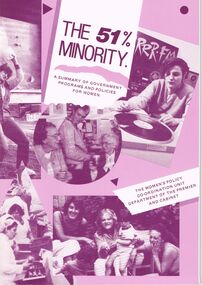
Book - NATIONAL COUNCIL OF WOMEN OF VICTORIA BENDIGO BRANCH COLLECTION: THE 51% MINORITY
... Booklet titled 'The 51% Minority' A Summary of Government Programs and Policies for Women. ...History House 11 Mackenzie Street Bendigo goldfields ORGANISATION Women national council of women National Council of Women of Victoria Bendigo Branch Collection The 51% Minority John Cain Booklet titled 'The 51% Minority' A Summary of Government Programs and Policies for Women. ...Booklet titled 'The 51% Minority' A Summary of Government Programs and Policies for Women. Cover is coloured white and shades of pink and purple. Booklet dated November 1984. Forward by John Cain, Premier.organisation, women, national council of women, national council of women of victoria bendigo branch collection, the 51% minority, john cain -
 Embroiderers Guild, Victoria
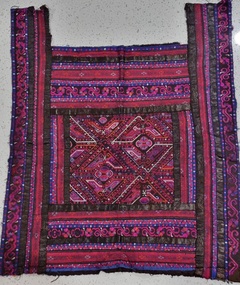
Textile - Vietnamese Dress Front Panel
... Characteristic of Miao or Hmong ethnic minority. This piece came from Vietnamese Hill Tribes. ...Characteristic of Miao or Hmong ethnic minority. This piece came from Vietnamese Hill Tribes. ...Characteristic of Miao or Hmong ethnic minority. This piece came from Vietnamese Hill Tribes. The dress front panel which they "recycle". Vibrant blue, red, bronze with white highlights dress panel. Embroidered in satin stitch. Central panel is 150 mm x 165 mm and is surrounded by narrow strips of alternating embroidered strips, black silk ribbon and woven coloured ribbon. -
 Surrey Hills Historical Society Collection
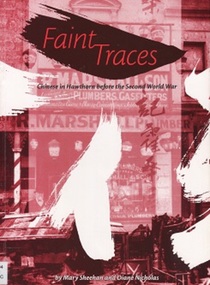
Book, Faint Traces: Chinese in Hawthorn before the Second World War, 2002
... The purpose of this history has been to present a narrative account of Hawthorn's Chinese in the decades leading up to and immediately after Federation, and to examine the impact of this event on a minority group in one of nineteenth-century Melbourne's fledging suburbs....Surrey Hills Historical Society Collection 190A Canterbury Road Canterbury melbourne The purpose of this history has been to present a narrative account of Hawthorn's Chinese in the decades leading up to and immediately after Federation, and to examine the impact of this event on a minority group in one of nineteenth-century Melbourne's fledging suburbs. chinese hawthorn Sue Slonek Mary Sheehan Diane Nicholas Faint Traces: Chinese in Hawthorn before the Second World War Book Book Hawthorn Historical Society Diane Nicholas and Mary Sheehan ...The purpose of this history has been to present a narrative account of Hawthorn's Chinese in the decades leading up to and immediately after Federation, and to examine the impact of this event on a minority group in one of nineteenth-century Melbourne's fledging suburbs.chinese, hawthorn, sue slonek, mary sheehan, diane nicholas -
 Victorian Aboriginal Corporation for Languages
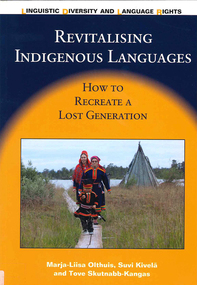
Book, ?Marja-Liisa Olthuis et al, Revitalising Indigenous languages : how to recreate a lost generation, 2013
... It offers a new language revitalisation method that can be used with Indigenous and minority languages, especially in cases where the native language has been lost among people of a working age. ...The book finishes with self-reflection and cautious recommendations for Indigenous peoples and minorities who want to revive or revitalise their languages. ...The book tells the story of the Indigenous Aanaar Saami language (around 350 speakers) and cultural revitalisation in Finland. It offers a new language revitalisation method that can be used with Indigenous and minority languages, especially in cases where the native language has been lost among people of a working age. The book gives practical examples as well as a theoretical frame of reference for how to plan, organise and implement an intensive language programme for adults who already have a professional training. It is the first time that a process of revitalisation of a very small language has been systematically described from the beginning; it is a small-scale success story. The book finishes with self-reflection and cautious recommendations for Indigenous peoples and minorities who want to revive or revitalise their languages.Maps, colour photographsnative language studies, bilingual education, casle project, saami, language revival -
 Bendigo Historical Society Inc.
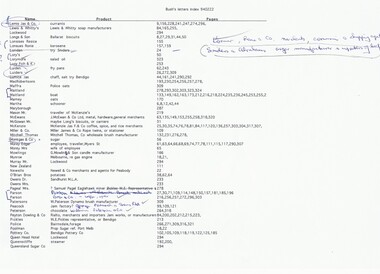
Document - BUSH COLLECTION: COLLECTION OF LETTERS (EX BUSH'S STORES), 1890-1896
... Collection of 324 handwritten letters (ex Bush's Stores) to Albert Bush ('Dear Albert') from C R Stilwell (majority author) and George Bain (minority author) re the business. Some personal notes. ...Collection of 324 handwritten letters (ex Bush's Stores) to Albert Bush ('Dear Albert') from C R Stilwell (majority author) and George Bain (minority author) re the business. Some personal notes. ...a. Collection of 324 handwritten letters (ex Bush's Stores) to Albert Bush ('Dear Albert') from C R Stilwell (majority author) and George Bain (minority author) re the business. Some personal notes. [This collection consists of photocopies of the original letters]. B. Four page typewritten index of collection (by Carol Holsworth?) organized by 'Name', 'Product' and 'Page'. Headed 'Bush's letters index 940222'person, individual, bush collection - personal -
 Uniting Church Archives - Synod of Victoria
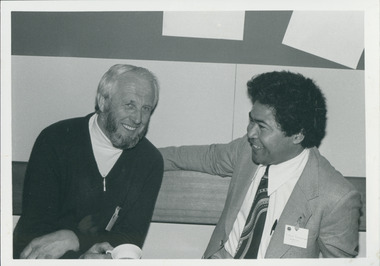
Photograph, Tasmanian Synod 1984 attendees, 1984
... "Mr Jensen took up the earlier theme of the church's poor record of giving - 'Most people in our church are like Cain, who brought an offering to the Lord. The minority are like Abel, who brought the first fruits to God,' he said, 'Most of us bring to God what we have left over,' and, as with Cain, God cannot bless it."..."Mr Jensen took up the earlier theme of the church's poor record of giving - 'Most people in our church are like Cain, who brought an offering to the Lord. The minority are like Abel, who brought the first fruits to God,' he said, 'Most of us bring to God what we have left over,' and, as with Cain, God cannot bless it." jensen, david tuimaualuga, litala tasmanian synod 1984 C&N identification Jensen and Tuimaualuga are shown, seated, in conversation. ...Jensen is mentioned in the report of the Synod meeting talking about stewardship. "Mr Jensen took up the earlier theme of the church's poor record of giving - 'Most people in our church are like Cain, who brought an offering to the Lord. The minority are like Abel, who brought the first fruits to God,' he said, 'Most of us bring to God what we have left over,' and, as with Cain, God cannot bless it."Jensen and Tuimaualuga are shown, seated, in conversation.C&N identificationjensen, david, tuimaualuga, litala, tasmanian synod 1984 -
 National Vietnam Veterans Museum (NVVM)
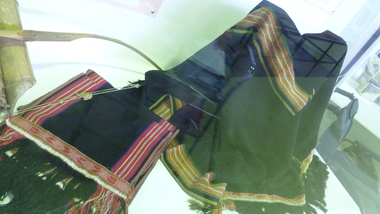
Clothing - Montagnard traditional costume
... Montagnard people were the indigenous non-Vietnamese ethnic minorities living in the Central Highlands of Vietnam. ...National Vietnam Veterans Museum (NVVM) 25 Veterans Drive Newhaven phillip-island-and-the-bass-coast Montagnard people were the indigenous non-Vietnamese ethnic minorities living in the Central Highlands of Vietnam. ...Montagnard people were the indigenous non-Vietnamese ethnic minorities living in the Central Highlands of Vietnam. Australian Army Captain Barry Petersen was sent to Vietnam in 1963 as part of the elite Australian Army Training Team to train Montagnard rebels in how to deal with the guerrilla tactics used by Viet Cong insurgents. The laplap is an integral part of the traditional ceremonial costume of various Montagnard groups, particularly the Rhade tribe, with whom Petersen lived and worked, learning their language and wearing their traditional clothing.Top and shawl black. Embroidery and weaving in white, red and ocremontagnard, ceremonial costume, laplap, loincloth, petersen, barry petersen, rhade, rade -
 Bendigo Historical Society Inc.
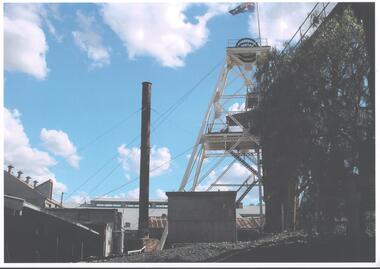
Photograph - AUSTIN COLLECTION: Central Deborah Gold Mine, 1980's
... The mine was one of a minority that continued to function during the Second World War. ...The mine was one of a minority that continued to function during the Second World War. ...The Central Deborah Gold Mine, 76 Violet Street, Bendigo, was developed from 1939 and operated as a working mine until 1954. The mine was one of a minority that continued to function during the Second World War. In 1939 the mine boasted a small timber poppet head, boiler steam winch, compressor, blacksmith shop, store, change rooms, and offices. Between 1945-46 the company upgraded the mine with extensions to sheds and the installation of new steam machinery, electric air compressor, steel poppet head, and ore bins. Colour photograph: metal mine chimney in centre of image, metal poppet head on right hand side. Mine sheds on left of image, peppercorn trees on right. Australian flag flying from top of popper head. mining, bendigo, mine site, historic mine site, central deborah gold mine, poppet head -
 Nillumbik Shire Council
Film, Jacqui Shelton, Bím Caillte (mistranslated: I am, usually, habitually, lost), 2023
... ...minority...Nillumbik Shire Council melbourne colonialism minority language Irish shape-shifting languages place activist family folklore Irish folklore Bím Caillte (mistranslated: I am, usually, habitually, lost) Film Jacqui Shelton ...An artist travels to a small island to be better immersed in the colonised minority language, and is met by a dead crane and an Irish-speaking, shape-shifting horse. The horse engages in a teasing conversation on family legacy and the fallacy of language. This work considers the preservation of colonised languages to complicate and grapple with white-settler positionality and privileges in Australia. It engages with language and place, personal family activist histories, poetic and musical inheritance and Irish folklore. Winner Nillumbik Prize for Contemporary Art 2025colonialism, minority, language, irish, shape-shifting, languages, place, activist, family, folklore, irish folklore -
 Flagstaff Hill Maritime Museum and Village
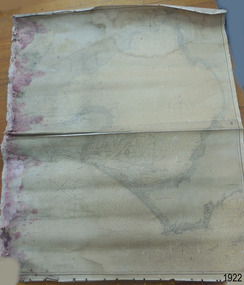
Document - Chart, Admiralty Office, Port Phillip, 1899
... Sold by W D Potter Agent for Admiralty Charts 145 minorities....Sold by W D Potter Agent for Admiralty Charts 145 minorities. Port Phillip Document Chart Admiralty Office ...Accurate charts were imperative for sea farers to sail their vessels safely from one side of the world to another. The British Admiralty published many charts and updated them frequently. Specialists were employed to gather information such as depth soundings to give the navigator as many helps as possible. At regular intervals the charts had to be updated with the amount of adjustment needed to a compass to allow for magnetic variation.This chart is significant for its association with incoming and outgoin ships for trade and passengers in the late 19th century.Admiralty Chart of Port Phillip, Victoria, South Coast of Australia. It shows navigation buoys, lighthouses, tides and money other details. It was surveyed by Commander Henry L. Cox R.N. in 1864. Published by Admiralty August 19th 1865. Corrections were made by Staff Commander E.J. Stanley R.N. in 1874. The West Channel was surveyed b J.B. Mason , Engineer, in 1899. Published and cartographed in Admiralty, London, England in 1897, supervised by Capt G H Richards R N Hydrographer. Chart was updated in 1899. Sold by W D Potter Agent for Admiralty Charts 145 minorities.Printed: "Port Phillip" "Australia - South Coast, Victoria"flagstaff hill, warrnambool, maritime-museum, flagstaff hill maritime museum & village, shipwreck coast, chart, australia, south coast, port phillip, admiralty, 1899, navigation, cartography, cartographer -
 Melbourne Tram Museum
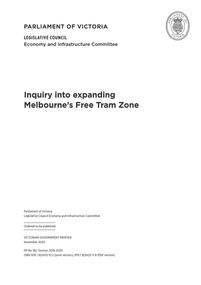
Document - Report, Legislative Council, "Inquiry into expanding Melbourne's Free Tram Zone", Dec. 2020
... Has extensive recommendations and a Minority report, including ticket technology and traffic light prioritisation....Has extensive recommendations and a Minority report, including ticket technology and traffic light prioritisation. ...Digital image of a 152 page report, titled "Inquiry into expanding Melbourne's Free Tram Zone", prepared by the Legislative Council Dec. 2020. Has table of contents, terms of reference, Committee participants. Looked at extending the free tram zone, providing free travel for full time students, senior card holders, new technologies for network performance improving and dynamic public transport pricing. Notes the most of the evidence was taken prior to the outbreak of COVID-19 which had a dramatic impact on the use of public transport. Has extensive recommendations and a Minority report, including ticket technology and traffic light prioritisation.trams, tramways, enquiries, parliament, tickets, free tram, seniors card, students, traffic lights, priority -
Glen Eira Historical Society
Magazine - WESLEY COLLEGE (ELSTERNWICK CAMPUS)
... (Please note that only a small minority of the items in the magazine pertain specifically to the Elsternwick Campus, as opposed to the College as a whole)....(Please note that only a small minority of the items in the magazine pertain specifically to the Elsternwick Campus, as opposed to the College as a whole). ...This file contains 1 item pertaining to the Elsternwick Campus of Wesley College: 1/A copy of the 123rd Edition of LION, the College’s community magazine, issued 04/2015. Contains and editorial, the principal’s message, a eulogy for ANZACs who attended the College, a series of articles about activities student engaged in during the preceding year, a historical article about the second student ever to attend the College, some items pertaining to the College Foundation, some items pertaining to the Old Wesley Collegian Association, photographs of various reunions, affiliate news, and a list of births, engagements, marriages and deaths. (Please note that only a small minority of the items in the magazine pertain specifically to the Elsternwick Campus, as opposed to the College as a whole).wesley college, secondary schools, helweg-mikkelsen leo, helwg-mikkelsen tallula, doveton college, international parent group (ipg), wesley college (elsternwick campus), schools, carroll james, mccrohan kieran, oakley-kerr alice, sharp emily, elsternwick, primary years program (pyp), abrahams-fletcher anais, fraser isabel, burstin livvie, mcdonnell kim, chipperfield scarlett, virnik samuella, elsternwick music group, gladstone parade -
 Bendigo Historical Society Inc.
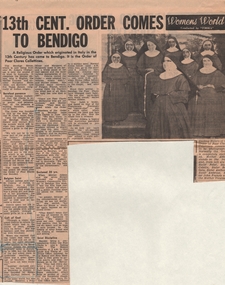
Newspaper - BENDIGO - THE ORDER OF POOR CLARES COLLETTINES - 13TH CENTURY ITALIAN RELIGIOUS ORDER, 11/12/1965
... The Mother Abbess is English, the Mother Vicaress & another European Sister are (Scottish) and five Sisters are Indian and (Tamil) Minority. The Sisters Bendigo House is located near St. ...The Mother Abbess is English, the Mother Vicaress & another European Sister are (Scottish) and five Sisters are Indian and (Tamil) Minority. The Sisters Bendigo House is located near St. ...Bendigo Advertiser Saturday Decemeber 11, 1965 Black & White Article & Photograph The 13th Century Religious Order - Order of Poor Clares Collettines comes to Bendigo. The Sisters consented to being photographed as normally the Order is completely enclosed. The Mother Abbess stands in the front and, from left are Sister Peter, Sister Collette, Sister Baptista, Sister Anthony, Sister Ambrose, Sister John Francis and the Mother Vicaress. The Mother Abbess is English, the Mother Vicaress & another European Sister are (Scottish) and five Sisters are Indian and (Tamil) Minority. The Sisters Bendigo House is located near St. Aidans Orphanage and is only the second of its kind in Australia.bendigo, clubs, italian reigious order in bendigo -
Victorian Aboriginal Corporation for Languages
Conference proceedings, Mary Jane Norris, Endangered languages beyond boundaries : community connections, collaborative approaches and cross-disciplinary research =? Langues en pe?ril au-dela? des frontie?res : connexions communautaires, approches collaboratives, et rechecrche interdisciplinaire : proceedings of the 17th FEL Conference Carleton University, Ottawa, Ontario Canada 1-4 October 2013, 2013
... Session 1: Collaborations with language and cultural organizations, and governments Session 2: Collaborations with universities, researchers, institutes and schools Session 3: Strategies/issues across language, culture, geography, place and generations I: standardization and dialects Session 4: Strategies issues across language, culture, geography, place and generations II: Minority languages, regions and rural/urban areas Session 6: Language and culture connections: Health, well-being, and educational outcomes Session 7: Strategies/issues across language, culture, geography, place and generations III: Generations and families Session 8: Language assessment, documentation and diversity: Indicators of vitality, endangerment and the implications of data collection Session 5: Poster sessions I: Hard copy: Community connections, collaborative approaches, cross-disciplinary research Session 5: Poster session II: Electronic: Collaborative approaches with information and computer technologies...Victorian Aboriginal Corporation for Languages 33 Saxon Street Brunswick melbourne collaboration community involvement cross disciplinary research maps, b&w photographs, colour photographs, illustrations, graphs Session 1: Collaborations with language and cultural organizations, and governments Session 2: Collaborations with universities, researchers, institutes and schools Session 3: Strategies/issues across language, culture, geography, place and generations I: standardization and dialects Session 4: Strategies issues across language, culture, geography, place and generations II: Minority languages, regions and rural/urban areas Session 6: Language and culture connections: Health, well-being, and educational outcomes Session 7: Strategies/issues across language, culture, geography, place and generations III: Generations and families Session 8: Language assessment, documentation and diversity: Indicators of vitality, endangerment and the implications of data collection Session 5: Poster sessions I: Hard copy: Community connections, collaborative approaches, cross-disciplinary research Session 5: Poster session II: Electronic: Collaborative approaches with information and computer technologies Endangered languages beyond boundaries : community connections, collaborative approaches and cross-disciplinary research =? ...Session 1: Collaborations with language and cultural organizations, and governments Session 2: Collaborations with universities, researchers, institutes and schools Session 3: Strategies/issues across language, culture, geography, place and generations I: standardization and dialects Session 4: Strategies issues across language, culture, geography, place and generations II: Minority languages, regions and rural/urban areas Session 6: Language and culture connections: Health, well-being, and educational outcomes Session 7: Strategies/issues across language, culture, geography, place and generations III: Generations and families Session 8: Language assessment, documentation and diversity: Indicators of vitality, endangerment and the implications of data collection Session 5: Poster sessions I: Hard copy: Community connections, collaborative approaches, cross-disciplinary research Session 5: Poster session II: Electronic: Collaborative approaches with information and computer technologiesmaps, b&w photographs, colour photographs, illustrations, graphscollaboration, community involvement, cross disciplinary research -
 Ballarat Heritage Services
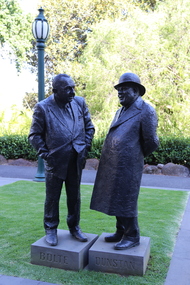
Photograph - Colour, Statue of Sir Rupert James Hamer, AC, KCMG, ED, 2016, 21/02/2016
... It was effectively a national joke with one minority government in 1943 lasting just five days and another in 1952 lasting only four....It was effectively a national joke with one minority government in 1943 lasting just five days and another in 1952 lasting only four. treasury gardens statue henry bolte albert dunstan premier Statue of Henry Bolte and Sir Allbert Dunstan Statue of Sir Rupert James Hamer, AC, KCMG, ED, 2016 Photograph - Colour Lisa Gervasoni ...Sir Albert Arthur Dunstan, KCMG was an Australian politician. A member of the Country Party (now National Party of Australia), Dunstan was the 33rd Premier of Victoria. His term as Premier was the second-longest in the state's history, behind Sir Henry Bolte. Dunstan, who was Premier from 2 April 1935 to 14 September 1943 and again from 18 September 1943 to 2 October 1945, was the first Premier of Victoria to hold that office as a position in its own right, and not just an additional duty taken up by the Treasurer, Attorney General, or Chief Secretary. Sir Henry BoltePrint Page Print this page 15-November-2018[Diane Watson] 15-November-2018[Diane Watson] 15-November-2018[Diane Watson] 21-November-201615-November-2018 [Diane Watson]21-November-201615-November-2018[Diane Watson]15-November-2018[Diane Watson]21-November-2016 Photographs supplied by Sandra Brown / Diane Watson A statue commemorates the former Premier of Victoria, Sir Henry Bolte for his services to Victoria and Ballarat. In the 1955 elections an almost unknown sheep farmer from the bush, Henry Bolte, became premier. His long, uninterrupted Liberal rule was a seminal period in Victoria`s history, not least for the unprecedented development of the hitherto languishing state and the political stability that his election in 1955 delivered. There was a chaotic political culture in Victoria before Bolte was elected. It was effectively a national joke with one minority government in 1943 lasting just five days and another in 1952 lasting only four.Statue of Henry Bolte and Sir Allbert Dunstantreasury gardens, statue, henry bolte, albert dunstan, premier -
 City of Greater Bendigo - Civic Collection
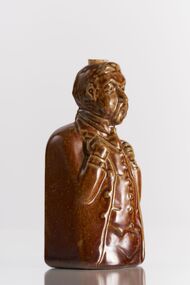
Ceramic - Bendigo Pottery :: Australian Prime Minister Flask, Bendigo Pottery, John C Watson, c 1975
... He was the first Labour Prime Minister elected forming a minority government in April 1904, aged 37, after the ALP withdrew its support from Deakin. ...He was the first Labour Prime Minister elected forming a minority government in April 1904, aged 37, after the ALP withdrew its support from Deakin. ...Established by George Guthrie in 1857 (about 5km north of its current site) and then again seven years later in 1864 after it initially closed, Bendigo Pottery remains one of the most influential and longest running Pottery’s in Australia. Over the years the Pottery has contributed to the growth and development of the district through both its products including building products, table ware and decorative and commemorative war as well as artistically, being responsible for training and supporting many potters locally. The City of Greater Bendigo has had a long history of partnering with Bendigo Pottery and the Civic Collection holds a number of important items within its collection. This John C Watson (Chris Watson) 'reform' flask was one of a limited edition character bottles produced by the Pottery to commemorate important figures in Australian politics. He was the first Labour Prime Minister elected forming a minority government in April 1904, aged 37, after the ALP withdrew its support from Deakin. He was one of the first socialists to head a government in a parliamentary system, attracting international attention, and remains Australia's youngest prime minister. After less than four months in office, the Watson government lost a confidence motion and Watson was succeeded as prime minister by anti-socialist George Reid. The original reform flasks were English salt-glazed stoneware flasks produced in the early 19th century shaped into the form of figures connected with the Reform Bill of 1832. Much was made of puns like ‘the spirit of reform’ at the time. Artist John Frith has taken the reform flask form as inspiration for a series of political ceramics of some Australian Prime Ministers. The series included Edmund Barton, Alfred Deakin and Watson.Glazed ceramic flask in the shape John Watson. Square shaped with most of the detail on the front facing side other than head which is more detailed. Cork still in place in top of head.On reverse of flask; John C Watson / Prime Minister / of Australia / 27.4.1904 / To / 18 .08. 1904 Bendigo Pottery / LMTED / Edition Series / 55/1200 /Australia Signed lower centre; 'Frith'australian politics, bendigo pottery -
 Bendigo Historical Society Inc.
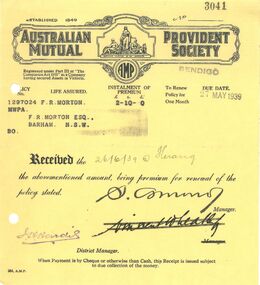
Financial record - INVOICE COLLECTION: The Australian Mutual Provident Society
... AMP and Mitsubishi UFJ Trust and Banking form strategic partnership 2017 – AMP Capital takes a minority stake in US based real estate investment manager PCCP 2020 – Completed sale of AMP Life insurance business to Resolution Life 2022 – Announced sale of global asset management business, AMP Capital, to focus on AMP’s core businesses in banking and wealth management. 2024 – AMP celebrates 175 years of helping people create their tomorrow...AMP and Mitsubishi UFJ Trust and Banking form strategic partnership 2017 – AMP Capital takes a minority stake in US based real estate investment manager PCCP 2020 – Completed sale of AMP Life insurance business to Resolution Life 2022 – Announced sale of global asset management business, AMP Capital, to focus on AMP’s core businesses in banking and wealth management. 2024 – AMP celebrates 175 years of helping people create their tomorrow AC Morton AMP Australian Mutual Provident Society insurance 10934.35a: No. 3041 A small, square sheet of yellow paper with two clean punch holes on the left side and a perforated edge. ...https://www.amp.com.au/about-amp/what-we-do "From its humble beginnings in 1849 by offering life insurance as the Australian Mutual Provident Society, AMP has evolved over the past 175 years to be a publicly listed company with over 1.3 million customers and AU$133 billion in assets under management (as at FY23). Proudly celebrating 175 years of business in 2024, AMP now helps millions of people in Australia and New Zealand invest, build wealth and retire with confidence." Milestones 1849 – The Australian Mutual Provident Society (AMP) opens for business 1860 – Benjamin Short joins AMP as its first agent 1869 – The National Mutual Life Association of Australasia opens for business 1899 – James Tuscon Thompson joins National Mutual as its first agent 1962 – The iconic AMP building in Sydney's Circular Quay is opened by Prime Minister Robert Menzies 1995 – National Mutual demutualises and lists on the Australian Stock Exchange 1998 – AMP demutualises and lists on the Australian Stock Exchange. AMP Bank opens for business 2000 – AMP plays a major part in the first Olympics of the new century, supporting the Sydney 2000 Olympic Games, the Paralympic Games and the Olympic Torch Relay 2009 – AMP and China Life Group form strategic partnership 2011 – AMP and AXA Asia Pacific (formerly National Mutual) merge. AMP and Mitsubishi UFJ Trust and Banking form strategic partnership 2017 – AMP Capital takes a minority stake in US based real estate investment manager PCCP 2020 – Completed sale of AMP Life insurance business to Resolution Life 2022 – Announced sale of global asset management business, AMP Capital, to focus on AMP’s core businesses in banking and wealth management. 2024 – AMP celebrates 175 years of helping people create their tomorrow10934.35a: No. 3041 A small, square sheet of yellow paper with two clean punch holes on the left side and a perforated edge. The paper is thin, but sturdy. Printed in black ink is the business name and details: Australian Mutual Provident Society established 1849. Policy No. 1297024 The receipt is printed in black ink. Payment due 27 May 1939. Receipt indicates payment received 26 June 1939. Payment listed in British Pounds, totaling 2 pounds 10 shillings. 10934.35b: No. 3861 A small, square sheet of yellow paper with two clean punch holes on the left side and a perforated edge. The paper is thin, but sturdy. Printed in black ink is the business name and details: Australian Mutual Provident Society established 1849. Policy No. 1311528 The receipt is printed in black ink. Payment due 18 Jun 1939. Receipt indicates payment received 26 June 1939. Payment listed in British Pounds, totaling 2 pounds 10 shillings. 10934.35c: No. 1671 A small, square sheet of yellow paper with two clean punch holes on the left side and a perforated edge. The paper is thin, but sturdy. Printed in black ink is the business name and details: Australian Mutual Provident Society established 1849. Policy No. 1311528 The receipt is printed in black ink. Payment due 18 Mar 1939. Receipt indicates payment received 25 March 1939. Payment listed in British Pounds, totaling 2 pounds 10 shillings. 10934.35d: No. 903 A small, square sheet of yellow paper with two clean punch holes on the left side and a perforated edge. The paper is thin, but sturdy. Printed in black ink is the business name and details: Australian Mutual Provident Society established 1849. Policy No. 1297024 The receipt is printed in black ink. Payment due 27 Feb 1939. Receipt indicates payment received 25 March 1939. Payment listed in British Pounds, totaling 2 pounds 10 shillings. 10934.35e: No. 8557 A small, square sheet of yellow paper with two clean punch holes on the left side and a perforated edge. The paper is thin, but sturdy. Printed in black ink is the business name and details: Australian Mutual Provident Society established 1849. Policy No. 1297024 The receipt is printed in black ink. Payment due 27 Dec 1938. Receipt indicates payment received 25 Jan 1939. Payment listed in British Pounds, totaling 2 pounds 10 shillings. 10934.35f: No. 338 A small, square sheet of yellow paper with two clean punch holes on the left side and a perforated edge. The paper is thin, but sturdy. Printed in black ink is the business name and details: Australian Mutual Provident Society established 1849. Policy No. 1311528 The receipt is printed in black ink. Payment due 18 Jan 1939. Receipt indicates payment received 25 Jan 1939. Payment listed in British Pounds, totaling 2 pounds 10 shillings. 10934.35g: No. 365 A small, square sheet of yellow paper with two clean punch holes on the left side and a perforated edge. The paper is thin, but sturdy. Printed in black ink is the business name and details: Australian Mutual Provident Society established 1849. Policy No. 1297024 The receipt is printed in black ink. Payment due 27 Jun 1939. Receipt indicates payment received 25 Feb 1939. Payment listed in British Pounds, totaling 2 pounds 10 shillings. receipt attached to 10934.35j 10934.35h: No. 2321 A small, square sheet of yellow paper with two clean punch holes on the left side and a perforated edge. The paper is thin, but sturdy. Printed in black ink is the business name and details: Australian Mutual Provident Society established 1849. Policy No. 1311528 The receipt is printed in black ink. Payment due 18 April 1939. Receipt indicates payment received 27 April 1939. Payment listed in British Pounds, totaling 2 pounds 10 shillings. receipt is attached to 10934.35i 10934.35i: No. 1697 A small, square sheet of yellow paper with two clean punch holes on the left side and a perforated edge. The paper is thin, but sturdy. Printed in black ink is the business name and details: Australian Mutual Provident Society established 1849. Policy No. 1297024 The receipt is printed in black ink. Payment due 27 Mar 1939. Receipt indicates payment received 27 April 1939. Payment listed in British Pounds, totaling 2 pounds 10 shillings. Attached to 10934.35h 10934.35j: No. 876 A small, square sheet of yellow paper with two clean punch holes on the left side and a perforated edge. The paper is thin, but sturdy. Printed in black ink is the business name and details: Australian Mutual Provident Society established 1849. Policy No. 1311528 The receipt is printed in black ink. Payment due 18 Feb 1939. Receipt indicates payment received 25 Feb 1939. Payment listed in British Pounds, totaling 2 pounds 10 shillings. Attached 10934.35gac morton, amp, australian mutual provident society, insurance -
 Bendigo Historical Society Inc.
Plan - Central Deborah Gold Mine, 22.10.45
... The mine was one of a minority that continued to function during the Second World War. ...The mine was one of a minority that continued to function during the Second World War. ...CENTRAL DEBORAH GOLD MINE 76 VIOLET STREET BENDIGO, GREATER BENDIGO CITY: The Central Deborah Gold Mine was developed from 1939 and operated as a working mine until 1954. The mine was one of a minority that continued to function during the Second World War. In 1939 the mine boasted a small timber poppet head, boiler steam winch, compressor, blacksmith shop, store, change rooms, and offices. Between 1945-46 the company upgraded the mine with extensions to sheds and the installation of new steam machinery, electric air compressor, steel poppet head, and ore bins. The Central Deborah Gold Mine is historically significant for its ability to demonstrate the tangible and important links to twentieth century quartz mining. It is of outstanding historical significance as the last intact and working example of the 5,500 quartz mines that won Bendigo widespread fame as a gold mining centre. At one time Bendigo had the world’s deepest shafts. Of particular importance are original buildings, fittings and mining machinery that document the mine’s character from 1939 to 1954. (Criterion A) The Central Deborah Gold Mine is archaeologically significant for its ability and potential to illustrate important aspects of early twentieth century mining. The physical evidence at the site has excellent interpretative value and the ability to answer archaeological research questions. (Criterion C) The Central Deborah Gold Mine is significant as a notable and fine example of the class of twentieth century quartz mine. The working machinery—including a Cornish boiler, winding engine and two compressors—comprise one of the few publicly accessible and in situ collections in the State. Central Deborah Company Gold Mine is now a popular tourist mine and a living part of the story of gold mining in Australia. Its historic mining equipment is still functional, and several levels underground are accessible to visitors. (Victorian Heritage Database: https://vhd.heritagecouncil.vic.gov.au/places/5996) Transverse section of Central Deborah Gold Mine, Bendigo. Printed on top in bold black text: ' Central Deborah Mine Bendigo'. Handwritten on plan: J.Caldwell 12.10.45 Plan forms part of the Margaret Roberts Collection.gold mining, gold, bendigo, central deborah gold mine, transverse -
Victorian Aboriginal Corporation for Languages
Conference proceedings, Joan Argenter, Endangered languages and linguistic rights on the margins of nations : proceedings of the Eighth FEL Conference : Barcelona (Catalonia) Spain 1-3 October 2004, 2005
... s Aboriginal Languages within Communities and Cities: Some Proposed Indicators Michael Prosser van der Riet Promotion of Minority Language Scripts in Southwest China. ...s Aboriginal Languages within Communities and Cities: Some Proposed Indicators Michael Prosser van der Riet Promotion of Minority Language Scripts in Southwest China. ...Section 1: Grass-roots Efforts and Top-down Institutions Keynote Address: Leanne Hinton The Death and Rebirth of Native American Languages Patrick Marlow Bilingual Education, Legislative Intent, and Language Maintenance in Alaska Galina Dyrkheeva New Language Policy and Small Languages in Russia: the Buryat Example Zelealem Leyew The Fate of Endangered Languages in Ethiopia Gregory Hankoni Kamwendo Language Planning from Below: Chitumbuka as a Marginalised Language in Malawi John Hobson Learning to Speak Again: Towards the Provision of Appropriate Training for the Revitalization of Australian Languages in New South Wales Shelley Tulloch Grassroots Desires for Language Planning in Nunavut Amandina C�rdenas Demay Hacia la definici�n de una pol�tica del lenguaje & Alejandra Arellano Mart�nez expl�cita en M�xico Elena Benedicto, G. McLean, Linguistic Rights in the Nicaraguan Atlantic Coast: Grupo de Ling�istas Ind�genas Mayangna Actions on the Ground within the Legislative Framework of the Estatuto de Autonom�a Bartomeu Meli� Las lenguas ind�genas en el Paraguay. Una visi�n desde el Censo 2002 Monica Ward Building from the Bottom-up: Linguistic Rights for Extremely Endangered Languages Marta Moskal Language Policy and Protection of Endangered Languages in Poland Sue Wright What is a language? Some difficulties inherent in language rights Joan Ramon Sol� Obstacles in the Way of the Recovery of Catalan Section 2: The Global vs. the Local in Linguistic Rights Keynote Address: Patxi Goenaga Fronteras que dividen y fronteras que separan. Una mirada a Europa desde el Euskara Yun-Hsuan Kuo Languages, Identity, and Linguistic Rights in Taiwan Estibaliz Amorrortu, Andoni Barre�a, What Do Linguistic Communities Think about the Esti Izagirre, Itziar Idiazabal, Bel�n Uranga Official Recognition of their Languages? Alok Kumar Das Linguistic Practices and Not Just Linguistic Rights: Endangered Languages in New Europe Section 3: Languages crossing the Borders Keynote Address: Tjeerd de Graaf The Status of Endangered Languages in the Border Areas of Japan and Russia Mariana Bara Arm�n endangered language Ver�nica Grondona Language Policy, Linguistic Rights and Language Maintenance in Argentina Grup d?Estudi de Lleng�es Amena�ades Linguistic diversity in Catalonia: towards a model of linguistic revitalization Nataliya Belitser Endangered Languages in Crimea/Ukraine: The Cases of Crimean Tatar, Karait, and Krymchak Ivelina Kazakova & Maria Miteva The Future of Bulgarian: The Road to Extinction or Paradise Regained Luke O?Callaghan War of Words: Language Policy in Post Independence Kazakhstan Eden Naby From Lingua Franca to Endangered Language: The Legal Aspects of the Preservation of Aramaic in Iraq Poster presentations Akim Elnazarov Endangered languages and Education. A Case of Badakhshan Province of Tajikistan Arnfinn Muruvik Vonen & Oddvar Hjulstad Linguistic Rights Paving the Way Towards Language Endangerment? The Case of Norwegian Sign Language Eva Savelsberg Kurdish (Kurmanc�) as Minority Language in the Federal Republic of Germany Jos� Antonio Flores Farf�n Cultural and Linguistic Revitalization, Maintenance and Development in Mexico Mary Jane Norris Assessing the Status, Use and Accessibility of Canada?s Aboriginal Languages within Communities and Cities: Some Proposed Indicators Michael Prosser van der Riet Promotion of Minority Language Scripts in Southwest China. A Relative Success or Complete Failure? Mikael Grut The Endangered Celtic Languages: A Wake-up Call Nariyo Kono Developing Partnerships Between Universities and Language Communities: Top-down and Bottom-up Integration Richard J. Hawkins Probit Modeling Language Attrition Rudy Osiel Camposeco El idioma maya Popti? y la Declaraci�n Universal de los Derechos Ling��sticos Victorio N. Sugbo The literary Response: Claiming Rights in Three Philippin Languages Ya-ling Chang Language Policies in an Aboriginal Primary School in Taiwanmaps, tables, graphsnsw, endangered languages, linguistic rights -
Victorian Aboriginal Corporation for Languages
Book, Peter K Austin, Endangered languages : beliefs and ideologies in language documentation and revitalisation, 2014
... Olimpia Rasom 5.Minority Language Use in Kven Communities: Language Shift or Revitalization? ...Olimpia Rasom 5.Minority Language Use in Kven Communities: Language Shift or Revitalization? ...1.Introduction /? Julia Sallabank pt. 1 Case Studies: Beliefs and Ideologies in Endangered Language Communities 2.Paradoxes of Engagement with Irish Language Community Management, Practice, and Ideology /? Tadhg O. Hifearnain 3.Fluidity in Language Beliefs: The Beliefs of the Kormakiti Maronite Arabic Speakers of Cyprus towards their Language /? Chryso Hadjidemetriou 4.Reflections on the Promotion of an Endangered Language: The Case of Ladin Women in the Dolomites (Italy) /? Olimpia Rasom 5.Minority Language Use in Kven Communities: Language Shift or Revitalization? /? Anna-Kaisa Raisanen 6.Going, Going, Gone? The Ideologies and Politics of Gamilaraay-Yuwaalaraay Endangerment and Revitalization /? Peter K. Austin 7.Language Shift in an `Importing Culture': The Cultural Logic of the Arapesh Roads /? Lise M. Dobrin pt. 2 Language Documentation and Revitalization: What and Why? Contents note continued: 8.Ideologies, Beliefs, and Revitalization of Guernesiais (Guernsey) /? Julia Sallabank 9.Local Language Ideologies and Their Implications for Language Revitalization among the Sumu-Mayangna Indians of Nicaragua's Multilingual Caribbean Coast Region /? Eloy Frank Gomez 10.Must "We Save the Language? Children's Discourse on Language and Community in Provencal and Scottish Language Revitalization Movements /? James Costa 11.Revitalizing the Maori Language? /? Jeanette King 12.What Are We Trying to Preserve? Diversity, Change, and Ideology at the Edge of the Cameroonian Grassfields /? Jeff Good 13.The Cost of Language Mobilization: Wangkatha Language Ideologies and Native Title /? Jessica Boynton 14.Finding the Languages We Go Looking For /? Tonya N. Stebbins 15.Meeting Point: Parameters for the Study of Revival Languages /? Christina Eira pt. 3 From Local to International: Interdisciplinary and International Views Contents note continued: 16.Conflicting Goals, Ideologies, and Beliefs in the Field /? Simone S. Whitecloud 17.Whose Ideology, Where, and When? Rama (Nicaragua) and Francoprovencal (France) Experiences /? Michel Bert 18.UN Discourse on Linguistic Diversity and Multilingual ism in the 2000s: Actor Analysis, Ideological Foundations, and Instrumental Functions /? Anahit Minasyan 19.Language Beliefs and the Management of Endangered Languages /? Bernard Spolsky.maps, b&w photographs, tables, graphsendangered languages, language revival, education, language research -
 Kew Historical Society Inc
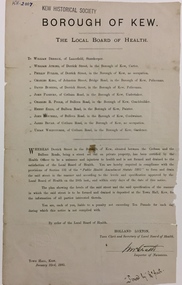
Document, Holland Loxton, Notification to the Residents of Derrick Street by the Local Board of Health, 1885, 1885
... On the other hand the ratepayers, and a minority of Council, believed that there were extenuating circumstances in the case of Derrick Street. ...On the other hand the ratepayers, and a minority of Council, believed that there were extenuating circumstances in the case of Derrick Street. ...Streets and drains were the basic infrastructure problems for Kew in the 1880s. Decent streets and drains were fundamental to the quality of life of the residents. Without drainage, streets became muddy, boggy and sometimes impassable. Pools and puddles of stagnant water became smelly. The run off water, mixed with human and animal wastes, because there was no sewerage, became a health hazard. Streets and drains then became what were known as 'a nuisance'. Kew suffered from bouts of typhoid fever during the 1880s. Derrick Street was a private street on the margin of the business district of Kew and a well-used thoroughfare. We hear first about Derrick Street when the ratepayers applied to Council to have the street 'taken over' in January 1881. The Council agreed, after much debate, but ratepayers had to pay half the costs. The argument of the majority of the Council was that there was an established policy that ratepayers of private streets either had to hand over the street fully-formed or pay half the costs if Council did the work. It was felt that to make an exception for Derrick Street would create a precedent for ratepayers of other private streets. On the other hand the ratepayers, and a minority of Council, believed that there were extenuating circumstances in the case of Derrick Street. They believed that the costing by the Borough Surveyor was excessive. They felt the Council was partly responsible for the state of the street due to a channel on Bulleen Road, which deposited sand in the street. The Council had also put in some kerbing at the entrance to the street. Finally, the ratepayers believed that the street had become an important and convenient thoroughfare in Kew, and thus should be an exception to the policy on private streets. In the end a decision was delayed to allow the ratepayers to drain and form the street themselves. And there the matter stood till September 1882, when Miss Reilly complained about rubbish on a block of land in Derrick Street. So, in October 1882 the Council agreed to take over and form the street with the ratepayers paying half the costs. The ratepayers did not want to pay, so the argument continued in Council into 1883. There was a standoff for a further 18 months, until the problem could no longer be ignored. In October 1884 the Inspector of Nuisances and the Health Officer reported that Derrick Street was a health hazard as there was no drainage outlet for waste water. These reports changed the status of the problem of Derrick Street. It became an issue of public health, and thus the Council, acting as the Local Board of Health, had power to prepare plans and order the ratepayers to drain the street and pay all the costs, or let the Council do the work and charge ratepayers half the costs of the works. By April 1885, the time for ratepayers to complete the works themselves had expired, so the Council proceeded with the work and required ratepayers to pay for their share of the costs. All ratepayers had paid by the end of April except Mr Whiddycombe, who refused to pay. Mr Whiddycombe was warned to pay in October 1885. Legal action was taken against him in November. The Council lost the case on technical grounds. The Council, acting as the Local Board of Health, relaunched the legal action and won. The last we hear of Derrick Street is that seven day’s notice was given to Derrick Street ratepayers to pay for the drainage works in May 1887. We presume that Mr Whiddycombe paid. (Research: Andrew Frost)Rare and historic publication issued by the Board of Health in the Borough of Kew in 1885 to residents of Derrick street regarding the need for proper drainage for the purpose of improving public health.Printed formal notice sent by the Board of Health of the Borough of Kew to landowners in Derrick Street, Kew. The notice advised the owners that they were required to form and drain the street according to the levels and specifications approved by the Board. The letter was sent on January 23rd 1885, and signed by the Inspector of Nuisances.borough of kew -- greater melbourne (vic.), council notices -- public health, derrick street -- kew (vic.) -
 Sunshine and District Historical Society Incorporated
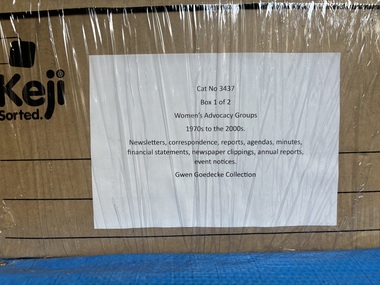
Archive - Gwen Goedecke Collection - Women's Advocacy Groups
... | Box 2| National Women's Advisory Council| Victorian Women's Advisory Council| Office of the Status of Women Canberra|Women Workers of the West|Women's Bureau Canberra|Office of Women's Affairs| Rural Women's Network, Victoria| Victorian Women's Trust| International Alliance of Women I.A.W| Women's International Democratic Federation (WIDF)| International Women's Rights Action Watch (IWRAW)| Inaugural Women's Research Officer's Newsletter March 2003| Women of the West Network minutes Feb '85/July '86| UN Association of Australia Young Women's Christian Association (YWCA) agenda Oct 1981| Women's Peace Camp report by Gwen Goedecke (1 page only) 1995 PUBLICATIONS: United Nations Commission on the Status of Women 51st session (New York) Financing for gender equality and the empowerment of women - a written statement submitted by Rhonda Sharp, Professor Economics, University of South Australia 2007|Parliament of Australia, House of Representaties News Release 1997 re grants to Women's Non Government Organizations (NGO's)| Presentation of Australia's Third Progress Report on Implementing the United Nations Convention on the Elimination of all Forms of Discrimination Against Women 1997| Status of Women Committee UNAA (Victorian Division) Agenda 2007| United Nations Mandates of International Space Year 1991| Charter of the United Nations and Statute of the International Court of Justice From the Office of the Status of Women - Australian Federal Government -|Women's Budget Programme Assessment (85/86)|Newsheets Sept to Oct 1983|Activities of the Office 1982-1983|Directory of Government Resources for Women 1983|Fair Exposure (1983)|Budget Impact Statement 1987 to 1988|National Economic Conference - an information paper on the economy Women's Contribution to Economic Recovery 1983 |Affirmative Action for Women vol 2 (1984)|Women's Advisory Committee to the Prime Minister - report (1977)|International Alliance of Women (IAW) The Increasing importance of women in north south cooperation (International Literacy Year 1990)|International Women's Year Priorities and Considerations - Australian National Advisory Committee (1974)|Women's Studies International Forum vol 7 #6 (1984), Pergamon Press UK|'The 51% Minority' - Womens's Policy Co-ordination Unit (Victorian Gov't) 1984...| Box 2| National Women's Advisory Council| Victorian Women's Advisory Council| Office of the Status of Women Canberra|Women Workers of the West|Women's Bureau Canberra|Office of Women's Affairs| Rural Women's Network, Victoria| Victorian Women's Trust| International Alliance of Women I.A.W| Women's International Democratic Federation (WIDF)| International Women's Rights Action Watch (IWRAW)| Inaugural Women's Research Officer's Newsletter March 2003| Women of the West Network minutes Feb '85/July '86| UN Association of Australia Young Women's Christian Association (YWCA) agenda Oct 1981| Women's Peace Camp report by Gwen Goedecke (1 page only) 1995 PUBLICATIONS: United Nations Commission on the Status of Women 51st session (New York) Financing for gender equality and the empowerment of women - a written statement submitted by Rhonda Sharp, Professor Economics, University of South Australia 2007|Parliament of Australia, House of Representaties News Release 1997 re grants to Women's Non Government Organizations (NGO's)| Presentation of Australia's Third Progress Report on Implementing the United Nations Convention on the Elimination of all Forms of Discrimination Against Women 1997| Status of Women Committee UNAA (Victorian Division) Agenda 2007| United Nations Mandates of International Space Year 1991| Charter of the United Nations and Statute of the International Court of Justice From the Office of the Status of Women - Australian Federal Government -|Women's Budget Programme Assessment (85/86)|Newsheets Sept to Oct 1983|Activities of the Office 1982-1983|Directory of Government Resources for Women 1983|Fair Exposure (1983)|Budget Impact Statement 1987 to 1988|National Economic Conference - an information paper on the economy Women's Contribution to Economic Recovery 1983 |Affirmative Action for Women vol 2 (1984)|Women's Advisory Committee to the Prime Minister - report (1977)|International Alliance of Women (IAW) The Increasing importance of women in north south cooperation (International Literacy Year 1990)|International Women's Year Priorities and Considerations - Australian National Advisory Committee (1974)|Women's Studies International Forum vol 7 #6 (1984), Pergamon Press UK|'The 51% Minority' - Womens's Policy Co-ordination Unit (Victorian Gov't) 1984 Box 1 - Newsletters, correpondence, reports, agendas, minutes, financial statements, newspaper clippings, annual reports, event notices from the 1970s to the 2000s.| Box 2 - Same as Box 1. ...Part of the Gwenyth "Gwen" Goedecke CollectionBox 1| Women's International League for Peace and Freedom WILPF| National Council of Victoria Inc. NCWV| Centre for Working Women Co-op| Union of Australian Women UAW| Women's Electoral Lobby Victoria WEL| Coalition of Australian Participating Organisations of Women CAPOW! | Box 2| National Women's Advisory Council| Victorian Women's Advisory Council| Office of the Status of Women Canberra|Women Workers of the West|Women's Bureau Canberra|Office of Women's Affairs| Rural Women's Network, Victoria| Victorian Women's Trust| International Alliance of Women I.A.W| Women's International Democratic Federation (WIDF)| International Women's Rights Action Watch (IWRAW)| Inaugural Women's Research Officer's Newsletter March 2003| Women of the West Network minutes Feb '85/July '86| UN Association of Australia Young Women's Christian Association (YWCA) agenda Oct 1981| Women's Peace Camp report by Gwen Goedecke (1 page only) 1995 PUBLICATIONS: United Nations Commission on the Status of Women 51st session (New York) Financing for gender equality and the empowerment of women - a written statement submitted by Rhonda Sharp, Professor Economics, University of South Australia 2007|Parliament of Australia, House of Representaties News Release 1997 re grants to Women's Non Government Organizations (NGO's)| Presentation of Australia's Third Progress Report on Implementing the United Nations Convention on the Elimination of all Forms of Discrimination Against Women 1997| Status of Women Committee UNAA (Victorian Division) Agenda 2007| United Nations Mandates of International Space Year 1991| Charter of the United Nations and Statute of the International Court of Justice From the Office of the Status of Women - Australian Federal Government -|Women's Budget Programme Assessment (85/86)|Newsheets Sept to Oct 1983|Activities of the Office 1982-1983|Directory of Government Resources for Women 1983|Fair Exposure (1983)|Budget Impact Statement 1987 to 1988|National Economic Conference - an information paper on the economy Women's Contribution to Economic Recovery 1983 |Affirmative Action for Women vol 2 (1984)|Women's Advisory Committee to the Prime Minister - report (1977)|International Alliance of Women (IAW) The Increasing importance of women in north south cooperation (International Literacy Year 1990)|International Women's Year Priorities and Considerations - Australian National Advisory Committee (1974)|Women's Studies International Forum vol 7 #6 (1984), Pergamon Press UK|'The 51% Minority' - Womens's Policy Co-ordination Unit (Victorian Gov't) 1984women -
 Ballarat Heritage Services
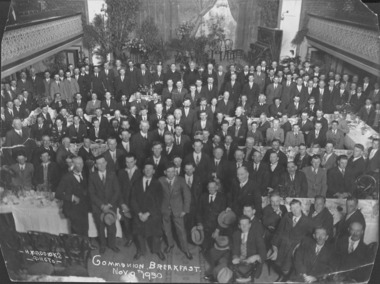
Photograph - Photograph - Black and White, St Peter's Daylesford Communion Breakfast, 1930, 09/11/1930
... There was always a minority, however, who were ever ready to score a victory over Rome at any price. ...There was always a minority, however, who were ever ready to score a victory over Rome at any price. ..."ST. PETER'S DAYLESFORD. General Communion and Breakfast. On Sunday November 9, a general Communion of the men; of the parish will be held in St Peter's Church, Daylesford. A communion breakfast will subsequently take place." Melbourne Advocate, 30 October 1930. "General Communion and Breakfast, Daylesford War Memorial Protest by Rev. Dr. Collins Rights of Catholics Ignored THE splendid Catholicity of the Daylesford parish was demonstrated on Sunday morning last when a general Communion of the men of the parish took place at the 8 o'clock Mass at St. Peter's Church. This proud and edifying demonstration of faith concluded a very successful mission in the parish, conducted by the Rev. Fr. O'Flynn, C.SS.R., and Rev. Fr. Frean, C.SS.R., Daylesford parish is fairly scattered, and from every corner of it came men to take their part in the general Communion. The missioners and the Rev. W. M. Collins. D.D., P.P.. have reason to be deeply gratified at the result of the mission. His Grace the Archbishop of Melbourne (Most Rev. Dr. Mannix) was the celebrant of the Mass. He was assisted in administering the Sacrament by Rev. Dr. Collins. At the close of the Mass the hymn, "Faith of Our Fathers." was sung. The breakfast was served in the Daylesford Town Hall, the men marching there from the church. More than 250 partook of breakfast. In the balcony were lady parishioners who wished to listen to the speeches. His Grace the Archbishop was at the head table, and with him were Rev. W. M. Collins, P.P.; Crs. Bolton and Gleeson (Shire of Glenlyon), and Courtney (Shire of Davlesford); Messrs. Cleary and Egan (Blampied). Mr. J. T. Murphy. Mr. Considine, and Mr. O'Donnell (BuIIarto). Several selections were played by the Holy Cross Convent orchestra, Daylesford, and the catering was admirably carried out by Mrs. Mann. It was a well-organised and successful function, and the general arrangements reflected the highest credit on the Rev. Dr. Collins and those associated with him. Much favourable comment was made upon the great success achieved. A WAR MEMORIAL SERVICE. Strong Protest by Rev. Dr. Collins. The Rev. Dr. Collins said it was no exaggeration for him to say that he was a proud pastor that day. He had reason to be proud of the magnificent demonstration of faith made by the Catholic men of the parish at St. Peter's Church. It was promoted by a supernatural motive, and the men were sure to get their reward. He knew that many men had attended at great sacrifice, and that numbers had to grope about in the early hours to get everything in readiness at their farms and dairies. He was deeply thankful for the fine response made by the men to his invitation, and no greater encouragement could be given to him in his work in the parish. They had made a creditable demonstration before the people of Daylesford, whose good opinion they valued and wanted to retain. Catholics were part of the community, and the community's troubles were their troubles. Generally they had a few of their own troubles, but they were not wanting in helping the community to bear its troubles. Just now they were passing through a difficult time. The surrounding shires seemed to be better off than Daylesford, but the municipal fathers at Daylesford had spent a lot of money wisely in attracting tourists to the beautiful district. The money spent, he was certain, would come back a hundredfold. They appreciated the good work done by the municipal authorities, and were prepared to do their part in shoulder-ing their civic obligations. A Frankly Protestant Memorial Service. He could not let the occasion pass without calling the attention of the Daylesford people to an injustice that was being done the Catholic body, unwittingly he believed. Hie referred to the ceremony for the unveiling of the Soldiers' Memorial. It had been decided to adopt a frankly Protestant service. Catholics could not take part in a non-Catholic service, and that was not due in any way to any recent whim or caprice. Catholics had made common sacrifices, and the war memorial should stand for the Catholic boys who had fallen as well as non-Catholic soldiers. Catholics had contributed towards the cost of the memorial, and yet a programme had been adopted on the occasion of the public unveiling that excluded Catholics from taking part. They had a right to be at the ceremony, but it was asking them too much to shed their principles in order to be present. Their forefathers did not shed their principles when there was much more at stake, and they did not intend to shed theirs. They took that stand for Faith, and were still loyal citizens of Australia. The great majority, he was certain, did not realise the difficulties of Catholics, and that the stand taken was a matter of principle. There was always a minority, however, who were ever ready to score a victory over Rome at any price. Thanks to Non-Catholics. Having made his protest, he would not be honest if he did not express his gratitude to many non-Catholics in Daylesford for their help. In the Boxing Day carnival, which was their principal effort on behalf of the schools, non-Catholics gave splendid support, which he very much appreciated. The success of the carnival was dependent to a large extent on the generous help of Protestants. He trusted that the Catholic men generally would take note of what he said, and turn over a new leaf, as so many new leaves had been turned over since the mission. Missioners and Nuns Thanked. The work of the Redemptorist Fathers had been fruitful of results in the parish, and what they had done had paved the way for the magnificent men's demonstration. He wished heartily to thank the Fathers, and his thanks were also due to the Holy Cross Convent. If the Faith were strong in Daylesford, it was largely due to the Catholic schools in the district. They should never forget the Presentation nuns, and should be prepared to help them in every possible way. He was very thankful to the Rev. Mother for her kindness in entertaining many at the convent, and also for providing the orchestra at the Communion breakfast. A Splendid Success. He was greatly delighted at the presence of his Grace the Archbishop. When he started to talk about the breakfast, many told him it would not be a success. First of all, it was intended to hold the breakfast in the schoolroom, but the response was so good that it was considered they should get the Rex Theatre. Finally, they were compelled to take the Town Hall in order to accommodate the large number who purchased tickets. The presence of his Grace gave additional lustre to the successful demonstration. He was proud of the men of the parish, and hoped God would bless them and their families. (Applause.) The first toast honoured was that of "The Pope and the King." WELCOME TO HIS GRACE Proposing the toast of "His Grace the Archbishop," Cr. J. Bolton said he wished to congratulate the Rev. Dr. Collins on the wonderful success of the two functions. All parts of the parish were represented at the general Communion in St. Peter's Church, and it was an inspiring spectacle. It showed that the Faith was deep and strong in Daylesford. A great privilege had been given to them, and they owed grateful thanks to the Rev. Dr. Collins. He wished to welcome his Grace the Archbishop, and he trusted that he would enjoy his visit to the district. The country was passing through a difficult time at present, and it required plenty of clear thinking and acting to put things right again. He hoped his Grace would touch on the situation, and give them the benefit of his thoughtful and wellreasoned views. Whatever his Grace said would be worth listening to. (Applause.) THE ARCHBISHOP CONGRATULATES PASTOR AND PEOPLE. DAYLESFORD A MODEL PARISH. His Grace the Archbishop said he need not assure them that he came to Daylesford with great pleasure. His visits to Daylesford were always pleasant, but the present visit was additionally pleasant and memorable because he had the opportunity of assisting at one of the most inspiring functions that it had ever been his good fortune to attend. He was really touched to the heart when he stood on the altar and saw the beautiful St. Peter's Church—there were few churches to compare with it in the country—filled with the men of Daylesford and of the surrounding districts. Practically all the Catholic men in the parish were present at the general Communion, and it gave him very deep satisfaction and genuine pleasure to be amongst them. As the Rev. Dr. Collins and Cr. Bolton had said, it was a proof of the depth and soundness of the Faith of the Catholic people of the parish. He wished to congratulate the Rev. Dr. Collins upon the magnificent success that had attended his efforts since he came to Daylesford. He thought the Rev. Dr. Collins had been a very happy man since he took up work in the parish. He came to Daylesford more or less broken in health, and his best friends were doubtful whether his health would stand the strain of parochial duty. However, he had never looked back. He doubted if Dr. Collins would care to leave Daylesford, unless he were appointed Prefect of Propaganda, Rome, or some very high distinction was conferred on him. At all events, things had gone on well with Dr. Collins since he came to Daylesford, and he could see some of the reason for it in looking at the fine gathering before him. The Rev. Dr. Collins was a very zealous and spiritual man, and his lot had been cast amongst people who had responded to his labours. ... (Melbourne Advocate, 13 November 1930) Black and white photograph taken in Daylesford Town Hall depicting numerous men standing, and sitting at tables during the St Peter's Catholic Church Communion Breakfast. Arch Bishop Daniel Mannix stands centre back.st peter's catholic church, daylesford, communion breakfast, daylesford town hall, daniel mannix, george gervasoni, gus gervasoni -
Kastellorizian Association of Victoria
Committee Minute Book, Castellorizian Brotherhood Minutes 1952 - 1965
... It is also socially significant because its contents reflect the many issues and activities experienced by a minority immigrant group in Australia during the 1950s - 1960s. minutes 1952 - 1965 Minutes; written in Greek Leather bound book Castellorizian Brotherhood Minutes 1952 - 1965 Committee Minute Book ...The Castellorizian Brotherhood was the body representing the Castellorizian community in Melbourne. Formed in 1925, the Brotherhood and its many activities was the hub of the social life of the Melbourne Cassie Community. This Minute Book is significant because it is the only record of the minutes of the many state Castellorizian associations based in each Australian capital city at this time. It is also socially significant because its contents reflect the many issues and activities experienced by a minority immigrant group in Australia during the 1950s - 1960s.Leather bound book1952 - 1965 Minutes; written in Greekminutes, -
 National Vietnam Veterans Museum (NVVM)
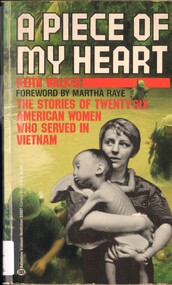
Book, Walker, Keith, A Piece of My Heart: The Stories of Twenty-six American Women who served in Vietnam. (Copy 2)
... National Vietnam Veterans Museum (NVVM) 25 Veterans Drive Newhaven phillip-island-and-the-bass-coast 1961-1975 - Women - Interviews Vietnamese Conflict 1961-1975 - Personal narratives - American Vietnam Entertainers American Women This oral history recounts the experiences of a minority tucked away within another minority - American women who went to Vietnam in the military or as volunteers or entertainers. ...This oral history recounts the experiences of a minority tucked away within another minority - American women who went to Vietnam in the military or as volunteers or entertainers.This oral history recounts the experiences of a minority tucked away within another minority - American women who went to Vietnam in the military or as volunteers or entertainers. 1961-1975 - women - interviews, vietnamese conflict, 1961-1975 - personal narratives - american, vietnam entertainers, american women -
Unions Ballarat
Understanding multiculturalism and Australian identity, Theophanous, Andrew, 1995
... The author, Andrew Theophanous, was an ALP member of parliament and served as Parliamentary Secretary to Prime Minister, Paul Keating. btlc ballarat trades and labour council ballarat trades hall speeches - andrew theophanous papers - andrew theophanous foreign policy foreign relations education media social equity race relations multiculturalism citizenship national identity minorities - australia australian labor party alp Front cover: descriptors to the illustrations; author's name and title. ...A collection of speeches and papers about multiculturalism in Australia by Andrew Theophanous. Includes some analysis of foreign policy, education, media, and equity policy.Pertinent to national identity in Australia. The author, Andrew Theophanous, was an ALP member of parliament and served as Parliamentary Secretary to Prime Minister, Paul Keating.Paper; book. Front cover: yellow, black and white; map of Australia with black illustrations; black text.Front cover: descriptors to the illustrations; author's name and title.btlc, ballarat trades and labour council, ballarat trades hall, speeches - andrew theophanous, papers - andrew theophanous, foreign policy, foreign relations, education, media, social equity, race relations, multiculturalism, citizenship, national identity, minorities - australia, australian labor party, alp -
Koorie Heritage Trust
Book, Ball, Desmond, Aborigines in the defence of Australia, 1991
... . | Australia -- Armed Forces -- Minorities -- History. This book is designed to provide all the information required for informed consideration of the potential role of Aborigines in the defence of Australia, for clarification and resolution of the disparate and complex issues involved and for the design of policy initiatives to realise the potential of Aborigines in Australia's defence planning and operations. vii-xxii; 240 P.; figs.; maps; notes; bib.; index; tables; 23 cm. ...This book is designed to provide all the information required for informed consideration of the potential role of Aborigines in the defence of Australia, for clarification and resolution of the disparate and complex issues involved and for the design of policy initiatives to realise the potential of Aborigines in Australia's defence planning and operations.vii-xxii; 240 P.; figs.; maps; notes; bib.; index; tables; 23 cm.This book is designed to provide all the information required for informed consideration of the potential role of Aborigines in the defence of Australia, for clarification and resolution of the disparate and complex issues involved and for the design of policy initiatives to realise the potential of Aborigines in Australia's defence planning and operations.world war, 1939-1945 -- participation, aboriginal australian. | world war, 1939-1945 -- participation, torres strait islander. | aboriginal australian soldiers. | australia -- armed forces -- minorities -- history. -
 Whitehorse Historical Society Inc.
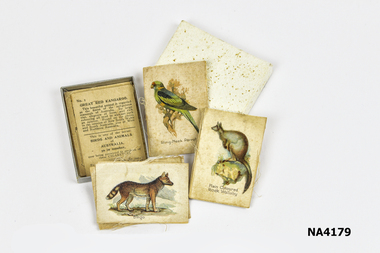
Memorabilia - Box - Cigarette silks, 1911 - 1917
... Australia did have a few fine printers but they were in the minority. Black and white postcards printed in Australia in the early 1900s were often of good quality e.g. postcards printed by 'The Bulletin', illustrating the works of 'The Bulletins' top artists. ...These type of cigarette silks were included in WD & HO Wills cigarette packets to induce women in particular to take up smoking.|The Word 'Cartophilic?|It is believed that this unusual word was coined in the 1920s by Col. Bagnall, an Englishman, who was the father of the hobby of cigarette card and trade card collecting. It is thought to be a combination of a Latin word, 'carto' meaning 'card and the Greek word 'philic', meaning 'love'.- lover of cards. The term originally related to the collection of the two types mentioned, however, our Society has included postcards in the range of items collected by our members.|The Cigarette Card|The cigarette card began its evolution in the United States of America, in the early 1880s as a plain piece of cardboard used by tobacconists to protect the cigarettes which were sold in that era, not in packets, but loosely. A purchaser would buy his cigarettes then wrap them in paper around the small piece of cardboard, which acted as a stiffener. In fact, for many decades, cigarette cards were known as 'stiffeners' in the USA.|The card depicting 'The Marquis of Lome' is reputed to be the first known cigarette card issued. This is thought to have been in 1879. It did not take long for an enterprising entrepreneur to recognise the advertising potential of the cigarette card, and, very soon, the cards began displaying popular images, often in sets. This had the effect of youngsters, wishing to complete their sets, harassing their fathers to buy a specific brand of cigarettes. The kids who collected cards in the days when they were being issued in the cigarette packets, would hang around outside the local tobacconist's shop, pestering the men who had just bought a packet of cigarette, with the cry: 'can I have the cig can mister?'|It is a proven fact that, here in Australia during the 1930s, at least one set had one card deliberately withheld and issued very sparingly. This card is No. 86 (Mrs Jack Crawford) in the Carreras 'Turf Personality Series'. Thus, in a set of reasonably easy cards to get, this one card is a constant source of frustration for the collector, and as such, commands a premium when it comes to price. It is not hard to imagine the young collector nagging his to Dad to keep buying 'Turf' cigarettes to enable him to finish the set.|From small beginnings the cigarette card soon gave rise to a booming industry in itself. Artists and writers were|employed to produce the cards, which were miniature works of art and served as little encyclopaedia's for the children of the day. By the 1930s cards were being issued in the countless millions. It has been stated, in one book on the history of cards; that 450 million sets of a series produced and issued by the prolific issuer of cards in the United Kingdom, WD & HO Wills. As each set contained 50 cards you would need a calculator with a very long result window to see the answer to how many cards of that series were in circulation.|Australia's involvement would appear to have its beginnings with the English and American firms who shipped their tobacco products here and the cards of American Tobacco Company (ATC) are found in great numbers in early Australian collections; many featuring Australian subjects, e.g. 'Australian Parliament a 1901 issue. Earlier U.S. sets depicting Australians included Goodwin & Co's, so called. 'Australian Series' with cricketers and Australian Rules footballers who were on the sporting scene during the 1880s. The caption of one of theses cards reads:|'W.Hannysee. Captain Port Melbourne Football Club' which enables us to pinpoint the year of issue to either 1889 or 1890.|On the Australian scene the first local manufacturer who issued cards seems to have been The National Cigarette Company of Australia Proprietary Limited, whose 'Tally Ho' packets contained cards from a series of thirteen featuring the touring 'English Cricket Team 1897-8' Of the few Australian manufacturers who issued cards, only two companies issued more the two sets.|Undoubtedly the cards issued by the Melbourne firm Sniders & Abrahams (later Sniders & Abrahams Pty Ltd) are the 'jewels in the crown' of Australian card issues. They issued some thirty-three series, with numerous sub-series and allied issues such as metal badges, metal football shields, celluloid flags etc., which ensured that the hobbyist had a vast range from which to collect. Sporting themes – football, cricket, horse racing – dominate, indicating the Australians' love of sport and the outdoors was as strong in those earlier times as it is today. Military, animals and birds themes were also to the fore, with a touch of culture being provided by 'Shakespeare', 'Dickens', actresses and even classical 'Statuary'. Humour was not forgotten with 'Cartoons and Caricatures', 'Naval and Cricket (double meaning) Terms' and the 'Jokes' series. Art and history were covered by the artist, S.T. Gill's 'Views of Victoria in 1857' while the stereoscopic 'Views of the World' expanded the collectors' knowledge of the world as a whole.|The Sniders & Abrahams series began in 1904 and by 1919 the company was in decline and was eventually taken over by G.G. Goode & Co. Ltd. This company produced one set only, the highly collectable 'Prominent Cricketer Series' issued in 1924. During the early to mid-1920s, J.J. Schuh Tobacco Pty Ltd issued eight series, again containing the popular subjects of sport and war. At least two provincial tobacconists, Lentens of Bendigo and Baillies of Warrnambool, issued private football series. The last series of cards issued by a truly Australian firm was Dudgeon & Arnell's '1934 Australian Cricket Team'.|The Australian market was not neglected by the English companies with WD & HO Wills, Godfrey Phillips and Ogdens all making their contributions. By far the most active issuer was the long-established company Wills, whose 'Cricketers' of 1901 heralded the flood of Australian series, which continued into the mid-thirties.|The onset of the 1939-45 World War sounded the death knell of the cigarette card and very few post-war issues were made, certainly not here in Australia.|The Trade Card|The Trade Card is a non-tobacco item used by manufacturers to promote and advertise their products, in the same way that cigarette cards were. It is uncertain exactly when they were first produced, but in the USA, non-collectable cards were issued by firms in the early 1800s. These were more akin to a latter day 'business card'. It was not until the 1850s, when coloured and pictorial cards were issued to advertise and promote products that the Trade Card|became a collectable item. Many beautiful lithographic cards were produced in this early era and they are very mu sought after by collectors. By the 1870s the issues of Trade Cards became more prolific and it is from this era that more cards are seen.|Again, it is difficult to pinpoint the exact date of the first Australian Trade Card and it may be that the highly collectable and extremely rare 'American Candy Co's' - 'Pure Caramels' Australian Rules football card, issued i 1891, is the earliest series. This confectionery firm was located in Fitzroy, a Melbourne suburb. To date only two subjects have been seen.|Another early set was 'Flags', issued by F.H.Fauldings & Co. It featured testimonials of seven English cricketers who toured Australia with the 1894/5 Test team. Fauldings was an Adelaide based firm which manufactured medicinal toiletries, soaps and oils, using the distinctly Australian eucalyptus oil. During the 20th century a multitude of Australian businesses issued trade cards, with confectionery manufacturers such as Hoadleys, Allens, Sweetacres and Australian Licorice producing the majority of them. Again sporting themes dominated with the ever popular Aussie Rules football cards being the most numerous. Cricket issues ran a close second.|Apart from sporting cards, almost every subject imaginable was covered by the Trade Card, making it the most diverse and interesting branch of cartophilly. In contrast to the Cigarette Card, which had its demise prior to the Second World War, the Trade Card is still alive and well.|We all are aware of the long running 'Birds of Australasia' series put out by Tuck-fields Tea and 1 doubt if there is a kitchen drawer in Australia that has not got one or two of these informative and attractive cards floating about in it. These cards were first produced in the early 1960s and are still being inserted in that company's packets of tea. Such is also the case with Sanitarium Health Foods, manufacturers of the well known Weetbix, who began issuing cards, with a wide range of subjects, in the early 1940s and continue to do so.|The 1940s and 1950s saw the two breakfast food giants, Kornies and Weeties dominating the card scene. Kornies footballers were in production fora decade from 1948 to 1959. Four years later in 1963, we saw the start of four decades of Scanlens bubble-gum card issues, both football and cricket. In the mid 1990s, with the end of the Scanlens/Stimorol cards, the Trading Card came on the scene. These cards do not fit under the umbrella of the Trade Card, having been produced and marketed purely as a 'collectable' with no connection whatsoever to any product, which of course is necessary for an item to be classified as a Trade Card.|The earliest British postcard was issued in 1870 and was designed to send short messages; the stamp was printed on the card, therefore it did not require an envelope. It was considered by many to be lowering the postal standards because the texts were no longer private. However the cards were a great success as on the first day of issue in 1870, half a million passed through the London postal centre.|The first illustrated postcards are said to be those introduced by a French stationer in 1870. He realized that French troops fighting in the Franco-Prussian War needed to be able to send short messages to their families and designed a 'postcard' to suit the purpose. As many of the soldiers were illiterate they decorated their cards with sketches of their many activities at the front rather than writing; thus creating a picture postcard. Private enterprise soon saw the great financial possibilities of this new easy and attractive way of communication by post; also sending a postcard cost less than postage for letters. It was correctly assumed that postcards were likely to overtake letter writing in many instances.|Between 1875 and 1882 every state in Australia introduced official postcards, N.S.W. first and Tasmania last. Each state produced a simple type of postcard with a pre printed stamp allied to that state. The stamp side stated 'The Address Only To Be Written On This Side'; the reverse side sometimes carried a simple illustration or decoration with space fora short message, each state extolling their own state's virtues. In 1901, with the advent of Federation, the new Government became responsible for all postal services in Australia and produced postcards for sale in every state. With several mail deliveries each day in most towns, postcards were used for many purposes. One 1906 postcard, with an illustration of fruit, was sent from Mrs X in the morning to her greengrocer ordering her fruit and vegetables to be delivered that afternoon. Another lady asks her charlady to 'come this afternoon'.|Australian private enterprise also began selling pictorial postcards, most companies using the very experienced German printing works who were the worlds best in the field of lithography and fine detailed colour-printing. Many of these beautiful German cards still exist today, 100 years later. Australia did have a few fine printers but they were in the minority. Black and white postcards printed in Australia in the early 1900s were often of good quality e.g. postcards printed by 'The Bulletin', illustrating the works of 'The Bulletins' top artists.|Between c1903-09 The Melbourne company Osboldstone and Atkins etc. printed coloured reproductions of 46 J.A. Turner bush/rural life paintings, which were generally of good quality and became hugely popular and still sought after today. Like thousands of homes in Europe, Britain and U.S.A., many Australia homes had albums of cherished postcards, which were given pride of place for visitors to see and enjoy.|Postcard collecting remained popular but was changing with the times. About 1912 the Australian photographer George Rose of Melbourne began to produce topographical B/W real photographic postcards covering most of Australia and other photographers began to do likewise. These cards soon found their way into collections as well.|WWI and the horrors of war suddenly changed the world; postcards were still in great demand but the subject matter was far more serious. Thousands of postcards from the trenches in European war zones arrived in Australia to be included in family albums. Propaganda and recruitment messages were produced to encourage enlistment. Australian postcard producers began to create cards decorated with gum leaves, boomerangs, wattle etc., which were designed for sending to Australian troops serving overseas. Very few 'pretty' cards were available, as access to the Gentian printing works was no longer possible and exporting of postcards from Britain was very limited. By the end of WWI people had other more serious problems to contend with and the avid postcard collecting hobby declined, fold greetings took over and topographical photographic postcards became a small but steady income for the producers and newsagents etc. in every town.|Fortunately many of these old postcards still exist and are avidly collected by a new generation or postcard collectors. The Australian Cartophilic Society Inc. is one of four postcard/cigarette card organizations in Australia. They are, N.S.W. Post Card Collectors Society; Queensland Card Collectors' Society Inc. and West Australian Card Collectors|Society, and across the Tasman there is a New Zealand Postcard Society.|References:|Picture Postcards of the Golden Age A Collector's Guide by Toni & Valmai Holt. Picture Postcards in Australia 1898 - 1920 by David CookBox of Cigarette Silks ( 10 ) depicting animal motifs, which were placed in cigarette packets as an incentive for women in particular to smoke.|WD & HO Wills|Produced 1911 - 1917personal effects, smoking accessories, recreations, collections
