
Showing 188 items matching "modern developments"
-
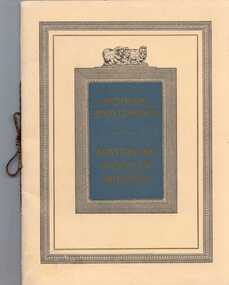 National Wool Museum
Book, Modern Developments in the Australian Wool Industry
... Modern Developments in the Australian Wool Industry..."Modern Developments in the Australian Wool Industry", c.1923. ...Book, front cover: "Modern Developments in the Australia Woollen Industry" c.1923; Yarra Falls Spinning Co. ..."Modern Developments in the Australian Wool Industry", c.1923. ..."Modern Developments in the Australian Wool Industry", c.1923. Examines the operations of the Yarra Falls Spinning Co. Pty Ltd and the Australian Knitting Mills Limited (makers of Golden Fleece and Kookaburra knitted underwear). Includes photos of processes and of the buildings.Book, front cover: "Modern Developments in the Australia Woollen Industry" c.1923; Yarra Falls Spinning Co. Pty Ltd and Australian Knitting Mills Limited.weaving textile industry - history textile production machine knitting textile mills, yarra falls spinning co. pty ltd australian knitting mills limited, yarn - woollen, cloth - worsted, yarn - worsted, wool tops, yarn - cashmere, logo merino: sheep in australian art and design - exhibition (29/07/2000 - 04/02/2001), weaving, textile industry - history, textile production, machine knitting, textile mills -
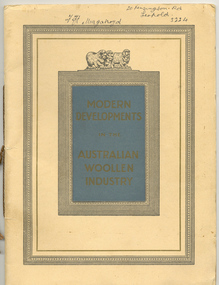 National Wool Museum
Book, Modern Developments in the Australian Wool Industry
... Modern Developments in the Australian Wool Industry..."Modern Developments in the Australian Wool Industry", c.1923. ..."Modern Developments in the Australian Wool Industry", c.1923. ..."Modern Developments in the Australian Wool Industry", c.1923. Examines the operations of the Yarra Falls Spinning Co. Pty Ltd and the Australian Knitting Mills Limited (makers of Golden Fleece and Kookaburra knitted underwear). Includes photos of processes and of the buildings.F H Murgatroyd/20 Kensington Rd/ Leopold 3224weaving textile industry - history textile production machine knitting textile mills, yarra falls spinning co. pty ltd australian knitting mills limited, yarn - woollen, cloth - worsted, yarn - worsted, wool tops, yarn - cashmere, weaving, textile industry - history, textile production, machine knitting, textile mills -
 Moorabbin Air Museum
Book - Flight handbooks, Flight Handbook
... ...Modern developments...Flight handbooks First principles Aerodynamics Aircraft structures Gliders & sailplanes Airscrews Aircraft power units Types of aircraft engines Supercharging Stratosphere flight Modern developments Aircraft instruments A manual of aeronautical theory & practice, circa 1944 Flight Handbook Book Flight handbooks ...A manual of aeronautical theory & practice, circa 1944non-fictionA manual of aeronautical theory & practice, circa 1944first principles, aerodynamics, aircraft structures, gliders & sailplanes, airscrews, aircraft power units, types of aircraft engines, supercharging, stratosphere flight, modern developments, aircraft instruments -
Lakes Entrance Historical Society
Book, Cole Keith, The Aboriginals of Victoria, 1982
... Brief history of the Aboriginals of Victoria from their supposed origins to effects of European settlement and modern developments. Illustrated...Aboriginals Brief history of the Aboriginals of Victoria from their supposed origins to effects of European settlement and modern developments. Illustrated The Aboriginals of Victoria Book Cole Keith ...Brief history of the Aboriginals of Victoria from their supposed origins to effects of European settlement and modern developments. Illustratedaboriginals -
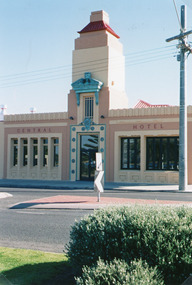 Lakes Entrance Historical Society
Photograph - Central Hotel Lakes Entrance 2005, Holding M
... Colour photograph of the Central Hotel, showing completed renovation. 1930's tower and frontage updated and skillfully blended into modern development. Lakes Entrance Victoria...Date made August 2005 Hotels Architecture Colour photograph of the Central Hotel, showing completed renovation. 1930's tower and frontage updated and skillfully blended into modern development. Lakes Entrance Victoria Photograph Central Hotel Lakes Entrance 2005 Holding M ...Date made August 2005Colour photograph of the Central Hotel, showing completed renovation. 1930's tower and frontage updated and skillfully blended into modern development. Lakes Entrance Victoriahotels, architecture -
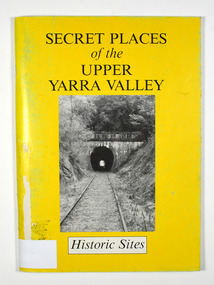 Marysville & District Historical Society
Book, Secret Places of the Upper Yarra Valley-Historic Sites, 1994
... ./ These are sites which, despite modern/ development and urbanisation of our valley, are/ still able to give us an insight to an eventful past. ..../ These are sites which, despite modern/ development and urbanisation of our valley, are/ still able to give us an insight to an eventful past. ...A book describing historic sites in the Upper Yarra ValleyPaperback. Front cover has a black and white photograph of a railway tunnel at Healesville.A collection of places within the Upper Yarra/ Valley significant to the understanding of our/ heritage./ Aborigines, white explorers, pastoralists, gold/ miners and timber cutters have all left their mark./ These are sites which, despite modern/ development and urbanisation of our valley, are/ still able to give us an insight to an eventful past. Stamp of Marysville & District / Historical Society Inc / P.O. Box 22 / Marysville 3779upper yarra valley, history, historic sites -
 Bendigo Historical Society Inc.
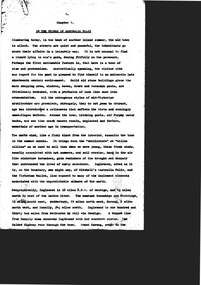
Document - MANUSCRIPT: THE ''HISTORY OF OLD INGLEWOOD'' (NO ACTUAL TITLE)
... Comprises:Introduction; Aboriginal life and early history of interaction with settlers; Major Mitchell exploration in area (''Yarrayne'' as name given for the Loddon; Mt Korong - aboriginal ''Barrabungale''); Pioneers on the Loddon - land tenure (Order of Council 1847), ref to Simson (Donald Campbell; Hector Norman); Charlotte Plains (run); John Catto (of Loddon) and John Catto (of Berlin); William Allen; Alexander Moffat Allen; Mr Sellars; 1852 gold rush to Mt Korong (surface); 1859 discovery of gold at Inglewood ( A J Thompson, T Thompson, T Harvey); detail of gold mining in Inglewood; Borough of Inglewood (1863); growth of the town - hotels, banks, newspapers; 1863 fire in township; fire brigade at Inglewood; selection of land; the ''Land Convention''; the ''Duffy Act''; land selection; 'modern' developments in Inglewood(rail, gas); Jack Donaldson - runner 100 yds sprint title; armed services involvement of Inglewood (WW1 & WW2); government departments....Comprises:Introduction; Aboriginal life and early history of interaction with settlers; Major Mitchell exploration in area (''Yarrayne'' as name given for the Loddon; Mt Korong - aboriginal ''Barrabungale''); Pioneers on the Loddon - land tenure (Order of Council 1847), ref to Simson (Donald Campbell; Hector Norman); Charlotte Plains (run); John Catto (of Loddon) and John Catto (of Berlin); William Allen; Alexander Moffat Allen; Mr Sellars; 1852 gold rush to Mt Korong (surface); 1859 discovery of gold at Inglewood ( A J Thompson, T Thompson, T Harvey); detail of gold mining in Inglewood; Borough of Inglewood (1863); growth of the town - hotels, banks, newspapers; 1863 fire in township; fire brigade at Inglewood; selection of land; the ''Land Convention''; the ''Duffy Act''; land selection; 'modern' developments in Inglewood(rail, gas); Jack Donaldson - runner 100 yds sprint title; armed services involvement of Inglewood (WW1 & WW2); government departments. ...Thirty paged manuscript re the ''History of old Inglewood'' (No actual title or stated author. The 'Preface' (last page) states that in 1961 the town would celebrate its centenary and, also, that it lost its official identity (amalgamation with the Shire of Korong). Comprises:Introduction; Aboriginal life and early history of interaction with settlers; Major Mitchell exploration in area (''Yarrayne'' as name given for the Loddon; Mt Korong - aboriginal ''Barrabungale''); Pioneers on the Loddon - land tenure (Order of Council 1847), ref to Simson (Donald Campbell; Hector Norman); Charlotte Plains (run); John Catto (of Loddon) and John Catto (of Berlin); William Allen; Alexander Moffat Allen; Mr Sellars; 1852 gold rush to Mt Korong (surface); 1859 discovery of gold at Inglewood ( A J Thompson, T Thompson, T Harvey); detail of gold mining in Inglewood; Borough of Inglewood (1863); growth of the town - hotels, banks, newspapers; 1863 fire in township; fire brigade at Inglewood; selection of land; the ''Land Convention''; the ''Duffy Act''; land selection; 'modern' developments in Inglewood(rail, gas); Jack Donaldson - runner 100 yds sprint title; armed services involvement of Inglewood (WW1 & WW2); government departments.inglewood, history, early history, lodden, mt korong, donald campbell, hector norman, inglewood fire brigade, duffy act, jack donaldson, alexander moffat, john catto, major mitchell, ww1, ww2. aboriginal life, order of council 1947. -
 Charlton Golden Grains Museum Inc
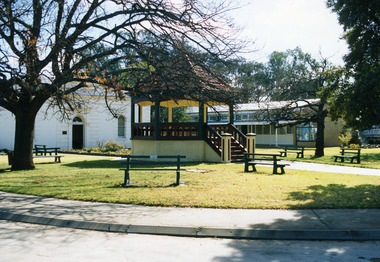
Photograph, c.1990
... The event was a significant historical bridge for the town; it was attended by nine original students who had attended Charlton's first **"bark hut" school** in 1875, allowing them to see the modern developments Green had helped achieve. ...The event was a significant historical bridge for the town; it was attended by nine original students who had attended Charlton's first **"bark hut" school** in 1875, allowing them to see the modern developments Green had helped achieve. Charlton Elliott Gardens Rotunda Parks Mechanics Institure Golden Grains Museum Green Ben Standard colour photograph Photograph Photograph Green, Benjamin (Ben) ...### Benjamin Green and the Charlton Band Rotunda The **Ben Green Memorial Rotunda**, located in Elliott Gardens, stands as a tribute to one of Charlton’s most active citizens. **Benjamin Green** was a solicitor who practiced law in the town from 1895 until his death in 1923. During his 28 years in the community, he held leadership roles in many of the organizations that shaped the town’s infrastructure and social life. #### Professional and Civic Work Green was a key figure in establishing essential services for Charlton. He was one of the originators of the **Electric Light and Power Company** and served as the solicitor for the **Water Trust**. His commitment to education was shown through his work as a "prime mover" in the creation of the **Charlton Higher Elementary School**. His community involvement also included: * **Sport:** He introduced golf to Northern Victoria and founded the **Charlton Golf Club** in 1900, serving as its President until his death. He also founded the **Plumpton and Open Coursing Club**. * **Veterans:** He took a strong interest in the welfare of returned soldiers and donated **£100** toward the town's war memorial. * **Culture:** He was an active member of the **Mechanics Institute**. #### The Memorial Rotunda When Green passed away in 1923, a public fund was started to build a band rotunda for outdoor music recitals in his memory. The structure was designed and built by **Folliott Gilmore**, a local builder and timber merchant. It was officially dedicated by his friend **Frank Tate**, the Victorian Director of Education. #### Historical Celebrations The rotunda became a central point for major community events. During a "Back-to-School" celebration held during Show Week, the town was decorated with **12,000 handmade paper flowers** created by local women’s organisations. These flowers covered the rotunda, the bridge, and the town entrances. The event was a significant historical bridge for the town; it was attended by nine original students who had attended Charlton's first **"bark hut" school** in 1875, allowing them to see the modern developments Green had helped achieve. Standard colour photographcharlton, elliott gardens, rotunda, parks, mechanics institure, golden grains museum, green ben -
 Ballarat Tramway Museum
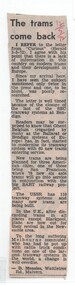
Newspaper, Herald Sun, "The trams come back', 12/05/1972 12:00:00 AM
... Newspaper clipping from the Melbourne Herald, 12/5/1972, letter to the editor from David Menzies of Wattletree Road, Malvern about the lack of information in this country about the development of modern trams in Europe. Notes closure of Bendigo, modernisation of Ghent (Belgium), some US systems, 110 tramway system in USSR, and the long suffering commuter in Melbourne who has to put with cattle truck conditions on one of the largest tramway systems in the world....Trams tramways David Menzies Tramways Bendigo Melbourne In red ink top right hand corner '12/5/72' Newspaper clipping from the Melbourne Herald, 12/5/1972, letter to the editor from David Menzies of Wattletree Road, Malvern about the lack of information in this country about the development of modern trams in Europe. Notes closure of Bendigo, modernisation of Ghent (Belgium), some US systems, 110 tramway system in USSR, and the long suffering commuter in Melbourne who has to put with cattle truck conditions on one of the largest tramway systems in the world. ...Newspaper clipping from the Melbourne Herald, 12/5/1972, letter to the editor from David Menzies of Wattletree Road, Malvern about the lack of information in this country about the development of modern trams in Europe. Notes closure of Bendigo, modernisation of Ghent (Belgium), some US systems, 110 tramway system in USSR, and the long suffering commuter in Melbourne who has to put with cattle truck conditions on one of the largest tramway systems in the world.In red ink top right hand corner '12/5/72'trams, tramways, david menzies, tramways, bendigo, melbourne -
 Charlton Golden Grains Museum Inc
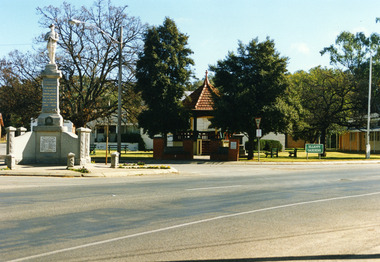
Photograph - Rotunda, c.1990
... The event was a significant historical bridge for the town; it was attended by nine original students who had attended Charlton's first **"bark hut" school** in 1875, allowing them to see the modern developments Green had helped achieve. ...The event was a significant historical bridge for the town; it was attended by nine original students who had attended Charlton's first **"bark hut" school** in 1875, allowing them to see the modern developments Green had helped achieve. War Memorial Elliott Gardens Charlton Halls Parks Reserves Colour photograph of the Granite War monument to the left, Brick rotunda in the center within Elliot Garden, Sign reads Elliot Gardens. ...Granite War monument to the left, Brick rotunda in the center within Elliot Garden, Sign reads Elliot Gardens. The War monument unveiled by Premier Sir William McPherson KCMG on June 23rd 1923. Elliot Gardens named to honor General Harold 'Pompey" Elliot, named in 1940. ### Benjamin Green and the Charlton Band Rotunda The **Ben Green Memorial Rotunda**, located in Elliott Gardens, stands as a tribute to one of Charlton’s most active citizens. **Benjamin Green** was a solicitor who practiced law in the town from 1895 until his death in 1923. During his 28 years in the community, he held leadership roles in many of the organizations that shaped the town’s infrastructure and social life. #### Professional and Civic Work Green was a key figure in establishing essential services for Charlton. He was one of the originators of the **Electric Light and Power Company** and served as the solicitor for the **Water Trust**. His commitment to education was shown through his work as a "prime mover" in the creation of the **Charlton Higher Elementary School**. His community involvement also included: * **Sport:** He introduced golf to Northern Victoria and founded the **Charlton Golf Club** in 1900, serving as its President until his death. He also founded the **Plumpton and Open Coursing Club**. * **Veterans:** He took a strong interest in the welfare of returned soldiers and donated **£100** toward the town's war memorial. * **Culture:** He was an active member of the **Mechanics Institute**. #### The Memorial Rotunda When Green passed away in 1923, a public fund was started to build a band rotunda for outdoor music recitals in his memory. The structure was designed and built by **Folliott Gilmore**, a local builder and timber merchant. It was officially dedicated by his friend **Frank Tate**, the Victorian Director of Education. #### Historical Celebrations The rotunda became a central point for major community events. During a "Back-to-School" celebration held during Show Week, the town was decorated with **12,000 handmade paper flowers** created by local women’s organisations. These flowers covered the rotunda, the bridge, and the town entrances. The event was a significant historical bridge for the town; it was attended by nine original students who had attended Charlton's first **"bark hut" school** in 1875, allowing them to see the modern developments Green had helped achieve. Colour photograph of the Granite War monument to the left, Brick rotunda in the center within Elliot Garden, Sign reads Elliot Gardens.war memorial, elliott gardens, charlton, halls, parks, reserves -
 Charlton Golden Grains Museum Inc
Photograph, c.1980
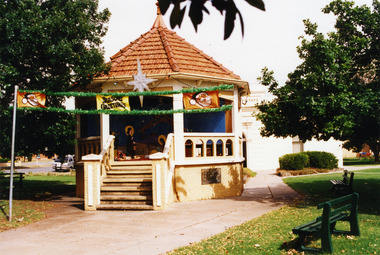
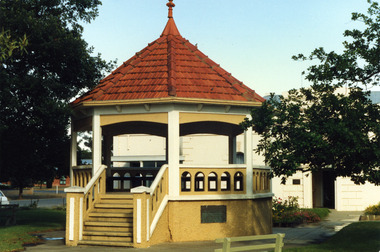
... The event was a significant historical bridge for the town; it was attended by nine original students who had attended Charlton's first **"bark hut" school** in 1875, allowing them to see the modern developments Green had helped achieve. ...The event was a significant historical bridge for the town; it was attended by nine original students who had attended Charlton's first **"bark hut" school** in 1875, allowing them to see the modern developments Green had helped achieve. Charlton Rotunda Elliott Gardens Green B Mechanics Institure Standard colour photo, not mounted. ...Band Rotunda in gardens erected in 1926 in memory of Benjamin Green (Charlton benefactor and solicitor). Red tiled roof and brick base. Steps lead up to the base. ### Benjamin Green and the Charlton Band Rotunda The **Ben Green Memorial Rotunda**, located in Elliott Gardens, stands as a tribute to one of Charlton’s most active citizens. **Benjamin Green** was a solicitor who practiced law in the town from 1895 until his death in 1923. During his 28 years in the community, he held leadership roles in many of the organizations that shaped the town’s infrastructure and social life. #### Professional and Civic Work Green was a key figure in establishing essential services for Charlton. He was one of the originators of the **Electric Light and Power Company** and served as the solicitor for the **Water Trust**. His commitment to education was shown through his work as a "prime mover" in the creation of the **Charlton Higher Elementary School**. His community involvement also included: * **Sport:** He introduced golf to Northern Victoria and founded the **Charlton Golf Club** in 1900, serving as its President until his death. He also founded the **Plumpton and Open Coursing Club**. * **Veterans:** He took a strong interest in the welfare of returned soldiers and donated **£100** toward the town's war memorial. * **Culture:** He was an active member of the **Mechanics Institute**. #### The Memorial Rotunda When Green passed away in 1923, a public fund was started to build a band rotunda for outdoor music recitals in his memory. The structure was designed and built by **Folliott Gilmore**, a local builder and timber merchant. It was officially dedicated by his friend **Frank Tate**, the Victorian Director of Education. #### Historical Celebrations The rotunda became a central point for major community events. During a "Back-to-School" celebration held during Show Week, the town was decorated with **12,000 handmade paper flowers** created by local women’s organisations. These flowers covered the rotunda, the bridge, and the town entrances. The event was a significant historical bridge for the town; it was attended by nine original students who had attended Charlton's first **"bark hut" school** in 1875, allowing them to see the modern developments Green had helped achieve. Standard colour photo, not mounted.charlton, rotunda, elliott gardens, green b, mechanics institure -
 Charlton Golden Grains Museum Inc
Photograph, c.1987
... The event was a significant historical bridge for the town; it was attended by nine original students who had attended Charlton's first **"bark hut" school** in 1875, allowing them to see the modern developments Green had helped achieve. ...The event was a significant historical bridge for the town; it was attended by nine original students who had attended Charlton's first **"bark hut" school** in 1875, allowing them to see the modern developments Green had helped achieve. Charlton Elliott Gardens Rotunda Parks Green Ben Standard colour photograph. ...Built in 1926 the Ben Green memorial Rotunda was named after a local citizen of Charlton. Ben Green was a solicitor and member who supported many school prizes for literature. Ben was also president of the Charlton Club and of the Charlton Coursing Club. Ben was a keen tennis player, winning Victorian Championships in 1892, 1893, and 1984. The garden in which the Rotunda stands also contains the Boer War, World war I and II memorial and a bust of Harold "Pompey" Elliott. ### Benjamin Green and the Charlton Band Rotunda The **Ben Green Memorial Rotunda**, located in Elliott Gardens, stands as a tribute to one of Charlton’s most active citizens. **Benjamin Green** was a solicitor who practiced law in the town from 1895 until his death in 1923. During his 28 years in the community, he held leadership roles in many of the organizations that shaped the town’s infrastructure and social life. #### Professional and Civic Work Green was a key figure in establishing essential services for Charlton. He was one of the originators of the **Electric Light and Power Company** and served as the solicitor for the **Water Trust**. His commitment to education was shown through his work as a "prime mover" in the creation of the **Charlton Higher Elementary School**. His community involvement also included: * **Sport:** He introduced golf to Northern Victoria and founded the **Charlton Golf Club** in 1900, serving as its President until his death. He also founded the **Plumpton and Open Coursing Club**. * **Veterans:** He took a strong interest in the welfare of returned soldiers and donated **£100** toward the town's war memorial. * **Culture:** He was an active member of the **Mechanics Institute**. #### The Memorial Rotunda When Green passed away in 1923, a public fund was started to build a band rotunda for outdoor music recitals in his memory. The structure was designed and built by **Folliott Gilmore**, a local builder and timber merchant. It was officially dedicated by his friend **Frank Tate**, the Victorian Director of Education. #### Historical Celebrations The rotunda became a central point for major community events. During a "Back-to-School" celebration held during Show Week, the town was decorated with **12,000 handmade paper flowers** created by local women’s organisations. These flowers covered the rotunda, the bridge, and the town entrances. The event was a significant historical bridge for the town; it was attended by nine original students who had attended Charlton's first **"bark hut" school** in 1875, allowing them to see the modern developments Green had helped achieve. Standard colour photograph.charlton, elliott gardens, rotunda, parks, green ben -
 Charlton Golden Grains Museum Inc
Photograph, c.1987
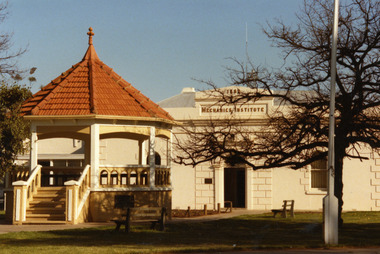
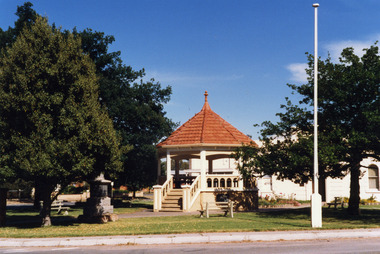
... The event was a significant historical bridge for the town; it was attended by nine original students who had attended Charlton's first **"bark hut" school** in 1875, allowing them to see the modern developments Green had helped achieve. ...The event was a significant historical bridge for the town; it was attended by nine original students who had attended Charlton's first **"bark hut" school** in 1875, allowing them to see the modern developments Green had helped achieve. Charlton Elliott Gardens Rotunda Parks Mechanics Institure Golden Grains Museum Ben Green Standard colour photograph Photograph Photograph ...Built in 1926 the Ben Green memorial Rotunda was named after a local citizen of Charlton. Ben Green was a solicitor and member who supported many school prizes for literature. Ben was also president of the Charlton Club and of the Charlton Coursing Club. Ben was a keen tennis player, winning Victorian Championships in 1892, 1893, and 1984. The garden in which the Rotunda stands also contains the Boer War, World war I and II memorial and a bust of Harold "Pompey" Elliott. ### Benjamin Green and the Charlton Band Rotunda The **Ben Green Memorial Rotunda**, located in Elliott Gardens, stands as a tribute to one of Charlton’s most active citizens. **Benjamin Green** was a solicitor who practiced law in the town from 1895 until his death in 1923. During his 28 years in the community, he held leadership roles in many of the organizations that shaped the town’s infrastructure and social life. #### Professional and Civic Work Green was a key figure in establishing essential services for Charlton. He was one of the originators of the **Electric Light and Power Company** and served as the solicitor for the **Water Trust**. His commitment to education was shown through his work as a "prime mover" in the creation of the **Charlton Higher Elementary School**. His community involvement also included: * **Sport:** He introduced golf to Northern Victoria and founded the **Charlton Golf Club** in 1900, serving as its President until his death. He also founded the **Plumpton and Open Coursing Club**. * **Veterans:** He took a strong interest in the welfare of returned soldiers and donated **£100** toward the town's war memorial. * **Culture:** He was an active member of the **Mechanics Institute**. #### The Memorial Rotunda When Green passed away in 1923, a public fund was started to build a band rotunda for outdoor music recitals in his memory. The structure was designed and built by **Folliott Gilmore**, a local builder and timber merchant. It was officially dedicated by his friend **Frank Tate**, the Victorian Director of Education. #### Historical Celebrations The rotunda became a central point for major community events. During a "Back-to-School" celebration held during Show Week, the town was decorated with **12,000 handmade paper flowers** created by local women’s organisations. These flowers covered the rotunda, the bridge, and the town entrances. The event was a significant historical bridge for the town; it was attended by nine original students who had attended Charlton's first **"bark hut" school** in 1875, allowing them to see the modern developments Green had helped achieve. Standard colour photographcharlton, elliott gardens, rotunda, parks, mechanics institure, golden grains museum, ben green -
 Charlton Golden Grains Museum Inc
Photograph, c.1990
... The event was a significant historical bridge for the town; it was attended by nine original students who had attended Charlton's first **"bark hut" school** in 1875, allowing them to see the modern developments Green had helped achieve. ...The event was a significant historical bridge for the town; it was attended by nine original students who had attended Charlton's first **"bark hut" school** in 1875, allowing them to see the modern developments Green had helped achieve. Charlton Elliott Gardens Rotunda Parks Green Ben Standard colour photograph. ...Built in 1926 the Ben Green memorial Rotunda was named after a local citizen of Charlton. Ben Green was a solicitor and member who supported many school prizes for literature. Ben was also president of the Charlton Club and of the Charlton Coursing Club. Ben was a keen tennis player, winning Victorian Championships in 1892, 1893, and 1984. The garden in which the Rotunda stands also contains the Boer War, World war I and II memorial and a bust of Harold "Pompey" Elliott. ### Benjamin Green and the Charlton Band Rotunda The **Ben Green Memorial Rotunda**, located in Elliott Gardens, stands as a tribute to one of Charlton’s most active citizens. **Benjamin Green** was a solicitor who practiced law in the town from 1895 until his death in 1923. During his 28 years in the community, he held leadership roles in many of the organizations that shaped the town’s infrastructure and social life. #### Professional and Civic Work Green was a key figure in establishing essential services for Charlton. He was one of the originators of the **Electric Light and Power Company** and served as the solicitor for the **Water Trust**. His commitment to education was shown through his work as a "prime mover" in the creation of the **Charlton Higher Elementary School**. His community involvement also included: * **Sport:** He introduced golf to Northern Victoria and founded the **Charlton Golf Club** in 1900, serving as its President until his death. He also founded the **Plumpton and Open Coursing Club**. * **Veterans:** He took a strong interest in the welfare of returned soldiers and donated **£100** toward the town's war memorial. * **Culture:** He was an active member of the **Mechanics Institute**. #### The Memorial Rotunda When Green passed away in 1923, a public fund was started to build a band rotunda for outdoor music recitals in his memory. The structure was designed and built by **Folliott Gilmore**, a local builder and timber merchant. It was officially dedicated by his friend **Frank Tate**, the Victorian Director of Education. #### Historical Celebrations The rotunda became a central point for major community events. During a "Back-to-School" celebration held during Show Week, the town was decorated with **12,000 handmade paper flowers** created by local women’s organisations. These flowers covered the rotunda, the bridge, and the town entrances. The event was a significant historical bridge for the town; it was attended by nine original students who had attended Charlton's first **"bark hut" school** in 1875, allowing them to see the modern developments Green had helped achieve. Standard colour photograph.charlton, elliott gardens, rotunda, parks, green ben -
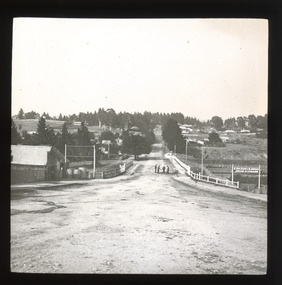 The Beechworth Burke Museum
Photograph - Lantern Slide, c1900
... Lantern slides and magic lantern technologies are seen as foundational precursors to the development of modern photography and film-making techniques...Lantern slides and magic lantern technologies are seen as foundational precursors to the development of modern photography and film-making techniques This glass slide is significant because it provides insight into Beechworth's social amenities and religious infrastructure in the late Nineteenth Century. ...Image taken in c.1900 of Albert Road, Beechworth, showing surrounding landscape. Lantern slides, sometimes called 'magic lantern' slides, are glass plates on which an image has been secured for the purpose of projection. Glass slides were etched or hand-painted for this purpose from the Eighteenth Century but the process became more popular and accessible to the public with the development of photographic-emulsion slides used with a 'Magic Lantern' device in the mid-Nineteenth Century. Photographic lantern slides comprise a double-negative emulsion layer (forming a positive image) between thin glass plates that are bound together. A number of processes existed to form and bind the emulsion layer to the base plate, including the albumen, wet plate collodion, gelatine dry plate and Woodburytype techniques. Lantern slides and magic lantern technologies are seen as foundational precursors to the development of modern photography and film-making techniquesThis glass slide is significant because it provides insight into Beechworth's social amenities and religious infrastructure in the late Nineteenth Century. It is also an example of an early photographic and film-making technology in use in regional Victoria in the time period.Thin translucent sheet of glass with a square image printed on the front and framed in a black backing. It is held together by metals strips to secure the edges of the slide.burke museum, beechworth, lantern slide, slide, glass slide, plate, burke museum collection, photograph, monochrome, 1900s, landscape, streetscape, albert road -
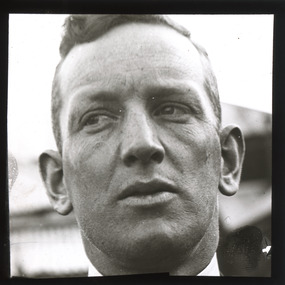 The Beechworth Burke Museum
Photograph - Lantern Slide, c1900
... Lantern slides and magic lantern technologies are seen as foundational precursors to the development of modern photography and film-making techniques....Lantern slides and magic lantern technologies are seen as foundational precursors to the development of modern photography and film-making techniques. ...This image of a man is possible an early version of the modern photographic technique the 'selfie'. Lantern slides, sometimes called 'magic lantern' slides, are glass plates on which an image has been secured for the purpose of projection. Glass slides were etched or hand-painted for this purpose from the Eighteenth Century but the process became more popular and accessible to the public with the development of photographic-emulsion slides used with a 'Magic Lantern' device in the mid-Nineteenth Century. Photographic lantern slides comprise a double-negative emulsion layer (forming a positive image) between thin glass plates that are bound together. A number of processes existed to form and bind the emulsion layer to the base plate, including the albumen, wet plate collodion, gelatine dry plate and Woodburytype techniques. Lantern slides and magic lantern technologies are seen as foundational precursors to the development of modern photography and film-making techniques.This glass slide is significant because it provides insight into Beechworth's social amenities and religious infrastructure in the late Nineteenth Century. It is also an example of an early photographic and film-making technology in use in regional Victoria in the time period.Thin translucent sheet of glass with a square image printed on the front and framed in a black backing. It is held together by metals strips to secure the edges of the slide.burke museum, beechworth, lantern slide, slide, glass slide, plate, burke museum collection, photograph, monochrome -
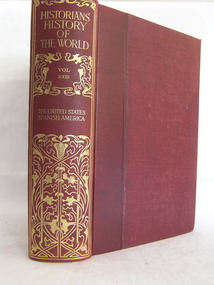 Flagstaff Hill Maritime Museum and Village
Book - Reference Book/History, Henry Smith Williams, The Historians History of the World Vol 23 set 1 - Edited by Henry Smith Williams L.L.D. Published by “The Times” 1908, 1908
... For Scandinavia a comprehensive history of Denmark, Sweden, and Norway, tracing their roles from the Viking Age through their development into modern constitutional states by 1908. ...For Scandinavia a comprehensive history of Denmark, Sweden, and Norway, tracing their roles from the Viking Age through their development into modern constitutional states by 1908. ...The historians' History of the World, Volume 23 serves as a fascinating transition point where the series moves from the political history of nations to the broader history of the West, and the late-stage development of several major world powers. This volume covers and returns to, Germany, Scandinavia, and the Modern Nations. It is a diverse volume that primarily focuses on the History of Germany (Part II), covering the period from the mid-18th century through the early 20th century, and the History of Scandinavia.The Book is part of a 25 volume set with red cloth bindings and gold filigree design to rib.non-fictionThe historians' History of the World, Volume 23 serves as a fascinating transition point where the series moves from the political history of nations to the broader history of the West, and the late-stage development of several major world powers. This volume covers and returns to, Germany, Scandinavia, and the Modern Nations. It is a diverse volume that primarily focuses on the History of Germany (Part II), covering the period from the mid-18th century through the early 20th century, and the History of Scandinavia. flagstaff hill, warrnambool, shipwrecked-coast, flagstaff-hill-maritime-museum, maritime-museum, flagstaff-hill-maritime-village, book, the historians history of the world vol 23 set 1, henry smith williams -
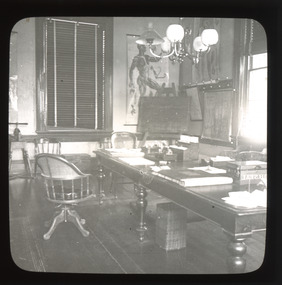 The Beechworth Burke Museum
Photograph - Lantern Slide, c1900
... Lantern slides and magic lantern technologies are seen as foundational precursors to the development of modern photography and film-making techniques...Lantern slides and magic lantern technologies are seen as foundational precursors to the development of modern photography and film-making techniques This glass slide is significant because it provides insight into Beechworth's social amenities and religious infrastructure in the late Nineteenth Century. ...This image was taken c.1900 and shows one of the offices upstairs in the Beechworth Town Hall. Lantern slides, sometimes called 'magic lantern' slides, are glass plates on which an image has been secured for the purpose of projection. Glass slides were etched or hand-painted for this purpose from the Eighteenth Century but the process became more popular and accessible to the public with the development of photographic-emulsion slides used with a 'Magic Lantern' device in the mid-Nineteenth Century. Photographic lantern slides comprise a double-negative emulsion layer (forming a positive image) between thin glass plates that are bound together. A number of processes existed to form and bind the emulsion layer to the base plate, including the albumen, wet plate collodion, gelatine dry plate and Woodburytype techniques. Lantern slides and magic lantern technologies are seen as foundational precursors to the development of modern photography and film-making techniquesThis glass slide is significant because it provides insight into Beechworth's social amenities and religious infrastructure in the late Nineteenth Century. It is also an example of an early photographic and film-making technology in use in regional Victoria in the time period.Thin translucent sheet of glass with a square image printed on the front and framed in a black backing. It is held together by metals strips to secure the edges of the slide.burke museum, beechworth, lantern slide, slide, glass slide, plate, burke museum collection, photograph, monochrome, office, town hall, beechworth town hall, 1900s -
 The Beechworth Burke Museum
Photograph - Lantern Slide, c1900
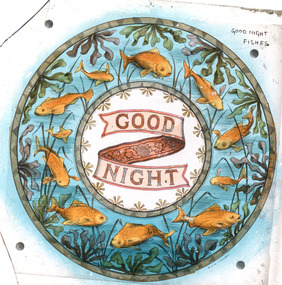
... Lantern slides and magic lantern technologies are seen as foundational precursors to the development of modern photography and film-making techniques...Lantern slides and magic lantern technologies are seen as foundational precursors to the development of modern photography and film-making techniques This glass slide is significant because it provides insight into early photographic and film-making technology in use in regional Victoria during the late 1800s and early 1900s. ...A hand-painted slide from c.1900 depicting a circular image of 11 goldfish swimming around the words 'Good Night'. Lantern slides, sometimes called 'magic lantern' slides, are glass plates on which an image has been secured for the purpose of projection. Glass slides were etched or hand-painted for this purpose from the Eighteenth Century but the process became more popular and accessible to the public with the development of photographic-emulsion slides used with a 'Magic Lantern' device in the mid-Nineteenth Century. Photographic lantern slides comprise a double-negative emulsion layer (forming a positive image) between thin glass plates that are bound together. A number of processes existed to form and bind the emulsion layer to the base plate, including the albumen, wet plate collodion, gelatine dry plate and Woodburytype techniques. Lantern slides and magic lantern technologies are seen as foundational precursors to the development of modern photography and film-making techniquesThis glass slide is significant because it provides insight into early photographic and film-making technology in use in regional Victoria during the late 1800s and early 1900s.Thin translucent sheet of glass with a circular image printed on the front and hand-painted in shades of orange, red, blue, and green.burke museum, beechworth, lantern slide, slide, glass slide, plate, burke museum collection, photograph, monochrome, fish, hand-painted, good night, 1900s -
 The Beechworth Burke Museum
Photograph - Lantern Slide, c1900
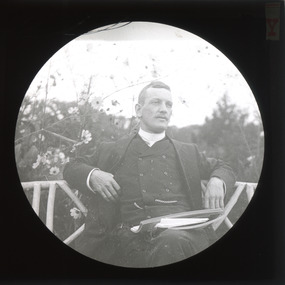
... Lantern slides and magic lantern technologies are seen as foundational precursors to the development of modern photography and film-making techniques...Lantern slides and magic lantern technologies are seen as foundational precursors to the development of modern photography and film-making techniques This glass slide is significant because it provides insight into Beechworth's social amenities and religious infrastructure in the late Nineteenth Century. ...This image showing a man sitting on a bench seat reveals what life was like in the Edwardian era through the clothing and hairstyle worn by the seated man. Lantern slides, sometimes called 'magic lantern' slides, are glass plates on which an image has been secured for the purpose of projection. Glass slides were etched or hand-painted for this purpose from the Eighteenth Century but the process became more popular and accessible to the public with the development of photographic-emulsion slides used with a 'Magic Lantern' device in the mid-Nineteenth Century. Photographic lantern slides comprise a double-negative emulsion layer (forming a positive image) between thin glass plates that are bound together. A number of processes existed to form and bind the emulsion layer to the base plate, including the albumen, wet plate collodion, gelatine dry plate and woodburytype techniques. Lantern slides and magic lantern technologies are seen as foundational precursors to the development of modern photography and film-making techniquesThis glass slide is significant because it provides insight into Beechworth's social amenities and religious infrastructure in the late Nineteenth Century. It is also an example of an early photographic and film-making technology in use in regional Victoria in the time period.Thin translucent sheet of glass with a circular image printed on the front and framed in a black backing. It is held together by metals strips to secure the edges of the slide.burke museum, beechworth, lantern slide, slide, glass slide, plate, burke museum collection, photograph, monochrome, edwardian era, portrait -
 The Beechworth Burke Museum
Photograph - Lantern Slide, c1900
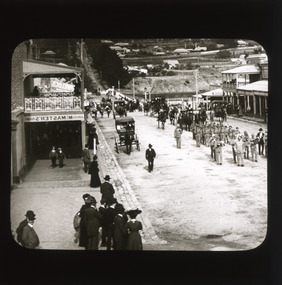
... Lantern slides and magic lantern technologies are seen as foundational precursors to the development of modern photography and film-making techniques...Lantern slides and magic lantern technologies are seen as foundational precursors to the development of modern photography and film-making techniques This glass slide is significant because it provides insight into Beechworth's social amenities and religious infrastructure in the late Nineteenth Century. ...This image taken in c.1900 shows a military parade marching along Camp Street in Beechworth heading towards the center of town, watched my onlookers lining the sidewalks. Lantern slides, sometimes called 'magic lantern' slides, are glass plates on which an image has been secured for the purpose of projection. Glass slides were etched or hand-painted for this purpose from the Eighteenth Century but the process became more popular and accessible to the public with the development of photographic-emulsion slides used with a 'Magic Lantern' device in the mid-Nineteenth Century. Photographic lantern slides comprise a double-negative emulsion layer (forming a positive image) between thin glass plates that are bound together. A number of processes existed to form and bind the emulsion layer to the base plate, including the albumen, wet plate collodion, gelatine dry plate and Woodburytype techniques. Lantern slides and magic lantern technologies are seen as foundational precursors to the development of modern photography and film-making techniquesThis glass slide is significant because it provides insight into Beechworth's social amenities and religious infrastructure in the late Nineteenth Century. It is also an example of an early photographic and film-making technology in use in regional Victoria in the time period.Thin translucent sheet of glass with a square image printed on the front and framed in a black backing. It is held together by metals strips to secure the edges of the slide.burke museum, beechworth, lantern slide, slide, glass slide, plate, burke museum collection, photograph, monochrome, military parade, military, australian military, 1900s, early 20th century -
 The Beechworth Burke Museum
Photograph - Lantern Slide, c1900
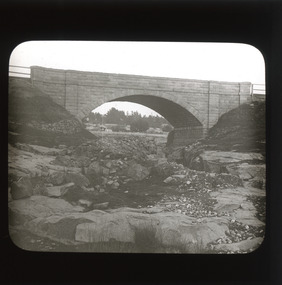
... Lantern slides and magic lantern technologies are seen as foundational precursors to the development of modern photography and film-making techniques...Lantern slides and magic lantern technologies are seen as foundational precursors to the development of modern photography and film-making techniques This glass slide is significant because it provides insight into Beechworth's social amenities and religious infrastructure in the late Nineteenth Century. ...Taken in c.1900 this image shows Newtown Bridge in Beechworth. Newtown Bridge is constructed with granite from the surrounding area and is a great example of the masonry work used in the construction of the town. This bridge has been listed by the National Trust as a significant object to the transportation history of Australia. Lantern slides, sometimes called 'magic lantern' slides, are glass plates on which an image has been secured for the purpose of projection. Glass slides were etched or hand-painted for this purpose from the Eighteenth Century but the process became more popular and accessible to the public with the development of photographic-emulsion slides used with a 'Magic Lantern' device in the mid-Nineteenth Century. Photographic lantern slides comprise a double-negative emulsion layer (forming a positive image) between thin glass plates that are bound together. A number of processes existed to form and bind the emulsion layer to the base plate, including the albumen, wet plate collodion, gelatine dry plate and Woodburytype techniques. Lantern slides and magic lantern technologies are seen as foundational precursors to the development of modern photography and film-making techniquesThis glass slide is significant because it provides insight into Beechworth's social amenities and religious infrastructure in the late Nineteenth Century. It is also an example of an early photographic and film-making technology in use in regional Victoria in the time period.Thin translucent sheet of glass with a square image printed on the front and framed in a black backing. It is held together by metals strips to secure the edges of the slide.burke museum, beechworth, lantern slide, slide, glass slide, plate, burke museum collection, photograph, monochrome, newtown bridge, masonry, transport, bridge, granite -
 The Beechworth Burke Museum
Photograph - Lantern Slide, c1900
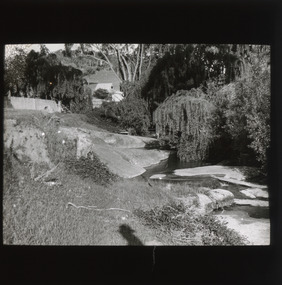
... Lantern slides and magic lantern technologies are seen as foundational precursors to the development of modern photography and film-making techniques....Lantern slides and magic lantern technologies are seen as foundational precursors to the development of modern photography and film-making techniques. ...This image shows a view of a properties bordering a river in the vicinity of Beechworth in approximately 1900. Although the exact location of the photograph is yet to be determined, the water source pictured may feed into the bigger system that flows through Beechworth Gorge. A man wearing a hat, possibly the photographer, is silhouetted in the foreground of the picture. Lantern slides, sometimes called 'magic lantern' slides, are glass plates on which an image has been secured for the purpose of projection. Glass slides were etched or hand-painted for this purpose from the Eighteenth Century but the process became more popular and accessible to the public with the development of photographic-emulsion slides used with a 'Magic Lantern' device in the mid-Nineteenth Century. Photographic lantern slides comprise a double-negative emulsion layer (forming a positive image) between thin glass plates that are bound together. A number of processes existed to form and bind the emulsion layer to the base plate, including the albumen, wet plate collodion, gelatine dry plate and woodburytype techniques. Lantern slides and magic lantern technologies are seen as foundational precursors to the development of modern photography and film-making techniques.This glass slide is significant because it provides insight into Beechworth's built environment and natural landscape in the early Twentieth Century, around the time of Australia's Federation. It is also an example of an early photographic and film-making technology in use in regional Victoria in the time period.Thin translucent sheet of glass with a square image printed on the front and framed in a black backing. It is held together by metals strips to secure the edges of the slide.burke museum, beechworth, lantern slide, slide, glass slide, plate, burke museum collection, photograph, monochrome, photographer, beechworth gorge, river, stream, water source, 1900s -
 The Beechworth Burke Museum
Photograph - Lantern Slide, c1900
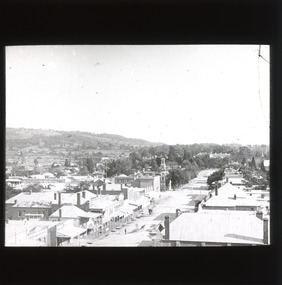
... Lantern slides and magic lantern technologies are seen as foundational precursors to the development of modern photography and film-making techniques....Lantern slides and magic lantern technologies are seen as foundational precursors to the development of modern photography and film-making techniques. ...This image shows a semi-aerial view of commercial and official properties lining Ford Street, Beechworth, in approximately 1900. The tower of Christ Church of St Peter and St Paul can be seen in the middle section of the photograph, on the left-hand side of the street. The Church was constructed in 1858 with the tower added to the structure in 1864. Lantern slides, sometimes called 'magic lantern' slides, are glass plates on which an image has been secured for the purpose of projection. Glass slides were etched or hand-painted for this purpose from the Eighteenth Century but the process became more popular and accessible to the public with the development of photographic-emulsion slides used with a 'Magic Lantern' device in the mid-Nineteenth Century. Photographic lantern slides comprise a double-negative emulsion layer (forming a positive image) between thin glass plates that are bound together. A number of processes existed to form and bind the emulsion layer to the base plate, including the albumen, wet plate collodion, gelatine dry plate and woodburytype techniques. Lantern slides and magic lantern technologies are seen as foundational precursors to the development of modern photography and film-making techniques.This glass slide is significant because it provides insight into Beechworth's built environment and commercial and official infrastructure in the early Twentieth Century, around the time of Australia's Federation into one nation. It is also an example of an early photographic and film-making technology in use in regional Victoria in the time period.Thin translucent sheet of glass with a square image printed on the front and framed in a black backing. It is held together by metals strips to secure the edges of the slide.burke museum, beechworth, lantern slide, slide, glass slide, plate, burke museum collection, photograph, monochrome, ford street, christ church of st peter and st paul, church tower, landmarks, 1900, shopping facilities, public buildings, 1900s, built environment, streetscape -
 The Beechworth Burke Museum
Photograph - Lantern Slide, c1900
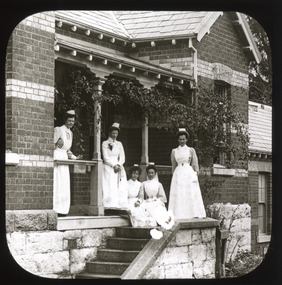
... Lantern slides and magic lantern technologies are seen as foundational precursors to the development of modern photography and film-making techniques...Lantern slides and magic lantern technologies are seen as foundational precursors to the development of modern photography and film-making techniques This glass slide is significant because it provides insight into Beechworth's social amenities and religious infrastructure in the late Nineteenth Century. ...This image shows 5 nurses of Mayday Hills Mental Asylum gathered on the porch and staircase of a building. Beechworth has a long history of nursing, beginning with the establishment 3 medical facilities in the mid-1800s, the Ovens District Hospital (opened in 1857), the Ovens Benevolent Asylum (opened in 1863), and the Mayday Hills Hospital (opened in 1867). Lantern slides, sometimes called 'magic lantern' slides, are glass plates on which an image has been secured for the purpose of projection. Glass slides were etched or hand-painted for this purpose from the Eighteenth Century but the process became more popular and accessible to the public with the development of photographic-emulsion slides used with a 'Magic Lantern' device in the mid-Nineteenth Century. Photographic lantern slides comprise a double-negative emulsion layer (forming a positive image) between thin glass plates that are bound together. A number of processes existed to form and bind the emulsion layer to the base plate, including the albumen, wet plate collodion, gelatine dry plate and Woodburytype techniques. Lantern slides and magic lantern technologies are seen as foundational precursors to the development of modern photography and film-making techniquesThis glass slide is significant because it provides insight into Beechworth's social amenities and religious infrastructure in the late Nineteenth Century. It is also an example of an early photographic and film-making technology in use in regional Victoria in the time period.Thin translucent sheet of glass with a square image printed on the front and framed in a black backing. It is held together by metals strips to secure the edges of the slide.burke museum, beechworth, lantern slide, slide, glass slide, plate, burke museum collection, photograph, monochrome, nurses, nursing, mayday hill hospital -
 The Beechworth Burke Museum
Photograph - Lantern Slide, c1900
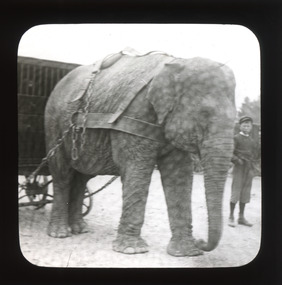
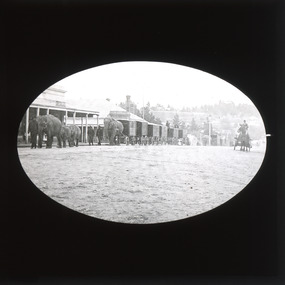
... Lantern slides and magic lantern technologies are seen as foundational precursors to the development of modern photography and film-making techniques....Lantern slides and magic lantern technologies are seen as foundational precursors to the development of modern photography and film-making techniques. ...This slide depicts an image of elephants from a travelling circus being marched through Camp Street in Beechworth in the early 1900s. Travelling circuses began operation in Australia in the 1860s as a way of providing entertainment to towns across Australia. Many of these traveling circuses use to have exotic animals such as elephants as part of their performances. Lantern slides, sometimes called 'magic lantern' slides, are glass plates on which an image has been secured for the purpose of projection. Glass slides were etched or hand-painted for this purpose from the Eighteenth Century but the process became more popular and accessible to the public with the development of photographic-emulsion slides used with a 'Magic Lantern' device in the mid-Nineteenth Century. Photographic lantern slides comprise a double-negative emulsion layer (forming a positive image) between thin glass plates that are bound together. A number of processes existed to form and bind the emulsion layer to the base plate, including the albumen, wet plate collodion, gelatine dry plate and Woodburytype techniques. Lantern slides and magic lantern technologies are seen as foundational precursors to the development of modern photography and film-making techniques.This glass slide is significant because it provides insight into Beechworth's social amenities and religious infrastructure in the late Nineteenth Century. It is also an example of an early photographic and film-making technology in use in regional Victoria in the time period.Thin translucent sheet of glass with a square image printed on the front and framed in a black backing. It is held together by metals strips to secure the edges of the slide.burke museum, beechworth, lantern slide, slide, glass slide, plate, burke museum collection, photograph, monochrome, circus, travelling circus, elephants, circus elephants, exotic animals, 1900s, entertainment -
 The Beechworth Burke Museum
Photograph - Lantern Slide, c1900
... Lantern slides and magic lantern technologies are seen as foundational precursors to the development of modern photography and film-making techniques....Lantern slides and magic lantern technologies are seen as foundational precursors to the development of modern photography and film-making techniques. ...This slide depicts an image of elephants from a travelling circus being marched through Camp Street in Beechworth in the early 1900s. Travelling circuses began operation in Australia in the 1860s as a way of providing entertainment to towns across Australia. Many of these traveling circuses use to have exotic animals such as elephants as part of their performances. Lantern slides, sometimes called 'magic lantern' slides, are glass plates on which an image has been secured for the purpose of projection. Glass slides were etched or hand-painted for this purpose from the Eighteenth Century but the process became more popular and accessible to the public with the development of photographic-emulsion slides used with a 'Magic Lantern' device in the mid-Nineteenth Century. Photographic lantern slides comprise a double-negative emulsion layer (forming a positive image) between thin glass plates that are bound together. A number of processes existed to form and bind the emulsion layer to the base plate, including the albumen, wet plate collodion, gelatine dry plate and Woodburytype techniques. Lantern slides and magic lantern technologies are seen as foundational precursors to the development of modern photography and film-making techniques.This glass slide is significant because it provides insight into Beechworth's social amenities and religious infrastructure in the late Nineteenth Century. It is also an example of an early photographic and film-making technology in use in regional Victoria in the time period.Thin translucent sheet of glass with an oval image printed on the front and framed in a black backing. It is held together by metals strips to secure the edges of the slide.burke museum, beechworth, lantern slide, slide, glass slide, plate, burke museum collection, photograph, monochrome, circus, travelling circus, elephants, circus elephants, exotic animals, 1900s, entertainment -
 The Beechworth Burke Museum
Photograph - Lantern Slide, c1900
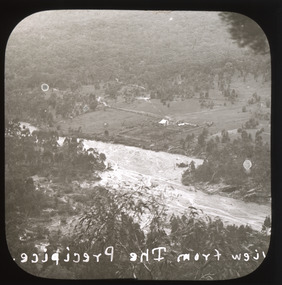
... Lantern slides and magic lantern technologies are seen as foundational precursors to the development of modern photography and film-making techniques....Lantern slides and magic lantern technologies are seen as foundational precursors to the development of modern photography and film-making techniques. ...This image shows a semi-aerial view of a property along a river adjacent to Beechworth in approximately 1900. The photographer has capitalised words in the label, indicating that 'The Precipice' may have suggested a particular rather than a general vantage point to local people at the time. Although the exact location of the photograph is yet to be determined, Beechworth Gorge is popular today with hikers and nearby Mt Stanley is noted for its views. Lantern slides, sometimes called 'magic lantern' slides, are glass plates on which an image has been secured for the purpose of projection. Glass slides were etched or hand-painted for this purpose from the Eighteenth Century but the process became more popular and accessible to the public with the development of photographic-emulsion slides used with a 'Magic Lantern' device in the mid-Nineteenth Century. Photographic lantern slides comprise a double-negative emulsion layer (forming a positive image) between thin glass plates that are bound together. A number of processes existed to form and bind the emulsion layer to the base plate, including the albumen, wet plate collodion, gelatine dry plate and woodburytype techniques. Lantern slides and magic lantern technologies are seen as foundational precursors to the development of modern photography and film-making techniques.This glass slide is significant because it provides insight into Beechworth's built environment and natural landscape in the early Twentieth Century, around the time of Australia's Federation. It is also an example of an early photographic and film-making technology in use in regional Victoria in the time period.Thin translucent sheet of glass with a square image printed on the front and framed in a black backing. It is held together by metals strips to secure the edges of the slide.Obverse: Image from The Precipice. /burke museum, beechworth, lantern slide, slide, glass slide, plate, burke museum collection, photograph, monochrome, views, landscapes, farmsteads, rivers, beechworth gorge, mt stanley, emulsion, the precipice -
 The Beechworth Burke Museum
Photograph - Lantern Slide, c1900
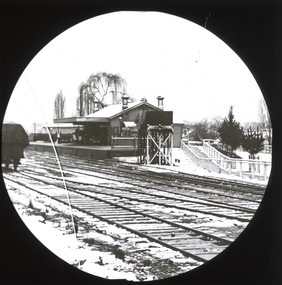
... Lantern slides and magic lantern technologies are seen as foundational precursors to the development of modern photography and film-making techniques...Lantern slides and magic lantern technologies are seen as foundational precursors to the development of modern photography and film-making techniques This glass slide is significant because it provides insight into Beechworth's social amenities and religious infrastructure in the late Nineteenth Century. ...This slide shows an image taken in c.1900 of the Beechworth Railway Station. The Beechworth Railway Station was officially opened on the 29 of September 1876, to allow for quicker and easier transportation of goods and supplies from Beechworth to Melbourne via Everton and Wangaratta. The railway station was heavily used for transportation running two trains a day and was a vital link to Melbourne from it's opening until it's closure in 1976. Lantern slides, sometimes called 'magic lantern' slides, are glass plates on which an image has been secured for the purpose of projection. Glass slides were etched or hand-painted for this purpose from the Eighteenth Century but the process became more popular and accessible to the public with the development of photographic-emulsion slides used with a 'Magic Lantern' device in the mid-Nineteenth Century. Photographic lantern slides comprise a double-negative emulsion layer (forming a positive image) between thin glass plates that are bound together. A number of processes existed to form and bind the emulsion layer to the base plate, including the albumen, wet plate collodion, gelatine dry plate and Woodburytype techniques. Lantern slides and magic lantern technologies are seen as foundational precursors to the development of modern photography and film-making techniquesThis glass slide is significant because it provides insight into Beechworth's social amenities and religious infrastructure in the late Nineteenth Century. It is also an example of an early photographic and film-making technology in use in regional Victoria in the time period.Thin translucent sheet of glass with a circular image printed on the front and framed in a black backing. It is held together by metals strips to secure the edges of the slide.burke museum, beechworth, lantern slide, slide, glass slide, plate, burke museum collection, photograph, monochrome, beechworth railway station, railway station, transport, railway history, railway -
 The Beechworth Burke Museum
Photograph - Lantern Slide, c1900
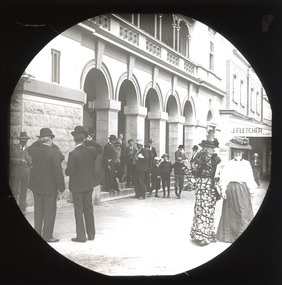
... Lantern slides and magic lantern technologies are seen as foundational precursors to the development of modern photography and film-making techniques...Lantern slides and magic lantern technologies are seen as foundational precursors to the development of modern photography and film-making techniques This glass slide is significant because it provides insight into Beechworth's social amenities and religious infrastructure in the late Nineteenth Century. ...This image depicts people walking down the street in the early 1900s, giving a glimpse into everyday life of the Edwardian era in rural Australia. The image also captures the Beechworth Post Office, located on the corner of Ford and Camp Streets. The stone post office building was built in 1858 to replace the inadequate wooden building on the same location. It was built from granite sourced from the area and features Architectual designs of the era including a hipped slate roof and a colonnaded entrance surmounted by a parapet. Lantern slides, sometimes called 'magic lantern' slides, are glass plates on which an image has been secured for the purpose of projection. Glass slides were etched or hand-painted for this purpose from the Eighteenth Century but the process became more popular and accessible to the public with the development of photographic-emulsion slides used with a 'Magic Lantern' device in the mid-Nineteenth Century. Photographic lantern slides comprise a double-negative emulsion layer (forming a positive image) between thin glass plates that are bound together. A number of processes existed to form and bind the emulsion layer to the base plate, including the albumen, wet plate collodion, gelatine dry plate and Woodburytype techniques. Lantern slides and magic lantern technologies are seen as foundational precursors to the development of modern photography and film-making techniquesThis glass slide is significant because it provides insight into Beechworth's social amenities and religious infrastructure in the late Nineteenth Century. It is also an example of an early photographic and film-making technology in use in regional Victoria in the time period.Thin translucent sheet of glass with a square image printed on the front and framed in a black backing. It is held together by metals strips to secure the edges of the slide.burke museum, beechworth, lantern slide, slide, glass slide, plate, burke museum collection, photograph, monochrome, 1900s, edwardian era, architecture, granite building
